Raccoons Solving Puzzles For the Love of the Game!

f you’ve been reading this blog for any length of time, you’ve no doubt noticed that one of our favorite topics is puzzle-solving animals. In the past, we’ve discussed examples of puzzle solving in catsdogscrowscockatoosoctopuses, beespigs, squirrels, and wolves.

And today we’re excited to invite another critter into the pantheon of puzzle-capable creatures: Raccoons! ChatGPT might not be allowed to talk about raccoons anymore, but we at PuzzCulture sure can!

Raccoons have a reputation for being wily, particularly in folk tales, fables, and stories. They’re mischievous and sly, with forepaws advanced enough to allow them grab things and manipulate them. In suburban and urban environments, it’s hardly uncommon for raccoons to open garbage bins or find their way into other spaces in search of food.

So naturally, that raises some interesting questions: how far can their dexterity take them? What level of complexity can they unravel if properly incentivized?

In essence, how puzzly a challenge is too puzzly for a hungry, sufficiently-motivated raccoon?

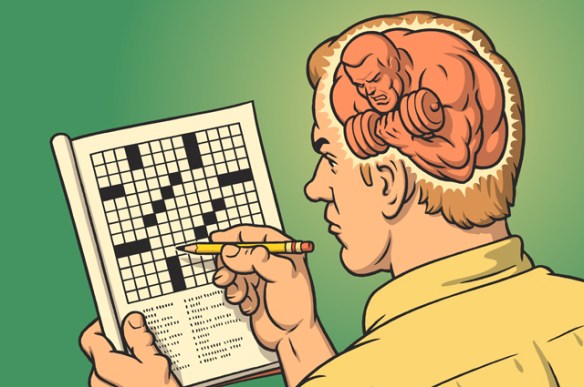
As it turns out, raccoons will continue puzzling even when the food is gone!

Researchers Hannah Griebling and Dr. Sarah Benson-Amram challenged a sample group of raccoons to deal with a custom puzzle box. It had nine different potential points of access, which required manipulating knobs, sliding doors, latches, and other mechanical obstacles. (These entry points were grouped by the researchers into easy, medium, and hard categories for the purposes of their study.)

The raccoons were given 20 minutes in each trial to find a way into the box in order to retrieve the single marshmallow inside.

The raccoons proved dexterous enough to unravel most of the challenges in front of them, and the researchers’ difficulty rankings didn’t seem to matter:

The time spent interacting with the puzzle box overall was similar for Easy and Hard solutions, rather than being a clear gradient from Easy to Medium to Hard. This result does not support an effect of presentation order of the difficulty conditions as we would expect the total interaction time with the puzzle box to decrease along an Easy to Hard gradient if this were the case and the raccoons were only learning the simple rule that the MAB [the puzzle box] only ever supplied one food reward.

Not only that, but the raccoons continued opening the other access points and solving the other mechanisms after eating the single prize inside. The raccoons kept puzzle-solving without food as a motivation.

“We weren’t expecting them to open all three solutions in a single trial,” said Griebling.

They were in it for the love of the game!

Well, sorta.

This behavior, this intrinsic motivation — the raccoons being driven to continue solving the various mechanisms in front of them WITHOUT hunger as the primary motivator — is known as “information foraging.”

Essentially, they’re practicing and learning to become better puzzle solvers.

As the researchers stated in their report:

Information foraging in raccoons increases the likelihood of raccoons finding and ‘solving’ novel raccoon exclusion devices, such as bungee cords used to strap down garbage bin lids. This could lead to a ‘cognitive arms race’ between humans and raccoons, as has been recently documented in urban-living, sulphur-crested cockatoos, Cacatua galerita.

Wild raccoons are likely to show similar patterns to the captive raccoons in this study, given that they have willingly engaged with and solved multiple novel problem-solving tasks in the field and showed similar results to captive raccoons on a previous MAB study.

Oh yes. Raccoons are engaged in Olympic-level training to be even sneakier and more efficient. Those adorable trash bandits are out in the field, putting in the work, learning and developing new strategies to nab your snacks and food stashes.

Image courtesy of MeganForrestArt.

Okay, it’s not as organized as all that. But yes, raccoons do solve puzzles they don’t have to, and appear to be learning from the experience.

The study determined that raccoons did prefer some of the easier, more reliable methods for accessing the box — in the same way that you would probably go with a tried-and-true solution to a problem, rather than trying out a new technique with an unknown success rate. This trade-off of curiosity versus risk mirrors decision-making frameworks in humans, as well as other animals, according to Griebling. This is known as an “exploration-exploitation trade-off.”

So, we have definitive data. Raccoons will puzzle-solve without food as a motivator. (I know many puzzle enthusiasts who are the same way. They’ll tackle a puzzle just to learn from it, to see if they can unravel it. Though I wonder if marshmallows would motivate them as well…)

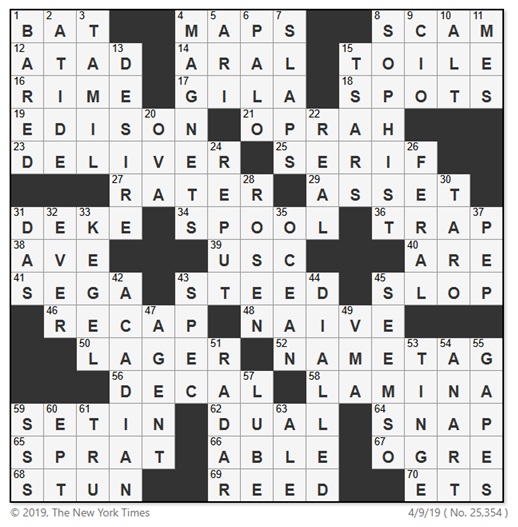
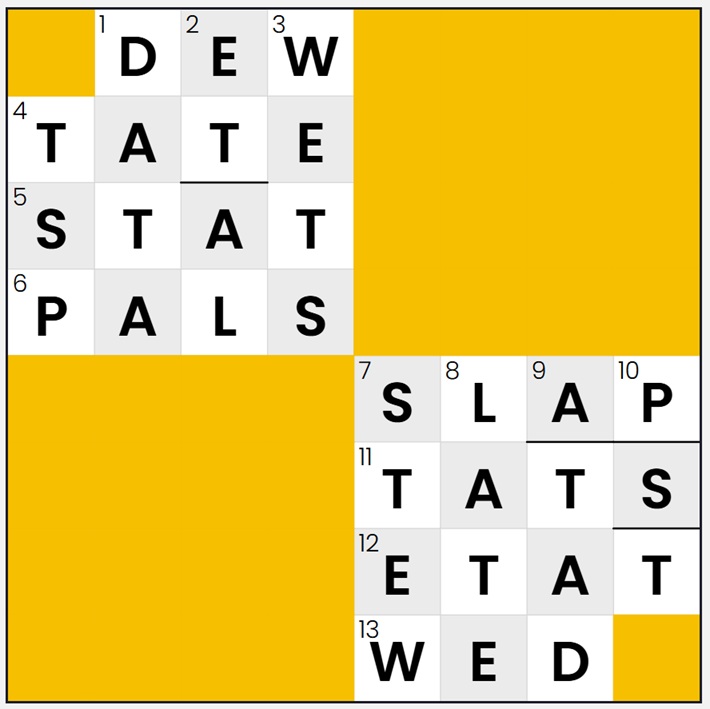
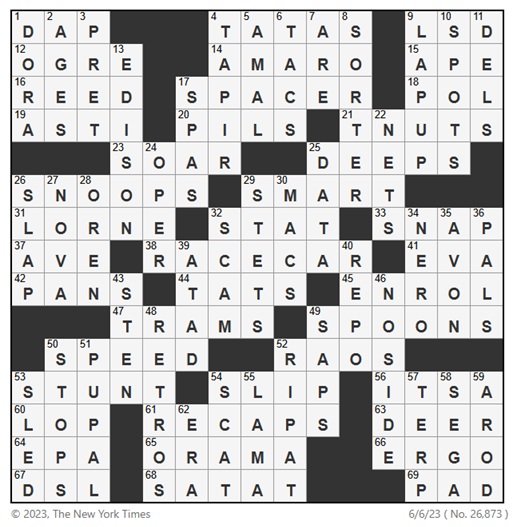
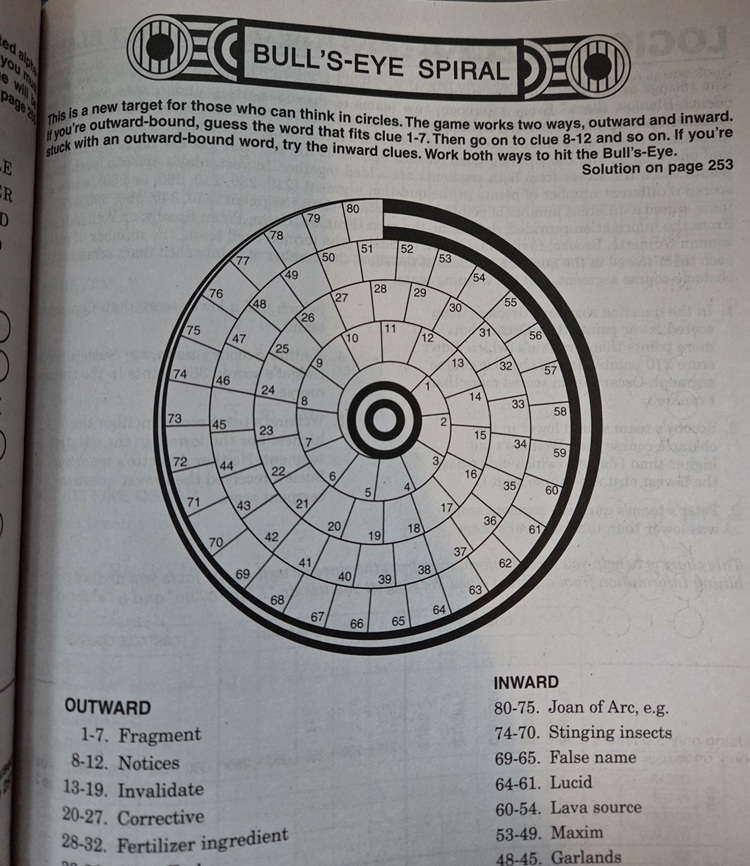
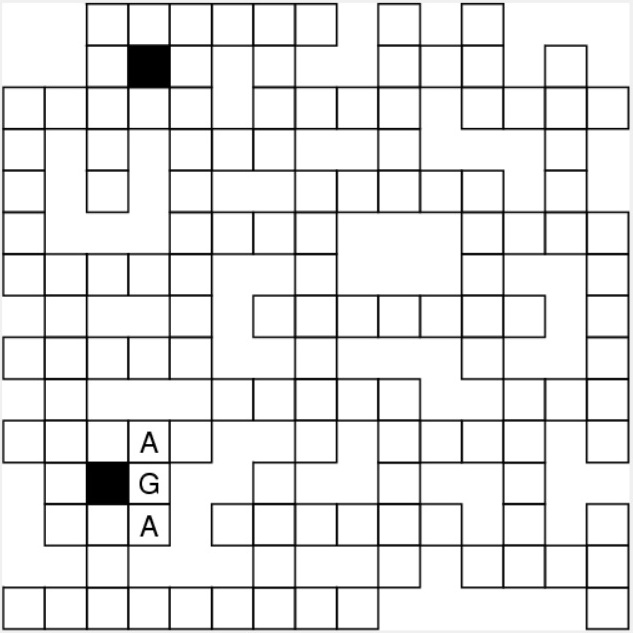
Are you hungry? Hungry enough to solve this acrostic?

But this does raise one last question: why test this at all?

As it turns out, the reasons are two-fold.

“Understanding the cognitive traits that help raccoons thrive can guide management of species that struggle, and inform strategies for other species, like bears, that use problem-solving to access human-made resources,” said Griebling.

Studies like this help us understand the development of already puzzle-savvy animals, but also helps us to understand what animals (both wild and captive) are capable of, making US better stewards of the environment and its many denizens.

And we get to add another species to the ever-growing list of creatures that are capable of puzzle solving.

Which brings me to my latest business venture: Raccoon escape room, anyone?


What’s your favorite puzzle-solving creature, fellow puzzlers? Let us know in the comments section below! We’d love to hear from you.

A Criminal Crossword Conspiracy From 1959!

During my extensive dive into crossword history in preparation for my Braille Crosswords post, I encountered all sorts of curious tidbits and trivia about crosswords. I tucked many of them away at the time, looking forward to digging into them properly later once the piece was completed.

So, with that post done and dusted, I had some time to pour through those tidbits and trivia for blog post ideas. And I knew I had to start with this snippet from The Omaha World-Herald on Sunday, July 22nd, 1979:

Portland: February 23, 1959. Two Oregon daily papers cry “Doublecross!” Charging that their crossword contests are being “fixed” by a “nation-wide ring” headquartered in Detroit, they discontinue the contests and call in the FBI

A criminal crossword ring? Tell me more about these cruciverbalist ne’er-do-wells!

I mean, we’ve discussed criminal activity and crosswords in previous posts, but those were strictly of the fictional variety. This story, on the other hand, is an honest-to-Shortz crossword criminal conspiracy, concocted nearly 70 years ago.

Our story begins in Oregon, where publisher William W. Knight of The Oregon Journal shared his suspicions in a front-page editorial piece on February 23rd, 1959.

The Oregon Journal and The Portland Oregonian were just two of the many newspapers around the United States who ran crossword contests with cash prizes. Subscribers would send their solutions to the paper in the hopes of being the first correct solver (or sometimes, the correct solver chosen at random) and winning some money.

But Mr. Knight reported that his sources at The Oregon Journal had uncovered something peculiar. They had learned about two previous Portland winners who only kept part of their money, the rest being forwarded to an intermediary, and after that to the suspected ringleader in Detroit, Michigan.

One woman won $2600 but retained only $300. $150 went to the intermediary, and $2150 to Detroit. Another winner received $2950 but he only kept $950 and sent the rest to a “tipster” in Detroit. (Geez, even when committing the same crimes, women are still getting paid less than men!)

Knight referred to this conspiracy as a “fix and tipping” scheme.

She’s got the acrosses, now she just needs the downs to really complete the crossword look.

“Fix” in this case means illegally rigging the outcome of the crossword contest, and “tipping” means that someone was informing the “contestants” of the solution in order to guarantee a win.

But the two primary distributing syndicates — Superior Features Syndicate, Inc. and General Features Syndicate — claimed this was impossible, calling their precautions “foolproof.”

These “foolproof” precautions basically meant that the puzzle grid and clues went to subscribing newspapers, but the puzzle solution went to an associated bank “or some other unimpeachable agency.” That bank/agency would hold the solution until the contest submission deadline had passed, and then release it to the subscribing newspapers.

(This is obviously pretty foreign to modern solvers, who are accustomed to seeing the previous day’s solution published alongside today’s new puzzle.)

Despite the reassurances of the distribution syndicates, Knight had already reached out to the FBI with his suspicions, and declared that The Oregon Journal would no longer be participating in crossword puzzle contests.

His editorial went out on February 23rd, and the next day, other papers began reporting on Knight’s alleged criminal crossword conspiracy.

But the Crossword Ring’s reign of terror would be short-lived.

One month to the day that Knight’s accusations hit the front page, J. Edgar Hoover himself announced the arrest of those responsible for the Crossword Ring conspiracy.

The headline in The New York Times the following morning read “12 SEIZED BY F.B.I. IN CONTEST FRAUD; 2 in Canada Also Accused of Being in a Ring That Got Puzzle Answers.

Knight’s suspicions were correct, but the conspiracy ranged far wider than Portland and Detroit. The actual ringleaders were based in Ontario, Canada, and they telephoned answers to agents in Chicago, Philadelphia, Harrisburg, and Minneapolis as well.

So, how did the ringleaders get around those “foolproof” precautions we heard about before?

In staggeringly simple fashion.

The scam worked like this:

Step One: Set up a fictitious bank, Middlesex Trust Co., complete with a fake mailing address.

Step Two: Subscribe to the puzzle distributors in the name of a nonexistent newspaper company, Suburban Publishers, Ltd.

Step Three: Receive the puzzle solutions from the Syndicate via the fictitious bank’s P.O. Box, then contact agents in the United States to submit perfect solutions to their local papers before most other newspapers would’ve even published the contest puzzle.

All it took to circumvent the “foolproof” precautions was Step One.

The Crossword Ring had raked in $45,000, which is equivalent to over half a million dollars in 2026. And the FBI operation to arrest them all took only 86 minutes.

Amazingly, this wasn’t the end of crossword contests in the United States.

Despite further allegations of wrongdoing throughout the 1960s — including bribery and extortion — the contests remained popular, and prize amounts collected by contest entrants kept rising. One New York contest winner received a cash prize of $44,000, nearly the same amount that the Crossword Ring had scammed from newspapers over the course of weeks.

Now, if you’ll excuse me, I have to get back to my brand-new newspaper venture, The PuzzCulture Tribune Gazette Times-Herald-Daily. More about our crossword contests soon! *a-wink*


So, fellow puzzler, what’s your favorite crossword crime, fictional or otherwise? Let us know in the comment section below! We’d love to hear from you.

NBC’s Wordle Game Show is Looking for Contestants!

Wordle is a household name.

There have been board game adaptations, dozens of variations (including four games at a time, eight games at a time, and Absurdle, where the word changes based on your early guesses).

After five years of public gameplay and hundreds upon hundreds of five-letter words, NBC is bringing the puzzle to television in a team game-show format.

From their official casting announcement:

We are casting teams of THREE PLAYERS to compete for a chance to win a HUGE CASH PRIZE!

TEAMS CAN BE MADE UP OF FRIENDS, FAMILY, SIGNIFICANT OTHERS, CO-WORKERS, ETC.

Selected teams will head to Europe to play the game over a 1-2 week period within July 20 – August 1, 2026 (dates subject to change). Must be 21+.

Was “Wordwide” intentional wordplay or a lucky accident?

They’ve already announced a host, Today Show co-host Savannah Guthrie, who is an avid Wordle player, and the show is being produced by Jimmy Fallon’s production company Electric Hot Dog, alongside Universal Television Alternative Studio and, of course, The New York Times.

Naturally, savvy game show fans are already drawing parallels between this proposed Wordle game show and Lingo, a word-guessing game show from 1987-1988. The game was basically Wordle, but each word you spelled gave you chances to draw bingo balls in order to fill out a bingo card.

OLD LINGO? Twenty years ago is OLD?! Man, the Internet is humbling…

Lingo had a very successful revival on the Game Show Network from 2002 to 2007, hosted by Chuck Woolery and lasting 345 episodes! It was briefly revived again in 2011 with Bill Engvall as host, and once more in 2023 with RuPaul as host, trying to capitalize on Wordle’s popularity.

There are currently versions of Lingo in Greece, Turkey, and the UK, and previous versions in another dozen or so countries.

But game shows are constantly being rebooted, adapted, and resurrected for our entertainment, so I’m not surprised to see Lingo return under its more famous sibling moniker.

The real question is… who is gonna pick the words for the show? Because Tracy Bennett has been doing a heck of a job for The New York Times for years now.


What do you think, fellow puzzlers? Will you be accepting the team challenge of NBC’s Wordle? Do you think this concept has staying power? Let us know in the comments section below! We’d love to hear from you.

The Puzzle Room With David Kwong Debuts on Netflix Tomorrow!

Just a quick bonus post on this day, the Mother’s Dayest of all days, to spread the word about a delightful puzzly program that will be debuting on Netflix tomorrow.

It’s called The Puzzle Room With David Kwong, and it’s a video podcast series. If you don’t know David, boy, you are missing out. He’s a crossword constructor, magician, and all-around expert in baffling people with both words and visuals.

He’s consulted on film and TV projects like Blindspot, Now You See Me, and The Imitation Game, and he’s previously combined magic and puzzles for his touring show, The Enigmatist.

Now he’s bringing his linguistic legerdemain and impressive works of mentalism to one of the world’s biggest streaming services.

Check out this promotional post from Netflix’s blog, Tudum:

Sometimes solving a challenging puzzle can feel like magic. That moment when the final piece clicks into place. The gasp before you lock in your answer. After all that time sweating, you finally feel like the smartest person in the room.

In the new video podcast series The Puzzle Room with David Kwong launching on May 11, every episode promises plenty of satisfying aha moments. The renowned magician, mentalist, and New York Times crossword constructor personalizes each puzzle for a pair of celebrity guests, leading to plenty of unexpected epiphanies and clues.

“We’re in a golden age of puzzles and games, and Netflix is the perfect home for viewers to stretch their brains with The Puzzle Room,” says Kwong. “From the intense strategy of Squid Game and the surprising twists of Knives Out, to the daily challenges of Netflix Puzzled and Best Guess Live, Netflix has long been the destination for smart entertainment. Get ready to put on your thinking caps, everyone! I can’t wait to puzzle with you all.”

Produced by Pod People, the series is designed in a way that viewers at home can play along, guests and fans face off in a race to see who can answer first. As the episode unfolds, the puzzles gradually increase in difficulty, with Kwong encouraging and celebrating every breakthrough. Each episode ends with a moment of mentalism or head-scratching illusions.

And no, Kwong won’t be sharing how he does it.

You can click here to check out a trailer for the show. Like one of his many magic tricks (either on stage or within the bounds of a crossword puzzle), I’m excited to see how David pulls this one off.

Star Wars Games That Are Actually Good!

may-the-fourth_6

I know Star Wars Day was a few days ago — check out the Star Wars crossword I constructed for May the Fourth — but while the spirit of that galaxy far, far away is still being celebrated, I want to recommend some Star Wars-infused fun for board game and RPG fans to savor.

Now, there are dozens, possibly hundreds, of Star Wars-themed games. But, as I proved with my history of Godzilla games, it can take a long time for a beloved franchise to get a tabletop game worthy of the subject matter.

Thankfully, there are some choice options out there with Star Wars sauce for your tabletop enjoyment.


Image courtesy of BoardGameGeek.

Star Wars: Asteroid Escape

In this space-based variation on the game Tsuro — one of my all-time favorite board games — you try to navigate your ship through space by laying tiles and following the path as it connects to other tiles. Each player is laying tiles, quickly filling up the board, so you need to grow more and more strategic with your plays as the stack of tiles dwindles.

But with asteroids also roaming the field of play, can you outlast every other ship on the board? This is a terrific mix of Star Wars flavor with everything that makes Tsuro fun and challenging. It might be hard to find, but it will be a welcome addition to your game shelf.


Images courtesy of BoardGameGeek.

Star Wars: Timeline

I love the Timeline games. (I own nearly a dozen of them!) The simple act of trying to place your card in relation to other events on the table is both a great trivia experience and an opportunity to engage in some deduction and logical thinking.

So when I heard about Star Wars versions of Timeline, I happily snapped them up. With editions for both the original trilogy and the prequel trilogy, it will definitely exact a toll on your memory to see if you can precisely place key moments from the movies in the proper order.

Although easier than some of the other editions of Timeline (like their Inventions edition), this is still great fun for Star Wars fans of all ages.


Image courtesy of BoardGameGeek.

Star Wars: The Clone Wars

In this prequel era take on Pandemic, players take on the role of Jedi trying to battle back the onslaught of battle droids across the galaxy. Can you stop the spread of Confederacy forces by saving one world at a time?

While Star Wars versions of Risk and Monopoly are pretty much the same game with Star Wars seasoning, The Clone Wars takes the best of the Pandemic system and feels like it takes it in a fresh direction. This isn’t just another version of Pandemic, this is a very clever marriage of the two that takes the best from both.

Strategy and cooperation is absolutely key in this one, and the cooperative aspect separates it from many of the other games on today’s list.


Image courtesy of BoardGameGeek.

Villainous: The Power of the Dark Side

The Villainous games are amazingly well-designed games. Balancing different mechanics for four different villains as you try to achieve their goals and foil the efforts of the villains played by other players, this Disney franchise continues to expand and never disappoints.

And The Power of the Dark Side, their first Star Wars edition of the game, is one of the best versions of Villainous available today. With five villains to choose from — spanning the original, prequel, and new trilogies, as well as the Clone Wars TV show –there’s truly a villain here for any Star Wars fan.

Can you achieve your villainous dreams, or will the other evildoers at the table outmaneuver you and realize their darkest ambitions?


Image courtesy of Nerds on Earth.

Star Wars: Outer Rim

Embrace your inner scoundrel with this game, where each player strives to complete jobs for their employers, collect bounties, smuggle cargo… you know, your usual day-to-day shenanigans in the Star Wars universe.

This game sorta gives you the roleplaying experience in a one-session microcosm. You’ll make your character, make your choices, upgrade your gear and your ship, and make some money, all while dealing with shady and dangerous folks. It’s a whole narrative arc crammed into a single sitting.


Image courtesy of Entertainment Earth.

Star Wars: Rebellion

While Outer Rim is a personal journey, Rebellion is Star Wars on a galactic scale. This is full-blown war between the Rebellion and the Empire, where one side has a Death Star to build and an insurrection to crush, while the other builds alliances, plays cat-and-mouse with the Empire, and plots to destroy the Empire’s greatest weapon.

I’ve only played this game a few times — it’s expensive, a bit overwhelming, and takes a while to get good at — but it’s been a blast every time.


The tabletop scene for Star Wars sure is stacked, but there are plenty of terrific immersive options out there as well for roleplaying fans looking to explore the universe of Star Wars.

And while officially licensed games are great (I’ll be mentioning one below), sometimes the best stories are told in the shadows by companies that understand the spirit of that franchise, but can’t afford all the bells and whistles.

Here are two of my favorites:

Rebel Scum

If, for any reason at all, you felt like punching a Nazi in the face, you can do so in Rebel Scum by 9th Level Games. Yes, they’re space Nazis running an evil empire, and you’re an intrepid anti-fascist trying to save the galaxy, but hey, punching Nazis, amirite?

This game manages to feel like an epic battle across the stars AND a session of playing with your favorite action figures all at the same time. It’s childhood wonder and all the heroic action we wish we could undertake as adults.

Will you stop Baron Deathray and his Killtroopers with a handful of dice and a lot of gumption? Only one way to find out.


Scum and Villainy

If you really like the Han Solo-esque scrappy smuggler making his way through the universe sorta thing, Evil Hat Productions have you covered with Scum and Villainy.

While the Evil Galactic Hegemony is ever-present, this game is more about criminal dealings, clever negotiation, devious schemes, and profiteering adventure. It feels like the day-to-day trials and tribulations of a struggling spaceship crew.

I love the focus in Scum and Villainy on the roleplay aspect of RPGs. So much of the game is about character and the worlds you visit, and not as much about swinging lightsabers and dodging turbolasers.


As you can see, there are many different ways to play a Star Wars game. It can be a war game, an exploration game, a scheming game, a storytelling game… sometimes all of them at once. And Fantasy Flight Games brings a seriously impressive narrative tool to the table with their Star Wars Roleplaying Game.

There have been Star Wars RPG games since the 80s, but I don’t think any of them offered the same spirit of choice, chance, and adventure that the FFG edition of the game does.

Like most RPGs, you pick a class and build your stats and roll dice to determine the outcome of your choices. But unlike many RPGs where the number you roll declares your action a success or a failure, the narrative dice of Star Wars FFG offer a much more exciting and engaging answer.

It’s not just a binary option, you succeed or you fail. With narrative dice, you can have additional complications, both positive and negative.

You could fail, but with some unexpected advantage: You missed a swing of your lightsaber, but you cut through the awning supports and blinded your foe for a round.

You could succeed, but with some negative consequence: You might have caught the bad guy with your blaster, but you also shot the engines of your ship, and now they need repairs.

Your actions tell a story that goes well beyond yes and no. And in a world where scoundrels often make mistakes while trying to do good, it’s a more interesting, more immersive journey every time, and it truly brings those adventurous moments to life.

Whether you’re a scoundrel on the Edge of the Empire, a hero during the Age of Rebellion, or someone caught between the Light Side and the Dark Side in Force and Destiny, they’ve got a place for you to tell your story.


Did your favorite Star Wars game or RPG get mentioned? Or are you miffed I left out Star Wars Trivial Pursuit and its bweepy little R2-D2 dice roller?

Let me know in the comments section below! I’d love to hear from you.

Goblin Talk Taking Over ChatGPT? Send for an Adventuring Party, STAT!

D&D goblin, third edition. Image courtesy of Hasbro/Wizards of the Coast.

Goblins aren’t just a threat in roleplaying games like Dungeons & Dragons, they’re also an annoyance at the offices of OpenAI, stewards of ChatGPT, according to this article from The Wall Street Journal.

Now, my opinion on generative AI has been clear for quite a while now. I think it is morally abhorrent, creatively bankrupt, artistically insulting, and environmentally disastrous. It is intellectual theft, pure and simple.

But this news story is too funny not to cover.

There is an open source line in ChatGPT’s base instructions for its coding assistant that now reads:

“Never talk about goblins, gremlins, raccoons, trolls, ogres, pigeons, or other animals or creatures unless it is absolutely and unambiguously relevant to the user’s query.”

This is because the AI chatbot has been bringing up goblins for no apparent reason in conversations with users.

D&D goblin, fifth edition. Image courtesy of Hasbro/Wizards of the Coast.

For those who have never interacted with ChatGPT — keep on doing what you’re doing, you’re awesome — it has different “personality” types that users can select from a series of instructions in order to make their interaction with ChatGPT more convincing, memorable, engaging, whatever.

And the “nerdy” personality just loves GOBLINS for some reason. OpenAI reported that mentions of goblins in one edition of the AI program increased 3,881% from previous versions.

Man, it really loves goblins.

And despite the claim that OpenAI eliminated the “nerdy” personality option back in March, ChatGPT still loves it some goblins.

Which led to that open source line I mentioned above.

Wild.

D&D goblin, second edition. Image courtesy of Hasbro/Wizards of the Coast.

Now, can we look at that list again?

“Never talk about goblins, gremlins, raccoons, trolls, ogres, pigeons, or other animals or creatures…”

I get the nerdy connection to goblins, gremlins, trolls, and ogres, sure.

How did raccoons and pigeons get on the list?

Because the venn diagram for all these creatures isn’t quite venning.

If we’re talking fantasy creatures, you’ve got those four, but the real-world animals don’t fit.

If we’re talking annoyances associated with mischief, then goblins and gremlins and raccoons still fit, but pigeons, trolls, and ogres don’t. Any D&D player worth their salt knows ogres are far from idle caperers. They’re a genuine threat.

I suppose they’re all nuisances in some way, but boy, is that casting a wide net.

Crap, wrong goblin. Image courtesy of Marvel/Sony Pictures.

I do have another theory.

There are plenty of Dungeon Masters and other game runners out in the world who use generative AI to give them adventure ideas, create artwork for their games, etc.

It’s entirely possible that one user or a handful of users accidentally trained the “nerdy” personality to associate these things with general queries.

And if that’s the case, please tell me about the raccoon- and pigeon-related adventures you’re running in your games that puts them on the same threat level as ogres, trolls, gremlins, and goblins.

Inquiring minds like mine want to know!

In the end, I guess people will have to go elsewhere for their goblin-centric AI content. And with Ask Jeeves officially gone, where are the people to go online to ask about goblins OR be told about goblins when asking unrelated questions?

It’s truly a sad day for everyone involved.


Star Wars Day might be over, but it’s Revenge of the 5th, so be sure to check out our Star Wars-themed crossword from yesterday!