Today is indeed your lucky day, as I have a second puzzle to share with you, courtesy of constructors Michael Hanko and George Barany!
They’re hosting a puzzle contest and asked me to help spread the word to my fellow puzzle enthusiasts.
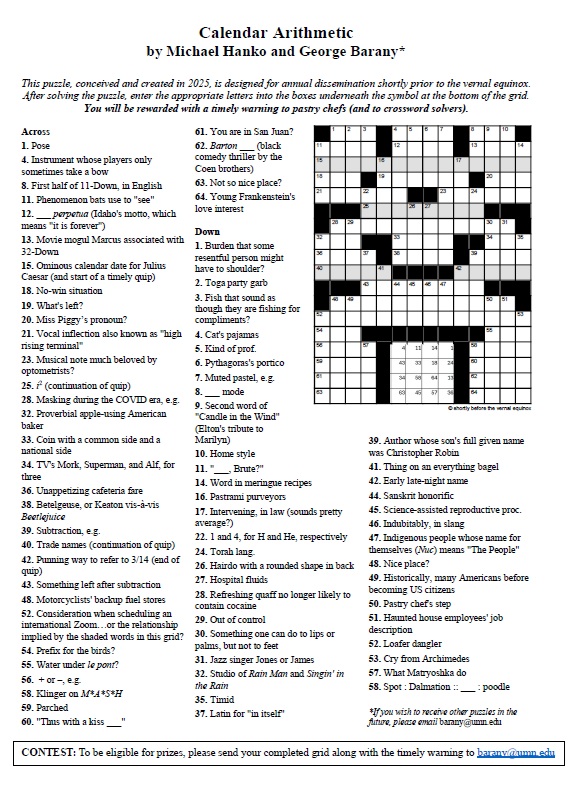
The challenge before you? Solve the crossword below, titled Calendar Arithmetic, and complete both the grid and the bonus message (a timely warning!) at the bottom of the grid.
Once you’ve printed and solved the puzzle, either photograph or scan the completed grid.
Send it AND the timely warning to barany@umn.edu for a chance to win a prize, like puzzle books or complimentary custom puzzles to be worked out with the constructors!
Submit your entry by the vernal equinox for your chance to win: Friday, March 20, 2926, 9:46 AM. (Okay, just checked, and they’re offering a grace period, as long as you get the puzzle in by midnight on Sunday, March 22nd.)
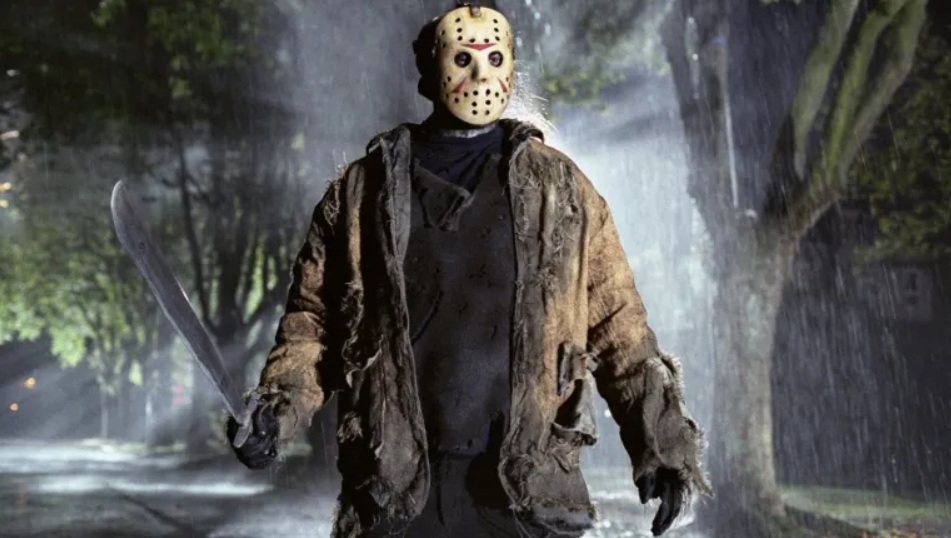
Today’s a good day. A day when people remember to be wary of sidewalk cracks, walking under ladders, or troubling that black cat on your path. A day for visiting the nearby summer camp and reminding those horny rapscallion teens of their duties and responsibilities.
Yes, it’s Friday the 13th, and I simply cannot let today a Friday the 13th pass without some sort of horror-fueled celebration.
I usually watch at least one of the Jason Voorhees films on this day. (Do yourself a favor and watch Jason X, it’s so hilariously great.)
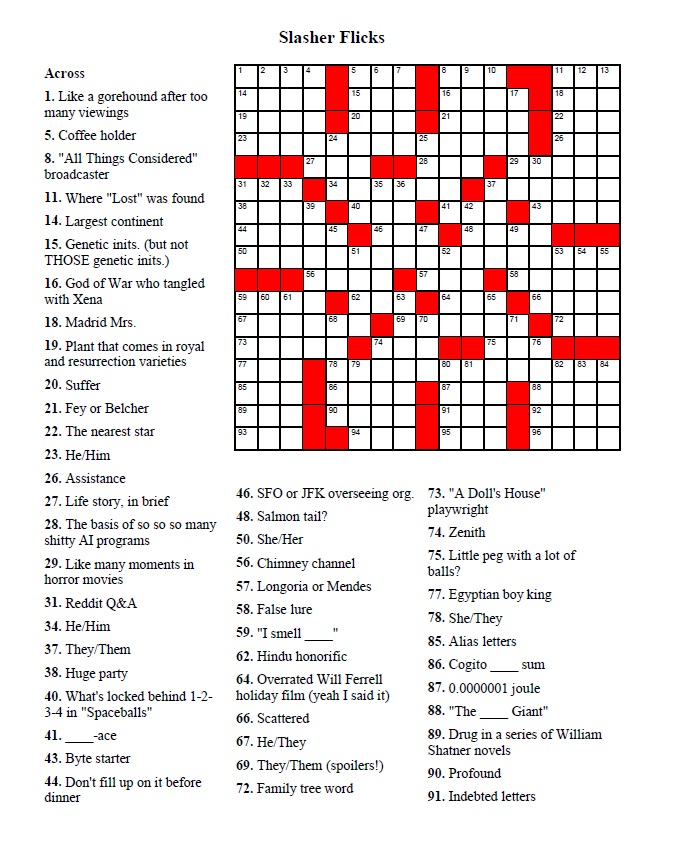
So when inspiration struck last week, I sought out my horror movie friend Julien, who helped me brainstorm entries for this theme.
Oh, and I couldn’t resist turning the black squares red to fit the aesthetic.
I hope you enjoy, especially in a lakeside cabin, or a cruise ship, or for about 15 minutes, in the streets of Manhattan.
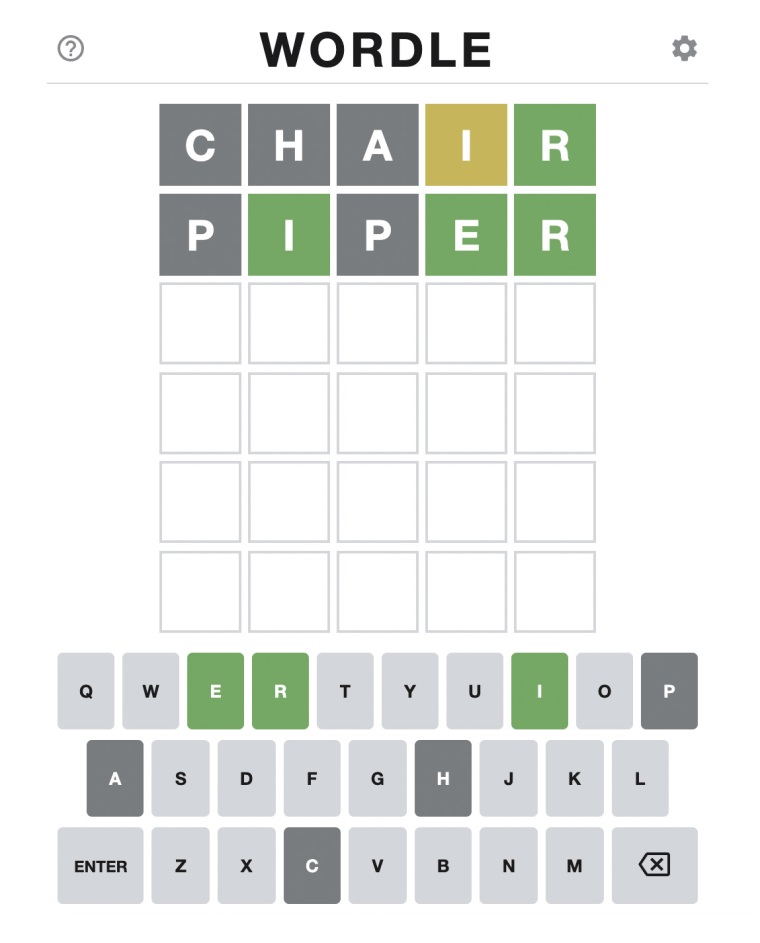
You might not know Josh Wardle by name, but you certainly know his viral creation, Wordle, and you’ve no doubt seen friends and family members sharing their solving results daily.
A few days ago, Josh launched a new puzzly endeavor called Parseword.
It’s a definite step up in complexity from Wordle, but you can still see some of Wordle’s foundation in Parseword. After all, Wordle is all about deduction, playing with the pieces in front of you, and slowly (or quickly) applying what you’ve learned to discover the day’s word.
Parseword works in a similar fashion, but instead of using the letters in front of you to uncover the word, you’re using a Cryptic Crossword-style clue to unravel the answer word.
The clues in Cryptic Crosswords, also known as British-style crosswords, are longer, incorporating all sorts of wordplay, while concealing the definition within the clue as well. Each clue is a puzzle unto itself.
Here’s an example of cryptic-style cluing: “Quoted from edict wrongly (5)”
The definition part of the clue consists of the first two words, “quoted from.”
“Wrongly” indicates that part of the clue needs to be changed. This hints that the other word, “edict,” is not what it seems. EDICT, when anagrammed, becomes CITED. “Quoted from” defines CITED. Two ways to get the answer, one straightforward, one more challenging.
There you go. And that’s only one trick in the Cryptic Crossword cluing arsenal.
Cryptic clues can hide the answer between words, as in “Scottish snack offered in disco nearby (5),” where “diSCO NEarby” conceals SCONE, the “Scottish snack.” They can offer two different definitions, as in “Desire for Japanese money (3)” for YEN.
Answer words could read backwards, or hide as initialisms or acronyms in the clue words. There could be soundalike words, or rebus-style assembly of the answer word. There’s loads of trickery and camouflage, especially in the hands of clever setters or constructors.
Parsewords is an interactive way to learn how to unravel Cryptic-style cluing.
Josh recently did an interview with The New Yorker, sharing his inspiration for the new puzzle game:
Wardle had tried cryptic crosswords when he was younger, but found them to be impenetrable. “I didn’t know how to begin,” he told me. The rules could seem arcane, almost impossible to deduce.
By treating the clue like a formula to be simplified, a linguistic version of P-E-M-D-A-S, the formerly impenetrable word salad of a clue starts to transform into something more recognizable. It’s a little bit like Ben Gross’s Bracket City puzzles.
Here, let’s take a look at yesterday’s puzzle and I can show you what I mean.
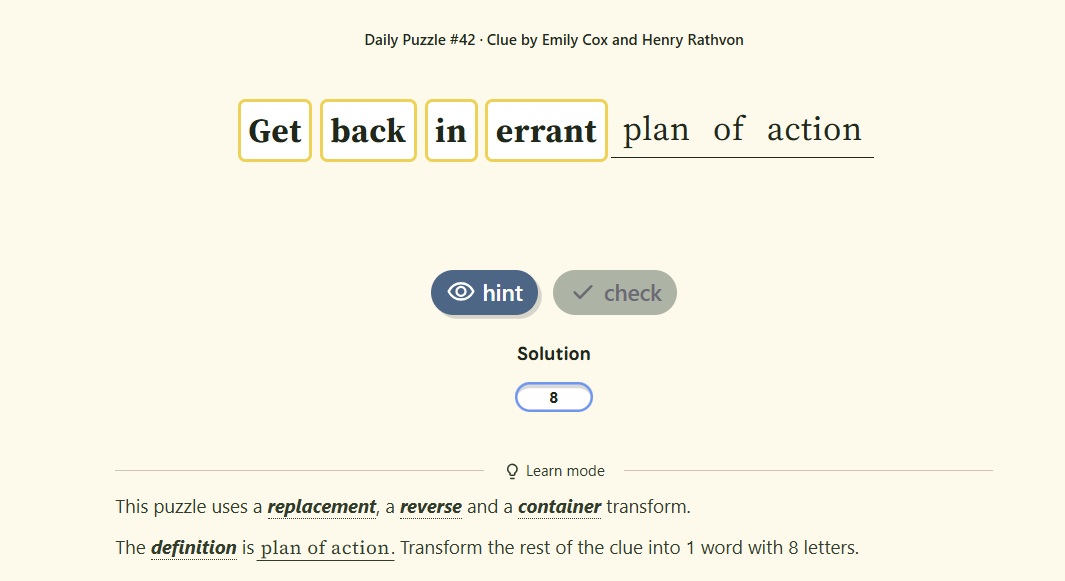
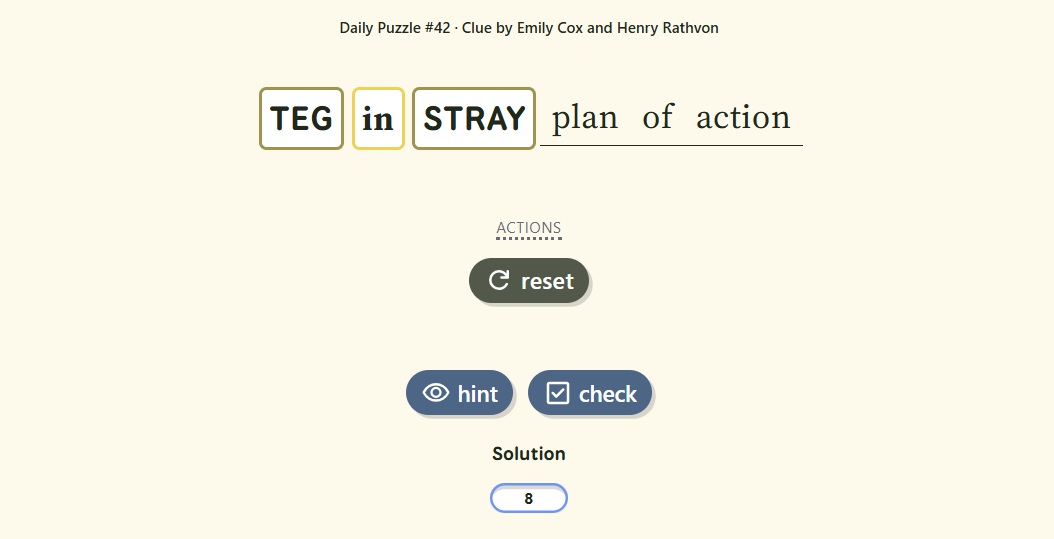
So the puzzle starts you off by highlighting the definition part of the clue: “Plan of action.”
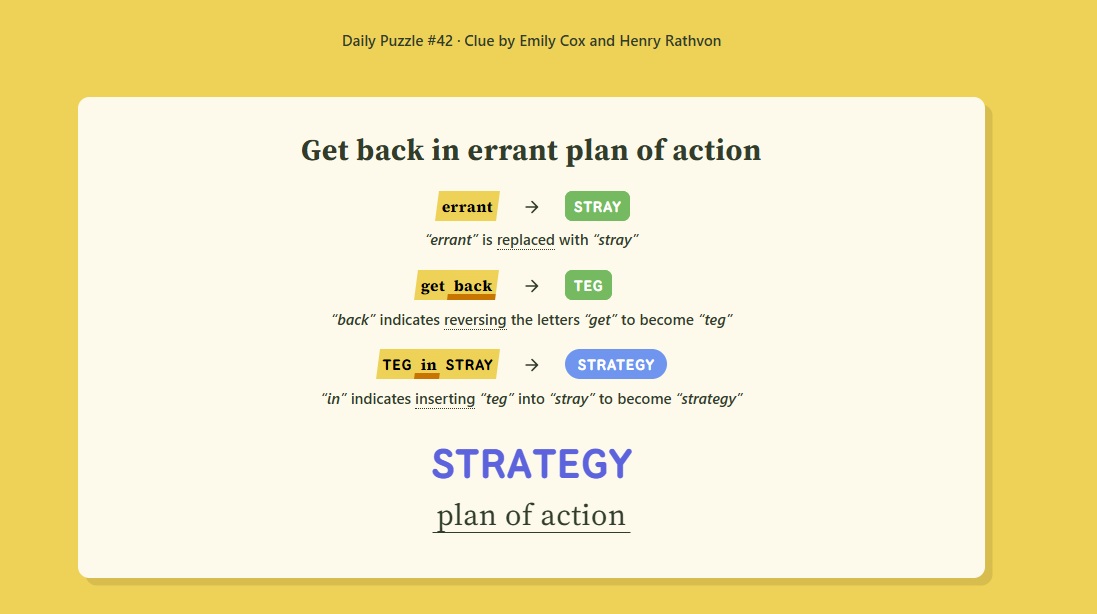
We must now unravel how we get an 8-letter answer from what remains: “Get back in errant.”
Thankfully, the puzzle also prompts you with which particular forms of cluing manipulation you’ll need to use: a replacement, a reverse, and a container.
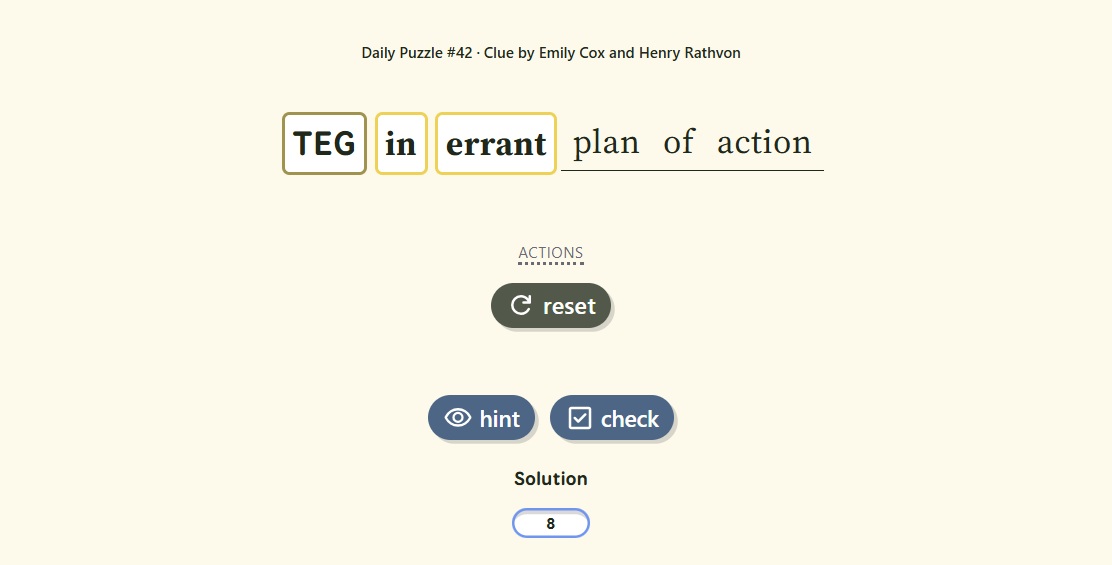
I found the reverse quickly. GET BACK told me literally what I needed to do, so I highlighted the entire phrase, which gave me the options to replace the phrase with a synonym like RECLAIM or RETAKE, or to literally turn “get” back, reversing it to read TEG.
“In” tells me the container aspect of the puzzle. TEG would be placed inside of something. But I couldn’t think of any way to play with the word ERRANT that would get me to a synonym of “plan.”
I clicked on ERRANT and the program gave me several replacement options: Wrong, Stray, and Guilty.
I clicked on STRAY, which replaced ERRANT in the clue.
Finally, I highlighted all three, allowing me to place TEG in STRAY, giving me the answer word for “plan of action”, STRATEGY.
It’s a really playful, visual way to describe how Cryptic Crossword cluing works, giving solvers chances to try replacements and anagrams, then reset when they’ve gone astray.
I don’t exactly expect it to take the world by storm the way Wordle did, but there’s something wonderful about a puzzle that trains you to be better at another kind of puzzle. It’s puzzly community and encouragement, which is one of the best things about being a solver.
What do you think of Parseword, fellow solver? Are you a Cryptic Crossword fan? A Parseword enthusiast? If not, will this get you to try the British sibling to our beloved American crosswords? Let us know in the comments section below! We’d love to hear from you.
I was surfing social media on my lunch break when I stumbled upon a video on Twitter (not X, never X) featuring a giant balancing game with Tetris-style game pieces.
It’s called Tetris Tumble XL and it’s apparently available at Walmart. And although it’s not a one-to-one gameplay comparison, it is interesting to see Tetris super-sized as a gaming experience.
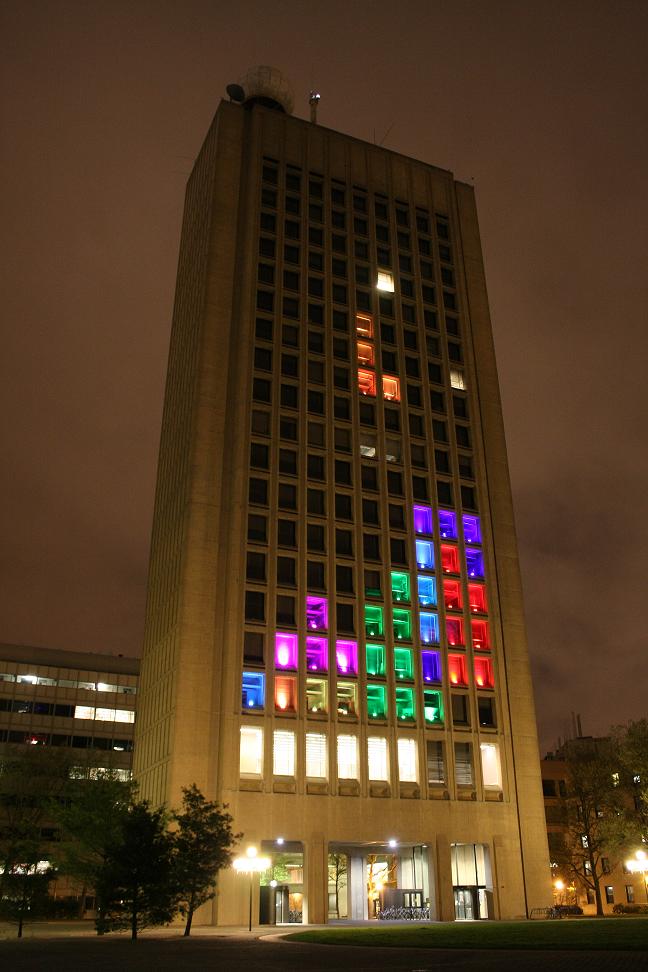
It’s neat. It’s not building-sized Tetris neat, but it’s neat.
Of course, it’s only the latest example of a traditional game experiencing Godilla-like growth to turn it into a party game.
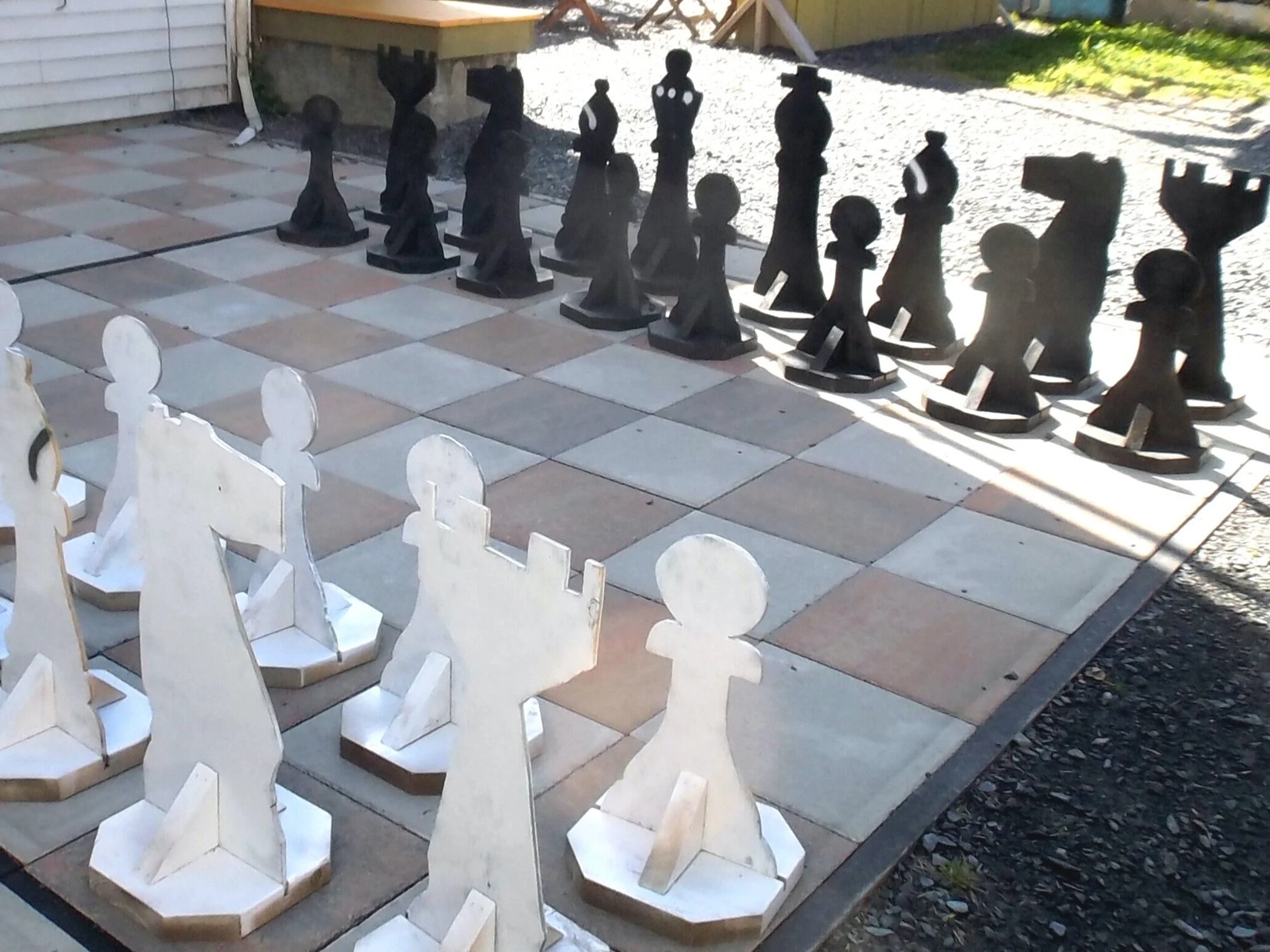
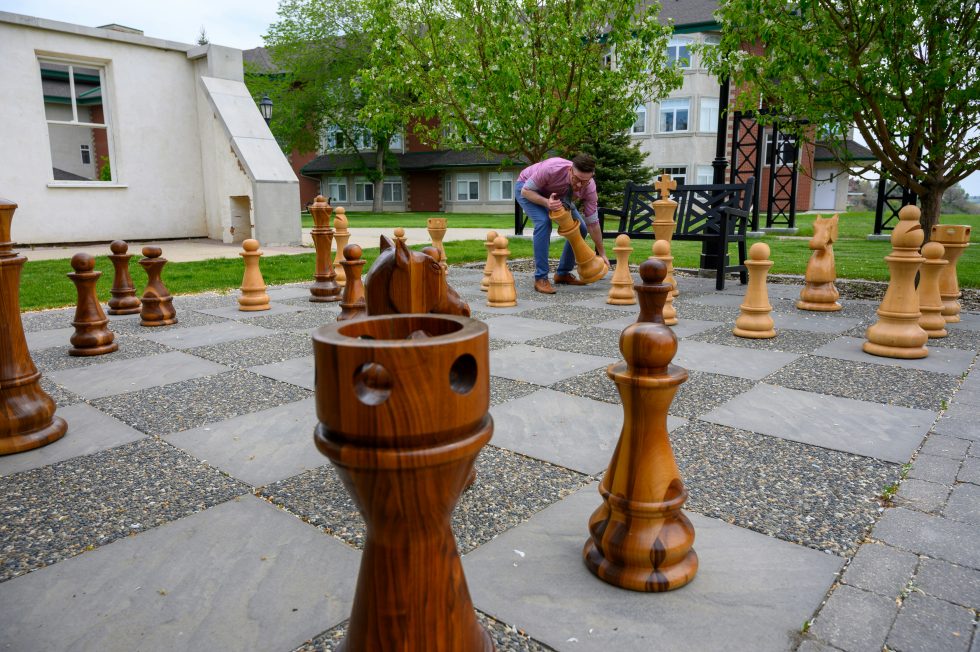
The most traditional form of “board game, but big” is undoubtedly Chess.
There are literally dozens of places where you can enjoy a gargantuan game of Chess. Wooden cutouts, full wooden pieces, sculpted stone… the aesthetics are all part of the experience.
Plus you can easily play with humans as the chess pieces, which adds a fun element to the sheer scale of the game. I’ll never forget seeing a game just like that decades ago in an episode of The Prisoner.
There’s something about people as literal pawns being controlled that adds some serious philosophical spice to the game’s proceedings.
Now, this isn’t playable because there’s no game board, but if we’re all being honest, did anyone actually play the game? Or did you simply set up the contraption and let it tumble and turn and clatter in delightful motion?
This 25-ton version of the board game’s colorful selling point toured festivals and fairs for years, concluding with a car-smashing weight rather than a plastic diver and a little net over some hungry mice.
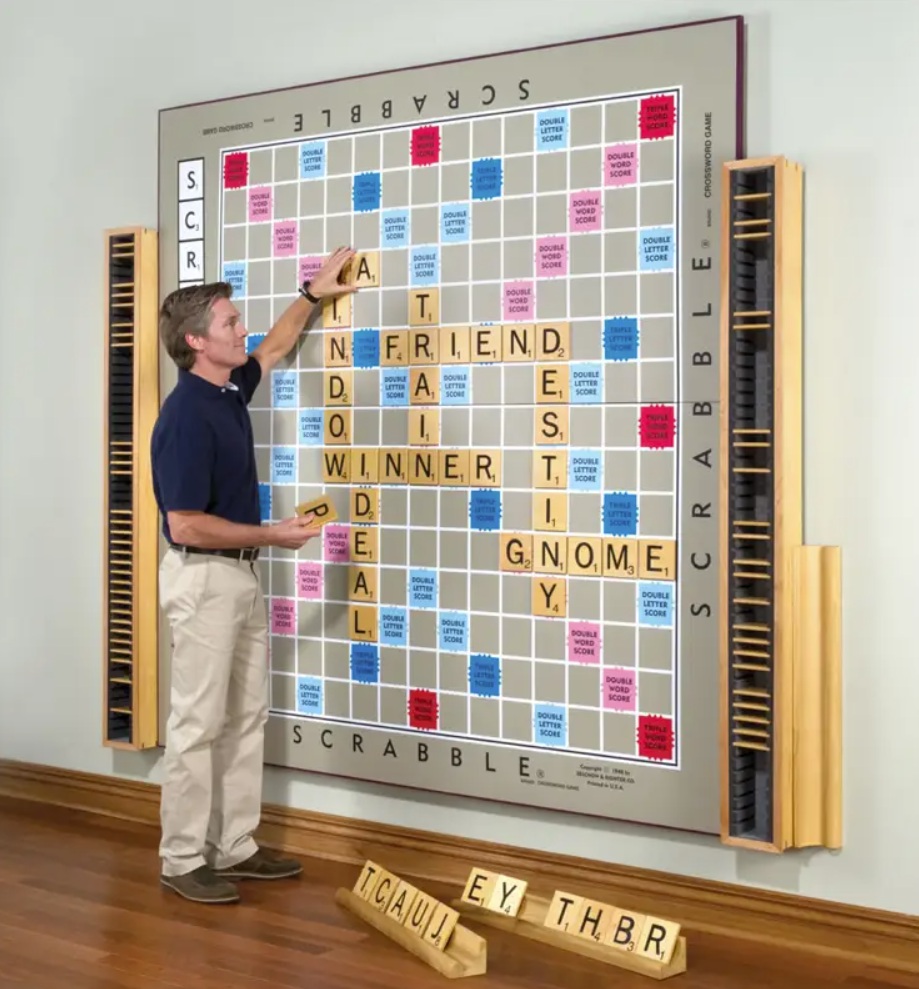
Hammacher Schlemmer used to sell a wall-sized giant Scrabble game that they dubbed The World’s Largest Scrabble Game, and it retailed for $12,000!
There are some more affordable large Scrabble games out there now for players to enjoy on a sunny day outside, but nothing that rivals this Hammacher Schlemmer monstrosity.
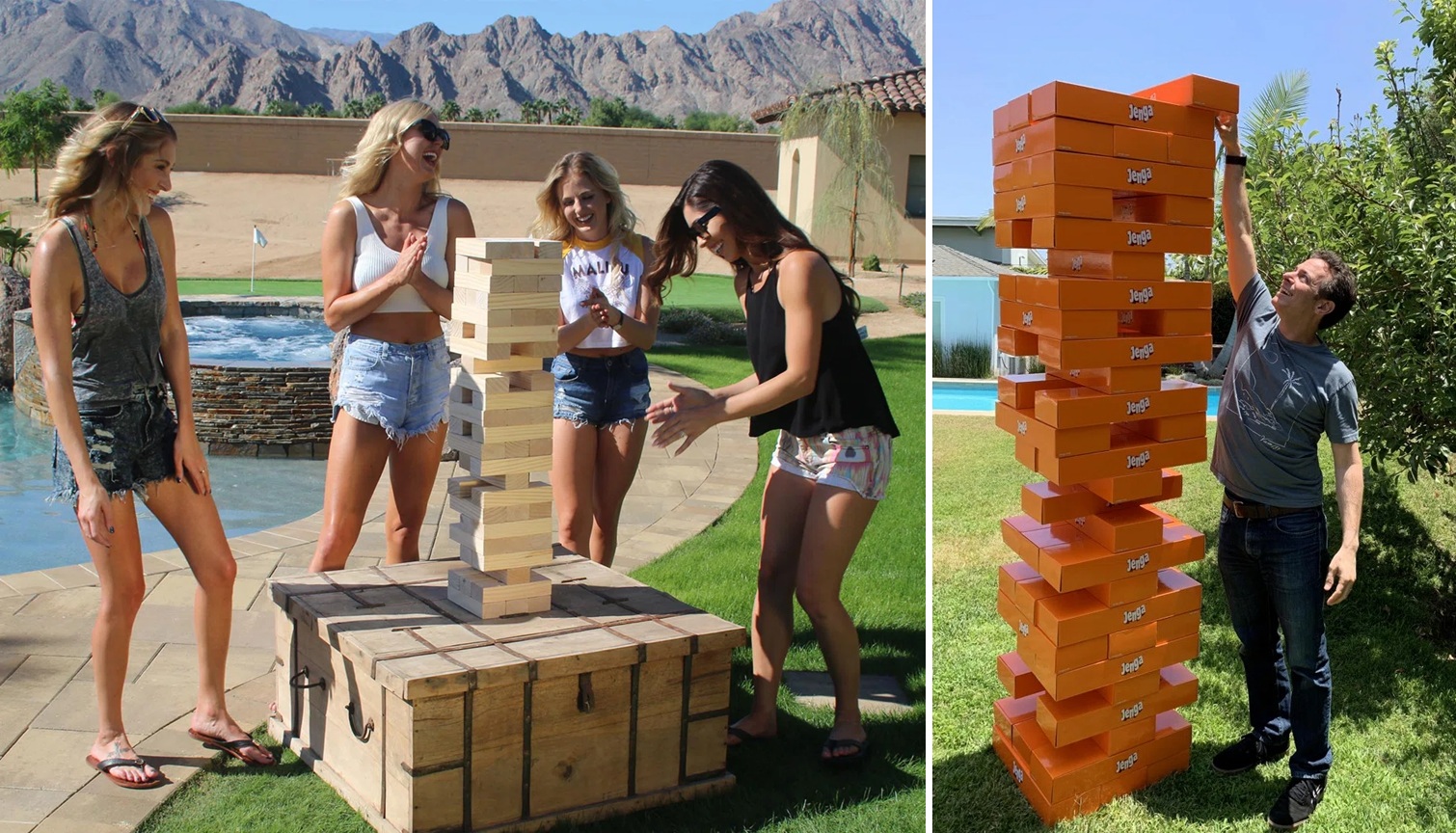
You’ve probably seen outdoor versions of Jenga. There’s a wooden version that still remains relatively portable, and an XXL gigantic edition that dwarfs the man playing it in the photo.
I’m not a huge fan of the cacophony that ensues when a regular game of Jenga ends, so I don’t really enjoy the larger versions either. Give me Catch the Moon any day, or maybe a nice round Junk Art or Rhino Hero instead.
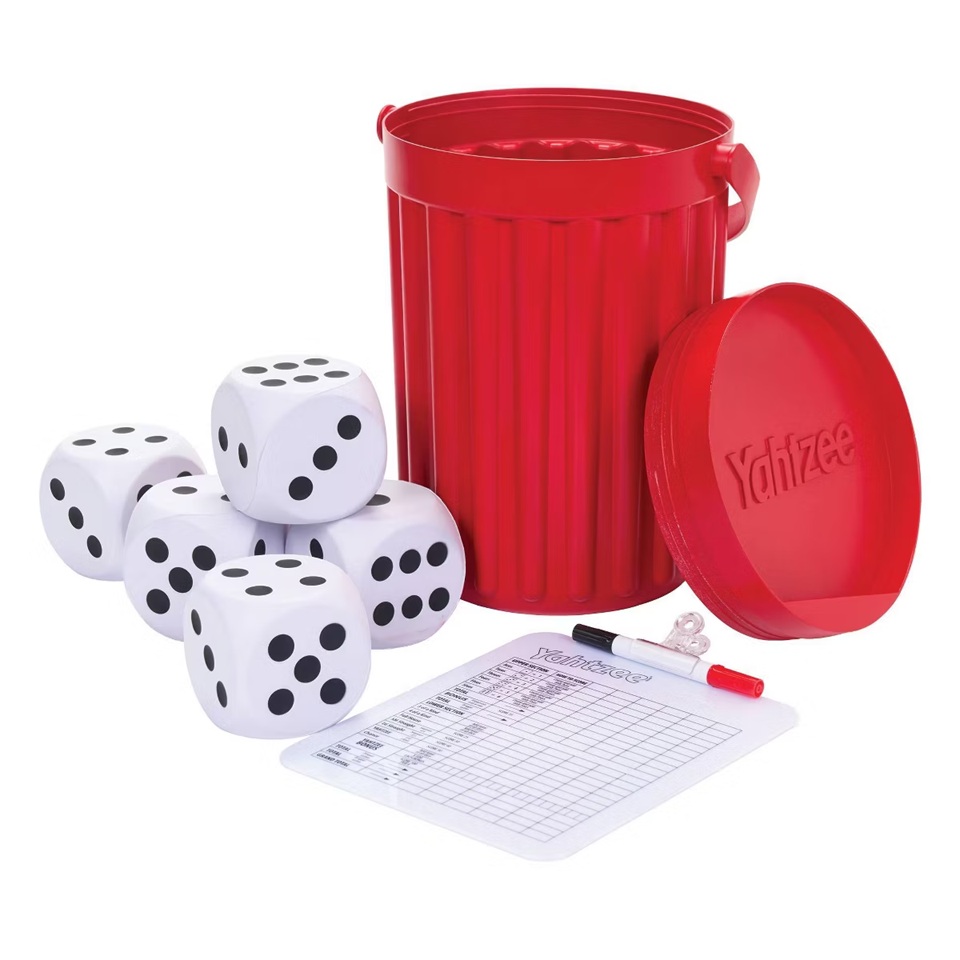
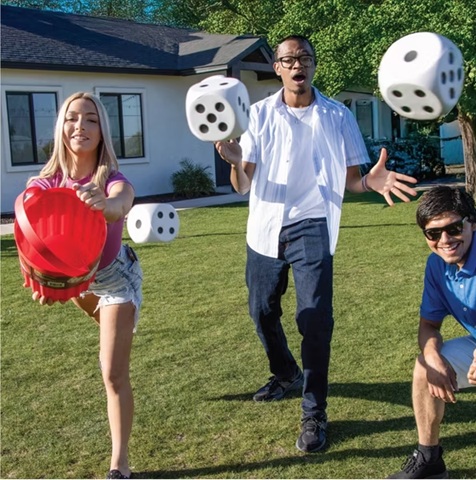
Have you ever wanted to play Yahtzee but wished the cup for the dice was garbage-can sized? Well, your mediocre dream has come true! With big foam dice, you can turn Yahtzee into a yard game.
Look at how much fun these people are having! And no, I did not crop the photo that way. That’s the promotional photo as intended, crouching half-man and all!
Operation has always been a finicky little beast of a game, and it seems like no two versions of the game are the same.
Some are more sensitive, while some — like the version at my babysitter’s house — had a buzz that was downright painful.
But this giant version? I could see this being a pretty fun challenge, depending on how heavy the pieces are.
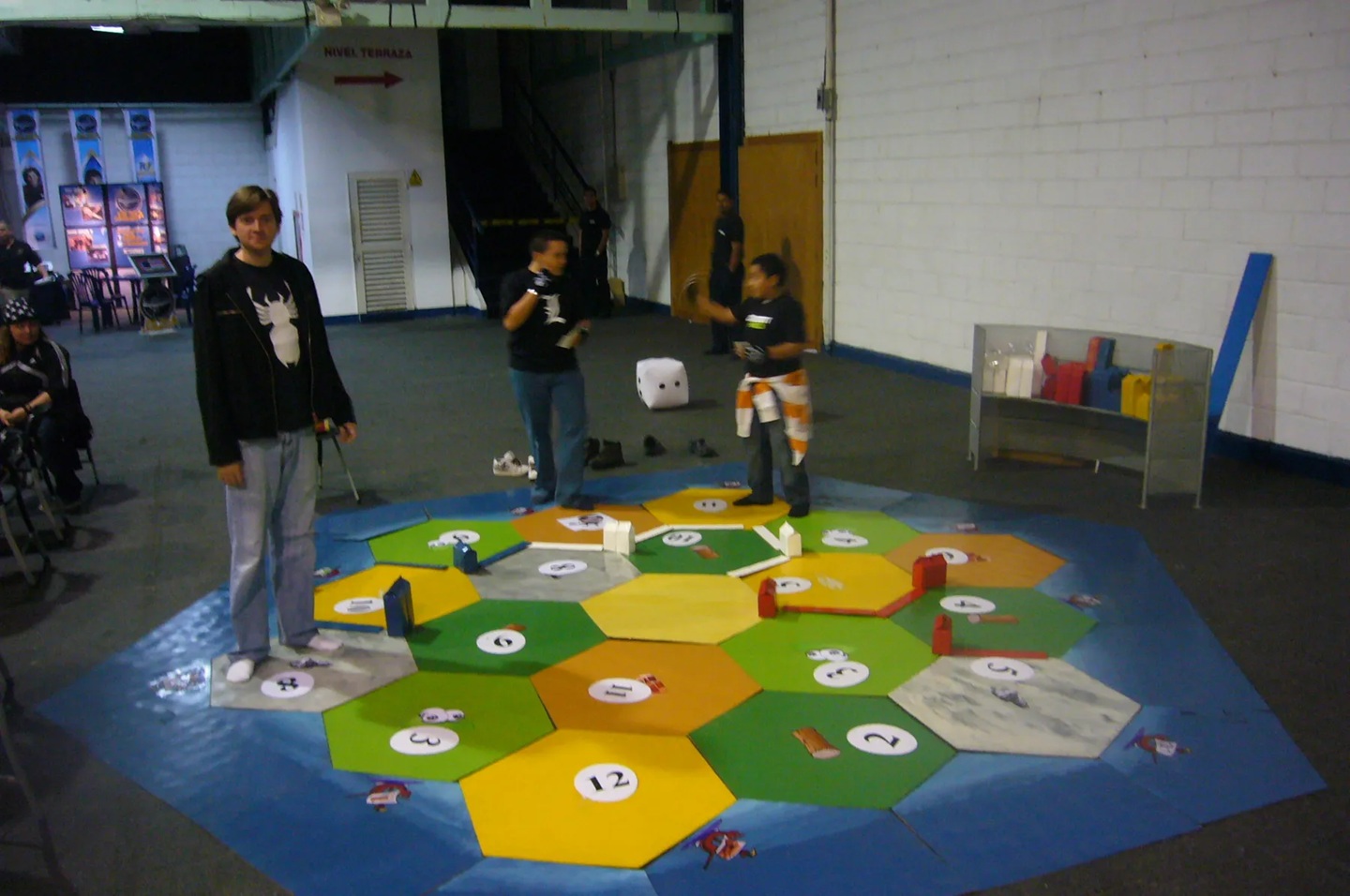
Family-Size Settlers of Catan, Caracas Comic Con 2011
Settlers of Catan is not just a modern addition to the classic board game pantheon. It’s also the only possible challenger to Chess’s dominance as a build-it-big board game.
Life-size versions of Catan have been played at numerous gaming conventions and other events, and it’s hard to get an accurate number of how many giant sets of this resource management game are out there in the wild.
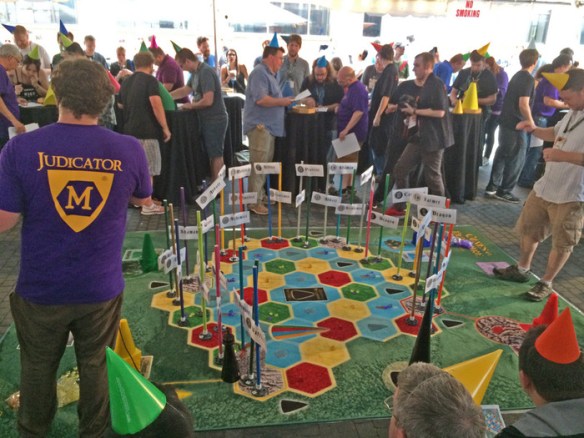
That’s not the case for the fictional game turned real life game Cones of Dunshire. As far as I know, there’s only one larger-sized version of the game, produced for a charity event at GenCon by Mayfair Games (the same company that created Settlers of Catan).
And you know, for the most part, I can see the appeal of these inflated, occasionally inflatable versions of classic games.
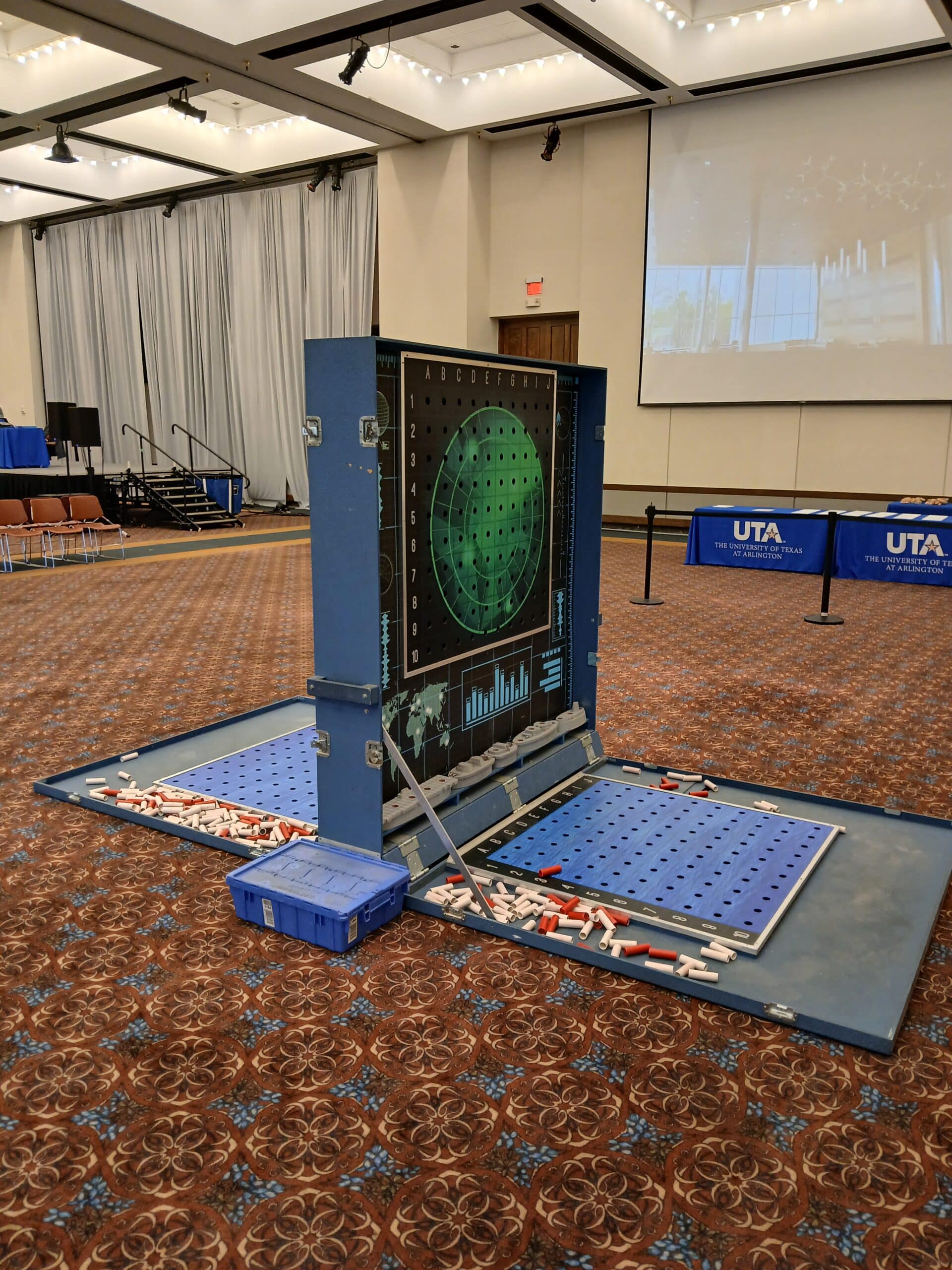
I take that back. I do not get how making Battleship bigger makes it more fun in any way, shape, or form. It seems so easy to cheat, intentionally or otherwise. Unless I actually get to lob stuff at my opponent’s ships over the wall, I’m not interested.
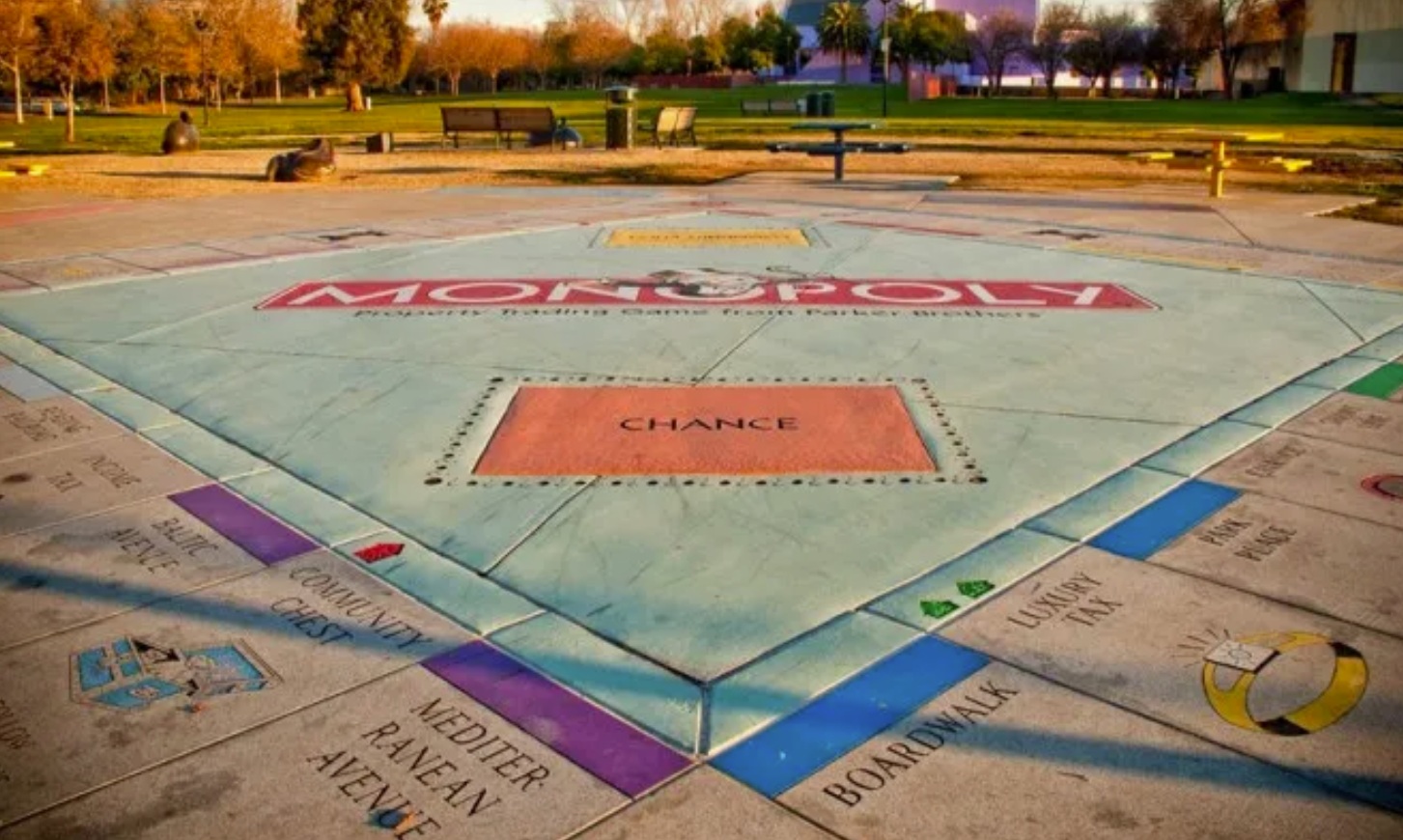
And while this giant Monopoly board is impressive, I still don’t think it’s enough of a whimsical gimmick to actually get me to play Monopoly.
Clearly there is a market for oversized versions of classic games. And I have some suggestions for board games that should, nay, MUST make the jump to human-sized for the betterment of play all over!
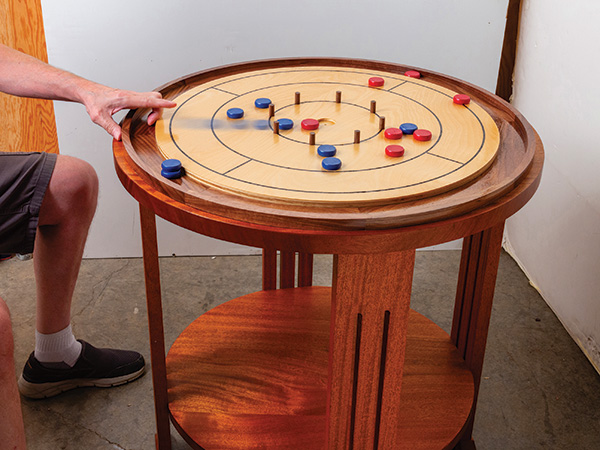
Let’s start with a Canadian classic: Crokinole.
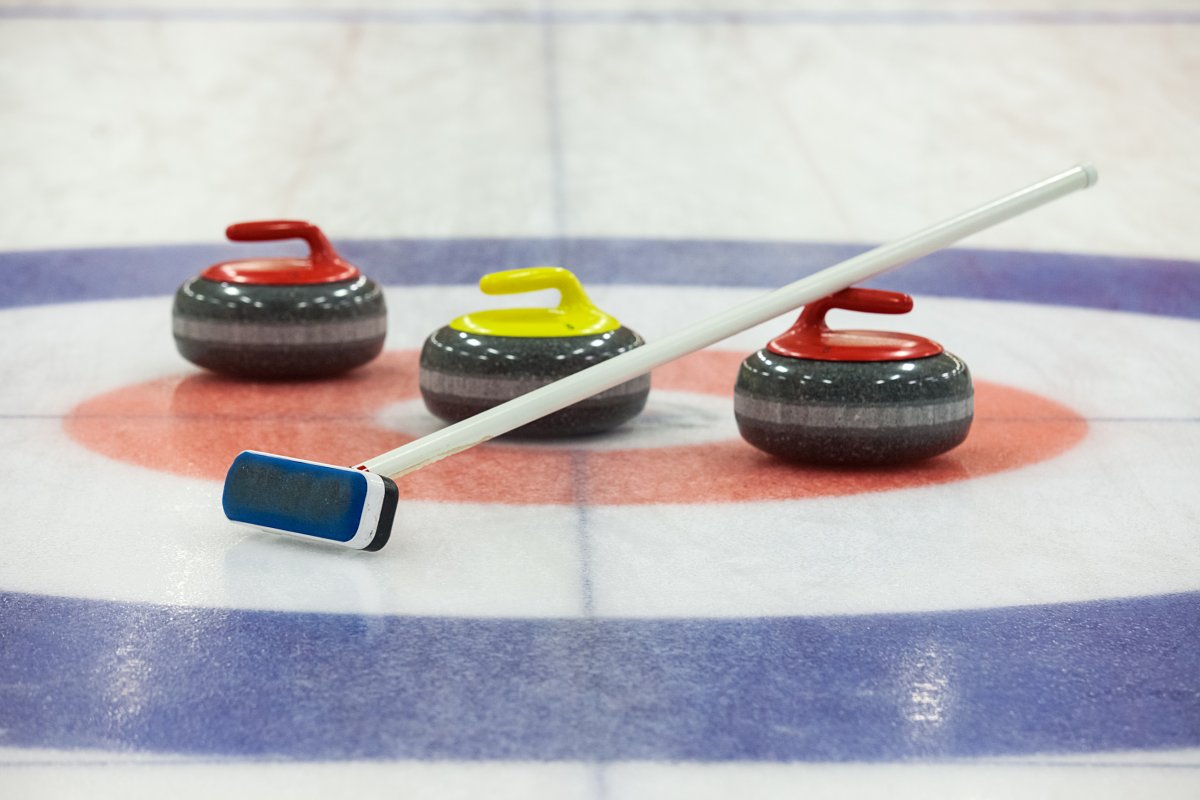
This would be so simple. Get a bunch of curling stones, a hockey rink, draw out the board, and secure some posts with sandbags or something. Then get tossing!
Next, there’s Chutes and Ladders.
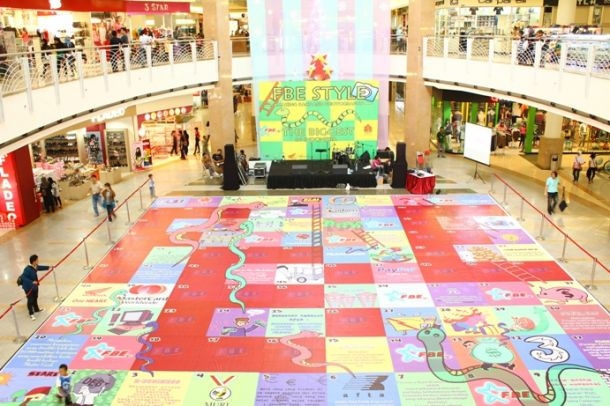
Yes, there was a life-size version of this from 2010 when Indonesia’s University of Surabaya honored the original version of the game — Snakes and Ladders — with a 45-foot game board and 105 players.
But that’s just a big flat board. I want a version with actual ladders and actual chutes! (Sorry, no snakes in this one.) Imagine if we could find the right hill OR wide-stepped public staircase so that you could actually ascend the board and slide down in delightful misfortune! That sounds awesome.
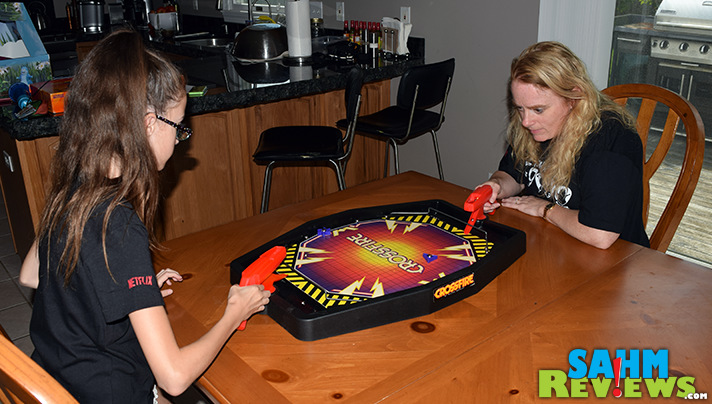
In this game, you used little marble-spewing guns to knock targets into your opponent’s space. Imagine getting to sit sidecar-style next to a dodgeball launcher and trying to outwit your opponent!
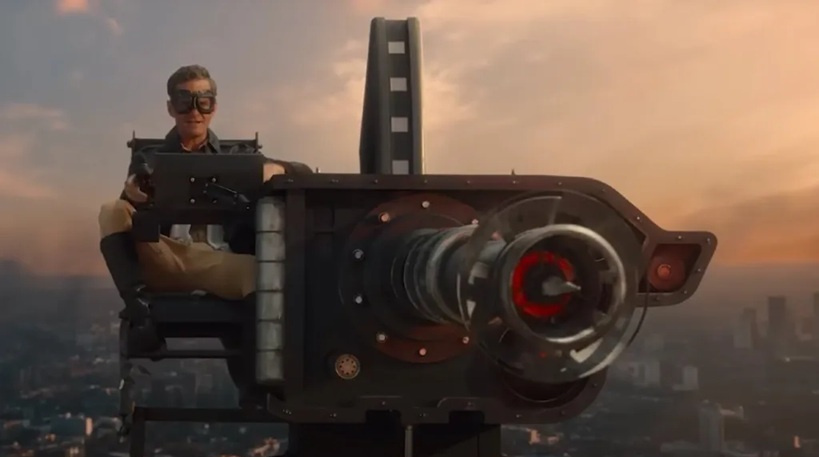
Sorta like this, except with dodgeballs instead of a laser.
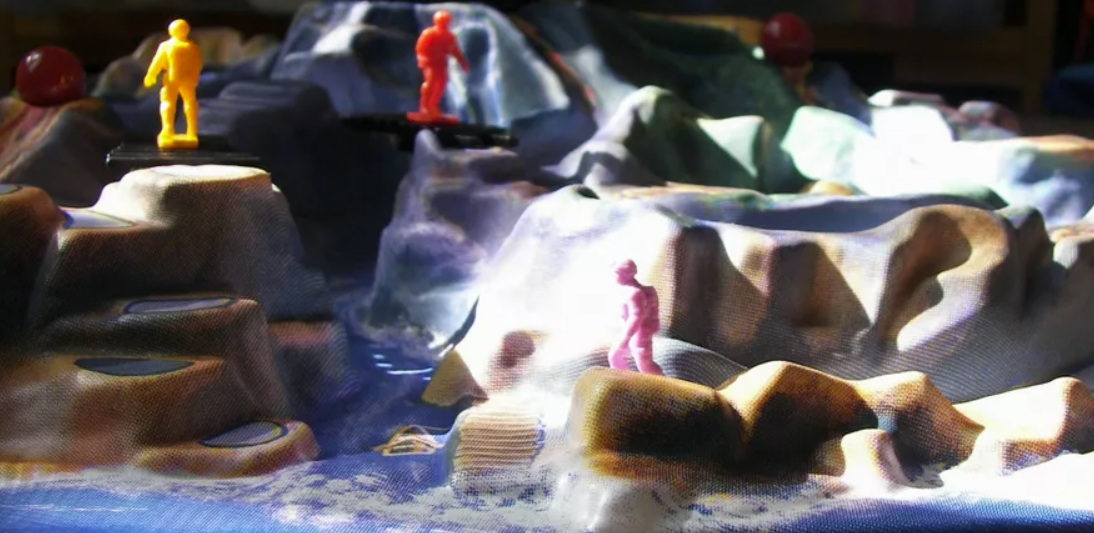
Now, if you’ll excuse me, I need to get back to constructing my life-size version of Fireball Island.
I’ve almost got all the kinks worked out of the Indiana Jones-esque giant fireball chase sequence.
Oh, hey, I need a couple of game testers. You’re pretty fleet-footed, right, fellow puzzler?
Yesterday marked a sad anniversary in the history of crosswords, but one that I think is worth talking about.
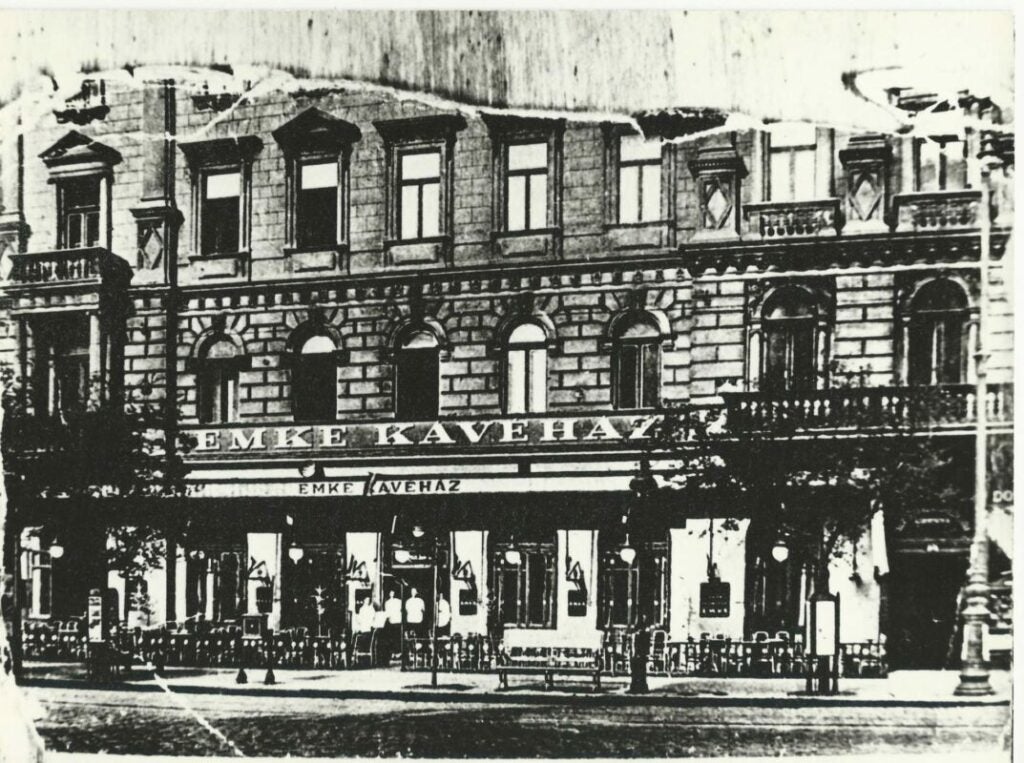
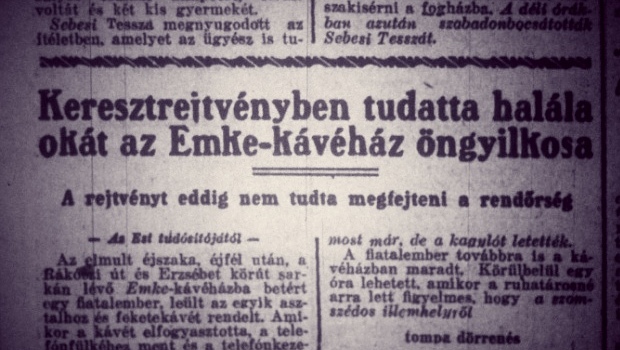
On March 4th, 1926, a 25-year-old waiter in Budapest, Hungary committed suicide at the Emke Kávéház (the Cafe Emke or the Aero Cafe), near the corner of Rákóczi út (Rákóczi Way) and Erzsébet körút (Elizabeth Boulevard).
His name was Antal Gyula. He had come in just after midnight. He ordered a coffee, and used the cafe’s telephone to call the same number repeatedly, without success. Approximately an hour after he entered the cafe, the cloakroom attendant heard a loud bang sound from the bathroom. She opened the door as a second bang noise rang out. She found Gyula lying on the floor, pistol in hand.
That was the sad end of Antal Gyula, a young man who had, in his own words, lived in “misery and unemployment” for some time. He was already struggling with depression, and had been evicted from his apartment a few days earlier. His landlord claimed Antal left his clothes behind to help settle his debts.
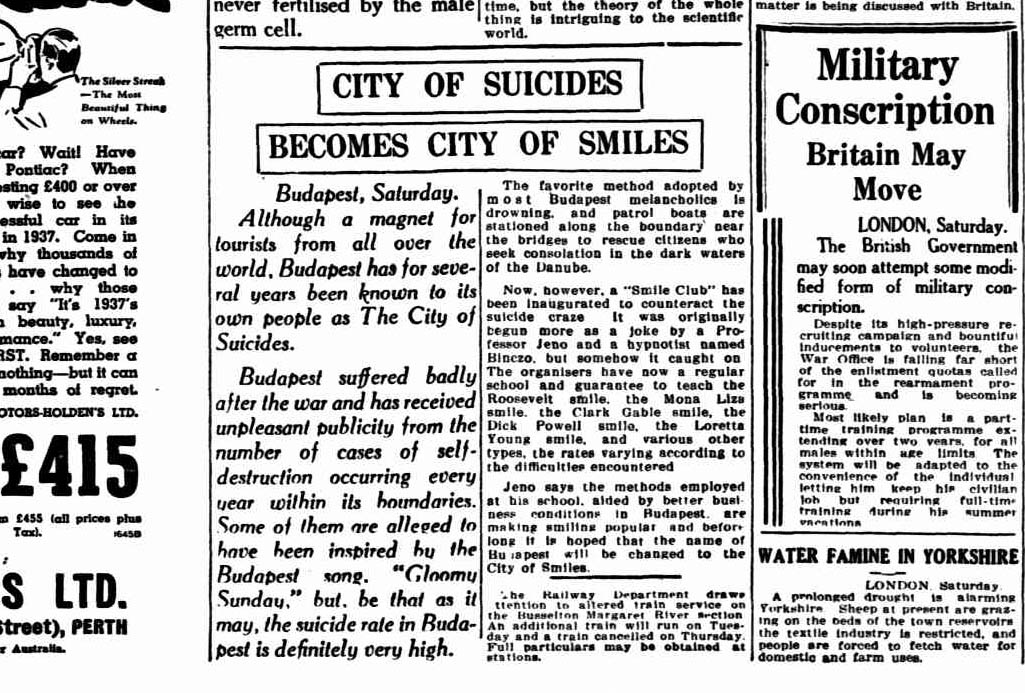
In most cases, that would have been the end of the story. A young man’s life ended far too soon. Sadly, this was not an uncommon occurrence in Budapest at the time, as Budapest had earned a reputation as a suicide hotspot. (On the same day, a newspaper reported 10 other attempted suicides.)
But Antal’s story persists a century later. Why?
Well, the detail that pushed this event from a sad footnote into the territory of urban legend was what police found on Antal’s body.
A suicide note accompanied by a crossword puzzle.
According to the note, the crossword would offer more of a glimpse into Antal’s fatal choice: The solution will give you the exact reasons for my suicide and also the names of the people interested.
(Before realizing Antal had constructed the puzzle, the police had originally surmised that he had ended his life because he couldn’t solve the puzzle. Which is an absolutely insane conclusion to draw.)
The crossword was taken to police committee headquarters, where detectives worked on both the crossword and the case for a month, but apparently they failed to solve it or decipher Antal’s intended message. Supposedly the police then asked the public for help solving the crossword, but there are no records to indicate anyone ever solved the puzzle, nor is there any sign of a copy of the puzzle itself in publicly available records.
Although Antal’s story floated around newspapers and the world of crosswords for decades, it was long believed to be an urban legend, one of the curious anecdotes about the mania of crossword fandom in the 1920s.
That was the case until Marinov Iván, a Hungarian urban legend enthusiast, explored endless strips of microfilm and unearthed the original article about Antal’s death in Az Est, an evening daily newspaper that ran from 1910 to 1939.
Antal’s sad tale was true. Sadder still, unless that crossword turns up in some police archive, none of us will ever know what he meant, or why exactly he chose a crossword as his final missive.
Maybe it was just for the notoriety. I would probably never have come across his name if it wasn’t connected to crosswords. It could have been deliberate, a curiosity designed to ensure that people would know his name, that the ripples in the water he left behind would last longer, travel farther. (A mention in Thomas Pynchon’s novel Shadow Ticket cynically suggests just that.)
Whether he intended to or not, he has succeeded in this regard.
“Why?” is a question that invariably follows in a suicide’s wake. Having lost several dear friends and loved ones to suicide myself, I’ve spent countless hours trying to understand why they made that single, irrevocable choice.
As T Campbell quite eloquently put it, “we may never know Gyula’s last message to the world. And that’s the real tragedy of suicide—all those chances to explain or continue one’s own story, snuffed out.”
Suicide leaves a crater in the lives of those left behind. Unanswered questions, unresolved feelings, persistent doubts about possible wrong turns and other choices that could have been made, the soul-crushing wish that you could have done more to intervene, to avert, to help. We don’t know who mourned Antal after his death. Maybe they were among the people named in his crossword.
But I do know this… I’d rather still have the person than the mystery.
Crossword season is here and all sorts of events for solvers are approaching fast. The American Crossword Puzzle Tournament is a little more than a month out, registration is open for Westwords, the preseason puzzle for the Boswords Spring Themeless League was launched last night, and the Spring Themeless League starts in earnest next Monday!
But it’s not just tournaments that are gearing up. Crossword-fueled charitable organizations are hard at work making puzzles and encouraging fundraising efforts for wonderful causes.
There’s a long history of activism and advocacy through puzzles. Women of Letters, Queer Qrosswords, Grids for Good… these are just a few prominent examples of constructors and creators donating their time and puzzly efforts to benefit the world at large.

 PuzzCulture