Puzzmo is one of the best puzzle game apps out there. Their puzzles are terrific, their games are as diverse as they are engaging, and if you’re not using the app, you’re missing out.
And they just put out a request for puzzle game submissions to add to their dynamite lineup:
We’re thinking about having a handful of games from members of our community appear on Puzzmo later this year. We’re always working towards Puzzmo being the place for thoughtful puzzles, so this project is us trying to connect our platform and community with interesting new games that otherwise don’t have a perfect place to be noticed and played on the internet.
But be timely about it, the window for submissions only lasts until October 2nd!
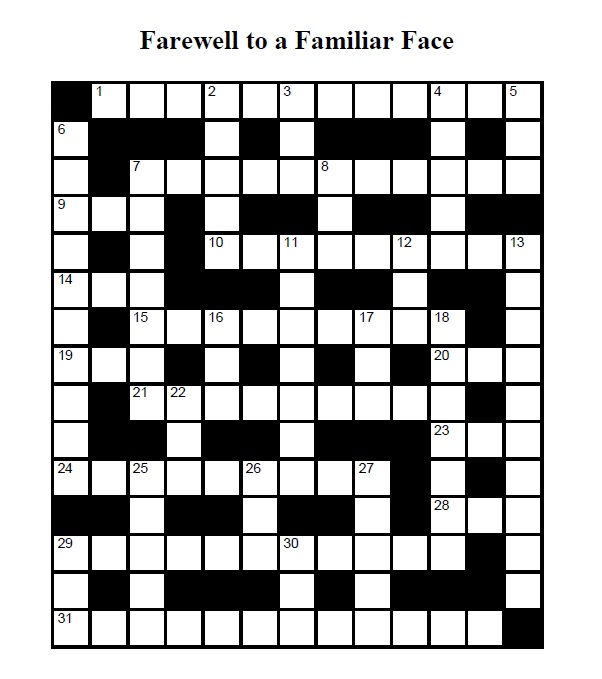
And speaking of puzzles, I’ve got one for you to solve today.
I didn’t have time to finish this one last weekend, so sadly, it’s not as timely as I’d like.
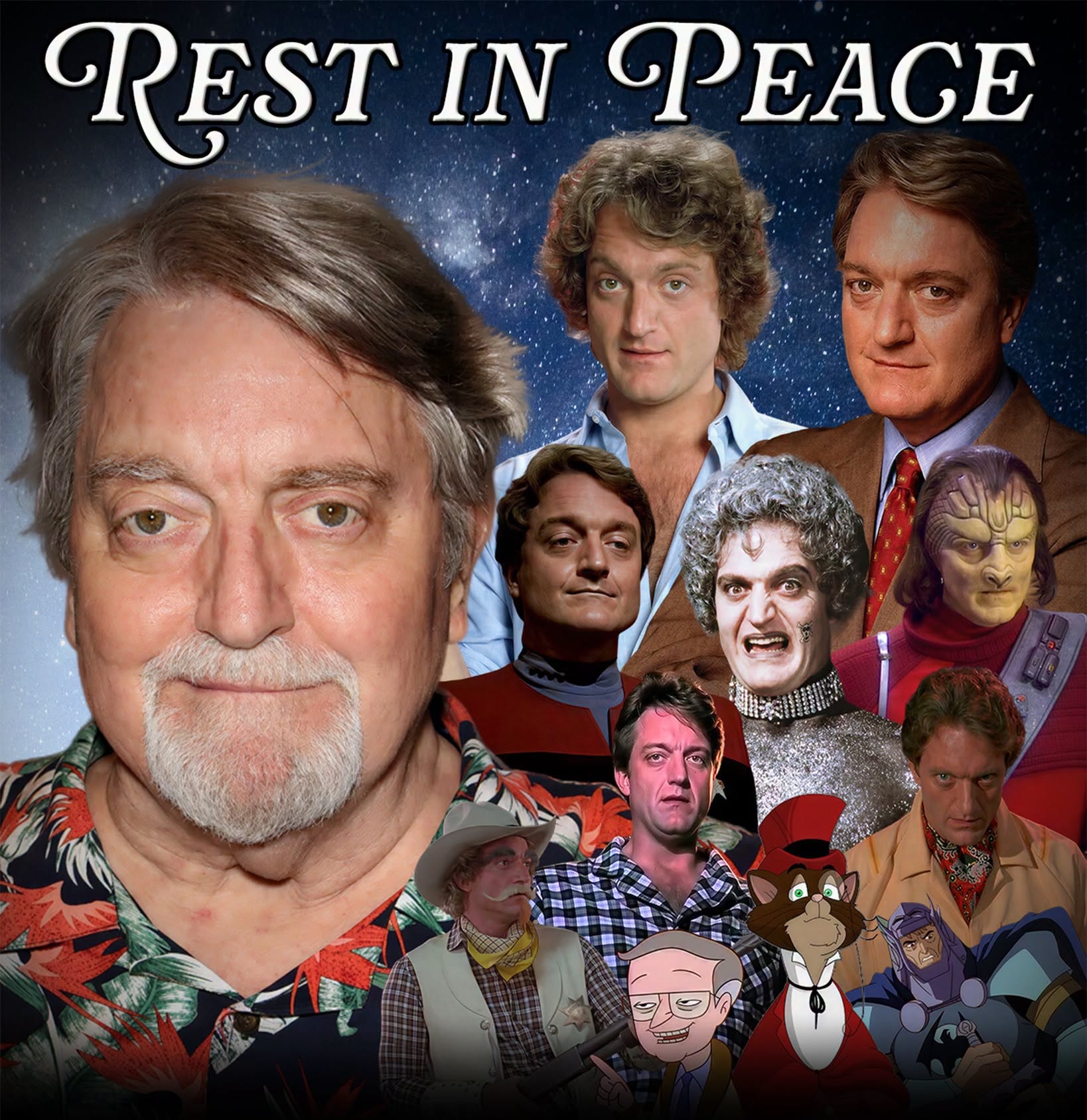
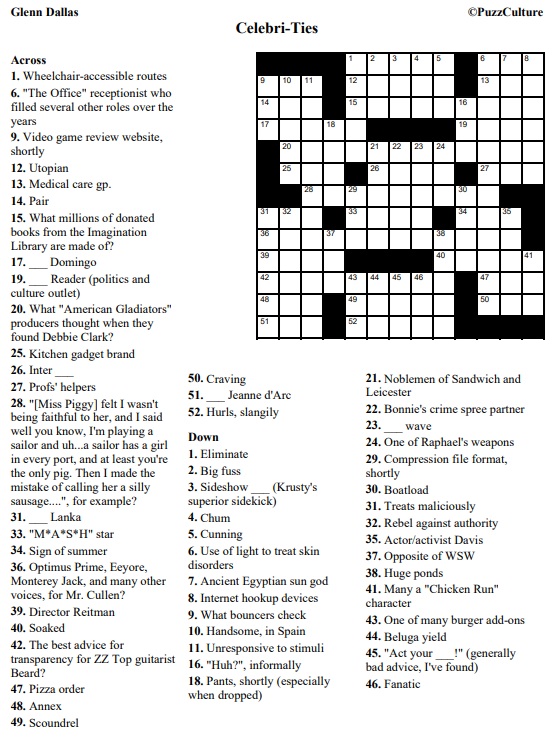
One of my favorite character actors, Gerrit Graham, passed away recently, and I wanted to do a little tribute puzzle to him. Rather than a usual crossword grid, I thought I’d use a cryptic-style grid, so I could put more themed entries in the puzzle than a traditional crossword would allow.
Even with this looser format and fewer crossings, I still couldn’t fit in all the film and TV references I wanted to. I had to leave out the films Used Cars, The Little Mermaid, and Police Academy 6: City Under Siege (which sucks, but he’s GREAT in), as well as noteworthy appearances on Star Trek: Deep Space Nine, Star Trek: Voyager, Parker Lewis Can’t Lose, Tales from the Crypt, Sledge Hammer!, The Tick, and Babylon 5. (He also wrote teleplays for The Twilight Zone!)
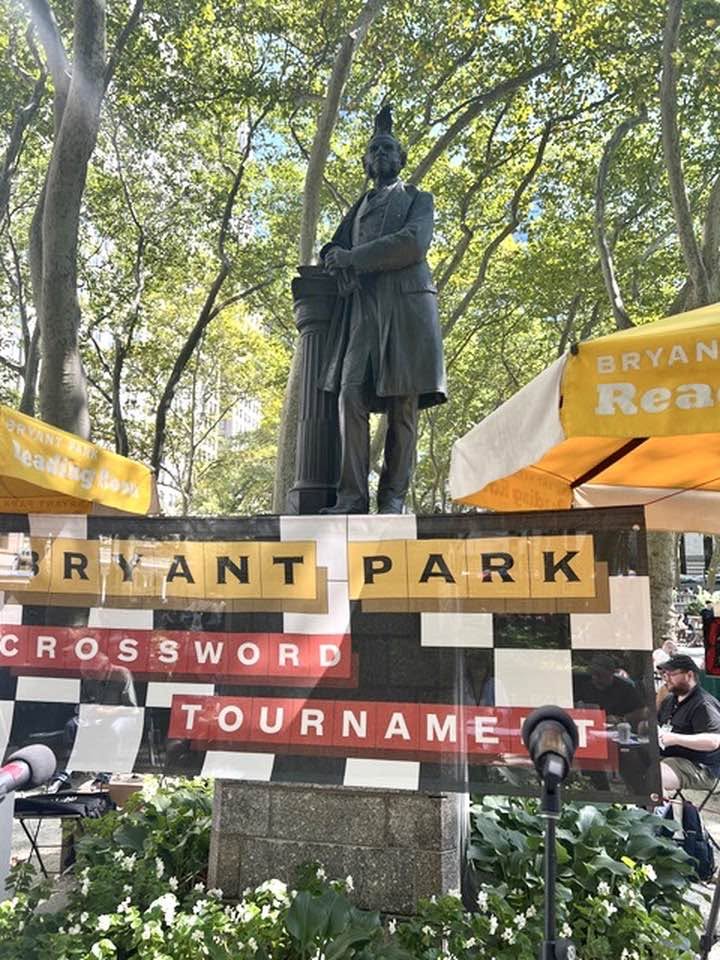
Although you’re welcome to walk in and participate, things go much smoother if you register ahead of time. Click here to get started!
They’ve even borrowed Will Shortz’s clock for the tournament!
With three Mike Shenk puzzles waiting for competitors, you should absolutely make an effort to participate in this year’s event.
The Boswords Fall Themeless League Returns Soon!
And speaking of crosswords, there’s still time to register for this year’s Fall Themeless League, which starts up on Monday, October 5 (though they have a preseason puzzle launching the week before on September 28th).
If you’re unfamiliar, the Boswords Fall Themeless League is a clever weekly spin on traditional crossword tournament-style solving. Instead of cracking through a number of puzzles in a single day (or two), the Fall Themeless League consists of one themeless / freestyle crossword each week, scored based on your accuracy and how fast you complete the grid.
Look at that lineup of talent!
Each week’s puzzle only has one grid, but there are three sets of clues, each representing a different difficulty level for solvers. Smooth is the least challenging, Choppy is the middle ground, and Stormy is the most challenging. (When you register to participate, you choose the difficulty level that suits you best.)
Each week’s puzzle is accompanied by a one-hour broadcast on Twitch, starting with a preseason puzzle and broadcast.
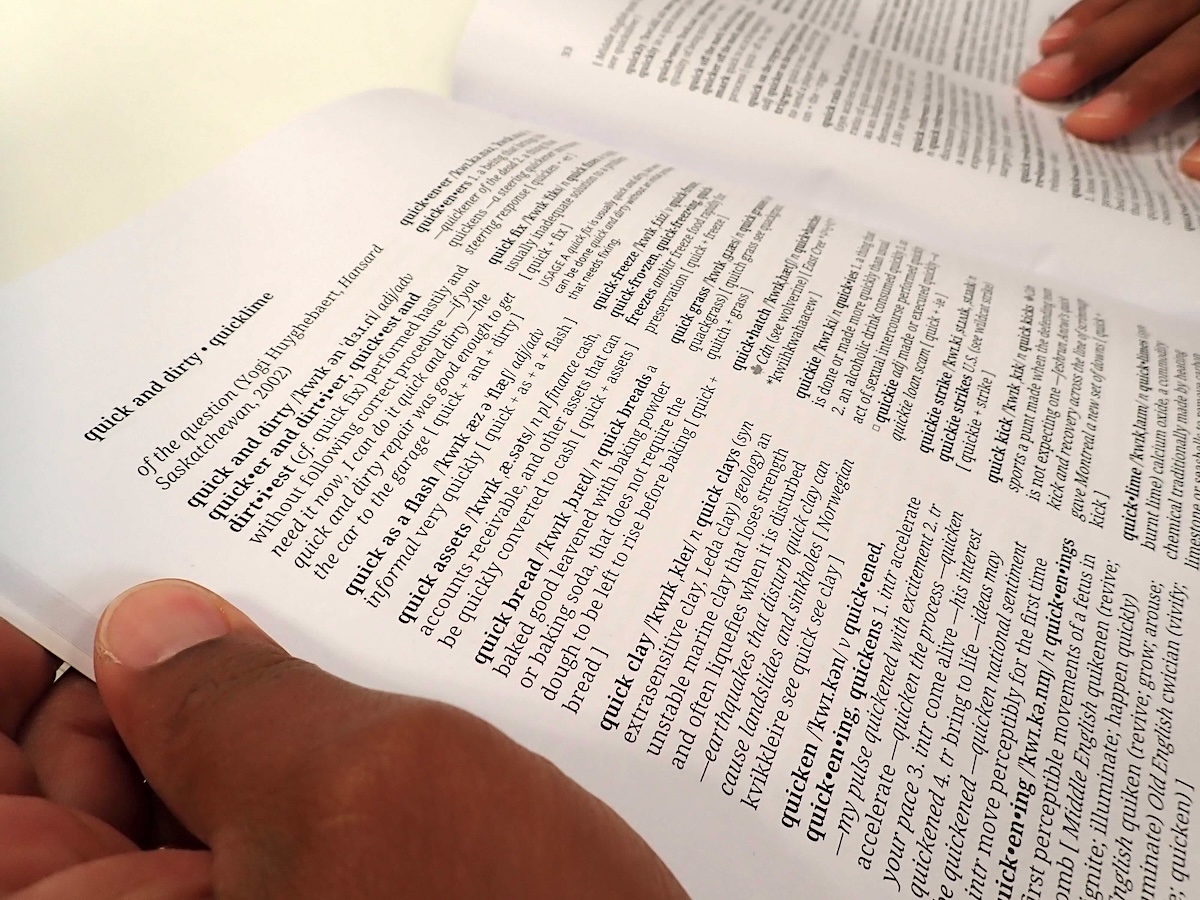
The Tyee dropped an article recently about a group of Canadian linguists, the Society for Canadian English, that are working on a new Canadian English Dictionary.
And they’ve started with the letter Q.
“Q is a short fascicle, but not as trivially so as X, and it’s a favourite among Scrabble players,” its quintet of authors explained, in an article published in Dictionaries: The Journal of the Dictionary Society of North America.
“Q has plenty of quite quintessentially quirky and quotable words that are useful in attracting attention to our project.”
They wish to raise awareness of their undertaking, not just for public support, but to find a publisher and secure funding for the project.
Check out the full article here. It’s an in-depth and fascinating exploration of the intersection of language, culture, play, and politics.
Two Puzzle Games to Try Out!
One of the coolest things about running PuzzCulture is getting to learn about new puzzles and creators in the puzzle space. Several enterprising constructors have reached out to me recently, and I’m pleased to help spread the word about their puzzly endeavors.
The first is Esteban Martin’s daily decathlon of click-and-drag puzzles, Roughly.Is.
Each day, solvers are presented with ten minigames that pose a question for the reader. Some are simply trivia, others are guessing games or games of skill.
I’m a sucker for puzzles that teach me things, so the games of Roughly.Is are a delight. How big is a blue whale, compared to a Saturn V rocket? What did a steak cost in Zurich in 1970? Where do bison live?
The variety of topics means you’re sure to learn something new or find something to entertain you for a minute. What more can you ask for?
Check out Roughly.Is for all ten minigames, no ads and no login required.
But if you’re looking for a meatier daily challenge, consider Jeff Doka’s Morning Mystery.
Part of the BossFeed puzzle lineup, Morning Mystery is a logic puzzle that invites solvers to use the facts at hand to determine the puzzly truth.
The twist? You can’t trust all of the facts you’re presented with. Some are guaranteed to be genuine, but others could be the characters in the mystery misleading you.
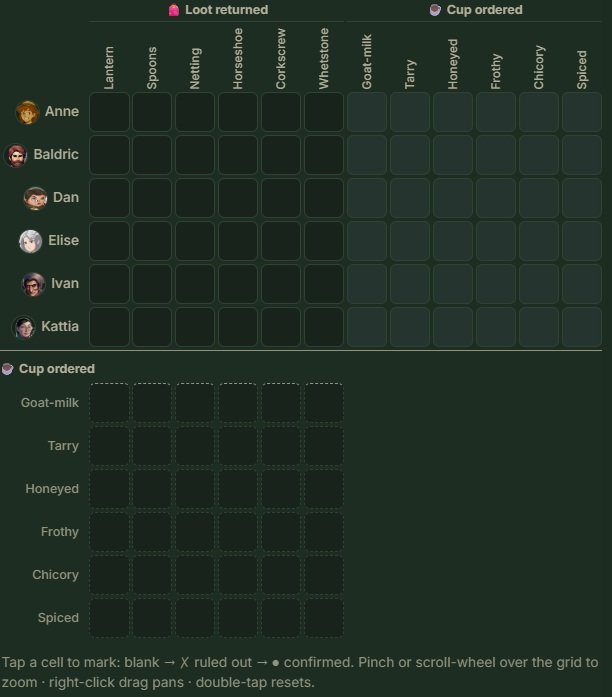
Let’s wrap up today’s post with some insight into Widow’s Bay, fresh off a record-setting bevy of wins at the Emmy Awards.
Widow’s Bay is a horror comedy that’s drawing all sorts of eyes, and for good reason. It’s brilliantly cast, well-paced, and razor-sharp.
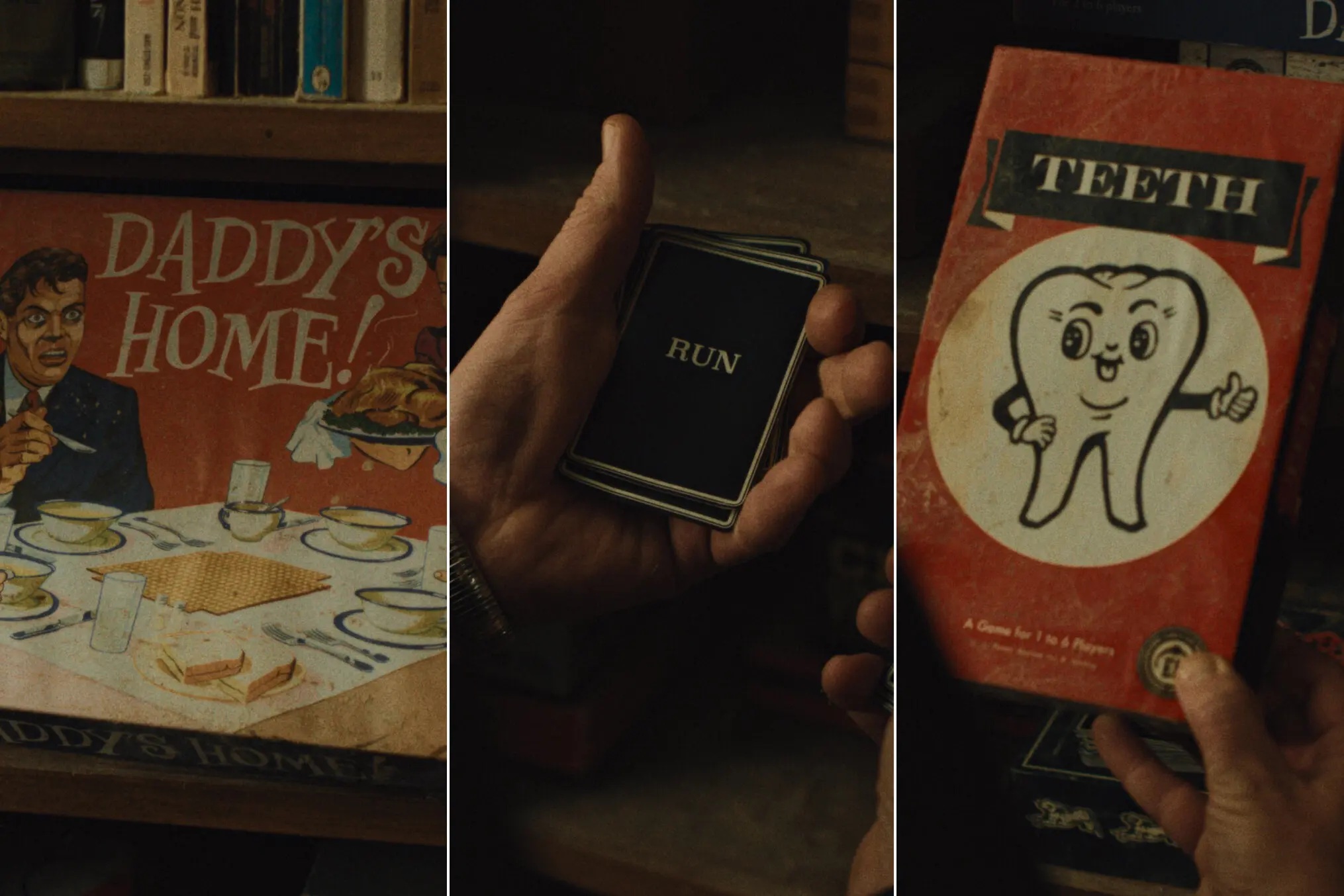
And, if you’re a board game fan, there was a creepy treat for you in episode two, as the mayor visited a local inn and discovered a number of board games with unnerving art and unpleasant implications
For today’s post, I’ve gathered a few tidbits from around the world of puzzles to keep you informed. We’ve got puzzles to solve, a discount code, a new crossword tournament in 2027, and more!
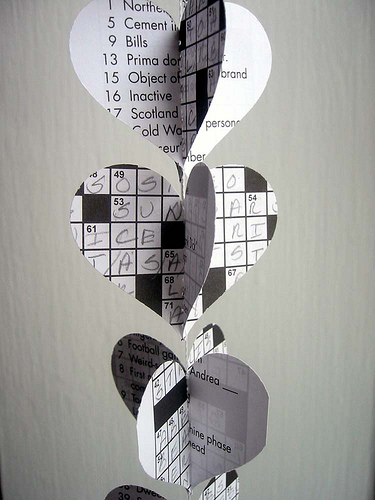
It’s a multi-page printout because the puzzle is loaded with trivia and references to her life, career, and accomplishments. It was clearly a labor of love, one that George kindly allowed me to share with all of you.
A new crossword tournament has been announced for 2027, as crosswords are coming to Canada!
The Canadian Crossword Open will be held on June 5th in Toronto! And they’ve already got constructors announced for the event.
Emma Lawson, Will Nediger, Ada Nicolle, Jess Shulman, and Nam Jin Yoon are all constructing for the tournament.
Not only that, but they’re hosting an open submission contest for Canadian constructors to contribute a puzzle to the inaugural tournament. Click here for more details!
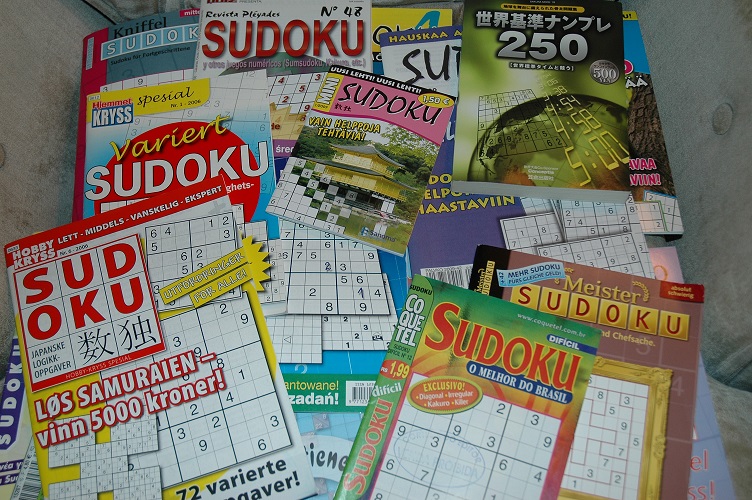
Did you know that September is Sudoku Month? (At least, according to one calendar I saw.)
Well, apparently it is, and our friends at Penny/Dell Puzzles are running a promotion all month!
They’re offering a 15% off discount code on all Sudoku magazines, subscriptions, and value packs.
Just use the code “ilovesudoku” on their website to receive your discount and indulge in some Sudoku solving!
It’s always important when a constructor identifies a gap in the market or a group that is being underrepresented in puzzles.
Construct Robin Stears (a previous contributor to The Inkubator, Women of Letters, and several These Puzzles Fund Abortions collections) recently lamented the lack of an outlet featuring women-focused crosswords.
So she decided to create one herself.
Go to her Patreon to sample her Midi puzzles highlighting the accomplishments of women. You can download PDFs or solve digitally with puz versions of these 9×9 crosswords.
It’s a worthwhile endeavor to be sure, so please check it out.
Were there any stories or puzzly promotions this week that I missed? Let me know in the comments section below! I’d love to hear from you.
“The way to deal with an impossible task was to chop it down into a number of merely very difficult tasks, and break each one of them into a group of horribly hard tasks, and each of them into tricky jobs, and each of them…”
A riddle, a puzzle, an impossible task… literary heroes are often forced to unravel, solve, or outmaneuver devious traps, tricks, and plots as part of their heroic journey.
I particularly love when the hero comes up with a unique or creative solution to the problem, often turning it on their opponent. And Sir Terry Pratchett, author of the DiscWorld series (among many other wonderful books) was a master craftsman of scenarios like this.
So today, I thought I would look at some of these puzzling scenarios and impossible tasks, and see how the protagonists penned by Terry Pratchett bested them with brains more than brawn.
One of the classic examples of the Impossible Task is the Gordian Knot. This knot secured an ox cart to a post. The knot was described as several knots all so tightly entangled that it was impossible to find the ends or see how they were fastened. It was said that whoever untied it would rule Asia.
Alexander the Great defeated the knot in one of two inventive ways, depending on the source. He either removed the linchpin from the pole, exposing the two ends of the cord and allowing him to untie it, or more famously, he sliced the knot in two with a single stroke of his sword.
Pratchett had his own take on this concept in The Amazing Maurice and his Educated Rodents, his version of the Pied Piper story where a sentient cat used friendly mice and a fake piper to con villagers out of their money.
In one village where something sinister is afoot, Maurice the cat was confronted by Spider, a rat king (and monstrous psychic being) formed from rats whose tails are intertwined.
Much like Alexander, Maurice unraveled the knot by biting through all the entangled rat tails, forcing them to separate and defeating the amalgamated being.
One of the most deviously clever denizens of the DiscWorld is Esmerelda Weatherwax, aka Granny Weatherwax. She is a witch who serves the people of Lancre, using magic, common sense, and her particular knack for dealing with people, which she calls Headology.
Granny crosses paths with dark forces, ambitious magic users, and other threats to the land of Lancre, and has found herself in puzzling scenarios more than once.
In one example, Granny is trapped somewhere between death and life. Her only companion is the physical embodiment of Death (who gets his own font in DiscWorld books). She is given the choice between venturing into the light and venturing into the dark, with no indication which leads back to the land of the living.
Quite poignantly, Granny turns to face the light, then steps backward into the dark.
Fans have two prevailing interpretations of this moment. Some see it simply as a reflection of the idea of “going into the light” meaning moving on from this realm. But others (myself included) see it as Granny once again choosing to defend others, facing the light, but stepping back into the darkness where she is needed most.
During another adventure, Granny is trapped within a mirror realm, again joined by Death.
But this time, she has to figure out which of a billion reflected versions of her is the true one.
(As you can see, someone was inspired by this scene to get a “This one.” tattoo that would only read out properly in a mirror.)
Granny bets on herself, trusting in her own honesty, strength of character, and insight. And she is served well by that choice.
Another DiscWorld novel sees Granny (and her fellow witches, Nanny Ogg and Magrat Garlick) venturing abroad to save her sister Lily from a witch with a specialty in voodoo.
Granny wagers against the powerful Erzulie Gogol, betting on her mastery of Headology vs. Gogol’s voodoo powers. If Granny wins, Lily goes free and the people of Genua are left to their own devices, free of Gogol’s magical influences.
Gogol agrees to leave the city alone, but not to give up Granny’s evil sister.
‘I don’t want to hurt you, Mistress Weatherwax,’ said Mrs. Gogol.
‘That’s good,’ said Granny. ‘I don’t want you to hurt me either.
Defiantly, Granny ignores Gogol menacing her with a voodoo doll and begins walking toward the stairs that lead to her sister.
Gogol continues threatening to stab the doll of Granny, and Weatherwax persists, even going so far as to point out she would be more ruthless than Gogol.
‘I should box a bit clever if I was you, Esme,’ muttered Nanny Ogg. ‘She’s good at this sort of thing.’
‘I think she could be very ruthless,’ said Magrat.
‘I’ve got nothing but the greatest respect for Mrs. Gogol,’ said Granny. ‘A fine woman. But talks a bit too much. If I was her, I’d have had a couple of big nails right through that thing by now.’
Gogol jabs a long sliver of wood into the doll’s foot, then its arm. Everyone sees Granny wince and react to the painful attacks. But Granny continues to climb the stairs, despite Gogol stabbing another sliver into the doll’s leg, causing Granny to clutch at the banister.
Granny turns toward Gogol, who threatens to stab the doll’s heart this time.
But Granny instead thrusts her own arm into a nearby torch, causing the doll to burst into flames.
In DiscWorld, belief makes things happen. Gogol believes in her magic, and so does everyone else. Granny turns that belief against her. The magic works both ways, you see, and Granny is made of sterner stuff.
It went on blazing even after the witch had screamed and dropped it on to the floor. It went on burning until Nanny Ogg ambled over with a jug of fruit juice from the buffet, whistling between her teeth, and put it out.
Granny withdrew her hand. It was unscathed.
‘That’s headology,’ she said. ‘It’s the only thing that matters. Everything else is just messin’ about. Hope I didn’t hurt you, Mrs. Gogol.’
She went on up the stairs.
Mrs. Gogol kept on staring at the damp ashes. Nanny Ogg patted her companionably on the shoulder.
‘How did she do that?’ said Mrs. Gogol.
‘She didn’t. She let you do it,’ said Nanny. ‘You got to watch yourself around Esme Weatherwax. I’d like to see one of them Zen buggers come up against her one day.’
‘And she’s the good one?’ said Baron Saturday.
‘Yeah,’ said Nanny. ‘Funny how things work out, really.’
My all-time favorite example in the DiscWorld books comes from The Last Hero, an illustrated adventure where a group of aged heroes, The Silver Horde, seek to climb the mountain of the gods and “return fire to them” (by blowing them up with explosives).
As they are confronted by the various Gods, Cohen the Barbarian is challenged by Fate to do the impossible: to roll a seven on a six-sided die.
Similar to the solution of the Gordian Knot, Cohen throws the die in the air and cuts it in two with his sword, causing the two pieces to fall to the ground, revealing a six and a one.
Now that is thumbing your nose at Fate with style.
It’s all well and good to be lucky, or brave, or tough, but clever? Clever is where it’s at. Clever beats monsters, fire, and Death itself. Clever challenges the reader to imagine how THEY’D get out of the impossible scenario, allowing them to best the bad guy or to be equally surprised by the protagonist’s ingenuity.
And very few authors gave readers the opportunity to be clever with the style and aplomb of Terry Pratchett.
“…she was already learning that if you ignore the rules, people will, half the time, quietly rewrite them so that they don’t apply to you.”
Do you have a favorite moment of puzzly cleverness from literature, fellow puzzlers? Do you have a favorite impossible task that was outwitted, or a devious design unraveled by smarts instead of steel? Let me know in the comments section below! I’d love to hear from you.
“Do not lament my absence, for in my spark, I know that this is not the end, but merely a new beginning. Simply put, another transformation.”
Sadly, we lost a lot of timeless people this week. Performers, artists, musicians, icons. My childhood in particular took a few disheartening hits, to be sure.
But I wanted to honor those influential voices in some way, and as you might expect, I’ve constructed a puzzle in their honor. Hopefully the silly wordplay brings a smile to your face as we remember them together.
Our Summer Reading series continues this week with a deep dive into classic and modern murder mysteries and how they’ve shaped and been shaped by puzzly design!
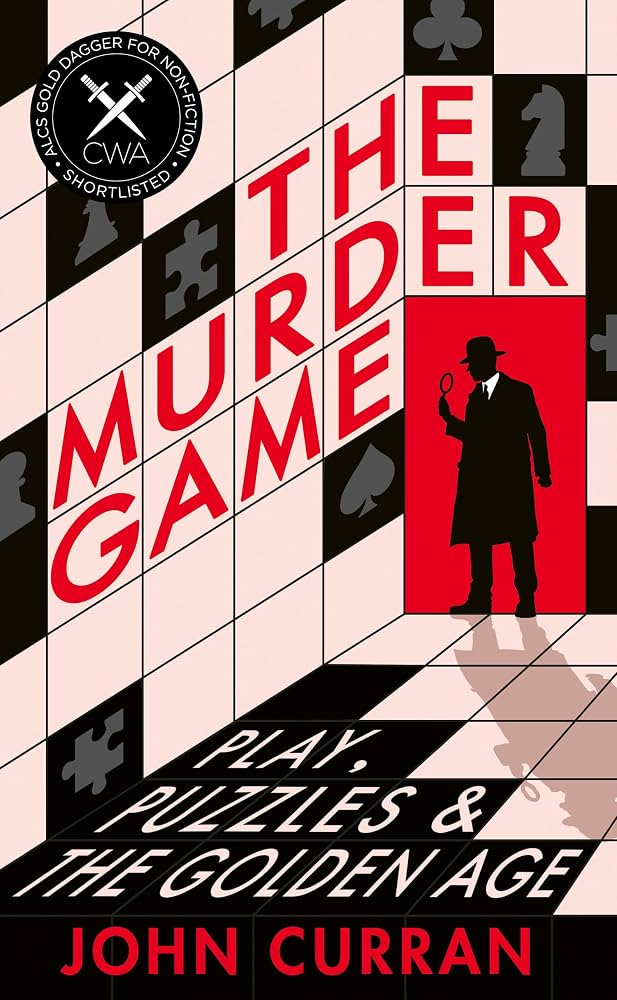
This week, join me as I explore The Murder Game: Play, Puzzles and the Golden Age by John Curran.
From the works of Edgar Allan Poe, Agatha Christie, and Dorothy Sayers through to the modern day, mystery writers have been engaged in an unspoken game with their readers. As A.E.W. Mason put it:
The author’s aim is to keep the reader guessing, where the puzzle, the whole puzzle, and nothing but the puzzle is his intention, the crime is discovered in the first chapter and thereabouts, the circumstances are made conventional so as not to distract the reader from the riddle; and the characters one after the other are shown to be all so obviously suspect or all so obviously innocent that no one shall be able to spot the criminal until in his last words the author hands him over to the police.
The puzzle plot, as some call the elaborate web woven by mystery writers, has evolved over the decades. Their rules have changed and grown better defined, authors have included maps and floor plans to aid readers in unraveling the mystery, and the game continues.
… some readers find the same satisfaction in detection that they find in doing a demanding crossword puzzle… You are competing with an adversary who cannot possibly cheat you, and need never outwit you, because his statement is frozen on the paper and he cannot, as he would in, say, a game of chess, adjust his strategy to yours. — Erik Routley
The Murder Game explores the origins of the puzzle plot, offering examples of its earliest iterations and the many, many forms it has taken across thousands of novels since. Curran’s voluminous knowledge of not only the Golden Age of mystery writing, but the present day as well, is truly impressive, and you feel like you’re being escorted through the puzzle plot’s development step by step.
It was great fun to read through the increasing complexity of the mysteries presented across decades, as well as the challenge involved in creating genuinely satisfying locked-room mysteries and “impossible” crimes. The transition from whodunit to howdunit was fascinating!
Despite the numerous examples of various tropes and techniques, Curran never lost sight of how puzzle-solving and mystery-solving go hand-in-hand. He shared examples of how puzzles have helped evolve mystery writing in exciting new directions — jigsaw mysteries, mapbooks, Cain’s Jawbone — all while remaining distinctly separate in important ways.
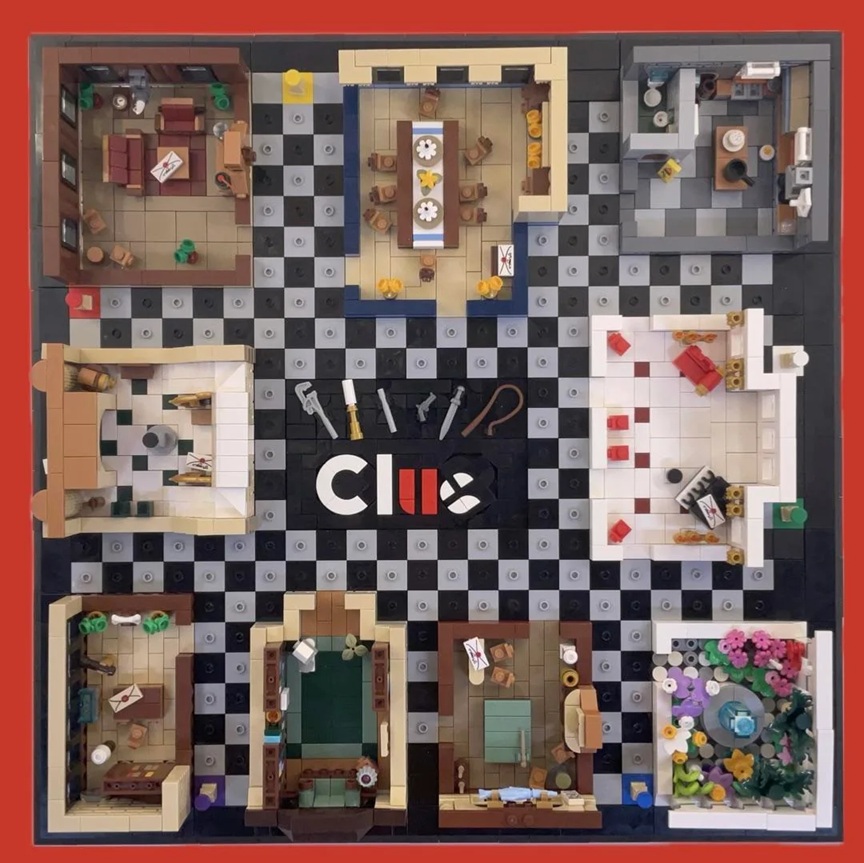
He even offered a delightful interlude with Clue/Cluedo as both base template and tongue-in-cheek reflection of murder mystery stories, complete with lists of similar suspects, scenarios, and locations from throughout the genre’s history.
Whether you’re a puzzle fan or a devotee of murder mysteries, The Murder Game is an engrossing, enjoyable read that feels like an in-depth study delivered by a trusted friend. It’s literary history, gaming insight, and an exhaustive exploration of the tropes, tricks, and quirks of the genre, all steeped in the attention to detail that can only come from a diehard fan.
Are you doing any reading this summer, puzzly or otherwise, fellow reader? Let me know in the comments section below! I’d love to hear from you.