For today’s post, I’ve gathered a few tidbits from around the world of puzzles to keep you informed. We’ve got puzzles to solve, a discount code, a new crossword tournament in 2027, and more!
It’s a multi-page printout because the puzzle is loaded with trivia and references to her life, career, and accomplishments. It was clearly a labor of love, one that George kindly allowed me to share with all of you.
A new crossword tournament has been announced for 2027, as crosswords are coming to Canada!
The Canadian Crossword Open will be held on June 5th in Toronto! And they’ve already got constructors announced for the event.
Emma Lawson, Will Nediger, Ada Nicolle, Jess Shulman, and Nam Jin Yoon are all constructing for the tournament.
Not only that, but they’re hosting an open submission contest for Canadian constructors to contribute a puzzle to the inaugural tournament. Click here for more details!
Did you know that September is Sudoku Month? (At least, according to one calendar I saw.)
Well, apparently it is, and our friends at Penny/Dell Puzzles are running a promotion all month!
They’re offering a 15% off discount code on all Sudoku magazines, subscriptions, and value packs.
Just use the code “ilovesudoku” on their website to receive your discount and indulge in some Sudoku solving!
It’s always important when a constructor identifies a gap in the market or a group that is being underrepresented in puzzles.
Construct Robin Stears (a previous contributor to The Inkubator, Women of Letters, and several These Puzzles Fund Abortions collections) recently lamented the lack of an outlet featuring women-focused crosswords.
So she decided to create one herself.
Go to her Patreon to sample her Midi puzzles highlighting the accomplishments of women. You can download PDFs or solve digitally with puz versions of these 9×9 crosswords.
It’s a worthwhile endeavor to be sure, so please check it out.
Were there any stories or puzzly promotions this week that I missed? Let me know in the comments section below! I’d love to hear from you.
“Do not lament my absence, for in my spark, I know that this is not the end, but merely a new beginning. Simply put, another transformation.”
Sadly, we lost a lot of timeless people this week. Performers, artists, musicians, icons. My childhood in particular took a few disheartening hits, to be sure.
But I wanted to honor those influential voices in some way, and as you might expect, I’ve constructed a puzzle in their honor. Hopefully the silly wordplay brings a smile to your face as we remember them together.
In a recent Gameplay newsletter, Sam Corbin wrote about three-word instructions / mottos (like “Eat, Drink and Be Merry” or “Live, Laugh, Love”), and pondered a slogan like that for puzzle solving.
It’s a definite challenge for sure, like trying to come up with a poignant six-word memoir. But I’ve never been one to turn down a challenge simply because I’ll probably fail. I WELCOME IT.
So, today, I thought I would pitch in and come up with some slogans (not all fitting the three-word formula) for various puzzle outlets.
Penny Press / Dell Magazines
I’ve always thought a great slogan for them would be “We’re As Puzzled As You Are.” It’s light, a little self-deprecating, and fosters a feeling of camaraderie between publisher and solver.
But a three-word instruction for them?
How about Sample, Savor, Solve? Sample a variety puzzle you’ve never tried. Savor the ones you know you like. And, as always, solve.
The New York Times
I mean, a good motto would obviously be “All the Clues That Are Fit to Print,” playing off the classic NYT slogan.
But for a later-week crossword, how about Determine, Decipher, Discover?
Determine what you know, decipher tricky clues, discover the gimmick.
The Los Angeles Times
Now, The LA Times has several mottos (like “Read the Paper,” which could easily be converted into “Read the Down Clues”), but my favorite is their historical slogan, “Stand Fast, Stand Firm, Stand Sure, Stand True.”
And when it comes to puzzles, that could be Stand Watch, Stand Pat, Stand Back.
Let your eyes go to the clues you know immediately, trust your instincts on ones you’ve filled in, and then stand back and survey your work to unravel the theme.
Doesn’t really work with the three-word motto, though.
Maybe Stop, Drop, and Roll!
Stop what you’re doing and solve a puzzle. Look at those down clues. And keep trying ’til you’ve solved it.
Fireball Crosswords (and other meta outlets)
For me, it was actually easy to come up with a three-word motto for solving these, because it’s what I do when I try to unravel a meta while completing the grid:
Pattern, Exception, Association.
Look for a pattern or rhythm outside the regular solve. Look for exceptions that feel intentional. Look for associations on a second read.
But what about for a general three-word instruction for crossword solving?
For solvers still getting used to crosswords, I would recommend Blanks, Bios, Back-and-forth or Fill, Famous, Flip, which both fit some of my solving advice for newbies.
Fill in the blank, scan clues for famous names, flip to the crossings once a word is filled in and work on that section.
Oh, and if you suspect a puzzle will be difficult, always remember:
Write Light, Alright!?
Hopefully one of these mottos works for you, fellow solver. Do you have any suggestions, leave them in the comment section below! We’d love to hear from you.
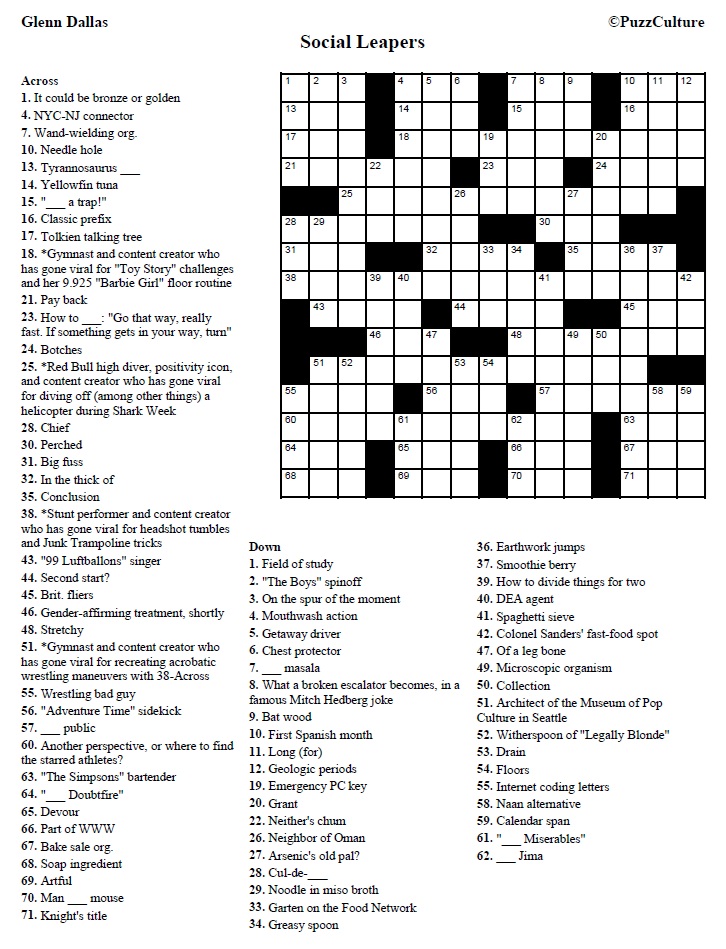
In today’s bonus post, I’ve got a crossword for you to solve, but first, a quick little bit of backstory.
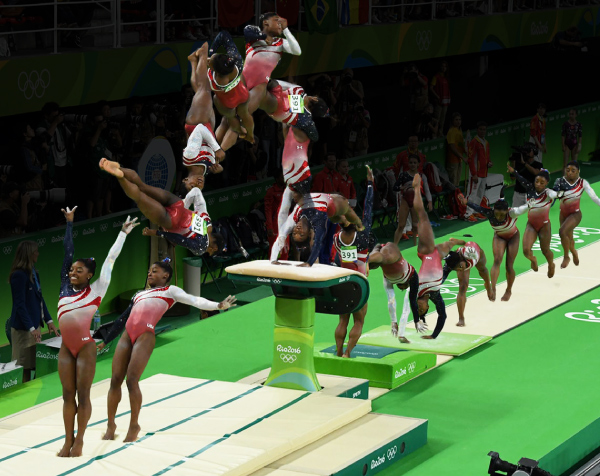
Social media inspired today’s puzzle, as I decided to highlight some of my favorite content creators who first rose to fame for their physical exploits and impressive athletic skills.
From gymnastics to high diving to stunt work, each of these social media icons have proven their dedication, their mettle, and their determination, and continue to do so both in their chosen fields and across apps and video feeds worldwide.
Sadly, there were numerous talented women that I wasn’t able to fit into this particular grid. One that comes to mind is Katelyn Ohashi, a top gymnast who first drew international attention in 2019 for her 10.0 floor routine set to a medley of top hits from Michael Jackson, Tina Turner, and others.
She has recently returned to the public eye after a long hiatus, going viral for equally impressive feats of athleticism, skill, and poise.
Each of the women featured in today’s puzzle have more than earned their place in pop culture, and I hope you enjoy this little puzzly tribute.
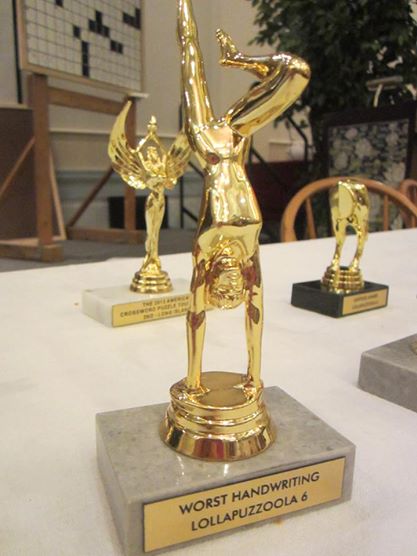
The nineteenth edition of Lollapuzzoola, as is tradition, arrived on a Saturday in August. Last Saturday, in fact. (I was not in attendance, but I did purchase the Solve at Home puzzle pack.)
I had a chance to sit down and try my hands at this year’s tournament puzzles, and I was certainly not disappointed.
This year’s theme was “Around the World.” Every puzzle had something to do with travel or geography, and the constructors were clearly inspired in all sorts of ways. Let’s take a look at what they came up with.
Warmup Puzzle A: Twinlets by Brian Cimmet
A traditional Cimmet Twinlets (Cimlets? CimTwins?) puzzle begins the day’s proceedings and boy, did he hit the ground running! He presented the solver with two identical grids and two sets of clues, and you have to figure out which grid each answer applies to.
This was complicated by the fact that EIGHT of the answers across both grids had the same clue: “European country.” But I started filling in answers to establish the first grid, then worked back and forth as the answers continued to populate and reveal which clues fit which grid.
I really dig Twin Crosswords or Twinlets puzzles, and Brian has a knack for putting just enough common letters in the same spaces in both grids to keep you guessing. (And for writing several long clues that never disappoint.) I thoroughly enjoyed this puzzle.
Interesting grid entries included LOST ART, SILENT O, and O, CANADA, and my favorite clues were “Three-syllable berry that’s great for both health and crossword construction” for ACAI and the 39-Across pairing of “____ on the Roof” for FIDDLER and “The other 39-Across, for one” for MUSICAL.
Warmup Puzzle B: Up in the Airby Brooke Husic
With a grid layout that feels like a moth or butterfly in flight, Husic clearly had flying on the brain, and her travel-centric apt pair — JETLAGGED and FLIGHT DELAYED — stacked together nicely. (Heck, having a grid that was short in one direction and long in the other FELT like travel, the trip there and the trip home.)
Brooke is a master at maximizing smaller grids, and she paired fun grid fill with longer, trivia- and opinion-focused clues, many of which continued the travel theme. (Also, she shouted out the board game Sky Team, which is a blast.)
Interesting grid entries included ALT LIT and JINX, and my favorite clues were “…—…” for SOS and “Plucked bass?” for ANGLED. (Though I didn’t know that pets can ride on Amtrak if they’re under 20 pounds. I love learning things from puzzles!)
There was also a contest puzzle featuring locations from famous musicals, which definitely tested my theatrical knowledge.
I’m sure there was frantic Googling during the breaks between puzzles for solvers to complete this one before the Puzzle 5 deadline!
Puzzle #1: Screen Sharing by Ada Nicolle
Kicking off a day of tournament solving is a daunting challenge — balancing accessibility, difficulty, style, flavor, skill, and playfulness, all while ably representing that event’s energy or that year’s theme — and I’m always impressed by the constructors who tackle that challenge.
Fortunately, solvers and tournament organizers were in the capable hands of Ada Nicolle, who created a great opening puzzle. It was a smooth solving experience with engaging cluing and tons of personality (as one should expect from Nicolle).
The theme was impressive, featuring compound words or phrases where both parts of the answer could be placed in front of the word CHECK to form a common phrase (RAIN check and COAT check for RAINCOAT, for instance), ably showing off the PRE-CHECK promised by the revealer.
Interesting grid entries included NU METAL, HO-HOS, TONSIL, and BAGUETTE, and my favorite clues were “What it might take to ask out a crush” for COURAGE and “Wide-brimmed accessory for Carmen Sandiego” for HAT.
Puzzle #2: Wherever the Wind Takes You…by Carina da Rosa
This year, the ORCAS crowned Carina as an Emerging Constructor to watch, and I think she’s proven everyone who voted for her correct.
The eye-catching shape of a hot-air balloon grid was just the tip of the iceberg with this puzzle, as solvers would discover that one letter from each theme answer had floated up, up, and away from the main entry, appearing in a circle above as part of the balloon’s design. The capper was each letter spelling out HOT AIR.
This is beautiful design and execution, especially with a packed grid like this. The page itself was equally packed with longer clues which made it a little difficult to read and solve (a pattern that would continue with the next puzzle… or maybe I need to revisit my prescription with my eye doctor). Nonetheless, this was a highlight of the day.
Interesting grid entries included RAW OYSTER, UNSUNG, COLBERT, and ADROIT, and my favorite clues were “Place to park your butt?” for ASHTRAY, “Hoffman whose FBI file was 13,262 pages long” for ABBIE, and “Portuguese greeting formed by dropping one letter from a Spanish greeting” for OLA.
Puzzle #3: What to Know Before You Travelby Amie Walker
Intend your puns indeed, as Amie Walker has some doozies for you in this one! The clues take traditional travel terms (“Baggage claim,” “Carry-on item,” “Domestic carrier,” etc.) and deliver tongue-in-cheek responses as answers (I’VE GOT TRUST ISSUES, TEMPER TANTRUM, BABY STROLLER).
Packing seven answers into this grid was no small feat, but Walker managed to stack the grid with charming fill as well, offering the densest and most ambitious puzzle design of the day. My puzzly mind definitely appreciated this one, even if my eyes didn’t.
Interesting grid entries included BLITHERING, ICE CAVES, EGG CUP, and COBBLE, and my favorite clues were “Word ____ (you, maybe)” for NERD and “Enjoy a Manhattan tour, say?” for BARHOP.
Puzzle #4: Crossing the Lineby Adam Wagner
Much like the dreaded Puzzle #5 at the American Crossword Puzzle Tournament, Puzzle #4 at Lollapuzzoola is usually a super-heavyweight challenge, and this might be the toughest I can remember from any previous event.
It took me a LONG time to realize the trick of this one. The revealer DAY OFF pointed me towards some sort of time shift, but I kept staring at the entries that crossed the dotted line down the middle of the grid and coming up empty. Seven of the clues simply refused to match their entries, until I finally noticed that each of those seven clues started with same letter as a day of the week (“Mob target” for Monday, “Tutor coaches” for Tuesday, etc.)
And when you shift the first two letters of each clue back a day, the clues suddenly make sense. “Mob target” becomes “Sub target,” which makes total sense for DESTROYER.
Tough clues, TOUGH gimmick, but a well-constructed puzzle. Although I easily completed it within the 40 minutes allowed, I don’t know that I understood it during that 40 minutes.
Interesting grid entries included RUH-ROH, U-HAULS, SAMURAI, and FROYO, and my favorite clues were “Beat generation?” for PULSE, “Breakfast accompaniment?” for BED, and “Construction term that becomes a meteorological term if SO is added after the first letter” for IBAR.
Puzzle #5: Every Second Countsby Will Nediger
Nediger closed out the pre-championship puzzles with this grid that feels like one long, snaky journey from the upper left to the lower right, meandering like a river.
Solvers found a very cool theme waiting for them where the theme answer was one location, but another location was circled in alternating spaces within the theme answer, like ALGERIA (AGRA within ALGERIA). Will packed six of these pairings into the grid, plus the revealer ALTERNATE PLANS. (And I quite liked SIDE TRIP as sort of a bonus revealer.)
All in all, a very impressive bit of construction, research, and theme execution. A terrific closer before the big finale.
Interesting grid entries included IDEOGRAMS, PIPING HOT, TRIMARAN, CLARISSA, and Wario, and my favorite clues were “Like plants that produce little to no chlorophyll” for ALBINO and “Punishment from a Discord moderator” for BAN.
Puzzle #6: Championship Finalby Trenton Charlson
As always, there were two sets of clues for the Finals puzzle, the Local and the more difficult Express clues. No matter which clues you were working with, you were in for an excellent tournament finale.
This grid had clean stacks of 8-letter entries and 9-letter entries in the corners, and some unforgiving crossings that really reminded me of how much skill and creativity it takes to construct a great themeless puzzle.
The cluing was surprisingly accessible for a championship final (across both the Local and Express clues), and I can imagine many of the solvers in attendance performing well on this solve.
I don’t know Charlson’s work, but I’ll definitely be looking for their byline in the future.
Interesting grid entries included JUMBO JET, SEE STARS, YTTRIUM, and DON QUIXOTE. Both the Local and Express sets of clues had some gems, so I’ll list them separately below:
Local clues:
“Farm animal follower” for EIEIO
“Festival celebrating the arrival of spring” for TET
“Starter starter?” for NON
Express clues:
“Agrarian refrain” for EIEIO
“Something a guitarist often has on hand?” for CALLUS
“One who dreams knightly?” for DON QUIXOTE
“Palms or pockets” for STEALS
“Start to sense” for NON
“9 to 5, e.g.” for ODDS
There was also a tiebreaker themeless midi by Laura Braunstein, which was an excellent, quick solve. The playful cluing and great flow made it an enjoyable interlude before the championship, and the apt pair of FIRST SIGHT and LAST RESORT really encapsulated the travel theme of the event nicely.
Interesting grid entries included WIGGLE ROOM and DARK HORSES, and my favorite clues were “Place for a pawdicure” for PET SPA and “General of the Resistance” for LEIA (put some respect on her name!).
There were ALSO two bonus puzzle suites — a variety one by Scott Weiss and a meta crossword one by Crossword Gentleman Doug Peterson — which I did not have an opportunity to solve before posting.
Another year, another parade of bangers from the Lollapuzzoola team. There were visually impressive grids, devious acts of cluing chicanery and cruciverbalism, and many many MANY trivia-loaded clues (a personal favorite of mine).
Every puzzle was well-constructed, smartly filled, and clued with love, personality, snark, and enthusiasm. It’s hard to precisely put a finger on what makes a crossword feel like a Lollapuzzoola puzzle — a unique blend of rock n’ roll and Tom Lehrer, maybe — but the LPZ spirit is alive (and often kicking) in each of these entries.
I can only imagine what they’ve got in store for us next year to mark the 20th edition of the tournament. Sadly, I guess we’ll have to wait and see.
On the plus side, I’ve got puzzle suites to solve while I wait! Happy puzzling, everyone!
Did you tackle this year’s Lollapuzzoola crossword tournament, fellow puzzlers, either from home or live in person? Let me know in the comment section below. I’d love to hear from you!
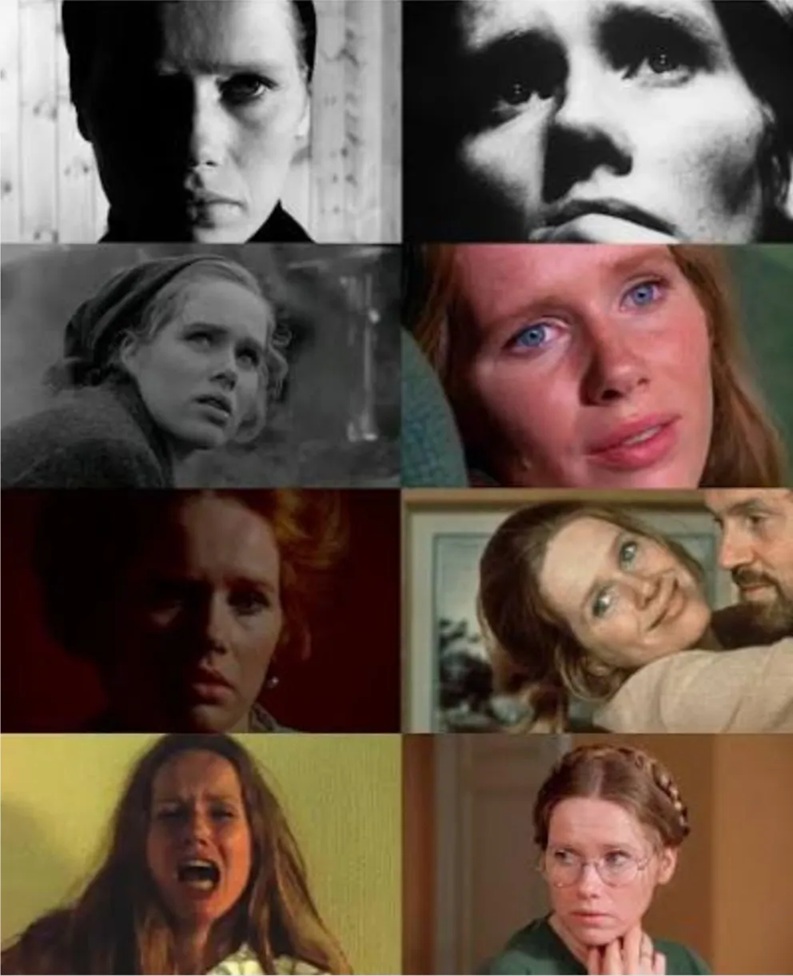
There was an internet hoax last week that reported Liv Ullmann had passed away.
(And yes, I am retroactively editing this post to correct it, since I had been duped by this hoax. Thank you to one of my commenters for correcting me!)
An actress, filmmaker, and representative of UNICEF, her work has graced both stage and screen, and she was an integral part of Ingmar Bergman’s equally legendary career.
But she has had a similarly lengthy tenure as a crossword entry. Her name dominated crossword cluing for LIV for decades (save for Roman numeral clues), eventually being usurped by LIV Tyler in the 21st century.
And, to be completely honest, I didn’t know Liv Ullmann or her work until I got into puzzles.
Despite a heavy movie buff phase in my twenties — watching the AFI 100, doing a deep dive into Oscar-winning films across film history — there were many Hollywood names I didn’t learn about until I started working in puzzles.
I mean, sure, I knew ASTA from The Thin Man movies, and as a horror movie fan, LON Cheney was a household name, but ONA Munson, OSA Massen, UNA Merkel? UTA Hagen, POLA Negri, EMIL Jannings? A total mystery to me, one and all.
Some names are more accessible than others. RIP TORN, for instance, who I know better from Men in Black and Dodgeball (and The Larry Sanders Show) than from The Man Who Fell to Earth or Cross Creek.
But it’s curious to look across the history of crosswords and crosswordese and see names fall in and out of favor, which names linger despite their increasing irrelevance, and which other ones come back unexpectedly.
I mean, OONA Chaplin is helping OONA’s cause a bit, and ANA de Armas has breathed new life into that three-letter combo. Director ARI Aster is helping ease cluing reliance on a certain Onassis ex. I wish more people knew about the movie Pearl, if only for a new clue for THEDA.
ELSA and OLAF will be riding the Frozen train for years to come. ISSA RAE (and RAE Sremmurd to a lesser extent) have shaken RAE free from Norma, Charlotte, and Ms. Dawn Chong.
But ENA? ELKE? ILKA? Those feel unlikely to make a comeback.
And the cycle continues. INDE Navarrette’s star is on the rise after Obsession, but will she have legs as a crossword entry? The next few years will be telling.
It’s hard to know what name will be a grid-fill flash-in-the-pan and which will have crossword longevity.
I’ve thought about this a lot.
In fact, inspired by the curious connection between crosswords and Hollywood, I have an ever-evolving crosswordese movie list that I use as inspiration for random movie nights:
Casablanca (1942, ILSA and LORRE).
The Night of the Hunter (1955, screenplay by James AGEE)
The Maltese Falcon (1931, UNA Merkel, a full decade before the Bogart one!)
The Cheaters (1945, ONA Munson)
The Good Earth (1937, O-LAN played by LUISE RAINER, also starring Paul MUNI)
Bus Stop (1956, based on the play by William INGE)
The Owl and the Pussycat (1970, George SEGAL)
Rocketship X-M (1950, OSA Massen)
Santa Claus Conquers the Martians (1964, PIA Zadora)
Beautiful Girls (1996, MIRA Sorvino)
V for Vendetta (2005, REA)
IT’S A Gift (1934)
Letters from IWO Jima (2006)
NEVER ON Sunday (1960)
Stanley & IRIS (1990)
Bird ON A Wire (1990)
Heidi (1937 or 1968, ALP)
And then you can close out any proper crosswordese movie marathon with films featuring UMA Thurman, EWAN McGregor, or CARY Grant you like, or even The King and I with YUL Brynner.
As these legends (and not-quite-legends) of the silver screen continue to depart this mortal coil (or at least, as internet hoaxes about their deaths continue to circulate), I can’t help but reflect on their curious second life as grid fill.
How many awesome, clever, immensely satisfying solves have we enjoyed in part because of the convenient letter combinations in these names? How many times have they bailed constructors out of bad corners or linguistic jams caused by a particularly taxing theme or grid gimmick?
Probably more often than you’d think.
We may not always know their movies or their most quotable lines, but we definitely know how to spell their names and fill in those blanks.
What names do you only know from crosswords, fellow reader? Do you have any suggestions for my Crosswordese Viewing List? Let me know in the comments section below. I’d love to hear from you!













 PuzzCulture