An Amazing Opportunity for New Voices in the New York Times Crossword!

Yes, I know this is the New Yorker’s iconography, but sadly this is also the default in some people’s minds for who constructs and who solves the NYT crossword, and it’s awesome we’re taking steps to change that…

It’s only a few days before submissions open for the fifth New York Times Diverse Crossword Constructor Fellowship!

At noon on June 15th, the Times will begin accepting applications for a fellowship. But what does that entail?

According to the Times from the announcement page:

The New York Times Diverse Crossword Constructor Fellowship provides mentorship and support for constructors whose backgrounds and perspectives could be better reflected in our puzzles. We want our puzzles to reflect the experiences of as many people as possible, which means publishing work that displays a wide range of cultural reference points, language usage and communities.

This mentorship gives aspiring constructors (ones who haven’t yet been published by NYT) the opportunity for three months of instruction, advice, and insight from one of the NYT puzzle editors. It’s an incredibly talented list of people to learn from: Sam Ezersky, Wyna Liu, Tracy Bennett, Christina Iverson, Joel Fagliano, and Ian Livengood.

It’s open to constructors seeking guidance on either themed or unthemed crosswords, with specific guidelines when you apply:

If you’d like to work on a themed puzzle during the fellowship, you will need a theme set with theme clues provided. A tentative grid with theme answers placed is helpful.

If you’d like to work on a themeless puzzle, you will need to provide one of the following: a 7×7 grid with clues, a 15×15 grid with clues or a partly filled 15×15 grid with clues.

You can check out the full announcement here, and you can click here for submission guidelines and some resources available to constructors already.

Good luck to everyone submitting! The world of crosswords is a more interesting, more immersive place when everyone is represented, and opportunities like this make both constructors AND outlets better.

A Criminal Crossword Conspiracy From 1959!

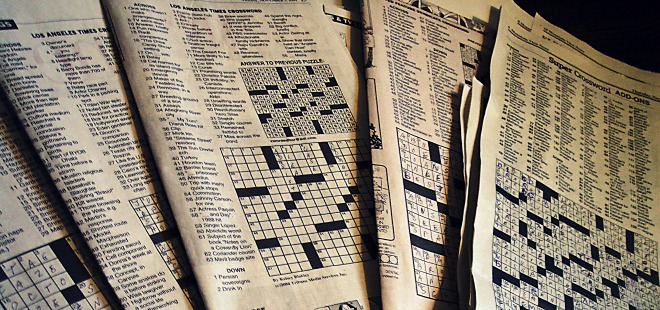
During my extensive dive into crossword history in preparation for my Braille Crosswords post, I encountered all sorts of curious tidbits and trivia about crosswords. I tucked many of them away at the time, looking forward to digging into them properly later once the piece was completed.

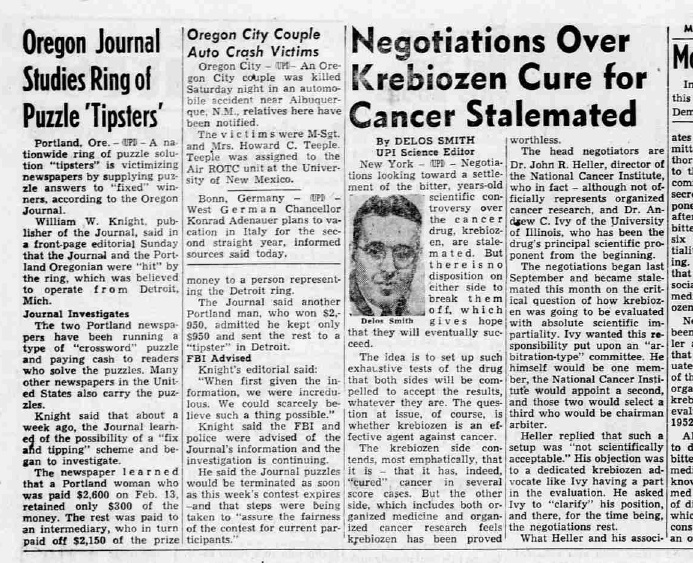
So, with that post done and dusted, I had some time to pour through those tidbits and trivia for blog post ideas. And I knew I had to start with this snippet from The Omaha World-Herald on Sunday, July 22nd, 1979:

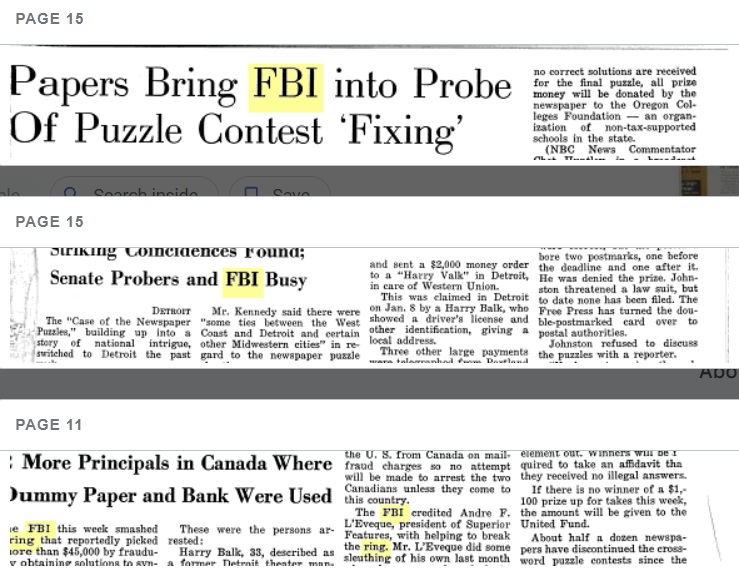
Portland: February 23, 1959. Two Oregon daily papers cry “Doublecross!” Charging that their crossword contests are being “fixed” by a “nation-wide ring” headquartered in Detroit, they discontinue the contests and call in the FBI

A criminal crossword ring? Tell me more about these cruciverbalist ne’er-do-wells!

I mean, we’ve discussed criminal activity and crosswords in previous posts, but those were strictly of the fictional variety. This story, on the other hand, is an honest-to-Shortz crossword criminal conspiracy, concocted nearly 70 years ago.

Our story begins in Oregon, where publisher William W. Knight of The Oregon Journal shared his suspicions in a front-page editorial piece on February 23rd, 1959.

The Oregon Journal and The Portland Oregonian were just two of the many newspapers around the United States who ran crossword contests with cash prizes. Subscribers would send their solutions to the paper in the hopes of being the first correct solver (or sometimes, the correct solver chosen at random) and winning some money.

But Mr. Knight reported that his sources at The Oregon Journal had uncovered something peculiar. They had learned about two previous Portland winners who only kept part of their money, the rest being forwarded to an intermediary, and after that to the suspected ringleader in Detroit, Michigan.

One woman won $2600 but retained only $300. $150 went to the intermediary, and $2150 to Detroit. Another winner received $2950 but he only kept $950 and sent the rest to a “tipster” in Detroit. (Geez, even when committing the same crimes, women are still getting paid less than men!)

Knight referred to this conspiracy as a “fix and tipping” scheme.

She’s got the acrosses, now she just needs the downs to really complete the crossword look.

“Fix” in this case means illegally rigging the outcome of the crossword contest, and “tipping” means that someone was informing the “contestants” of the solution in order to guarantee a win.

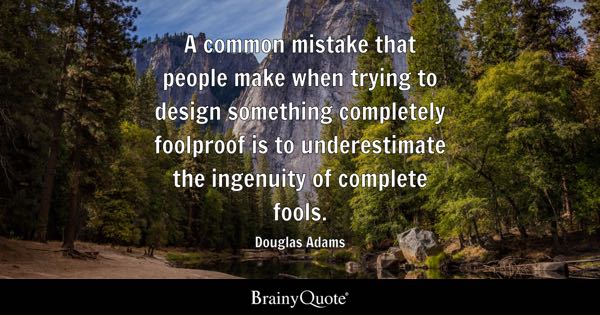
But the two primary distributing syndicates — Superior Features Syndicate, Inc. and General Features Syndicate — claimed this was impossible, calling their precautions “foolproof.”

These “foolproof” precautions basically meant that the puzzle grid and clues went to subscribing newspapers, but the puzzle solution went to an associated bank “or some other unimpeachable agency.” That bank/agency would hold the solution until the contest submission deadline had passed, and then release it to the subscribing newspapers.

(This is obviously pretty foreign to modern solvers, who are accustomed to seeing the previous day’s solution published alongside today’s new puzzle.)

Despite the reassurances of the distribution syndicates, Knight had already reached out to the FBI with his suspicions, and declared that The Oregon Journal would no longer be participating in crossword puzzle contests.

His editorial went out on February 23rd, and the next day, other papers began reporting on Knight’s alleged criminal crossword conspiracy.

But the Crossword Ring’s reign of terror would be short-lived.

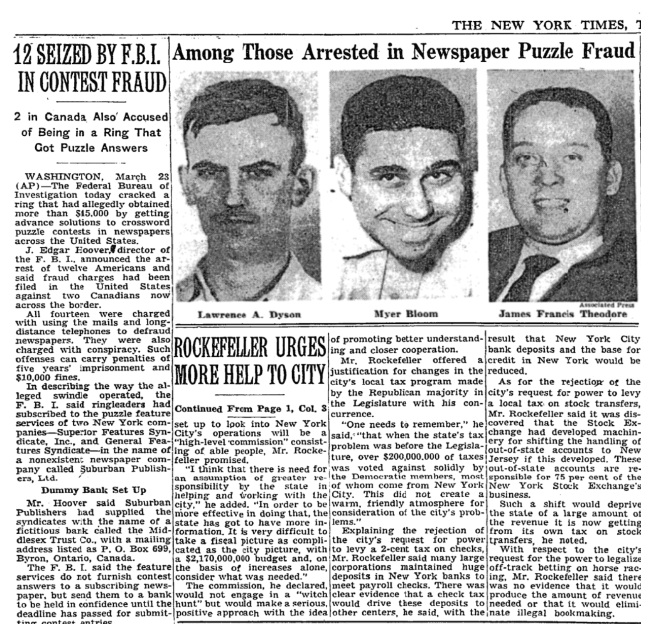
One month to the day that Knight’s accusations hit the front page, J. Edgar Hoover himself announced the arrest of those responsible for the Crossword Ring conspiracy.

The headline in The New York Times the following morning read “12 SEIZED BY F.B.I. IN CONTEST FRAUD; 2 in Canada Also Accused of Being in a Ring That Got Puzzle Answers.

Knight’s suspicions were correct, but the conspiracy ranged far wider than Portland and Detroit. The actual ringleaders were based in Ontario, Canada, and they telephoned answers to agents in Chicago, Philadelphia, Harrisburg, and Minneapolis as well.

So, how did the ringleaders get around those “foolproof” precautions we heard about before?

In staggeringly simple fashion.

The scam worked like this:

Step One: Set up a fictitious bank, Middlesex Trust Co., complete with a fake mailing address.

Step Two: Subscribe to the puzzle distributors in the name of a nonexistent newspaper company, Suburban Publishers, Ltd.

Step Three: Receive the puzzle solutions from the Syndicate via the fictitious bank’s P.O. Box, then contact agents in the United States to submit perfect solutions to their local papers before most other newspapers would’ve even published the contest puzzle.

All it took to circumvent the “foolproof” precautions was Step One.

The Crossword Ring had raked in $45,000, which is equivalent to over half a million dollars in 2026. And the FBI operation to arrest them all took only 86 minutes.

Amazingly, this wasn’t the end of crossword contests in the United States.

Despite further allegations of wrongdoing throughout the 1960s — including bribery and extortion — the contests remained popular, and prize amounts collected by contest entrants kept rising. One New York contest winner received a cash prize of $44,000, nearly the same amount that the Crossword Ring had scammed from newspapers over the course of weeks.

Now, if you’ll excuse me, I have to get back to my brand-new newspaper venture, The PuzzCulture Tribune Gazette Times-Herald-Daily. More about our crossword contests soon! *a-wink*


So, fellow puzzler, what’s your favorite crossword crime, fictional or otherwise? Let us know in the comment section below! We’d love to hear from you.
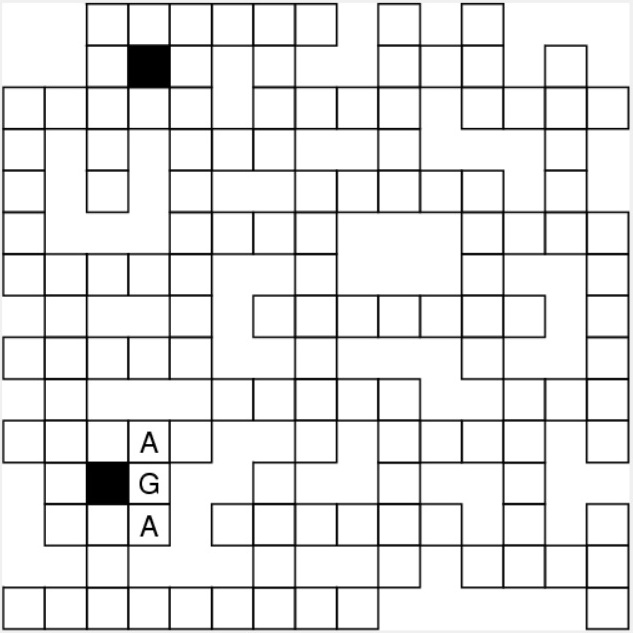
Deb Amlen, the Whimsical Wordnik of “Wordplay,” Announces Retirement

damlen2

This morning, loyal readers of the Wordplay column in The New York Times were greeted by the news that Deb Amlen is retiring on January 2nd, 2026.

In case you somehow didn’t know, Deb is a talented crossword constructor, but these days, she’s better known for her role as the head writer and senior editor of Wordplay, the crossword blog and educational/humor column associated with The New York Times crossword puzzle.

You can read her thoughts in today’s Wordplay column, but please allow me to share a snippet of her thoughts from an accompanying Facebook post:

After more than 4,400 bylines and millions of words, mostly in the right order, I can honestly say that this has been the best job I’ve ever had. I’ve had the honor of working with some of the greatest journalists and editors in the business. It has been a wild ride, and as the great David Carr once advised, I have enjoyed every caper I’ve ever pulled at the company: the Trans-Atlantic cruise, the curling adventure, the rogue Crosswords Live. All of it.

Hopefully, after an extended period of drooling on myself to get over the deadlines, I can also continue to be part of the puzzle community in some way, because you all are the kindest, most generous, most funny people I know. Also extremely attractive.

damlen1

As an ambassador into the world of puzzles, Deb’s warmth and playfulness have been the perfect counterbalance for new and inexperienced solvers to the sometimes daunting prospect of tackling a New York Times crossword. Her columns are always funny, more than a little self-deprecating, and very complimentary to each day’s constructor.

I’ve interacted with Deb a few times over the years. I interviewed her for the blog back in 2020, and we had several friendly conversations at the American Crossword Puzzle Tournament. Her enthusiasm for not just puzzles, but for meeting other puzzle fans, is unmatched, and even during a quick “gotta run!” visit, you come away with a smile.

I’m sad to see her go, but I’m glad to know that she’ll be working on new passion projects, traveling, and leaving the Wordplay column in the very capable hands of Sam Corbin and Caitlin Lovinger.

As one of the public faces of The New York Times Crossword, Deb often found herself the recipient of public feeling toward the crossword. Over the years, she has become rather infamous for reminding people that SHE just writes about the puzzles. “I didn’t do it” has become a catchphrase.

Well, Deb, it was true the vast majority of the time, but allow me to say, when it comes to making puzzles more welcoming and accessible to solvers, you absolutely DID do it.

Thank you for everything, Deb.

Farewell, Tom Lehrer.

The world of puzzles and games is larger than constructors and game designers. There are artists, writers, editors, wordsmiths, hosts, musicians, and influences that help shape puzzles and games in so many different ways. Their efforts enrich and popularize these beloved pastimes, contributing to the world by celebrating wordplay, creativity, and nerdy pursuits.

And sadly, the world grew a little less witty, a little less clever, and a lot less bold and outspoken about so many important topics when Tom Lehrer passed away a few days ago.

It’s hard to know where to begin.

How do you describe the cultural influence of a man whose songs still delight, inform, and push boundaries today, even though he wrote most of them over sixty years ago?

How do you describe a successful musician who walked away from public performance after three brilliant albums — thirty-seven songs, each an intricately-crafted dissection of some aspect of culture, science, or current events, often as poignant and sharp-tongued as they were hilarious — and spent the bulk of his life as a teacher and college professor instead?

How do you describe the genius of a man for whom wordplay flowed as easily as scientific lingo or political commentary, a man who could make you laugh (and think, really think) about nuclear annihilation, questionable post-war government programs, or even the Catholic Church itself?

His influence on pop culture can’t be overestimated. Across generations, his songs educated and inspired, and his legacy is bulletproof. He created songs for The Electric Company, Square One TV, and That Was The Week That Was. (Those shows were decades apart!)

He inspired performers like “Weird Al” Yankovic, and I think his fingerprints are unmistakable on other hilarious and educational projects, like the songs of Randy Rogel for Animaniacs. (Trust me, you can’t listen to “the Multiplication song” from Animaniacs and NOT think of Lehrer’s “New Math”.)

Tom retired from live performance in the late 1960s, having felt like he’d said everything he wanted to say with his music. (Plus, as he famously pointed out, “political satire became obsolete when Henry Kissinger was awarded the Nobel peace prize.”)

But his songs wouldn’t be denied.

Dr. Demento’s radio show brought Lehrer’s work to new ears in the 1970s, 80s, and 90s, and Honest2Betsy has brought him to yet another generation’s attention with her videos over the last few years.

His songs are timeless. “The Elements” alone has appeared in Better Call Saul, NCIS, Gilmore Girls, and The Big Bang Theory. (Not to mention Daniel Radcliffe’s famous rendition of the song on The Graham Norton Show, where he called Lehrer his hero. This actually led to Radcliffe starring in the film Weird: The Al Yankovic Story.)

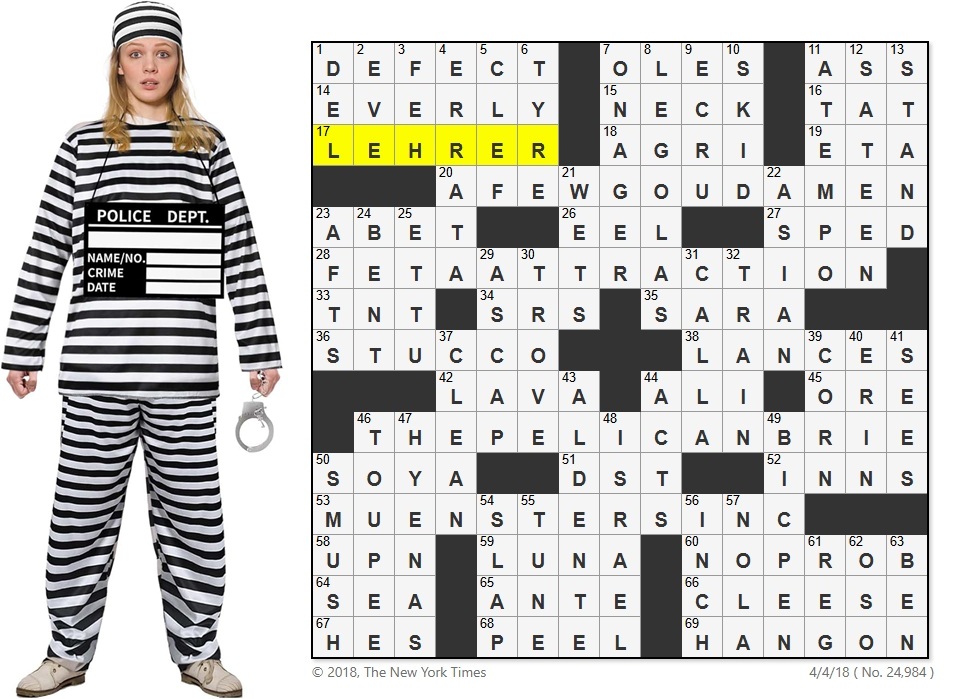
Speaking of “Weird Al,” his New York Times crossword puzzle with constructor Eric Berlin namedropped Tom as part of the grid fill in this pun-heavy collaboration:

And it is a love of wordplay that sparked this tribute today.

Lehrer’s work is absolutely riddled with clever puns, comedic craftsmanship, and playing with the listener’s expectations: all things that great crossword cluing employs.

You can’t listen to songs like “Silent E” or “Without an S” and NOT imagine clues or themes that Lehrer’s linguistic legerdemain could inspire.

Not to mention this gem:

There’s a playfulness there, paired with technique, creativity, and an absolute willingness to bend conventions to their breaking point in order to make something new. How can you not love it?

But wordplay, commentary, and scientific and mathematical literacy weren’t Lehrer’s only gifts to the world.

He claimed to have invented the jello shot while in the military (to skirt rules about alcohol consumption). He wrote the song “Don’t Major in Physics,” which would have been good advice to me in freshman year of college, had I cared to listen.

Image courtesy of warhistoryonline.

And he also made the incredible gesture in 2022 of transferring the music and lyrics for all the songs he had ever written into the public domain. He relinquished the copyright and performing/recording rights for his songs as well, making his music and lyrics free for anyone to use. Downloadable lyric and music files are available on his website.

His statement releasing all his works into the public domain concluded with this note: “This website will be shut down at some date in the not too distant future, so if you want to download anything, don’t wait too long.”

For now, at least, the website remains online.

And it seems so apropos that the man who walked away from music decades ago to share his love of mathematics, science, and teaching with others is also the man who would happily sign away the rights to his music to enrich the lives of others once again.

The humanities and the STEM fields both owe Tom Lehrer a debt that can never be repaid.

The world was blessed with his presence for 97 years, and I have no doubt that his words, his music, and the forceful spirit that infused both will be around for many many years to come.

Farewell, Tom. Thanks for warning us about Shakespeare.

Oh, and for this lovely little ditty:

Crossword / Puzzle News Roundup!

It’s a good week to be a puzzle enthusiast. The Boswords Spring Themeless League kicked off on Monday, the same day one of my favorite puzzly people got her first puzzle published in The New York Times.

And we’ve got news on a crossword convention, upcoming tournaments, a worthwhile puzzle-fueled charity endeavor, and a new Hallmark puzzly mystery debuting tonight.

So, without further ado, let’s get to the puzzle news roundup!


Crossword Con

April 4th marks the second annual Crossword Con, presented by the puzzle app Puzzmo.

Crossword Con is all about bringing together crossword fans and constructors to discuss crosswords as a cultural touchstone and an art form.

For their second outing, the organizers are casting their eyes to the future, asking “what’s on the horizon for crosswords, and what changes are already bubbling just beneath the surface?”

Although it’s only a half-day event, it is certainly jam-packed with notable names with plenty to offer on the subject of crosswords! Speakers and guests include Kate Hawkins, Will Nediger, Ada Nicolle, Brendan Emmett Quigley, Laura Braunstein, Rob Dubbin, Natan Last, Adrienne Raphel, and Brooke Husic.

With Crossword Con in New York and the American Crossword Puzzle Tournament starting the same day in Stamford, April 4th is certainly an eventful day for crossword fans all over (and particularly those in New England).


120718_crossword_L

Crossword Tournaments

And speaking of crossword tournaments, if you’re a competitive crossword fan, the gears are already in motion for puzzly challenges all year long.

Registration for June’s Westwords Crossword Tournament is open right now.

The registration for October’s Midwest Crossword Tournament opens on April 2nd, just a few days before this year’s American Crossword Puzzle Tournament (April 4th through the 6th) will be held.

Of course, physical tickets for the ACPT sold out a while ago, but you’re still welcome to register for the virtual tournament to participate!

And the activities alongside this year’s tournament are a doozy. There’s an event celebrating the 20th anniversary of the “Wordplay” documentary, a magical puzzly performance from David Kwong, and an acrostics event on Friday night!

Lots of competitive puzzle fun coming up!


These Puzzles Fund Abortion 5

There’s a long history of activism and advocacy through puzzles. Women of Letters, Grids for Good, Queer Qrosswords… these are just a few prominent examples of constructors and creators donating their time and puzzly efforts to benefit the world at large.

And for the fifth year in a row, cruciverbalists and editors have united to help fund safe and affordable abortion care.

These Puzzles Fund Abortion 5 contains 23 puzzles “centered around social and reproductive justice themes,” all for a minimum donation of $25.

If you donate $50 or more, you will also receive the puzzle packs for the previous four years of TPFA.

It’s a very worthy cause and I hope you find it in your heart to contribute to the health and safety of others.


Mystery Island: Winner Takes All

To close out today’s puzzle news roundup, I’m happy to spread the word about a new Hallmark original mystery movie.

Mystery Island: Winner Takes All returns to the setting of last year’s Mystery Island.

In the original, a luxury private island murder mystery experience turns real when a dead body is found during the event. It falls to psychologist Dr. Emilia Priestly and detective Jason Trent to unravel riddles, deceit, and shadowy motives to solve the murder.

In tonight’s sequel, we return to the island for another murder mystery game, this time created by our crime-solving duo of Emilia and Jason. With a cash prize on the line, tensions are already high, but things take a dark turn when an employee turns up dead during the game.

Anyone who enjoyed my recaps and reviews of Hallmark’s Crossword Mysteries will be happy to hear that I will be reviewing not only the new Mystery Island sequel, but the original as well!

Mystery Island: Winner Takes All debuts tonight at 8 PM Eastern on Hallmark Mystery.


Phew! So much puzzly goodness going on. Will you be attending any crossword events this year? Let us know in the comments below.

Happy puzzling, everyone!

Crossword News Roundup!

In today’s blog post, we’ve got a trio of crossword-related news items for you!


shortzoffice

Welcome back, Will!

Earlier this week, The New York Times announced that Will Shortz was back at work editing the Times crossword (beginning with the December 30th puzzle).

This is wonderful news, as Will had to step back from his editing work in February to attend to his recovery.

For those who were unaware, Will suffered a stroke that affected his mobility — he offered details on both the stroke and his recovery to Brain & Life magazine — but he is back to editing and playing table tennis.

From the NYT article:

In addition to completing hours of physical therapy and rehab, Will slowly returned to puzzle making and editing throughout the year. He directed the American Crossword Puzzle Tournament, returned as the creator of NPR’s Weekend Edition Sunday Puzzle in April and resumed choosing puzzles for The Times in May.

We wish Will all the best in his continued recovery and return to puzzling. I’ve had the pleasure of interacting with Will a number of times — mostly at the ACPT, though I did interview him for the blog years ago — and I’m very glad to hear that he’s well enough to enjoy both of his favorite pastimes again.


acptlogo

And speaking of Will Shortz news, registration is open for the 47th edition of the American Crossword Puzzle Tournament!

Once again being hosted in Stamford, CT, the ACPT is a weekend-long puzzle extravaganza of solving, puzzle-themed events, fun, and community.

This year’s tournament runs from April 4th through the 6th, and you can click here for more details (and to register for this year’s event, should the spirit move you).

Are you planning on competing this year? Let us know in the comments below! We’d love to hear from you.

Our last bit of crossword news was brought to our attention by friend-of-the-blog DGhandcrafted.

The jewelry crafting supply website Lima Beads has a puzzly promotion going on that might interest the craftier members of the readership.

There is a crisscross grid featured on the site for the entire month of January, and the numbered answers correspond to what’s on sale that particular day!

There’s even a chance to win a bonus prize if you solve the entire puzzle early!

It’s a pretty clever way to bring solvers and crafters back to the site throughout the month, and hopefully it’s a success for both the customers and Lima Beads.

Happy puzzling (and crafting) everyone!