

I’m a sucker for wordplay. I’m sure that comes as no surprise to you, gentle reader. You’re probably a fan of wordplay as well.
Two of my favorite forms of wordplay are the palindrome and the semordnilap.

For the uninitiated, palindromes are words, phrases, or sentences that can be read the same both backwards and forwards. KAYAK, RACECAR, etc.
A semordnilap (literally “palindromes” backwards) is a word or phrase that reads as one thing forwards and another thing backwards. STRESSED and DESSERTS, for instance.
It will come as no surprise to anyone who solved my Thisaway or Thataway crossword I shared a few weeks ago that I’ve had palindromes and semordnilaps on the brain.
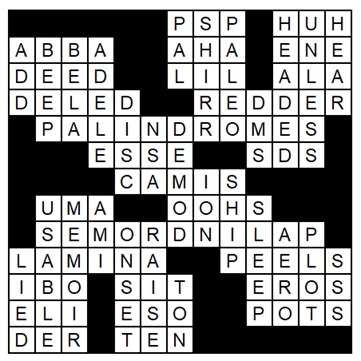
My goal was to make every across entry above the center a palindrome (except for the entry PALINDROMES) and every across entry below the center a semordnilap (except for the entry SEMORDNILAP).
After trying several different layout and ideas, I finally got the puzzle to a place where I was happy with it. And now that it’s been shared with solvers, I’ve been wondering if anyone else had tackled the combination of palindromes / semordnilaps, and crosswords.
Thankfully, Xwordinfo made the searching for them easy.
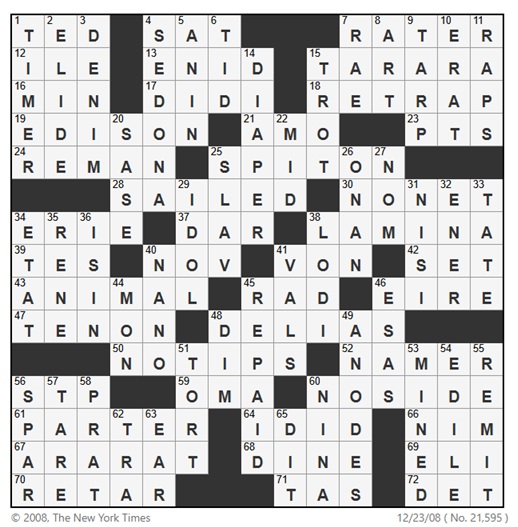
I found this Joe Krozel puzzle from December 23rd, 2008, where the entire puzzle can be rotated 180 degrees and read out the same.
It’s an entire puzzle of semordnilaps!
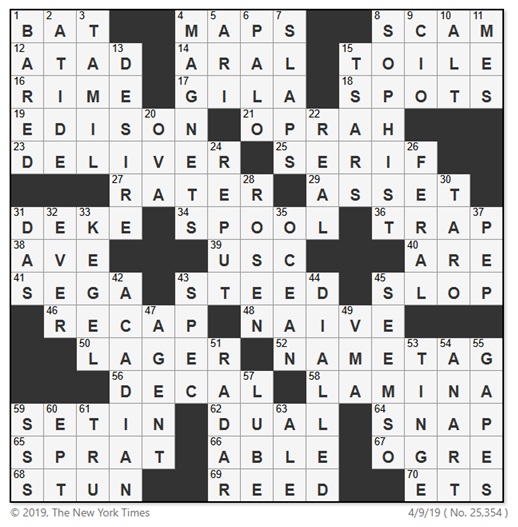
Alex Eaton-Salners executed a similar idea on April 9th, 2019, creating a puzzle where every across entry is a semordnilap, cluing both the word reading forwards and the word reading backwards.
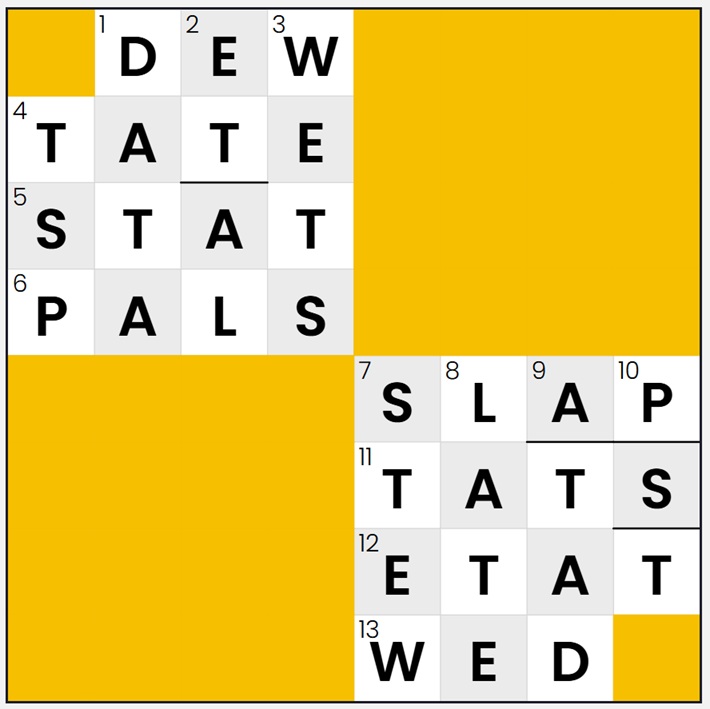
Leo Tsai managed the same trick as Krozel in a Puzzmo mini on May 20th of this year, offering two mini grids that reflect each other. (Solving this puzzle while constructing one in a similar vane was encouraging!)
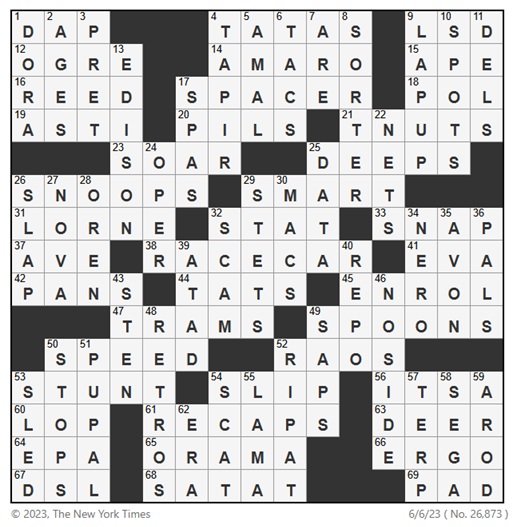
On June 6th, 2023, Daniel Jaret’s crossword appeared in the New York Times, and executed the same trick managed by Joe Krozel 15 years earlier! Once again, the entire puzzle could be rotated 180 degrees.
He also managed to place two palindromes at the very center of the puzzle, RACECAR crossing STETS, which is a terrific extra touch.
That’s more puzzles than I expected when I started hunting for palindromic crosswords!
Of course, crosswords aren’t the only puzzles where you can see palindromes and semordnilaps.
Our friends at Penny/Dell Puzzles have several puzzles where words overlap and read backwards and forwards. Right of Way and Crozzle both come to mind.
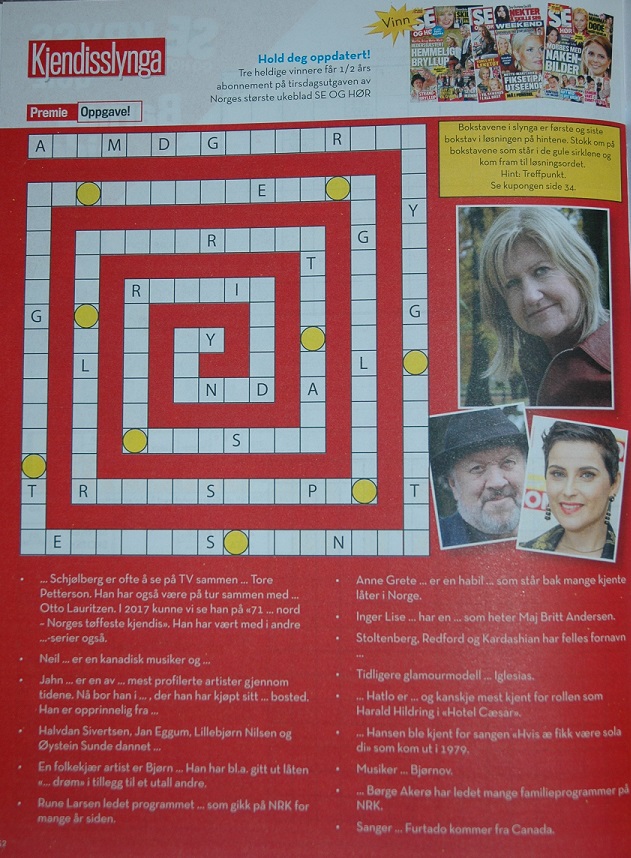
But the best example in their puzzly library is undoubtedly Bull’s-Eye Spiral.
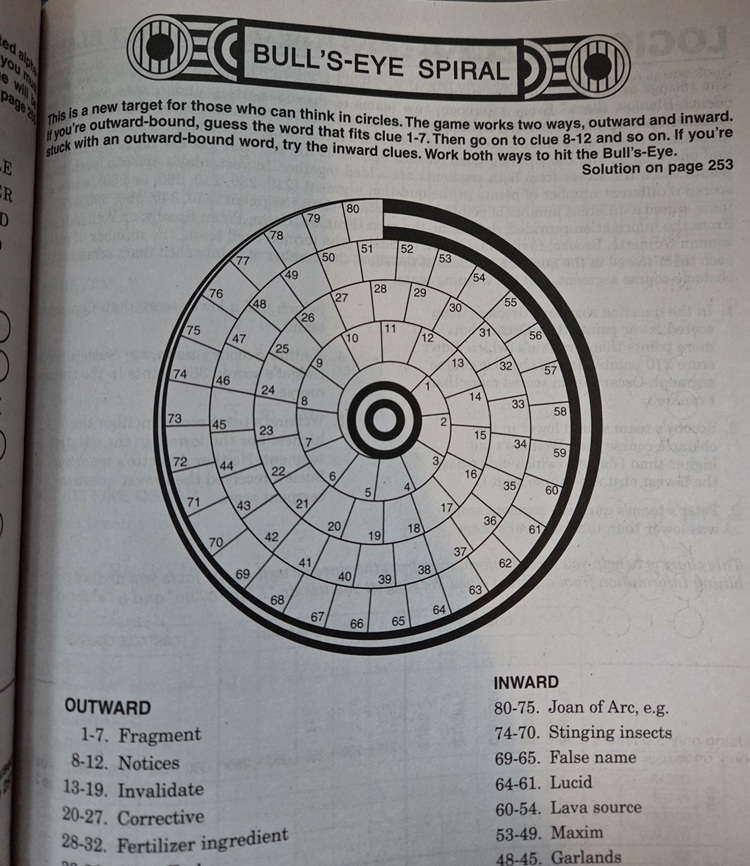
Bull’s-Eye Spiral challenges solvers to use the clues provided to create a chain of answer words that can be read both forwards and backwards.
Unlike a single semordnilap like STOP and POTS where one word can be reversed into a different word, the answers in Bull’s-Eye Spiral overlap, allowing the backwards words to bleed into the forwards words, creating a massive spiraling chain of words that’s actually two chains of words where the only common breaks are at the beginning and the end.
I’ve never tried to construct a Bull’s-Eye Spiral, though it does seem like a fun challenge to put on my ever-growing to-do / wish list.
I did, however, manage to construct a Framework puzzle years ago with only palindromes as answer words.
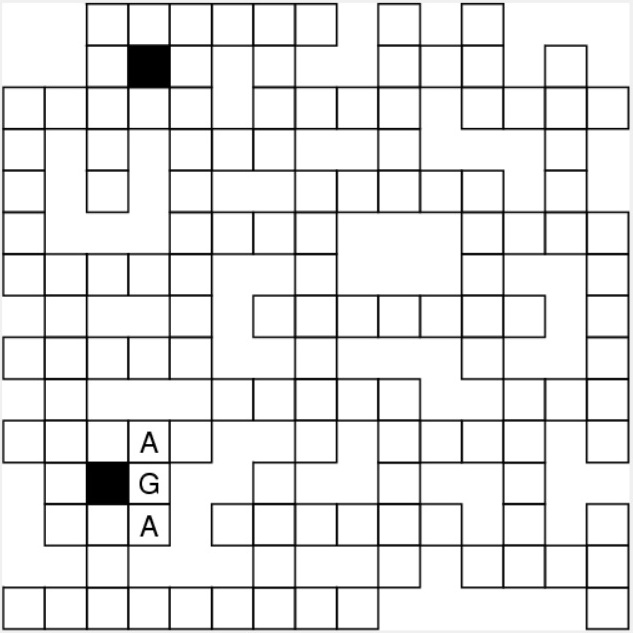
[Click here to download a PDF of this puzzle!]
It was challenging to construct, not because of the limited wordlist, but because all the common letter crossings made it difficult to ensure there was only one way to complete the grid. (No alternate solutions here!)
Happy solving!
Musician, parodist, and wordsmith “Weird Al” Yankovic once said that “the writing of a brilliant palindrome is a small miracle, and that, I think, deserves to be honored more than a lot of the stupid and inconsequential things we often celebrate in our culture.”
Do you agree with him? Are you a fan of palindromes and semordnilaps, in puzzles or otherwise? Let us know in the comments section below! We’d love to hear from you.



 PuzzCulture