

Our Summer Reading series continues this week with a deep dive into classic and modern murder mysteries and how they’ve shaped and been shaped by puzzly design!
This week, join me as I explore The Murder Game: Play, Puzzles and the Golden Age by John Curran.
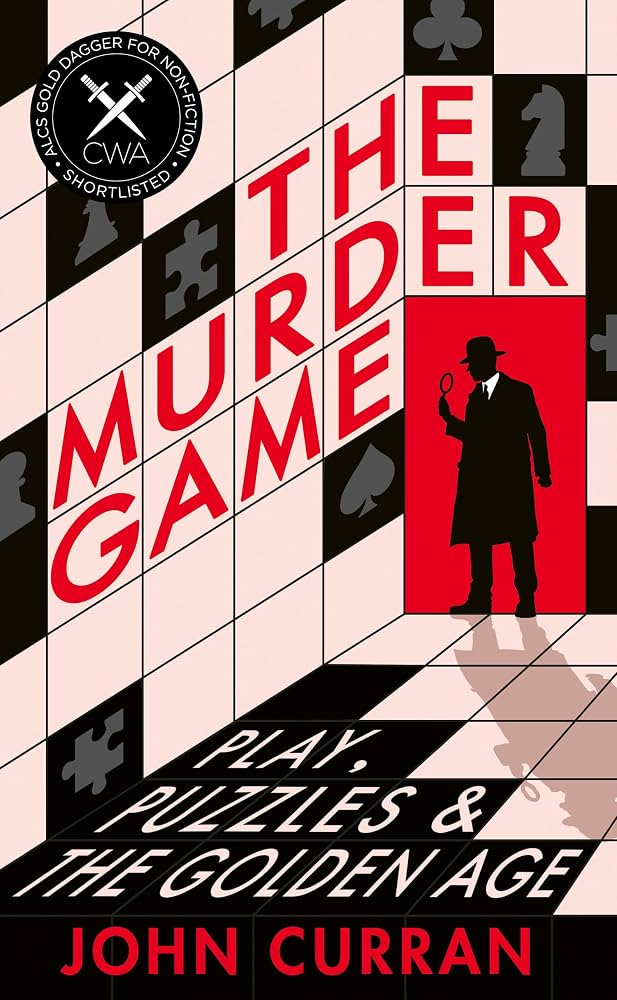
From the works of Edgar Allan Poe, Agatha Christie, and Dorothy Sayers through to the modern day, mystery writers have been engaged in an unspoken game with their readers. As A.E.W. Mason put it:
The author’s aim is to keep the reader guessing, where the puzzle, the whole puzzle, and nothing but the puzzle is his intention, the crime is discovered in the first chapter and thereabouts, the circumstances are made conventional so as not to distract the reader from the riddle; and the characters one after the other are shown to be all so obviously suspect or all so obviously innocent that no one shall be able to spot the criminal until in his last words the author hands him over to the police.
The puzzle plot, as some call the elaborate web woven by mystery writers, has evolved over the decades. Their rules have changed and grown better defined, authors have included maps and floor plans to aid readers in unraveling the mystery, and the game continues.

… some readers find the same satisfaction in detection that they find in doing a demanding crossword puzzle… You are competing with an adversary who cannot possibly cheat you, and need never outwit you, because his statement is frozen on the paper and he cannot, as he would in, say, a game of chess, adjust his strategy to yours. — Erik Routley
The Murder Game explores the origins of the puzzle plot, offering examples of its earliest iterations and the many, many forms it has taken across thousands of novels since. Curran’s voluminous knowledge of not only the Golden Age of mystery writing, but the present day as well, is truly impressive, and you feel like you’re being escorted through the puzzle plot’s development step by step.
It was great fun to read through the increasing complexity of the mysteries presented across decades, as well as the challenge involved in creating genuinely satisfying locked-room mysteries and “impossible” crimes. The transition from whodunit to howdunit was fascinating!
Despite the numerous examples of various tropes and techniques, Curran never lost sight of how puzzle-solving and mystery-solving go hand-in-hand. He shared examples of how puzzles have helped evolve mystery writing in exciting new directions — jigsaw mysteries, mapbooks, Cain’s Jawbone — all while remaining distinctly separate in important ways.
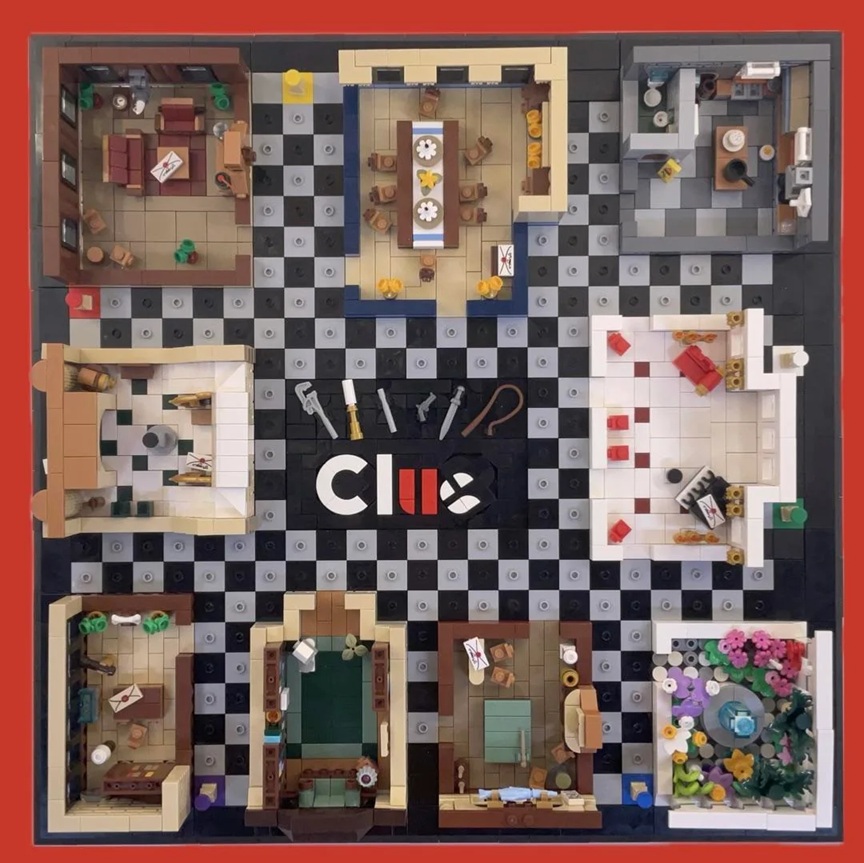
He even offered a delightful interlude with Clue/Cluedo as both base template and tongue-in-cheek reflection of murder mystery stories, complete with lists of similar suspects, scenarios, and locations from throughout the genre’s history.
Whether you’re a puzzle fan or a devotee of murder mysteries, The Murder Game is an engrossing, enjoyable read that feels like an in-depth study delivered by a trusted friend. It’s literary history, gaming insight, and an exhaustive exploration of the tropes, tricks, and quirks of the genre, all steeped in the attention to detail that can only come from a diehard fan.
Are you doing any reading this summer, puzzly or otherwise, fellow reader? Let me know in the comments section below! I’d love to hear from you.

