Summer Reading: The Murder Game: Play, Puzzles and the Golden Age

Our Summer Reading series continues this week with a deep dive into classic and modern murder mysteries and how they’ve shaped and been shaped by puzzly design!

This week, join me as I explore The Murder Game: Play, Puzzles and the Golden Age by John Curran.
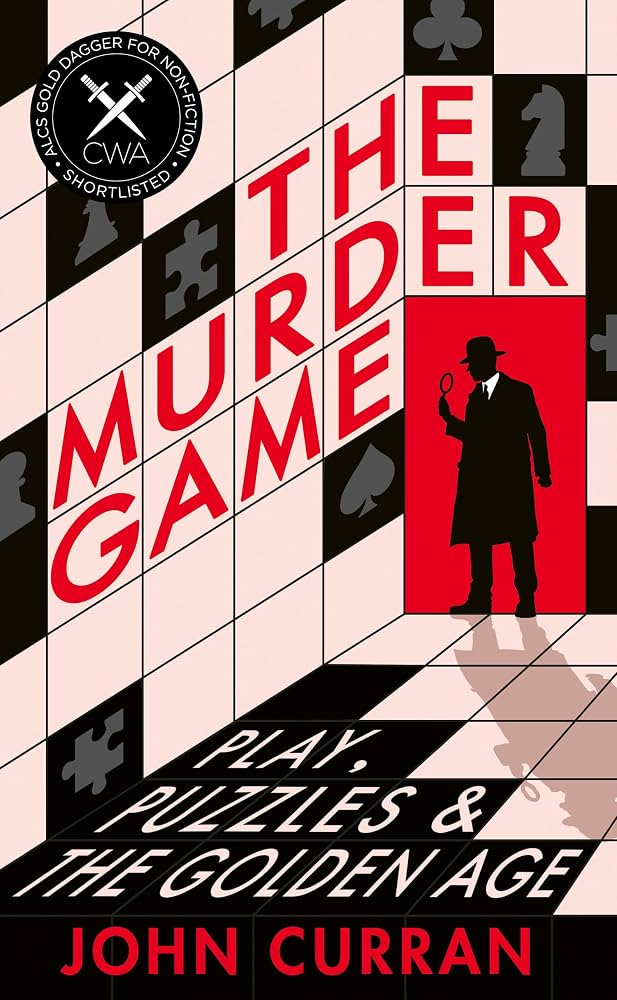
From the works of Edgar Allan Poe, Agatha Christie, and Dorothy Sayers through to the modern day, mystery writers have been engaged in an unspoken game with their readers. As A.E.W. Mason put it:

The author’s aim is to keep the reader guessing, where the puzzle, the whole puzzle, and nothing but the puzzle is his intention, the crime is discovered in the first chapter and thereabouts, the circumstances are made conventional so as not to distract the reader from the riddle; and the characters one after the other are shown to be all so obviously suspect or all so obviously innocent that no one shall be able to spot the criminal until in his last words the author hands him over to the police.

The puzzle plot, as some call the elaborate web woven by mystery writers, has evolved over the decades. Their rules have changed and grown better defined, authors have included maps and floor plans to aid readers in unraveling the mystery, and the game continues.
… some readers find the same satisfaction in detection that they find in doing a demanding crossword puzzle… You are competing with an adversary who cannot possibly cheat you, and need never outwit you, because his statement is frozen on the paper and he cannot, as he would in, say, a game of chess, adjust his strategy to yours. — Erik Routley

The Murder Game explores the origins of the puzzle plot, offering examples of its earliest iterations and the many, many forms it has taken across thousands of novels since. Curran’s voluminous knowledge of not only the Golden Age of mystery writing, but the present day as well, is truly impressive, and you feel like you’re being escorted through the puzzle plot’s development step by step.

It was great fun to read through the increasing complexity of the mysteries presented across decades, as well as the challenge involved in creating genuinely satisfying locked-room mysteries and “impossible” crimes. The transition from whodunit to howdunit was fascinating!

Despite the numerous examples of various tropes and techniques, Curran never lost sight of how puzzle-solving and mystery-solving go hand-in-hand. He shared examples of how puzzles have helped evolve mystery writing in exciting new directions — jigsaw mysteries, mapbooks, Cain’s Jawbone — all while remaining distinctly separate in important ways.
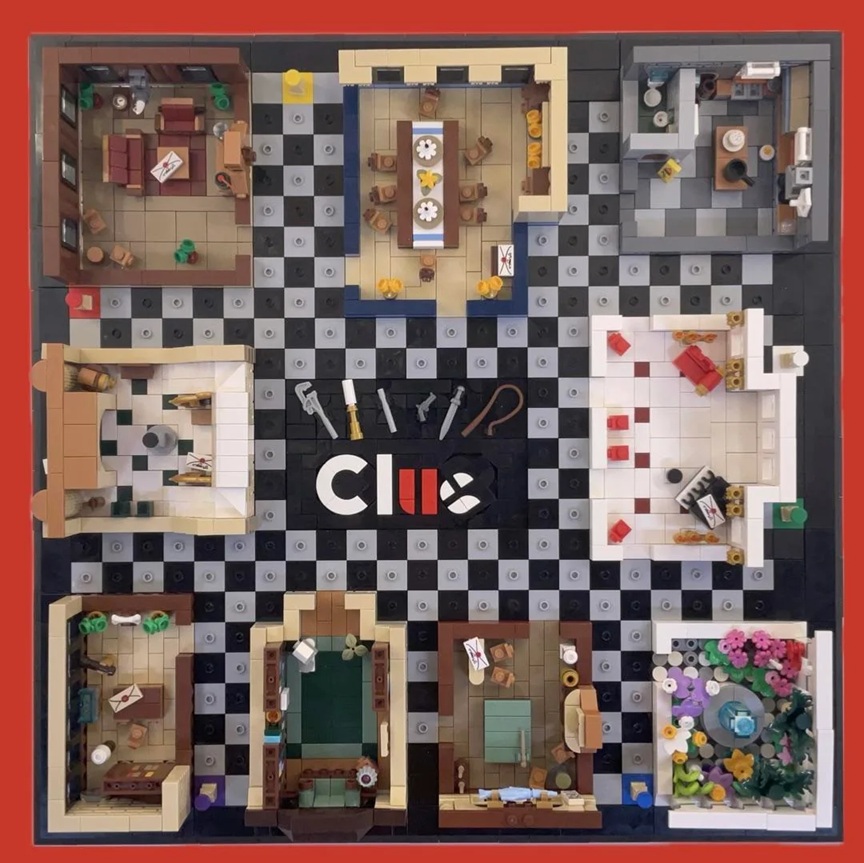
He even offered a delightful interlude with Clue/Cluedo as both base template and tongue-in-cheek reflection of murder mystery stories, complete with lists of similar suspects, scenarios, and locations from throughout the genre’s history.

Whether you’re a puzzle fan or a devotee of murder mysteries, The Murder Game is an engrossing, enjoyable read that feels like an in-depth study delivered by a trusted friend. It’s literary history, gaming insight, and an exhaustive exploration of the tropes, tricks, and quirks of the genre, all steeped in the attention to detail that can only come from a diehard fan.


Are you doing any reading this summer, puzzly or otherwise, fellow reader? Let me know in the comments section below! I’d love to hear from you.
Summer Reading: Death at Penrose Manor: A Crossword-Fueled Murder Mystery

Our Summer Reading series continues this week with some puzzle solving and some mystery solving! (Can it top The Case of the Crossword Cipher? Keep reading to find out!)

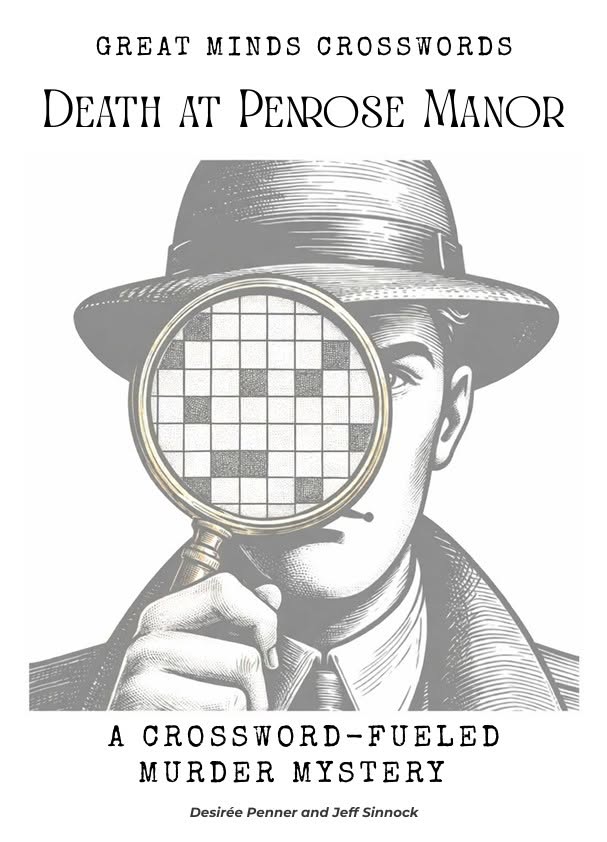
This week, join me as I investigate Death at Penrose Manor by Desirée Penner and Jeff Sinnock.

An extravagant party awaits at the home of the eccentric and mercurial Roan Penrose, newspaper magnate and man with a penchant for antagonizing those around him.

So it’s no surprise when he turns up dead during the event.

Thankfully one of the guests, police constable Jade Miller, immediately calls detective Jude Marlow, and now Marlow must unravel a web of lies, motives, and bruised egos in order to solve the murder.

Can you puzzle out which of the nine suspects committed the murder? To do so, you’ll have to read through the interrogations, solve a crossword related to each suspect, and crack the case.

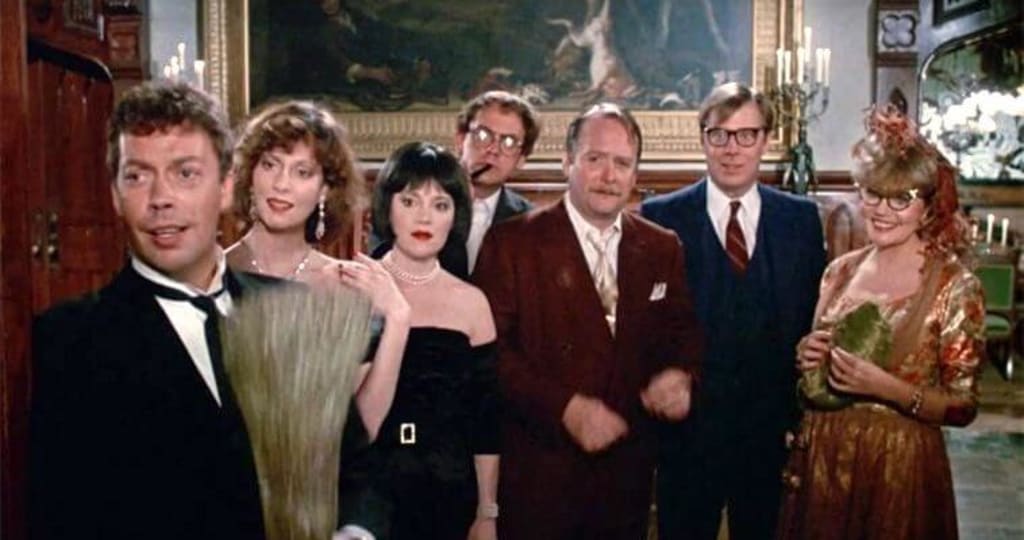
Death at Penrose Manor is a fun riff on both Agatha Christie-style murder mysteries and the trappings of the board game Clue, right down to the colorfully-named suspects and the layout of Penrose Manor.

The puzzles are mostly solid (one or two awkward words per grid), but mostly well-constructed and accessible. The cluing is straightforward, with a few sharp and clever clues peppered throughout.

Your average solver will blaze through these grids, and murder mystery fans who aren’t frequent puzzle-solvers should do fine as well.

(I can’t really dig into the book more without potentially spoiling it, so today’s review will be a little shorter than the others.)

But all in all, I had fun with Death at Penrose Manor. The mix of mystery and puzzles worked really nicely, the characters were hammy in the best way, I enjoyed scribbling notes and theories as I progressed throughout the book, and the reveal at the end was a satisfying one.

This one gets a thumbs-up from me.


Are you doing any reading this summer, puzzly or otherwise, fellow reader? Let me know in the comments section below! I’d love to hear from you.
Summer Reading: Across the Universe by Natan Last

After two Summer Reads that were peripherally about crosswords, it felt appropriate to finally read something definitively about crosswords.

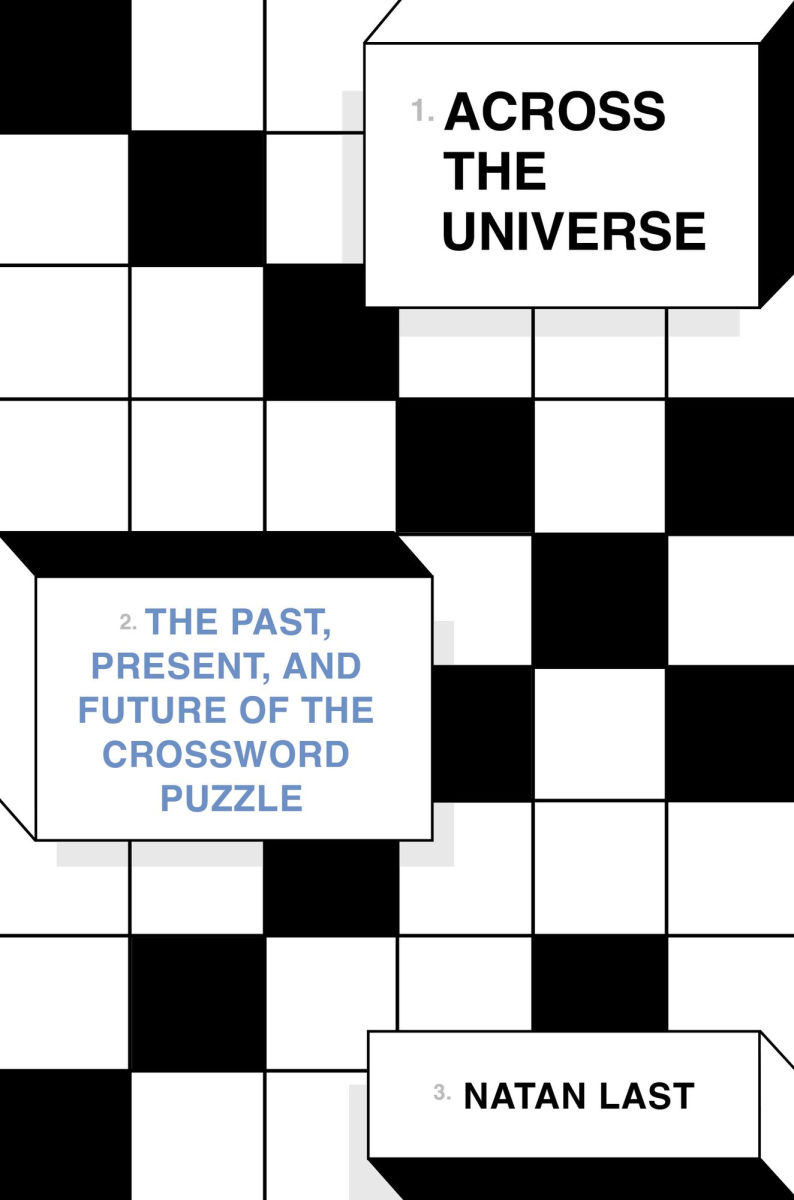
So join me as Natan Last takes on a journey, exploring where crosswords have been, where they are now, and hopefully where they’re going in Across the Universe: The Past, Present, and Future of the Crossword Puzzle.

The history of crosswords is peculiar, because the medium itself has ebbs and flows, moments of great cultural prominence and others where it fades into the background of daily life.

And since the crossword is ever-evolving, shaped by new editors, new outlets, and new constructors, the history of crosswords is constantly being reexamined and recontextualized by fresh eyes and previously-unheard perspectives.

Last deftly moves between the past and the present as he chronicles the rich cultural impact (and more importantly, the potential for GREATER cultural impact) of crosswords. There are chapters dedicated to the intersection of crosswords and art, crosswords and technology, and crosswords and identity.

We learn about the rise of Dr.Fill and what makes crosswords unlike other activities like Chess and Go that have been challenged by automated play. We learn about the New Wave of crosswords (which seems quaint at this point) and the current indie revolution that shapes the modern puzzle experience.

Image courtesy of Geek Dad.

We learn about cruciverbalists past and present like Elizabeth Gorski and Mangesh Ghogre, exploring the complex relationship between crosswords, culture, and representation, especially how crosswords have both helped and hindered at points.

Each chapter is a thought-provoking short essay, enhanced by Last’s proficiency as a storyteller. He spins a wonderful narrative, charming and patient, knowing exactly when to deep dive on a subject and when to pivot to a meaningful counterpoint.

And along the way, we get delightful backstory on surprising moments, important voices, and Natan’s firsthand experience in the world of crosswords.

There are a fair number of books that explore crossword history, and what makes each of them worthwhile isn’t the factual information, it’s the perspective offered by the author. And Last takes a fun, if well-trodden topic, and he makes it hum with context, commentary, and an unflinching look at the good and the not-so-good of crosswords past and present.

I had high expectations coming into this book, and Across the Universe met and exceeded every single one. This belongs on any crossword fan’s shelf.


Are you doing any reading this summer, puzzly or otherwise, fellow reader? Let me know in the comments section below! I’d love to hear from you.
Summer Reading: Nancy Drew #44: The Clue in the Crossword Cipher

Last week I kicked off our Summer Reading review series with Matching Minds with Sondheim.

This week, I decided to go back in time to a book I probably read during a summer break years and years ago. It felt appropriate to read the same sort of book that would’ve been ON a summer reading list for elementary or middle schoolers.

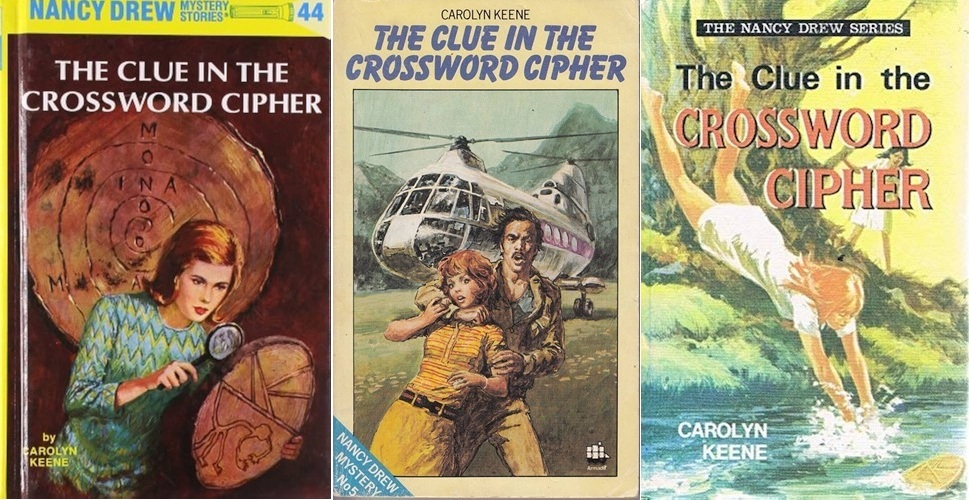
So join me as I take a trip to 1967 as we read Nancy Drew #44: The Clue in the Crossword Cipher by Carolyn Keene (aka Harriet Adams).

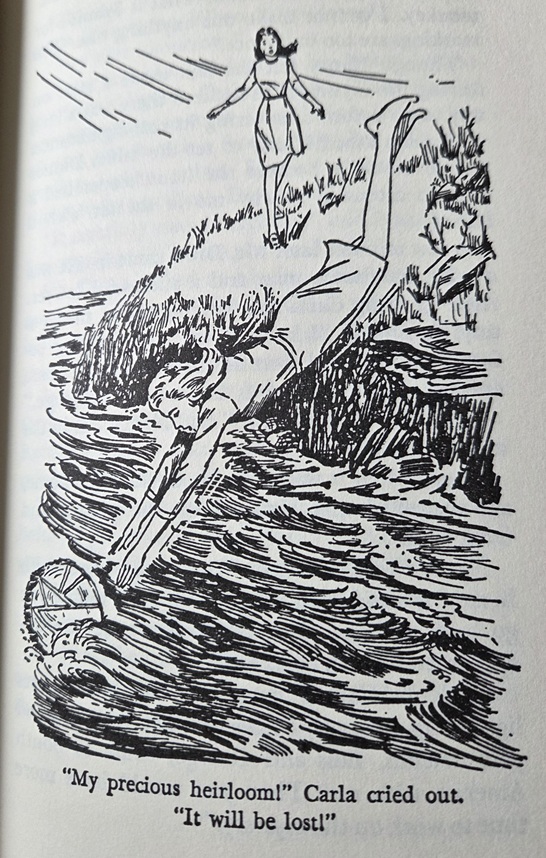
Nancy’s new acquaintance Carla Ponce shows her a family heirloom that has been in her family for generations — a wooden plaque carved into the image of a monkey — and asks for Nancy’s help unraveling the mystery of the message on the back of the carving.

While Carla is being menaced by a shadowy figure known only as El Gato, Nancy recruits her friends George and Bess to join her on a trip to Peru to unravel the centuries-old mystery of the monkey plaque.

Despite attempted (and successful) thefts, attempted kidnappings, a sabotaged plane, and a murder attempt atop Machu Picchu, Nancy and her friends unravel both the story of Carla’s missing ancestor and the secret of the monkey plaque. Their journey ends amongst the Nazca Lines as they seek a lost treasure.

I was absolutely a reader of the Hardy Boys and Nancy Drew when I was young, so I was definitely interested to revisit one of these books for our Summer Reading series.

And man, this book does not age well.

The adventure itself is fine, dealing with numerous criminal agents and cliffhangers at the end of each chapter (although some of them are just fake-outs resolved in the first sentence of the next chapter).

But the fat-shaming disguised as comedy is absolutely brutal. Every 20 pages, Bess is being called fat or chided about her eating or exercise. It sucks. They even gave this poor girl a cow-sounding NAME.

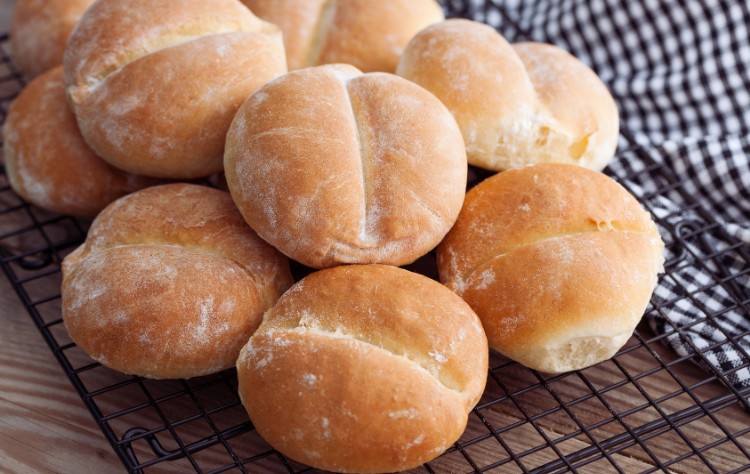
She runs all over Peru and Argentina trying to save Nancy’s life, and they still give her endless grief over eating delicious homemade local bread. LET THE GIRL BE.

There’s also the little matter of the crossword cipher on the back of the plaque.

It’s described to us in bits and pieces as they try to read the worn-away lettering, but what we have, essentially, are four words in a foreign language which seem to be crossing in pairs.

So, even being generous in our interpretation, this is neither a crossword nor a cipher. It’s not encoded, it’s just in another language. A language one of the primary characters speaks. I genuinely don’t know why they named the book after this detail. Maybe for flow? “The Case of the Worn-Off Crossed Words” doesn’t really grab your attention, does it?

All that being said, it wasn’t a bad way to pass an hour or so. The art peppered throughout the book is fun, and the cartoonish smugglers throwing bombs and trying to toss Nancy off the top of an Incan landmark were pretty entertaining in their sinister ineptitude. (I am a sucker for incompetent lackeys.)

But I still wish there was, you know, a crossword to solve, or a cipher. That would have made the puzzle of the monkey plaque a little more engaging.


Are you doing any reading this summer, puzzly or otherwise, fellow reader? Let me know in the comments section below! I’d love to hear from you.
Summer Reading: Matching Minds with Sondheim

School is out, and it got me thinking about summertime during the school year. I can remember looking forward to reading every summer break.

There would be lists of possible choices to read, and I inevitably discovered something fun and fascinating that I might not have plucked from a shelf otherwise. It’s how I first encountered the original Sherlock Holmes stories, The Hitchhiker’s Guide to the Galaxy, and other classics.

And I thought it would be fun to revisit those days of summer reading for a few weeks with puzzle-centric book reviews!

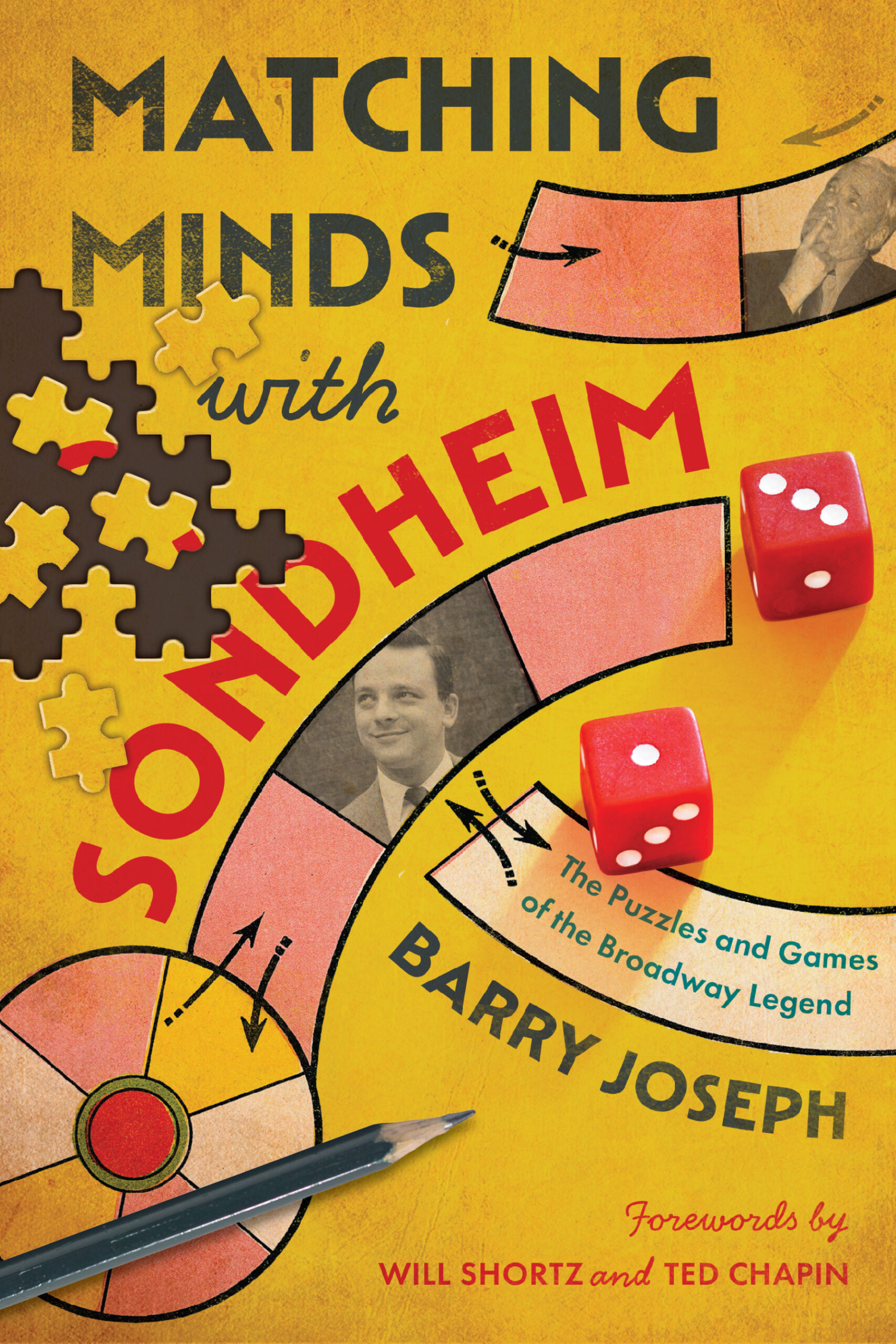
Today I’m starting off my summer reading series with Matching Minds with Sondheim by Barry Joseph.

Most people know Stephen Sondheim as a titan of Broadway and the American stage, the composer and lyricist behind dozens of iconic works. West Side Story. Gypsy. Into the Woods. A Funny Thing Happened on the Way to the Forum. (My personal favorite? Assassins.)

Many puzzle enthusiasts know him for his advocacy for cryptic crosswords (aka British-style crosswords). New York Magazine featured his cruciverbalistic efforts for years, and Will Shortz now possesses Sondheim’s exhaustive collection of Listener cryptic crosswords.

But fewer puzzlers know about Sondheim’s love of games or his penchant for creating puzzly scavenger hunts and murder mystery events.

Which makes this magnificent deep dive into Sondheim’s love of games and puzzles even more of a treat.

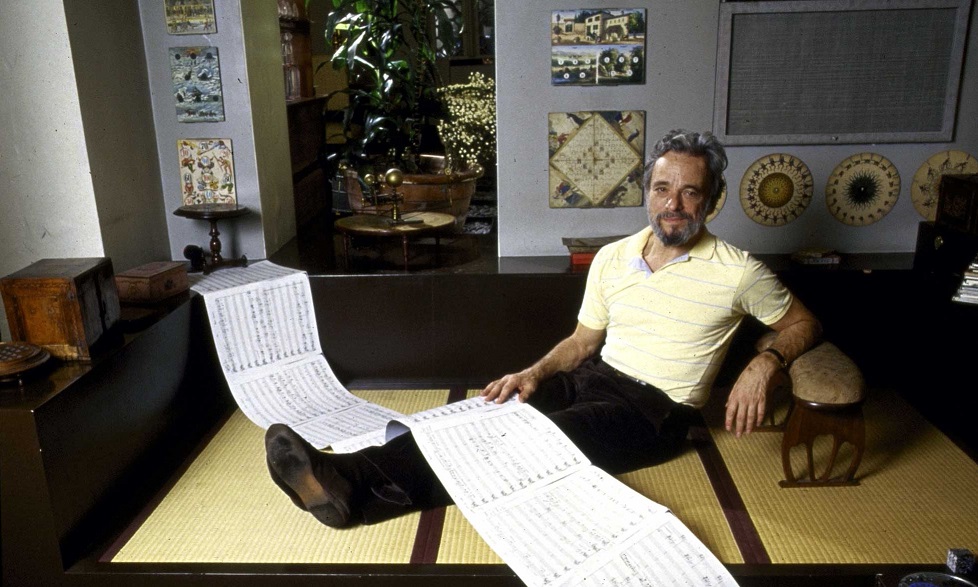
Joseph takes us into Sondheim’s puzzle- and game-filled home, decorated and adorned like an immersive snapshot of hobby history. He shares the puzzly influences behind some of Sondheim’s theatrical and cinematic endeavors. He reminisces with those celebrities and luminaries who participated in Sondheim’s legendary puzzly adventures and remember them fondly.

The reader even gets a few wonderful glimpses into the creative process behind these one-off experiences.

Plenty of biographical texts reveal the author’s affection for the subject, or grant insights into them that the casual reader or fan might not know. But it’s very rare to feel like I got a chance to pick the brain of their subject and learn from them.

Joseph’s diligent research and narrative storytelling lets the reader feel like they’re at the table with him and Sondheim, plotting a puzzly adventure together.

With photos galore, puzzles to solve, and even instructions for creating your own versions of Sondheim’s puzzle and game events, this was part-biography, part-game design guide, featuring the best of both worlds.

Some celebrities are onions, revealing new layers as you go deeper. When I was a theater major, I was delighted to learn more about Sondheim the musical theater composer. When I started working with puzzles, I was delighted to learn more about Sondheim the cryptic crossword aficionado.

And after more than twenty years in my puzzly career, I’m still learning about Sondheim on both levels, thanks to Barry Joseph’s Matching Minds With Sondheim.

Make some time this summer for this book. You won’t be disappointed.


Are you doing any reading this summer, puzzly or otherwise, fellow reader? Let me know in the comments section below! I’d love to hear from you.
Product Review: Bread Basket

[Note: I received a free copy of this game in exchange for a fair, unbiased review.]

Playing games and enjoying snacks have gone hand-in-hand forever, so it’s only natural that games about making snacks would evolve over time.

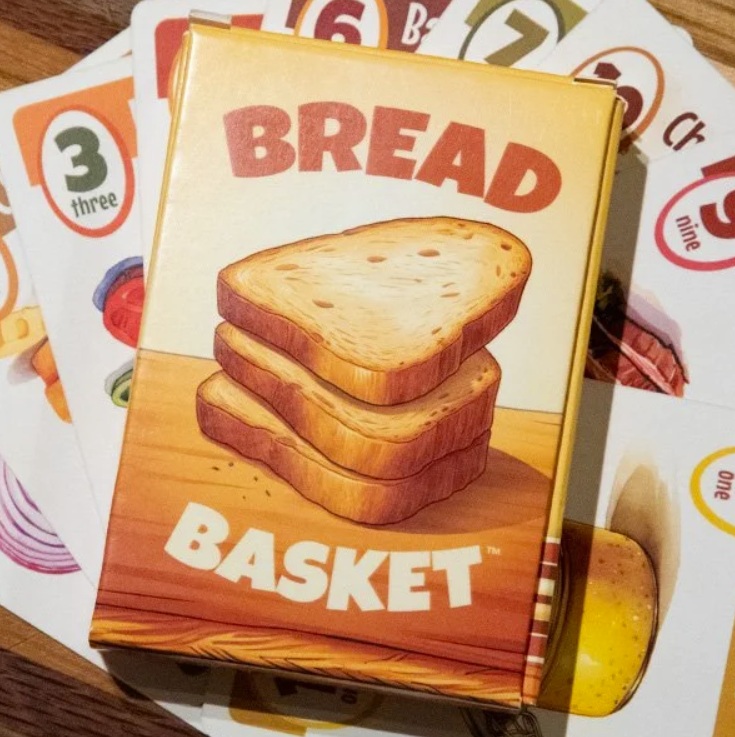
Today’s game from Crab Fragment Labs, Bread Basket, is a brilliant example.

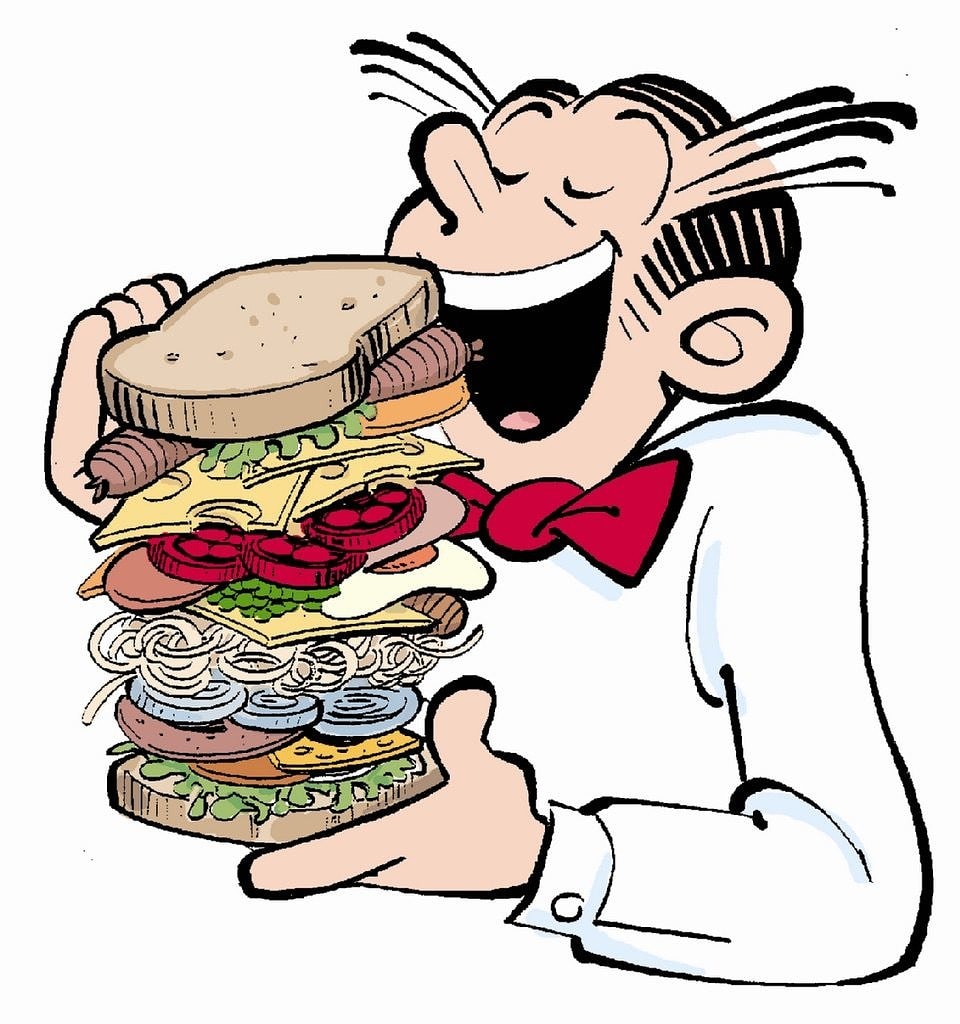
Bread Basket is a card game all about earning points by building sandwiches with the cards in your hand. When I thought about shuffling cards and making sandwiches, it brought to mind Dagwood from the Blondie comic strip or Garfield from the cartoon, ready to unhinge their jaws and take an enormous bite!

You see, building a sandwich isn’t just a skill, it’s an art. You need to balance your ingredients, flavors, tastes and textures, all while making sure you can actually take a bite of the sandwich at the end.

And it’s the same idea with Bread Basket, but with point values instead of flavors.

There are rules to your sandwich making. Your sandwich must have bread (matching cards on each side) and the ingredients in between must be lower-numbered cards than the bread. But with each player adding only one card at a time to the shared sandwich-making space on the table, you’ll need timing, strategy, and luck to make a sandwich and score points.

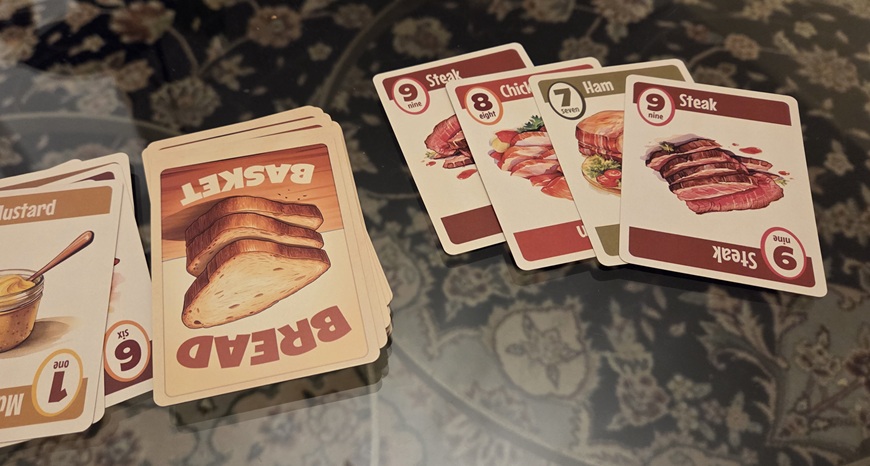
A sandwich consists of a string of cards where two cards match on either hand, and the cards in the middle are of lower value. If you complete the sandwich with your bread, you collect the point value of the cards contained between the pieces of bread.

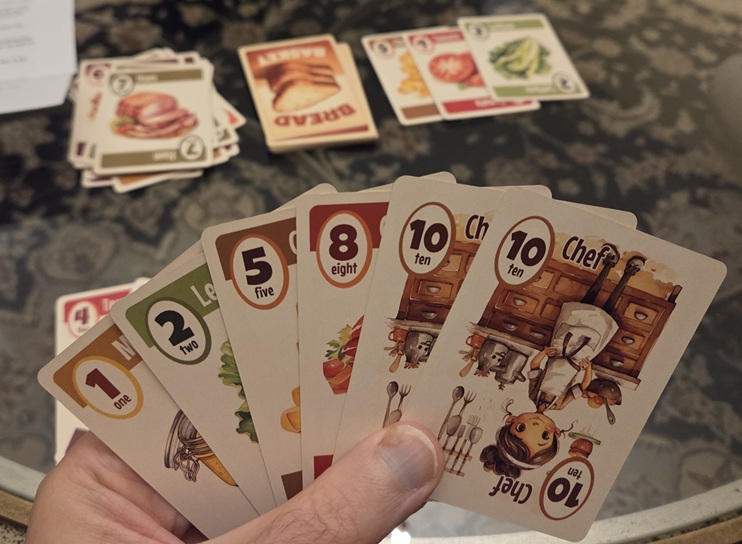
For instance here, the bread are the two steak cards, and the points earned in this sandwich would be 15.

Once one player is out of cards (or the deck of available cards to draw runs out), the hand is over. You get points for all of the sandwiches you’ve made, but you LOSE points for all of the cards remaining in your hand.

This mix of strategies adds to the challenge and the fun of the game, since you’re trying to form sandwiches to earn points, but also to eliminate cards from your hand. (This mimics a dual-play mechanic from one of my all-time favorite card games, 12 Days.)

You can use high cards to start potential sandwiches, but you can also use them to block sandwiches.

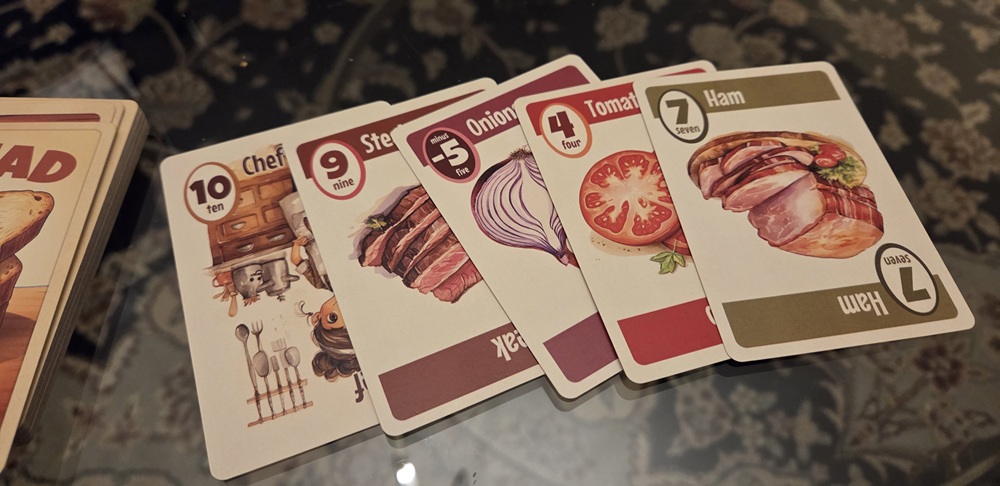
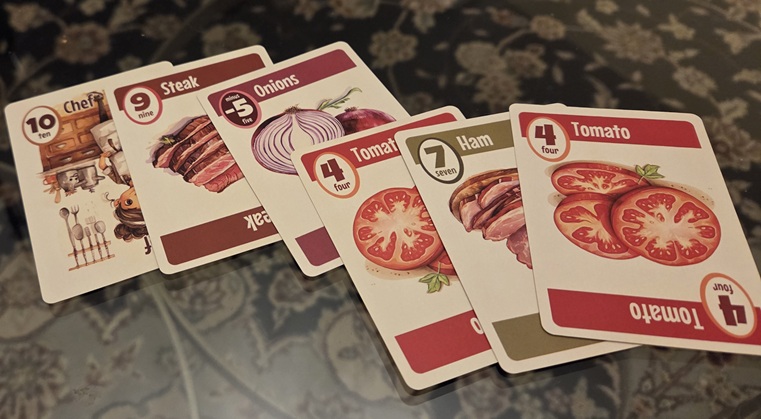
Here you see a string of cards played. But the following move does NOT complete a sandwich, since a sandwich can’t contain a higher number.

The gameplay changes rapidly as each new card is added. Do you shift from trying to make a sandwich to trying to block one, or do you prioritize dropping high-value cards from your hand, so you’re not penalized later? (Or do you drop a Ten in the middle of the string, accomplishing both in one move?)

For a game with only 55 cards (5 each of the cards 1-10, plus five onion cards valued at -5 points) and only two options on your turn (play card or draw a card), there is so much strategy and replay value packed into this deck.

And since you can play with as few as two players and as many as six, the gameplay is very different depending on the group.

With six players, I found myself focusing more on emptying my hand, rather than making sandwiches, because the sandwich-making space changed so rapidly. In two-player games, there was more time to strategize the sandwich building, grabbing more points.

(We also played several house-rule versions we came up with, like using the first card as the highest possible card in a sandwich, or using Onions like Aces to capture and remove Tens and other high cards from the board.)

Like all great card games, Bread Basket is very quick to learn, but not so easy to master. After playing for two hours with family members, they’ve requested it make an encore appearance at Thanksgiving. How apropos!

Bread Basket is available in PDF form from Crab Fragment Labs for only $3 and in full printed deck form for $10.95 from DriveThruCards. (Actually, there are three decks available: the traditional deck, a pirate-themed Beard Basket deck, and a spooky Dread Basket deck.)

I’d recommend picking up a deck from DriveThruCards; the colors are warm and vibrant, the deck is made of quality card stock, and printer ink at home can be pricey.

You can check out Bread Basket and many more games at the Crab Fragment Labs website.