Product Review: Seas of Havoc

[Note: I received a free copy of this game in exchange for a fair, unbiased review.]

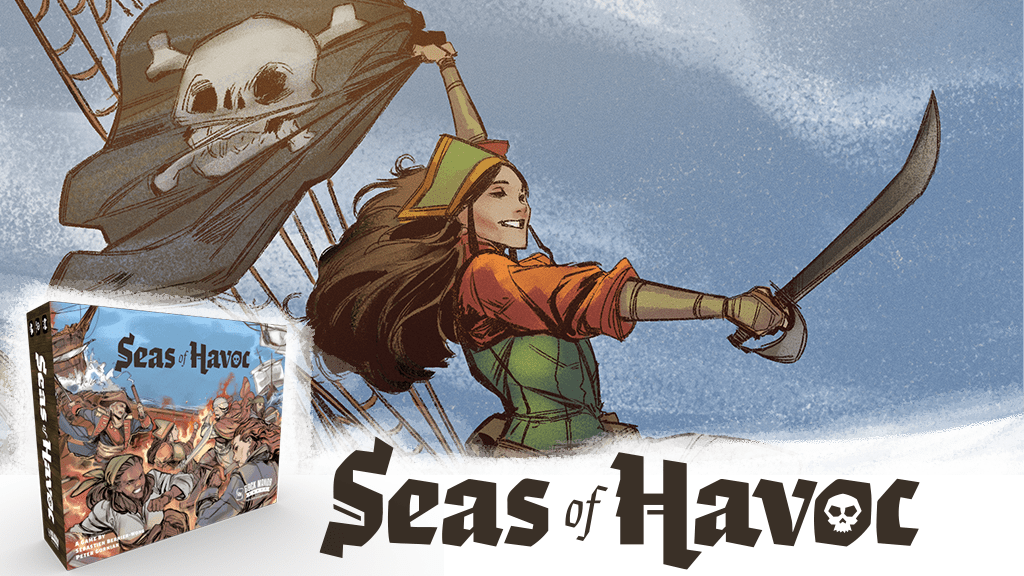
The life of a pirate isn’t all about gold and raiding and gold and avoiding the authorities and gold and gold. It’s also about building a name for yourself. And the greatest pirates, the most feared, the most successful, they aren’t just famous… they’re INFAMOUS.

And that’s the goal of every pirate sailing the, uh, one sea in Seas of Havoc: gaining the most infamy through deeds both impressive and treacherous.
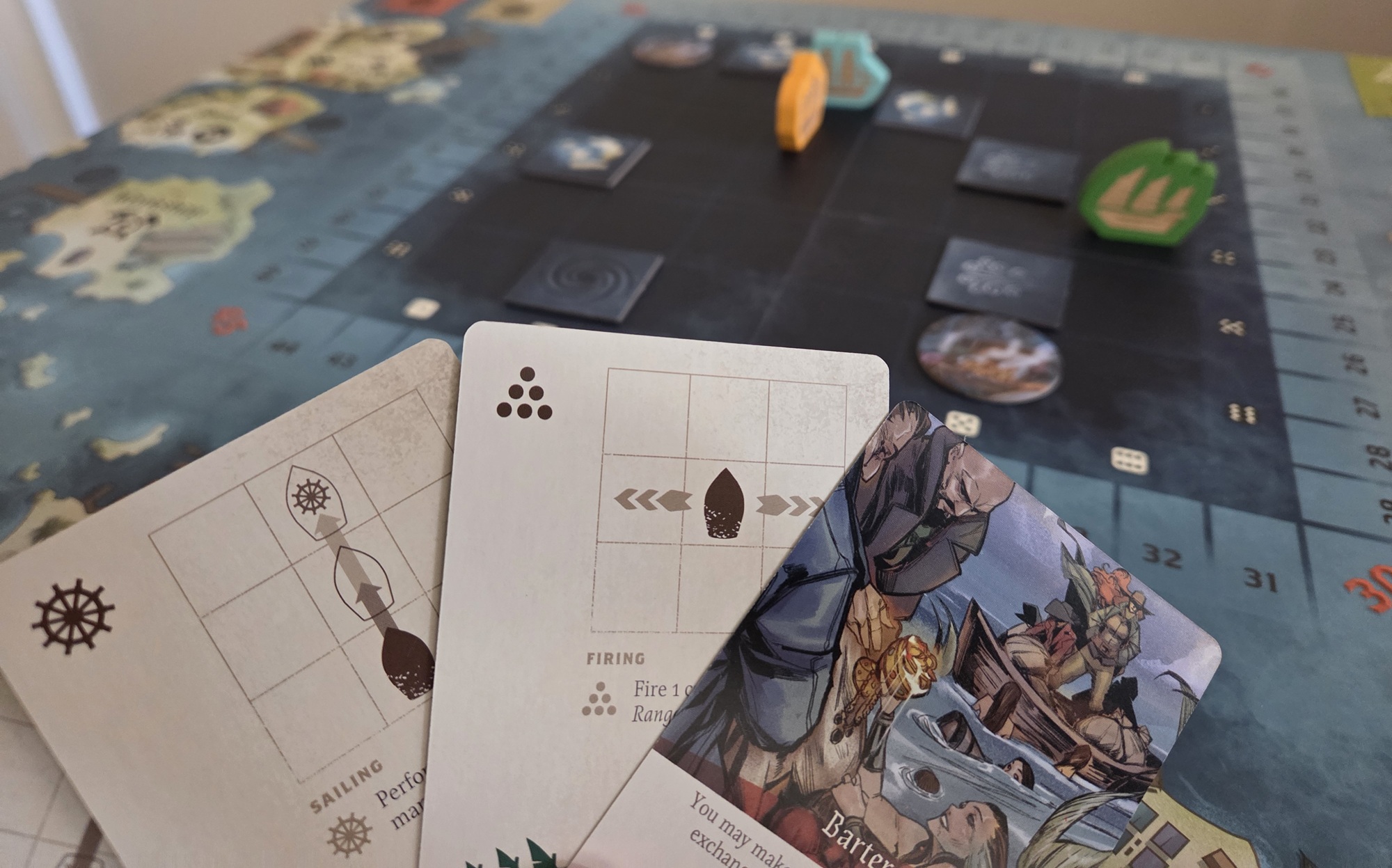
Seas of Havoc is a game for 2-5 players that is part resource management and part combat tactics.

The gameplay alternates between an Island Phase (where your skiffs gather resources from the Market or the islands surrounding the sea) and a Sea Phase (where the pirates maneuver their main ship around the board to wage war and damage their opponents’ vessels and reputations).

There is no set number of rounds in Seas of Havoc. Instead, the game ends whenever the damage deck has been depleted during a Sea Phase. That phase is completed by the players, and then they total up their infamy.

I quite like the fact that player choices (and not an arbitrary number of rounds) determines the end of play. It adds agency and urgency to the proceedings.
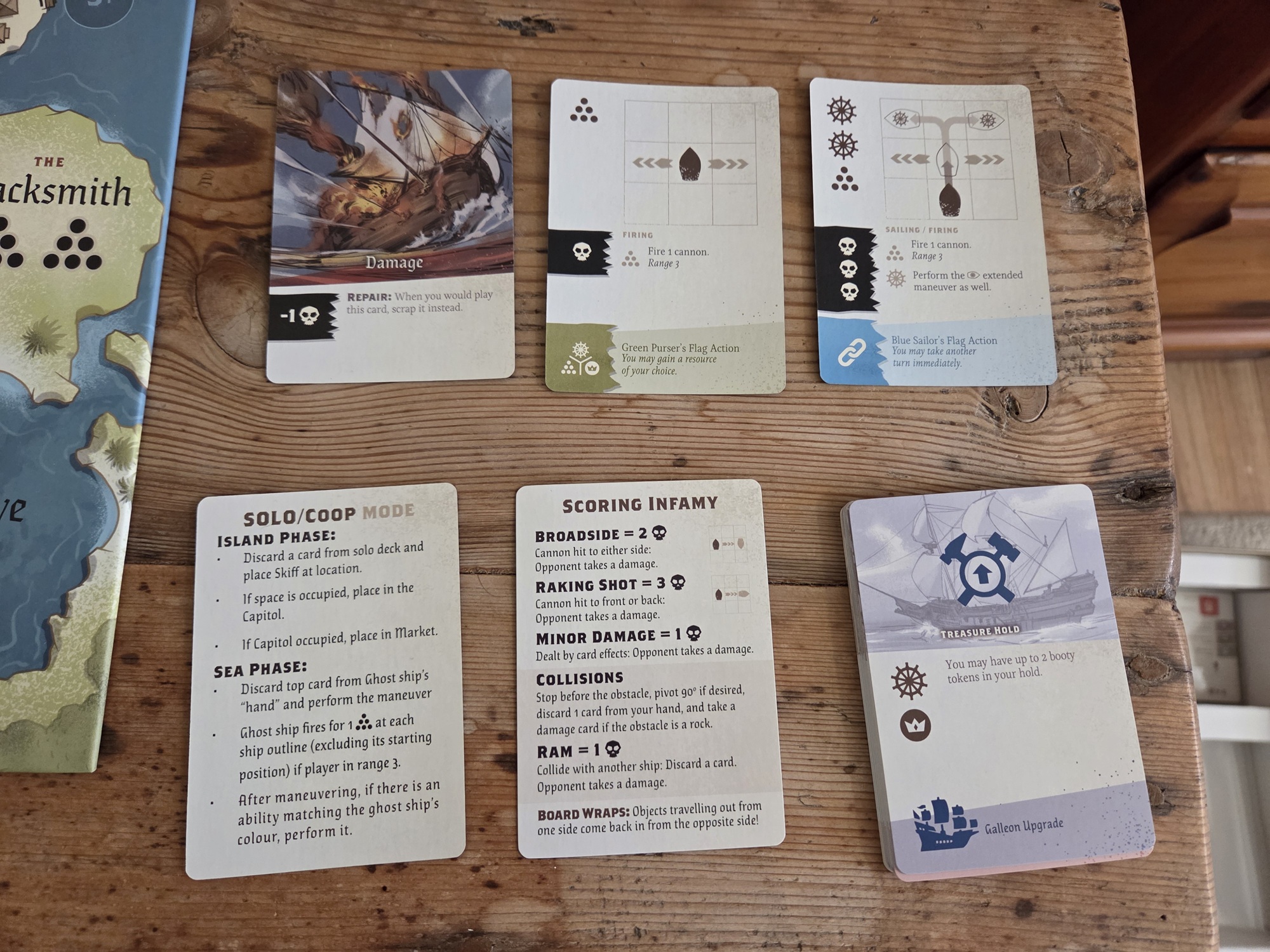
Now, you CAN play the game by acquiring infamy through upgrading and collecting cards and trying to avoid combat, but you’d be playing with one arm tied behind your back. Cannonball attacks and ship ramming are such big components of the gameplay that you can’t really win unless you’re at least a little bit of a bastard, if not a right bastard of a scurvy seadog.

I know adversarial games aren’t everyone’s cup of tea, so it’s worth noting there is another way to play Seas of Havoc as a solo or a collaborative game, where you (or you and your fellow players) tackle the threat of the Ghost Fleet.

I did enjoy the collaborative version of the game against the Ghost Fleet — I’m an easy mark for cooperative gameplay that’s the players vs. the game — but I also absolutely had a blast seeing how ruthless I could be against a band of friends going whole hog with cannonballs. (Especially when we grabbed some LEGO cannons and actually started firing at each other like proper scalawags.)
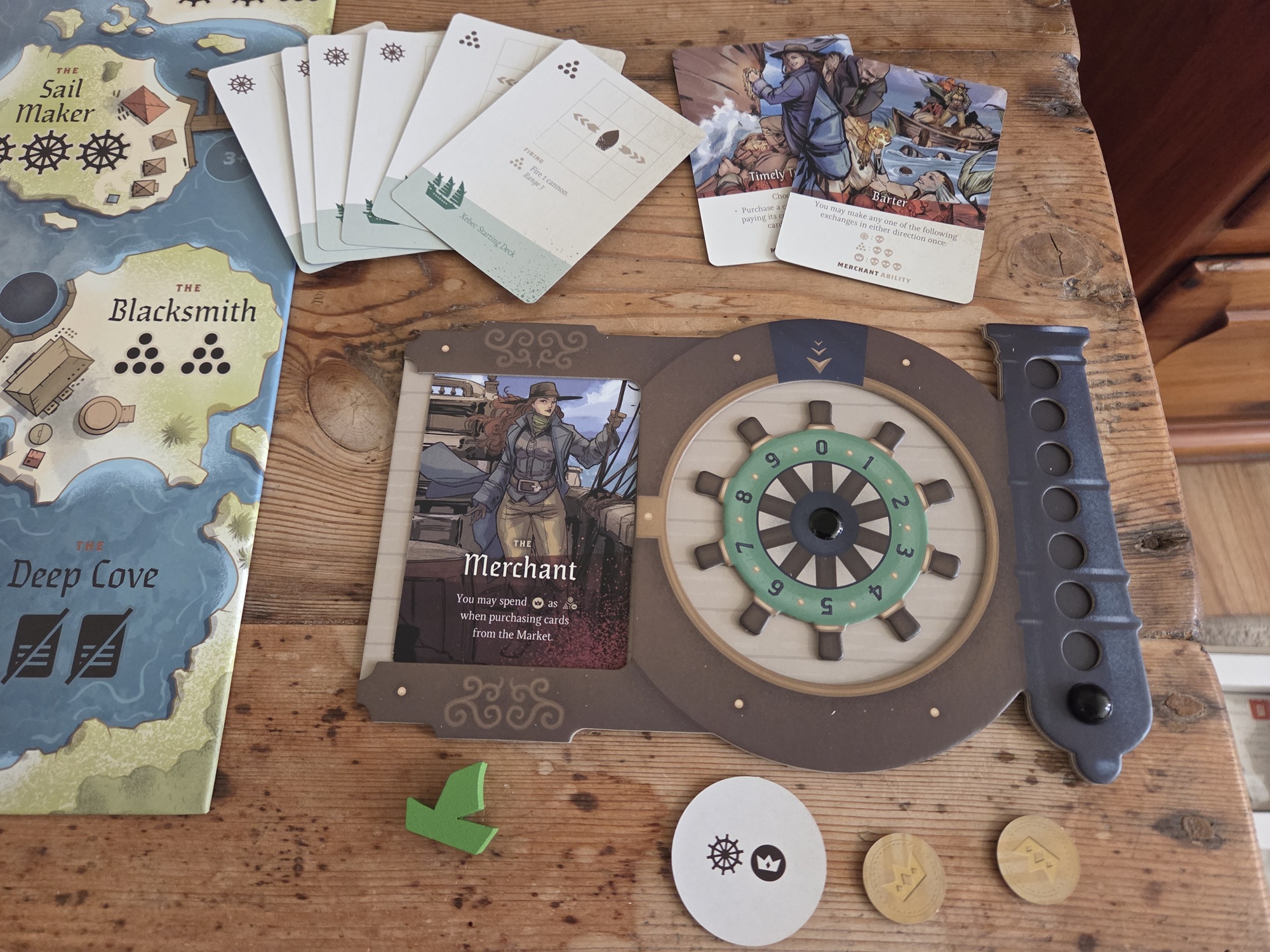
Speaking of cannonballs, I need to highlight how much thought clearly went into all the physical components of this game. The cards are high quality, all of the materials are sturdy, and this feels like a game that will endure many playthroughs without wear and tear.

And the designs help with your immersion! The spinning wheel on the character board, the ship pieces, and especially the flattened edge on the cannonballs… all terrific, creative choices. (I am so glad the cannonballs aren’t round, what a nightmare that would’ve been.)

That level of care means a lot to me as a board game fan, and clearly it means a lot to the team at Rock Manor Games.

Factor in the different ships and captains (allowing for great replay value as you try out various combinations) and this is a game meant to challenge newcomers and experienced players alike across many sessions at the table.
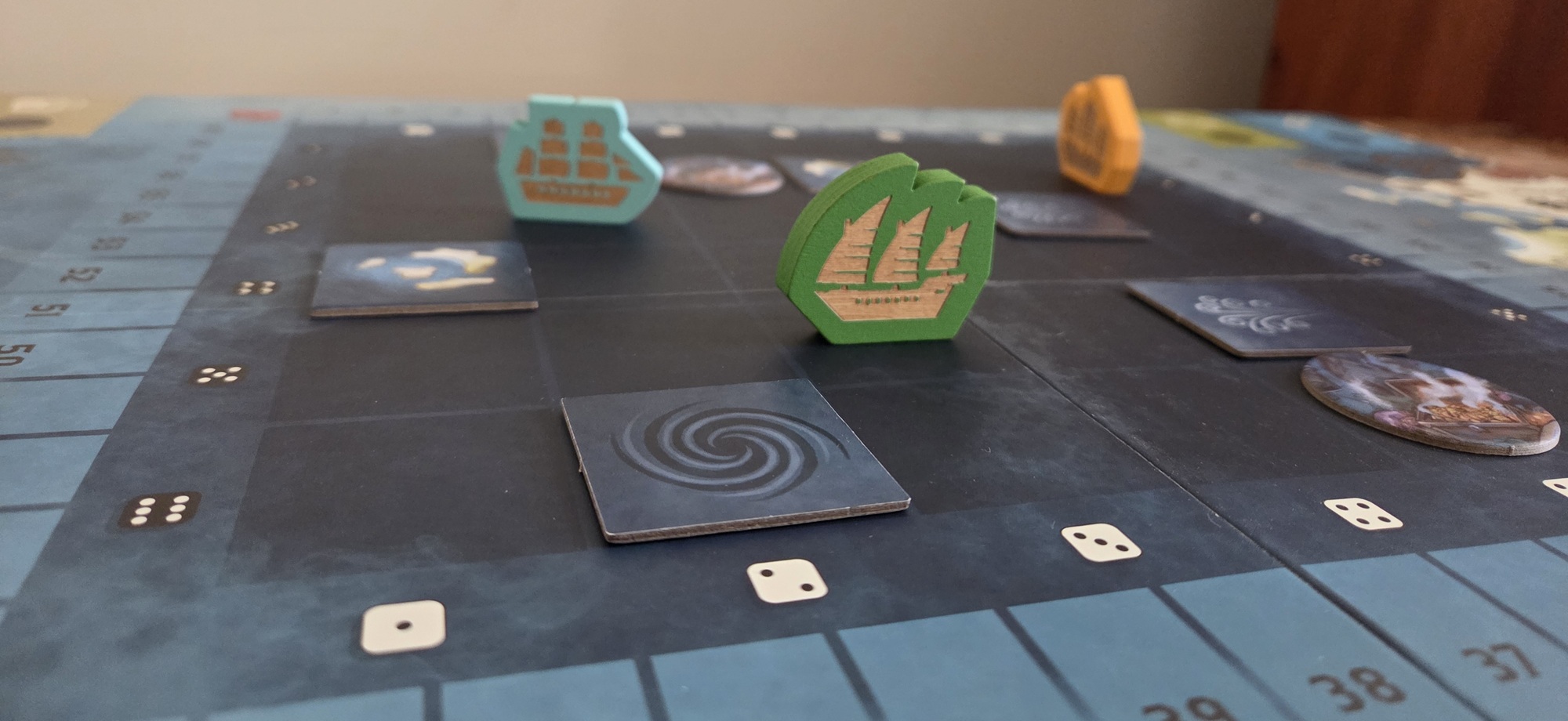
Seas of Havoc delivers exactly what it promises: chaos on land and on deck as a band of avaricious pirates scheme and smash and blast their way into high-seas history.

The mix of all-out combat with carefully tracking and taking advantage of resources offers multiple levels of gameplay that keep either phase of the game from dragging on too long.

Don’t wait for Talk Like a Pirate Day. Give this one a shot soon.

[Seas of Havoc is for ages 14 and up, and it’s available from Rock Manor Games and participating websites, starting at $60. It can also be found in this year’s Holiday Puzzly Gift Guide, coming soon!]
The Board Game Legacy of Kurt Vonnegut

Mystery novelist Agatha Christie was an avid surfing enthusiast. Abraham Lincoln is in the National Wrestling Hall of Fame and only suffered a single defeat in 12 years. We wouldn’t have Wi-Fi or Bluetooth without the scientific prowess of actress Hedy Lamarr.

It’s fascinating to learn unexpected facts about iconic figures from history that don’t necessarily jive with their most famous accolades.

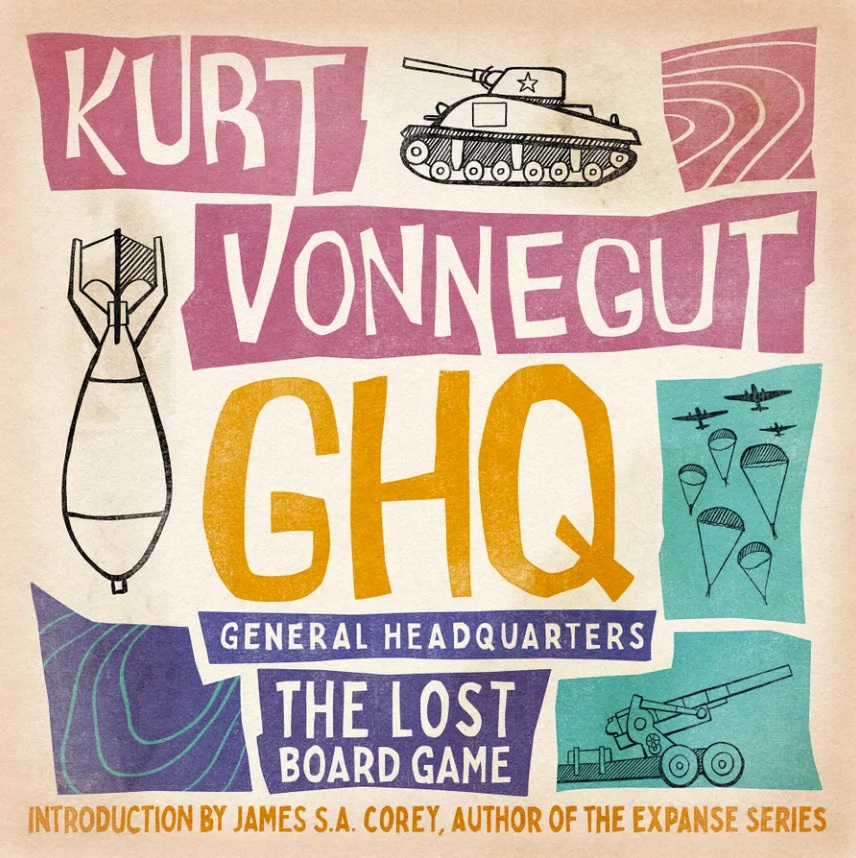
For instance, did you know that celebrated writer Kurt Vonnegut made a board game?

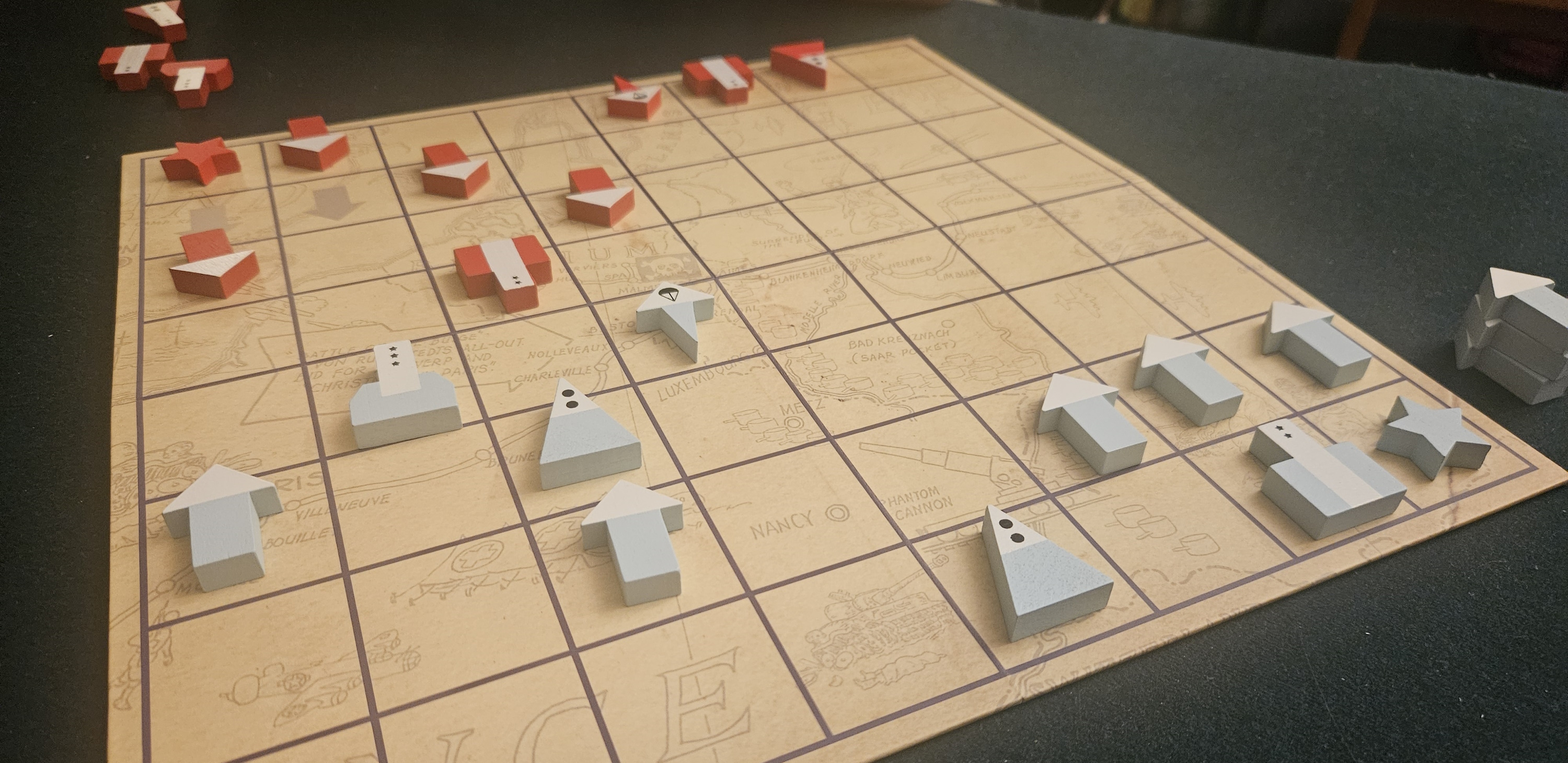
Yes, nearly seventy years ago, after the less than stellar commercial performance of his novel Player Piano, Vonnegut attempted to create a third game to utilize the 8×8 checkerboard as effectively as chess and checkers did.

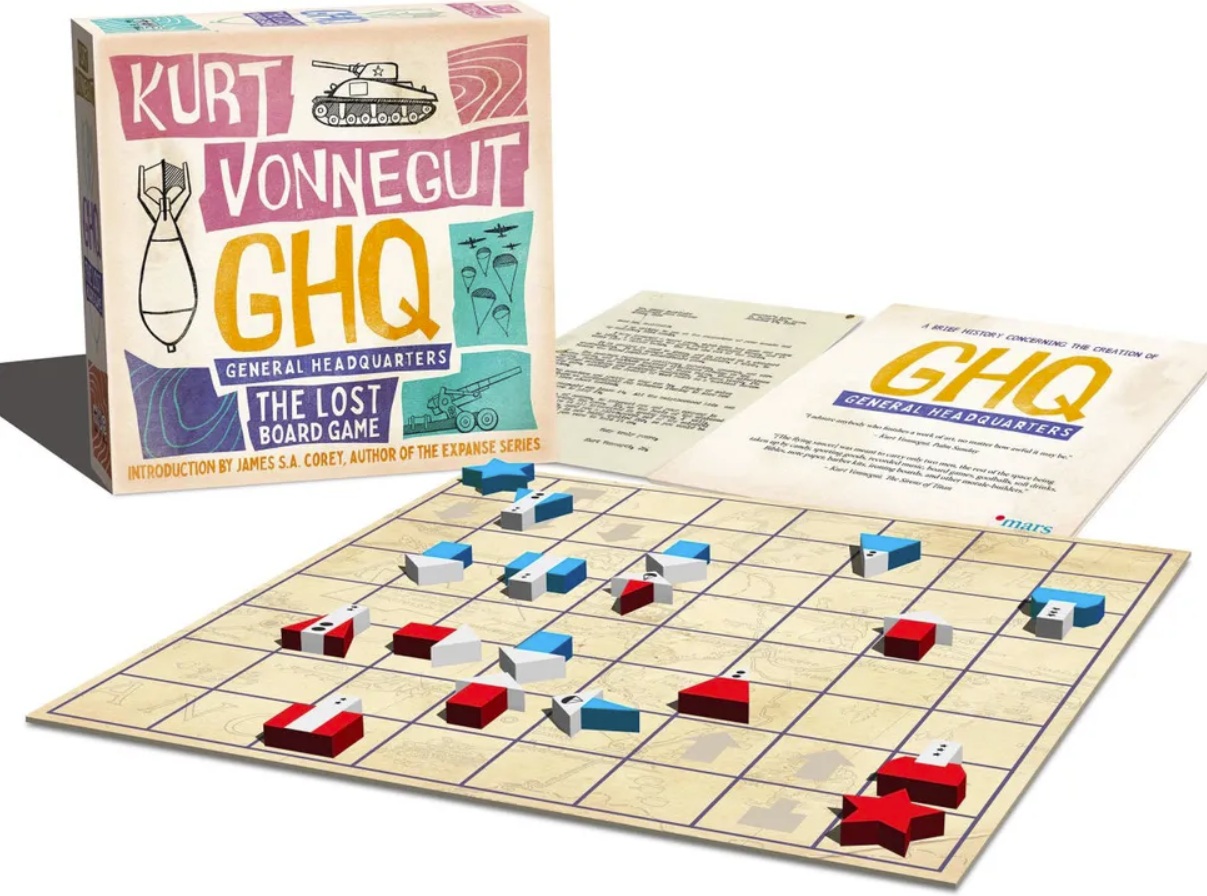
It was called GHQ, short for General Headquarters, and it was a tactical strategy game involving balancing your ground infantry and artillery forces with your airborne forces to capture your enemy’s headquarters.

In 1956, it was downright innovative, mixing wargame mechanics and multiple actions in a single turn. (This is commonplace today, but was quite revolutionary in games for the 1950s.) In today’s board game market, the initial run sold out, and now the game is carried by Barnes & Noble, and I have no doubt it’s performing well.

This would come as a shock to Vonnegut, as the game was rejected by publisher Henry Saalfield of the Saalfield Game Company. Vonnegut put the game away, and as far as his family knows, he never went back to it at all.

That historical context makes the game (and its companion booklet) a wonderful glimpse into Vonnegut as a creative mind.

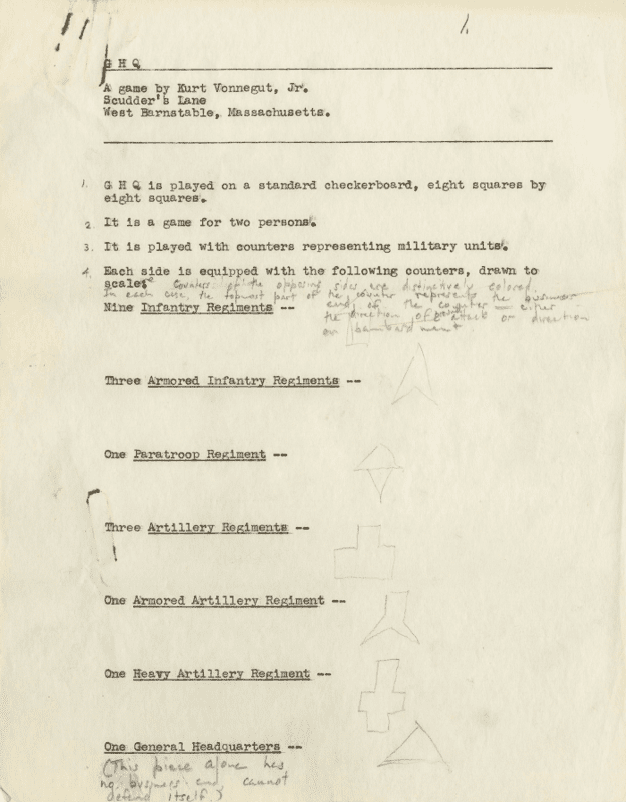
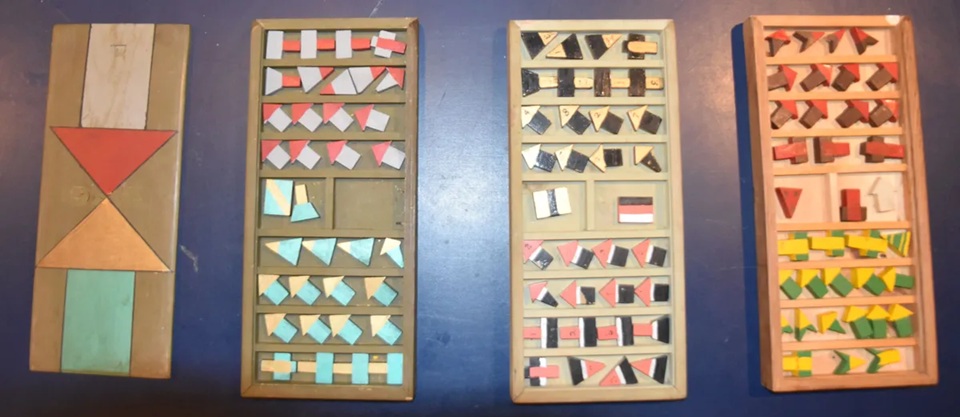
We get his original notes — including rules for the game — as well as photos of the original game pieces from his prototype.

GHQ exists as a fascinating conundrum. How do you reconcile encountering a combat-focused game designed by someone famous for his antiwar sentiments?

A review of the game on Spacebiff had something interesting to say about this:

It’s also so very Vonnegut. Years before Billy Pilgrim manifested as his coping mechanism for the horrors he witnessed in the Ardennes and during the firebombing of Dresden, here he was designing a game that drew on his experience as a spotter for the 106th Infantry Division. It’s a game rooted in a particular military doctrine, one where most casualties were not inflicted by tanks or planes, but by distant cannons. While the game’s airborne units are flashy and threatening, it’s the roving fields of fire that shape this battlefield.

That, too, strikes me as the proper way to consider GHQ. Vonnegut’s antiwar stance crystallized as U.S. involvement deepened in Vietnam, and it’s natural to wonder if the older Vonnegut set aside GHQ not only out of disappointment with Saalfield’s lack of interest but also because its maneuvers and bombardments cut too close to the bone.

It’s impossible to separate the man from the art in this case. I can’t help but view this game as not only part of Vonnegut’s journey toward his rejection of warfare and wartime thinking, but also as a way for him to turn his knowledge and experience from wartime into something productive (and profitable) for his family.

It’s pragmatic, transformative, and a little bit sad in a way that feels so keenly Vonnegut.

I haven’t had a chance to play it yet, but I do have a Barnes & Noble gift card burning a hole in my pocket, so perhaps you’ll see a more thorough writeup on GHQ in the future.


In the meantime, what do you think of this curious discovery, fellow puzzlers? Does GHQ intrigue either the reader or the tactical gamer in you? Let us know in the comments section below. We’d love to hear from you!

PN Product Review: Coaster Games

[Note: I received a free copy of this game in exchange for a fair, unbiased review. Due diligence, full disclosure, and all that.]

Games come in all shapes and sizes these days. Some are so elaborate that they practically come with their own wheeled suitcases to transport everything, while others happily fit in an Altoid tin.

But even with today’s market for micro-games, it’s rare that six different activities can all fit in your pocket at once.

Still, the game designers at The Dark Imp have managed to do precisely that with the subject of today’s review. Please join us as we explore Coaster Games, a six-pack of games each designed to fit on a drink coaster.

Coaster Games is designed to be played with nothing more than the coasters themselves, something to write with, and something to write on. Some games are for two players, while others are for 2 or more. And each one offers a totally different sort of gameplay.

Alien Farm is a hand-drawn version of Sushi Go, where you place different aliens in different spots on your farm, hoping to maximize your score at the end of the game.

Letter Market is a curious mix of Boggle and Scrabble. You have 25 points to spend on letters, and the letters have different values. You’re trying to write down as many valid words as possible, using the letters you’ve purchased.

Ice Cream Truck is a wagering game where you try to make the most successful ice cream truck business on a budget. Each round, you wager some of your money on either ice cream or investments and see how the weather affects your business.

Free the Frog is like a mixing pot of Hangman, Charades, and 20 Questions. One player is the frog, and chooses a word to break the spell. All the other players are trying to guess that word using the questions available on the coaster.

Treasure Split is essentially the Prisoner’s Dilemma made into a game. You and your fellow player walk along a path, picking up treasure. But you have to secretly decide whether you’re splitting the loot or stealing it. Each has its benefits, but the path is different depending on the choices both players have made.

Sleuth Box is like Battleship, but there’s only one spot your opponent is hiding. But you’re hiding somewhere too, and each of you has to sleuth out the other’s location.

Each game has its pluses and minuses, but even if one isn’t your cup of tea, you’re bound to enjoy some of the other offerings. Free the Frog was an instant hit, and we were able to vary the game’s difficulty through our choices of vocabulary.

Similarly, Sleuth Box inspired lots of replays. We would quickly start to develop techniques to find our foes, which our opponents started to counter the more we played. Instead of replays detracting from the fun, it allowed for some very cool, intense showdowns of cleverness and guile across a half-dozen sessions in a row.

Each game only lasts a matter of minutes (no more than 10 or 12 for the most involved ones), so new players are invited to sample all sorts of play styles, whereas people more familiar with each game monopolize their favorites for a few rounds before passing them along and picking up another one. This collection is a great way to keep a group occupied without making anyone wait too long for their turn, which can be a serious concern when you’re gaming with a big group or at a family gathering.

All in all, I was pretty impressed with Coaster Games. The gameplay for each was easy to pick up with a single playthrough, and none of the games invited burnout even after multiple quick replays. If you need a great stocking stuffer or travel game, look no further.

[Coaster Games is available from The Dark Imp for just £6.99.]


dailypopwsicon

Halloween is almost here, and we have some spookily good deals for you to check out. You can find them on the Home Screen for Daily POP Crosswords and Daily POP Word Search! Check them out!

Thanks for visiting PuzzleNation Blog today! Be sure to sign up for our newsletter to stay up-to-date on everything PuzzleNation!

PN Product Review: Countaloupe

countaloupe

[Note: I received a free copy of this game in exchange for a fair, unbiased review. Due diligence, full disclosure, and all that.]

Everyone knows the exquisite tension that comes with rolling the dice in any game.

You might be counting the places until you land your token on the last property in a much-desired set in Monopoly, the dice already bouncing across the board. You might be sitting with four matching dice on the table, watching the fifth one tumble and wobble, hoping for that elusive Yahtzee. You might be on the brink of destruction in Dungeons & Dragons and only a miraculous toss of your twenty-sided die stands between you and oblivion.

You’re completely beholden to fate, or chance, or maybe both. It’s a central part of gaming.

But what if you had a little more say in the matter? What if your cleverness AND your math skills meant you could turn a dice roll to your favor?

That’s one of the things that sets today’s game apart from the rest. So let’s roll them bones and test our skills against the latest offering from the fruit-fueled Bananagrams family of games.

Today, we’re reviewing Countaloupe.

countaloupe 1

In Countaloupe, two to four players each have a deck of slice cards, numbered from one to sixteen. Your goal is to roll the dice and discard slice cards from your deck.

How do you do that? By looking at the results of your die roll and using a little addition.

To discard a card, you need one or more of the dice to form the value of a given card. For instance, to discard the 1 slice card, you need a 1 on one of your dice.

To discard the 2 slice card, you need either a 2 on a die OR a 1 on one die and a 1 on another. As the numbers of the slice cards go higher, you can use either a single die result (up to six, of course) or a combination of dice to add up to the value of your slice card.

And if you’re sharp, you can eliminate more than one slice card in a turn.

countaloupe 2

Look at this roll. There’s a natural 3, so you can ditch the 3 slice card. But you also have a 1 and a 3, meaning you can ditch the 4 slice card. You have a natural 5, so the 5 slice card goes. Finally, you have a 1 and a 5, so the 6 slice card can be discarded. (The 7 slice card stays, because there’s no way to form a seven with the dice as rolled.)

That’s four cards in one roll!

And as the slice card values increase, so do the number of dice you can roll.

countaloupe 3

At first glance, it looks like this player is out of luck. Those dice don’t add up to 7.

But if you notice, there’s a “X4” on the card. That means you roll four dice for this card, not just three! If that fourth die is a 1, a 3, or a 6, then that 7 slice card can be discarded. (Again, math is a huge help here in spotting different possible ways to make 7.)

That continues for slice cards 12 through 16, which give you five dice to play with.

countaloupe 4

This is a lucky roll at such a high number. Not only can you make 13 to discard the 13 slice card — 1+3+4+5 — but you can make 14 AND 15 with the available dice, leaving only one card left in your deck before victory.

But your math skills aren’t the only way to affect the game. You’ve probably noticed that white die in each of the previous rolls. What is that for?

That’s the Chance Die, and it mixes up the circumstances of the table randomly.

  • If you roll SWEET, you can trade your deck for another player’s deck. This means you can just pick a deck where the player is ahead of you OR steal a deck where the dice in front of you will eliminate more cards.
  • If you roll SOUR, you must trade your deck with whichever player has the lowest number on top of their deck (meaning they have the most cards remaining to discard)
  • If you roll NOPE, you gain control of the Nope! Chip, which lets you either protect your deck of cards from a SWEET theft or play it on another player’s deck, preventing them from discarding any cards until they control the Nope! Chip in a future turn

countaloupe 5

Essentially, the Chance Die adds a little more spice to the game and offers another tool — the Nope! Chip — to allow for more strategic play.

There’s also the game mechanic called Taking a Risk, where you reroll the dice and try to discard more cards, but that comes with the penalty of regaining discarded cards if you fail.

So as you can see, a game that would otherwise suffer from a lot of the pitfalls of other dice games — where a series of bad rolls early can leave you just sitting at the table as others race ahead — still gives you other options, like Taking a Risk, playing the Nope! Chip, or hoping for a SWEET roll, putting the power back in your hands.

It’s also strange to find yourself rooting for low rolls after playing so many other games where high dice rolls were desirable. I couldn’t believe the disappointment I felt on that first roll after tossing 5-6-6. I would love a roll like that in D&D!

Factor in relatively brisk sessions (usually around the 10 minute mark) and an immensely charming mascot that is begging for a spinoff game all its own, and you’ve got a recipe for a really fun game of chance and strategy that all ages can enjoy. It actually makes addition exciting. How is that even possible?

(Your replay value may vary, of course, but when we started adding a wagering mechanic, betting on how many cards you could discard on a given roll, it added a nice injection of freshness after a ton of replays.)

[Countaloupe is available from Bananagrams and participating retailers at just $9.99!]


dailypopwsicon

Halloween is almost here, and we have some spookily good deals for you to check out. You can find them on the Home Screen for Daily POP Crosswords and Daily POP Word Search! Check them out!

Thanks for visiting PuzzleNation Blog today! Be sure to sign up for our newsletter to stay up-to-date on everything PuzzleNation!

Solution to the Peppermint Patty Brain Teaser!

[Image courtesy of SharpBrains.com.]

A week ago, we shared a brain teaser sent in by a PuzzleNationer named Bethany, who challenged us to solve the following stumper.

Today, we’re going to share not only the solution, but how we got there! Please enjoy this brief solve and tutorial, inspired by one of your fellow PuzzleNationers!


The Peppermint Patty Riddle

You’re facing your friend, Caryn, in a “candy-off,” which works as follows: There’s a pile of one hundred caramels and one peppermint patty. You and Caryn will go back and forth taking at least one and no more than five caramels from the candy pile in each turn. The person who removes the last caramel will also get the peppermint patty. And you love peppermint patties.

Suppose Caryn lets you decide who goes first. Who should you choose in order to make sure you win the peppermint patty?


When I posted this brain teaser, I said that “the question basically demands that you not only achieve victory, but figure out how to do so with your very first move.”

That was meant to be a hint. Because the best way to unravel this riddle is to start at the end.

Look at the last turn. If there are five or fewer caramels left on the board and it’s Caryn’s turn, she wins. For you to guarantee a win, she needs to see six caramels on her last turn. (Seven or more allows her to take just enough to leave YOU with six, which means she wins on her next turn.)

And that six is the magic number. Her previous turn, you need to leave her with 12 caramels. The turn before that, 18 caramels. The turn before that, 24. And so on and so on.

Why? Simple.

caramel

Let’s look at the 12 caramel turn. If she takes any number of caramels (anywhere from 1 to 5), she’ll leave you with between 11 and 7 caramels. You can use your turn to remove whatever number of caramels are necessary (anywhere from 5 to 1) to leave her with six.

The entire game can be broken into six-caramel increments.

And the closest multiple of 6 to 100 (your starting point) is 96 caramels.

Which means you can’t let Caryn go first. You need to remove 4 caramels on your first turn, and then use every subsequent turn to ensure Caryn faces a multiple of six, which eventually gives you the victory and the peppermint patty.

So the answer to the riddle is you should go first.

Diabolical!

Did you solve the brain teaser, fellow PuzzleNationer? Or do you have a brain teaser you’d like us to unravel with you? Let us know in the comments section below! We’d love to hear from you.


dailypopwsicon

Well, summer’s over, but we still have deals galore for you to check out. You can find them on the Home Screen for Daily POP Crosswords and Daily POP Word Search! Check them out!

Thanks for visiting PuzzleNation Blog today! Be sure to sign up for our newsletter to stay up-to-date on everything PuzzleNation!

Another Brain Teaser Submitted by Readers For Your Puzzly Pleasure!

[Image courtesy of SharpBrains.com.]

When’s the last time you had your brain properly tied in knots by a riddle?

That’s a pretty common occurrence around here, honestly. In our puzzly explorations of the world, we stumble across all manner of brain teasers, riddles, logic puzzles, math problems, mind ticklers, deduction games, and wordplay-fueled bits of linguistic legerdemain.

Sometimes, we even receive them directly from our fellow PuzzleNationers!

And on those occasions, we happily share them with you, dear reader, so that you can also enjoy the challenge of unraveling whatever fiendish puzzly conundrum has been placed before us.

This time around, a solver named Bethany submitted this riddle she found online. It’s known as the Peppermint Patty Riddle.

Let’s see how we do.


The Peppermint Patty Riddle

You’re facing your friend, Caryn, in a “candy-off,” which works as follows: There’s a pile of one hundred caramels and one peppermint patty. You and Caryn will go back and forth taking at least one and no more than five caramels from the candy pile in each turn. The person who removes the last caramel will also get the peppermint patty. And you love peppermint patties.

Suppose Caryn lets you decide who goes first. Who should you choose in order to make sure you win the peppermint patty?


Now that’s interesting, because it doesn’t ask us specifically HOW to achieve victory. But the question basically demands that you not only achieve victory, but figure out how to do so with your very first move.

Tricky indeed.

Will you be accepting this puzzly challenge from a fellow PuzzleNationer? Let us know in the comments section below. We’d love to hear from you!


dailypopwsicon

Well, summer’s over, but we still have deals galore for you to check out. You can find them on the Home Screen for Daily POP Crosswords and Daily POP Word Search! Check them out!

Thanks for visiting PuzzleNation Blog today! Be sure to sign up for our newsletter to stay up-to-date on everything PuzzleNation!