June Puzzles and Games News Roundup: Upcoming Tournaments, Events, and Free RPG Day!

There’s so much going on in the intertwined worlds of puzzles and games to get into, so let’s skip the intro and get to the good stuff!

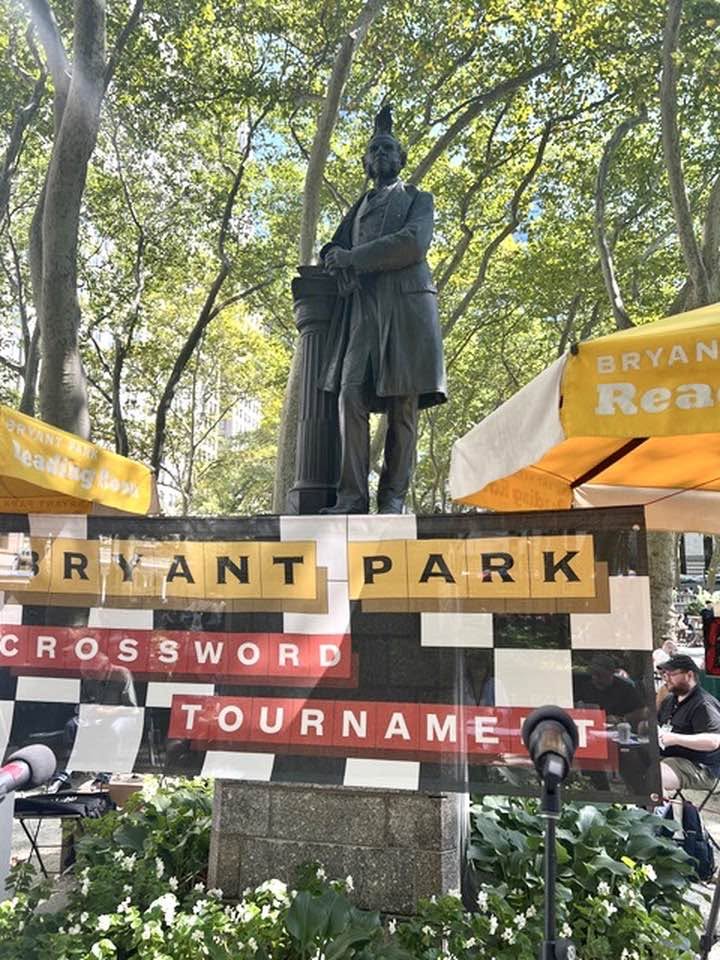
Westwords Crossword Tournament Is Almost Here!

On Sunday June 14th, Berkeley, California will host the third annual Westwords event. It’s only a few weeks away!

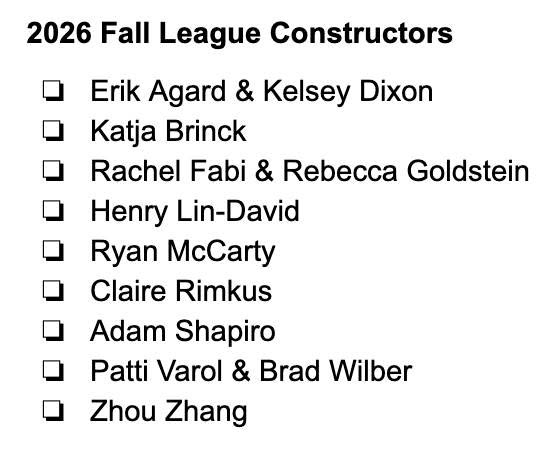
This event is being held both in-person and online, with four themed puzzles and two themeless/freestyle puzzles to challenge solvers. The list of constructors for this year’s event is quite impressive: Andrea Carla Michaels, Byron Walden, Mark Axel, Rebecca Goldstein, Sarah Sinclair, Sophia Maymudes, Mallory Montgomery, and Zhou Zhang.

Go to westwordsbestwords.com for full details and get in on the fun!


lolla-logo

Lollapuzzoola, Midwest Crossword Tournament, and Boswords Fast Approaching!

And there are plenty of other crossword events coming up in the next few months to keep ambitious puzzlers busy!

Registration is already open for Lollapuzzoola 19 on August 15th in New York City, as well as for the Midwest Crossword Tournament on October 3rd in Chicago.

Not only that, but registration for this year’s Boswords Summer Tournament opens Wednesday June 17th!

boswords new

The event itself is happening on July 26th in West Roxbury, Massachusetts, and is sure to be a great time.

Man, we’ve got Westwords in June, Boswords in July, Lollapuzzoola in August, and Midwest in October! Tournaments galore!


International Day of Play!

June 11th marks the third annual International Day of Play!

The United Nations, through UNICEF, created International Day of Play in 2024 to raise awareness of how important the act of playing is to the development and well-being of children.

This year’s theme for International Day of Play is “Protect play, protect childhood.”

Play is so important for all of us. It fosters relationship building and cooperation, reinforces friendly competition and concepts of right and wrong, and maintains that childlike love and whimsy that comes with play that so many of us, young and old, must hold onto at all costs in a world that is so often unkind, unfriendly, and unfair.

You can find out more about International Day of Play on UNICEF’s website.


Free RPG Day is coming soon!

Last, but certainly not least, Free RPG Day is Saturday, June 27th.

The concept behind Free RPG Day is simple. All over the world (but mostly in the United States), local game shops, hobby shops, and other outlets team up with RPG publishers to distribute new, fresh, and most importantly, free material for all sorts of different roleplaying games, systems, and settings.

Sometimes they’re quickstart versions of the games to introduce new players. Sometimes they’re exclusive adventures or modules to play either in-store or at home. Othertimes, they’re entirely new games, free of charge.

Not only can you receive a wealth of new ideas and playing options in one fell swoop, but it serves as a terrific way to meet fellow roleplayers and build a community of game enthusiasts.

You can click this helpful link to find local spots near you that are participating in Free RPG Day, and I would highly recommend searching online for local game shops, game cafes, and even community centers like your local public library to see who is participating.

These shops will often be running demonstrations of games, tutorials on how to play, hosting raffles and contests, and offering terrific sale prices to encourage you to find the game that fits you best.

Every year, dozens of companies get involved, not only to encourage the growth of the game world, but to promote their own products. And what better way is there to get people hooked than with free exclusive materials begging to be tried out?

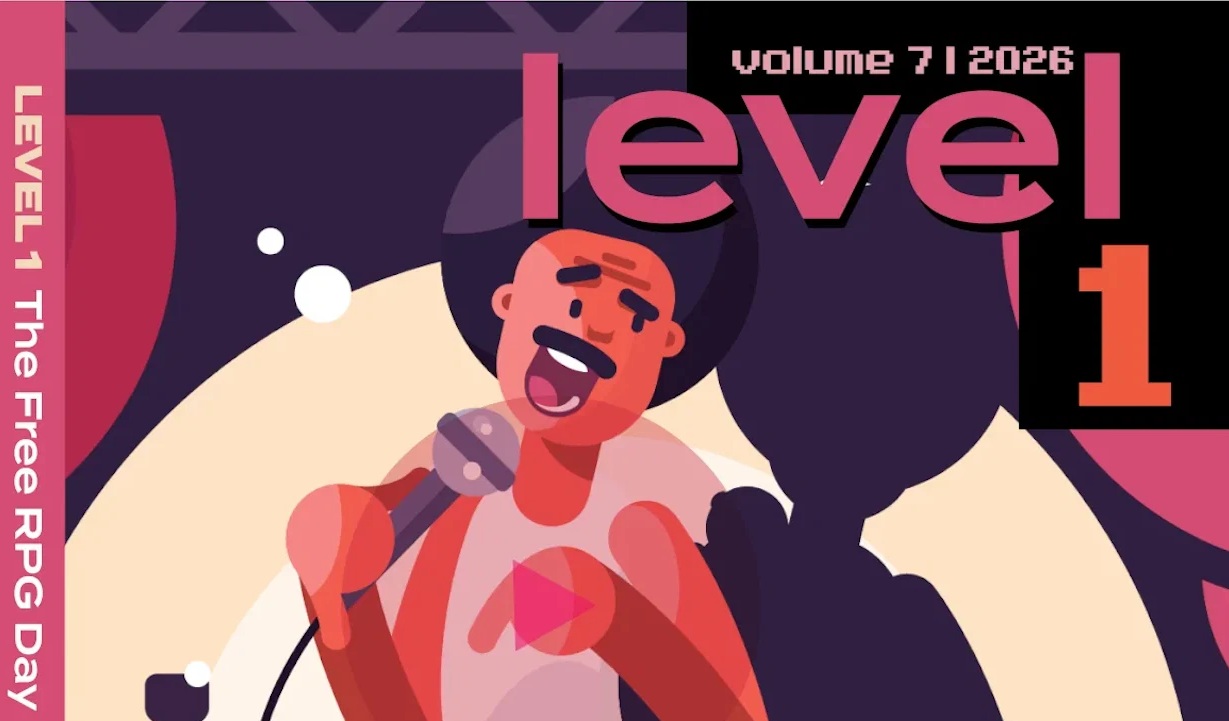
Keep your eyes peeled for this year’s edition of the Level 1 Anthology, offered by 9th Level Games. It’s a collection of new games by up-and-coming and established RPG creators, all centered around a particular theme. Last year’s edition was all about the end of the Wild West. This year’s is about Stand Up.

This project is close to my heart because I had games featured in the previous two years’ Level 1 collections, and I also have a game featured in this year’s collection!

You can check out last year’s Level 1 Anthology free of charge on the 9th Level Games website (or purchase all five years of Level 1 for only $10)!


What upcoming events are you most excited for, fellow puzzlers and gamers? Let us know in the comments section below! We’d love to hear from you.
Games as Diagnostic Tools?

There’s a lot of misinformation out there about the connection between puzzles/games and brain health.

If you’re a puzzle fan, no doubt you’ve seen the onslaught of ads about “brain fitness,” “brain training,” and all sorts of promises about memory help and staving off Alzheimer’s, dementia, and other cognitive conditions.

A casual Google search will turn up dozens of articles online arguing both sides. And so much of the data is inconclusive at best.

But!

There are absolutely benefits to playing puzzles and games in very specific circumstances:

  • Tetris has been used by researchers to help people suffering from traumatic flashbacks, a type of post-traumatic stress.
  • The University of Exeter conducted a study involving more than 19,000 participants that concluded that adults age 50 and older who regularly solve puzzles like crosswords and Sudoku have better brain function than those who do not.
  • An article from Scientific American discussed how crossword solving engages the episodic buffer, one of the mechanisms related to our working short-term memory, our ability to temporarily hold information while performing cognitive tasks.
  • Jigsaw puzzle solving can induce a mental state similar to dreaming, one that helps with stress, relaxation, and mood.

The latest exciting possibility of a connection between puzzles/games and health comes from a publication in the Proceedings of the National Academy of Sciences, which reports that playing a three-minute video game has proven effective in identifying patients with depression based on anhedonia.

Anhedonia is the loss of the ability to enjoy things you would normally find pleasure in. Basically, the goal post of “enjoyable” moves, meaning something you previously enjoyed no longer results in the same good feelings it did.

And when you consider that anhedonia is present in an estimated 70 percent of patients with major depression issues, you can see how devastating anhedonia’s moving goal posts would be for someone already struggling with depression.

So how does this game work as a diagnostic tool?

The game challenges the player to collect the most apples from a series of digital trees. With each round of harvesting, fewer apples fall from the tree, and at some point, a player will move on to the next tree.

That moment, that decision point, is where the researchers are focusing their diagnostic attention:

The researchers asked 120 game players—50 diagnosed with major depression and 70 who were not—to compete to collect the most apples falling from digital trees. Researchers use such foraging tasks because reward-seeking circuitry, especially regarding something that looks like food, has been engrained in the mammalian brain by evolution.

And it turns out that the subjects who were previously diagnosed stopped taking pleasure in the game 50 percent sooner than non-diagnosed players.

While the non-diagnosed players would often stick with a tree until its yield dropped to 5 apples, those diagnosed with depression abandoned one tree for the next while the yield was still 8 or 9 apples.

Yes, like most diagnostic tests, this game will probably prove less effective as knowledge of it grows, but it remains a valuable option for researchers.

Dan Iosifescu, MD, a professor in the Department of Psychiatry at NYU Grossman School of Medicine, elaborates on that:

Depression is increasingly thought of as an umbrella term that may include several distinct conditions… Measuring reference points may help us identify a specific subtype of depression linked to anhedonia, clarify its disease-causing brain computations, and tailor treatments.

And we may be able to do this remotely by asking patients, rather than traveling repeatedly for in-person visits, to spend a few minutes per week playing a smartphone game that lets us quickly adjust their treatment.

Greater accessibility of testing is definitely a good thing (although at the moment, the game is not publicly available to try).

Here’s hoping this game and others like it can be used to get specialized help to those who need it.


Do you find certain games and puzzles therapeutic, fellow puzzler? Let us know in the comments section below! We’d love to hear from you.

Star Wars Games That Are Actually Good!

may-the-fourth_6

I know Star Wars Day was a few days ago — check out the Star Wars crossword I constructed for May the Fourth — but while the spirit of that galaxy far, far away is still being celebrated, I want to recommend some Star Wars-infused fun for board game and RPG fans to savor.

Now, there are dozens, possibly hundreds, of Star Wars-themed games. But, as I proved with my history of Godzilla games, it can take a long time for a beloved franchise to get a tabletop game worthy of the subject matter.

Thankfully, there are some choice options out there with Star Wars sauce for your tabletop enjoyment.


Image courtesy of BoardGameGeek.

Star Wars: Asteroid Escape

In this space-based variation on the game Tsuro — one of my all-time favorite board games — you try to navigate your ship through space by laying tiles and following the path as it connects to other tiles. Each player is laying tiles, quickly filling up the board, so you need to grow more and more strategic with your plays as the stack of tiles dwindles.

But with asteroids also roaming the field of play, can you outlast every other ship on the board? This is a terrific mix of Star Wars flavor with everything that makes Tsuro fun and challenging. It might be hard to find, but it will be a welcome addition to your game shelf.


Images courtesy of BoardGameGeek.

Star Wars: Timeline

I love the Timeline games. (I own nearly a dozen of them!) The simple act of trying to place your card in relation to other events on the table is both a great trivia experience and an opportunity to engage in some deduction and logical thinking.

So when I heard about Star Wars versions of Timeline, I happily snapped them up. With editions for both the original trilogy and the prequel trilogy, it will definitely exact a toll on your memory to see if you can precisely place key moments from the movies in the proper order.

Although easier than some of the other editions of Timeline (like their Inventions edition), this is still great fun for Star Wars fans of all ages.


Image courtesy of BoardGameGeek.

Star Wars: The Clone Wars

In this prequel era take on Pandemic, players take on the role of Jedi trying to battle back the onslaught of battle droids across the galaxy. Can you stop the spread of Confederacy forces by saving one world at a time?

While Star Wars versions of Risk and Monopoly are pretty much the same game with Star Wars seasoning, The Clone Wars takes the best of the Pandemic system and feels like it takes it in a fresh direction. This isn’t just another version of Pandemic, this is a very clever marriage of the two that takes the best from both.

Strategy and cooperation is absolutely key in this one, and the cooperative aspect separates it from many of the other games on today’s list.


Image courtesy of BoardGameGeek.

Villainous: The Power of the Dark Side

The Villainous games are amazingly well-designed games. Balancing different mechanics for four different villains as you try to achieve their goals and foil the efforts of the villains played by other players, this Disney franchise continues to expand and never disappoints.

And The Power of the Dark Side, their first Star Wars edition of the game, is one of the best versions of Villainous available today. With five villains to choose from — spanning the original, prequel, and new trilogies, as well as the Clone Wars TV show –there’s truly a villain here for any Star Wars fan.

Can you achieve your villainous dreams, or will the other evildoers at the table outmaneuver you and realize their darkest ambitions?


Image courtesy of Nerds on Earth.

Star Wars: Outer Rim

Embrace your inner scoundrel with this game, where each player strives to complete jobs for their employers, collect bounties, smuggle cargo… you know, your usual day-to-day shenanigans in the Star Wars universe.

This game sorta gives you the roleplaying experience in a one-session microcosm. You’ll make your character, make your choices, upgrade your gear and your ship, and make some money, all while dealing with shady and dangerous folks. It’s a whole narrative arc crammed into a single sitting.


Image courtesy of Entertainment Earth.

Star Wars: Rebellion

While Outer Rim is a personal journey, Rebellion is Star Wars on a galactic scale. This is full-blown war between the Rebellion and the Empire, where one side has a Death Star to build and an insurrection to crush, while the other builds alliances, plays cat-and-mouse with the Empire, and plots to destroy the Empire’s greatest weapon.

I’ve only played this game a few times — it’s expensive, a bit overwhelming, and takes a while to get good at — but it’s been a blast every time.


The tabletop scene for Star Wars sure is stacked, but there are plenty of terrific immersive options out there as well for roleplaying fans looking to explore the universe of Star Wars.

And while officially licensed games are great (I’ll be mentioning one below), sometimes the best stories are told in the shadows by companies that understand the spirit of that franchise, but can’t afford all the bells and whistles.

Here are two of my favorites:

Rebel Scum

If, for any reason at all, you felt like punching a Nazi in the face, you can do so in Rebel Scum by 9th Level Games. Yes, they’re space Nazis running an evil empire, and you’re an intrepid anti-fascist trying to save the galaxy, but hey, punching Nazis, amirite?

This game manages to feel like an epic battle across the stars AND a session of playing with your favorite action figures all at the same time. It’s childhood wonder and all the heroic action we wish we could undertake as adults.

Will you stop Baron Deathray and his Killtroopers with a handful of dice and a lot of gumption? Only one way to find out.


Scum and Villainy

If you really like the Han Solo-esque scrappy smuggler making his way through the universe sorta thing, Evil Hat Productions have you covered with Scum and Villainy.

While the Evil Galactic Hegemony is ever-present, this game is more about criminal dealings, clever negotiation, devious schemes, and profiteering adventure. It feels like the day-to-day trials and tribulations of a struggling spaceship crew.

I love the focus in Scum and Villainy on the roleplay aspect of RPGs. So much of the game is about character and the worlds you visit, and not as much about swinging lightsabers and dodging turbolasers.


As you can see, there are many different ways to play a Star Wars game. It can be a war game, an exploration game, a scheming game, a storytelling game… sometimes all of them at once. And Fantasy Flight Games brings a seriously impressive narrative tool to the table with their Star Wars Roleplaying Game.

There have been Star Wars RPG games since the 80s, but I don’t think any of them offered the same spirit of choice, chance, and adventure that the FFG edition of the game does.

Like most RPGs, you pick a class and build your stats and roll dice to determine the outcome of your choices. But unlike many RPGs where the number you roll declares your action a success or a failure, the narrative dice of Star Wars FFG offer a much more exciting and engaging answer.

It’s not just a binary option, you succeed or you fail. With narrative dice, you can have additional complications, both positive and negative.

You could fail, but with some unexpected advantage: You missed a swing of your lightsaber, but you cut through the awning supports and blinded your foe for a round.

You could succeed, but with some negative consequence: You might have caught the bad guy with your blaster, but you also shot the engines of your ship, and now they need repairs.

Your actions tell a story that goes well beyond yes and no. And in a world where scoundrels often make mistakes while trying to do good, it’s a more interesting, more immersive journey every time, and it truly brings those adventurous moments to life.

Whether you’re a scoundrel on the Edge of the Empire, a hero during the Age of Rebellion, or someone caught between the Light Side and the Dark Side in Force and Destiny, they’ve got a place for you to tell your story.


Did your favorite Star Wars game or RPG get mentioned? Or are you miffed I left out Star Wars Trivial Pursuit and its bweepy little R2-D2 dice roller?

Let me know in the comments section below! I’d love to hear from you.
Find Balance in This New Variation of Tetris: Uraomotetris!

When it comes to puzzly video games, Tetris is the granddaddy of them all.

Yes, there are some amazing puzzle games that have come along in the years since — Portal, The Talos Principle, and Baba Is You, to name just a few — but Alexey Pajitnov’s creation is ubiquitous. It’s part of our cultural fabric. Everyone knows Tetris with just a glance.

And people are still innovating with Tetris decades later.

Previously I’ve written about variations on Tetris that have caught my eye.

There’s Hatetris, where the computer gives you the worst possible piece on every turn, as well as Lovetris, where the computer gives you the exact piece you need to clear a single line.

schwerk2

There’s also Schwerkraftprojektionsgerät, aka 4-directional Tetris, where you have four Tetris games running at once.

So when a new version of Tetris catches my eye, you know I’m gonna give it a shot.

Say hello to Uraomotetris, aka Uraomote Tetris, the creation of gamer and programmer Hirai_Sun.

Uraomote (ウラオモテ) is a Japanese term meaning “two sides” or “front and back,” which is very thematically appropriate, particularly with the stark black and white color scheme.

And although it looks like a two-player game, like the old Push Mode from Tetris DS, this is actually a single-player game.

Your goal is to play the game simultaneously from above and underneath, using the white pieces falling from above and the black pieces rising from below.

You control the rotation of pieces with the arrow keys, and the placement of them with the A, S, D, and W keys. It takes a little getting used to, but once you get into the rhythm of placing one white piece, then one black piece, back and forth and back and forth, it becomes a really engaging puzzle.

You’re not just trying to think in terms of cancelling lines, you’re also trying to set yourself up for success from both sides. You begin plotting two and three moves ahead. You’re stoked when the same piece arrives from above and blow, so you can strategize.

Of course, then I would manage to hit the wrong key and mess it all up.

But a more dexterous player could have an absolute blast with this game.


Oh, and if you wanted a two-player competitive version, you can check out Tetrio.io. It allows you to play against the computer in single player or share your link with a friend to compete against them.

The goal is to push your opponent past their border (yours to the north, theirs to the south) by completing lines and lowering their playfield.

This is honestly a great way to practice for Uraomotetris. Once you’ve gotten into the habit of playing your side while defending against your opponent’s, it helps you visualize playing both sides simultaneously on your own.

There’s a wonderful sense of balance in Uraomotetris, because unlike most versions of Tetris, where you’re aiming for the bottom and eliminating lines and pieces, in this game, you really want to keep it as close to the center line as possible.

Your very goal is not to do what you do in every other version of Tetris.

It’s very zen, in a way, and quite lovely. (But also weirdly nerve-wracking at the same time.)


Have you tried any Tetris variants, fellow puzzler? Let me know in the comments section below! I’d love to hear from you.

Board Game, But BIG!

I was surfing social media on my lunch break when I stumbled upon a video on Twitter (not X, never X) featuring a giant balancing game with Tetris-style game pieces.

It’s called Tetris Tumble XL and it’s apparently available at Walmart. And although it’s not a one-to-one gameplay comparison, it is interesting to see Tetris super-sized as a gaming experience.

It’s neat. It’s not building-sized Tetris neat, but it’s neat.

Of course, it’s only the latest example of a traditional game experiencing Godilla-like growth to turn it into a party game.

The most traditional form of “board game, but big” is undoubtedly Chess.

There are literally dozens of places where you can enjoy a gargantuan game of Chess. Wooden cutouts, full wooden pieces, sculpted stone… the aesthetics are all part of the experience.

Plus you can easily play with humans as the chess pieces, which adds a fun element to the sheer scale of the game. I’ll never forget seeing a game just like that decades ago in an episode of The Prisoner.

There’s something about people as literal pawns being controlled that adds some serious philosophical spice to the game’s proceedings.

For a more lighthearted, but no less impressive translation when it comes to scale, there’s Mark Perez’s life-size Mousetrap.

Now, this isn’t playable because there’s no game board, but if we’re all being honest, did anyone actually play the game? Or did you simply set up the contraption and let it tumble and turn and clatter in delightful motion?

This 25-ton version of the board game’s colorful selling point toured festivals and fairs for years, concluding with a car-smashing weight rather than a plastic diver and a little net over some hungry mice.

Hammacher Schlemmer used to sell a wall-sized giant Scrabble game that they dubbed The World’s Largest Scrabble Game, and it retailed for $12,000!

There are some more affordable large Scrabble games out there now for players to enjoy on a sunny day outside, but nothing that rivals this Hammacher Schlemmer monstrosity.

You’ve probably seen outdoor versions of Jenga. There’s a wooden version that still remains relatively portable, and an XXL gigantic edition that dwarfs the man playing it in the photo.

I’m not a huge fan of the cacophony that ensues when a regular game of Jenga ends, so I don’t really enjoy the larger versions either. Give me Catch the Moon any day, or maybe a nice round Junk Art or Rhino Hero instead.

Have you ever wanted to play Yahtzee but wished the cup for the dice was garbage-can sized? Well, your mediocre dream has come true! With big foam dice, you can turn Yahtzee into a yard game.

Look at how much fun these people are having! And no, I did not crop the photo that way. That’s the promotional photo as intended, crouching half-man and all!

Operation has always been a finicky little beast of a game, and it seems like no two versions of the game are the same.

Some are more sensitive, while some — like the version at my babysitter’s house — had a buzz that was downright painful.

But this giant version? I could see this being a pretty fun challenge, depending on how heavy the pieces are.

Family-Size Settlers of Catan, Caracas Comic Con 2011

Settlers of Catan is not just a modern addition to the classic board game pantheon. It’s also the only possible challenger to Chess’s dominance as a build-it-big board game.

Life-size versions of Catan have been played at numerous gaming conventions and other events, and it’s hard to get an accurate number of how many giant sets of this resource management game are out there in the wild.

2783642-2767076242-563bb

That’s not the case for the fictional game turned real life game Cones of Dunshire. As far as I know, there’s only one larger-sized version of the game, produced for a charity event at GenCon by Mayfair Games (the same company that created Settlers of Catan).

And you know, for the most part, I can see the appeal of these inflated, occasionally inflatable versions of classic games.

I take that back. I do not get how making Battleship bigger makes it more fun in any way, shape, or form. It seems so easy to cheat, intentionally or otherwise. Unless I actually get to lob stuff at my opponent’s ships over the wall, I’m not interested.

And while this giant Monopoly board is impressive, I still don’t think it’s enough of a whimsical gimmick to actually get me to play Monopoly.


Clearly there is a market for oversized versions of classic games. And I have some suggestions for board games that should, nay, MUST make the jump to human-sized for the betterment of play all over!

Let’s start with a Canadian classic: Crokinole.

This would be so simple. Get a bunch of curling stones, a hockey rink, draw out the board, and secure some posts with sandbags or something. Then get tossing!

Next, there’s Chutes and Ladders.

Yes, there was a life-size version of this from 2010 when Indonesia’s University of Surabaya honored the original version of the game — Snakes and Ladders — with a 45-foot game board and 105 players.

But that’s just a big flat board. I want a version with actual ladders and actual chutes! (Sorry, no snakes in this one.) Imagine if we could find the right hill OR wide-stepped public staircase so that you could actually ascend the board and slide down in delightful misfortune! That sounds awesome.

Oooh, what about Crossfire?

Image courtesy of SAHM Reviews.

In this game, you used little marble-spewing guns to knock targets into your opponent’s space. Imagine getting to sit sidecar-style next to a dodgeball launcher and trying to outwit your opponent!

Sorta like this, except with dodgeballs instead of a laser.

Now, if you’ll excuse me, I need to get back to constructing my life-size version of Fireball Island.

I’ve almost got all the kinks worked out of the Indiana Jones-esque giant fireball chase sequence.

Oh, hey, I need a couple of game testers. You’re pretty fleet-footed, right, fellow puzzler?

The Continued Uncertainty of Tariffs on Board Games

The ongoing stupidity, insanity, and outright graft involving the US’s approach to tariffs has been one of the most unpleasant subjects to cover in this blog.

The implementation of broad global tariffs on a whim (or based on a slight, real or imagined, against the gilded tinpot dictator who occupies the Oval Office) has made it challenging at best, and absolutely untenable at worst, for many game designers and manufacturers in the board game industry.

In the year since those tariffs were enacted, hundreds of board game projects have been canceled or drastically simplified to manage costs. Some brands, like Tokaido, have been sold to other companies to minimize costs. Print runs were lessened, and prices increased.

Image courtesy of The Wall Street Journal.

Companies like Greater Than Games and Final Frontier Games, as well as outlets like Boardlandia, have shut down entirely. Other companies like Cephalofair Games have been forced to fire or furlough staff, while games like Underdog Games have shut down operations temporarily in the hopes of weathering the tariff storm.

The tariff’s impact was put plainly by the owner of Avalanche Press, who stated that tariff costs would have covered the production costs of two additional games this year alone. Essentially, he was taking 3 copies of every game and throwing them in the dumpster.

Some game designers, like TinkerHouse Games, have sued the government in the hopes of clawing back those tariffs.

While the EuroGames industry thrives, the US has become such an unreliable trade partner that it’s unknown how many of those games will even reach American shores.

There was a brief bit of sun amidst the dark clouds last week as the Supreme Court struck down Trump’s tariffs as unconstitutional.

“Relief!” said Jamey Steigmaier of Stonemaier Games. “Relief that the tariff taxes can’t skyrocket on a whim tomorrow, a fear I’ve lived with every day since April,” he told Polygon via email.

Immediately, speculation ran rampant in board game spaces. Hopes that shipping and importing would become cheaper again, and that those game companies in hibernation could return.

Unfortunately, the long-term effects of the tariffs would still be evident. All those companies that folded because of the tariffs are still gone. All that inventory that cost two or three times as much as expected to ship… those costs still need to be covered.

All those more expensive game components, all those attempts to find US-based manufacturing for these games — a manufacturing infrastructure that is no closer to existing than it was a year ago when the tariffs were haphazardly implemented.

All that tariff money that those companies will probably never see back.

Image courtesy of wilsoncenter.org.

The board game industry has been decimated, decades of growth wiped out in less than a year.

But sadly, only one avenue for applying tariffs has been closed to Trump.

He has since spitefully announced an increase in global tariffs instead through another governmental mechanism, and the industry must wait again with bated breath to see how bad it will be when the latest tsunami hits.

It’s exhausting to watch as a board game fan, so I can only imagine how absolutely brutal it must be as a game designer or employee of a game company.

I can only hope this very public defeat is the first of many in favor of independent creators.

In the meantime, support puzzle and game creators whenever and however you can. It’s more important than ever to find small joys wherever possible, whether it’s inside a black-and-white grid or at the table with friends, rolling dice.

Happy playing, friends.