Star Wars Games That Are Actually Good!

may-the-fourth_6

I know Star Wars Day was a few days ago — check out the Star Wars crossword I constructed for May the Fourth — but while the spirit of that galaxy far, far away is still being celebrated, I want to recommend some Star Wars-infused fun for board game and RPG fans to savor.

Now, there are dozens, possibly hundreds, of Star Wars-themed games. But, as I proved with my history of Godzilla games, it can take a long time for a beloved franchise to get a tabletop game worthy of the subject matter.

Thankfully, there are some choice options out there with Star Wars sauce for your tabletop enjoyment.


Image courtesy of BoardGameGeek.

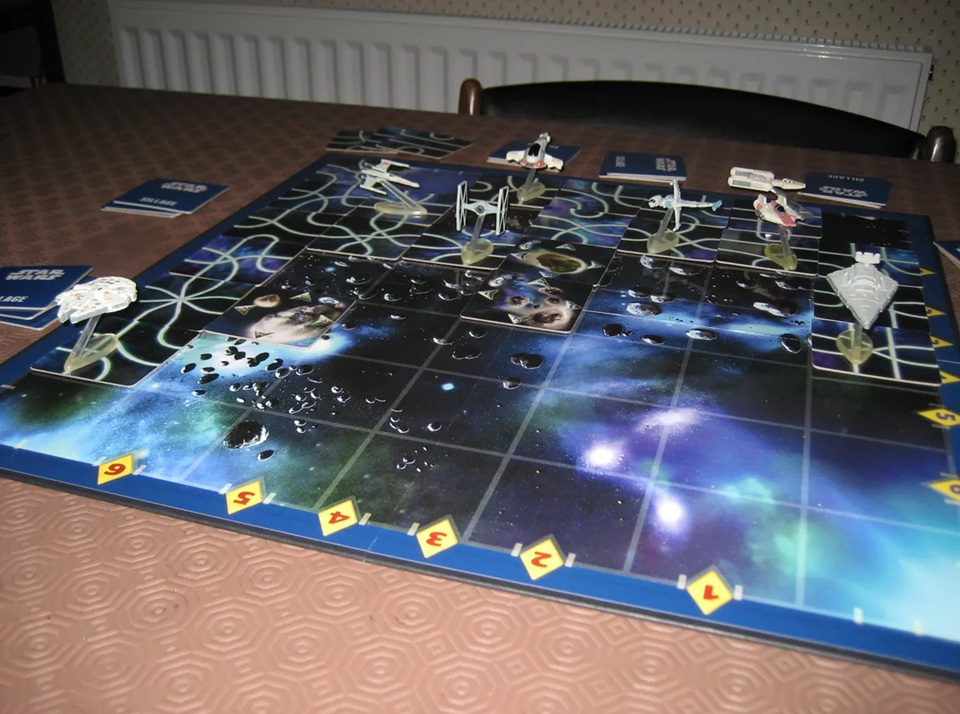
Star Wars: Asteroid Escape

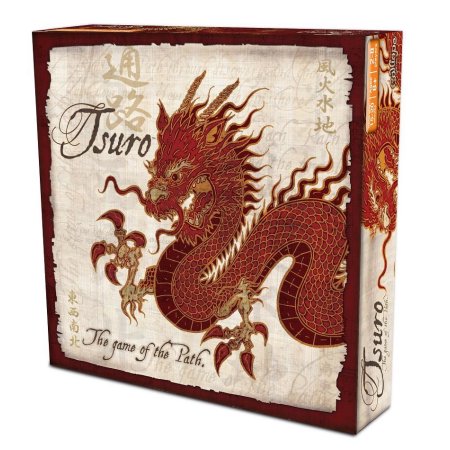
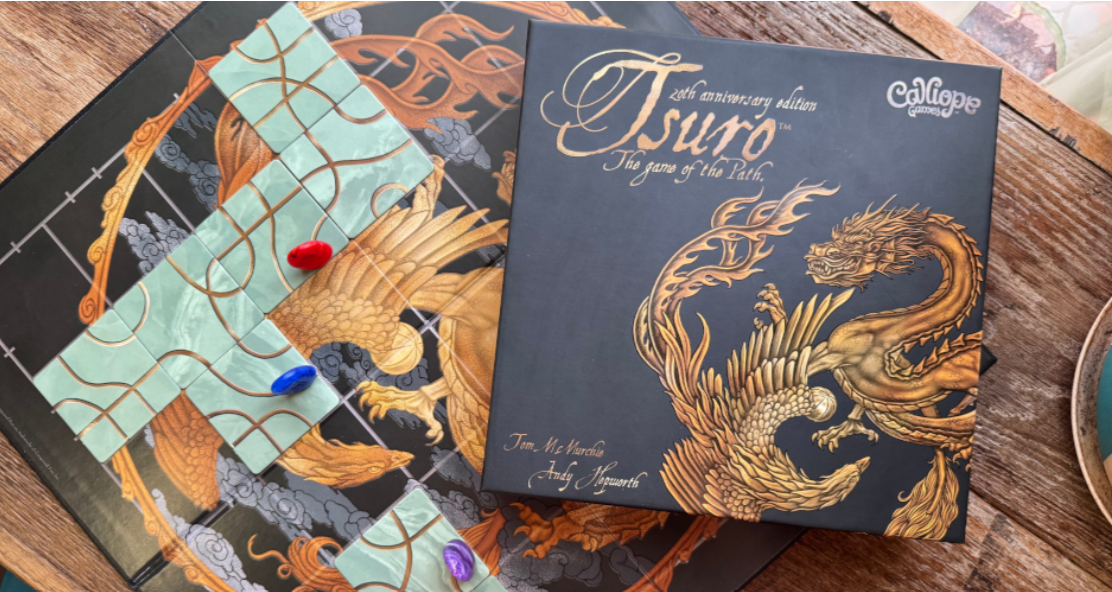
In this space-based variation on the game Tsuro — one of my all-time favorite board games — you try to navigate your ship through space by laying tiles and following the path as it connects to other tiles. Each player is laying tiles, quickly filling up the board, so you need to grow more and more strategic with your plays as the stack of tiles dwindles.

But with asteroids also roaming the field of play, can you outlast every other ship on the board? This is a terrific mix of Star Wars flavor with everything that makes Tsuro fun and challenging. It might be hard to find, but it will be a welcome addition to your game shelf.


Images courtesy of BoardGameGeek.

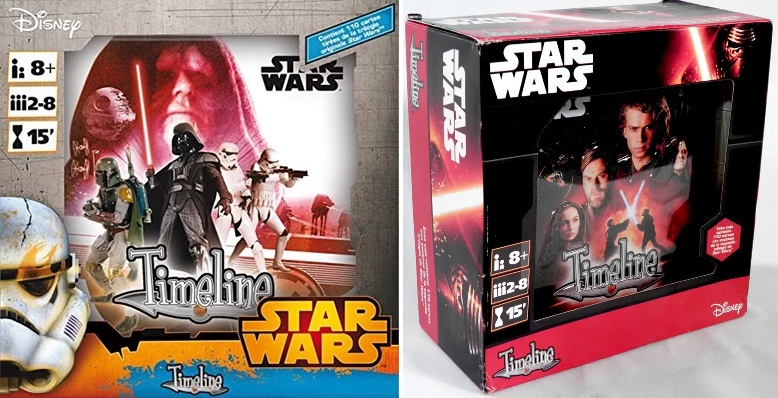
Star Wars: Timeline

I love the Timeline games. (I own nearly a dozen of them!) The simple act of trying to place your card in relation to other events on the table is both a great trivia experience and an opportunity to engage in some deduction and logical thinking.

So when I heard about Star Wars versions of Timeline, I happily snapped them up. With editions for both the original trilogy and the prequel trilogy, it will definitely exact a toll on your memory to see if you can precisely place key moments from the movies in the proper order.

Although easier than some of the other editions of Timeline (like their Inventions edition), this is still great fun for Star Wars fans of all ages.


Image courtesy of BoardGameGeek.

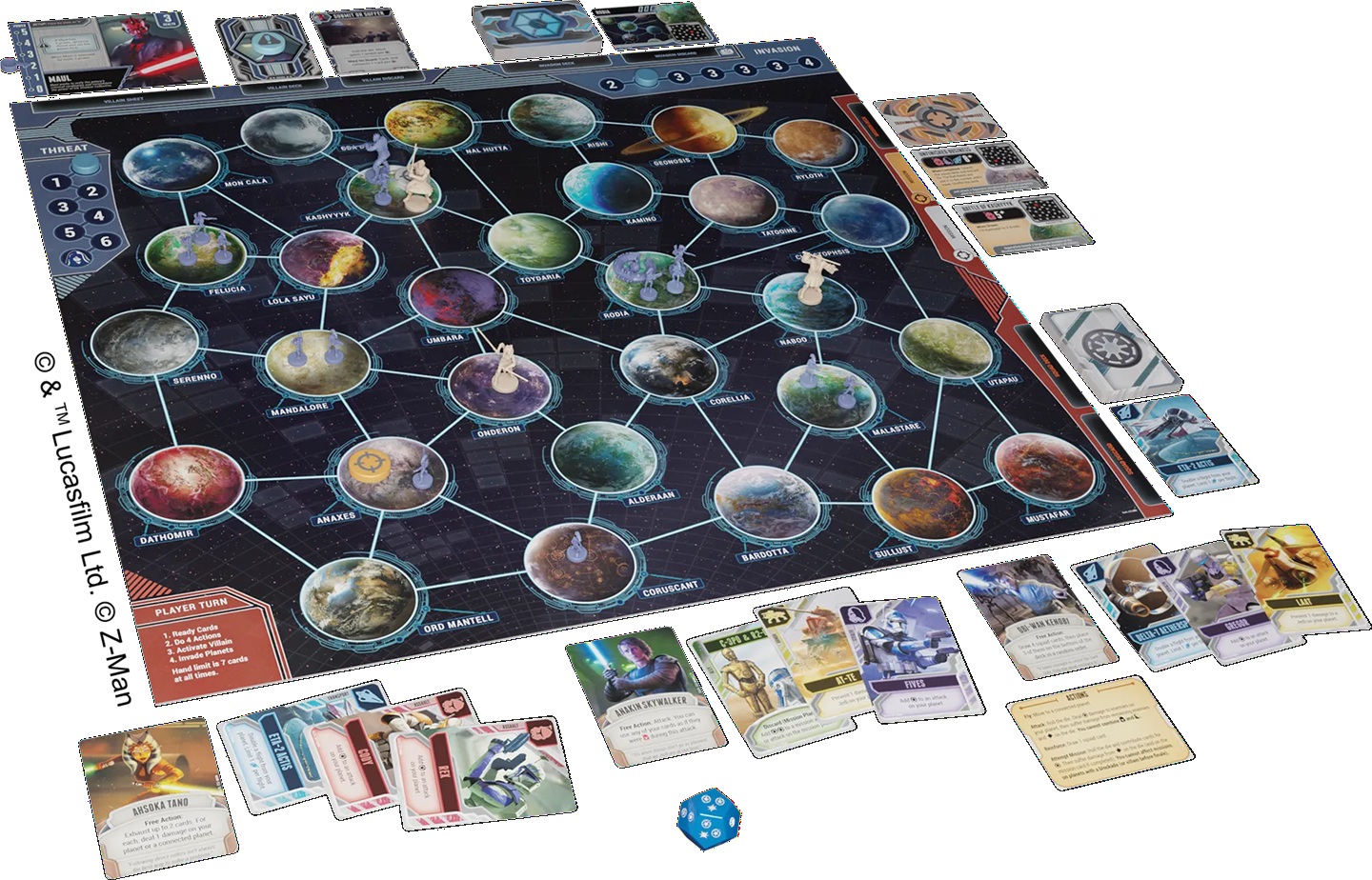
Star Wars: The Clone Wars

In this prequel era take on Pandemic, players take on the role of Jedi trying to battle back the onslaught of battle droids across the galaxy. Can you stop the spread of Confederacy forces by saving one world at a time?

While Star Wars versions of Risk and Monopoly are pretty much the same game with Star Wars seasoning, The Clone Wars takes the best of the Pandemic system and feels like it takes it in a fresh direction. This isn’t just another version of Pandemic, this is a very clever marriage of the two that takes the best from both.

Strategy and cooperation is absolutely key in this one, and the cooperative aspect separates it from many of the other games on today’s list.


Image courtesy of BoardGameGeek.

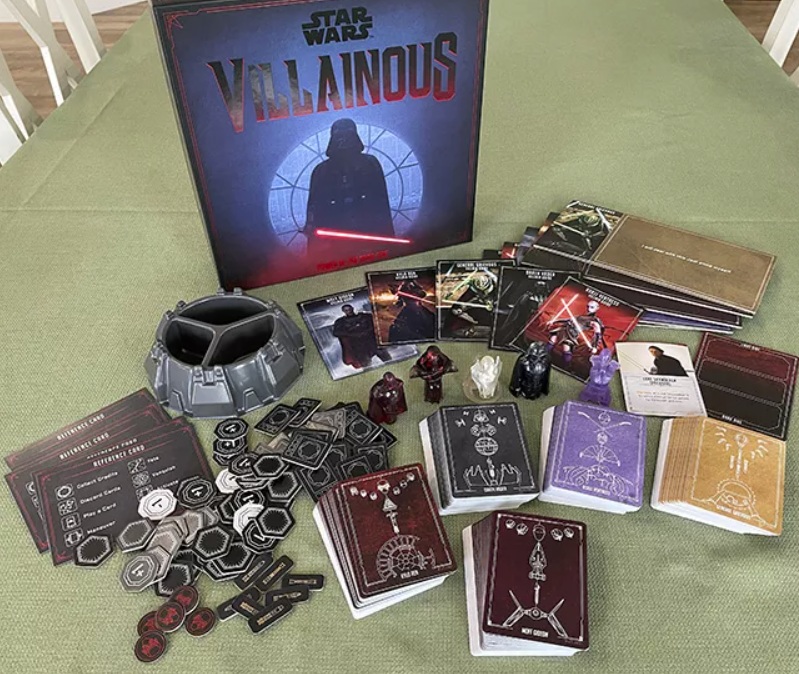
Villainous: The Power of the Dark Side

The Villainous games are amazingly well-designed games. Balancing different mechanics for four different villains as you try to achieve their goals and foil the efforts of the villains played by other players, this Disney franchise continues to expand and never disappoints.

And The Power of the Dark Side, their first Star Wars edition of the game, is one of the best versions of Villainous available today. With five villains to choose from — spanning the original, prequel, and new trilogies, as well as the Clone Wars TV show –there’s truly a villain here for any Star Wars fan.

Can you achieve your villainous dreams, or will the other evildoers at the table outmaneuver you and realize their darkest ambitions?


Image courtesy of Nerds on Earth.

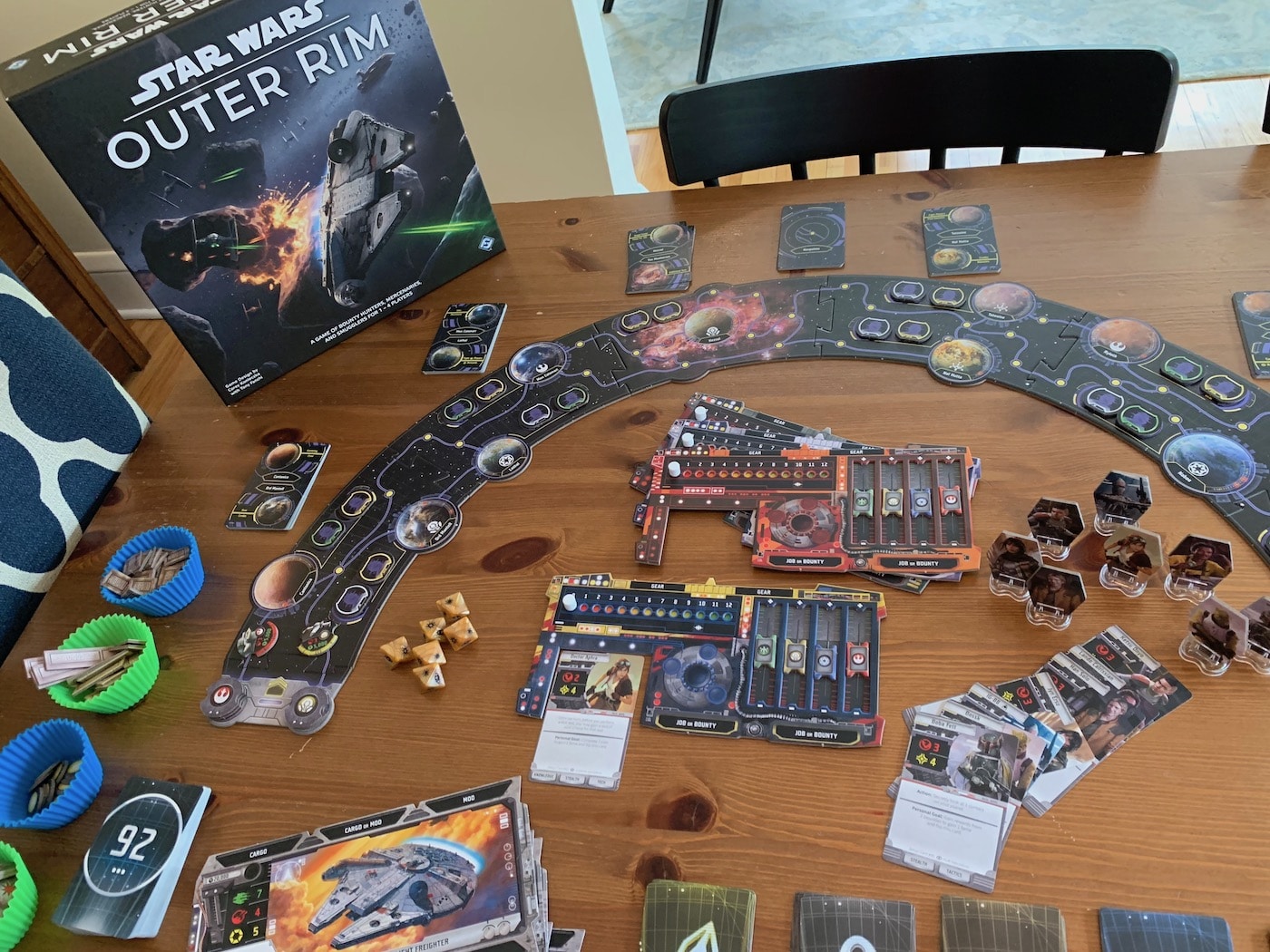
Star Wars: Outer Rim

Embrace your inner scoundrel with this game, where each player strives to complete jobs for their employers, collect bounties, smuggle cargo… you know, your usual day-to-day shenanigans in the Star Wars universe.

This game sorta gives you the roleplaying experience in a one-session microcosm. You’ll make your character, make your choices, upgrade your gear and your ship, and make some money, all while dealing with shady and dangerous folks. It’s a whole narrative arc crammed into a single sitting.


Image courtesy of Entertainment Earth.

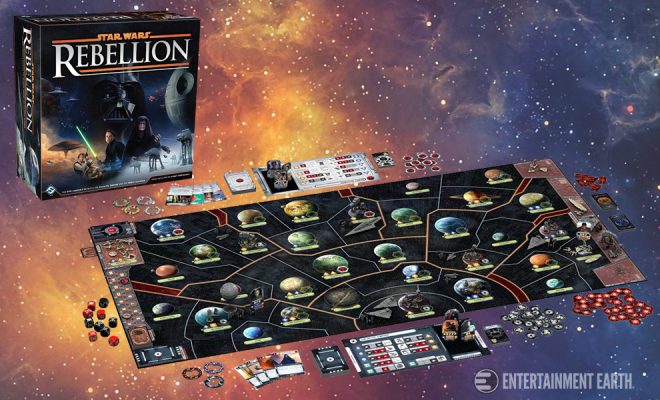
Star Wars: Rebellion

While Outer Rim is a personal journey, Rebellion is Star Wars on a galactic scale. This is full-blown war between the Rebellion and the Empire, where one side has a Death Star to build and an insurrection to crush, while the other builds alliances, plays cat-and-mouse with the Empire, and plots to destroy the Empire’s greatest weapon.

I’ve only played this game a few times — it’s expensive, a bit overwhelming, and takes a while to get good at — but it’s been a blast every time.


The tabletop scene for Star Wars sure is stacked, but there are plenty of terrific immersive options out there as well for roleplaying fans looking to explore the universe of Star Wars.

And while officially licensed games are great (I’ll be mentioning one below), sometimes the best stories are told in the shadows by companies that understand the spirit of that franchise, but can’t afford all the bells and whistles.

Here are two of my favorites:

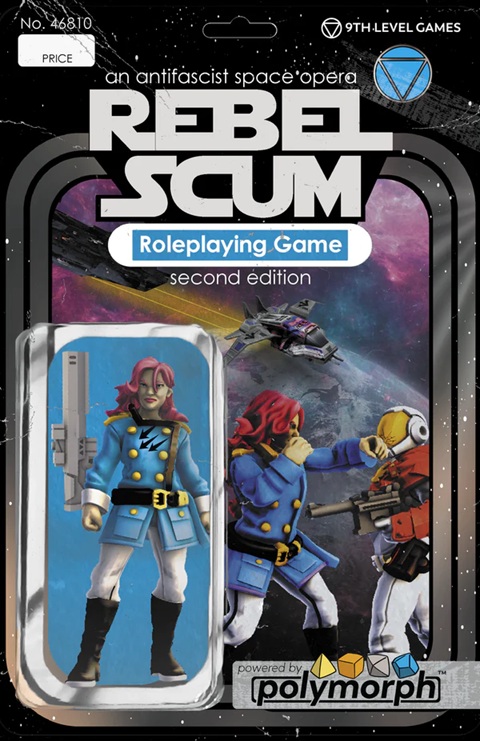
Rebel Scum

If, for any reason at all, you felt like punching a Nazi in the face, you can do so in Rebel Scum by 9th Level Games. Yes, they’re space Nazis running an evil empire, and you’re an intrepid anti-fascist trying to save the galaxy, but hey, punching Nazis, amirite?

This game manages to feel like an epic battle across the stars AND a session of playing with your favorite action figures all at the same time. It’s childhood wonder and all the heroic action we wish we could undertake as adults.

Will you stop Baron Deathray and his Killtroopers with a handful of dice and a lot of gumption? Only one way to find out.


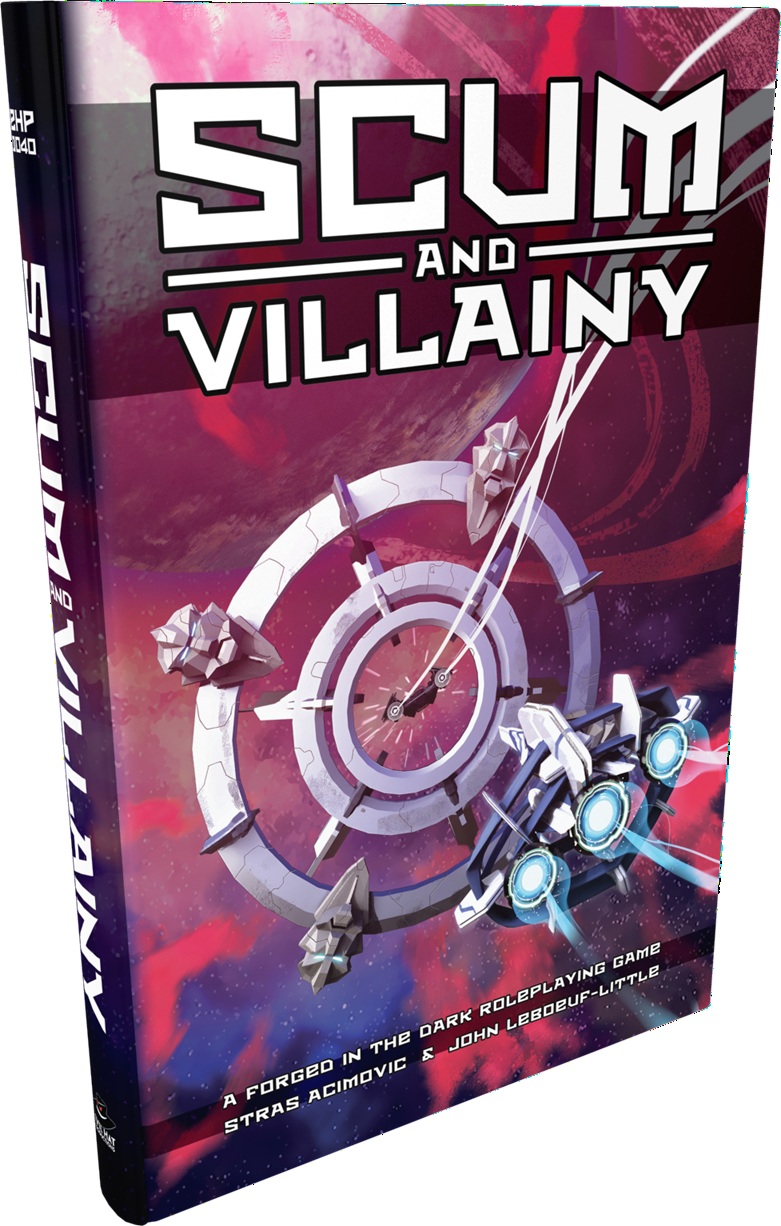
Scum and Villainy

If you really like the Han Solo-esque scrappy smuggler making his way through the universe sorta thing, Evil Hat Productions have you covered with Scum and Villainy.

While the Evil Galactic Hegemony is ever-present, this game is more about criminal dealings, clever negotiation, devious schemes, and profiteering adventure. It feels like the day-to-day trials and tribulations of a struggling spaceship crew.

I love the focus in Scum and Villainy on the roleplay aspect of RPGs. So much of the game is about character and the worlds you visit, and not as much about swinging lightsabers and dodging turbolasers.


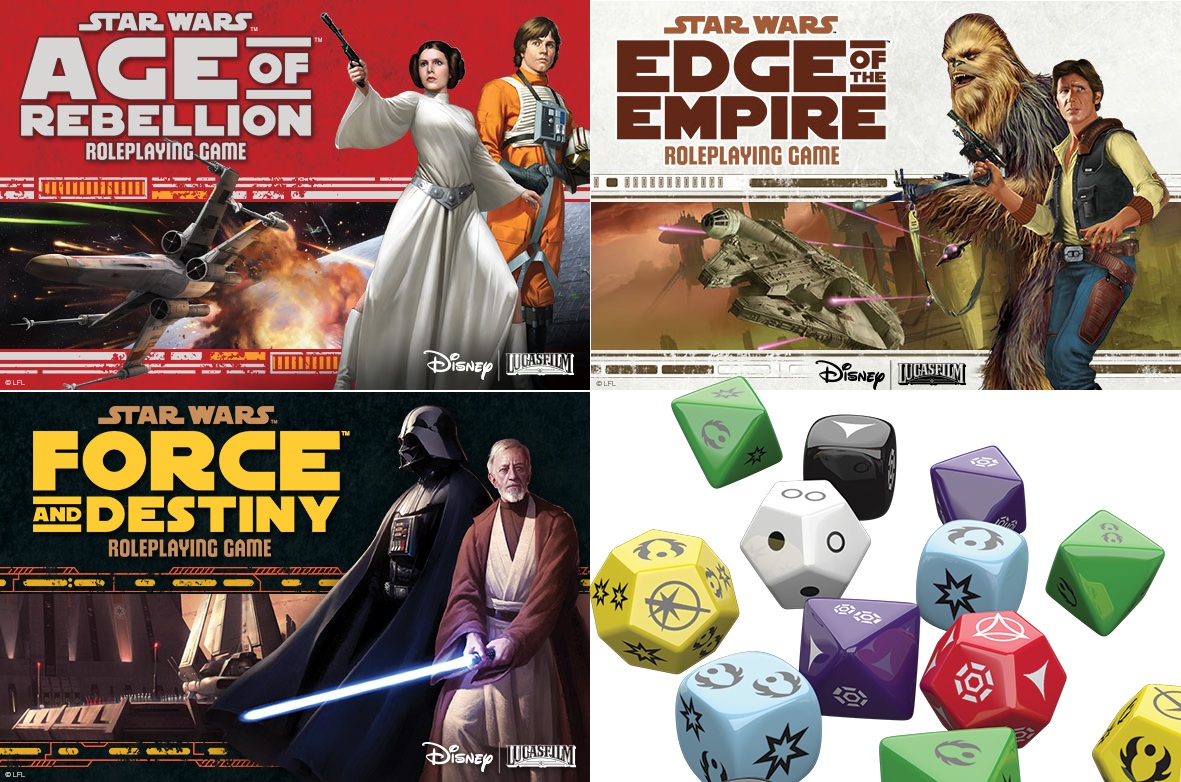
As you can see, there are many different ways to play a Star Wars game. It can be a war game, an exploration game, a scheming game, a storytelling game… sometimes all of them at once. And Fantasy Flight Games brings a seriously impressive narrative tool to the table with their Star Wars Roleplaying Game.

There have been Star Wars RPG games since the 80s, but I don’t think any of them offered the same spirit of choice, chance, and adventure that the FFG edition of the game does.

Like most RPGs, you pick a class and build your stats and roll dice to determine the outcome of your choices. But unlike many RPGs where the number you roll declares your action a success or a failure, the narrative dice of Star Wars FFG offer a much more exciting and engaging answer.

It’s not just a binary option, you succeed or you fail. With narrative dice, you can have additional complications, both positive and negative.

You could fail, but with some unexpected advantage: You missed a swing of your lightsaber, but you cut through the awning supports and blinded your foe for a round.

You could succeed, but with some negative consequence: You might have caught the bad guy with your blaster, but you also shot the engines of your ship, and now they need repairs.

Your actions tell a story that goes well beyond yes and no. And in a world where scoundrels often make mistakes while trying to do good, it’s a more interesting, more immersive journey every time, and it truly brings those adventurous moments to life.

Whether you’re a scoundrel on the Edge of the Empire, a hero during the Age of Rebellion, or someone caught between the Light Side and the Dark Side in Force and Destiny, they’ve got a place for you to tell your story.


Did your favorite Star Wars game or RPG get mentioned? Or are you miffed I left out Star Wars Trivial Pursuit and its bweepy little R2-D2 dice roller?

Let me know in the comments section below! I’d love to hear from you.
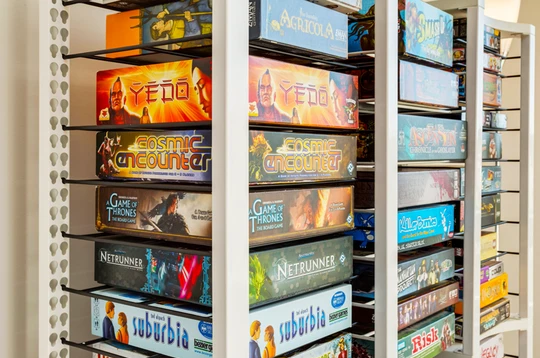
Board Game, But BIG!

I was surfing social media on my lunch break when I stumbled upon a video on Twitter (not X, never X) featuring a giant balancing game with Tetris-style game pieces.

It’s called Tetris Tumble XL and it’s apparently available at Walmart. And although it’s not a one-to-one gameplay comparison, it is interesting to see Tetris super-sized as a gaming experience.

It’s neat. It’s not building-sized Tetris neat, but it’s neat.

Of course, it’s only the latest example of a traditional game experiencing Godilla-like growth to turn it into a party game.

The most traditional form of “board game, but big” is undoubtedly Chess.

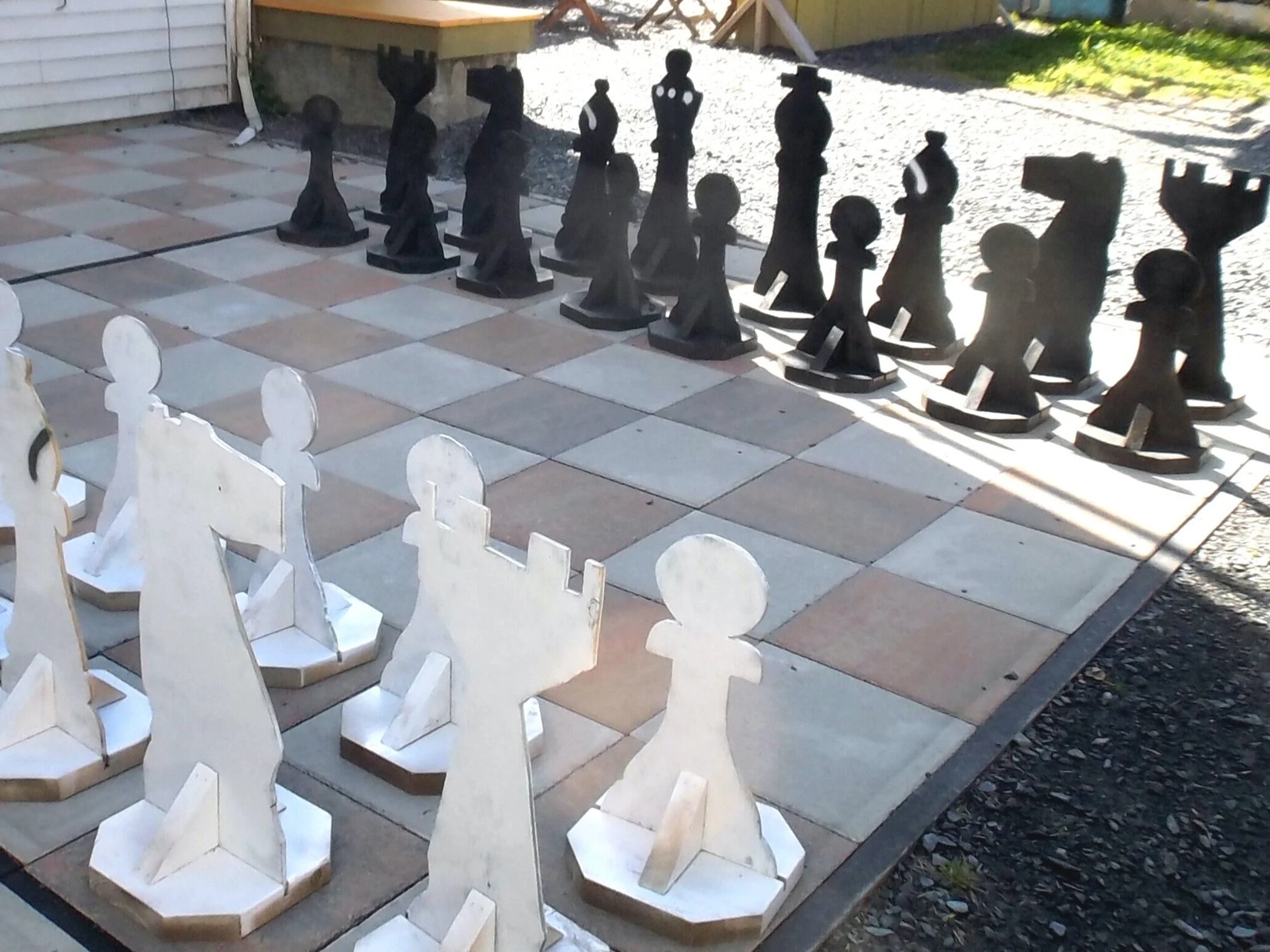
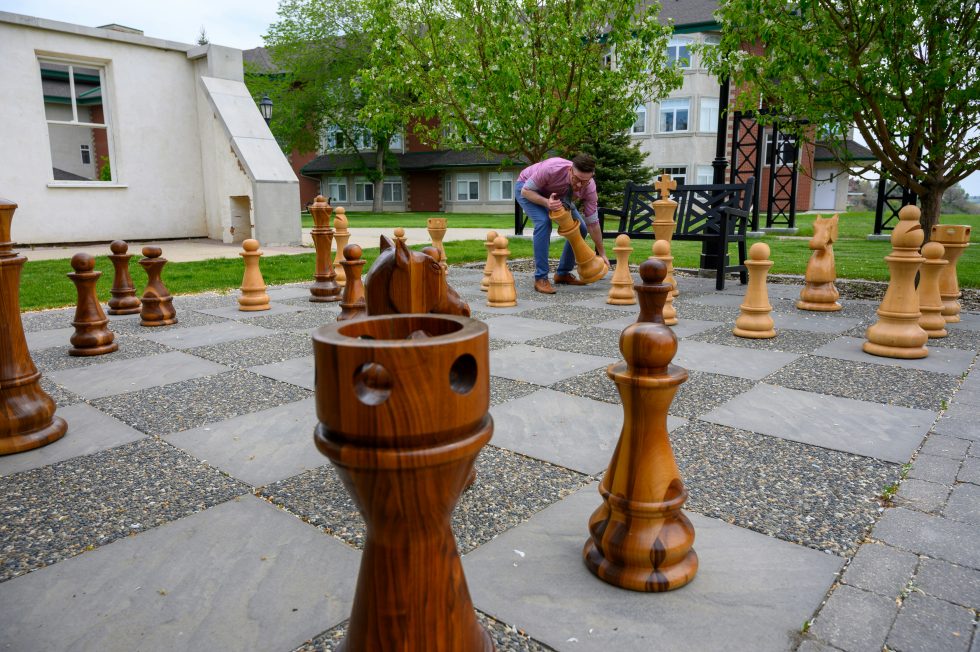
There are literally dozens of places where you can enjoy a gargantuan game of Chess. Wooden cutouts, full wooden pieces, sculpted stone… the aesthetics are all part of the experience.

Plus you can easily play with humans as the chess pieces, which adds a fun element to the sheer scale of the game. I’ll never forget seeing a game just like that decades ago in an episode of The Prisoner.

There’s something about people as literal pawns being controlled that adds some serious philosophical spice to the game’s proceedings.

For a more lighthearted, but no less impressive translation when it comes to scale, there’s Mark Perez’s life-size Mousetrap.

Now, this isn’t playable because there’s no game board, but if we’re all being honest, did anyone actually play the game? Or did you simply set up the contraption and let it tumble and turn and clatter in delightful motion?

This 25-ton version of the board game’s colorful selling point toured festivals and fairs for years, concluding with a car-smashing weight rather than a plastic diver and a little net over some hungry mice.

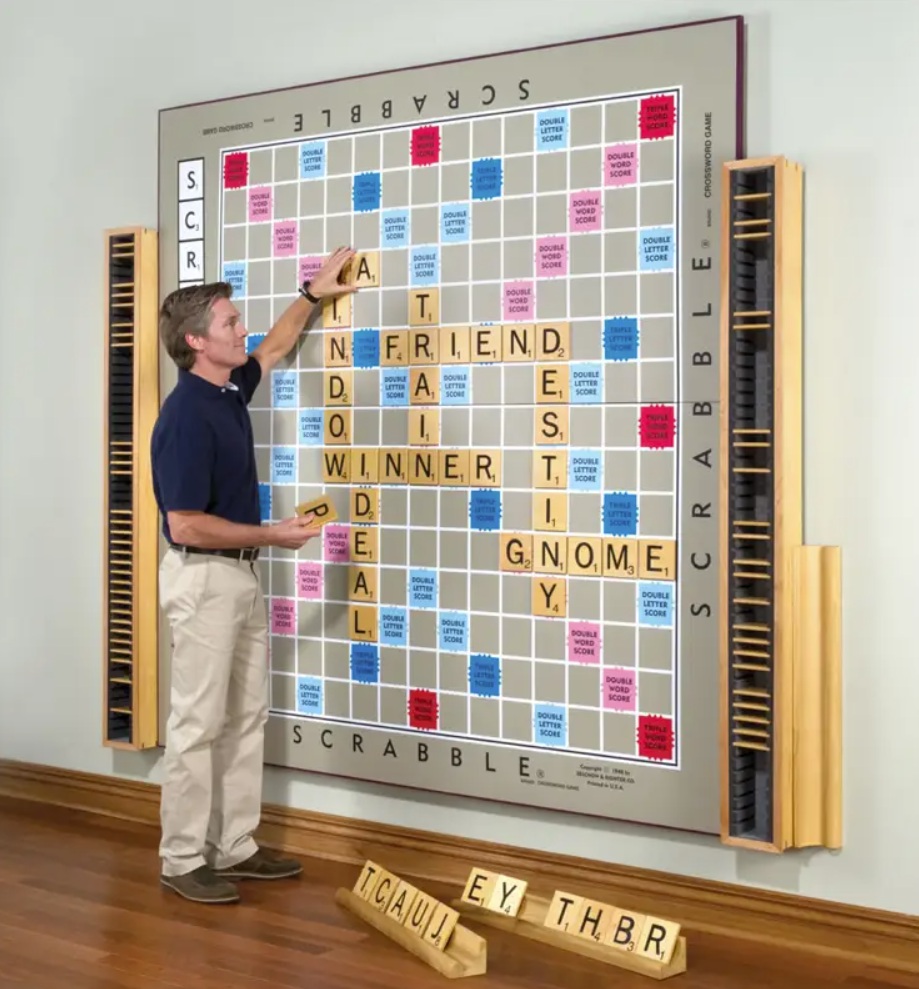
Hammacher Schlemmer used to sell a wall-sized giant Scrabble game that they dubbed The World’s Largest Scrabble Game, and it retailed for $12,000!

There are some more affordable large Scrabble games out there now for players to enjoy on a sunny day outside, but nothing that rivals this Hammacher Schlemmer monstrosity.

You’ve probably seen outdoor versions of Jenga. There’s a wooden version that still remains relatively portable, and an XXL gigantic edition that dwarfs the man playing it in the photo.

I’m not a huge fan of the cacophony that ensues when a regular game of Jenga ends, so I don’t really enjoy the larger versions either. Give me Catch the Moon any day, or maybe a nice round Junk Art or Rhino Hero instead.

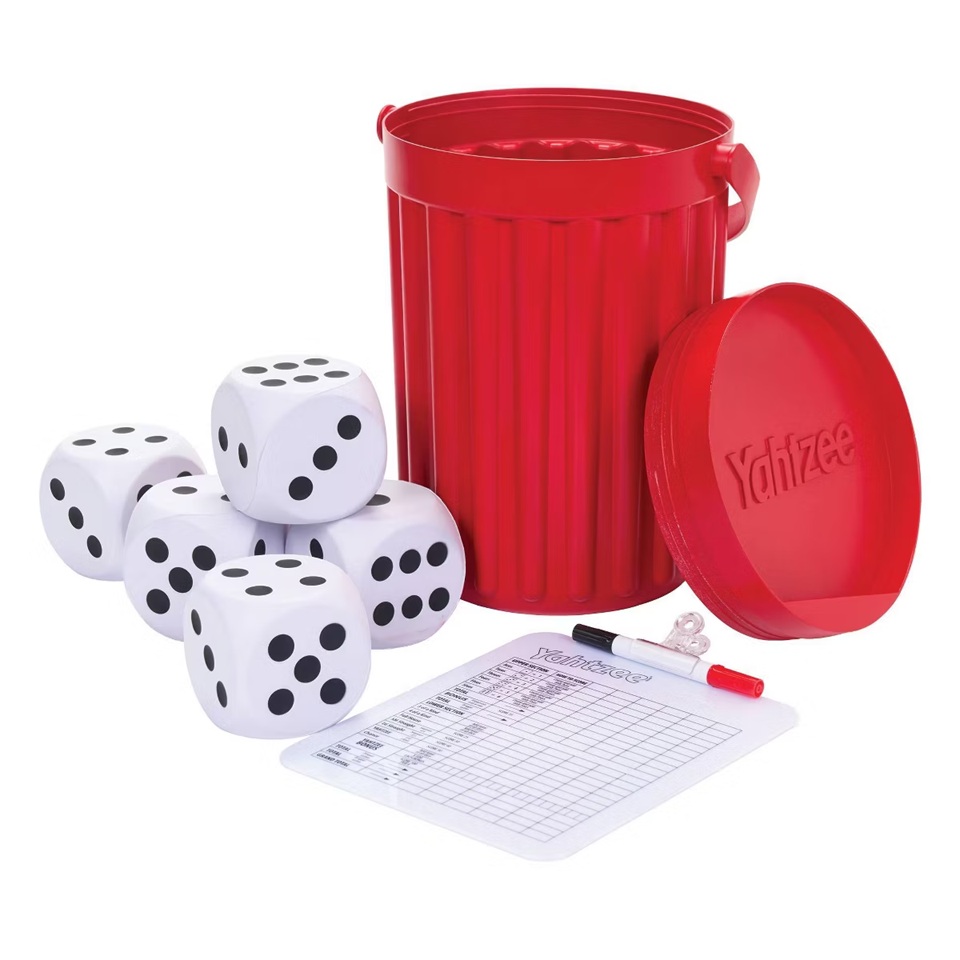
Have you ever wanted to play Yahtzee but wished the cup for the dice was garbage-can sized? Well, your mediocre dream has come true! With big foam dice, you can turn Yahtzee into a yard game.

Look at how much fun these people are having! And no, I did not crop the photo that way. That’s the promotional photo as intended, crouching half-man and all!

Operation has always been a finicky little beast of a game, and it seems like no two versions of the game are the same.

Some are more sensitive, while some — like the version at my babysitter’s house — had a buzz that was downright painful.

But this giant version? I could see this being a pretty fun challenge, depending on how heavy the pieces are.

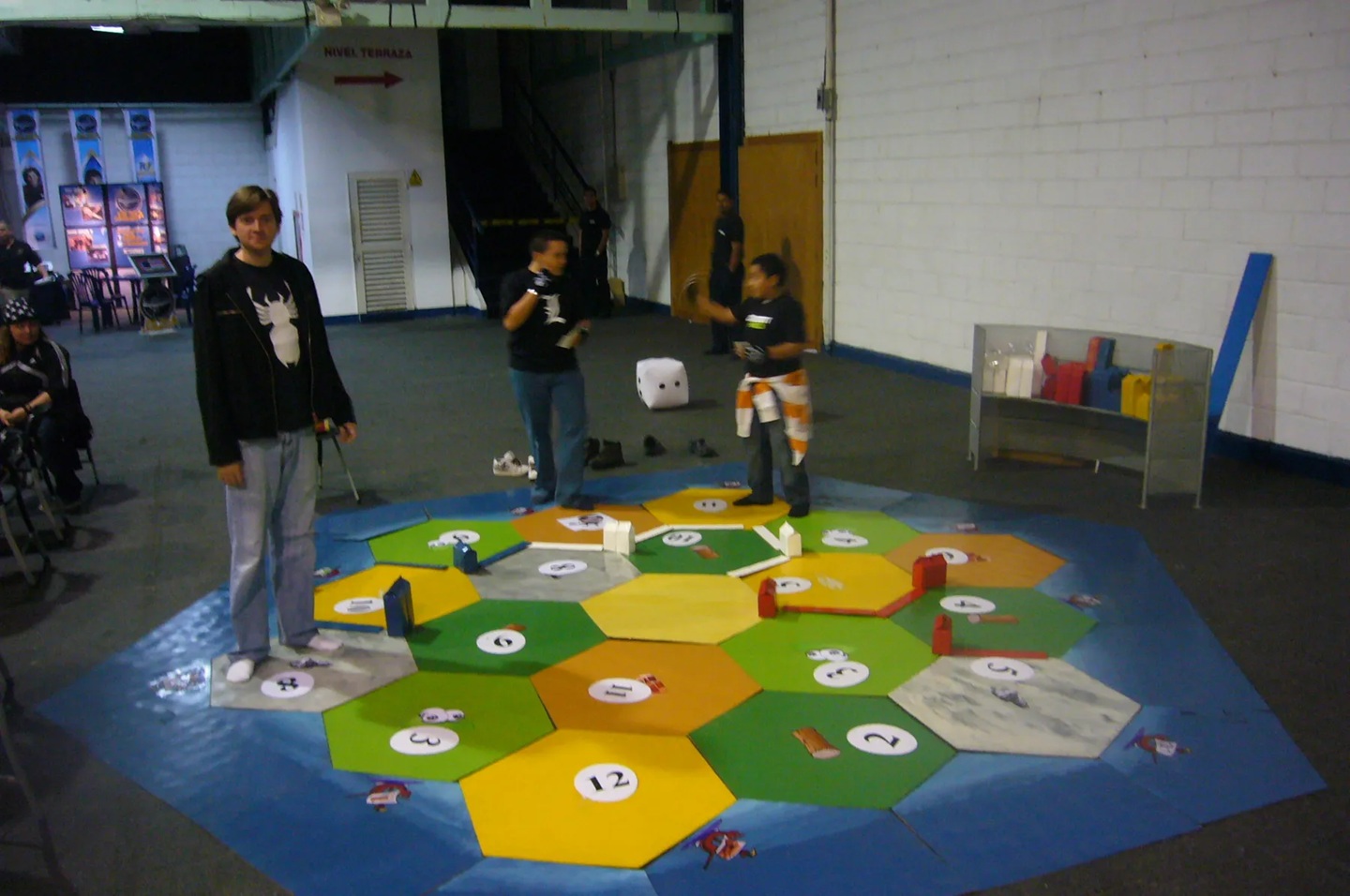
Family-Size Settlers of Catan, Caracas Comic Con 2011

Settlers of Catan is not just a modern addition to the classic board game pantheon. It’s also the only possible challenger to Chess’s dominance as a build-it-big board game.

Life-size versions of Catan have been played at numerous gaming conventions and other events, and it’s hard to get an accurate number of how many giant sets of this resource management game are out there in the wild.

2783642-2767076242-563bb

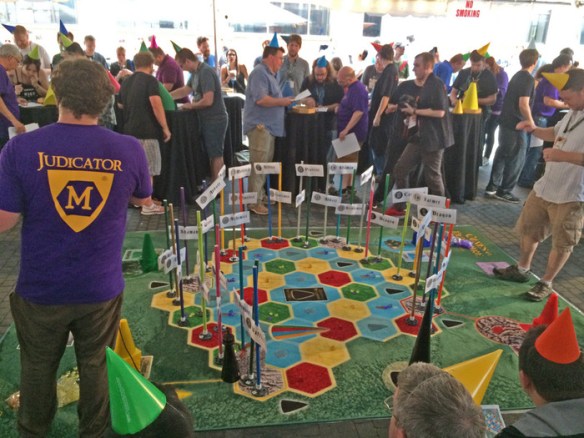
That’s not the case for the fictional game turned real life game Cones of Dunshire. As far as I know, there’s only one larger-sized version of the game, produced for a charity event at GenCon by Mayfair Games (the same company that created Settlers of Catan).

And you know, for the most part, I can see the appeal of these inflated, occasionally inflatable versions of classic games.

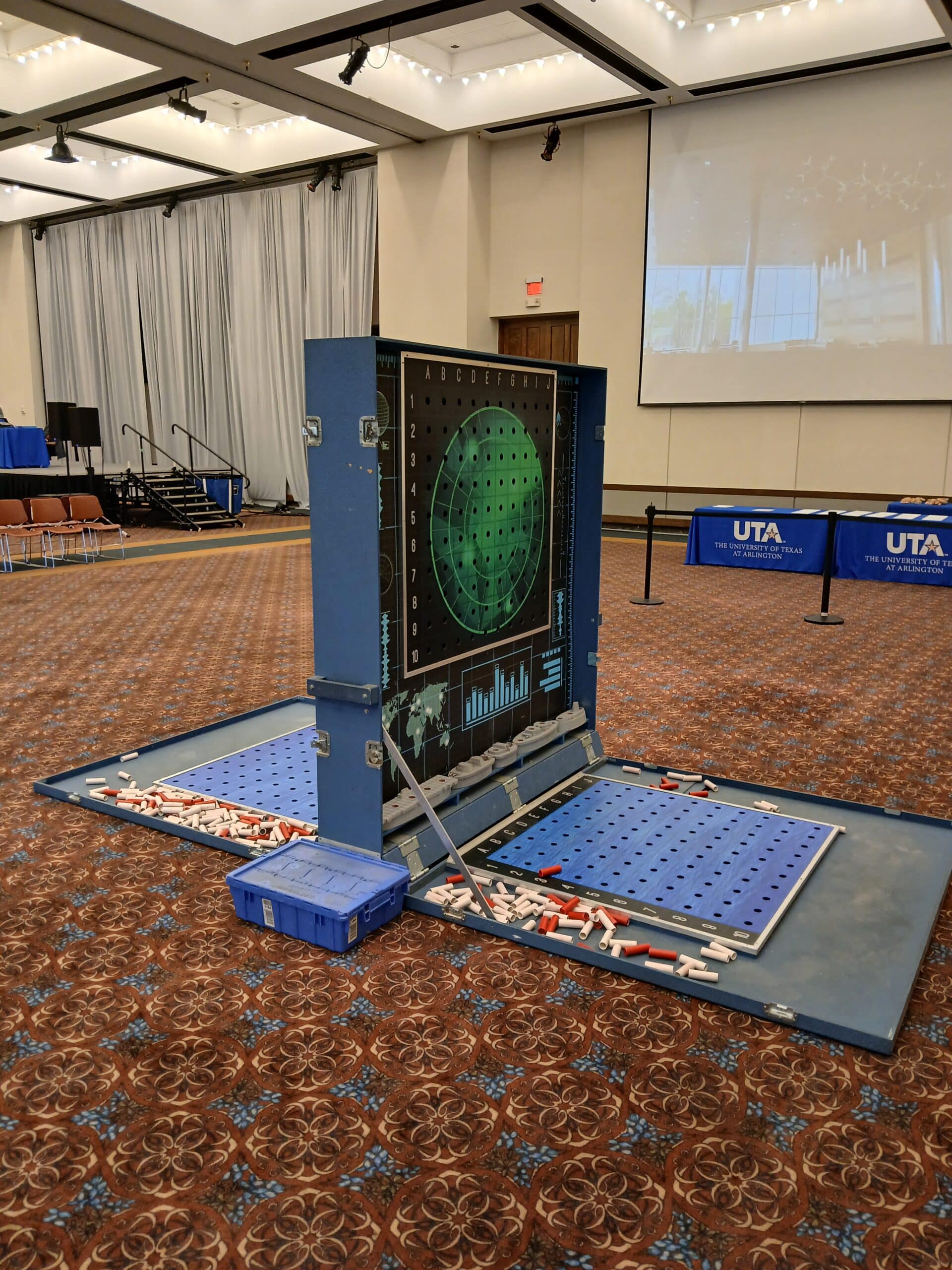
I take that back. I do not get how making Battleship bigger makes it more fun in any way, shape, or form. It seems so easy to cheat, intentionally or otherwise. Unless I actually get to lob stuff at my opponent’s ships over the wall, I’m not interested.

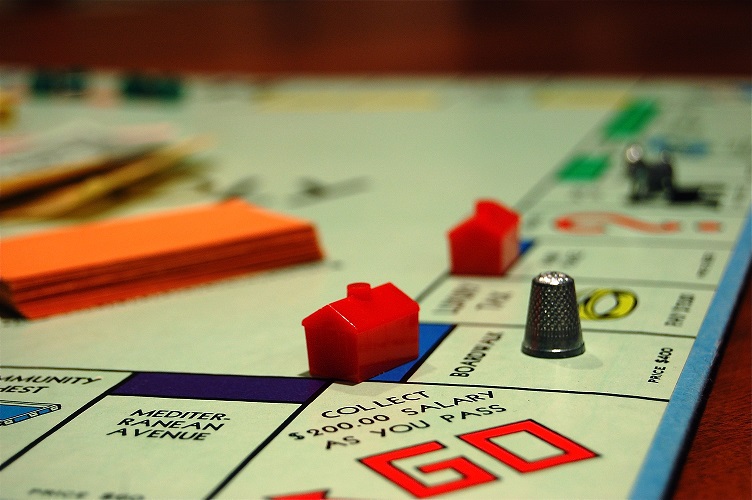
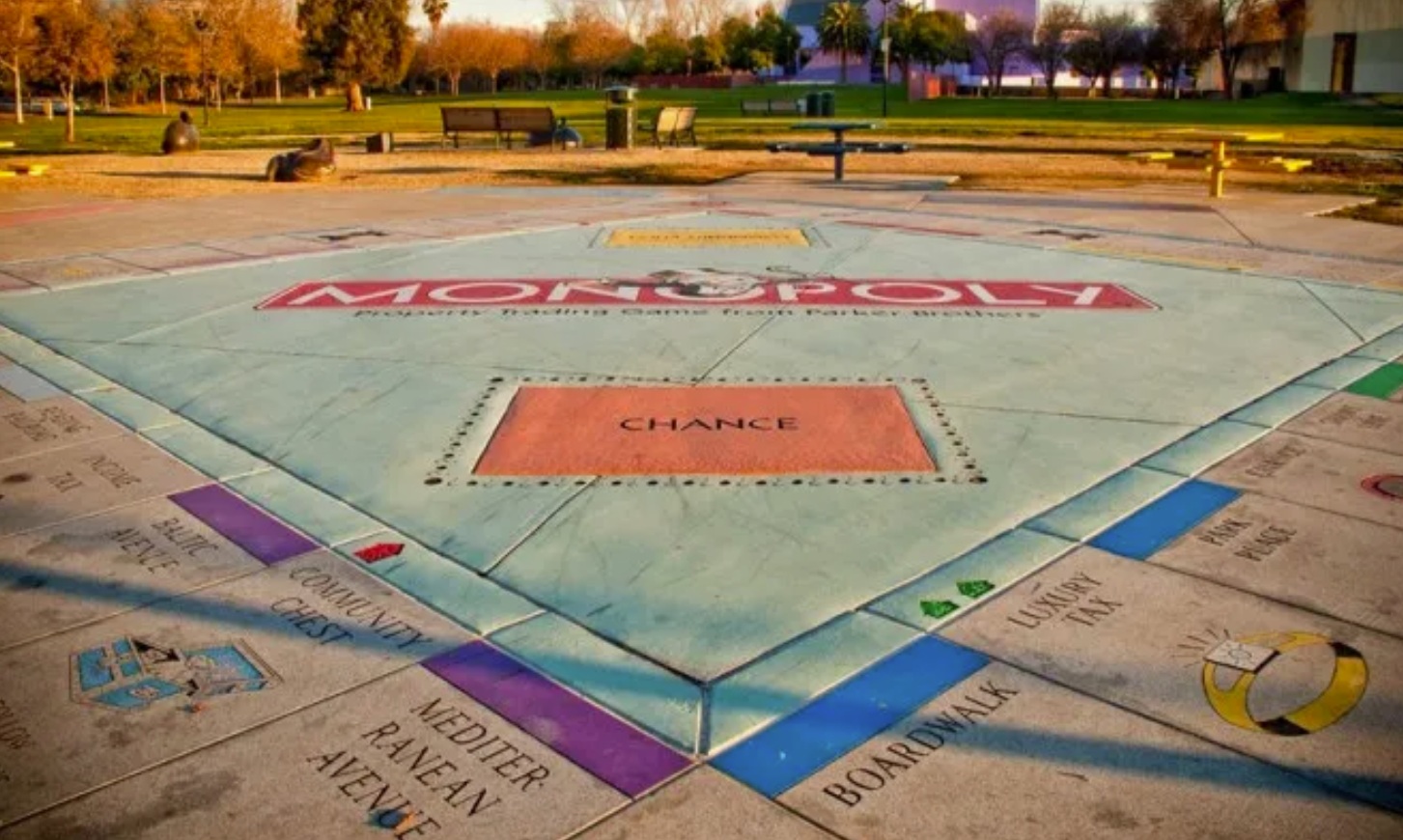
And while this giant Monopoly board is impressive, I still don’t think it’s enough of a whimsical gimmick to actually get me to play Monopoly.


Clearly there is a market for oversized versions of classic games. And I have some suggestions for board games that should, nay, MUST make the jump to human-sized for the betterment of play all over!

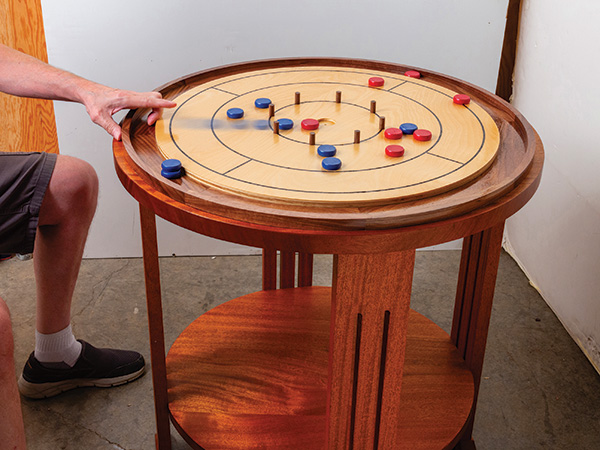
Let’s start with a Canadian classic: Crokinole.

This would be so simple. Get a bunch of curling stones, a hockey rink, draw out the board, and secure some posts with sandbags or something. Then get tossing!

Next, there’s Chutes and Ladders.

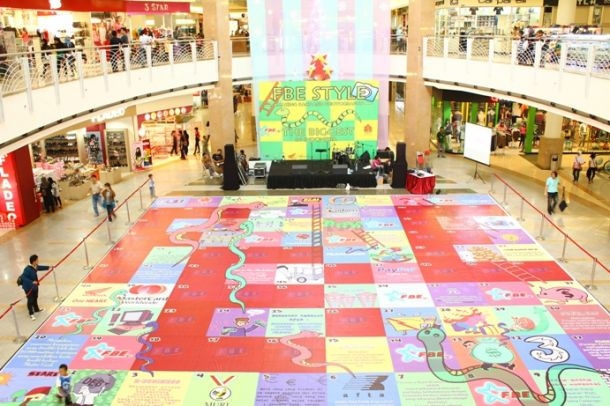
Yes, there was a life-size version of this from 2010 when Indonesia’s University of Surabaya honored the original version of the game — Snakes and Ladders — with a 45-foot game board and 105 players.

But that’s just a big flat board. I want a version with actual ladders and actual chutes! (Sorry, no snakes in this one.) Imagine if we could find the right hill OR wide-stepped public staircase so that you could actually ascend the board and slide down in delightful misfortune! That sounds awesome.

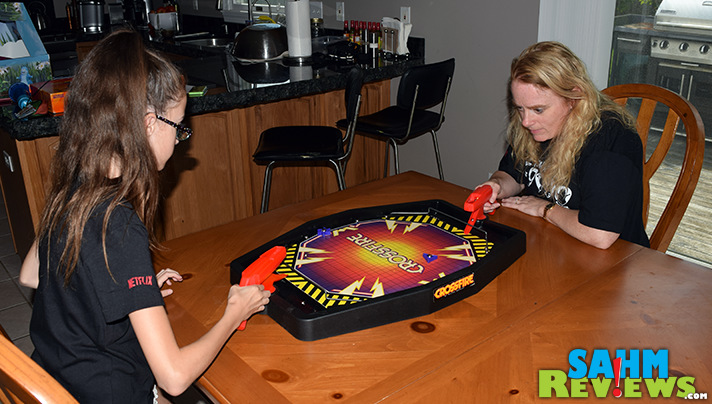
Oooh, what about Crossfire?

Image courtesy of SAHM Reviews.

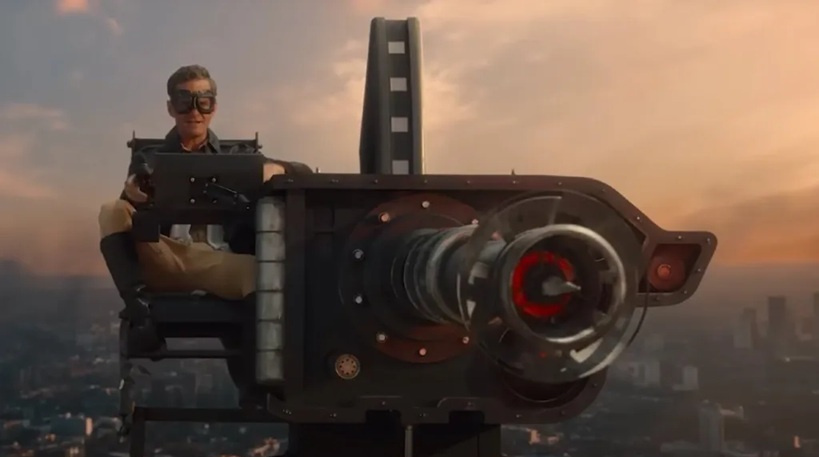
In this game, you used little marble-spewing guns to knock targets into your opponent’s space. Imagine getting to sit sidecar-style next to a dodgeball launcher and trying to outwit your opponent!

Sorta like this, except with dodgeballs instead of a laser.

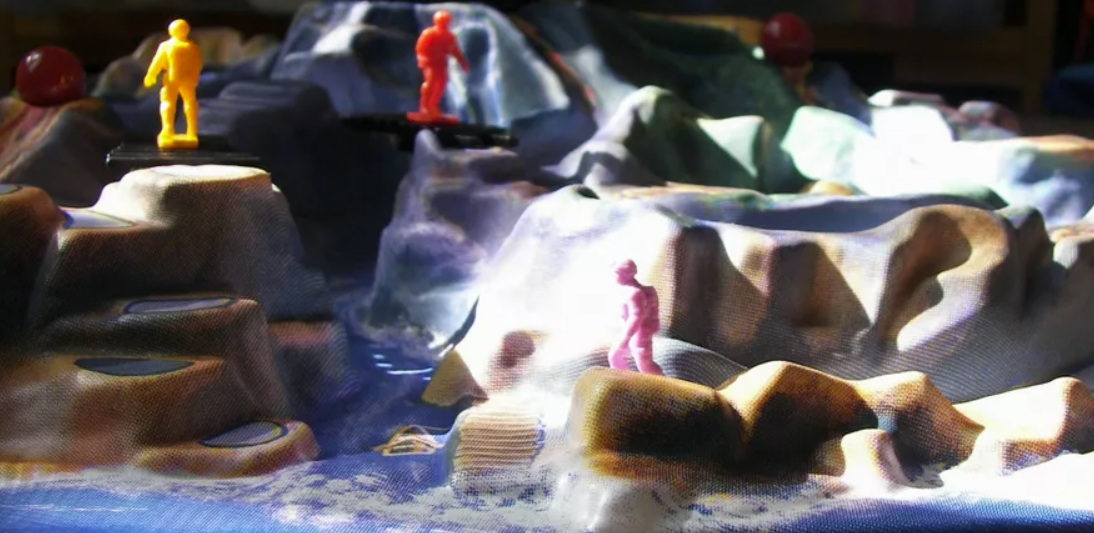
Now, if you’ll excuse me, I need to get back to constructing my life-size version of Fireball Island.

I’ve almost got all the kinks worked out of the Indiana Jones-esque giant fireball chase sequence.

Oh, hey, I need a couple of game testers. You’re pretty fleet-footed, right, fellow puzzler?

The Continued Uncertainty of Tariffs on Board Games

The ongoing stupidity, insanity, and outright graft involving the US’s approach to tariffs has been one of the most unpleasant subjects to cover in this blog.

The implementation of broad global tariffs on a whim (or based on a slight, real or imagined, against the gilded tinpot dictator who occupies the Oval Office) has made it challenging at best, and absolutely untenable at worst, for many game designers and manufacturers in the board game industry.

In the year since those tariffs were enacted, hundreds of board game projects have been canceled or drastically simplified to manage costs. Some brands, like Tokaido, have been sold to other companies to minimize costs. Print runs were lessened, and prices increased.

Image courtesy of The Wall Street Journal.

Companies like Greater Than Games and Final Frontier Games, as well as outlets like Boardlandia, have shut down entirely. Other companies like Cephalofair Games have been forced to fire or furlough staff, while games like Underdog Games have shut down operations temporarily in the hopes of weathering the tariff storm.

The tariff’s impact was put plainly by the owner of Avalanche Press, who stated that tariff costs would have covered the production costs of two additional games this year alone. Essentially, he was taking 3 copies of every game and throwing them in the dumpster.

Some game designers, like TinkerHouse Games, have sued the government in the hopes of clawing back those tariffs.

While the EuroGames industry thrives, the US has become such an unreliable trade partner that it’s unknown how many of those games will even reach American shores.

There was a brief bit of sun amidst the dark clouds last week as the Supreme Court struck down Trump’s tariffs as unconstitutional.

“Relief!” said Jamey Steigmaier of Stonemaier Games. “Relief that the tariff taxes can’t skyrocket on a whim tomorrow, a fear I’ve lived with every day since April,” he told Polygon via email.

Immediately, speculation ran rampant in board game spaces. Hopes that shipping and importing would become cheaper again, and that those game companies in hibernation could return.

Unfortunately, the long-term effects of the tariffs would still be evident. All those companies that folded because of the tariffs are still gone. All that inventory that cost two or three times as much as expected to ship… those costs still need to be covered.

All those more expensive game components, all those attempts to find US-based manufacturing for these games — a manufacturing infrastructure that is no closer to existing than it was a year ago when the tariffs were haphazardly implemented.

All that tariff money that those companies will probably never see back.

Image courtesy of wilsoncenter.org.

The board game industry has been decimated, decades of growth wiped out in less than a year.

But sadly, only one avenue for applying tariffs has been closed to Trump.

He has since spitefully announced an increase in global tariffs instead through another governmental mechanism, and the industry must wait again with bated breath to see how bad it will be when the latest tsunami hits.

It’s exhausting to watch as a board game fan, so I can only imagine how absolutely brutal it must be as a game designer or employee of a game company.

I can only hope this very public defeat is the first of many in favor of independent creators.

In the meantime, support puzzle and game creators whenever and however you can. It’s more important than ever to find small joys wherever possible, whether it’s inside a black-and-white grid or at the table with friends, rolling dice.

Happy playing, friends.

Ways to Choose Who Goes First in a Board Game (Part 3: The Grand Finale!)

Every tabletop game starts somewhere. Once the box is opened, the pieces distributed, and the board set up, all that’s left is figuring out who goes first.

After two days buried in board game rule books, you might think you’ve seen everything the industry has to offer, especially when it comes to starting prompts.

But I assure you, friend, I’ve saved the best for last. Please enjoy the most elaborate, the most cartoonish, and the flat-out craziest suggestions for Who Goes First, as well as a countdown of my personal favorites.

Without further ado, let’s get into it!


Board games often have an off-the-wall premise, whether you’re dealing with aliens abducting ducks (Abducktion), using mad cows to detonate leftover war-time munitions (Unexploded Cow), or slowly going insane whilst spelling words (Unspeakable Words).

But even games with more down-to-earth concepts can still have mind-bendingly silly or crazy prompts to decide Who Goes First.

Time Masters asks for the player who last spoke with a wizard, while Star Wars Villainous: Power of the Dark Side suggests the last player to use The Force. Time Bomb Evolution lets the player who most recently evolved start the game.

Image courtesy of Disney.

1001 Karawane prefers the player who has ridden on a flying carpet most recently. In Big Monster, it’s the last player to have been to the moon who begins.

Were you the player most recently abducted by the CIA or the KGB (Secrets)? Or the player who most recently killed a monarch (Regicide)? Or the person who last destroyed an entire civilization (Gentes)?

Viking-themed games go pretty hard right out of the gate. Walhalla wants to know who most recently drank mead from a cow’s horn. Vikings, meanwhile, opts for the player who has pillaged and razed the most defenseless villages.

If you can perform miracles, I have a few recommendations for you. In Dead Man’s Cabal, the player who last raised the dead goes first. In Kazaam, the player who has most recently turned lead into gold begins. (This is also the case in Trismegistus: The Ultimate Formula, though that game accepts any alchemical transmutation.)

A successful alchemist’s copy of Monopoly…

Some games raise the bar even higher, asking for insanity AND specificity.

How specific? Well, a game of Colorado starts with the player who last visited an abandoned mine in a rusty wagon oozing coal residue.

Fantastiqa: The Rucksack Edition asks just one thing of the starting player. They want the person who most recently conducted a successful short symphony for the Mountain Moles of Mu. Simple, right?

At least Smash Up! gets specific by offering lots of options. The player who most recently experienced ANY of these scenarios can go first…

  • abducted by an alien
  • shanghaied by a pirate
  • bitten by a vampire
  • burned by a dragon
  • kissed by a princess
  • driven insane by Cthulhu
  • attacked by a teddy bear
  • eaten by an orc

Along the same lines, Cleopatra and the Society of Architects prefers the player with the best Egyptian credentials. This could be a nose as famous as Cleopatra’s, a mummified Crocodile pet, or an extensive hieroglyphic library, for instance.


Some of those starting rules listed above are pretty unusual. Thankfully, some games have a ridiculous starting request, but a more reasonable back-up suggestion all lined up. And these “In case of” scenarios can be just as entertaining as the totally bonkers starting prompts.

In Simurgh, the player who last rode a dragon goes first. But if no one has ridden a dragon, they’ll take a horse, a pony, or an extremely large dog instead. Reasonable!

Which player has most recently been to space? You get to go first in Space Explorers. And if no one has, then it’s the player who most recently watched or read something about space.

In the same vein, the player most recently abducted by aliens goes first in Pasture 51: They Came for our Angus. (Whomever has most recently been to a farm is the back-up in this case.)

Dinosaur Island suggests that the player who most recently extracted DNA from a mosquito trapped in amber begins. I mean, sure, we’ve all been there. But, if for some reason, no one at the table has successfully completed that task, you can go with the player who most recently visited a theme park.

And if that feels unlikely, consider this one.

Are you the player who last reached the peak of Mount Everest using nothing but blue-and-white-checkered stilts carved from the wood of a Mammoth tree? Then you start this particular game of The Bridges of Shangri-La. (In case of a tie, choose the wisest player of the group. I imagine that might be the person who didn’t try to climb Everest on stilts in the first place.)

The Great Heartland Hauling Co. is almost contractual in their starting prompt. The player with either (A) the best mustache or (B) the longest hair goes first. If one player has a very nice mustache and another other player has the longest hair, settle the issue with an arm-wrestling match.

This combination of physical qualities, debate, and physical challenge manages to encompass so many different Who Starts ideas that it’s genuinely impressive.


Before I conclude this three-day journey through the world of board game starting gimmicks with my personal favorites, I would like to highlight one delightful subset of starting rules: the “player to the left” option.

Dominion is perhaps the most famous game to use this mechanic, suggesting that the player sitting to the left of whomever won the previous game should start. Since play passes to the left, this means the person who won the previous game goes last. It’s an elegant equalizer for all involved.

Flock Together has a nice variation on this, opting for the player to the left of the player who most recently ate chicken to begin the game.

And Galaktico is absolutely ruthless in this regard, suggesting that play starts with the player to the left of the most impatient player (meaning the most impatient person must go last). That’s brutal!


I’ll conclude today’s post with my favorite Who Goes First prompts. After reading through hundreds and hundreds of board game rule sets, these are the ten I liked the most. They’re an eclectic mix of creative, sincere, silly, and thematic hooks.

#10: Tzolk’in: The Mayan Calendar

Give the Starting Player Marker to the player who most recently sacrificed something. This can be as silly or as serious as you choose, offering a whole range of potential debate opponents.

#9: T-Rex’s Holiday

The player with the most scars from animal scratches begins. This is clearly someone who deserves a little reward.

#8: Terror Below

The player who most recently defeated a worm in combat begins. The door is wide open on this one, and the debate never fails to make everyone at the table laugh.

#7: Tempus

The player who most recently had a great idea begins. As you can tell, I love a passionate debate, and this one has led to some genuinely fascinating pre-game discussions.

#6: A Thief’s Fortune

The player who most recently borrowed something and never returned it begins. Confession time, you light-fingered fiends!

#5: Fog of Love

The player who last blew a kiss begins. I just think this suggestion is so lovely.

#4: Surfosaurus MAX

The most experienced paleontologist/surfer begins. While you could interpret this as the most experienced paleontologist OR surfer, I prefer to debate who best embodies the qualities of both a paleontologist AND a surfer.

#3: Potemkin Empire

The player who most recently had to deal with government bureaucracy. Again, this is someone who absolutely deserves a little kindness.

#2: Trogdor!!: The Board Game

The player with the coolest consonant cluster in their name begins. This one is so unique that I had to put it high on my list. Reward those people whose names are constantly getting mispronounced!

#1: Fairy Tails

The player who most recently took a walk in the forest while contemplating the existence of hidden peoples begins. Plenty of games ask who went hiking or walking in the forest last, but the contemplation aspect makes this one so cute and considerate.


Thank you for taking this deep dive with me into the world of board games. It’s been an absolute blast to dig through not only my own extensive board game collection, but the brilliant archive of Who Goes First rules compiled at First Player Fun. Please check them out!

Did I (somehow) manage to miss your favorite starting prompt across these three days, fellow tabletopper? Let me know in the comments section below! I’d love to hear from you.

Ways to Choose Who Goes First in a Board Game (Part 2)

Every tabletop game starts somewhere. Once the box is opened, the pieces distributed, and the board set up, all that’s left is figuring out who goes first.

As you could tell from yesterday’s post, there are literally hundreds of ways to choose Who Starts. But yesterday’s options were centered mostly around the players on that given day of play. Their age, physical characteristics, recent travels, personal experiences, and so on.

In today’s exploration of board game rules, we’re looking at starting prompts where you have a fighting chance to earn the right to go first.


Sometimes, a game poses a small competition to decide who goes first.

It can be a physical challenge, like who can jump the highest (Dancing Eggs), or who can balance on one foot like a flamingo for the longest (Animal Upon Animal), or who can dance the Flamenco the best (Citrus).

In Bardwood Grove, it’s the player who can hold a note the longest. In Mega Mouth, it’s whoever can say “mmmmmmm” the longest without taking a breath. In Gheos, it’s the player who can refrain the longest from laughing.

It can also be based on the quickest person to respond to a prompt:

  • The first player who chants “ego sum primus ludio” 3 times (Don’t Go In There)
  • The first player to compliment another (I’m Right You’re Wrong)
  • The first player to make a trumpet sound and announce themselves as the starting player (For Crown and Kingdom)

Sometimes, it’s not being first, but being loudest, like in Stratelite, where the player who shouts “I will crush you all!” the loudest gets to start, or in Dungeonology: Rigor Mortis, where the player who yells “Yes, Dark Lord!” loudest in goblin language begins.

Naturally, some games have a performance aspect to their starting prompt.

These can run the gamut from making the weirdest shape with your tongue (Foramina!) or saying “I am a super secret super spy” in Sean Connery’s voice the best (Covert) to the most impressive imitation of Godzilla’s scream (Godzilla Total War) or making the best Chupacabra noise (Chupacabra: Survive the Night).

In Genji, the player who can tell the most romantic or moving love story begins. In Lift Off! Get me off this Planet!, it’s the player with the best story about being stranded by their own accord. (Obviously, a few of these may require some debate among the players.)

Some board games prefer a mental challenge to a physical one, testing your wittiness, trivia knowledge, or other examples of cerebral acuity.

Can you be…

  • The first player to come up with a punny dinosaur joke (Dinosaur Island: Rawr ‘n Write)
  • The player who can name the most of Jupiter’s moons (Exoplanets)
  • The player who comes closest when guessing the current time (Chrononauts)
  • The player who can recall the earliest positive memory begins (Vivid Memories)

Speaking of debate, it’s one of my favorite options when it comes to determining Who Goes First. And there is no shortage of weird, wacky, and wonderful suggestions in board games for this one.

In Oath of the Brotherhood, you must debate which player looks the most like a pirate. In Hellapagos, it’s the one who most resembles a castaway. In Tudor, the one who looks the most like Henry VIII, or one of his wives.

In Obama Llama, it’s the person who most resembles either Obama or a llama. And continuing the thread of silly game names, Bunny Bunny Moose Moose asks for the player who looks the most like a moose. (Don’t worry. If there’s a tie, you can choose the player who looks most like a rabbit instead.)

Which player struck the most chivalrous pose? (Medieval Academy)

Which player most recently did something Scottish? (Glascow)

Which player has held the strangest job? (Funny Business)

Which player has the most hipster cred? (Streets)

Which player has the best taste in music? (On Tour)

Which player has had the worst day? (Gloom)

Who has befriended the most unusual animal? (Wondrous Creatures)

Which player can best make the claim of being a rocket scientist? (Launchpad 23)

Who has the shadiest laugh (Swindler)? The most diabolical laugh (Spare Parts: The Game of Undead Army Building)? Who cackles the most like a vile and greedy medieval pardoner (The Road to Canterbury)?

And some of these are sure to spark a spirited debate.

I mean, how do you decide which player is the most alien (Space Beans)? What about the one who has most recently gone insane (Cthulhu Realms)? The player with the most authentic name (Burgen Land)? Or the one most likely to be from a parallel universe (Trouble: Across the Spider-Verse Part One)?

The weirdest? (Play Me: Alice in Wonderdice)
The most angelic? (The Deadlies)
The most daring? (Carnegie)
The smartest? (That’s Pretty Clever aka Ganz schön clever)
The most evolved? (On the Origin of Species)

Image courtesy of Ctrl+Alt+Del.

I mentioned in yesterday’s post that Hot Tin Roof‘s starting prompt could ruffle some feathers. But it’s hardly alone amongst board games whose starting rules could cause fireworks.

Do you want be considered the most evil (Dark Minions) or the most sinister (Complots)? Would you be cool with being named the most malicious (Doodle Dungeon) or the blood-thirstiest (Dungeonville)?

The most suspicious-looking (Spyfall)? The one with the sneakiest eyes (Shifty Eyed Spies)? The sneakiest in general (Clank!)? The most cunning (Volto)?

I mean, it’s not exactly a compliment to be told you look the most stressed, which would let you go first in Chakra. Or that you’re the player who most desperately needs a vacation, which makes you first to act in Kahuna.

Bears vs. Babies asks who had the most recent tantrum. Aristocracy asks who most recently made an unreasonable demand. In Awkward Guests: The Walton Case, it’s the player who the host considers to be the most awkward guest. Oof. That’s a rough one.

But not as rough as debating which player LOOKS the oldest. I can’t remember which game I saw this prompt in, but man, that’s guaranteed to start a fight.


I’ll conclude today’s deep drive into board game Who Goes First options with a short list of games that ask you to confess to crimes in order to earn that coveted starting spot.

Yup. How bad do you want that first move or die roll?

It’s the player who last committed a crime who starts in La Cosa Nostra. The player who most recently robbed a bank gets to go first in Escape Plan.

In Trial by Trolley, the player who last thought about murdering someone begins. In The Brigade, it’s the player who most recently set something on fire.

Do the crimes do get more specific? You bet they do.

In Prohibitionists, it’s the player who most recently smashed open a cask of bootleg whiskey with an axe. (Naturally, this wasn’t a crime at the time, but it sure would be now! That’s MY cask of bootleg whiskey!)

And finally, in 10′ to Kill, the last player to have killed someone begins. They do add the caveat that it could be a noisy neighbor, an annoying mother-in-law, or a really hard boss in a video game, but still.

You know, in some of these cases, I think I’d be fine going second.


How apropos, since this is the second entry in a three-part series. I simply could not narrow down the list of bonkers, clever, hilarious, and sinister possibilities.

I’ll be concluding the series tomorrow with the most elaborate prompts, the most insane ones, and my list of all-time favorites. So be sure to come back tomorrow for even more board game-specific fun!

Do you have any favorite Who Starts rules for board games? Let us know in the comments section below! We’d love to hear from you.

Ways to Choose Who Goes First in a Board Game (Part 1)

Every tabletop game starts somewhere. Once the box is opened, the pieces distributed, and the board set up, all that’s left is figuring out who goes first.
There are a few traditional ways to sort this out. Sometimes, the oldest person at the table goes first, showing the younger players how to proceed. Sometimes, the youngest player goes first, getting a chance to dive right in. Sometimes, a simple roll of the dice or a few rounds of rock-paper-scissors determines who goes first.

But there are plenty of board games that have their own idea of how to start.

So please join me on a deep dive into the many, many, MANY ways you can choose who goes first in a board game!


Birthdays are a frequent topic when it comes to choosing the first player.

It can be whose birthday is closest to a given date, like in Duck Dealer, where the player born closest to November 24, 1967 begins, or in Agatha Christie: Death on the Cards, where the player whose birthday is closest to Agatha Christie’s begins.

Closest to The Year of the Rat (Fruits Basket: Friends of the Zodiac), February 12th (Killer Bunnies and the Quest for the Magic Carrot), or the next equinox (Equinox) all come to mind. In The Stars Are Right, it’s the player whose birthday is next, while in the card game Quixx, it’s the player whose birthday is furthest from the day you play.


Many games determine who goes first by physical characteristics.

In Takenoko, it’s the tallest player. In Guillotine, the player with the longest neck. In Titus Tentacle, the longest arms. In Small World, the person whose ears are most pointed. In Pyramix, the person with the most triangular nose.

The longest hair, the largest shoes, the hairiest, the smallest, the huskiest voice… these are all on the table.

In the cat-themed Hot Tin Roof, it’s the player with the longest whiskers. And if there’s a tie, it’s the person whose breath smells the most like fish. (That one might cause a fight, honestly.)

Other games rely on something more conditional, something that could change from game session to game session.

Who is the hungriest or thirstiest, when the game’s gimmick centers around food. In Roll to the South Pole, it’s whomever has the coldest nose. In Snowblind: Race for the Pole, it’s the player with the coldest hands begins. In the Rick and Morty: The Ricks Must Be Crazy Multiverse Game, the player with the lowest cellphone battery begins.

Or it’s based on the last time you did something related to the game.

Please make sure your sheep consent to caressing before you proceed…

In Sheepland, it’s the player who most recently caressed a sheep. Yes, they use the word “caress” specifically. In Steam Works, it’s the player who most recently built something.

In The Lady and the Tiger, it’s the person who last opened a door. In Golems, it’s the last player who built a snowman. In Flip City, it’s the last player to have flipped a table. (So the person who most recently played Monopoly, I’d bet.)

Who last went hiking, or helped someone, or last petted an animal. Who last visited a museum, watered a plant, read a book, fed a duck, dug a hole, made tea, drank tea, rode a train. Who most recently experienced deja vu, who woke up earliest, who woke up latest. (Each one of these examples showed up multiple times in my research!)

A lot of them involve choices or actions, but some games use a starting criteria that’s out of your control.

In ALIEN: Fate of the Nostromo, it’s the player who most recently had a cat hiss at them. In Let’s Make a Bus Route, it’s the player who recently spent the longest time as a bus passenger.

Were you the person who most recently saw a firefly (Smile), or a full moon (Catch the Moon), or a shooting star (Astra)? Maybe you were the person most recently burnt by the Sun (Solar Storm).

In Copper Country, the player with the oldest penny begins. In Good Cop Bad Cop, the player who was most recently shot (!) begins. (Apparently, it can be in a game or real life.)


A lot of board games have location-specific starting hooks. Often it’s which player has been to the game’s setting most recently.

(At least in Merkator, if you haven’t been to Hamburg, it can instead be the player who most recently ate a hamburger.)

This is especially common with water-based settings. Who lives closest to water (Le Havre), who was most recently on an island (Forbidden Island), or has been deepest in the sea (Nautilus). Builders of R’lyeh gets very specific about this, asking for the player who has been the closest to 47°9′S 126°43′W / 47.15°S 126.717°W in the southern Pacific Ocean.

In Iceberg, it’s the player who most recently was at the South Pole is the start player. (If none was there, the player who got closest starts.) Contrary to Iceberg, in Nanuk, the starting player in this game is whoever has been the furthest north!

Were you the last person to stand on a balcony (Council of Verona) or the last person to travel to a place with less than 100 inhabitants (Boonlake)? That one sounds exotic, until you remember traveling to your home, which hopefully has fewer than 100 inhabitants.

In a nice reversal of this trope, the game Coney Island states that the player who has NOT been to an amusement park for the longest period of time begins.


As you can plainly see, fellow tabletopper, these starting criteria can get very specific. How specific? Well, check out some of these Who Starts prompts:

  • The Voting Game: The player who most recently called their mother begins.
  • Tawantinsuyu: The Inca Empire: The last player to harvest a vegetable begins.
  • Valentine’s Day: The last player to have been pricked by a thorn begins.
  • Mech A Dream: The player who has most recently dreamt of robots begins.
  • Wakanda: The player who last uttered a war cry begins.

These last two deserve their own spotlight for different reasons.

In Tales & Games: The Pied Piper, the player who last saw rats in a bathtub begins. We’ve all been there, amirite?

In Cascadia, the player who most recently saw a bear, elk, salmon, hawk or fox begins. (I love how many options Cascadia allows for!)


Of course, hardcore board game fans know the rules of their favorite games. With some games and their Who Starts rules, this means a devious host might be able to rig who goes first in their favor.

In Railroad Dice, the player who owns the most railroad games begins. Unless you’re in a model train club, odds are the same person will start every time here.

Sucking Vacuum is among the games where the player who owns the game begins. I can see this being a groanworthy moment when trying to decide what game to play, and someone keeps pushing for the game where THEY get to start, heh.

A little bit of foreknowledge comes in handy with these games as well:

  • Antics!: The player who has carried the heaviest item today (stomachs do not count) begins.
  • Dragon Farkle: The player who brought the most snacks begins.
  • Legacy: Gears of Time: The player whose watch is currently set the furthest back in time begins.
  • Step to it: The player with the most colorful socks begins.
  • TacTile: The player with the most colors on their shirt begins.
  • Welcome to Sysifus Corp: The player with the lowest amount of unread emails begins.
  • Plague Inc.: The player who washed their hands most recently begins.
  • The Nacho Incident: The player who has the most interesting thing in their pocket begins.

At least with Dragon Farkle‘s rules, you’re guaranteed snacks!


I’d originally intended for this to be a one-post topic, but the field was so overloaded with noteworthy examples that I’ll be continuing this topic both tomorrow AND Thursday, so be sure to come back for more board game-specific fun later this week!

Do you have any favorite Who Starts rules for board games? Let us know in the comments section below! We’d love to hear from you.