Star Wars Games That Are Actually Good!

may-the-fourth_6

I know Star Wars Day was a few days ago — check out the Star Wars crossword I constructed for May the Fourth — but while the spirit of that galaxy far, far away is still being celebrated, I want to recommend some Star Wars-infused fun for board game and RPG fans to savor.

Now, there are dozens, possibly hundreds, of Star Wars-themed games. But, as I proved with my history of Godzilla games, it can take a long time for a beloved franchise to get a tabletop game worthy of the subject matter.

Thankfully, there are some choice options out there with Star Wars sauce for your tabletop enjoyment.
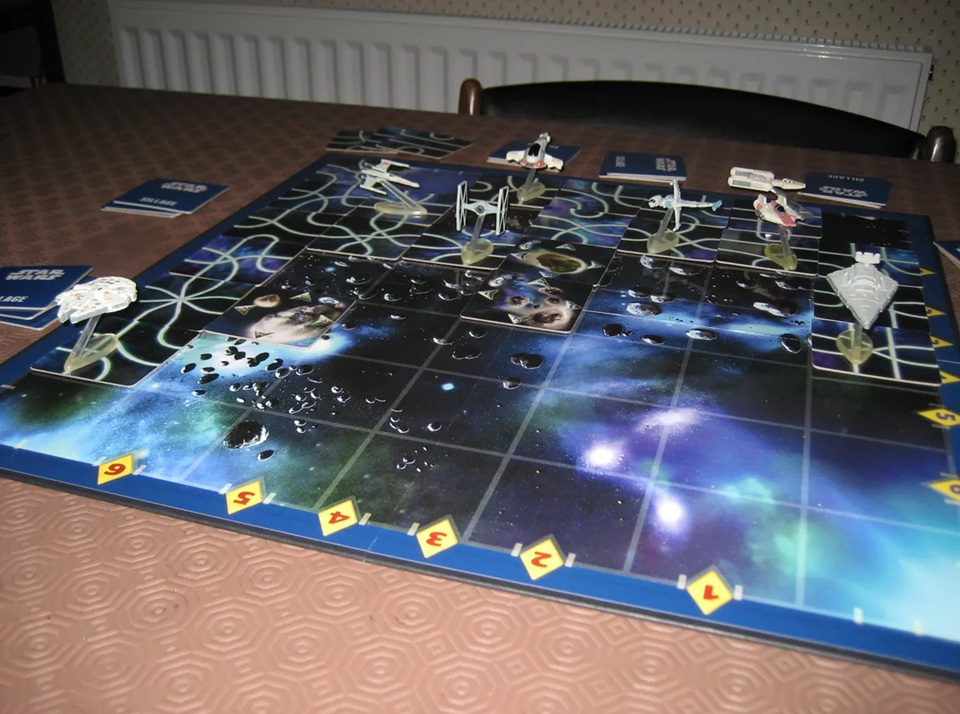

Image courtesy of BoardGameGeek.

Star Wars: Asteroid Escape

In this space-based variation on the game Tsuro — one of my all-time favorite board games — you try to navigate your ship through space by laying tiles and following the path as it connects to other tiles. Each player is laying tiles, quickly filling up the board, so you need to grow more and more strategic with your plays as the stack of tiles dwindles.

But with asteroids also roaming the field of play, can you outlast every other ship on the board? This is a terrific mix of Star Wars flavor with everything that makes Tsuro fun and challenging. It might be hard to find, but it will be a welcome addition to your game shelf.

Images courtesy of BoardGameGeek.

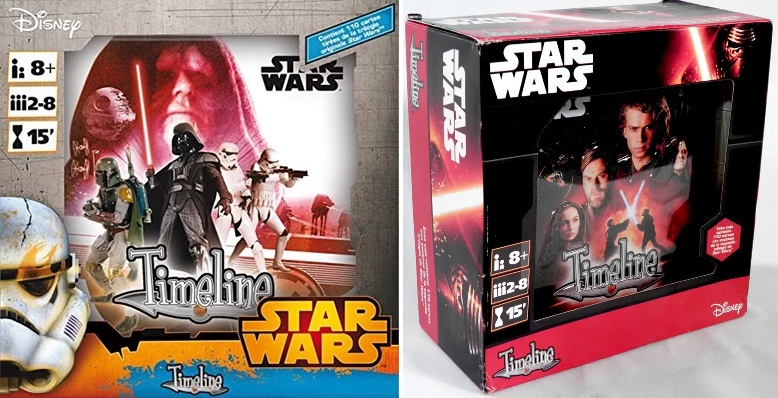
Star Wars: Timeline

I love the Timeline games. (I own nearly a dozen of them!) The simple act of trying to place your card in relation to other events on the table is both a great trivia experience and an opportunity to engage in some deduction and logical thinking.

So when I heard about Star Wars versions of Timeline, I happily snapped them up. With editions for both the original trilogy and the prequel trilogy, it will definitely exact a toll on your memory to see if you can precisely place key moments from the movies in the proper order.

Although easier than some of the other editions of Timeline (like their Inventions edition), this is still great fun for Star Wars fans of all ages.
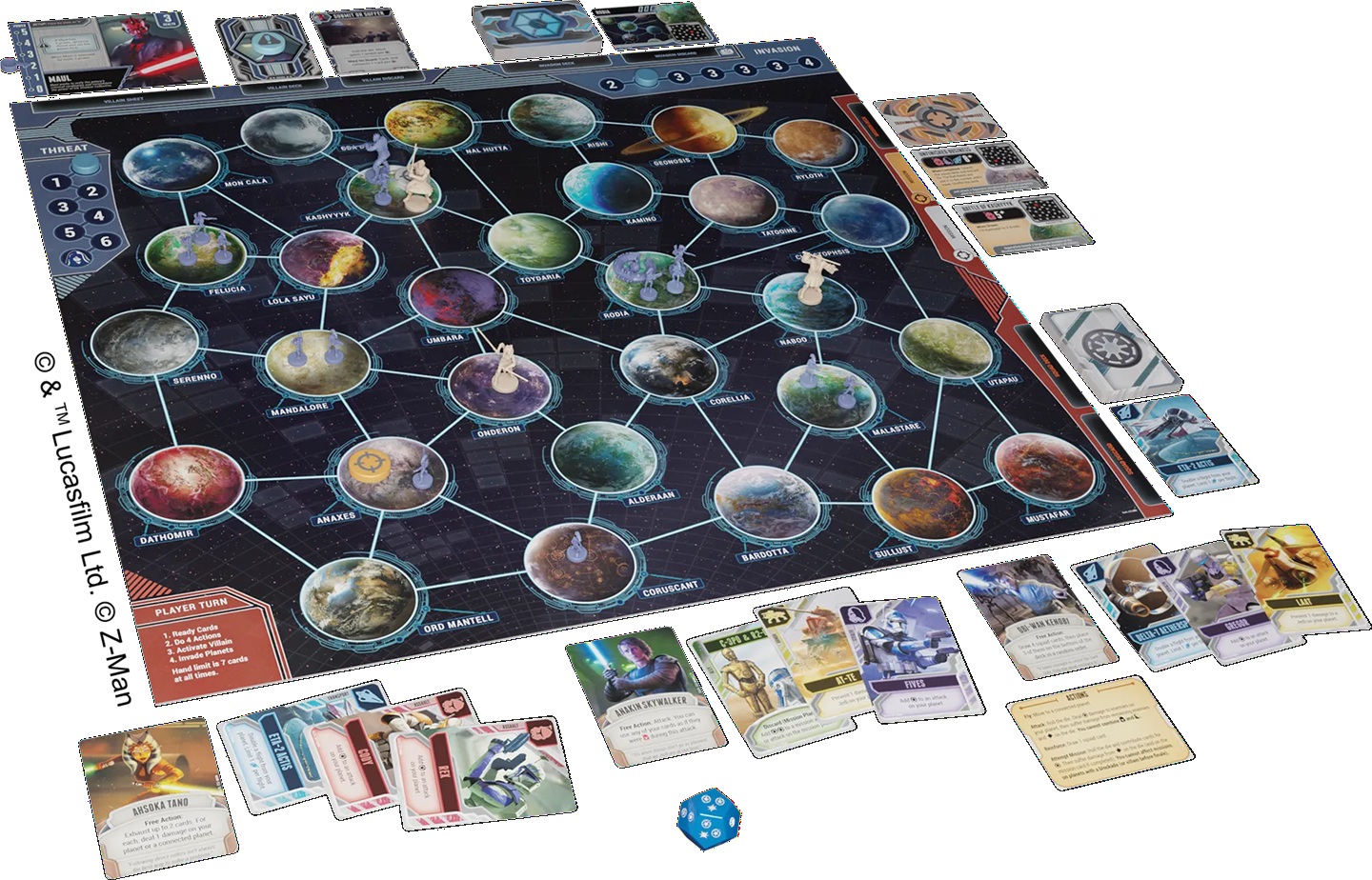

Image courtesy of BoardGameGeek.

Star Wars: The Clone Wars

In this prequel era take on Pandemic, players take on the role of Jedi trying to battle back the onslaught of battle droids across the galaxy. Can you stop the spread of Confederacy forces by saving one world at a time?

While Star Wars versions of Risk and Monopoly are pretty much the same game with Star Wars seasoning, The Clone Wars takes the best of the Pandemic system and feels like it takes it in a fresh direction. This isn’t just another version of Pandemic, this is a very clever marriage of the two that takes the best from both.

Strategy and cooperation is absolutely key in this one, and the cooperative aspect separates it from many of the other games on today’s list.
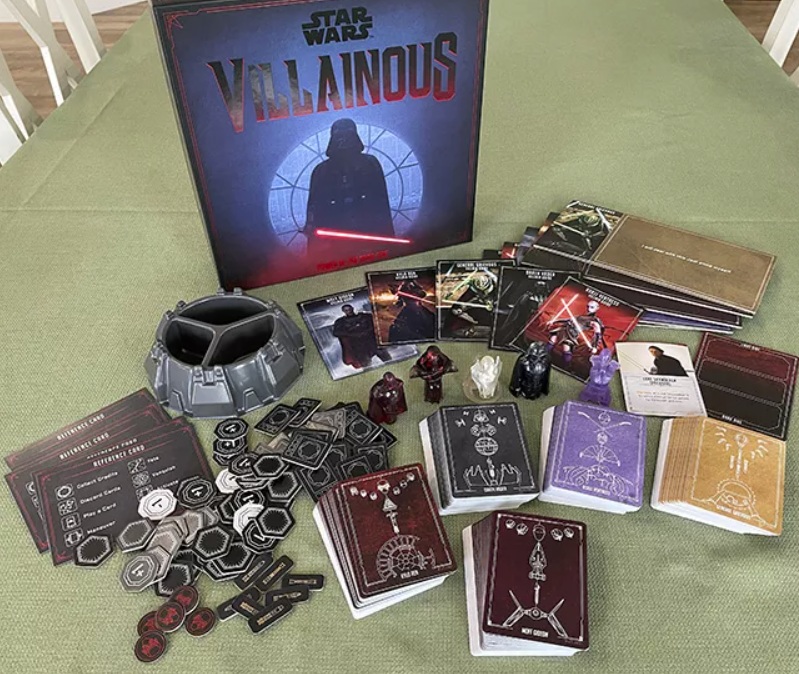

Image courtesy of BoardGameGeek.

Villainous: The Power of the Dark Side

The Villainous games are amazingly well-designed games. Balancing different mechanics for four different villains as you try to achieve their goals and foil the efforts of the villains played by other players, this Disney franchise continues to expand and never disappoints.

And The Power of the Dark Side, their first Star Wars edition of the game, is one of the best versions of Villainous available today. With five villains to choose from — spanning the original, prequel, and new trilogies, as well as the Clone Wars TV show –there’s truly a villain here for any Star Wars fan.

Can you achieve your villainous dreams, or will the other evildoers at the table outmaneuver you and realize their darkest ambitions?
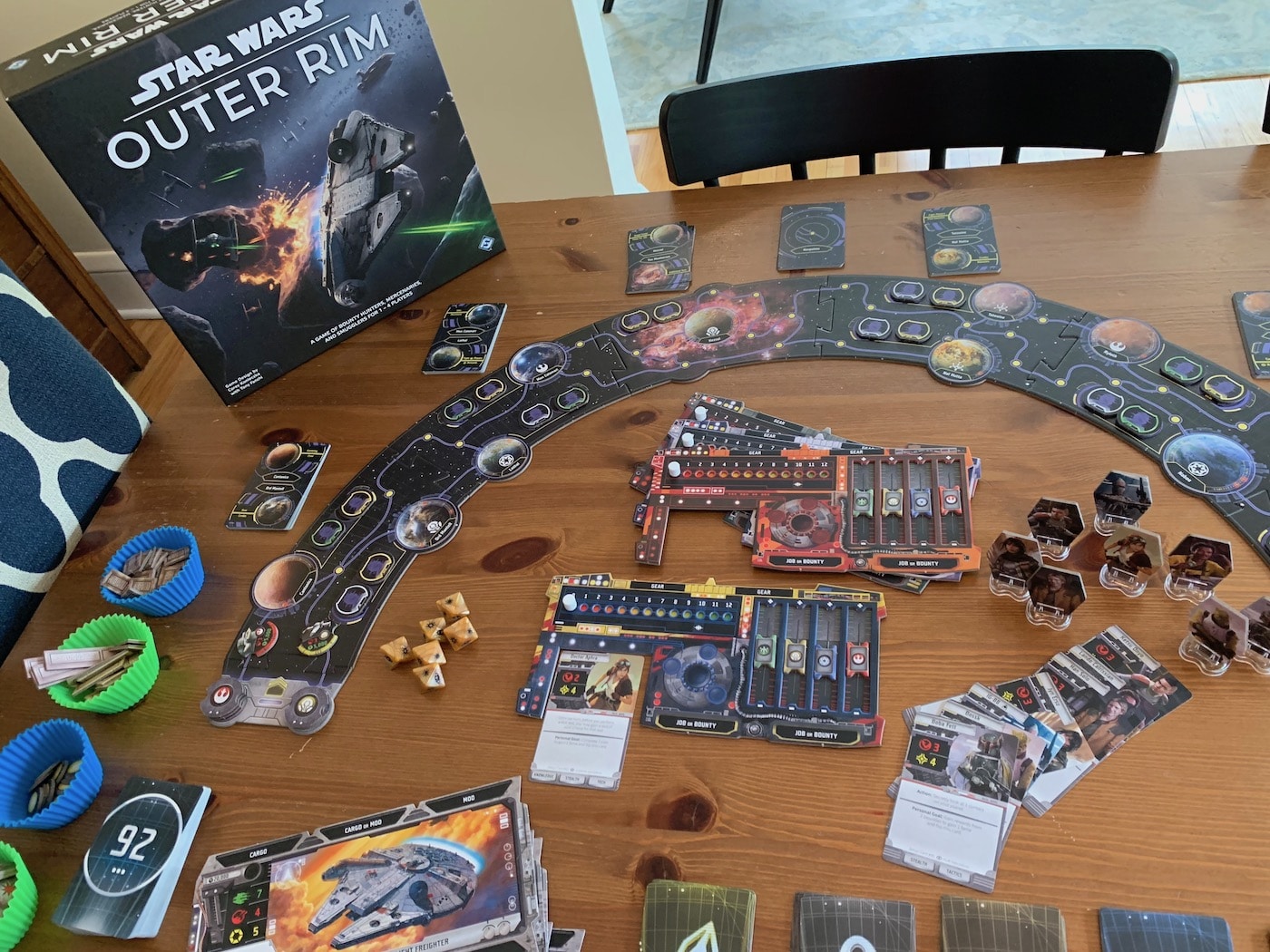

Image courtesy of Nerds on Earth.

Star Wars: Outer Rim

Embrace your inner scoundrel with this game, where each player strives to complete jobs for their employers, collect bounties, smuggle cargo… you know, your usual day-to-day shenanigans in the Star Wars universe.

This game sorta gives you the roleplaying experience in a one-session microcosm. You’ll make your character, make your choices, upgrade your gear and your ship, and make some money, all while dealing with shady and dangerous folks. It’s a whole narrative arc crammed into a single sitting.
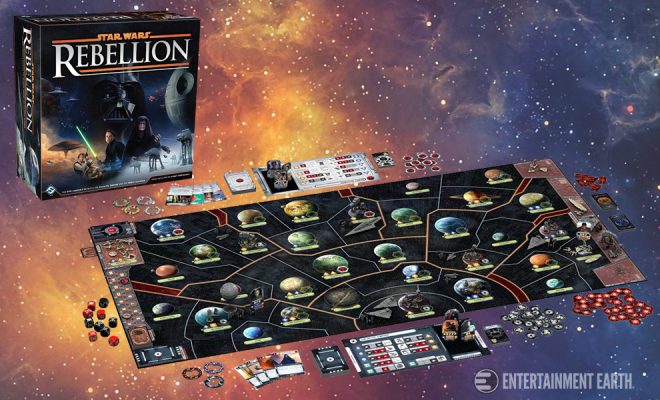

Image courtesy of Entertainment Earth.

Star Wars: Rebellion

While Outer Rim is a personal journey, Rebellion is Star Wars on a galactic scale. This is full-blown war between the Rebellion and the Empire, where one side has a Death Star to build and an insurrection to crush, while the other builds alliances, plays cat-and-mouse with the Empire, and plots to destroy the Empire’s greatest weapon.

I’ve only played this game a few times — it’s expensive, a bit overwhelming, and takes a while to get good at — but it’s been a blast every time.


The tabletop scene for Star Wars sure is stacked, but there are plenty of terrific immersive options out there as well for roleplaying fans looking to explore the universe of Star Wars.

And while officially licensed games are great (I’ll be mentioning one below), sometimes the best stories are told in the shadows by companies that understand the spirit of that franchise, but can’t afford all the bells and whistles.

Here are two of my favorites:
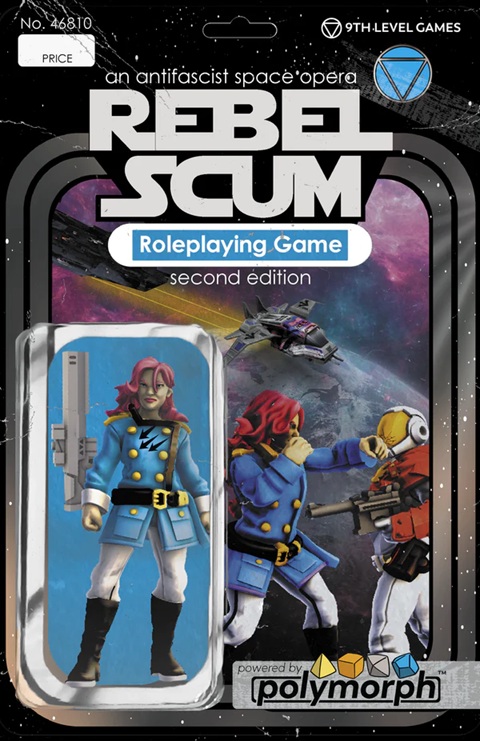
Rebel Scum

If, for any reason at all, you felt like punching a Nazi in the face, you can do so in Rebel Scum by 9th Level Games. Yes, they’re space Nazis running an evil empire, and you’re an intrepid anti-fascist trying to save the galaxy, but hey, punching Nazis, amirite?

This game manages to feel like an epic battle across the stars AND a session of playing with your favorite action figures all at the same time. It’s childhood wonder and all the heroic action we wish we could undertake as adults.

Will you stop Baron Deathray and his Killtroopers with a handful of dice and a lot of gumption? Only one way to find out.
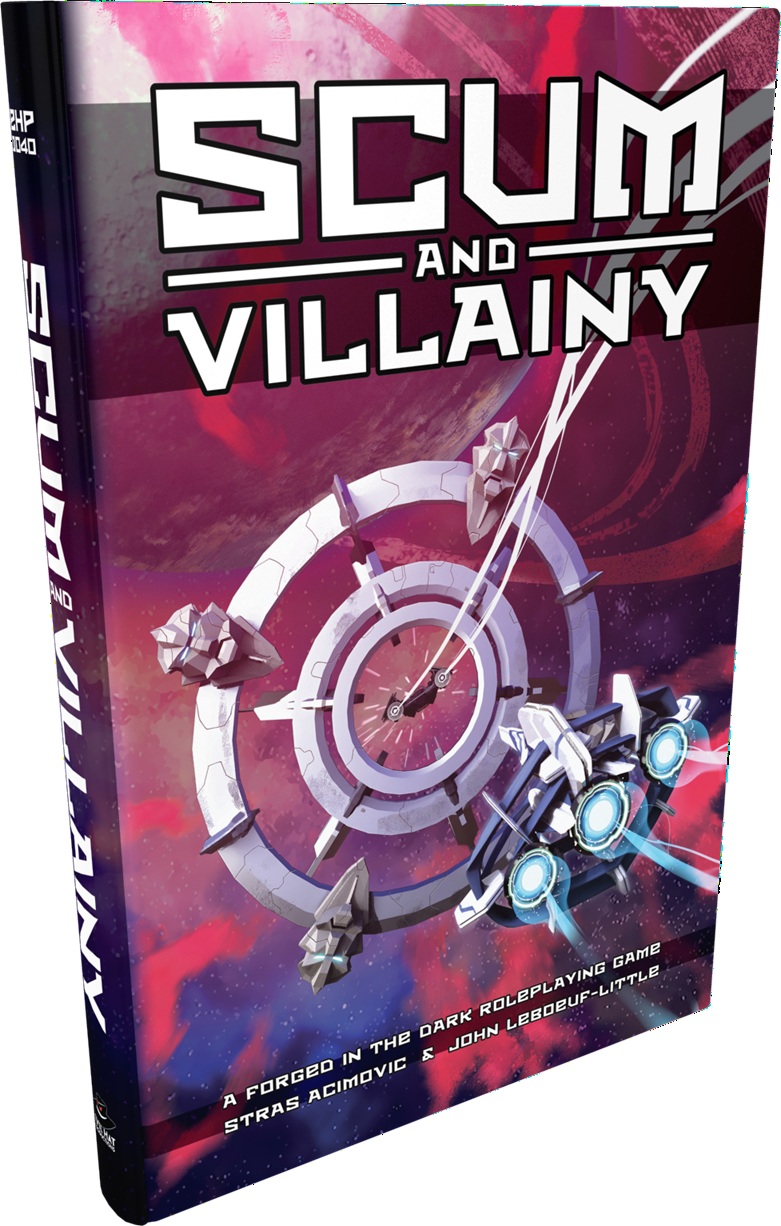

Scum and Villainy

If you really like the Han Solo-esque scrappy smuggler making his way through the universe sorta thing, Evil Hat Productions have you covered with Scum and Villainy.

While the Evil Galactic Hegemony is ever-present, this game is more about criminal dealings, clever negotiation, devious schemes, and profiteering adventure. It feels like the day-to-day trials and tribulations of a struggling spaceship crew.

I love the focus in Scum and Villainy on the roleplay aspect of RPGs. So much of the game is about character and the worlds you visit, and not as much about swinging lightsabers and dodging turbolasers.


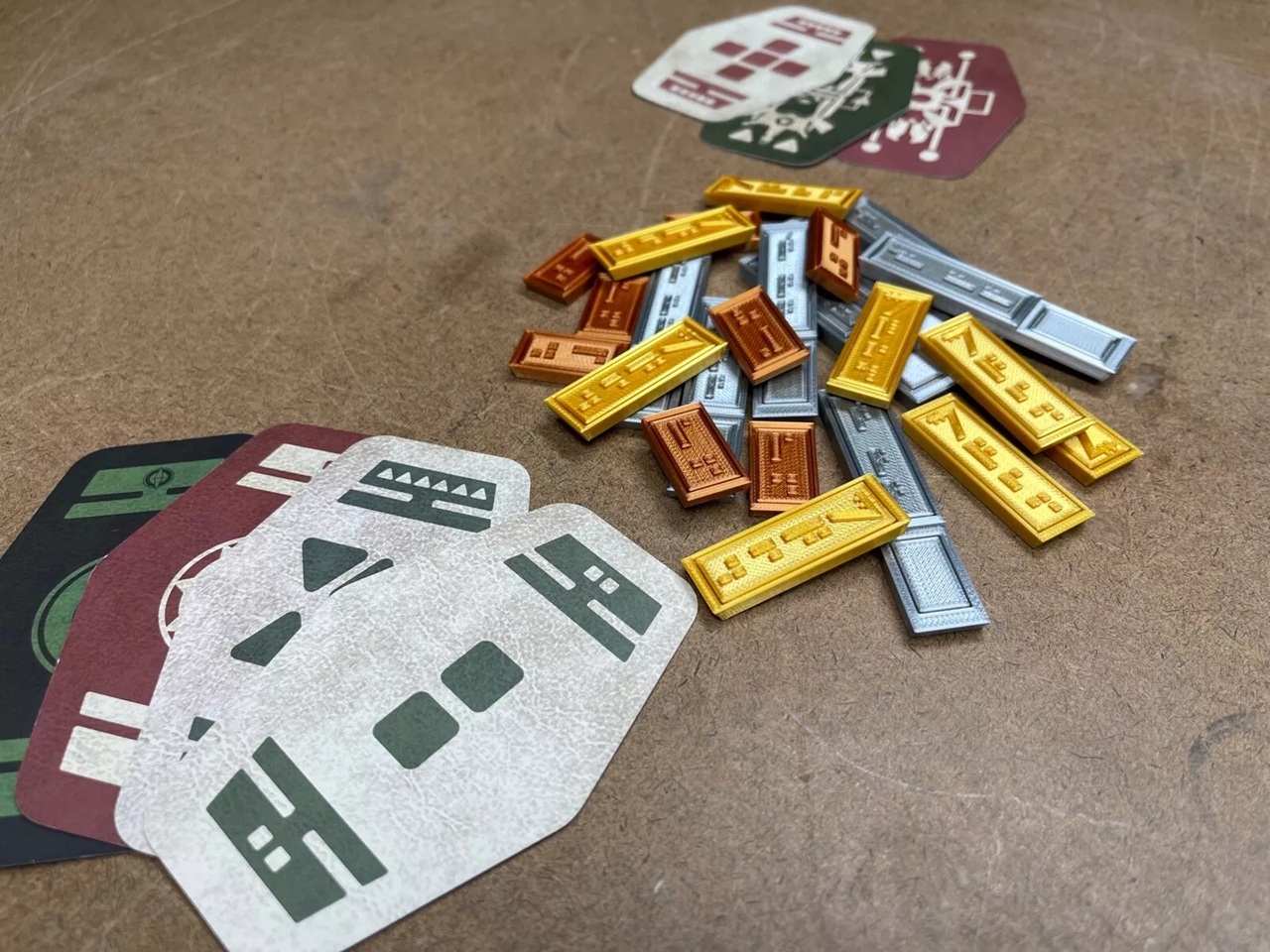
As you can see, there are many different ways to play a Star Wars game. It can be a war game, an exploration game, a scheming game, a storytelling game… sometimes all of them at once. And Fantasy Flight Games brings a seriously impressive narrative tool to the table with their Star Wars Roleplaying Game.
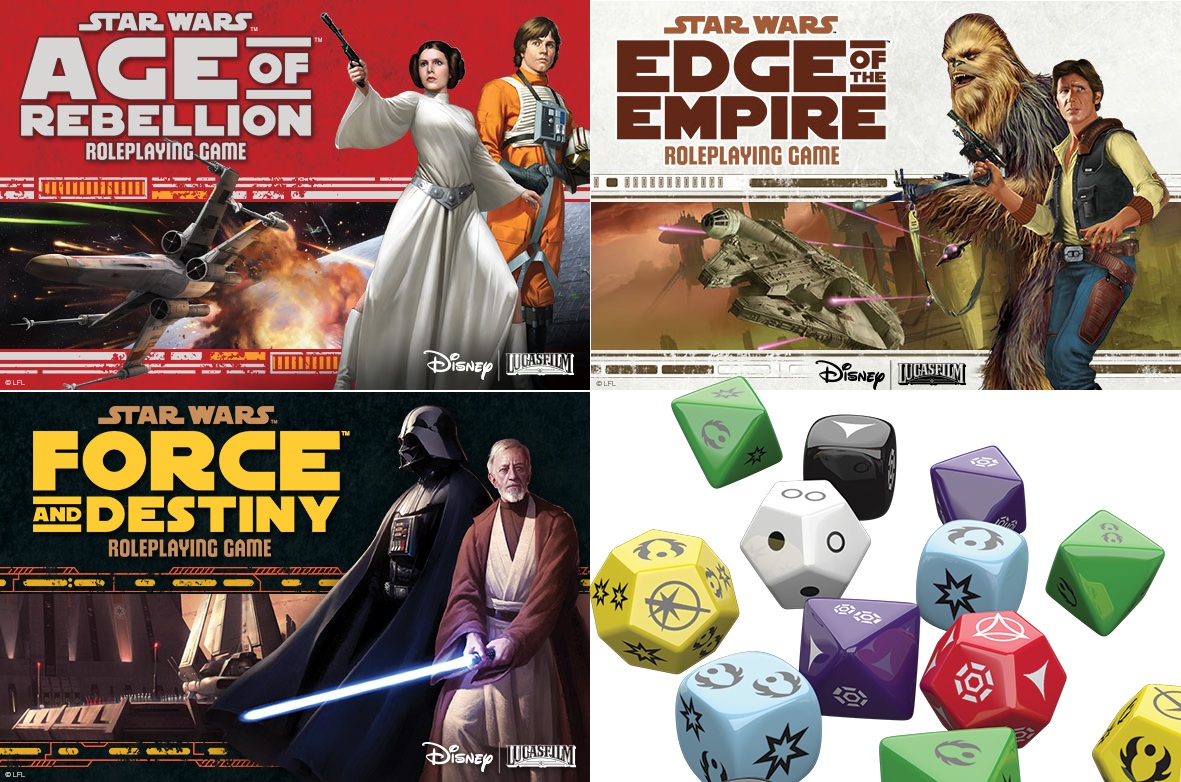
There have been Star Wars RPG games since the 80s, but I don’t think any of them offered the same spirit of choice, chance, and adventure that the FFG edition of the game does.

Like most RPGs, you pick a class and build your stats and roll dice to determine the outcome of your choices. But unlike many RPGs where the number you roll declares your action a success or a failure, the narrative dice of Star Wars FFG offer a much more exciting and engaging answer.

It’s not just a binary option, you succeed or you fail. With narrative dice, you can have additional complications, both positive and negative.

You could fail, but with some unexpected advantage: You missed a swing of your lightsaber, but you cut through the awning supports and blinded your foe for a round.

You could succeed, but with some negative consequence: You might have caught the bad guy with your blaster, but you also shot the engines of your ship, and now they need repairs.

Your actions tell a story that goes well beyond yes and no. And in a world where scoundrels often make mistakes while trying to do good, it’s a more interesting, more immersive journey every time, and it truly brings those adventurous moments to life.

Whether you’re a scoundrel on the Edge of the Empire, a hero during the Age of Rebellion, or someone caught between the Light Side and the Dark Side in Force and Destiny, they’ve got a place for you to tell your story.


Did your favorite Star Wars game or RPG get mentioned? Or are you miffed I left out Star Wars Trivial Pursuit and its bweepy little R2-D2 dice roller?

Let me know in the comments section below! I’d love to hear from you.
Answers to the Punny Costume Challenge!

Halloween has come and gone, but the creativity and the glorious puns remain.

Before we get into the answers to our latest edition of the Punderful Halloween Costume Game, I want to share a few crossword-themed costumes from over the weekend that we were shared online.

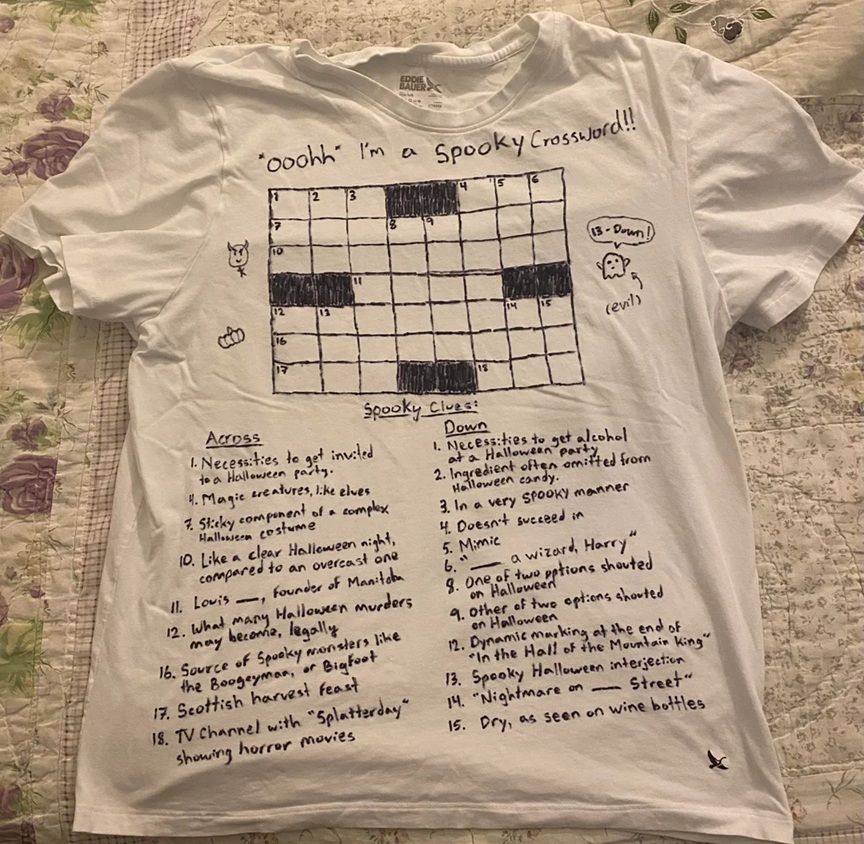
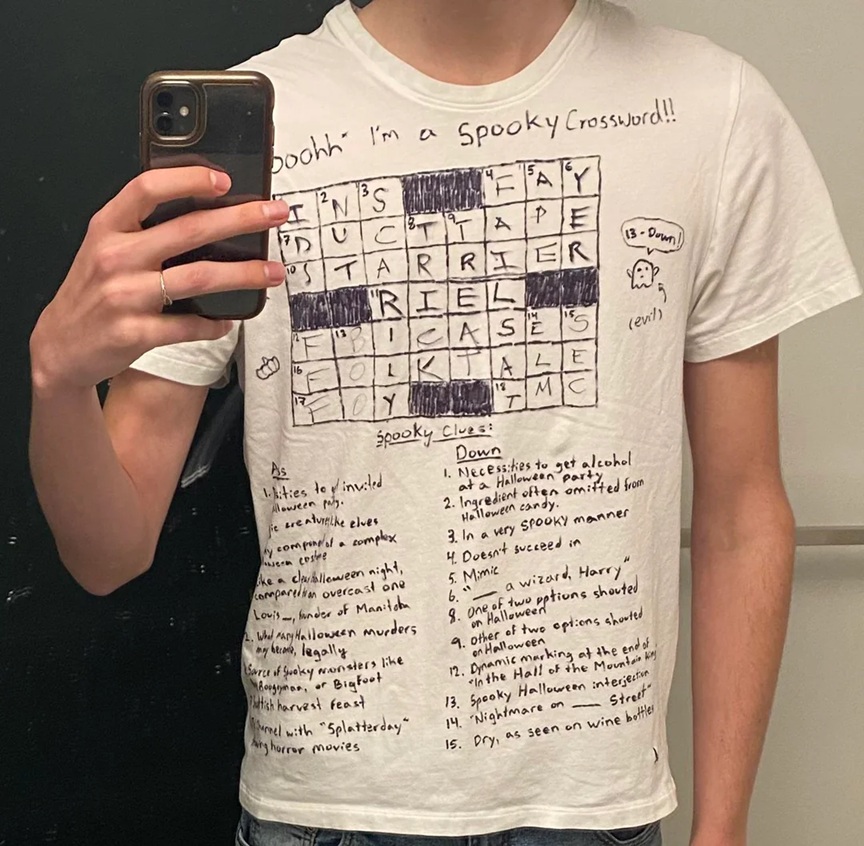
The first was this spooky crossword t-shirt, which solvers filled out at the party!

And it featured lots of Halloween vocabulary, like BOO, TRICK, TREAT, and SCARILY, as well as seasonal cluing! Great job!

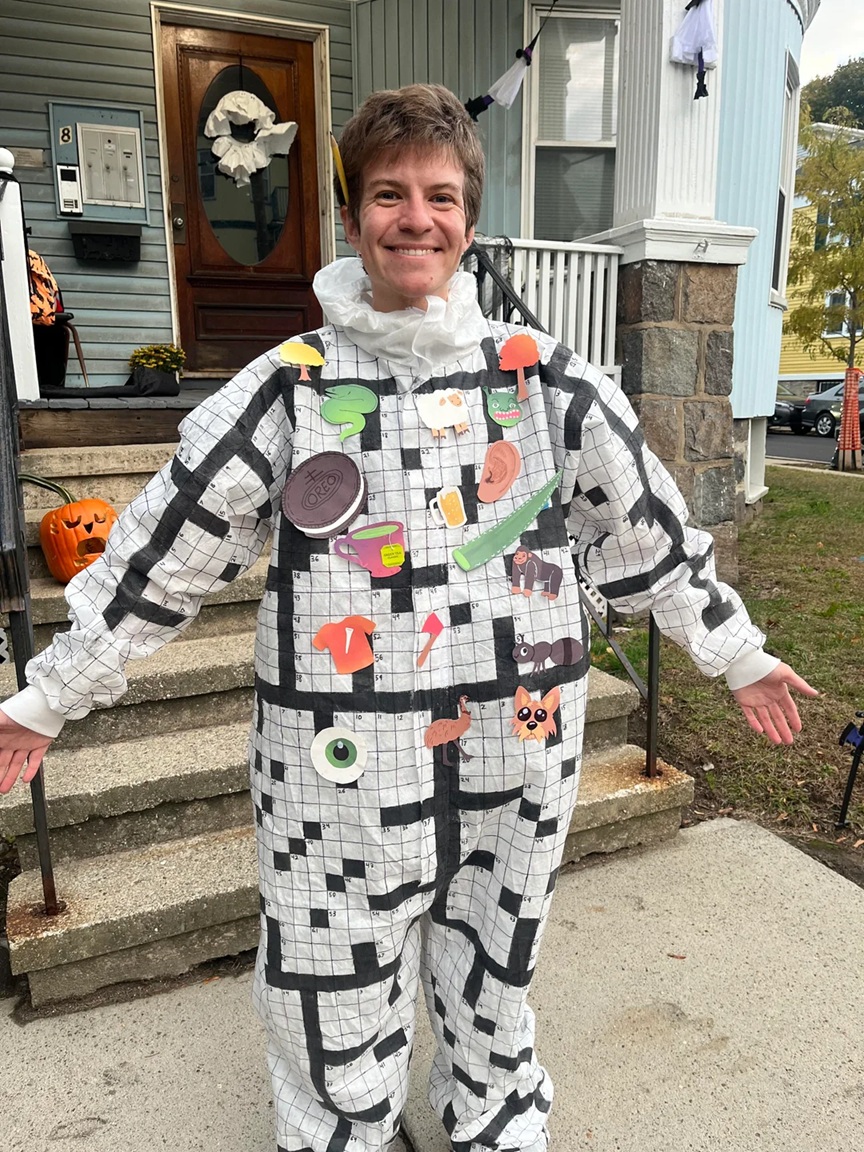
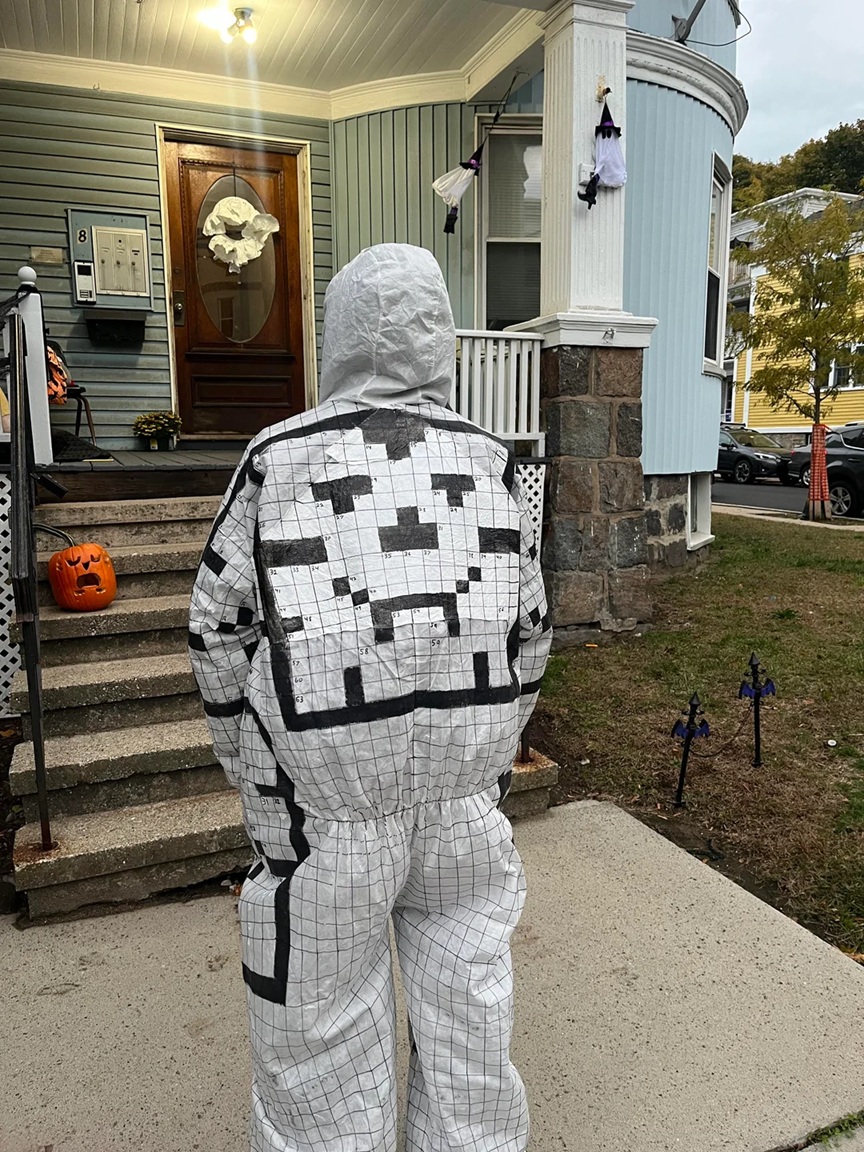
The second costume was even more elaborate:

They went as common crossword answers! This jumpsuit made of Halloween grids is loaded with crosswordese and familiar vocabulary in picture form. Can you name them all?

So fun to see people getting into the Halloween spirit in a puzzly way. Nicely done, both of you!

Now let’s check out some other creative costumers as we reveal the punny answers to last week’s game!


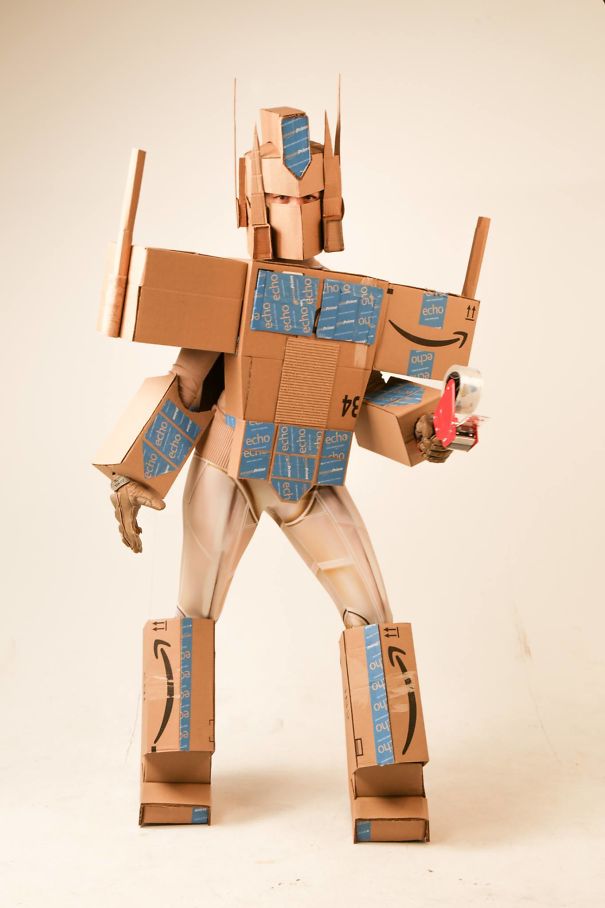
#1

It’s Amazon Prime! (Optimus Prime + Amazon)

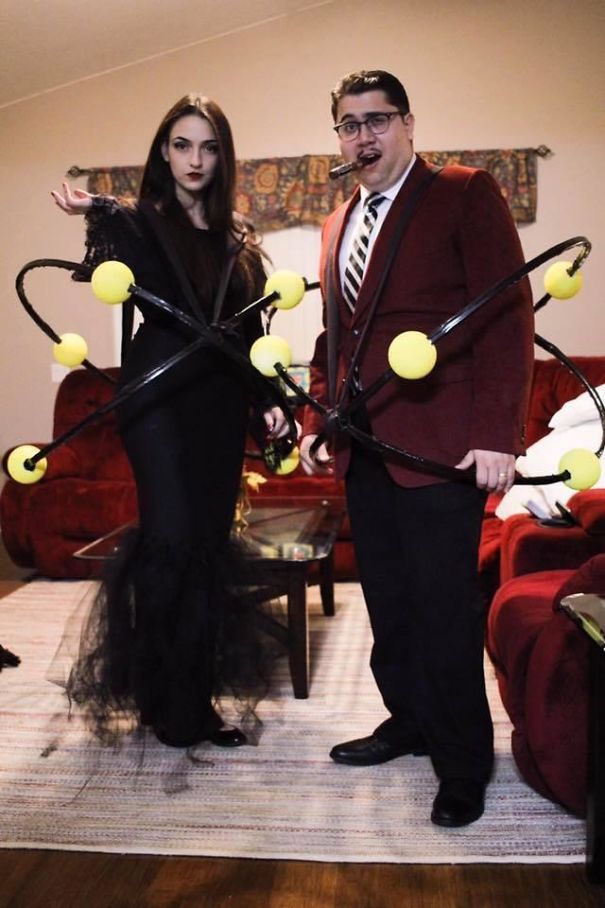
#2

It’s the Atoms Family!

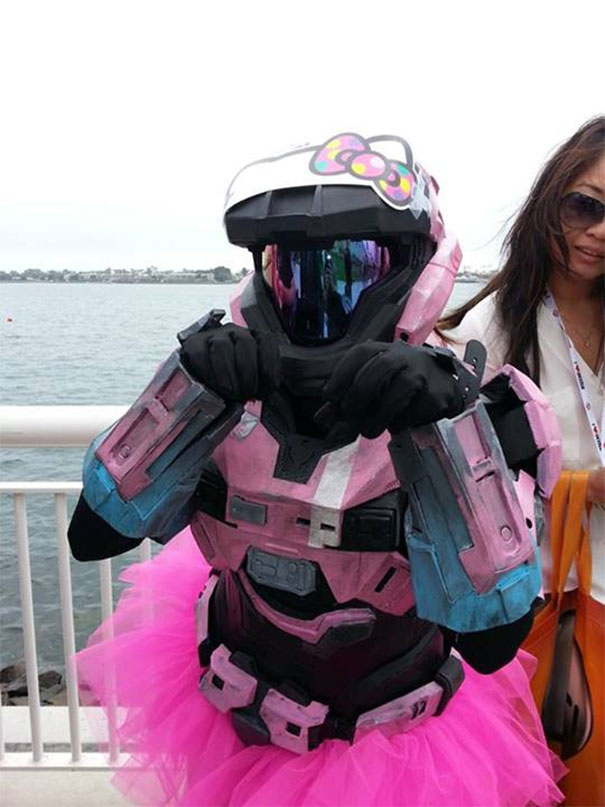
#3

It’s Halo Kitty! (Hello Kitty + Halo)

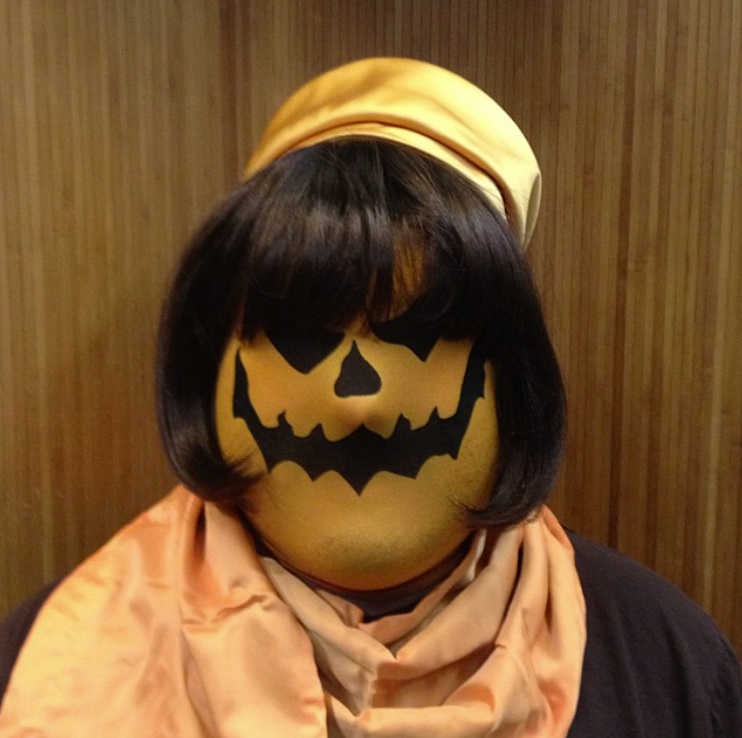
#4

It’s Jackie-O-Lantern! (Jack-o’-lantern + Jackie O)

#5

Liar, Liar, Pants on Fire!

#6

She’s a web server!

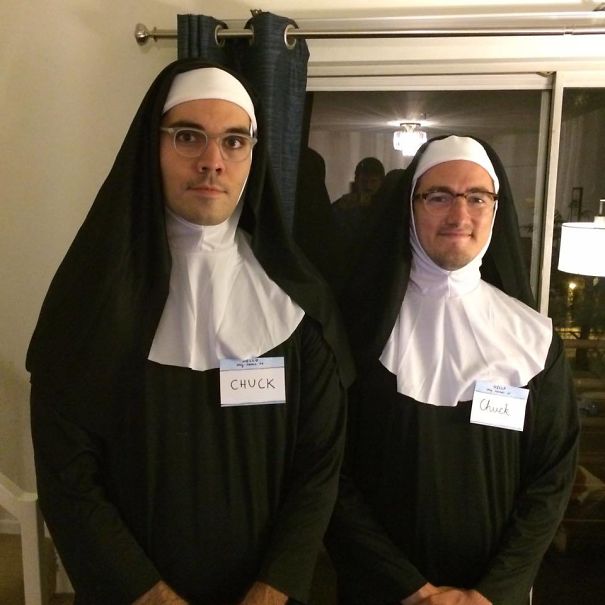
#7

They’re a pair of nun-chucks!

#8

It’s Netflix and chill!

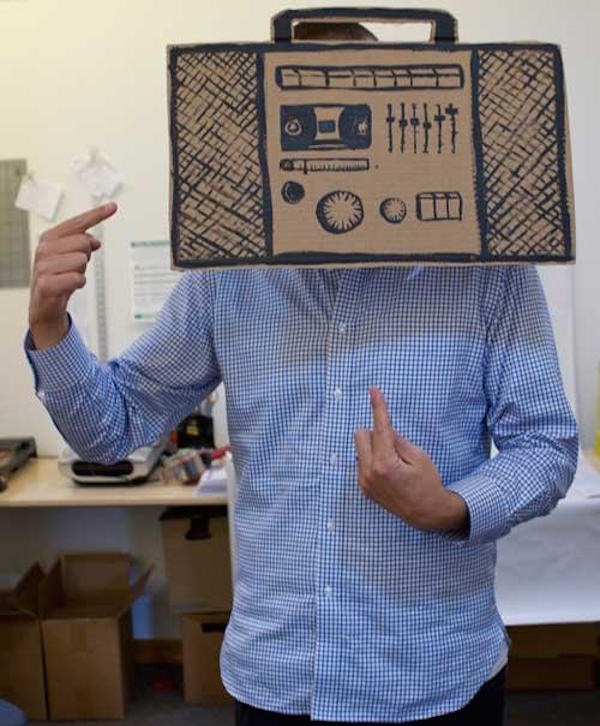
#9

He’s Radiohead!

#10

It’s Obi-Wayne Kenobi and Garth Vader!


How many did you get? Have you seen any great punny costumes we missed? Let us know in the comments section below. We’d love to hear from you!

The National Toy Hall of Fame Finalists Are Here! Still Time to Vote!

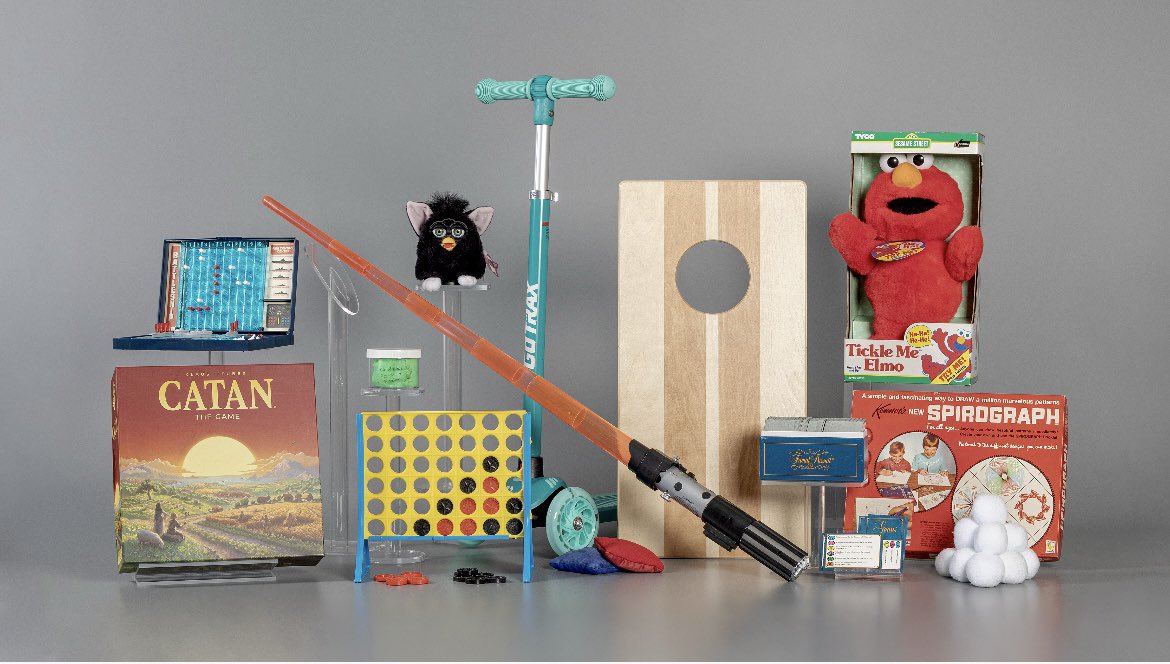
This year’s contenders for the National Toy Hall of Fame Class of 2025 have been whittled down to 12 finalists, and the competition is fierce.

You’ve got classic toys from across the decades (Furby, spirograph, Star Wars lightsaber, Tickle Me Elmo), representatives from more physical activities (scooter, cornhole), board games (Battleship, Catan, Connect Four, and Trivial Pursuit), and even materials kids play with (slime, snow).

The idea of “play” is represented in so many different ways across these 12 finalists, and it really encompasses just how vast and varied play is, how much imagination and expression and creativity are reflected in all sorts of different childhood experiences.

Personally, I’m rooting for the lightsaber, Trivial Pursuit, and snow to make the cut. I’ve been a Star Wars fan since I was 2. Trivial Pursuit was the first trivia game I can remember playing (even if it was an edition intended for players way older than I was at the time). And snow is so fundamental to winter play — sledding, snowmen, snowball fights, DAYS OFF FROM SCHOOL TO PLAY — that it’s surprising it hasn’t already been inducted.

(Though I suspect Catan, Connect Four, and Tickle Me Elmo will make the cut instead of some of my faves.)

And voting is still open for another day.

Yes, while the final determinations are made by the National Toy Hall of Fame’s National Selection Advisory Committee — ooh, so formal! — the three toys that receive the most public votes will be submitted for consideration alongside the top three submissions from the Selection Committee.

Which of these twelve contenders would you like to see join such playtime luminaries as Lite-Brite, My Little Pony, the stick, the Atari 2600, and the Rubik’s Cube? Let me know in the comments section below! I’d love to hear from you.
And while you’re at it, tell me what toys you think should be in the National Toy Hall of Fame!

A Summer Camp for Games?

Hey, are you in the Boston area and looking for the perfect summer activity for the young game designers in your life?

You should check out the Dice and Design Games Summer Camp in Belmont, MA!

This summertime gaming festival of fun is the creation of Caro Murphy, an award-winning game designer who not only founded the Boston Festival of Indie Games, but has lectured on game design at the university level and contributed heavily to Disney’s Star Wars: Galactic Starcruiser interactive experience and Club Drosselmeyer events like this year’s Cthulhu Luau!

They’ve put together a five-day program to teach kids about game design and help them create their own card games, board games, roleplaying games, or LARPs, whatever interests them!

With morning and afternoon sessions to choose from, this seems like an awesome way to get the youngsters in your life started on a lifelong journey of game creating, appreciating, and collaborating.

Go to diceanddesign.com for more details on this event. (Thank you to the team at Club Drosselmeyer for spreading the word!)

Do you know of any other kid-friendly puzzly or game-fueled events happening this summer, fellow puzzlers? Let us know in the comments section below! We’d love to hear from you.
Fictional Games That Became Real!

Many TV shows, films, and novels help add character to their narrative universes by mentioning the games played by the characters.

Shows and franchises as wildly disparate as Battlestar Galactica, New Girl, It’s Always Sunny in Philadelphia, The Witcher, and Pretty Little Liars have fictional games that enrich their worlds.

But sometimes, either through clever marketing or the affection of fans, these games go from fictional recreational activities to real ones, crawling fully formed from the imagination to be enjoyed across tabletops worldwide.

Today, I’d like to introduce you to a few of them. Let’s play, shall we?


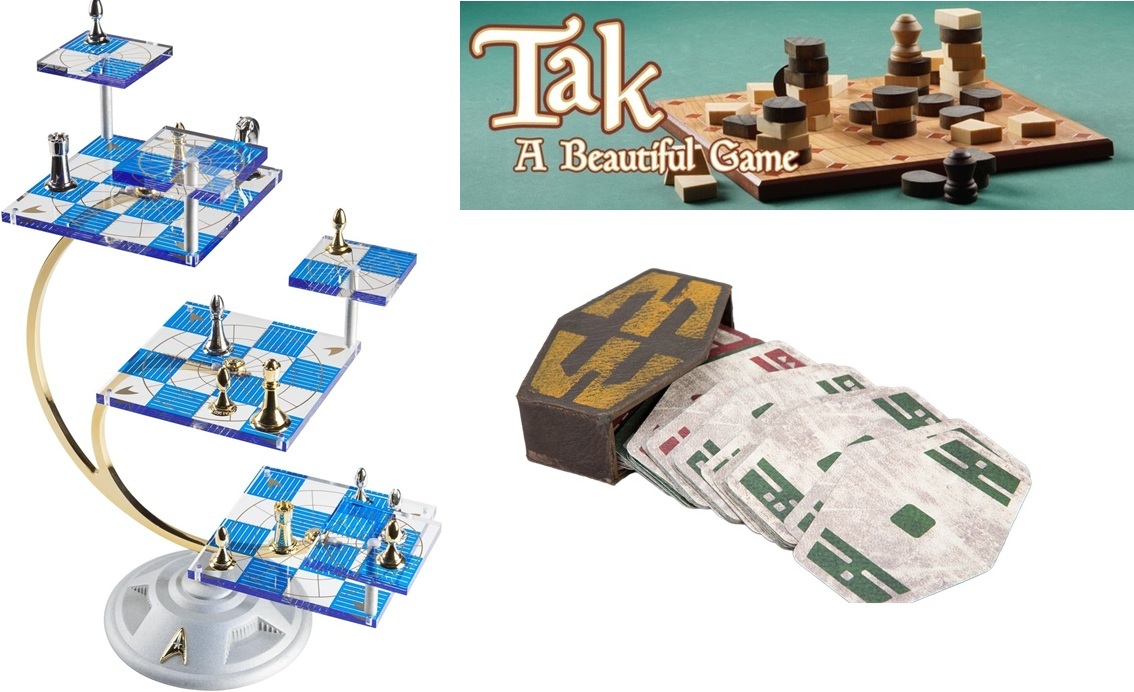
Tri-Dimensional Chess

Star Trek has been a source of many fictional games and sports over the years. Dom-jot, Chula, Dabo, Parrises Squares, and Stratagema are some of the more famous ones, but the granddaddy of Star Trek games is Tri-Dimensional Chess.

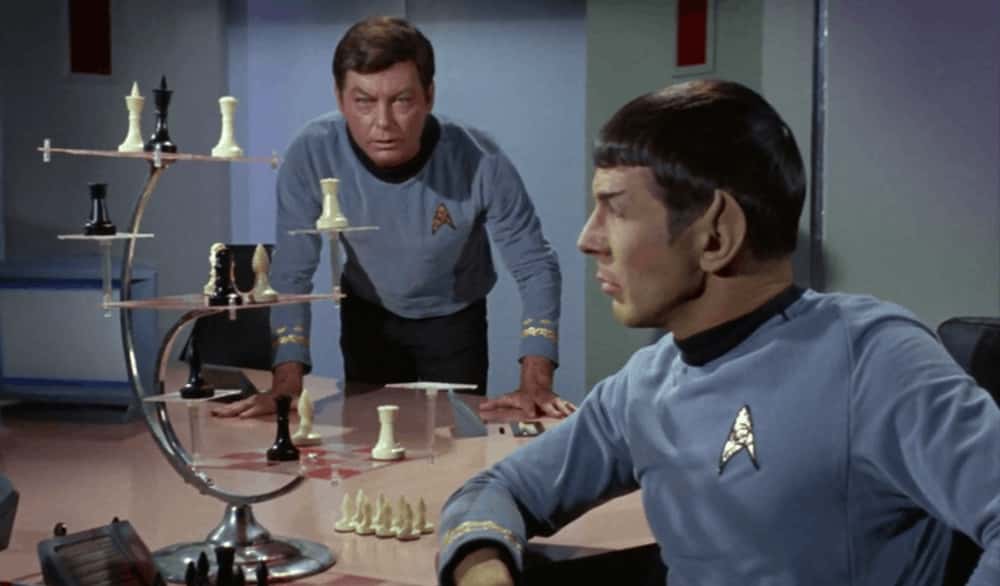
First appearing in the original series back in 1966, Tri-Dimensional Chess follows the normal rules of chess, but spread across different vertical levels. So a knight could move in its usual L-shaped format, but on its own board OR the boards above and below.

Over the years — and across different Star Trek series — we’ve heard stories about key maneuvers like the Aldabren Exchange and the Kriskov Gambit in games of Tri-Dimensional Chess, helping flesh out how influential the game is for several characters. (Heck, in one episode, Spock beats the Enterprise computer at the game, saving Kirk from a court martial!)

The Franklin Mint has released limited edition versions of the game on two occasions, and I’ve seen homemade games of Tri-Dimensional Chess at gaming and pop culture conventions over the years.

Chess remains incredibly popular — as do many variants of Chess — so it’s no surprise this fictional game made the leap to the real world. (I suspect the complicated three-person Chess game developed by Sheldon in The Big Bang Theory is less likely to make a similar leap. Especially since there are already three-person Chess games on the market today.)


Cones of Dunshire

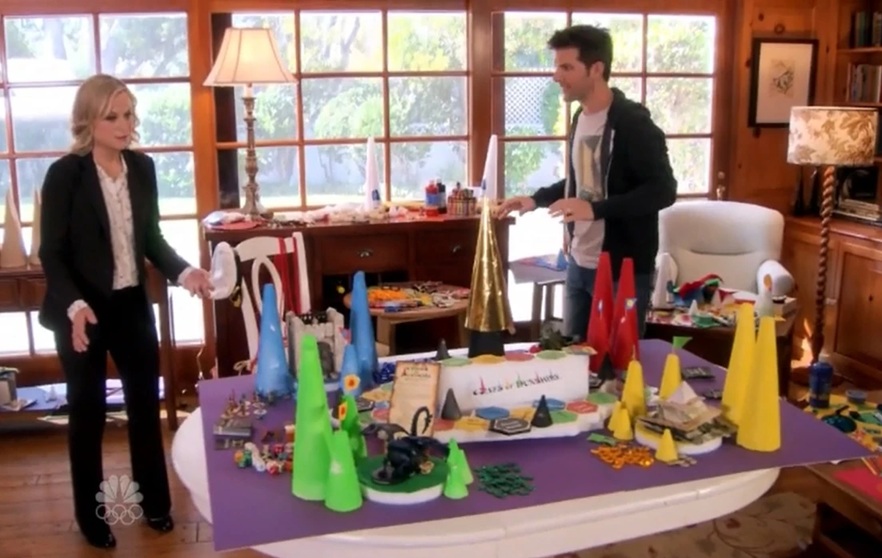
Ben Wyatt of Parks and Recreation enjoyed many nerdy pastimes, but Cones of Dunshire was his masterpiece.

Initially treated as a mistake, a nonsensical result of his boredom and frustrations, the game becomes a running gag in the show after Ben leaves a copy as a gift for the accounting firm that he has been hired by (and walked away from) several times during the show’s run.

Later, we find out the game has been commercially produced, and Ben stumbles across it when dealing with a dotcom company. He mentions that he invented it, but his claims are dismissed. He then proves not only his gaming skill but his authorship of the game when he beats the dotcom bosses in a tense playthrough.

It’s mentioned once that a gaming magazine called Cones of Dunshire “punishingly intricate,” a point that makes Ben proud.

Part of the fun of Cones of Dunshire (other than the parody of Settlers of Catan) is that the viewer never really understands what’s going on, so supposedly dramatic moments can be played for laughs. (I also appreciate that the name of the game is basically a fancy way of saying “dunce hat.”)

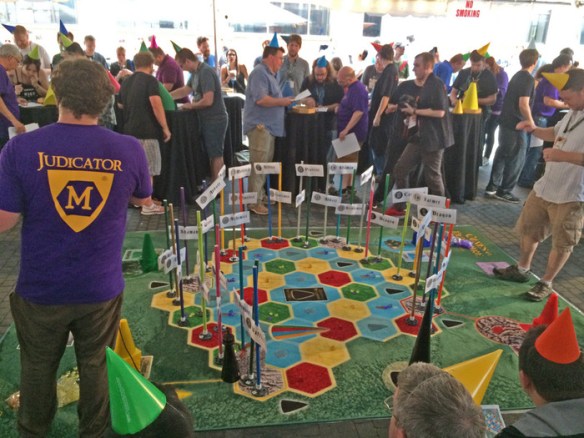
And, in the sort of cyclical storytelling that could only happen in a nerdly pursuit like board games, the company that made Settlers of Catan — Mayfair Games — produced a giant version of the game as part of a charity event at GenCon.

2783642-2767076242-563bb

Both the silliest and most ambitious game to cross from fictional to real, Cones of Dunshire is a nerdy highlight of a now classic sitcom.


tak1

Tak: A Beautiful Game

Originally introduced in Patrick Rothfuss’s Kingkiller Chronicles novels as a tavern game, Tak made the leap to the real world as a stretch goal in a Kickstarter campaign for another game.

Game designer James Ernest accepted the challenge of bringing the game to life, and his collaboration with Rothfuss created one of my all-time favorite board games.

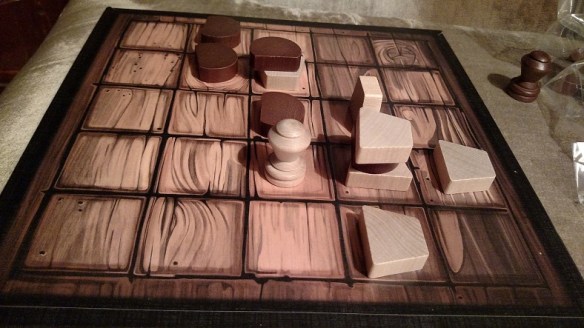
Tak has a very simple concept: two players each attempt to build a road connecting opposite sides of the game board. The first player to successfully complete their road wins.

tak2

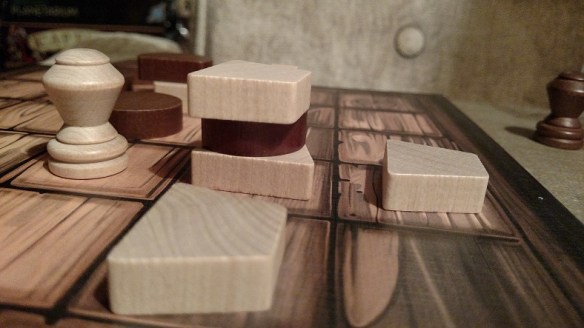
To do so, you place game pieces called stones, one at a time, on various spaces on the board. The stones can either be played flat (meaning they’re part of your road) or standing on edge (meaning they’re a wall, blocking any road’s passage through that space).

It’s a rare thing when a new game feels like something that could’ve been played in taverns centuries ago. For me, this is the gold standard when it comes to adapting fictional games to the real world.


Image courtesy of Glowforge.com

Pai Sho

A key storytelling device in the much-beloved show Avatar: The Last Airbender, Pai Sho was a tactical tile-based game that reinforced important themes in the show.

The game had many variants (often played differently depending on the faction or nation featured) but each had the feeling of an ancient game passed down across generations.

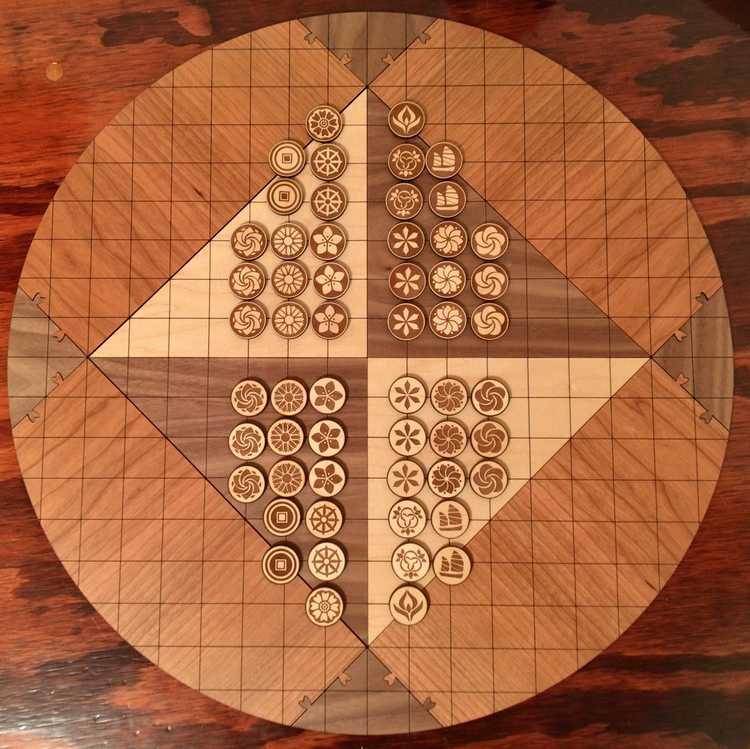
In the most popular variant, Skud Pai Sho, the goal is to form a harmony ring around the center point of the board. Players create harmonies by placing two harmonious tiles on the same line without other tiles or obstacles. There are gates, gardens, and lines that help dictate play, as well as multiple flower tiles for players to place that accomplish different things when placed properly.

There are entire forums and websites dedicated to the rules of Pai Sho and its many variants, and the thriving fan community that continues to nurture these games well after the show’s conclusion make this one of the most heartfelt and successful transitions from fictional to real life that I can think of.


Image courtesy of starwars.com.

Sabacc

In The Empire Strikes Back, we learn about the friendly rivalry between Lando Calrissian and Han Solo, and how a wager led to the Millennium Falcon changing hands.

But exactly how it happened was only revealed later in supplementary material like the Star Wars Visual Encyclopedia and the novel Lando Calrissian and the Mindharp of Sharu.

The second draft of the script for The Empire Strikes Back mentioned that Lando won Cloud City in a “sabacca” game, but by the time additional stories fleshed out the relationship between Lando and Han, the game had been shortened to Sabacc.

It’s sort of a combination of poker and Blackjack. You want the value of the cards in your hand to be as close to 23 or -23 as possible. Sounds simple, right?

Well, imagine a game of poker where the cards in your hand changed periodically unless you publicly locked them in by placing them on the table, where they stayed until the hand was over. That’s the basic idea behind Sabacc.

There were numerous fan versions of the game over the years, but now you can get Sabacc decks at Disney theme parks (alongside many, many, MANY other items).


Do you have a favorite fictional game that made the leap to the real world? Did we miss any major ones? Let us know in the comments below!

Help Out Game Designer Owen K.C. Stephens!

I love using this blog as a place to explore puzzly topics, to promote games and creators and share the love of puzzles with the world.

But I also love using this blog to spread the word about worthy causes.

And today I’d like to talk about the GoFundMe campaign for Owen K.C. Stephens’ medical bills.

If you’ve been a roleplaying game fan over the last two decades, you’ve probably played a game that Owen has shaped in some way.

He has been an influential game writer and designer for years, contributing to the Star Wars Roleplaying Game (both the d20 and Saga editions), Dungeons & Dragons, Pathfinder, Starfinder, Everyday Heroes, The Wheel of Time RPG, and so many other games. Wizards of the Coast, Super Genius Games, Rogue Genius Games, Evil Genius Games (sensing a theme?), Paizo, and Green Ronin have all been homes for him over the years.

After an 18-month battle with colon cancer, he is still feeling the effects of his treatment and continuing the long, hard road to better health. And sadly, he is still buried under medical bills for his treatment and convalescence.

You can contribute to the GoFundMe campaign for him here.

And if you’re interested in learning more about Owen and his wonderful work in games, you can check out his website and his Patreon.


Normally, that’s how I would close out a post like this, but in this case, I hope you will indulge me with a personal anecdote.

Back in the year 2000, I discovered tabletop roleplaying.

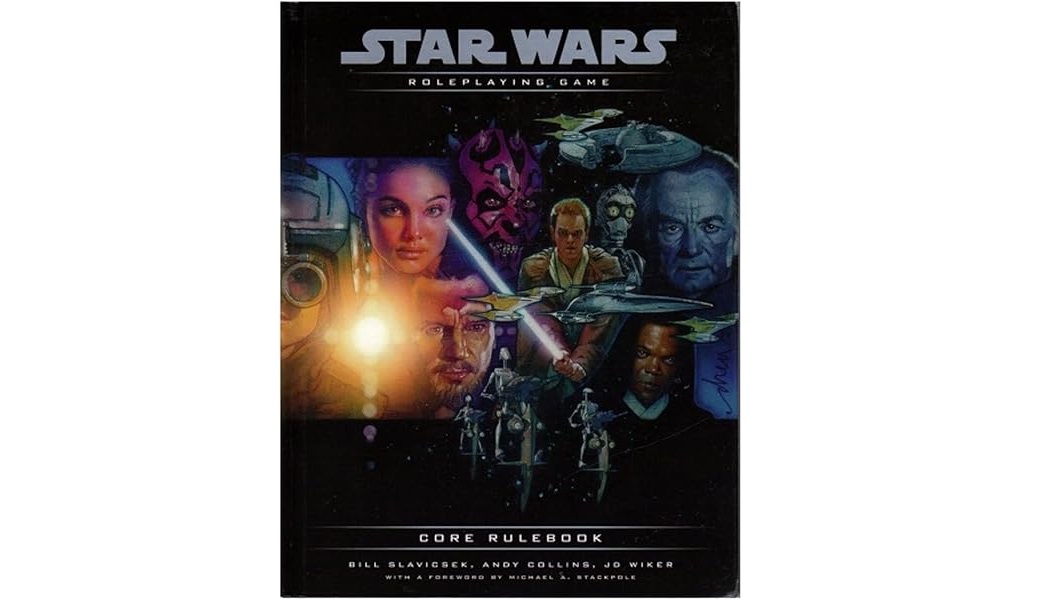
A friend had just bought the new Star Wars Roleplaying Game (the d20 edition released around the same time as Dungeons & Dragons 3rd edition), and knowing I was a huge Star Wars fan, he invited me to play.

After a short adventure he ran for us as Game Master, he asked if I’d be interested in learning to be a Game Master myself. (I later realized he did this not only because he thought I would be good at it, but because HE wanted to play and needed someone to run for him. My friend was and is a diabolical genius.)

I ran that game on and off for nearly seven years. It gave me the confidence to explore other roleplaying games, like the Buffy the Vampire Slayer RPG, Dungeons & Dragons, Ninja Burger, and many many more, kickstarting a hobby that now spans more than two decades.

It also gave me confidence as a storyteller, pushing me to take writing more seriously (both fiction and nonfiction).

And all of that started with the d20 Star Wars Roleplaying Game.

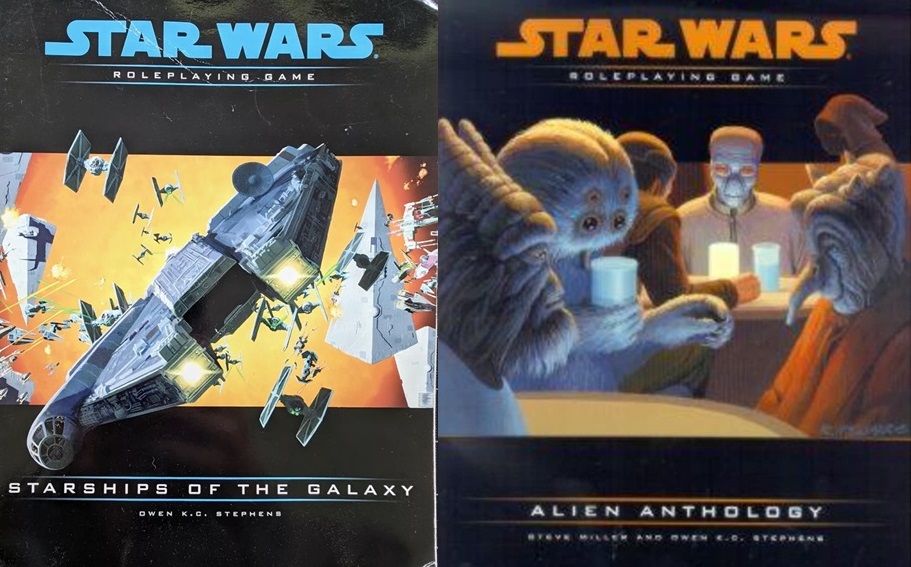
Owen contributed to some of my favorite sourcebooks for that game (and several brilliant mini-adventures), helping make the galaxy a bigger and more interesting place for my players to explore. He is part of the fabric that helped shape me as a Game Master / Dungeon Master / Storyteller.

And I hope you’ll take a second to read about his story and help him out.

Best of luck to you, Owen, and happy puzzling, friends.