So it feels apropos to close out the Halloween season with a post about two women who actually unraveled some of the mysteries surrounding an encrypted manuscript involving witches!
This video by Kat Saturn details the fascinating journey she and Rian Hagebeuk embarked upon to unravel the secrets of a book entitled “The Subtelty of Witches,” supposedly published in 1657.
It was one of the longest encrypted works of the period, and yet, it sat in the British Library for decades without anyone digging into the cipher or the manuscript’s contents.
In 2018, Kat stumbled across “The Subtelty of Witches” in a list of encrypted manuscripts, and started investigating.
Along the way, she teamed up with Rian, whose facility with Latin helped immensely in unraveling the manuscript’s true contents. They reached out to professionals and fellow amateurs alike, delving deep down the rabbit hole of this manuscript.
Along the way, she and Rian determined:
the year was incorrect (the text is actually OLDER)
the contents of the manuscript had nothing to do with witches (it’s a list of verbs in Latin and Dutch from a Calepino dictionary)
the cipher was consistently applied throughout (meaning it’s unlikely this was a practice exercise for improving the author’s facility with the cipher)
the real mystery of this text wasn’t in the cipher…
It was in the book’s creation and reason for existing at all.
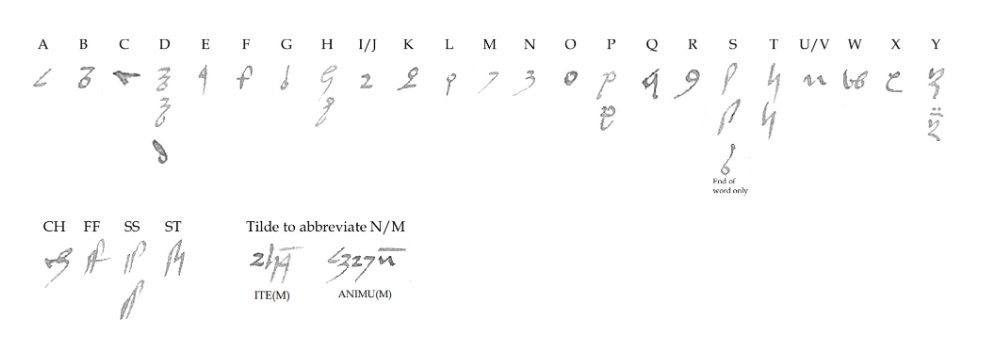
The cipher was easily cracked — a one-to-one substitution cipher wouldn’t deter even a casual puzzler — but so many questions still remain.
Who was the author? Why was the manuscript titled this? Why were a dictionary’s partial contents encoded? What is the meaning behind the cover stamp?
Like some of the more puzzly mysteries we’ve pursued in the blog over the years, there’s always more to uncover once the puzzly part is resolved.
I purposely haven’t gone into too much actual detail — hopefully I’ve included just enough to give you a sense of the story here and pique your interest — because I think you should take the time to watch Kat’s entire video. It’s always best to hear from the creators themselves!
This story is the perfect counterpoint to the Voynich discussion a few weeks ago.
I made a point in that post of highlighting that I wasn’t throwing shade at nonprofessionals in scholarly fields. I simply wanted something more reliable than “this looks like this, so they must be related” and wild conjecture.
And Kat and Rian’s work is exactly what I was talking about.
Kat and Rian aren’t professionals, they’re enthusiastic amateurs, but they are scholars nonetheless. They’ve done fantastic, reproducible work, drawing reasonable and insightful conclusions from verifiable data.
They’ve thoroughly and meticulously documented their steps, they’re continuing to pursue leads, and they have genuinely, impactfully contributed to both awareness of the manuscript and the facts surrounding it.
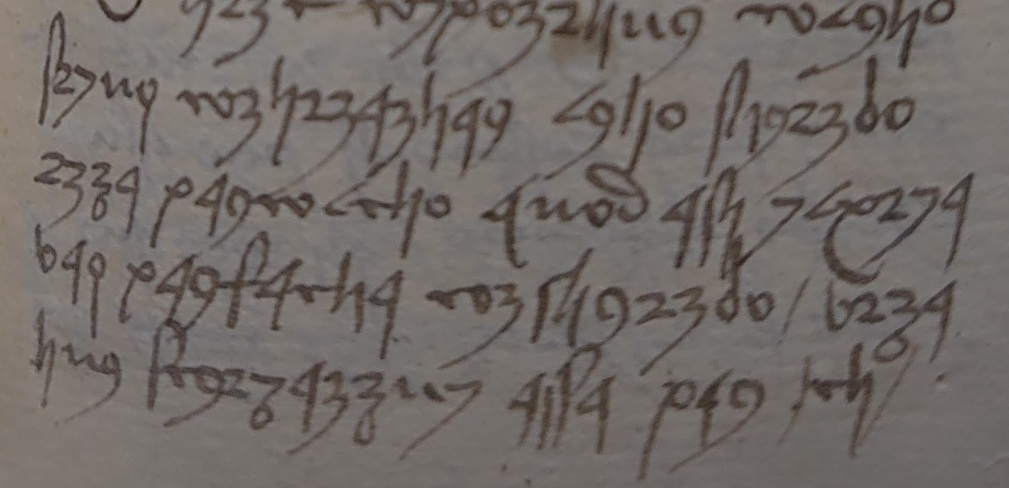
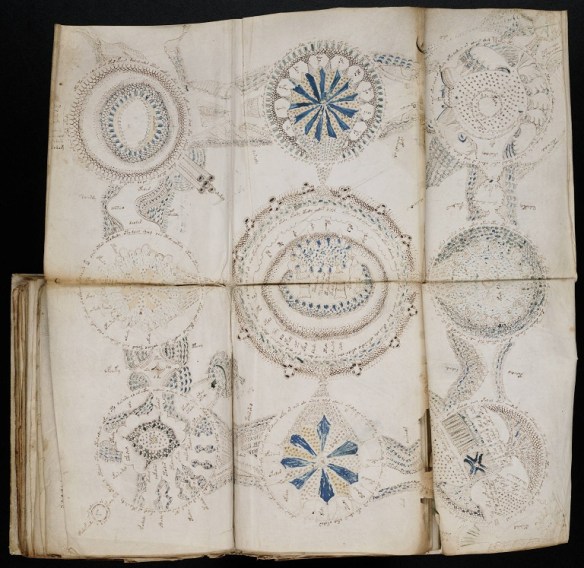
The Voynich Manuscript is a cryptologic curiosity unlike anything else we’ve seen before, one that has baffled linguists and puzzlers for decades. This hand-written book was discovered over a hundred years ago, but it’s believed to date back to the fifteenth century.
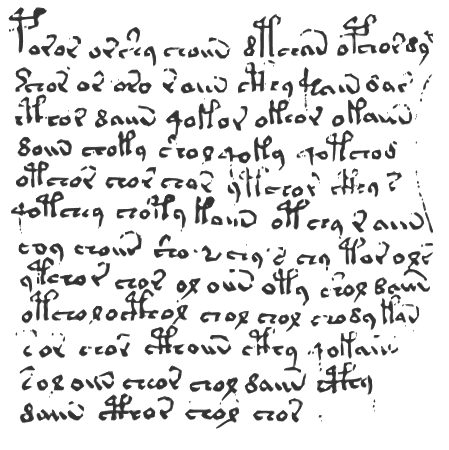
The writing, which reads from right to left, has yet to be identified. It’s unclear if this is some sort of sophisticated code, an unknown or lost language which was then encoded, an invented language, an example of glossolalia (a written equivalent of speaking in tongues), or simply an elaborate hoax.
The only known copy of the text resides in Yale University’s Beinecke Rare Book and Manuscript Library.
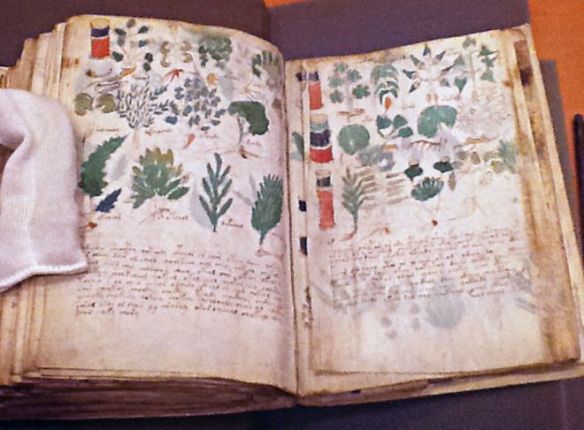
Many call the fifteenth-century codex, commonly known as the “Voynich Manuscript,” the world’s most mysterious book. Written in an unknown script by an unknown author, the manuscript has no clearer purpose now than when it was rediscovered in 1912 by rare books dealer Wilfrid Voynich. The manuscript appears and disappears throughout history, from the library of the Holy Roman Emperor Rudolf II to a secret sale of books in 1903 by the Society of Jesus in Rome. The book’s language has eluded decipherment, and its elaborate illustrations remain as baffling as they are beautiful.
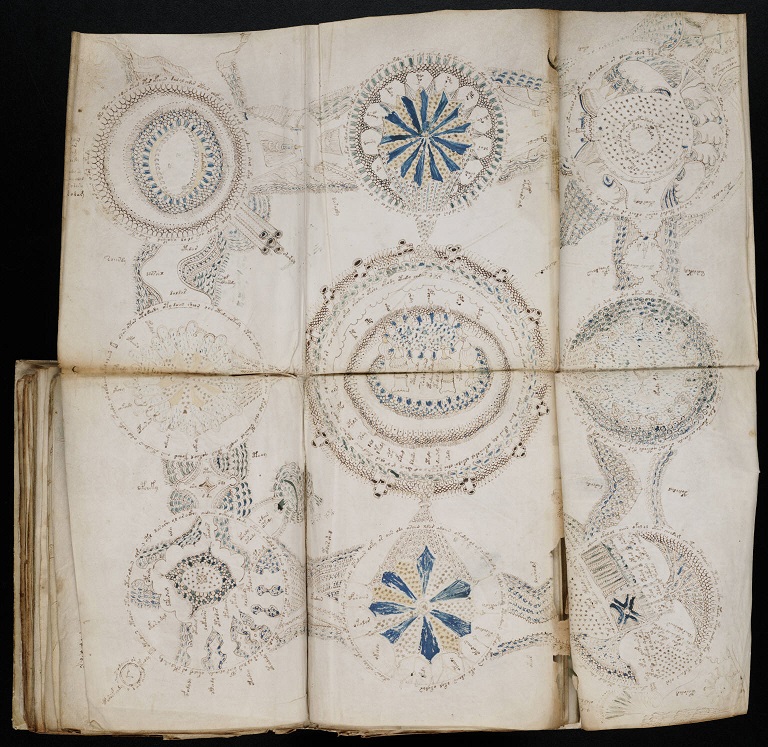
One of several fold-out pages in the manuscript. Image courtesy of Wikipedia.org.
There have been many theories regarding what form of encryption may have been employed in the Voynich Manuscript.
Some investigators theorize that vowels have been removed from the words in the text in order to obscure their meaning further, while others suggest writing that has been mirrored or otherwise written backwards. Anagrams and other forms of word manipulation are another common theory.
Attempts at decryption are further complicated by Lisa Fagin Davis’s 2020 paper that concluded through handwriting analysis that five different scribes contributed to the Voynich Manuscript.
So, what does all this have to do with witches and TikTok?
(There’s also a bunch of stuff about magically growing plants in menstrual blood, but I’ll be ignoring that pseudoscience and focusing on the decoding/interpretation of the manuscript.)
It’s a very interesting theory — the menstrual cycle part, not the casual misandry part — but not exactly a new one.
Given the predominant plant imagery, as well as the drawings that resemble medieval calendars throughout the manuscript, there’s a prominent theory that the plants featured could be used to induce abortions, and were being catalogued as such.
That would be very valuable information to preserve and disseminate, given the power dynamics between men and women at the time and the key role that reproduction served across all levels of feudalist society.
But can I point out the obvious? They didn’t solve the manuscript. They didn’t crack or decode anything. They looked at the images and made assumptions.
The poster talks about women having limited access to written language, which is absolutely true, and claims that they mostly communicated through imagery. When you ask the obvious follow-up question — why the huge swathes of text, then? — she suggests it’s a manufactured language to hide this information from the men hunting down women with this knowledge.
But why? Why would you hunt down people with knowledge of the menstrual cycle, which would be beneficial to reproduction? That doesn’t make any sense. (It would make more sense to hunt down women spreading information about plants that could induce abortions, which is the OPPOSITE of what she’s suggesting.)
Because she admits to never actually decoding the text, she is drawing all her conclusions from the images. That reminds me of that parable about the blind men and the elephant, where each person touches a different part of the elephant (the trunk, the tail, etc.) and arrives at a different conclusion.
Without any of the text to accompany the images, crucial context is missing.
Now, I don’t mean to demean the efforts of nonprofessionals trying to solve mysteries or cold cases. I myself am an enthusiastic amateur in many respects. Research and discovery are not the sole property of universities and professionals, and some incredible, insightful leaps in many different fields have been made by those that are not part of established organizations.
Could these self-described witches have uncovered or recognized patterns that escaped 125 years of linguistic analysis? Absolutely.
BUT.
The way that they present their argument is reductive. They don’t pose it as a fascinating discovery or a triumph of long-held traditions resurfacing. They sneer at the failure of a century of men trying to solve it. Which is, frankly, stupid.
It’s stupid because it ignores the CRUCIAL role many female linguists and translators have had over the years. Just look at the amazing work Emily Wilson did with her translation of The Odyssey, offering new insight into a classic tale. (Also you need to read her review of the movie, because Nolan claimed he based the movie on her translation, and if that’s the case, boy, did he miss the mark.)
But I digress.
This TikTok post lumps “men” and “professionals” together to the detriment of all women, just to cater to a weird, desperate anti-intellectualism crowd that looks down on years (or even decades) of hard work and study by men, women, and nonbinary researchers in favor of viral shortcuts and faux grassroots equality.
Everyone has failed at cracking the Voynich Manuscript, not just men. This isn’t a gender-based thing. Lisa Fagin Davis, the medievalist and expert in manuscript study I mentioned earlier, is widely considered the foremost researcher when it comes to the Voynich Manuscript, and she spent years handling all the Voynich-related requests and materials while at Yale.
Her 2020 paper about the five scribes of the manuscript is the result of genuine research, analysis, and deduction, not the hand-wavey pseudointellectual astrological alchemical… whatever this TikTok content creator is doing.
I’ve read some of the discourse surrounding all this, trying to get a sense of people’s reactions, both within and outside the WitchTok community. Several commenters shared this Ursula K. Le Guin quote during the discussion, which feels very appropriate for the topic at hand:
But I didn’t and still don’t like making a cult of women’s knowledge, preening ourselves on knowing things men don’t know, women’s deep irrational wisdom, women’s instinctive knowledge of Nature, and so on. All that all too often merely reinforces the masculinist idea of women as primitive and inferior – women’s knowledge as elementary, primitive, always down below at the dark roots, while men get to cultivate and own the flowers and crops that come up into the light. But why should women keep talking baby talk while men get to grow up? Why should women feel blindly while men get to think?
In the end, despite generations of effort, we still don’t know what the Voynich Manuscript says.
And I don’t think it’s because of gatekeeping or snobbish intellectualism or misandry or misogyny or dismissal of female viewpoints.
I think it’s simply because we haven’t figured it out yet.
This kind of decryption can’t always been brute-forced through computer power. Languages are complex and nuanced, and with five different scribes, the handwriting and personal quirks of each writer could be coloring or even masking different options. What if an S in one person’s hand looks like an F in another?
And that’s not taking into account the possibility of an encryption code or an additional linguistic trick like the vowel exclusion I mentioned.
In the end, human ingenuity created it, and a lot of human ingenuity will no doubt be required to finally reveal its secrets. And everyone who contributed or attempted to contribute to the solve, gender be damned, will be a part of that legacy.
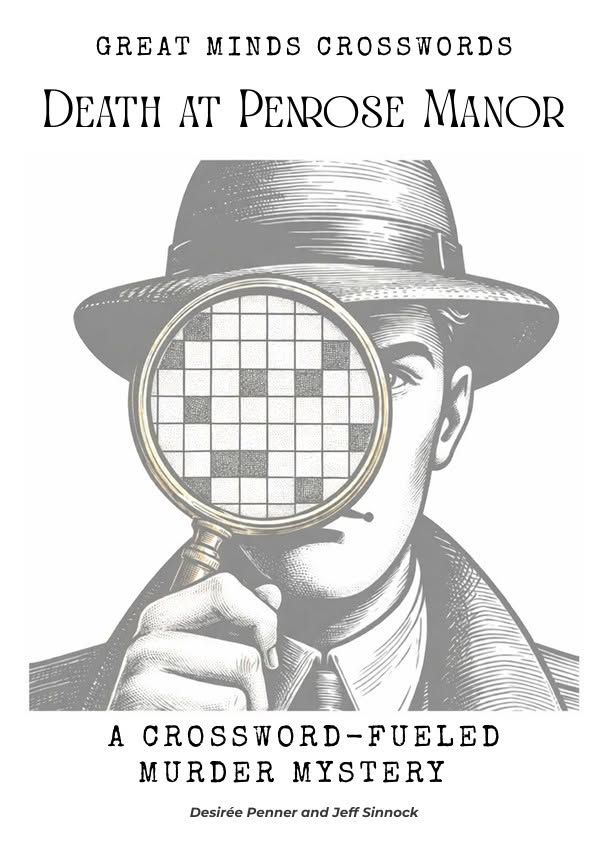
This week, join me as I investigate Death at Penrose Manor by Desirée Penner and Jeff Sinnock.
An extravagant party awaits at the home of the eccentric and mercurial Roan Penrose, newspaper magnate and man with a penchant for antagonizing those around him.
So it’s no surprise when he turns up dead during the event.
Thankfully one of the guests, police constable Jade Miller, immediately calls detective Jude Marlow, and now Marlow must unravel a web of lies, motives, and bruised egos in order to solve the murder.
Can you puzzle out which of the nine suspects committed the murder? To do so, you’ll have to read through the interrogations, solve a crossword related to each suspect, and crack the case.
Death at Penrose Manor is a fun riff on both Agatha Christie-style murder mysteries and the trappings of the board game Clue, right down to the colorfully-named suspects and the layout of Penrose Manor.
The puzzles are mostly solid (one or two awkward words per grid), but mostly well-constructed and accessible. The cluing is straightforward, with a few sharp and clever clues peppered throughout.
Your average solver will blaze through these grids, and murder mystery fans who aren’t frequent puzzle-solvers should do fine as well.
(I can’t really dig into the book more without potentially spoiling it, so today’s review will be a little shorter than the others.)
But all in all, I had fun with Death at Penrose Manor. The mix of mystery and puzzles worked really nicely, the characters were hammy in the best way, I enjoyed scribbling notes and theories as I progressed throughout the book, and the reveal at the end was a satisfying one.
This one gets a thumbs-up from me.
Are you doing any reading this summer, puzzly or otherwise, fellow reader? Let me know in the comments section below! I’d love to hear from you.
What is it about a secret message from decades or even centuries ago that intrigues us so?
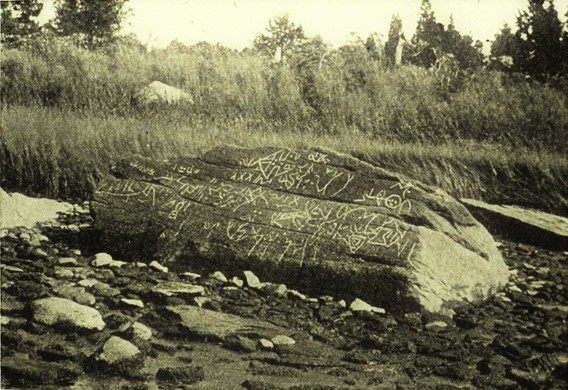
Last year around this time, we chronicled the stories behind three stones in the United States inscribed with unidentified runes or letters that have defied attempts to solve them.
Today, we add to that list of strange stones bearing the secret words of the past as we discuss the Astronaut of Casar.
The Astronaut of Casar, also known as the Alien of Casar or simply the Casar stele, is a stone slab that supposedly dates back to Roman times, if not earlier. It was originally embedded in the wall of a cemetery in a village in Spain known as Casar.
[One theoretical interpretation.]
The inscription carved into the body of the illustrated figure consists of Latin characters, but the language appears to be something Indo-European. Possible languages include Lusitanian, Tartessian, and an early form of Basque.
The identity of the figure depicted on the stele is the subject of great debate. Some observers believe is a Celtiberian warrior from the 1st or 2nd century B.C. (The Celtiberians were Celts that lived on the Iberian peninsula in the last centuries B.C.)
But, of course, the name indicates another theory regarding the identity of the figure on the stele. Some observers believe it’s meant to be an astronaut or an alien, a visitor from another planet. (The large head represents either a space helmet or the disproportionate head of an alien being, you see.)
Yes, I knew if we kept discussing mysterious stones, we would eventually have to talk about aliens at some point!
Those who ascribe to the alien astronaut theory believe the stele is a message of gratitude from the alien, a thank you for the hospitality of a Casar family who welcomed it for a season while it stayed or was stuck on Earth.
To be fair, I think that’s a reach. There are plenty of examples of figures drawn or carved with oversized heads in art and archaeological history, so we don’t immediately need to look to the stars for answers.
But if you want to look for answers, instead of the cemetery wall in Casar, the Astronaut of Casar can be found in the Archaeological Museum of Cáceres, Spain.
What do you think the stone says, fellow puzzlers? Is it just a strange funeral marker, or something more otherworldly? Let us know in the comments section below! We’d love to hear from you.
Saga Vanecek — which sounds like the heroine of a YA novel series begging for a Netflix adaptation — discovered the sword while playing in the lake. The Jönköpings Läns Museum estimated that the sword is at least a thousand years old, and could be as old as 5th or 6th century.
No one is sure how it got there, but everyone agrees it’s an amazing find. (And many agree that Saga should now be queen. Hey, there are worse ways to choose a ruler.)
But there’s another story about a sword found in a body of water with an even stranger mystery attached: the River Witham sword.
There are actually two River Witham swords — it’s just the right river to go sword-hunting in, I suppose — but we’re talking about what’s known as the River Witham “knightly sword.”
It was discovered in the river in 1825 and turned over to the Royal Archaeological Institute. It is now in the hands of the British Library.
And for more than two centuries, the meaning of the inscription has remained a mystery.
Inlaid along one of the sword’s edges, spelled out in gold wire, curious eyes find the following chain of letters:
+NDXOXCHWDRGHDXORVI+
Is it an abbreviation? An encryption? Or simply patterning in the shape of letters? No solid answers emerged during decades of study.
All sorts of amateurs and professionals weighed in, exploring possibilities in Latin, Welsh, German, Irish, Sicilian, and others. They compared it to the medal of St. Benedict and other medieval engravings in search of patterns.
And the British Library shared one contributor’s thoughts as an addendum to their original post about the River Witham sword.
The Alphen aan den Rijn sword-blade.
Historian Marc van Hasselt compared the sword to others from the same time period, roughly around the year 1200, and believed it was safe to assume the language was Latin.
He compared the inscription from the River Witham sword — +NDXOXCHWDRGHDXORVI+ — with an inscription on a Dutch sword-blade found in Alphen aan den Rijn, the Netherlands. That blade was inscribed on both sides:
+BENEDOXOFTISSCSDRRISCDICECMTINIUSCSDNI+
+DIOXMTINIUSESDIOMTINIUSCSDICCCMTDICIIZISI+
He explains his thought process:
To elaborate, let’s compare the River Witham sword to the sword from Alphen: both start with some sort of invocation. On the River Witham sword, it is NDXOX, possibly standing for Nostrum Dominus (our Lord) or Nomine Domini (name of the Lord) followed by XOX.
On the sword from Alphen, the starting letters read BENEDOXO. Quite likely, this reads as Benedicat (A blessing), followed by OXO. Perhaps these letter combinations – XOX and OXO – refer to the Holy Trinity. On the sword from Alphen, one letter combination is then repeated three times: MTINIUSCS, which I interpret as Martinius Sanctus – Saint Martin. Perhaps a saint is being invoked on the River Witham sword as well?
Unfortunately, the British Library’s investigation seems to have stopped there after the intriguing contributions of van Hasselt.
But, thankfully, there is always SOMEONE on the Internet trying to solve a seemingly unsolvable mystery. I did a bit of sleuthing and found a post on medium.com, originally posted in February of 2017, with a very thorough breakdown of a potential solution to the River Witham sword!
A closer look at the River Witham sword inscription.
The author of the piece, Stieg Hedlund, started by focusing on the W in the inscription, since the classical Latin alphabet didn’t have a W. Surmising that the inscription was an initialism — which is common for Latin inscriptions — he started looking for an aristocratic name starting with W.
Why aristocratic? Well, not just anyone in the 1200s or 1300s could afford a sword with gold wire inscriptions.
He quickly settled on some variation of William for the W, and then narrowed his search to Willem II of Holland, a count, and the initialism CHW on the sword could mean Comes Hollandia Willelmus, his name and title in Latin.
Following that line of thought and digging into the history of Willem II revealed that he ruled not only Germany, but the southern Belgian region of Hainault as well.
This gives him “Comes Hollandia Willelmus Dei gratia, Rex Germania et Hainault Dei nutu” to cover CHWDRGHD in the inscription.
When he turned his attention to the first five letters, he agreed with the supposition of Marc van Hasselt and others that it referenced “in Nomine Domini” and the XOX represented the Holy Trinity.
So that covers NDXOXCHWDRGHD, approximately two-thirds of the inscription. What about XORVI?
Well, Hedlund believes the solution lies in Laudes Regiæ, a Catholic hymn most famous for its opening words: Christus vincit! Christus regnat! Christus imperat! (In English: Christ conquers, Christ reigns, Christ commands.)
Abbreviated versions of these words were often used by kings and royalty to solidify their position by tying themselves to the church. On a coin issued by Holy Roman Emperor Charles VI in 1384, you can read one rendition of the phrase: XPiσtoC VinCIT XPiσtoC RegnAT XPiσtoC InPERAT.
He believes XORVI is an abbreviated version, reading “XpiσtOσ Regnat! (xpiσtoσ) Vincit! (xpiσtoσ) Imperat!” where the capital letters form the inscribed message.
So, the completed message would read:
(in) Nomine Domini Comes Hollandia Willelmus Dei (gratia), Rex Germania et Hainault Dei (nutu) XpiσtOσ Regnat! (xpiσtoσ) Vincit! (xpiσtoσ) Imperat!
Or, in English:
In the Name of the Lord; of the Father and of the Son, and of the Holy Ghost Count of Holland Willem by the grace of God, King of Germany and Hainault by the will of God Christ reigns! Christ conquers! Christ commands!
It’s a compelling case, and certainly the most complete interpretation and explanation I’ve been able to find.
Imagine. All of that in that brief, beautiful, confusing inscription. It’s fascinating, and makes the mind positively whirl with possibilities.
Oh, and if you find any centuries-old swords while you’re perusing the nearby waterways, let me know! We might have a new mystery to solve.
Thanks for visiting PuzzleNation Blog today! Be sure to sign up for our newsletter to stay up-to-date on everything PuzzleNation!
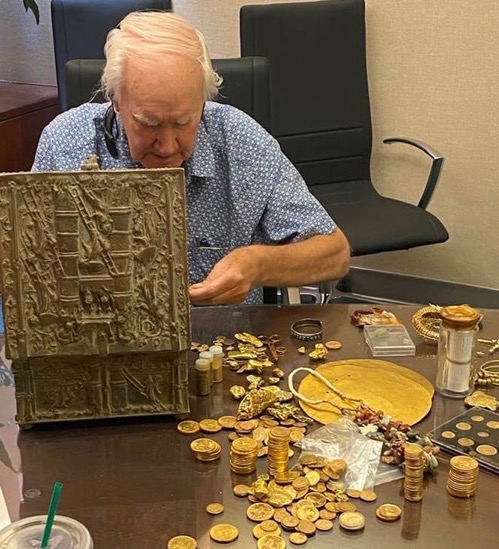
One of the biggest stories in puzzles last year revolved around Forrest Fenn’s treasure hunt, which had left treasure hunters and puzzle fans baffled and searching for almost a decade.
The hopes of thousands of would-be rich treasure seekers were dashed when Fenn announced that his treasure had been found.
It was under a canopy of stars in the lush, forested vegetation of the Rocky Mountains and had not moved from the spot where I hid it more than 10 years ago. I do not know the person who found it, but the poem in my book led him to the precise spot.
I congratulate the thousands of people who participated in the search and hope they will continue to be drawn by the promise of other discoveries.
So the search is over. Look for more information and photos in the coming days.
But in the days and months that followed, controversy ensued. The identity of the hunter who found the treasure was kept secret, only referenced as someone “from back East.” Some treasure hunters demanded more proof, positing that Fenn had retrieved the treasure himself, or that he’d never hidden it at all.
Lawsuits were filed, alleging that the mysterious treasure hunter had stolen his solution from someone else, or that Fenn had faked the entire decade-long endeavor.
In September, a few months after the announcement that the treasure had been found, Forrest Fenn passed away. Depending on what you believed, it was either oddly poignant or terribly convenient that his passing would follow the discovery of his long-hidden treasure.
Eventually, though, as these things go, the story grew quiet.
A reader of the blog recently asked me if there had been any updates on Fenn’s treasure. As it turns out, there had, but they’d flown relatively under the radar.
Back in December, a gentleman named Jack Stuef came forward as the finder of the Forrest Fenn treasure.
According to an article on NPR, Stuef claimed he pored over Fenn’s poem for two years, as well as interviews with Fenn, “teasing out clues from his words to understand what kind of person he was and where he might be inclined to hide his riches.”
For the past six months, I have remained anonymous, not because I have anything to hide, but because Forrest and his family endured stalkers, death threats, home invasions, frivolous lawsuits, and a potential kidnapping — all at the hands of people with delusions related to his treasure. I don’t want those things to happen to me and my family.
The U.S. District Court for New Mexico has ruled that Forrest’s estate must provide some of my personal information to a woman I do not know and with whom I have never communicated who has brought a meritless lawsuit against me. This would make my name a matter of public record, so I chose to come forward today.
The entire piece is interesting, sharing his solo efforts to solve the mystery and find the treasure, as well as debunking a number of false reports, accusations, and various attempts at conspiracy theorizing.
But he also refuses to disclose where he found the treasure or how he arrived at that solution, which will no doubt frustrate and confound some of the more obsessive folks that spent the last decade trying to find Fenn’s treasure. (As for people claiming he was working with Fenn or that the treasure being found is still a hoax, I doubt they will ever be satisfied with ANY answers, short of them finding the treasure themselves.)
Still, with the expectation that any and all lawsuits related to the Fenn treasure hunt will be thrown out, this brings one of the strangest and most interesting puzzle mysteries of the last decade to a close.
Jack Stuef apparently managed to do what thousands of armchair adventure seekers (and more than a few real-life wildlife trekkers and treasure hunters) failed to: unravel Fenn’s riddle.
As a closing thought, I do hope that Stuef or someone connected to Fenn’s estate place some sort of marker where the treasure was found, if only to offer something for future treasure hunters to find. It would be a nice way to keep the spirit of the mystery alive, hopefully without the rancor or nonsense involved.
Thanks for visiting PuzzleNation Blog today! Be sure to sign up for our newsletter to stay up-to-date on everything PuzzleNation!