Cracking the Cipher of “The Subtelty of Witches” Was Just the Beginning!

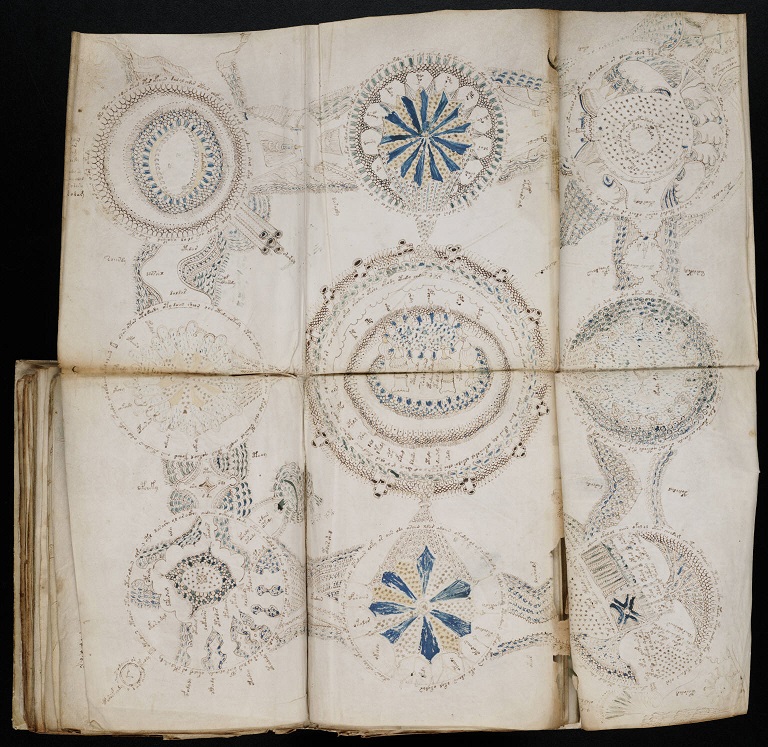
I started the Halloween season off by discussing the dubious claim of TikTok witches that they’d solved the Voynich Manuscript.

So it feels apropos to close out the Halloween season with a post about two women who actually unraveled some of the mysteries surrounding an encrypted manuscript involving witches!

This video by Kat Saturn details the fascinating journey she and Rian Hagebeuk embarked upon to unravel the secrets of a book entitled “The Subtelty of Witches,” supposedly published in 1657.

It was one of the longest encrypted works of the period, and yet, it sat in the British Library for decades without anyone digging into the cipher or the manuscript’s contents.
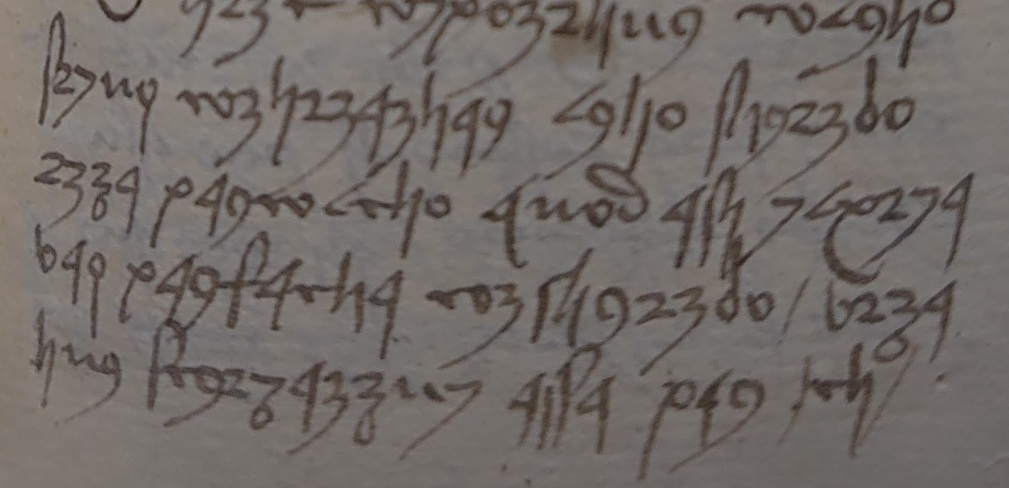
In 2018, Kat stumbled across “The Subtelty of Witches” in a list of encrypted manuscripts, and started investigating.

Along the way, she teamed up with Rian, whose facility with Latin helped immensely in unraveling the manuscript’s true contents. They reached out to professionals and fellow amateurs alike, delving deep down the rabbit hole of this manuscript.

Along the way, she and Rian determined:

  • the year was incorrect (the text is actually OLDER)
  • the contents of the manuscript had nothing to do with witches (it’s a list of verbs in Latin and Dutch from a Calepino dictionary)
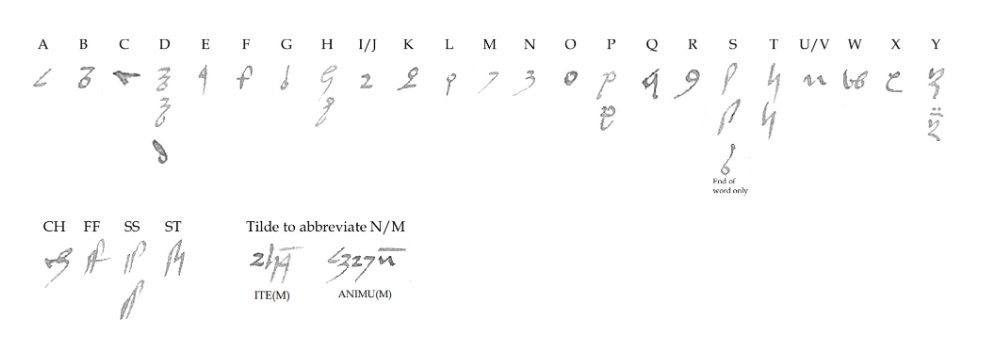
  • the cipher was consistently applied throughout (meaning it’s unlikely this was a practice exercise for improving the author’s facility with the cipher)
  • the real mystery of this text wasn’t in the cipher…

It was in the book’s creation and reason for existing at all.

The cipher was easily cracked — a one-to-one substitution cipher wouldn’t deter even a casual puzzler — but so many questions still remain.

Who was the author? Why was the manuscript titled this? Why were a dictionary’s partial contents encoded? What is the meaning behind the cover stamp?
Like some of the more puzzly mysteries we’ve pursued in the blog over the years, there’s always more to uncover once the puzzly part is resolved.

I purposely haven’t gone into too much actual detail — hopefully I’ve included just enough to give you a sense of the story here and pique your interest — because I think you should take the time to watch Kat’s entire video. It’s always best to hear from the creators themselves!


This story is the perfect counterpoint to the Voynich discussion a few weeks ago.

I made a point in that post of highlighting that I wasn’t throwing shade at nonprofessionals in scholarly fields. I simply wanted something more reliable than “this looks like this, so they must be related” and wild conjecture.

And Kat and Rian’s work is exactly what I was talking about.

Kat and Rian aren’t professionals, they’re enthusiastic amateurs, but they are scholars nonetheless. They’ve done fantastic, reproducible work, drawing reasonable and insightful conclusions from verifiable data.

They’ve thoroughly and meticulously documented their steps, they’re continuing to pursue leads, and they have genuinely, impactfully contributed to both awareness of the manuscript and the facts surrounding it.

Heck, they published a peer-reviewed paper on the manuscript, and you should absolutely check it out.

TikTok witches and Voynich Manuscript enthusiasts, please take note: this is the way.


Do you have any theories about “The Subtelty of Witches,” fellow puzzlers? Let us know in the comments section below! We’d love to hear from you.

A Mysterious Message, Inscribed on a Sword, Found in a River

_103722388_d0c23635-6379-4bf7-bac8-478493c2d1c7

A few years ago, a very curious news story broke about an 8-year-old girl pulling a thousand-year-old sword out of a lake in Sweden.

Saga Vanecek — which sounds like the heroine of a YA novel series begging for a Netflix adaptation — discovered the sword while playing in the lake. The Jönköpings Läns Museum estimated that the sword is at least a thousand years old, and could be as old as 5th or 6th century.

No one is sure how it got there, but everyone agrees it’s an amazing find. (And many agree that Saga should now be queen. Hey, there are worse ways to choose a ruler.)

But there’s another story about a sword found in a body of water with an even stranger mystery attached: the River Witham sword.

river witham sword 1

There are actually two River Witham swords — it’s just the right river to go sword-hunting in, I suppose — but we’re talking about what’s known as the River Witham “knightly sword.”

It was discovered in the river in 1825 and turned over to the Royal Archaeological Institute. It is now in the hands of the British Library.

And for more than two centuries, the meaning of the inscription has remained a mystery.

Inlaid along one of the sword’s edges, spelled out in gold wire, curious eyes find the following chain of letters:

+NDXOXCHWDRGHDXORVI+

Is it an abbreviation? An encryption? Or simply patterning in the shape of letters? No solid answers emerged during decades of study.

Eventually, the British Library decided to crowdsource the puzzle in the hopes of finding a solution. In 2015, officials from the library officially reached out to the public to finally crack the code detailed along the blade.

All sorts of amateurs and professionals weighed in, exploring possibilities in Latin, Welsh, German, Irish, Sicilian, and others. They compared it to the medal of St. Benedict and other medieval engravings in search of patterns.

And the British Library shared one contributor’s thoughts as an addendum to their original post about the River Witham sword.

alphen blade
The Alphen aan den Rijn sword-blade.

Historian Marc van Hasselt compared the sword to others from the same time period, roughly around the year 1200, and believed it was safe to assume the language was Latin.

He compared the inscription from the River Witham sword — +NDXOXCHWDRGHDXORVI+ — with an inscription on a Dutch sword-blade found in Alphen aan den Rijn, the Netherlands. That blade was inscribed on both sides:

+BENEDOXOFTISSCSDRRISCDICECMTINIUSCSDNI+

+DIOXMTINIUSESDIOMTINIUSCSDICCCMTDICIIZISI+

He explains his thought process:

To elaborate, let’s compare the River Witham sword to the sword from Alphen: both start with some sort of invocation. On the River Witham sword, it is NDXOX, possibly standing for Nostrum Dominus (our Lord) or Nomine Domini (name of the Lord) followed by XOX.

On the sword from Alphen, the starting letters read BENEDOXO. Quite likely, this reads as Benedicat (A blessing), followed by OXO. Perhaps these letter combinations – XOX and OXO – refer to the Holy Trinity. On the sword from Alphen, one letter combination is then repeated three times: MTINIUSCS, which I interpret as Martinius Sanctus – Saint Martin. Perhaps a saint is being invoked on the River Witham sword as well?

Unfortunately, the British Library’s investigation seems to have stopped there after the intriguing contributions of van Hasselt.

But, thankfully, there is always SOMEONE on the Internet trying to solve a seemingly unsolvable mystery. I did a bit of sleuthing and found a post on medium.com, originally posted in February of 2017, with a very thorough breakdown of a potential solution to the River Witham sword!

river witham sword 2
A closer look at the River Witham sword inscription.

The author of the piece, Stieg Hedlund, started by focusing on the W in the inscription, since the classical Latin alphabet didn’t have a W. Surmising that the inscription was an initialism — which is common for Latin inscriptions — he started looking for an aristocratic name starting with W.

Why aristocratic? Well, not just anyone in the 1200s or 1300s could afford a sword with gold wire inscriptions.

He quickly settled on some variation of William for the W, and then narrowed his search to Willem II of Holland, a count, and the initialism CHW on the sword could mean Comes Hollandia Willelmus, his name and title in Latin.

william of holland

Following that line of thought and digging into the history of Willem II revealed that he ruled not only Germany, but the southern Belgian region of Hainault as well.

This gives him “Comes Hollandia Willelmus Dei gratia, Rex Germania et Hainault Dei nutu” to cover CHWDRGHD in the inscription.

When he turned his attention to the first five letters, he agreed with the supposition of Marc van Hasselt and others that it referenced “in Nomine Domini” and the XOX represented the Holy Trinity.

So that covers NDXOXCHWDRGHD, approximately two-thirds of the inscription. What about XORVI?

Well, Hedlund believes the solution lies in Laudes Regiæ, a Catholic hymn most famous for its opening words: Christus vincit! Christus regnat! Christus imperat! (In English: Christ conquers, Christ reigns, Christ commands.)

Abbreviated versions of these words were often used by kings and royalty to solidify their position by tying themselves to the church. On a coin issued by Holy Roman Emperor Charles VI in 1384, you can read one rendition of the phrase: XPiσtoC VinCIT XPiσtoC RegnAT XPiσtoC InPERAT.

He believes XORVI is an abbreviated version, reading “XpiσtOσ Regnat! (xpiσtoσ) Vincit! (xpiσtoσ) Imperat!” where the capital letters form the inscribed message.

So, the completed message would read:

(in) Nomine Domini
Comes Hollandia Willelmus Dei (gratia), Rex Germania et Hainault Dei (nutu)
XpiσtOσ Regnat! (xpiσtoσ) Vincit! (xpiσtoσ) Imperat!

Or, in English:

In the Name of the Lord; of the Father and of the Son, and of the Holy Ghost
Count of Holland Willem by the grace of God, King of Germany and Hainault by the will of God
Christ reigns! Christ conquers! Christ commands!

It’s a compelling case, and certainly the most complete interpretation and explanation I’ve been able to find.

Imagine. All of that in that brief, beautiful, confusing inscription. It’s fascinating, and makes the mind positively whirl with possibilities.

Oh, and if you find any centuries-old swords while you’re perusing the nearby waterways, let me know! We might have a new mystery to solve.


Thanks for visiting PuzzleNation Blog today! Be sure to sign up for our newsletter to stay up-to-date on everything PuzzleNation!

You can also share your pictures with us on Instagram, friend us on Facebook, check us out on Twitter, Pinterest, and Tumblr, and explore the always-expanding library of PuzzleNation apps and games on our website!