A Criminal Crossword Conspiracy From 1959!

During my extensive dive into crossword history in preparation for my Braille Crosswords post, I encountered all sorts of curious tidbits and trivia about crosswords. I tucked many of them away at the time, looking forward to digging into them properly later once the piece was completed.

So, with that post done and dusted, I had some time to pour through those tidbits and trivia for blog post ideas. And I knew I had to start with this snippet from The Omaha World-Herald on Sunday, July 22nd, 1979:

Portland: February 23, 1959. Two Oregon daily papers cry “Doublecross!” Charging that their crossword contests are being “fixed” by a “nation-wide ring” headquartered in Detroit, they discontinue the contests and call in the FBI

A criminal crossword ring? Tell me more about these cruciverbalist ne’er-do-wells!

I mean, we’ve discussed criminal activity and crosswords in previous posts, but those were strictly of the fictional variety. This story, on the other hand, is an honest-to-Shortz crossword criminal conspiracy, concocted nearly 70 years ago.
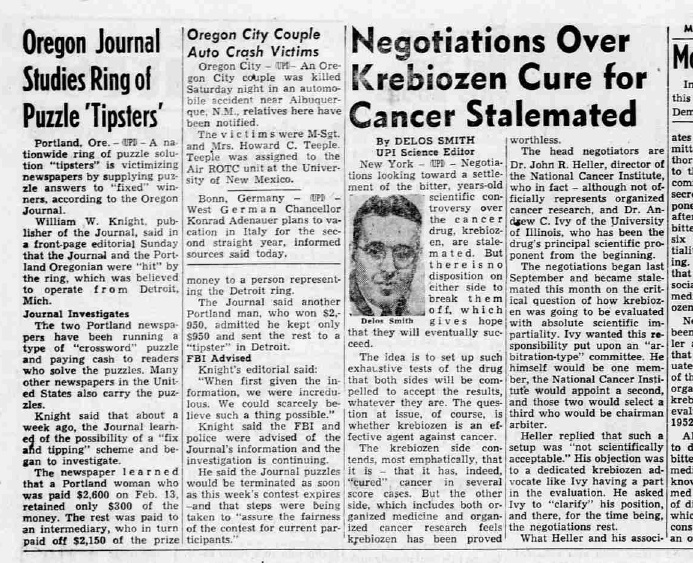
Our story begins in Oregon, where publisher William W. Knight of The Oregon Journal shared his suspicions in a front-page editorial piece on February 23rd, 1959.

The Oregon Journal and The Portland Oregonian were just two of the many newspapers around the United States who ran crossword contests with cash prizes. Subscribers would send their solutions to the paper in the hopes of being the first correct solver (or sometimes, the correct solver chosen at random) and winning some money.

But Mr. Knight reported that his sources at The Oregon Journal had uncovered something peculiar. They had learned about two previous Portland winners who only kept part of their money, the rest being forwarded to an intermediary, and after that to the suspected ringleader in Detroit, Michigan.

One woman won $2600 but retained only $300. $150 went to the intermediary, and $2150 to Detroit. Another winner received $2950 but he only kept $950 and sent the rest to a “tipster” in Detroit. (Geez, even when committing the same crimes, women are still getting paid less than men!)

Knight referred to this conspiracy as a “fix and tipping” scheme.
She’s got the acrosses, now she just needs the downs to really complete the crossword look.

“Fix” in this case means illegally rigging the outcome of the crossword contest, and “tipping” means that someone was informing the “contestants” of the solution in order to guarantee a win.

But the two primary distributing syndicates — Superior Features Syndicate, Inc. and General Features Syndicate — claimed this was impossible, calling their precautions “foolproof.”

These “foolproof” precautions basically meant that the puzzle grid and clues went to subscribing newspapers, but the puzzle solution went to an associated bank “or some other unimpeachable agency.” That bank/agency would hold the solution until the contest submission deadline had passed, and then release it to the subscribing newspapers.

(This is obviously pretty foreign to modern solvers, who are accustomed to seeing the previous day’s solution published alongside today’s new puzzle.)

Despite the reassurances of the distribution syndicates, Knight had already reached out to the FBI with his suspicions, and declared that The Oregon Journal would no longer be participating in crossword puzzle contests.
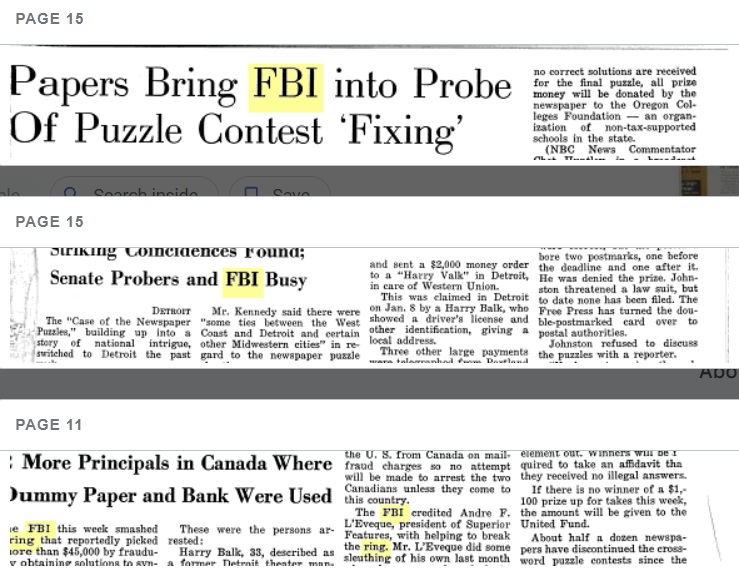
His editorial went out on February 23rd, and the next day, other papers began reporting on Knight’s alleged criminal crossword conspiracy.

But the Crossword Ring’s reign of terror would be short-lived.

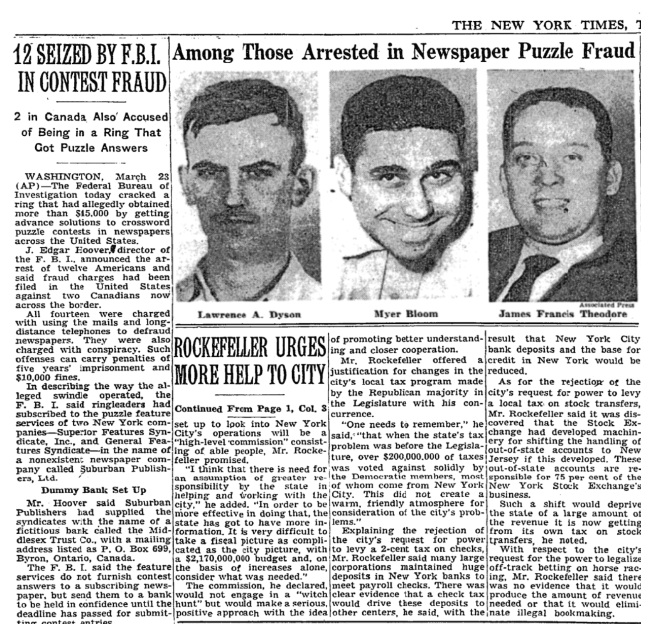
One month to the day that Knight’s accusations hit the front page, J. Edgar Hoover himself announced the arrest of those responsible for the Crossword Ring conspiracy.

The headline in The New York Times the following morning read “12 SEIZED BY F.B.I. IN CONTEST FRAUD; 2 in Canada Also Accused of Being in a Ring That Got Puzzle Answers.

Knight’s suspicions were correct, but the conspiracy ranged far wider than Portland and Detroit. The actual ringleaders were based in Ontario, Canada, and they telephoned answers to agents in Chicago, Philadelphia, Harrisburg, and Minneapolis as well.

So, how did the ringleaders get around those “foolproof” precautions we heard about before?

In staggeringly simple fashion.

The scam worked like this:

Step One: Set up a fictitious bank, Middlesex Trust Co., complete with a fake mailing address.

Step Two: Subscribe to the puzzle distributors in the name of a nonexistent newspaper company, Suburban Publishers, Ltd.

Step Three: Receive the puzzle solutions from the Syndicate via the fictitious bank’s P.O. Box, then contact agents in the United States to submit perfect solutions to their local papers before most other newspapers would’ve even published the contest puzzle.
All it took to circumvent the “foolproof” precautions was Step One.

The Crossword Ring had raked in $45,000, which is equivalent to over half a million dollars in 2026. And the FBI operation to arrest them all took only 86 minutes.

Amazingly, this wasn’t the end of crossword contests in the United States.

Despite further allegations of wrongdoing throughout the 1960s — including bribery and extortion — the contests remained popular, and prize amounts collected by contest entrants kept rising. One New York contest winner received a cash prize of $44,000, nearly the same amount that the Crossword Ring had scammed from newspapers over the course of weeks.

Now, if you’ll excuse me, I have to get back to my brand-new newspaper venture, The PuzzCulture Tribune Gazette Times-Herald-Daily. More about our crossword contests soon! *a-wink*


So, fellow puzzler, what’s your favorite crossword crime, fictional or otherwise? Let us know in the comment section below! We’d love to hear from you.
ACPT 2017 Wrap-Up!

acptlogo

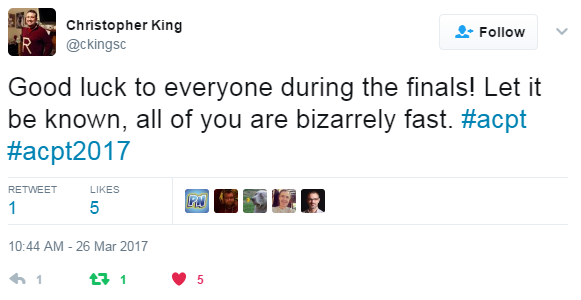
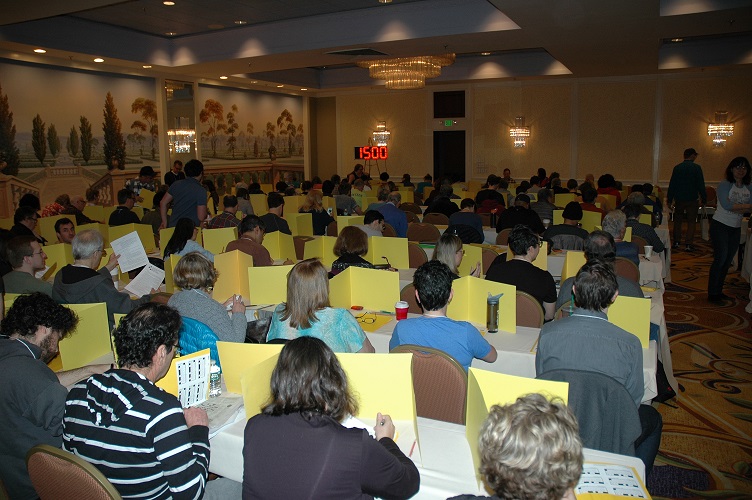
The 40th annual American Crossword Puzzle Tournament was this weekend, and puzzlers descended on the Stamford Marriott Hotel once again to put their puzzly skills to the test in what is lovingly known as “the Nerd Olympics.”

The tournament takes place over two days, with six puzzles to solve on Saturday, followed by one on Sunday. Then the top three finishers in the A, B, and C brackets solve the championship puzzle on whiteboards in front of the audience.

On Friday and Saturday night, there are often puzzle events, demonstrations, and panels by top puzzlers and figures in the puzzle world as well.

pdp4

I made the journey down to Stamford myself Saturday morning. As I arrived at the hotel, I was unexpectedly greeted by an enthusiastic marching band and cheering fans!

As it turns out, they weren’t there for me (or any of the other puzzlers), as the Oregon women’s basketball team was also in attendance. But that was a pleasant, and slightly raucous, surprise. Go Ducks!

Once I had sidestepped the band and revelers and made my way into the hotel, I sat in with my friend Stacey Scarso at the Penny Dell Puzzles booth.

pdp2

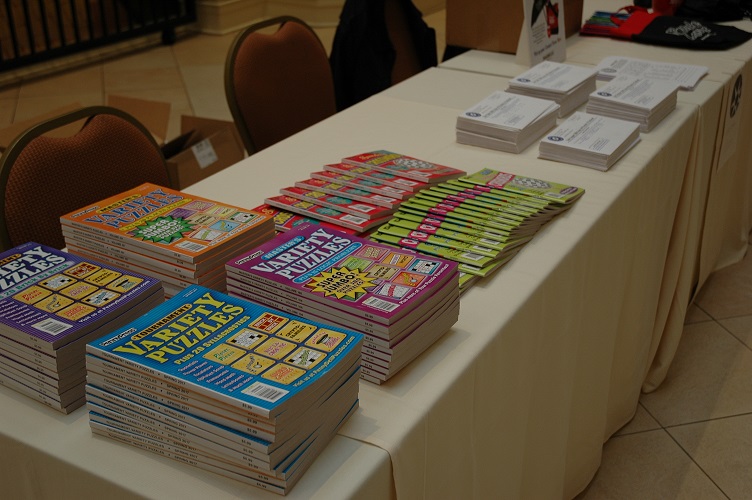
Our pals at Penny Dell Puzzles had a terrific setup as always, with a metric buttload of magazines to give away, including copies of The Crosswords Club and several flavors of Tournament Variety, Master’s Variety, and Dell Sunday Crosswords.

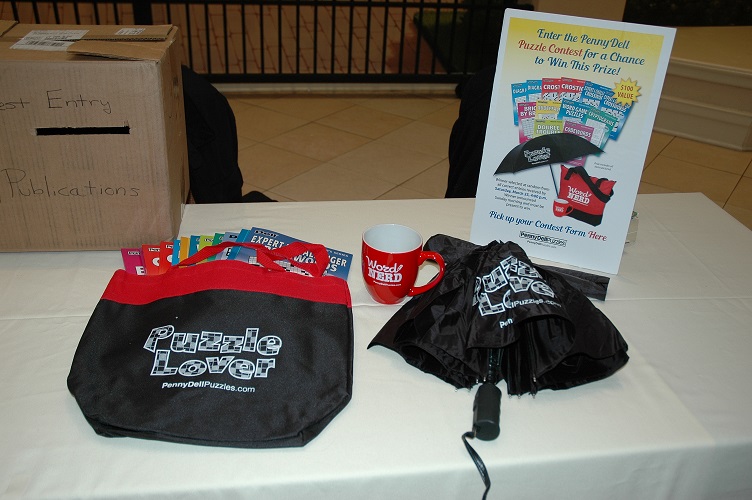
Plus we held a contest to win a bundle of PDP puzzle swag, including a mug, a tote bag, an umbrella, and a bunch of puzzle magazines! All you had to do was solve a Weaver Words puzzle. (And, yes, in their downtime between tournament puzzles, many competitors DO solve other puzzles. Madness!)

pdp1

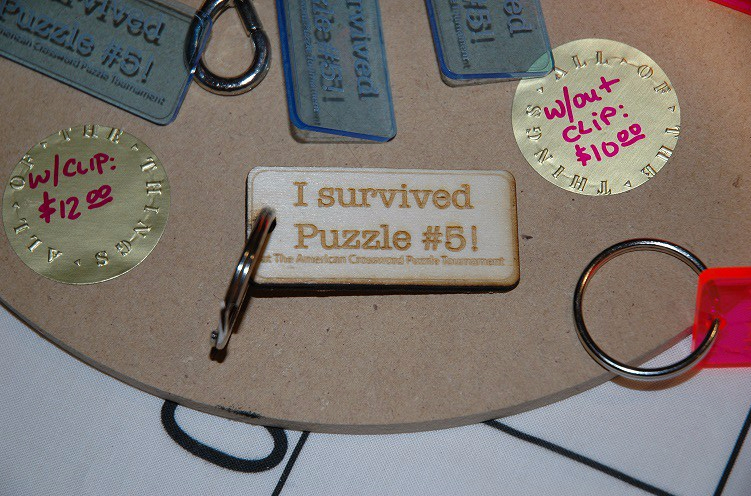
At 9 AM, the tournament was two hours away, but the marketplace was up and running. There were puzzle magazines galore (including a table of Merl Reagle’s puzzle books), developers showing off their puzzle app Word Squares, and ACPT-themed jewelry, key chains, and other items from All of the Things.

pdp6

As competitors readied themselves for the day’s solving, I had plenty of time to see friends of the blog like Crosswords Club editor Patti Varol, constructor Ian Livengood, crossword gentleman Doug Peterson, constructor Joanne Sullivan, and Penny Press variety editor Keith Yarbrough!

Perhaps the best part of attending the tournament is getting to chat with so many members of the puzzle community in one place. There were first-time attendees and enthusiastic rookies, like the two lovely ladies wearing “Monday Puzzlers” t-shirts.

There were long-time puzzle fans who have been competing at ACPT for years, if not decades, many of whom were decked out in puzzle shirts, puzzle scarves, and other grid-heavy accoutrements.

And there were icons of the puzzle community, like NYT Wordplay blogger Deb Amlen, event organizer and made man in puzzles Will Shortz, and programmer Saul Pwanson, who helped reveal the USA Today/Universal Uclick crossword plagiarism scandal last year.

Many of the top constructors in the business were there, names like David Steinberg, Evan Birnholz, Joon Pahk, Peter Gordon, and more, along with former champions and first-rate competitors like Dan Feyer, Tyler Hinman, Howard Barkin, Ellen Ripstein, and Stella Zawistowski.

Getting to connect faces and personalities with names I know from tournaments like the Indie 500 is a real treat, and so so many of the people in the puzzle world are genuinely nice, funny individuals. Not only that, but I also got to meet several fellow trivia fiends from the Learned League community!

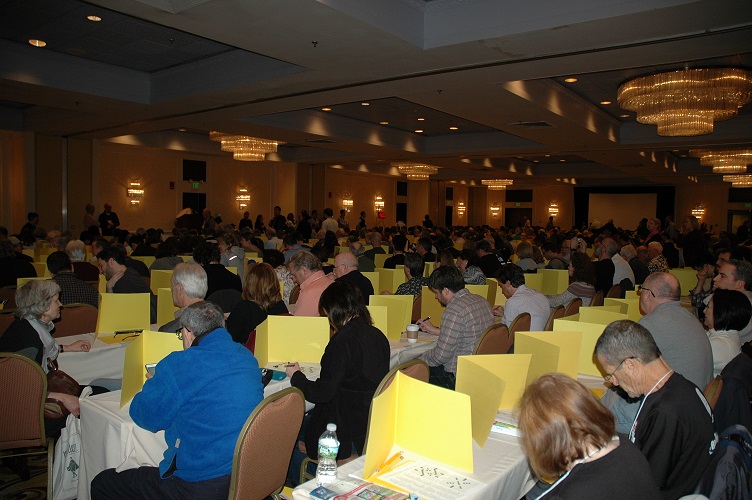
The two hours before showtime passed quickly, and soon, the marketplace emptied and the ballroom filled as competitors took their seats for Puzzle 1.

pdp3

A jump in attendance from last year saw the room absolutely packed with competitors. Will Shortz joked that there were 624 solvers and 625 chairs. I’ve certainly never seen the room that crowded.

When Puzzle 1 arrived, several competitors I spoke to were surprised at its difficulty. There would be no cracking this puzzle in under 2 minutes, as former champion Dan Feyer did in 2015. Most of the top competitors hovered around the 4 minute mark. And this wouldn’t be the only puzzle that kept solvers on their toes.

Puzzle 2, constructed by veteran puzzler Patrick Berry, received rave reviews for its cleverness and elegant fill, providing a nice counterpoint to Puzzle 1.

25acpt2017-puz2rankings-master768

[The rankings after Puzzle 2 (posted as competitors were heading into Puzzle 4)]

Puzzle 3 was constructed by Brendan Emmett Quigley, and following the path set Puzzle 1, proved far more challenging than expected. At this rate, the always-dreaded Puzzle 5 was still looming, and some solvers were more apprehensive than usual about tackling it later in the day. That being said, several competitors were impressed with Quigley’s constructing. (Not a surprise, his puzzles are always excellent.)

puzzle3

Puzzle 4 was constructed by relative newcomer Julie Berube, who was in attendance and super-excited to see competitors tackle her puzzle. The general consensus of competitors was that this puzzle should have been Puzzle 1.

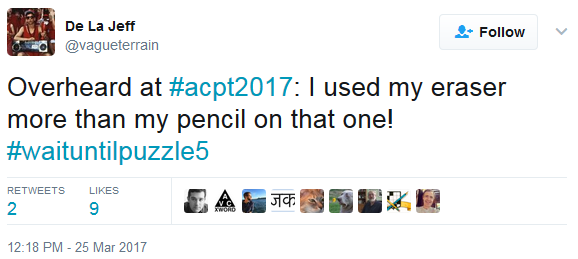
Finally, it was time for Puzzle 5. This year, constructor Mike Shenk did the honors, and according to competitors, it was as challenging as expected, really putting the craftiness and keen wits of the solvers to the test.

pdp5.jpg

[One of the puzzly keychains offered by All of the Things. I suspect making it
“I finished Puzzle 5 in the time allotted” would limit the possible customer base.]

After the diabolical Puzzle 5, competitors closed out the day with Puzzle 6 and declared it both fun and fair. The competitors dispersed to rest their brains (or solve more puzzles). We packed up the Penny/Dell table and headed for home.

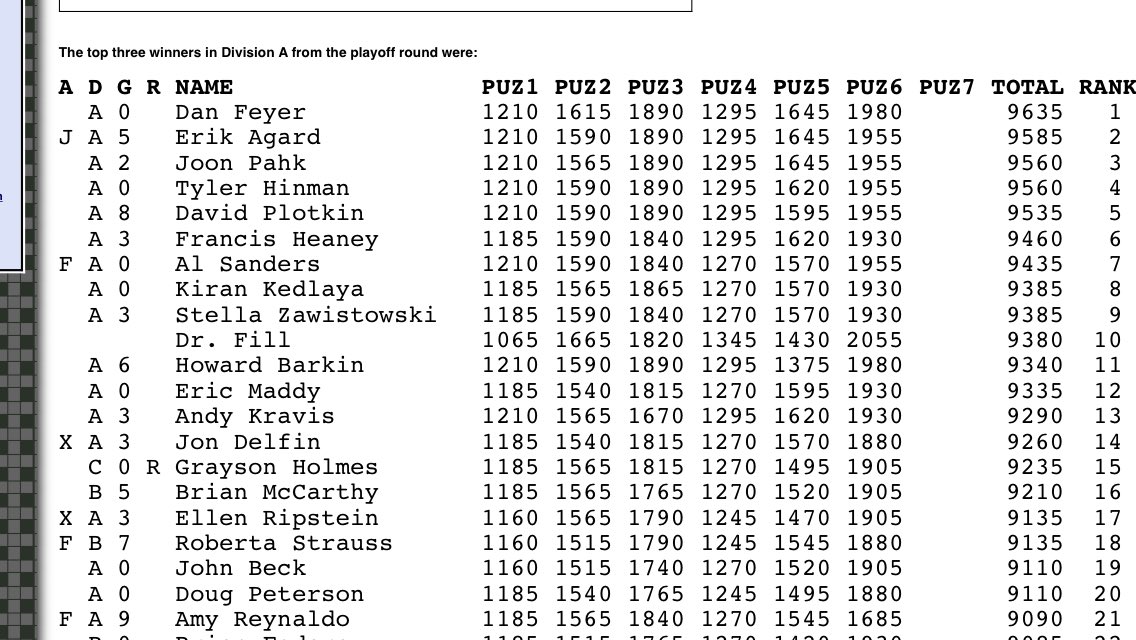
acptpuz6

[The standings at the end of the day on Saturday.]

And although I wasn’t present for Sunday’s tournament finale, I continued to get updates from friends and fellow puzzlers.

Going into Puzzle 7, constructed by Joel Fagliano, former champion Dan Feyer was on top of the leaderboard, followed closely by constructors Erik Agard and Joon Pahk, both of whom were chasing their first tournament victory, as well as former champion Tyler Hinman, who shared third place with Joon.

Not far behind them were familiar names like David Plotkin, Al Sanders, Francis Heaney, Stella Zawistowski, and last year’s winner, Howard Barkin.

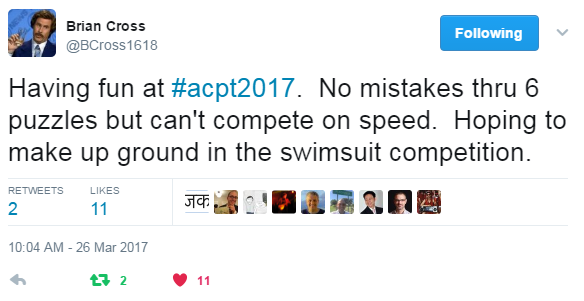
acptswimsuit

Puzzle 7 was smooth, a good capper to the official tournament puzzles. But it would prove to be a heartbreaker for one solver in particular. An error by Erik Agard dropped him out of finals contention, opening the door for a former champion who missed out on the finals last year.

It would be Dan Feyer (6 time champion), Tyler Hinman (5 time champion) and Joon Pahk in the finals.

acptfinals

But first, there would be an Oscars-style flub for the B-level finalists, as they were given the A-level clues for the final puzzle.

A quick rundown of the finals: there are three sets of clues written for the final puzzle, labeled A, B, and C. The A-level clues are the hardest, and the C-level clues are the easiest. So the B-level contenders were given much harder clues than intended.

But guess what? All three competitors (including one rookie solver) completed the final, even with the harder clues! That is some impressive solving!

Naturally, this led to some discussion of how to make things tougher for the A-level competitors. I suggested that all their clues should be written in Esperanto, but perhaps the best suggestion came from Ophira Eisenberg, who suggested that we don’t give them any clues, and only reveal the Zs in the grid as hints. Fiendishly clever!

You can watch the final puzzle being solved below:

Tyler Hinman would complete the puzzle first, and by a fairly wide margin, but unfortunately he had an error in the puzzle.

In the end, Dan Feyer would reclaim the crown, tying Jon Delfin for most tournament wins with 7!

danfeyer_2015

And it was a strong showing for many other familiar names! Doug Peterson placed 18th, David Steinberg placed 28th, Patti Varol placed 103rd (up from last year’s showing!), Kathy Matheson 228th (also up from last year’s performance!), and Keith Yarbrough 238th (again, up from last year!) out of a field of over 600 participants.

It’s always great fun to spend time with fellow puzzlers and wordplay enthusiasts, immersing myself in the puzzle community and enjoying all the charm and camaraderie that comes with it.

We’ll see you next year!


Thanks for visiting PuzzleNation Blog today! Be sure to sign up for our newsletter to stay up-to-date on everything PuzzleNation!

You can also share your pictures with us on Instagram, friend us on Facebook, check us out on TwitterPinterest, and Tumblr, and explore the always-expanding library of PuzzleNation apps and games on our website!

The Gravity Falls Cipher Hunt!

six_strange_tales

It’s sad when your favorite show goes away, particularly when it feels like there could have been so much more to enjoy. As someone who routinely seems to discover hidden gems on TV, only for them to vanish a season or two into promising runs, I know this better than most. (Alas, Brimstone, Now and AgainTwin Peaks, Better Off Ted, and others…)

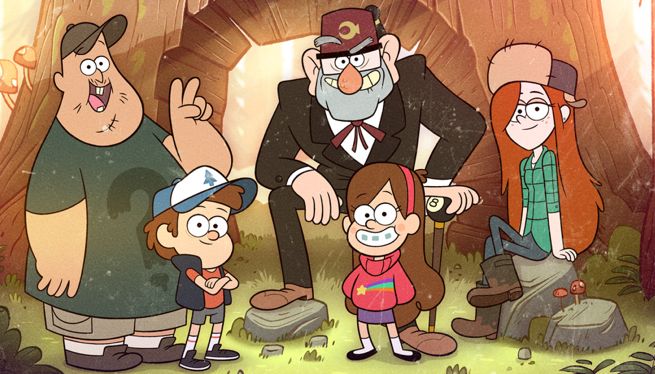
The fans of the Disney Channel animated series Gravity Falls endured similar sadness when the show wrapped up its two-season run earlier this year. (Although it was the decision of the showrunner to end the show and not the network in this case, it was still a sad day for fans.)

From the Wikipedia article on this Twin Peaks-fueled program:

For their summer vacation, 12-year-old twins Dipper and Mabel Pines are dropped off from their home in Piedmont, California to the fictitious town of Gravity Falls, Roadkill County, Oregon to live with their Great Uncle Stan Pines (often shortened to Grunkle Stan), who runs a tourist trap called Mystery Shack. Things are not what they seem in this small town, and with the help of a mysterious journal that Dipper finds in the forest, they begin unraveling the local mysteries.

gravity-falls-160239

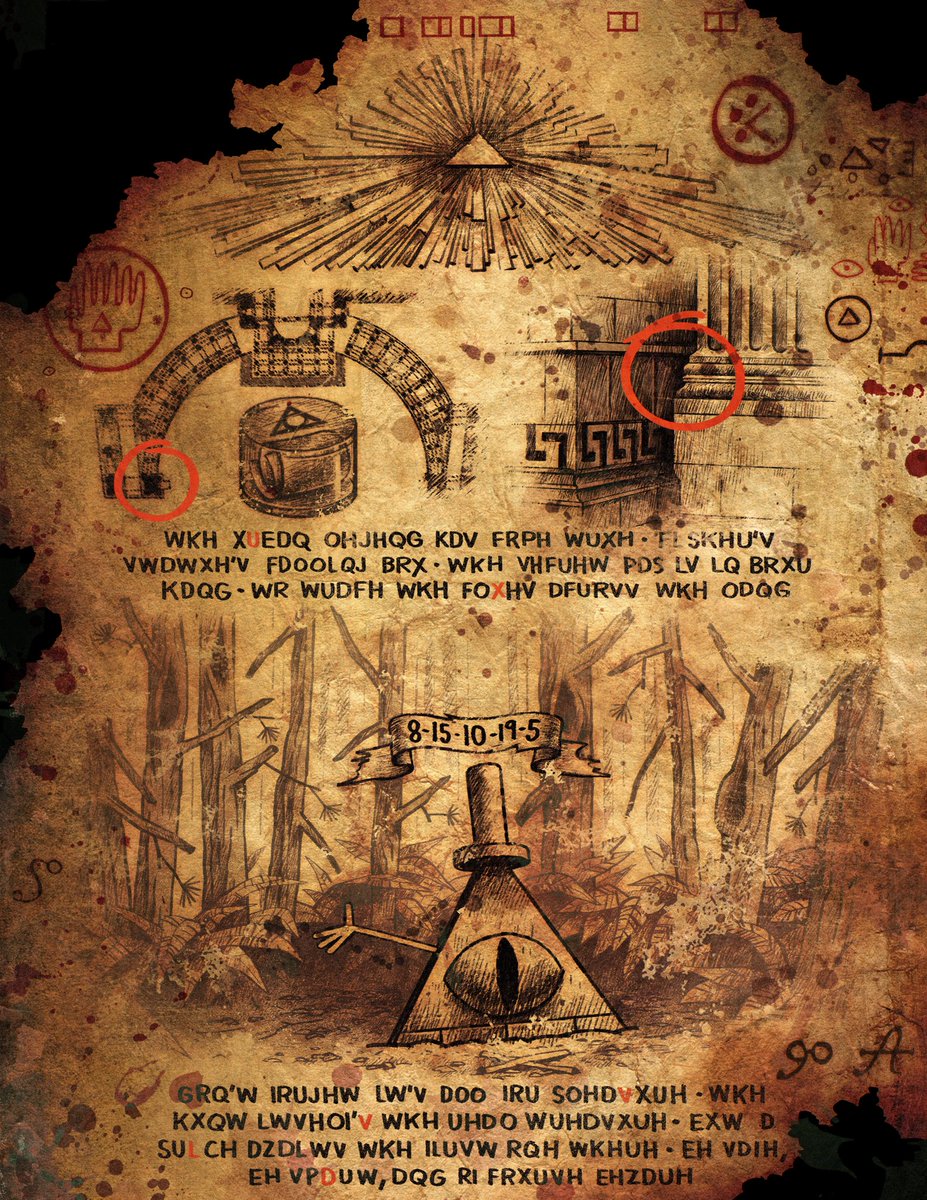
The show was big on supernatural storytelling and puzzles to unravel, even including ciphers at the end of each episode that incorporated classic encryption techniques like Caesar ciphers, Vigenere ciphers, and others. This is pretty high-level stuff for a show that’s supposedly for kids. (Then again, plenty of adults enjoy a quality animated show, and Gravity Falls was critically acclaimed for good reason.)

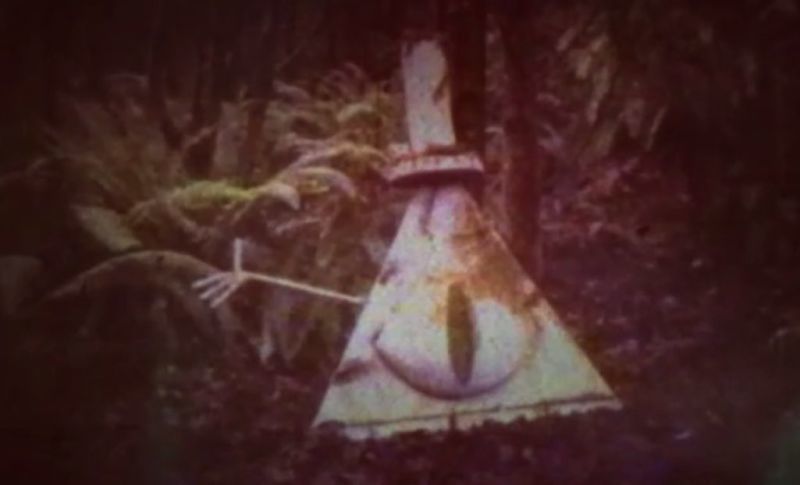
In the series finale of the show, there was a brief shot of a statue of the show’s villain Bill Cipher, but it appeared to be a photograph rather than an animated image.

awewynu9wq5kiq6qrsmd

Speculation immediately ran rampant as fans wondered if there was really a Bill Cipher statue somewhere.

And there was.

Cue the Gravity Falls Cipher Hunt, a world-spanning puzzle hunt launched on July 20, 2016, where fans teamed up to crack clues offered by show creator Alex Hirsch, all in the hopes of tracking down this mysterious statue.

Although the main thrust of the hunt was centered around the United States, clues appeared in places as far-flung as Russia and Japan, requiring a truly global effort of cooperative fandom to crack each mystery.

And the creator himself was astonished when the entire hunt was solved in just two weeks, as fans pieced together the last fragment of the puzzle on August 2: a missing section of parchment that corresponded to a map of a forest in Reedsport, Oregon.

cn1kjphvmaafcta

[Click here for a rundown of the entire puzzly saga.]

Awaiting the intrepid solvers was not only did the statue of Bill Cipher, but a treasure chest with messages that could only be read under black light. Also, in a truly brilliant bit of fan service, there was a sash and crown inside the chest that would anoint the wearer as the mayor of Gravity Falls! (Hirsch even went on to say that this appointment is now canon for the show!)

And, as it turns out, they found the statue just in time, as a property dispute between neighbors has led the statue to be taken in by police until the situation is resolved!

This is not only an outstanding example of real-world puzzling in its own right, but a wonderful thank you from a creator to his fans, providing one last challenge, one last story, to the people who’d most appreciate it. Nicely done, Mr. Hirsch, and nicely done, Gravity Falls fans!

[Also, nicely done to Owen, and his mom, friend of the blog Chris Begley, for bringing this story to my attention.]


Thanks for visiting PuzzleNation Blog today! Be sure to sign up for our newsletter to stay up-to-date on everything PuzzleNation!

You can also share your pictures with us on Instagram, friend us on Facebook, check us out on TwitterPinterest, and Tumblr, and explore the always-expanding library of PuzzleNation apps and games on our website!