The Fastest Way to Wordle: By the Numbers!

I’m a sucker for statistical analysis, especially when it comes to puzzles and games. In previous posts, I’ve looked at improved strategies for playing Guess Who, Hangman, and Monopoly.

And now, we’ve got solid data that might indicate the best method for tackling your daily Wordle solve.
Last week, as the world celebrated five years of Wordle solving, the New York Times posted an article analyzing 730 MILLION games of Wordle from the past year, and they came to an interesting conclusion:

Players in Hard Mode solve in fewer turns on average.

That seems like an contradiction in terms. Hard Mode limits letter choices and flexibility based on which letters are locked in (green), whereas Standard Mode allows you to play any letter at any time, which should offer a solving advantage.

But it doesn’t seem to, as Hard Mode solvers average more efficient solves than Standard Mode solvers.

While it’s possible this could be attributed to the pool of solvers — Hard Mode likely attracts better or more efficient solvers in general — the article theorizes that Hard Mode’s constraints push players to guess less wastefully.
This, combined with better starting-word selection — apparently vowel-heavy words like ADIEU and AUDIO are statistically less efficient! — leads to better results overall.

These are certainly helpful guidelines, but I do think an overall change in tactics can also help solvers in both Standard and Hard Mode.

The article mentions one of the dangers of Hard Mode solving, “the rhyming trap,” where you end up with most of a word in green, like _ATCH, but you’re left with all the rhyming possibilities, which could result in a worse score or even a failure to complete the day’s solve at all.
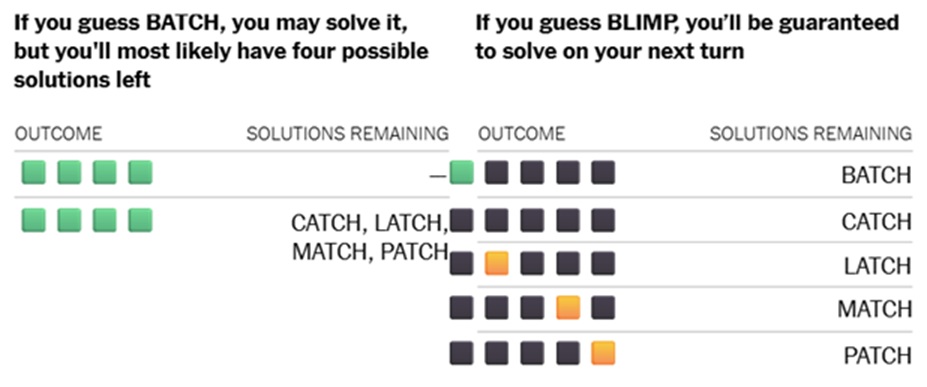
Standard Mode solvers can play a word like BLIMP, which would confirm or eliminate BATCH, LATCH, MATCH, and PATCH, covering most of the possible answers in one fell swoop.

This isn’t an option in Hard Mode, but it has led to players attacking the puzzle in reverse, trying to eliminate letters early, rather than trying to confirm letters early.

After all, if you go vowel-heavy and confirm, say, two letters, that’s two spots taken up in every single guess. But if you go one vowel at a time and burn through consonants with words like CHILD or MONTH, you whittle down the alphabet quicker. (I remember David Kwong writing about this technique in his email newsletter a while back.)

It’s interesting to have actual data to examine, even if the data seems counterintuitive at the start.

It’s certainly not as straightforward as the connection between the decrease in pirate populations and the rise of global warming…

Of course, if you want the answers the fastest way possible, you could just do what I did last week and get the next day’s Wordle spoiled for you by Google AI.

Yeah.

You see, my mother solves Wordle every day and keeps track of her results on her calendar. Every word, every number of guesses. It’s her ritual and I respect that.

But on Thursday of last week, she realized she hadn’t written down the previous few days’ words and results. And we are completionists, both of us, so around 8 PM that night, I did a quick Google search of the week’s answer words to help her out.

And lo and behold, the stupid Google AI told me Friday’s word ahead of time.
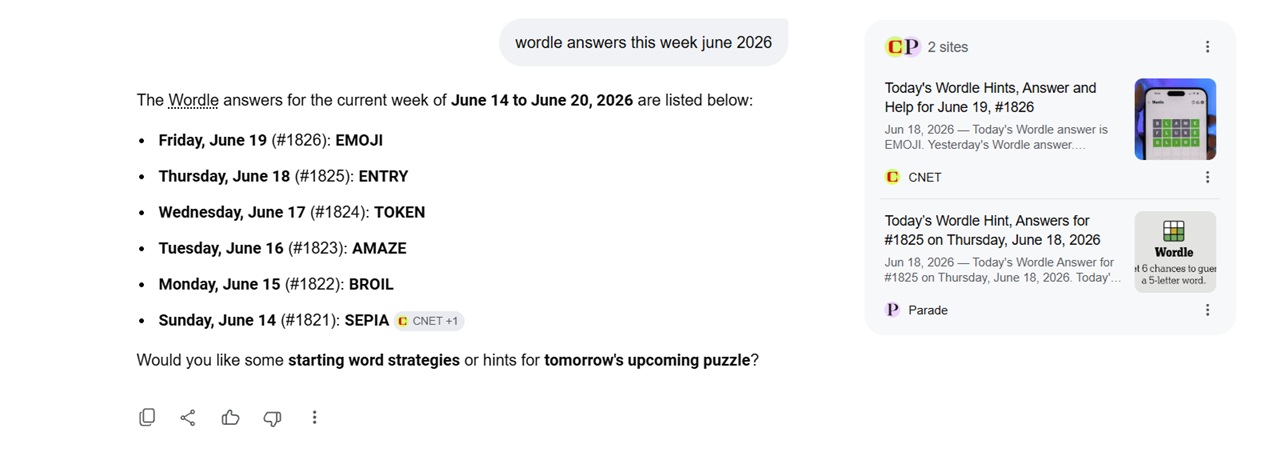
Yes, I suppose it is my fault for not typing “-AI” into the search bar. (And unfortunately, as entertaining as it is to type “shut the f*ck up bot” into the search bar and see the AI’s momentary contrition, that only lasts a few searches at most before it returns.)

But it also sucks that this was a possibility at all. I genuinely didn’t think I’d be spoiling the next day’s solve for myself with a casual search of the week’s words.

Hopefully WordleBot doesn’t figure out this trick. It’s smug enough already.


Did you learn anything from the NYT’s deep-dive into Wordle solving statistics, fellow solver, or do you already have your starting word of choice that you’ll be sticking with? Let me know in the comments section below! I’d love to hear from you.
Relaxing Games: More Tranquil Than Tactical

Everybody has a copy of Monopoly lying around, but that’s not really the most relaxing game experience, is it?

Most of the classics, however fun, are also pretty competitive. But what about games that help restore your spirit, ease your anxiety, and put you in a good mood?

As much fun as co-op games like Forbidden Island, The Oregon Trail Card Game, and Castle Panic! can be, they can also be a little stressful. And if you’re looking to relax, those might not be the games for you.

So today, I thought we could turn our attention to games that will help you enjoy a more calming gameplay experience.


Now, before I get started, I’m well aware that you might not have these games at the ready. Maybe you’re a jigsaw family and you find calmness and distraction in placing those last few satisfying little pieces and completing the image. Or maybe you like making your own fun with pencil and paper.

Whatever your jam, as long as you’re engaging in play and passing the time in fun ways, you’re already ahead of the game.


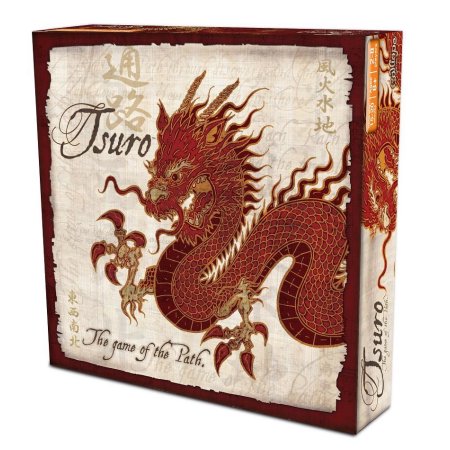
When I asked fellow game enthusiasts for games that are mellow and relaxing, the first one that always comes to mind is Tsuro.

In Tsuro, up to 8 players adopt the role of flying dragons soaring through the sky. Each player chooses from the tiles in their hands in order to build paths on the board, representing their paths through the sky. Naturally, these paths will eventually intersect, and you need to be careful to avoid colliding with another dragon or following a path right off the edge of the board. (Both of those scenarios cause you to lose.)

Despite the potential for competition, most Tsuro games are peaceful affairs as everyone enjoys watching their dragon token loop and swirl across various intersecting paths, hoping to be the last dragon standing on the board. It’s a beautiful, simple game that only takes about twenty minutes to play, and it’s the perfect palate cleanser after a more stressful round of some other game.

beforetherewerestars

[Image courtesy of Board Game Geek.]

Some of the most enjoyable and low-key game experiences are storytelling games. I could recommend one with high-fantasy flavor like Once Upon a Time or one with a tongue-in-cheek Addams Family-esque humor like Gloom. But the one that piques my interest the most is based in mythology and sharing stories around a fire.

In Before There Were Stars…, players claim constellation cards to use in crafting the origin story of the world itself. Each player shares how things were in the beginning, at the dawn of civilization, when a great hero emerges, and at the end of days. Along the way, players grant each other points — little star-shaped point tokens, naturally — for their favorite story moments, as everyone encourages each other in creating epic mythologies.

Although there can be a winner based on points, playing this game always feels more like a storytelling session than a competition, and it can lead to some unforgettable gaming moments.

[Image courtesy of Starlit Citadel.]

Tokaido is another game about movement, but in a very different vein. Players in this game are all travelers, journeying across Japan’s famed East Sea Road from Kyoto to Edo. Whereas most travel-based games are about reaching a destination first, Tokaido is about reaching a destination with the widest array of meaningful experiences.

Along the way, your character can meet new people, enjoy new cuisines, collect souvenirs, visit hot springs, and visit scenic locales. You add experience points for these events (and acquire achievement cards) that represent your traveler partaking of these experiences.

This elegant game bypasses traditional competition entirely, building a unique game mechanic out of living your best life.

[Image courtesy of Board Game Quest.]

Sagrada is another wonderfully visual game about individual accomplishment. In this game, each player is building a stained glass window using different colored dice. No dice of the same color can neighbor each other, so you need to be strategic about how you place the dice you roll.

Each window is different, and has certain rules for maximizing points. (A certain pane can only be a certain color, or a certain die value, etc.) The players can boost their scores by selecting cards that reward them with points if they create certain patterns within their stained glass window.

Except for competing for the best point total at the end, there’s virtually no interaction between players. You’re all simply working simultaneously on the best window, which is a gameplay style that breeds camaraderie more than competitiveness. It’s genuinely encouraging to see fellow players make good choices in dice placement to create the most beautiful, elegant window patterns.

[Image courtesy of Starlit Citadel.]

For a change of pace, let’s look at a game that’s more about interaction with other players. Dixit is a gorgeous card game where each player is given a handful of cards, each depicting a different, unique, evocative piece of art.

Player 1 will choose a card from their hand and say a word or phrase to the other players that has some connection to that card. It could reference color, or part of the imagery. It could be a joke, or an idiom, or a song lyric. The goal is to be vague, but not too vague. The other players will then each select a card from their hand that could also be described by Player 1’s statement, and the cards are all shuffled face down so no one can see who submitted what card.

The cards are then all placed face up, and each player (except Player 1) votes on which piece of art they think Player 1 chose. Player 1 gets points if some (but not ALL) players chose his card. (If every player chooses it, the clue was too easy, and Player 1 gets no points.) And any other player’s card that earns votes also earns that player points.

This sort of associative gameplay really encourages your imagination and teaches you about how the other players think. There’s no other game quite like it on the market today, and it makes for an intriguing, low-key gaming experience.

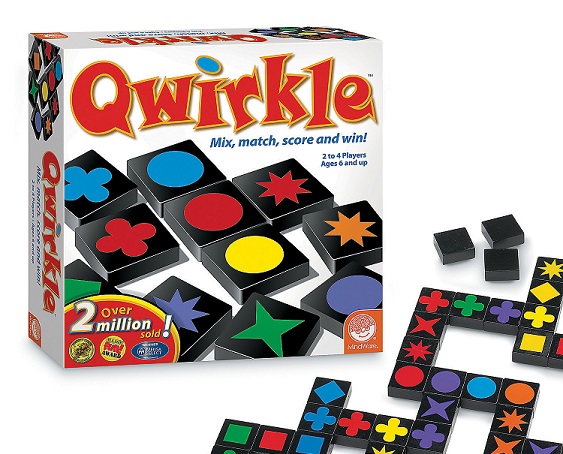
Finally, let’s close out today’s post with a classic tile game that mixes Uno-style color- and pattern-matching with Mexican Train Dominoes-style gameplay. Qwirkle is a bit more competitive than the other games on today’s list, but it’s still a game more about collaborating than outdoing your opponents.

By placing different tiles onto a shared play area — either by matching colors or matching symbols — players earn points. If you complete a Qwirkle — a pattern of all six colors for a given shape or all six shapes in the same color — you earn bonus points.

The lighthearted gameplay style lends itself to friendly competition rather than the cutthroat mien evoked by games like Monopoly. Qwirkle’s not about grinding the other players down, it’s about adding to a colorful world in interesting, inventive new ways.


Thanks for visiting PuzzleNation Blog today! Be sure to sign up for our newsletter to stay up-to-date on everything PuzzleNation!

You can also share your pictures with us on Instagram, friend us on Facebook, check us out on TwitterPinterest, and Tumblr, and explore the always-expanding library of PuzzleNation apps and games on our website!

PuzzleNation Looks Back at 2016!

The year is quickly coming to a close, and as I look back on an eventful year in the world of puzzles and games, I’m unbelievably proud of the contributions both PuzzleNation Blog and PuzzleNation made to the puzzle community as a whole.

Over the last year, we explored board games and card games, strategy games and trivia games, dice games and tile games, do-it-yourself puzzlers and pen-and-paper classics. We met designers, constructors, authors, artists who work in LEGOs and dominos, and creative types of all kinds.

We unraveled math puzzles and used statistics to play Hangman and Guess Who smarter. We accepted the challenge of diabolical puzzles, optical illusions, Internet memes, and more.

We delved into puzzle history with posts about Bletchley Park, puzzle graffiti from ancient Greece, Viking board games, and modern mysteries like the Kryptos Sculpture and the Voynich Manuscript. We separated fact from fiction when it comes to puzzles and brain health, avoiding highfalutin promises and sticking to solid science.

We spread the word about numerous worthwhile Kickstarters and Indiegogo campaigns, watching as the puzzle/game renaissance continued to amaze and surprise us with innovative new ways to play and solve. We shared amazing projects and worthy causes like Humble Bundles and puzzle/game donation programs for schools that allowed puzzle lovers to help others.

We celebrated International TableTop Day, built a puzzle fort in honor of International Puzzle Day, attended the American Crossword Puzzle Tournament and the Connecticut Festival of Indie Games, and dove deep into puzzle events like the Indie 500, the UK Sudoku Championship, the 2016 UK Puzzle Championship, and Lollapuzzoola. We even celebrated a puzzly wedding proposal, and we were happy to share so many remarkable puzzly landmark moments with you.

It’s been both a pleasure and a privilege to explore the world of puzzles and games with you, my fellow puzzle lovers and PuzzleNationers. We marked four years of PuzzleNation Blog this year, I’m approaching my 650th blog post, and I’m more excited to write for you now than I was when I started.

And honestly, that’s just the blog. PuzzleNation’s good fortune, hard work, and accomplishments in 2016 went well beyond that.

In April, we launched Penny Dell Crosswords Jumbo 3 for iOS users, and in May, we followed that with Penny Dell Crosswords Jumbo for Android. In November, we launched our new Penny Dell Sudoku app on both Android and iOS.

But the standout showpiece of our puzzle app library remains the Penny Dell Crossword App. Every month, we release puzzle sets like our Dell Collection sets or the themed Deluxe sets for both Android and iOS users, and I’m proud to say that every single puzzle represents our high standards of quality puzzle content for solvers and PuzzleNationers.

We even revamped our ongoing Crossword Clue Challenge to feature a clue from each day’s Free Daily Puzzle in the Crossword app, all to ensure that more puzzle lovers than ever have access to the best mobile crossword app on the market today.

And your response has been fantastic! The blog is closing in on 2000 followers, and with our audience on Facebook, Twitter, Instagram, and other platforms continuing to grow, the enthusiasm of the PuzzleNation readership is both humbling and very encouraging.

2016 was our most ambitious, most exciting, and most creatively fulfilling year to date, and the coming year promises to be even brighter.

Thank you for your support, your interest, and your feedback, PuzzleNationers. Have a marvelous New Year. We’ll see you in 2017!


Thanks for visiting PuzzleNation Blog today! Be sure to sign up for our newsletter to stay up-to-date on everything PuzzleNation!

You can also share your pictures with us on Instagram, friend us on Facebook, check us out on TwitterPinterest, and Tumblr, and explore the always-expanding library of PuzzleNation apps and games on our website!

How to Get Started in Games

vaSBal7l

[Image courtesy of The Board Game Family.]

So, it’s after Christmas, and you’ve been gifted with a new game, or a roleplaying book, or someone showed you a new card game and you want to know more. Or your New Year’s Resolution is to learn more games, play more games, solve more puzzles, or even make some puzzles yourself.

Basically… how do you get started?

Here. You get started right here. I’m going to run down my favorite guide books for gaming, puzzles, tabletop play, roleplaying, and more, creating the perfect first step to a new world of play for you.

Let’s get cracking!


My first recommendation is also the most recently published book on my list.

vcVRmRHl

The Civilized Guide to Tabletop Gaming by Teri Litorco is a perfect introduction to all things gaming. This delightfully nerdy tome is loaded with thoughtful advice covering everything from choosing new games to teaching them to others, as well as building a game group for regular sessions or roleplaying games, and more.

From how to deal with cranky gamers to how to host your own major gaming events, Teri has dealt with every obstacle imaginable, and she offers her hard-won first-hand knowledge in easily digestible tidbits. Even as an experienced tabletop gamer, roleplayer, and puzzler, I found this to be a very worthwhile read, and I think you will too.

W3RSBUWl

If card games are your poison, then what you need is a copy of The Ultimate Book of Card Games by Scott McNeely.

What separates this book from many other card game books — namely the ones attributed to Hoyle (the vast majority of which had nothing to do with him) — is that it doesn’t claim to be the definitive source. It provides the key rules for how to play, and then offers numerous variations and house rules that expand and refine gameplay.

There are more than 80 pages of variations of Solitaire alone! Kids games, betting games, games for two, three, four or more, this is my go-to guide for everything that can be played with a standard deck of cards.

a4VHXBpl

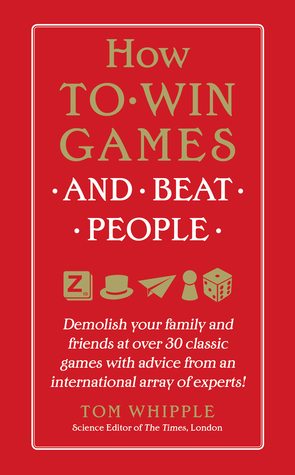
What if you’re already a fan of games, but you want to play them better? If that’s your goal, check out How to Win Games and Beat People by Tom Whipple.

Monopoly, Jenga, Hangman, Operation, Trivial Pursuit, Twenty Questions, Checkers, Battleship… heck, even Rock, Paper, Scissors is covered here. With advice from top players, world record holders, game creators and more, you’ll find advice, tactics, and fun facts you won’t see anywhere else.

For instance, did you know that letter frequencies in Hangman are different from letter frequencies in the dictionary? ESIARN is the way to go with Hangman, not ETAOIN.

That’s just one of the valuable nuggets of info awaiting you in this book.


Do you have any favorite books about puzzles and games that I missed? Let me know, I’d love to hear about them!

Thanks for visiting PuzzleNation Blog today! Be sure to sign up for our newsletter to stay up-to-date on everything PuzzleNation!

You can also share your pictures with us on Instagram, friend us on Facebook, check us out on TwitterPinterest, and Tumblr, and explore the always-expanding library of PuzzleNation apps and games on our website!

It’s Follow-Up Friday: LEG-OH NO WAY edition!

Welcome to Follow-Up Friday!

By this time, you know the drill. Follow-Up Friday is a chance for us to revisit the subjects of previous posts and bring the PuzzleNation audience up to speed on all things puzzly.

It’s been quite a week here at PuzzleNation Blog!

After posts that ran the gamut from Comic-Con encryption puzzles and new puzzle sets for the Penny Dell Crosswords app to becoming a sharper Hangman or Guess Who? player and enjoying the puzzly chain reactions known as Rube Goldberg devices, I was left with quite a conundrum: How do I close out such an eclectic week?

This will be my sixth post in six days after all. What would be an appropriate capper?

Well, I think I found the perfect Friday post idea: some visual LEGO puzzle wizardry.

Specifically, it’s a moving piece of puzzle art that combines the visual wonder of the pop-up book with the puzzly skill of a LEGO master builder.

I give you the LEGO Pop-Up Himeji Castle:

I’ve watched the video over and over, and I have no idea how the castle fits together OR compresses itself flat enough to fit between the “covers.” This is mind-blowing LEGO skill and puzzly three-dimensional manipulation of space.

And apparently, this sort of next-level three-dimensional spatial reasoning is second-nature to YouTuber Talapz, since he also managed to create this multi-dimensional sculpture that allows a ball to traverse it in three different arrangements:

I first stumbled across Talapz’s works on this site (written in French, no less!), and quickly followed his work on his YouTube page. Be sure to click the link for more brain-melting works of puzzly LEGO art.


Thanks for visiting PuzzleNation Blog today! Be sure to sign up for our newsletter to stay up-to-date on everything PuzzleNation!

You can also share your pictures with us on Instagram, friend us on Facebook, check us out on TwitterPinterest, and Tumblr, and explore the always-expanding library of PuzzleNation apps and games on our website!

Better Gaming With Math and Statistics!

[Image courtesy of ThreeSixtyOne.gr.]

Statistical analysis is changing the world. The wealth of available data on the Internet these days, combining with our ever-increasing ability to comb through that data efficiently using computers, has spawned something of a golden age in data mining.

You don’t need to look any further than the discovery of Timothy Parker’s plagiaristic shenanigans for USA Today and Universal Uclick to see how impactful solid analysis can be.

But it’s also having an impact on how we play games. Statistical analysis is taking some of the mystery out of games you’d never expect, making players more efficient and capable than ever.

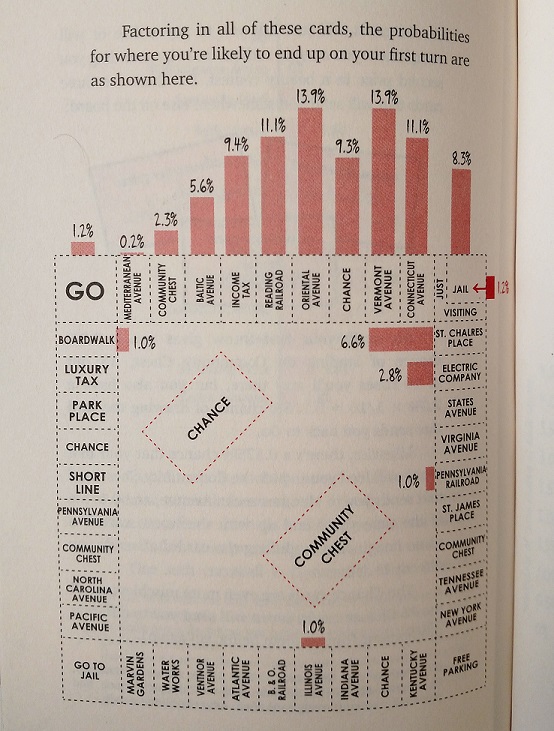
We discussed this previously with the game Monopoly — specifically how some spaces are far more likely to be landed on than others — and today, we’re looking at two more examples: Guess Who? and Hangman.

Guess Who? gives you a field of 24 possible characters, and you have to figure out which character your opponent has before she figures out the identity of your character. Usually, if you end up with a woman or someone with glasses, your odds of winning are low, because some aspects are simply less common than others.

But is there an optimal way to pare down the options? Absolutely.

Mathematician Rafael Prieto Curiel has devised a strategy for playing Guess Who?, based on an analysis of the notable features of each character, breaking it down into 22 possible questions to ask your opponent:

Based on this data, he has even created a flowchart of questions to ask to maximize your chances of victory. The first question? “Does your person have a big mouth?”

Yes, not exactly a great first-date question, but one that yields the best possible starting point for you to narrow down your opponent’s character.

It’s certainly better than my first instinct, which is always to ask, “Does your person look like a total goon?”

Now, when it comes to Hangman, the name of the game is letter frequency. Just like a round of Wheel of Fortune, you’re playing the odds at first to find some anchor letters to help you spell out the entire answer.

But, as it turns out, letter frequency is not the same across all word lengths. For instance, E is the most common letter in the English language, but it is NOT the most common letter in five-letter words. That honor belongs to the letter S.

In four-letter words, the most common letter is A, not E. And it can change, depending on the presence — or lack thereof — of other letters.

From How to Win Games and Beat People by Tom Whipple:

“E might be the most common letter in six-letter words, and S the second most common, but what if you guess E and E is not in it?” In six-letter words without an E, S is no longer the next best letter to try. It is A.

In fact, Facebook data scientist Nick Berry has created a chart with an optimal calling order based on the length of the blank word.

For one-letter words through 4-letter words, start with A. For five-letter words, start with S. For six-letter words through twelve-letter words, use E. And for words thirteen letters and above, start I.

Of course, if you’re the one posing the word to be guessed, “jazz” is statistically the least-likely word to be guessed using this data. And your opponent will surely hate you for choosing it.


Thanks for visiting PuzzleNation Blog today! Be sure to sign up for our newsletter to stay up-to-date on everything PuzzleNation!

You can also share your pictures with us on Instagram, friend us on Facebook, check us out on TwitterPinterest, and Tumblr, and explore the always-expanding library of PuzzleNation apps and games on our website!