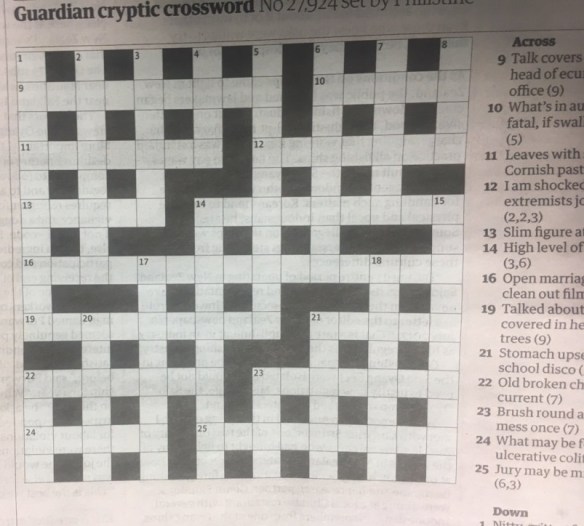
The Guardian Cryptic Crossword Treasure Hunt… Revealed!

cryptic

Cryptic crosswords have been getting a lot of attention this year.

Josh Wardle launched his Parseword daily puzzle, Barry Joseph has taken us on a fascinating journey into Stephen Sondheim’s love of puzzles and games (review coming soon!), and The Observer celebrated one hundred years of cryptic crossword puzzles back in March.

And just last week, The Guardian pulled back the curtain on a multi-year surprise for solvers that celebrated not only a milestone in longevity, but in creativity as well.
On May 6th, The Guardian published their 30,000th cryptic puzzle, which was set by one of the most celebrated voices in cryptic puzzles, Arachne. Crossword editor Alan Connor called the cryptic puzzle “a perfect little enigma.”

Now, that would have been milestone enough, but as it turns out, the setters of The Guardian had something much more elaborate in store for their loyal solvers: a treasure hunt spanning MANY cryptics.

They’d started two years beforehand.

Back in 2024, they began brainstorming something special for Cryptic #30,000.

A few months later, a series of entries began appearing in the bottom row of particular cryptics. Entries like WELL DONE, BRAVO, and HERE were intended to draw the eye of attentive puzzle fans. (This would prove helpful later for people searching back through the puzzle archives, once they’d learned about the treasure hunt.)

But the creative team were careful going forward, utilizing only chunks of words (ISOURF, INALCH, ALLENG) and not full entries. I can imagine the confusion for those keen-eyed solvers who were already on the trail when the pattern suddenly changed.

This continued throughout 2025 with solvers none the wiser.


The treasure hunt began in earnest when cryptic #30,000 was published.
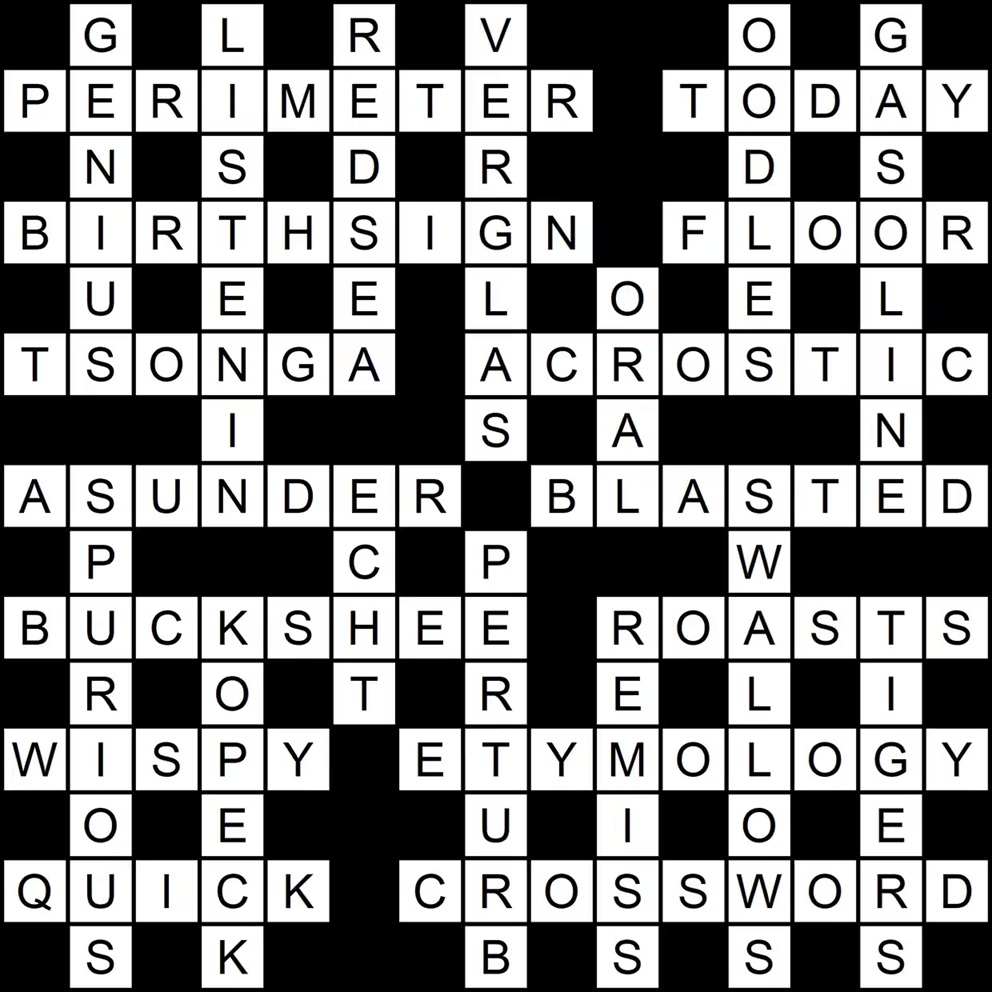
In cryptic #30,000, Arachne included the phrases PERIMETER TODAY and QUICK CROSSWORD reading out in the grid. (The Quick Crossword accompanies the daily cryptic in The Guardian.) Solvers who then completed the Quick Crossword would then find the following message reading out clockwise on the perimeter of the grid:

LEADER I TAILORED BADLY

A cryptic clue was hidden in the perimeter letters!

This cryptic clue can be parsed with “Leader” as the definition, and “badly” indicating that “I tailored” needs to be rearranged. “I tailored” anagrams into EDITORIAL, pointing to the piece Alan Connor wrote that day in celebration of the 30,000th cryptic.

Arachne had also included the word ACROSTIC in Cryptic #30,000 as a subliminal hint to solvers for where to look in the editorial that day.

And if you read the first letter of each paragraph in Connor’s editorial, you get the message LAST THIRTY-FIVE PRIMES.
No, wait, wrong Prime…

Diabolical work. That was the pattern to follow in order to uncover which puzzles were part of their long-running secret message, indicating the actual cryptic puzzle numbers to search through, starting with #29581 and ending with #29989.

So what was the message? What was the final result of a year and a half of seeding and sneaking and devious wordplay?

29581 WELLDONE
29587 BRAVO
29599 HERE
29611 INCONCLUSION
29629 ISOURF
29633 INALCH
29641 ALLENG
29663 EAREYOU
29669 KEEPINGUPGREAT
29671 THEREWI
29683 LLBEAWON
29717 DERF
29723 ULPRIZ
29741 EBUTFIR
29753 STYOUM
29759 USTENT
29761 ERARAC
29789 ENOTAN
29803 ACTUALATHLETIC
29819 RACEOFC
29833 OURSETH
29837 ATWOULD
29851 BEWEIRD
29863 NOTTHAT
29867 ITSACER
29873 EBRALRA
29879 CEINTHE
29881 FORMOFA
29917 CROSSWORDPUZZLE
29921 ITSAGEN
29927 IUSPUBL
29947 ISHEDAT
29959 NOONBST
29983 TOMORROW
29989 GODSPEED

Well done, bravo, here in conclusion is our final challenge. Are you keeping up? Great, there will be a wonderful prize but first you must enter a race. Not an actual athletic race of course, that would be weird. Not that. It’s a cerebral race in the form of a crossword puzzle. It’s a Genius published at noon BST tomorrow. Godspeed!

Naturally, when the hour arrived, a Genius crossword appeared, set by the one and only Enigmatist, another beloved name in the field of cryptics.

Duncan over at Fifteen Squared did an amazing breakdown of not just the treasure hunt but the puzzle that awaited solvers at the end, and it is a mind-bending bit of puzzling.

To start, there were no answer length at the end of each clue, which is definitely a break with tradition when it comes to cryptic crosswords. And that’s for a good reason.

Solvers had to add a letter to many of the answers in order to form the words RECKON, DEDUCE, REASON, and IDEATE beyond the boundaries of the grid.
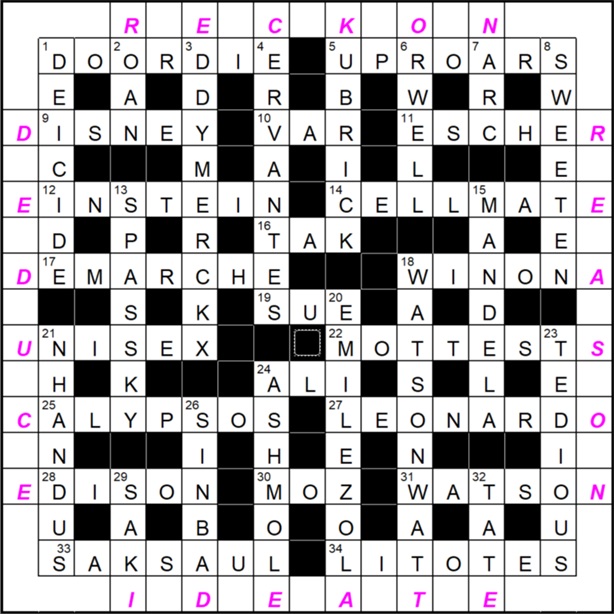
Yes, they had to think outside the box.

Many of the answers referred to luminaries in their various fields (EINSTEIN, ESCHER, LEONARDO, MANDELA, WATSON, CERVANTES, etc.), making the Genius crossword rather literal.

The first letter of every clue ALSO had something to hide. When you removed the names of two more geniuses reading out acrostic-style, BEETHOVEN and ARAUCARIA (yet another beloved cryptic setter), you get the message IT IS WHAT GENIUSES DO.

Which ties back to thinking outside the box.

Wow. What a puzzle.
So, did the puzzle live up to the hype after ALL of this amazing build-up?

I’ll give the last word to Redditor colinbeveridge, who shared this heartfelt response to the entire endeavor:

I’ve finally followed the rabbit-hole all the way to the bottom and… wow. Just blown away by the whole thing, to the point of tears at the final mic-drop.

It’s as if a dedicated team of clever people co-ordinated in secret for a year and a half to deliver something that felt like it was designed just for me (and possibly you, if you’re here). Gorgeous, beautiful work.

WELL DONE and BRAVO, Guardian editors and setters and contributors. What an amazing gift to offer your solvers.

Good luck topping this one when you get to the next 30,000 puzzle goal line!


Are you a cryptic solver, fellow puzzler? Would you have been unable to unravel The Guardian’s crafty clues and hidden hints? Let me know in the comments section below! I’d love to hear from you.
Spies, Crosswords, and Secret Messages!

secret message

There are loads of ways to hide secret messages in puzzles. The field of cryptography is built around it. Many meta puzzles have a special secret lurking inside their clever constructions. Heck, our friends at Penny Press even have an entire word seek called Secret Message.

But have you ever noticed that there’s a strange fascination in pop culture with secret messages in crosswords?

No, I don’t mean constructors hiding quotations, poems, or word seeks in their crosswords, though those are impressive feats of cruciverbalism.

I’m talking about stories about actual secret messages concealed in crossword grids, meant to be hidden from even the most diligent solvers, only a special few possessing the keys to finding the hidden words.

Oh, believe me, it’s definitely a thing.

Look no further than the first Crossword Mysteries movie. The film opens with a murdered art gallery owner with a crossword in his pocket. And it turns out that a devilish criminal mastermind was submitting puzzles to Tess’s daily crossword that contained hidden instructions for robberies to be conducted that day. Diabolical!

You might laugh, but this is hardly the only time we’ve seen crime, secret messages, and crosswords combined. It was a plotline in the radio show The Adventures of Superman, and Lois Lane’s life once depended on Superman’s ability to solve a crossword puzzle.

There are any number of mystery novels, cozy and otherwise, that contain hidden messages in crosswords. Nero Blanc’s Anatomy of a Crossword and Corpus de Crossword come to mind, as do any number of murder mysteries where a strange message scribbled on a crossword grid turn out to be a pivotal clue to catch the killer.

And there’s an even more curious subset of this in pop culture: crosswords and spycraft.

I could give you a simple example, like Bernie Mac’s character in the Ocean’s 11 remake pretending to solve a crossword, but actually writing down key information about the casino for the upcoming heist.

But that’s not really a secret message IN a crossword. No, it’s more of a secret message ON a crossword, though it is a bit of decent spycraft.

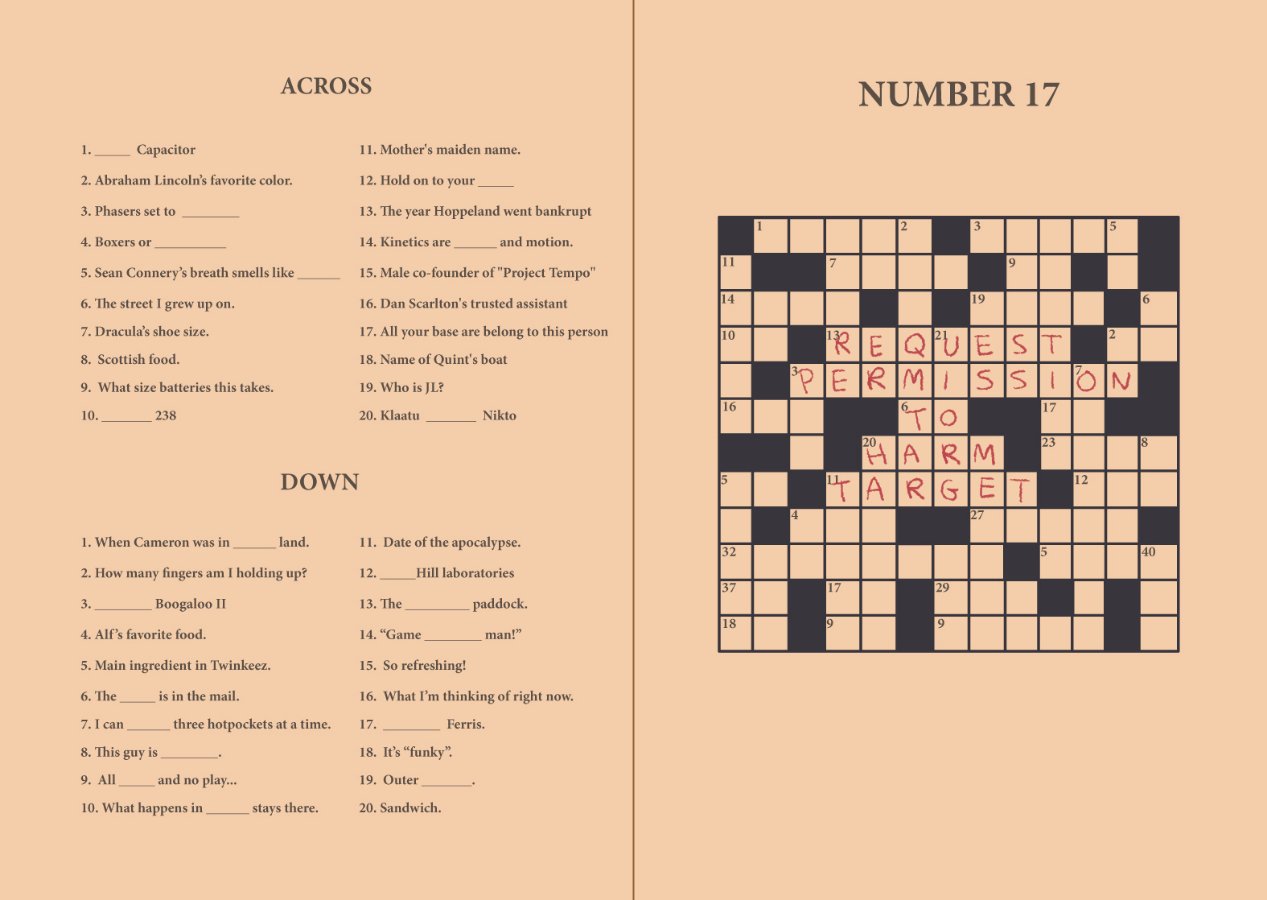
CnwtMc9UMAAssmH

[From Spy vs. Guy.]

Let’s talk about spies and their crosswords, then.

In the TV show Burn Notice, former (and occasionally current) spy Michael Weston sometimes received hidden messages from his previous spy organization through the crossword, though we’re not given much info on how this is achieved.

In the James Bond prequel novel Double or Die, it’s actually the young Bond’s teacher who sneaks a secret message into a puzzle. He’s also a cryptic crossword editor, and he convinces his kidnappers to allow him to submit a crossword to the newspaper, because if he didn’t, it would let people know all was not well.

Naturally, the kidnappers didn’t spot the clues to his current location that the teacher had hidden in the puzzle. Bond, even in his youth, manages to do so with ease.

Rubicon-008

In the short-lived TV show Rubicon, crosswords are at the center of a fascinating unsolved mystery. An intelligence agent named Will finds out his mentor committed suicide after seeing a four-leaf clover.

He then finds a pattern across several crosswords that leads him to believe his mentor’s death is somehow connected to the pattern in the crosswords, and he tells his superior about it.

And soon after investigating it himself, Will’s superior is also found dead. Unfortunately, we never get a resolution for this story, but it certainly fits the bill.

So yes, the curious connection between secret messages and crosswords in pop culture is definitely a thing.

But did you know it also extends beyond fiction? Yup, I’ve got some real-world examples for you too.

Back in June of 1944, physics teacher and crossword constructor Leonard Dawe was questioned by authorities after several words coinciding with D-Day invasion plans appeared in London’s Daily Telegraph.

The words Omaha (codename for one of Normandy’s beaches), Utah (another Normandy beach codename), Overlord (the name for the plan to land at Normandy on June 6th), mulberry (nickname for a portable harbor built for D-Day), and Neptune (name for the naval portion of the invasion) all appeared in Daily Telegraph crosswords during the month preceding the D-Day landing.

So it was possible (though highly improbable) that Dawe was purposely trying to inform the enemy of Allied plans, and the powers that be acted accordingly. In the end, no definitive link could be found, and consensus is that Dawe either overheard these words himself or was told them by his students — possibly slipped by soldiers stationed nearby — and placed them into his grids unwittingly.

Yes, this was just a big misunderstanding. But sometimes, accusations like this have real-world consequences.

In Venezuela, a newspaper has been accused multiple times of hiding encrypted messages within their daily crossword puzzles in order to incite revolt against the government.

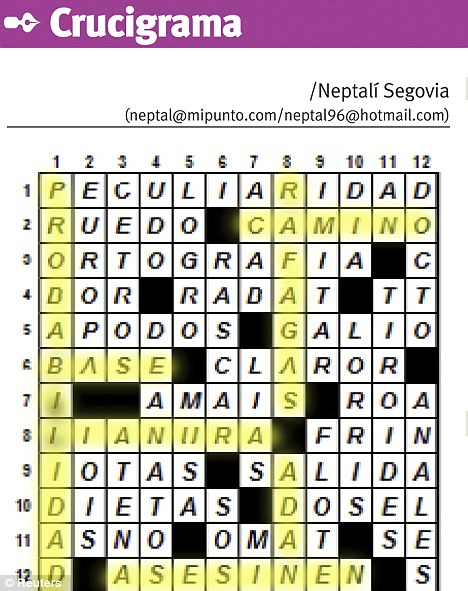
Another Venezuelan newspaper was accused of concealing messages ordering the assassination of a public official named Adan, the brother of President Hugo Chavez!

article-0-130C1EBE000005DC-570_468x591

Some of the answers considered suspicious in the grid included “Adan,” “asesinen” (meaning “kill”), and “rafaga” (which can mean either a burst of gunfire, or a gust of wind).

Apparently this confluence was considered enough to warrant a half-dozen members of the intelligence service visiting the newspaper’s editorial office.

Now, were these cases of genuine secret messages being passed through the crossword, or were these coincidental events that appeared credible because the crossword/secret message concept has been part of pop culture for decades?

I leave that question to you, fellow puzzlers.

Can you think of any examples of crosswords with secret messages in pop culture or intersections of crosswords and spycraft that weren’t mentioned here? Let us know in the comments section below! We’d love to hear from you.

dailypopwsicon

Well, summer’s over, but we still have deals galore for you to check out. You can find them on the Home Screen for Daily POP Crosswords and Daily POP Word Search! Check them out!

Thanks for visiting PuzzleNation Blog today! Be sure to sign up for our newsletter to stay up-to-date on everything PuzzleNation!

Farewell, Maki Kaji.

maki kaji 1

When you get right down to it, the puzzle world isn’t all that big. There are a few names that everyone knows, and plenty of names that people should, but generally don’t. And sadly, too many of those names aren’t celebrated until after they’re gone.

Maki Kaji is one of those names you should know.

He passed away recently, and different articles and obituaries called him everything from “puzzle enthusiast” to “Sudoku creator,” but the title he most deserves is the one he put on his business cards: Godfather of Sudoku.

Honestly, he’s one of the three most important people in the history of Sudoku.

Howard Garns is credited with creating Number Place for Dell Pencil Puzzles and Word Games in May 1979 (though a French variant of the puzzle appeared in the newspaper La France in the 1890s). Wayne Gould stumbled upon Sudoku puzzles in a magazine, then designed a generation program and sold it to the Times in London, kickstarting the craze in the UK that spread elsewhere.

maki kaji 2

[Maki Kaji at Brazil’s first national Sudoku competition in São Paulo in 2012.]

But it was Maki Kaji who championed the puzzle all over, using it in his puzzle magazine Nikoli starting in the early 80s, then taking advantage of the UK boom and selling it in dozens of countries. (Gould didn’t have the resources, so many newspapers and publishers came to Maki Kaji for them.)

The name Sudoku came from him. (In American puzzle magazines, it was Number Place or To the Nines.) Originally the puzzle was called Suuji wa dokushin ni kagiru, or “numbers should be single,” before taking the suggestion to shorten it to Sudoku.

Of course, despite his close association with Sudoku, Maki championed puzzles in all forms. He founded Nikoli (also known as Puzzle Communication Nikoli) with two school friends in 1980, four years before adding Sudoku to its roster of puzzles. It was Japan’s first puzzle magazine!

maki kaji 3

One of the goals of Nikoli was to feature what they called “culture independent” puzzles, meaning puzzles that didn’t rely on a specific language or alphabet. (Talk about accessibility!)

“When we create our puzzles, we want people to enjoy them and not feel stressed by them,” he said.

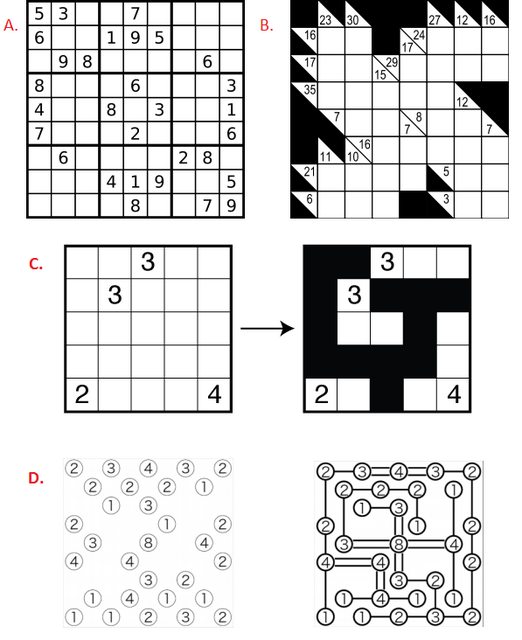
Because of this culture-independent style, Nikoli was famed for its many logic puzzles, because they relied less on words and more on numbers, symbols, and elegant grid positioning. Popular puzzles included familiar ones like Sudoku and Kakuro, as well as less familiar puzzles like Nurikabe and Hashiwokakero.

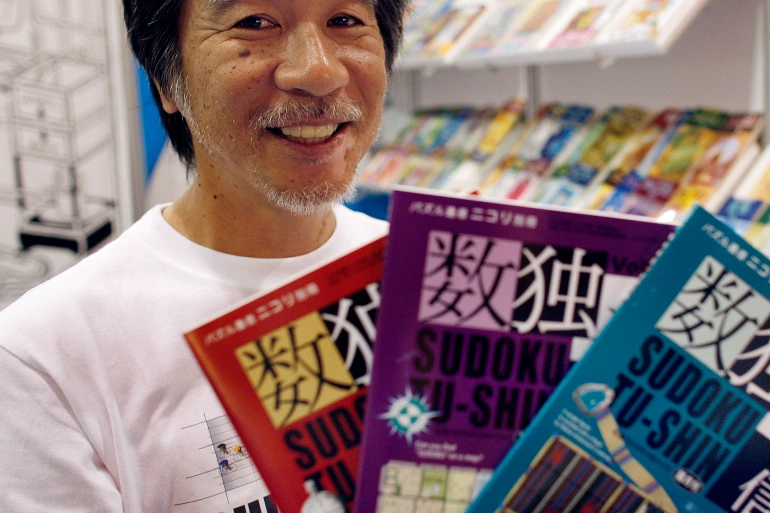
nikoli puzzles

“I don’t want to just be the godfather of Sudoku,” Maki said. “I’d like to spread the fun of puzzles until I’m known as the person who established the puzzle genre in Japan.”

One of his key tools was a section in Nikoli that invited readers to submit their own ideas for puzzles. It quickly became the most popular part of the magazine. Readers submitted new puzzles, which other readers then refined and expanded on. Nikoli is credited with introducing hundreds of new logic and number puzzles to the world through this puzzle-loving fan-fueled pipeline.

Of course, even the Godfather of Sudoku ventured into crosswords from time to time. In fact, in 2017, it was reported that he published the world’s largest ever crossword, with 59,365 across clues and 59,381 down clues on a printed grid 30m long, kept in a scroll.

Go big or go home, I guess.

maki kaji 4

[Constructor Peter Gordon (and his Sudoku license plate) with Maki.

Maki stepped down as president of Nikoli just last month, and the company released this statement in response to his passing:

Kaji-san came up with the name Sudoku and was loved by puzzle fans from all over the world. We are grateful from the bottom of our hearts for the patronage you have shown throughout his life.

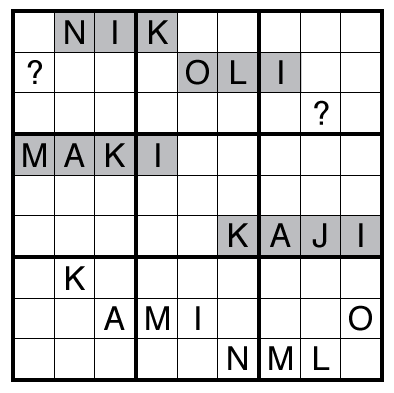
But, naturally, it takes a puzzler to truly honor a puzzler, and I think Thomas Snyder (aka Dr. Sudoku, no slouch himself when it comes to the famed number puzzle) offered the perfect tribute on his Art of Puzzles website:

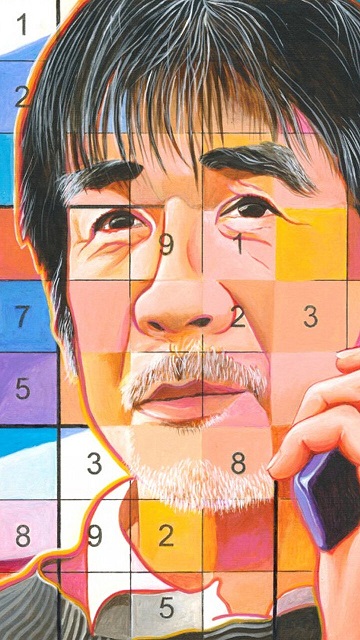
A wordoku puzzle dedicated to Maki Kaji.

snyder wordoku

The puzzle world is a far richer and more varied place thanks to the creativity, hard work, and passion of Maki Kaji. You probably didn’t know his name before. But hopefully, you’ll remember it now.

Farewell, Maki. Thank you for bringing so many new eyes to the world of puzzles.

[Source links: Kotaku, The Guardian, Wikipedia.]


dailypopwsicon

Have you checked out our special summer deals yet? You can find them on the Home Screen for Daily POP Crosswords and Daily POP Word Search! Check them out!

Thanks for visiting PuzzleNation Blog today! Be sure to sign up for our newsletter to stay up-to-date on everything PuzzleNation!

Could Pigs Be Puzzle Solvers?

As a puzzler, I am on a quest to highlight and recognize the skills and accomplishments of fellow puzzlers. All too often, other outlets restrict this activity to humans and humans alone.

But PuzzleNation Blog has a fine long-standing tradition of celebrating the puzzly accomplishments of non-human puzzlers. In the past, we’ve discussed the puzzle skills evidenced by catsdogscrowscockatoos, octopuses, and bees.

And it’s possible that, soon, we might be adding another species to that marvelous list of puzzle-cracking creatures.

Pigs.

According to a paper published on February 11th in the journal Frontiers in Psychology, pigs can learn to be gamers.

No, we haven’t seen them follow multiple steps like octopuses or cockatoos, but there is puzzly potential here, because they’ve proven they can accomplish abstract tasks and deal with unenviable circumstances.

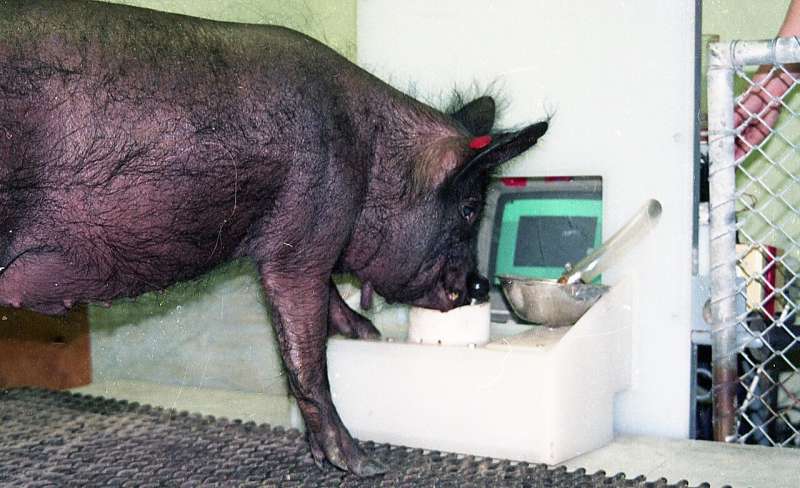
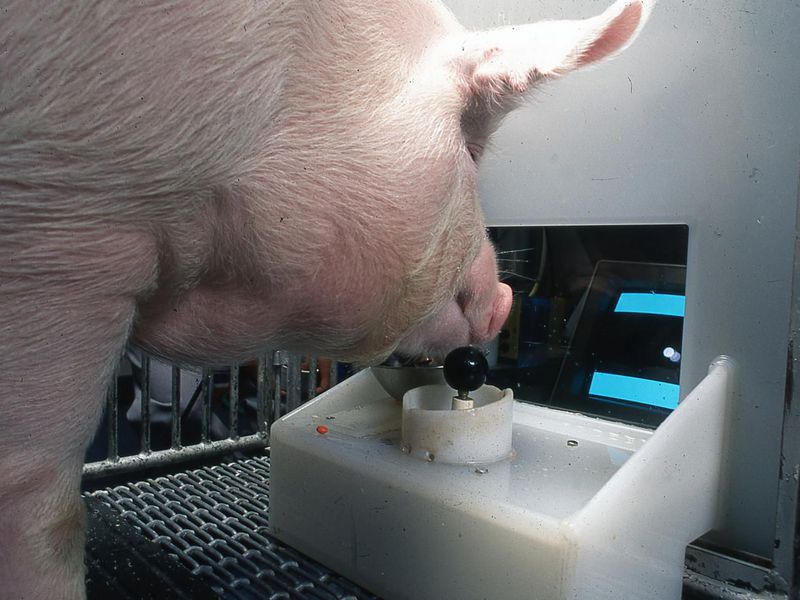
The initial task was for the four pigs — Omelet and Hamlet (Yorkshire pigs) and Ebony and Ivory (Panepinto micro pigs) — to manipulate a joystick so that they would move the cursor on the screen into a particular area.

Sure, it sounds simple, but if you’re an animal that doesn’t look at screens at all or is unfamiliar with the concept that one action here can cause one effect there, this is monumental.

According to The Guardian, the Purdue study focused on “the last 50 rounds of the video game played by each pig on each of the three levels, with one, two and three walls. The round was successful if the pig moved the cursor to the bright blue target with the first cursor movement.”

Their difficulties were described in detail:

It was an uphill battle for the swine. The joysticks were outfitted for trials with primates, so the hoofed pigs had to use their snouts and mouths to get the job done. All four pigs were found to be farsighted, so the screens had to be placed at an optimal distance for the pigs to see the targets. There were additional limitations on the Yorkshire pigs. Bred to grow fast, the heavier pigs couldn’t stay on their feet for too long.

Still, the pigs showed what is known as “self-agency,” the realization that one’s actions make a difference. The pigs recognized that by manipulating the joystick, they moved the cursor. That connection — similar to a cockatoo pulling a lever and opening a door — is the sort of step-by-step cognition that leads to puzzle solving.

The pigs were able to adapt to the joysticks and complete their simple, yet abstract goal.

“What they were able to do is perform well above chance at hitting these targets,” said Candace Croney, director of Purdue University’s Center for Animal Welfare Science and lead author of the paper. “And well enough above chance that it’s very clear they had some conceptual understanding of what they were being asked to do.”

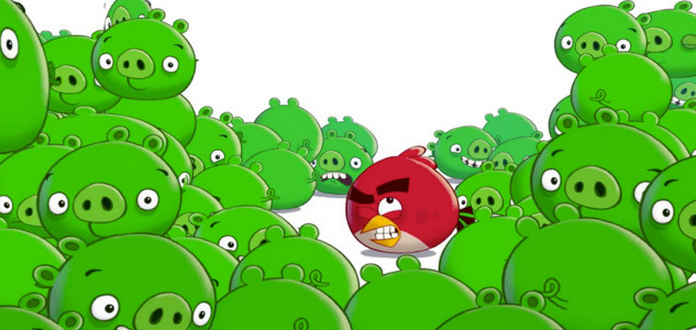
I think the next step should be designing an Angry Birds analog for them where they throw something at the birds and their structures, and see how they do.

We’ll be keeping our eyes open for any other pig-related puzzling. It’s entirely possible we’ll be adding them to the puzzle-solving menagerie sooner rather than later.

And now, despite the cliche, there is truly only one way I can end this post. Say it with me now…

That’ll do, pigs. That’ll do.


Thanks for visiting PuzzleNation Blog today! Be sure to sign up for our newsletter to stay up-to-date on everything PuzzleNation!

You can also share your pictures with us on Instagram, friend us on Facebook, check us out on TwitterPinterest, and Tumblr, and explore the always-expanding library of PuzzleNation apps and games on our website!

Two Brain Teasers, Courtesy of Conway

John_H_Conway_2005_(cropped)

Last week, we penned a post celebrating the life and puzzly legacy of mathematician John Horton Conway, and several of our fellow PuzzleNationers reached out with their own thoughts or questions about Conway.

One recurring subject was about his love of puzzles and what kind of puzzles he enjoyed solving. So, naturally, I went hunting for some of Conway’s favorite puzzles.

As it turns out, Alex Bellos of The Guardian had me covered. Alex has a recurring puzzle feature on The Guardian‘s website where brain teasers and other mental trickery awaits intrepid solvers.

Years ago, Alex had asked Conway for suggestions for his column, and Conway offered up two tricky puzzles.

And now, I happily share them with you.


#1: The Miracle Builders

I had a window in the north wall of my house. It was a perfect square, 1 meter wide and 1 meter high. But this window never let in enough light. So I hired this firm, the Miracle Builders, who performed the impossible. They remodeled the window so it let in more light. When when they’d finished the window was a perfect square, 1 meter high and 1 meter wide.

How did they do it?


#2: The Ten Divisibilities

I have a ten digit number, abcdefghij. Each of the digits is different.

The following is also true:

  • a is divisible by 1
  • ab is divisible by 2
  • abc is divisible by 3
  • abcd is divisible by 4
  • abcde is divisible by 5
  • abcdef is divisible by 6
  • abcdefg is divisible by 7
  • abcdefgh is divisible by 8
  • abcdefghi is divisible by 9
  • abcdefghij is divisible by 10

What’s my number?

[To clarify: a, b, c, d, e, f, g, h, i, and j are all single digits. Each digit from 0 to 9 is represented by exactly one letter. The number abcdefghij is a ten-digit number whose first digit is a, second digit is b, and so on. It does not mean that you multiply a x b x c x…]


Did you solve one or both of these fiendish mind ticklers? Let us know in the comments section below! We’d love to hear from you.
Thanks for visiting PuzzleNation Blog today! Be sure to sign up for our newsletter to stay up-to-date on everything PuzzleNation!

You can also share your pictures with us on Instagram, friend us on Facebook, check us out on TwitterPinterest, and Tumblr, and explore the always-expanding library of PuzzleNation apps and games on our website!

Celebrating the Puzzly Legacy of John Horton Conway

The worlds of puzzles and mathematics overlap more than you might think. I’m not just talking about word problems or mathy brain teasers like the Birthday Puzzle or the jugs of water trap from Die Hard with a Vengeance.

For twenty-five years, Martin Gardner penned a column in Scientific American called Mathematical Games, adding a marvelous sense of puzzly spirit and whimsy to the field of mathematics, exploring everything from the works of M.C. Escher to visual puzzles like the mobius strip and tangrams. He was also a champion of recreational math, the concept that there are inherently fun and entertaining ways to do math, not just homework, analysis, and number crunching.

And on more than one occasion, Gardner turned to the genius and innovative thinking of John Horton Conway for inspiration.

John_H_Conway_2005_(cropped)

[Image courtesy of Wikipedia.]

Conway was best known as a mathematician, but that one word fails to encapsulate either his creativity or the depth of his devotion to the field. Conway was a pioneer, contributing to some mathematical fields (geometry and number theory among them), vastly expanding what could be accomplished in other fields (particularly game theory), and even creating new fields (like cellular automata).

Professor of Mathematics, Emeritus, Simon Kochen said, “He was like a butterfly going from one thing to another, always with magical qualities to the results.” The Guardian described him in equally glowing terms as “a cross between Archimedes, Mick Jagger and Salvador Dalí.”

lifep

[Image courtesy of Cornell.edu.]

His most famous creation is The Game of Life, a model that not only visually details how algorithms work, but explores how cells and biological forms evolve and interact.

Essentially, imagine a sheet of graph paper. In The Game of Life, you choose a starting scenario, then watch the game proceed according to certain rules:

  • Any live cell with fewer than two live neighbors dies, as if by underpopulation.
  • Any live cell with two or three live neighbors lives on to the next generation.
  • Any live cell with more than three live neighbors dies, as if by overpopulation.
  • Any dead cell with exactly three live neighbors becomes a live cell, as if by reproduction.

The process plays out from your starting point completely without your intervention, spiraling and expanding outward.

It’s the ultimate if-then sequence that can proceed unhindered for generations. It is a literal launchpad for various potential futures based on a single choice. It’s mind-bending and simple all at once. (And you can try it yourself here!)

JHC-GOL-600x170px

[Image courtesy of Sign-Up.To.]

But that’s far from Conway’s only contribution to the world of puzzles.

Not only did he analyze and explore puzzles like the Soma cube and Peg Solitaire, but he created or had a hand in creating numerous other puzzles that expanded upon mathematical concepts.

I could delve into creations like Hackenbush, the Angel Problem, Phutball/Philosopher’s Football, Conway’s Soldiers, and more — and perhaps I will in the future — but I’d like to focus on one of his most charming contributions: Sprouts.

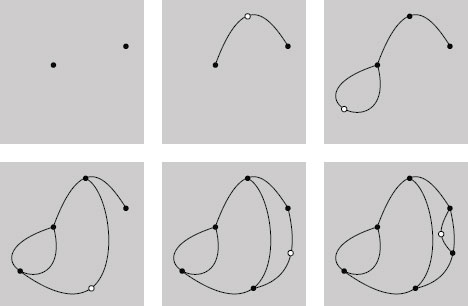
Sprouts is a pencil-and-paper strategy game where players try to keep the game going by drawing a line between two dots on the paper and adding a new dot somewhere along that line.

The rules are simple, but the gameplay can quickly become tricky:

  • The line may be straight or curved, but must not touch or cross itself or any other line.
  • The new spot cannot be placed on top of one of the endpoints of the new line. Thus the new spot splits the line into two shorter lines.
  • No spot may have more than three lines attached to it.

Check out this sample game:

sprouts

[Image courtesy of Fun Mines.]

It’s a perfect example of the playfulness Conway brought to the mathematical field and teaching. The game is strategic, easy to learn, difficult to master, and encourages repeated engagement.

In a piece about Conway, Princeton professor Manjul Bhargava said, “I learned very quickly that playing games and working on mathematics were closely intertwined activities for him, if not actually the same activity.”

He would carry all sorts of bits and bobs that would assist him in explaining different concepts. Dice, ropes, decks of cards, a Slinky… any number of random objects were mentioned as potential teaching tools.

Professor Joseph Kohn shared a story about Conway’s enthusiasm for teaching and impressive span of knowledge. Apparently, Conway was on his way to a large public lecture. En route, he asked his companions what topic he should cover. Imagine promising to do a lecture with no preparation at all, and deciding on the way what it would be about.

Naturally, after choosing a topic in the car, the lecture went off without a hitch. He improvised the entire thing.

Of course, you would expect nothing less from a man who could recite pi from memory to more than 1100 digits? Or who, at a moment’s notice, could calculate the day of the week for any given date (employing a technique he called his Doomsday algorithm).


Conway unfortunately passed away earlier this month, due to complications from COVID-19, at the age of 82.

His contributions to the worlds of mathematics and puzzles, not to mention his tireless support of recreational math, cannot be overstated. His work and his play will not soon be forgotten.

MAC31_BOOKS_COVERS_POST02

[Image courtesy of Macleans.]

If you’d like to learn more about Conway, be sure to check out Genius at Play: The Curious Mind of John Horton Conway by Siobhan Roberts.

[My many thanks to friend of the blog Andrew Haynes for suggesting today’s subject and contributing notes and sources.]


Thanks for visiting PuzzleNation Blog today! Be sure to sign up for our newsletter to stay up-to-date on everything PuzzleNation!

You can also share your pictures with us on Instagram, friend us on Facebook, check us out on TwitterPinterest, and Tumblr, and explore the always-expanding library of PuzzleNation apps and games on our website!