The Curious Case of Richard Simon’s Aunt, Hedwig

Back in November, I wrote about how women have shaped the world of puzzles, both in the past and in the present.

One of the first women I mentioned was Richard Simon’s aunt. According to the lore of Simon & Schuster, she was the one who inspired Simon to publish a limited release book — the first crossword puzzle book — that launched their publishing empire.

While I was writing that post, I spent a little time researching, and I never came across her actual name. Everywhere I looked, it was simply Richard Simon’s aunt.

And that question festered in my brain for a while.

So, one day, I reached out to Simon & Schuster directly, asking for more information on Simon’s influential aunt. I heard back from Hannah Brattesani, their backlist manager, who not only volunteered to comb through the various company histories, but also suggested a book for my research (Turning the Pages by Peter Schwed).
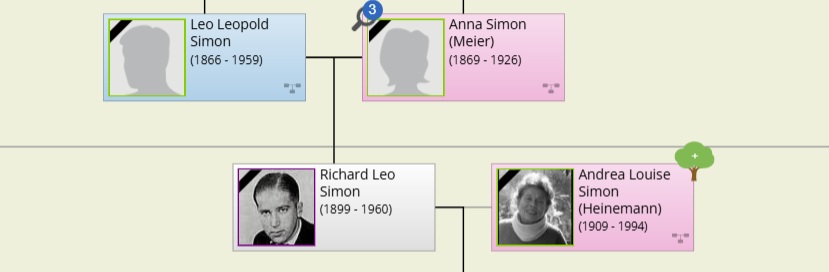
While Hannah investigated from the S&S side of things, I decided to pursue what was publicly available about the Simon family tree. Perhaps I could look up his aunt directly and find a name that way.

I found that Richard L. Simon was the son of Leo Leopold Simon and Anna Simon (nee Mayer). Leo apparently only had brothers, while Anna’s only sister, Julia, died young.

Okay, that was a dead-end. Ah! But what about women who married into the family?

Anna’s brother Max Reinhard Meyer married a woman named Harriet and Leo’s brother Alfred Leopold Simon married a woman named Hedwig.

So we have two possibilities, but nothing concrete tying either of them to crosswords or S&S’s early days.

I heard back from Hannah, who unfortunately came up empty while searching the S&S archives. The closest we got was a reference from a book celebrating S&S’s 75th anniversary, mentioning “Mr. Simon’s strong-willed aunt.”
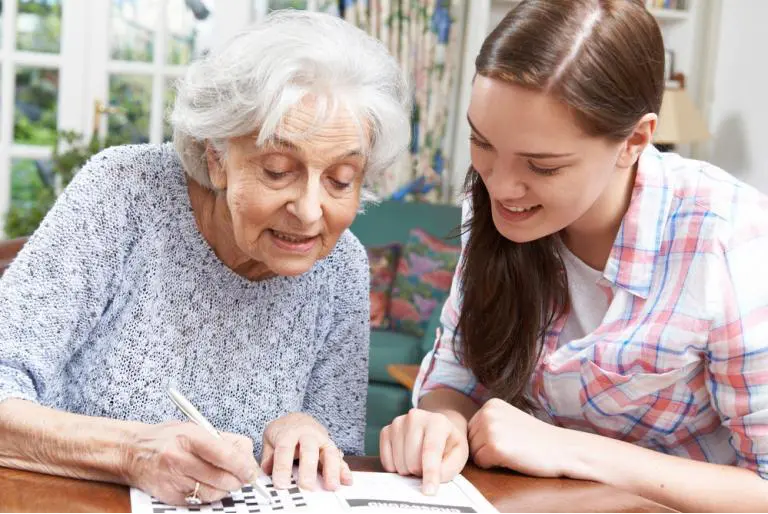
Sadly, not an actual picture of Richard Simon’s aunt…

Before I continue, I want to take a moment to ponder all the different permutations of the Richard Simon’s aunt story. For a casual anecdote that adds charm to a business’s first success story, there are a surprising number of variations.

In Turning the Pages and The Centenary of the Crossword, the story goes that Dick Simon had been asked by his aunt for a little help with a crossword puzzle to which she had become addicted. She considered there should be a book of these published.

In an article in Pressreader, she asked him where she could buy a book of crosswords like the ones in her favorite newspaper.

In What’s Gnu?: A History of the Crossword Puzzle by Michelle Arnot, she wants a collection of crossword puzzles for her daughter, an avid fan of the weekly puzzle in The World. In The Crossword Century and Thinking Inside the Box, Simon goes to dinner with his aunt, whose niece was addicted to crosswords.

So the only common threads are Simon, his aunt, and crosswords. Sometimes it’s for her (described as “puzzle mad” or, as we’ve already seen, “strong-willed”), or her daughter, or her niece, or a friend. Sometimes he notices her solving crosswords, sometimes she tells him. Sometimes it’s at her house, or over tea, or at dinner.

Sure, lots of anecdotes evolve over the decades. Any story from your family probably has a number of variations, depending on who tells the tale.

But it’s fascinating that such a fundamental moment in S&S’s history doesn’t really have an official version as part of the narrative.
So, we have Richard Simon, his aunt, and crosswords. Those were the common threads.

And it was the third one in that list that finally led me to her name. Not crosswords per se, but crossword history.

There are several marvelous books about the history of crosswords — I’ll post a list of my sources at the bottom of today’s post — and wouldn’t you know it, several of them include a name for Simon’s aunt!

Well, not a name. A nickname.

Wixie.

Yes, it’s somehow so brilliantly fitting that the woman who launched crossword publishing (for herself, a daughter, a niece, whomever) would have a whimsical nickname like that.

Aunt Wixie.

As it turns out, this nickname was sort of an open secret in the annals of crossword history and I’d managed to miss it in my previous searches across the internet. My grand mystery would have been solved much faster if I’d simply asked some of my fellow puzzlers and puzzle historians.

But I wasn’t disappointed to learn that I was late to the table. On the contrary, I was excited to add “Wixie” to the search parameters and see what I came up with.

A few more online sources were revealed, but sadly, not much else about Aunt Wixie herself.
Now, sharp-eyed readers, you’ve probably come to the same conclusion I did at this point.

Thinking back to what I’d learned about the Simon family tree, I had two possible aunts who had married into the family who could be our crossword-loving inspiration.

One was Harriet and one was Hedwig.

It seems like a natural conclusion that Aunt Wixie and Aunt Hedwig would be one and the same. But none of the sources, paper or digital, ever mentioned her real name.

I could’ve called it here, and written my blog post, and gone on my merry way.

But I wanted that last piece of puzzle that I could definitively point to and say, this, this is her.


In all those Google Books links and online articles, there was one source I couldn’t view publicly, because it was behind a paywall. Naturally, it was also the oldest source I could find online that came up using “Wixie” as a keyword: an issue of Publisher’s Weekly from 1954.

And I could read it… for a fee.

You may find it funny that I balked at spending twenty bucks for access to an article. But I did. I mean, none of the other sources told me more than her nickname and some variation on the crossword book creation myth. Would this one be any different?

As it turns out, yes, yes it would.

From the writeup in Publisher’s Weekly:

Among the devotees of the World’s crosswords was a New York Lady, Mrs. Alfred L. Simon. She had a nephew named Richard L. Simon to whom she was known as Aunt Wixie.

It is so perfectly typical that the smoking gun in my search for Richard Simon’s aunt’s name STILL doesn’t directly mention her by name, using her husband’s name instead. What an insanely fitting denouement.

Nonetheless, I finally had the connective tissue to tie the whole story together. From my deep dive into the Simon family tree, I knew that Mrs. Alfred L. Simon was none other than Hedwig Simon (nee Meier), our elusive Aunt Wixie.
So what do we know about Hedwig?

Sadly, very little. She was born in Frankfurt Am Main, Regierungsbezirk Darmstadt, HE, Germany on February 27, 1868. She had two children, Robert and Helen (hopefully a puzzle lover like her mother, depending on the story), and she died in May 26, 1932 in Manhattan.

That’s it. Several Hedwig Simons come up when you search the name, but unfortunately, I wasn’t able to find anything else I could verify was truly about Aunt Wixie.

Date of birth. Names of her children. Date of death. That’s all we know.

Oh, we actually do know one other thing.

We know that she, in some way, influenced the creation of the very first crossword puzzle book, helping to launch a literary dynasty that lasts to this very day.
But did she though?

It turns out… there’s an asterisk on the historical record that’s worth mentioning.

There is a chance that this entire story is apocryphal, and the influential hand of Aunt Wixie in Simon & Schuster’s earliest days was not as influential as the story makes it seem.

Michelle Arnot reported in her book that Margaret Farrar, first crossword puzzle editor for The New York Times, had her doubts about Aunt Wixie’s role in the creation of S&S’s first crossword book.

In the foreword to Eugene T. Maleska’s 1984 book Across and Down: The Crossword Puzzle World, Farrar herself wrote:

There had never been a book of crosswords and Dick Simon’s aunt had suggested one. (Dick later admitted to me that this was all a joke, even unto the framed memo up on the office wall noting this earth-shaking idea.)

Could Aunt Wixie’s role in the history of crosswords simply be Richard Simon’s invention to help sell crossword books and add some whimsy and down-home family charm to Simon & Schuster’s first of many success story?

Margaret Farrar seemed to think so, and she was one of the most respected names in puzzles.

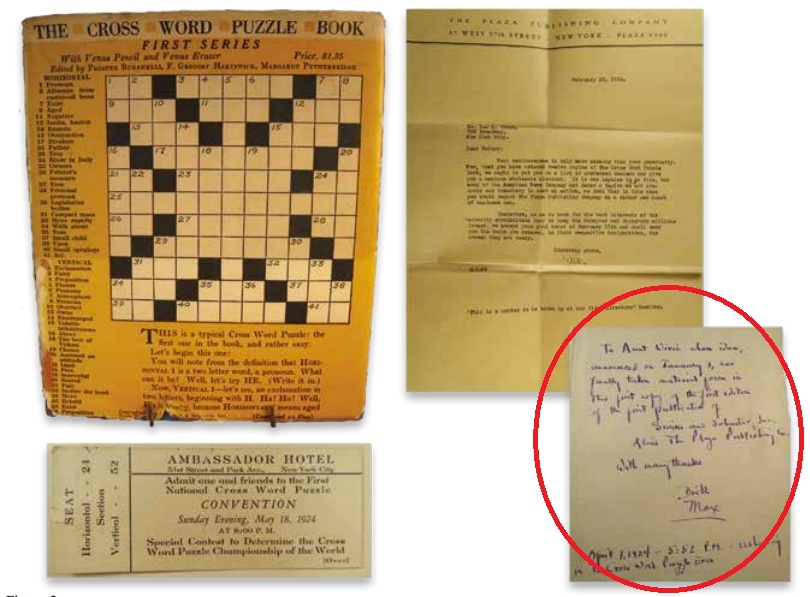
If this IS the case, Simon seemed to go out of his way to sell the story. He had a framed memo on his wall, as Farrar mentioned. He had a presentation copy of the first crossword puzzle book inscribed by both himself and Max Schuster to Aunt Wixie (the note pictured above), which was returned to Richard Simon upon her death, and which now resides in Will Shortz’s private collection.

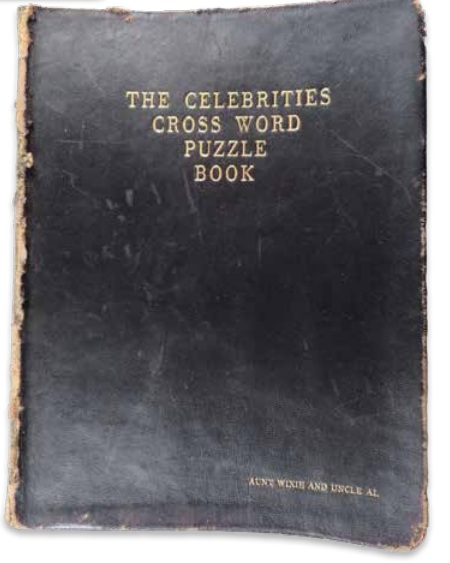
Will’s collection also includes a copy of 1925’s Celebrities’ Cross Word Puzzle Book, a collection by S&S featuring puzzles created by (you guessed it) celebrities. It’s a leatherbound presentation copy specially printed for “Aunt Wixie.”

By the end of 1924, S&S already had four bestselling crossword compilations on the shelves. By the time The Celebrities’ Cross Word Puzzle Book was published in 1925, would Simon still have bothered with perpetuating the Aunt Wixie story, given the runaway success of S&S’s crossword puzzle books?

It seems a tad unnecessary.

The many variations on how Aunt Wixie, Simon, and crosswords influenced that first puzzle book could mean the story was made up, taking on a life of its own as it was shared anecdotally. Or it could mean that it’s true, as many stories from a hundred years ago have variations from being shared over and over again, retold many times. It’s hard to say either way.

That first book sparked a long, successful series…

I choose to believe that Hedwig Simon was in fact the impetus behind that first book. Maybe it’s naive to want her to be a true crossword enthusiast (or the mother of one, or the aunt of one), and not simply one more corporate invention to sell something to someone.

But I’m okay with that.

I’m happy to have spent this time and energy trying to unearth her name and learn a bit more about her, and I’m hoping that I might have the opportunity in the future to continue learning about her.

And I’m happy that this post, in some small way, might bend search algorithms and lead more people to associate the name Hedwig Simon with Simon & Schuster’s successes.

Narratively, I probably shot myself in the foot a little by putting her name in the title of the blog post. But this entire endeavor has been about learning more about her, learning her name, and it would be the height of selfishness to bury it in hundreds of words of text just for a ta-da moment.

So, in closing, let me just say, thanks Aunt Wixie, and it was nice to meet you, albeit very briefly, Hedwig.


My sincere thanks to Hannah Brattesani of Simon & Schuster, Rebecca Rego Barry of finebooksmagazine.com, and especially Ben Zimmer, who provided several key sources and links (and confirmed that the Publisher’s Weekly was the earliest source on the subject).

Sources:

-Turning the Pages: An Insider’s Story of Simon & Schuster 1924-1984 by Peter Schwed
-What’s Gnu?: A History of the Crossword Puzzle by Michelle Arnot
-The Centenary of the Crossword by John Halpern
-The Crossword Century by Alan Connor
-Thinking Inside the Box: Adventures with Crosswords and the Puzzling People Who Can’t Live Without Them by Adrienne Raphel
-Publishers Weekly (April 17, 1954, Volume 165, Issue 16)

Women of Letters (and Squares and Boxes and Clues and…)

Puzzles bring joy to so many of us. They’re an escape, a challenge, a satisfying little test of our wits, our dedication, our creativity, and our flexibility of thought.

In uncertain times, in times of trouble, people often turn to puzzles. Puzzles were a refuge for many during lockdown when COVID hung over our heads. And now, when so much seems uncertain, if not downright unstable, people will no doubt turn to puzzles again.

That’s not to say that puzzle solving is a mere flight of fancy, a desperate bit of escapism, a Hail Mary avoidance of difficult circumstances, hard questions, and treacherous times to come. Quite the opposite, in fact.

If you turn to puzzles now, you’ll see a road map that proves things can get better.

Because, like it or not, misogyny once dominated the world of puzzles. It was baked into crosswords from the very beginning.

Yes, Arthur Wynne created the template for crosswords. Simon & Schuster are credited with publishing the first crossword puzzle book, as well as all the bestselling puzzle books that followed, serving as the foundation that helped build their brand.

But it was women who made crosswords into something more.

Women like Richard Simon’s aunt Wixie. She insisted Simon look into publishing a limited release crossword book. (UPDATE: I originally wrote that none of the stories mentioned her name, but I later found some that included her nickname, Wixie. I later discovered her actual name is Hedwig Simon.)

Women like Margaret Farrar. While serving as “an unofficial editor of the crossword-puzzle section,” she prevented errors and helped establish some of the baselines that still stand in crosswords today.

Women like Ruth Hale. Ruth was the founding president of the Amateur Cross Word Puzzle League of America, an organization that set crossword standards like limiting black squares and symmetrical grids, building off of Farrar’s work.

Women like Nancy Schuster. Schuster (no relation to the aforementioned publisher) not only ran Dell Crosswords but was the first winner of the American Crossword Puzzle Tournament.

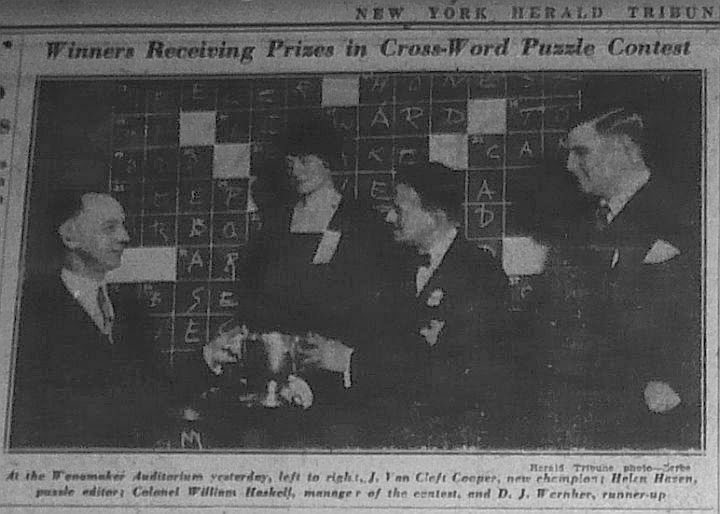
Women like Helen Haven. In the 1920s, Haven was the organizer of the first competitive crossword-solving contest and served as the puzzle editor for The New York Herald-Tribune.

As pointed out by Anna Shechtman in her book The Riddles of the Sphinx: Inheriting the Feminist History of the Crossword Puzzle, between 1913 and the 1960s, most crosswords were created by women.

Puzzles were literally women’s work! With all the connotations that phrase invites.

And crosswords were derided as a frivolous pastime because of it. Not only because women made crosswords, but because crosswords were predominantly solved by women.

The New York Times called the crossword “a primitive form of mental exercise” and female solvers were blamed for neglecting their families and wifely duties because of their “utterly futile finding of words the letters of which will fit into a prearranged pattern, more or less complex.”

Funny how their opinions changed just in time to profit on crosswords in the 1940s.

Much like the Beatles — who were dismissed as nothing more than a glorified boy band when thousands of women cheered at their shows, only for them to be recognized as a once-in-a-generation group of talents when men started paying attention — crosswords became “respectable” only when men took interest and took over.

The percentage of female constructors published in The New York Times went down during the Will Shortz era, as compared to the Will Weng and Eugene Maleska eras.

And like it or not, but “the average solver” concept — a problem I discussed years ago — is still using a white male yardstick for comparisons, to the detrimental of solving and constructing.

In a wonderful blog post on the subject of women in puzzles, the author of the piece opens with the line “I’ve always associated crossword puzzles with men.”

And I realized how lucky I was to NOT have that association. In fact, I don’t think I would be a puzzly guy without the women in my life.

My mother (the first female store manager in A&P history) still solves crosswords and jigsaw puzzles to this day, and encouraged my interest in puzzles in the first place. My oldest sister (a teacher) introduced me to wordplay. My older sister spent hours playing puzzle video games like Dr. Mario with me. My younger sister is not just a master jigsaw puzzle solver, but a fiend at trivia nights and escape rooms, forever challenging me to match her flow.

I was trained in crossword puzzle editing and construction by Penny Press’s crossword guru Eileen Saunders, and still lean on her creativity and wisdom every day (and marvel at her blistering speed and efficiency).

I was shepherded through the world of variety puzzles by Los Angeles Times crossword editor and puzzle badass Patti Varol. (Though it was probably more like dragging my deadweight body through molasses than “shepherding” if I’m being honest.)

And that’s not counting the undeniable and indispensable influence of Amy Roth (a shining light at Penny Press), Chris Begley, and so many other female voices that make Penny Press one of the best outlets for puzzles in the world.

I love puzzles because of those women. I have made a career in puzzles because of those women. I am better at puzzles because of those women.

The puzzle world is better because of women. It will continue to advance and innovate and thrive because of women.

How do I know this? Because women are doing incredible things in puzzles RIGHT NOW.

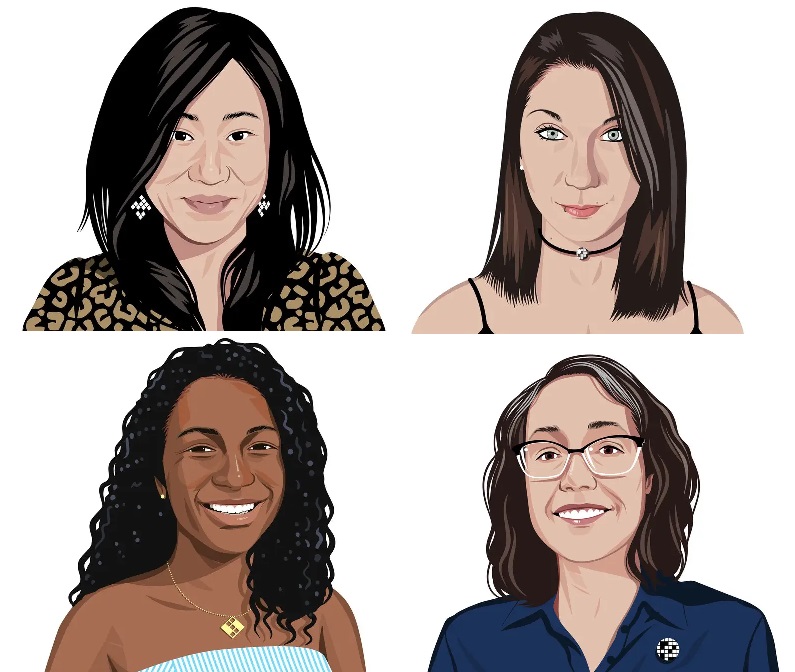
A small sampling of the women making puzzles better. Wyna Liu, Amanda Rafkin, Soleil Saint-Cyr, Tracy Bennett. Illustrations by Ben Kirchner.

Look at The New York Times. Tracy Bennett, Wyna Liu, and Christina Iverson are delivering great daily puzzles like Connections, Strands, and Mini Crosswords not just consistently, but brilliantly.

The aforementioned Patti Varol is absolutely crushing it at The Los Angeles Times crossword. With Katie Hale and Angela Kinsella Olsen on Patti’s team, every month since mid-April 2022 has had a minimum of 50% women constructors and often exceeds that, all while delivering topnotch puzzles.

The New Yorker, USA Today, The Slate Crossword? Liz Maynes-Aminzade, Amanda Rafkin, Quiara Vasquez. Brooke Husic runs PuzzMo (where Rachel Fabi constructed my favorite puzzle of the year!) and Amy Reynaldo co-edits Crosswords With Friends.

Rebecca Goldstein just won the Orca for constructor of the year. Smarter people than me have called Stella Zawistowski a crossword boss in every sense of the word. Ada Nicolle won the 2024 Lollapuzzoola crossword tournament.

The impact of projects like Women of Letters and The Inkubator weren’t just the tip of the iceberg, they were the tip of the spear. A spear aimed directly at the heart of outdated notions of who makes crosswords and who solves them, dismantling the idea of some mythical “average solver” that has never truly represented the crossword audience.

As constructors, editors, and solvers, women in the past shaped puzzles as we know them. And women in the present are redefining puzzles. Not just in terms of representation (both as grid answers and creators behind the scenes), but in terms of acknowledgment, respect, and appreciation.

As for women of the future? I, for one, can’t wait to see what they have in store for us.

(And thank you to several of the women mentioned above for making this post far, far better than it started.)

Crossword History: An Updated Timeline

Back in 2013, we created a timeline of events from crossword history as part of our celebration of the hundredth anniversary of the crossword.

Although 105 isn’t as prestigious as 100, and the anniversary is technically tomorrow, we thought we’d honor the day this year by updating our comprehensive look at the long (yet surprisingly short) road it took to get to that marvelous centennial!

So, without further ado or folderol, we proudly present:

A Brief History of the Crossword (Updated)

16th – 11th century BC

Inscriptions from New Kingdom-era Egypt (Eighteenth to Twentieth Dynasties) of horizontal and vertical lines of text divided into equal squares, that can be read both across the rows and down the columns, are made. These inscriptions are later referred to by Egyptologists as “Egyptian crossword puzzles.”

19th century AD

Rudimentary crosswords, similar to word squares, begin appearing in England, and later elsewhere in Europe.

June 22, 1871

Future inventor of the crossword, Arthur Wynne, is born.

March 23, 1897

Future New York Times crossword editor Margaret Farrar is born.

February 25, 1907

Future New York Times crossword editor Will Weng is born.

December 21, 1913

The New York World publishes the first crossword, invented by Liverpool journalist Arthur Wynne. (The puzzle is originally known as a word-cross.)

January 6, 1916

Future New York Times crossword editor Eugene T. Maleska is born.

1920

Margaret Farrar is hired by The New York World as a secretary, but soon finds herself assisting Arthur Wynne with proofreading puzzles. Her puzzles soon exceed Wynne’s in popularity.

Colonel H.W. Hill publishes the first Crossword Dictionary.

1923

Margaret Farrar revises the cluing system for crosswords, sorting them into “Horizontal” and “Vertical” clues by number. (It wouldn’t be until the 1940s that the more familiar “Across” and “Down” terminology became the norm.)

1924

Margaret Farrar publishes the first book of crossword puzzles under contract for Richard L. Simon and Max Schuster, “The Cross-Word Puzzle Book.” It was an instant bestseller, launching Simon & Schuster as a major publisher. (Additional information available below the timeline.)

The Daily Express, founded in 1900, becomes the first newspaper in the United Kingdom to carry crosswords.

Crossword-themed novelty songs hit the airwaves as the puzzle craze intensifies, most notably “Crossword Mama, You Puzzle Me (But Papa’s Gonna Figure You Out).”

The Amateur Crossword Puzzle League of America, a self-appointed group of puzzle enthusiasts, lobbies for rotational symmetry in crosswords, which becomes the standard.

Solver Ruth Franc von Phul becomes a minor celebrity after winning The New York Herald-Tribune’s National All Comers Cross Word Puzzle Tournament at the age of 20. (She would win again 2 years later.)

January 15, 1925

“Felix All Puzzled,” the first animated short to feature a crossword, is released.

February 2, 1925

The crossword-fueled musical revue “Puzzles of 1925” opens on Broadway. It runs until May of 1925.

February 15, 1925

Disney releases a crossword-themed animated short, “Alice Solves the Puzzle.”

1926

The cryptic crossword is invented by Edward Powys Mathers, who publishes under the pseudonym Torquemada. He devises them for The Observer newspaper.

First reported instances of Braille crosswords, as newspapers mention Helen Keller solving Braille crosswords and recommending them to the blind.

1931

Dell Puzzle Magazines begins publishing.
(Dell Publishing itself was founded in 1921.)

1941

Dell Pocket Crossword Puzzles first published.
(The magazine continues to this day.)

February 15, 1942

The New York Times runs its first Sunday edition crossword. (Additional information available below the timeline.)

June 2, 1944

Physics teacher and crossword constructor Leonard Dawe is questioned by authorities after several words coinciding with D-Day invasion plans appear in London’s Daily Telegraph(Additional information available below the timeline.)

1950

The crossword becomes a daily feature in The New York Times.

August 26, 1952

Future New York Times crossword editor Will Shortz is born.

1968

Lyricist Stephen Sondheim begins creating cryptic crosswords for New York Magazine, helping introduce Americans to British-style crosswords.

1969

Will Weng succeeds Margaret Farrar as the second crossword editor for The New York Times.

1973

Penny Press is founded.

1977

Eugene T. Maleska succeeds Will Weng as the third crossword editor for The New York Times.

1978

First year of the American Crossword Puzzle Tournament, later featured in the documentary Wordplay. 149 contestants compete for the title in the first national crossword tournament since the 1930s.

1979

Howard Garns creates the modern Sudoku puzzle for Dell Magazines (under the name Number Place), the first pen-and-paper puzzle to rival the crossword in popularity (though this spike in popularity would occur decades later under the name Sudoku).

June 11, 1984

Margaret Farrar, while working on the 134th volume in Simon & Schuster’s crossword puzzle book series, passes away.

1993

Will Shortz succeeds Eugene T. Maleska as the fourth crossword editor for The New York Times.

November 5, 1996

One of the most clever and famous crosswords of all time is published, the election-preceding crossword where either BOB DOLE ELECTED or CLINTON ELECTED could read out, depending on the solver’s answers.

1998

The Wall Street Journal adds a crossword to its newspaper, and Mike Shenk is appointed editor.

June 23, 2006

Wordplay documentary hits theaters, featuring celebrity solvers of crosswords as well as the participants and organizers of the 2005 edition of the American Crossword Puzzle Tournament.

February 29 – March 2, 2008

Thanks in part to the Wordplay documentary, the American Crossword Puzzle Tournament outgrows its previous setting and moves to Brooklyn.

June 6, 2008

Matt Gaffney launches his Weekly Crossword Contest (MGWCC).

August 2008

Lollapuzzoola, a crossword-solving tournament with a more tongue-in-cheek, freeform style, launches in Jackson Heights, New York.

October 6, 2008

Patrick Blindauer’s famous dollar bill-inspired crossword puzzle is published.

2009

The city of Lvov, Ukraine, creates a crossword that spans an entire side of a 100-foot-tall residential building, with clues scattered around the city’s major landmarks and attractions. It’s awesome.

October 11, 2011

PuzzleNation.com goes live.

June 2012

David Steinberg launches the Pre-Shortzian Puzzle Project, designed to compile a complete database of every New York Times crossword.

August 13, 2012

PuzzleNation Blog is launched.

June 14, 2013

Matt Gaffney celebrates five years of MGWCC,
stating that MGWCC will run for 1000 weeks
(which puts the final edition around August 6th, 2027).

December 21, 2013

The Crossword officially turns one hundred years old.


Additional information:

1924: The publishing house Simon & Schuster, agreed to a small (3,600-copy) run of a crossword puzzle book, prompted by founder Richard L. Simon’s aunt, who wanted to give such a book to a friend. It became “a runaway bestseller.”

In no time the publisher had to put the book back on press; through repeated printings, it sold more than 100,000 copies. Soon a second collection followed, and then a third and a fourth. In 1924 and 1925 the crossword books were among the top 10 nonfiction bestsellers for the year, besting, among others, The Autobiography of Mark Twain and George Bernard Shaw’s Saint Joan.

February 15, 1942: The New York Times initially regarded crosswords as frivolous, calling them “a primitive form of mental exercise”; the motivating impulse for the Times to finally run the puzzle (which took over 20 years even though its publisher, Arthur Hays Sulzberger, was a longtime crossword fan) appears to have been the bombing of Pearl Harbor.

In a memo dated December 18, 1941, an editor conceded that the puzzle deserved space in the paper, considering what was happening elsewhere in the world and that readers might need something to occupy themselves during blackouts. The puzzle proved popular, and Sulzberger himself would author a Times puzzle before the year was out.

June 2, 1944: The words Omaha (codename for one of Normandy’s beaches), Utah (another Normandy beach codename), Overlord (the name for the plan to land at Normandy on June 6th), mulberry (nickname for a portable harbor built for D-Day), and Neptune (name for the naval portion of the invasion) all appeared in Daily Telegraph crosswords during the month preceding the D-Day landing.

This has been attributed to either an incredible coincidence or Dawe somehow overhearing these words (possibly slipped by soldiers involved) and incorporating them into puzzles unwittingly.


Do you have any suggestions for additions for our Crossword Timeline? Let us know in the comments section below! We’d love to hear from you!

Thanks for visiting PuzzleNation Blog today! Be sure to sign up for our newsletter to stay up-to-date on everything PuzzleNation!

You can also share your pictures with us on Instagram, friend us on Facebook, check us out on TwitterPinterest, and Tumblr, and explore the always-expanding library of PuzzleNation apps and games on our website!

Crosswords: Scourge of Society!

Study history for any length of time, and patterns will emerge. One of the most curious patterns is how new forms of recreation are embraced, then inevitably sensationalized, stigmatized, and finally vindicated when cooler heads prevail. You see it over and over again in pop culture across the decades.

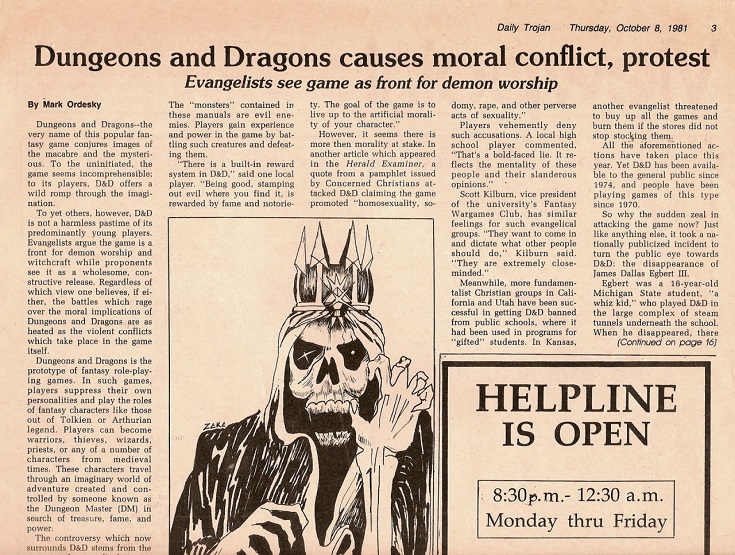
Video games continue to suffer from periodic demonization, accused of instigating violence in children. Harry Potter books are still banned by some schools and communities for spreading occult ideas. Not so long ago, one of my favorite pastimes — Dungeons & Dragons — was maligned as Satanic and damaging to young minds.

All of these panics were (and are) patently ridiculous. After all, you can go back through history and find other examples that are absolutely ludicrous in retrospect.

For example, check out this excerpt from The San Antonio Texan from August 26, 1858, about the dangers of overindulging in reading:

A whole family brought to destitution in England, has had all its misfortunes clearly traced by the authorities to an ungovernable passion for novel reading entertained by the wife and mother. The husband was sober and industrious, but his wife was indolent and addicted to reading everything procurable in the way of romance. This led her to utterly neglect her husband, herself and her eight children.

One daughter in despair, fled the parental home, and threw herself into the haunts of vice. Another was found by the police chained by the legs to prevent her from following her sister’s example. The house exhibited the most offensive appearance of filth and indigence. In the midst of this pollution, privation and poverty, the cause of it sat reading the last ‘sensation work’ of the season, and refused to allow herself to be disturbed in her entertainment.

That is proper nonsense.

And yet, it should come as no surprise to you, fellow puzzler, that crosswords also received this kind of treatment. Yes, crosswords were the focal point of a moral panic.

Arthur Wynne’s “word-cross” first appeared in The New York World in 1913. Simon & Schuster published The Cross-Word Puzzle Book, edited by Margaret Farrar, in 1924. 1924 also marked the first time a UK newspaper, The Sunday Express, would publish crosswords. By that point, crosswords were officially a fad, inspiring fashion trends (black and white patterns), hit songs, and musical revues on Broadway.

Ah, 1924. It was a strange year for crosswords. Because 1924 also saw some of the most inflammatory accusations hurled at the simple pencil-and-paper puzzles.

In November of that year, Canadian Forum referred to the spread of crosswords as an “epidemic obsession.”

The paper went on to psychoanalyze crossword solvers, claiming that crosswords were, at heart, a regressive and childish pursuit:

It is obvious from the similarity of the cross-word puzzle to the child’s letter blocks that it is primarily the unconscious which is expressing itself in the cross-word puzzle obsession.

The same year, The London Times went so far as to call America “enslaved” by the puzzle:

[The crossword] has grown from the pastime of a few ingenious idlers into a national institution: a menace because it is making devastating inroads on the working hours of every rank of society… [people were seen] cudgeling their brains for a four-letter word meaning ‘molten rock’ or a six-letter word meaning ‘idler,’ or what not: in trains and trams, or omnibuses, in subways, in private offices and counting-rooms, in factories and homes, and even — although as yet rarely — with hymnals for camouflage, in church.”

That church reference was particularly notable, as there were church sermons decrying the negative influence of crosswords on society. Sermons! Imagine crosswords being treated like heavy metal in the ’80s. It’s mind-boggling.

Much like that hyperbolic story about a family decimated by reading, newspapers published dubious tales of familial collapse sparked by crosswords:

Theodore Koerner of Brooklyn asked his wife for help in solving a crossword. She begged off, claiming exhaustion. Koerner shot her (superficially) and then shot himself (fatally).

And The New York Times, bastion of puzzles for the last 75 years? Yes, even the Gray Lady had harsh things to say about crosswords:

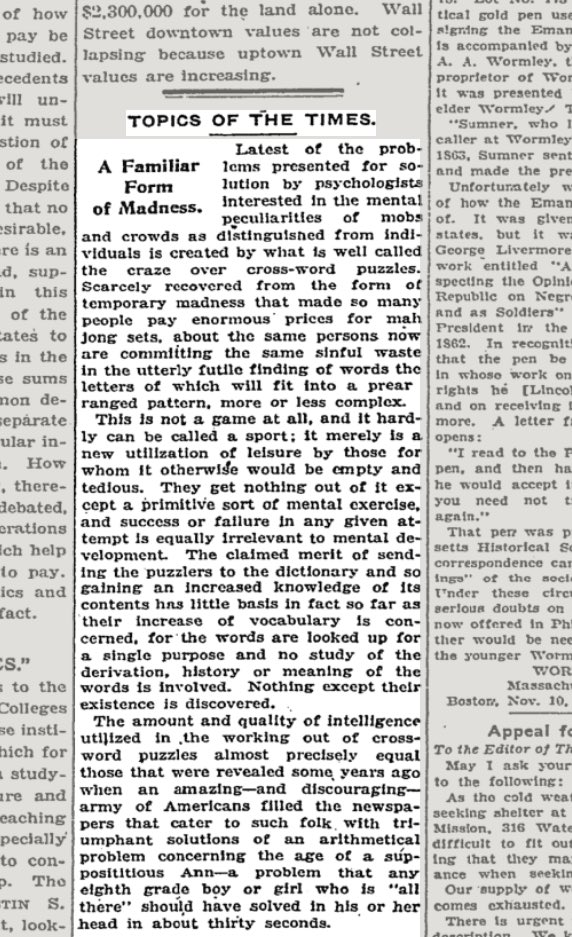
Scarcely recovered from the form of temporary madness that made so many people pay enormous prices for mahjongg sets, about the same persons now are committing the same sinful waste in the utterly futile finding of words the letters of which will fit into a prearranged pattern, more or less complex.

The paper went on to call crosswords “a primitive form of mental exercise” and compare their value to that of so-called brain teasers that should be solved by schoolchildren in 30 seconds or less.

Crosswords wouldn’t debut in the New York Times until 1942.

But could there have been a hint of truth buried beneath all the sensationalism? Perhaps.

There were reports that overzealous solvers, desperate for an edge over other puzzlers, went so far as to desecrate books at the New York Public Library in order to prevent others from utilizing the same resources. A sign, circa 1937, firmly stated that “the use of library books in connection with contests and puzzles is prohibited.”

Those darn crossword addicts, always getting into trouble. Can’t trust ’em.

So, the next time someone tells you crosswords are boring and passe, you can tell them that crosswords were as cool and as dangerous as rock n’ roll, once upon a time.

Heck, they still are.

[Thanks to The Atlantic, The Senior Times, Historical Nonfiction on Tumblr, The 13th Floor, and CommuniCrossings for images and quotations.]


Thanks for visiting PuzzleNation Blog today! Be sure to sign up for our newsletter to stay up-to-date on everything PuzzleNation!

You can also share your pictures with us on Instagram, friend us on Facebook, check us out on TwitterPinterest, and Tumblr, and explore the always-expanding library of PuzzleNation apps and games on our website!

75 Years of New York Times Crosswords!

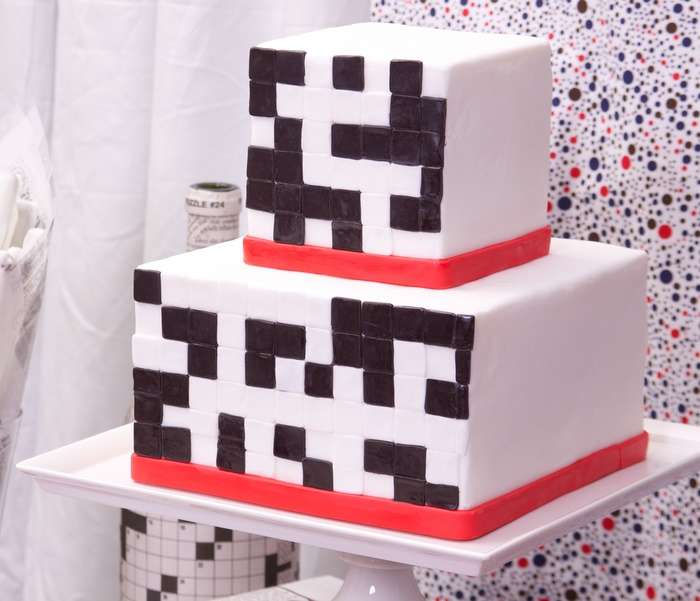
crosswordcake

Yesterday marked the 75th anniversary of The New York Times publishing its first crossword, and I thought I’d delve into NYT crossword history a bit to commemorate this event!

On February 15, 1942, The New York Times ran its first Sunday edition crossword. (The daily feature as we know it wouldn’t come into effect until 1950.)

But, you might be thinking to yourself, Arthur Wynne’s “word-cross” first appeared in the New York World in 1913. Simon & Schuster published The Cross-Word Puzzle Book, edited by Margaret Farrar, in 1924. What took The New York Times so long to catch on?

Truth be told, they didn’t think much of crosswords back then.

c4pdy-exaaugf7l

“Scarcely recovered from the form of temporary madness that made so many people pay enormous prices for mahjongg sets, about the same persons now are committing the same sinful waste in the utterly futile finding of words the letters of which will fit into a prearranged pattern, more or less complex.”

The article goes on to call crosswords “a primitive form of mental exercise” and compare their value to that of so-called brain teasers that should be solved by schoolchildren in 30 seconds or less. A pretty harsh assessment, overall.

So, what changed their minds regarding crosswords?

Well, World War II happened.

“I don’t think I have to sell you on the increased demand for this type of pastime in an increasingly worried world,” wrote Margaret Farrar, the first crossword editor of The Times, in a memo to Lester Markel, the Sunday editor, after the Pearl Harbor attack. “You can’t think of your troubles while solving a crossword.”

In a memo dated December 18, 1941, Markel conceded that the puzzle deserved space in the paper, considering what was happening elsewhere in the world, and that readers might need something to occupy themselves during blackouts.

The puzzle proved popular, and Arthur Hays Sulzberger — the publisher of the New York Times and a longtime crossword fan himself — would author a Times puzzle before the year was out.

crossword-newspaper

And so now, only a few years after the crossword itself celebrated its centennial, the most famous crossword outlet in the world is celebrating three-quarters of a century, along with a wonderful legacy of innovation, wordplay, and creativity.

To mark the occasion, The Times is going all out. Not only did they publish a crossword on Tuesday by the youngest constructor in NYT history — 13-year-old Daniel Larsen — but over the course of the year, they’ll be publishing collaborations between top constructors and celebrity solvers!

The first, a feast of a collab between Patrick Blindauer and actor Jesse Eisenberg, was published yesterday.

So, we here at PuzzleNation tip our hat to not only the current crew at The New York Times crossword, but all of the editors, constructors, creators, and collaborators who have contributed to a true crossword institution. I, for one, can’t wait to see what they come up with next.

[For more on the 75th anniversary, please check out Deb Amlen’s wonderful piece here (from which I nabbed that Margaret Farrar quote).]


Thanks for visiting PuzzleNation Blog today! Be sure to sign up for our newsletter to stay up-to-date on everything PuzzleNation!

You can also share your pictures with us on Instagram, friend us on Facebook, check us out on TwitterPinterest, and Tumblr, and explore the always-expanding library of PuzzleNation apps and games on our website!

Puzzle History: The first NYT crossword

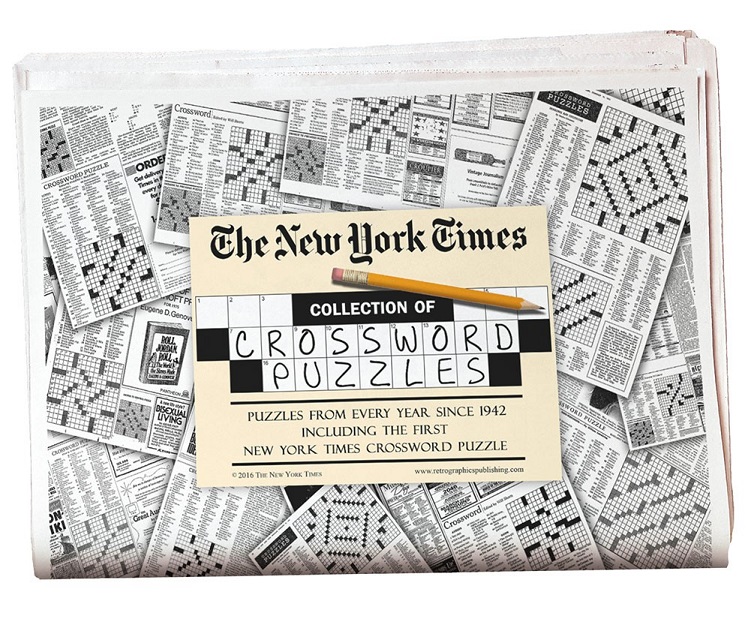
[A sculpture masquerading as a stack of newspapers.]

I like to think of December as Crossword History Month. It’s rather fitting, seeing as the anniversary of the crossword is celebrated on December 21. (It’ll be 102 this year!)

So it’s only appropriate that David Steinberg, friend of the blog and mastermind of the Pre-Shortzian Puzzle Project, recently published some newly revealed information about another intriguing part of crossword history: the first crossword puzzle published by The New York Times.

On February 15, 1942, a puzzle by Charles Erlenkotter was the very first, starting a long tradition of proud puzzlehood for the Times. (He ended up having eight puzzles featured in the New York Times.) His puzzles were also published by The Washington Post, The New York Herald Tribune, and Simon & Schuster, among many others. In fact, dozens of puzzles are credited to Mr. Erlenkotter.

All of the information released by David gels nicely with the research I did for our Crossword History timeline. In a memo dated December 18, 1941, an editor for the New York Times conceded that the puzzle deserved space in the paper, considering what was happening elsewhere in the world, and that readers might need something to occupy themselves during blackouts.

David and his contact Donald Erlenkotter, grandnephew of Charles, theorize that Margaret Farrar was behind choosing Erlenkotter’s puzzle. When Farrar was recruited to be the first puzzle editor for the Times, she wouldn’t have been able to use one of her own puzzles as the inaugural puzzle for the newspaper, since that would conflict with her work with Simon & Schuster.

But no doubt Charles had heard of her through her S&S work, contacted her with his own puzzles, and voila! He becomes the first of many constructors to test the puzzly mettle of crossword fans for decades to come!

I’ve long said that one of the most amazing things about the Internet is that connections can now be made that no other technology would’ve allowed for, and this is one more example. Due diligence, keen research, marvelous resources, and the ability to reach out to others with similar interests has added one more vibrant piece to the mosaic of puzzle history.

It’s moments like this that make me the history buff I am.


Thanks for visiting PuzzleNation Blog today! Be sure to sign up for our newsletter to stay up-to-date on everything PuzzleNation!

You can also share your pictures with us on Instagram, friend us on Facebook, check us out on TwitterPinterest, and Tumblr, and explore the always-expanding library of PuzzleNation apps and games on our website!