In 1913, Arthur Wynne created the first modern crossword puzzle — which he called a Word-Cross puzzle — and over a hundred years later, we are still enjoying the ever-increasing variety of puzzles and clues spawned by that “fun”-filled grid.
Wynne was born on June 22, 1871 in Liverpool, England, but moved to the states in the early 1890s, spending time in Pittsburgh and New York City before creating his Word-Cross puzzle for the New York Sunday World.
But, speaking of figures who helped elevate crosswords to greater prominence, that brings us to our second anniversary.
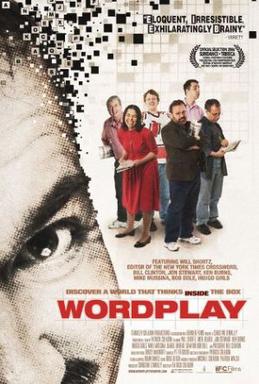
Tomorrow marks the 15th anniversary of the release of the influential crossword documentary Wordplay.
Wordplay introduced several famous names in crossword tournament circles, like Ellen Ripstein, Trip Payne, Tyler Hinman, Jon Delfin, and Al Sanders, as well as highlighting many celebrity crossword solvers like Jon Stewart, Ken Burns, Bill Clinton, and more. The documentary also chronicled the 2005 edition of the American Crossword Puzzle Tournament, bringing national attention to the tournament (and inspiring a Simpsons episode about crosswords).
Wordplay sparked a 40% increase in attendance the year after it aired, and the growing interest in the yearly event caused the tournament to actually change locations to a larger venue in New York City for 7 years!
(It has since returned to the Stamford Marriott, its traditional setting, despite actually topping the biggest NYC attendance in 2019, and again virtually in 2021.)
But the impact Wordplay had on the tournament itself, and interest in crosswords in general, cannot be overstated.
And this week, we celebrate both crossword anniversaries, one marking the genesis of crosswords, and the other marking how far crosswords had come, and how much farther they could go in the future.
It’s a pretty cool confluence of dates, to be sure.
Back in 2013, we created a timeline of events from crossword history as part of our celebration of the hundredth anniversary of the crossword.
Although 105 isn’t as prestigious as 100, and the anniversary is technically tomorrow, we thought we’d honor the day this year by updating our comprehensive look at the long (yet surprisingly short) road it took to get to that marvelous centennial!
So, without further ado or folderol, we proudly present:
A Brief History of the Crossword (Updated)
16th – 11th century BC
Inscriptions from New Kingdom-era Egypt (Eighteenth to Twentieth Dynasties) of horizontal and vertical lines of text divided into equal squares, that can be read both across the rows and down the columns, are made. These inscriptions are later referred to by Egyptologists as “Egyptian crossword puzzles.”
19th century AD
Rudimentary crosswords, similar to word squares, begin appearing in England, and later elsewhere in Europe.
June 22, 1871
Future inventor of the crossword, Arthur Wynne, is born.
March 23, 1897
Future New York Times crossword editor Margaret Farrar is born.
February 25, 1907
Future New York Times crossword editor Will Weng is born.
December 21, 1913
The New York World publishes the first crossword, invented by Liverpool journalist Arthur Wynne. (The puzzle is originally known as a word-cross.)
January 6, 1916
Future New York Times crossword editor Eugene T. Maleska is born.
1920
Margaret Farrar is hired by The New York World as a secretary, but soon finds herself assisting Arthur Wynne with proofreading puzzles. Her puzzles soon exceed Wynne’s in popularity.
Colonel H.W. Hill publishes the first Crossword Dictionary.
1923
Margaret Farrar revises the cluing system for crosswords, sorting them into “Horizontal” and “Vertical” clues by number. (It wouldn’t be until the 1940s that the more familiar “Across” and “Down” terminology became the norm.)
1924
Margaret Farrar publishes the first book of crossword puzzles under contract for Richard L. Simon and Max Schuster, “The Cross-Word Puzzle Book.” It was an instant bestseller, launching Simon & Schuster as a major publisher. (Additional information available below the timeline.)
The Daily Express, founded in 1900, becomes the first newspaper in the United Kingdom to carry crosswords.
Crossword-themed novelty songs hit the airwaves as the puzzle craze intensifies, most notably “Crossword Mama, You Puzzle Me (But Papa’s Gonna Figure You Out).”
The Amateur Crossword Puzzle League of America, a self-appointed group of puzzle enthusiasts, lobbies for rotational symmetry in crosswords, which becomes the standard.
Solver Ruth Franc von Phul becomes a minor celebrity after winning The New York Herald-Tribune’s National All Comers Cross Word Puzzle Tournament at the age of 20. (She would win again 2 years later.)
January 15, 1925
“Felix All Puzzled,” the first animated short to feature a crossword, is released.
Disney releases a crossword-themed animated short, “Alice Solves the Puzzle.”
1926
The cryptic crossword is invented by Edward Powys Mathers, who publishes under the pseudonym Torquemada. He devises them for The Observer newspaper.
First reported instances of Braille crosswords.
1931
Dell Puzzle Magazines begins publishing.
(Dell Publishing itself was founded in 1921.)
1941
Dell Pocket Crossword Puzzles first published.
(The magazine continues to this day.)
February 15, 1942
The New York Times runs its first Sunday edition crossword. (Additional information available below the timeline.)
June 2, 1944
Physics teacher and crossword constructor Leonard Dawe is questioned by authorities after several words coinciding with D-Day invasion plans appear in London’s Daily Telegraph. (Additional information available below the timeline.)
1950
The crossword becomes a daily feature in The New York Times.
August 26, 1952
Future New York Times crossword editor Will Shortz is born.
1968
Lyricist Stephen Sondheim begins creating cryptic crosswords for New York Magazine, helping introduce Americans to British-style crosswords.
1969
Will Weng succeeds Margaret Farrar as the second crossword editor for The New York Times.
1973
Penny Press is founded.
1977
Eugene T. Maleska succeeds Will Weng as the third crossword editor for The New York Times.
1978
First year of the American Crossword Puzzle Tournament, later featured in the documentary Wordplay. 149 contestants compete for the title in the first national crossword tournament since the 1930s.
1979
Howard Garns creates the modern Sudoku puzzle for Dell Magazines (under the name Number Place), the first pen-and-paper puzzle to rival the crossword in popularity (though this spike in popularity would occur decades later under the name Sudoku).
June 11, 1984
Margaret Farrar, while working on the 134th volume in Simon & Schuster’s crossword puzzle book series, passes away.
1993
Will Shortz succeeds Eugene T. Maleska as the fourth crossword editor for The New York Times.
November 5, 1996
One of the most clever and famous crosswords of all time is published, the election-preceding crossword where either BOB DOLE ELECTED or CLINTON ELECTED could read out, depending on the solver’s answers.
1998
The Wall Street Journal adds a crossword to its newspaper, and Mike Shenk is appointed editor.
June 23, 2006
Wordplay documentary hits theaters, featuring celebrity solvers of crosswords as well as the participants and organizers of the 2005 edition of the American Crossword Puzzle Tournament.
February 29 – March 2, 2008
Thanks in part to the Wordplay documentary, the American Crossword Puzzle Tournament outgrows its previous setting and moves to Brooklyn.
The city of Lvov, Ukraine, creates a crossword that spans an entire side of a 100-foot-tall residential building, with clues scattered around the city’s major landmarks and attractions. It’s awesome.
David Steinberg launches the Pre-Shortzian Puzzle Project, designed to compile a complete database of every New York Times crossword.
August 13, 2012
PuzzleNation Blog is launched.
June 14, 2013
Matt Gaffney celebrates five years of MGWCC,
stating that MGWCC will run for 1000 weeks
(which puts the final edition around August 6th, 2027).
December 21, 2013
The Crossword officially turns one hundred years old.
Additional information:
1924: The publishing house Simon & Schuster, agreed to a small (3,600-copy) run of a crossword puzzle book, prompted by founder Richard L. Simon’s aunt, who wanted to give such a book to a friend. It became “a runaway bestseller.”
In no time the publisher had to put the book back on press; through repeated printings, it sold more than 100,000 copies. Soon a second collection followed, and then a third and a fourth. In 1924 and 1925 the crossword books were among the top 10 nonfiction bestsellers for the year, besting, among others, The Autobiography of Mark Twain and George Bernard Shaw’s Saint Joan.
February 15, 1942: The New York Times initially regarded crosswords as frivolous, calling them “a primitive form of mental exercise”; the motivating impulse for the Times to finally run the puzzle (which took over 20 years even though its publisher, Arthur Hays Sulzberger, was a longtime crossword fan) appears to have been the bombing of Pearl Harbor.
In a memo dated December 18, 1941, an editor conceded that the puzzle deserved space in the paper, considering what was happening elsewhere in the world and that readers might need something to occupy themselves during blackouts. The puzzle proved popular, and Sulzberger himself would author a Times puzzle before the year was out.
June 2, 1944: The words Omaha (codename for one of Normandy’s beaches), Utah (another Normandy beach codename), Overlord (the name for the plan to land at Normandy on June 6th), mulberry (nickname for a portable harbor built for D-Day), and Neptune (name for the naval portion of the invasion) all appeared in Daily Telegraph crosswords during the month preceding the D-Day landing.
This has been attributed to either an incredible coincidence or Dawe somehow overhearing these words (possibly slipped by soldiers involved) and incorporating them into puzzles unwittingly.
Do you have any suggestions for additions for our Crossword Timeline? Let us know in the comments section below! We’d love to hear from you!
Thanks for visiting PuzzleNation Blog today! Be sure to sign up for our newsletter to stay up-to-date on everything PuzzleNation!
Last year, I was surprised to stumble across a puzzle in the autobiography of comedian, actor, and magician Neil Patrick Harris, Choose Your Own Autobiography. It was a clever Neil-centric cryptic word-cross puzzle that rewarded attentive readers, since all of the answers were about events Neil discussed in the book.
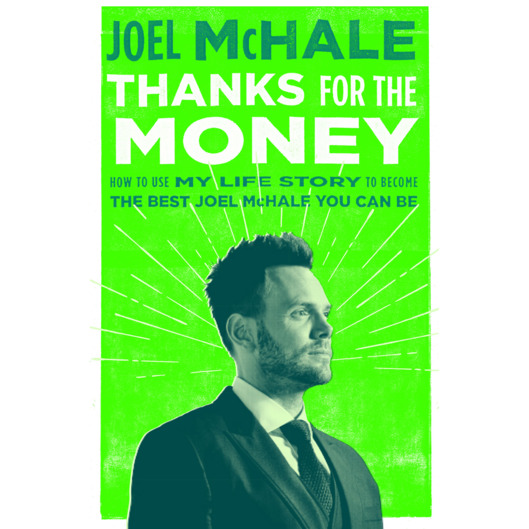
So I guess I shouldn’t have been too surprised to again discover a puzzle in a celebrity autobiography. But this time around, comedian, host, and actor Joel McHale has upped the ante by offering three puzzles in his book Thanks for the Money: How to Use My Life Story to Become the Best Joel McHale You Can Be.
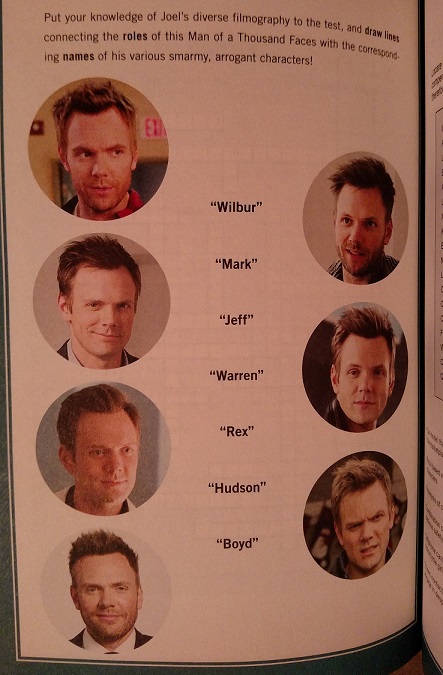
Amidst hilarious anecdotes, bad advice for starting a career in Hollywood, and actual biographical facts, Joel includes a word-cross, a word search, and a matching game, all of which are about him!
The matching game is arguably the toughest of the three, since you have to match the image of him to the name of the character he portrayed.
The word-cross, though, is not far behind when it comes to difficulty, since the limited crossings offer fewer helpful letters to assist in solving. Not to mention that more straightforward clues like 1 Down — Second word in title of ninth chapter — are few and far between. More often, you encounter something like 14 Across — Anagram for synonym of puzzle.
Plus, there’s no clue at all for 33 Down, making the grid even tougher.
Although I was able to solve most of the grid, some of the entries eluded me.
Still, I have to give style points to 29 Across: “Police Academy” star, if his name had one less “T” and he invented movable type for printing presses.
The word search, which is branded a “Wrod Jembul” (since Joel is dyslexic), is both the most creative and the most solvable of the three puzzles.
In this puzzle, you’re given thirteen clues for various products Joel has done advertisements for, and you need to find them in the grid. Except every entry is jumbled up, complicating things greatly.
Although the puzzle is not perfect — FITBIT can be found in two ways, as can IHOP, and KLONDIKE BAR is the only entry spelled out for some reason — it’s great fun and a very fair solve.
Thanks for the Money is a very fun read, outrageous and engaging in equal measure. But finding a few puzzles inside? That’s the cherry on top.
Thanks for visiting PuzzleNation Blog today! Be sure to sign up for our newsletter to stay up-to-date on everything PuzzleNation!
Yesterday marked the 75th anniversary of The New York Times publishing its first crossword, and I thought I’d delve into NYT crossword history a bit to commemorate this event!
On February 15, 1942, The New York Times ran its first Sunday edition crossword. (The daily feature as we know it wouldn’t come into effect until 1950.)
But, you might be thinking to yourself, Arthur Wynne’s “word-cross” first appeared in the New York World in 1913. Simon & Schuster published The Cross-Word Puzzle Book, edited by Margaret Farrar, in 1924. What took The New York Times so long to catch on?
Truth be told, they didn’t think much of crosswords back then.
“Scarcely recovered from the form of temporary madness that made so many people pay enormous prices for mahjongg sets, about the same persons now are committing the same sinful waste in the utterly futile finding of words the letters of which will fit into a prearranged pattern, more or less complex.”
The article goes on to call crosswords “a primitive form of mental exercise” and compare their value to that of so-called brain teasers that should be solved by schoolchildren in 30 seconds or less. A pretty harsh assessment, overall.
So, what changed their minds regarding crosswords?
Well, World War II happened.
“I don’t think I have to sell you on the increased demand for this type of pastime in an increasingly worried world,” wrote Margaret Farrar, the first crossword editor of The Times, in a memo to Lester Markel, the Sunday editor, after the Pearl Harbor attack. “You can’t think of your troubles while solving a crossword.”
In a memo dated December 18, 1941, Markel conceded that the puzzle deserved space in the paper, considering what was happening elsewhere in the world, and that readers might need something to occupy themselves during blackouts.
The puzzle proved popular, and Arthur Hays Sulzberger — the publisher of the New York Times and a longtime crossword fan himself — would author a Times puzzle before the year was out.
And so now, only a few years after the crossword itself celebrated its centennial, the most famous crossword outlet in the world is celebrating three-quarters of a century, along with a wonderful legacy of innovation, wordplay, and creativity.
To mark the occasion, The Times is going all out. Not only did they publish a crossword on Tuesday by the youngest constructor in NYT history — 13-year-old Daniel Larsen — but over the course of the year, they’ll be publishing collaborations between top constructors and celebrity solvers!
The first, a feast of a collab between Patrick Blindauer and actor Jesse Eisenberg, was published yesterday.
So, we here at PuzzleNation tip our hat to not only the current crew at The New York Times crossword, but all of the editors, constructors, creators, and collaborators who have contributed to a true crossword institution. I, for one, can’t wait to see what they come up with next.
[For more on the 75th anniversary, please check out Deb Amlen’s wonderful piece here (from which I nabbed that Margaret Farrar quote).]
Thanks for visiting PuzzleNation Blog today! Be sure to sign up for our newsletter to stay up-to-date on everything PuzzleNation!
It’s been nearly a week since the 100th Anniversary of the Crossword, and so many newspapers, websites, and bloggers wrote about it that I’m just now sitting down to compile some of them for your viewing pleasure.
Now, I’d be remiss if I didn’t start with the interactive Google Doodle that had everyone wishing me a happy hundredth anniversary a day early. *laughs*
But, as it turns out, that wasn’t the first puzzle created for Google’s signature doodle! Check out this story from the Washington Post about Merl Reagle’s eleventh-hour constructing wizardry that saved the day! (And based on Google’s ubiquitous nature, what will probably end up as the most-solved crossword of all-time.)
[Here’s a picture from constructor and magician David Kwong’s Instagram, showing the whole family getting in on solving Google’s anniversary doodle.]
These are just a few of the links that caught my eye, but if you’re still hungry for more 100th Anniversary goodness, check out this impressive collection of links compiled by the folks at Puzzazz.
And, of course, you can always click the previous button and check out PuzzleNation’s 100th Anniversary post, where I talk about not only Arthur Wynne’s puzzle, but my own anniversary as a puzzler.
As we step into a second century of Crossword history, I’m sure we have plenty of marvelous wordplay surprises coming our way.
Today is the 100th anniversary of the crossword. (Not yesterday, as Google’s marvelous Merl Reagle-penned crossword doodle might’ve had you believe.) One hundred years ago today, Arthur Wynne’s “word-cross” puzzle debuted in The New York World, kickstarting a phenomenon that has gone well past pencil-and-paper, more relevant and influential today than ever before.
Let’s take a look at that very first puzzle, shall we?
[For the solution and a slightly larger grid image, click here.]
In modern crossword terms, this diamond shape is known as an open puzzle or a cut puzzle, since it’s not the standard crossword square. I’m a fan of cut puzzles, because their shapes draw the eye. H-shaped, Z-shaped, and diamond-shaped puzzles aren’t uncommon among cut puzzles, and it’s always a treat to see one when flipping through a book of crosswords.
And it’s sort of fascinating to see all the differences between this puzzle and the modern crossword, despite its utter familiarity.
There’s the set word, the singlet letters at the puzzle’s four corners that don’t get crossed, and those enormous numbers that leave no writing space for the actual letter. There’s also that very curious cluing order, which took me a second to decode: the acrosses along the left side of the diamond grid, then the acrosses along the right side of the diamond grid, then the downs from furthest left to furthest right. Figuring that out was something of a puzzle in itself!
It’s not hard to see the appeal of the crossword from the very beginning. The grid is open, not daunting at all, and that casual spirit no doubt attracted plenty of intrigued first-time solvers. The mechanics of the puzzle are solid, and the synonym-heavy cluing style is an easy introduction to cluing.
Some of those clues, like 23-30’s [A river in Russia] for NEVA wouldn’t be out of place in a grid today. Though hopefully you wouldn’t come across a clue like 10-18’s [The fibre of the gomuti palm] for DOH too often. Wow, that is a seriously tough one. (Plus, I suspect modern solvers would get it much faster if clued as [Homer’s exclamation].)
Still, there’s a sense of humor to the construction. Look at clue 18-19 [What this puzzle is]. HARD. Well, no kidding, Mr. Wynne, when you expect us to know the fibre of the gomuti palm. *laughs*
What about clue 6-22? [What we all should be] MORAL. Wynne’s puzzle has a message. =)
Solving the puzzle was a curious experience, both as a solver and constructor. On the construction side, the word DOVE appears twice, a serious no-no in the modern puzzle community.
It would need editing to make the cut these days, but Wynne’s word-cross remains a worthwhile and laudable start for a long, proud legacy of wordplay and puzzling.
That legacy is quite personal for me, since this year also marks my ten-year anniversary working in the puzzle business. (That anniversary came less than a week before today’s centennial celebrations.)
I make a living thanks to Arthur Wynne’s wildly-successful creation, and I am grateful every day that I get to work on puzzles, or come here and write about them, all the while contributing to a community with a century-long tradition of humor, playfulness, intelligence, and style.












 PuzzCulture