The Week in Puzzles and Games (October 26th)

There’s a lot going on in the intertwined worlds of puzzles and games, so let’s skip the intro and get to it!
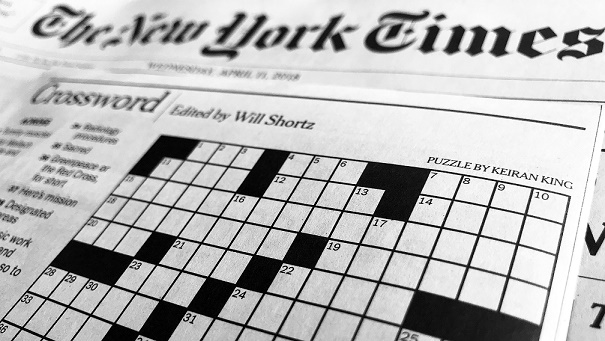

Conversations with the New York Times Games Team!

There are two events coming up for fans of NYT puzzles and games.

First, the 92Y is hosting a New York Times Games Night tomorrow night to celebrate the launch of the new Connections book.

Wyna Liu, Joel Fagliano, Sam Ezersky, and Tracy Bennett will be in attendance to talk shop and engage in some live gameplay with attendees.

Click here for ticket info and here to check out the new Connections book.

But that’s not all.

On Friday, October 30th, the Wordle Review comments section will be hosting a Q&A at 1 PM Eastern with Josh Katz and Tom Giratikanon, the designers behind Wordle Bot and Connections Bot!

Learn more about how the bots work, why they’re so sassy, and meet the team who makes the Bots go.

Cryptic Crossword Updates (and The Independent)

Speaking of crosswords, there has sadly been no sign that The Independent’s managing editor will reverse course on cancelling their daily cryptic crossword.

But even with that dark cloud hanging over the puzzle community, there is plenty going on in cryptic crossword chatter for solvers and setters alike to enjoy.

Chameleon posted a terrific article on MyCrossword about an interesting variation on the hidden-style clue. For example, a traditional hidden clue would have “Scottish snack offered in disco nearby” cluing SCONE, since it’s hidden in “diSCO NEarby.” But Chameleon’s version is slightly more difficult. (Personally, I love it!)

Setter Paul Henderson (known to Independent solvers as Phi) has announced he’ll be continuing his Phidays tradition on his website.

Duncan over at fifteensquared has shared the puzzles being distributed at this year’s York Sloggers and Betters 2026 gathering, so get solving. Feedback is welcome!

And if there’s more news in the cryptic world I’ve missed, please let me know!

Bonmo.app Releases Their 1,000th Puzzle!

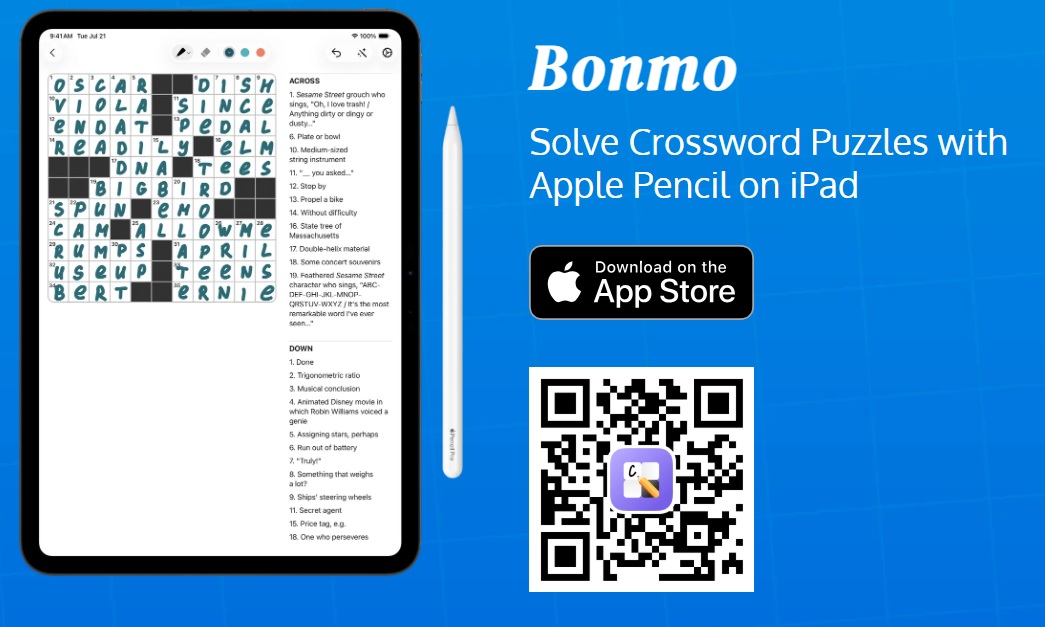
We talked about Puzzmo celebrating 1,000 days back in July, but it turns out they’re not the only puzzle app crossing the millennium mark this year.

Bonmo.app just released their 1,000th puzzle, a delightful grid from constructor Carina da Rosa. If you’re an Apple user, check them out!


Reminder: Cultura Connector and the GRIT Ukraine Program Still Seeking Funds

A few weeks ago, I wrote about a charity effort to inspire Ukrainian youths through LARPing.

And the team at Cultura Connector have announced that they’re 60% of the way to unlocking a $20,000 match for the charity!

They are raising funds for their first GRIT Ukraine program, enabling Ukrainian facilitators to lead a 12-week LARP program with Ukrainian young people living in Poland to strengthen resilience, communication, emotional awareness, problem-solving, and connection with Ukrainian youths.

And with a week left to go, your help could make a huge difference.

Please share the link and donate if you can. It would be so amazing to reach out to young people halfway around the world and show them the magic of storytelling while helping build them up.

You can also click here for more details on Cultura Connector and the GRIT program.

The BackerKit Holiday Market Launches Soon!

Crowdfunding is a cornerstone of the puzzles and games industry these days, especially for smaller and independent creators, so I’m stoked to hear that the BackerKit Holiday Market is returning for a second year.

Hosted between November 18th and December 1st, numerous puzzle and games companies (among others!) will be participating.

Unlike most crowdfunding efforts, there’s no funding goal and products will be ready-to-ship immediately.

Some of my favorite shops like Scarlet Envelope and Morgan’s Escapes will be participating, so be sure to check it out!
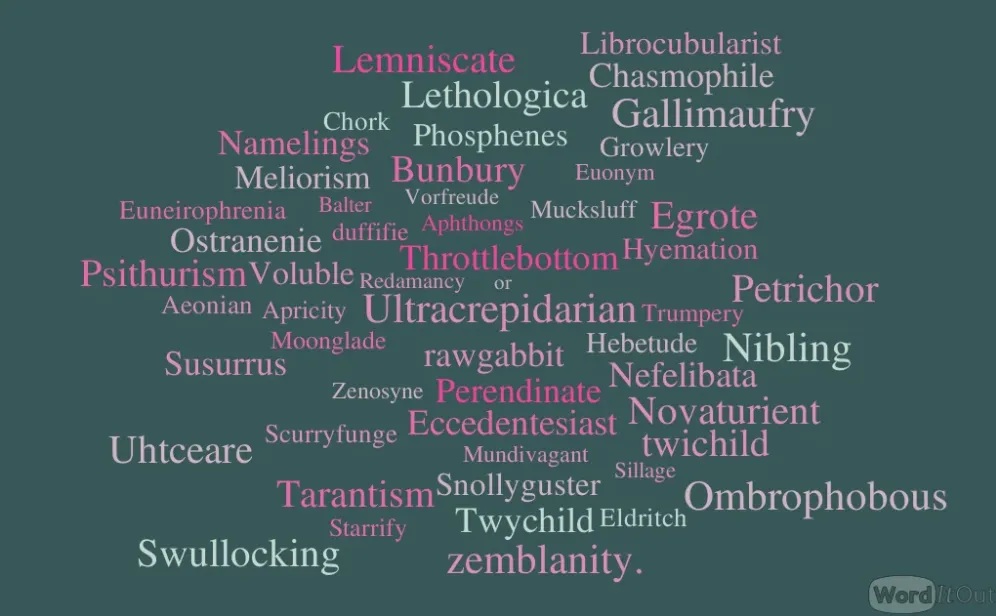

What Puzzle Words Sent American Solvers to Google?

I love digging into data. It’s fascinating to see what you can learn from sifting through carefully cultivated information.

And I’m not alone in that. The team at UnscrambleX also love data, and they’ve shared some of their findings.

UnscrambleX is a free word scrambler, anagram solver, and Scrabble word finder all in one, and they’ve been crunching solver data for the last year.

And it turns out, between June 2025 and October 2026, the words that baffled or eluded solvers weren’t small, obscure ones, overly long entries, or crosswordese.

As Adrian Talvik, spokesperson for UnscrambleX told me, “The words that stop people aren’t the long ones. They’re words people have seen on a menu or a perfume label but never had to spell.”

NEROLI topped the list with 65,684 US searches on May 28, 2026, twice the next word (POMELO, 31,911 on May 18). Three of the five hardest came from the fruit bowl or the perfume counter, hard days come in themes (BÉCHAMEL, TERIYAKI and TZATZIKI on July 2)…

You can check out their full article here, including how they gathered and analyzed their data.

And we’ll have more interesting puzzle-data tidbits from UnscrambleX in the coming weeks!


Unfortunately I didn’t have time to test out any new puzzle apps or sites this week, but I promise that feature will return next Monday.

Did I miss any puzzly news or fun board game stories from the last few weeks? Let me know in the comments section below! I’d love to hear from you.
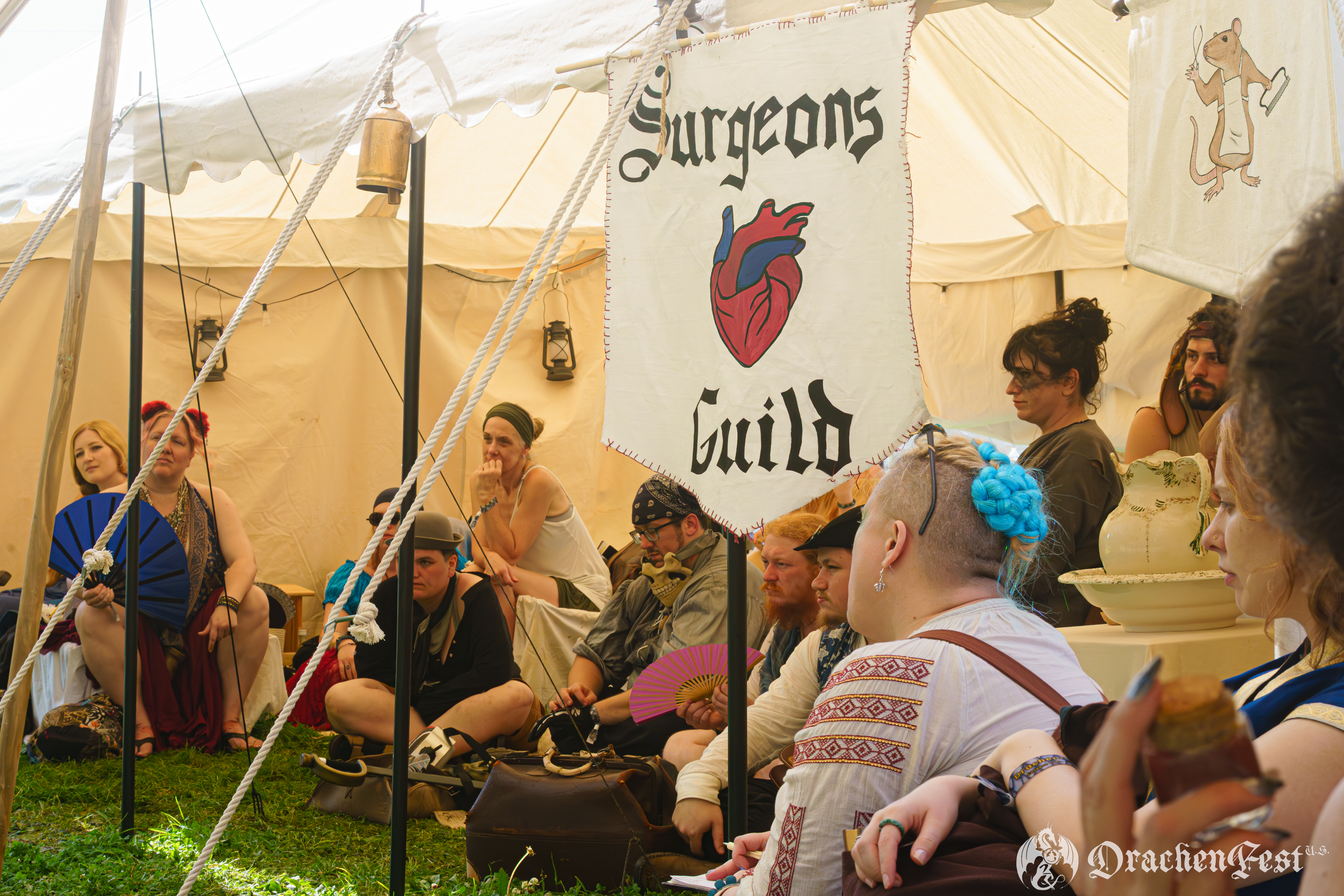
LARPing for Good with Cultura Connector and the GRIT Ukraine Program!

Image courtesy of DrachenFest US.

If you’re not a roleplaying game fan, you might not be familiar with LARPing or Live-Action RolePlaying.

Essentially, it’s playing a tabletop storytelling game in a more interactive fashion. There is dressing up, combat, physically accomplishing tasks, and interacting with other players and NPCs (non-player characters that support the narrative).

And the organization Cultura Connector believes it can be used to help young people in Ukraine.

They are currently raising funds for their first GRIT Ukraine program, enabling Ukrainian facilitators to lead a 12-week LARP program with Ukrainian young people living in Poland to strengthen resilience, communication, emotional awareness, problem-solving, and connection with Ukrainian youths.

Here is part of the mission statement from their website:

Ukrainian families have been living within the immediate violence of war from Russia’s full scale invasion. They have had to leave behind homes, schools, and people they love. Even after reaching safety, the ground can still feel unsteady.

Parents are trying to build a life in a new country while carrying concern for the one they left. Children and teenagers are learning how to belong again while the adults around them are still trying to catch their breath after so much upheaval.

GRIT creates a structured space where young people can reconnect with others, practice making choices, and rediscover their capacity to shape what happens next.

GRIT stands for Games for Resilience and Interactive Transformation. It is a culturally grounded, trauma-informed program developed by Cultura Connector, a U.S.-based 501(c)(3) nonprofit organization.

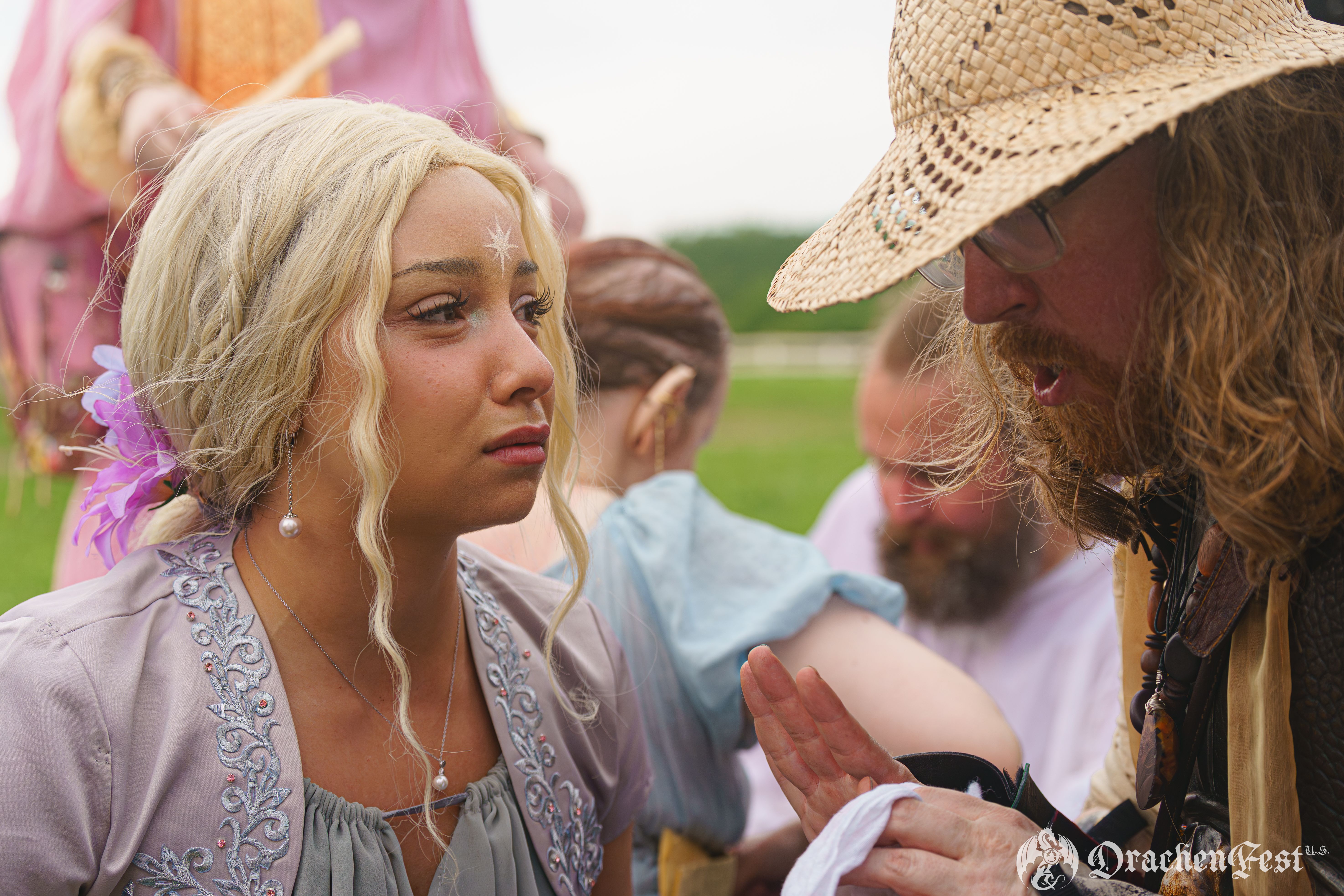
Image courtesy of DrachenFest US.

It might sound silly, but LARPing can absolutely help someone find confidence in themselves and a community of likeminded people.

It happened to me in high school.

Making friends who brought me into their game taught me about storytelling, about trust, about letting go and enjoying myself and wholeheartedly embracing what I loved to do. LARPing was my gateway to the world of roleplaying games, a hobby and passion that has stuck with me for decades.

Please share the link and donate if you can. It would be so amazing to reach out to young people halfway around the world and show them the magic of storytelling while helping build them up.

You can also click here for more details on Cultura Connector and the GRIT program.

Thank you to Dan and the incredible hardworking crew at DrachenFest US for letting us know about this wonderful and worthwhile endeavor.

Happy LARPing, everyone.

Puzzles in Plain Sight: Spinning Yellow Circles edition

Adobe_Semaphore_Wide_768x512.0

About six months ago, I shared the story of a secret code lurking in plain sight, sitting atop the Capitol Records Building in Los Angeles. It’s not the only time that buildings have made their way into the blog; in previous posts, we’ve discussed the giant crossword adorning the side of an apartment building in Lvov, Ukraine, as well as the optical illusion awaiting art lovers in a Roman palace.

But it was the only time we’ve discussed a secret code being shared on the side of a building.

Until today, that is.

Yes, my friends and fellow puzzlers, there’s another building out there broadcasting secret messages for all to see. It’s also in California. And this one is more devious than the blinking light on the Capitol Records Building.

adobe semaphore 1

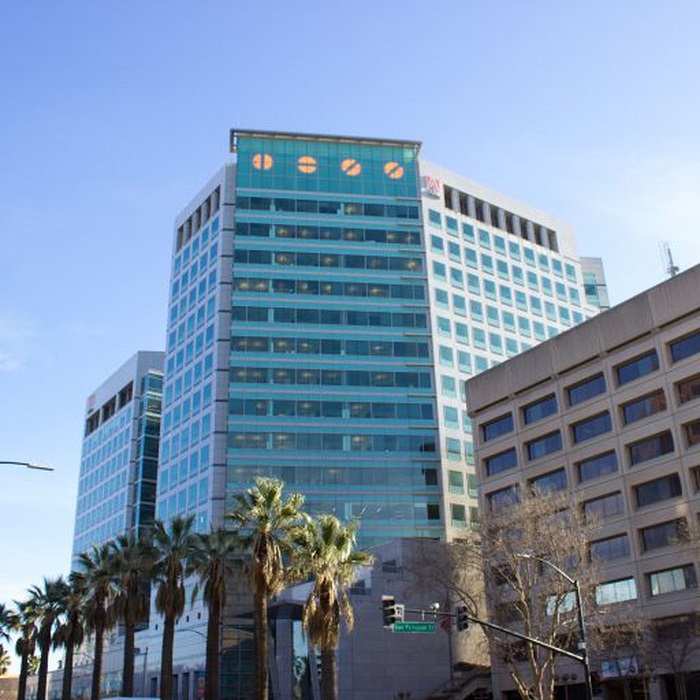
Say hello to Almaden Tower, the San Jose headquarters of Adobe, the software company behind Acrobat, Illustrator, and numerous other editing programs.

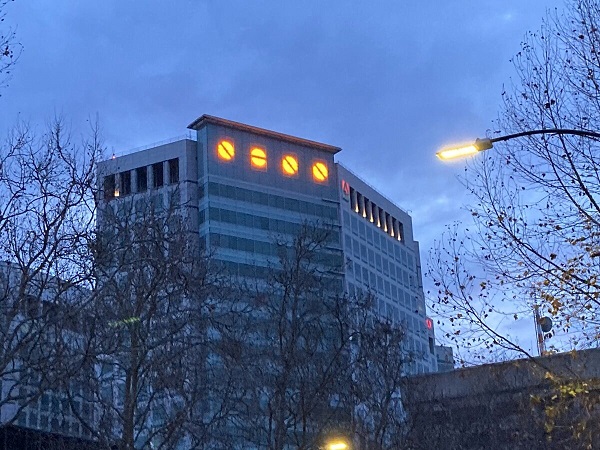
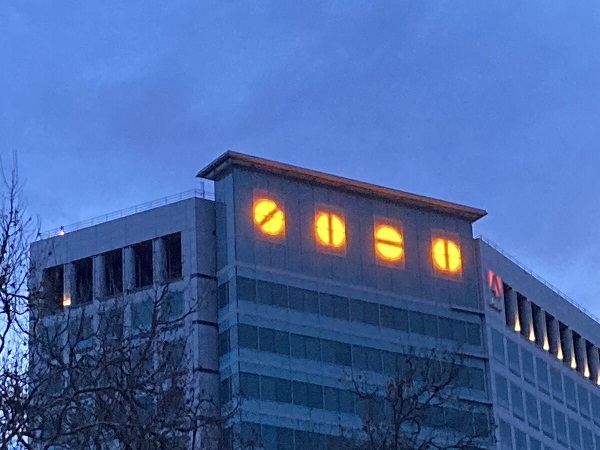
As you can see, there are four bright yellow circles beside the Adobe logo. These 10-foot-high digital lights all rotate. And if you pay enough attention, you might discover the secret message being broadcast.

The messages began transmitting in 2006. The code was cracked for the first time in 2007, and it wasn’t a brief message either. The lights were secretly transmitting the entire text of the Thomas Pynchon novel The Crying of Lot 49.

You see, the rotating circles allow for a form of semaphore alphabet, a way of secretly forming letters or symbols based on the position of each of the circles. They can be horizontal, vertical, a left-leaning diagonal, or a right-leaning diagonal. The various combinations of these positions create a semaphore alphabet of 256 possible characters.

adobe semaphore 2

But this was only the first part of the encryption. Even if you uncovered and charted this pattern, you still had to decode the secret messages detailing specific key words that would help you break the Vigenere encryption of the actual text.

It took MONTHS for two tech workers to figure out the semaphore language, decipher the code, and uncover the final message.

So naturally, just like the hidden alien language in the animated sci-fi comedy Futurama, it was replaced with a second, more complex code to be unraveled.

That code, which started transmitting in 2012, wasn’t broken until 2017 when a math professor started streaming footage of the Adobe building and charting the various positions of the circles.

But his examination led him to believe that it wasn’t just text being broadcast this time… it was an audio message. After discovering a chain of symbols that he believed was a space or bit of silence in an audio broadcast, he graphed the results, which resembled an audio wave.

It turns out, his suspicions were correct, and further analysis resulted in the true audio being uncovered: Neil Armstrong’s famous message from the moon landing.

Apparently, a new code and message are currently being brainstormed for Adobe’s devious puzzle monument. Who knows what Ben Rubin, the designer, has in store for solvers this time?


Thanks for visiting PuzzleNation Blog today! Be sure to sign up for our newsletter to stay up-to-date on everything PuzzleNation!

You can also share your pictures with us on Instagram, friend us on Facebook, check us out on Twitter, Pinterest, and Tumblr, and explore the always-expanding library of PuzzleNation apps and games on our website!

The New Capital of European Crosswords?

First, it was Lvov, Ukraine: a city that created a crossword spanning the entire side of a 100-foot-tall residential building.

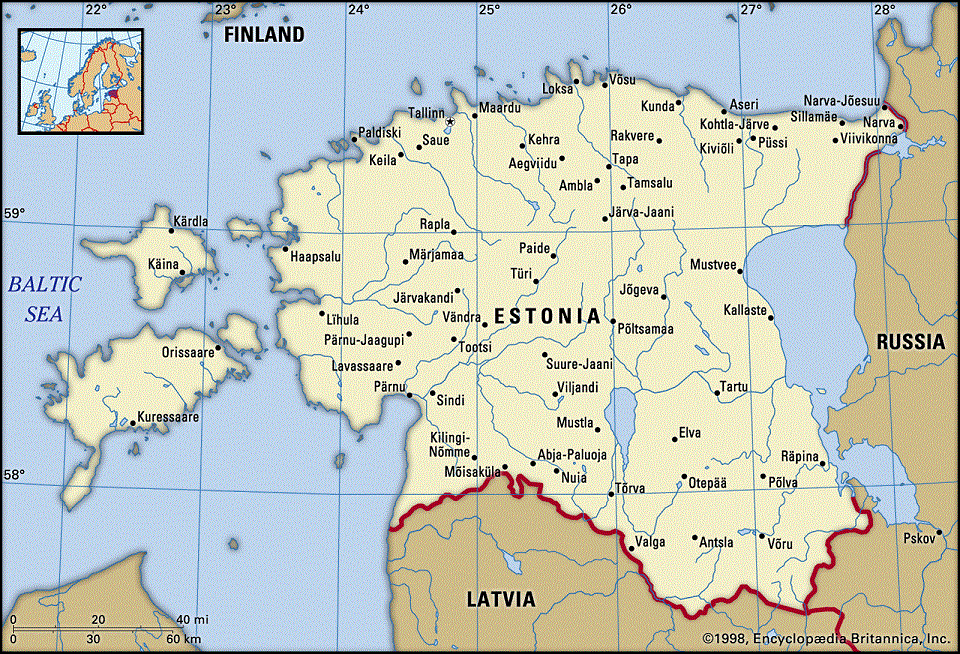
Now, another country in Eastern Europe is making bold choices with crosswords in mind: Estonia.

estonia-map-boundaries-cities-locator

[Image courtesy of Encyclopedia Britannica.]

Crosswords are a global phenomenon. We’ve featured puzzle books from Europe on more than one occasion. So, naturally, each country must have its own concept of crosswordese, the curious and strange vocabulary that seems to exist only in the world of crosswords.

In Estonia, the editors behind the puzzle magazine Nuti compiled a list of ten towns and villages that frequently appear in their crosswords. Names like Aseri, Uulu, Erra, and Leisi were among those chosen for the fan vote.

But the winner by a landslide (162 votes!) was…

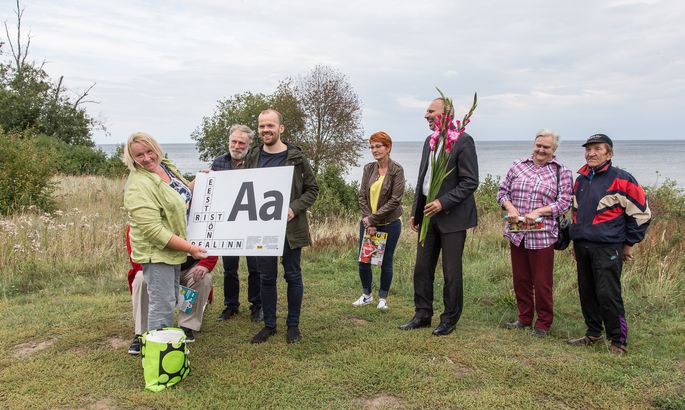
Aa.

estoniaaa

[Image courtesy of Pohjarannik.]

Yes, that picturesque coastal village in the north of Estonia we all know and love. Where you can see such sights as the Aa manor house and, I kid you not, a sand beach.

According to the 2000 census, the population of Aa was 190. There were nearly as many votes for the village as there are people living there!

And yes, I’m still calling it a landslide victory. The next nearest place, Aseri, had 89 votes. That’s nearly half! The lowest, Erra, garnered only 17 out of the 517 votes cast. That’s a landslide in my book.

Congratulations to the people of Aa. Can’t wait to see how you change the world of Estonian crosswords!

[Check out the original post that inspired this one, a New York Times piece by the marvelous Deb Amlen.]


Thanks for visiting PuzzleNation Blog today! Be sure to sign up for our newsletter to stay up-to-date on everything PuzzleNation!

You can also share your pictures with us on Instagram, friend us on Facebook, check us out on Twitter, Pinterest, and Tumblr, and explore the always-expanding library of PuzzleNation apps and games on our website!

Crossword History: An Updated Timeline

Back in 2013, we created a timeline of events from crossword history as part of our celebration of the hundredth anniversary of the crossword.

Although 105 isn’t as prestigious as 100, and the anniversary is technically tomorrow, we thought we’d honor the day this year by updating our comprehensive look at the long (yet surprisingly short) road it took to get to that marvelous centennial!

So, without further ado or folderol, we proudly present:

A Brief History of the Crossword (Updated)

16th – 11th century BC

Inscriptions from New Kingdom-era Egypt (Eighteenth to Twentieth Dynasties) of horizontal and vertical lines of text divided into equal squares, that can be read both across the rows and down the columns, are made. These inscriptions are later referred to by Egyptologists as “Egyptian crossword puzzles.”

19th century AD

Rudimentary crosswords, similar to word squares, begin appearing in England, and later elsewhere in Europe.

June 22, 1871

Future inventor of the crossword, Arthur Wynne, is born.

March 23, 1897

Future New York Times crossword editor Margaret Farrar is born.

February 25, 1907

Future New York Times crossword editor Will Weng is born.

December 21, 1913

The New York World publishes the first crossword, invented by Liverpool journalist Arthur Wynne. (The puzzle is originally known as a word-cross.)

January 6, 1916

Future New York Times crossword editor Eugene T. Maleska is born.

1920

Margaret Farrar is hired by The New York World as a secretary, but soon finds herself assisting Arthur Wynne with proofreading puzzles. Her puzzles soon exceed Wynne’s in popularity.

Colonel H.W. Hill publishes the first Crossword Dictionary.

1923

Margaret Farrar revises the cluing system for crosswords, sorting them into “Horizontal” and “Vertical” clues by number. (It wouldn’t be until the 1940s that the more familiar “Across” and “Down” terminology became the norm.)

1924

Margaret Farrar publishes the first book of crossword puzzles under contract for Richard L. Simon and Max Schuster, “The Cross-Word Puzzle Book.” It was an instant bestseller, launching Simon & Schuster as a major publisher. (Additional information available below the timeline.)

The Daily Express, founded in 1900, becomes the first newspaper in the United Kingdom to carry crosswords.

Crossword-themed novelty songs hit the airwaves as the puzzle craze intensifies, most notably “Crossword Mama, You Puzzle Me (But Papa’s Gonna Figure You Out).”

The Amateur Crossword Puzzle League of America, a self-appointed group of puzzle enthusiasts, lobbies for rotational symmetry in crosswords, which becomes the standard.

Solver Ruth Franc von Phul becomes a minor celebrity after winning The New York Herald-Tribune’s National All Comers Cross Word Puzzle Tournament at the age of 20. (She would win again 2 years later.)

January 15, 1925

“Felix All Puzzled,” the first animated short to feature a crossword, is released.

February 2, 1925

The crossword-fueled musical revue “Puzzles of 1925” opens on Broadway. It runs until May of 1925.

February 15, 1925

Disney releases a crossword-themed animated short, “Alice Solves the Puzzle.”

1926

The cryptic crossword is invented by Edward Powys Mathers, who publishes under the pseudonym Torquemada. He devises them for The Observer newspaper.

First reported instances of Braille crosswords.

1931

Dell Puzzle Magazines begins publishing.
(Dell Publishing itself was founded in 1921.)

1941

Dell Pocket Crossword Puzzles first published.
(The magazine continues to this day.)

February 15, 1942

The New York Times runs its first Sunday edition crossword. (Additional information available below the timeline.)

June 2, 1944

Physics teacher and crossword constructor Leonard Dawe is questioned by authorities after several words coinciding with D-Day invasion plans appear in London’s Daily Telegraph. (Additional information available below the timeline.)

1950

The crossword becomes a daily feature in The New York Times.

August 26, 1952

Future New York Times crossword editor Will Shortz is born.

1968

Lyricist Stephen Sondheim begins creating cryptic crosswords for New York Magazine, helping introduce Americans to British-style crosswords.

1969

Will Weng succeeds Margaret Farrar as the second crossword editor for The New York Times.

1973

Penny Press is founded.

1977

Eugene T. Maleska succeeds Will Weng as the third crossword editor for The New York Times.

1978

First year of the American Crossword Puzzle Tournament, later featured in the documentary Wordplay. 149 contestants compete for the title in the first national crossword tournament since the 1930s.

1979

Howard Garns creates the modern Sudoku puzzle for Dell Magazines (under the name Number Place), the first pen-and-paper puzzle to rival the crossword in popularity (though this spike in popularity would occur decades later under the name Sudoku).

June 11, 1984

Margaret Farrar, while working on the 134th volume in Simon & Schuster’s crossword puzzle book series, passes away.

1993

Will Shortz succeeds Eugene T. Maleska as the fourth crossword editor for The New York Times.

November 5, 1996

One of the most clever and famous crosswords of all time is published, the election-preceding crossword where either BOB DOLE ELECTED or CLINTON ELECTED could read out, depending on the solver’s answers.

1998

The Wall Street Journal adds a crossword to its newspaper, and Mike Shenk is appointed editor.

June 23, 2006

Wordplay documentary hits theaters, featuring celebrity solvers of crosswords as well as the participants and organizers of the 2005 edition of the American Crossword Puzzle Tournament.

February 29 – March 2, 2008

Thanks in part to the Wordplay documentary, the American Crossword Puzzle Tournament outgrows its previous setting and moves to Brooklyn.

June 6, 2008

Matt Gaffney launches his Weekly Crossword Contest (MGWCC).

August 2008

Lollapuzzoola, a crossword-solving tournament with a more tongue-in-cheek, freeform style, launches in Jackson Heights, New York.

October 6, 2008

Patrick Blindauer’s famous dollar bill-inspired crossword puzzle is published.

2009

The city of Lvov, Ukraine, creates a crossword that spans an entire side of a 100-foot-tall residential building, with clues scattered around the city’s major landmarks and attractions. It’s awesome.

October 11, 2011

PuzzleNation.com goes live.

June 2012

David Steinberg launches the Pre-Shortzian Puzzle Project, designed to compile a complete database of every New York Times crossword.

August 13, 2012

PuzzleNation Blog is launched.

June 14, 2013

Matt Gaffney celebrates five years of MGWCC,
stating that MGWCC will run for 1000 weeks
(which puts the final edition around August 6th, 2027).

December 21, 2013

The Crossword officially turns one hundred years old.


Additional information:

1924: The publishing house Simon & Schuster, agreed to a small (3,600-copy) run of a crossword puzzle book, prompted by founder Richard L. Simon’s aunt, who wanted to give such a book to a friend. It became “a runaway bestseller.”

In no time the publisher had to put the book back on press; through repeated printings, it sold more than 100,000 copies. Soon a second collection followed, and then a third and a fourth. In 1924 and 1925 the crossword books were among the top 10 nonfiction bestsellers for the year, besting, among others, The Autobiography of Mark Twain and George Bernard Shaw’s Saint Joan.

February 15, 1942: The New York Times initially regarded crosswords as frivolous, calling them “a primitive form of mental exercise”; the motivating impulse for the Times to finally run the puzzle (which took over 20 years even though its publisher, Arthur Hays Sulzberger, was a longtime crossword fan) appears to have been the bombing of Pearl Harbor.

In a memo dated December 18, 1941, an editor conceded that the puzzle deserved space in the paper, considering what was happening elsewhere in the world and that readers might need something to occupy themselves during blackouts. The puzzle proved popular, and Sulzberger himself would author a Times puzzle before the year was out.

June 2, 1944: The words Omaha (codename for one of Normandy’s beaches), Utah (another Normandy beach codename), Overlord (the name for the plan to land at Normandy on June 6th), mulberry (nickname for a portable harbor built for D-Day), and Neptune (name for the naval portion of the invasion) all appeared in Daily Telegraph crosswords during the month preceding the D-Day landing.

This has been attributed to either an incredible coincidence or Dawe somehow overhearing these words (possibly slipped by soldiers involved) and incorporating them into puzzles unwittingly.


Do you have any suggestions for additions for our Crossword Timeline? Let us know in the comments section below! We’d love to hear from you!

Thanks for visiting PuzzleNation Blog today! Be sure to sign up for our newsletter to stay up-to-date on everything PuzzleNation!

You can also share your pictures with us on Instagram, friend us on Facebook, check us out on Twitter, Pinterest, and Tumblr, and explore the always-expanding library of PuzzleNation apps and games on our website!

Doing Crosswords at Home: The Artistic Way

A few years ago, I wrote about one of the biggest crossword puzzles in the world: the 100-foot-tall Lviv, Ukraine, crossword painted on the side of a building.

OLYMPUS DIGITAL CAMERA

But as it turns out, this isn’t the only supersized crossword to grace the side of a building in Europe. In a book about German street art, I saw a picture of a house with a facade painted to resemble a crossword puzzle.

Doing a bit more research, I discovered that the house was located in Dusseldorf, Germany, on a street called Kiefernstrasse, which is one of the world’s largest graffiti walls. Residents use the walls of their homes and neighboring buildings to make artistic and political statements.

kiefernstrasse-graffiti-houses-dusseldorf-germany-1

[Image courtesy of CherylTiu.com.]

It’s a vibrant, fascinating part of the city — one where personal expression trumps traditional aesthetics. Be warned, though: Travel and lifestyle blogger Cheryl Tiu advises tourists to visit only in the daylight hours, and in the company of others. In the 1980s, Kiefernstrasse was home to gangs, political dissidents, and squatters, and it retains some of that anarchic spirit to this day.

kiefernstrasse-graffiti-houses-dusseldorf-germany-3

[As a Tsuro fan, I appreciate this work in particular, one of hundreds of works in an overlapping, constantly changing canvas. Image courtesy of CherylTiu.com.]

But the crossword house, located at #31, is what brings us to Kiefernstrasse today.

tumblr_n0j257odmh1rsxhyjo1_1280

[Image courtesy of Daily Dose of German.]

The artists (and residents) of #31 view the house as a microcosm of the world; all of the overlapping, interconnected entries — many of which are political — representing the complexity of our world.

It’s kind of interesting that such a layered statement literally appears in black and white. It feels quite apropos, though, since crosswords are both a cultural barometer — updating and evolving with the times — and a cultural artifact from another time, building upon the knowledge of the past.

As of writing this blog post, it’s unclear whether the piece is actually finished, since the artists said that the final words and clues for the grid were going to be painted on a gate or fence nearby.

Nonetheless, they’ve created a striking and intriguing work of art, one that says as much about crosswords as it does about the world.


Thanks for visiting PuzzleNation Blog today! Be sure to sign up for our newsletter to stay up-to-date on everything PuzzleNation!

You can also share your pictures with us on Instagram, friend us on Facebook, check us out on Twitter, Pinterest, and Tumblr, and explore the always-expanding library of PuzzleNation apps and games on our website!