It’s a new year, and many folks treat the new year as a clean slate, a jumping-off point from which to launch efforts at self-improvement. They embark on new endeavors, hoping to complete resolutions made in earnest.
Others use the first few days or weeks to try to set the tone for the rest of the year by establishing new routines or breaking from old routines.
We’ve discussed in the past how The NYT crossword has a less-than-stellar reputation for cultural sensitivity, and Tuesday’s puzzle was, for many solvers, more of the same.
One of those entries, 2 Down, leapt out at many solvers. Yes, it was clued innocently as “Pitch to the head, informally.” But, for millions of people, that word has a far more unpleasant, insulting, and flat-out racist meaning.
It’s natural for people to want to explain this away as unintentional. That becomes harder to accept when it has happened before.
Thanks for your email regarding the clue for ILLEGAL (“One caught by border patrol”) in the Feb. 16 New York Times crossword.
At the time I wrote this clue (and yes, it was my clue), I had no idea that use of the word “illegal” in this sense (as a noun) was controversial. It’s in the dictionary. It’s in widespread use by ordinary people and publications. There is nothing inherently pejorative about it.
Still, language changes, and I understand how the use of “illegal” as a noun has taken on an offensive connotation. I don’t want to offend people in the crossword. So I don’t expect to do this again. Fortunately, there are many other ways to clue the word ILLEGAL.
At the end of the post, Deb Amlen stated:
Should Mr. Shortz have been more aware of the current usage of the word? Sure, but no one is infallible, and I will give him points for stepping up. He is the captain of the New York Times crossword ship, and he owned his mistake. Not only that, but he has assured us that it will not happen again.
That’s evolution.
Well, it’s happened again.
And this time, being unaware is not an excuse. In Shortz’s apology for this latest mistake, he mentions not only discovering the pejorative meaning of the word in his own research, but that the issue was raised by fellow constructor and XWordInfo archivist Jeff Chen.
I generally think Will does a great job in editing the NYT puzzle — hard to argue with results, with solvership exploding into the hundreds of thousands under his helm. This is one of the less than 5% of things that I strongly disagree with, though.
(Jeff then offers two easy fixes to remove the word from the puzzle, because Jeff is a pro.)
Again, unfortunately, we don’t know if this will lead to any changes at The New York Times. Shortz stated:
My feeling, rightly or wrongly, is that any benign meaning of a word is fair game for a crossword. This is an issue that comes up occasionally with entries like GO O.K. (which we clued last April as “Proceed all right,” but which as a solid word is a slur), CHINK (benign in the sense as a chink in one’s armor), etc. These are legitimate words.
That’s certainly one way to look at it. Of course, it’s not great that one of his examples was employed as part of a misunderstanding in an episode of Scrubs fifteen years ago to similarly unpleasant effect:
Shortz followed up by saying, “Perhaps I need to rethink this opinion, if enough solvers are bothered.”
In response, I think constructor Eric Berlin summed up the issue perfectly:
Perhaps a good rule for this sort of thing is, if you were looking *only at the completed crossword grid* and not at the clues, what would CHINK or GOOK call to mind first?
That’s what I thought, and that’s why I would never dream of using either word in a puzzle.
At least it’s still early in the year. Plenty of time to go onward and upward from here.
Thanks for visiting PuzzleNation Blog today! Be sure to sign up for our newsletter to stay up-to-date on everything PuzzleNation!
It’s one of the final blog posts of the year, so what do you say we revisit all of 2018 with a countdown of my ten favorite blog posts from the past year!
But before we get to the countdown, I want to briefly mention two interesting landmarks for the blog in 2018.
In January, we were cited as a source in a college term paper, which is pretty gratifying.
And in April, we were name-dropped in a CNET article about friend of the blog Hevesh5.
Okay, enough bragging. Let’s get to the countdown!
#10 Robot Invasion
With the rise of puzzle-solving programs like Dr. Fill and game-playing AIs like AlphaGo, we’ve been joking for years about machines trying to topple humanity from the top spot as Earth’s resident puzzle-solving masters.
Crosswords are still the #1 paper puzzle in the world. With more than a hundred years of creativity, cluing challenge, and cunning construction behind them, they continue to fascinate and frustrate us. And we had a lot of fun with crossword topics this year in the blog. Two of my personal favorite entries were asking questions about common crossword clues and the post where we explored the brief-lived moral panic sparked by crosswords.
Every year, one of my favorite activities is putting together our Holiday Puzzly Gift Guide. I get to include the best products sent to me for review by top puzzle and game companies, mix in some of my own favorites, and draw attention to terrific constructors, game designers, and friends of the blog, all in the hopes of introducing solvers (and families of solvers) to quality puzzles and games.
#7 Unsung Heroes
They say history is written by the victors, and that’s true in the short term. But in the long term, history belongs to truth, and more and more, unsung heroes are coming to the fore and getting the well-deserved recognition denied to them earlier.
Interacting with the puzzle community is one of the highlights of doing social media for PuzzleNation. And some of the most enjoyable blog posts from this year involved focusing on members of the community and giving them kudos for their contributions to PuzzleNation and the world of puzzles in general.
As such, we created our Citizen Shoutout series to honor those folks, and along the way, we’ve thanked game shops, local escape rooms, and dedicated solvers who make the puzzle community a better place.
April Fools Day pranks are an Internet tradition at this point. Some websites go all out in celebrating the holiday. (Heck, ThinkGeek has started using the holiday to tease the public’s interest level in “fake” products, going on to actually release some of those April Fools pranks as real items later in the year!)
So after last year’s Puzzles for Pets gag was a big hit, we couldn’t resist getting in on the pranking fun again this year. The result — PNVR, a fake virtual reality puzzling experience — was as layered as it was silly, complete with fake quotes, splash pages, photos of people riding bikes while playing, and more. The visuals were amazing and hilarious.
#4 Puzzle Events
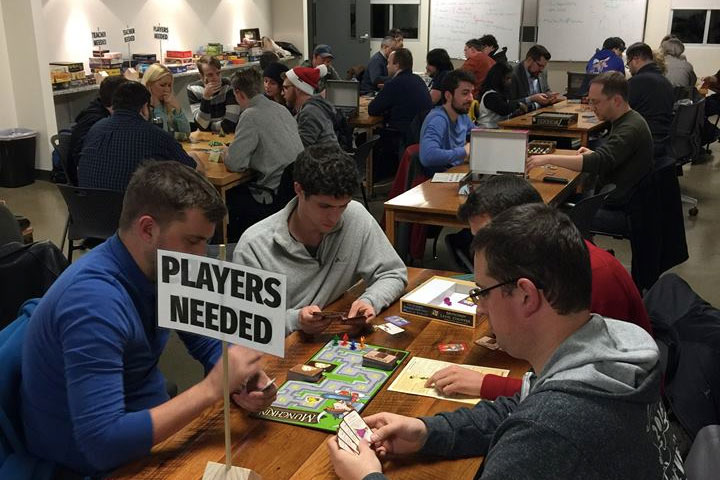
There are few things better than spending time with fellow puzzlers and gamers, and we got to do a lot of that this year. Whether it was cheering on our fellow puzzlers at the American Crossword Puzzle Tournament or putting our hands dirty with some knock-down, drag-out, game-playing ferocity during our Tabletop Tournament, these interactions were both invigorating and encouraging. Events like these really help solidify the spirit of community that comes with being puzzly.
And speaking of interacting with fellow puzzlers, for International Puzzle Day this year, we masterminded a little online puzzle hunt for PuzzleNation solvers. Involving clues hidden in both that day’s Daily POP Crosswords puzzle and Penny Dell Crosswords App free daily puzzle, solvers had to anagram and solve their way around the website in order to earn a prize. It was a serious challenge to design, and great fun to unleash on the world.
#2 Women in Crosswords and Roleplaying Games
Using the blog as an amplifier to get the word out about important causes and worthwhile projects is one of the best things about writing here. And this year in particular, we can be proud of doing our damnedest to vocalize the incredibly valuable role that women have played (and continue to play) in the puzzle/game community.
There’s nothing more exciting than getting to announce the launch of a product that has been months or years in the making, so picking #1 was a no-brainer for me. It had to be the announcement of Wordventures.
But it’s not just the app, it’s everything behind the app. I’ve watched it grow and evolve in development, and it’s truly unlike anything we’ve released before. The mix of music, imagery, storytelling, and puzzle-solving is so atmospheric and engaging.
It may sound self-serving or schlocky to talk about our flagship products as #1 in the countdown, but it’s something that we’re all extremely proud of, something that we’re constantly working to improve, because we want to make our apps the absolute best they can be for the PuzzleNation audience. That’s what you deserve.
And it’s part of the evolution of PuzzleNation and PN Blog. Even as we work to ensure our current products are the best they can be, we’re always looking ahead to what’s next, what’s on the horizon, what’s to come.
Thanks for spending 2018 with us, through robots and Rubik’s Cubes, through discoveries and daily delights, through puzzle launches and landmark moments. We’ll see you in 2019.
Thanks for visiting PuzzleNation Blog today! Be sure to sign up for our newsletter to stay up-to-date on everything PuzzleNation!
2018 is quickly coming to a close, and as I look back on an eventful year in the world of puzzles and games, I’m incredibly proud of the contributions both PuzzleNation Blog and PuzzleNation made to the puzzle community as a whole.
Over the last year, we explored board games and card games, strategy games and trivia games, dice games and tile games, do-it-yourself puzzlers and pen-and-paper classics. We met game designers, constructors, artists, YouTubers, and creative types of all kinds.
We unraveled math puzzles and diabolical brain teasers. We pondered optical illusions, Internet memes, and more, even questioning our place in the world of puzzles as AI and solving robots continued to rise in capability.
We delved into puzzle history with posts about ancient board games from centuries ago, Edgar Allan Poe’s secret codes, and the legacy of influential female codebreakers and spymasters previously lost to revisionist history like Elizebeth Smith Friedman and the Countess Alexandrine. We brought to light valuable examples of puzzles in art, comic strips, animation, music, television, film, and popular culture.
We spread the word about numerous worthwhile Kickstarters and Indiegogo campaigns, watching as the puzzle/game renaissance continued to amaze and surprise us with innovative new ways to play and solve. We shared worthy causes like Queer Crosswords and Women of Letters, as well as amazing projects like new escape rooms, puzzle experiences like The Enigmatist, online puzzle quests, and long-running unsolved treasure hunts.
We celebrated International TableTop Day, offered up puzzly suggestions for Valentine’s Day, attended the American Crossword Puzzle Tournament, and dove deep into an ever-expanding litany of puzzle events like the Indie 500, BosWords, and Lollapuzzoola.
We found puzzly ways to celebrate everything from Halloween, Thanksgiving, and Christmas to Star Wars Day and the anniversary of the Crossword, and we were happy to share so many remarkable puzzly landmark moments with you.
It’s been both a pleasure and a privilege to explore the world of puzzles and games with you, my fellow puzzle lovers and PuzzleNationers. We marked six years of PuzzleNation Blog this year, I’m closing in on my 1000th blog post, and I’m more excited to write for you now than I was when I started.
And honestly, that’s just the blog. PuzzleNation’s good fortune, hard work, and accomplishments in 2018 went well beyond that.
Every month, we delivered quality content for both the Penny Dell Crosswords App and Daily POP Crosswords. Whether it was monthly deluxe sets and holiday bundles for PDCW or the world-class topical puzzles by some of the industry’s best constructors for Daily POP, hundreds of topnotch crosswords wended their way to our loyal and enthusiastic solvers.
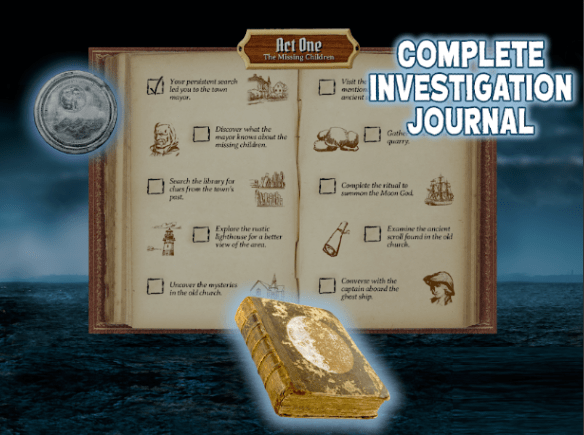
And a little more than a week ago, we launched our newest puzzly endeavor — Wordventures: The Vampire Pirate — bringing you a unique, story-driven puzzling experience, complete with gorgeous visuals, atmospheric music, and an immersive mystery to keep you solving!
But whether we’re talking about crosswords, Sudoku, or Wordventures, I’m proud to say that every single puzzle represents our high standards of quality puzzle content crafted for solvers and PuzzleNationers.
And your response has been fantastic! Daily POP Crosswords is thriving, we’re very excited about the response to Wordventures, the blog has over 2300 followers, and with our audience on Facebook, Twitter, Instagram, and other platforms continuing to grow, the enthusiasm of the PuzzleNation readership is both humbling and very encouraging.
2018 was our most ambitious, most exciting, and most creatively fulfilling year to date, and the coming year promises to be even brighter.
Thank you for your support, your interest, and your feedback, PuzzleNationers. The new year looms large, and we look forward to seeing you in 2019!
Thanks for visiting PuzzleNation Blog today! Be sure to sign up for our newsletter to stay up-to-date on everything PuzzleNation!
Back in 2013, we created a timeline of events from crossword history as part of our celebration of the hundredth anniversary of the crossword.
Although 105 isn’t as prestigious as 100, and the anniversary is technically tomorrow, we thought we’d honor the day this year by updating our comprehensive look at the long (yet surprisingly short) road it took to get to that marvelous centennial!
So, without further ado or folderol, we proudly present:
A Brief History of the Crossword (Updated)
16th – 11th century BC
Inscriptions from New Kingdom-era Egypt (Eighteenth to Twentieth Dynasties) of horizontal and vertical lines of text divided into equal squares, that can be read both across the rows and down the columns, are made. These inscriptions are later referred to by Egyptologists as “Egyptian crossword puzzles.”
19th century AD
Rudimentary crosswords, similar to word squares, begin appearing in England, and later elsewhere in Europe.
June 22, 1871
Future inventor of the crossword, Arthur Wynne, is born.
March 23, 1897
Future New York Times crossword editor Margaret Farrar is born.
February 25, 1907
Future New York Times crossword editor Will Weng is born.
December 21, 1913
The New York World publishes the first crossword, invented by Liverpool journalist Arthur Wynne. (The puzzle is originally known as a word-cross.)
January 6, 1916
Future New York Times crossword editor Eugene T. Maleska is born.
1920
Margaret Farrar is hired by The New York World as a secretary, but soon finds herself assisting Arthur Wynne with proofreading puzzles. Her puzzles soon exceed Wynne’s in popularity.
Colonel H.W. Hill publishes the first Crossword Dictionary.
1923
Margaret Farrar revises the cluing system for crosswords, sorting them into “Horizontal” and “Vertical” clues by number. (It wouldn’t be until the 1940s that the more familiar “Across” and “Down” terminology became the norm.)
1924
Margaret Farrar publishes the first book of crossword puzzles under contract for Richard L. Simon and Max Schuster, “The Cross-Word Puzzle Book.” It was an instant bestseller, launching Simon & Schuster as a major publisher. (Additional information available below the timeline.)
The Daily Express, founded in 1900, becomes the first newspaper in the United Kingdom to carry crosswords.
Crossword-themed novelty songs hit the airwaves as the puzzle craze intensifies, most notably “Crossword Mama, You Puzzle Me (But Papa’s Gonna Figure You Out).”
The Amateur Crossword Puzzle League of America, a self-appointed group of puzzle enthusiasts, lobbies for rotational symmetry in crosswords, which becomes the standard.
Solver Ruth Franc von Phul becomes a minor celebrity after winning The New York Herald-Tribune’s National All Comers Cross Word Puzzle Tournament at the age of 20. (She would win again 2 years later.)
January 15, 1925
“Felix All Puzzled,” the first animated short to feature a crossword, is released.
Disney releases a crossword-themed animated short, “Alice Solves the Puzzle.”
1926
The cryptic crossword is invented by Edward Powys Mathers, who publishes under the pseudonym Torquemada. He devises them for The Observer newspaper.
First reported instances of Braille crosswords.
1931
Dell Puzzle Magazines begins publishing.
(Dell Publishing itself was founded in 1921.)
1941
Dell Pocket Crossword Puzzles first published.
(The magazine continues to this day.)
February 15, 1942
The New York Times runs its first Sunday edition crossword. (Additional information available below the timeline.)
June 2, 1944
Physics teacher and crossword constructor Leonard Dawe is questioned by authorities after several words coinciding with D-Day invasion plans appear in London’s Daily Telegraph. (Additional information available below the timeline.)
1950
The crossword becomes a daily feature in The New York Times.
August 26, 1952
Future New York Times crossword editor Will Shortz is born.
1968
Lyricist Stephen Sondheim begins creating cryptic crosswords for New York Magazine, helping introduce Americans to British-style crosswords.
1969
Will Weng succeeds Margaret Farrar as the second crossword editor for The New York Times.
1973
Penny Press is founded.
1977
Eugene T. Maleska succeeds Will Weng as the third crossword editor for The New York Times.
1978
First year of the American Crossword Puzzle Tournament, later featured in the documentary Wordplay. 149 contestants compete for the title in the first national crossword tournament since the 1930s.
1979
Howard Garns creates the modern Sudoku puzzle for Dell Magazines (under the name Number Place), the first pen-and-paper puzzle to rival the crossword in popularity (though this spike in popularity would occur decades later under the name Sudoku).
June 11, 1984
Margaret Farrar, while working on the 134th volume in Simon & Schuster’s crossword puzzle book series, passes away.
1993
Will Shortz succeeds Eugene T. Maleska as the fourth crossword editor for The New York Times.
November 5, 1996
One of the most clever and famous crosswords of all time is published, the election-preceding crossword where either BOB DOLE ELECTED or CLINTON ELECTED could read out, depending on the solver’s answers.
1998
The Wall Street Journal adds a crossword to its newspaper, and Mike Shenk is appointed editor.
June 23, 2006
Wordplay documentary hits theaters, featuring celebrity solvers of crosswords as well as the participants and organizers of the 2005 edition of the American Crossword Puzzle Tournament.
February 29 – March 2, 2008
Thanks in part to the Wordplay documentary, the American Crossword Puzzle Tournament outgrows its previous setting and moves to Brooklyn.
The city of Lvov, Ukraine, creates a crossword that spans an entire side of a 100-foot-tall residential building, with clues scattered around the city’s major landmarks and attractions. It’s awesome.
David Steinberg launches the Pre-Shortzian Puzzle Project, designed to compile a complete database of every New York Times crossword.
August 13, 2012
PuzzleNation Blog is launched.
June 14, 2013
Matt Gaffney celebrates five years of MGWCC,
stating that MGWCC will run for 1000 weeks
(which puts the final edition around August 6th, 2027).
December 21, 2013
The Crossword officially turns one hundred years old.
Additional information:
1924: The publishing house Simon & Schuster, agreed to a small (3,600-copy) run of a crossword puzzle book, prompted by founder Richard L. Simon’s aunt, who wanted to give such a book to a friend. It became “a runaway bestseller.”
In no time the publisher had to put the book back on press; through repeated printings, it sold more than 100,000 copies. Soon a second collection followed, and then a third and a fourth. In 1924 and 1925 the crossword books were among the top 10 nonfiction bestsellers for the year, besting, among others, The Autobiography of Mark Twain and George Bernard Shaw’s Saint Joan.
February 15, 1942: The New York Times initially regarded crosswords as frivolous, calling them “a primitive form of mental exercise”; the motivating impulse for the Times to finally run the puzzle (which took over 20 years even though its publisher, Arthur Hays Sulzberger, was a longtime crossword fan) appears to have been the bombing of Pearl Harbor.
In a memo dated December 18, 1941, an editor conceded that the puzzle deserved space in the paper, considering what was happening elsewhere in the world and that readers might need something to occupy themselves during blackouts. The puzzle proved popular, and Sulzberger himself would author a Times puzzle before the year was out.
June 2, 1944: The words Omaha (codename for one of Normandy’s beaches), Utah (another Normandy beach codename), Overlord (the name for the plan to land at Normandy on June 6th), mulberry (nickname for a portable harbor built for D-Day), and Neptune (name for the naval portion of the invasion) all appeared in Daily Telegraph crosswords during the month preceding the D-Day landing.
This has been attributed to either an incredible coincidence or Dawe somehow overhearing these words (possibly slipped by soldiers involved) and incorporating them into puzzles unwittingly.
Do you have any suggestions for additions for our Crossword Timeline? Let us know in the comments section below! We’d love to hear from you!
Thanks for visiting PuzzleNation Blog today! Be sure to sign up for our newsletter to stay up-to-date on everything PuzzleNation!
I was looking over some of the crossword puzzles I’ve saved over the last year — in preparation for my yearly Favorite Puzzles of the Year post — and I noticed something.
Some crossword clues are really REALLY long.
Now, this is obviously not huge news to anyone. Although short clues offer plenty of opportunities to be clever and play with words, longer clues grant a constructor much more freedom.
After all, for every vague reference of “Wading bird,” you could have “Medium-sized wading bird with a long straight bill.” Details are a nice touch.
With long clues, you can make elaborate scholarly references, or provide multiple examples, often juxtaposing two statements in an amusing way.
Sometimes, they present the opportunity to quote the clue’s subject directly:
Other quotation clues simply allow the constructor to go outside the box in cluing a word commonly seen in crosswords.
In the New York Times crossword from January 15, 2017, ARC was clued “The ___ of the moral universe is long, but it bends toward justice”: M.L.K.”
June 11th’s NYT puzzle from this year is another fine example: “George Bernard Shaw wanted his to read ‘I knew if I stayed around long enough, something like this would happen'”
Sometimes, they’re hilariously self-referential, like this one I saw on Instagram:
This year’s Lollapuzzoola tournament puzzles really made the most of some long clues, utilizing both humor and clever construction.
In the warm-up puzzle, several entries had the same long clue, carefully worded to apply in more than one situation: “One party in an after-school one-on-one encounter.”
In the first puzzle, we saw clues like “Movies, and some comics, but *definitely* not video games, according to some” for CANON, and “Axle attachments that always make me think of the world record holder for the 100-meter dash” for U-BOLTS.
In the final, A POST was clued “‘I have to write ____ on my blog tonight, mostly to complain about this atrocious partial in the Lollapuzzoola tiebreaker.’” (I also want to give a shout-out to the clue “Mother’s father’s daughter’s son’s daughter” for NIECE. Good lord.)
It seems like long clues are only growing longer and more creative. I wonder where this trend will take us. Will there be a puzzle where every single clue (save one) has to be short, because one massive clue will take up an entire column? Who knows.
What’s the longest clue you’ve encountered in the crossword wild, fellow puzzlers? Let us know in the comments below! We’d love to hear from you.
Thanks for visiting PuzzleNation Blog today! Be sure to sign up for our newsletter to stay up-to-date on everything PuzzleNation!
Gender equality is a hot-button issue these days, as it should be. In the US, one political party is hellbent on regulating reproductive rights (and women’s bodies in general), even as the opposing party saw more women elected into public office than ever before.
Women of color and LGBTQIA+ women continue to seek equal and fair representation in all areas, from political and economic to social, and these discussions are important. They should be part of the national — and global — conversation.
You might think this has nothing to do with the world of puzzles and games, but you’d be wrong. The stigma of Gamergate still hangs over the heads of many in the video game industry, after a small, yet vocal and toxic, group of video game fans targeted and harassed female coders and game designers. There have been smaller stories in the board game industry as well, where companies have agreed not to associate with certain individuals with troublingly sexist backgrounds.
The author argues that “Females aren’t as obsessively driven as males to nail down facts, correct errors, and dominate a field,” and uses the Scrabble tournament as a microcosm, implying that the same argument applies to STEM fields and other intellectual competitions like the National Geographic Geography Bee.
From the article:
Competitive Scrabble constitutes a natural experiment for testing the feminist worldview. According to feminist dogma, males and females are identical in their aptitudes and interests. If men dominate certain data-based, abstract fields like engineering, physics and math, that imbalance must, by definition, be the result of sexism—whether a patriarchal culture that discourages girls from math or implicit bias in the hiring process.
But there are no cultural expectations that discourage females from memorizing dictionaries—a typical strategy of competitive Scrabble players, often in a foreign language that the player doesn’t speak. Girls are as free as boys to lap up vocabulary. Nor are there misogynist gatekeepers to keep females out of Scrabble play; the game, usually first learned at home, is open to all. According to Hasbro, 83% of recreational Scrabble players 25 to 54 are female.
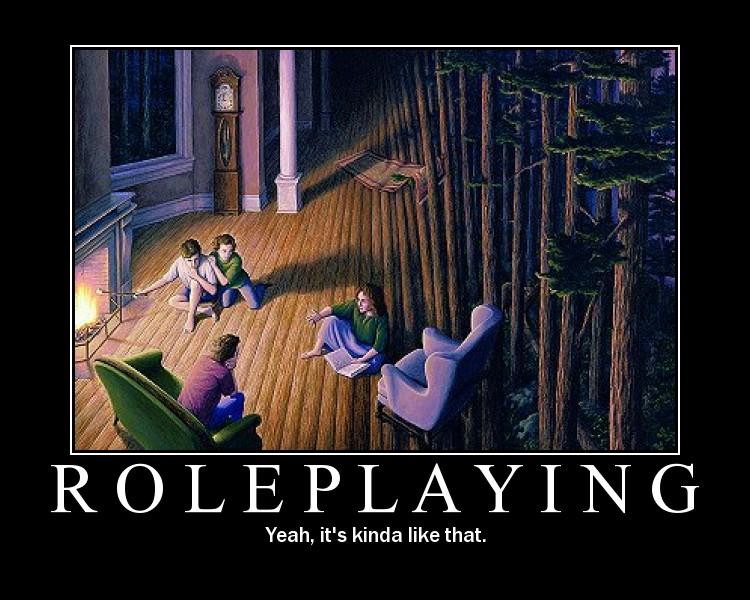
Now, firstly, there is misogynist gatekeeping in most every social activity. You can go back and read the interviews I did for my Women in Roleplaying Games post earlier this year for some telling firsthand accounts.
I can’t argue with the stats on recreational Scrabble players. Most of the Scrabble players (and Words With Friends players, and other offshoots) are women. Heck, in my group of friends, one Scrabble rivalry escalated so much that the loser of a particularly high-stakes match had to compose and perform a song dedicated to the winner’s Scrabble mastery!
But the author is missing a major point about discouragement vs. encouragement. Sure, many of those recreational Scrabble players are female, but being introduced to a game in your youth and being encouraged to excel at it are two very different things. Girls are not necessarily as free as boys to lap up vocabulary, unless they’re raised in a household where such learning is equally encouraged.
Girls and young women still struggle under weighty cultural expectations, both in terms of what their interests should be and what fields they should focus their competitiveness on. To act like every household treats boys and girls the same is a ridiculous act of simplification on the author’s part.
There is a huge difference between not being discouraged and actively being encouraged. I’ve had the privilege of interviewing many of the top crossword constructors in the field today, and one thing that many of them, male and female, have in common is being encouraged at a young age to pursue their interest in puzzles.
There’s no gender disparity in competitors at the Scripps National Spelling Bee, either in terms of competitors or winners, and the parental and familial encouragement for those children is obvious in any interview package.
Plus, there’s the issue of whether competitiveness is encouraged. All too often, you hear stories about girls’ and women’s interest in a topic being quashed by discussions of “what’s appropriate” or “what’s ladylike” or some other nonsensical idea of how to BE a woman.
You hear it all the time in the language employed by misogynists; A man is competitive, a woman is aggressive. A man is outspoken, a woman is pushy. The double standard is very much a thing, and whether we’re talking about households, board rooms, or game rooms, these inequities should be challenged.
We still have huge strides to make in terms of ameliorating gender inequality in our society, and the little fights matter as much as the big ones. The author states that “the National Science Foundation pours millions of taxpayer dollars into intersectionality and microaggression studies to smoke out invisible STEM sexism and to promote diversity in research labs.”
Invisible? Hardly. I was a physics student as a freshman in college, and I saw the one female student in my classes run off by this supposedly invisible STEM sexism. I wish I had spoken up more then.
I hope that continuing to speak up now in some small way makes up for it.
Thanks for visiting PuzzleNation Blog today! Be sure to sign up for our newsletter to stay up-to-date on everything PuzzleNation!












 PuzzCulture