A Bonus Edgar Allan Poe-st (Puzzle to Solve!)

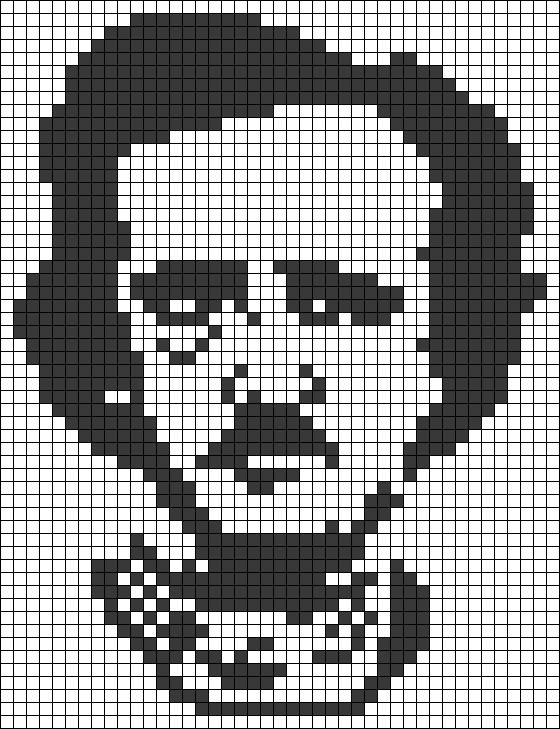
This grid, sadly, was too ambitious for my puzzly skills...

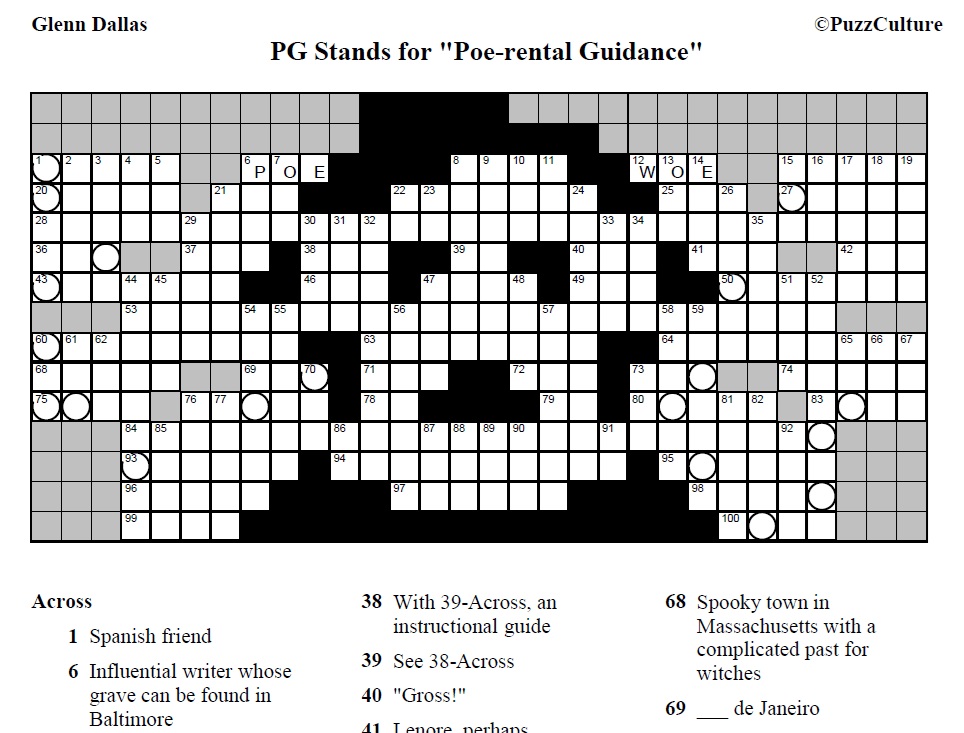
Our traditional Halloween Punny Costume Game went up yesterday, but for the crossword aficionados, I have cooked up a little something in honor of the spookiest day of the year.

I’m not much of an artist, but I did try to do a puzzle grid pixel art rendition of one of the classic eerie authors in today’s grid.

In addition to the theme entries, I also placed the title of one of his puzzliest works in the left side of the grid reading down, and a word we all associate with him in the right side of the grid reading down.

I hope you enjoy today’s puzzle. It’s to die for! (In a sinister and ironic way, of course.)

[Click here to download a PDF of the puzzle!]

Happy puzzling, everyone! And Happy Halloween!

Brother, Can You Paradigm?: A Punderful Discussion

6030310212c97e5d37e7cc001fd312db

I like puns. Okay, that’s a massive understatement. I adore puns. I happily share them on Facebook every Wednesday in our Wordplay Wednesday posts. I love Tom Swifties.

I love pretty much all wordplay, no matter how shameless. You may have noticed that PuzzleNation Blog posts discussing puns and wordplay often include the searchable tag “Get thee to a punnery” in the list of tags below.

Yup, that’s how much I like puns.

A lot of great crossword clues are built on punning, utilizing the multiple meanings of words to mislead you, to create soundalike phrases (like “Baa nana?” for EWE), or simply to keep the cluing interesting.

And puns get a bad reputation. Fozzie Bear’s elicit groans from his fellow Muppets. John Oliver, a comedian I absolutely adore, is often quoted online as having said, “I think puns are not just the lowest form of wit, but the lowest form of human behavior.”

That’s pretty rough. I haven’t been able to verify that quote to my satisfaction, but I can verify that he said this: “The moment I accept that there’s an artistic, redeeming quality in puns, I have a horrible feeling I’ll get hooked.”

bad puns

That’s the catch, isn’t it? A lot of crossword clues rely on wordplay, but a lot of people supposedly hate puns. But where is the line between wordplay and puns?

I can’t say for certain, but I suspect the line is drawn directly between what makes someone groan and what makes them nod their head in appreciation.

“Hanging is too good for a man who makes puns. He should be drawn and quoted.” — Fred Allen

A quick Google search will find celebrities on both sides of the great pun divide. Alfred Hitchcock famously said that puns are the highest form of literature. Shakespeare is loaded with puns. Edgar Allan Poe enjoyed wordplay in all its forms.

Poe+Pun+2

[Well, maybe not in this particular form…]

We find puns everywhere. In the one-liners of action heroes, in funny asides by the Cryptkeeper, on bumper stickers, in tweets, in dad jokes, on coffee mugs. And certainly in crossword clues.

Maybe I’m in the minority here, but in the end, I’d rather have a groan-worthy pun than no puns at all.

So what do you say we share a few? Leave your favorite puns in the comments section below!

Here’s a really bad one to get the ball rolling:

A man is about to have surgery, and before he goes into the operating room, the anesthesiologist pulls him aside and says, “We’re out of the usual anesthetics, so you have two unconventional options. I can use an older organic compound that’ll knock you out… or I can hit you in the head with a boat paddle.”

The man replied, “So it’s an ether-oar situation?”

Shameless.

Your turn. Go!


  dailypopwsicon

Treat yourself to some delightful deals on puzzles. You can find them on the Home Screen for Daily POP Crosswords and Daily POP Word Search! Check them out!

Thanks for visiting PuzzleNation Blog today! Be sure to sign up for our newsletter to stay up-to-date on everything PuzzleNation!

A Dash of Poetry Punnery! — The ReHASHtag Game

119552037_3421288181251238_3737077200487192141_n

You may be familiar with the board game Schmovie or hashtag games on Twitter.

For years now, we’ve been collaborating on puzzle-themed hashtag games with our pals at Penny Dell Puzzles, and this month’s hook was #PennyDellPuzzlePoetry. Today’s entries all mash up Penny Dell puzzles with famous poets, verses, titles, poetry styles, and more things associated with the world of poetry!

Examples include: Langston Hughes Calling?, The Crossroads Not Taken, and “Shall I compare thee to a summer’s Daisy?”

So, without further ado, check out what the puzzlers at PuzzleNation and Penny Dell Puzzles came up with!


Puzzly Poets!

Ezra Spellbound

Wizard Wordsworth

Sylvia Plathfinder

Maya Right Angelou

John Keats It Moving

Dylan Thomasterwords

Christina Rows-Garden-setti

Wallace Odds and Stevens


Puzzly Poems!

Codewords on a Grecian Urn

The Spider’s Web and the Fly

As the Rhyme Time Draws Nigh

Stepping Stones by Woods on a Snowy Evening

The Red Wheelsbarrow

Kubla Khansonant Search

A to Z-mandias

Jabberwacky Words


Puzzle Haiku!

It’s hard to keep this
many puzzles in order.
Take your Places, Please!

Deduction Problem
Letterboxes, Brick by Brick
The sharpest pencil

Two angry puzzlers
often traded Sudokus
and exchanged cross words.


Famous Puzzly Verses!

I think that I shall never see, a puzzle lovely as These Three.

There is no frigate like a variety puzzle book-
to take us lands away…

Quoth the Raven “Superscore.”

For he on Honeycomb-dew hath fed,
And drunk the milk of Pairsadise.

Who made the Crossword?
Who made the Word Seek and the Fill-in?

It came without Fill-Ins. It came without mags.
It came without Patchwords, Letterboxes or Mixed Bag.

2-B or B-2, you sunk my Battleships.


“Wasting Ink”

Made thirty-one copies, but I’m solving in pen
so it’s back to the printer again and again.


Twinkle Twinkle Lucky Star, how I wonder where You Know the Odds are,
Match-Up above the Whirly-Words so high, like a Diamond Mine in the sky,
Twinkle Twinkle Lucky Star, How many Triangles I wonder where you are


One intrepid puzzler even reimagined Edgar Allan Poe’s classic work “The Raven” with a puzzly perspective, complete with art! Check it out!

poe-try


Members of the PuzzleNation readership also got in on the fun when we spread the word about this hashtag game online!

Twitter user @pauliscool1927 immediately leapt at the opportunity, offering the delightful riff, “A dog with a muzzle solves a puzzle?” which feels like both a short rhyming piece and a crossword clue.


Have you come up with any Penny Dell Puzzle Poetry entries of your own? Let us know! We’d love to see them!

Thanks for visiting PuzzleNation Blog today! Be sure to sign up for our newsletter to stay up-to-date on everything PuzzleNation!

You can also share your pictures with us on Instagram, friend us on Facebook, check us out on Twitter, Pinterest, and Tumblr, and explore the always-expanding library of PuzzleNation apps and games on our website!

Intersections of Puzzle and Poetry

The more you look, the more you can find puzzles in all sorts of interesting places. We find them in literature, in historical documents, and in popular culture.

So it should come as no surprise that puzzles can be found in the world of poetry as well.

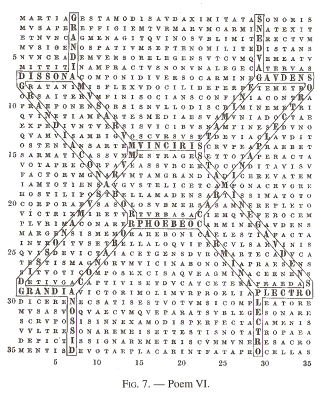
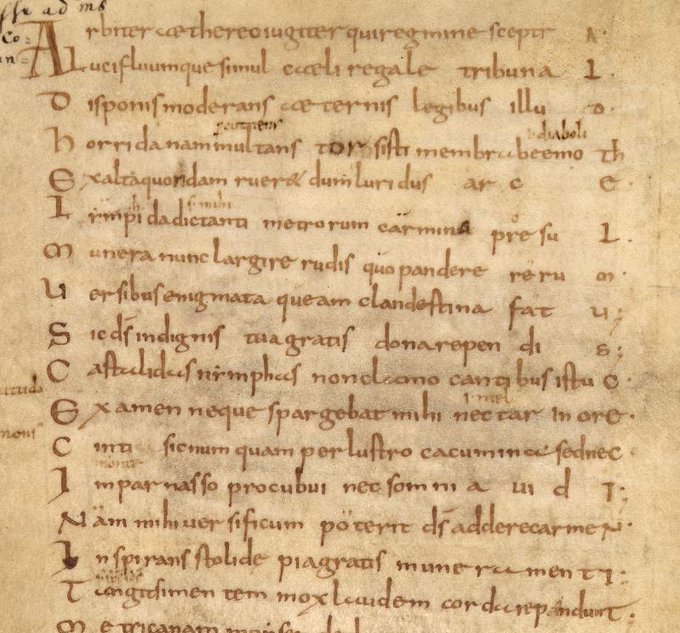
We’ve covered a few examples where poetry and puzzles have overlapped in the past, whether it’s the creations of Peter Valentine, the works of Edgar Allan Poe, or the art of carmina figurata.

carminafig7

But that’s only scratching the surface.

One of the most common ways that puzzly techniques find their way into poetry is through acrostics. Acrostics spell out messages with the first letter of each line or verse.

One of the most famous is a poem by Lewis Carroll at the end of Through the Looking-Glass where he reveals the identity of the girl who inspired his famous stories:

A boat beneath a sunny sky,
Lingering onward dreamily
In an evening of July—

Children three that nestle near,
Eager eye and willing ear,
Pleased a simple tale to hear—

Long has paled that sunny sky:
Echoes fade and memories die.
Autumn frosts have slain July.

Still she haunts me, phantomwise,
Alice moving under skies
Never seen by waking eyes.

Children yet, the tale to hear,
Eager eye and willing ear,
Lovingly shall nestle near.

In a Wonderland they lie,
Dreaming as the days go by,
Dreaming as the summers die:

Ever drifting down the stream—
Lingering in the golden gleam—
Life, what is it but a dream?

Carroll certainly offers the most famous example, but I must confess that my favorite example comes from a story on Wikipedia. Poet Rolfe Humphries was banned from Poetry Magazine for life for an acrostic aimed at a diplomat and former president of Columbia University. The acrostic quite bluntly read “Nicholas Murray Butler is a horse’s ass.”

Of course, the message reading down — also known as an acrostich — isn’t the only way these messages can be hidden.

There are also examples of mesostich — where the word or message is spelled with letters in the middle of the verse — and telestich, where the last letters of each line spell a name or message.

Dd8mL6_UwAA3OTY

[Image courtesy of Twitter.]

These techniques were also used in ancient Greek inscriptions, where one particular example, AL205, featured acrostich, mesostich, and telestich messages at the same time.

Other puzzly stylings have also allowed poets to flex their wordplay muscles.

For instance, David Shulman wrote a 14-line sonnet about George Washington’s famous river crossing where every line is an anagram of “Washington crossing the Delaware”:

A hard, howling, tossing water scene.
Strong tide was washing hero clean.
“How cold!” Weather stings as in anger.
O Silent night shows war ace danger!

The cold waters swashing on in rage.
Redcoats warn slow his hint engage.
When star general’s action wish’d “Go!”
He saw his ragged continentals row.

Ah, he stands – sailor crew went going.
And so this general watches rowing.
He hastens – winter again grows cold.
A wet crew gain Hessian stronghold.

George can’t lose war with’s hands in;
He’s astern – so go alight, crew, and win!

There are also ABC poems, a form where the goal of each poem is to use words starting with each letter of the alphabet in order. You can find some entertaining and impressive examples here.

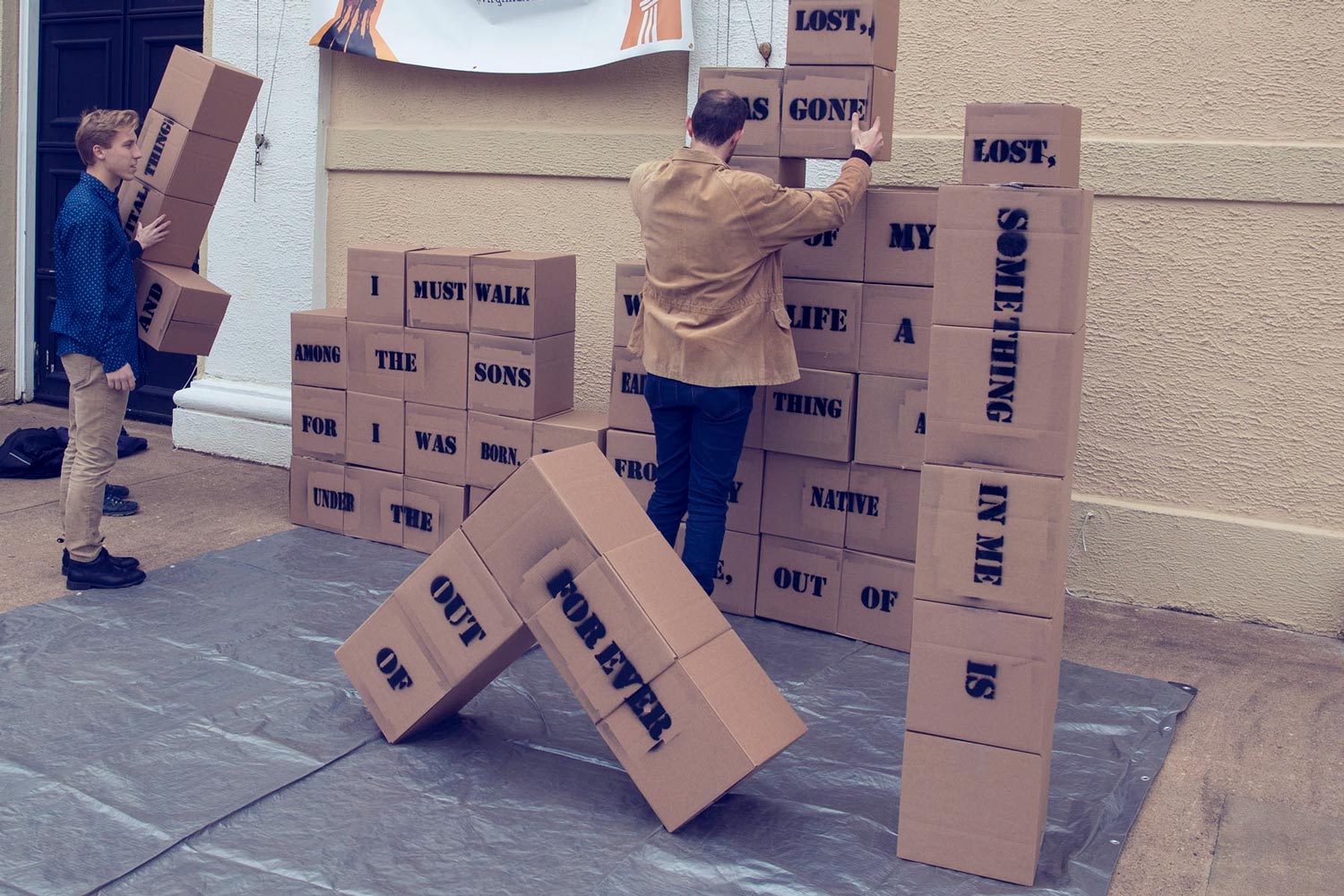
Some poets, however, have flipped the puzzle poem on its head by treating the poems like puzzles. The folks at UVA’s Puzzle Poetry group utilize Tetris-like puzzle pieces with words on them to assemble poems.

poetry_puzzle_da_header_3-2

[Image courtesy of the University of Virginia.]

The concept dates back to 2017, a creation of Neal Curtis and Brad Pasanek, serving as a way to both explore and deconstruct the art of poetry itself by making a puzzle out of it.

It’s a very cool idea, reminiscent of how magnetic poetry sets allow you to turn your fridge into a canvas by assembling and reworking the order of the various available words.

Puzzles by their very nature are about finding a solution, bringing order out of chaos, whether it’s assembling puzzle pieces, answering devious crossword clues to fill a grid, or unraveling a tricky brain teaser that pushes you to think in a different way.

And since poetry is all about expressing truths in a personal way, it makes a lovely sort of sense that puzzly techniques would intertwine with this thoughtful, elusive form of art.


Thanks for visiting PuzzleNation Blog today! Be sure to sign up for our newsletter to stay up-to-date on everything PuzzleNation!

You can also share your pictures with us on Instagram, friend us on Facebook, check us out on Twitter, Pinterest, and Tumblr, and explore the always-expanding library of PuzzleNation apps and games on our website!

The Best Puzzle Solvers in Fiction

bestlit1

Last year, we assembled super-teams of the best puzzle solvers in horror films and television respectively. The goal was to highlight characters who stood out, the ones you’d want on your side, because they’re clever, decisive, and immensely capable.

In the third installment in this illustrious series, we turn our attention to literature, seeking out the quickest minds and the deftest problem solvers from the printed page.

Yes, this list will be a bit detective-heavy, since they’re the protagonists most frequently put into situations where puzzly problem-solving becomes synonymous with the character. But we still think it’s a fair representation of the best puzzlers in the medium.


Oh, two quick notes before we get on with the post.

1.) Since both Batman and Sherlock Holmes were listed amongst the best puzzle solvers on television, we’ve opted to exclude them from this entry in order to make room for other individuals. Obviously they still make the cut, but it never hurts to share the spotlight.

2.) Fans of children’s books and young adult novels may be disappointed that the likes of Nancy Drew and Winston Breen didn’t make the list. But that’s for good reason. They’ll be getting their own list in the near future.


bestlit2

Inspector Morse (Colin Dexter)

[Image courtesy of eBay.]

Detective Chief Inspector Endeavour Morse is the protagonist of 13 novels and dozens of hours of television. This opera-loving detective is famous for enjoying cryptic crosswords, and several of his novels challenge the reader with a crossword clue early on, revealing the answer in a later chapter.

Possessing a keen intellect, Morse solves cases through diligence, intuition, and a near-photographic memory. When you factor in his puzzle skills, you end up with someone who can, for instance, effortlessly realize that the spelling mistakes in a piece of evidence are a hidden threatening message, not mere errors.

bestlit3

Lord Peter Wimsey (Dorothy L. Sayers)

[Image courtesy of LibraryCat.]

Although investigation is a hobby for Lord Peter Wimsey rather than a profession, that doesn’t make his efforts any less impressive or diligent. He offhandedly solves a cryptic clue for his valet during breakfast, something that will prove helpful later when he has to solve “The Fascinating Problem of Uncle Meleager’s Will.”

Resourceful in the extreme, Wimsey always manages to gather the necessary info to crack the case, whether that requires faking his own death or unraveling an entire cryptic puzzle in order to settle an acrimonious family gathering.

bestlit4

C. Auguste Dupin (Edgar Allan Poe)

[Image courtesy of Learnodo-Newtonic.]

Perhaps the first literary detective, this creation of Edgar Allan Poe combined a keen eye for observation with an impressive knack for abductive reasoning (inference or making good guesses, as Sherlock Holmes does). Equally at home solving mysteries or chasing forgotten manuscripts, Dupin is the template from which so many crime solving characters sprung.

A master at demystifying enigmas, conundrums, and hieroglyphics, Poe’s creation employed “ratiocination” to place himself in the shoes of criminals and work out not only what they’d done, but where they went after the crime. Surely no criminal mastermind or logic puzzle could withstand the skills of C. Auguste Dupin.

bestlit5

Mary Russell (Laurie R. King)

[Image courtesy of Goodreads.]

Fans of Sherlock Holmes know that he retired from crime solving and spent his twilight years beekeeping. But worry not, England, because Mary Russell ably fits the role Holmes left behind. As observant and strong-willed as her mentor, Mary is brilliant, proving herself a worthy student for Holmes while still a teenager.

A student of many languages, a theology scholar, and an avid reader, Mary is a fierce and intriguing character who embodies many of the puzzliest attributes of Holmes, but with her own idiosyncratic touches, even managing to resolve lingering threads from some of Holmes’s most famous cases.

bestlit6

George Smiley (John le Carré)

[Image courtesy of Amazon.]

There are many characters in literature that think ten steps ahead and manage to succeed, but George Smiley is one of the few who does so in believable fashion. The fictional spymaster and intelligence agent may not have Bond’s rakish good looks, but he has the puzzly chops to crack even the most diabolical schemes.

With an encyclopedic knowledge of spycraft and a perceptive mind capable of subtly getting information out of people, George Smiley is a master of looking at the chessboard of international gamesmanship and figuring out the best moves to make, which pieces to sacrifice, and how to read your opponent and outmaneuver him.
bestlit7

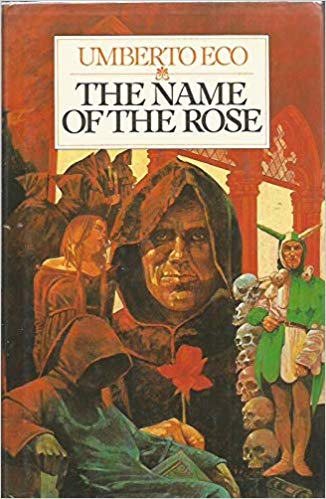
William of Baskerville (Umberto Eco)

[Image courtesy of Amazon.]

Given how many cryptic crossword constructors in England name themselves after Inquisitors, it’s appropriate to find a strong puzzle solver during the time of the Inquisition. Franciscan friar William of Baskerville, often regarded as insightful and humble, refused to condemn a translator as a heretic, deducing that he was innocent. Later, after leaving the ranks of the Inquisition, William is asked to help explain a series of strange deaths at a Benedictine monastery.

William manages to solve the case AND disprove the presence of a demonic force in the abbey, but not in time to prevent tragedy. Nonetheless, his impressive deductions and masterful efforts to unravel the mysteries at the heart of the case — braving labyrinths both real and invented — are key to the novel’s success.

bestlit8

Sirius Black (J.K. Rowling)

[Image courtesy of Boxlunch.]

Yes, he was a devotee of the Daily Prophet crossword, but it takes more than that to land you on this list. Although reckless at times after a long incarceration in Azkaban, Sirius proved on more than one occasion to have a quick, clever, and strategic mind, a trait shared by many great puzzlers.

He managed to sneak into Hogwarts twice, escaped the infamous Azkaban prison, and deduced where he could find the traitorous Peter Pettigrew. Not bad, especially when you consider the damage Dementors can do to someone’s psyche.

bestlit9

The Black Widowers (Isaac Asimov)

[Image courtesy of Amazon.]

A fictional dining club (men only, sadly), the Black Widowers often solve problems without ever leaving the dinner table. While many mystery novels walk you through the detective’s deductions and theories at the very end as the crime is solved, each Black Widowers case is solved in front of you, as they ask questions and pose solutions, before the final deduction (and correct solution) emerges.

Combining skills in chemistry, cryptography, law, art, and math, the Black Widowers are equipped to handle every puzzle, even if common-sense solutions occasionally elude them.


Did I miss any world-class puzzlers from famous (or obscure) works of literature? Let me know in the comments section below! I’d love to hear from you!

Thanks for visiting PuzzleNation Blog today! Be sure to sign up for our newsletter to stay up-to-date on everything PuzzleNation!

You can also share your pictures with us on Instagram, friend us on Facebook, check us out on Twitter, Pinterest, and Tumblr, and explore the always-expanding library of PuzzleNation apps and games on our website!

Answers to the Punderful Halloween Costume Game!

Halloween has come and gone, but the glorious puns remain.

That’s right, today we’ve got the answers to our latest edition of the Punderful Halloween Costume Game!

So, without further ado, let’s take a look at the punny answers!


#1

2019punderful1

It’s Hawaiian Punch!

[Image courtesy of Hikendip.]

#2

2019punderful2

It’s back to the drawing board for this fella!

[Image courtesy of Country Living.]

#3

2019punderful3

It’s Scar-Face!

[Image courtesy of Upbeat News.]

#4

2019punderful04

It’s prime rib!

[Image courtesy of The Kitchn.]

#5

2019punderful5

It’s a Rey of sunshine!

[Image courtesy of Hannah Sloan.]

#6

2019punderful6

Snitches get stitches in this lovely mix of idiom and Harry Potter!

[Image courtesy of sprace.]

#7

2019punderful7

It’s a two-fer here with the cat’s pajamas and the bee’s knees!

[Image courtesy of Devon Prokopek.]

#8

2019punderful8

It’s a creative outlet!

[Image courtesy of Mental Floss.]

#9

2019punderful9

It’s chicken cord on blue (chicken cordon bleu)!

[Image courtesy of Hikendip.]

#10

2019punderful10

It’s Edgar Allan Poe Dameron in this mix of Star Wars and classic literature!

[Image courtesy of rottenartist.]


How many did you get? Have you seen any great punny costumes we missed? Let us know!

Thanks for visiting PuzzleNation Blog today! Be sure to sign up for our newsletter to stay up-to-date on everything PuzzleNation!

You can also share your pictures with us on Instagram, friend us on Facebook, check us out on Twitter, Pinterest, and Tumblr, and explore the always-expanding library of PuzzleNation apps and games on our website!