It’s hosted by our friends at Club Drosselmeyer, who are amazing performers, puzzlers, and event planners who have been branching out in recent years to great success!
That’s so many new opportunities to check out this delightful “playable theater” experience. Who doesn’t love a wedding with all the pomp and circumstance and spies and secret plots and potentially world-endangering threats?
You know, wedding stuff!
And that’s not all! If you’re in the Boston area, you’re absolutely spoiled for puzzly choices this summer!
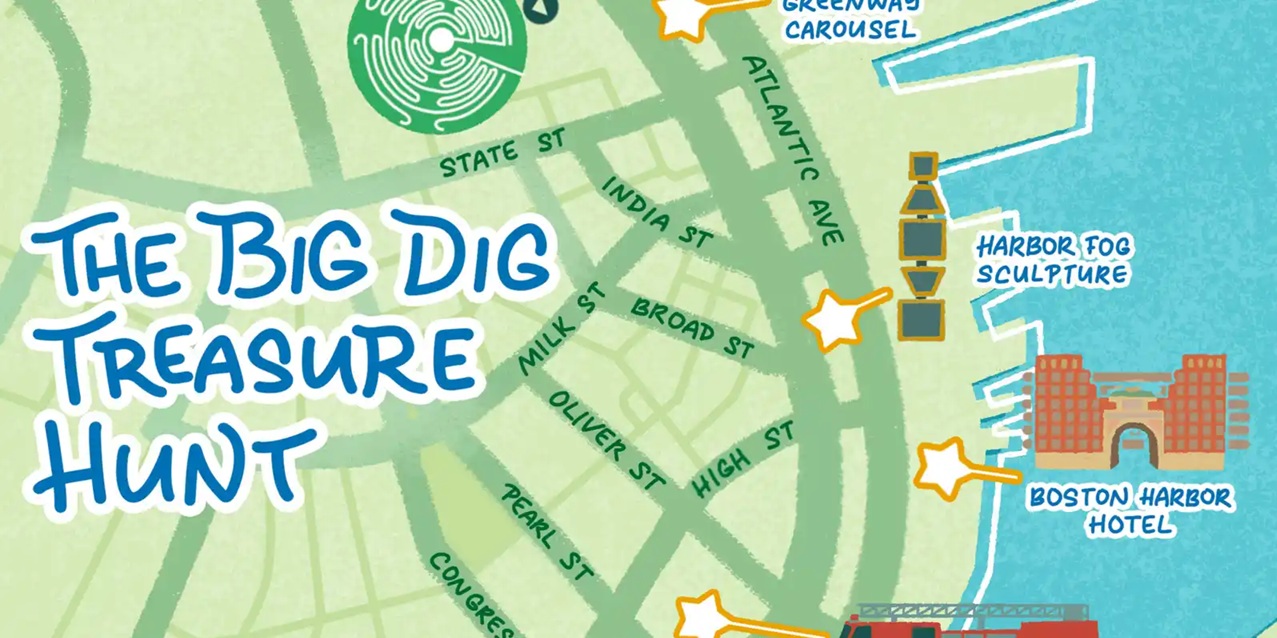
On Saturday, June 13th and Saturday, July 18th, The Big Dig Treasure Hunt challenges you (and a couple of teammates) to walk through Downtown Boston, solving puzzles for a few hours.
Stephanie Yang (who created some of the puzzles for The Wedding Party) has masterminded this event, and as someone who has participated in The Great Urban Race and similar city-based puzzly challenges, this one sounds like a winner!
Click here for more details and ticket information.
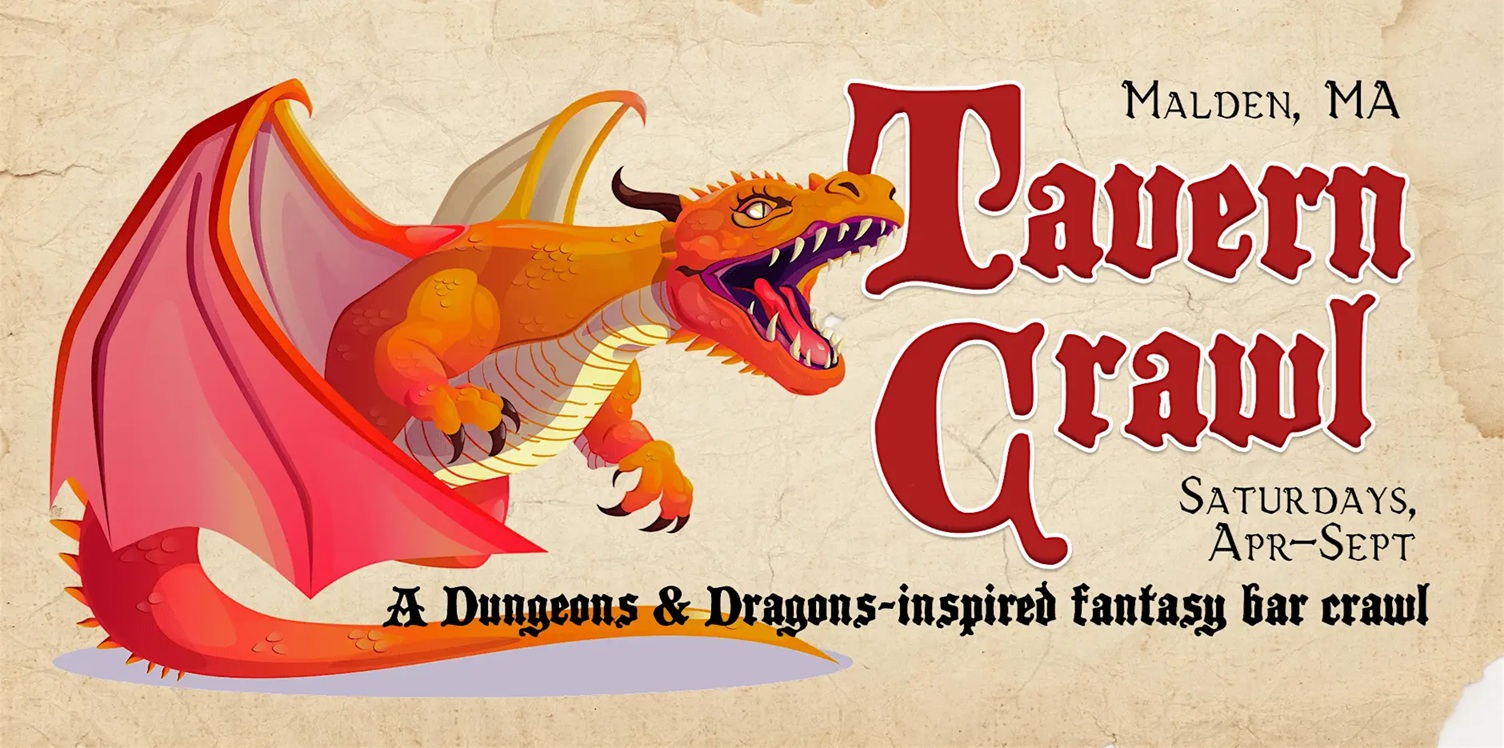
Choose your class, interact with guild members, help them solve problems, and enjoy a few drinks along the way! It’s a casual D&D LARP-style event that sounds like a great time for longtime RPG fans AND a marvelous way to introduce new players to roleplaying in a fun setting!
As the organizers say on Eventbrite: “You’ll solve puzzles, make choices, drink potions, argue philosophy, and possibly die.”
What more could you ask from a pub crawl?
Will you be attending any of these amazing events, fellow puzzlers? Is there an event near you that you’d like to see featured on PuzzCulture? Let us know in the comments section below! We’d love to hear from you.
This event is being held both in-person and online, with four themed puzzles and two themeless/freestyle puzzles to challenge solvers. The list of constructors for this year’s event is quite impressive: Andrea Carla Michaels, Byron Walden, Mark Axel, Rebecca Goldstein, Sarah Sinclair, Sophia Maymudes, Mallory Montgomery, and Zhou Zhang.
The event itself is happening on July 26th in West Roxbury, Massachusetts, and is sure to be a great time.
Man, we’ve got Westwords in June, Boswords in July, Lollapuzzoola in August, and Midwest in October! Tournaments galore!
International Day of Play!
June 11th marks the third annual International Day of Play!
The United Nations, through UNICEF, created International Day of Play in 2024 to raise awareness of how important the act of playing is to the development and well-being of children.
This year’s theme for International Day of Play is “Protect play, protect childhood.”
Play is so important for all of us. It fosters relationship building and cooperation, reinforces friendly competition and concepts of right and wrong, and maintains that childlike love and whimsy that comes with play that so many of us, young and old, must hold onto at all costs in a world that is so often unkind, unfriendly, and unfair.
You can find out more about International Day of Play on UNICEF’s website.
Free RPG Day is coming soon!
Last, but certainly not least, Free RPG Day is Saturday, June 27th.
The concept behind Free RPG Day is simple. All over the world (but mostly in the United States), local game shops, hobby shops, and other outlets team up with RPG publishers to distribute new, fresh, and most importantly, free material for all sorts of different roleplaying games, systems, and settings.
Sometimes they’re quickstart versions of the games to introduce new players. Sometimes they’re exclusive adventures or modules to play either in-store or at home. Othertimes, they’re entirely new games, free of charge.
Not only can you receive a wealth of new ideas and playing options in one fell swoop, but it serves as a terrific way to meet fellow roleplayers and build a community of game enthusiasts.
You can click this helpful link to find local spots near you that are participating in Free RPG Day, and I would highly recommend searching online for local game shops, game cafes, and even community centers like your local public library to see who is participating.
These shops will often be running demonstrations of games, tutorials on how to play, hosting raffles and contests, and offering terrific sale prices to encourage you to find the game that fits you best.
Every year, dozens of companies get involved, not only to encourage the growth of the game world, but to promote their own products. And what better way is there to get people hooked than with free exclusive materials begging to be tried out?
Keep your eyes peeled for this year’s edition of the Level 1 Anthology, offered by 9th Level Games. It’s a collection of new games by up-and-coming and established RPG creators, all centered around a particular theme. Last year’s edition was all about the end of the Wild West. This year’s is about Stand Up.
This project is close to my heart because I had games featured in the previous two years’ Level 1 collections, and I also have a game featured in this year’s collection!
There’s a lot of misinformation out there about the connection between puzzles/games and brain health.
If you’re a puzzle fan, no doubt you’ve seen the onslaught of ads about “brain fitness,” “brain training,” and all sorts of promises about memory help and staving off Alzheimer’s, dementia, and other cognitive conditions.
A casual Google search will turn up dozens of articles online arguing both sides. And so much of the data is inconclusive at best.
But!
There are absolutely benefits to playing puzzles and games in very specific circumstances:
The University of Exeter conducted a study involving more than 19,000 participants that concluded that adults age 50 and older who regularly solve puzzles like crosswords and Sudoku have better brain function than those who do not.
An article from Scientific American discussed how crossword solving engages the episodic buffer, one of the mechanisms related to our working short-term memory, our ability to temporarily hold information while performing cognitive tasks.
Jigsaw puzzle solving can induce a mental state similar to dreaming, one that helps with stress, relaxation, and mood.
Anhedonia is the loss of the ability to enjoy things you would normally find pleasure in. Basically, the goal post of “enjoyable” moves, meaning something you previously enjoyed no longer results in the same good feelings it did.
And when you consider that anhedonia is present in an estimated 70 percent of patients with major depression issues, you can see how devastating anhedonia’s moving goal posts would be for someone already struggling with depression.
So how does this game work as a diagnostic tool?
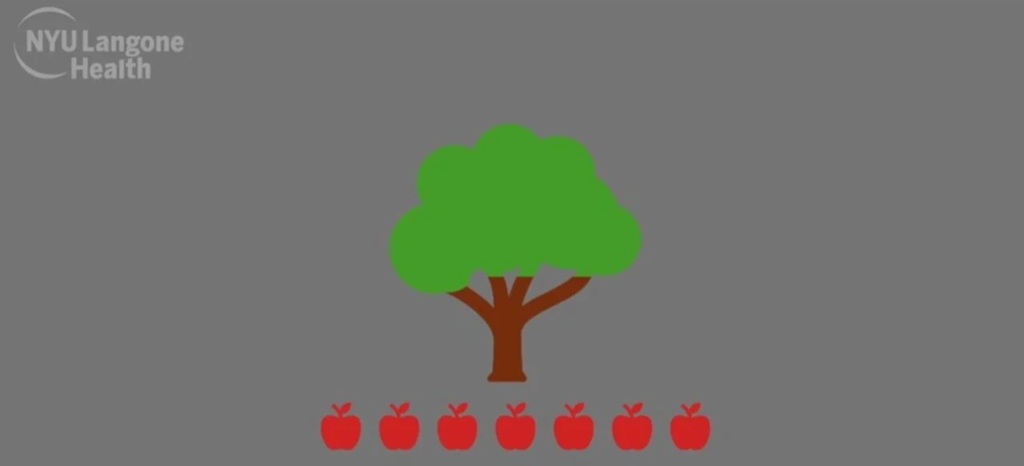
The game challenges the player to collect the most apples from a series of digital trees. With each round of harvesting, fewer apples fall from the tree, and at some point, a player will move on to the next tree.
That moment, that decision point, is where the researchers are focusing their diagnostic attention:
The researchers asked 120 game players—50 diagnosed with major depression and 70 who were not—to compete to collect the most apples falling from digital trees. Researchers use such foraging tasks because reward-seeking circuitry, especially regarding something that looks like food, has been engrained in the mammalian brain by evolution.
And it turns out that the subjects who were previously diagnosed stopped taking pleasure in the game 50 percent sooner than non-diagnosed players.
While the non-diagnosed players would often stick with a tree until its yield dropped to 5 apples, those diagnosed with depression abandoned one tree for the next while the yield was still 8 or 9 apples.
Yes, like most diagnostic tests, this game will probably prove less effective as knowledge of it grows, but it remains a valuable option for researchers.
Dan Iosifescu, MD, a professor in the Department of Psychiatry at NYU Grossman School of Medicine, elaborates on that:
Depression is increasingly thought of as an umbrella term that may include several distinct conditions… Measuring reference points may help us identify a specific subtype of depression linked to anhedonia, clarify its disease-causing brain computations, and tailor treatments.
And we may be able to do this remotely by asking patients, rather than traveling repeatedly for in-person visits, to spend a few minutes per week playing a smartphone game that lets us quickly adjust their treatment.
Greater accessibility of testing is definitely a good thing (although at the moment, the game is not publicly available to try).
Here’s hoping this game and others like it can be used to get specialized help to those who need it.
Do you find certain games and puzzles therapeutic, fellow puzzler? Let us know in the comments section below! We’d love to hear from you.
A year ago yesterday, my friend Maureen passed away unexpectedly.
We didn’t get to see each other much, given that I live in CT and she lived in North Carolina. But we chatted online when life allowed, and it was always a treat when I would see one of her texts or posts pop up.
Mo and I bonded over bad movies, a shared love of writing and performing, and Brak’s “I Love Beans” song from Cartoon Planet.
And she was forever baffled and interested by the fact that my day job is puzzles.
She was immensely supportive and creative, encouraging me in all my endeavors (successful or not), and every year at Christmastime, she would send something she thought would inspire my creativity.
One year it was rubber ducks to decorate, complete with markers AND clip-on accessories like hats and mustaches.
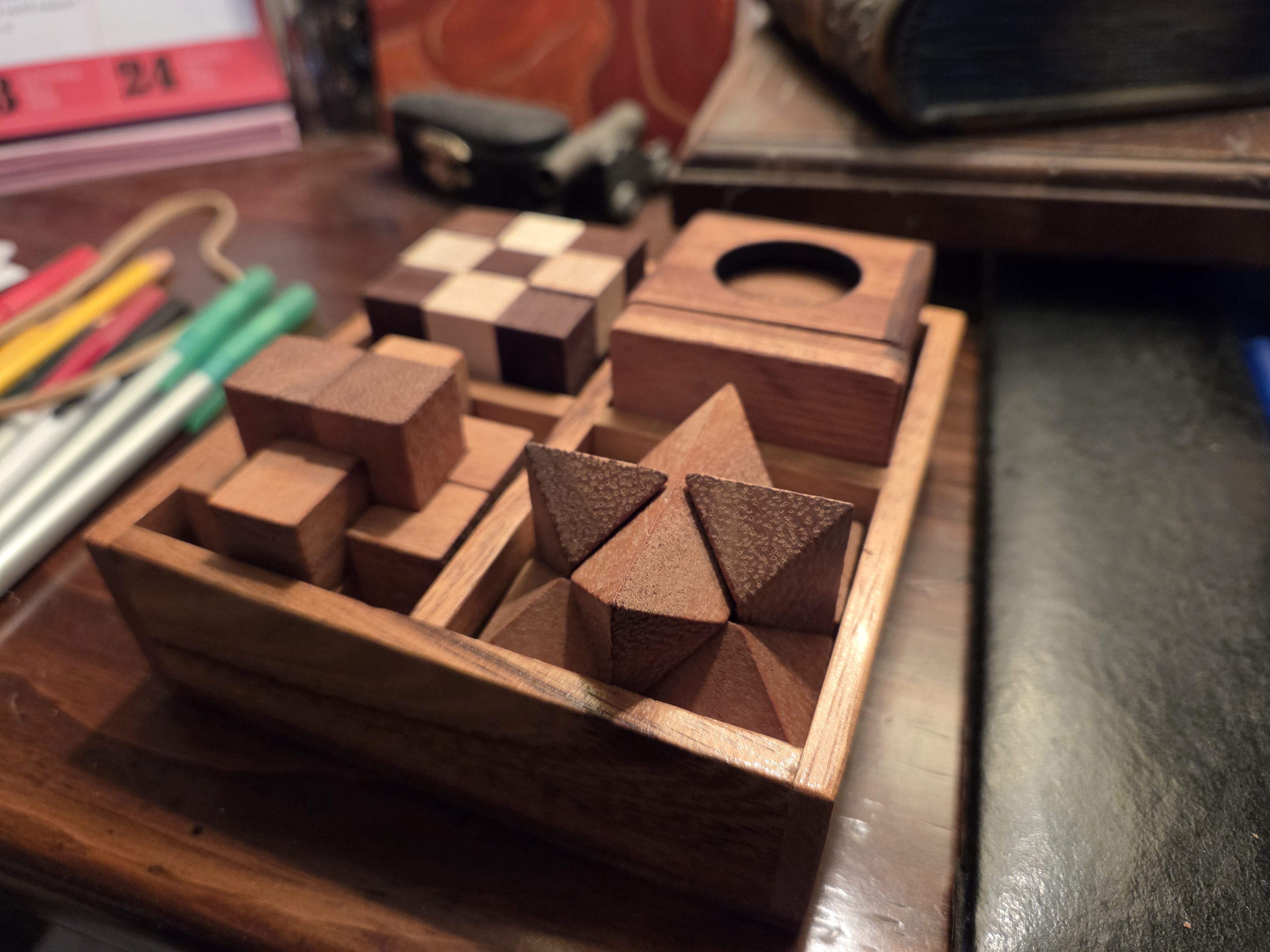
The Christmas before she died, she sent me a puzzle box.
It has four simple wooden mechanical puzzles, including a fit-the-pieces-in-the-box puzzle and a star puzzle.
I rarely take them apart and reassemble them, since I already know the technique behind each. But I often find myself handling them, reflexively rolling one in my hand or running a finger along the edge as I’m working on something.
I’m sure these would work marvelously as fidget objects. I use them to idly engage myself while processing things. I find it more inspiring than simply staring at the computer screen or the blank page while I’m puzzling.
(There’s an IT person at my office who does the same with a Slinky while he’s coding or unraveling a programming issue.)
So many puzzles, however enjoyable, are just brief (or extended) bits of fun. I solve them, and put them aside, happy to have challenged myself but ready for the next a-ha moment.
Unlike all those, this puzzle set sits on my desk, patiently waiting for the next moment when I’m flummoxed or my editing stalls out. Just like my friend, they’re ready to help me out of the next jam.
A little piece of wooden inspiration in the palm of my hand.
Thank you for that gift, Mo.
Do you have a puzzle or a game you associate with a loved one? Did a loved one introduce you to the world of puzzles and games? I would love to hear your story, if you’d care to share.
At this point, Mystery Science Theater 3000 is a comedy institution.
This simple idea — a man and his robot pals watching movies with the audience and gleefully poking fun at them — has spanned decades and generations.
And it’s been a good year for MST3K fans.
Not only has a copy of the last lost episode of the show been found — the KTMA-era version of Star Force: The Fugitive Alien 2,” which hasn’t been available since its original airing in November of 1988 — but the RiffTrax team of Bill Corbett, Mike Nelson, and Kevin Murphy have successfully crowdfunded a new quartet of episodes, MST3K: The RiffTrax Experiments.
A glimpse of the new set!
Over the years, this show has gone from local cable to Comedy Central, then to the Sci-Fi Channel. It left terrestrial cable for a while, until crowdfunding resurrected it. Then it streamed on Netflix, and moved to its own private streaming platform (The Gizmoplex, which is sadly shuttering soon). Along the way, it has toured with live shows, inducted new hosts and new robot voices into the cast, and now has constant livestreams running on YouTube.
It has spawned spinoffs like The Film Crew, Cinematic Titanic, and most famously RiffTrax, and new generations of fans are continuing to discover the show. (Plus a very lucky few joined the writing crew in some of the latest seasons.)
And new episodes on the horizon aren’t the only reason to celebrate.
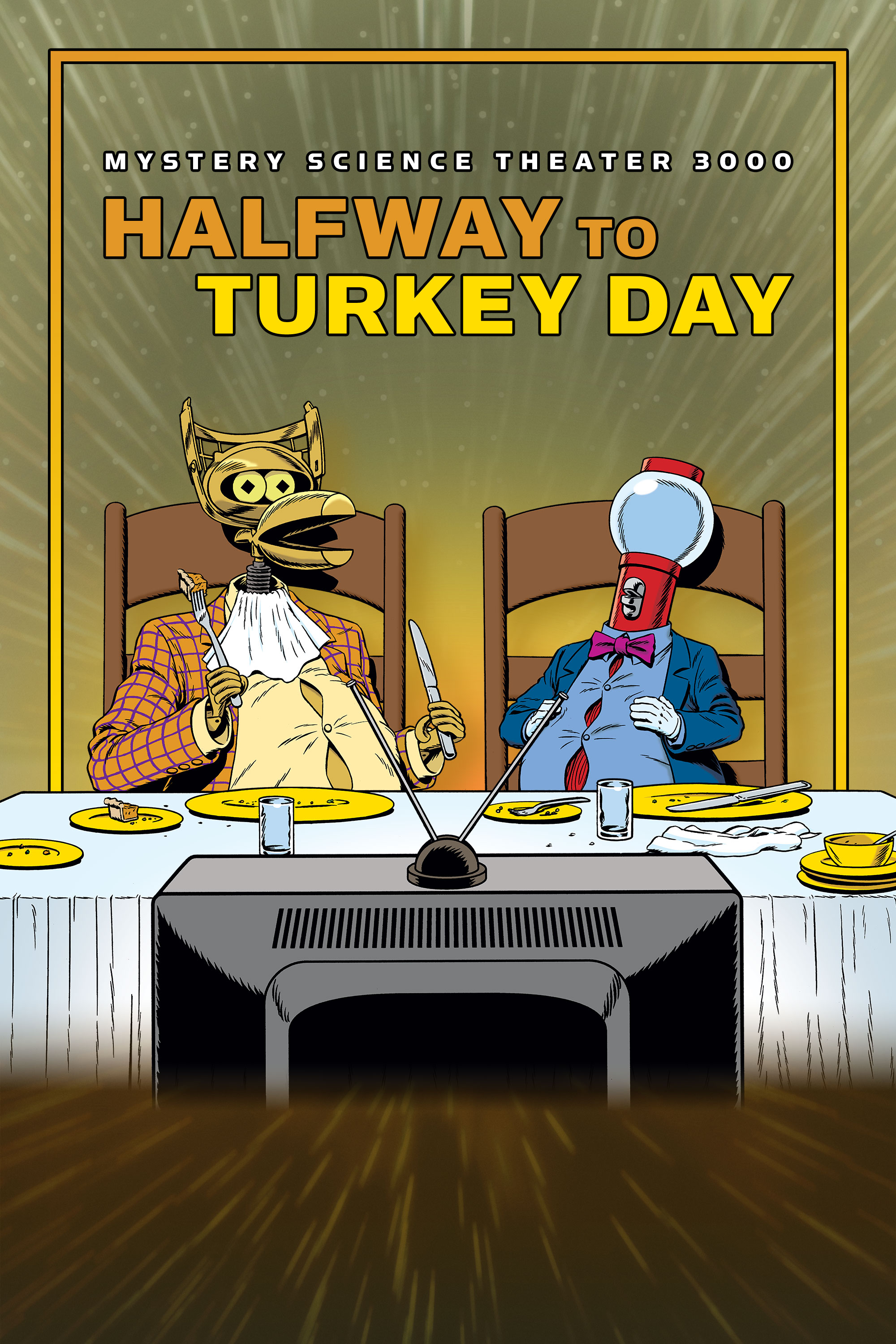
Today marks the start of Halfway to Turkey Day!
Thanksgiving marathons have been an MST3K tradition going back to the ’90s, and the Turkey Day Marathon is so beloved that fans simply can’t wait until November to celebrate.
So Halfway to Turkey Day was born. A marathon of all the previous Turkey Day events, Halfway to Turkey Day starts today and will run through June 2nd. It’s available on Amazon Prime Video, Tubi, RokuChannel, the CW app, plus Samsung, LG, VIZIO and Google Smart TVs and more.
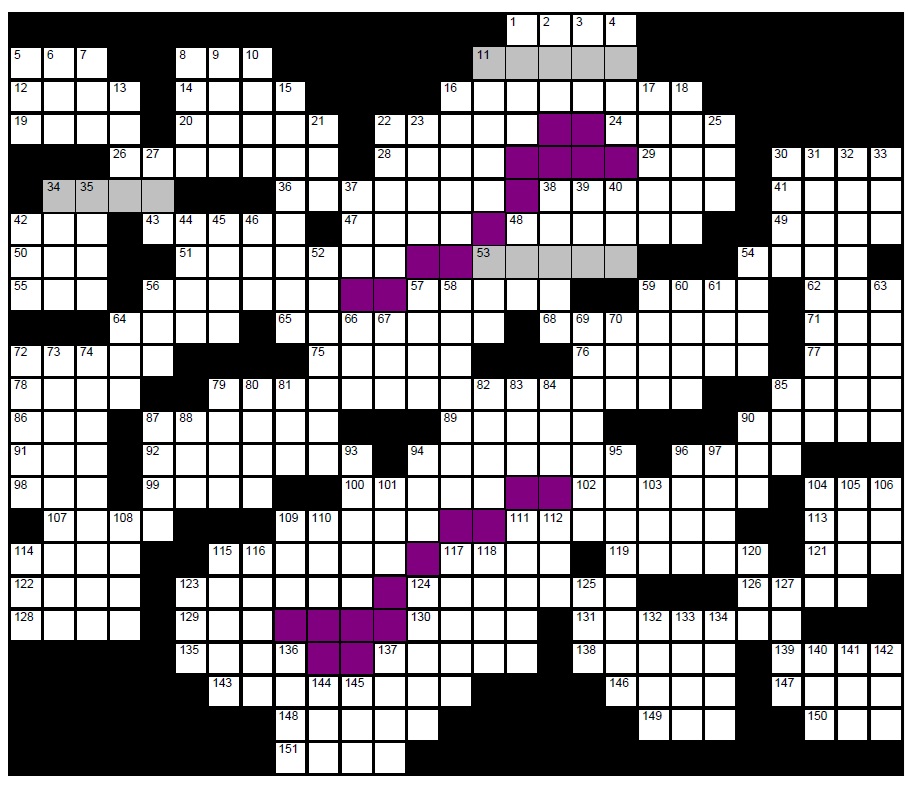
And I’ve been working on a puzzle celebrating Mystery Science Theater 3000, so what better day to share it than today, I ask you?
I hope all of the MSTies out there delight in a puzzly little journey through the history of one of my all-time favorite TV shows.
I’ve tried to make it as inclusive as possible, so no matter who your favorite host is or what your favorite episode is, there should be something for you to enjoy. (Plus I couldn’t resist coloring in a few black squares when I spotted Gypsy/GPC in the grid.)
Happy puzzling, MSTies! And Happy Halfway to Turkey Day!
[Thank you to Jennifer Cunningham, Troy Bond, and Crossword Gentleman Doug Peterson for your testsolving and input!]
f you’ve been reading this blog for any length of time, you’ve no doubt noticed that one of our favorite topics is puzzle-solving animals. In the past, we’ve discussed examples of puzzle solving in cats, dogs, crows, cockatoos, octopuses,bees, pigs, squirrels, and wolves.
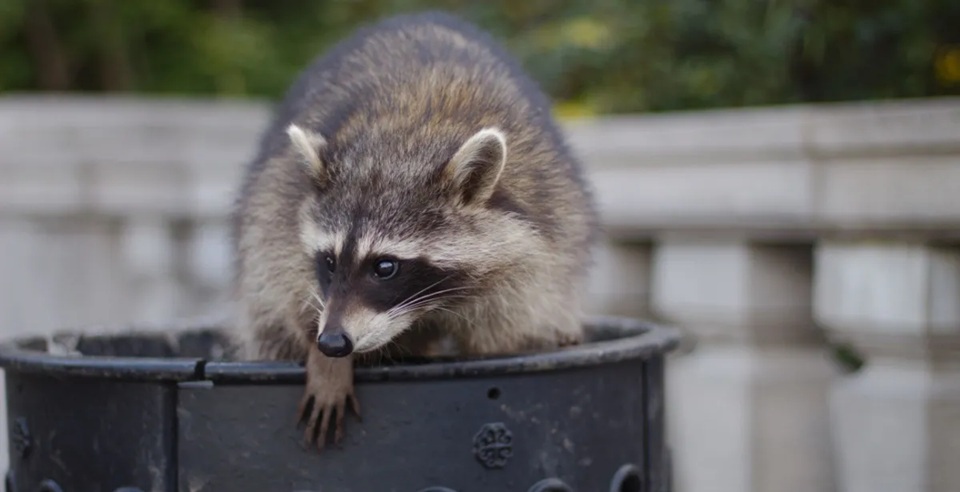
Raccoons have a reputation for being wily, particularly in folk tales, fables, and stories. They’re mischievous and sly, with forepaws advanced enough to allow them grab things and manipulate them. In suburban and urban environments, it’s hardly uncommon for raccoons to open garbage bins or find their way into other spaces in search of food.
So naturally, that raises some interesting questions: how far can their dexterity take them? What level of complexity can they unravel if properly incentivized?
In essence, how puzzly a challenge is too puzzly for a hungry, sufficiently-motivated raccoon?
As it turns out, raccoons will continue puzzling even when the food is gone!
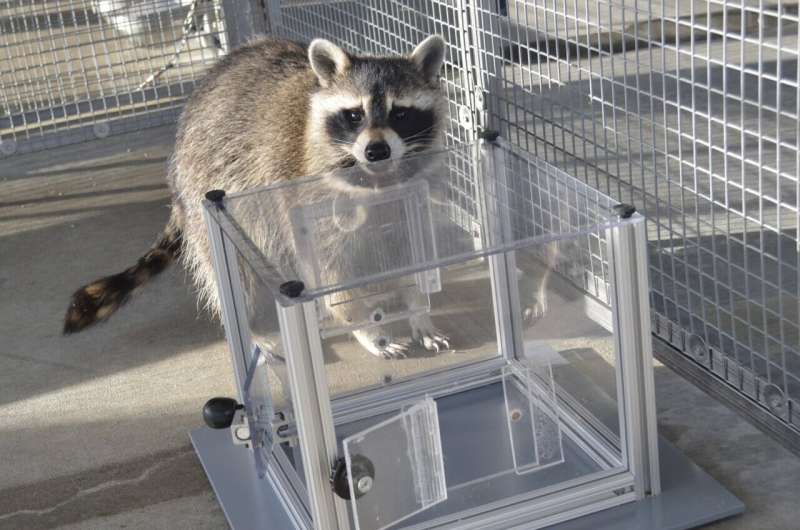
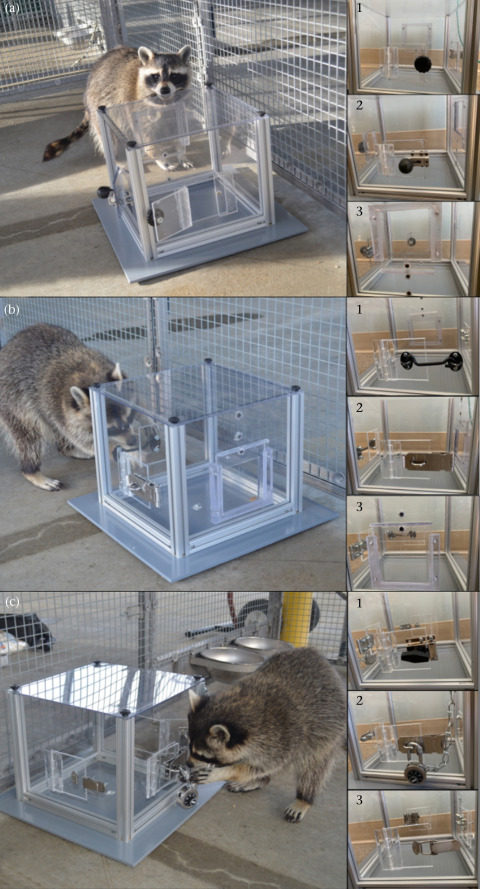
Researchers Hannah Griebling and Dr. Sarah Benson-Amram challenged a sample group of raccoons to deal with a custom puzzle box. It had nine different potential points of access, which required manipulating knobs, sliding doors, latches, and other mechanical obstacles. (These entry points were grouped by the researchers into easy, medium, and hard categories for the purposes of their study.)
The raccoons were given 20 minutes in each trial to find a way into the box in order to retrieve the single marshmallow inside.
The raccoons proved dexterous enough to unravel most of the challenges in front of them, and the researchers’ difficulty rankings didn’t seem to matter:
The time spent interacting with the puzzle box overall was similar for Easy and Hard solutions, rather than being a clear gradient from Easy to Medium to Hard. This result does not support an effect of presentation order of the difficulty conditions as we would expect the total interaction time with the puzzle box to decrease along an Easy to Hard gradient if this were the case and the raccoons were only learning the simple rule that the MAB [the puzzle box] only ever supplied one food reward.
Not only that, but the raccoons continued opening the other access points and solving the other mechanisms after eating the single prize inside. The raccoons kept puzzle-solving without food as a motivation.
“We weren’t expecting them to open all three solutions in a single trial,” said Griebling.
They were in it for the love of the game!
Well, sorta.
This behavior, this intrinsic motivation — the raccoons being driven to continue solving the various mechanisms in front of them WITHOUT hunger as the primary motivator — is known as “information foraging.”
Essentially, they’re practicing and learning to become better puzzle solvers.
As the researchers stated in their report:
Information foraging in raccoons increases the likelihood of raccoons finding and ‘solving’ novel raccoon exclusion devices, such as bungee cords used to strap down garbage bin lids. This could lead to a ‘cognitive arms race’ between humans and raccoons, as has been recently documented in urban-living, sulphur-crested cockatoos, Cacatua galerita.
…
Wild raccoons are likely to show similar patterns to the captive raccoons in this study, given that they have willingly engaged with and solved multiple novel problem-solving tasks in the field and showed similar results to captive raccoons on a previous MAB study.
Oh yes. Raccoons are engaged in Olympic-level training to be even sneakier and more efficient. Those adorable trash bandits are out in the field, putting in the work, learning and developing new strategies to nab your snacks and food stashes.
Okay, it’s not as organized as all that. But yes, raccoons do solve puzzles they don’t have to, and appear to be learning from the experience.
The study determined that raccoons did prefer some of the easier, more reliable methods for accessing the box — in the same way that you would probably go with a tried-and-true solution to a problem, rather than trying out a new technique with an unknown success rate. This trade-off of curiosity versus risk mirrors decision-making frameworks in humans, as well as other animals, according to Griebling. This is known as an “exploration-exploitation trade-off.”
So, we have definitive data. Raccoons will puzzle-solve without food as a motivator. (I know many puzzle enthusiasts who are the same way. They’ll tackle a puzzle just to learn from it, to see if they can unravel it. Though I wonder if marshmallows would motivate them as well…)
Are you hungry? Hungry enough to solve this acrostic?
But this does raise one last question: why test this at all?
“Understanding the cognitive traits that help raccoons thrive can guide management of species that struggle, and inform strategies for other species, like bears, that use problem-solving to access human-made resources,” said Griebling.
Studies like this help us understand the development of already puzzle-savvy animals, but also helps us to understand what animals (both wild and captive) are capable of, making US better stewards of the environment and its many denizens.
And we get to add another species to the ever-growing list of creatures that are capable of puzzle solving.
Which brings me to my latest business venture: Raccoon escape room, anyone?
What’s your favorite puzzle-solving creature, fellow puzzlers? Let us know in the comments section below! We’d love to hear from you.