
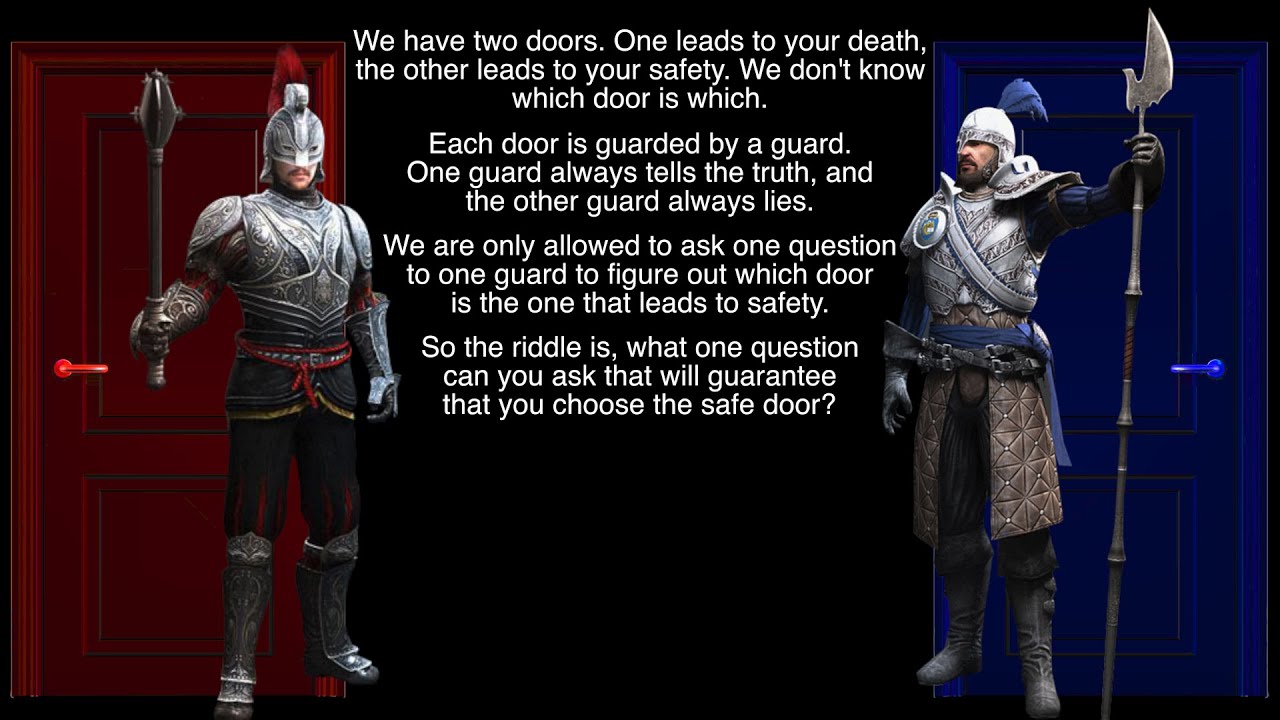
One of our most popular posts this year was our breakdown of the infamous Two Guards puzzle. We examined the riddle itself, how prone it is to misinterpretation, and how much comedy can be mined from the premise.
I was thinking about the riddle’s origins the other day, and delving into its history sent me down an unexpected rabbit hole involving a cult classic film, a revered author of science fiction, and one of the preeminent game studios of the 1980s and 1990s.
Although versions of the riddle can be traced back to the 1930s, it was popularized by the one-two punch of Raymond Smullyan’s 1978 book What Is the Name of This Book? The Riddle of Dracula and Other Logical Puzzles and the 1986 film Labyrinth.
And it might surprise you to learn that Labyrinth‘s influence in the world of puzzles and games reaches beyond its iconic presentation of the Two Guards riddle, particularly in the computer gaming sphere.
Forty years ago this month, Labyrinth: The Computer Game was released.
Although you don’t hear much about it these days, the game was actually more commercially successful in the United States than the film was!
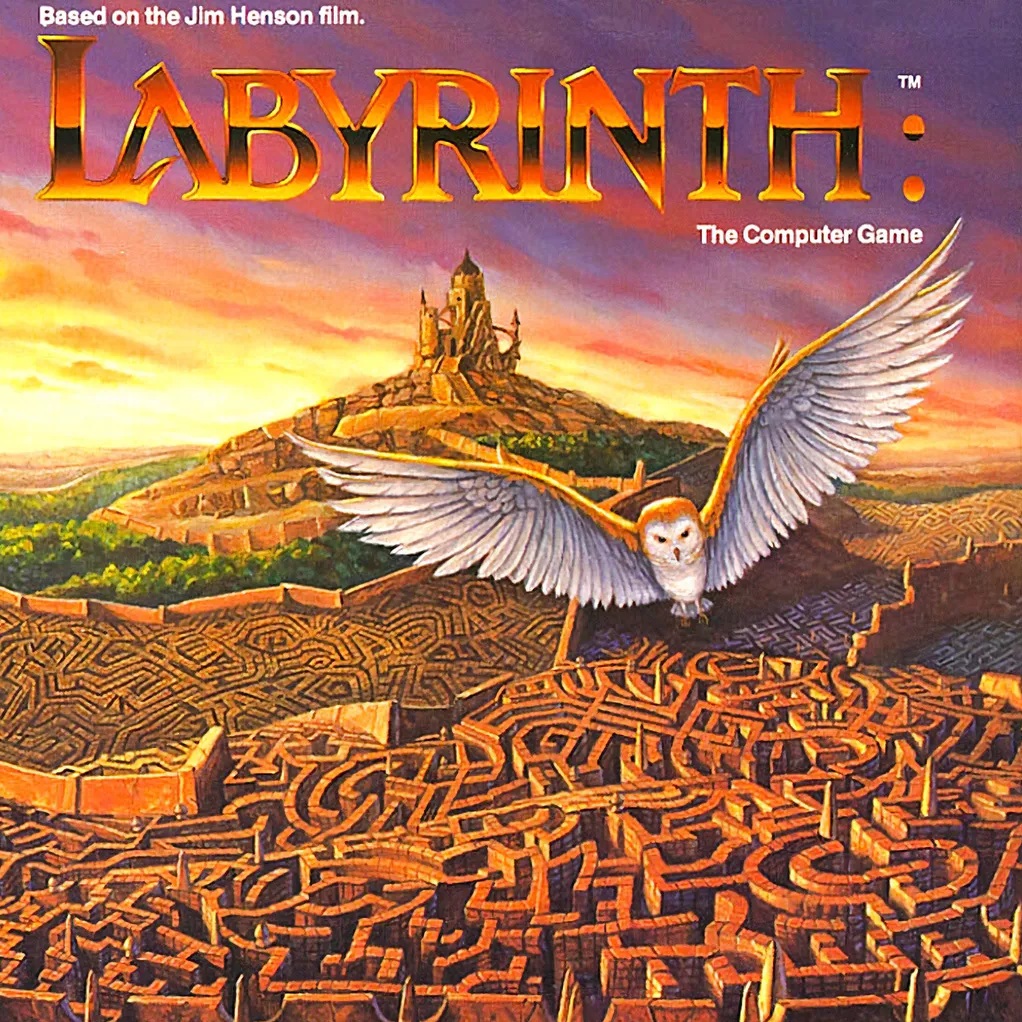
As the first adventure game released by Lucasfilm (which would later be known as LucasArts), Labyrinth: The Computer Game was a test bed for new technology, new game mechanics, and the development of the sly LucasArts sense of humor that helped define their games for years to come.
There is actually a sequence at the start of the game that encapsulates where the video game / computer game market was at the time. You start off with a short text-based adventure (like the text games that had dominated for years) as your character ventures to the movie theater to see the film Labyrinth.
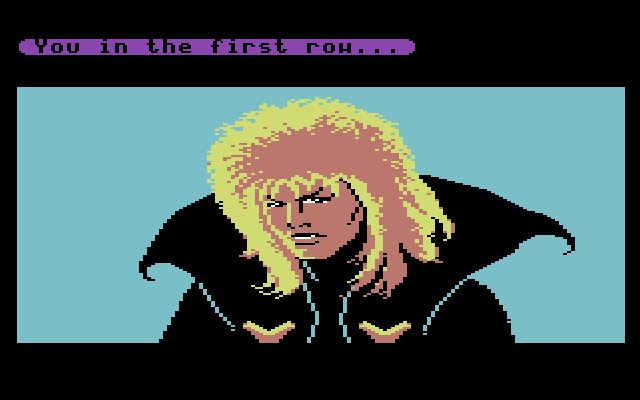
But then, Jareth the Goblin King appears, transporting the character into his labyrinth (and the players into the graphics-based world the game industry was embracing). This Wizard of Oz-style transition was the brainchild of author Douglas Adams of Dirk Gently and Hitchhiker’s Guide fame.
Douglas already had video game experience from working on text-based games like Infocom’s Bureaucracy and the notoriously difficult Hitchhiker’s Guide to the Galaxy game. (To this day, the Babel Fish Puzzle still makes top ten lists of the most challenging — and nonsensical — puzzles in gaming history.)
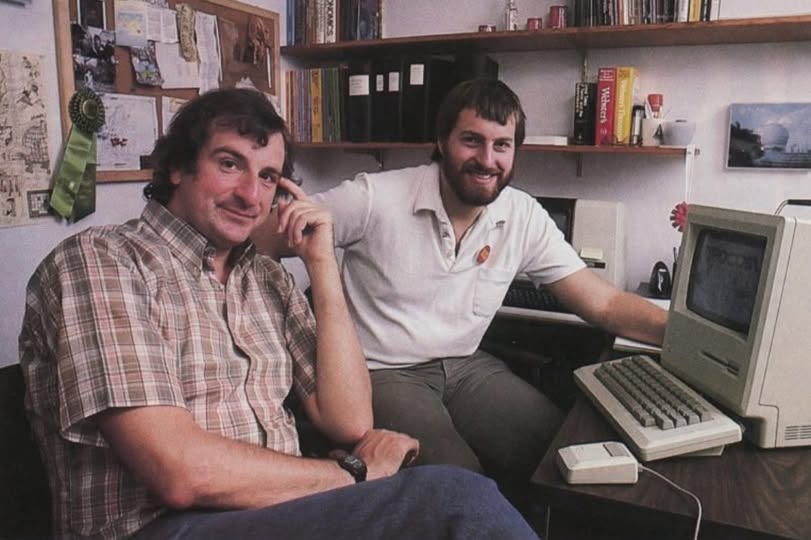
Adams was part of a brainstorming session for the game, and his fingerprints and sense of humor are all over the game.
Unlike the command-line interface of text-based games (where you would type out commands like “Pick Up Sword” or “Open Lock”) or the point-and-click interface (that Lucasfilm Games would become known for later), they used two “word wheels” where you scroll through options on both wheels and combine them to make commands. Imagine two slot machine wheels side by side.
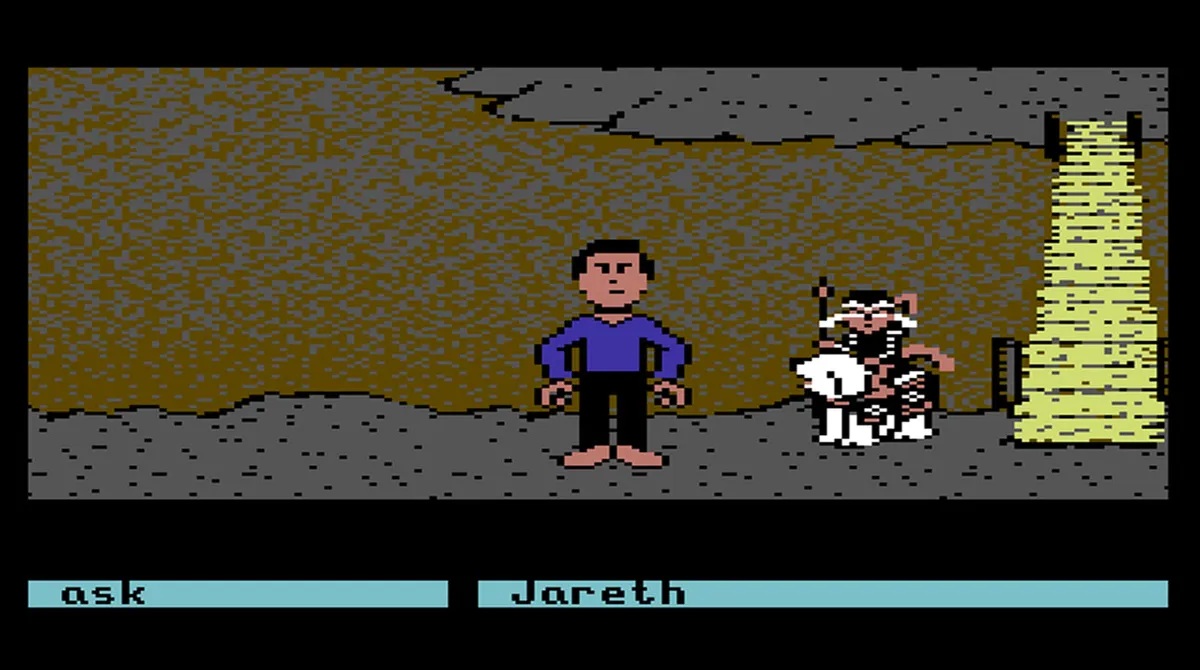
One wheel would have verbs like “Ask,” “Use,” and “Pick Up” (as well as more specific ones like “Congratulate,” “Manicure,” and “Complain”), and the other wheel had names, items, and other words to match.
This allowed you to create commands like “Ask Wall” (which triggered the response “It’s like talking to a wall. Nothing happens.”) or, incredibly, “Adumbrate elephant” (which in one particular scene, could cause an elephant to break you out of prison by crashing through the wall). As you might guess, “Adumbrate elephant” was a Douglas Adams contribution.
This sort of creativity when employing the word wheels was crucial to solving the many puzzles players encountered in the Labyrinth, often requiring players to utilize the multiple meanings of words to use the commands in unexpected ways.
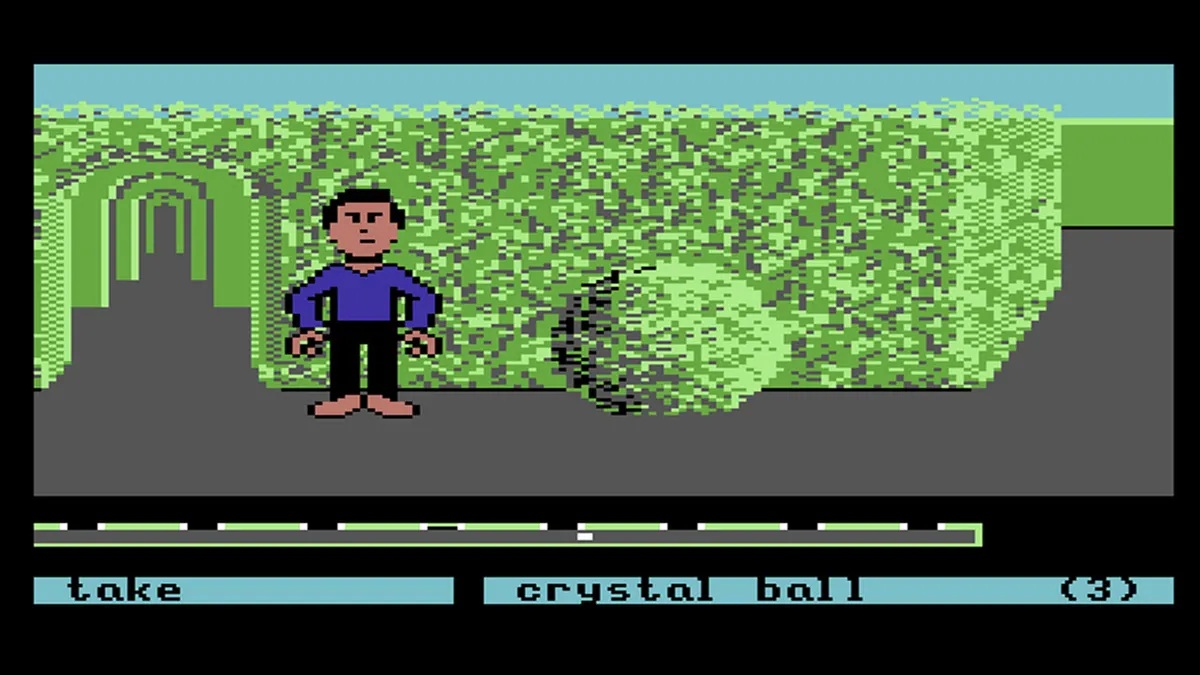
And with only thirteen real-time hours in which to locale and defeat Jareth in order to win the game, you had to be creative AND efficient with your exploring.
So, we have a game that outperformed the movie it was based on (although history has been kind to Labyrinth as a cult hit and much beloved part of many childhoods). It was the first step on the path to making Lucasfilm Games (and later, LucasArts) a genuine contender in the computer game / video game market.
Not only that, but Labyrinth: The Computer Game was the template for Lucasfilm’s next (and even more successful game) Maniac Mansion, which is still revered today. The plethora of choices and decisions available to players, the occasionally demented story beats, and the comedic silliness that permeated the gameplay helped define the Lucasfilm style.
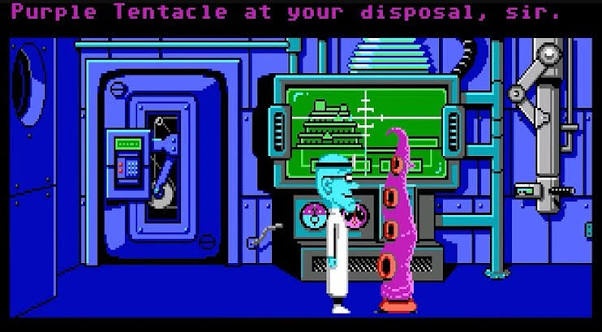
Maniac Mansion‘s point-and-click SCUMM gaming engine (short for Script Creation Utility for Maniac Mansion) would continue to be used in dozens of Lucasfilm games going forward, including Day of the Tentacle, The Secret of Monkey Island (and its sequels), Sam & Max Hit the Road, and other iconic titles.
And although Douglas Adams wouldn’t return to the world of video games / computer games until 1998 with Starship Titanic, his influence in gaming is still celebrated to this day. (Limited Run Games did a wonderful piece on Douglas Adams’ influence on games earlier this year to honor the 25th anniversary of Douglas’s passing.)
Labyrinth: The Computer Game, and the film itself, both play a fascinating role in the world of puzzles and games. Riddles, puzzles, and the history of computer gaming would not be the same without the saga of Sarah rescuing her brother from the Goblin King (and your digital efforts to escape the labyrinth yourself).
If you want to try the game out for yourself, the Apple II version of the game is available to play on archive.org.
Are you a Labyrinth (or Labyrinth: The Computer Game) fan, fellow puzzler? Is there another puzzly pop culture property you’d like us to do a deep dive on? Let us know in the comments section below! We’d love to hear from you.

