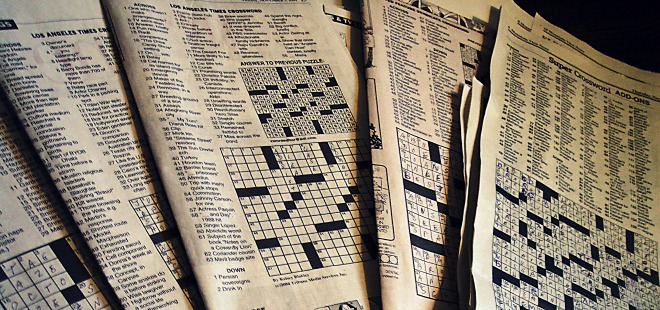
Crossword History: An Updated Timeline

Back in 2013, we created a timeline of events from crossword history as part of our celebration of the hundredth anniversary of the crossword.

Although 105 isn’t as prestigious as 100, and the anniversary is technically tomorrow, we thought we’d honor the day this year by updating our comprehensive look at the long (yet surprisingly short) road it took to get to that marvelous centennial!

So, without further ado or folderol, we proudly present:

A Brief History of the Crossword (Updated)

16th – 11th century BC

Inscriptions from New Kingdom-era Egypt (Eighteenth to Twentieth Dynasties) of horizontal and vertical lines of text divided into equal squares, that can be read both across the rows and down the columns, are made. These inscriptions are later referred to by Egyptologists as “Egyptian crossword puzzles.”

19th century AD

Rudimentary crosswords, similar to word squares, begin appearing in England, and later elsewhere in Europe.

June 22, 1871

Future inventor of the crossword, Arthur Wynne, is born.

March 23, 1897

Future New York Times crossword editor Margaret Farrar is born.

February 25, 1907

Future New York Times crossword editor Will Weng is born.

December 21, 1913

The New York World publishes the first crossword, invented by Liverpool journalist Arthur Wynne. (The puzzle is originally known as a word-cross.)

January 6, 1916

Future New York Times crossword editor Eugene T. Maleska is born.

1920

Margaret Farrar is hired by The New York World as a secretary, but soon finds herself assisting Arthur Wynne with proofreading puzzles. Her puzzles soon exceed Wynne’s in popularity.

Colonel H.W. Hill publishes the first Crossword Dictionary.

1923

Margaret Farrar revises the cluing system for crosswords, sorting them into “Horizontal” and “Vertical” clues by number. (It wouldn’t be until the 1940s that the more familiar “Across” and “Down” terminology became the norm.)

1924

Margaret Farrar publishes the first book of crossword puzzles under contract for Richard L. Simon and Max Schuster, “The Cross-Word Puzzle Book.” It was an instant bestseller, launching Simon & Schuster as a major publisher. (Additional information available below the timeline.)

The Daily Express, founded in 1900, becomes the first newspaper in the United Kingdom to carry crosswords.

Crossword-themed novelty songs hit the airwaves as the puzzle craze intensifies, most notably “Crossword Mama, You Puzzle Me (But Papa’s Gonna Figure You Out).”

The Amateur Crossword Puzzle League of America, a self-appointed group of puzzle enthusiasts, lobbies for rotational symmetry in crosswords, which becomes the standard.

Solver Ruth Franc von Phul becomes a minor celebrity after winning The New York Herald-Tribune’s National All Comers Cross Word Puzzle Tournament at the age of 20. (She would win again 2 years later.)

January 15, 1925

“Felix All Puzzled,” the first animated short to feature a crossword, is released.

February 2, 1925

The crossword-fueled musical revue “Puzzles of 1925” opens on Broadway. It runs until May of 1925.

February 15, 1925

Disney releases a crossword-themed animated short, “Alice Solves the Puzzle.”

1926

The cryptic crossword is invented by Edward Powys Mathers, who publishes under the pseudonym Torquemada. He devises them for The Observer newspaper.

First reported instances of Braille crosswords.

1931

Dell Puzzle Magazines begins publishing.
(Dell Publishing itself was founded in 1921.)

1941

Dell Pocket Crossword Puzzles first published.
(The magazine continues to this day.)

February 15, 1942

The New York Times runs its first Sunday edition crossword. (Additional information available below the timeline.)

June 2, 1944

Physics teacher and crossword constructor Leonard Dawe is questioned by authorities after several words coinciding with D-Day invasion plans appear in London’s Daily Telegraph(Additional information available below the timeline.)

1950

The crossword becomes a daily feature in The New York Times.

August 26, 1952

Future New York Times crossword editor Will Shortz is born.

1968

Lyricist Stephen Sondheim begins creating cryptic crosswords for New York Magazine, helping introduce Americans to British-style crosswords.

1969

Will Weng succeeds Margaret Farrar as the second crossword editor for The New York Times.

1973

Penny Press is founded.

1977

Eugene T. Maleska succeeds Will Weng as the third crossword editor for The New York Times.

1978

First year of the American Crossword Puzzle Tournament, later featured in the documentary Wordplay. 149 contestants compete for the title in the first national crossword tournament since the 1930s.

1979

Howard Garns creates the modern Sudoku puzzle for Dell Magazines (under the name Number Place), the first pen-and-paper puzzle to rival the crossword in popularity (though this spike in popularity would occur decades later under the name Sudoku).

June 11, 1984

Margaret Farrar, while working on the 134th volume in Simon & Schuster’s crossword puzzle book series, passes away.

1993

Will Shortz succeeds Eugene T. Maleska as the fourth crossword editor for The New York Times.

November 5, 1996

One of the most clever and famous crosswords of all time is published, the election-preceding crossword where either BOB DOLE ELECTED or CLINTON ELECTED could read out, depending on the solver’s answers.

1998

The Wall Street Journal adds a crossword to its newspaper, and Mike Shenk is appointed editor.

June 23, 2006

Wordplay documentary hits theaters, featuring celebrity solvers of crosswords as well as the participants and organizers of the 2005 edition of the American Crossword Puzzle Tournament.

February 29 – March 2, 2008

Thanks in part to the Wordplay documentary, the American Crossword Puzzle Tournament outgrows its previous setting and moves to Brooklyn.

June 6, 2008

Matt Gaffney launches his Weekly Crossword Contest (MGWCC).

August 2008

Lollapuzzoola, a crossword-solving tournament with a more tongue-in-cheek, freeform style, launches in Jackson Heights, New York.

October 6, 2008

Patrick Blindauer’s famous dollar bill-inspired crossword puzzle is published.

2009

The city of Lvov, Ukraine, creates a crossword that spans an entire side of a 100-foot-tall residential building, with clues scattered around the city’s major landmarks and attractions. It’s awesome.

October 11, 2011

PuzzleNation.com goes live.

June 2012

David Steinberg launches the Pre-Shortzian Puzzle Project, designed to compile a complete database of every New York Times crossword.

August 13, 2012

PuzzleNation Blog is launched.

June 14, 2013

Matt Gaffney celebrates five years of MGWCC,
stating that MGWCC will run for 1000 weeks
(which puts the final edition around August 6th, 2027).

December 21, 2013

The Crossword officially turns one hundred years old.


Additional information:

1924: The publishing house Simon & Schuster, agreed to a small (3,600-copy) run of a crossword puzzle book, prompted by founder Richard L. Simon’s aunt, who wanted to give such a book to a friend. It became “a runaway bestseller.”

In no time the publisher had to put the book back on press; through repeated printings, it sold more than 100,000 copies. Soon a second collection followed, and then a third and a fourth. In 1924 and 1925 the crossword books were among the top 10 nonfiction bestsellers for the year, besting, among others, The Autobiography of Mark Twain and George Bernard Shaw’s Saint Joan.

February 15, 1942: The New York Times initially regarded crosswords as frivolous, calling them “a primitive form of mental exercise”; the motivating impulse for the Times to finally run the puzzle (which took over 20 years even though its publisher, Arthur Hays Sulzberger, was a longtime crossword fan) appears to have been the bombing of Pearl Harbor.

In a memo dated December 18, 1941, an editor conceded that the puzzle deserved space in the paper, considering what was happening elsewhere in the world and that readers might need something to occupy themselves during blackouts. The puzzle proved popular, and Sulzberger himself would author a Times puzzle before the year was out.

June 2, 1944: The words Omaha (codename for one of Normandy’s beaches), Utah (another Normandy beach codename), Overlord (the name for the plan to land at Normandy on June 6th), mulberry (nickname for a portable harbor built for D-Day), and Neptune (name for the naval portion of the invasion) all appeared in Daily Telegraph crosswords during the month preceding the D-Day landing.

This has been attributed to either an incredible coincidence or Dawe somehow overhearing these words (possibly slipped by soldiers involved) and incorporating them into puzzles unwittingly.


Do you have any suggestions for additions for our Crossword Timeline? Let us know in the comments section below! We’d love to hear from you!

Thanks for visiting PuzzleNation Blog today! Be sure to sign up for our newsletter to stay up-to-date on everything PuzzleNation!

You can also share your pictures with us on Instagram, friend us on Facebook, check us out on TwitterPinterest, and Tumblr, and explore the always-expanding library of PuzzleNation apps and games on our website!
Take Puzzles to the Next Level with a Puzzly Experience!

Hey there, fellow puzzlers and PuzzleNationers. It’s the day after Thanksgiving, and naturally, our thoughts turn toward the upcoming holiday season. (Particularly with all the Black Friday advertising!)

Sure, we could use this opportunity to talk about our Holiday Puzzly Gift Guide, which went live Tuesday and features all sorts of marvelous games, puzzles, and products.

We could also talk about our fantastic lineup of apps, from Daily POP Crosswords and the Penny Dell Crosswords App to Penny Dell Sudoku and Classic Word Search. Of course we could do that.

But instead, today we’d like to talk about puzzly experiences.

If you’re looking for an engaging and interactive puzzly adventure to share with the puzzlers in your life, there are all sorts of options available to you.

There are yearly puzzle hunts like BAPHL, the Boston Area Puzzle Hunt League. There are crossword tournaments like Lollapuzzoola and the Indie 500 (plus local ones all over the country!). Murder mystery dinners, scavenger hunts… not only are there places that host all of these, but there are even kits available online that let you host your own!

More Escape Rooms pop up every year — from Breakin Escape Rooms in London to our friends at Escape 101 in Connecticut — and one near you is just a Google search away.

But there’s one particular puzzly experience I want to highlight as an option for you this holiday season.

Magician and crossword constructor David Kwong is launching a one-of-a-kind puzzle experience, The Enigmatist, at the High Line Hotel in New York City during the month of January.

Advertised as “an immersive evening of puzzles, cryptology and illusions,” the show is based on the experiences of William and Elizebeth Friedman’s work at Riverbank, a peculiar hotbed for codebreaking in the early days of the twentieth century.

David is a master at melding the world of puzzles with illusions, magic, and sleight of hand, deftly employing both humor and skill to wow audiences, and I expect he has outdone himself with this show.

The Enigmatist sounds like a unique and amazing puzzly experience, and if you’re interested, you can get tickets here.

For full details, visit the Enigmatist website. I think the show will be something truly special.


Thanks for visiting PuzzleNation Blog today! Be sure to sign up for our newsletter to stay up-to-date on everything PuzzleNation!

You can also share your pictures with us on Instagram, friend us on Facebook, check us out on TwitterPinterest, and Tumblr, and explore the always-expanding library of PuzzleNation apps and games on our website!

The Curious World of Ancient Board Games

A few weeks ago, we delved into the surprisingly deep history behind games still commonly played today, like Go, chess, and various dice games. But we barely scratched the surface when it comes to ancient gaming. There are numerous games that fell out of favor centuries ago, only to be resurrected in the modern day by game enthusiasts and historians.

In today’s blog post, I’d like to dust off a few of these ancient games and briefly discuss what we know about them. It’s game history time!

[Image courtesy of Wikipedia.]

A popular Viking game whose heyday was between the fourth and twelfth centuries, Hnefatafl was a popular game throughout Scandinavia. This mouthful of a game — sometimes called Viking chess by modern game fans — was so ubiquitous back then that it was mentioned in several of the Norse Sagas.

Amazingly, although game pieces and fragments of game boards have been recovered, no one is entirely sure how the game is played, so rules have been reconstructed based on a similar game called Tablut.

Translated as “board game of the fist,” Hnefatafl is part of a family of games called Tafl games, all of which take place on a checkerboard-style play space with an uneven number of game pieces.

[Image courtesy of Wikipedia.]

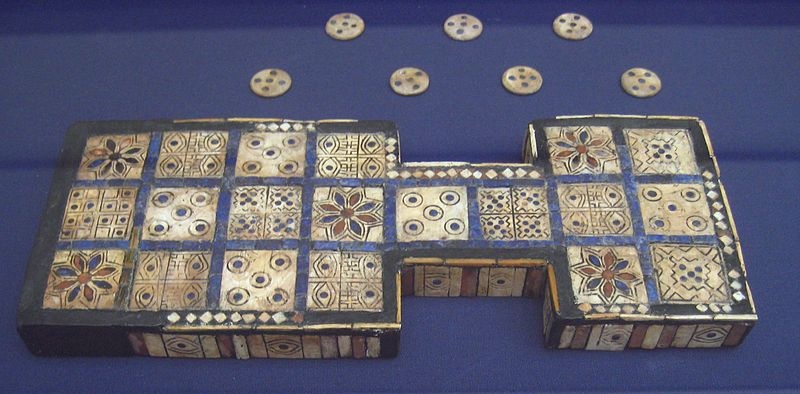
Unlike Hnefatafl, the Royal Game of Ur has survived the centuries pretty much unscathed, thanks to a copy of the rules recorded on a Babylonian tablet. Played in the Middle East centuries ago — in places like Syria and Iran — the Royal Game of Ur was clearly popular, as evidence of the game has been found as far away from the Middle East as Crete and Sri Lanka.

The game and its trappings penetrated deep into Middle Eastern society. An Ur game board was carved like graffiti into a wall in the palace of Sargon II (dating back to the 700s BC). The Babylonian tablet indicates that certain game spaces were believed to be good omens, and could be interpreted as messages from the beyond.

The game was eventually either supplanted by backgammon or evolved into a version of backgammon, depending upon different historical accounts.

[Image courtesy of Chess Variants.com.]

Tori Shogi dates back to 1799 in Japan. Also known as Bird chess — thanks to game tiles named after phoenixes, cranes, and swallows — Shogi is played on a board seven squares wide and seven squares deep.

Unlike many chess variants, Tori Shogi allows for captured pieces to return to play, a nice twist that deepens the familiar gameplay style.

[Image courtesy of Bodleian Libraries.]

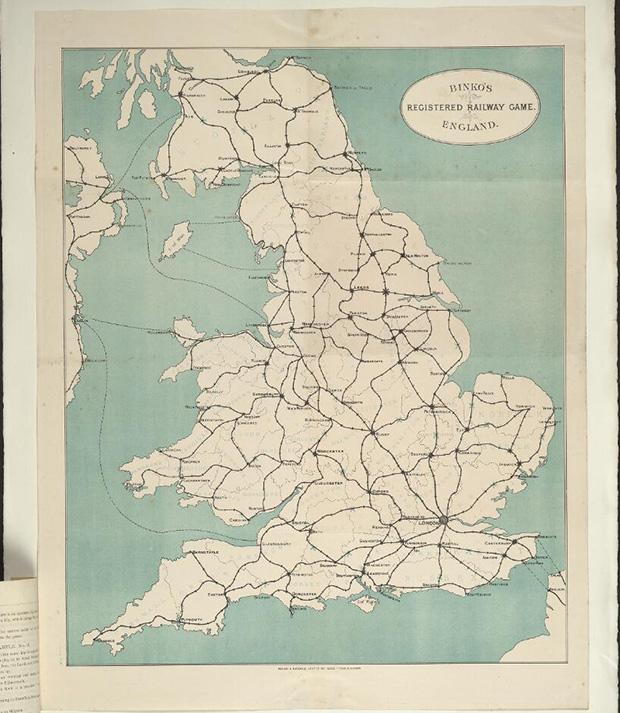
But chess and backgammon aren’t the only games with centuries-old precursors. The geographical game Ticket to Ride also has an aged forebearer in Binko’s Registered Railway Game, which was built around a map of the United Kingdom.

An educational game about placing trains on the map and determining how far they travel, this game has survived the decades relatively unscathed by time.


Those are just four examples of games that were either lost and then rediscovered, or games that fell out of favor, only to be resurrected by curious modern players.

And once again, these games are just the tip of the iceberg. There are centuries-old versions of The Game of Life, Parcheesi, a dating game, checkers, and more when you start digging!

As you can see, games have been a part of human civilization dating back millennia. We were always meant to play puzzles and games, it seems.


Thanks for visiting PuzzleNation Blog today! Be sure to sign up for our newsletter to stay up-to-date on everything PuzzleNation!

You can also share your pictures with us on Instagram, friend us on Facebook, check us out on TwitterPinterest, and Tumblr, and explore the always-expanding library of PuzzleNation apps and games on our website!

The (Increasingly Lengthy) History of Games

Being a student of history means constantly discovering amazing new things about our world, our culture, and ourselves. There are so many unexpected twists and turns, synchronicities, coincidences, and flat-out mind-blowing facts waiting to be uncovered.

And when you’re a student of history with an interest in puzzles and games, it means you get to discover just how long humans have been dabbling in baffling brain teasers and friendly competition.

Board games, for instance, have been around a long time, longer than most people realize. There is evidence that Go has been played in China for more than 5,500 years!

And many other games also have shockingly long lineages. Chess can be traced back to the seventh century in India. Game boards have been found in king’s courts, university halls, and even former houses used by the Knights Templar, as pictured above.

We’ve previously explored that Viking gravesites from the ninth century reveal that board games were not just a pastime for the Vikings, but that their win-loss records were important enough to be recorded for posterity!

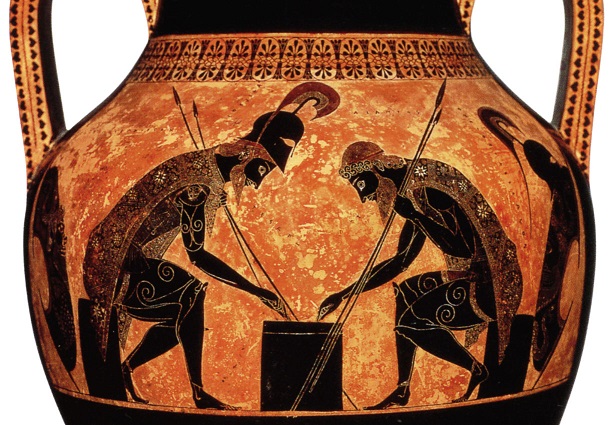
Check this out. It’s an ancient Greek painting on a vase, dating back to 530 BCE. This piece is an example of the black figure technique where images painted on clay turned black when the clay was fired. It depicts the two mightiest warriors of the Trojan War, Achilles and Ajax, playing a board game to keep themselves busy during the siege of Troy.

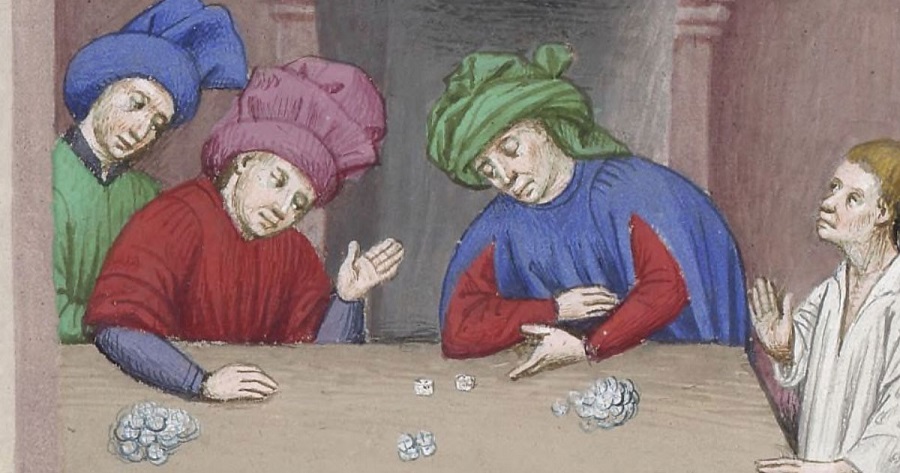
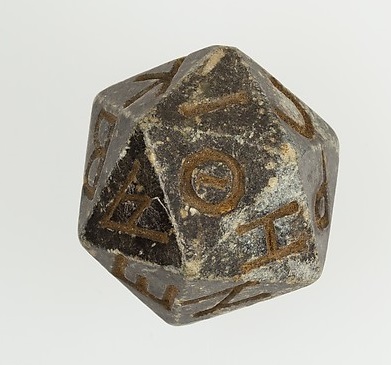
It’s unclear what game they’re playing, though many historians believe the warriors are rolling dice in the image. That would make sense, since astragali (the knuckle-bones of goats and sheep) were used in ancient Greek gambling games.

Dice have an equally ancient history. The Egyptian game of Senet, which was played with dice, dates back over 5,000 years.

Dice games have been uncovered in Mesopotamian tombs (some as far back as the twenty-fourth century BC), and a Vedic Sanskrit text known as the Rigveda, which dates back to India in 1500 BC, also mentions dice.

Tile games have a similarly deep history.

Chinese Dominoes can be traced back to writings of the Song Dynasty, nearly a thousand years ago. Dominoes as we know them first appeared in Italy during the 1800s, and some historians theorize they were brought to Europe from China by traveling missionaries.

Another tile game, Mahjong, has been around for centuries, but there are several different origin stories for the game, one tracing back to the Ming Dynasty (1368-1644), another to the days of Confucius (500 BC).

Perhaps at some point, I’ll try to put together a historical timeline of gaming (similar to the crossword timeline I created around the 100th anniversary of the crossword).

In the meantime, I’ll settle for being utterly fascinated with just how long humans have been socializing, relaxing, and competing through the medium of games.


Thanks for visiting PuzzleNation Blog today! Be sure to sign up for our newsletter to stay up-to-date on everything PuzzleNation!

You can also share your pictures with us on Instagram, friend us on Facebook, check us out on TwitterPinterest, and Tumblr, and explore the always-expanding library of PuzzleNation apps and games on our website!

Crosswords: Scourge of Society!

Study history for any length of time, and patterns will emerge. One of the most curious patterns is how new forms of recreation are embraced, then inevitably sensationalized, stigmatized, and finally vindicated when cooler heads prevail. You see it over and over again in pop culture across the decades.

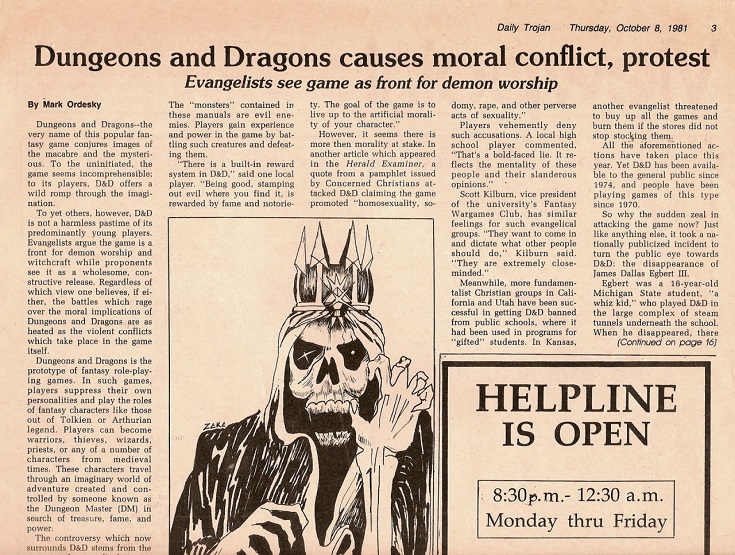
Video games continue to suffer from periodic demonization, accused of instigating violence in children. Harry Potter books are still banned by some schools and communities for spreading occult ideas. Not so long ago, one of my favorite pastimes — Dungeons & Dragons — was maligned as Satanic and damaging to young minds.

All of these panics were (and are) patently ridiculous. After all, you can go back through history and find other examples that are absolutely ludicrous in retrospect.

For example, check out this excerpt from The San Antonio Texan from August 26, 1858, about the dangers of overindulging in reading:

A whole family brought to destitution in England, has had all its misfortunes clearly traced by the authorities to an ungovernable passion for novel reading entertained by the wife and mother. The husband was sober and industrious, but his wife was indolent and addicted to reading everything procurable in the way of romance. This led her to utterly neglect her husband, herself and her eight children.

One daughter in despair, fled the parental home, and threw herself into the haunts of vice. Another was found by the police chained by the legs to prevent her from following her sister’s example. The house exhibited the most offensive appearance of filth and indigence. In the midst of this pollution, privation and poverty, the cause of it sat reading the last ‘sensation work’ of the season, and refused to allow herself to be disturbed in her entertainment.

That is proper nonsense.

And yet, it should come as no surprise to you, fellow puzzler, that crosswords also received this kind of treatment. Yes, crosswords were the focal point of a moral panic.

Arthur Wynne’s “word-cross” first appeared in The New York World in 1913. Simon & Schuster published The Cross-Word Puzzle Book, edited by Margaret Farrar, in 1924. 1924 also marked the first time a UK newspaper, The Sunday Express, would publish crosswords. By that point, crosswords were officially a fad, inspiring fashion trends (black and white patterns), hit songs, and musical revues on Broadway.

Ah, 1924. It was a strange year for crosswords. Because 1924 also saw some of the most inflammatory accusations hurled at the simple pencil-and-paper puzzles.

In November of that year, Canadian Forum referred to the spread of crosswords as an “epidemic obsession.”

The paper went on to psychoanalyze crossword solvers, claiming that crosswords were, at heart, a regressive and childish pursuit:

It is obvious from the similarity of the cross-word puzzle to the child’s letter blocks that it is primarily the unconscious which is expressing itself in the cross-word puzzle obsession.

The same year, The London Times went so far as to call America “enslaved” by the puzzle:

[The crossword] has grown from the pastime of a few ingenious idlers into a national institution: a menace because it is making devastating inroads on the working hours of every rank of society… [people were seen] cudgeling their brains for a four-letter word meaning ‘molten rock’ or a six-letter word meaning ‘idler,’ or what not: in trains and trams, or omnibuses, in subways, in private offices and counting-rooms, in factories and homes, and even — although as yet rarely — with hymnals for camouflage, in church.”

That church reference was particularly notable, as there were church sermons decrying the negative influence of crosswords on society. Sermons! Imagine crosswords being treated like heavy metal in the ’80s. It’s mind-boggling.

Much like that hyperbolic story about a family decimated by reading, newspapers published dubious tales of familial collapse sparked by crosswords:

Theodore Koerner of Brooklyn asked his wife for help in solving a crossword. She begged off, claiming exhaustion. Koerner shot her (superficially) and then shot himself (fatally).

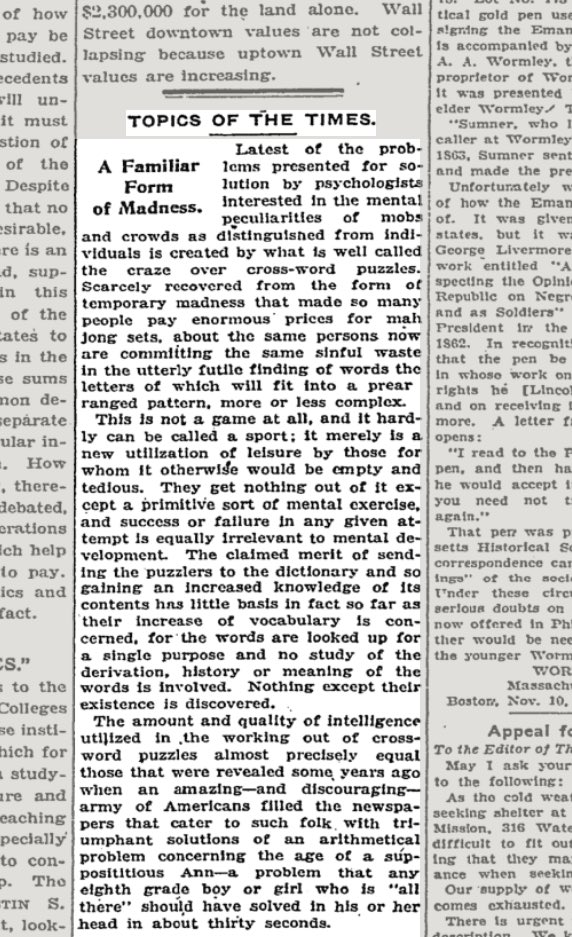
And The New York Times, bastion of puzzles for the last 75 years? Yes, even the Gray Lady had harsh things to say about crosswords:

Scarcely recovered from the form of temporary madness that made so many people pay enormous prices for mahjongg sets, about the same persons now are committing the same sinful waste in the utterly futile finding of words the letters of which will fit into a prearranged pattern, more or less complex.

The paper went on to call crosswords “a primitive form of mental exercise” and compare their value to that of so-called brain teasers that should be solved by schoolchildren in 30 seconds or less.

Crosswords wouldn’t debut in the New York Times until 1942.

But could there have been a hint of truth buried beneath all the sensationalism? Perhaps.

There were reports that overzealous solvers, desperate for an edge over other puzzlers, went so far as to desecrate books at the New York Public Library in order to prevent others from utilizing the same resources. A sign, circa 1937, firmly stated that “the use of library books in connection with contests and puzzles is prohibited.”

Those darn crossword addicts, always getting into trouble. Can’t trust ’em.

So, the next time someone tells you crosswords are boring and passe, you can tell them that crosswords were as cool and as dangerous as rock n’ roll, once upon a time.

Heck, they still are.

[Thanks to The Atlantic, The Senior Times, Historical Nonfiction on Tumblr, The 13th Floor, and CommuniCrossings for images and quotations.]


Thanks for visiting PuzzleNation Blog today! Be sure to sign up for our newsletter to stay up-to-date on everything PuzzleNation!

You can also share your pictures with us on Instagram, friend us on Facebook, check us out on TwitterPinterest, and Tumblr, and explore the always-expanding library of PuzzleNation apps and games on our website!
The Countess Who Revolutionized European Spycraft

[Image courtesy of Derek Bruff.org.]

The history of codebreaking is a fascinating subject not only for the mythic figures and their brain-melting accomplishments, but also for the unsung heroes who are only recently being rediscovered.

A few months ago, I wrote a blog post about Elizebeth Smith Friedman, a woman who shaped a new foundation for American codebreaking, but has long since been overshadowed by the reputation of her husband William Friedman (as well as FBI sexism and self-promotion which helped to bury and/or co-opt her accomplishments as their own).

[Image courtesy of Wikipedia. Of course, not her page. The page on her family line.]

And as part of my research into Elizebeth’s story, I encountered a curious anecdote from the 1600s about another codebreaker and influential spymaster who history had forgotten.

From The Woman Who Smashed Codes by Jason Fagone:

Monks, librarians, linguists, pianists and flutists, diplomats, scribes, postal clerks, astrologers, alchemists, players of games, lotharios, revolutionaries in coffee shops, kings and queens: these are the ones who built the field across the centuries and pushed the boundaries forward, stubborn individuals with a lot of time to sit and think and not give up. Most were men who did not believe women intellectually or morally capable of breaking codes; some were women who took advantage of this prejudice to steal secrets in the shadows.

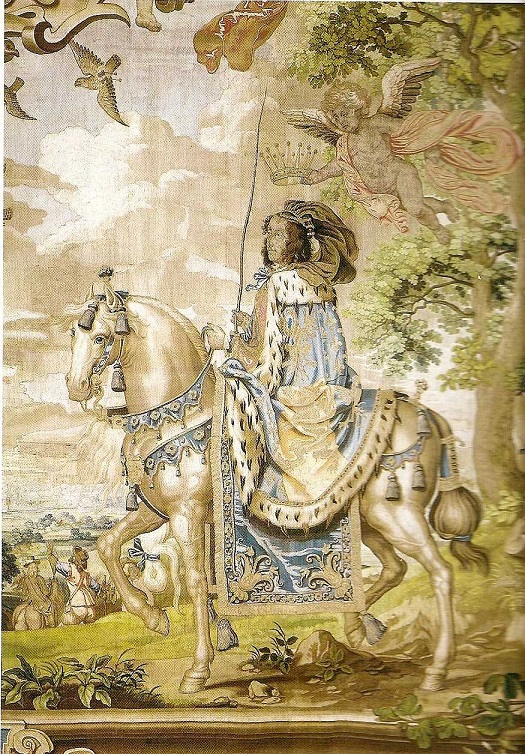
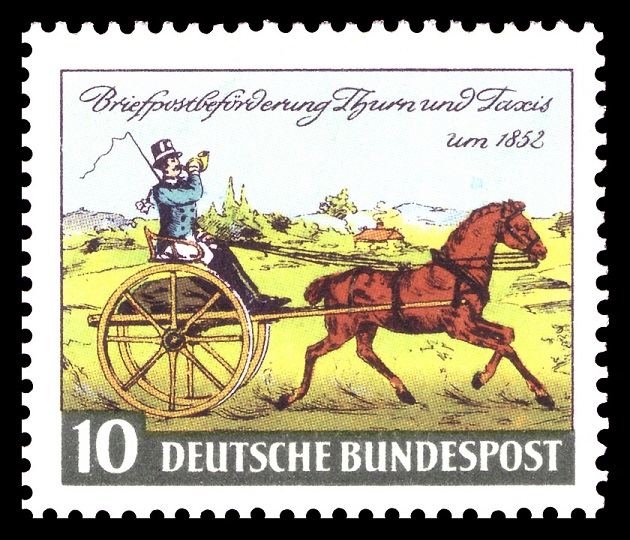
One of the more cunning and effective codebreakers of the seventeenth century was a Belgian countess named Alexandrine, who upon the death of her husband in 1628 took over the management of an influential post office, The Chamber of the Thurn and Taxis, which routed mail all throughout Europe.

[Image courtesy of Wikipedia.]

Naturally, I was intrigued. But there’s surprisingly little out there about Alexandrine, whose full title was Alexandrine of Rye-Varax, Countess of Taxis, widow of Leonard II, Count of Taxis, occasionally shortened to Alexandrine von Taxis. She gets merely a paragraph on Wikipedia, and most Google searches only feature her as part of noble family trees.

Which is amazing, because she created the first verifiable Black Chamber in Europe — better known ones in England, France, and Germany weren’t established until the late seventeenth century. (A Black Chamber is a secret spy room or intelligence office, and Alexandrine’s was not only one of the first, but it was one of the most expansive.)

Despite her status as a widow, she was sworn into office as Postmistress in 1628 (serving as such until 1646, when her son would come of age), using those years to improve the wealth and status of her family while expanding the reach of the Taxis postal business, based in the Spanish Netherlands.

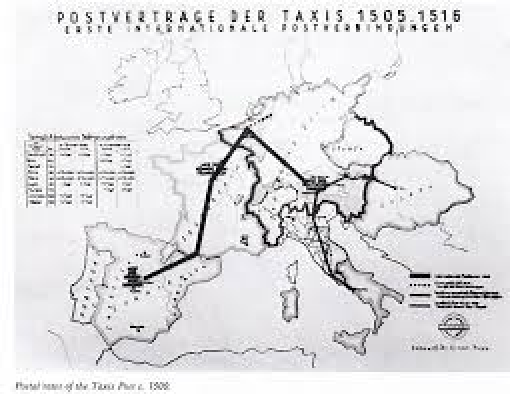
[The Taxis postal service, circa 1505-1516.
Blurry image courtesy of ApfelbaumInc.com.]

Alexandrine took over the Taxis postal service — the primary postal service across the continent, save for private couriers. She had a monopoly over the post in Europe, and was the de facto postmistress for the entire Holy Roman Empire.

And she used that position to her advantage, forming the Chamber of Taxis, an elite intelligence team composed of agents, forgers, scribes, codebreakers, and artisans. In a couple of hours, they could melt the wax seals off letters, copy their contents (in short-hand, often), decipher any coded messages, forge a new seal (and any other marks, including signatures, that would authenticate a seal), reseal the letter, and send it on its way, the invasion of privacy undetected.

She spoke four languages — French, Dutch, Italian, and German — and was very politcally savvy, cultivating relationships with fellow nobles even as she prowled through their private messages.

It’s not clear for whom she was spying. Some sources claim she sold her information to the highest bidder, while others claim she worked for both Emperor Ferdinand II and his son and successor Ferdinand III.

[Image courtesy of Wikipedia.]

What is clear, however, is that many discounted her and the Chamber of Taxis as a possible threat because of who she was. Sir Balthazar Gerbier, an agent of Charles I, suspected her early on, but discounted his own instincts because of “her honesty, dignity, and sex.”

Yes, the fact that she was a woman disqualified her in the minds of many from being capable of the sort of deceit and spycraft going on in the Chamber. (It also rankled some, like several German princes, that she was in a position of power at all, given her sex.)

And discounting her was a mistake, given that she commanded a crucial hub in the postal network.

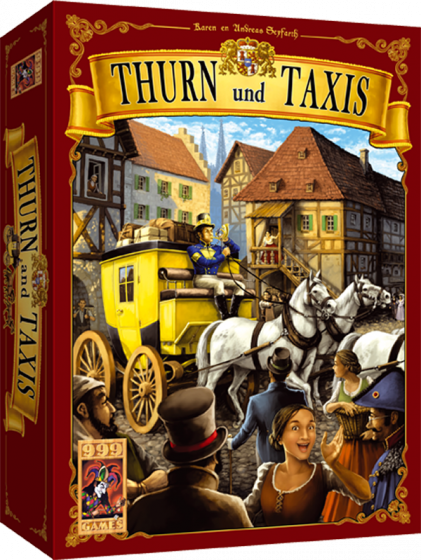
[Yes, there’s even a board game based on the family business.
No spycraft though, unfortunately. Image courtesy of 999 Games.]

From Diplomacy and Early Modern Culture, edited by R. Adams and R. Cox:

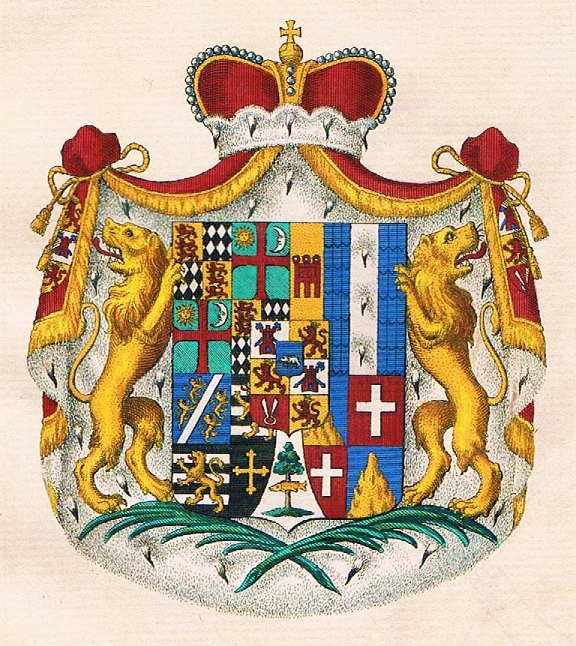
Since the 1490s Brussels had been the gateway to Europe’s postal network, connecting international postal routes from Spain, France, Italy, Austria, Germany, Scandinavia, and England. One single family, the Counts of Taxis (from 1649/50 Thurn and Taxis), commanded the mounted couriers over these many-branched routes.

Yes, the family name and title changed, and that was also Alexandrine’s doing.

When those aforementioned German princes questioned having a woman running the Taxis postal service, she ordered a full ancestral workup. That examination revealed her family’s ties to another important lineage, and from that point on, The Thurn and Taxis postal service (as well as her spy organization, The Chamber of the Thurn and Taxis) would bear that additional name, increasing the prestige and reputation of both family and business alike.

For eighteen years, Countess Alexandrine commanded both a business and a spy network that spanned the European continent, influencing the information flowing between various noble families, and no doubt helping to shape the future of Europe.

I sincerely hope more is revealed about her life and the work of The Chamber of the Thurn and Taxis in the future. I feel like we’ve only just scratched the surface of the role she (and the group) played in European history.


Thanks for visiting PuzzleNation Blog today! Be sure to sign up for our newsletter to stay up-to-date on everything PuzzleNation!

You can also share your pictures with us on Instagram, friend us on Facebook, check us out on TwitterPinterest, and Tumblr, and explore the always-expanding library of PuzzleNation apps and games on our website!