
DIY Pencil and Paper Puzzles!

pencil-paper

Picture this. You’re stuck somewhere with friends. The airport, a traffic jam, wherever. Nowhere to charge your phone, so you can’t play Trivia Crack or solve any of the great puzzles offered by the Penny/Dell Crosswords app.

All you’ve got is paper and pencils, and you’re in a puzzly mood. What do you do?

Well, you whip up some DIY puzzle fun, of course.

Now, the classic go-to pencil and paper game is Hangman. The goal is simple: guess the complete word or phrase by guessing one letter at a time. Each correct letter is filled in every time it appears (like on Wheel of Fortune), and each incorrect letter results in one piece of the Hangman being drawn. If you let too many incorrect guesses stack up before solving the puzzle, the Hangman is completed and you lose.

hangman

People have differing rules when it comes to the Hangman’s complexity. Some draw the gallows and noose as well as the Hangman, while others pre-draw the gallows and noose, only drawing the Hangman when wrong guesses occur. (I, for one, always liked drawing him a jaunty top hat before sending him to his demise.)

I can remember a time we played Hangman in high school because the professor for our physics class didn’t show up. One of the other students I didn’t know very well suggested it, and his first two puzzles were cracked pretty quickly. But then the third one had most of the class stumped.

It read: C A P T A I N ___ O ___

People kept guessing “Captain Ron,” even though there was clearly no N in that second blank. When I realized it was “Captain Lou,” I blurted out the answer, and suddenly, we were fast friends.

Because of Hangman.
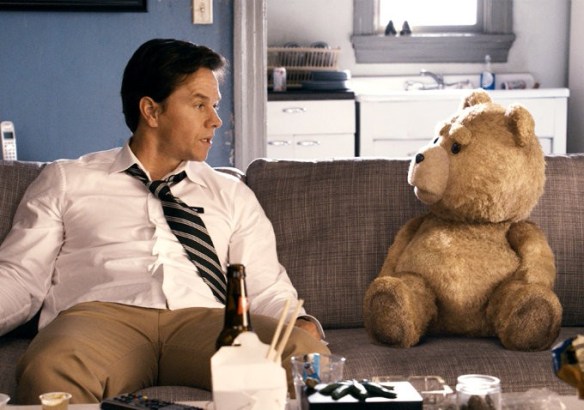
mark-wahlberg-plays-guessing-game-with-a-teddy-bear

Another simple game is Guess My Word. One person chooses a word, and the other narrows it down by guessing words and being told if those guesses precede or follow the secret word in the alphabet.

For instance, if the word was QUINTET and your first guess was HALLOWEEN, I would say after. So, in one guess, you’ve eliminated every word that comes before HALLOWEEN alphabetically.

And if you’d like to give it a shot, puzzle constructor Joon Pahk created a Guess My Word feature on his website that is great fun (and sometimes pretty challenging).

tic-tac-toe

I was going to mention Tic-Tac-Toe here — another staple of the pencil-and-paper puzzle game genre — until my mother mentioned a variation she read about in Parade magazine.

In the article, Marilyn vos Savant is credited with creating Toe-Tac-Tic, a reverse Tic-Tac-Toe game wherein getting three in a row means you lose.

It’s a completely different style of game play, adding a nice twist to a classic game. (Though, quite honestly, I’m not sure we can credit vos Savant with its creation, since I can remember seeing this played in the mid-2000s. I’m not sure anyone called it “Toe-Tac-Tic,” but the rules were the same.)
31b20lfvkhl

And finally, for fans of card games, you can always whip up a round of 1000 Blank White Cards.

Named for the only thing you need to play — a bunch of identical blank pieces of paper, index cards, or something similar — 1000 Blank White Cards is a game you design and play both before and during the game! You can also further refine the game in subsequent sessions.

As Wikipedia so aptly puts it:

A deck of cards consists of any number of cards, generally of a uniform size and of rigid enough paper stock that they may be reused. Some may bear artwork, writing or other game-relevant content created during past games, with a reasonable stock of cards that are blank at the start of gameplay.

Some time may be taken to create cards before gameplay commences, although card creation may be more dynamic if no advance preparation is made, and it is suggested that the game be simply sprung upon a group of players, who may or may not have any idea what they are being caught up in. If the game has been played before, all past cards can be used in gameplay unless the game specifies otherwise, but perhaps not until the game has allowed them into play.

Once your initial deck of cards is created, players draw a card from the deck and either play them, keep them, or add them to the active rules of the table so they affect everyone. In this way, gameplay is quite similar to another classic puzzle card game, Fluxx, especially with the ever-changing rules and malleable gameplay.

Not only has 1000 Blank White Cards appeared in GAMES Magazine, but it was also included in the 2001 revision of Hoyle’s Rules of Games.

11404929

I am a huge fan of customizable games, so I have played 1000 Blank White Cards many times. From cards that can cause immediate victory to cards that can negate those cards, from point cards and rule cards to cards that requiring singing or truth-or-dare challenges, the possibilities are endless.

Some of my favorite cards are just drawings of turtles, where another card grants you special powers or bonuses depending on how many turtle cards you have. Another allows you to create a new card on your turn, either to keep for yourself or to give to another player.

And the rules can depend entirely on who you’re playing with. Sometimes, you can make a new card every round, while other times, you can only introduce a new card when you’ve drawn a card that allows it. Heck, there might even be blank cards in the deck that you can draw and customize immediately! It is literally up to you and your fellow players how to play.

Fans of Calvin and Hobbes will no doubt draw comparisons between 1000 Blank White Cards and Calvinball, and rightfully so. (Savvy card-game players may also recognize similarities to the figure-out-the-rules-while-you-play game Mao.)

But whether you’re playing Hangman or guessing a word, getting three in a row or avoiding it at all costs, or even creating your own signature game, as long as you’ve got a partner in crime and an imagination, you’re never without a puzzle.


Thanks for visiting PuzzleNation Blog today! You can share your pictures with us on Instagram, friend us on Facebook, check us out on Twitter, Pinterest, and Tumblr, and be sure to check out the growing library of PuzzleNation apps and games!

A Guide to Crossword Clues

[Image courtesy of npr.org.]

For someone who has never solved a crossword before — or has solved them before with less-than-stellar results — the field of clues that accompanies the grid is a daunting sight.

But if you take those clues one at a time, you’ll quickly find that there are different kinds of crossword clues, each with their own flavor and level of difficulty.

Now, I’m referring to American-style crosswords here. Cryptic or British-style crosswords have a completely different language when it comes to cluing. (Let me know if you’d like me to do a post on cryptic cluing!)

By far the most common style of crossword cluing is the synonym clue. The default form of cluing is simply offering a synonym or definition of the word. You practically can’t have a crossword puzzle without at least one.

Some recent examples of synonym clues from our Crossword Clue Challenge every weekday on Facebook and Twitter include “Before sunrise” for PREDAWN, “Ample” for ENOUGH, and “Talent” for KNACK. Simple and straightforward.

Another common cluing form is the fill-in-the-blank clue.

These clues can vary wildly in difficulty depending on how much information is offered. For instance, “Quentin Tarantino’s ____ Fiction” is a super-easy clue, whereas “____ Sea” would be pretty tough, even knowing how many letters are in the answer.

Along the same lines are the see-also clues. These are clues that reference other clues in the same puzzle, often by spreading a multiple-word answer across several entries.

For instance, you look at 3 Across, and it says “See 9 Down.” And when you look at 9 Down, it says, “With 3 Across, popular song by The Verve.” But you might need help from the crossings to get BITTER SWEET SYMPHONY reading across several spaces in the grid.

[Wait, wrong Clue…]

Some clues offer more information than you expect, if you’re observant. For instance, it’s common in many crosswords to signal a variant spelling, a foreign word, or an abbreviated word as an answer within the clue.

For instance, if the answer is AMEER (instead of EMIR), you might clue it as “Moslem chief” instead of “Muslim chief” to indicate the variant spelling. For REP, a standard clue would be “D.C. fig.” For SRA — short for SENORA — you might get “Mrs., in Madrid”.

(You can also employ wordplay with entries like these. For a French-fueled clue, how about “Nice, in Nice” for BIEN?)

And that serves as a marvelous segue into our final crossword cluing style: wordplay clues!

[Image courtesy of Rocky Smith Files.]

Wordplay clues employ some sort of pun or linguistic trickery to take them a step beyond the average clue. Often, these clues are marked with a question mark, indicating that there’s something going on beyond the surface meaning of the clue.

As you’d expect, wordplay clues are a favorite of mine, and they’ve been featured several times in our weekday Crossword Clue Challenge. Some previous examples include “Tot rod?” for TRICYCLE, “Tread the boards?” for WALK THE PLANK, “Star trek?” for SPACEWALK, and “Take the honey and run?” for ELOPE.

If you’ve never solved a crossword before — or never had much luck with them in the past — hopefully you’ll find some helpful tools here to guide you toward crossword-solving success.

And hey, if you need more practice, you can always check out the Crossword Clue Challenge every day at 2 PM EST on Facebook and Twitter!

Good luck!


Thanks for visiting PuzzleNation Blog today! You can share your pictures with us on Instagram, friend us on Facebook, check us out on Twitter, Pinterest, and Tumblr, and be sure to check out the growing library of PuzzleNation apps and games!

It’s Follow-Up Friday: Rubik’s Under Pressure edition!

Welcome to Follow-Up Friday!

By this time, you know the drill. Follow-Up Friday is a chance for us to revisit the subjects of previous posts and bring the PuzzleNation audience up to speed on all things puzzly.

And today, I’d like to return to the subject of twisty puzzles and the Rubik’s Cube!

You know, every time I think I’ve seen it all when it comes to Rubik’s Cube, some enterprising solver proves me wrong yet again. I mean, in writing three blog posts a week here for years, I’ve seen a LOT of cool things done with Rubik’s Cubes.

I’ve seen the world’s largest Rubik’s-style cube being solved, a building turned into a solvable Rubik’s Cube, a new speed-solving world record of 5.25 seconds, and a Rubik’s Cube solved one move at a time by strangers across the globe.

But I didn’t expect this one. Please join me in awe as this breath-defying solver tackles 2×2-style, 3×3-style, AND 4×4-style Rubik’s cubes in a little over a minute:

I’ll give $20 to the first person to solve a crossword in the same fashion.

Thanks for visiting PuzzleNation Blog today! You can share your pictures with us on Instagram, friend us on Facebook, check us out on Twitter, Pinterest, and Tumblr, and be sure to check out the growing library of PuzzleNation apps and games!

PuzzleNation Product Review: Compose Yourself

Compose Yourself, ThinkFun’s latest offering, is unlike any product I’ve ever reviewed before, and that’s part of what makes it special. It is a single unending puzzle and a million different smaller puzzles all at once. It is literally as simple or as complex as you choose to make it.

You’re given sixty transparent cards (two copies each of thirty distinct note patterns). Each card features four different codes: one for the notes as they appear, one for the notes rotated 90 degrees, one for the notes backward, and one for the notes backward AND rotated 90 degrees. This allows for a staggering number of choices for a budding composer.

As you play around with placing the transparent cards in various order, you can log into the ThinkFun website and use the code provided to access a digital composing program.

[A picture of my first composition in progress…]

Input the codes from your layout of transparent cards in groups of four — as many as you wish! — and then click play. You can hear your new composition played on marimba, performed by an orchestra, or in both modes simultaneously!

Now, I confess, I am not a musically inclined person, but after fifteen minutes or so playing around with random cards — placing, flipping, reversing, and rotating them — I finally clicked play, and I was surprised by the results. (I’d unintentionally created a tune that felt perfect for the background of a Legend of Zelda game. *laughs*)

It feels like your work comes to life at your fingertips. And all you can think about is how to improve it, how to make the most of it, and how new cards will change it.

Each card represents part of a puzzle, and you may have no idea what the finished product will be, but that doesn’t make the process any less satisfying. This is old-school free-form creativity, like dipping your hands into a bucket of LEGOs, pulling out some pieces, and seeing what you can create.

ThinkFun has challenged us in the past with puzzlers like Houdini and Gravity Maze, and they’ve offered younger solvers the chance to learn coding in Robot Turtles and optics in Laser Maze, all while enjoying an experience that feels like play because it IS play.

But they’ve truly outdone themselves with Compose Yourself; it’s a learning experience, a creative experience, and a puzzly experience all at once. What a treat.

Thanks for visiting PuzzleNation Blog today! You can share your pictures with us on Instagram, friend us on Facebook, check us out on Twitter, Pinterest, and Tumblr, and be sure to check out the growing library of PuzzleNation apps and games!

Goodbye, Merl.

[Picture courtesy of crosswordfiend.com.]

The puzzle world was stunned this weekend by the sudden passing of a true crossword legend: Merl Reagle.

Merl has been one of the biggest names in puzzles for a long time now, one of the few crossword constructors who was successful and prolific enough to work on puzzles full-time.

Between his appearance in the Wordplay documentary and a cameo on The Simpsons alongside New York Times crossword editor Will Shortz, he proudly represented both the love of puzzles so many solvers share AND stood as a standard-bearer for crossword construction and quality puzzling.

Merl sold his first crossword to the New York Times at age 16 — ten years after he started constructing puzzles, amazingly enough! In a career spanning five decades, his contributions to the world of puzzles were myriad. Nearly every year, one of his puzzles appears at the American Crossword Puzzle Tournament. The crossword he constructed for the 100th Anniversary of the Crossword was turned into a Google Doodle, and, based on my research, is the most solved crossword puzzle in history.

A craftsman with humor and heart (and no small amount of anagram skill), Merl was truly one of a kind.

[Picture courtesy of tucson.com.]

I had the privilege of meeting him at the American Crossword Puzzle Tournament this year. It was only for a few minutes while the tournament participants were tackling one of the early puzzles and the vendor’s floor was pretty empty. (Otherwise, there were always puzzlers crowded around Merl’s table between tournament puzzles. He was the center of gravity around which many fellow puzzle fans orbited, a master of ceremonies wherever he went.)

He was friendly and gracious, one of those people who can strike an instant rapport with virtually anyone. He put me at ease immediately as I checked out his latest puzzly offerings and we briefly chatted about the tournament itself. (I didn’t get the chance to challenge his legendary anagramming talents, sadly.)

Fellow puzzler and friend of the blog Keith Yarbrough was kind enough to share one of this experiences with Merl:

Merl gave me his philosophy of puzzle construction at the ACPT one year. His goal, he said, was to make the solver smile. Coming up with a funny theme was the main thing. His test when he came up with an idea was to run it past his wife, who is not a puzzler. If it made her smile, it was a keeper.

He wasn’t out to frustrate the solver with obscurities or unnecessary crosswordese, so he used common entries as much as possible. His mantra was that the fill should not be overly difficult.

[Picture courtesy of cltampa.com.]

The dozens of tributes I’ve seen online are a testament to how many friends and admirers Merl earned over the years. There are too many to link to here, but I want to highlight a few from fellow puzzlers Brendan Emmett Quigley, Deb Amlen, and David Steinberg.

Merl, you will be missed. Thank you, for the laughs, for the tough crossings, the trickiest-of-tricky clues, and the many unexpected delights you managed to spring on so many solvers.

You can check out Merl’s work on his Sunday Crosswords website as well as some of his collections on Amazon. Click the links. You won’t regret it.

Thanks for visiting PuzzleNation Blog today! You can share your pictures with us on Instagram, friend us on Facebook, check us out on Twitter, Pinterest, and Tumblr, and be sure to check out the growing library of PuzzleNation apps and games!

It’s Follow-Up Friday: Tile-r Swift edition!

Welcome to Follow-Up Friday!

By this time, you know the drill. Follow-Up Friday is a chance for us to revisit the subjects of previous posts and bring the PuzzleNation audience up to speed on all things puzzly.

And today I’d like to return to the subject of puzzly tributes.

We’ve featured several puzzle-fueled tributes over the years, from the Star Trek brain teaser we posted in honor of Leonard Nimoy to artistic renderings of famous film monsters in the medium of Rubik’s Cubes.

And, given the three awards she won at this week’s Teen Choice Awards, it’s appropriate that I stumbled across a tribute to Taylor Swift in one of the puzzliest forms imaginable:

A train of thousands of domino tiles.

Beyond the meticulous, creative, and mind-boggling delight:

You know you’ve made it when you find your hard work immortalized in domino form. =)

Thanks for visiting PuzzleNation Blog today! You can share your pictures with us on Instagram, friend us on Facebook, check us out on Twitter, Pinterest, and Tumblr, and be sure to check out the growing library of PuzzleNation apps and games!