Our Summer Reading series continues this week with a deep dive into classic and modern murder mysteries and how they’ve shaped and been shaped by puzzly design!
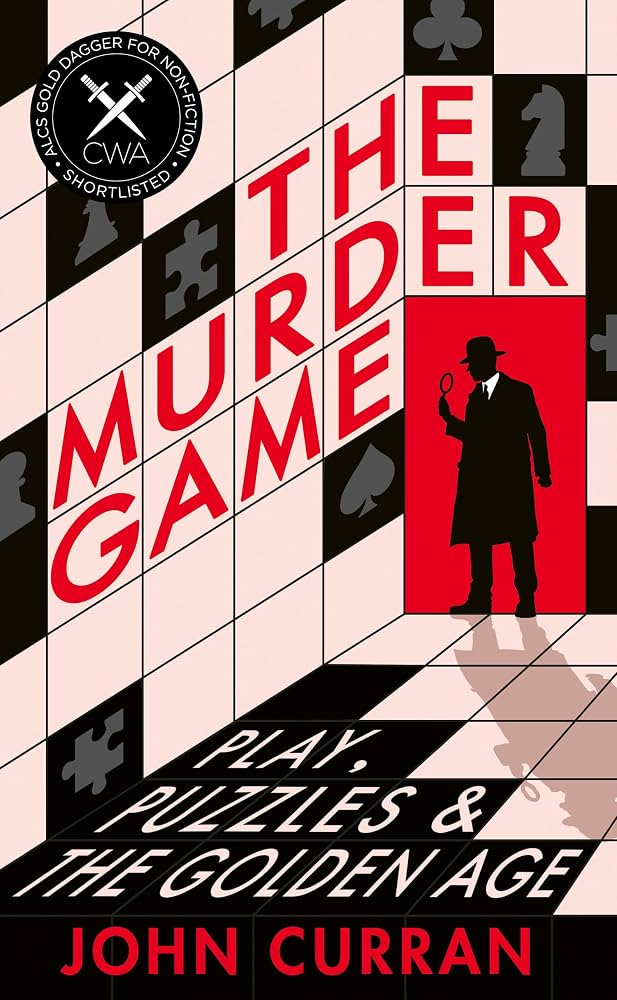
This week, join me as I explore The Murder Game: Play, Puzzles and the Golden Age by John Curran.
From the works of Edgar Allan Poe, Agatha Christie, and Dorothy Sayers through to the modern day, mystery writers have been engaged in an unspoken game with their readers. As A.E.W. Mason put it:
The author’s aim is to keep the reader guessing, where the puzzle, the whole puzzle, and nothing but the puzzle is his intention, the crime is discovered in the first chapter and thereabouts, the circumstances are made conventional so as not to distract the reader from the riddle; and the characters one after the other are shown to be all so obviously suspect or all so obviously innocent that no one shall be able to spot the criminal until in his last words the author hands him over to the police.
The puzzle plot, as some call the elaborate web woven by mystery writers, has evolved over the decades. Their rules have changed and grown better defined, authors have included maps and floor plans to aid readers in unraveling the mystery, and the game continues.
… some readers find the same satisfaction in detection that they find in doing a demanding crossword puzzle… You are competing with an adversary who cannot possibly cheat you, and need never outwit you, because his statement is frozen on the paper and he cannot, as he would in, say, a game of chess, adjust his strategy to yours. — Erik Routley
The Murder Game explores the origins of the puzzle plot, offering examples of its earliest iterations and the many, many forms it has taken across thousands of novels since. Curran’s voluminous knowledge of not only the Golden Age of mystery writing, but the present day as well, is truly impressive, and you feel like you’re being escorted through the puzzle plot’s development step by step.
It was great fun to read through the increasing complexity of the mysteries presented across decades, as well as the challenge involved in creating genuinely satisfying locked-room mysteries and “impossible” crimes. The transition from whodunit to howdunit was fascinating!
Despite the numerous examples of various tropes and techniques, Curran never lost sight of how puzzle-solving and mystery-solving go hand-in-hand. He shared examples of how puzzles have helped evolve mystery writing in exciting new directions — jigsaw mysteries, mapbooks, Cain’s Jawbone — all while remaining distinctly separate in important ways.
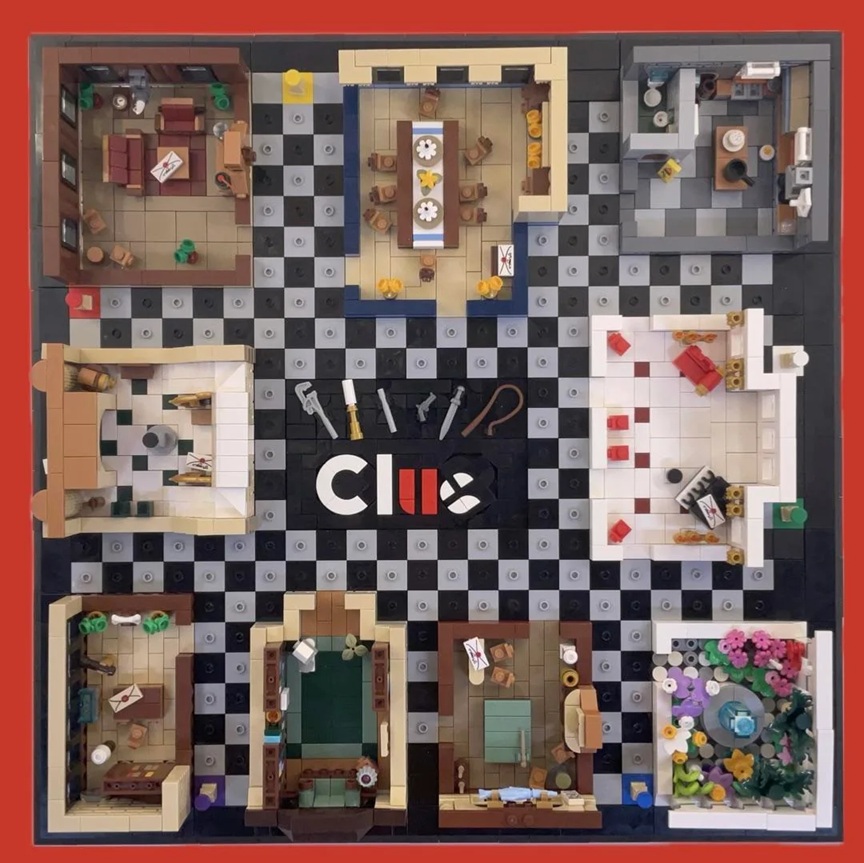
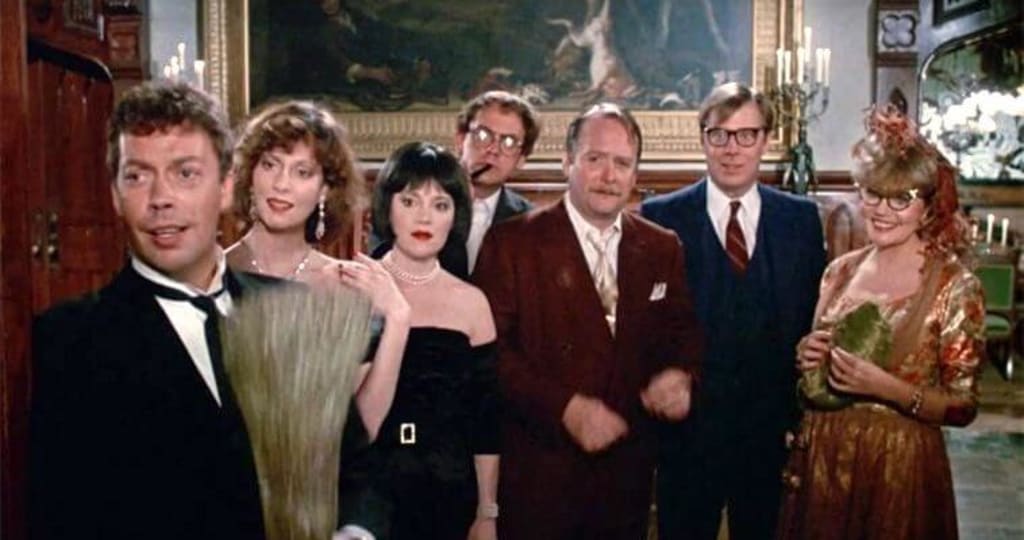
He even offered a delightful interlude with Clue/Cluedo as both base template and tongue-in-cheek reflection of murder mystery stories, complete with lists of similar suspects, scenarios, and locations from throughout the genre’s history.
Whether you’re a puzzle fan or a devotee of murder mysteries, The Murder Game is an engrossing, enjoyable read that feels like an in-depth study delivered by a trusted friend. It’s literary history, gaming insight, and an exhaustive exploration of the tropes, tricks, and quirks of the genre, all steeped in the attention to detail that can only come from a diehard fan.
Are you doing any reading this summer, puzzly or otherwise, fellow reader? Let me know in the comments section below! I’d love to hear from you.
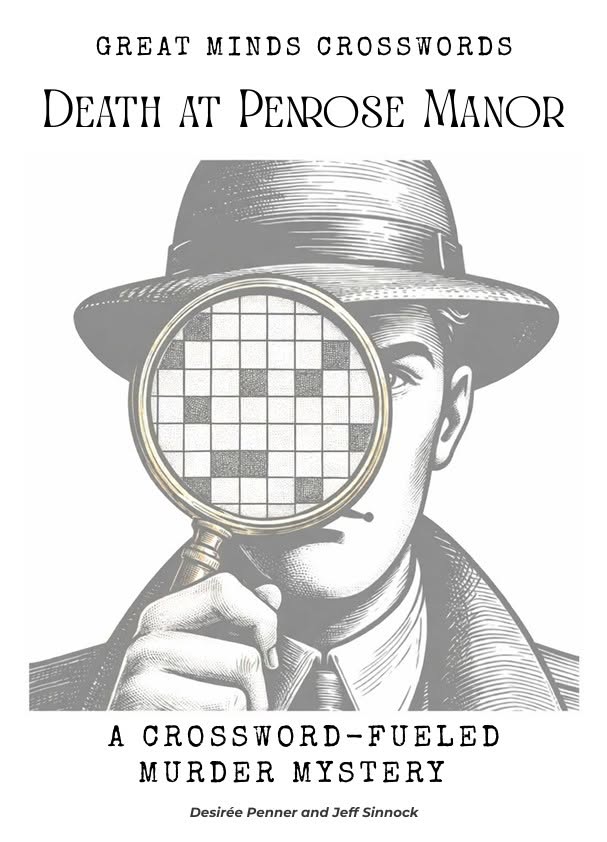
This week, join me as I investigate Death at Penrose Manor by Desirée Penner and Jeff Sinnock.
An extravagant party awaits at the home of the eccentric and mercurial Roan Penrose, newspaper magnate and man with a penchant for antagonizing those around him.
So it’s no surprise when he turns up dead during the event.
Thankfully one of the guests, police constable Jade Miller, immediately calls detective Jude Marlow, and now Marlow must unravel a web of lies, motives, and bruised egos in order to solve the murder.
Can you puzzle out which of the nine suspects committed the murder? To do so, you’ll have to read through the interrogations, solve a crossword related to each suspect, and crack the case.
Death at Penrose Manor is a fun riff on both Agatha Christie-style murder mysteries and the trappings of the board game Clue, right down to the colorfully-named suspects and the layout of Penrose Manor.
The puzzles are mostly solid (one or two awkward words per grid), but mostly well-constructed and accessible. The cluing is straightforward, with a few sharp and clever clues peppered throughout.
Your average solver will blaze through these grids, and murder mystery fans who aren’t frequent puzzle-solvers should do fine as well.
(I can’t really dig into the book more without potentially spoiling it, so today’s review will be a little shorter than the others.)
But all in all, I had fun with Death at Penrose Manor. The mix of mystery and puzzles worked really nicely, the characters were hammy in the best way, I enjoyed scribbling notes and theories as I progressed throughout the book, and the reveal at the end was a satisfying one.
This one gets a thumbs-up from me.
Are you doing any reading this summer, puzzly or otherwise, fellow reader? Let me know in the comments section below! I’d love to hear from you.
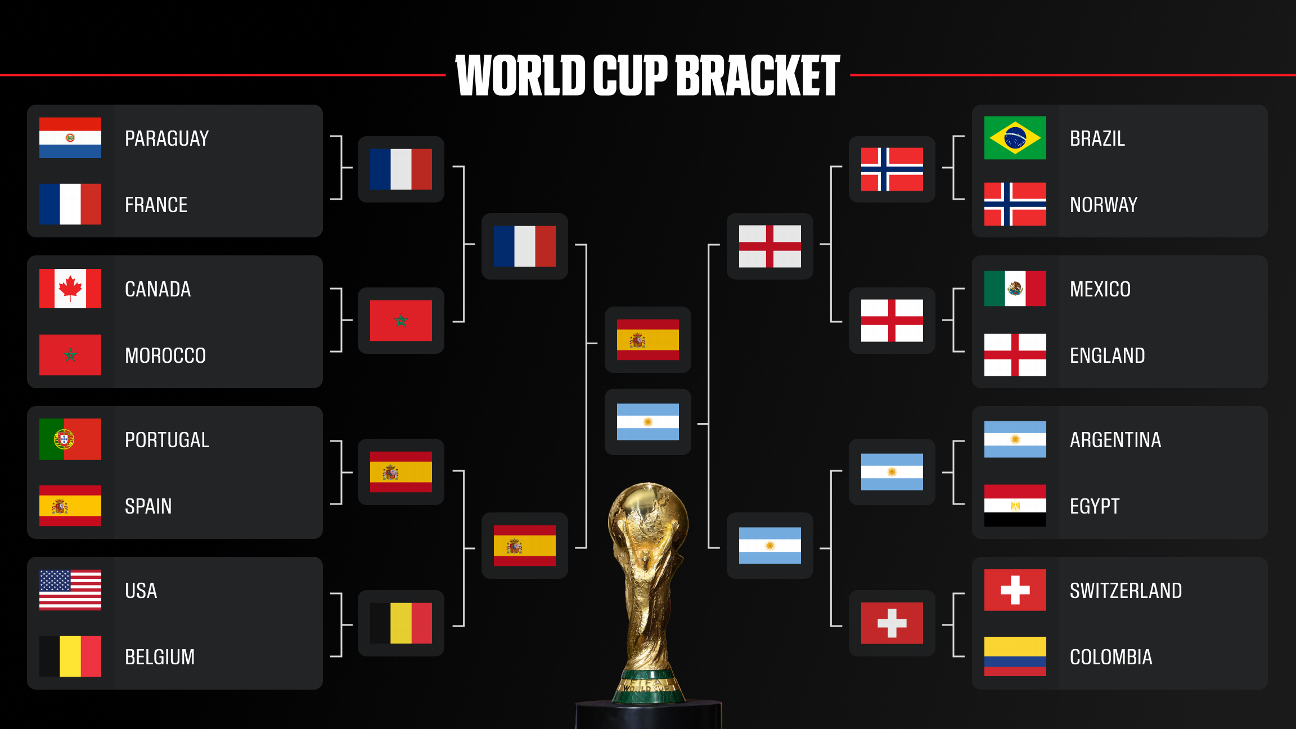
Thank you to George, Brent, and Doug for bringing some puzzly joy today to the PuzzCulture readership and all the World Cup fans within shouting distance!
After two SummerReads that were peripherally about crosswords, it felt appropriate to finally read something definitively about crosswords.
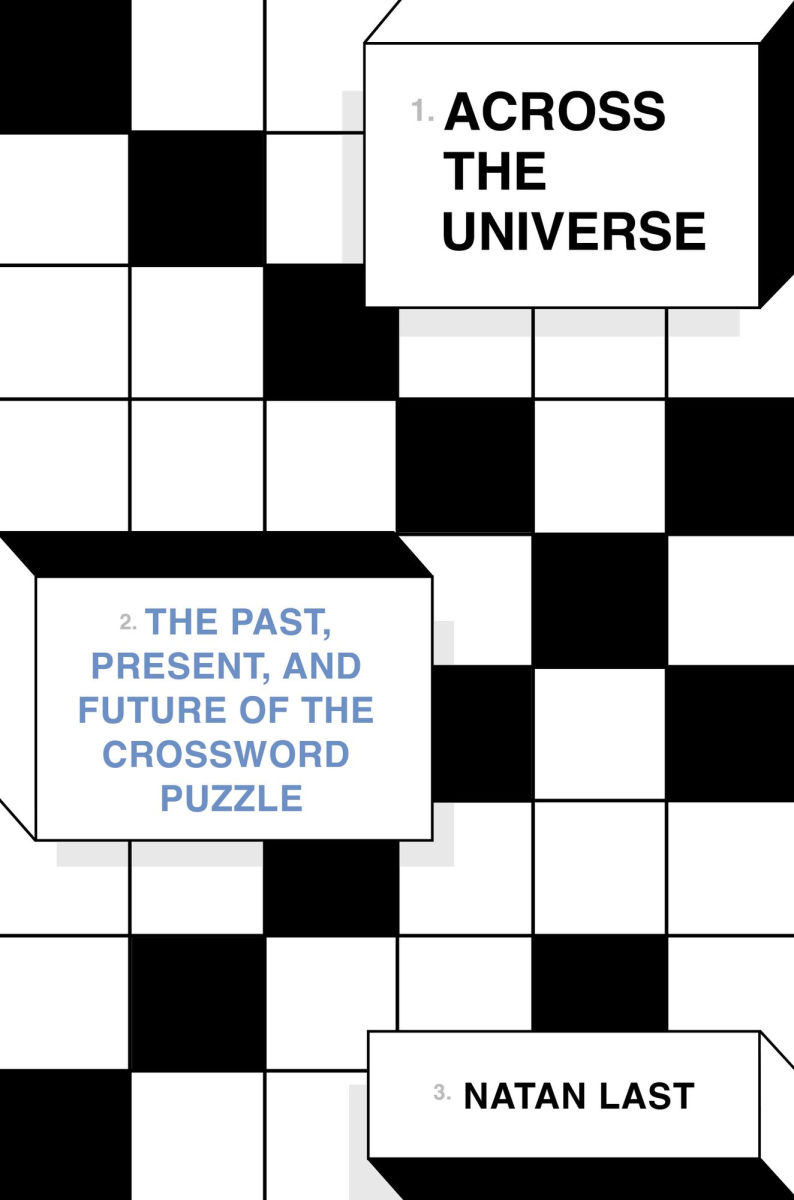
So join me as Natan Last takes on a journey, exploring where crosswords have been, where they are now, and hopefully where they’re going in Across the Universe: The Past, Present, and Future of the Crossword Puzzle.
The history of crosswords is peculiar, because the medium itself has ebbs and flows, moments of great cultural prominence and others where it fades into the background of daily life.
And since the crossword is ever-evolving, shaped by new editors, new outlets, and new constructors, the history of crosswords is constantly being reexamined and recontextualized by fresh eyes and previously-unheard perspectives.
Last deftly moves between the past and the present as he chronicles the rich cultural impact (and more importantly, the potential for GREATER cultural impact) of crosswords. There are chapters dedicated to the intersection of crosswords and art, crosswords and technology, and crosswords and identity.
We learn about the rise of Dr.Fill and what makes crosswords unlike other activities like Chess and Go that have been challenged by automated play. We learn about the New Wave of crosswords (which seems quaint at this point) and the current indie revolution that shapes the modern puzzle experience.
We learn about cruciverbalists past and present like Elizabeth Gorski and Mangesh Ghogre, exploring the complex relationship between crosswords, culture, and representation, especially how crosswords have both helped and hindered at points.
Each chapter is a thought-provoking short essay, enhanced by Last’s proficiency as a storyteller. He spins a wonderful narrative, charming and patient, knowing exactly when to deep dive on a subject and when to pivot to a meaningful counterpoint.
And along the way, we get delightful backstory on surprising moments, important voices, and Natan’s firsthand experience in the world of crosswords.
There are a fair number of books that explore crossword history, and what makes each of them worthwhile isn’t the factual information, it’s the perspective offered by the author. And Last takes a fun, if well-trodden topic, and he makes it hum with context, commentary, and an unflinching look at the good and the not-so-good of crosswords past and present.
I had high expectations coming into this book, and Across the Universe met and exceeded every single one. This belongs on any crossword fan’s shelf.
Are you doing any reading this summer, puzzly or otherwise, fellow reader? Let me know in the comments section below! I’d love to hear from you.
Just a quick post today to remind you of TWO big crossword events coming soon!
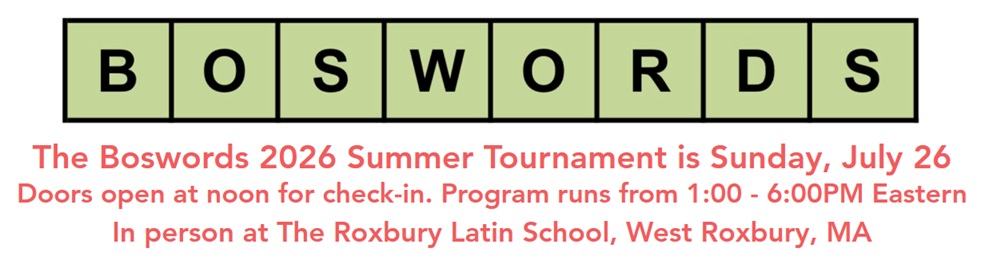
Firstly, Boswords is just a few short weeks away, and they recently announced the constructors for this year’s tournament puzzles.
Chandi Deitmer, Kathleen Duncan, Peter Wentz, Joon Pahk, Damon Gulczynski, and the team of Emily Biegas & Sala Wanetick will be constructing this year. With a rogue’s gallery of top-flight constructors like this, the tournament is sure to be a great time!
Lollapuzzoola will be happening on a Saturday in August — Saturday, August 15th, in fact — and registration is now open!
This year’s event, Lollapuzzoola 19, has been titled “Around the World,” and promises all sorts of puzzly challenges:
Travel the globe with us through crosswords and games — the day includes tournament puzzles, warmup puzzles, a variety puzzle meta suite, a multi-crossword meta suite, and more!
Plus pizza!
There are two solo divisions for competitors: the Local Division (for newer solvers, more casual solvers, or those with less tournament experience) and the Express Division for “hardcore speed solvers with tournament experience.”
For those who solve with a buddy, the Pairs Division is always an option, and of course, the At-Home Division is available for players who can’t make it to NYC. (I’ll be solving from home for sure!)
A great summer of puzzles continues with two back-to-back highlights of the cruciverbalist calendar year.
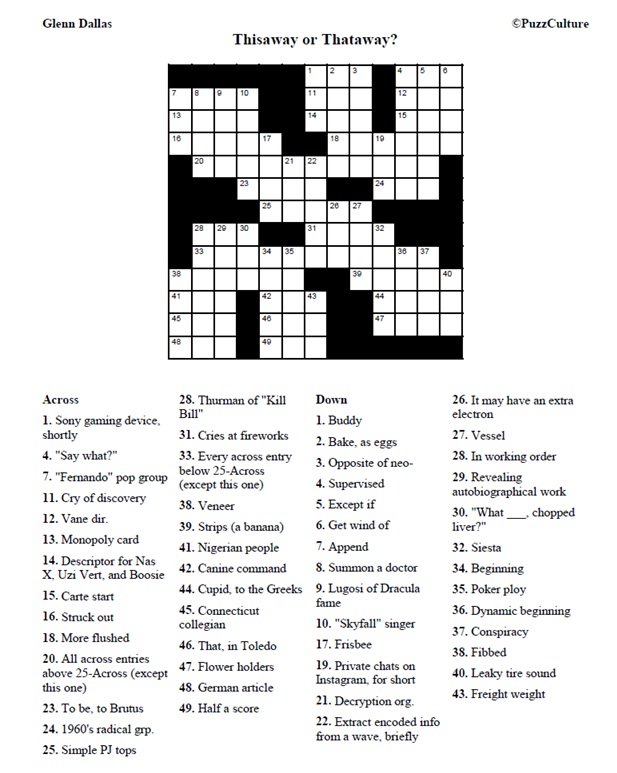
And since we’re talking crosswords, I’ve got a 13x puzzle for you to solve today.
I tried something a little different this time around, but hopefully you enjoy! (Once you figure out the gimmick, it’ll probably be a pretty quick solve.)
Will you be participating in either Boswords or Lollapuzzoola this year, fellow puzzler? Let me know in the comments section below. I’d love to hear from you!
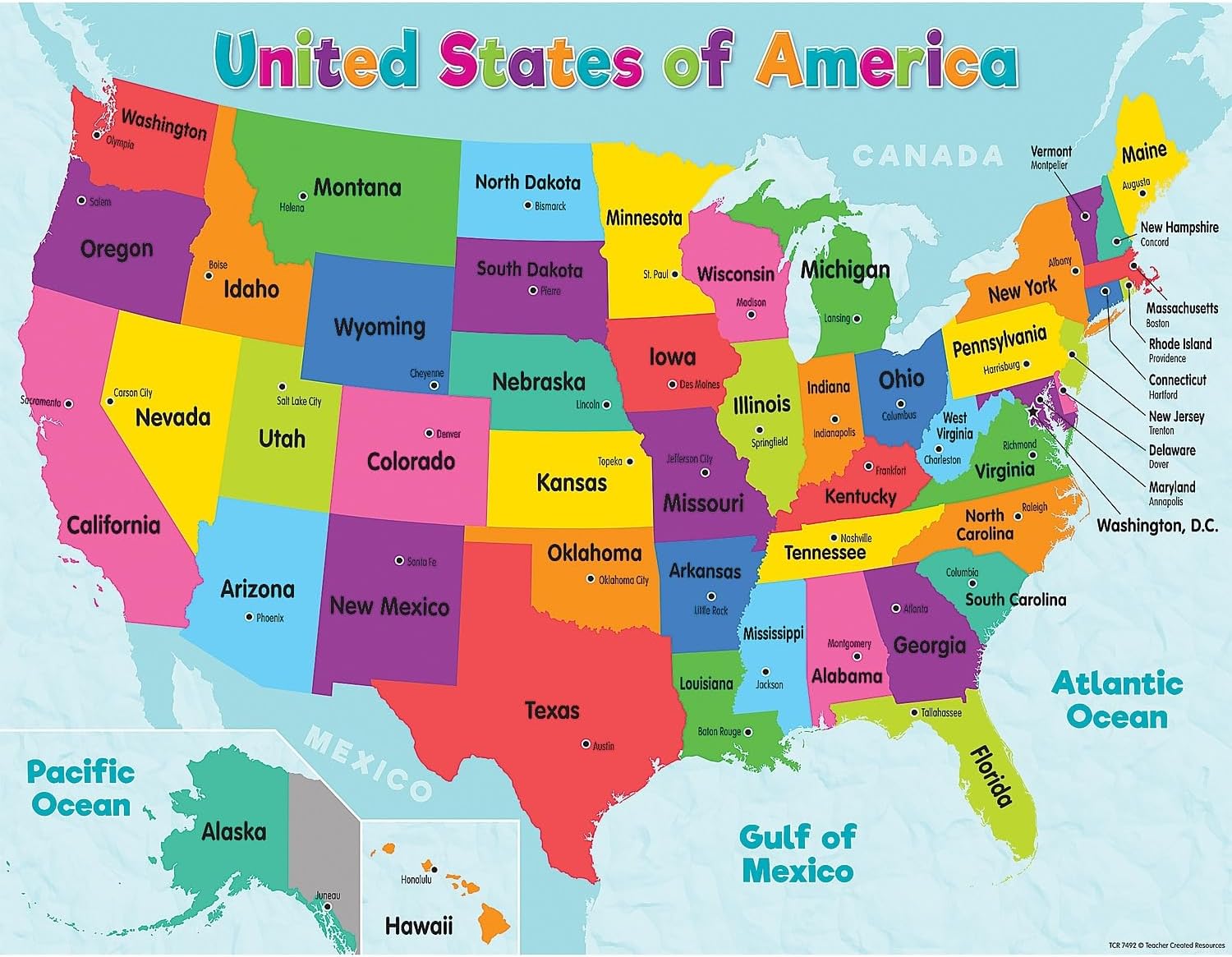
It was disappointingly hard to find an image for the 250th anniversary or the Fourth of July that didn’t make me want to puke, so here you go, a map of America without the idiotic “Gulf of America” crap on it…
I confess, fellow puzzler, when I was planning ahead for July’s posts, I struggled with what to write for today. I didn’t feel inspired to create a puzzle around the anniversary, and for reasons political, moral, and also quite personal, I didn’t exactly feel in a celebratory mood when I thought of the 4th.
So I instead cast my mind back to the bicentennial, researching events and celebrations held for the 200th anniversary of the country, hoping for inspiration to strike.
And I fell down a rabbit hole when exploring the subject of time capsules.
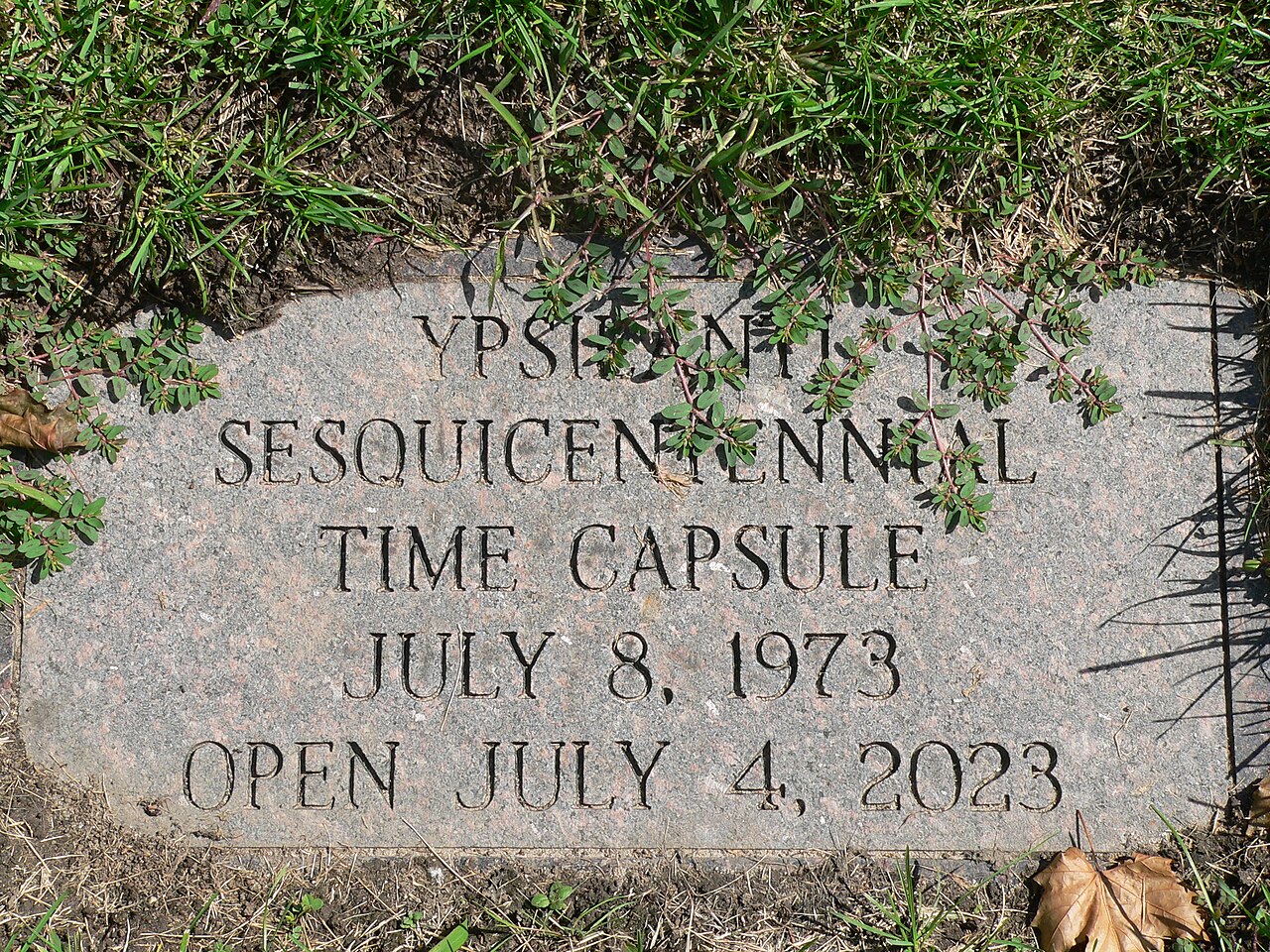
Time capsule plaque in Ypsilanti, Michigan, which actually includes the word “sesquicentennial”…
Did you know that time capsules go missing with surprising regularity?
A time capsule was buried in the 1950s at the San Francisco International Airport. It was lost, and then rediscovered during construction in the 1970s. It was lost AGAIN, and then rediscovered again in the 1990s, close to the original intended year of the time capsule’s reopening in 2000. Serendipity.
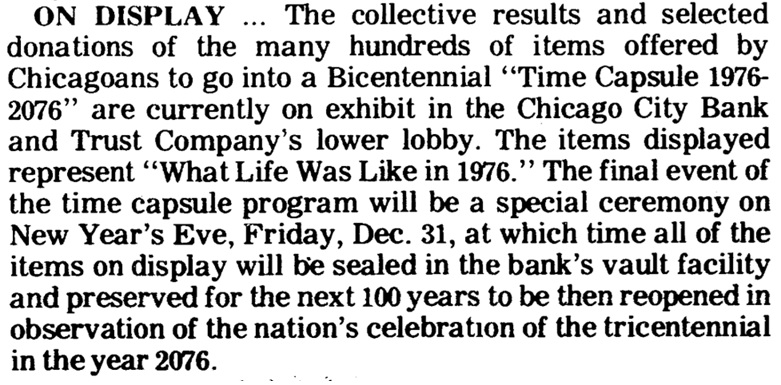
In my perusings, a single line caught my attention:
And nestled among 150 items in the Chicago City Bank and Trust Company’s sealed-and-locked-away “Time Capsule 1976-2076” is a crossword puzzle
A crossword included in a hundred-year time capsule? One that would be halfway through its journey to the future on July 4, 2026?
I wondered what crossword was chosen to represent the world at the time.
So I immediately went on the hunt for more information.
First, I wanted to establish that the time capsule’s location was still currently known. After reading about all those lost and misplaced ones, this felt like the prudent place to start.
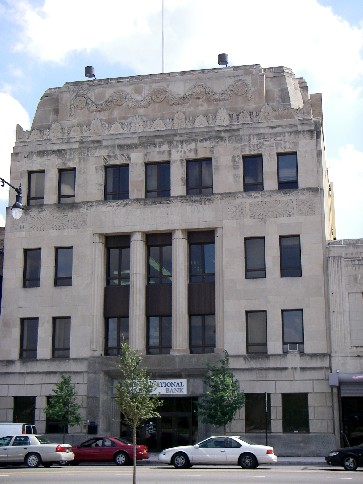
With the assistance of Annika Kohrt, Public Services Librarian at the Chicago History Museum, I found the location of the original bank in question at 815 West 63rd Street, Chicago.
The building is now a Chicago Landmark, as well as the home of the Englewood branch of US Bank. After talking to several very helpful and probably confused bank employees about the time capsule, I spoke to the bank manager, Tiffany, who kindly confirmed that the time capsule is intact in the bank’s vault.
I couldn’t ask for further details without sounding like I was plotting a heist, so I tabled my inquiry there.
So the time capsule still exists. Excellent!
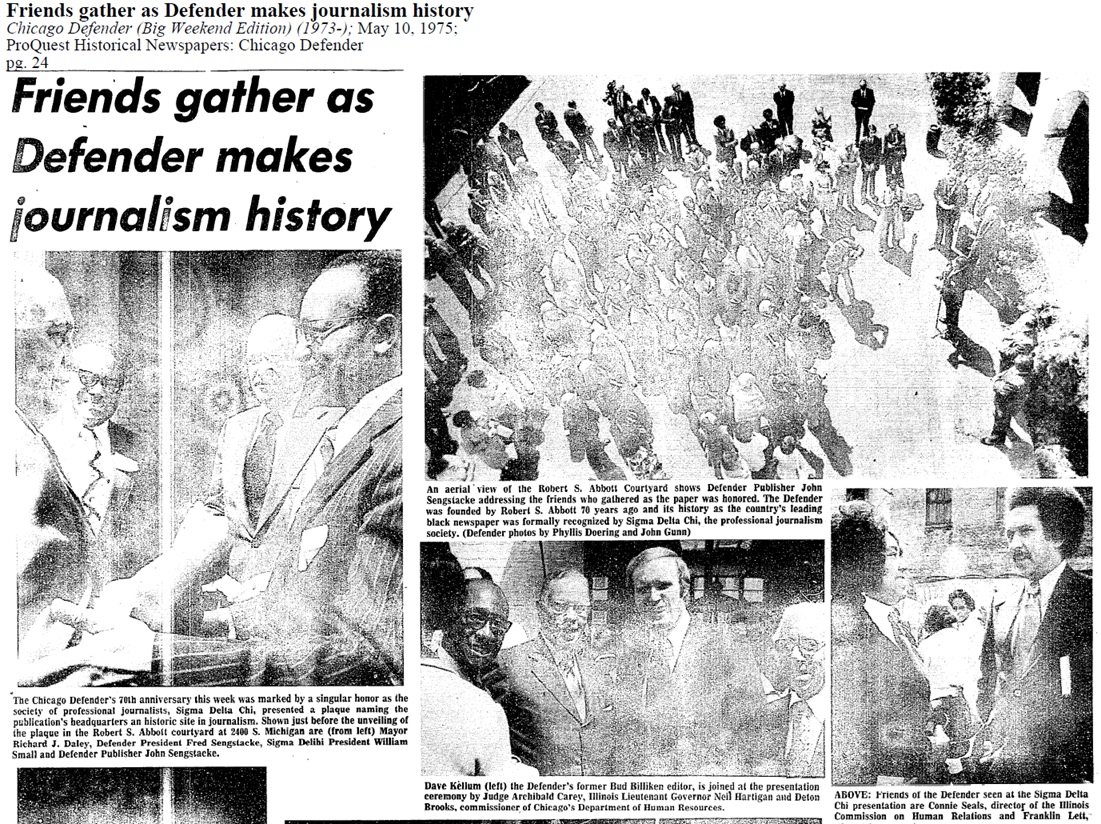
Annika also provided me with some newspaper articles about the time capsule — librarians are the BEST, seriously — which indicated that a copy of The Chicago Defender newspaper was included in the time capsule.
The Chicago Defender is a remarkable institution.
This weekly African-American newspaper was founded in 1905, reporting on important issues of the day, railing against Jim Crow laws and segregation practices. Langston Hughes, Ida B. Wells, and Gwendolyn Brooks were among the important voices who wrote for the Defender over the years.
It became a daily newspaper in 1956, serving as a crucial voice during the Civil Rights Movement, and wouldn’t return to its weekly format for over 50 years. It is still publishing to this day in online format.
By the time the bicentennial rolled around, the Defender had celebrated 70 years as one of the most influential and outspoken periodicals in the country.
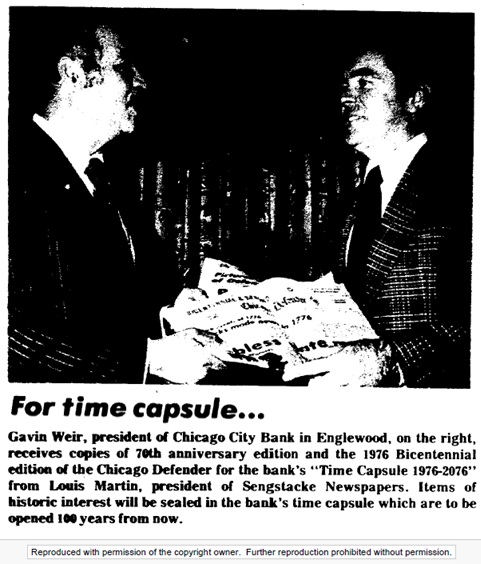
And, in fact, two different issues were included in the time capsule: the 70th anniversary edition of the Chicago Defender and the 1976 Bicentennial edition of the Chicago Defender.
With the assistance of Tony, one of the Ask a Librarian pros from the Chicago Public Library, I learned quite a bit about the Defender.
Including the fact that the Defender didn’t have a regular puzzle section in the paper.
I was barking up the wrong tree.
I was not deterred, though. With the deft help of capable researchers like Annika and Tony — I swear, the Internet is borderline unsearchable at this point, thank ALL the gods for librarians — I had confirmed the time capsule’s location, current status, and some of its contents.
So I started poring through newspaper archives and articles related to “Time Capsule 1976-2076.”
And as you might expect, Midwest newspapers gave quite a bit of coverage to the time capsule. Citizens had months to suggest items to place inside. Those items were then on display for the public to enjoy, before being sealed away that December to await the citizens of Chicago in 2076.
Items inside included:
a letter penned by the late Mayor Daley to the people of 2076
a sheet of Chicago Bears 1976 season tickets
documents from Englewood Hospital and other crucial public services
half-hour recordings of radio shows about the time capsule’s creation
albums from Johnny Mathis (“I Only Have Eyes For You”) and Sammy Davis Jr. (“Now,” featuring “Candy Man”).
Items cataloguing Chicago’s history past and present, as well as recipes, magazines, and books recounting the histories of various industries and cultural institutions, were also included to provide a snapshot of life at the time.
And among all those items, I finally spotted the item that had thus far eluded me in my historical deep dive into the time capsule:
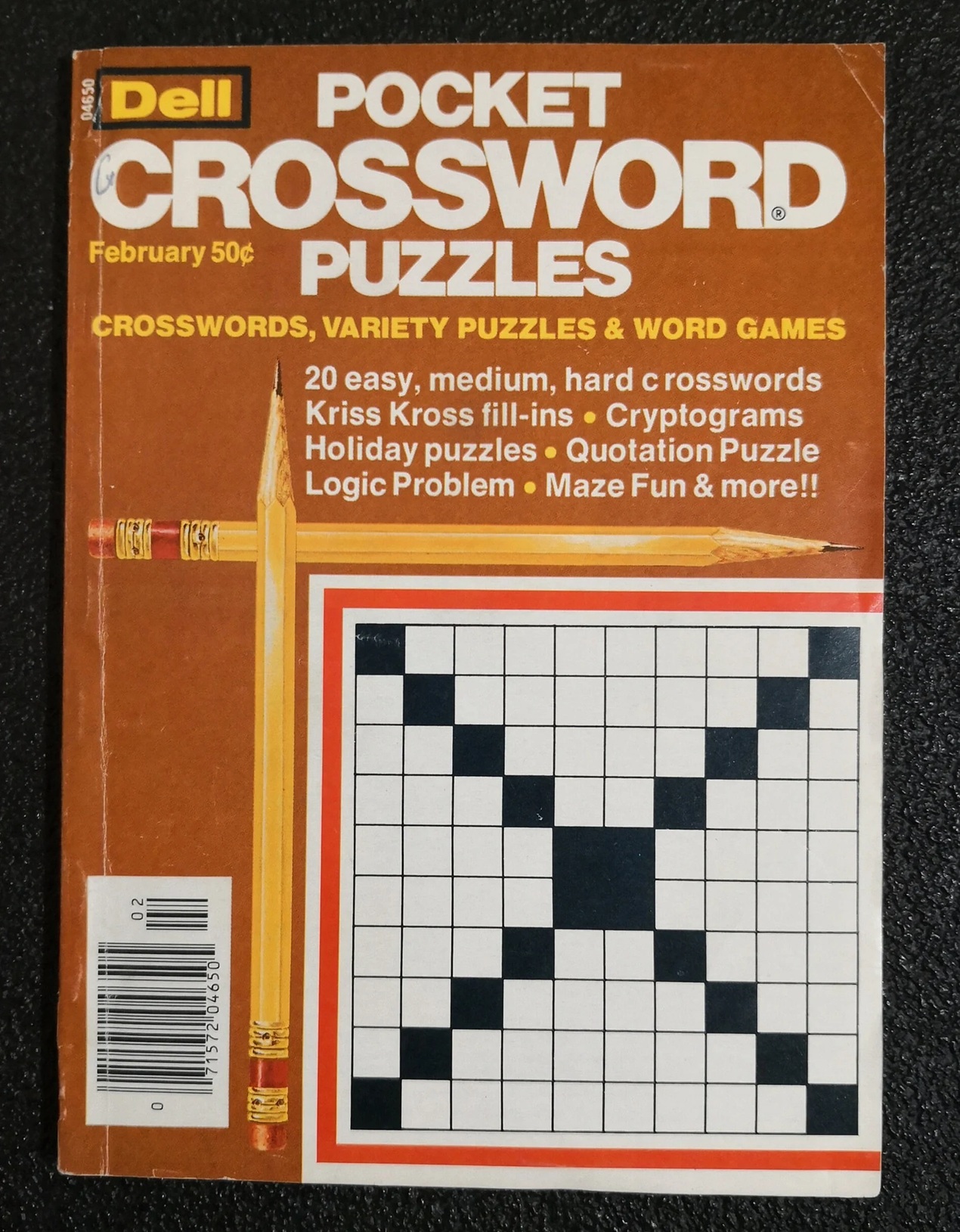
“Dell Publishing Company – Crossword Puzzles, December, 1976.”
Unfortunately, not the issue in question, but one from the same year. Look at that disconnected grid. *shakes head*
I’ve reached out to my friends at Penny/Dell Puzzles to see if a copy of this magazine is in their archives. If so, I’ll update this post and let you know!
Oh, one more thing.
In my research, I finally found the full article containing the brief snippet that inspired this post, and I discovered a word had been cut off in the original scan.
The text actually read:
And nestled among 150 items in the Chicago City Bank and Trust Company’s sealed-and-locked-away “Time Capsule 1976-2076” is a crossword puzzle magazine.
A single word could’ve changed my entire approach.
But then again, there’s so much I wouldn’t have learned if that word had been part of my original game plan, so I don’t regret the journey.
Fifty years from today, the citizens of 2076 Chicago will be celebrating the tricentennial with, among many other symbols of times gone by, a puzzle magazine that is still being published today, and hopefully one that will still be publishing fifty years from now.
Those folks will probably never read these words.
But I want to thank them anyway.
I want to thank the people who put together that time capsule, and the people who will be opening it, for putting a little bit of feeling back into this particular July 4th for me.