American Crossword Puzzle Tournament Weekend!

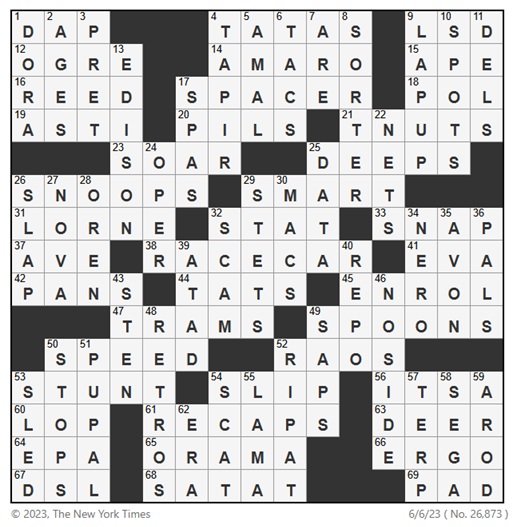
Good luck to everyone participating in Stamford and at home in this year’s Nerd Olympics, aka the American Crossword Puzzle Tournament!

The mix of camaraderie and competition is so unique at ACPT, and there’s a general joyfulness that permeates the entire event. (Yes, even during the dreaded Puzzle #5.)

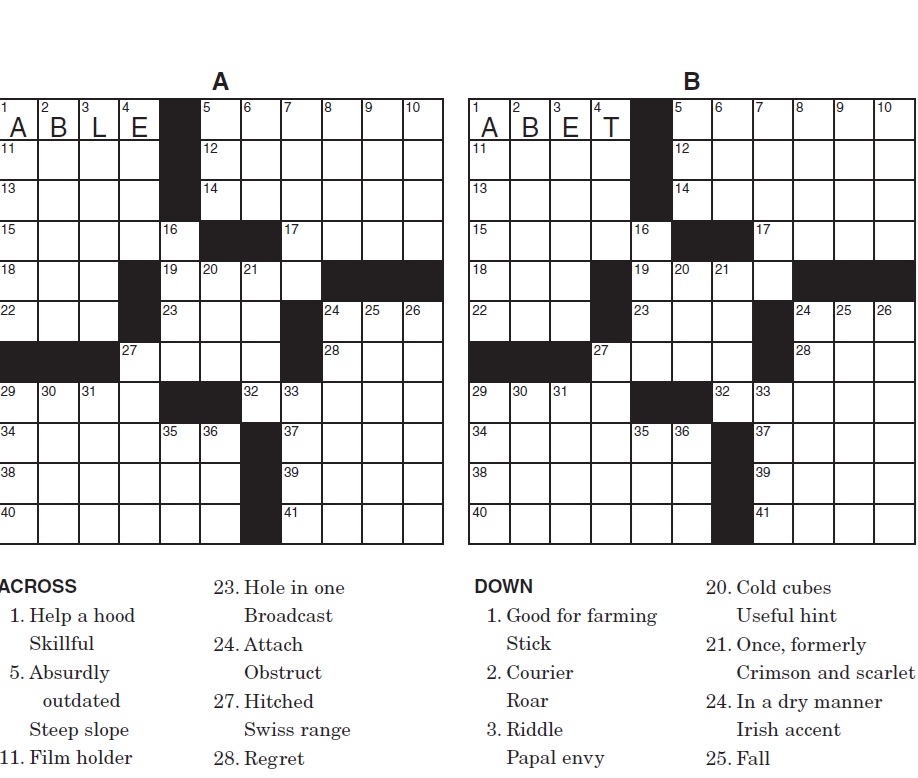
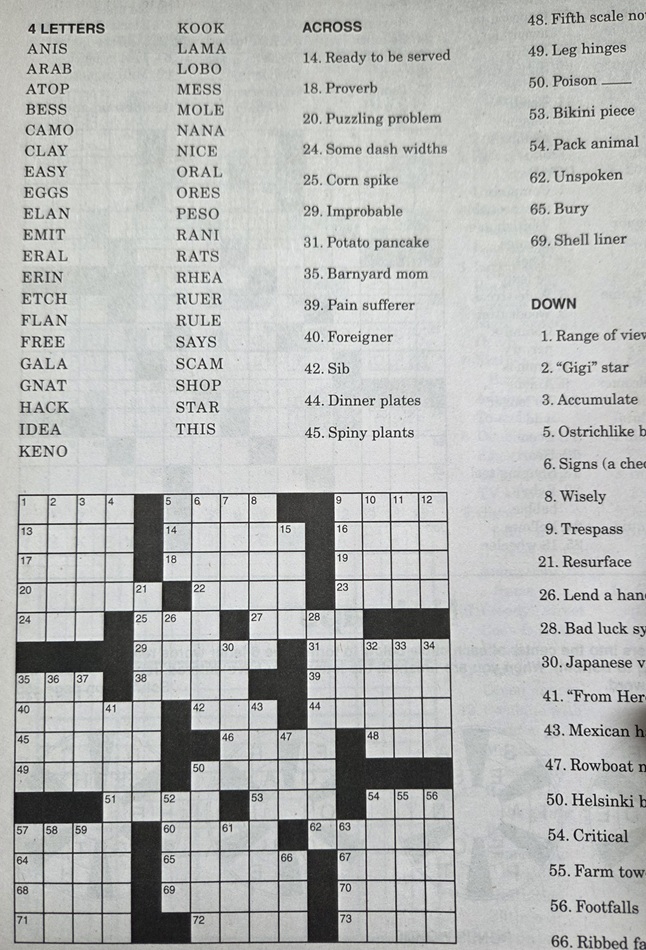
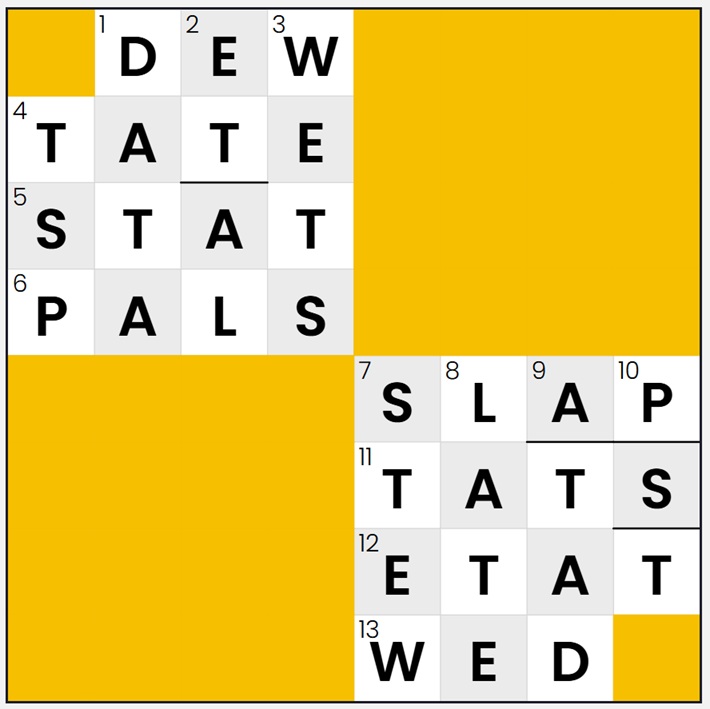
While I was unable to attend this year sadly, I did celebrate in my own way… by constructing a puzzle for you to enjoy!

Consider this a VERY easy icebreaker to shake off any puzzly ring rust you might have before diving into the devious and delightful puzzles of this year’s tournament!

[Click here to download a PDF of the puzzle.]

This is probably my fastest turnaround ever for a puzzle, from initial idea to finished product, and I hope you enjoy.

Happy puzzling, friends and competitors! Break a leg!

Wait, that’s for actors. What’s a good luck term for cruciverbalists? Break a pencil tip? That seems like a cruel jinx to put on someone.

Possible options:

  • May all your crossings not be cross!
  • Get your fill!
  • Happy rebus hunting!
  • Grid and bear it!

Wow, those are awful. Anyway, good luck and enjoy the puzzle!

Puzzles in Pop Culture: The Simpsons (re-revisited!)

The TV show The Simpsons is part of the fabric of American culture at this point. It has been on for decades, and although the show doesn’t put out banger after banger like they did in their heyday, they can still be counted on to put out fun shows and the occasional home run.

As part of their cultural influence, naturally puzzles have featured prominently from time to time.

Probably the most famous puzzly moment was when Lisa became a competitive crossword solver and Homer’s apology puzzle to her appeared in The New York Times. But they’ve also featured brain teasers, anagrams, and a Da Vinci Code-esque series of riddles.

And that legacy of puzzle-fueled storytelling hasn’t stopped since I wrote that post over a decade ago.


But it wasn’t through crosswords or brain teasers that puzzles have appeared on the Simpsons more recently. It was through Wordle.

Wordle has been mentioned enough times on The Simpsons that it actually has its own entry on the Simpsons Wiki.

We get a glimpse of a Wordle game in episode 2 of season 37, entitled “Keep Chalm and Gary On.”

Supernintendo Chalmers is fired from his job, and ends up working at the Nuclear Power Plant with Homer. After seeing how hard Chalmers was working, Homer teaches him how to APPEAR like he’s working hard.

During this montage, we get a glimpse of Chalmers playing Wordle.

But this was actually the second instance of this exact same Wordle game appearing on The Simpsons.

A few seasons earlier — episode 2 of season 34, entitled “One Angry Lisa” — Lisa finds herself on a jury, and is annoyed when she spots Judge Constance Harm playing Wordle during court.

Lisa points out that she’s playing games on the bench, and the judge realizes the answer word is, in fact, BENCH.

Wordle is also mentioned in episode 8 from season 36, entitled “Convenience Airways.” The pilot is making announcements:

Just a reminder, folks, the call button is only for real emergencies, like if you’re down to your last guess on Wordle.

The Simpsons also inspired their own variation on Wordle, Simpsle, where you try to figure out which Simpsons character the game has chosen.

You get hints — are they the same gender as your guess, older or younger, related to your guess, or had more or fewer appearances than your guess — in order to deduce the character’s identity in six tries or fewer.

It’s a good time, depending on your familiarity with the show. I’m a huge fan, so I managed to guess Kearney (one of the older bullies/miscreant kids in town) on my sixth guess.

(There was actually another Simpsons-inspired Wordle game at one point, Doh-dle, but it no longer appears to be active.)

And I would be remiss if I didn’t mention a personal anecdote involving puzzling and The Simpsons.

I was removing a repeat from a Penny Press crossword grid, and as I was working on the puzzle, I thought I’d found the perfect quick fix to fill the space.

I showed Patti Varol, future editor of The LA Times Crossword, my correction, and she pointed out that my fix, EMBIGGENS, despite being a perfectly cromulent word, wouldn’t be accepted.

It had not even occurred to me that EMBIGGENS wasn’t standard jargon. We both lamented that fact, and I got back to work on the grid.

Still, it shows the cultural impact of the show in general. From “Yoink!” and “meh” to “saying the quiet part out loud” and “old man yells at cloud,” it has literally changed how we speak.

And that goes for how we puzzle as well.


Do you have any favorite puzzly Simpsons moments? Or puzzly moments from other TV shows? Let us know in the comments section below! We’d love to hear from you.

I mean, a little more legibly than this, if you don’t mind…

Crossword News Roundup!

acptlogo

Crossword tournament season is fully in swing and there’s plenty to keep up on AND look forward to.

The Boswords Spring Themeless League is in week 3 already, and I’ve heard rave reviews of the puzzles so far.

We’re only a few weeks out from the 48th American Crossword Puzzle Tournament, which will be the last year the event is held in Stamford, CT, before the move next year to Philadelphia.

Westwords isn’t until June, but registration is open! (And they’ve added in-person pairs solving this year.)

Also, can we talk about crossword website names for a minute? Because https://www.westwordsbestwords.com/ is a great one.

Not only that, but there’s also https://www.midwestgridfest.com/ for the Midwest Crossword Tournament, which is just delightful.

Yes, you can simply type https://www.mwxwt.com/ and get to the same information, but where is the whimsy in that?!

(P.S. The Midwest Crossword Tournament isn’t until October, but registration opens April 6th!)


Crossword Con Returns!

Puzzmo’s Third Annual Crossword Con is being held on Friday, April 10th, in Manhattan, New York (and online as well).

If you’re looking for some fascinating insight into the world of puzzles both present and future, be sure to check it out!

They just announced the panel of presenters and it is stacked: Brooke Husic, Orta Therox, Saman Bemel-Benrud, Ben Zimmer, and Adam Aaronson.

Adam very deservingly won the ORCA for Best Crossword-Related Media for his piece “Square Theory,” so I’m excited to see him revisiting the topic for Crossword Con. It will be a must-watch presentation.

Be sure to get your tickets for either in-person or online attendance. They’re including a one-year subscription to Puzzmo Plus with your purchase!


These Puzzles Fund Abortion 6

Before I wrap up today’s post, I want to remind my fellow puzzlers about the important work behind These Puzzles Fund Abortion.

They’re hoping to raise $50,000 to support safe, affordable, and accessible abortion care with the sixth edition of TPFA. You can make a donation and preorder your puzzle packet right now!

These Puzzles Fund Abortion 6 contains 21 puzzles centered around social and reproductive justice themes, all for a minimum donation of $25.

If you donate $50 or more, you will also receive the puzzle packs for the previous five years of TPFA.

With data showing that Republican presidents send maternal deaths soaring when they take office, this is a very worthy cause. I hope your finances allow you to contribute to the health and safety of others.

Happy solving, puzzlers!

Puzzles in Pop Culture: Madness

As regular readers know, I’m a sucker for any time that crosswords find their way into other media.

I’ve previously discussed crossovers between the music world and crosswords in my post about “Staring at the Rude Boys”, a single released by The Ruts in 1980, as well as several novelty crossword songs from the 1920s, like “Crossword Mama, You Puzzle Me (But Papa’s Gonna Figure You Out).”

So I was delighted to see another example of album art with a crossword motif while scrolling social media a while back.

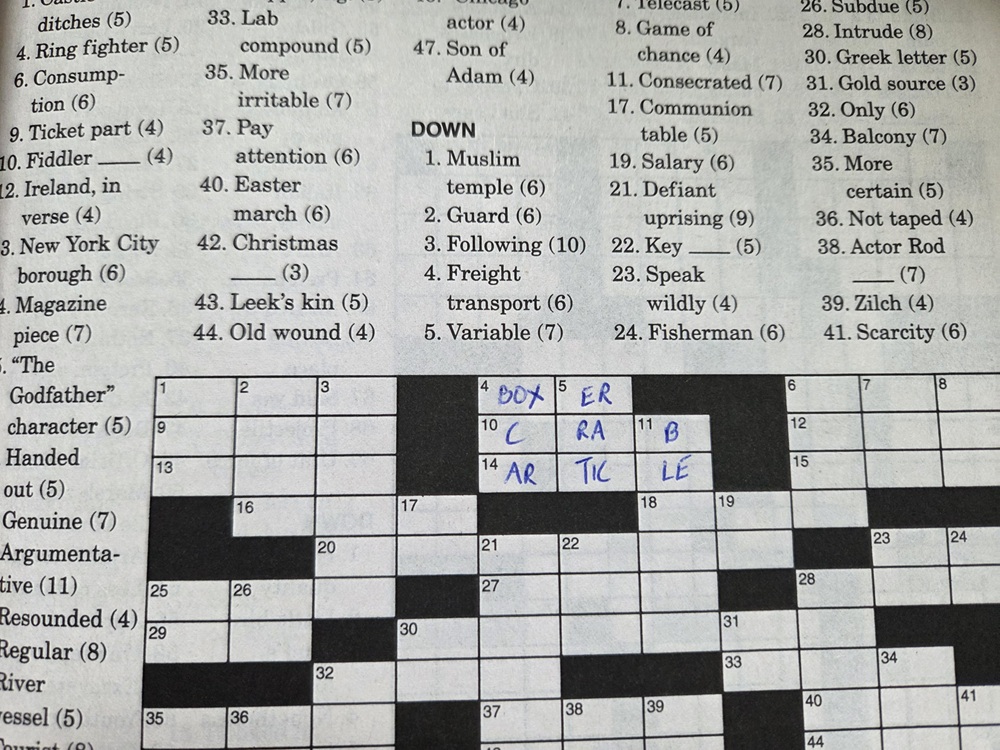
This time it was “Cardiac Arrest” by the band Madness.

Madness is a British ska band who made their name in the 1970s and 1980s as one of the prominent ska bands during the revival of two-tone ska.

Although they have more than a dozen songs in the UK Top Ten, you probably know them from their song “Our House,” which reached #7 on the Billboard Hot 100:

But it’s their controversial song “Cardiac Arrest” that interests me today.

Written by band members Chas Smash and Chris Foreman (aka Chrissy Boy), the song highlights the dangers of overworking yourself, as the song focuses on a workaholic who suffers a fatal heart attack on the way to work.

The band was known for writing humorous songs about the trials and tribulations of everyday life, reflecting the working-class backgrounds of the band members. But the darker tone of this song would have repercussions for the band.

Some listeners took issue with the song’s tone and subject matter, and the title itself hurt its chances at regular radio replay as well.

It’s sad, because I doubt the people who complained were actually listening. The song is a warning, hoping that people will not follow in the footsteps of the song’s doomed main character.

In an interview, Chas Smash defended the song:

It was born out of concern. The message was, ‘Relax darling, don’t get stressed.’ As the Arabs say, ‘Walk through life, don’t run.’

I reached out to the band — who is still touring with six out of their seven original members! — to see if I could get some background on why they went with a crossword-style design to promote the album, and Chrissy Boy himself responded!

He said that the crossword design was an intentional nod to some of the song’s lyrics. Not only do they mention crosswords directly — “Ten more minutes ’til he gets there / the crossword’s nearly done” — but there’s also a cryptic / British-style clue in the lyrics:

Think of seven letters
Begin and end in c
Like a big American car
But misspelt with a d.

Like a big American car (Cadillac) but misspelled with a D. That’s CARDIAC.

Naturally, I had to solve the puzzle itself for the full experience.

In fact, I solved BOTH versions of the “Cardiac Arrest” puzzle and I very much enjoyed them. They’re absolutely packed with trivia about the band’s songs and performers, including instruments and nicknames. Plus they mixed American-style cluing with cryptic cluing!

“Check over an animal doctor” for VET is a perfect double-definition cryptic clue and “Lies about a little island” for ISLE has an anagram-clue mix.

I suppose I shouldn’t be surprised that another ska band used a crossword pattern, since the mix of black and white squares in crosswords is very reminiscent of the checkerboard pattern that is synonymous with both two-tone ska and third wave ska.

Image courtesy of Gattuso.org.

In fact, the band incorporates that patterning in several shirts they continue to sell today.

It never ceases to amaze me how there’s virtually no corner of pop culture that hasn’t been touched by puzzles in some way.

And to stumble upon a second example in one of my favorite genres of music? That’s just the icing on the cake.


Are there any albums or songs you associate with puzzles? Let me know in the comments section below. I’d love to hear from you!
One Hundred Years of The Observer Crosswords!

1913 marked the birth of the crossword as we know it, but cryptic (or British-style) crosswords have been around nearly as long as the American version!

In fact, this past Saturday — Pi Day — marked an important anniversary in the history of cryptic crosswords.

On March 14th, 1926, Edward Powys Mathers, under the pseudonym Torquemada, published the first of 670 cryptic puzzles under the umbrella of The Observer, launching a crossword dynasty that continues to this very day.

Mathers was a poet and a translator, and quite accomplished in both fields. Two years before his Observer debut as Torquemada, he was actually working for The Observer, but as a reviewer of thriller books. Apparently, he preferred to suggest how each book might be improved, rather than criticizing the book as is.

He noticed the American crossword craze crossing the ocean, but didn’t think much of them. (At the time, crossword cluing was very straightforward, consisting mostly of dictionary definitions. There was no wordplay, no misdirection, no humor. Cluing was VERY dry.)

In 1925, his first cryptic puzzles — a series of 12 crosswords where pairs of clues were rhyming couplets — appeared in The Saturday Westminster Gazette. This was where he first introduced himself to the puzzling public as Torquemada, taking the name of the Spanish Grand Inquisitor.

Well, sort of. The first puzzle was constructed for the entertainment of friends, but one of those friends took it to The Saturday Westminster Gazette against his wishes. The editors of The Gazette then managed to convince Mathers to create more. They were boldly advertised:

I recall how thrilling the green poster looked: “Crosswords for Supermen.” Alas, your tired commuter of today would swallow that first puzzle, verse and all, and correctly disgorge it between Charing Cross and Waterloo. — Torquemada, 1935

(Later those twelve puzzles were collected as “Crosswords for Riper Years.”)

After his run with The Saturday Westminster Gazette was finished, The Observer asked him to contribute puzzles to their outlet. They were called “Feelers,” as Mathers sought to widen the scope and audience of his puzzles, slowly “feeling his way” to better and more satisfying cluing.

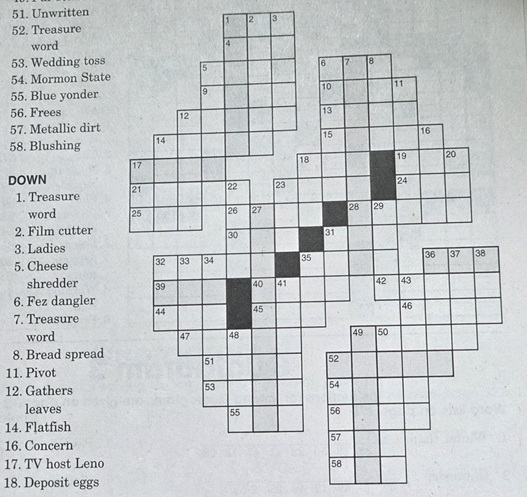
It’s unlikely that Torquemada was the first setter to use cryptic-style cluing, but he was the first to ONLY use cryptic clues in his puzzles. But that wasn’t his only cryptic crossword innovation. He abandoned American-style grids as well, including these black bar grids:

Image courtesy of What’s Gnu? by Michelle Arnot

Apparently he was successful in feeling out his audience; no matter how difficult his puzzles seemed to many, The Observer would receive as many as seven THOUSAND correct solutions from solvers all around the world, hoping to be among the lucky few selected to win a prize. (Prizes went to the first three correct solutions opened each week at The Observer offices.) It’s estimated another twenty thousand solvers out there were regularly completing his puzzles and not sending in their solutions.

Torquemada’s wife Rosamond later recalled that solvers would thank him for helping them “rediscover forgotten beauties in prose and verse to which we might never have returned but for the stimulus of the weekly chase”.

Torquemada’s prolific puzzling and creative cluing led some to suspect that there was actually a team of constructors toiling away under a shared sobriquet, but Torquemada’s only collaborator was Rosamond. He would choose the topic/theme for the grid, providing her with a list of words to include, and she would construct the grid.

Sadly, his time shepherding cryptic crosswords came to end when he passed away on February 3rd, 1939, at the age of 46.

After his passing, Rosamond read through over thirty thousand of his clues. She found the same word used fifty times in his puzzles, and every single time, the clue was different. Fifty different clues for the same word!


The unenviable task of taking over for Torquemada fell to Derek Somerset Macnutt, who adopted the name Ximenes for his constructing career. (Ximenes, as you might expect, was the name of a Grand Inquisitor in the Spanish Inquisition who succeeded the real Torquemada.)

Taking that particular set a very high bar, a challenge that Macnutt readily accepted. He aspired to increase the vocabulary of his audience, hoping for 30 percent of the answer words in the grid to be new to solvers.

Interestingly, his interest in puzzles was inspired by Torquemada but his singular brand of cluing was more reminiscent of Afrit, aka Alistair Ferguson Ritchie, who constructed cryptics for The Listener.

Ximenes adopted a symmetrical grid — a standard which remains to this day — as well as a maximum and minimum number of unches in the grid. (Unches, for you portmanteau lovers, means unchecked squares.) He also considered some of Torquemada’s puzzles unfair, and sought to standardize cluing, ensuring each had both wordplay and definition included, even while making them more creative and inventive.

In 1966, he published Ximenes on the Art of the Crossword, which pulled back the curtain on his constructing and inspired many constructors and setters in the years to come. (One of the most famous is the setter Eric Chalkley, aka Apex, who literally named himself after Ximenes in his endeavors to “ape X.”)

He also helped kickstart the cryptic crossword movement in America. After solving some of Frank Lewis’s puzzles for The Nation, Stephen Sondheim discovered the work of Ximenes, and started to learn the ins and outs of cryptic crosswords.

He even participated in Ximenes’s weekly clue-writing competitions:

Ximenes would then judge all the clues, conferring a first prize, a second prize, a third prize, and then two levels of honorable mentions: HC (Highly Commended) and VHC (Very Highly Commended). “And you would get in the mail a slip of paper giving the winners’ names and the winning clues.”

The slip was usually four inches wide by twelve inches long. In this way, even though Sondheim was in New York City, he became part of an international community of puzzle solvers matching minds with Ximenes. “I never got past honorable mention,” he lamented, “but I did get honorable mention.”

As it turns out, Sondheim received seventeen honorable mentions, fourteen HCs and three VHCs. One of those VHCs was for the clue “Pop art panel, derived from Dada” for PATERNAL.

Later accepting the challenge of the cryptic crosswords in The Listener (which were, and are, infamous for their difficulty), he introduced them to his collaborator on West Side Story, Leonard Bernstein.

And when Sondheim and Bernstein’s creative differences got the better of each other, they would reunite over a cryptic crossword, and then get back to work.

Sondheim would go on to create cryptic crosswords for New York Magazine, starting in the late 1960s, helping to introduce American audiences to that devious and challenging variety of crosswords. He also cultivated a library of cryptic puzzles and puzzle magazines, passing part of that collection (all of his Listener cryptic crosswords up through 1984) to Will Shortz.


Macnutt passed away in 1971, but the final Ximenes puzzle, number 1200, was published in 1972. In March of that same year, stewardship of The Observer cryptic crossword passed to Jonathan Crowther, who took up the name Azed. Not only does this sound like it covers the alphabet (A to Zed), but it reverses the name of another Grand Inquistor, Diego de Deza.

He had been a solver of Ximenes’s puzzles since 1959, as well as a setter for The Listener. He also continued Ximenes’s clue-writing contest as the Azed Prize.

At this point, Azed has been setting the Observer cryptic crossword for longer than both his predecessors combined.

Also, you can’t help but love that he also sets occasional puzzles under the pseudonym Ozymandias. On his Wikipedia page, it even quotes the poem: “Look on my works, ye Mighty, and despair!”


Cryptic crosswords are alive and well. The Observer, The Guardian, The Independent, The Daily Telegraph, The Spectator, and The Sunday Times, in England, among others. The Ottawa Citizen, Toronto Star and The Globe and Mail in Canada. Harper’s in the US. Nearly every Australian newspaper has cryptic crosswords.

With Parsewords making the scene and hoping to demystify cryptic crossword cluing for new solvers, there’s no telling how many more solvers will discover or rediscover these challenging, playful puzzles.

And the folks at The Observer are marking the puzzle centenary with a special event on Thursday, March 19th!

Caitlin O’Kane (their Puzzles Editor) and Azed himself will be in attendance, alongside other crossword setters and cryptic crossword enthusiasts, to enjoy an evening of live-solving and celebration:

From the invention of the cryptic to the rise of the modern brainteaser, they’ll unpack the secrets of their craft – what makes a clue sing, how setters think, and why a good puzzle keeps us hooked. Expect lively chat, unexpected revelations, and at least one enigma that demands to be cracked.

Raise a glass, meet other aficionados, and celebrate a century of wit, wordplay and ingenuity with the people keeping The Observer’s puzzling spirit alive.

So whether you’re attending The Observer‘s Puzzle Centenary, tackling a Parseword puzzle, or trying one of the numerous cryptic crossword outlets across the world, be sure to give a cryptic crossword a chance this week and be a part of one hundred years of puzzly challenge and creativity!

Happy solving, fellow puzzlers (and setters)!


Sources:

  • The Centenary of the Crossword by John Halpurn
  • What’s Gnu: A History of the Crossword Puzzle by Michelle Arnot
  • The Strange World of the Crossword by Roger Millington
  • Matching Minds with Sondheim: The Puzzles and Games of the Broadway Legend by Barry Joseph
  • The Puzzle Edit
  • Derek Harrison’s The Crossword Centre

A Seasonal Puzzle Contest from Michael Hanko and George Barany!

Hello puzzly friends!

Today is indeed your lucky day, as I have a second puzzle to share with you, courtesy of constructors Michael Hanko and George Barany!

They’re hosting a puzzle contest and asked me to help spread the word to my fellow puzzle enthusiasts.

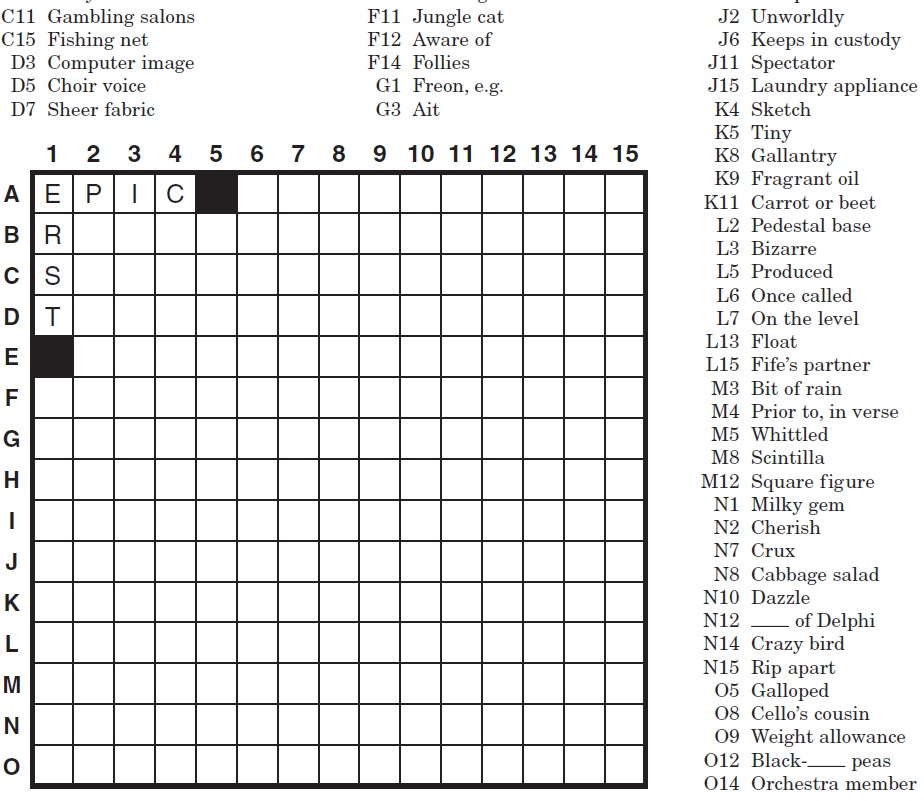
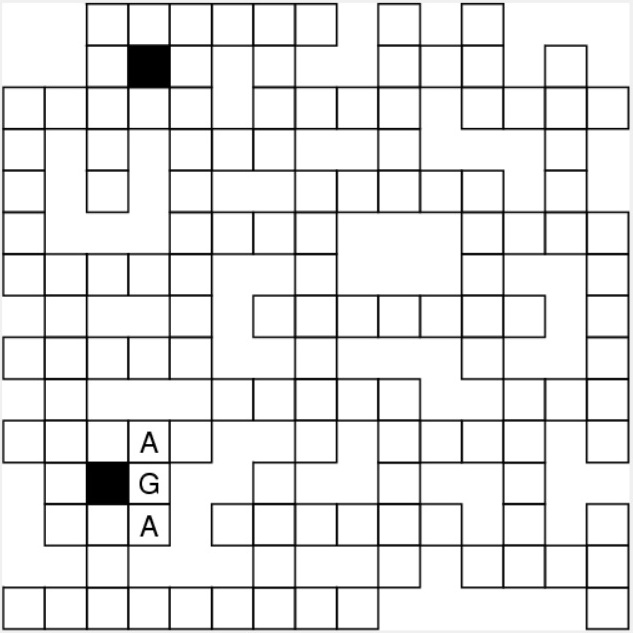
The challenge before you? Solve the crossword below, titled Calendar Arithmetic, and complete both the grid and the bonus message (a timely warning!) at the bottom of the grid.

[Click here to download the puzzle!]

Once you’ve printed and solved the puzzle, either photograph or scan the completed grid.

Send it AND the timely warning to barany@umn.edu for a chance to win a prize, like puzzle books or complimentary custom puzzles to be worked out with the constructors!

Submit your entry by the vernal equinox for your chance to win: Friday, March 20, 2026, 9:46 AM. (Okay, just checked, and they’re offering a grace period, as long as you get the puzzle in by midnight on Sunday, March 22nd.)

Good luck, and happy puzzling!