The Solution to the Kryptos Puzzle: Up for Auction Soon!

Kryptos.

No, sorry, we’re not doing a post about Superman’s dog.

Instead, today we’re discussing how the solution to one of the great unsolved cryptographic mysteries of our time is going up for auction in October.

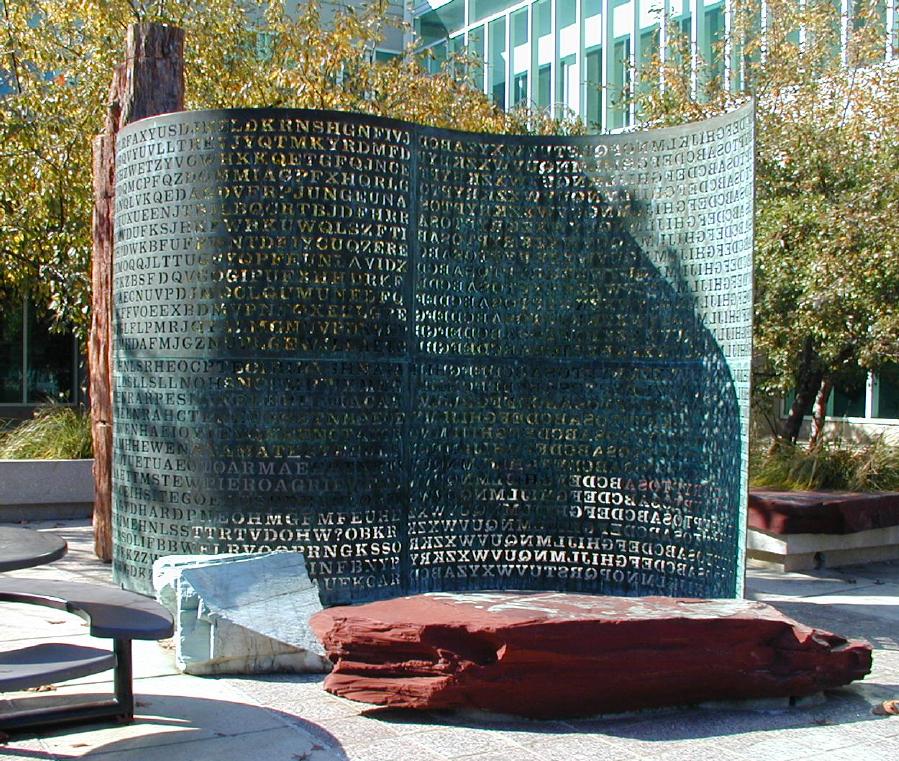
For the uninitiated, Kryptos is a flowing sculpture made of petrified wood and copper plating, sitting over a small pool of water. It was revealed to the world in 1990, coded by former chairman of the CIA’s Cryptographic Center Edward Scheidt, and designed by artist Jim Sanborn. Designed to both challenge and honor the Central Intelligence Agency, for decades Kryptos has proven to be a top-flight brain teaser for codebreakers both professional and amateur.
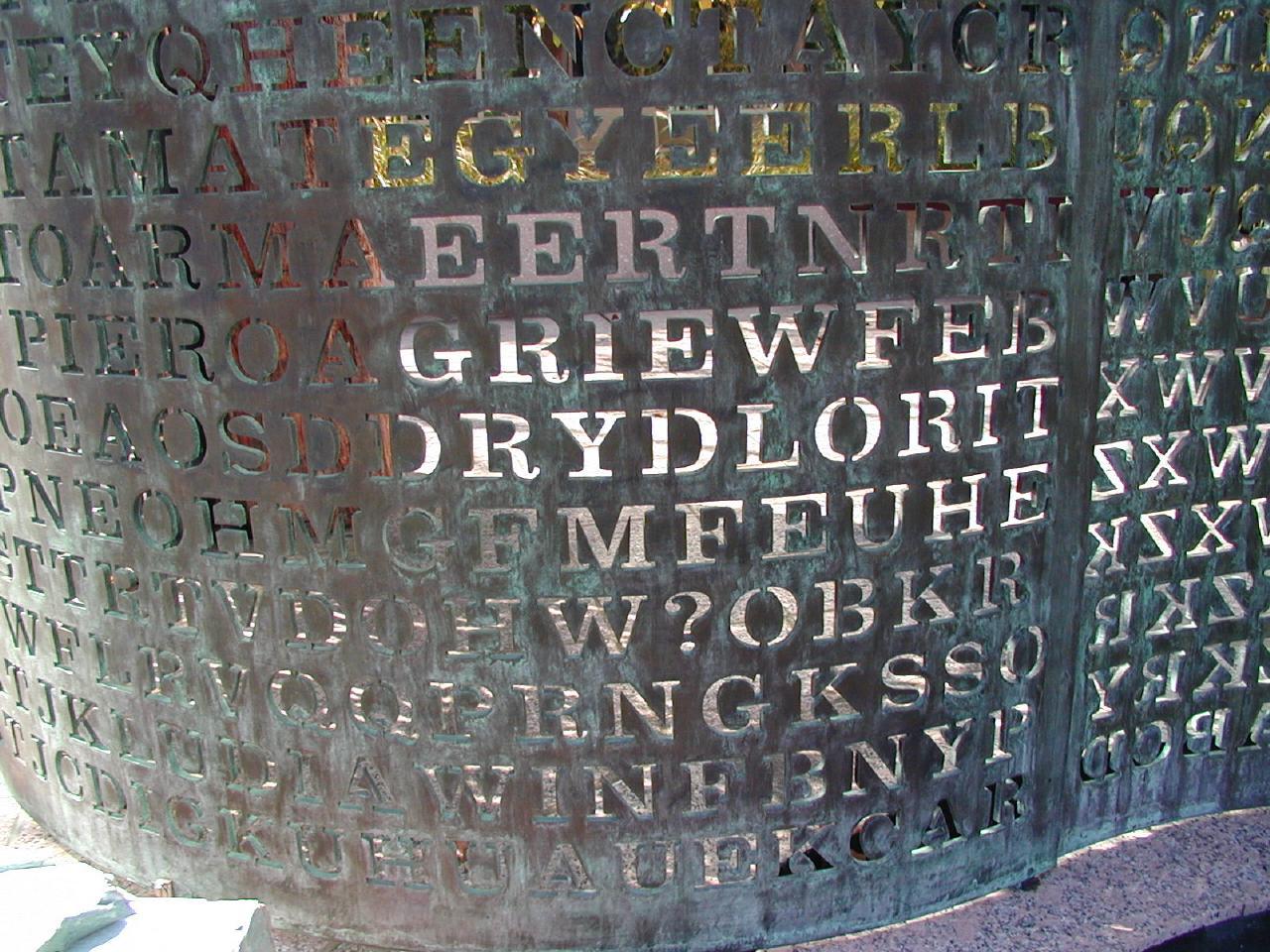
There are four distinct sections, utilizing different forms of encryption. And amazingly, the fourth section continues to elude codecrackers to this very day.

It took nearly a decade before anyone announced a solution to the first three encryptions. A computer scientist named Jim Gillogly announced in 1999 that he had cracked passages 1, 2, and 3 with computer assistance.

The CIA, not to be one-upped, then revealed that one of their own employees, an analyst named David Stein, had solved those same three passages the year before, using only pencil, paper, and lunchtime man-hours.

But a 2013 Freedom of Information Act request into records of the National Security Agency revealed that an NSA team actually cracked those same three passages back in 1993 as part of a friendly rivalry between the NSA and CIA, provoked by former NSA director and then-deputy CIA director William O. Studeman.

Image courtesy of G.A. Matiasz

Passage 1 employs a Vigenère cipher, a letter-shifting cipher that has been used for centuries, also known as a periodic polyalphabetic substitution cipher, if you want to get fancy with it.

The message, penned by Sanborn himself, reads Between subtle shading and the absence of light lies the nuance of iqlusion. [Iqlusion is an intentional misspelling of “illusion.”]

Passage 2 also employs a Vigenère cipher, but utilizes a different keyword than Passage 1. The message, also composed by Sanborn, points toward something hidden nearby:

It was totally invisible. How’s that possible? They used the earth’s magnetic field. x The information was gathered and transmitted undergruund to an unknown location. x Does Langley know about this? They should: it’s buried out there somewhere. x Who knows the exact location? Only WW. This was his last message. x Thirty eight degrees fifty seven minutes six point five seconds north, seventy seven degrees eight minutes forty four seconds west. x Layer two. [Again, there’s an intentional misspelling here with “undergruund.”]

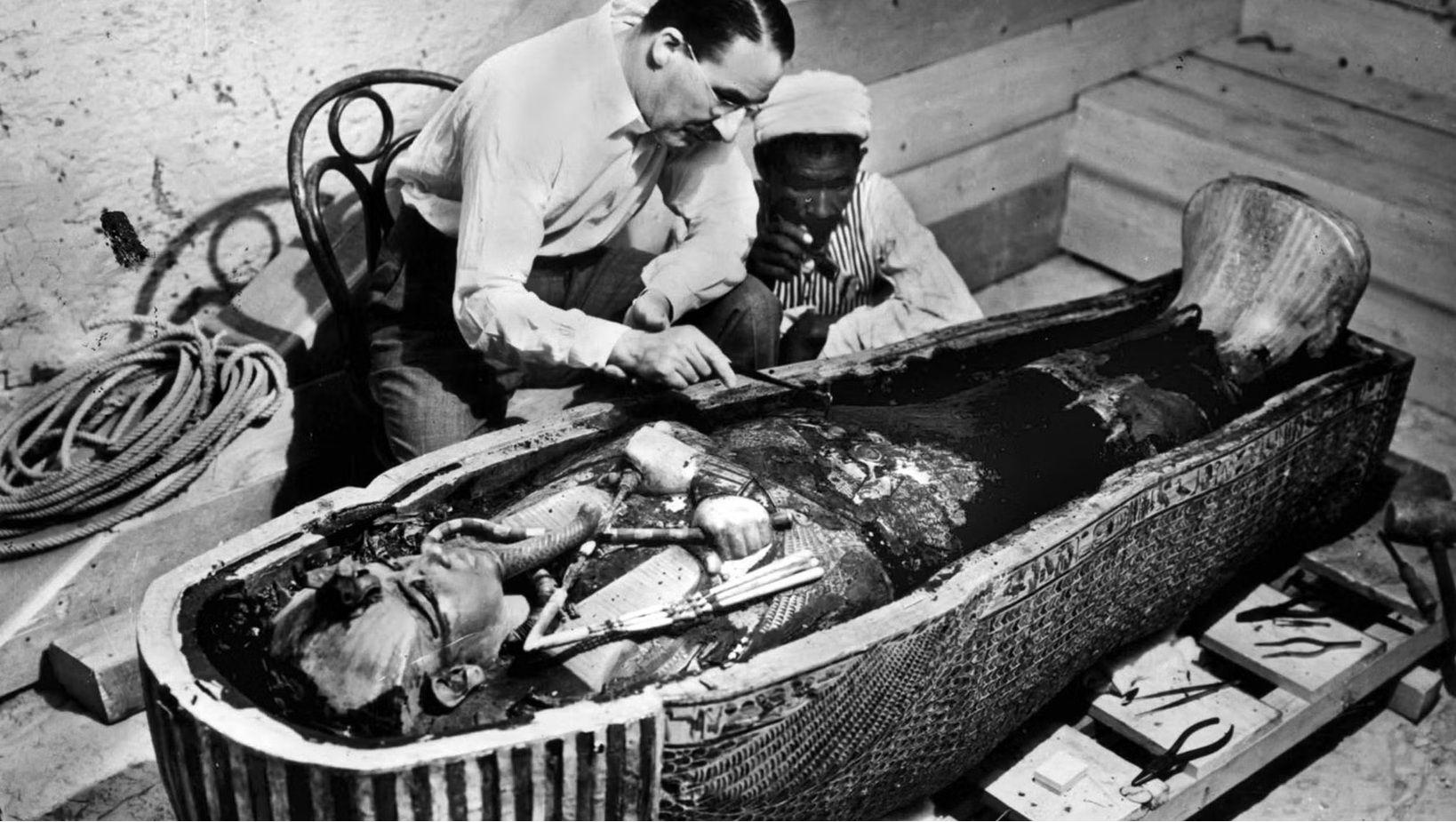
Passage 3 uses a transposition cipher, which relies on the positioning of given letters in order to properly spell out a message. The message is inspired by the words of Howard Carter, the archaeologist who opened King Tut’s tomb:

Slowly, desparatly slowly, the remains of passage debris that encumbered the lower part of the doorway was removed. With trembling hands I made a tiny breach in the upper left-hand corner. And then, widening the hole a little, I inserted the candle and peered in. The hot air escaping from the chamber caused the flame to flicker, but presently details of the room within emerged from the mist. x Can you see anything? q [Again, there’s an intentional misspelling with “desparatly.”]
Although some codebreakers believe the misspellings of “iqlusion,” “undergruund,” and “desparatly” are simply Sanborn’s crafty attempts at misdirection, others believe they are clues hinting at how to crack Passage 4, which is only 97 characters long.

Sanborn has even offered hints to help frustrated solvers in their efforts to unravel the mystery of Passage 4. In 2006, he revealed that letters 64 through 69 in the passage, NYPVTT, decrypt to “Berlin.”

And in 2014, Sanborn revealed that letters 70 through 74, MZFPK, decrypt to “clock.” So the message has something to do with the Berlin Clock, although Sanborn has stated “there are several really interesting clocks in Berlin.”
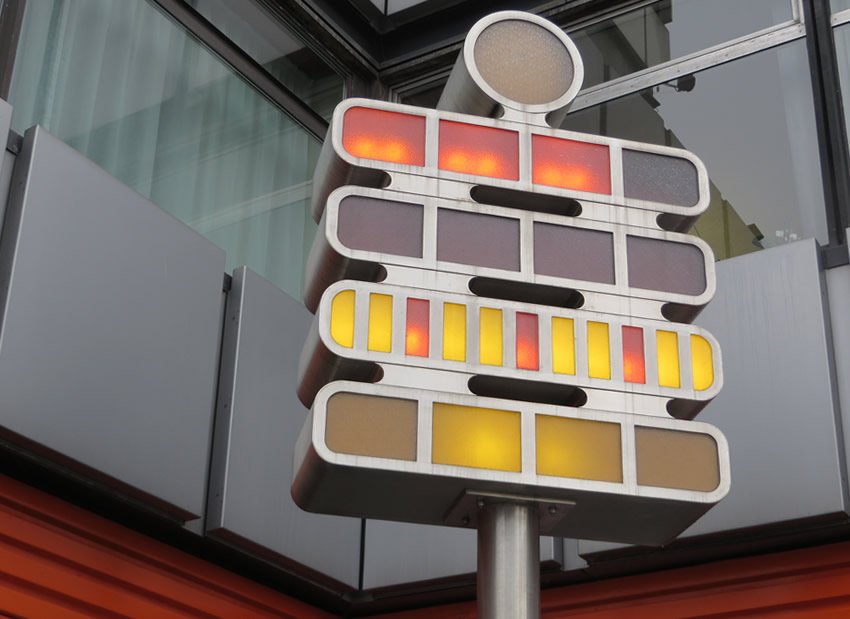
Image of the Berlin Clock courtesy of Secret City Travel.com

Finally, in 2020, Sanborn revealed that letters 26 through 34, QQPRNGKSS, decrypt to “northeast.”

And yet, despite all these hints and several decades, K4 remains unsolved. (And to those hoping that AI will prove smarter than humans in this instance, that hasn’t been the case. Sanborn revealed to The New York Times that he has received solutions devised by ChatGPT and described them as “nothing short of fairly silly.”


So, if you win the auction, what do you get?

  • the handwritten K4 code, complete with a signed typed letter by Ed Scheidt, the CIA employee and cryptographer behind all four Kryptos codes
  • the copper model submitted to the CIA as a sample of the final piece
  • photographs relating to the creation of Kryptos
  • the original dedication pamphlet signed by late CIA director William Webster
  • copies of the coding charts used to encode Kryptos

And apparently, being the secretkeeper for Kryptos can be profitable. Sanborn grew weary of fielding dairy requests and queries for solutions, clues, and other data, and actually started charging a $50 fee for replies. He claims this fee has earned him $40,000 a year!

Sadly, Sanborn feels that he no longer has “the physical, mental or financial resources” to maintain his role as the keeper of K4’s secret, and wishes to hand that responsibility to another, which would allow him time to focus on other artistic endeavors.

And given that he’ll be turning 80 around the same time that the auction should be wrapping up, it’s fair to say he has more than earned this retirement from Kryptos.

The online auction of Kryptos by RR Auction begins on October 17 and closes on November 20 at 7 p.m. ET.

Will you be bidding, fellow puzzler? I fear my budget of — *checks wallet* — $29 is not going to get it done.

Riddles of the Heart!

puzzlelove

I’ve always been a sucker for a story where puzzlers help make someone’s life better, their world a little bit more magical. I’ve had the privilege of constructing and facilitating several puzzly marriage proposals, for instance.

But there’s something even more heartwarming when it’s anonymous puzzlers helping a stranger with a puzzly dilemma. Like the time online puzzlers saved Christmas by decoding a kid’s encrypted wish list to Santa for his baffled mother.

This time around, it’s not Christmas magic, it’s a potential romance.

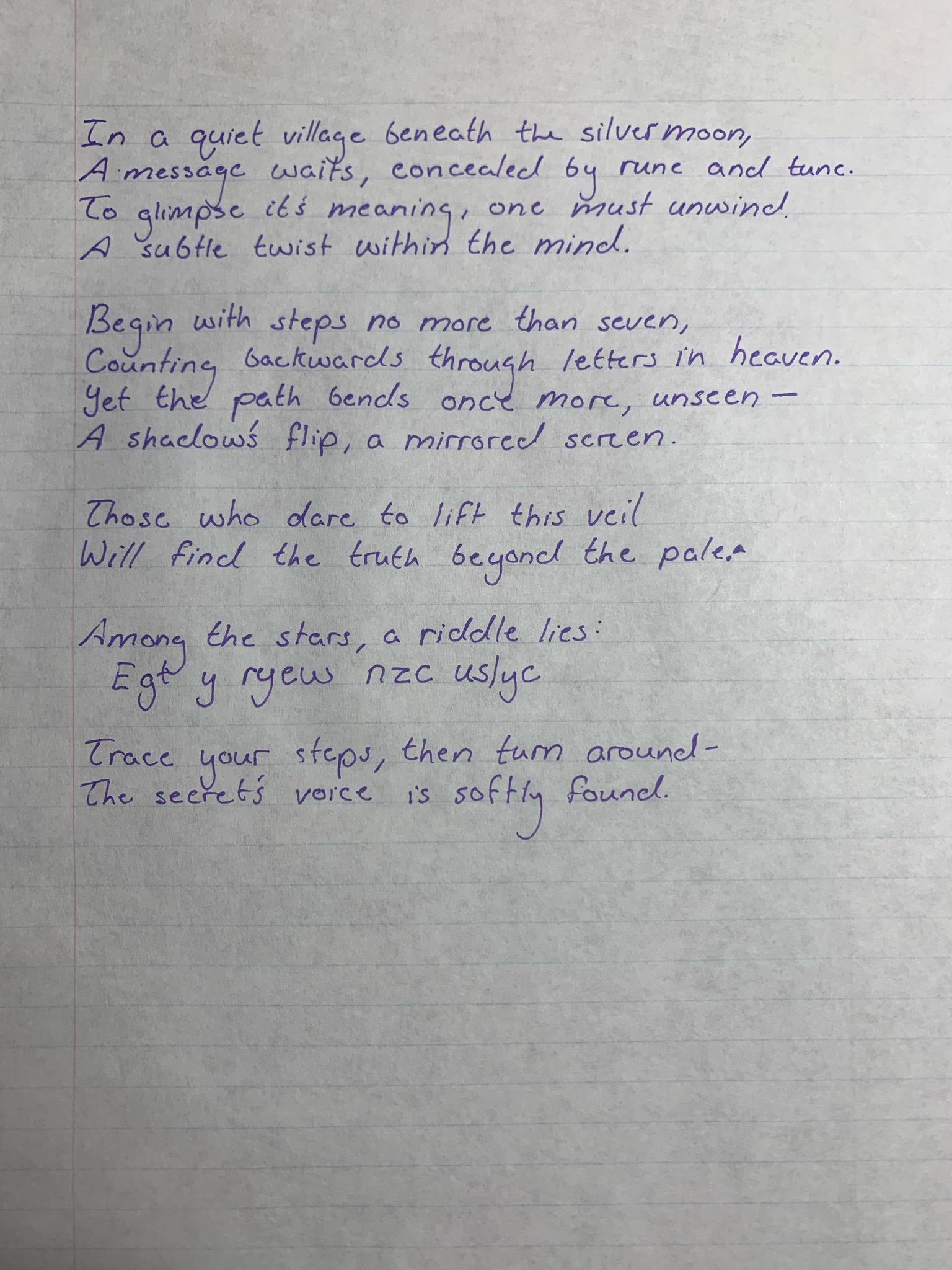
In a recent Reddit post, a request for help went out the puzzliest of D&D players:

I asked someone out using a riddle, and they responded with another one, but now I can’t solve it. We both dm at our local game store, and we’re running games tomorrow, I need a quick solution. I don’t need someone to give me the answer, but can someone please help walk me through how to solve this?

First off, that’s very cute.

Secondly, my dude, they responded to a riddle with your riddle. That’s a yes, my friend! Congrats.

As you might expect, his fellow riddle fans and puzzle fiends quickly explained how to find the solution, hoping that this marvelous exchange of riddles leads to more! Everyone loves a meet-cute, especially a puzzly one!

But what about you, fellow solver? Could you crack it?

I’ll give you a bit of space before I reveal how to solve it.

.

..

….

…..

……

…….

……

…..

….

..

.

Ready? Okay, let’s get to the riddle itself.

Egt y ryew nzc uslyc

This is clearly a single substitution cipher, also known as a simple substitution cipher, where each letter represented by another.

You could tackle this in a brute force way, treating it like a cryptogram. We know that “y” is going to be A or I. The most common three-letter word is “the”, which is a good place to start. At the very least, we can probably assume that “c” is the letter E, since it’s at the end of several words.

But the poem tells us how to solve it.

Start with the “letters in heaven,” your alphabet.

ABCDEFGHIJKLMNOPQRSTUVWXYZ

We get references to a mirrored screen or a shadow’s flip, so let’s try the alphabet backwards and placed underneath.

ABCDEFGHIJKLMNOPQRSTUVWXYZ
ZYXWVUTSRQPONMLKJIHGFEDCBA

We’re told to count backwards with steps no more than seven.

So let’s take the first letter in our secret message, E. Counting backwards (and wrapping around the alphabet again), that brings us to X. And in the mirror of X, we have C.

Continuing, seven letters back from G is Z, and in the mirror, A. Seven letters back from T is M, and in the mirror, N.

Egt Y ryew nzc uslyc
CAN

Continue for all the letters, and you get your answer written in the stars (presumably replying to his riddle):

Can I pick the movie?

Here’s hoping we get some updates in the future (or more riddles) from this pair of dice-rolling riddle-crafting delights.

And let’s offer one more huzzah for the anonymous puzzlers who helped crack the code!

Puzzlers… is there anything they can’t do?

Delving into the 2025 Boswords Summer Tournament Puzzles!

I had a chance to sit down and test my puzzly mettle with this year’s puzzles from the Boswords Summer Crossword Tournament. I look forward to Boswords every year, so I had high expectations going in.

But, of course, they knocked it out of the park.

Let’s put those puzzles under the PuzzCulture microscope and see what Boswords had in store for solvers this year!


Warmup Puzzle: Boswords, Inc. by John Lieb

Starting off with a smaller grid is a great idea for a warmup to a long day of puzzling, and this 12×9 symmetrical grid delivered a clever apt pair (as the Puzzmo crew would call it) with GREEN MONSTER and MIKE WAZOWSKI, but also tied in some bonus Boston trivia with the cluing.

It was super-accessible and the perfect intro for the tournament. I very much enjoyed!

Image courtesy of StudioBinder.

Puzzle #1: Plot Twists by Mary Tobler

The tournament proper kicked off with this 15x puzzle featuring a quartet of phrases with letters from the word YARN jumbled up inside (luNARYear, for instance). The revealer SPIN A YARN completed the set nicely.

A tight grid and fun theme made for a quick solve and a solid opener to the tournament.

Interesting grid entries included BASE JUMPS, CINCY, GOMEZ, and HYDRA, and my favorite clues were “Those disdaining bottles with screwcaps, maybe” for WINE SNOBS and “Great Caesar’s ghost!” for EGAD.

Puzzle #2: Life’s Little Ups and Downs by Ross Trudeau

We get a nice example of horizontal symmetry in puzzle #2, offering some lovely left-to-right flow and subconsciously pushing solvers in the right direction to unravel the puzzle’s actual hook.

There were rising geographical features like DOME and HILL hidden among the across entries (where one letter was above the others, using a black square to visually create a hill inside the circles in the grid).

But Trudeau didn’t stop there, as each geographical feature was contained inside a longer entry combining two across entries in that row, using that geographical feature to “climb” over the black square in the middle! (For example, 24A was LING and clued as such, but 22A was SPINECHI, but using HILL to connect them, you get the actual word clued as 22A, SPINECHILLING).

This was diabolical construction and my favorite puzzle of the tournament.

Interesting grid entries included YUPPIES, TRUE THAT, KINKSHAME, and THE SMURF, and my favorite clues were “4% of an Olympic 10k” for ONE LAP and “Apt way to get to a wine tasting?” for CAB.

Puzzle #3: The Sty’s the Limit by Quiara Vasquez

Quiara Vasquez never disappoints, and puzzle #3 was another terrific example. This puzzle had tons of clever cluing, all built around an interesting hook with animal answers in the grid that had to be inserted into the starred to turn them into more common phrases. (For example, when PIG is added into PASSENGEREONS, you get PASSENGER PIGEONS.)

And given that all of the animals were PIG, HOG, SOW, and BOAR, the center revealer BRING HOME THE BACON tied the whole puzzle together with style. The cluing, which was conversational and treated all the animals like escapees, was a delight.

This was the toughest puzzle so far, and probably the toughest puzzle of the tournament, save for the championship themeless.

Interesting grid entries included EXHIBIT A, MORPH, and AMAZON ECHO, and my favorite clues (hard to narrow this list down!) were “‘Carmen’ or ‘Elektra'” for OPERA, “Word before ‘Madre’ or ‘Leone’… or ‘Tango'” for SIERRA, and “Skirt length that hides your skinned knee but shows off your gladiator sandals” for MIDI.

Puzzle #4: Let’s Go Together by Chandi Deitmer

Chandi pulled double-duty on this 15x offering, loading almost all of the across entries with pairs of overlapping answers (like SLIM/MET overlapping at the M), and all of these overlaps spelled out vehicles or modes of transportation in the corresponding DOWN entries.

The revealer across the center, RIDESHARE, was the icing on this cleverly constructed cake. Really great cluing here and nice construction overall, especially with the symmetrical vehicle entries. It wasn’t as tough as Puzzle #3, but given the packed grid and very few black squares, it was probably an absolute beast to construct. Color me very impressed.

Interesting grid entries included GROUP DATE, I’M BATMAN, SALIERI, and FARSI, and my favorite clues were “Settler of old?” for DUEL and the very apropos pair at 25A of “Wimbledon champ Swiatek” for IGA right beside “Untouchable delivery by Swiatek” for ACE.

Puzzle #5: A Chorus Line by John Harrington

After the three-puzzle barrage of Trudeau, Vasquez, and Deitmer’s offerings, Harrington offered a gentler cooldown puzzle with this 15×18 music-themed crossword that was all about the lyrics.

Each themed entry was clued as a type of line — “Assembly line? (Billie Eilish)” for WHAT WAS I MADE FOR, for example — prompting the solver to provide the appropriate song chorus. (I’d be curious to hear what prompted the artists and lyrics he chose. Maybe I should reach out and ask!)

This was a fun straightforward puzzle with really enjoyable grid fill, a marvelous way to conclude the tournament for solvers before the championship.

Interesting grid entries included CHOCOHOLIC, ABS OF STEEL, LINDT, SHANDLING, and PICKACARD, and my favorite clues were “One who’s into some pretty dark stuff?” for CHOCOHOLIC and one of his themed clues, “International date line? (Dean Martin)” for THAT’S AMORE.

Puzzle #6: Championship Themeless by Hemant Mehta

As always, Boswords concluded with a themeless puzzle, and this 15x grid was deftly constructed. The multiple long entries at every corner offered a lot of opportunities for good vocabulary, great fill, and a suitable challenge for solvers at either difficulty. (There were two sets of clues available for the championship themeless, the MILD and SIZZLING sets, depending on your preference.)

The grid flowed nicely, and it felt like the perfect sendoff for the whole event, a great set of hurdles to test the top solvers.

Interesting grid entries included OPEN TABLE, VIP PASS, PSY OP, SPIRO AGNEW, and ARE YOU MAD.

As for favorite clues, here’s a list:

  • MILD: “Engagement that could lead to an engagement?” for FIRST DATE
  • MILD: “Maximum athletic intensity, in slang” for BEAST MODE
  • SIZZLING: “If you’re in it, you’re out of it” for COMA
  • SIZZLING: “Telenovela plot driver” for AMOR
  • SIZZLING: “Red cap?” for CORK
  • SIZZLING: “It’ll likely be brought up in self-defense class” for KNEE


120718_crossword_L

Overall, Boswords continues to impress. Between the summer and winter events, plus their seasonal themeless leagues, Boswords steps up their game every year, and as always, I was impressed by the array of puzzles assembled for this year’s tournament.

There were tricky themes, visual challenges, and even a barnyard escape, all of which made great use of both the cluing and the grids themselves. Every puzzle made an impact, and the tournament puzzles as a whole were challenging and creative in their design without being off-putting or getting too esoteric.

With so many terrific puzzly events on the calendar every year, I still think Boswords is the perfect tournament to introduce solvers to tournament-style puzzling, matching levels of difficulty with accessibility, playfulness, and straight-up solid grid construction.

Once again, I cannot wait to see what they cook up for us next year.


Did you attempt this year’s Boswords summer tournament puzzles, fellow solver? If so, I’d love to hear from you in the comments section below!

A Way to Make Impossible Objects… Less Impossible?

One of the most remarkable things about humans is that we can envision impossible things. Our imagination allows us to go well beyond what is physically and scientifically achievable to ponder the furthest reaches of creativity.

And no, I’m not just talking about the mythical 15×15 crossword with only fifteen words across and no black squares. THOUGH WE CAN DREAM, CAN’T WE?

Sorry, I digress.

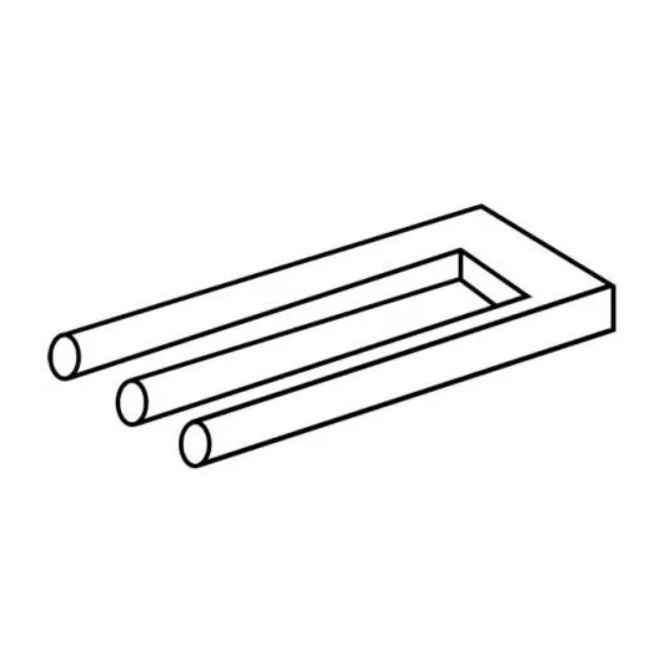
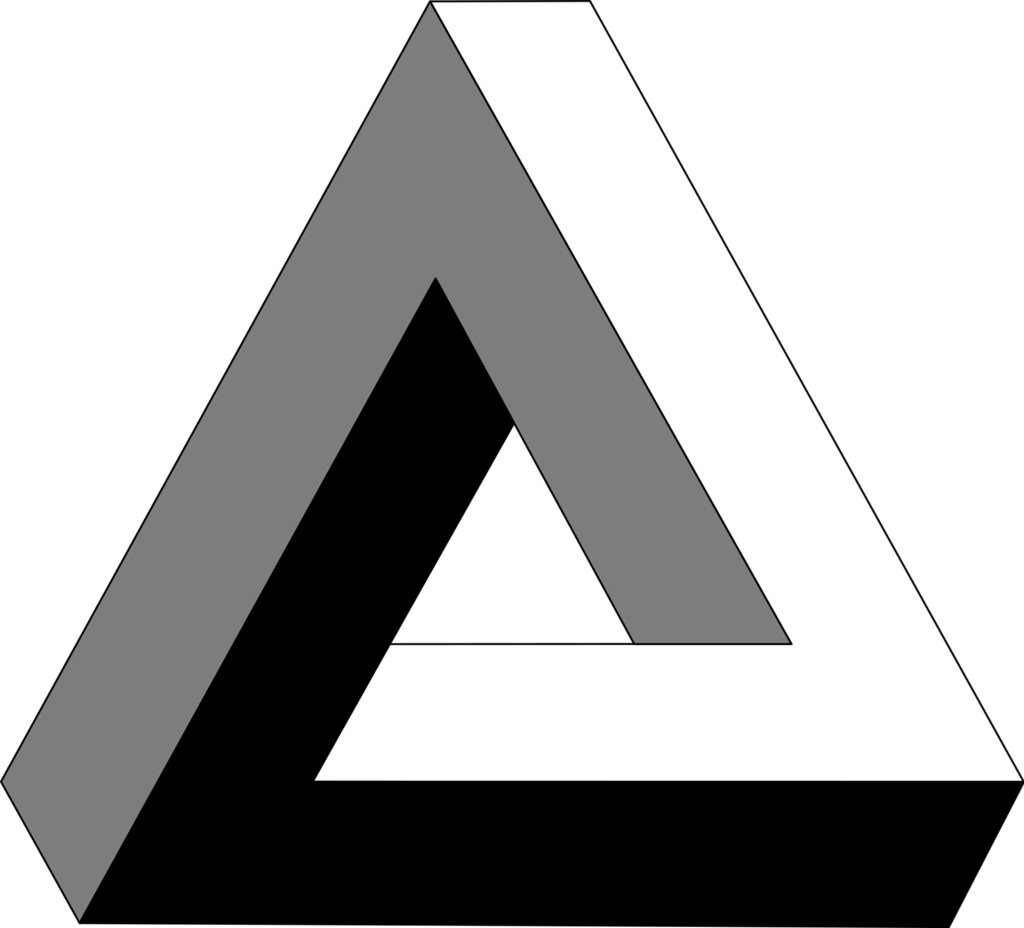
When I say impossible objects, I’m talking about things like the impossible trident (pictured above) or the Penrose triangle (pictured below).

These are impossible objects, things that play with our perceptions in a two-dimensional environment like a drawing, but cannot be created in a three-dimensional environment without cutting or bending them.

Or they couldn’t, until very recently.

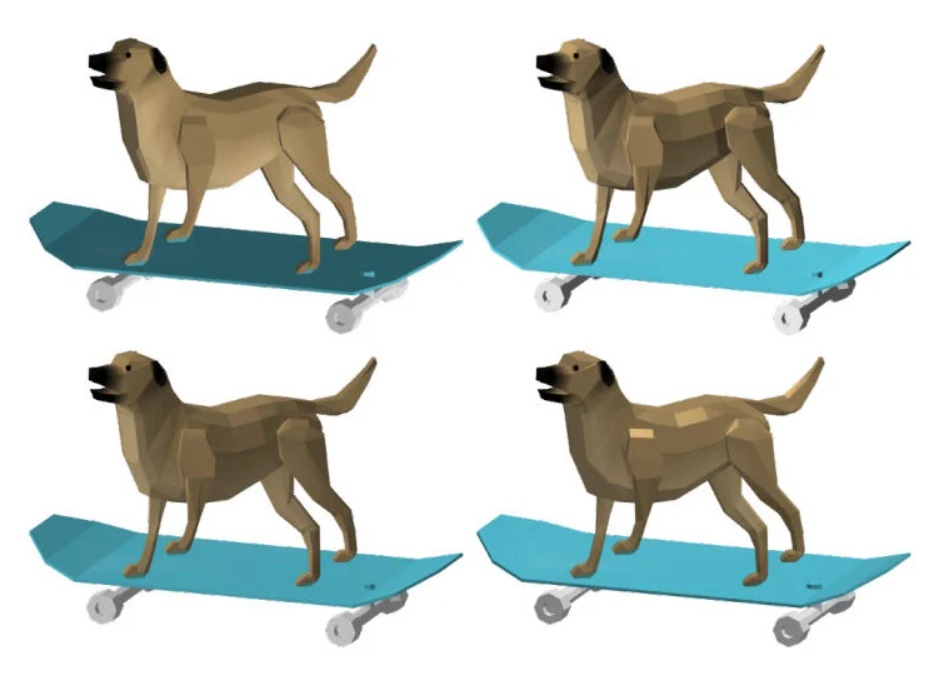
Researchers at MIT have announced their new software program, which they call Meschers, designed to create representations of these impossible objects with greater dimension than a drawing.

It’s not quite three-dimensional, because the shapes are impossible, but these “2.5-dimensional” representations allow us to process them visually as if they were completely three-dimensional.

Usually, the optical illusion of an impossible object falls apart when viewed from a different angle.

But the Meschers program — the name combines M.C. “Escher” and “meshes” — allows scientists and mathematicians a better model they can use to perform calculations and study different variables without the limits of two-dimensional representations.

It’s hard to predict where programming like this will take us. MIT PhD student Ana Dodik says the program could eventually aid in research across fields as varied as thermodynamics, architecture, and geometry.

They also said the code for the software will be released to the public, so you’ll have the opportunity to create some impossible objects yourself soon!

But, until then, please enjoy this Meschers rendering of the impossible dog, complete with different lighting effects.

Happy visualizing, everyone!

Mo(i)re Mind-Bending Art!

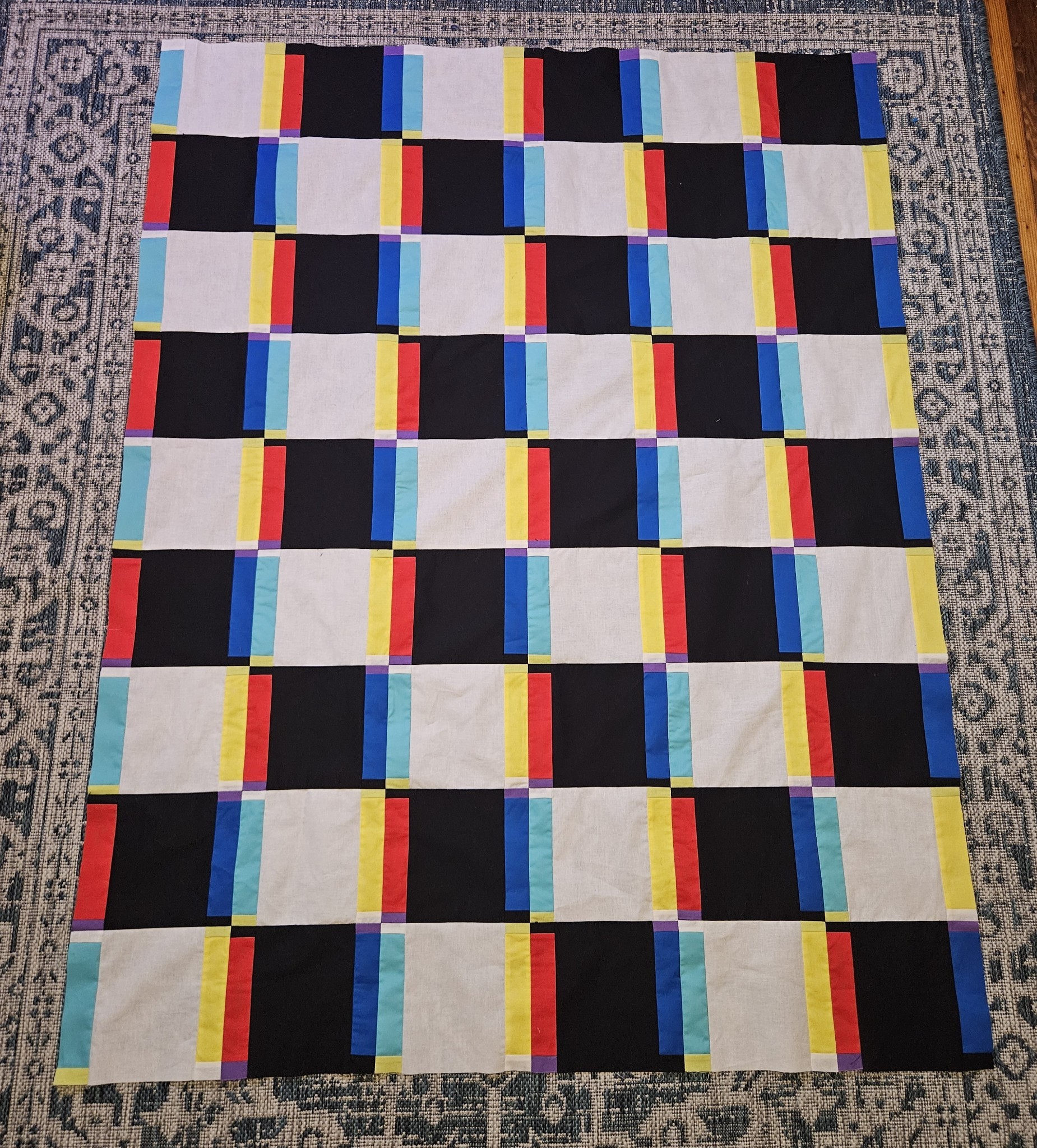
Back in January, I shared a visually baffling image I’d stumbled across: a glitch quilt. The quilt was purposely sown with opposing colors to make it look BLURRY, and it’s as clever as it is hard to look at.

I’ve always been a sucker for optical illusions, which I consider puzzles for the eye. They’re a visual treat that tricks you into seeing things that aren’t there. These inspired bits of perceptual trickery can fool you into thinking near is far, big is small, or two dimensions are really three.

And I’ve been fascinated ever since by this growing subset of glitch art where incredible precision is required to create physical art that looks fuzzy, uncertain, or even moving from the right angle.

So you can imagine my joy when I found this YouTube short:

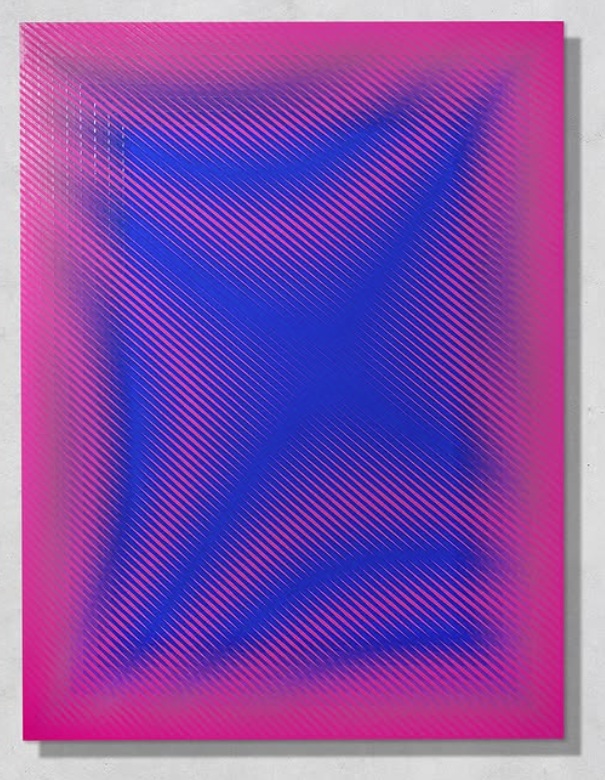
This is the work of artist Enzo Prina, a physical media artist who specializes in Moiré art.

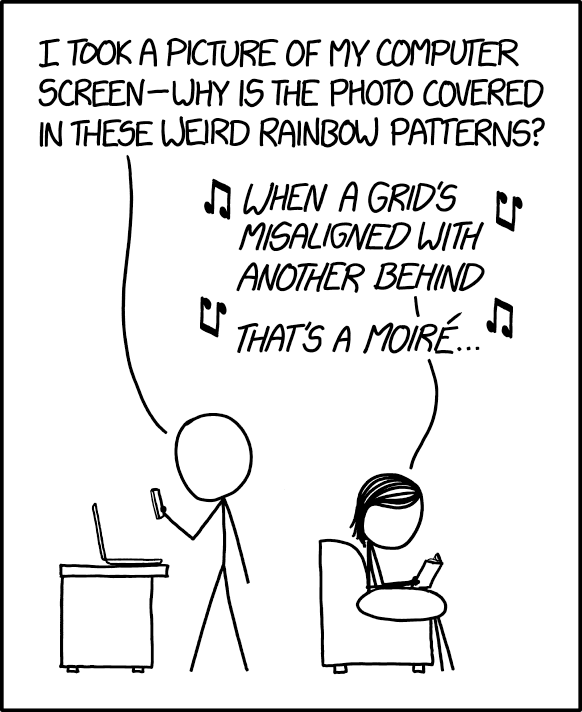
What is Moiré, you may ask? Well, XKCD has a fun explanation:

But please allow me to elaborate.

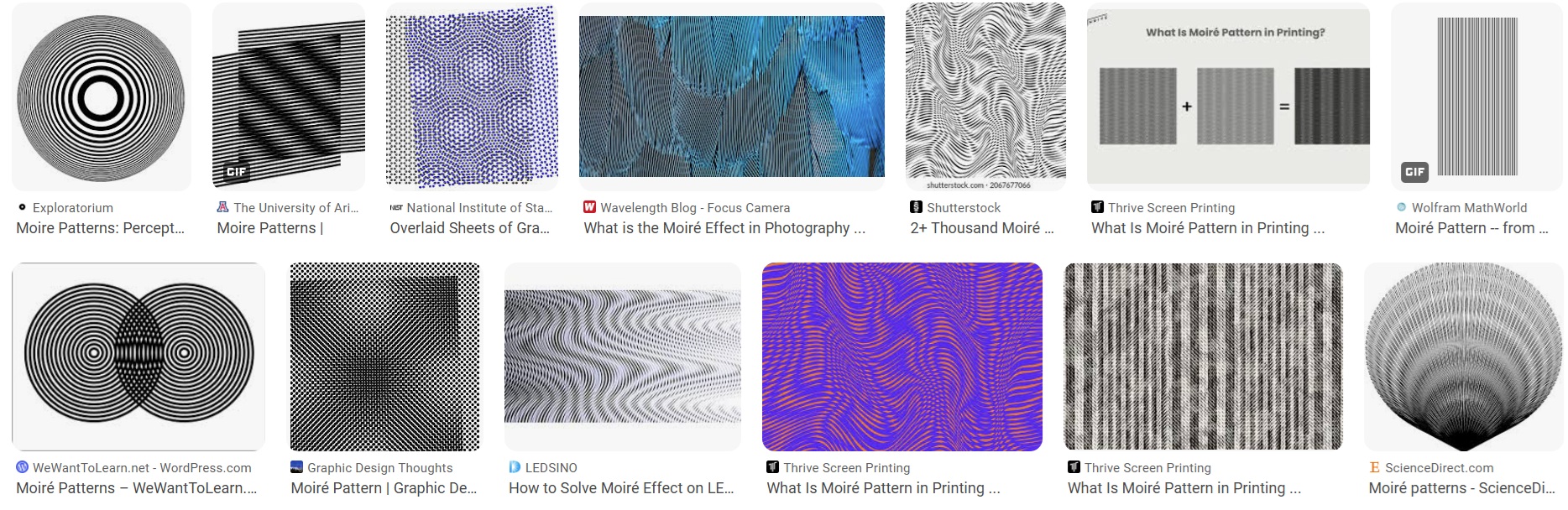
Moiré, which is both a mathematical and an artistic term, is the use of two or more overlapping grid patterns with regular spacing to create an interference pattern.

By overlapping these intricately formed and carefully spaced patterns at an angle to each other (and not directly lined up), you create the eye-catching patterns you see above.

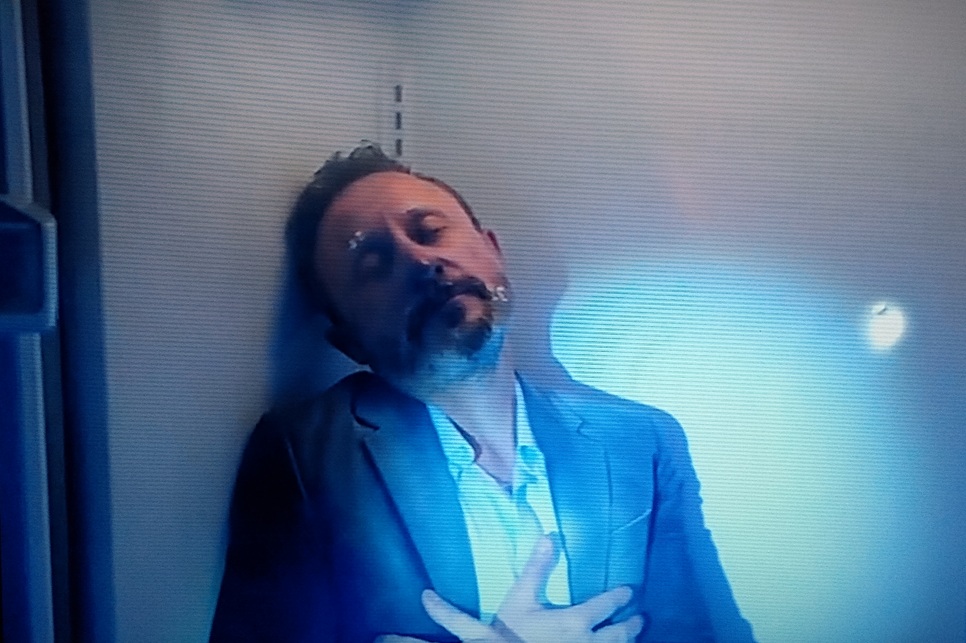
Moiré patterns are all around us. If you’ve ever seen a Houndstooth jacket on an old television program, or tried to photograph a TV screen or computer screen at the wrong angle, you’ve no doubt noticed a Moiré pattern.

Here’s an example a bit too close to home: one of the images from my recap and review of Mystery Island: Winner Takes All.

While making Moiré patterns isn’t difficult, you can see that Prina’s work is far more complex than simply layering two patterns. He maps out his designs with tape, meticulously pulling layer by layer of tape strands from his work as he paints it, making the creation process as gorgeous and mind-bending as the final product.

It’s truly something to behold, both during and after.

Prina claimed on LinkedIn back in January that he’d just started making art again after a ten-year break, and clearly that break has reenergized him, as his work continues to evolve and diversify in fascinating ways.

This intersection of art and mathematics really struck a chord with me. It’s not surprisingly, really, given that I’ve had Tom Lehrer on the brain for days, and he similarly combined math and artistic whimsy to create works of art that played with perception and imagination.

What a treat.

Now everyone, go stare at something boring and rest your eyes for a while.

Happy puzzling, everyone!

Farewell, Tom Lehrer.

The world of puzzles and games is larger than constructors and game designers. There are artists, writers, editors, wordsmiths, hosts, musicians, and influences that help shape puzzles and games in so many different ways. Their efforts enrich and popularize these beloved pastimes, contributing to the world by celebrating wordplay, creativity, and nerdy pursuits.

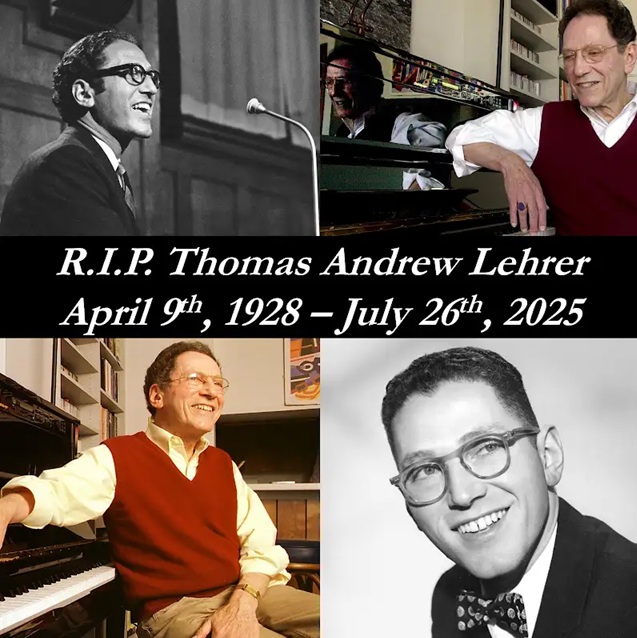
And sadly, the world grew a little less witty, a little less clever, and a lot less bold and outspoken about so many important topics when Tom Lehrer passed away a few days ago.

It’s hard to know where to begin.

How do you describe the cultural influence of a man whose songs still delight, inform, and push boundaries today, even though he wrote most of them over sixty years ago?

How do you describe a successful musician who walked away from public performance after three brilliant albums — thirty-seven songs, each an intricately-crafted dissection of some aspect of culture, science, or current events, often as poignant and sharp-tongued as they were hilarious — and spent the bulk of his life as a teacher and college professor instead?

How do you describe the genius of a man for whom wordplay flowed as easily as scientific lingo or political commentary, a man who could make you laugh (and think, really think) about nuclear annihilation, questionable post-war government programs, or even the Catholic Church itself?

His influence on pop culture can’t be overestimated. Across generations, his songs educated and inspired, and his legacy is bulletproof. He created songs for The Electric Company, Square One TV, and That Was The Week That Was. (Those shows were decades apart!)

He inspired performers like “Weird Al” Yankovic, and I think his fingerprints are unmistakable on other hilarious and educational projects, like the songs of Randy Rogel for Animaniacs. (Trust me, you can’t listen to “the Multiplication song” from Animaniacs and NOT think of Lehrer’s “New Math”.)

Tom retired from live performance in the late 1960s, having felt like he’d said everything he wanted to say with his music. (Plus, as he famously pointed out, “political satire became obsolete when Henry Kissinger was awarded the Nobel peace prize.”)

But his songs wouldn’t be denied.

Dr. Demento’s radio show brought Lehrer’s work to new ears in the 1970s, 80s, and 90s, and Honest2Betsy has brought him to yet another generation’s attention with her videos over the last few years.

His songs are timeless. “The Elements” alone has appeared in Better Call Saul, NCIS, Gilmore Girls, and The Big Bang Theory. (Not to mention Daniel Radcliffe’s famous rendition of the song on The Graham Norton Show, where he called Lehrer his hero. This actually led to Radcliffe starring in the film Weird: The Al Yankovic Story.)

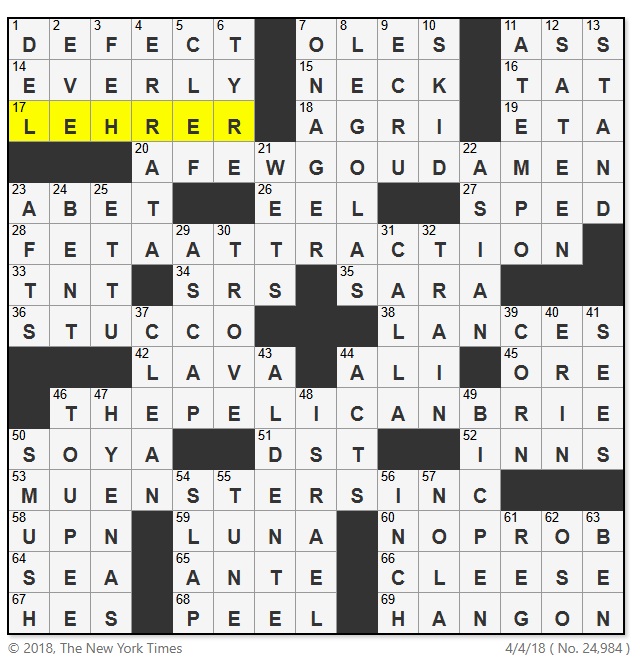
Speaking of “Weird Al,” his New York Times crossword puzzle with constructor Eric Berlin namedropped Tom as part of the grid fill in this pun-heavy collaboration:

And it is a love of wordplay that sparked this tribute today.

Lehrer’s work is absolutely riddled with clever puns, comedic craftsmanship, and playing with the listener’s expectations: all things that great crossword cluing employs.

You can’t listen to songs like “Silent E” or “Without an S” and NOT imagine clues or themes that Lehrer’s linguistic legerdemain could inspire.

Not to mention this gem:

There’s a playfulness there, paired with technique, creativity, and an absolute willingness to bend conventions to their breaking point in order to make something new. How can you not love it?

But wordplay, commentary, and scientific and mathematical literacy weren’t Lehrer’s only gifts to the world.

He claimed to have invented the jello shot while in the military (to skirt rules about alcohol consumption). He wrote the song “Don’t Major in Physics,” which would have been good advice to me in freshman year of college, had I cared to listen.

Image courtesy of warhistoryonline.

And he also made the incredible gesture in 2022 of transferring the music and lyrics for all the songs he had ever written into the public domain. He relinquished the copyright and performing/recording rights for his songs as well, making his music and lyrics free for anyone to use. Downloadable lyric and music files are available on his website.

His statement releasing all his works into the public domain concluded with this note: “This website will be shut down at some date in the not too distant future, so if you want to download anything, don’t wait too long.”

For now, at least, the website remains online.

And it seems so apropos that the man who walked away from music decades ago to share his love of mathematics, science, and teaching with others is also the man who would happily sign away the rights to his music to enrich the lives of others once again.

The humanities and the STEM fields both owe Tom Lehrer a debt that can never be repaid.

The world was blessed with his presence for 97 years, and I have no doubt that his words, his music, and the forceful spirit that infused both will be around for many many years to come.

Farewell, Tom. Thanks for warning us about Shakespeare.

Oh, and for this lovely little ditty: