A Secret Egyptian Code Hiding in Plain Sight?

Thirty-three hundred years ago, an obelisk was carved in ancient Egypt. It stood at the entrance of the Luxor temple as part of a pair.

Almost two hundred years ago, the obelisk was given to France by Egypt’s ruler. It stands at the Place de la Concorde in Paris, thousands of miles from its sibling in Egypt.

Two centuries of students and tourists and philosophers and photographers and scholars gazing at the obelisk, reading the intricately carved hieroglyphs.
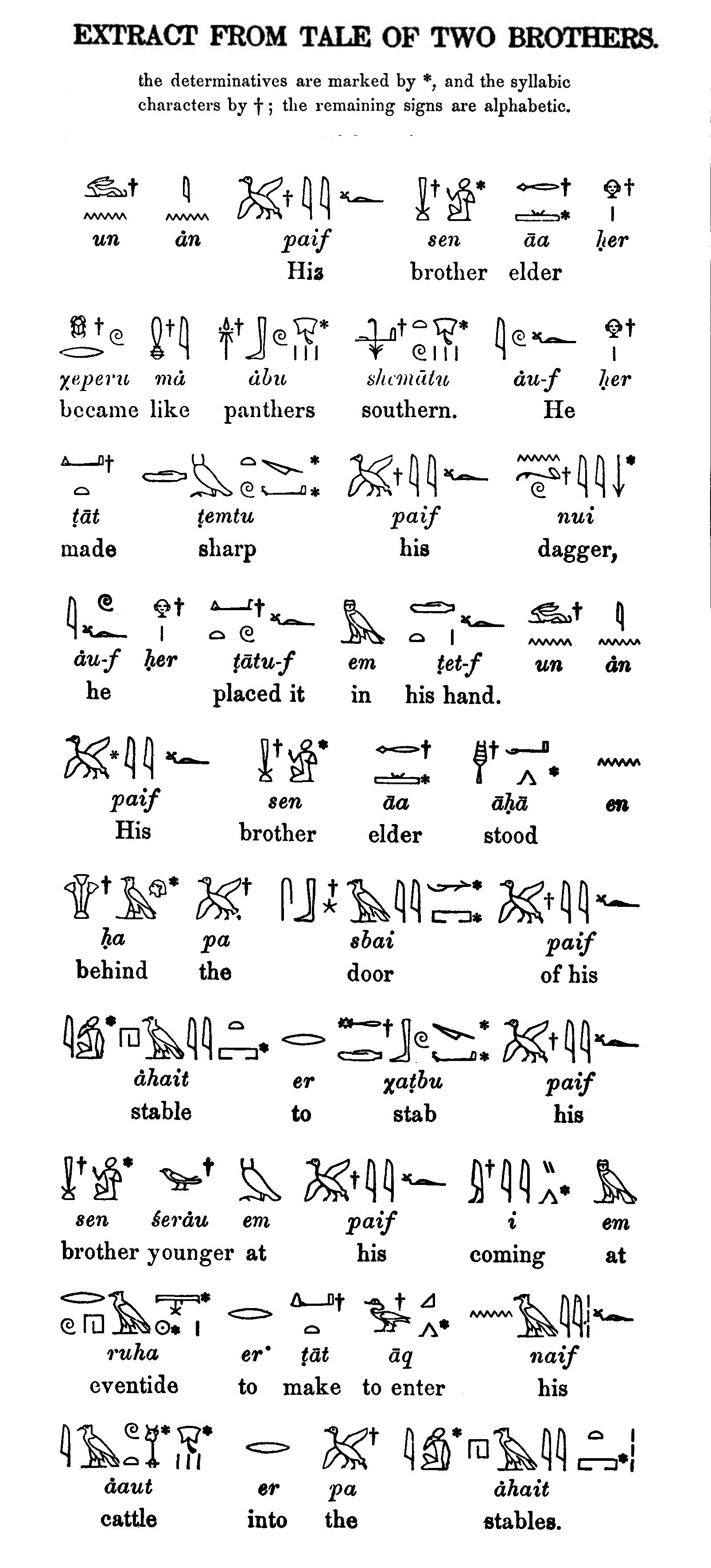
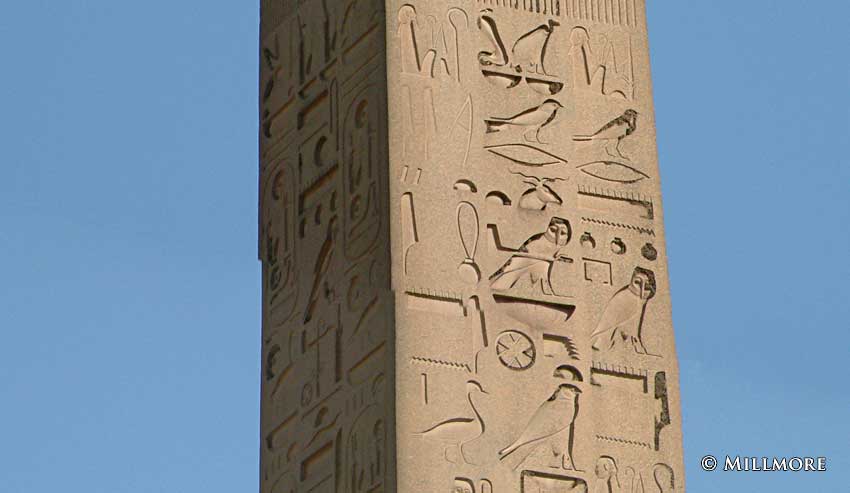
Hieroglyphs were traditionally written in columns reading downward. But there are also left and right directional markers, marking the beginning of a sentence, often indicated by which direction a human or animal figure is facing.

As you can see, the placement of different symbols allows them to combine with others, both vertically and horizontally, to create different words or concepts.

And whomever did the inscriptions on the obelisk used the multidirectionality of the language to conceal messages in plain sight.

Even after centuries of study, it took a keen eye and some lucky conditions for Egyptologist Jean-Guillaume Olette-Pelletier to uncover the hidden messages.
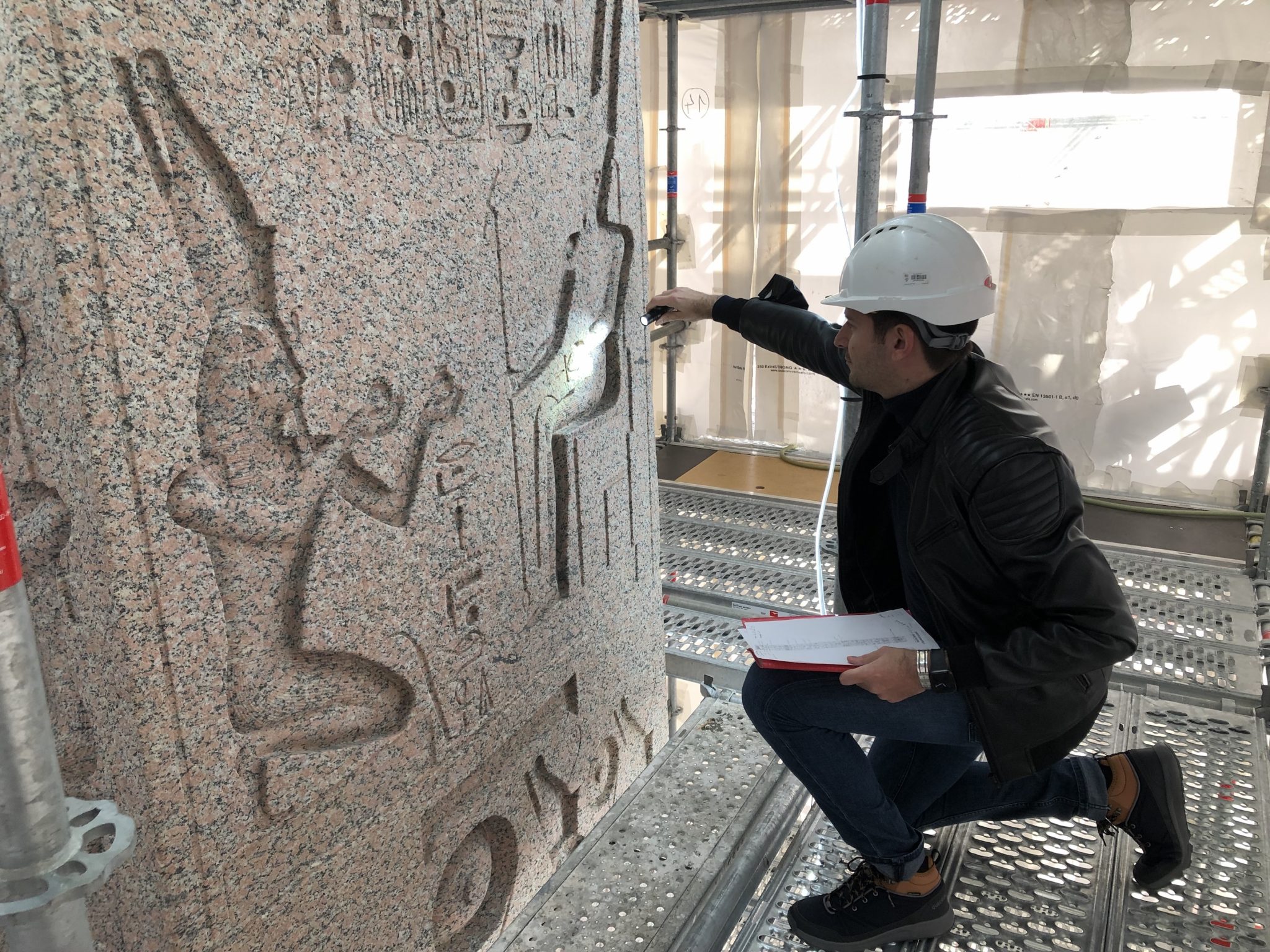
You see, the obelisk was surrounded by scaffolding as part of its renovations, and this allowed Olette-Pelletier to get up close to the highest point of the obelisk and observe the inscriptions rarely seen by casual observers.

The hidden messages required him to read the hieroglyphs horizontally rather than vertically, and at a particular angle as well. This three-dimensional study of the inscriptions, known as crypto-hieroglyphs, allowed the creator to conceal messages that didn’t simply sing the praises of Pharaoh Ramses II, but actually point to his rulership as divine right, claiming his power came directly from the gods themselves.

It was propaganda, intended to reinforce the pharaoh’s status in the eyes of the elites of Egypt, cloaked in messages for the common people. (One of the messages, for instance, could only be seen by those arriving by boat, a privilege available only to the elite.)

For example, from an article in EuroWeekly News:

“People had not noticed that under [one of the drawings] of the god Amun, there is an offering table. This allows us to discover a sentence where no element is missing: an offering that the king gives to the god Amun,” Olette-Pelletier told BFMTV. Combinations of the newly identified inscriptions produce additional meanings in what’s called three-dimensional cryptography. In total, the Egyptologist identified seven encrypted messages across the obelisk’s various facades. He explained that the enigmatic text can only be understood by walking around the monument.
Imagine the creator of the obelisk, carving with specific angles and readers in mind, an iconic gift to the pharaoh… only for the code to be cracked thousands of miles away, thousands of years in the future, by a different kind of elite.

The puzzly kind.

That’s amazing.
Optical Illusions Made of Wood!

Learning about the science behind optical illusions has been one of my favorite parts of this job. More and more, scientists are figuring out WHY optical illusions work on us, utilizing combinations of color, shadow, perspective, and how we process information to create impossible images, illusions of movement, and visual wonders to challenge how we interpret the world.

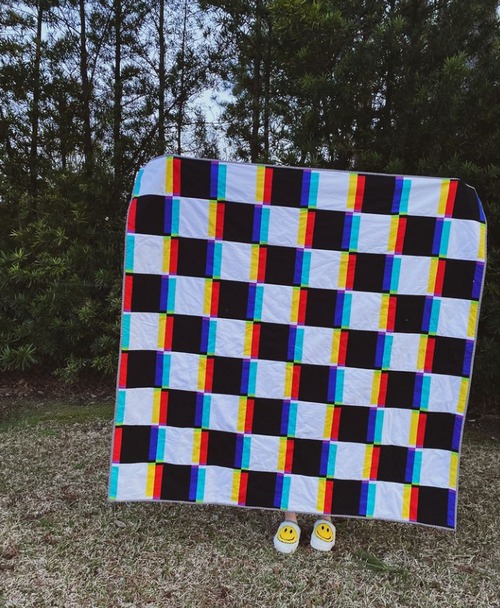
And I love seeing how people have responded by pushing the boundaries of what we can do with optical illusions. Earlier this year, I wrote about the glitch quilt, a fascinating and eye-wobbling work of brain-melting color play and meticulous execution.

In a world increasingly reliant on computer assistance and push-button AI-fueled shortcuts, there’s something both comforting and immensely charming about glitch quilts being handmade.

So it should come as no surprise to you, fellow puzzler, that I was overjoyed to discover another example of handmade optical illusion crafting… this time, made of wood.

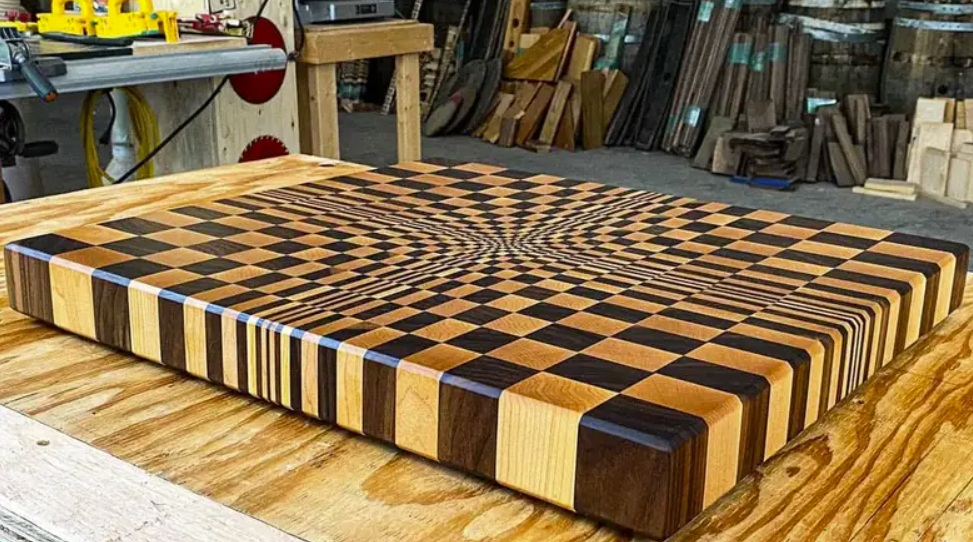
This is the end grain optical illusion cutting board. It appears to bend and swirl and warp as you stare at it, despite being made of straight lines and alternating colors.

Although I discovered it through Obsessed Woodworking, this particular piece is the handiwork of Ryan Hawkins, who has a woodworking YouTube channel where he detailed the elaborate step-by-step process involved in creating this sturdy perspective-twisting delight:

Ryan, to his credit, pointed to another woodworking content creator who supplied the design plans for the cutting board: mtmwood.

mtmwood has numerous examples of handcrafted visual tricky, employing tessellations and tricks of perspective to fool the eye into following intricately laid patterns, and my favorite is easily one that they call the butterfly board:

Employing a similar technique to the optical illusion cutting board, but managing to shape four twisting patterns, is truly impressive and a testament to the hard work, skill, and technique required to bring these stunning pieces to life.

And, as you might expect, this sent me down a YouTube rabbit hole looking for other wooden optical illusions, and there are plenty to choose from.

This is a nicely executed attempt at showing dimension and depth to get us started.

Whereas this one walks us through all the stages of preparing to take a familiar optical illusion from a drawing to a three-dimension form:

I confess, I watched this next one three times in a row, trying to spot the seams:

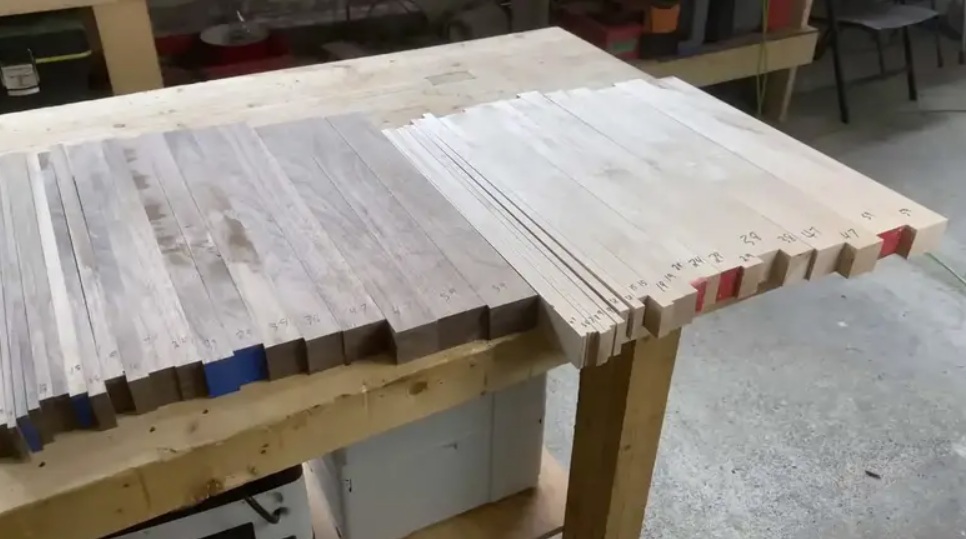
I could go on and on, but honestly, instead of closing out on the illusions, I’d like to end this celebration of creativity and artisanship with a simple photo showing the preparation and painstaking work it takes to bring these pieces to life.

This is the optical illusion cutting board in its embryonic stage, a lineup of different pieces and thicknesses of wood. All marked and cut with precision, waiting for the next step in assembly. I stare at this picture, and consider every mark, every cut, every spin of the table saw’s blade as the creator runs piece after piece after piece through those whirling metal teeth, each of them perfect and crisp.

It’s a remarkable thing to ponder, and a joy to watch in both progress and in final realization. I’m glad I could share that with you today.

Happy puzzling, everyone!

A Puzzle Party for Reproductive Justice!

There’s a long history of activism and advocacy through puzzles. Women of LettersGrids for GoodQueer Qrosswords, These Puzzles Fund Abortion… these are just a few prominent examples of constructors and creators donating their time and puzzly efforts to benefit the world at large.

And the wonderful team at Frontera Fund are using puzzles to help raise awareness next Thursday, May 8th with their Puzzle Party event!

Cactus Valley Art in Harlingen, Texas, will be hosting the event.

There will be puzzles, community support, and discussions of the modern abortion access landscape and the challenges involved in ensuring that women and those assigned-female-at-birth have the support and resources they need.

This is a wonderful way to help get the word out. I hope that you’ll participate in the event, either by attending in person, by following through social media, or by donating to the cause!


I’d also like to take the opportunity to shout out These Puzzles Fund Abortion 5 . This year marks the fifth edition of the project, collecting 23 puzzles centered around social and reproductive justice themes, all for a minimum donation of $25.

If you donate $50 or more, you will also receive the puzzle packs for the previous four years of TPFA.

Whether you support Frontera Fund or the five important charities involved in These Puzzles Fund Abortion, I thank you for your time, your donations, and your participation in helping protect and provide healthcare for others.

Together, puzzlers can change the world.

Free Board Games and RPGs?

At the start of the pandemic in 2020, game companies around the world rallied around their customers, offering discounts, producing print-and-play versions of their games, and creating new online variants of their games to allow for Zoom play or remote play.

It was a remarkable effort at a very trying time, one that many board game enthusiasts like myself remember warmly.

So, five years later, as this baffling tariff war threatens the industry as a whole, we’re seeing the board game industry again roll with the punches and work with the audience to survive.

Some are having “tariff sales” at deep discounts to help clear inventory, gauge audience interest in certain games, or create a cash bumper to help them weather the uncertain tariff storms.

Others are making PDFs more available to customers, helping mitigate both prices for the audience and reduce production costs for the company.

Today, I want to highlight a few companies that have gone beyond that, offering free products for customers to enjoy.

Yes, they would obviously rather that you visit their shops and pay for PDFs or physical copies, but the fact that they have free board game libraries AT ALL is worthy of attention and admiration.

So here we go!


9th Level Games

Every year, dozens of roleplaying game companies create Free RPG Day handouts for game stores to offer fans. Sometimes they’re quickstart versions of the games to introduce new players. Sometimes they’re exclusive adventures or modules to play either in-store or at home. Othertimes, they’re entirely new games, free of charge.

For five years now, 9th Level Games has created their own Free RPG Day offering, the Level 1 Anthology. It’s a collection of new games by up-and-coming and established RPG creators, all centered around a theme. Last year’s edition was all about programming. This year’s is about the end of the wild west.

You can visit your friendly local game shop on June 21st this year to pick your physical copy of the game.

But if you want to check out ANY of the previous years’ Level 1 Anthologies, they continue to offer the PDFs free of charge!

9th Level Games is one of my favorite RPG companies — making classics like Kobolds Ate My Baby!, Mazes, Return to Dark Tower, and The Very Good Dogs of Chernobyl — and I’m proud to have a game featured in last year’s Level 1 collection as well as a game in this year’s upcoming collection. Please check out both the freebies and the full lineup of games on their website.


Crab Fragment Labs

A company called Cheapass Games launched with a very simple idea: they only give you what you need to play the game. No reselling you tokens and dice and chips and fake money that you can already borrow from other games. Just what you need to play their games. It was affordable and brilliant.

They’ve created some of my all-time favorite board games, including:

The Big Idea (can you put two cards together to make a silly product and market it to your investors/other players?)
Kill Doctor Lucky (can you eliminate the luckiest man alive?)
Unexploded Cow (can you combine unexploded World War II ordnance and mad cows to turn a profit?)
U.S. Patent Number 1 (can your time machine beat other time machines to the day the patent office opened and claim the very first patent?)

And while many games from the Cheapass Games era are still available, their creative legacy lives on through Crab Fragment Labs, a game company that not only develops their own clever and challenge games, but also hosts a free print-and-play library of many board games for you to enjoy.

They have a shop as well, where you can support their gaming mission. Please check them out!


Dungeons & Dragons

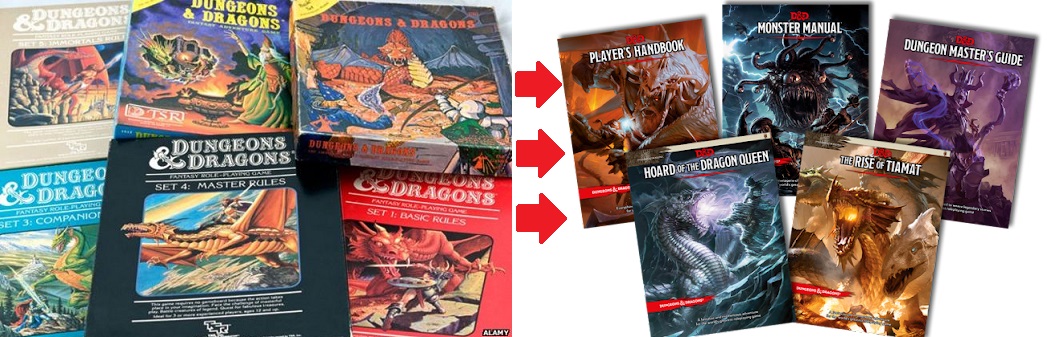
I know that the prices of D&D books can seem daunting these days, but what you might not know is that there are publicly available rulesets for you to enjoy right now! You can use their own quickstart rules, as well as the advice on DnDBeyond.com to delve into building your own game world free of charge!


Rowan, Rook, and Decard

If Dungeons & Dragons is still a little intimidating, no worries! Have you ever tried a one-page RPG?

Rowan, Rook, and Decard offers a brilliant library of RPG games at all price levels, and many of their one-page RPGs designed by Grant Howitt are Pay What You Want. It’s a delightfully affordable way to try out the hobby without breaking the bank! (There’s also a free RPG section!)

Want to play bears planning the perfect crime? Try Honey Heist.

Want to play a group of seagulls causing mayhem? Try Everyone Is Seagulls.

Want to see Sean Bean finally survive film? Try Seans Bean Star In: A Very Northern Christmas.

Want to combine Regency romance with giant robots? Try Pride and Extreme Prejudice.

Comedy, horror, action, long-form, short-form? They’ve got it all. Check out their entire library here!


If you’re looking to play online, you have options like Free Board Games.org, Tabletopia, and Calculators.org, as well as this list from RPG Geek.

For those with 3D printers at home, How-To Geek has collected ten board games you can print at home right now. The list includes Connect 4, Battleship, Chess, and Settlers of Catan.

You’d be amazed at what’s out there for gamers on a budget if you just know where to look. Please support any and all of these companies where you can. They’re helping keep the hobby alive, affordable, and exciting.

Happy tabletopping, everyone!

The Board Game Legacy of Kurt Vonnegut

Mystery novelist Agatha Christie was an avid surfing enthusiast. Abraham Lincoln is in the National Wrestling Hall of Fame and only suffered a single defeat in 12 years. We wouldn’t have Wi-Fi or Bluetooth without the scientific prowess of actress Hedy Lamarr.

It’s fascinating to learn unexpected facts about iconic figures from history that don’t necessarily jive with their most famous accolades.

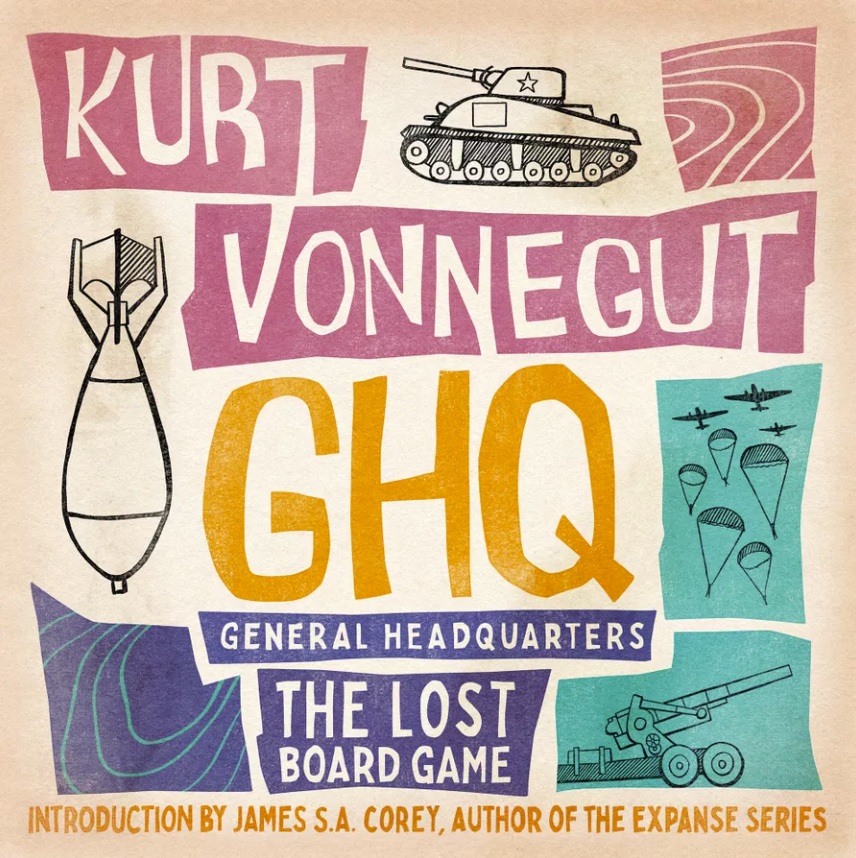
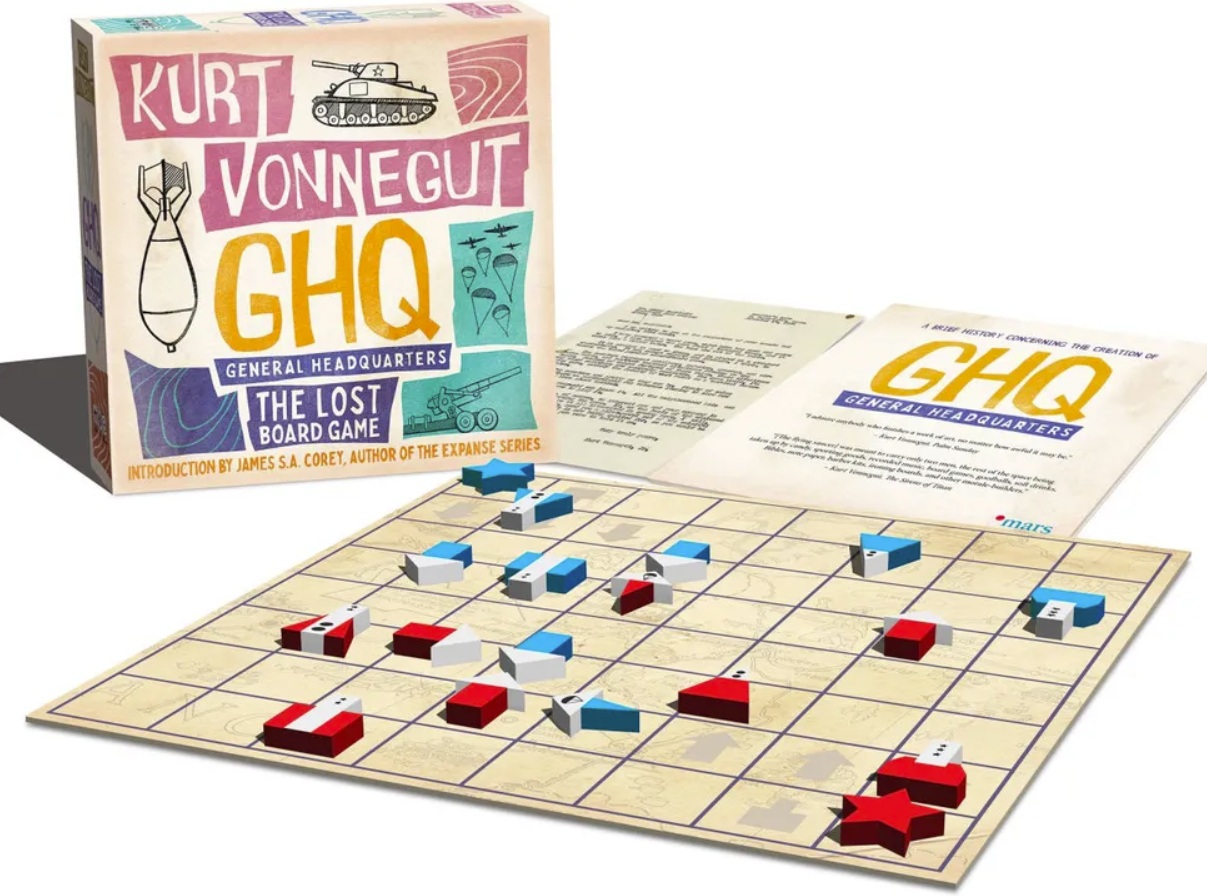
For instance, did you know that celebrated writer Kurt Vonnegut made a board game?

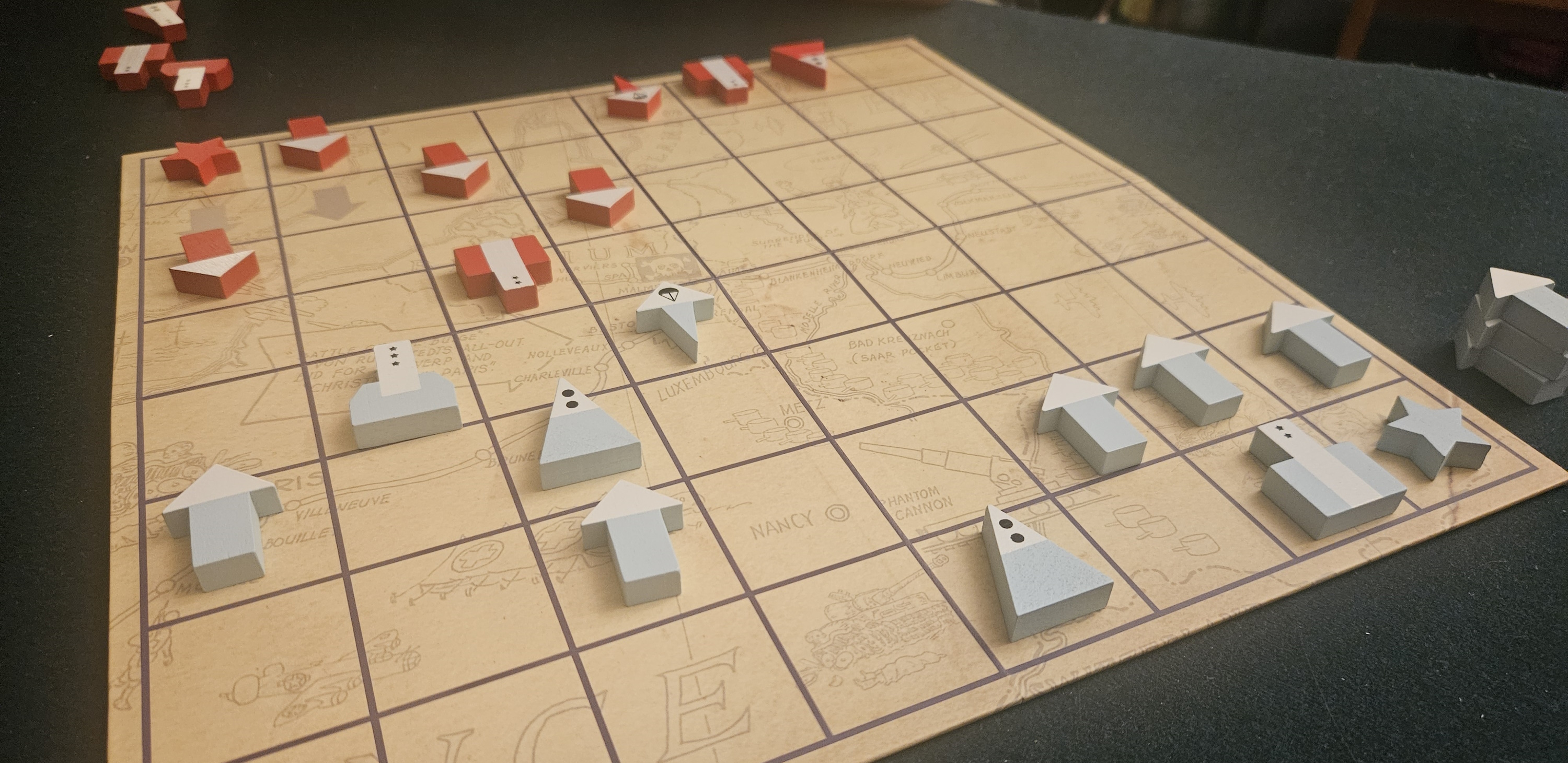
Yes, nearly seventy years ago, after the less than stellar commercial performance of his novel Player Piano, Vonnegut attempted to create a third game to utilize the 8×8 checkerboard as effectively as chess and checkers did.

It was called GHQ, short for General Headquarters, and it was a tactical strategy game involving balancing your ground infantry and artillery forces with your airborne forces to capture your enemy’s headquarters.

In 1956, it was downright innovative, mixing wargame mechanics and multiple actions in a single turn. (This is commonplace today, but was quite revolutionary in games for the 1950s.) In today’s board game market, the initial run sold out, and now the game is carried by Barnes & Noble, and I have no doubt it’s performing well.

This would come as a shock to Vonnegut, as the game was rejected by publisher Henry Saalfield of the Saalfield Game Company. Vonnegut put the game away, and as far as his family knows, he never went back to it at all.

That historical context makes the game (and its companion booklet) a wonderful glimpse into Vonnegut as a creative mind.

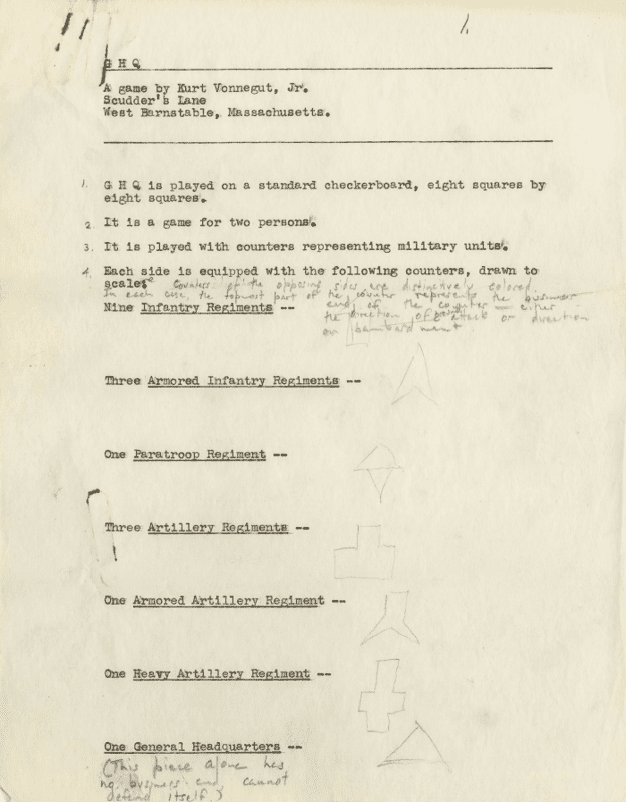
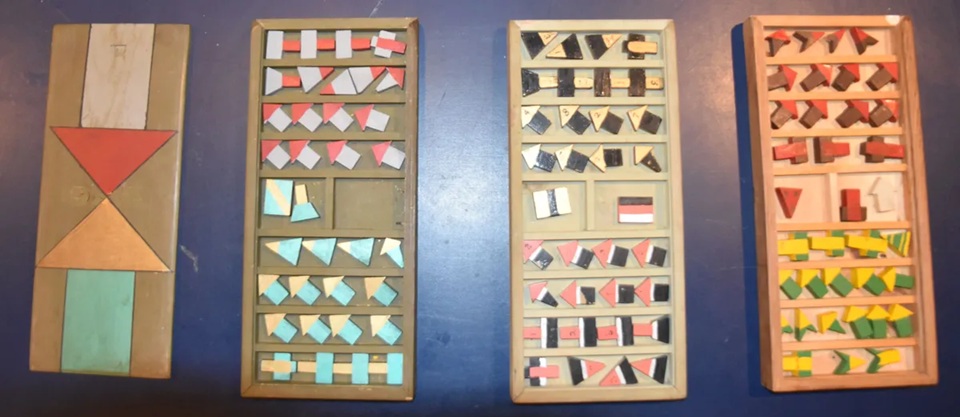
We get his original notes — including rules for the game — as well as photos of the original game pieces from his prototype.

GHQ exists as a fascinating conundrum. How do you reconcile encountering a combat-focused game designed by someone famous for his antiwar sentiments?

A review of the game on Spacebiff had something interesting to say about this:

It’s also so very Vonnegut. Years before Billy Pilgrim manifested as his coping mechanism for the horrors he witnessed in the Ardennes and during the firebombing of Dresden, here he was designing a game that drew on his experience as a spotter for the 106th Infantry Division. It’s a game rooted in a particular military doctrine, one where most casualties were not inflicted by tanks or planes, but by distant cannons. While the game’s airborne units are flashy and threatening, it’s the roving fields of fire that shape this battlefield.

That, too, strikes me as the proper way to consider GHQ. Vonnegut’s antiwar stance crystallized as U.S. involvement deepened in Vietnam, and it’s natural to wonder if the older Vonnegut set aside GHQ not only out of disappointment with Saalfield’s lack of interest but also because its maneuvers and bombardments cut too close to the bone.

It’s impossible to separate the man from the art in this case. I can’t help but view this game as not only part of Vonnegut’s journey toward his rejection of warfare and wartime thinking, but also as a way for him to turn his knowledge and experience from wartime into something productive (and profitable) for his family.

It’s pragmatic, transformative, and a little bit sad in a way that feels so keenly Vonnegut.

I haven’t had a chance to play it yet, but I do have a Barnes & Noble gift card burning a hole in my pocket, so perhaps you’ll see a more thorough writeup on GHQ in the future.


In the meantime, what do you think of this curious discovery, fellow puzzlers? Does GHQ intrigue either the reader or the tactical gamer in you? Let us know in the comments section below. We’d love to hear from you!

A Rhyming Puzzle For You!

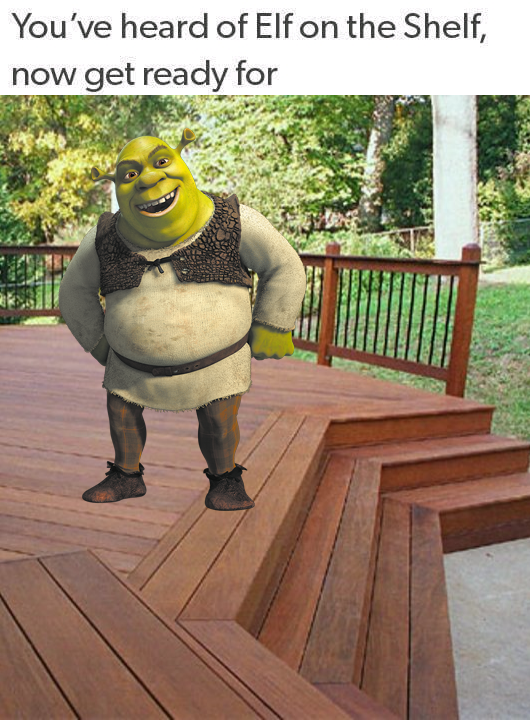
One of my favorite memes is “You’ve heard of Elf on a Shelf, now…”

Inspired by the family-friendly surveillance toy that took the world by storm, this meme (which dates back to 2016!) gives you the format of “elf on a shelf” and sets you up with a little visual puzzle to solve.

The image above, for instance, gives you Shrek on a deck!

And this one gives us Grogu on a snowshoe!

Now, my Photoshop skills are pretty much nonexistent, but my cluing skills are fairly sharp, so I’ve opted to create a bunch of clues for you.

All you have to do is come up with an “elf on a shelf”-style rhyme that fits the clue.

Ready? Here we go!


Grumpy person on a sofa

Golf helper in a rice field

Magical boy atop an aquatic mammal

Tucker or Turner on an award

Female scientist on a panel

Mythical creature on a pitcher

Alcoholic drink poured over Mr. Morris or Mr. Levi

Public defender on an excursion

Chewy candy at a steak/lobster restaurant

Food storage atop a crane

Ruse involving a pastry store

Greater attention to detail regarding a coup asea

Prodigious author atop a candy egg

Infectious agent atop an old thin writing surface

Distress call regarding a check

Building material atop a musician or a whale

Camel located in cafeteria

Ball of air atop a device in space

Plants growing on industrial devices

Guide to freedom atop a horse-drawn ride

A Gibb brother on a cleaning device

Famed magician atop a sandwich

Autocratic rule in the Iberian peninsula

Arthropod atop a city transport terminal

Sports official atop an ape


These last few are a little tougher, good luck!

French poet using federal health insurance

Correction for a stitch

My French brother atop ceramics

“The Wolf of Wall Street” star in Arab city

Old-fashioned person in a gory home office


How many did you get? Did any stump you? Let me know in the comments below!