I’ve always been a sucker for optical illusions, which I consider puzzles for the eye. They’re a visual treat that tricks you into seeing things that aren’t there. These inspired bits of perceptual trickery can fool you into thinking near is far, big is small, or two dimensions are really three.
And I’ve been fascinated ever since by this growing subset of glitch art where incredible precision is required to create physical art that looks fuzzy, uncertain, or even moving from the right angle.
So you can imagine my joy when I found this YouTube short:
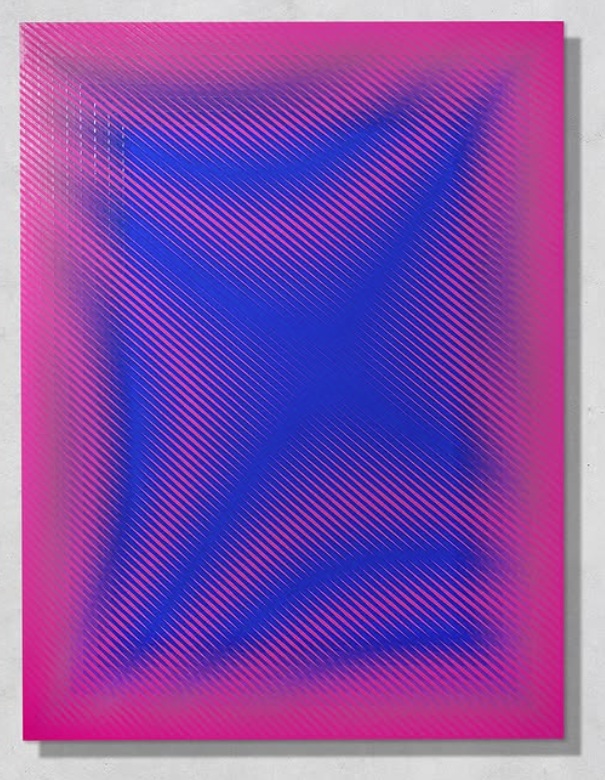
This is the work of artist Enzo Prina, a physical media artist who specializes in Moiré art.
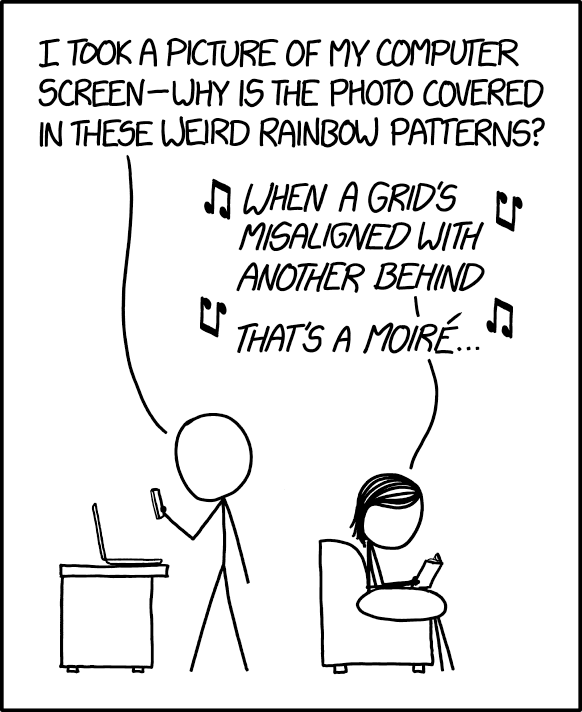
What is Moiré, you may ask? Well, XKCD has a fun explanation:
But please allow me to elaborate.
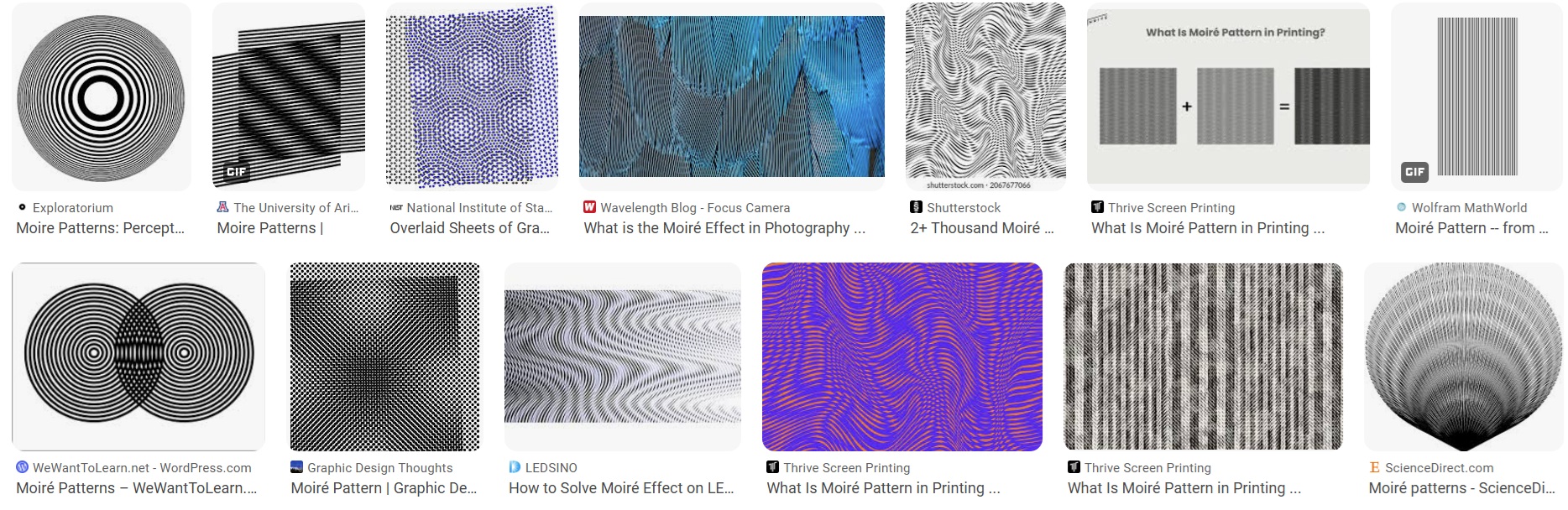
Moiré, which is both a mathematical and an artistic term, is the use of two or more overlapping grid patterns with regular spacing to create an interference pattern.
By overlapping these intricately formed and carefully spaced patterns at an angle to each other (and not directly lined up), you create the eye-catching patterns you see above.
Moiré patterns are all around us. If you’ve ever seen a Houndstooth jacket on an old television program, or tried to photograph a TV screen or computer screen at the wrong angle, you’ve no doubt noticed a Moiré pattern.
While making Moiré patterns isn’t difficult, you can see that Prina’s work is far more complex than simply layering two patterns. He maps out his designs with tape, meticulously pulling layer by layer of tape strands from his work as he paints it, making the creation process as gorgeous and mind-bending as the final product.
It’s truly something to behold, both during and after.
Prina claimed on LinkedIn back in January that he’d just started making art again after a ten-year break, and clearly that break has reenergized him, as his work continues to evolve and diversify in fascinating ways.
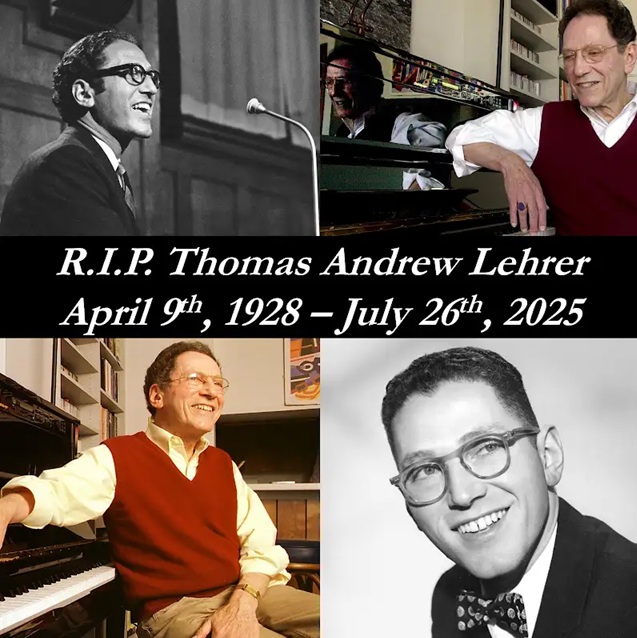
This intersection of art and mathematics really struck a chord with me. It’s not surprisingly, really, given that I’ve had Tom Lehrer on the brain for days, and he similarly combined math and artistic whimsy to create works of art that played with perception and imagination.
What a treat.
Now everyone, go stare at something boring and rest your eyes for a while.
The world of puzzles and games is larger than constructors and game designers. There are artists, writers, editors, wordsmiths, hosts, musicians, and influences that help shape puzzles and games in so many different ways. Their efforts enrich and popularize these beloved pastimes, contributing to the world by celebrating wordplay, creativity, and nerdy pursuits.
And sadly, the world grew a little less witty, a little less clever, and a lot less bold and outspoken about so many important topics when Tom Lehrer passed away a few days ago.
It’s hard to know where to begin.
How do you describe the cultural influence of a man whose songs still delight, inform, and push boundaries today, even though he wrote most of them over sixty years ago?
How do you describe a successful musician who walked away from public performance after three brilliant albums — thirty-seven songs, each an intricately-crafted dissection of some aspect of culture, science, or current events, often as poignant and sharp-tongued as they were hilarious — and spent the bulk of his life as a teacher and college professor instead?
His influence on pop culture can’t be overestimated. Across generations, his songs educated and inspired, and his legacy is bulletproof. He created songs for The Electric Company, Square One TV, and That Was The Week That Was. (Those shows were decades apart!)
He inspired performers like “Weird Al” Yankovic, and I think his fingerprints are unmistakable on other hilarious and educational projects, like the songs of Randy Rogel for Animaniacs. (Trust me, you can’t listen to “the Multiplication song” from Animaniacsand NOT think of Lehrer’s “New Math”.)
Tom retired from live performance in the late 1960s, having felt like he’d said everything he wanted to say with his music. (Plus, as he famously pointed out, “political satire became obsolete when Henry Kissinger was awarded the Nobel peace prize.”)
But his songs wouldn’t be denied.
Dr. Demento’s radio show brought Lehrer’s work to new ears in the 1970s, 80s, and 90s, and Honest2Betsy has brought him to yet another generation’s attention with her videos over the last few years.
His songs are timeless. “The Elements” alone has appeared in Better Call Saul, NCIS, Gilmore Girls, and The Big Bang Theory. (Not to mention Daniel Radcliffe’s famous rendition of the song on The Graham Norton Show, where he called Lehrer his hero. This actually led to Radcliffe starring in the film Weird: The Al Yankovic Story.)
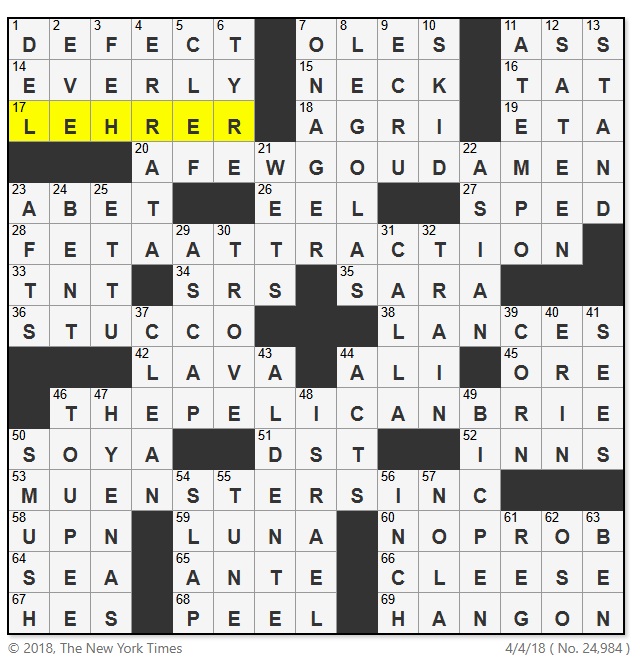
Speaking of “Weird Al,” his New York Times crossword puzzle with constructor Eric Berlin namedropped Tom as part of the grid fill in this pun-heavy collaboration:
And it is a love of wordplay that sparked this tribute today.
Lehrer’s work is absolutely riddled with clever puns, comedic craftsmanship, and playing with the listener’s expectations: all things that great crossword cluing employs.
You can’t listen to songs like “Silent E” or “Without an S” and NOT imagine clues or themes that Lehrer’s linguistic legerdemain could inspire.
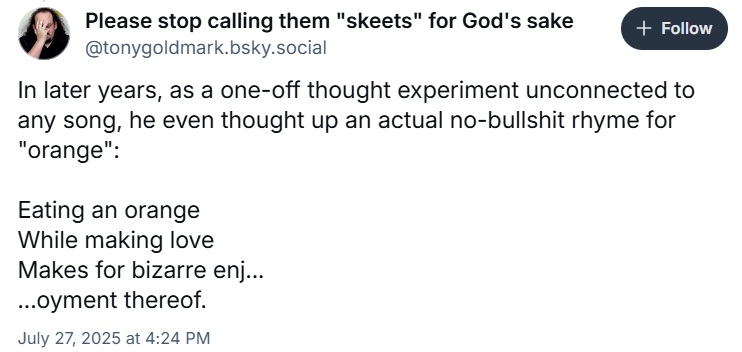
Not to mention this gem:
There’s a playfulness there, paired with technique, creativity, and an absolute willingness to bend conventions to their breaking point in order to make something new. How can you not love it?
But wordplay, commentary, and scientific and mathematical literacy weren’t Lehrer’s only gifts to the world.
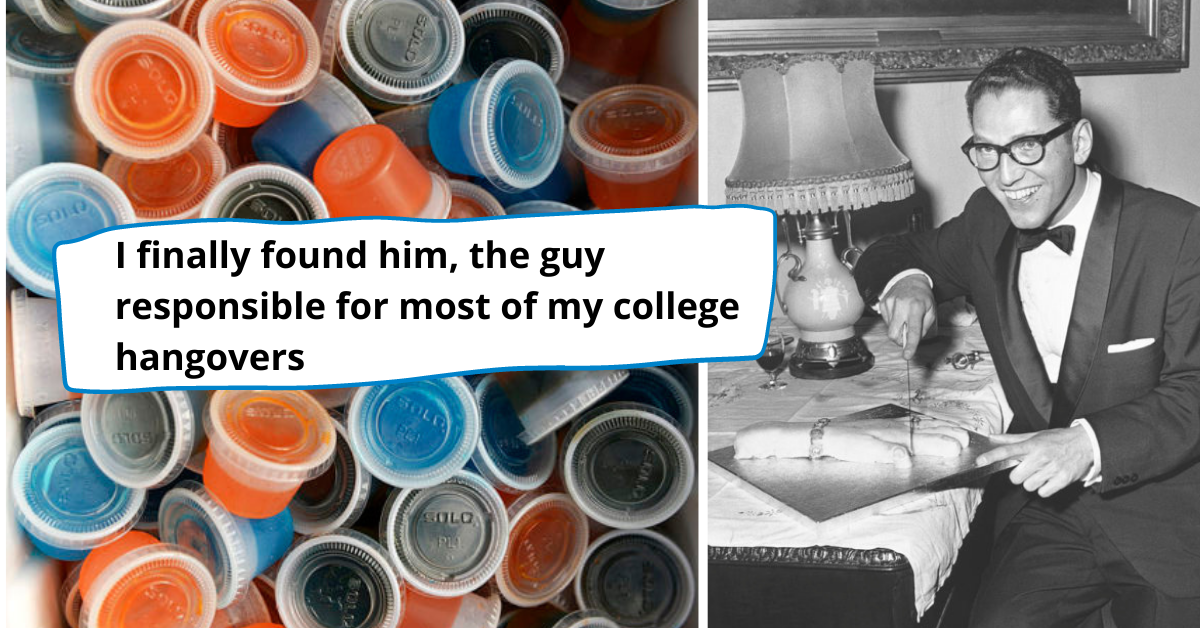
He claimed to have invented the jello shot while in the military (to skirt rules about alcohol consumption). He wrote the song “Don’t Major in Physics,” which would have been good advice to me in freshman year of college, had I cared to listen.
And he also made the incredible gesture in 2022 of transferring the music and lyrics for all the songs he had ever written into the public domain. He relinquished the copyright and performing/recording rights for his songs as well, making his music and lyrics free for anyone to use. Downloadable lyric and music files are available on his website.
His statement releasing all his works into the public domain concluded with this note: “This website will be shut down at some date in the not too distant future, so if you want to download anything, don’t wait too long.”
For now, at least, the website remains online.
And it seems so apropos that the man who walked away from music decades ago to share his love of mathematics, science, and teaching with others is also the man who would happily sign away the rights to his music to enrich the lives of others once again.
The humanities and the STEM fields both owe Tom Lehrer a debt that can never be repaid.
The world was blessed with his presence for 97 years, and I have no doubt that his words, his music, and the forceful spirit that infused both will be around for many many years to come.
Other times, a major portion of an episode revolves around them. We’ve seen this countless times from shows as diverse as The Simpsons and NCIS: New Orleans.
But I didn’t realize an entire plot for world domination once hinged on a puzzle.
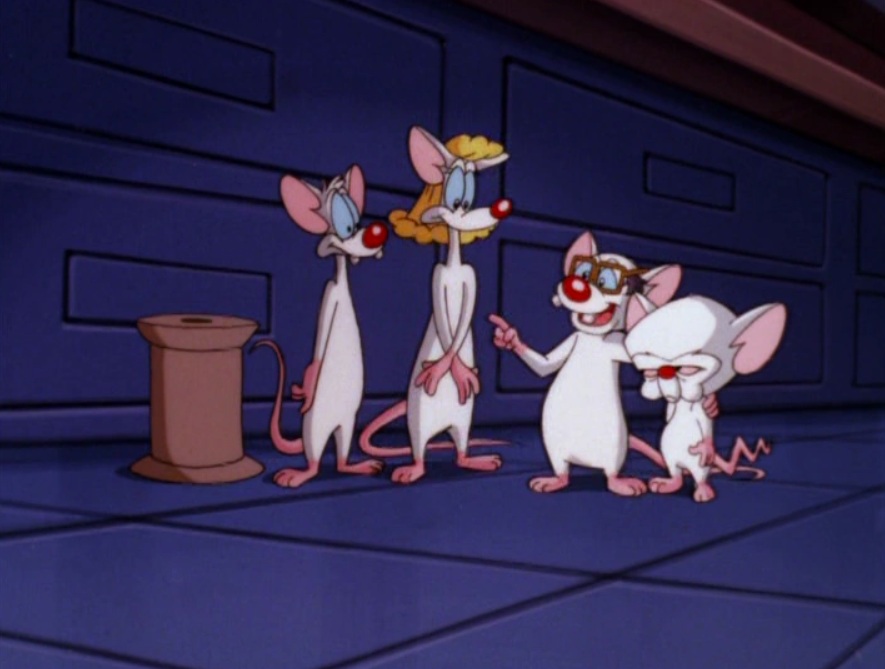
Pinky and the Brain was a spinoff of a recurring series of animated shorts from the show Animaniacs, and the concept was simple.
Two mice plotted to take over the world from their lab cage, and their plans were invariably foiled by either Pinky’s idiocy or Brain’s almost magical ability to snatch defeat from the jaws of victory.
The schemes ranged from time travel and mind control to hypnotic songs and (my personal favorite) a papier mache duplicate of Earth.
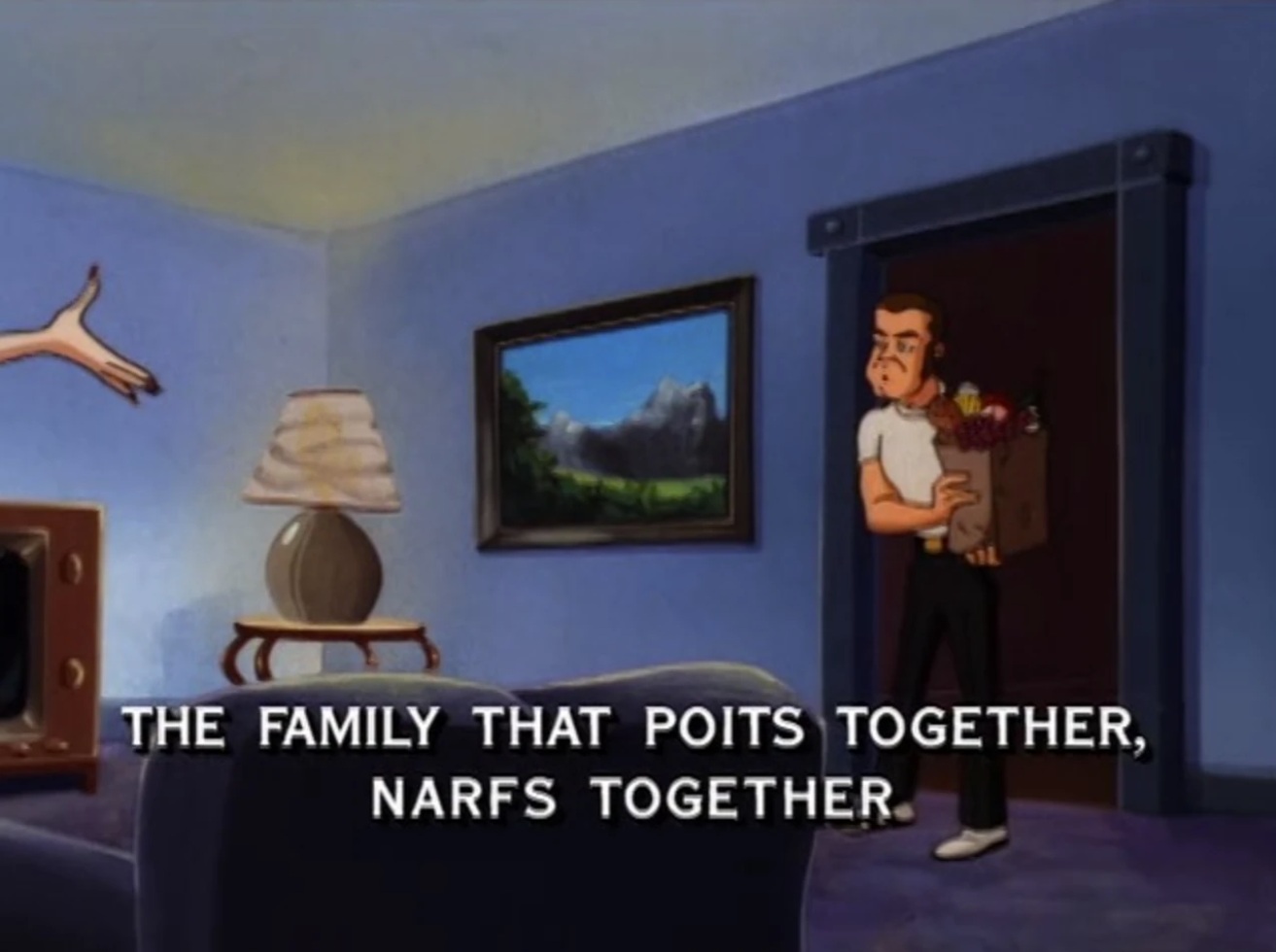
But on February 21st, 1998, the show aired its 53rd episode, The Family That Poits Together, Narfs Together.
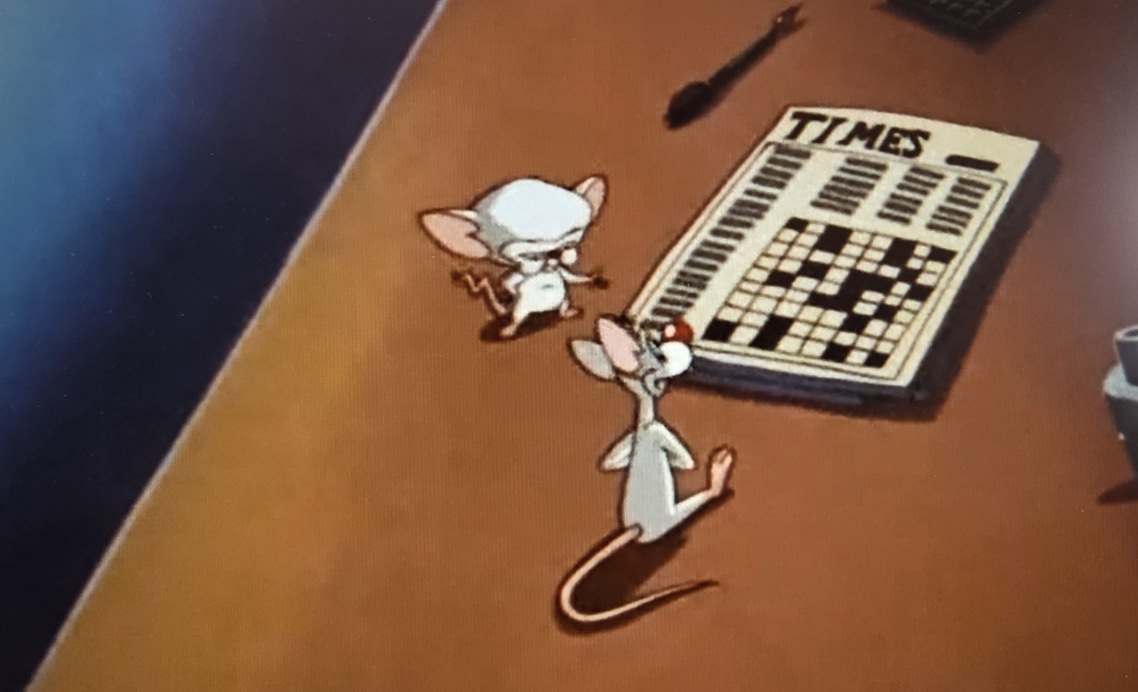
The Brain’s latest plan for global domination targeted the intellectual elite by sabotaging the daily crossword in every newspaper in the world.
Here, I’ll let The Brain explain his diabolical endeavor:
This is the Sunday crossword puzzle. The most educated people all around the world spend hours each weekend deciphering its complex web of interlocking verbiage. But change just one clue, and the whole puzzle becomes impossible to solve…
I will change one clue in the crossword puzzle in every newspaper around the globe, throwing the intelligentsia into a hopeless dither. While they frantically ripple through their dictionaries and thesauri, I will step into the breach, and take over the world!
Unfortunately, he needs $25,000 to fund this operation (including the cost of bagels with cream cheese), so he plans to reunite Pinky’s family and put them on a talk show to win the prize for the world’s most perfect family.
Naturally, shenanigans ensue — and Eric Idle plays both Pinky’s mom AND dad, which is very entertaining — but the family actually wins the prize!
A trip around the world valued at $25,000.
The Brain’s dastardly plans have been scuttled once more.
But that does raise the question…
Would it have worked?
(Let’s ignore for the moment the fact that the intelligentsia for the most part aren’t currently in positions of power, especially in the United States.)
In a world before resources like Xwordinfo and online forums where solvers can share their grievances, it could have given the puzzle solvers of the world pause.
Especially on a Sunday, where you’d think at least some of them would be at home and not at their various important duties.
So there could have been a window.
But was The Brain equipped to seize that opportunity? Did he have the manpower to be in all those places? To snatch up those resources and reins of power for himself?
I don’t think so. Not on a budget of $25,000 (which again, covered the crossword modification and snacks, NOT the ensuing power grab). That’s barely gonna cover a few henchmen, even at 1998 prices.
So, sadly, I think the plan would have failed.
BUT!
He would have had the personal victory of denying that moment of solving satisfaction to puzzlers around the world.
Which is arguably even more villainous.
What do you think, fellow solver? Would it have worked? You can watch the episode for free here on Dailymotion.
And to close out today’s post, let’s enjoy an earworm together and listen to that marvelous theme song:
Hey there, fellow puzzler. Stop me if you’ve heard this one before:
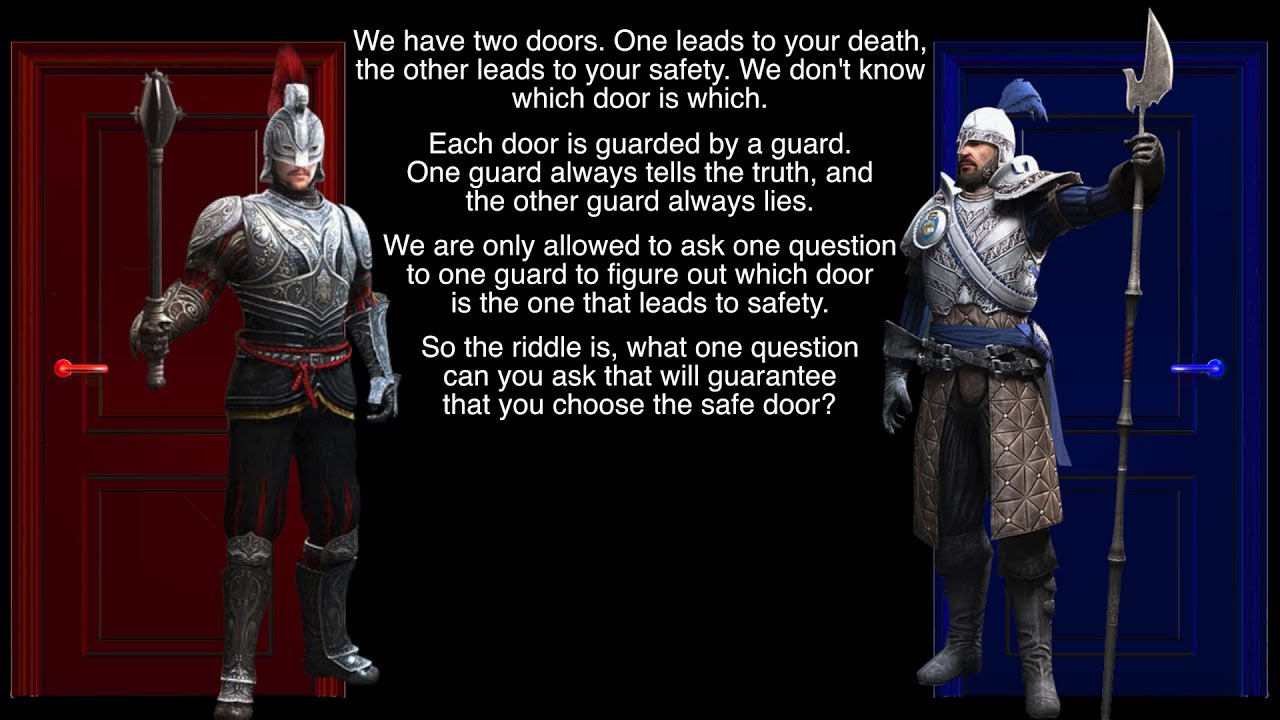
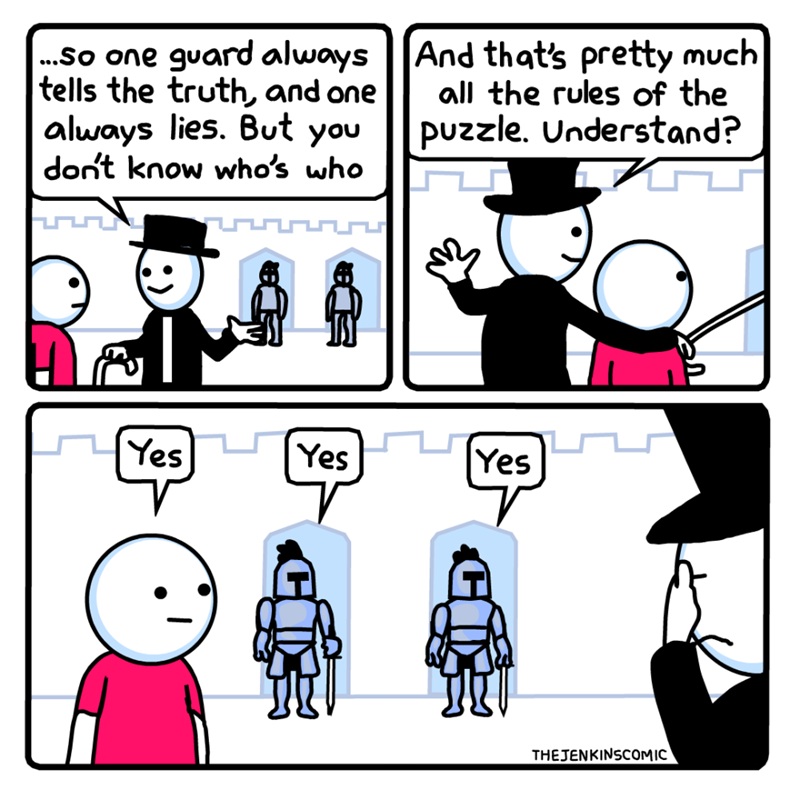
Ah yes, the riddle of the two guards. Also known as the two doors puzzle, the two guards/two doors puzzle, and, my personal favorite, that awful crap riddle.
It’s easily the most famous example of a Knights and Knaves logic puzzle, which all work off the idea of individuals who always lie or always tell the truth, and a solver who needs to deduce how to proceed.
I think the best and most colorful presentation of the riddle was in the film Labyrinth, thanks to Jennifer Connolly and some very lovely puppetry:
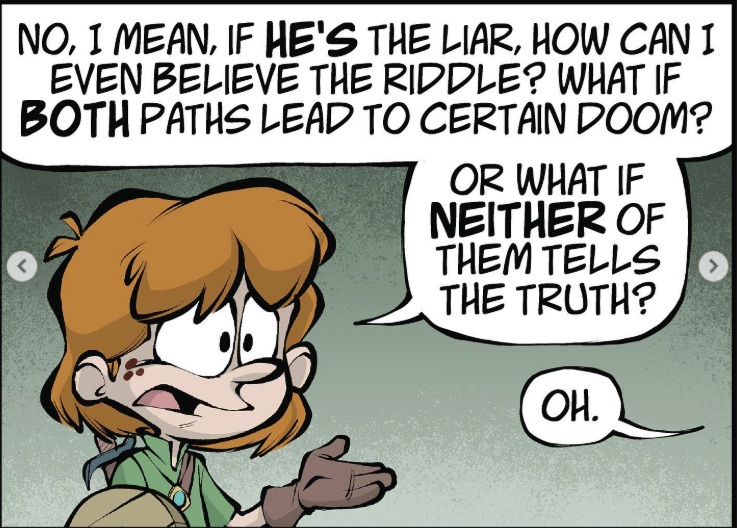
I’ve always wondered about this riddle. Is there a sign posted that explains the rules? Because otherwise, you’d assume the guard who tells the truth would have to explain the rules…
Unless the one who lies tells you the rules, which are a lie, and it’s a trap and you’re totally screwed!
Geez, this is getting complicated already.
Oh good, I’m not the only one who agonizes over this sort of thing. Image courtesy of Crabgrass Comic.
Let’s assume the rules are fair. There’s a guard who always lies and a guard who always tells the truth, and you need a single question to root out which door is the safe one to enter.
The traditional answer is to ask one guard which door the OTHER guard would say leads out.
But what if one of the guards is INVISIBLE?!
If the guard you asked is the one who lies, then he will lead you astray by telling you (falsely) that the other guard—the truthful guard—will point you towards door B. This makes door A the safe bet.
If the guard you ask is the one who tells the truth, he will tell you (honestly) that the other guard—the lying guard—will point you towards door B. This makes door A the safe bet.
In both cases, the outcome is the same: walk through the opposite door.
Naturally, people have tried to find ways around this.
Some suggest that you ask the guards to walk through their respective doors and report back what they see. I don’t know that this would work, because it’s not clear if the guards would have to follow your orders. Also, we don’t know if certain doom for US would be certain doom for the guards. If they both walk out totally fine, it probably won’t work.
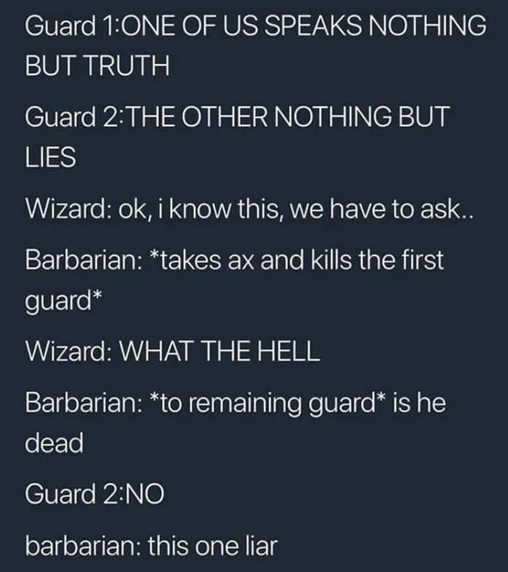
For another option, you can act in typical Dungeons and Dragons-fueled fashion and use what I call the direct approach:
But unfortunately, it misses the meat of the riddle. It’s not just knowing which guard lies and which guard tells the truth, it’s about knowing which door to take as well.
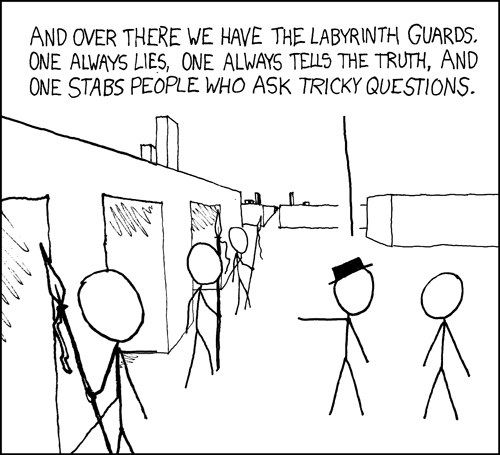
Of course, if you believe the folks at XKCD, there are consequences for cleverness as well:
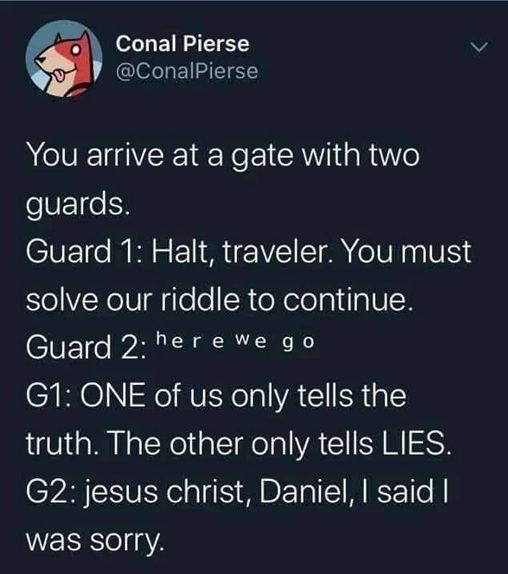
Although it is a riddle easily given to weasel words and pedantry, it has led to some wonderful comedy.
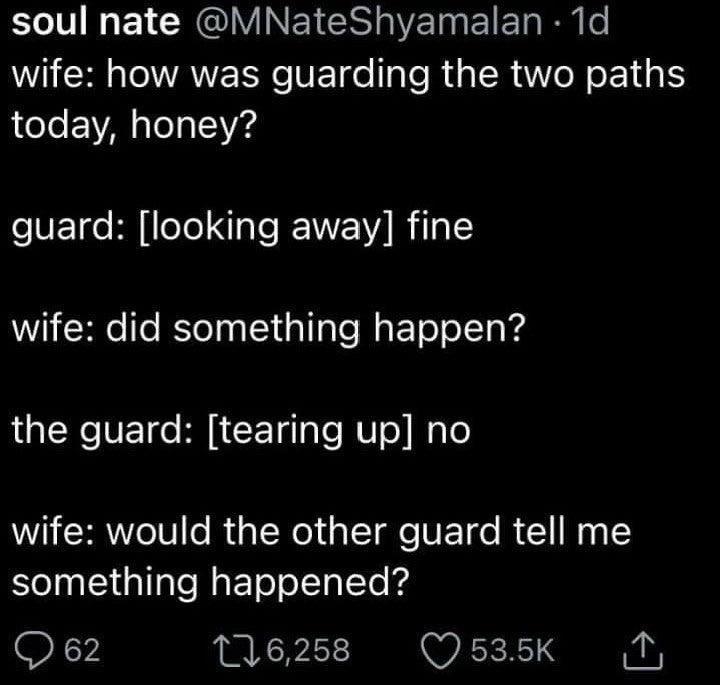
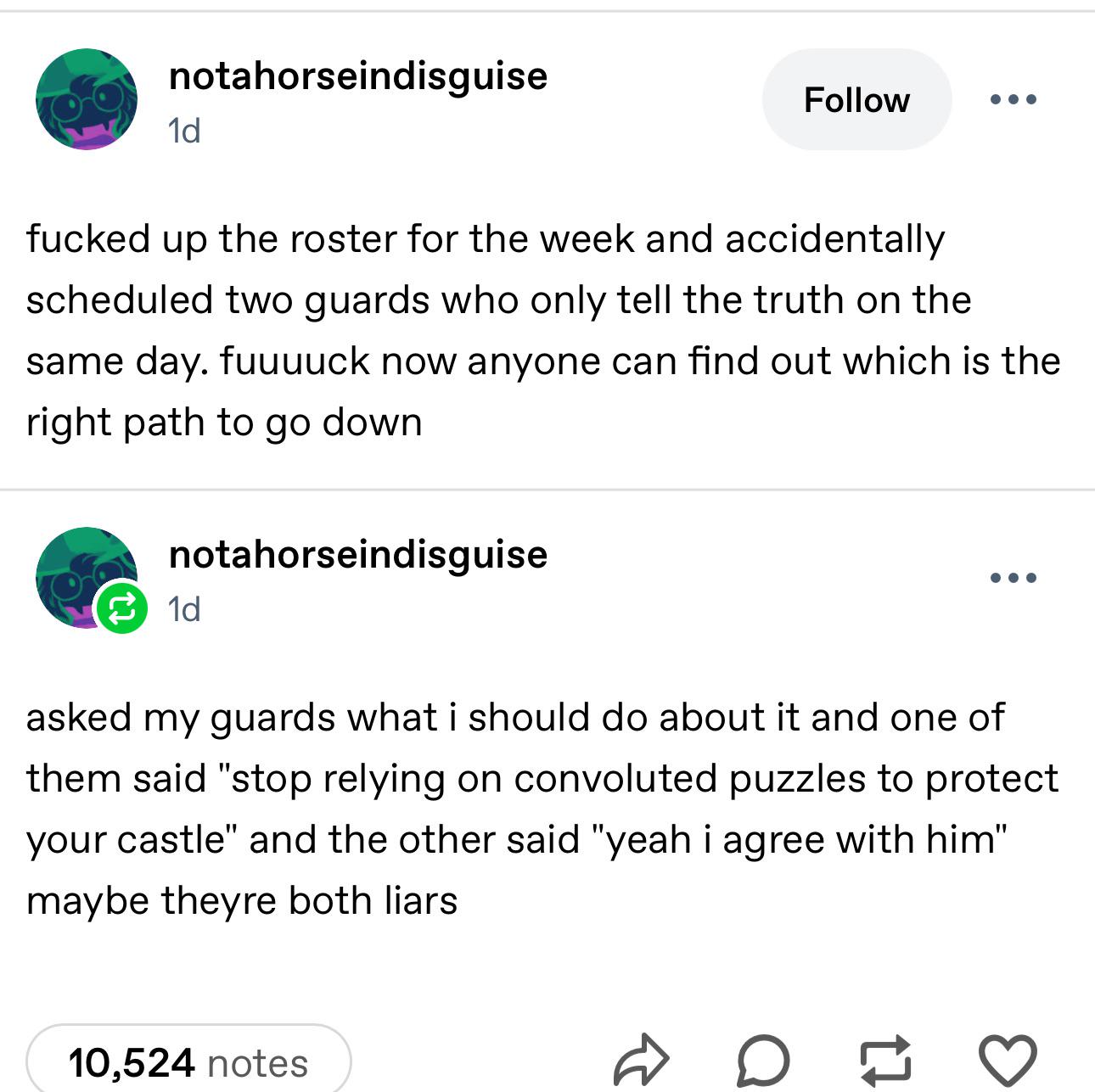
This joke, for instance, gives us some much-needed backstory to the guards and their current circumstances:
In a similar vein, this one lets us see one guard’s life after clocking out for the day:
I also enjoy this one, which ponders what sort of person would employ a riddle like this as a security measure in the first place:
So I put it to you, fellow puzzler: how would you tackle the riddle of the two guards? Labyrinth style? Barbarian style? Or have you conjured up a different question to ask the guards?
Let us know in the comment section below. We’d love to hear from you!
Debuting on the weekend of June 28th and 29th, the WCCC is composed of two events: an individual online championship on the 28th (which is open to any and all competitors) and a World Cup-style offline team championship format on the 29th.
The individual championship involves two cryptic grids, each of which must be solved within 30 minutes. Click here to register!
But please be aware that you’re competing in IST — Indian Standard Time — so you’ll have to adjust your schedule accordingly to have a chance at the cash prize for the top three solvers!
The World Cup Final is being held in person in London on the 29th, and consists of two rounds. The first puzzle will whittle down the field of competitors to the four top contestants from four different countries, who will then compete onstage to solve the final puzzle.
Some of the World Cup competitors have been invited for their past puzzly achievements, but there is an offline preliminary for anyone seeking to try their hand (and can be in London on the day in question to compete).
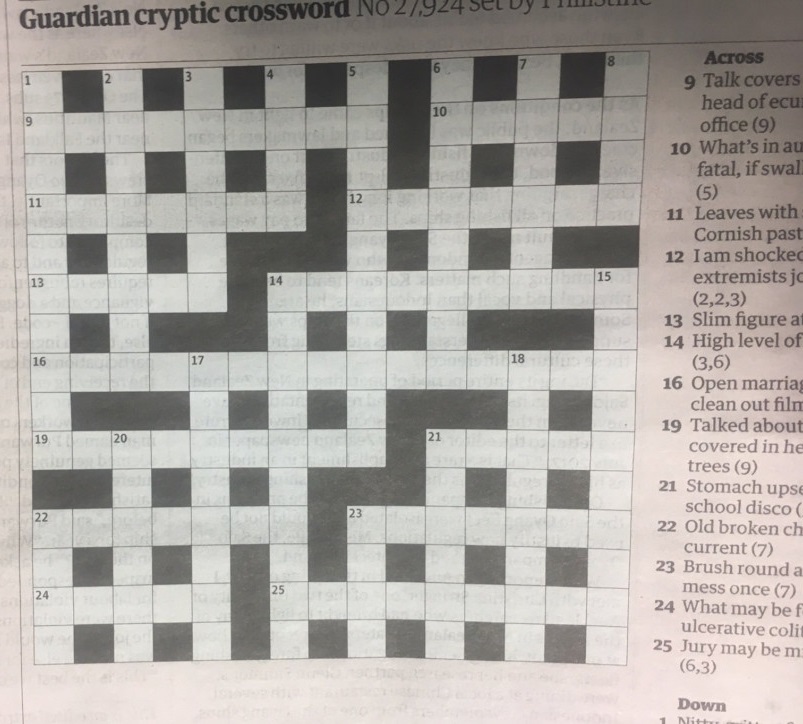
This looks like my scribblings while solving a cryptic… minus the wedding ring, that is.
I’m definitely not the fastest cryptic crossword solver, so I’m not sure I’ll try my hand at this competition… this year. But if it returns next year, I might just shoot my shot.
Cryptic crossword solving involves many of the same skills as American-style crosswords, but there’s also the wordplay element that makes it quite a different experience for those unaccustomed to that puzzly style.
Will you be trying your hand at competitive cryptic crossword solving, fellow puzzlers? Let us know in the comments section below, we’d love to hear from you!
Words are awesome. We use words to express ourselves, to paint pictures for each other, to explain the world and our viewpoints in vivid, meticulous detail. There is a heart-stirring magic in the poetry and art of words.
But words can also obscure, conceal, and mislead. Words can be bent, they can weasel into unlikely positions, they can camouflage and doublespeak ideas as something else. There is a sinister potential in how words can deceive, inveigle, and obfuscate. (That’s one for the diehard X-Files fans in the readership.)
This is not news to puzzle solvers. Crossword cluing is often about playfully duping the reader, using puns, alternate pronunciations, and clever phrasing to challenge the solver.
But there is a certain charm and elegance to speaking directly, to bluntly sharing who you are and what you are about. No room for misinterpretation or misunderstanding. Only truth and honesty, explicitly stated.
And that’s why I appreciate how crossword charity endeavors have been dropping all pretense and simply stating what they’re about.
Like These Puzzles Fund Abortion. They don’t call it reproductive rights or protection for women. They say what they’re doing with no ambiguity. These Puzzles Fund Abortion.
That’s awesome.
And I recently saw another crossword charity project with a similarly unflinching level of honesty and forthrightness that I’d like to highlight today.
A Trans Person Made Your Puzzle.
A collection of 10 puzzles created by trans constructors, A Trans Person Made Your Puzzle celebrates the trans community and their contributions to puzzles and society alike.