Create Puzzly Art Line by Line!

You’ve heard of Logic Art, but let me ask you, fellow puzzler… have you heard of Word Seek Art?

Please allow me to introduce you to the world of LexaPics.

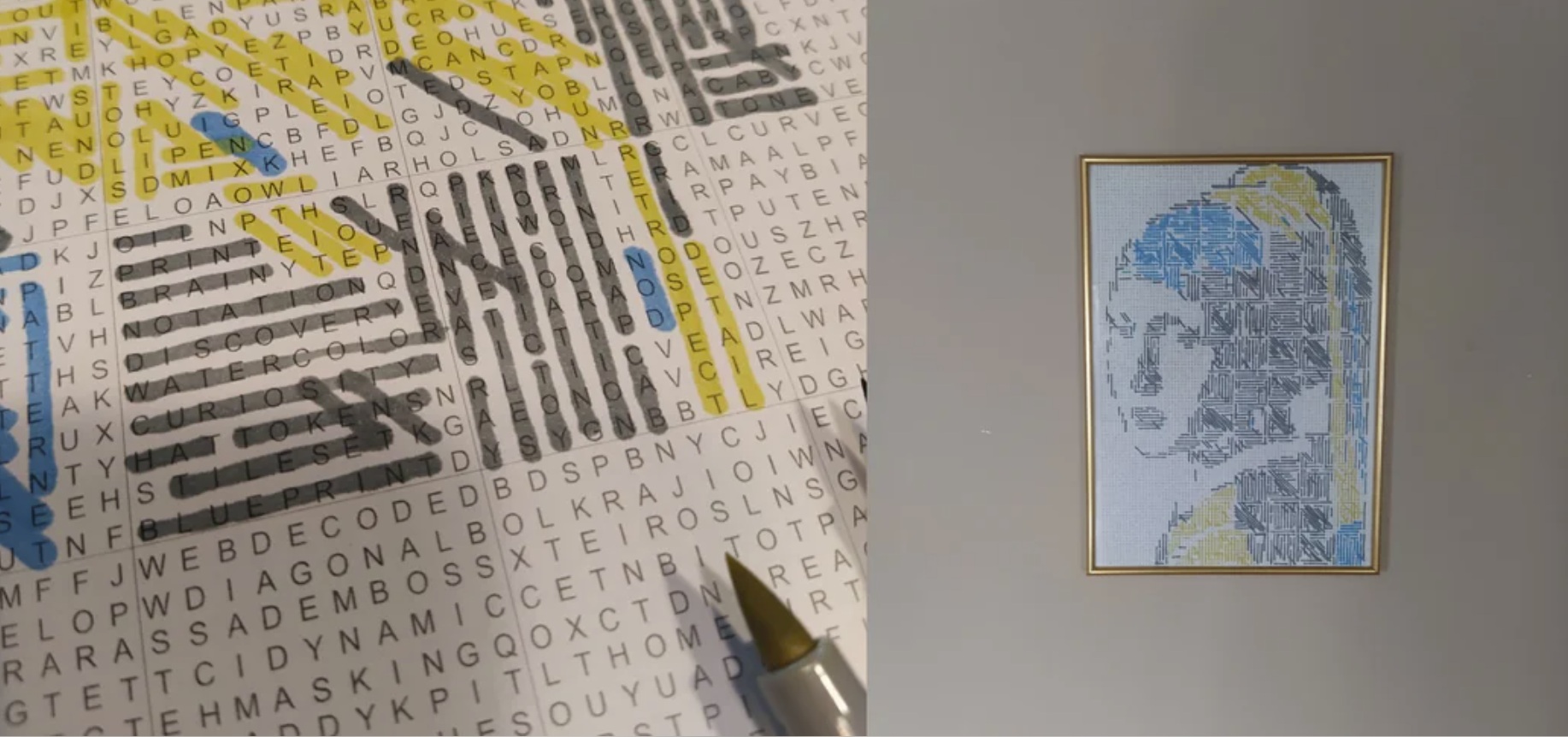
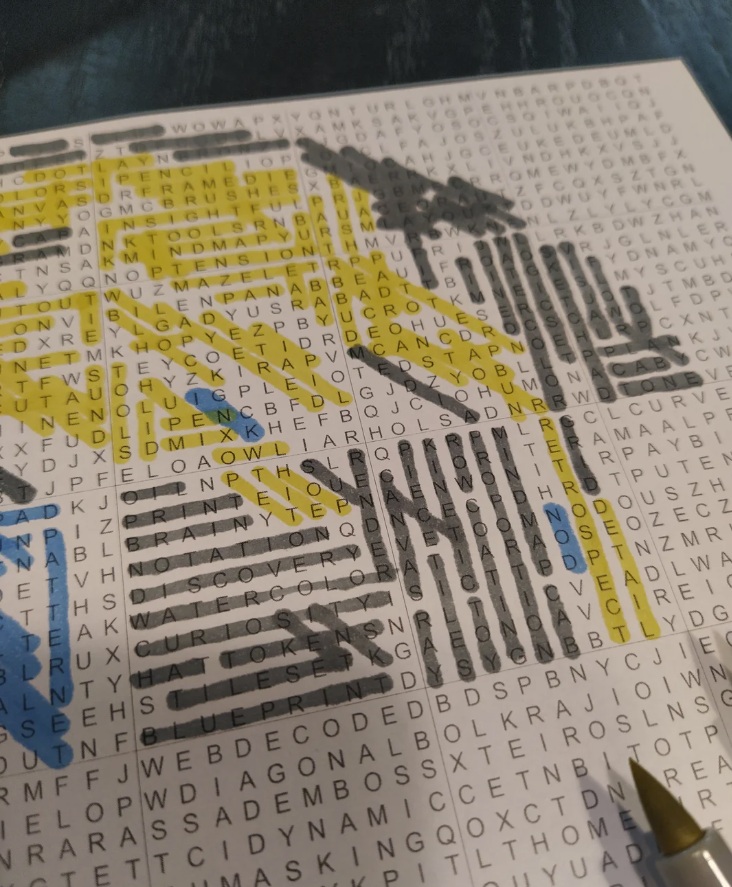
LexaPics are the creation of Vasiliki Papadopoulou, who designs specially curated word seek grids and sorted word lists to create works of art when solved!

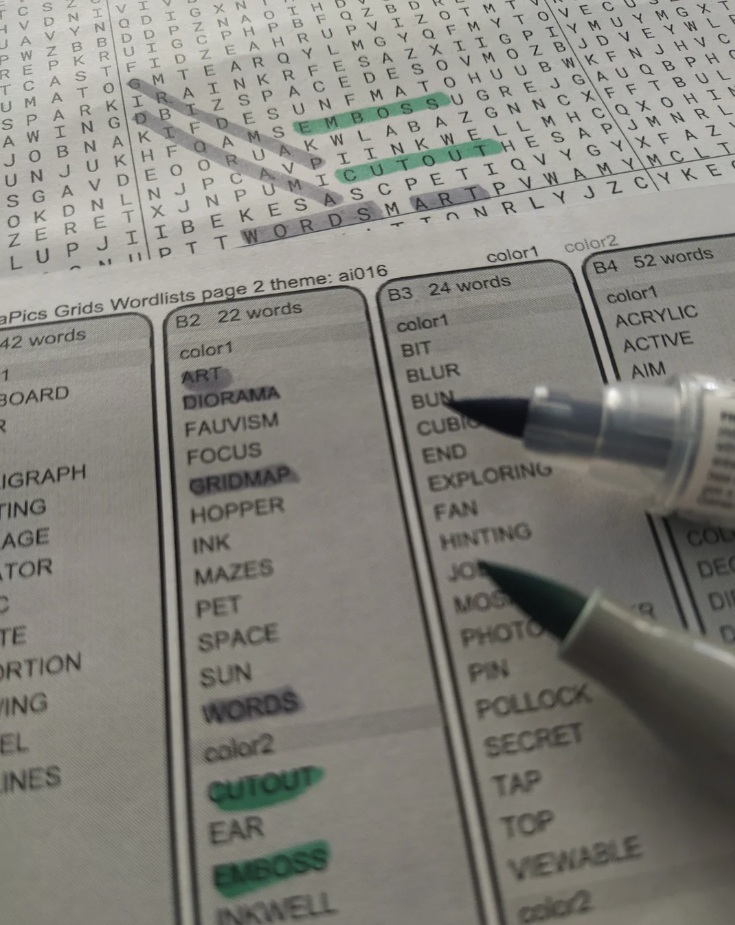
The grid is divided into different cells, and you get a word list for each cell, with different parts of the word list organized by color.

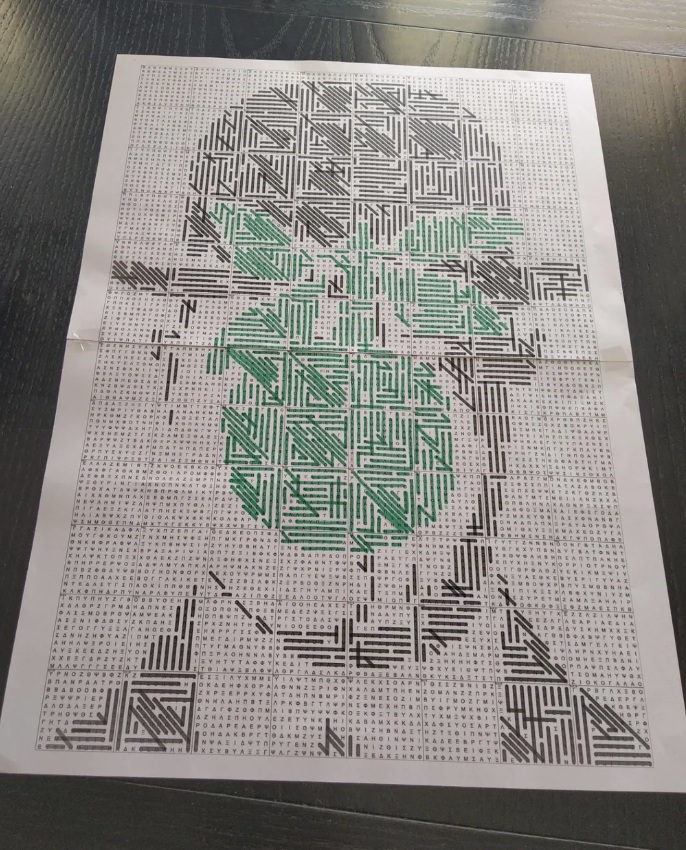
And as you find your words, the work of art slowly emerges line by line.

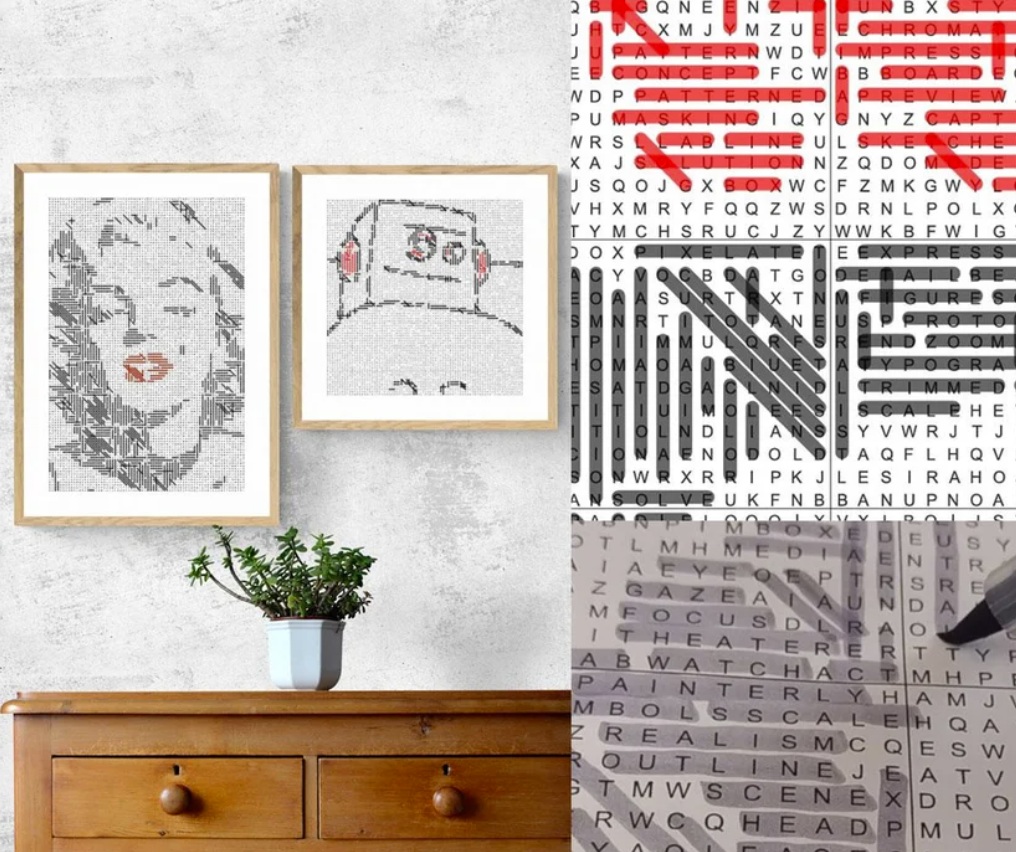
As you can see, Vasiliki has created grids inspired by Vermeer and Magritte, as well as grids inspired by iconic celebrities like Marilyn Monroe.

From Vasiliki’s post on Reddit:

Lexa comes from Greek word Lexis λέξη (since i am from Greece) that means word and Pics as pictures, but also a playful nod to “pixels” — the building blocks of modern digital art.

Not only does he have a Kickstarter campaign for LexaPics launching soon, but he’s actually created an Instructables page for anyone who would like to make their own LexaPic!

I love seeing the creative ways people put new spins on classic puzzles, and this is both beautiful and so cleverly accessible.

You can click this link to check out his Kickstarter, as well as the homepage for LexaPics here.

I look forward to seeing what sort of wonderful imagery emerges from his word seeks next!

My PuzzCulture Resume!

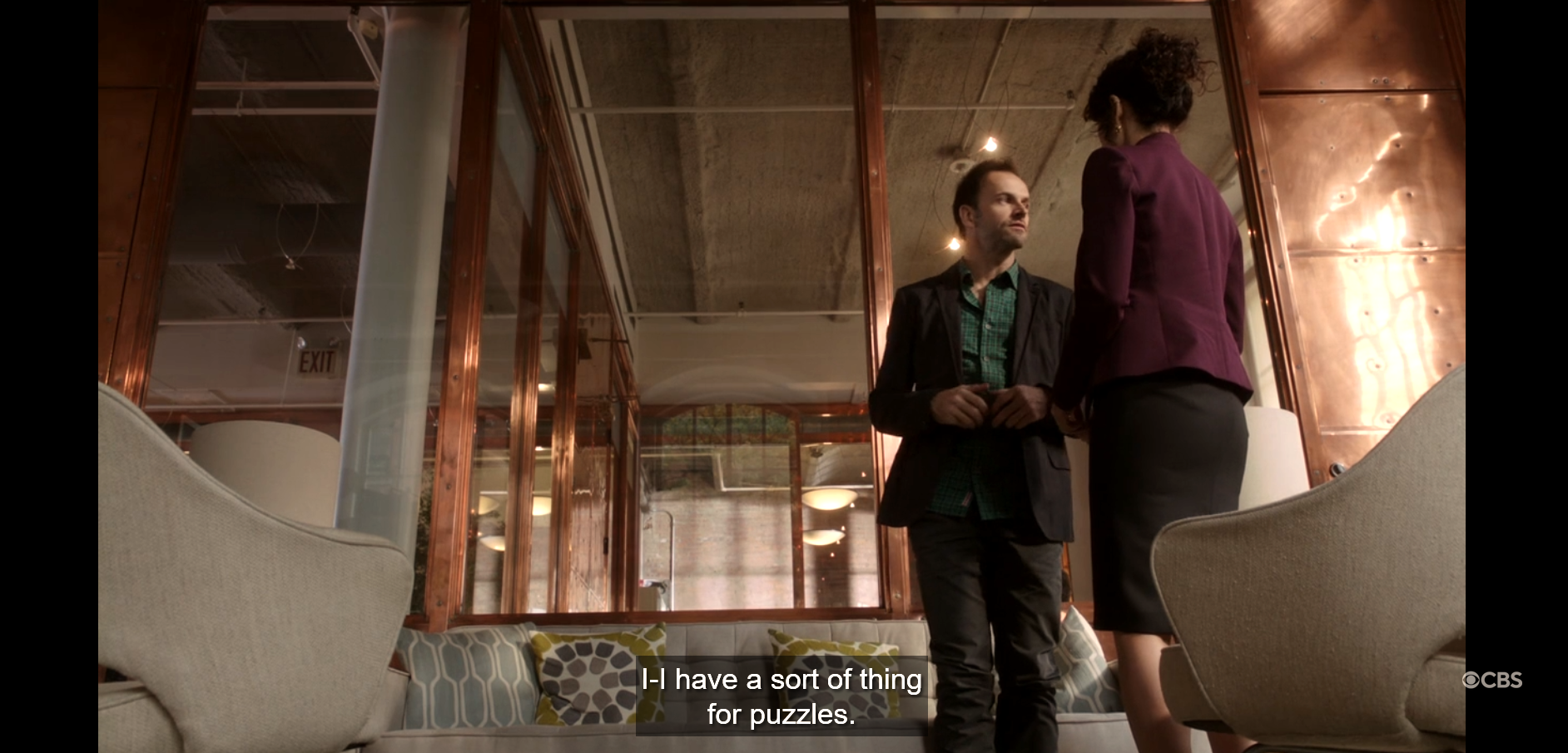
After our one-year anniversary post, some of the readers have been asking about my puzzle credentials. How did I become a puzzler? What strange, meandering road led me to the hallowed halls of puzzlesmithery? Could aspiring puzzlers follow the same path to puzzlewonderful adventures?

There’s no single path to puzzlerhood. Sure, there are some fairly universal commonalities. Do you have a great vocabulary? Mad trivia skills? Are you a whiz with palindromes, anagrams, or other forms of wordplay? These can all help. Also, a background or degree in English doesn’t hurt.

But every puzzler I know took a different route. It’s not as if we all awoke one day to a knock at the door, only to discover a small basket left on the doorstep, and tiny elfin footprints leading back toward the enchanted forest down the street.

Though, admittedly, that would have been awesome.

Here, let me take you through some of the highlights in my puzzle resume, and we’ll see if my experiences offer some guidance or inspiration for those with puzzletastic aspirations.

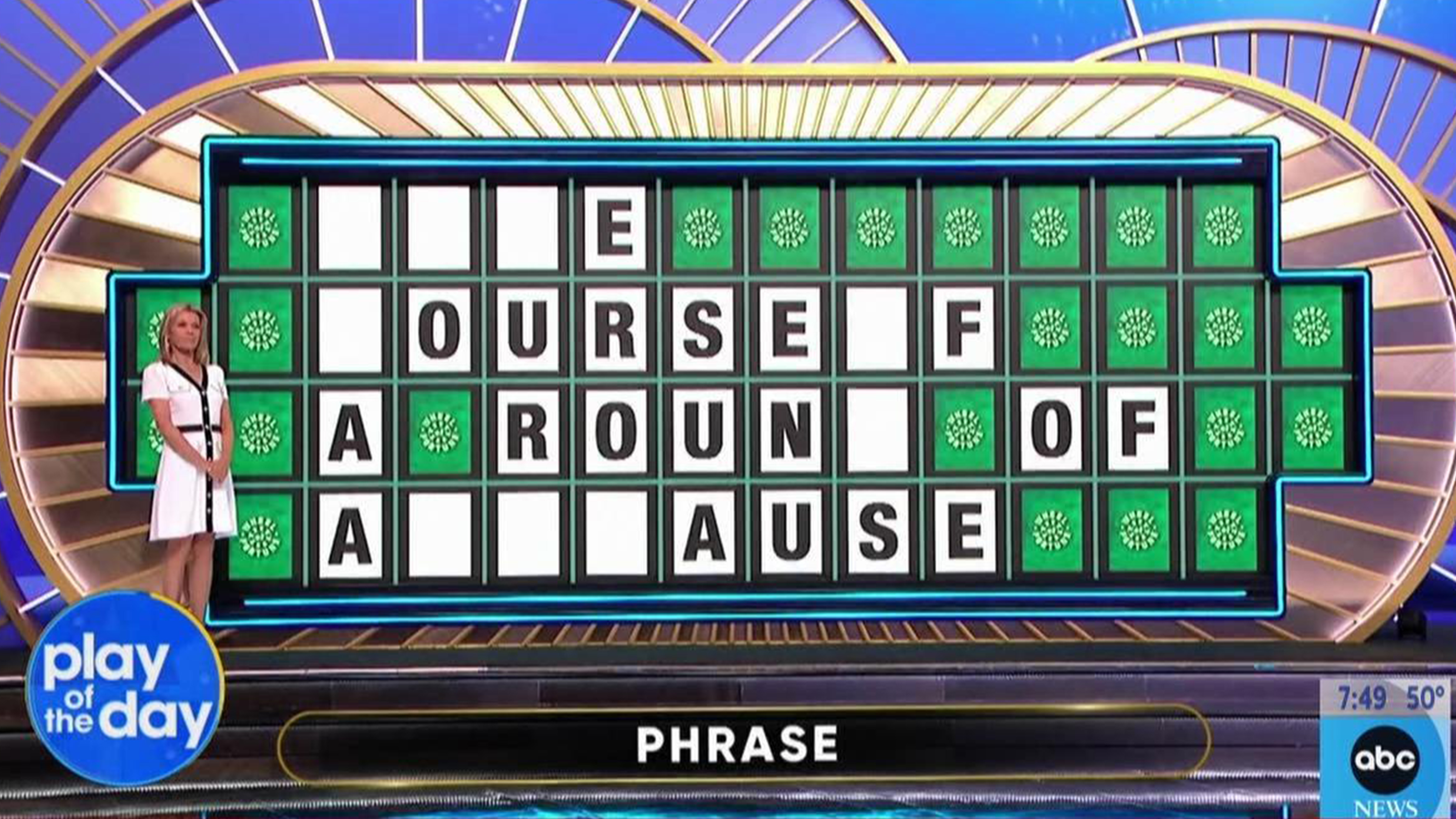
Unrecognized Wheel of Fortune Grand Champion, USA, 1988-present

Since I was about seven years old, family members have called me into the family room to see who can puzzle out the quotes, phrases, and punny answers behind the lovely Vanna White, and I regularly school both contestants and kin with ease.

While Mr. Sajak refused to recognize my decades-long reign as Wheel of Fortune Grand Champion (Stay-at-Home Division), and Mr. Seacrest has yet to return my calls, that doesn’t make it any less noteworthy.

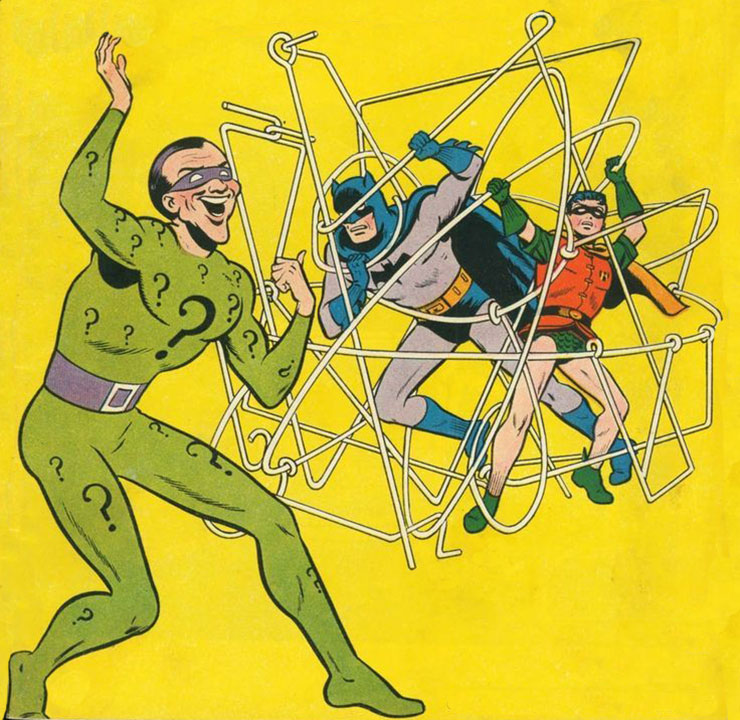
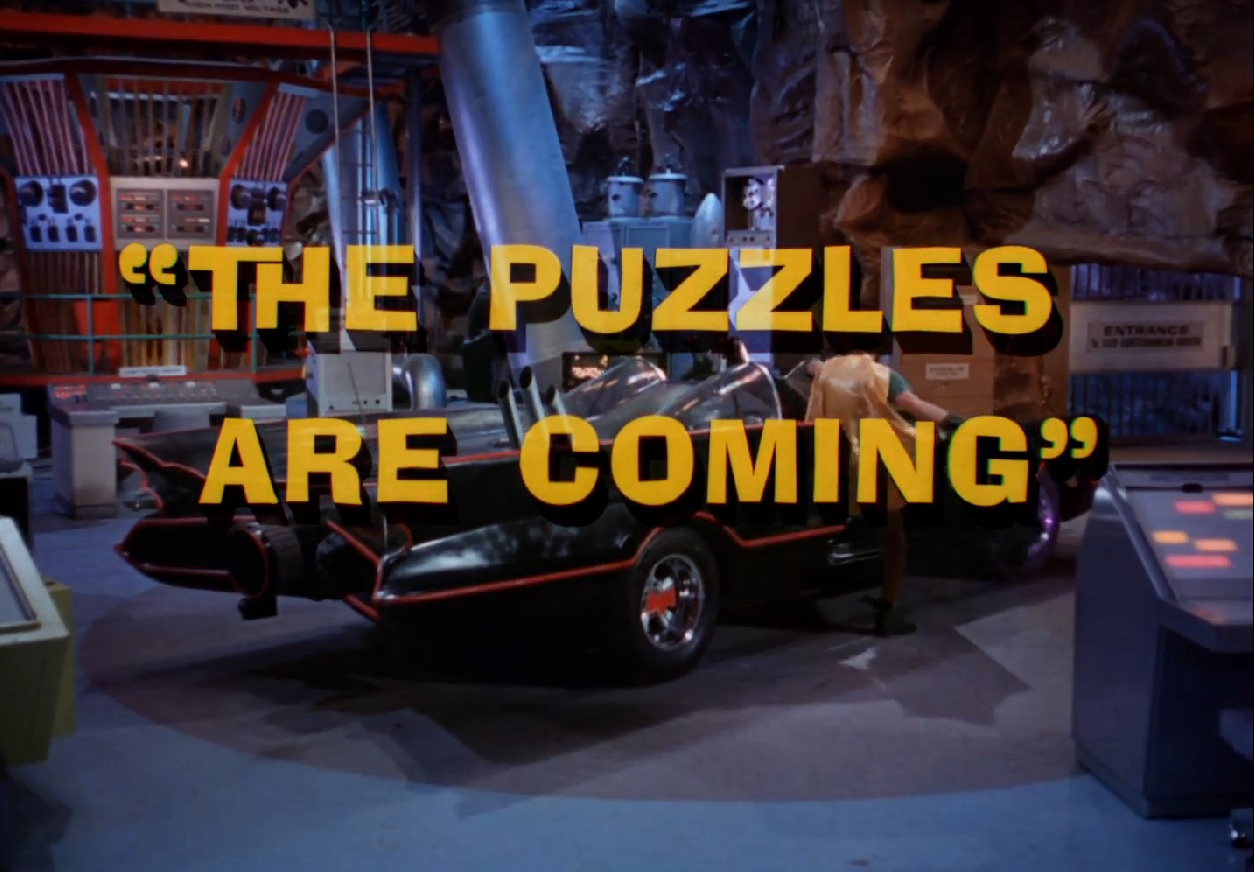
Internship with the Riddler, Gotham City, 2000-2001

There are few puzzle personalities in the world with the flair, cachet, and renown of Edward Nygma, otherwise known as freelance detective and occasional criminal mastermind The Riddler. So when I had the opportunity to sit in with him and learn from his decades of riddle-centric shenaniganry, I leapt at the chance.

I studied the intricacies of mechanical puzzles, wordplay, and punsmithery while under Nygma’s wing. Although I frequently found myself in legal and moral gray areas — and on the receiving end of more than a few POW!s and BIFF!s — the experience was well worth it.

Tetris Foreign Exchange Program, St. Petersberg, 2002

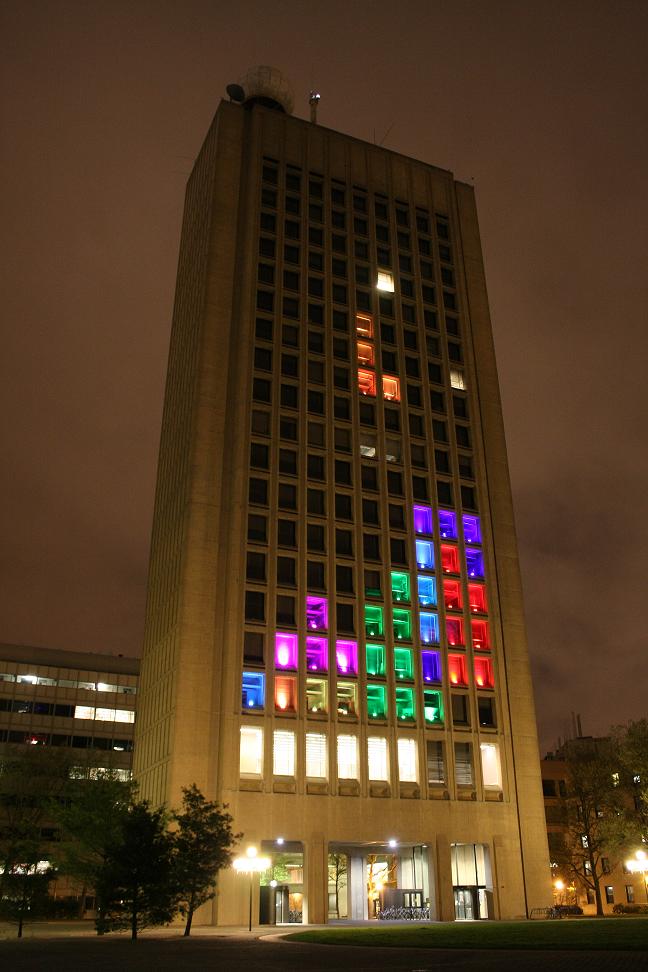
There’s no better spatial awareness training than Tetris. I can feng shui the packages in the back of a UPS truck like nobody’s business, and don’t get me started on my legendary vacation-packing skills. And with the added pressure of that horrendous tension-inducing “you’re near the top!” music, I’m cool as Siberia under pressure.

Dungeon Tester, various, 2003-present

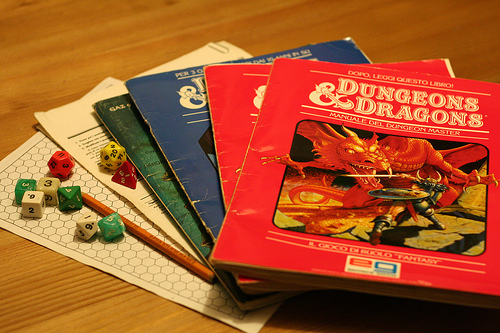
Is your Tomb of Horrors not horrorful enough? Is your Tomb of Elemental Evil lacking in some evil elements? Is your Ghost Tower of Inverness feeling a little inver-less?

I’ve ventured through some of the deadliest, trickiest, player-decimating-est dungeons in all of roleplaying, and my quality control and suggestions have made them even deadlier-ier!

That trick with the secret escape door in the third pitfall trap? Yeah, that was me.

You’re welcome, dungeon masters!

Escape Room Entrepreneur, Scranton, PA, 2006

Yes, the first official escape room opened in Japan in 2007, but I actually pioneered the genre when I accidentally tripped into a display at the Houdini Museum in Scranton just before closing time. Somehow the staff missed the clanking of chains and my totally-manly-and-not-at-all-shrill cries for help, and I found myself plunged into darkness, trapped haphazardly in several of Houdini’s most famous devices.

Thankfully my previous training with the Riddler had prepared me for this sort of dilemma. After several hours of maneuvering (and some unpleasant chafing marks from all the chains and manacles), I managed to extricate myself from all the Houdiniana around me and slip out the front door… and into the waiting arms of the police responding to all the motion sensor alarms I’d tripped with my heroic flailings.

Puzzle Summit with Will Shortz, New York City, 2007

Okay, it wasn’t so much a historic meeting of the minds as it was me yelling puzzle ideas at him with a megaphone as I chased him down the street.

But that totally counts.

Freelance Puzzle Historian, Self-Appointed, USA, 2009-present

Oh yes, puzzle history is a rich and varied field of study, one to which I have devoted a great deal of time and effort, unearthing some fascinating and surprising discoveries. For instance, did you know that Nero did not, in fact, fiddle while Rome burned? He was far too busy being frustrated by the extreme Sudoku puzzle he’d picked up in the agora.


Well, there you have it. A brief glimpse in my particular puzzle experiences and how they’ve shaped me. Here’s hoping you can blaze your own puzzlerific trail, be it through decoding Linear B with Cryptogram-ingrained proficiency or anagramming your friends’ names to your heart’s content.

Happy puzzling, everyone!

One Year of PuzzCulture!

One year ago today, my first post under the PuzzCulture name went live.

It’s been both overwhelming and gratifying to return to writing about the world of puzzles and games after a few years away, and I’m so so grateful to all of you who have joined me on this journey.

And although it’s only been a year, it sure feels like a LOT has happened over the last twelve months.

Politics have inserted themselves into the world of puzzles and games in both good and bad ways. We’ve seen the board game and RPG industries dealing with the wild swings of Trump’s braindead tariff schemes. We’ve seen shortsighted jingoistic policies hurt local game shops.

But we’ve seen the game community push back against transphobic hate and nearly tank an entire game company. We’ve seen a scavenger hunt inspire people on the local level and a puzzle party to raise funds for reproductive rights. We’ve seen puzzly efforts to support trans rights and abortion access. Puzzles always end up on the right side of history.

We’ve seen Dungeons & Dragons lose both fan goodwill and market share to new competitors. We’ve seen puzzly mysteries and treasure hunts come to an end.

We’ve said goodbye to beloved and influential figures like Tom Lehrer, Wink Martindale, and Ann Santoro.

We’ve also delved into puzzly mysteries. My deep dive into the story of Simon & Schuster’s early days and the lore around Simon’s Aunt Wixie was one of my favorite projects of the year.

So what awaits you in year two, fellow puzzlers?

Plenty!

More deep dives into the history of puzzles and games. More puzzles to solve. More interviews. More reviews. And other things without the word “views” in them. (But hopefully ones that still inspire your views!)

Again, I’m so chuffed with the response PuzzCulture has garnered so far, and I’m excited to continue creating content for you to enjoy.

But what are you looking for, fellow puzzler? Is there something you would like to see that we haven’t done before? Or something you’d like to see more of?

Let us know in the comments section below! We’d love to hear from you.

Thanks again, and happy puzzling!

The Solution to the Kryptos Puzzle: Up for Auction Soon!

Kryptos.

No, sorry, we’re not doing a post about Superman’s dog.

Instead, today we’re discussing how the solution to one of the great unsolved cryptographic mysteries of our time is going up for auction in October.

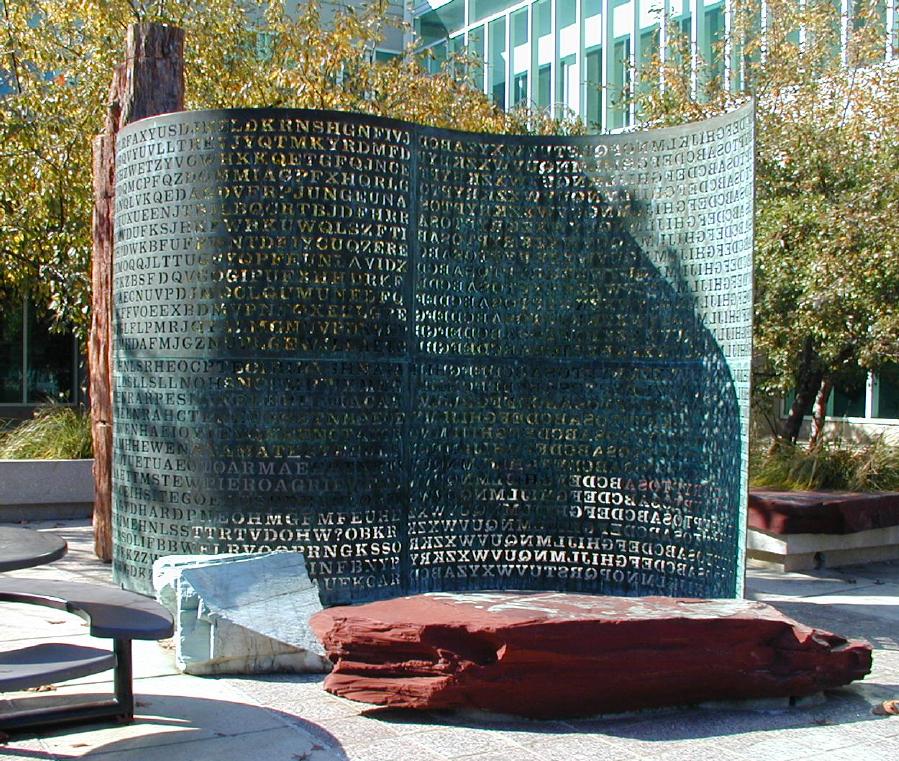
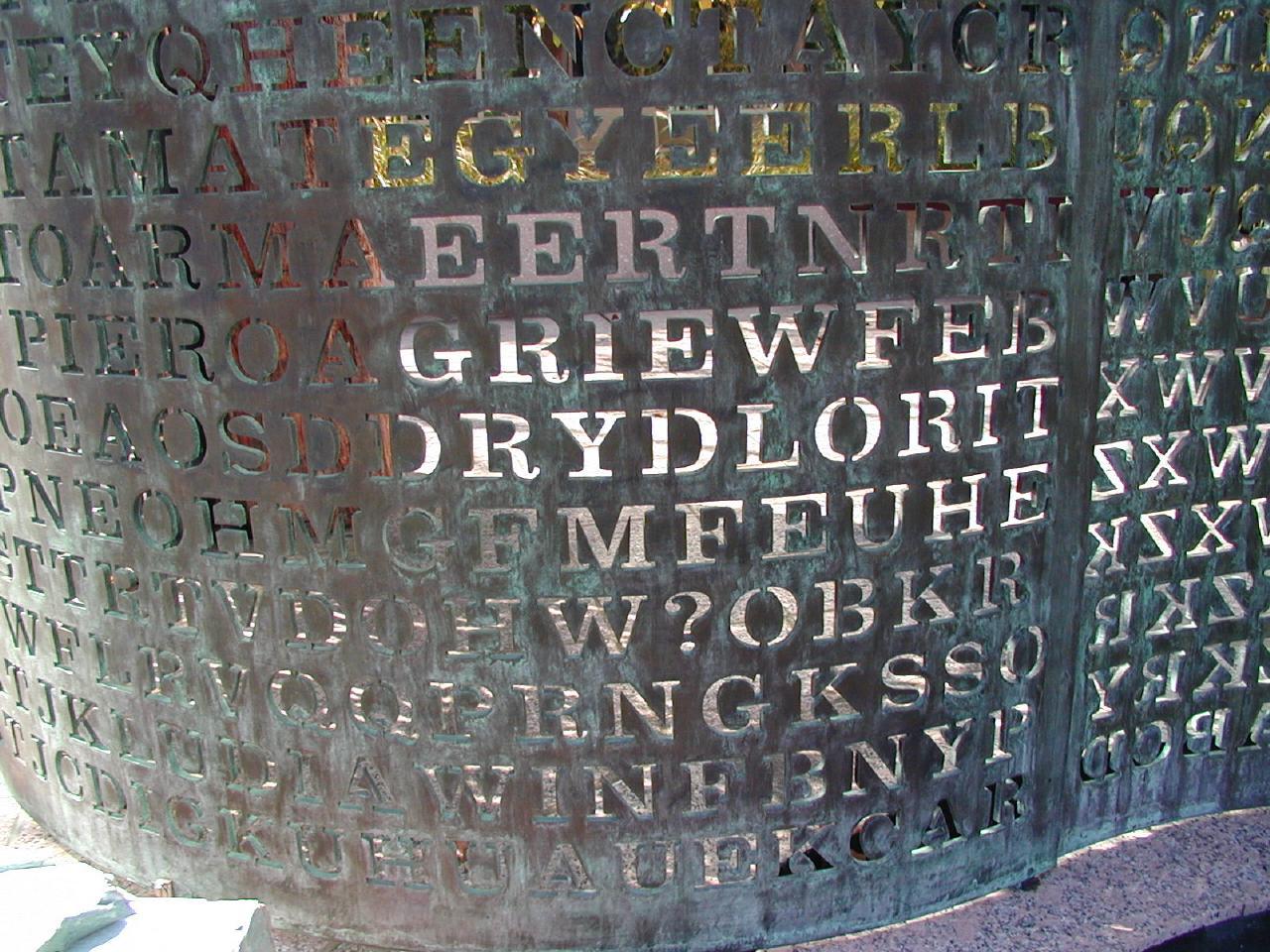
For the uninitiated, Kryptos is a flowing sculpture made of petrified wood and copper plating, sitting over a small pool of water. It was revealed to the world in 1990, coded by former chairman of the CIA’s Cryptographic Center Edward Scheidt, and designed by artist Jim Sanborn. Designed to both challenge and honor the Central Intelligence Agency, for decades Kryptos has proven to be a top-flight brain teaser for codebreakers both professional and amateur.

There are four distinct sections, utilizing different forms of encryption. And amazingly, the fourth section continues to elude codecrackers to this very day.

It took nearly a decade before anyone announced a solution to the first three encryptions. A computer scientist named Jim Gillogly announced in 1999 that he had cracked passages 1, 2, and 3 with computer assistance.

The CIA, not to be one-upped, then revealed that one of their own employees, an analyst named David Stein, had solved those same three passages the year before, using only pencil, paper, and lunchtime man-hours.

But a 2013 Freedom of Information Act request into records of the National Security Agency revealed that an NSA team actually cracked those same three passages back in 1993 as part of a friendly rivalry between the NSA and CIA, provoked by former NSA director and then-deputy CIA director William O. Studeman.

Image courtesy of G.A. Matiasz

Passage 1 employs a Vigenère cipher, a letter-shifting cipher that has been used for centuries, also known as a periodic polyalphabetic substitution cipher, if you want to get fancy with it.

The message, penned by Sanborn himself, reads Between subtle shading and the absence of light lies the nuance of iqlusion. [Iqlusion is an intentional misspelling of “illusion.”]

Passage 2 also employs a Vigenère cipher, but utilizes a different keyword than Passage 1. The message, also composed by Sanborn, points toward something hidden nearby:

It was totally invisible. How’s that possible? They used the earth’s magnetic field. x The information was gathered and transmitted undergruund to an unknown location. x Does Langley know about this? They should: it’s buried out there somewhere. x Who knows the exact location? Only WW. This was his last message. x Thirty eight degrees fifty seven minutes six point five seconds north, seventy seven degrees eight minutes forty four seconds west. x Layer two. [Again, there’s an intentional misspelling here with “undergruund.”]

Passage 3 uses a transposition cipher, which relies on the positioning of given letters in order to properly spell out a message. The message is inspired by the words of Howard Carter, the archaeologist who opened King Tut’s tomb:

Slowly, desparatly slowly, the remains of passage debris that encumbered the lower part of the doorway was removed. With trembling hands I made a tiny breach in the upper left-hand corner. And then, widening the hole a little, I inserted the candle and peered in. The hot air escaping from the chamber caused the flame to flicker, but presently details of the room within emerged from the mist. x Can you see anything? q [Again, there’s an intentional misspelling with “desparatly.”]

Although some codebreakers believe the misspellings of “iqlusion,” “undergruund,” and “desparatly” are simply Sanborn’s crafty attempts at misdirection, others believe they are clues hinting at how to crack Passage 4, which is only 97 characters long.

Sanborn has even offered hints to help frustrated solvers in their efforts to unravel the mystery of Passage 4. In 2006, he revealed that letters 64 through 69 in the passage, NYPVTT, decrypt to “Berlin.”

And in 2014, Sanborn revealed that letters 70 through 74, MZFPK, decrypt to “clock.” So the message has something to do with the Berlin Clock, although Sanborn has stated “there are several really interesting clocks in Berlin.”

Image of the Berlin Clock courtesy of Secret City Travel.com

Finally, in 2020, Sanborn revealed that letters 26 through 34, QQPRNGKSS, decrypt to “northeast.”

And yet, despite all these hints and several decades, K4 remains unsolved. (And to those hoping that AI will prove smarter than humans in this instance, that hasn’t been the case. Sanborn revealed to The New York Times that he has received solutions devised by ChatGPT and described them as “nothing short of fairly silly.”


So, if you win the auction, what do you get?

  • the handwritten K4 code, complete with a signed typed letter by Ed Scheidt, the CIA employee and cryptographer behind all four Kryptos codes
  • the copper model submitted to the CIA as a sample of the final piece
  • photographs relating to the creation of Kryptos
  • the original dedication pamphlet signed by late CIA director William Webster
  • copies of the coding charts used to encode Kryptos

And apparently, being the secretkeeper for Kryptos can be profitable. Sanborn grew weary of fielding dairy requests and queries for solutions, clues, and other data, and actually started charging a $50 fee for replies. He claims this fee has earned him $40,000 a year!

Sadly, Sanborn feels that he no longer has “the physical, mental or financial resources” to maintain his role as the keeper of K4’s secret, and wishes to hand that responsibility to another, which would allow him time to focus on other artistic endeavors.

And given that he’ll be turning 80 around the same time that the auction should be wrapping up, it’s fair to say he has more than earned this retirement from Kryptos.

The online auction of Kryptos by RR Auction begins on October 17 and closes on November 20 at 7 p.m. ET.

Will you be bidding, fellow puzzler? I fear my budget of — *checks wallet* — $29 is not going to get it done.

Riddles of the Heart!

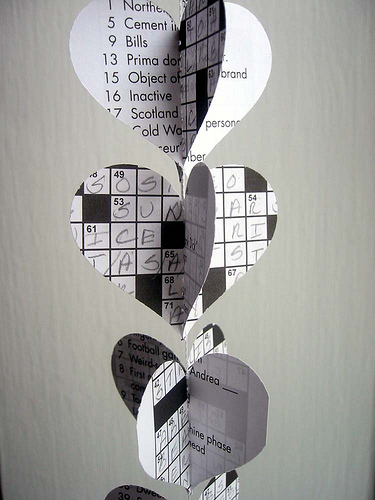
puzzlelove

I’ve always been a sucker for a story where puzzlers help make someone’s life better, their world a little bit more magical. I’ve had the privilege of constructing and facilitating several puzzly marriage proposals, for instance.

But there’s something even more heartwarming when it’s anonymous puzzlers helping a stranger with a puzzly dilemma. Like the time online puzzlers saved Christmas by decoding a kid’s encrypted wish list to Santa for his baffled mother.

This time around, it’s not Christmas magic, it’s a potential romance.

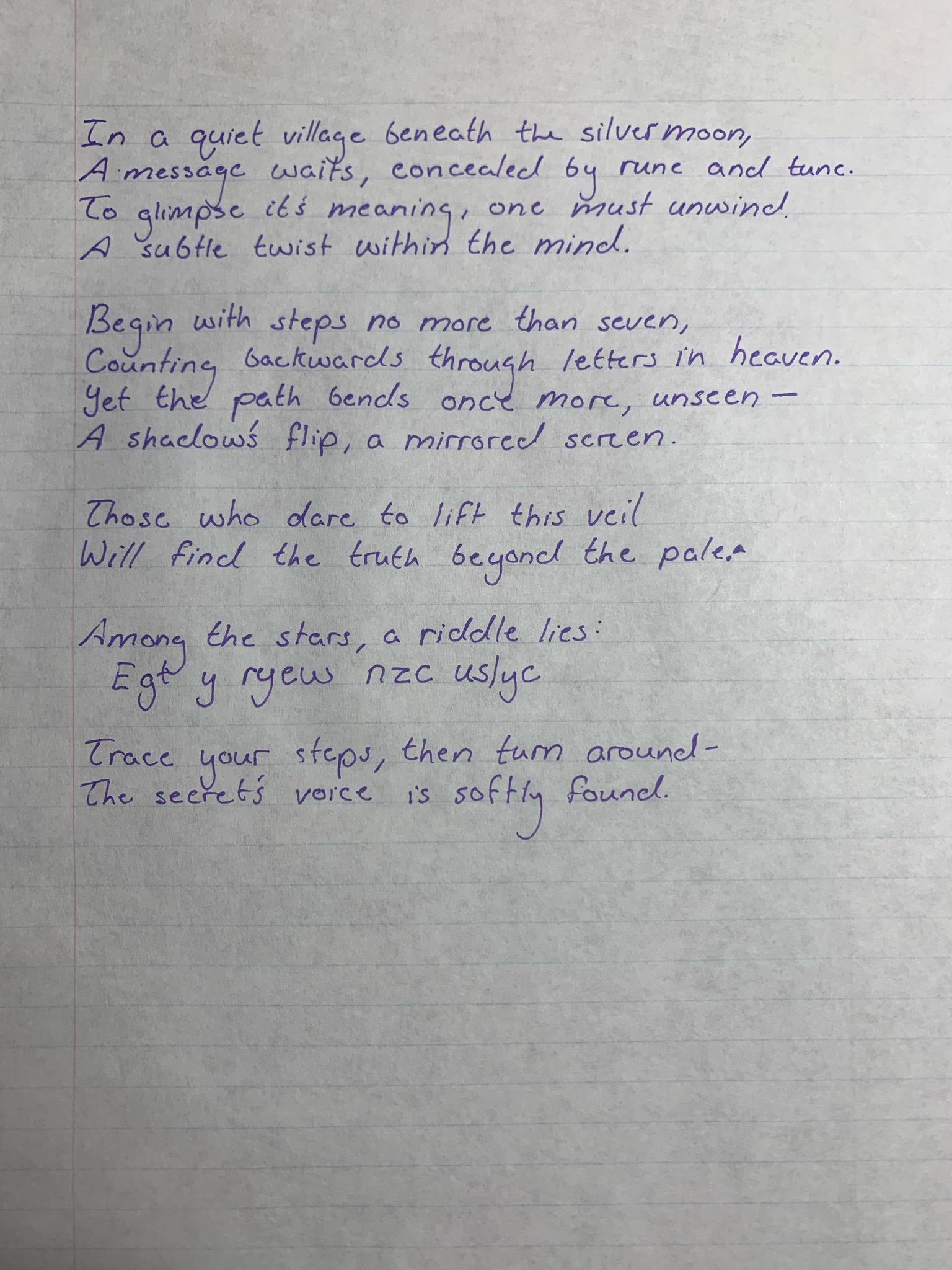
In a recent Reddit post, a request for help went out the puzzliest of D&D players:

I asked someone out using a riddle, and they responded with another one, but now I can’t solve it. We both dm at our local game store, and we’re running games tomorrow, I need a quick solution. I don’t need someone to give me the answer, but can someone please help walk me through how to solve this?

First off, that’s very cute.

Secondly, my dude, they responded to a riddle with your riddle. That’s a yes, my friend! Congrats.

As you might expect, his fellow riddle fans and puzzle fiends quickly explained how to find the solution, hoping that this marvelous exchange of riddles leads to more! Everyone loves a meet-cute, especially a puzzly one!

But what about you, fellow solver? Could you crack it?

I’ll give you a bit of space before I reveal how to solve it.

.

..

…

….

…..

……

…….

……

…..

….

…

..

.

Ready? Okay, let’s get to the riddle itself.

Egt y ryew nzc uslyc

This is clearly a single substitution cipher, also known as a simple substitution cipher, where each letter represented by another.

You could tackle this in a brute force way, treating it like a cryptogram. We know that “y” is going to be A or I. The most common three-letter word is “the”, which is a good place to start. At the very least, we can probably assume that “c” is the letter E, since it’s at the end of several words.

But the poem tells us how to solve it.

Start with the “letters in heaven,” your alphabet.

ABCDEFGHIJKLMNOPQRSTUVWXYZ

We get references to a mirrored screen or a shadow’s flip, so let’s try the alphabet backwards and placed underneath.

ABCDEFGHIJKLMNOPQRSTUVWXYZ
ZYXWVUTSRQPONMLKJIHGFEDCBA

We’re told to count backwards with steps no more than seven.

So let’s take the first letter in our secret message, E. Counting backwards (and wrapping around the alphabet again), that brings us to X. And in the mirror of X, we have C.

Continuing, seven letters back from G is Z, and in the mirror, A. Seven letters back from T is M, and in the mirror, N.

Egt Y ryew nzc uslyc
CAN

Continue for all the letters, and you get your answer written in the stars (presumably replying to his riddle):

Can I pick the movie?

Here’s hoping we get some updates in the future (or more riddles) from this pair of dice-rolling riddle-crafting delights.

And let’s offer one more huzzah for the anonymous puzzlers who helped crack the code!

Puzzlers… is there anything they can’t do?

A Way to Make Impossible Objects… Less Impossible?

One of the most remarkable things about humans is that we can envision impossible things. Our imagination allows us to go well beyond what is physically and scientifically achievable to ponder the furthest reaches of creativity.

And no, I’m not just talking about the mythical 15×15 crossword with only fifteen words across and no black squares. THOUGH WE CAN DREAM, CAN’T WE?

Sorry, I digress.

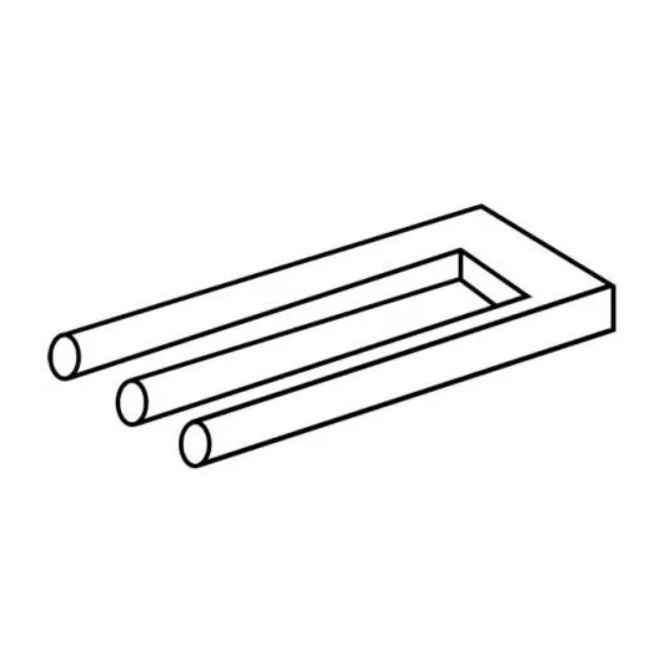
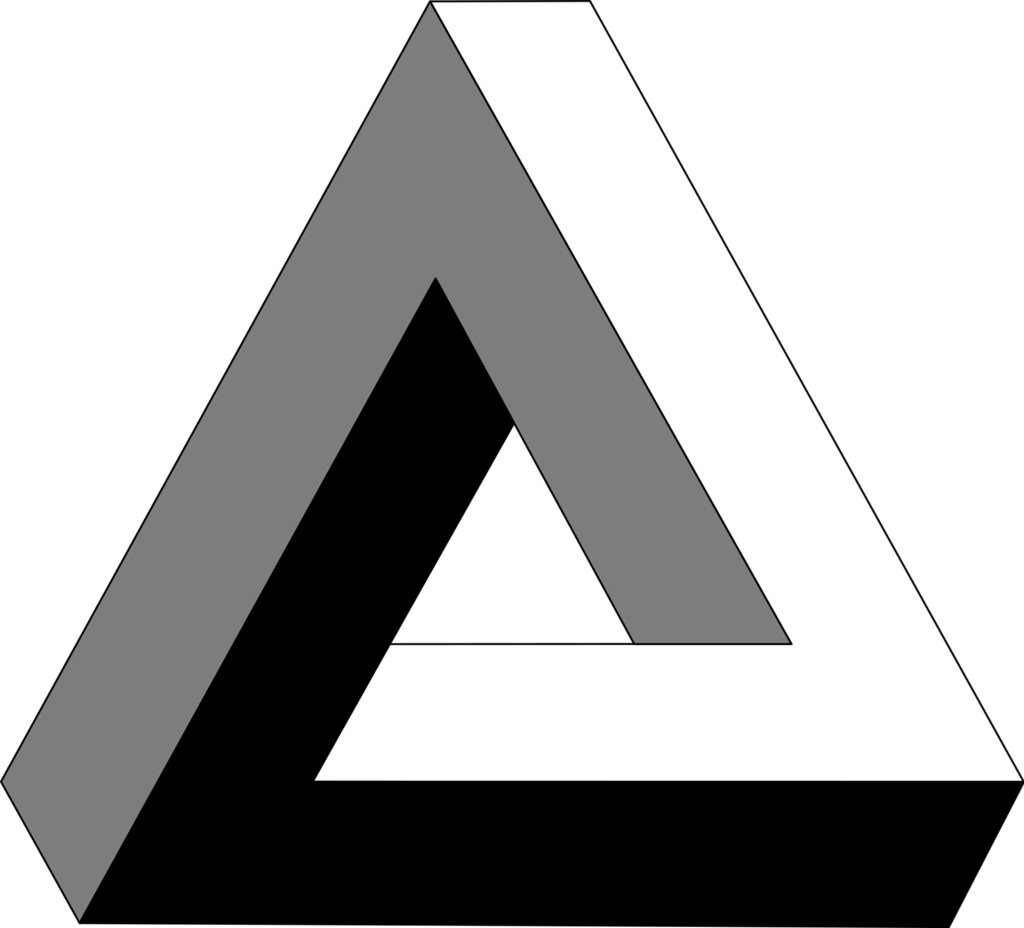
When I say impossible objects, I’m talking about things like the impossible trident (pictured above) or the Penrose triangle (pictured below).

These are impossible objects, things that play with our perceptions in a two-dimensional environment like a drawing, but cannot be created in a three-dimensional environment without cutting or bending them.

Or they couldn’t, until very recently.

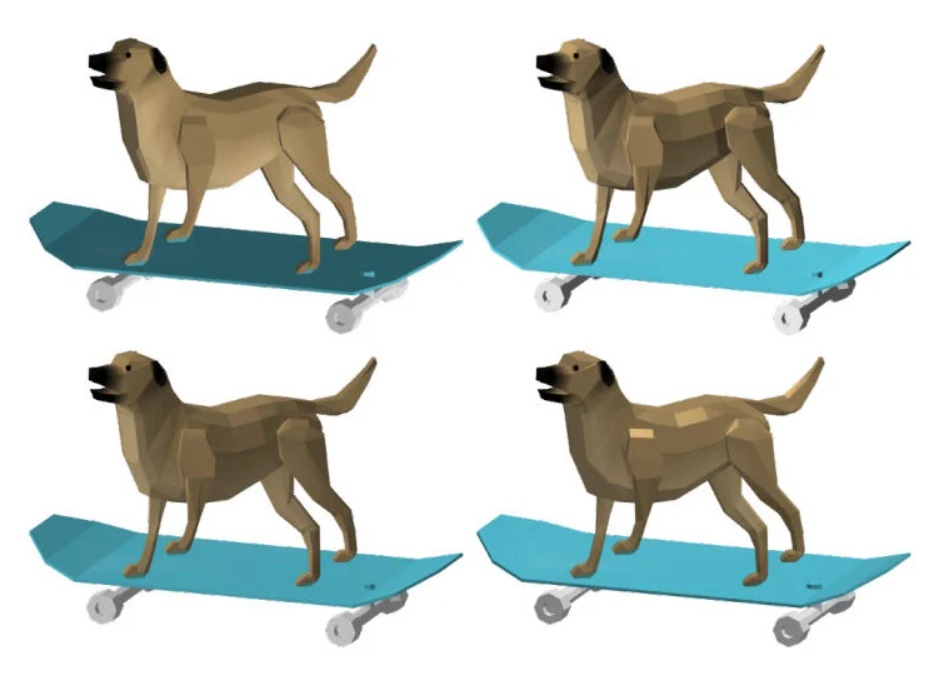
Researchers at MIT have announced their new software program, which they call Meschers, designed to create representations of these impossible objects with greater dimension than a drawing.

It’s not quite three-dimensional, because the shapes are impossible, but these “2.5-dimensional” representations allow us to process them visually as if they were completely three-dimensional.

Usually, the optical illusion of an impossible object falls apart when viewed from a different angle.

But the Meschers program — the name combines M.C. “Escher” and “meshes” — allows scientists and mathematicians a better model they can use to perform calculations and study different variables without the limits of two-dimensional representations.

It’s hard to predict where programming like this will take us. MIT PhD student Ana Dodik says the program could eventually aid in research across fields as varied as thermodynamics, architecture, and geometry.

They also said the code for the software will be released to the public, so you’ll have the opportunity to create some impossible objects yourself soon!

But, until then, please enjoy this Meschers rendering of the impossible dog, complete with different lighting effects.

Happy visualizing, everyone!