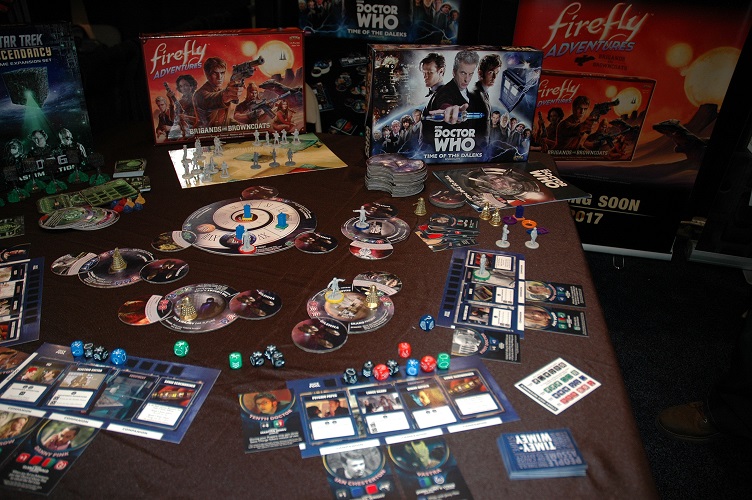
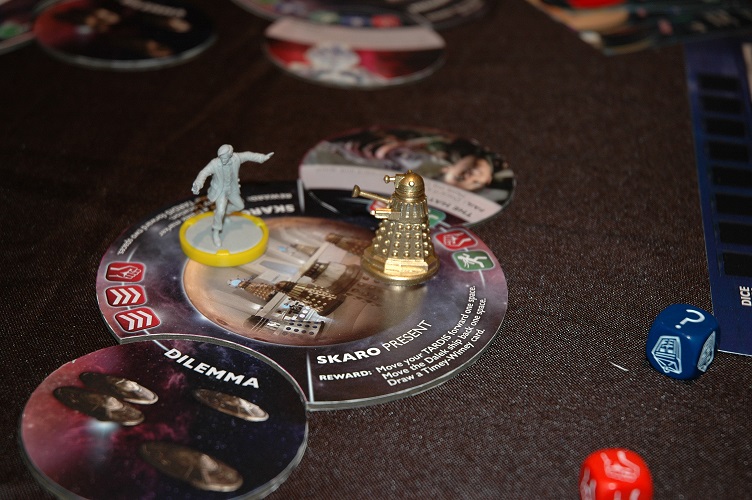
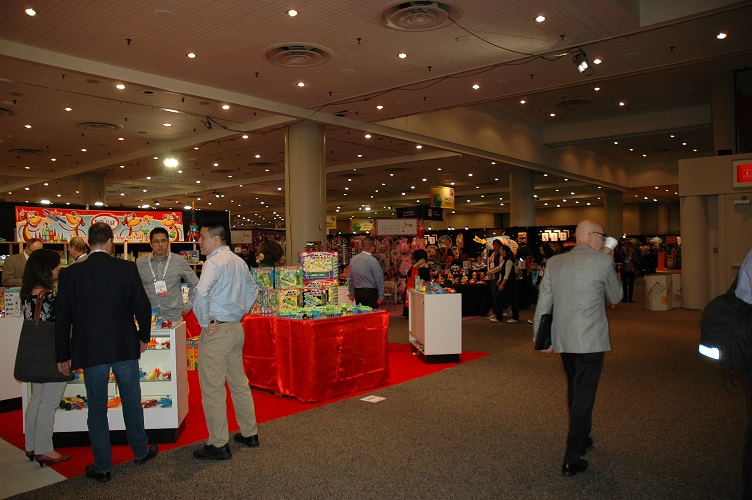
Board Game, But BIG!

I was surfing social media on my lunch break when I stumbled upon a video on Twitter (not X, never X) featuring a giant balancing game with Tetris-style game pieces.

It’s called Tetris Tumble XL and it’s apparently available at Walmart. And although it’s not a one-to-one gameplay comparison, it is interesting to see Tetris super-sized as a gaming experience.

It’s neat. It’s not building-sized Tetris neat, but it’s neat.

Of course, it’s only the latest example of a traditional game experiencing Godilla-like growth to turn it into a party game.

The most traditional form of “board game, but big” is undoubtedly Chess.
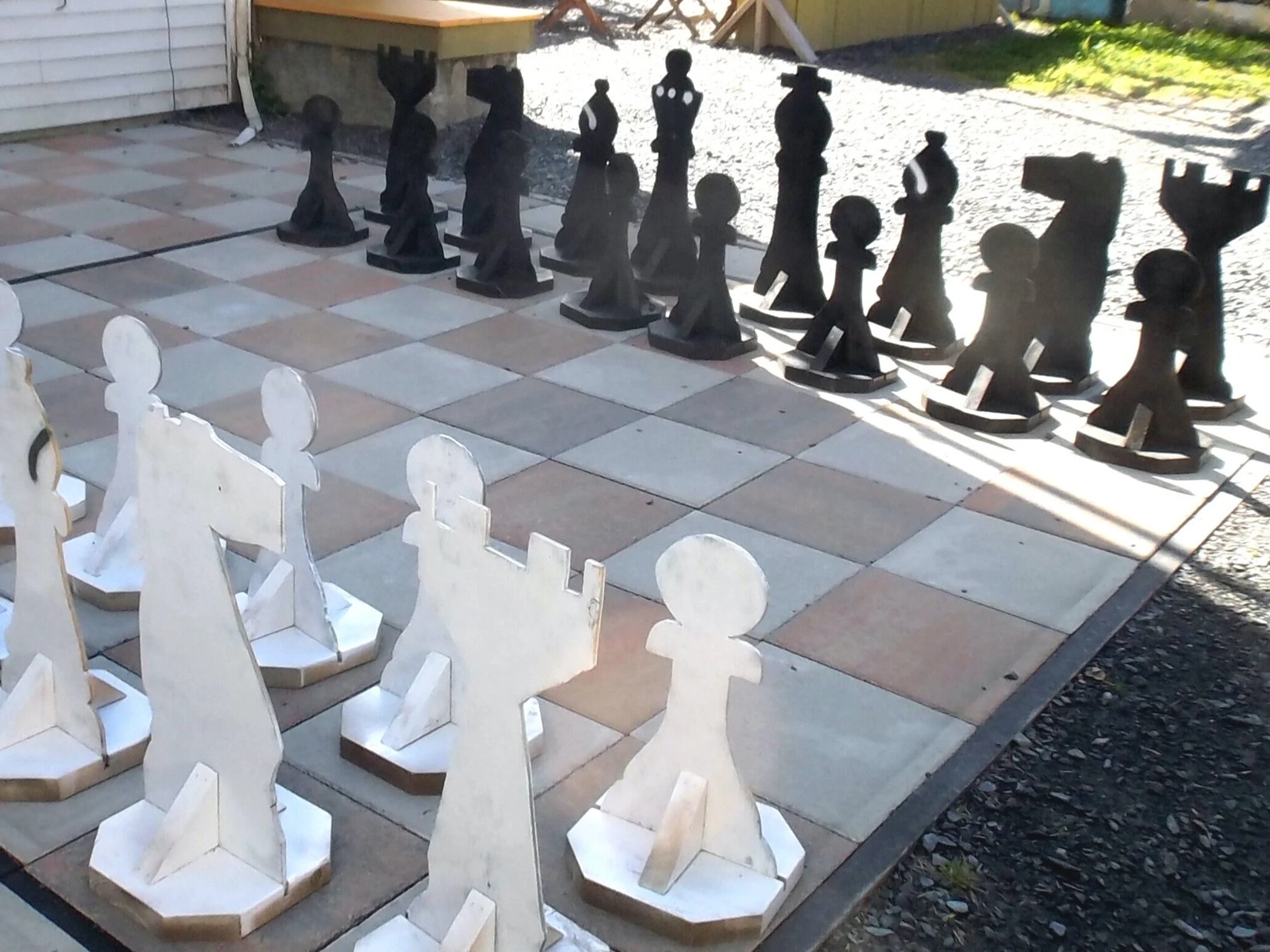
There are literally dozens of places where you can enjoy a gargantuan game of Chess. Wooden cutouts, full wooden pieces, sculpted stone… the aesthetics are all part of the experience.
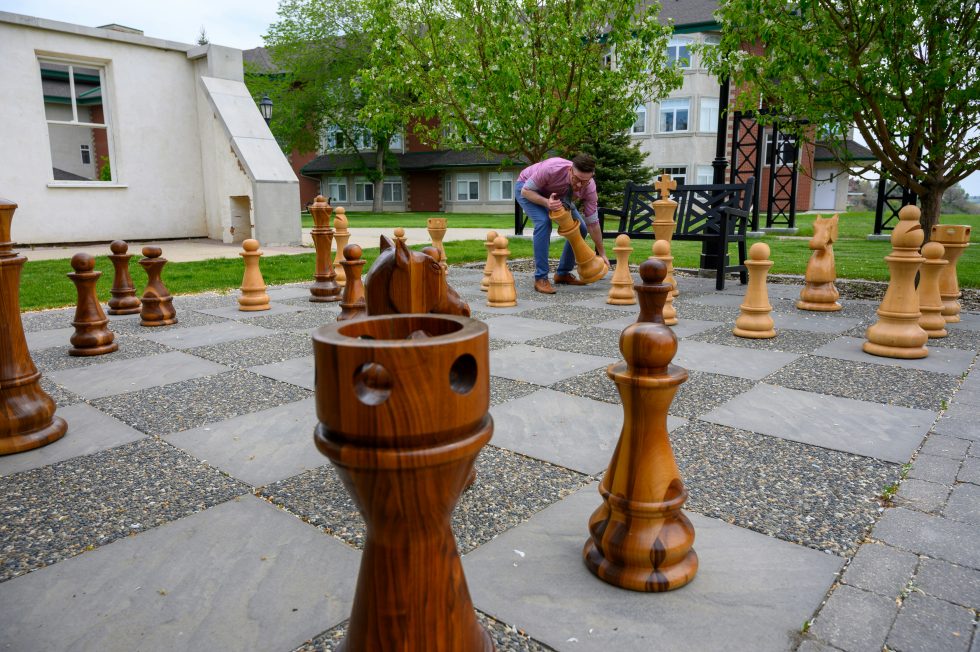
Plus you can easily play with humans as the chess pieces, which adds a fun element to the sheer scale of the game. I’ll never forget seeing a game just like that decades ago in an episode of The Prisoner.

There’s something about people as literal pawns being controlled that adds some serious philosophical spice to the game’s proceedings.

For a more lighthearted, but no less impressive translation when it comes to scale, there’s Mark Perez’s life-size Mousetrap.

Now, this isn’t playable because there’s no game board, but if we’re all being honest, did anyone actually play the game? Or did you simply set up the contraption and let it tumble and turn and clatter in delightful motion?

This 25-ton version of the board game’s colorful selling point toured festivals and fairs for years, concluding with a car-smashing weight rather than a plastic diver and a little net over some hungry mice.
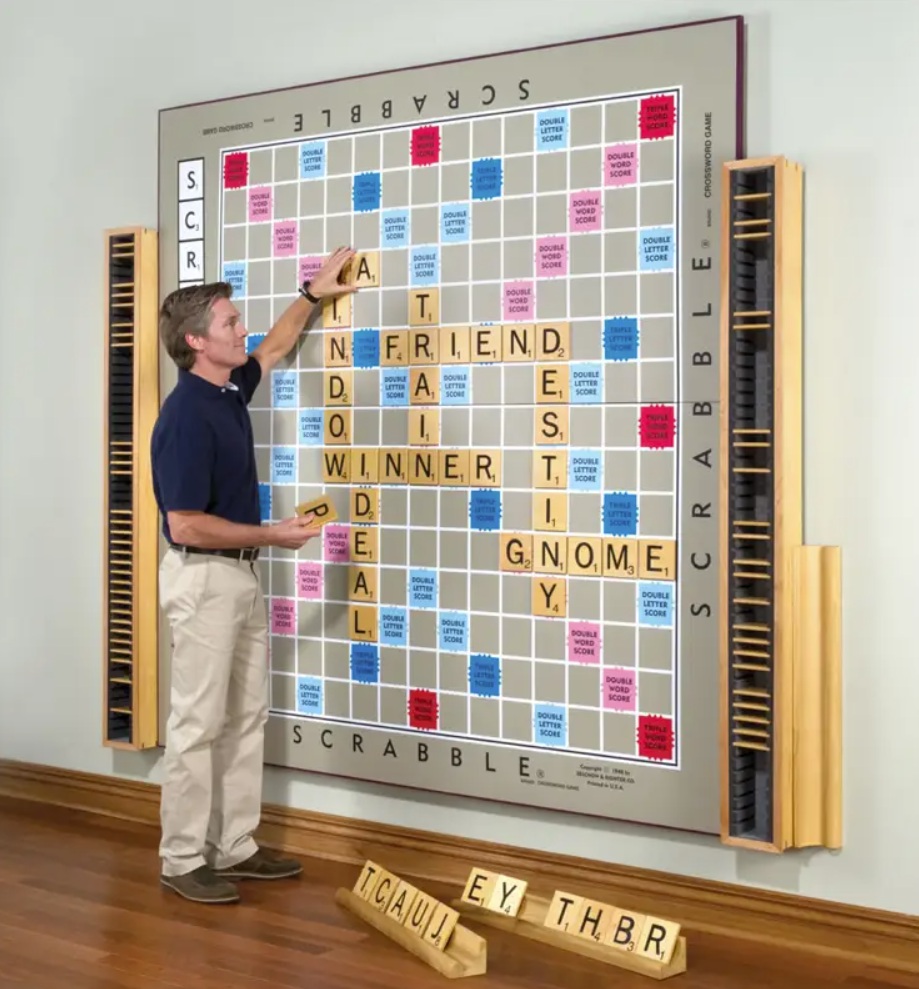
Hammacher Schlemmer used to sell a wall-sized giant Scrabble game that they dubbed The World’s Largest Scrabble Game, and it retailed for $12,000!

There are some more affordable large Scrabble games out there now for players to enjoy on a sunny day outside, but nothing that rivals this Hammacher Schlemmer monstrosity.
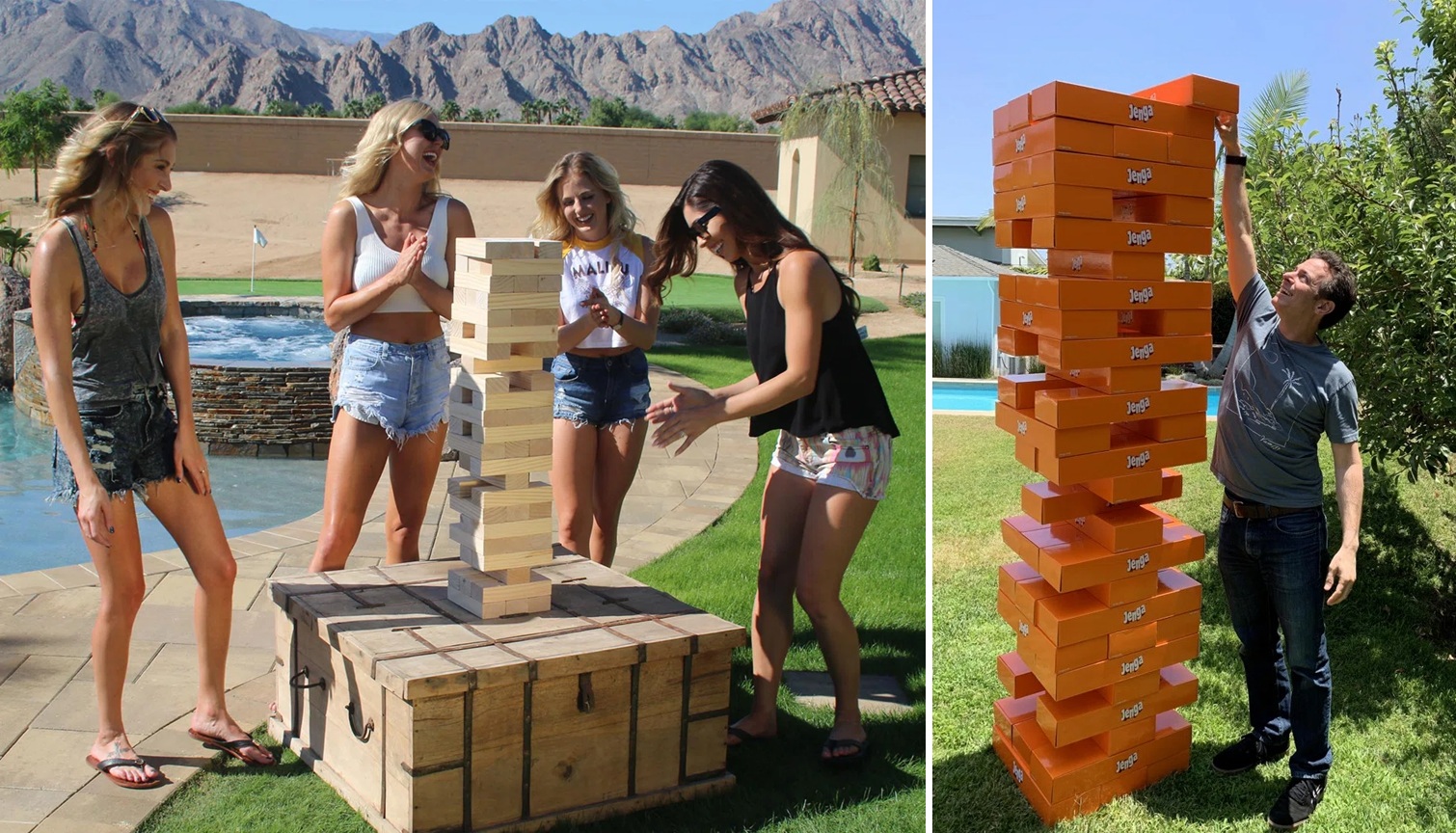
You’ve probably seen outdoor versions of Jenga. There’s a wooden version that still remains relatively portable, and an XXL gigantic edition that dwarfs the man playing it in the photo.

I’m not a huge fan of the cacophony that ensues when a regular game of Jenga ends, so I don’t really enjoy the larger versions either. Give me Catch the Moon any day, or maybe a nice round Junk Art or Rhino Hero instead.
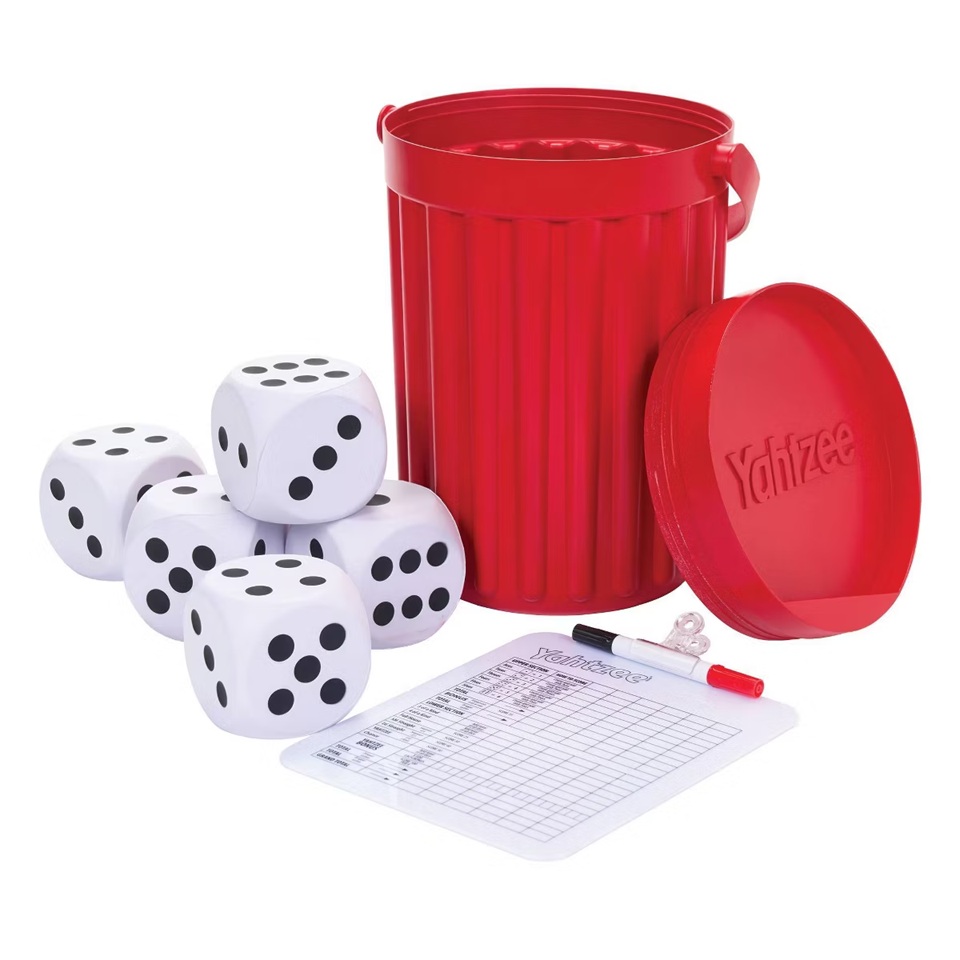
Have you ever wanted to play Yahtzee but wished the cup for the dice was garbage-can sized? Well, your mediocre dream has come true! With big foam dice, you can turn Yahtzee into a yard game.

Look at how much fun these people are having! And no, I did not crop the photo that way. That’s the promotional photo as intended, crouching half-man and all!

Operation has always been a finicky little beast of a game, and it seems like no two versions of the game are the same.

Some are more sensitive, while some — like the version at my babysitter’s house — had a buzz that was downright painful.

But this giant version? I could see this being a pretty fun challenge, depending on how heavy the pieces are.
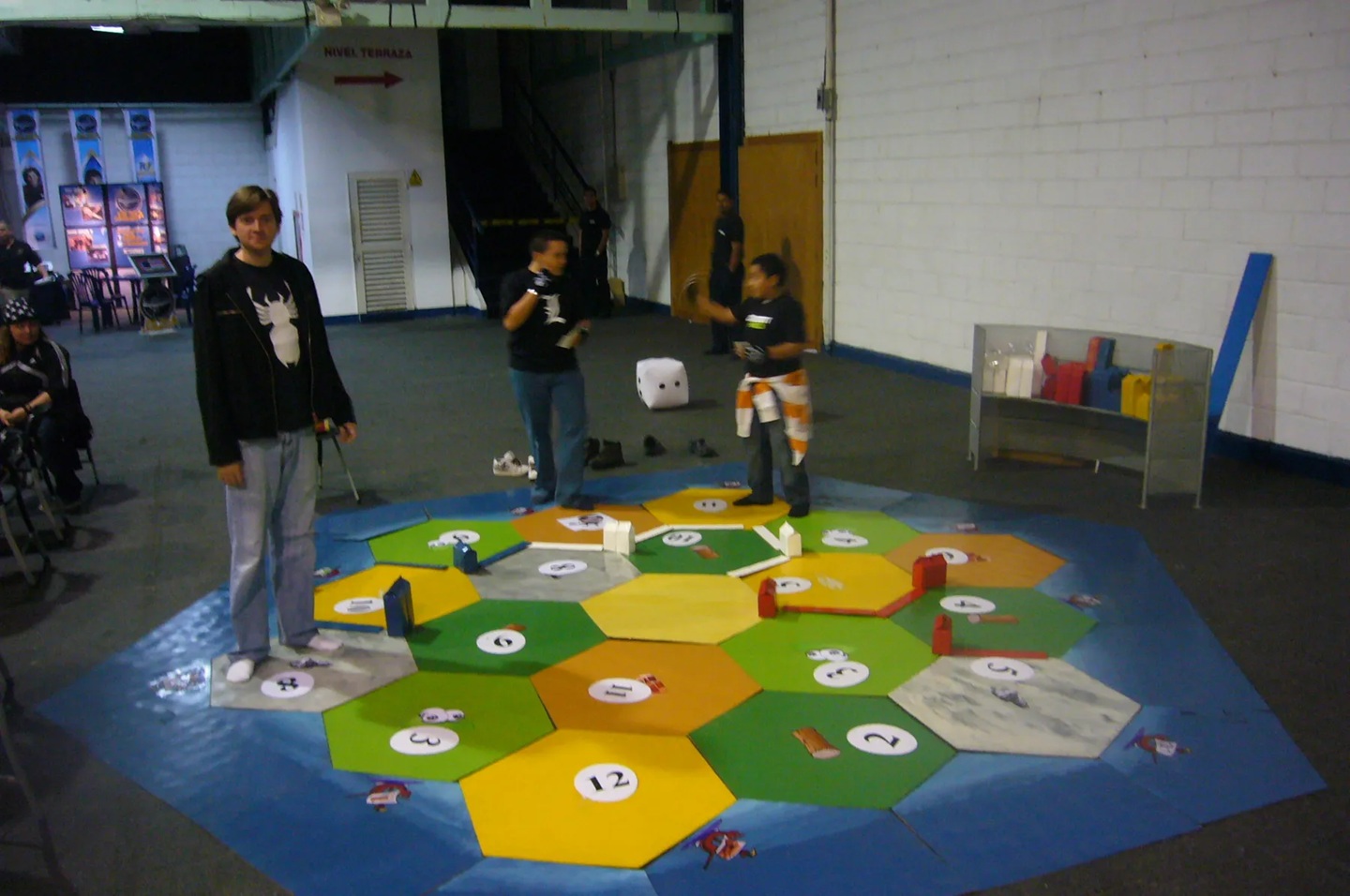
Family-Size Settlers of Catan, Caracas Comic Con 2011

Settlers of Catan is not just a modern addition to the classic board game pantheon. It’s also the only possible challenger to Chess’s dominance as a build-it-big board game.

Life-size versions of Catan have been played at numerous gaming conventions and other events, and it’s hard to get an accurate number of how many giant sets of this resource management game are out there in the wild.
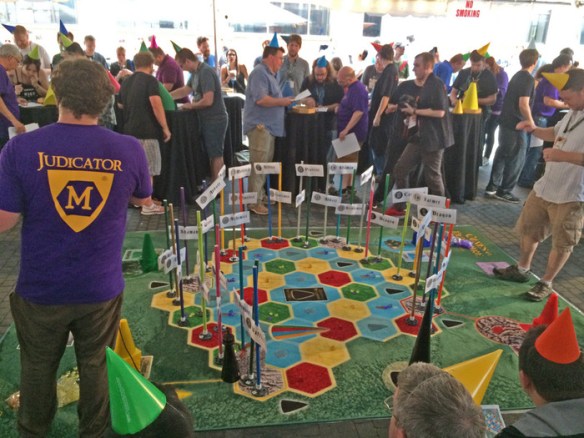
2783642-2767076242-563bb

That’s not the case for the fictional game turned real life game Cones of Dunshire. As far as I know, there’s only one larger-sized version of the game, produced for a charity event at GenCon by Mayfair Games (the same company that created Settlers of Catan).

And you know, for the most part, I can see the appeal of these inflated, occasionally inflatable versions of classic games.
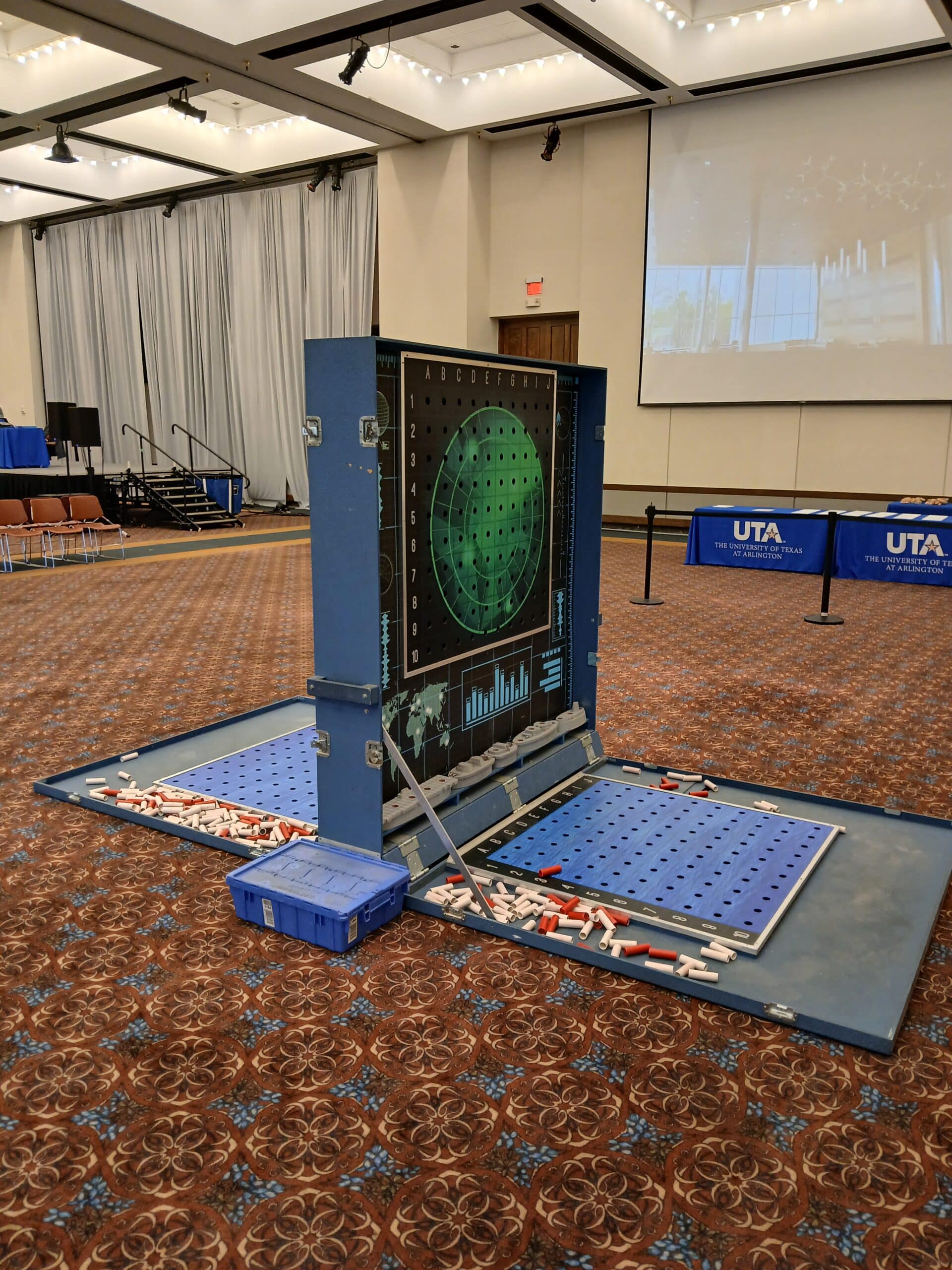
I take that back. I do not get how making Battleship bigger makes it more fun in any way, shape, or form. It seems so easy to cheat, intentionally or otherwise. Unless I actually get to lob stuff at my opponent’s ships over the wall, I’m not interested.
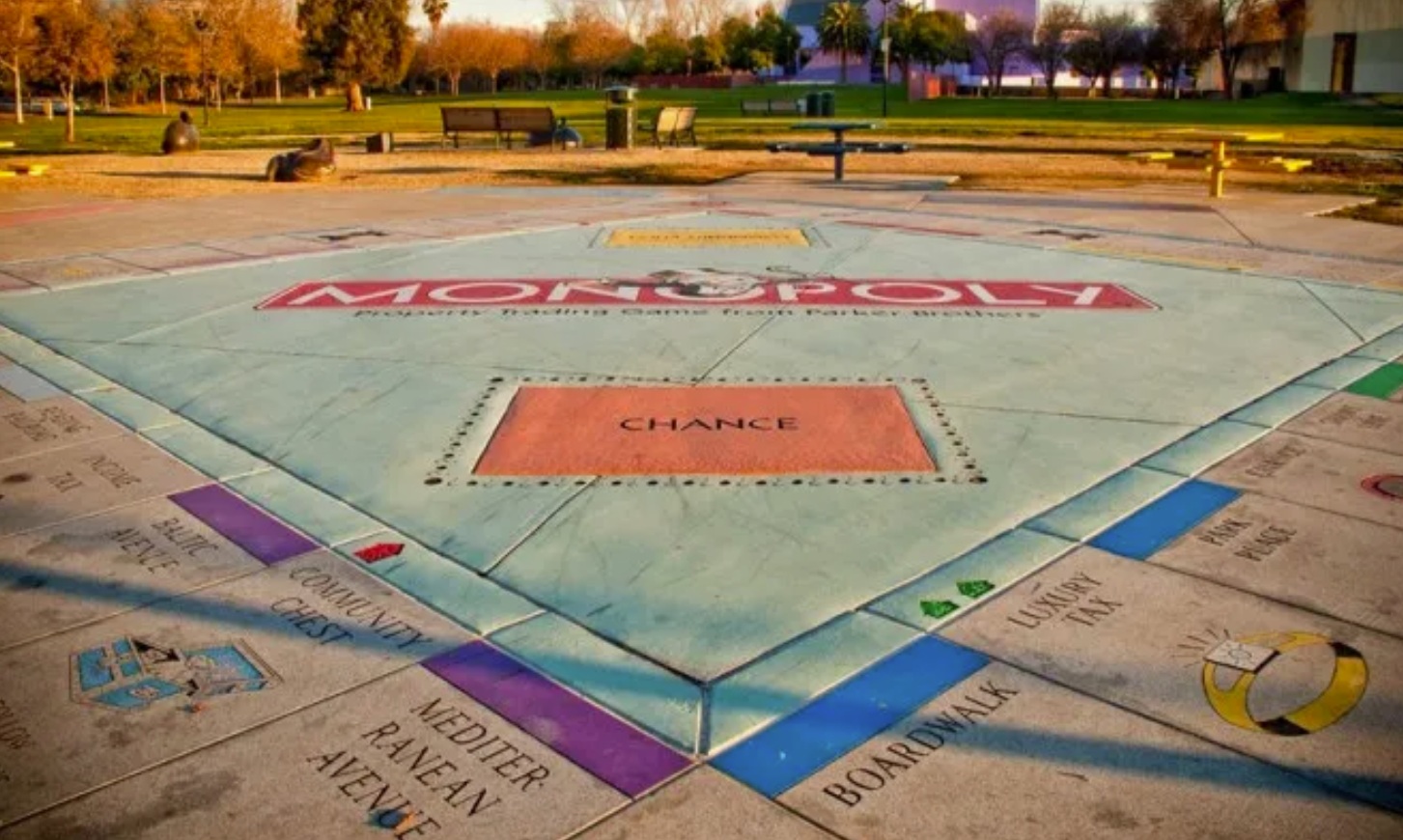
And while this giant Monopoly board is impressive, I still don’t think it’s enough of a whimsical gimmick to actually get me to play Monopoly.


Clearly there is a market for oversized versions of classic games. And I have some suggestions for board games that should, nay, MUST make the jump to human-sized for the betterment of play all over!
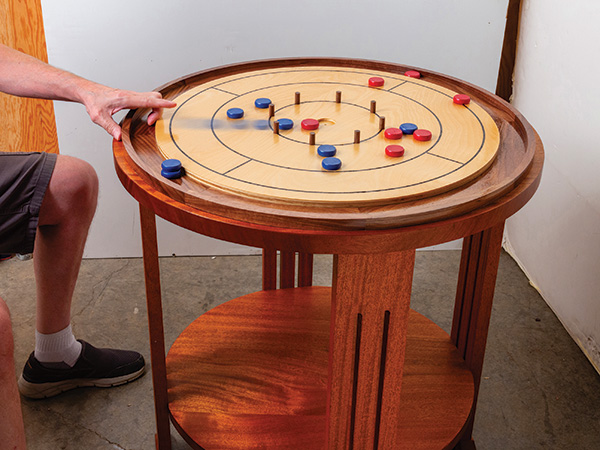
Let’s start with a Canadian classic: Crokinole.

This would be so simple. Get a bunch of curling stones, a hockey rink, draw out the board, and secure some posts with sandbags or something. Then get tossing!

Next, there’s Chutes and Ladders.

Yes, there was a life-size version of this from 2010 when Indonesia’s University of Surabaya honored the original version of the game — Snakes and Ladders — with a 45-foot game board and 105 players.
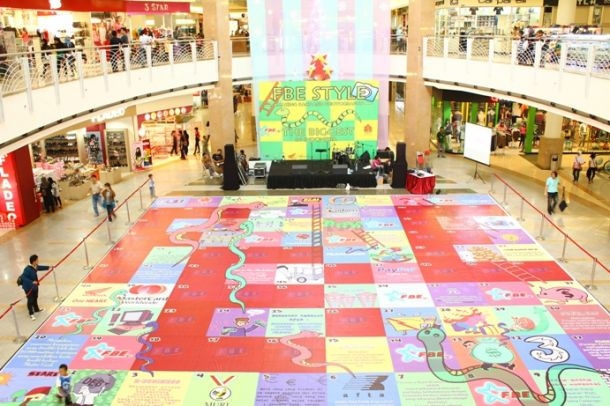
But that’s just a big flat board. I want a version with actual ladders and actual chutes! (Sorry, no snakes in this one.) Imagine if we could find the right hill OR wide-stepped public staircase so that you could actually ascend the board and slide down in delightful misfortune! That sounds awesome.

Oooh, what about Crossfire?
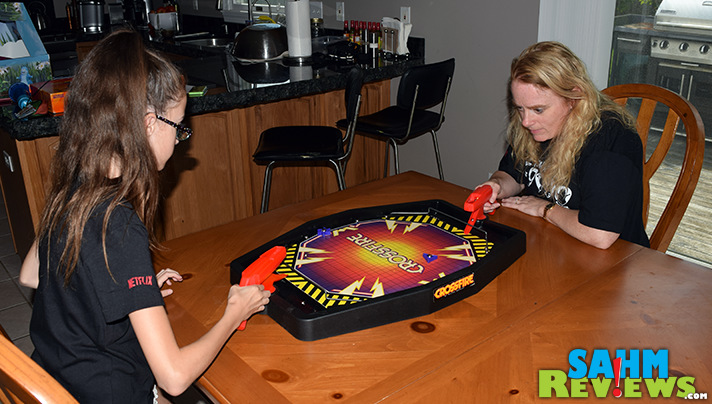
Image courtesy of SAHM Reviews.

In this game, you used little marble-spewing guns to knock targets into your opponent’s space. Imagine getting to sit sidecar-style next to a dodgeball launcher and trying to outwit your opponent!
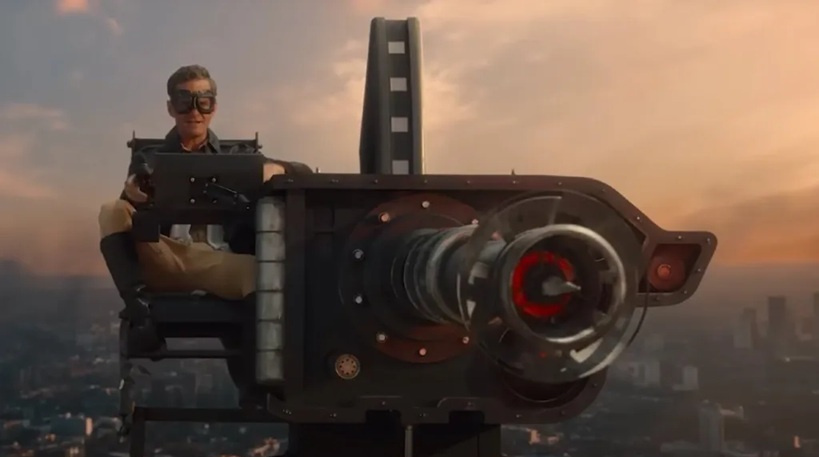
Sorta like this, except with dodgeballs instead of a laser.

Now, if you’ll excuse me, I need to get back to constructing my life-size version of Fireball Island.
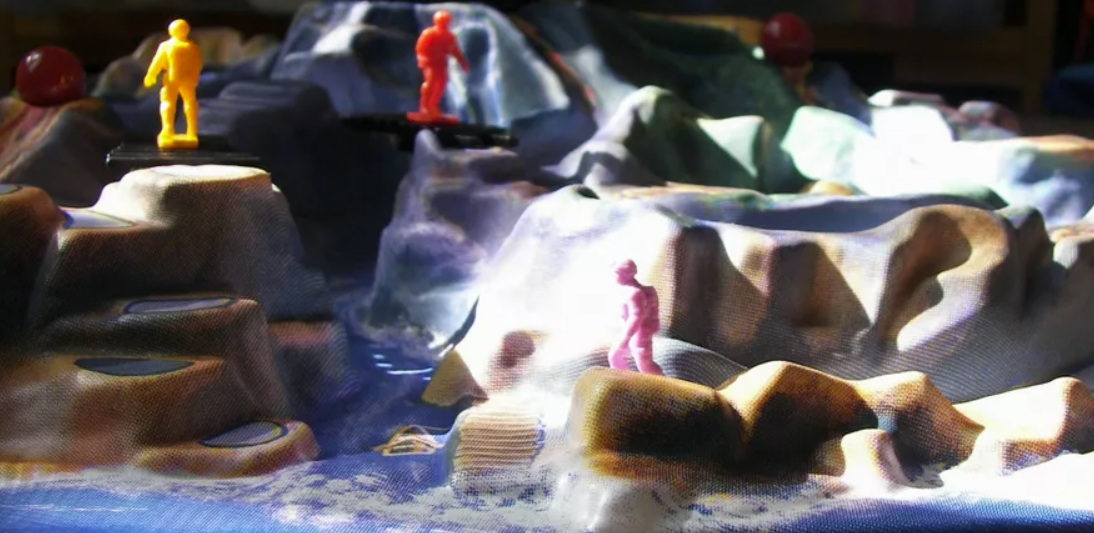
I’ve almost got all the kinks worked out of the Indiana Jones-esque giant fireball chase sequence.

Oh, hey, I need a couple of game testers. You’re pretty fleet-footed, right, fellow puzzler?
PuzzleNation Product Review: 13 Monsters

13monsters0

It’s nearly Halloween, and monsters are a seminal part of the season’s festivities.

Maybe you’re hunting them alongside Buffy, the Winchester brothers, or agents Mulder and Scully. Maybe you’re trying to survive them, like any number of nubile teens at parties, secluded cabins, lakeside retreats, or after hours at the school.

Or maybe, you’re making them.

There’s a grand tradition in pop culture of monster-making, from Dr. Frankenstein and Dr. Moreau to Rita Repulsa and Mr. Sinister.

And who hasn’t wanted to make their own monster at one time or another?
13monsters5

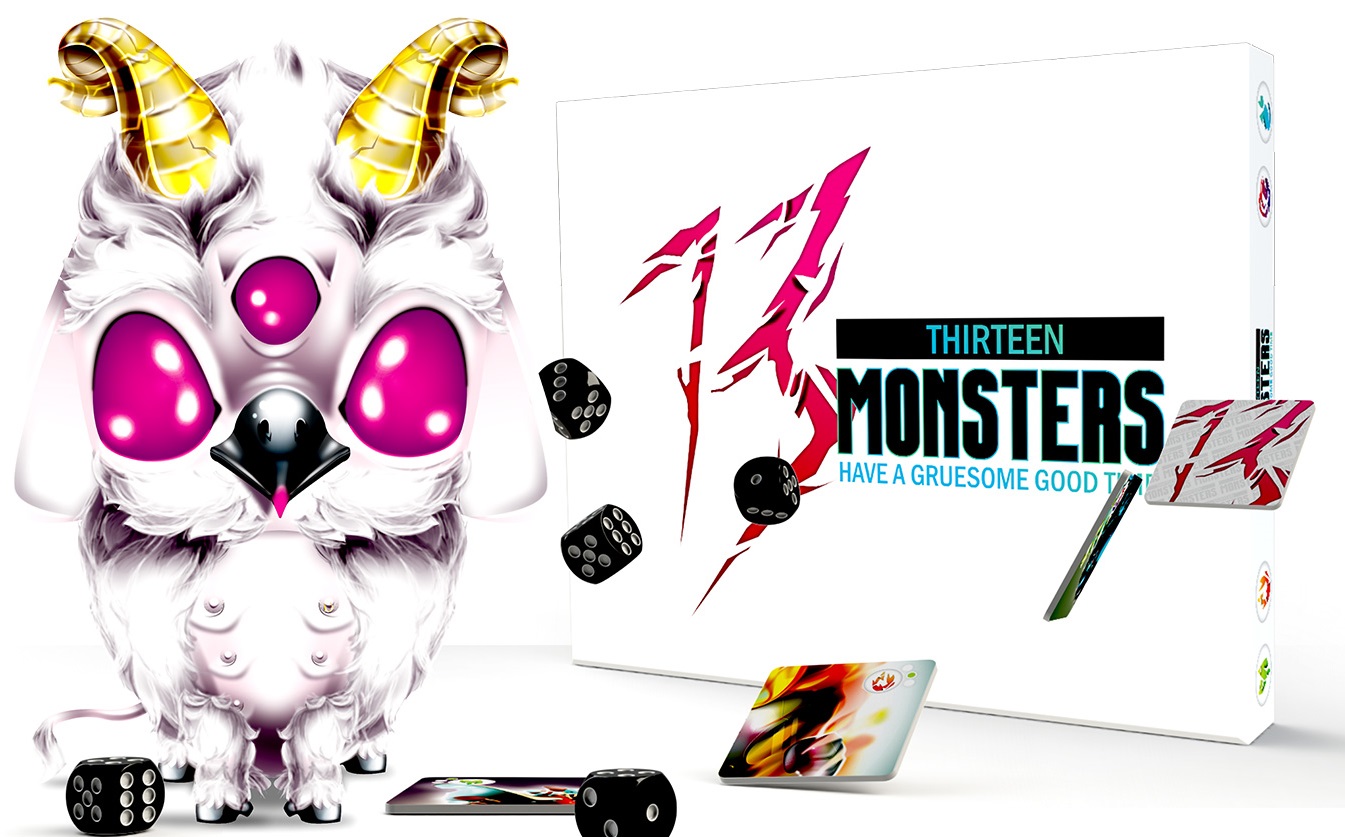
Well, you get your chance in 13 Monsters, a cutesy-spooky build-’em-and-fight-’em game with a load of skill and a little luck required.

13 Monsters combines the attentiveness of Memory, the dice-rolling skills of Yahtzee or Tenzi, and the tactical timing of Bears Vs. Babies or Fluxx to create an enjoyable gameplay experience that’s more fraught with tension than you might expect from a game featuring such heartwarming big-eyed monsters.

13monsters2

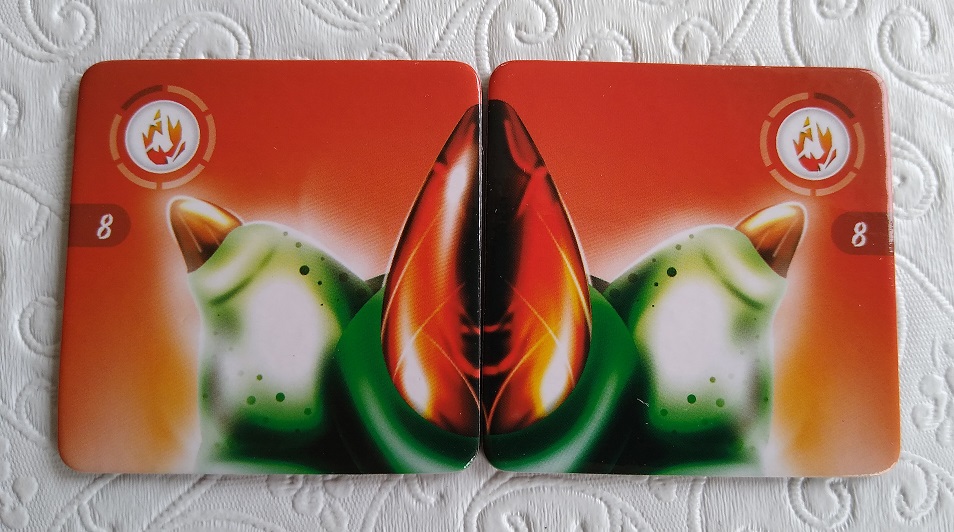
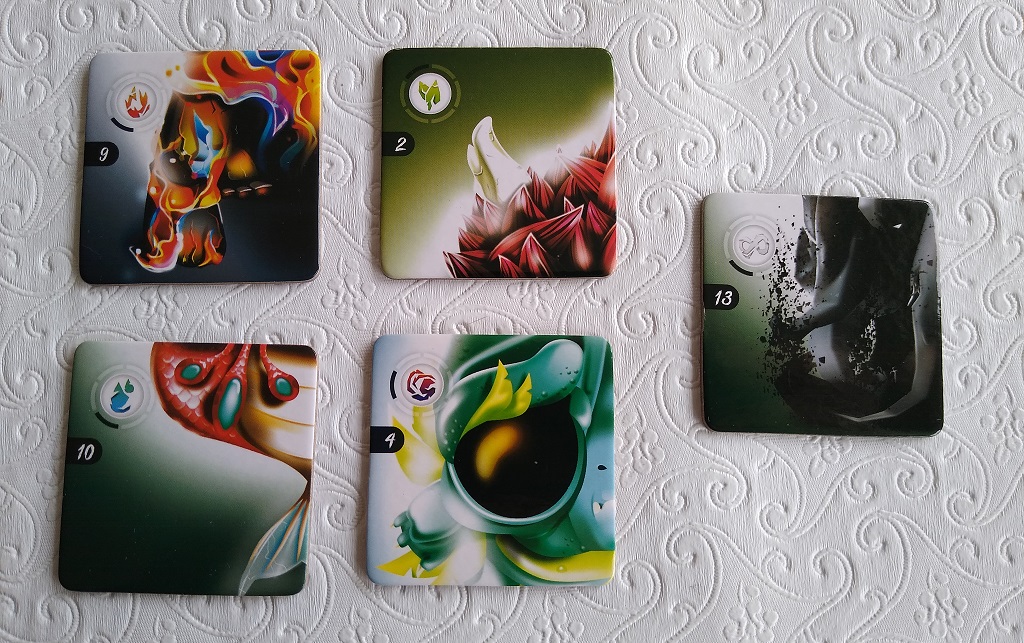
And while we’re on the subject, the art for these thirteen monsters is out of this world. The creatures are visually striking, gorgeously rendered onto the tile pieces, and so vivid that they practically pop out into 3-D.

Each has a distinct flavor, adding horns, fangs, wings, and all sorts of tiny details to hint at the deeper, darker worlds they might inhabit. I cannot say enough good things about the art direction behind this game.

13monsters7

The game starts with a 9×9 grid of tiles, all face down. The pieces of thirteen different monsters are scattered across this grid, and you must find matching pairs of monster pieces to build your gruesomely adorable fighters. If you flip two tiles and they don’t match, your turn is over.

13monsters8

Once you locate a pair — the two tiles making up the top of the head, the two tiles making up the eyes, or the two tiles making up the body — you place it in the play area in front of you, and you may draw again. You can keep drawing until you fail to make a match.

13monsters6

If you have all three sets — no matter if they’re from the same monster or their element symbols match — you combine them to form a full monster.

13monsters1

Once you have a full monster, you can attack your opponents with the goal of taking one of their matched pairs for yourself. (This is one way to assemble a complete, matching monster.)

Different monster combinations have different powers as well, depending on how many of your sets match. This can grant you the power to swap parts between your monsters, freeze tiles on the memory board to prevent other players from taking them, or look at additional tiles on the memory board.

13monsters4

As you can see, there’s a lot going on at once, and the more monsters you assemble, the more options you have available. You need to keep track of what tiles have been revealed, what pairs your opponents have, what pairs you need, how dangerous their monsters are, and how dangerous your monster is. (There’s also the threat of the thirteenth monster out there, which is the most powerful.)

Testing your memory, your ability to assemble the best monster from the pieces you have available, and gauging when to strike for maximum effect, this game will keep board gamers and puzzle fans alike on their toes.

13monsters3

We were impressed by how much gameplay was packed into what seemed like a simple memory/combat mashup game. The wealth of options available, the stunning artwork, and the addictive gameplay quickly made it a hit at the gaming table.

Plus the relative family friendliness of the monsters ensured that younger players could get into the game as well, exposing themselves to several different gameplay styles all at once.

While it may remind you of Dr. Frankenstein’s famous creation, 13 Monsters is no cobbled-together stroke of luck. It’s a well-assembled machine.

[13 Monsters is available from 13-monsters.com and select European outlets.]


Thanks for visiting PuzzleNation Blog today! Be sure to sign up for our newsletter to stay up-to-date on everything PuzzleNation!

You can also share your pictures with us on Instagram, friend us on Facebook, check us out on TwitterPinterest, and Tumblr, and explore the always-expanding library of PuzzleNation apps and games on our website!

PuzzleNation Product Review: Vault Assault

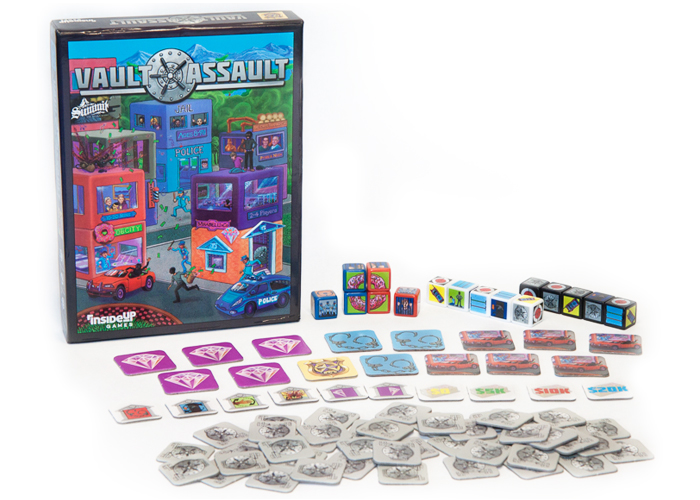
There is no rivalry in the world of make-believe more iconic than cops versus robbers, and rarely has that classic dynamic been as frenetic and as fast-paced as it is in the dice game we’re reviewing today, Vault Assault.

The goal of the robbers is to acquire as much wealth as possible and then escape before the cops arrive. The goal of the cops is to minimize the amount the robbers acquire/get away with and capture the robbers before they can escape.

Each round, the players will portray both the cops and the robbers, allowing players opportunities to both rack up lots of ill-gotten gains and minimize the loot captured by the other players.

Each round consists of two phases: the Diamond Heist and the Vault Assault.

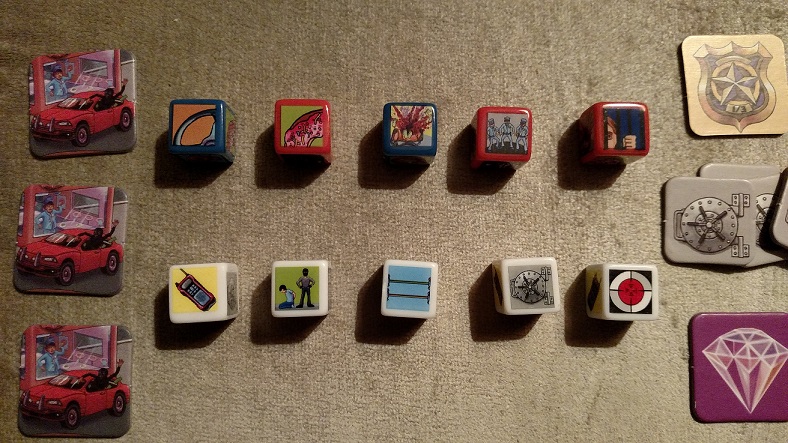
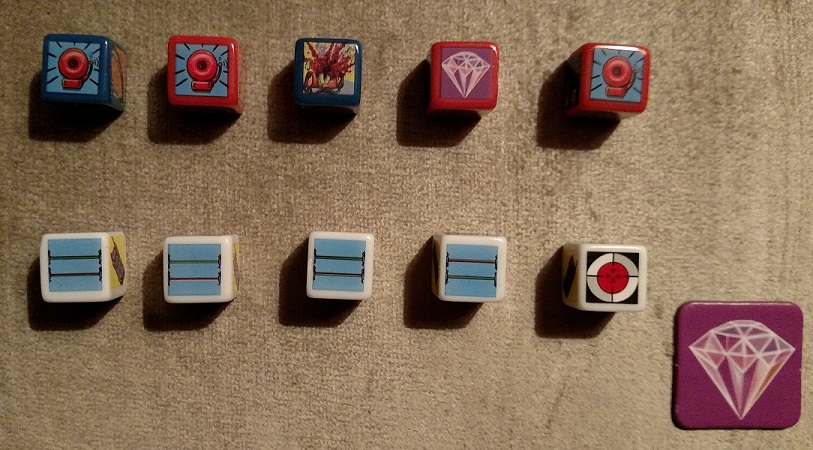
In the Diamond Heist phase, the cops and robbers each line up five of their dice. (The cops do so secretly, laying out an arrangement of three alarm symbols, one dye-pack symbol, and one diamond symbol in any order they choose.) The robbers lay out five wire symbols, and then choose one to flip, trying to match the one they flip to the diamond symbol the cops have secretly chosen.

Essentially, the Diamond Heist is part strategy, part luck as the robbers try to steal the diamond by cutting wires to the security system, while the cops lay dye-pack traps to ensnare the robbers. Either the cops will begin the Vault Assault with an advantage or the robbers capture a diamond tile as part of their loot.

[In this scenario, the robbers chose poorly, and triggered the alarm, meaning that the cops will start with one die already rolled when the Vault Assault starts. The robbers could have opted to flip another die in the hopes of finding the diamond, but in the end, they opted not to risk giving the cops a greater advantage.]

Once the Diamond Heist phase is concluded, the Vault Assault begins, and the game kicks into another gear.

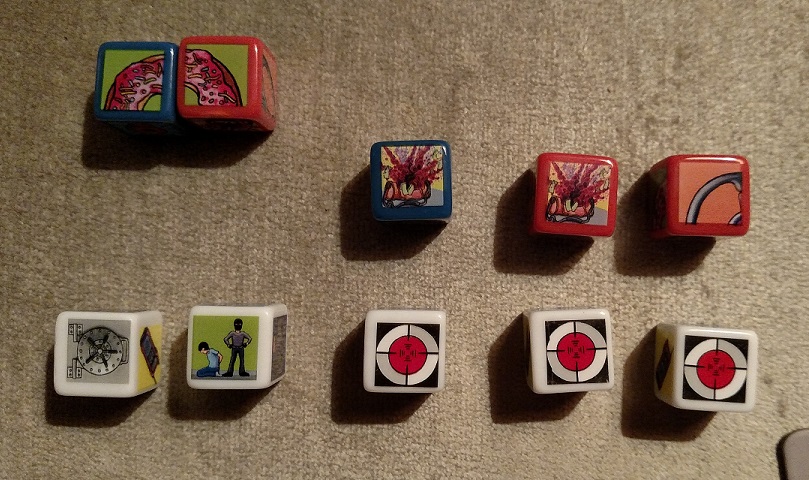
Tenzi- or Yahtzee-style dice rolling and quick decision-making become crucial as both cops and robbers try to roll specific patterns in order to complete tasks. As the robbers roll to steal from the vault (or each other), to interfere with the cops, or to escape, the cops are trying to complete rolls in order to fuel up, arrive at the crime scene, engage the robbers, and arrest them.

Both sides roll their dice at the same time, making for an incredibly chaotic and fun play experience that simulates the kind of stress you might be under if you were really robbing a bank and trying to get out before the cops arrived. Between robbers filling their coffers (and forcing the cops to reroll their dice) while the cops confiscate some of the stolen loot while trying to arrest the bad guys, it’s a very competitive and adrenaline-inducing sequence of events.

In this scenario, the cops have two out of the four doughnut symbols up (meaning they’re halfway to completing the first task en route to arresting the robbers). But they also have two dye-packs up, and two more dye-packs would allow them to remove several Vault Tiles from the robber’s stacks, meaning the robbers would have less loot. Would you choose to keep rolling for doughnuts or to hamper the robbers with dye-packs?

On the robber side, they have three targets, meaning they’re one away from stealing a Vault Tile from another player and adding to their loot. But they also have a green hostage symbol up, which they can put aside in order to make the cops immediately reroll all of their dice. Would you choose to go for the steal or to disrupt the cops’ efforts?

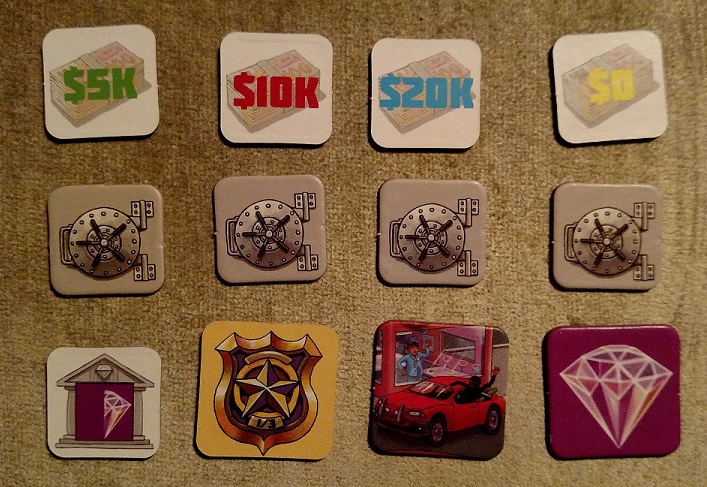
In addition to all that interplay, some of the vault tiles also trigger actions that can hamper your gameplay. A handcuffs symbol, for instance, means you have to roll your dice with your wrists together until the end of the turn (as if you’re handcuffed). These little roleplay-centric details add a playful edge to the game, injecting a bit of silliness into gameplay that could otherwise turn somewhat cutthroat.

One several rounds have elapsed, the players (both cops and robbers) total up the value of the loot in their getaway cars, and the player with the highest total wins. Oh, and those Diamond Heist tiles? They’re worth $40,000 apiece!

[With Vault Tiles ranging in value from 0 to $20,000, a diamond tile could be a real game-changer for your loot total at the end of the game.]

Vault Assault is less about long-term strategy and more about being able to make good decisions in the heat of the moment. If you’re able to put your puzzly mind to work making the most of the dice rolls in front of you — both to increase your profits and hamper your opponents, whether you’re a cop or a robber at the time — then you’ll probably come out ahead.

Of course, that’s more of a one-on-one mindset. And with three-player and four-player/team rules to allow for different combinations of players, you can implement some wider strategic gameplay. In three-player games (1 cop and 2 robbers), have one robber focus on hampering the cops while the other raids the vault (and then switching, so both robbers can cash in). In four-player/team games (two cops, two robbers), one cop can focus on recovering stolen goods while the other works on arresting players. There’s plenty of fun to be had with the format.

Can you cash in, hold the cops at bay, and make your escape, or will the cops nab you and all your ill-gotten goods before you make it out the door? And in the end, will you make a better cop or a robber?
[Vault Assault, published by Inside Up Games, is available through their website, as well as certain online retailers.]


Thanks for visiting PuzzleNation Blog today! Be sure to sign up for our newsletter to stay up-to-date on everything PuzzleNation!

You can also share your pictures with us on Instagram, friend us on Facebook, check us out on TwitterPinterest, and Tumblr, and explore the always-expanding library of PuzzleNation apps and games on our website!

A Relatively Modern Idea: Fairness in Dice Rolling

[Image courtesy of Larsdatter.com.]

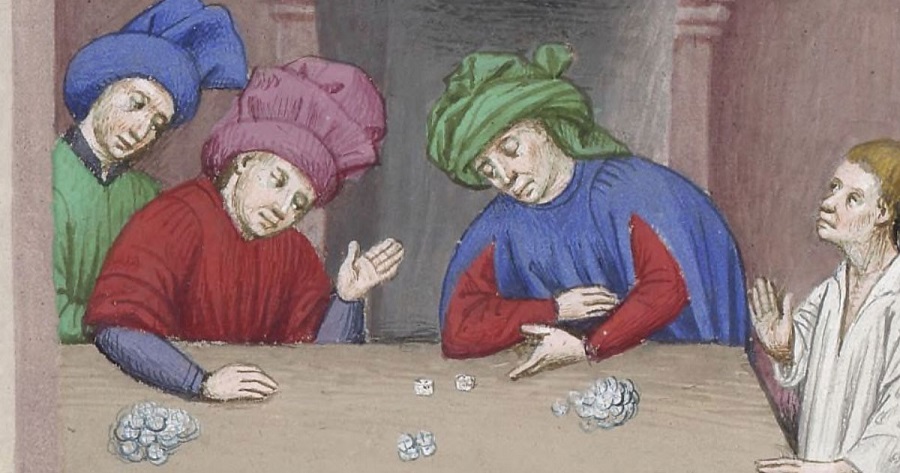
This may come as a surprise to you, fellow puzzlers, but fairness was not always a priority when it came to rolling dice.

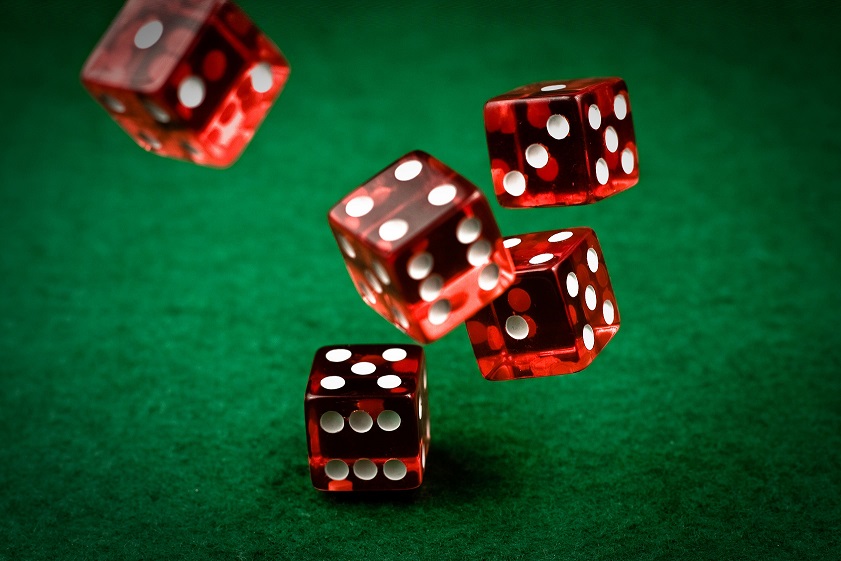
Nowadays, whether you’re going after that elusive Yahtzee, hoping for doubles to earn another roll in Monopoly, or trying to roll sevens in a game of craps, the basic concept behind throwing dice is that every outcome of a six-sided die has an equal chance to appear. Unless you’re dealing with loaded or gimmicked dice, your odds should be 1 in 6.

But a recent study by researchers from the American Museum of Natural History and the University of California, Davis, has revealed that fairness in dice rolling didn’t really become a concern for dice users until the Renaissance. Researchers gathered dice spanning 2000 years of human history to explore why this was the case.

[Image courtesy of Wikipedia.]

From an article on Science Alert:

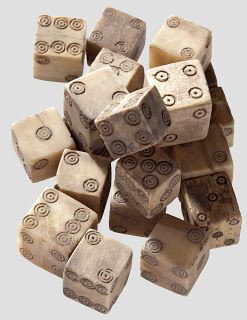
Roman-era dice, the researchers found, were a mess when it came to shape. They were made from a variety of materials, such as metal, bone and clay, and no two were shaped entirely alike. Many were visibly lumpy and lopsided, with the 1 and 6 on opposite sides that were more likely to roll up.

In fact, it seems like variety was the name of the game in Roman times, since the number configurations, shape, and size were inconsistent across the board, although dice were fairly common in the time period.

[Image courtesy of Pinterest.]

The Dark Ages led to a downturn in dice frequency, as they become very rare between the years 400CE and 1100CE.

The use of dice rebounds after 1100, and are most commonly found in ancient Mesopotamia and Egypt in what is known as the primes configuration, meaning that opposite numbers add up to prime numbers. 1 pairs with 2, 3 pairs with 4, and 5 pairs with 6.

There was a reinvigorated focus on the mechanics of chance and calculating probability, thanks to names like Galileo and Pascal, as well as a spirit of greater scientific understanding overall. Those Renaissance influences led to both a standardized shape for dice and a change in the numbering system. At this point, most dice convert to the sevens configuration, where opposite sides add up to seven (1 pairs with 6, 2 pairs with 5, and 3 pairs with 4).

[Image courtesy of Smithsonian.com.]

And according to lead researcher Jelmer Eerkens, cheating may have been on the mind of manufacturers going forward. “Standardizing the attributes of a die, like symmetry and the arrangement of numbers, may have been one method to decrease the likelihood that an unscrupulous player had manipulated the dice to change the odds of a particular roll.”

That change from variable shapes, sizes, and designs reflects a sea change in thinking towards dice and chance. Before, the shape didn’t matter because the results were attributed to Fate or some greater outside force, but later on, an understanding of chance and probability pushed standardization of dice forward.

In the end, it’s amazing how much of our culture and worldview, both past and present, can be revealed by exploring how we solve puzzles and play games.


Thanks for visiting PuzzleNation Blog today! Be sure to sign up for our newsletter to stay up-to-date on everything PuzzleNation!

You can also share your pictures with us on Instagram, friend us on Facebook, check us out on TwitterPinterest, and Tumblr, and explore the always-expanding library of PuzzleNation apps and games on our website!

The Weird, Wonderful World of Dice

[Image courtesy of ThoughtCo.]

Dice have been an integral part of gaming for centuries. They’re the simplest way to introduce randomness to a game.

The six-sided die is, by leaps and bounds, the most familiar die. The d6, as role-players call it, is a staple of classic board games like Yahtzee and Clue, as well as the centerpiece of role-playing systems like GURPS.

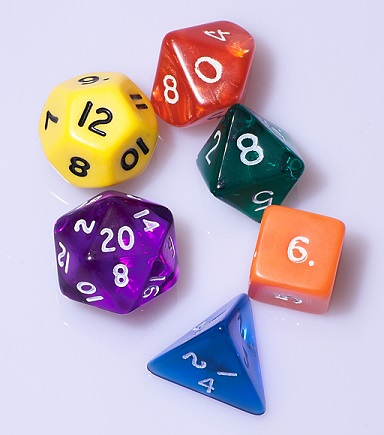
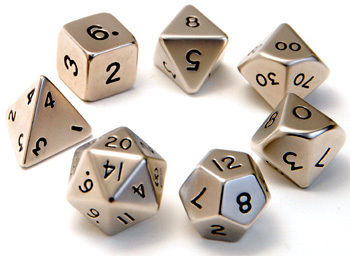
But the d6 is hardly the only kind of die you see in gaming. Plenty of games and role-playing systems rely on dice of other shapes in order to run smoothly.

[Image courtesy of Wikimedia.]

If you play World of Darkness role-playing games like Werewolf or Vampire: The Masquerade, then the d10 is your friend. If you enjoy updated editions of Dungeons & Dragons (or even board games like Unspeakable Words or Scattergories), the d20 is a familiar sight, whether it has letters or numbers on it.

A standard dice set for beginners Dungeons & Dragons contains six different dice shapes: a pyramid-shaped d4, a d6, a d8, a d10, a d12, and a d20. (Many come with 2 d10s, one with single digits and one with double digits, allowing you to calculate percentages).

[Image courtesy of Instructables.]

Heck, if you think about it, flipping a coin to decide something is simply rolling a two-sided die.

But when you start delving into the history of games, it’s amazing to see just how far back some of these traditions and conventions go.

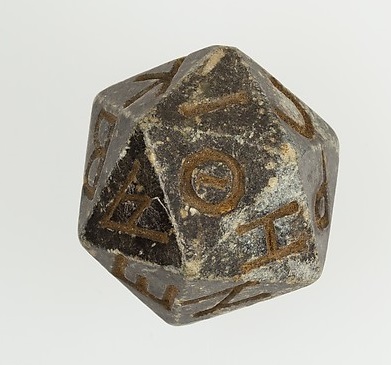
Did you know that The Metropolitan Museum of Art has a d20 in its collection?

Dating back to Roman times (somewhere between the 2nd century BC and the 4th century AD), the above die is inscribed with Greek letters. It’s not certain if this particular die was used for games or religious divination, but there’s no doubt it’s a beautiful example of craftsmanship.

And this is just scraping the surface. One of my favorite dice in my collection is an oversized 3D-printed d20 with Braille markings for every number. Such a cool piece.

Can you think of any strange dice in favorite games of yours, fellow puzzlers? We’d love to hear about them! (Unless they’re fuzzy dice hanging from your rearview mirror. Those don’t make reliable rolls in regular gameplay.)


Thanks for visiting PuzzleNation Blog today! Be sure to sign up for our newsletter to stay up-to-date on everything PuzzleNation!

You can also share your pictures with us on Instagram, friend us on Facebook, check us out on TwitterPinterest, and Tumblr, and explore the always-expanding library of PuzzleNation apps and games on our website!

The 2017 New York Toy Fair, Part 2!

toyfair35

On Tuesday, I gave you a general rundown of what it was like exploring the massive spread of puzzles and games on display at this year’s New York Toy Fair.

In today’s post, I’d like to highlight some of the puzzles and games that most impressed me. I think many of these will also appeal to many of my fellow puzzlers and PuzzleNationers as well.

So let’s dive right in!


toyfair21

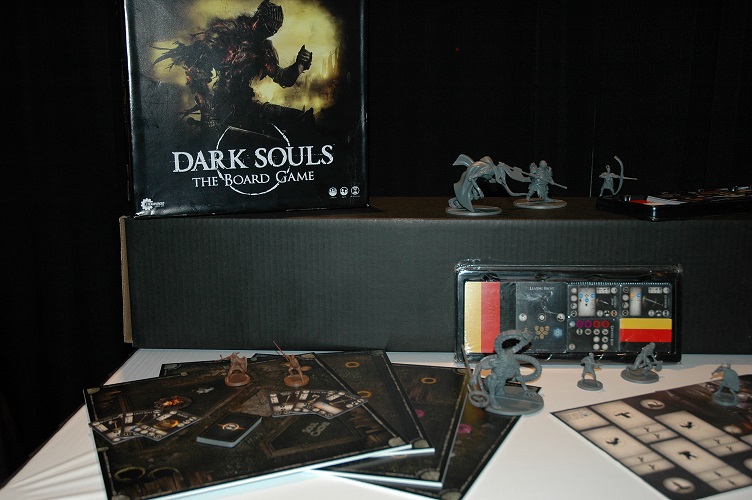
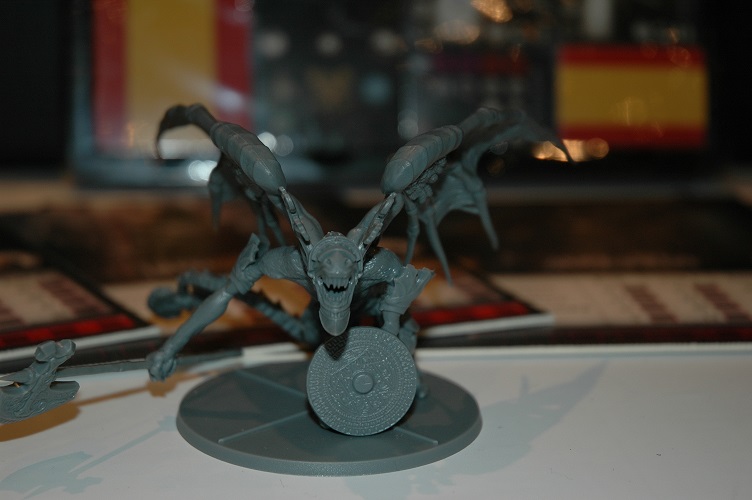
One of the prime spots in the Launchpad area for first-time attendees was given to the team at Steamforged Games Ltd., who have brought the video game franchise Dark Souls into the board-game realm.

toyfair23

Between one and four players can test their mettle against various creatures, battling to capture their souls and use them to make your character stronger and more capable. The impressive array of miniatures, player cards, and tokens makes for an interactive experience that should satisfy both video game fans and board gamers alike.

toyfair16

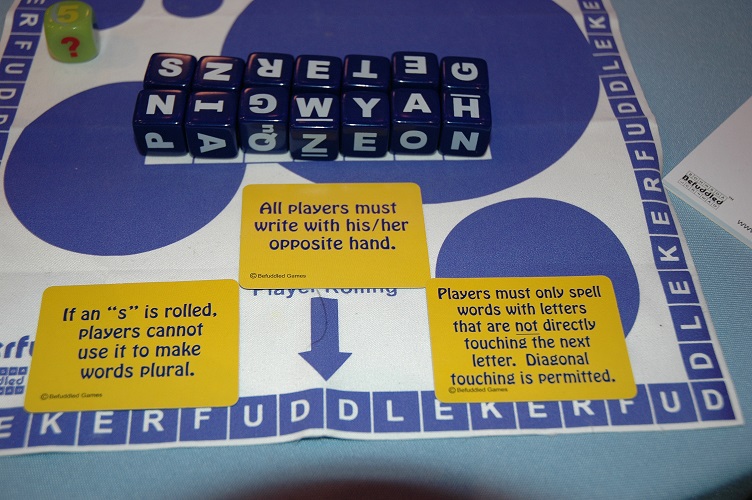
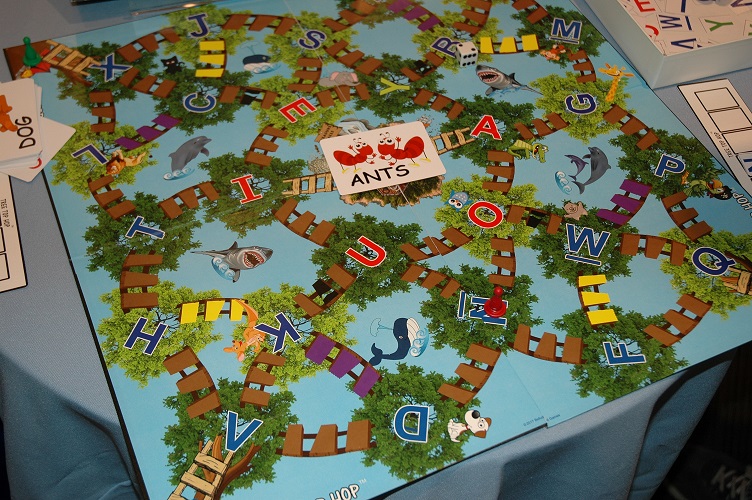
For a more traditional family-friendly puzzle game, the crew at Befuddled Games has you covered with Kerfuddle and Tree Top Hop, both of which are suitable for solvers of any age group.

Kerfuddle combines a touch of Boggle with the ever-changing gameplay of Fluxx. Roll the dice and use them to form words, but be careful — the “Shake It Up” cards can make your word forming much more challenging.

toyfair17

Tree Top Hop is a great intro game for young players, as they move around the tree top, spelling words on their cards and racing to the treasure at the center of the board. By combining word-building and strategy, this is a terrific gateway game for new players.

toyfair57

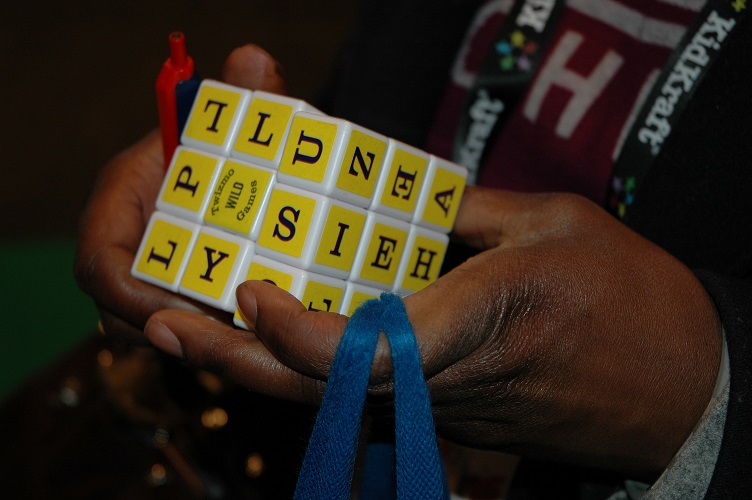
Along the same lines as Kerfuddle is Twizmo! Words, except instead of dice, you have a Rubik’s Cube-style Twisty puzzle providing you with the letters you’ll use to build your word list. Designed by the same team who brought us Tak•tak, Twizmo! Words is a strong quick-play game for any Boggle fans in your household.

snippets

Snippets takes the list-building idea in another direction. Instead of random letters, you’re given a three-letter snippet of a word, and it’s up to you to come up with as many words containing that snippet as possible. So, if you’ve got TRA, you can write down EXTRA, TRAIN, STRAP, and so on.

toyfair55

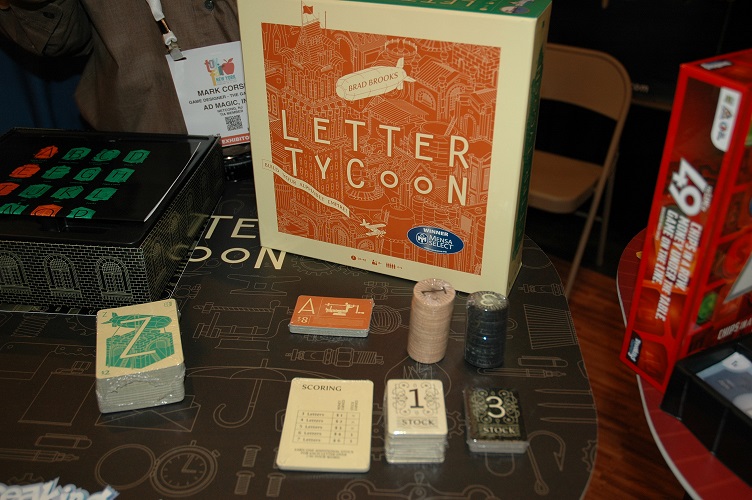
And to close out this collection of word-forming games, we have Letter Tycoon, which adds a monetizing mechanic that really spices up the gameplay. Here, not only are you making money by forming words, but you can patent letters so that when other players use them, you cash in as well. It’s a really clever take on the word-building genre of games.

toyfair18

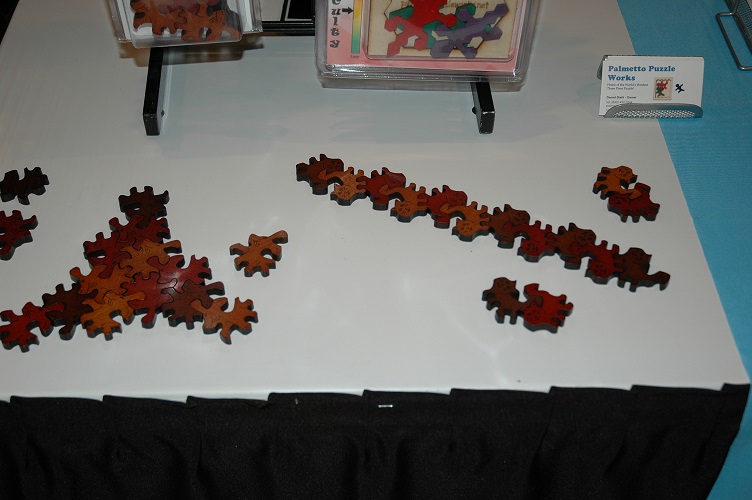
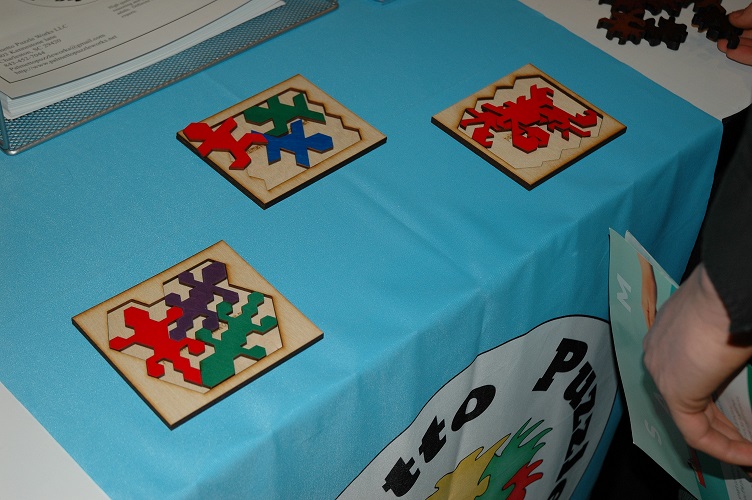
We now move on from combining letters to combining jigsaw pieces. The puzzles from Palmetto Puzzle Works all center around tessellations — shapes that repeat and interlock in many different ways.

toyfair19

Whether you’re trying to fit the pieces into a given space or you’re connecting them freestyle, these well-made wooden puzzles bring an M.C. Escher touch to the world of jigsaw-style solving.

toyfair20

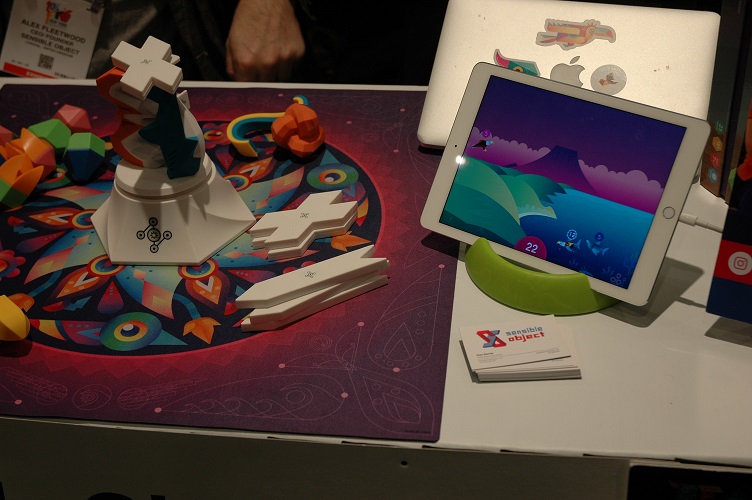
Beasts of Balance, on the other hand, has players using game pieces in a different way, as solvers stack the animal shapes and try to keep their ever-growing tower of creatures and artifacts from toppling over. The game has a tablet interaction feature that enhances both the gameplay and the storytelling aspect of the game, making the most of new school and old school puzzling.

toyfair66

But if you’re looking to do some puzzly building in a different way, Maze by Seedling is a solid choice. Here, you can map out and design your own marble maze, and then tackle your own creation with a fully-functioning labyrinth board, complete with marbles, walls, and holes to avoid.

b081a19a52e3bd99bf7a00754d2d77f0_original

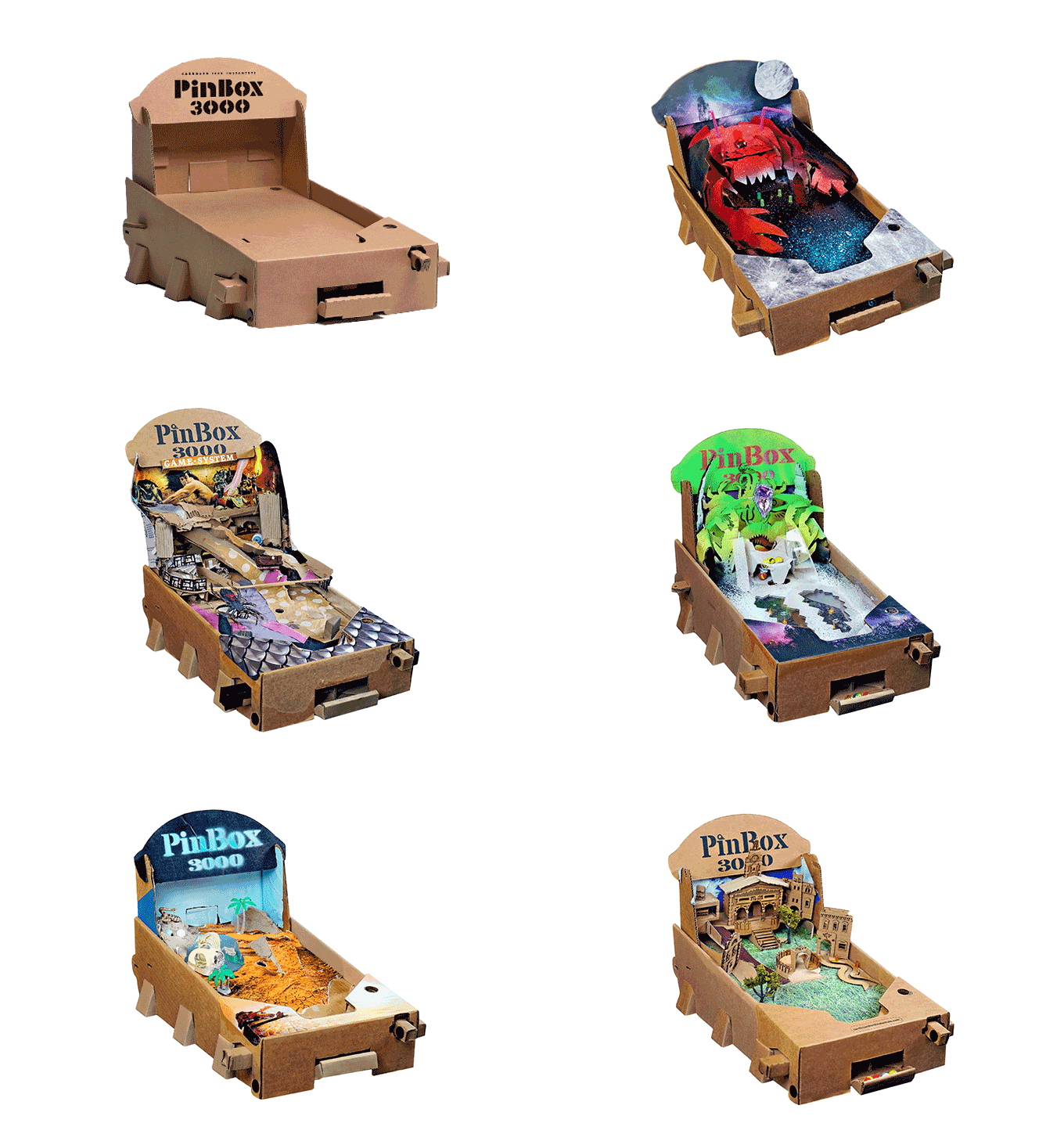
And while we’re on the subject of do-it-yourself puzzling, the crew behind Pinbox 3000 have designed a build-your-own pinball game system that allows for infinite customization. They give you everything you need to build a functioning game, and then leave the theme, bells, and whistles totally up to you.

I wrote about this one back when it was a Kickstarter project, and it was cool to see the brand continuing to thrive and grow.

toyfair37

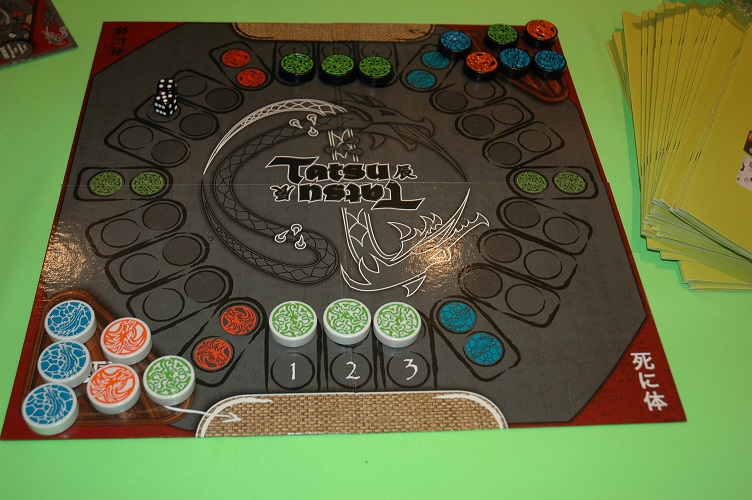
Another gaming classic with a modern twist is Tatsu, which combines Asian-inspired mythology with backgammon-style gameplay. Designed by the same creative team as the tile-placement game Hive, Tatsu is a clever, elegant game all about strategy and guile. It’s easy to learn and tough to master, and I suspect it will do quite well.

tenzi

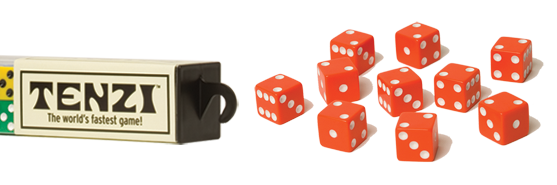
If you’re looking to combine strategy with rapid-fire gameplay, Tenzi is for you. In Tenzi, you’re given ten dice, and you have to keep rolling them until all ten match. It’s like Speed Yahtzee! But with dozens of additional variant games at your disposal, from stacking to scoring to rule-shifting games, this dice game has legs and is easy to tote around to play anywhere.

c1pho8kvqamerbv

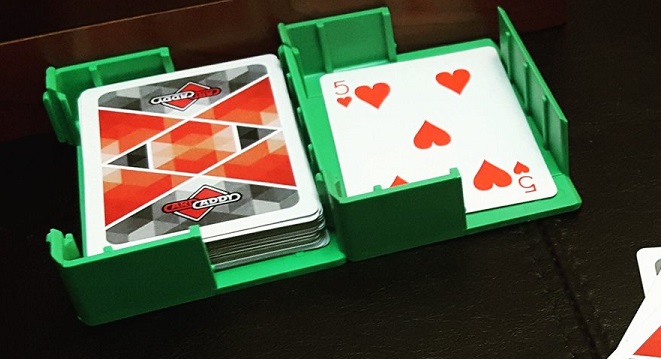
If you’re looking to take your card games anywhere, the team at Narrows Hill have a great solution for you. The Card Caddy is not only a protective case for any deck of cards, but it opens up into a perfect card-dealing and sorting setup for ease of play.

toyfair51

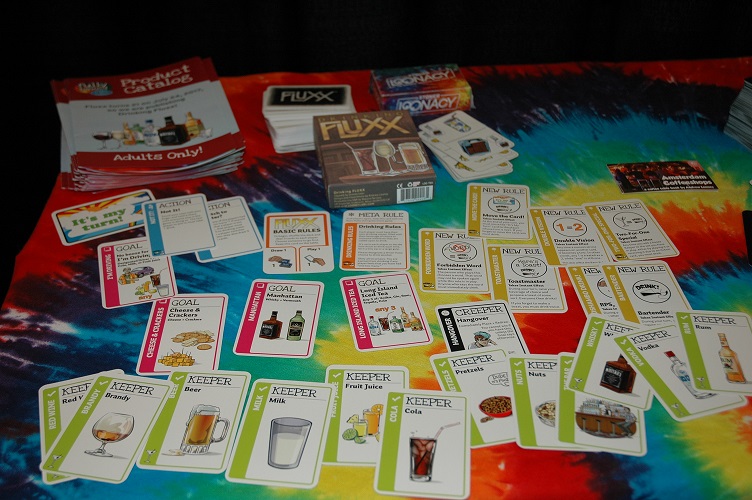
We also got an early glimpse of a forthcoming addition to the Fluxx family of card games. Since Fluxx is celebrating 21 years on the market this year, the crew at Looney Labs is celebrating with Drinking Fluxx, a spirits-soaked version of their famous chaotic rule-shifting card game.

You can mix and match the various ingredients to try to create a winning formula (and perhaps a sideline as a bartender for your fellow players). Just make sure you call a cab after playing.

toyfair41

Whereas Tenzi and Fluxx are quite portable, Banana Bandits from CMON Games requires some space, since you have an entire 3-D building to set up as your game board. As you and your fellow players try to prove yourselves as worthy successors to the boss of the Banana Bandits, you’ll climb and explore the building, collect coins, and tangle with opponents, all on an impressively realized game space.

Will you be top banana, or is it time for you to split?

toyfair45

And the last game I’ll be discussing today is Doctor Who: Time of the Daleks, an elaborate galaxy-spanning game where you play as one of six Doctors traveling across time and space in order to complete missions, save the innocent, thwart your enemies, and generally wreak timey-wimey havoc.

toyfair46

Between the terrific miniatures and the expansive options available for players, this was one of the highlights of Toy Fair for me, and I can’t wait to see how they incorporate additional Doctors into the game later down the line.

toyfair62

Obviously this is just a small sample of all the fantastic, eye-catching puzzles and games that graced New York Toy Fair this year. But nonetheless, it’s an impressive group, covering so many different aspects of the puzzle and game world, and constantly blazing new trails in terms of creativity and innovation.

I have no doubt you’ll be seeing more about some of these projects as 2017 rolls onward.

[You can check out our full gallery of photos from New York Toy Fair on Facebook by clicking here!]


Thanks for visiting PuzzleNation Blog today! Be sure to sign up for our newsletter to stay up-to-date on everything PuzzleNation!

You can also share your pictures with us on Instagram, friend us on Facebook, check us out on TwitterPinterest, and Tumblr, and explore the always-expanding library of PuzzleNation apps and games on our website!