What’s a Shortz Number?

While I was researching Salomon Numbers for last week’s post, I discovered another crossword-centric number system with an S-name attached.

The Shortz Number.

Actually, I found several of them.

Allow me to elucidate.


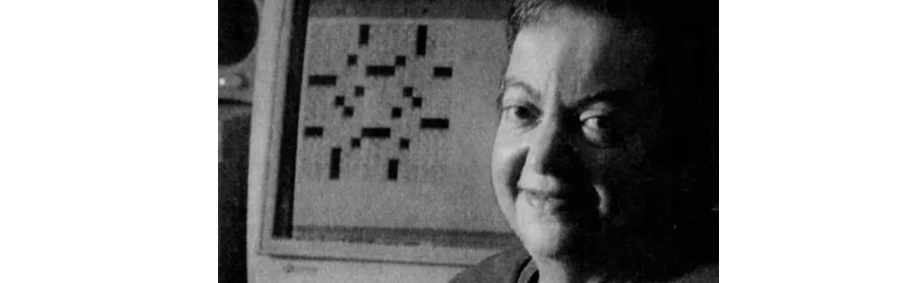
XWordInfo lists a constructor’s Shortz Number as a reflection of when that constructor was first published in a daily puzzle during the Shortz Era of The New York Times crossword.

For instance, Jacob Reed debuts in today’s puzzle, and his Shortz Number is 1373.

Peter Gordon is 1. Merl Reagle is 26. Bernice Gordon is 77. Matt Gaffney is 97. Nancy Salomon is 143. Patrick Berry is 257. Deb Amlen is 378. Doug Peterson is 431. Patti Varol is 1000.

It’s an incredible insight into an ever-evolving roster of constructors.

According to a cursory Google Search, this seems to be the most legitimate definition of a Shortz Number.

But there are others.


The second and most specious definition seems to be a Shortzian take on the Salomon Number, connecting constructors to Shortz through a Kevin Bacon-like system of collaborations.

I only found a few references to this interpretation, so it seems more like a coincidence than actual cultural permeation.

But that still leaves one more version of a Shortz Number, and it’s my favorite one.
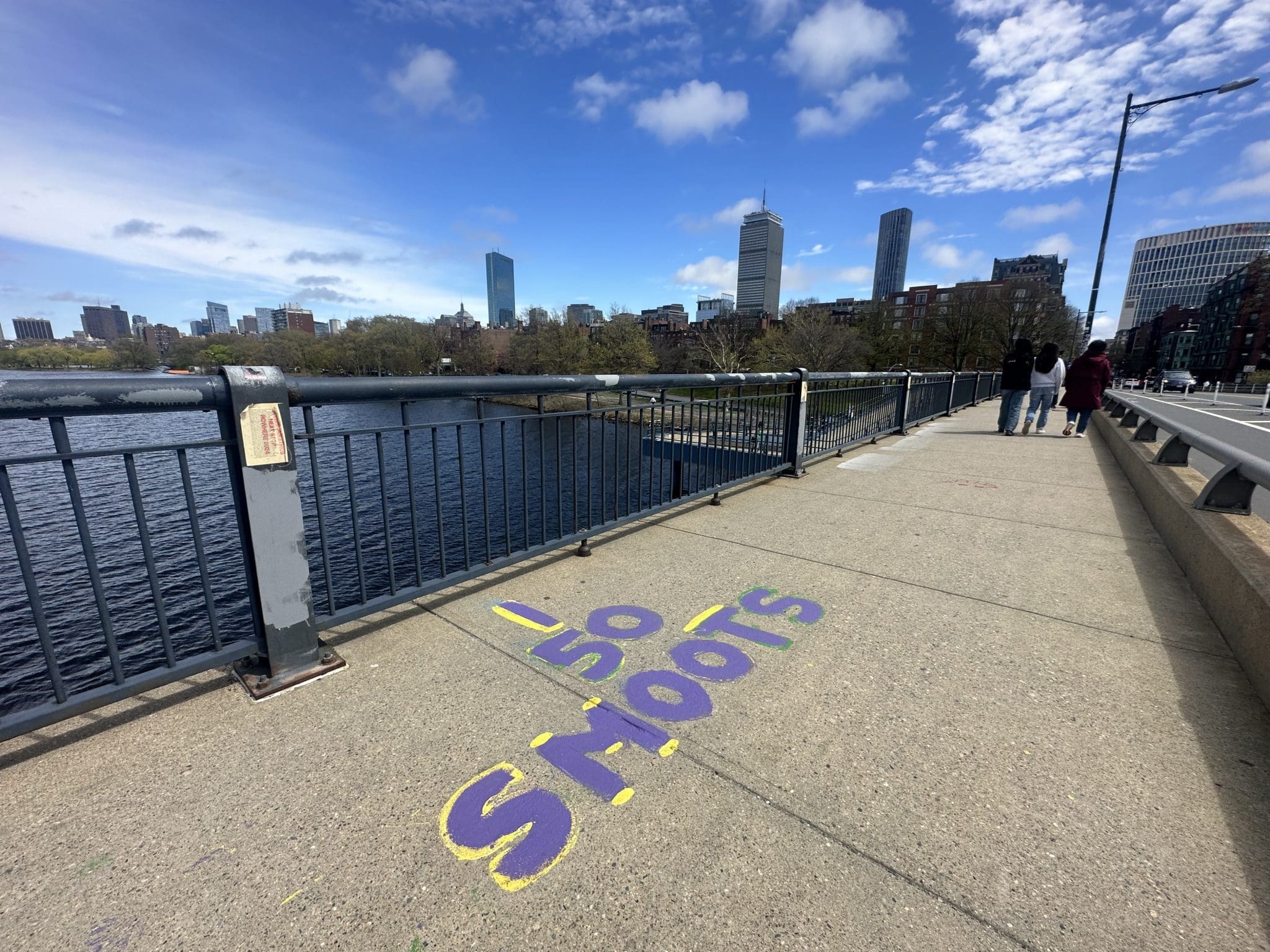

This version is actually referenced on Wikipedia under Humorous Units of Measurement and apparently originated as a Reddit post.

But in this instance, a Shortz is a unit of measurement for fame. More specifically, it’s the number of times a person’s name has appeared in The New York Times crossword as either a clue or a solution.

The brief post then goes on to state that Shortz himself is 1 Shortz famous. (I was unable to verify this through XWordInfo, either through SHORTZ, WILLSHORTZ, or WILL as grid entries.)

But as someone who enjoys weird statistics, I was definitely intrigued by this one. What’s the Shortz Number for common crosswordese and frequent fill?

I mean, RIPTORN only has a 6, but that’s an impressive number of times to get your first AND last name in a crossword.
So let’s dig in.


First things first, I’m jettisoning the clue aspect of the definition. Let’s stick to grid entries.

I’m also doing my best to eliminate shared names or ones with multiple definitions. ETTA has 241 uses in the Shortz Era, but I don’t want to parse between James and Jones. Same for ELLA (249), ANA (342), and ALOU (150).

Second, let’s stick to real people. It’s cool that SMEE has 114, ODIE 145, and ASTA a staggering 183. But the Bacon, Erdos, and Salomon Numbers rely on real people, so our Shortz Number will too.

So allow me to present the people with the 8 highest Shortz Numbers I could find:

#8 ENYA – 149
#7 ALDA – 152
#6 UMA – 162
#5 OTT – 188
#4 ONO – 196 (minus a half-dozen or so fish references)
#3 ESAU – 226 (hard to stat out other biblical figures like Adam, Eve, Enos, because of other uses)
#2 ASHE – 264

and, as you might expect…

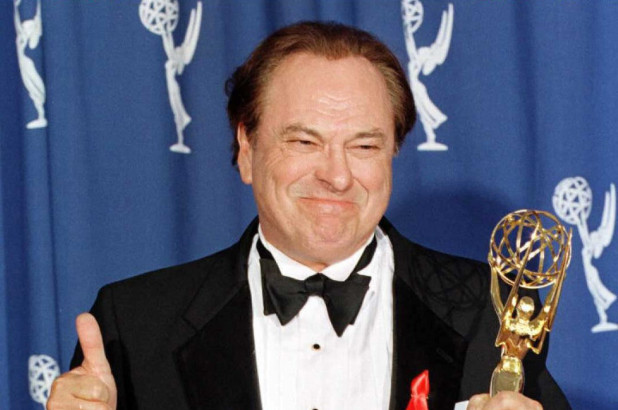
#1 ENO – 268!
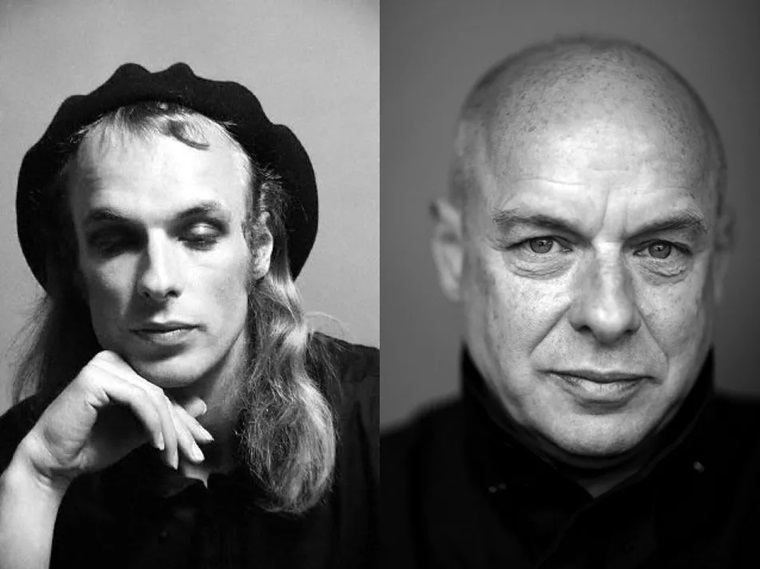
It’s certainly a close race, and one that could easily change in the future!


Let’s add one more wrinkle before we go.

Because it’s interesting to track all the Shortz Era uses… but there are decades of puzzles before that, and XWordInfo has stats on them too.

So do the rankings change when you factor those puzzles in?

Absolutely.
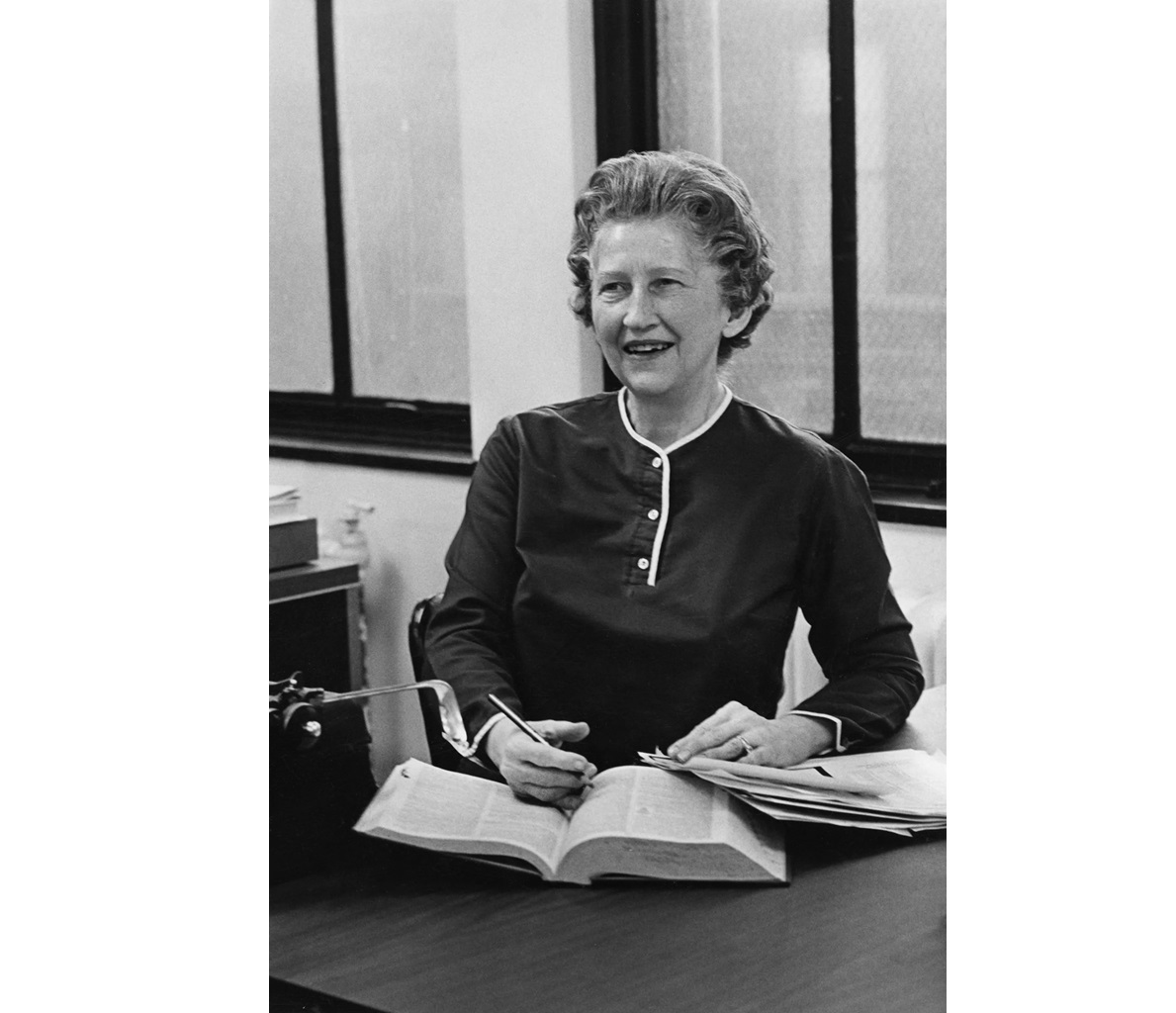
Let’s call these Farrar Numbers and see how things shake out.

I mentioned ETTA earlier. The pre-Shortz puzzles cause their Farrar Number to be more than double, vaulting up to 516. Similarly, ELLA leaps to 688 and ANA to 758!

Some of our fictional friends also prosper, with SMEE moving from 114 to 332 and ASTA rocketing from 183 to 533! But ODIE only adds a handful more, moving from 145 to 156.

So how did our top 8 do?

ENYA (149) stayed in the exact same place. There were NO pre-Shortzian references.

UMA (167) drops from 6th to 7th, only gaining 5 more references. She swaps places with ALDA (270), who adds a lot of references (discounting the hundred or so mentioning his father or opera star Frances Alda).

Sadly, ENO (280) plummets from the #1 spot all the way to 5th, only adding another dozen or so references to make his Farrar Number.

ONO (390) stays in 4th despite nearly doubling the number of references, while OTT (432) leapfrogs over ONO, going from 5th to 3rd with an impressive pre-Shortzian showing.

ASHE (560) stays in 2nd despite more than doubling his references (and obviously disappearing from the pre-Shortzian rankings in the early 1960s).

This means ESAU (609) goes from 3rd to 1st in the Farrar Number rankings!


So, whether you prefer your Shortz Number to be chronological, Baconian, or grid-centric, you’ve got plenty of options.

But personally, I think the Farrar Number is gonna take the world by storm!

Okay… maybe not. But it’s certainly fun to think about.

Happy puzzling, everyone!
Where to Look for Crossword Reviews/Commentary?

tumblr_nnl5c43Ov61qd4fqho1_500

Occasionally, we’ll get a message from a PuzzleNationer who wonders why we don’t review the daily New York Times crossword or some of the other prominent daily newspaper crosswords.

It makes sense to ask. After all, we try to cover all things puzzles and games here — great clues, trivia, brain teasers, puzzles in pop culture, interviews, game reviews, how to’s, puzzle history, the Crossword Mysteries — so why not the top crossword outlets?

Well, to be honest, there are already several crossword blogs doing a dynamite job of covering those. So today, I want to discuss some top-notch blogs that discuss and review the daily crosswords!

nyt xwd

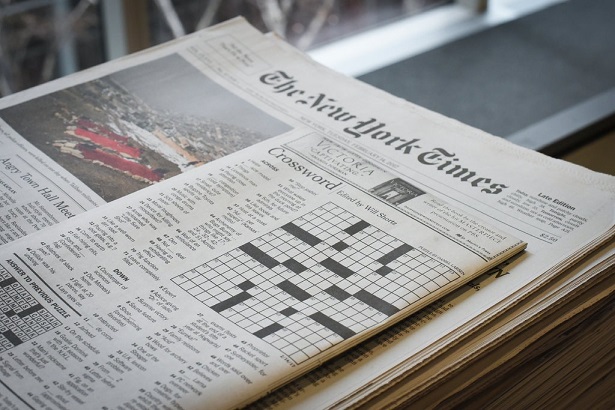
For the New York Times crossword alone, there’s Wordplay, XWord Info, and Rex Parker.

Wordplay is the official New York Times crossword blog, and not only do you get great analysis from knowledgeable minds, but you get live solve-alongs, insight from constructors, and more.

XWord Info is my go-to for details on construction and a fair, informative review. People occasionally accuse XWord Info of being too favorable to the puzzles/constructors, but I think they call it right down the middle, and there have been times where reviewers and constructors leveled stern criticism at a puzzle’s editorial process OR how it was discussed on XWord Info itself.

Rex Parker’s blog can be more critical of Times puzzles — as we’ve said before, he borders on the curmudgeonly — but he has terrific advice about grid construction, theme entries, and more that several constructors have told me proved to be invaluable in their early days learning to construct.

His blog is probably not for everybody, but he remains one of the most influential voices in crossword reviewing today.

Oh, and if you’re looking for some terrific reviews of the NYT Mini Crossword, check out this great Instagram account!

Of course, the NYT crossword isn’t the only game in town.

la times

If you’re a fan of the Los Angeles Times Crossword, there’s the terrific L.A. Times Crossword Corner blog to keep you up to date on that puzzle, breaking every puzzle down clue by clue. (There’s also LAX Crossword, which offers answers and clue explanations.)

If you enjoy the USA Today crossword, Sally Hoelscher offers Sally’s Take on the USA Today Crossword daily, offering up theme explanations, things she learned from the puzzle, and sharing terrific opinions and thoughts that would absolutely be beneficial to newer solvers.

And although it’s not a blog per se, the XWord Muggles Forum offers an interactive space to discuss and break down the Wall Street Journal weekly crossword contest, as well as other meta crossword puzzles.

crossword pen

But, if you’re looking for more of a one-stop-shop experience, then you should check out Diary of a Crossword Fiend.

Crossword Fiend covers NYT, LA Times, WSJ, Universal, USA Today, The New Yorker, The Washington Post, Newsday, The Inkubator, AVCX, and more! Not only that, but you’ll get reviews of puzzles from independent constructors like Elizabeth Gorski’s Crossword Nation, Brendan Emmett Quigley, Peter Gordon’s Fireball Crosswords, and others.

They post their solving times, analyze the puzzles, and spread the word about other puzzly projects and crossword news. It’s a fantastic site.

And before I wrap up this recommendation post, I do want to shout out the community on Reddit’s r/crossword subreddit. It’s a forum for discussing puzzle opinions, sharing works from aspiring and developing constructors, and yes, reviewing and sharing thoughts on the major outlets (mostly the NYT).

Most of the posters and commenters are genuinely good folks who love crosswords and enjoy discussing them, and it’s a pretty pleasant place to visit if you’re a crossword fan.

Do you have any favorite Crossword Review Blogs that we missed? Let us know in the comments section below. We’d love to hear from you!


dailypopwsicon

Hey, have you checked out our special summer deals yet? You can find them on the Home Screen for Daily POP Crosswords and Daily POP Word Search! Check them out!

Thanks for visiting PuzzleNation Blog today! Be sure to sign up for our newsletter to stay up-to-date on everything PuzzleNation!

The Hunt for New Crossword-Friendly Vocabulary!

crossword1

Epee. Etui. Acai. Amie. Anoa. Oleo. Iota.

We’ve seen a lot of curious words in crosswords over the years. Some of them are blips on the radar, appearing for a bit then vanishing without a trace. Others become part of the fabric of crosswords, forever synonymous with those enigmatic black-and-white grids under the banner of “crosswordese.”

It does make me wonder, though. What words haven’t we seen yet? What curious combinations of vowels and consonants await solvers in the future? Will they be blips or will they be the stuff of legends?

So I decided to try out different words that were either heavy on vowels or had strange letter patterns to see which ones had appeared in The New York Times crossword and when, according to the database on XWordInfo. And I turned up some curious results.

COOEE hasn’t appeared since April 1996. FLYBY hasn’t been in since 2007. QWERTY has only appeared twice, and not in almost a decade.

And yet, equally strange words like VORPAL and CRWTH haven’t appeared at all.

It’s hard to predict what odd vocabulary will strike a chord with constructors.

obiwanobi

I mean, sure, there’s a whiff of disdain surrounding crosswordese, but surely as former obscurities become more familiar, crosswordese must evolve and move forward as well. What will be the new crosswordese?

It’s not like we’re going to have new rivers, mountains, bays, or other geographical areas, for the most part. (True, the Aral Sea is pretty much the Aralkum Desert now, but that hasn’t stopped constructors from continuing to reference it.)

But I’m getting off-topic. Where would we find this new potential grid fill?

There are some delightful nuggets of linguistic oddness lurking in old dictionaries that have promise as part of a new generation of crosswordese. I mean, ECHO and OCHO are all well and good, but what about OCHE?

That’s the line behind which a darts player must stand, by the way. Zero hits in XWordInfo.

You need peculiar letter combinations to help fill your grid? How about BADAUD, UGHTEN, YERK, CAGG, and BORT? I could easily see these weird words getting constructors out of some jams when it comes to grid construction.

Sure, we’d have to educate solvers on these words, but if we can make ETUI a well-known form of crosswordese, why not these?

(Yes, I know, you want definitions. Don’t worry, I’ve got you covered. A badaud is a dimwitted gossip-spreader who believes just about anything. Ughten is morning twilight, the light that appears in the sky before the sun rises. To yerk is to beat someone vigorously and with rapid efficiency. A bort is a poor-quality diamond or a fragment of such a diamond (as well as a license plate that commonly runs out at Itchy and Scratchy Land). A cagg is a solemn vow not to drink for a certain amount of time.)

None of those words have appeared in the Times according to XWordInfo. Except BORT, but even that hasn’t appeared since 1993. Which is amazing, because the BORT joke on The Simpsons I referenced above happened in October of 1994. Come on, constructors, don’t leave us hanging. BORT did not have to lapse into irrelevance.

Speaking of words that have fallen by the wayside, I decided to try lost positives next.

Lost positives are words that were previously commonplace, but have been lost to time, while words with negative connotations based on them have survived. You know inept, inert, disheveled, uncouth, unkempt, and inane, but how often do you see ept, ert, sheveled, couth, kempt, pecunious, or ane?

Thus, lost positives.

So what happened when I checked them against the XWordInfo database?

EPT has appeared in the Times — as slang or a joking reference — but ERT hasn’t (except as a Scottish word). Nor has SHEVELED. KEMPT isn’t exactly common, but it has appeared in the last five years. COUTH hasn’t since 2003.

ANE, meanwhile, has hundreds of appearances, but as a hydrocarbon suffix, a Wheel of Fortune reference (“an e”), or as part of Sue Ane Langdon’s name.

So there’s some potential here.

frenchenglishwords

[Image courtesy of A Date With An Amateur.]

Hey, ERT gives me an idea. If we’re really going to discover some exciting, strange, and unexpected new grid fill, I think we have to look toward other languages.

All sorts of words that originate in other languages end up as part of the expansive English vocabulary. As James Nicoll once said, “We don’t just borrow words; on occasion, English has pursued other languages down alleyways to beat them unconscious and rifle their pockets for new vocabulary.”

Why not continue on in that fine tradition and add to the potential puzzle word lexicon?

In the last few years, the concept of hygge has grown in popularity. Hygge is a Danish and Norwegian word for a mood of coziness and comfortable conviviality with feelings of wellness and contentment. You can see how people would latch onto the concept for themselves.

So I was surprised to discover that hygge hadn’t appeared in the NYT. That’s a letter pattern begging for crossings.

Personally, I think we should start with words like hygge. A word that exists in another language to describe a concept that there simply isn’t a word for in English.

Saudade, while a bit long for casual grid use, is another word that has started making the transition into English vernacular. Saudade is a deep emotional state of nostalgic or profound melancholic longing for an absent something or someone that one cares for and/or loves.

There is a world of vocabulary out there waiting to be harnessed for crossword obscurity, and there’s even a website dedicated to it.

If you check out Eunoia, you’ll find hundreds of foreign words to encapsulate moods and ideas, feelings and expressions that can plug holes both in your vocabulary and your grids.

Crossword.

Here’s a small sampling of words I found on the site that might help cruciverbalists who have constructed themselves into a corner:

Resfeber is a Swedish word for “the feeling of excitement and nervousness experienced by a traveler before undertaking a journey.”

Ubuntu is a Zulu word for “a quality that includes the essential human virtues, a combination of compassion and humility.”

Mångata is a Swedish word for “the road-like reflection of moonlight on water.”

Wegbier is a German word for “a beer you’re having on your way somewhere (i.e. a party).”

Karelu is a Tulu word for “the mark left on the skin by wearing something tight.”

Rauxa is a Catalan word for “sudden determination or action.”

Umay is a Tagalog word for “getting tired of a certain food.”

To Fernweh is to have a yearning to see distant places (in German).

Either half of wabi-sabi, a Japanese word meaning “finding beauty within the imperfections of life and peacefully accepting the natural cycle of growth and decay” could prove handy in a grid.

So I put the question to you, fellow puzzlers and PuzzleNationers. What words would you like to see appear in crosswords more? Where do you think we should look for fresh, new, peculiar crosswordese? Let us know in the comments section below. We’d love to hear from you!


Thanks for visiting PuzzleNation Blog today! Be sure to sign up for our newsletter to stay up-to-date on everything PuzzleNation!

You can also share your pictures with us on Instagram, friend us on Facebook, check us out on TwitterPinterest, and Tumblr, and explore the always-expanding library of PuzzleNation apps and games on our website!

A Handful of Puzzly Resources for Constructors!

Crossword.

The internet has really grown the crossword community by leaps and bounds. Puzzlers can share favorite puzzles, reviews, opinions, and feedback with fellow solvers, constructors, editors, and publishers at the touch of a button. With downloadable puzzles, online solving, and puzzle apps (like Daily POP Crosswords!), access to puzzles has never been easier.

Entire forums dedicated to solving and sharing a love of puzzling are cultivating a new generation of solvers and encouraging ambitious new constructors. Twitter is a great place to start, there’s a growing community on r/crossword, and on Facebook, you’ve got both the American Crossword Puzzle Tournament group and the Crossword Puzzle Collaboration Directory to keep you informed and aware of all things crossword.

That’s to say nothing of the fact that both solvers and constructors have greater access to resources than ever before. There are reviewers breaking down the crosswords printed by the major outlets on a daily basis, and blogs like Wordplay exploring how to construct and what words solvers and constructors should know. With searchable databases like XWordInfo out there as well, you can hunt down clues, entries, themes, and a huge chunk of the history of crosswords with ease.

But sadly, not all resources have made their way online, so building a personal library of key volumes to peruse and refer to can help boost your solving and constructing efforts.

So today, I thought I’d share a few of my personal favorite resources that I use when constructing not only crosswords, but all sorts of other puzzles, in the hopes that you find them useful as well.

Your mileage may vary, but to me, these books have been invaluable.


descriptionary

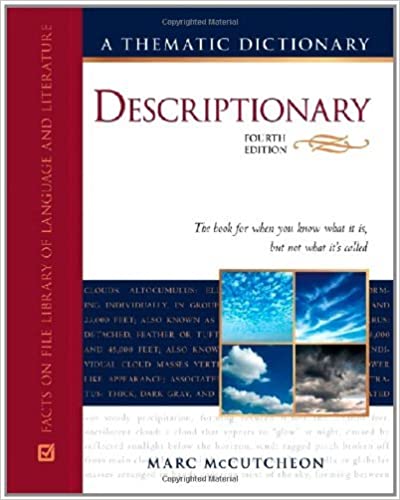
Descriptionary: A Thematic Dictionary (Fourth Edition) by Marc McCutcheon

Word Menu, in either book or online form, has long been the gold standard when it comes to building themed word lists that you can trust to be well-sourced and reliable. But when I need a theme idea, I have much greater luck flipping through the pages of the Descriptionary, a cross-cultural theme listing that covers everything from weather to fashion, medicine to crime.

Searchable by topic in the front and individual words in the index, it’s never difficult to find a list I’ve used before or to zero in on a topic as needed. I ended up buying my own copy after checking out the copy from my local library at least a half-dozen times, and I’ve never regretted it.

rhyming dictionary

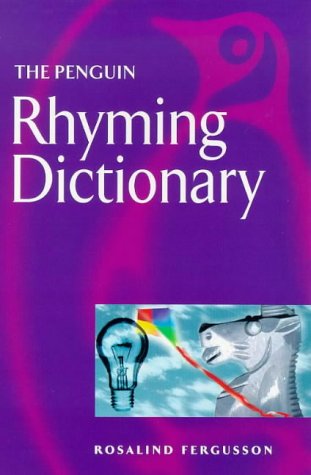
The Penguin Rhyming Dictionary by Rosalind Fergusson

Whether I’m cluing, looking for rhymes to support a playful theme, or playing with pronunciation for a particular bit of wordplay, The Penguin Rhyming Dictionary is my go-to resource. It’s absolutely loaded with vocabulary, organized by individual rhyming syllables and patterns (as well as near-rhymes). Just look up your word to rhyme in the back index, and then go work.

cook's essential

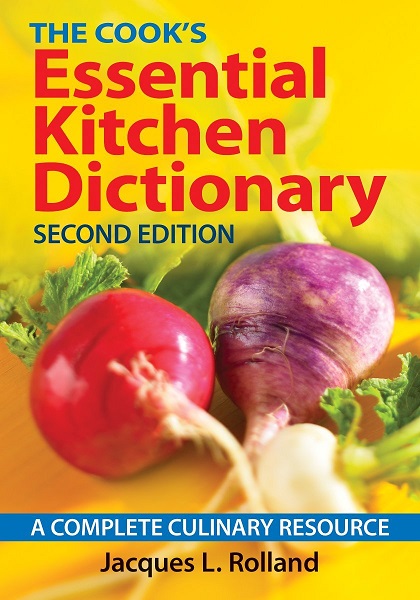
The Cook’s Essential Kitchen Dictionary: A Complete Culinary Resource by Jacques Rolland

This book is a tremendous resource, running the gamut from food and equipment to cooking styles and common vernacular. Not only are these definitions informative, complete with preparation instructions and suggested dishes for given ingredients, but they add little touches of culinary history to the mix, offering context and greater detail.

The book also features subsections listing varieties of apples, cheese, salt, pasta shapes, and other ingredients. Whenever I need food-related clues or theme entries, this is my first stop.

dictionaries

I’m a sucker for weird words and colorful vocabulary, so I thoroughly enjoy constructing any unthemed puzzle that allows me to play with language. And there’s any number of niche dictionaries out there to bolster your puzzle lexicon and spruce up any word list.

Here’s a list of some of my favorites:

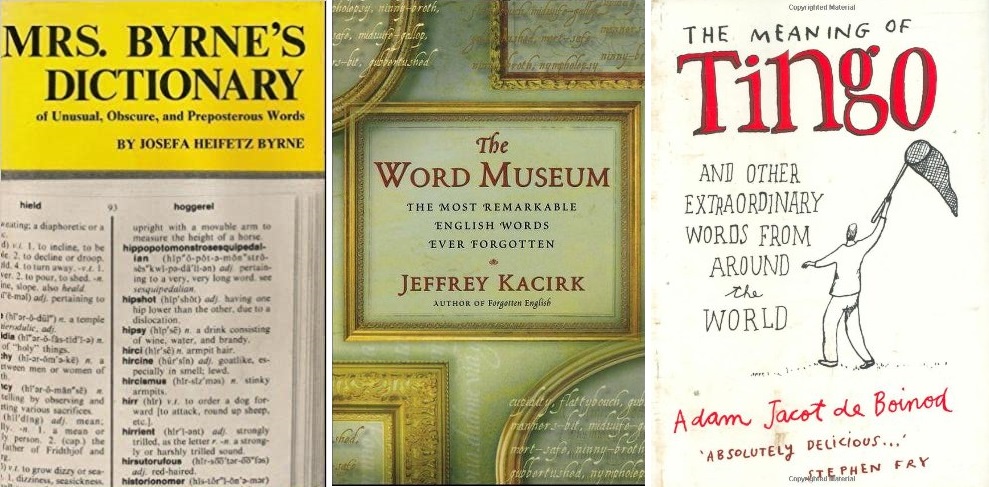
  • Mrs. Byrne’s Dictionary of Unusual, Obscure, and Preposterous Words by Josefa Heifetz Byrne
  • Murfles and Wink-a-peeps: Funny Old Words for Kids by Susan Kelz Sperling
  • The Endangered English Dictionary by David Grambs
  • The Word Museum: The Most Remarkable English Words Ever Forgotten by Jeffrey Kacirk
  • Informal English: Puncture Ladies, Egg Harbors, Mississippi Marbles, and Other Curious Words and Phrases of North America by Jeffrey Kacirk
  • The Great Panjandrum (and 2,699 Other Rare, Useful, and Delightful Words and Expressions) by J.N. Hook
  • Stone the Crows: Oxford Dictionary of Modern Slang by John Ayto and John Simpson
  • I Love It When You Talk Retro: Hoochie Coochie, Double Whammy, Drop a Dime, and the Forgotten Origins of American Speech by Ralph Keyes
  • The Meaning of Tingo and Other Extraordinary Words from Around the World by Adam Jacot de Boinod
  • That’s Amore!: The Language of Love for Lovers of Language by Erin McKean
  • Much Ado About English: Up and Down the Bizarre Byways of a Fascinating Language by Richard Watson Todd
  • America in So Many Words: Words That Have Shaped America by David K. Barnhart and Allan A. Metcalf
  • The Highly Selective Dictionary of Golden Adjectives for the Extraordinarily Literate by Eugene Ehrlich
  • Word Catcher: An Odyssey Into the World of Weird and Wonderful Words by Phil Cousineau

(And, although this book isn’t a dictionary, it includes some terrific vocabulary along the way, so it’s worth checking out: Reading the OED: One Man, One Year, 21,730 Pages by Ammon Shea.)


Hopefully these resources can aid you in your puzzling endeavors as they’ve assisted me many times over. Are there any offline resources I’ve missed? Let me know in the comments section below! I’d love to hear from you.

Thanks for visiting PuzzleNation Blog today! Be sure to sign up for our newsletter to stay up-to-date on everything PuzzleNation!

You can also share your pictures with us on Instagram, friend us on Facebook, check us out on TwitterPinterest, and Tumblr, and explore the always-expanding library of PuzzleNation apps and games on our website!

Puzzly Ideas to Keep You Busy!

puzzlelove

We’re all doing our best to keep ourselves and our loved ones engaged, entertained, and sane during these stressful times.

And after weeks of doing so, it’s possible you’re running out of ideas.

But worry not! Your puzzly pals at PuzzleNation are here with some suggestions.

Please feel free to sample from this list of activities, which is a mix of brain teasers to solve, puzzly projects to embark upon, treasure hunts, unsolved mysteries, ridiculous notions, creative endeavors, and a dash of shameless self-promotion.

Enjoy, won’t you?


Puzzly Ways To Get Through Self-Quarantine

In all seriousness, we hope these ideas help you and yours in some small way to make the time pass in a fun and puzzly fashion. Be well, stay safe, and happy puzzling.


Thanks for visiting PuzzleNation Blog today! Be sure to sign up for our newsletter to stay up-to-date on everything PuzzleNation!

You can also share your pictures with us on Instagram, friend us on Facebook, check us out on TwitterPinterest, and Tumblr, and explore the always-expanding library of PuzzleNation apps and games on our website!

How Far Crosswords Have Come (and How Much Farther They Have to Go)

Problem-solving-crossword

The battle to decrease gender inequality and increase representation in crosswords is ongoing. More people than ever are speaking up on behalf of women, people of color, LGBTQIA+ constructors, and non-binary individuals when it comes to who is constructing the puzzles (and being properly credited), as well as how members of those groups are represented by current grid entries and cluing.

Natan Last is one of many people standing up to make crosswords better, more inclusive, and more emblematic of a richer melting pot of solvers and constructors. In a recent article in The Atlantic, Last neatly encapsulates both the movement for a more inclusive crossword publishing community and the many obstacles that stand in its way.

He starts with a single example — a debut puzzle by a female constructor, Sally Hoelscher — and the conversation that ensued when one puzzle aficionado asked about the ratio of women’s names to men’s names in the puzzle.

becoming

[Image courtesy of XWordInfo.]

Originally there were no men’s names. One entry was edited in. And a discussion about parity in puzzles followed.

Last uses this example as a springboard into the greater argument about how modern crossword editing (and editors) discriminate through gatekeeping under the guise of what’s “familiar” or “obscure.”

From the article:

Constructors constantly argue with editors that their culture is puzzle-worthy, only to hear feedback greased by bias, and occasionally outright sexism or racism. (Publications are anonymized in the editor feedback that follows.) MARIE KONDO wouldn’t be familiar enough “to most solvers, especially with that unusual last name.” GAY EROTICA is an “envelope-pusher that risks solver reactions.” (According to XWord Info, a blog that tracks crossword statistics, EROTICA has appeared in the New York Times puzzle, as one example, more than 40 times since 1950.) BLACK GIRLS ROCK “might elicit unfavorable responses.” FLAVOR FLAV, in a puzzle I wrote, earned a minus sign.

kondo

[Image courtesy of CNBC.]

But what is kept out is only part of the problem, of course. Last goes on to mention many of the same insensitive and offensive clues and entries we (and other outlets) have cited in the past.

He caps off this part of the article by highlighting Will Shortz’s responses to these troubling questions:

But when prodded about insensitive edits, he denied them, adding: “If a puzzlemaker is unhappy with our style of editing, then they should send their work elsewhere (or publish it themselves to keep complete control).”

A pretty damning statement, to be sure.

proposingmurder13

Turning away from the problems represented by the most famous daily crossword in the world, Last pivots, turning a spotlight on those who are helping turn the tide in terms of representation and inclusivity.

He shouts-out well-respected and innovative editors like Erik Agard (of USA Today‘s crossword), David Steinberg (of Andrew McMeel Universal’s Puzzles and Games division), and Liz Maynes-Aminzade (of The New Yorker crossword), heaping praise on a fresh constructor-editor partnership that encourages new voices and greater diversity of content.

Last also mentions worthy projects like the Inkubator, Women of Letters, and Queer Qrosswords, as well as the Women’s March crossword movement inspired by the work of Rebecca Falcon.

Across the entire article, Last highlights a system problem in crosswords, challenges those responsible to do better, and praises those who are working for the greater good. And he does so in about a dozen paragraphs. That’s all. It’s efficiency and flow worthy of a top-notch constructor.

You should read it for yourself. You won’t be disappointed.


Thanks for visiting PuzzleNation Blog today! Be sure to sign up for our newsletter to stay up-to-date on everything PuzzleNation!

You can also share your pictures with us on Instagram, friend us on Facebook, check us out on TwitterPinterest, and Tumblr, and explore the always-expanding library of PuzzleNation apps and games on our website!