
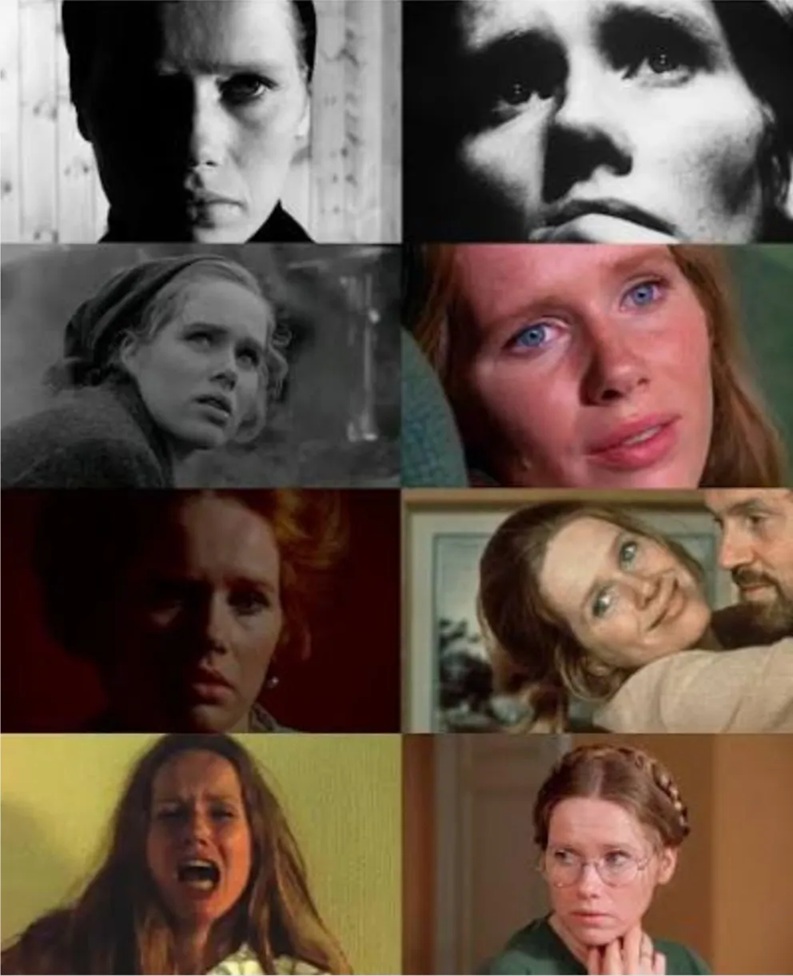
There was an internet hoax last week that reported Liv Ullmann had passed away.
(And yes, I am retroactively editing this post to correct it, since I had been duped by this hoax. Thank you to one of my commenters for correcting me!)
An actress, filmmaker, and representative of UNICEF, her work has graced both stage and screen, and she was an integral part of Ingmar Bergman’s equally legendary career.
But she has had a similarly lengthy tenure as a crossword entry. Her name dominated crossword cluing for LIV for decades (save for Roman numeral clues), eventually being usurped by LIV Tyler in the 21st century.
And, to be completely honest, I didn’t know Liv Ullmann or her work until I got into puzzles.

Despite a heavy movie buff phase in my twenties — watching the AFI 100, doing a deep dive into Oscar-winning films across film history — there were many Hollywood names I didn’t learn about until I started working in puzzles.
I mean, sure, I knew ASTA from The Thin Man movies, and as a horror movie fan, LON Cheney was a household name, but ONA Munson, OSA Massen, UNA Merkel? UTA Hagen, POLA Negri, EMIL Jannings? A total mystery to me, one and all.
Some names are more accessible than others. RIP TORN, for instance, who I know better from Men in Black and Dodgeball (and The Larry Sanders Show) than from The Man Who Fell to Earth or Cross Creek.
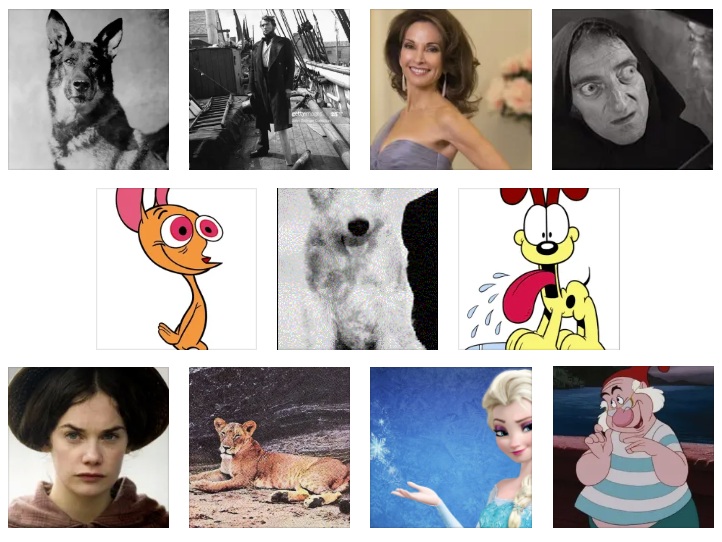
But it’s curious to look across the history of crosswords and crosswordese and see names fall in and out of favor, which names linger despite their increasing irrelevance, and which other ones come back unexpectedly.
I mean, OONA Chaplin is helping OONA’s cause a bit, and ANA de Armas has breathed new life into that three-letter combo. Director ARI Aster is helping ease cluing reliance on a certain Onassis ex. I wish more people knew about the movie Pearl, if only for a new clue for THEDA.
ELSA and OLAF will be riding the Frozen train for years to come. ISSA RAE (and RAE Sremmurd to a lesser extent) have shaken RAE free from Norma, Charlotte, and Ms. Dawn Chong.
But ENA? ELKE? ILKA? Those feel unlikely to make a comeback.

And the cycle continues. INDE Navarrette’s star is on the rise after Obsession, but will she have legs as a crossword entry? The next few years will be telling.
It’s hard to know what name will be a grid-fill flash-in-the-pan and which will have crossword longevity.

I’ve thought about this a lot.
In fact, inspired by the curious connection between crosswords and Hollywood, I have an ever-evolving crosswordese movie list that I use as inspiration for random movie nights:
- Casablanca (1942, ILSA and LORRE).
- The Night of the Hunter (1955, screenplay by James AGEE)
- The Maltese Falcon (1931, UNA Merkel, a full decade before the Bogart one!)
- The Cheaters (1945, ONA Munson)
- The Good Earth (1937, O-LAN played by LUISE RAINER, also starring Paul MUNI)
- Bus Stop (1956, based on the play by William INGE)
- The Owl and the Pussycat (1970, George SEGAL)
- Rocketship X-M (1950, OSA Massen)
- Santa Claus Conquers the Martians (1964, PIA Zadora)
- Beautiful Girls (1996, MIRA Sorvino)
- V for Vendetta (2005, REA)
- IT’S A Gift (1934)
- Letters from IWO Jima (2006)
- NEVER ON Sunday (1960)
- Stanley & IRIS (1990)
- Bird ON A Wire (1990)
- Heidi (1937 or 1968, ALP)
And then you can close out any proper crosswordese movie marathon with films featuring UMA Thurman, EWAN McGregor, or CARY Grant you like, or even The King and I with YUL Brynner.
As these legends (and not-quite-legends) of the silver screen continue to depart this mortal coil (or at least, as internet hoaxes about their deaths continue to circulate), I can’t help but reflect on their curious second life as grid fill.
How many awesome, clever, immensely satisfying solves have we enjoyed in part because of the convenient letter combinations in these names? How many times have they bailed constructors out of bad corners or linguistic jams caused by a particularly taxing theme or grid gimmick?
Probably more often than you’d think.
We may not always know their movies or their most quotable lines, but we definitely know how to spell their names and fill in those blanks.
What names do you only know from crosswords, fellow reader? Do you have any suggestions for my Crosswordese Viewing List? Let me know in the comments section below. I’d love to hear from you!


