Demystifying Role-Playing Games

When you hear the words “role-playing game,” what comes to mind? A bunch of nerds in a basement, hunched around a table debating weird and esoteric rules? Practitioners of the black arts, thumbing their noses at God and all that is natural? Or nothing at all?
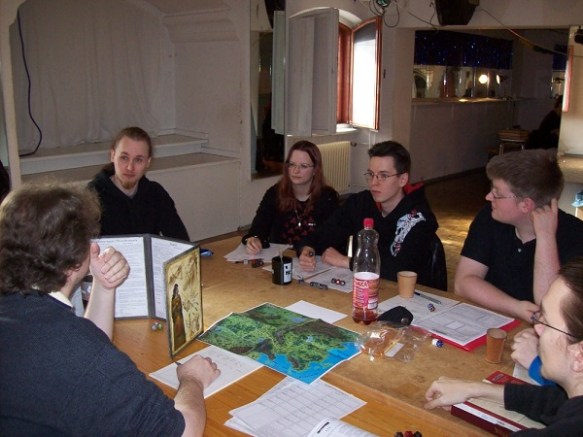
rpg-2009-berlin-2

Some TV shows, like Community and Freaks & Geeks, have displayed role-playing games in a positive light, but for the most part, role-playing games in general, and Dungeons & Dragons in particular, have gotten a bad rap over the last few decades, maligned as (at best) a game for lonely friendless types and (at worst) a tool to corrupt children.

(This might sound ridiculous to many of you, but folks like Pat Robertson continue to talk about role-playing games as if they’re synonymous with demon worship.)

But in reality, role-playing games are simply a way for a group to tell one collaborative story.
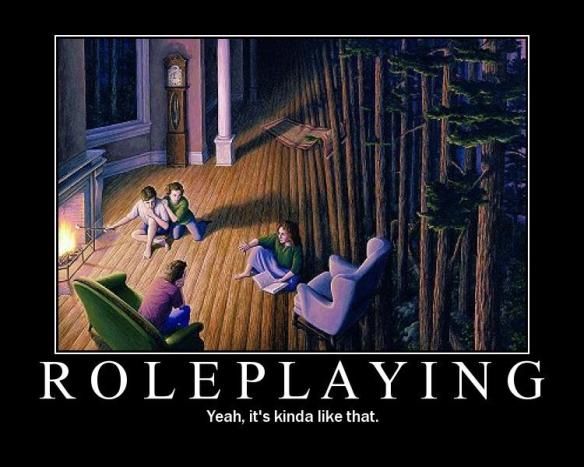
roleplaying-kinda-like-that

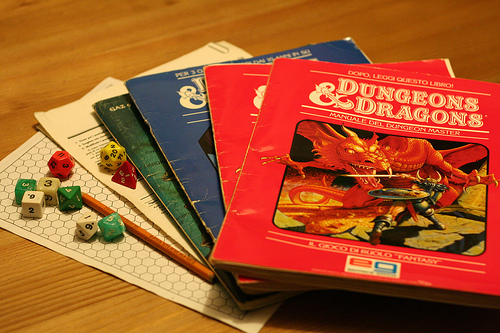
There are two major elements to this storytelling. The first is managed by a single person who oversees that particular game or gaming session. In Dungeons & Dragons, this person is called the Dungeon Master, or DM; in other games, this person is the Game Master, the Storyteller, or bears some other title tied to the game or setting. For the sake of simplicity, from this point on, I’ll refer to this person as the DM.

So, the DM manages the setting and sets up the adventure. In this role, the DM will describe what the player characters (or PCs) see and explain the results of their actions. The DM also plays any characters the players interact with. (These are known as NPCs, or non-player characters.) Essentially, the DM creates the sandbox in which the other players play.
1951073350_7e357dbdec_3

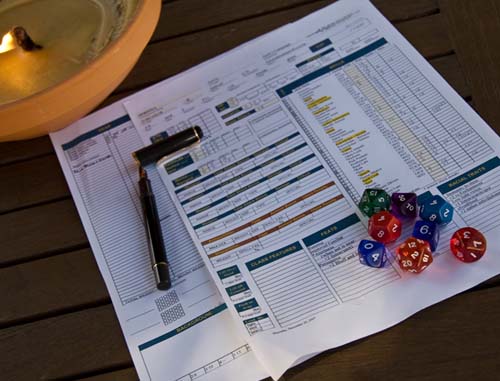
Which brings us to the second element in role-playing storytelling: the players. Each player assumes a role, a character, and plays that character for the length of the session, or the game, if there are multiple sessions. (Some games last months or years, so these characters evolve and grow; players often become quite attached to their characters.)

The PCs navigate the world created by the DM, but their actions and decisions shape the narrative. No matter how prepared a DM is or how carefully he or she has plotted out a given scene or adventure, the PCs determine much of what happens. They might follow the breadcrumbs exactly as the DM laid them out, or they might head off in an unexpected direction, forcing the DM to think on the fly in order to continue the adventure.
dd2

That’s what makes role-playing games so amazing: you never quite know what you’re going to get. The PCs usually don’t know what the DM has in store, and no DM can predict with perfect clarity what the PCs will do. You’re all crafting a story together and none of you knows what exactly will happen or how it all ends.

For instance, I run a role-playing game for several friends that is set in the universe of Buffy the Vampire Slayer, and my PCs routinely come up with solutions to problems and puzzles that I didn’t expect, but that nonetheless would work. They constantly keep me on my toes as a DM, and it’s one of my favorite aspects of the game.

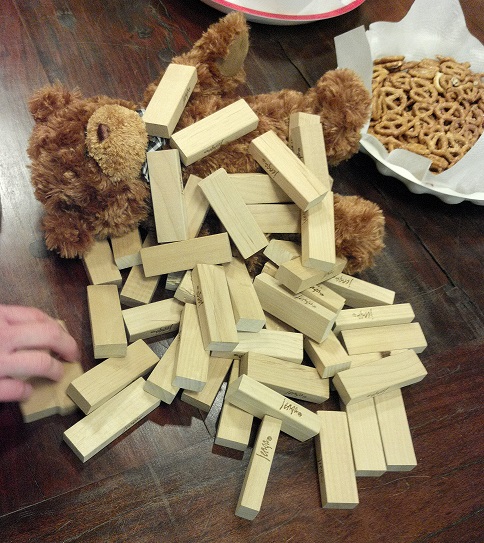
Oftentimes, major events and key moments are determined by dice rolls, adding an element of chance to the story. (In some games, players have replaced dice rolls with a Jenga-style block tower, and they must remove pieces from it to achieve certain goals. That adds a marvelous sense of real-world tension to the narrative tension already present!)
tabletop6

And while I’ve talked quite a bit about the game aspect, some of you might be wondering where the puzzly aspect comes in.

Some of the best, most satisfying puzzle-solving experiences of my life have come from role-playing games.

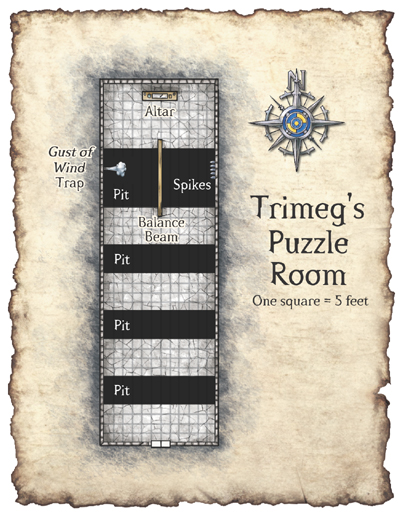
These puzzles can be as simple as figuring out how to open a locked door or as complicated as unraveling a villain’s dastardly plot for world domination. It can be a poem to be parsed and understood or a trap to be escaped.

There are riddles of goblins and sphinxes, or the three questions of trolls, or even the brain teasers and logic problems concocted by devious fey hoping to snare me with clever wordplay. I’ve encountered all sorts of puzzles in role-playing games, and some of them were fiendish indeed.
trimegspuzzleroom

One time, during a LARP session (Live-Action Role-Playing, meaning you actually act out the adventure and storytelling), I thought I’d unraveled the meaning of a certain bit of scripture (regarding a key that would allow me to escape the room) and acquired a sword as my prize, only to realize much much later that the key I’d spent the entire session searching for was the sword itself, which unlocked the door and released me.

And designing puzzles for my players to unravel is often as much fun as solving the puzzles myself. Especially when they’re tailored to specific storytelling universes or particular player characters.

(Trust me, it doesn’t matter if you’re dealing with a Jedi or a paladin; riddles stop pretty much everybody in their tracks.)

b7052aee1c93bff98f4c513e4470fbb6

Whether it’s Dungeons & Dragons or Pathfinder, Legend of the Five Rings or Star Wars, GURPS or Ninja Burger, there’s a role-playing game out there for everyone, if you’re just willing to look.


This post was meant as a brief overview of role-playing games as a whole. If you’d like me to get more in depth on the subject, or if you have specific questions about role-playing games, please let me know! I’d be happy to revisit this topic in the future.

Thanks for visiting PuzzleNation Blog today! Be sure to sign up for our newsletter to stay up-to-date on everything PuzzleNation!

You can also share your pictures with us on Instagram, friend us on Facebook, check us out on TwitterPinterest, and Tumblr, and explore the always-expanding library of PuzzleNation apps and games on our website!

It’s Follow-Up Friday: TableTop Day edition!

Welcome to Follow-Up Friday!

By this time, you know the drill. Follow-Up Friday is a chance for us to revisit the subjects of previous posts and bring the PuzzleNation audience up to speed on all things puzzly.

And today, I’d like to return to the subject of puzzly holidays!

Saturday, April 11 is the third annual International TableTop Day, a day that has been set aside for family and friends to get together and play games. Board games, card games, role-playing games, puzzles… anything that involves gathering in person and having fun around a table fits the bill!

Although the actual holiday is tomorrow, we’re celebrating early around here! The PuzzleNation Crew is getting together with our friends from Penny/Dell Puzzles for a few hours of TableTop Day fun this afternoon!

[A few of the games we’ll be partaking in today.]

I’ll be posting pics on social media throughout the day, and there will be a full recap in Tuesday’s blog post!

Not only that, but we’ve added two new collections to our library of puzzles for in-app purchase for the Penny Dell Crosswords App! The April 2015 Deluxe Set has 35 puzzles to challenge you, and Collection 5 has a whopping 150 puzzles to choose from! Just in time for TableTop Day!


Will you be participating in tomorrow’s festivities, fellow puzzlers and PuzzleNationers? Let me know! I’d love to hear about your plans!

Thanks for visiting PuzzleNation Blog today! You can share your pictures with us on Instagram, friend us on Facebook, check us out on TwitterPinterest, and Tumblr, and be sure to check out the growing library of PuzzleNation apps and games!

Where do you puzzle and play?

When furnishing your home, there’s a lot to consider: budget, dimensions, layout, colors, fabrics, styles. But did you know that there’s furniture out there specifically for the discerning puzzler or board game fan?

Oh yes, I’m talking about primo set-ups to maximize your gaming and puzzling fun.

It’s not hard to find stylish tables with checkerboards or backgammon designs built into the table, and they start at pretty affordable prices.

But there’s a growing market for high-end gaming tables that not only look great, but utilize drawers for holding game components, sunken play areas to keep dice from escaping mid-roll, and detachable covers so you can use the table like any other surface when you’re not playing.

Check out some of these gorgeous pieces:

The popularity of gaming-specific tables is partially due to the success of Wil Wheaton’s webseries TableTop, which is centered around a table designed specifically for gaming:

But there are tables out there personalized for particular games. For instance, this table is optimized for Axis & Allies, a military land acquisition game set in World War II:

And feast your eyes on this absolutely stunning Risk table I stumbled across online:

Of course, an ingenious player can turn any table into a terrific gaming space. One Dungeons & Dragons dungeon master linked his laptop up to a projector, and displays maps on a regular kitchen table for his players to use. It’s brilliant!

Now, I wanted to see some puzzle-specific tables here as well, and there are plenty for jigsaw enthusiasts. Heck, you should do yourself a favor and Google Image Search the phrase “puzzle furniture,” because it’s a super-entertaining way to pass a few minutes.

But when it comes to crossword solving, nothing seems to beat a comfy armchair or the breakfast table with a touch of puzzly flare…

Unless you’re this guy, that is.

Now THAT is puzzle-solving with style.

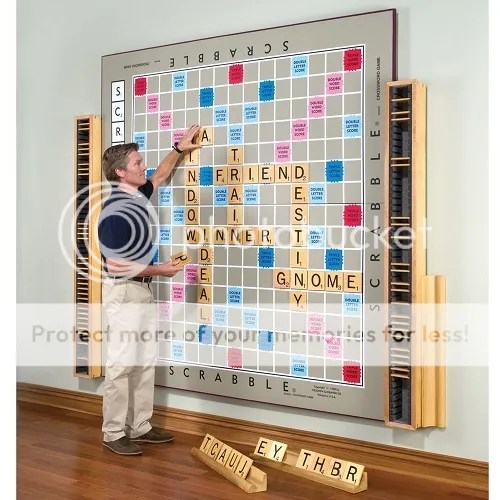
I cannot in good conscience, however, wrap up a post about puzzle and gaming furniture without giving a nod to our friends over at Hammacher Schlemmer, who turned a classic table game into a home entertainment experience with the World’s Largest Scrabble Game.

That’s furniture AND a game in one! (And all for the low, low price of $12,000.)

Do you have a favorite place at home for puzzling or playing games? Let me know! Or send us a picture and share your puzzle nook with the world!

Thanks for visiting PuzzleNation Blog today! You can share your pictures with us on Instagram, friend us on Facebook, check us out on TwitterPinterest, and Tumblr, and be sure to check out the growing library of PuzzleNation apps and games!

Puzzle Day Kickstarter Round-up!

Happy (Inter)National Puzzle Day, fellow puzzlers and PuzzleNationers!

As I explained on Tuesday, today is a day dedicated to all things puzzly, and lots of puzzlers are joining the celebration!

For instance, our friends at Penny/Dell Puzzles are running a timed Word Seek challenge and encouraging solvers to share pics of themselves doing the challenge on Facebook, Twitter, or Instagram using the hashtag #PDPPuzzleDayChallenge!

And, in the spirit of the day, I thought I’d do a crowdfunding round-up of some of the interesting puzzly projects on Kickstarter right now.

First off, I want to talk about Unspeakable Words, a Scrabble-style word-building game with a dash of H.P. Lovecraft.

The game went out of print a while ago, and remaining copies have been in high demand since the game was featured on Wil Wheaton’s board game webseries TableTop. The goal is to print a deluxe version of the game (originally allowing for seven players instead of six, but with several stretch goals reached, they’ve expanded to eight!), with additional stretch goals allowing for better game components.

Now, this is already a Kickstarter success story, because the game funded the first day, so you’re guaranteed to see a finished game before it hits stores.

For a taste of something different, Facets is a wood-and-magnets constructing puzzle toy that allows you to make various shapes based on the Platonic solids. Whether you’re interested in 3-D geometry or just like wooden building toys with a twist, Facets is right up your alley.

Facets has just crossed its funding goal with less than two weeks to go, and it looks like this might be the start of the next generation of Tinker Toys-style constructing toys.

Now, there are a LOT of other campaigns I could mention, like the small 3-D printed puzzle ship (pictured above) or this campaign to make the fake game Cones of Dunshire from NBC’s Parks and Recreation a real Settlers of Catan-style game, but I want to focus on one campaign that’s using puzzles to spread a deeper message.

Alyssa’s Puzzle Project is the brainchild of a young lady named Alyssa who is 12 years old and wants to educate the world — and her fellow students — about the dangers of moral and governmental corruption. So she’s created an awareness-building activity around a jigsaw puzzle, designed for classrooms and students to assemble together. It’s symbolic group problem-solving to raise awareness and spark conversation.

You can read more about Alyssa’s project and her ambitious goals here.

Finally, I would be remiss if I didn’t mention the phenomenal success of Exploding Kittens, a strategy card game that launched with a goal of $10,000 and has raised over 4 MILLION dollars in its first eight days.

It is now the most backed Kickstarter campaign in history, with more than 100,000 backers, and the sky truly appears to be the limit for this card game based on art from The Oatmeal.

I’ve been watching and funding Kickstarter and Indiegogo campaigns for a few years now, and I (and the rest of the world) have never seen anything like it.

Did I miss any puzzly Kickstarter or Indiegogo campaigns you’ve seen launched recently, fellow puzzlers? Let me know!

Thanks for visiting PuzzleNation Blog today! You can share your pictures with us on Instagram, friend us on Facebook, check us out on TwitterPinterest, and Tumblr, and be sure to check out the growing library of PuzzleNation apps and games!

It’s Follow-Up Friday: Library Gaming edition!

Welcome to Follow-Up Friday!

By this time, you know the drill. Follow-Up Friday is a chance for us to revisit the subjects of previous posts and bring the PuzzleNation audience up to speed on all things puzzly.

And today, I’d like to return to the subject of puzzle-game holidays!

[Once again, a board game brings a family together…]

In the past I’ve written plenty about International TableTop Day, the holiday dedicated to social gaming and puzzling. But did you know that in less than two weeks, another puzzle-game holiday arrives?

That’s right, November 15 is International Games Day, an event organized by the American Library Association “to celebrate the mutually-reinforcing power of play and learning.”

From the I Love Libraries website:

Libraries are about sharing culture and information, and games are a form of culture that you often have to share – you often can’t experience them without another player!

They’re also good for brain health, and foster important life skills like socialization, theory of mind and systems literacy. Plus, they’re fun!

Whether video games, tabletop games, social games or other kinds of games, they’re all a part of culture whose importance is only becoming clearer with time. And that means we need to foster the kind of smart engagement that libraries support, for games as well as books.

And while International TableTop Day is synonymous with board games, card games, and roleplaying games, International Games Day encompasses all of the above and more, including online videogames, trivia games, and any other games you can think of.

It’s a terrific opportunity to come out to support both games and your local library, and maybe make a few new friends along the way!

Let us know if you’ll be participating in International Games Day, PuzzleNationers! We’d love to see pictures and hear all about it!

Thanks for visiting PuzzleNation Blog today! You can share your pictures with us on Instagram, friend us on Facebook, check us out on TwitterPinterest, and Tumblr, and be sure to check out the growing library of PuzzleNation apps and games!

It’s Follow-Up Friday (in color!)

Welcome to Follow-Up Friday!

For those new to PuzzleNation Blog, Follow-Up Friday is a chance for us to revisit the subjects of previous posts and update the PuzzleNation audience on how these projects are doing and what these people have been up to in the meantime.

And today, I thought I’d mention a curious and clever board game development I stumbled across recently.

One of the most popular games from our recent TableTop Day event was Qwirkle.

A wonderful tile game featuring different colors and symbols, Qwirkle follows in the strategy and pattern-matching tradition of Uno and Mexican Train dominoes.

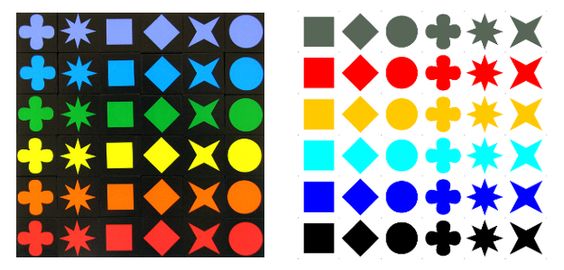
Unfortunately, my fellow puzzlers and I quickly discovered that the colors chosen for the game are difficult for colorblind players to tell apart. And in a game where you don’t want to show other players your tiles before you play them, it becomes much harder to tell the different between red and orange tiles, which is a crucial distinction during gameplay.

Thankfully, a software developer and board game fan named Joe Michael McDonald took it upon himself to design a colorblind-friendly color palette for Qwirkle.

qwirklecolorblind

[On the left is the standard Qwirkle color options. On the right is McDonald’s colorblind-friendly variant.]

It’s a terrific example of player ingenuity solving an unforeseen problem and opening up the game to a whole new audience.

Kudos to you, sir. Here’s hoping more games offer a colorblind-friendly variant very soon.

Thanks for visiting PuzzleNation Blog today! You can share your pictures with us on Instagram, friend us on Facebook, check us out on Twitter, Pinterest, and Tumblr, and be sure to check out the growing library of PuzzleNation apps and games!