A Conway Puzzle Solution (And Some Hints for the Other Puzzle)

John_H_Conway_2005_(cropped)

Two weeks ago, in honor of mathematician and puzzly spirit John Horton Conway, we shared two of his favorite brain teasers and challenged our fellow PuzzleNationers.

So today, we happily share the solution for puzzle #1, The Miracle Builders.

I had a window in the north wall of my house. It was a perfect square, 1 meter wide and 1 meter high. But this window never let in enough light. So I hired this firm, the Miracle Builders, who performed the impossible. They remodeled the window so it let in more light. When when they’d finished the window was a perfect square, 1 meter high and 1 meter wide.

How did they do it?

Both windows are perfect squares, 1 meter wide and 1 meter high. So how can there be a difference in the amount of light?

The trick of this puzzle is in the description. Although the original window was a perfect square, the dimensions of the square aren’t 1 meter by 1 meter. No, it was a square placed like a diamond, with one corner directly above its opposite. So the 1 meter dimensions were the diagonals, not the sides.

All the Miracle Builders had to do was build a square window in the usual arrangement (two sides horizontal, two sides vertical) with dimensions of 1 meter by 1 meter. That creates a larger window (with a diagonal of √2m) and allows more light.

Very tricky indeed.


We had several solvers who successfully cracked the Miracle Builders puzzle, but there was less success with puzzle #2, The Ten Divisibilities.

So, in addition to the original puzzle, we’re going to post some solving hints for those intrepid solvers who want another crack at the puzzle.

The Ten Divisibilities

I have a ten digit number, abcdefghij. Each of the digits is different, and:

  • a is divisible by 1
  • ab is divisible by 2
  • abc is divisible by 3
  • abcd is divisible by 4
  • abcde is divisible by 5
  • abcdef is divisible by 6
  • abcdefg is divisible by 7
  • abcdefgh is divisible by 8
  • abcdefghi is divisible by 9
  • abcdefghij is divisible by 10

What’s my number?

[To clarify: a, b, c, d, e, f, g, h, i, and j are all single digits. Each digit from 0 to 9 is represented by exactly one letter. The number abcdefghij is a ten-digit number whose first digit is a, second digit is b, and so on. It does not mean that you multiply a x b x c x…]

Here’s a few hints that should help whittle down the possibilities for any frustrated solvers:

-If you add all the digits in a number, and the total is divisible by 3, then that number is also divisible by 3.
-If the last two digits of a number are divisible by 4, then that number is divisible by 4.
-If the last three digits of a number are divisible by 8, then that number is divisible by 8.

Good luck, and happy puzzling!


Thanks for visiting PuzzleNation Blog today! Be sure to sign up for our newsletter to stay up-to-date on everything PuzzleNation!

You can also share your pictures with us on Instagram, friend us on Facebook, check us out on TwitterPinterest, and Tumblr, and explore the always-expanding library of PuzzleNation apps and games on our website!

A Two-For-One Visual Puzzle

Given the technology available to us — be it Photoshop or other visual manipulation software — there is truly no end to what we can create.

An Instagram account called morphy_me is doing something interesting with celebrity photos. The artist, credited only as Benji, merges elements of both celebrities, somehow creating an image that is reminiscent of both, and yet feels strangely new.

For example, this is a combination of Johnny Depp and Brad Pitt:

benji 0

It’s an intriguing approach that has garnered the account over 100,000 followers. It’s also something of a puzzly challenge sometimes to figure out who the two celebrities are that have been merged.

Can you puzzle out the 15 pairs of celebrities that have been combined in these images by Benji?


#1

benji 1

#2

benji 2

#3

benji 3

#4

benji 4

#5

benji 5

#6

benji 6

#7

benji 7

#8

benji 8

#9

benji 9

#10

benji 10

#11

benji 11

#12

benji 12

#13

benji 13

#14

benji 14

#15

benji 15


How many did you get, fellow puzzlers and PuzzleNationers? Let us know in the comments section below! We’d love to hear from you!

Thanks for visiting PuzzleNation Blog today! Be sure to sign up for our newsletter to stay up-to-date on everything PuzzleNation!

You can also share your pictures with us on Instagram, friend us on Facebook, check us out on TwitterPinterest, and Tumblr, and explore the always-expanding library of PuzzleNation apps and games on our website!

Two Brain Teasers, Courtesy of Conway

John_H_Conway_2005_(cropped)

Last week, we penned a post celebrating the life and puzzly legacy of mathematician John Horton Conway, and several of our fellow PuzzleNationers reached out with their own thoughts or questions about Conway.

One recurring subject was about his love of puzzles and what kind of puzzles he enjoyed solving. So, naturally, I went hunting for some of Conway’s favorite puzzles.

As it turns out, Alex Bellos of The Guardian had me covered. Alex has a recurring puzzle feature on The Guardian‘s website where brain teasers and other mental trickery awaits intrepid solvers.

Years ago, Alex had asked Conway for suggestions for his column, and Conway offered up two tricky puzzles.

And now, I happily share them with you.


#1: The Miracle Builders

I had a window in the north wall of my house. It was a perfect square, 1 meter wide and 1 meter high. But this window never let in enough light. So I hired this firm, the Miracle Builders, who performed the impossible. They remodeled the window so it let in more light. When when they’d finished the window was a perfect square, 1 meter high and 1 meter wide.

How did they do it?


#2: The Ten Divisibilities

I have a ten digit number, abcdefghij. Each of the digits is different.

The following is also true:

  • a is divisible by 1
  • ab is divisible by 2
  • abc is divisible by 3
  • abcd is divisible by 4
  • abcde is divisible by 5
  • abcdef is divisible by 6
  • abcdefg is divisible by 7
  • abcdefgh is divisible by 8
  • abcdefghi is divisible by 9
  • abcdefghij is divisible by 10

What’s my number?

[To clarify: a, b, c, d, e, f, g, h, i, and j are all single digits. Each digit from 0 to 9 is represented by exactly one letter. The number abcdefghij is a ten-digit number whose first digit is a, second digit is b, and so on. It does not mean that you multiply a x b x c x…]


Did you solve one or both of these fiendish mind ticklers? Let us know in the comments section below! We’d love to hear from you.

Thanks for visiting PuzzleNation Blog today! Be sure to sign up for our newsletter to stay up-to-date on everything PuzzleNation!

You can also share your pictures with us on Instagram, friend us on Facebook, check us out on TwitterPinterest, and Tumblr, and explore the always-expanding library of PuzzleNation apps and games on our website!

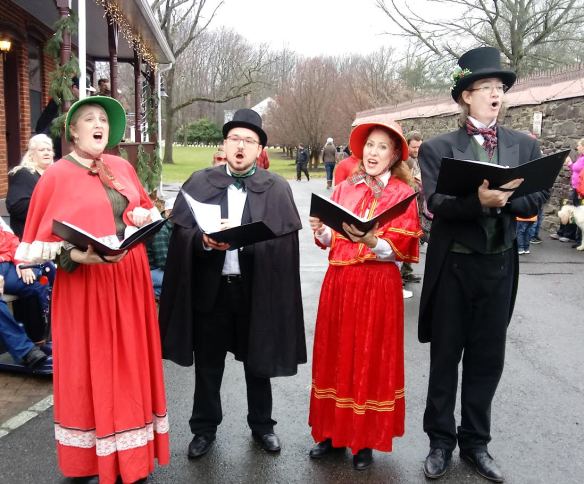
Here We Come A-Wassailing, With Some Reworded Carols!

village-carolers

[Image courtesy of The Sun Papers.]

A few years ago, I posted a holiday puzzle that had been floating around the Internet for years. It was a list of Christmas songs and carols whose titles had been reworded, and it was up to the reader to identify the actual titles.

It was a popular post, but something about the list always bothered me. There were 21 reworded titles, which didn’t strike me as very Christmassy at all. I mean, why not 12? Or 24? Or, heck, 25?

So, I did something about it. I added 10 new reworded titles to the list, bringing the total to 31, one for every day in December. Let’s see how many PuzzleNationers can crack all 31 titles, shall we? Enjoy!


1.) Move hitherward the entire assembly of those who are loyal in their belief.

2.) Listen, the celestial messengers produce harmonious sounds.

3.) Proceed forth declaring upon a specific geological alpine formation.

4.) Nocturnal timespan of unbroken quietness.

5.) Embellish the interior passageways.

6.) An emotion excited by the acquisition or expectation of good given to the terrestial sphere.

7.) Twelve o’clock on a clement night witnessed its arrival.

8.) The Christmas preceding all others.

9.) Small municipality in Judea southeast of Jerusalem.

10.) In a distant location the existence of an improvised unit of newborn children’s slumber furnishings.

11.) Tintinnabulation of vacillating pendulums in inverted, metallic, resonant cups.

12.) The first person nominative plural of a triumvirate of far eastern heads of state.

13.) Geographic state of fantasy during the season of Mother Nature’s dormancy.

14.) In awe of the nocturnal timespan characterized by religiosity.

15.) Natal celebration devoid of color, rather albino, as an hallucinatory phenomenon for me.

16.) Expectation of arrival to populated areas by mythical, masculine perennial gift-giver.

17.) Obese personification fabricated of compressed mounds of frozen minute crystals.

18.) Tranquility upon the terrestial sphere.

19.) Omnipotent supreme being who elicits respite to ecstatic distinguished males.

20.) Diminutive masculine master of skin-covered percussionistic cylinders.

21.) Jovial Yuletide desired for the second person singular or plural by us.

22.) Allow winter precipitation in the form of atmospheric water vapor in crystalline form to descend.

23.) A first-person observer witnessed a female progenitor engaging in osculation with a hirsute nocturnal intruder.

24.) Your continued presence remains the sole Yuletide request of the speaker in question.

25.) Permanent domicile during multiple specific celebratory periods.

26.) Diminutive person regarded as holy or virtuous known by the informal moniker shared by two former Russian tsars.

27.) More than a passing resemblance to an annual winter festival is emerging.

28.) Are you registering the same auditory phenomenon I am currently experiencing?

29.) Overhead at the summit of the suburban residence.

30.) Attractive or otherwise visually pleasing wood pulp product.

31.) Parasitic European shrub accompanied by a plant with prickly green leaves and baccate qualities.


How many did you unravel, fellow puzzlers? Let us know in the comments section below! We’d love to hear from you!

Thanks for visiting PuzzleNation Blog today! Be sure to sign up for our newsletter to stay up-to-date on everything PuzzleNation!

You can also share your pictures with us on Instagram, friend us on Facebook, check us out on TwitterPinterest, and Tumblr, and explore the always-expanding library of PuzzleNation apps and games on our website!

Riddles, Riddles Everywhere!

I’ve had riddles on the brain recently, because I keep seeing them everywhere. Over the last few weeks, they’ve popped up in games, TV shows, books, and even emails to the blog.

It all started with our twice-monthly office D&D game. Every other Thursday, a group of us commandeers one of the conference rooms at lunchtime and enjoys an hour of dice-fueled storytelling, adventure, and fun.

As is often the case with a fantasy-inspired game, there was a river to cross and a riddle to answer in order to pass.

A murderer is condemned to death. He has to choose between three rooms. The first is full of raging fires, the second is full of assassins with loaded guns, and the third is full of lions that haven’t eaten in a year. Which room is safest for him?

This is a classic riddle, usually titled “Three Doors” or “The Murderer’s Riddle.”

lionriddle-1

And when you’ve got a team of puzzle solvers in your D&D group, this riddle is no challenge at all.

(If you’re curious about the solution, you pick door #3. After a year of not eating, the lions would be dead, so it would be safe to enter that room.)

Later on in the game, we again had to barter passage across a body of water, either answering a riddle or battling a demon to the death.

Naturally, we chose the riddle.

What is the creature that walks on four legs in the morning, two legs at noon and three in the evening?

This is another classic riddle — the Riddle of the Sphinx, most famously solved by Oedipus — and posed no challenge to our merry band of misfit adventurers.

(If you don’t know this one, the answer is “man,” since you walk on four legs as a child, aka crawling, two legs as an adult, and with a cane when you’re older. The day — morning, noon, and evening — represents a lifetime.)

We crossed the lake, and our adventure continued, and I thought I was done with riddles for a bit.

Then a few days later, I got caught up on the latest season of MTV’s The Challenge, a reality/competition game show. (I’ve written about some of their puzzly challenges in the past.)

And, wouldn’t you know it, this week’s challenge involved a riddle.

wotwriddle3

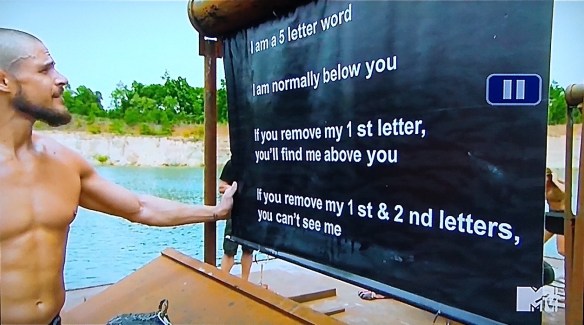
Both teams would start on this platform, sending pairs of swimmers out on a long swim to retrieve keys. Those four keys would then open both a chest full of letter tiles and a riddle to be solved. The first team to solve the riddle with the letters available would win the challenge.

Once all the drama of selecting partners — given that many of the players weren’t strong swimmers, and the slowest-swimming team would be eliminated from the game — there was plenty of tension to be had.

But finally, all four keys were retrieved by the teams, and the riddle revealed:

wotwriddle1

I am a 5 letter word.

I am normally below you.

If you remove my 1st letter, you’ll find me above you.

If you remove my 1st and 2nd letters, you can’t see me.

The teams were initially baffled, playing around with different words and various combinations of letter tiles in the hopes that it would spark something.

wotwriddle2

Eventually, competitor Ashley came up with a three-letter word that you couldn’t see — AIR — and her team quickly came up with the correct answer: CHAIR.

(A chair is normally below you, hair is above you (sorta), and air can’t be seen.)

So, three riddles in a matter of days. It’s officially a pattern. And so far, I’m three for three on solving these riddles.

A week or so later, though, yet another riddle arrived, this time by email. And I admit, I’m a little stumped.

What has a bell but isn’t a church. Is full of air but is not a balloon?

What do you think, fellow puzzlers and PuzzleNationers? Any ideas? Let me know in the comments section below. I have a few theories, but nothing that feels like a conclusive answer.


Thanks for visiting PuzzleNation Blog today! Be sure to sign up for our newsletter to stay up-to-date on everything PuzzleNation!

You can also share your pictures with us on Instagram, friend us on Facebook, check us out on TwitterPinterest, and Tumblr, and explore the always-expanding library of PuzzleNation apps and games on our website!

The Beale Ciphers: A Puzzly Treasure Hidden Since the 1800’s?

There’s nothing quite like a treasure hunt to spark the imagination. From The Treasure of the Sierra Madre to the adventures of Indiana Jones, from tales as far back as Poe’s “The Gold-Bug” to stories as recent as an episode of NCIS: New Orleans last year, a treasure hunt can turn a crime story or an adventure tale into an irresistible narrative for the ages.

Thankfully, there are a few treasure hunts lurking out there in the real world, offering clever solvers the chance to live out their own adventure. In the past, we’ve explored the mystery of Forrest Fenn’s Rocky Mountain treasure, we’ve chronicled efforts to locate all of Byron Preiss’s The Secret treasures, and we’ve suggested tactics for cracking Jason Rohrer’s A Game for Someone hunt.

But as intriguing as those hunts are, none of them have spanned more than a century of searching. (Without resulting in unfortunate demises, that is. We’re looking at you, Oak Island.)

No, that singular honor belongs to a treasure hunt known as the Beale Ciphers.
beale_papers

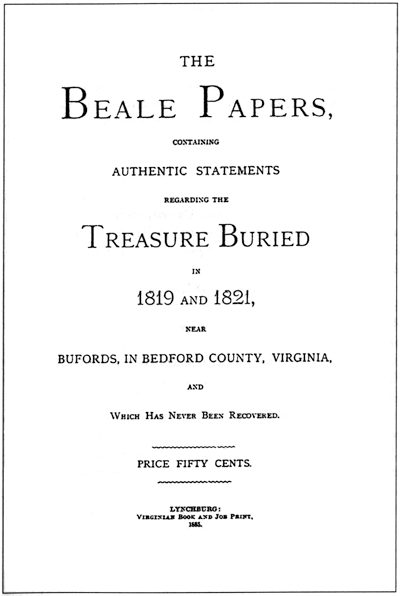
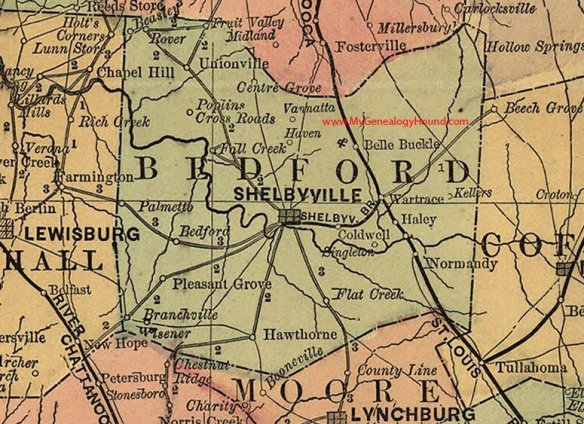
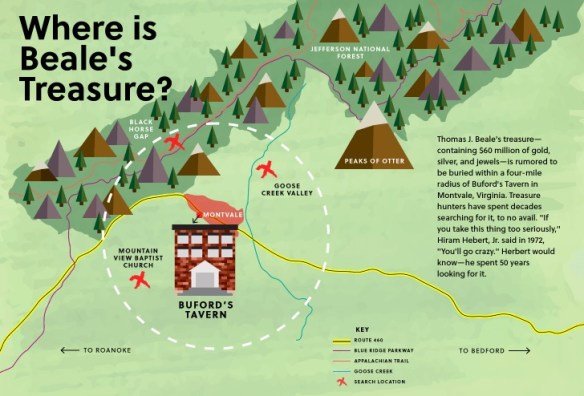
As the story goes, a man named Thomas J. Beale buried a treasure trove of gold and silver somewhere in Bedford County, Virginia, in the early 1800s. Beale then encrypted the location of the treasure, the contents of the treasure, and the names of those he wished to have the treasure. Beale handed off those encryptions to an innkeeper, then vanished, never to be seen again. (His promise of later providing the key for the ciphers was never fulfilled.)

The innkeeper failed to crack the ciphers, then held onto them for decades before passing them along to an unnamed friend before his death. The unnamed friend spent twenty more years trying to unravel the encryptions (managing to solve the second of the three encrypted messages). Eventually, the friend published the encryptions and the story of Beale’s treasure in a pamphlet he began selling in 1885.

So, how do the ciphers work?

It’s simple, really. Take a book, pick a given page, and number all of the words on the page. (Or just start at the beginning of the book.)

If you’re using A Tale of Two Cities, for instance:

1 It
2 was
3 the
4 best
5 of
6 times,
7 it
8 was
9 the
10 worst
11 of
12 times…

So, using the first letters of each word (and the corresponding number), the word BOW could be encrypted 4 11 8 or 4 11 2 or 4 11 10.

This grants people in the know two advantages. The code is incredibly difficult to break on its own, because unlike a cryptogram (or any other message encrypted with a Caesar cipher or a one-to-one relationship between coded letters), each appearance of a given letter could be a different number, not the same one over and over.

Plus, if you know the key (the book and page number), decoding it requires no puzzly skill at all.

It’s diabolical and effective, as proven by Beale’s trio of ciphers, since only one has been cracked (because the solver stumbled upon the Declaration of Independence as the key).

[The second Beale cipher.]

The decrypted text from the second cipher:

I have deposited in the county of Bedford, about four miles from Buford’s, in an excavation or vault, six feet below the surface of the ground, the following articles, belonging jointly to the parties whose names are given in number three, herewith:

The first deposit consisted of ten hundred and fourteen pounds of gold, and thirty-eight hundred and twelve pounds of silver, deposited Nov. eighteen nineteen. The second was made Dec. eighteen twenty-one, and consisted of nineteen hundred and seven pounds of gold, and twelve hundred and eighty-eight of silver; also jewels, obtained in St. Louis in exchange to save transportation, and valued at thirteen thousand dollars.

The above is securely packed in iron pots, with iron covers. The vault is roughly lined with stone, and the vessels rest on solid stone, and are covered with others. Paper number one describes the exact locality of the vault, so that no difficulty will be had in finding it.
bealemap

Of course, there are some problems there, even with the cipher that treasure hunters consider solved. You see, there are some irregularities with the solution. Not only are there four misspellings in the translation, but a variation on the original Declaration of Independence must be used or the cipher doesn’t decode correctly.

Now, mistakes happen. (As we learned with the story of Brian Patrick Regan.) But if there are mistakes in the two unsolved ciphers as well, that only makes the chances of finding the proper key even slimmer, because a mistake in the early numbers of the code might convince someone that they’ve got the wrong key, even if they have the right one!

Do you find that challenge daunting, fellow puzzlers? It’s understandable if you do. The other two ciphers have resisted the best efforts of even master cryptographers and cryptanalysts.

Given that the Declaration of Independence was the key for the second cipher, many aspiring treasure hunters have tried using other famous historical documents as possible keys for the other ciphers, including the Magna Carta, the Constitution, the Monroe Doctrine, and more, as well as the plays of Shakespeare and the Lord’s Prayer.
bealemontvale

There are also plenty of reasons to doubt that this treasure exists at all. (The same question marks hang over some of the other treasure hunts we’ve mentioned, like Forrest Fenn’s.)

There are questions regarding the language in the pamphlet, where the gold was supposedly found, why Beale would bother encrypting the names of the people he wanted to inherit the treasure, and even whether Beale himself ever existed in the first place. (Famous skeptic and investigator of the supernatural Joe Nickell believes the pamphlet is a fraud.)

But does that mean the ciphers are? Not necessarily.

An analysis in 1970 by Dr. Carl Hammer of Sperry-UNIVAC indicated that the number patterns are not random. He believed that further attempts at cracking the ciphers would be worthwhile.

Heck, even our old codebreaking friends Elizebeth Smith Friedman and her husband William tried to unravel the Beale ciphers, but without success. She called the ciphers “a diabolical ingenuity designed to lure the unwary reader.”

And, of course, not every hunter has come away empty-handed. One team of treasure hunters stumbled upon a cache of Civil War artifacts while hunting for Beale’s trove.

So what do you think, PuzzleNationers? Is the Beale treasure real? Will it ever be found? Let us know in the comments section below! We’d love to hear from you.


Thanks for visiting PuzzleNation Blog today! Be sure to sign up for our newsletter to stay up-to-date on everything PuzzleNation!

You can also share your pictures with us on Instagram, friend us on Facebook, check us out on TwitterPinterest, and Tumblr, and explore the always-expanding library of PuzzleNation apps and games on our website!