Variety Crosswords: What’s Black and White and Crossed All Over

It’s an awesome time to be a crossword fan.

You’ve got LOADS of outlets doing traditional crosswords, both themed and themeless / freestyle. There are minis and midis for quicker solving (but equally creative themes and tricks!), and cryptic / British crosswords for a different flavor of cluing.

But that’s just scraping the surface of different kinds of crosswords out there. So today, let’s explore the world of variety crosswords and see all the challenging ways constructors can add a twist to the familiar crossword formula.

(These examples are from Penny Dell Puzzles, GAMES Magazine, and Puzzlecraft by Mike Selinker and Thomas Snyder.)
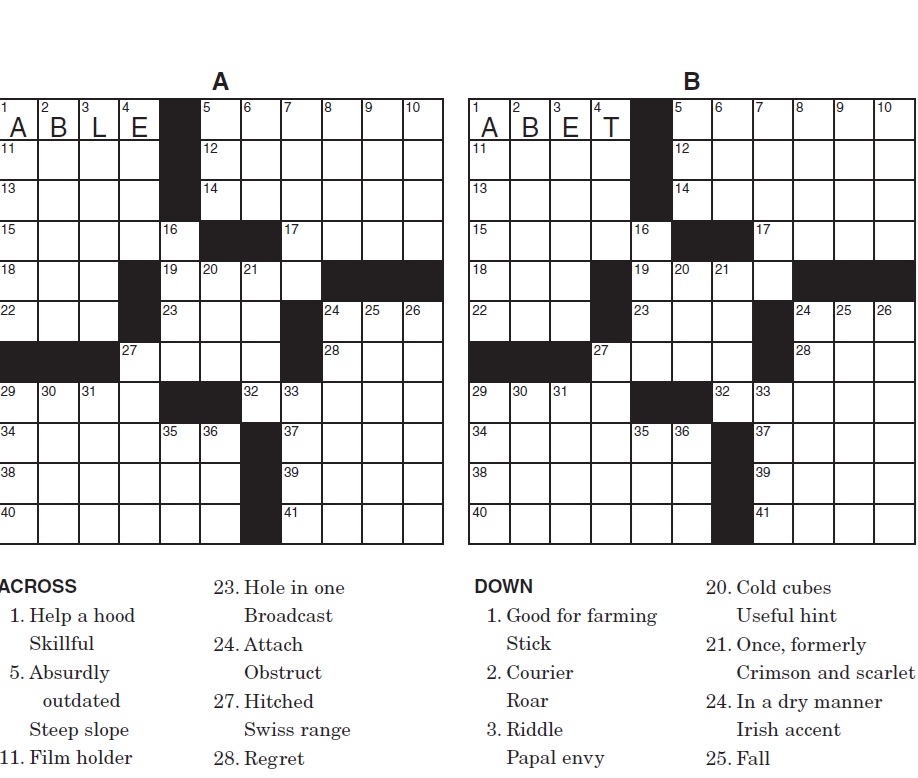

Twin Crosswords (also known as Twinlets) is a puzzle that offers two identical grids and the clues for both grids, but all mixed up. 1-Across gets two clues, one for each grid, but you don’t know which. (Unless the first word is set for you, like in the example above.) That continues for every coordinate, both across and down. Can you figure out which clue applies to which grid?

For an extra challenge, constructors sometimes use the same clue for two different words, testing the solver’s flexibility of mind as well as their vocabulary.
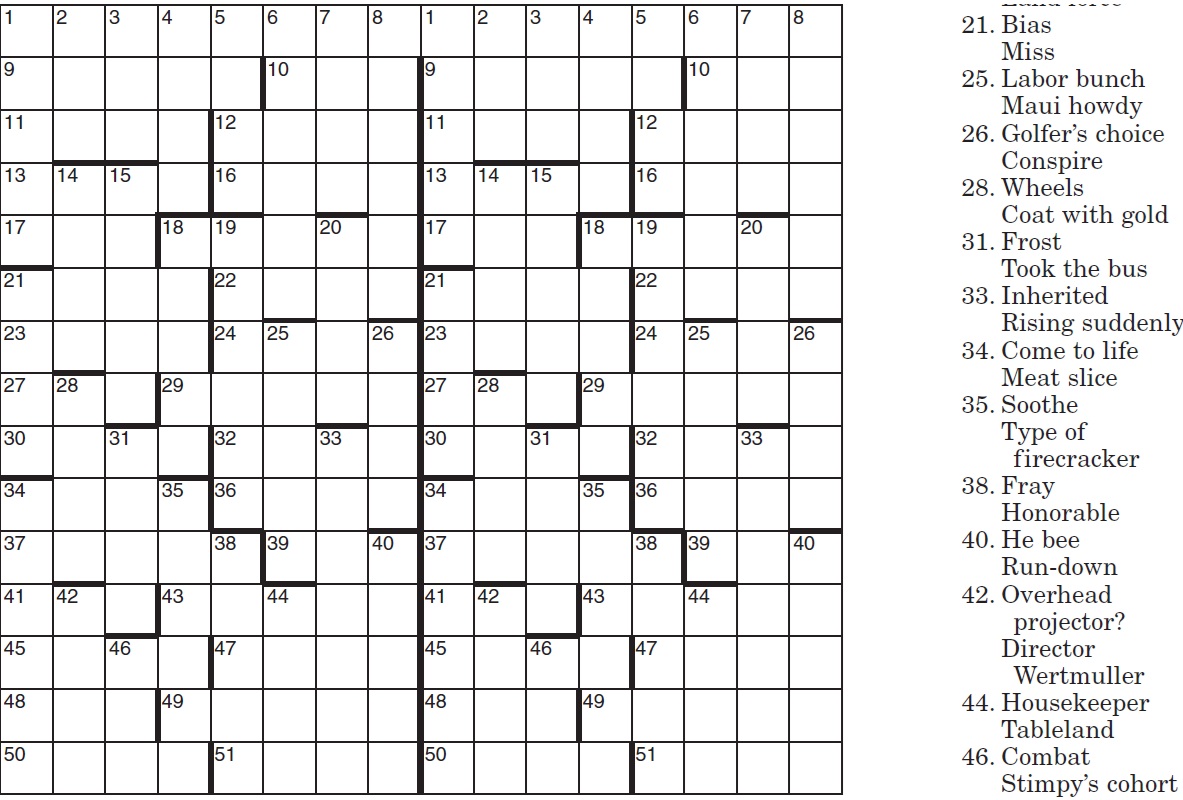
There is a variation on Twin Crosswords known as a Dilemma crossword. In this case, the mix-matched clues apply to two different sections in the same grid. A single unifying entry runs across the top of the grid, with two identical columns below.

Black lines divide answer words instead of black squares, making this a challenging puzzle to construct and to solve! (Crosswords without black squares are also called Blackout puzzles.)
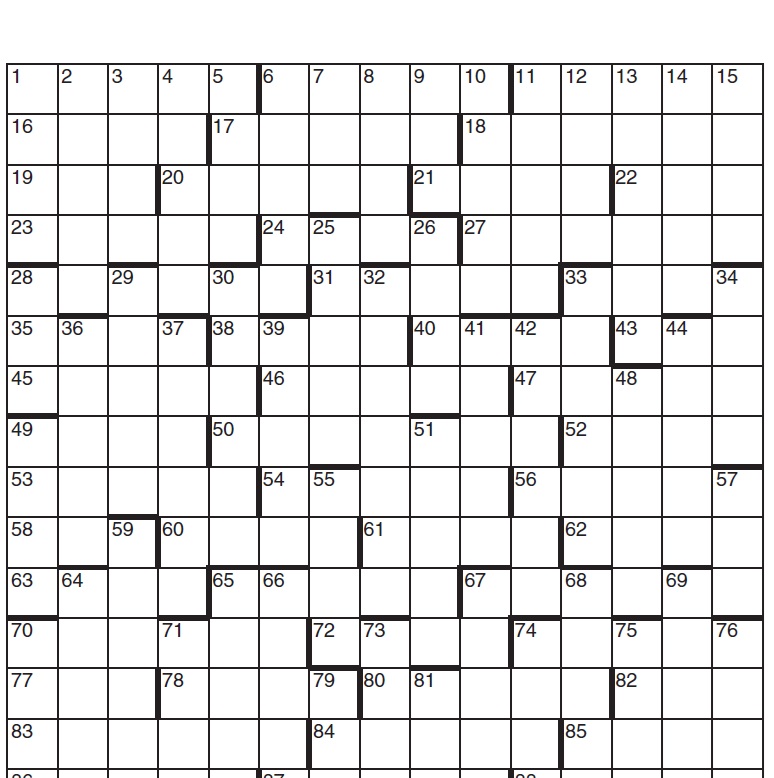
Similar to Dilemma, a Stoplines puzzle has black lines instead of black squares, leading to a dense interconnected grid with traditional rotational symmetry, but lacking that single grid-spanning entry across the top.

But at least a Stoplines puzzle gives you black lines to figure out word lengths for your answers. A Wordsworth puzzle has the same dense grid, but without any indicators of word length. An empty 15x grid space awaits a Wordsworth solver. (It’s like a Diagramless without any black squares.)
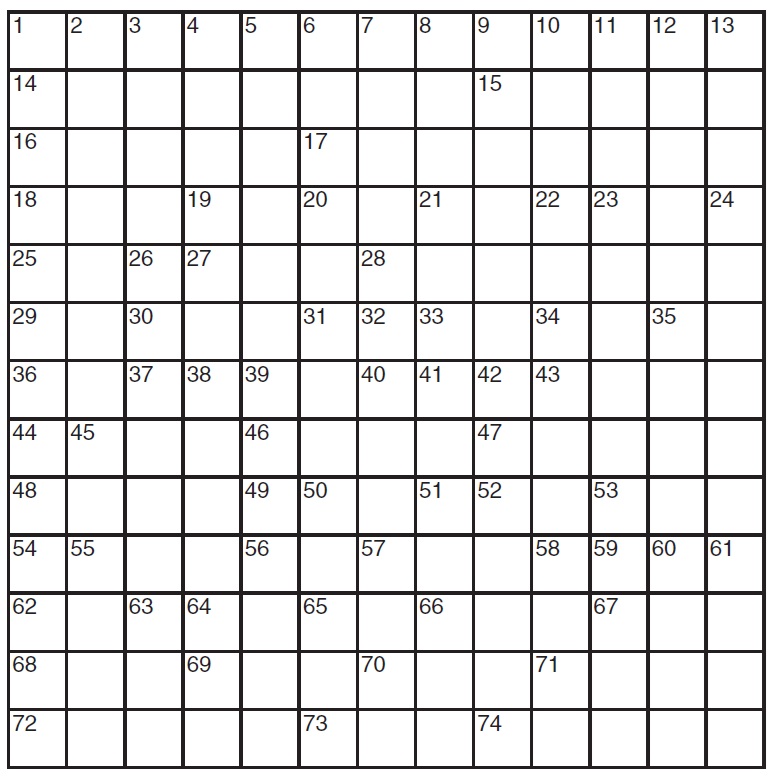
Oh, and for an extra challenge for an already difficult task, Clapboard has no black squares AND all of the entries overlap by 1 or 2 letters.


For a break from the tight grids and difficulty, let’s check out a Brick by Brick crossword.
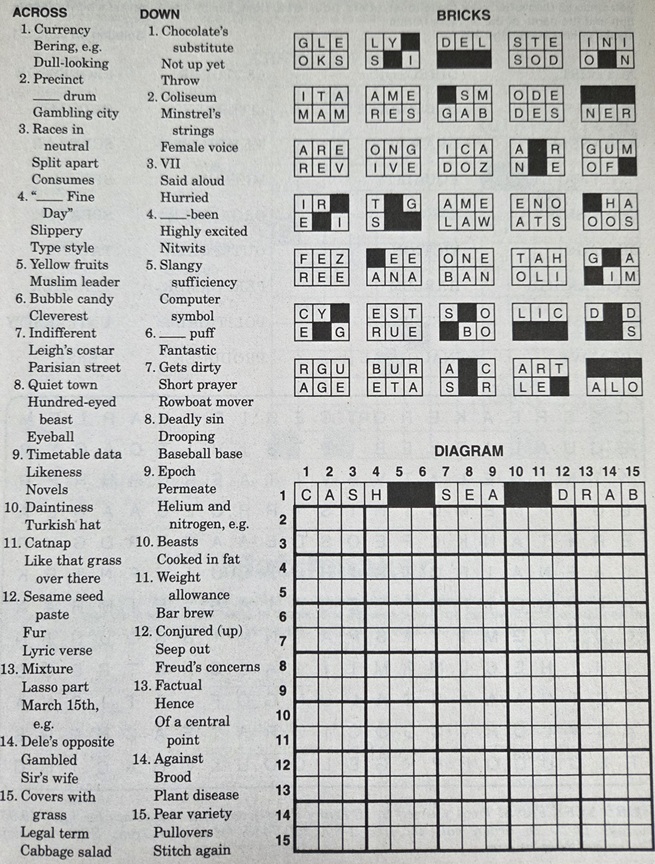
This is a traditional crossword, except you have the additional advantage of the grid being split up into 3×2 “bricks” and randomly gathered next to the clues.

So solvers can either traditionally solve this crossword or put their jigsaw skills to the test assembling the grid visually brick by brick.

I really like this puzzle as an introduction to crosswords. That extra element adds a safety net for nervous solvers who find a traditional crossword grid daunting.
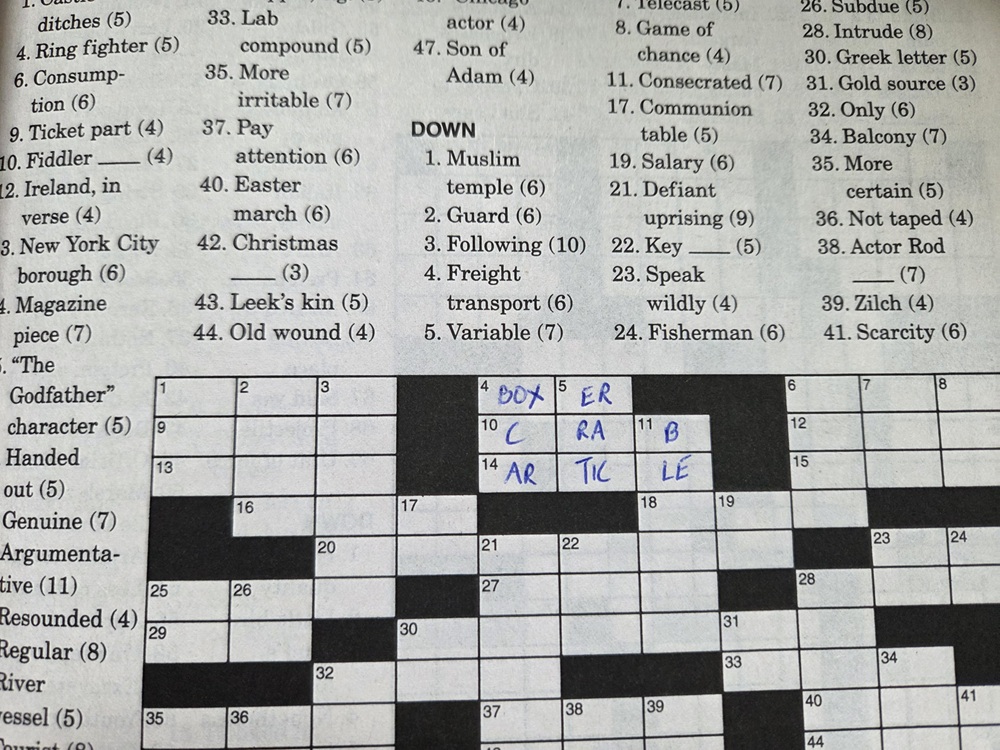
If you’re a fan of rebus-style crosswords — grids where a cell can hold more than one letter, often as part of a tricky gimmick or theme — you should check out Double Trouble crosswords (also known as Crushword puzzles).

Every box in this puzzle contains either 1, 2, or 3 letters, making the crossings extra challenging to work out so that every answer fits.

(There’s even a Diagramless Double Trouble for the truly masochistic solver.)


Sometimes, the variation isn’t in the grid design, it’s in the cluing.

For instance, instead of a traditional crossword clue, a Triple Play puzzle offers three words that form phrases with the intended answer word. For example, the clue SNAIL, BOX, ORDER points to the answer word MAIL (snail mail, mailbox, mail order).

The trios replace some (but not all) of the usual clues, offering a more associative clue to unravel.
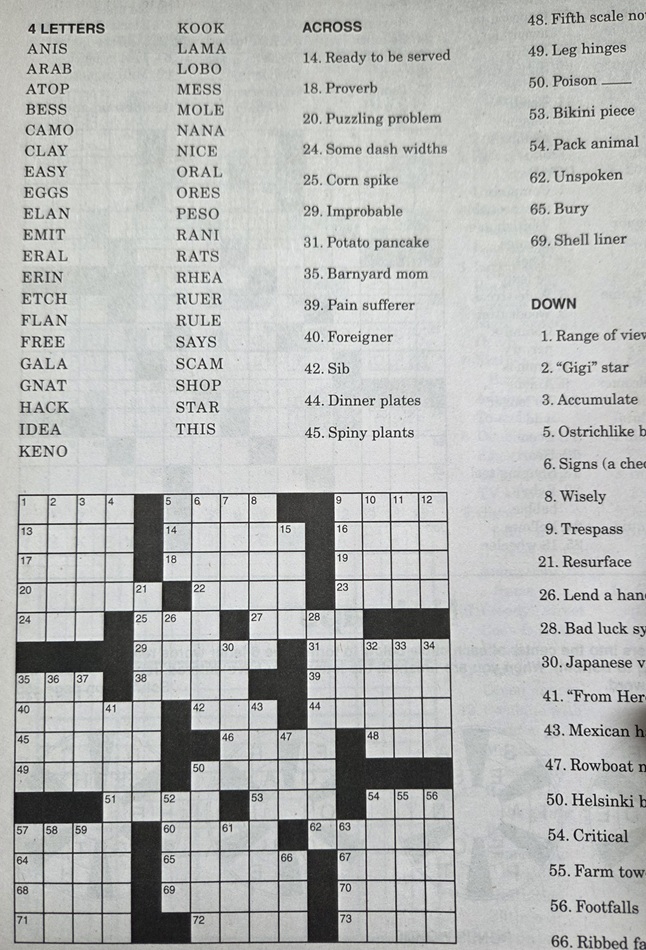
Other times, not every entry gets clued at all. In a Four-Most, every four-letter word in the grid isn’t clued, it’s listed alphabetically in a separate word list instead. So while the clues handle the 3-letter, 5-letter, and entries of other lengths, you have to fit the four-letter words into grid from their crossings.

Similarly, an At 6’s & 7’s crossword does the same, but with all of the six-letter words and all of the seven-letter words removed from the clue list. They still get clued, but alphabetically, not by grid coordinates.
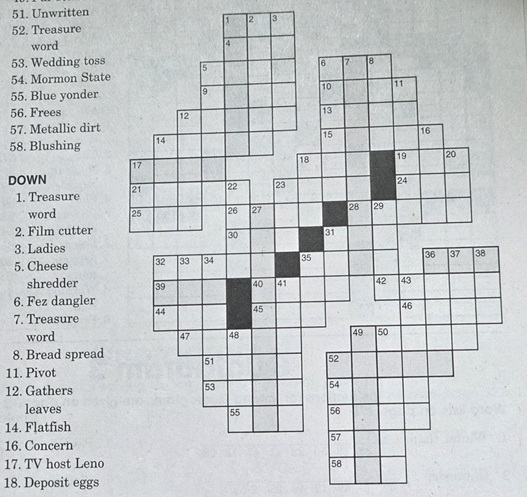
In a Buried Treasure puzzle, the shaded grid entries are related words that fit a particular theme, and they’re only clued in the grid as “Treasure Word.” So you have to fill them in from their crossings and figure out what the Treasure Words have in common.


I’m going to close out today’s post with two of my favorite crossword variants. One is a cluing variant, the other a grid variant.
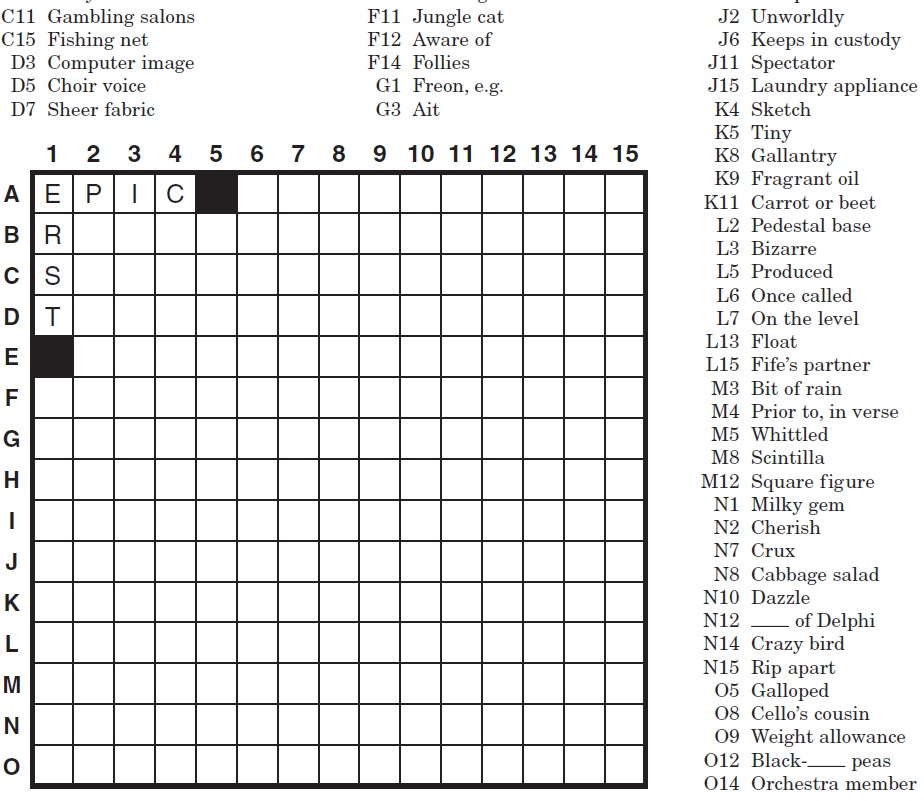
For an additional level of deduction in your crossword solve, there’s Battleships.

In this puzzle, you don’t get the across and down grid coordinates. Instead, you get one Battleship-style coordinate that the word will occupy. You don’t know if the answer word is reading across or down, only that word crosses that coordinate somewhere in the grid.

You get set words to get you started, but it’s still fun to puzzle out exactly how to fit the grid together.
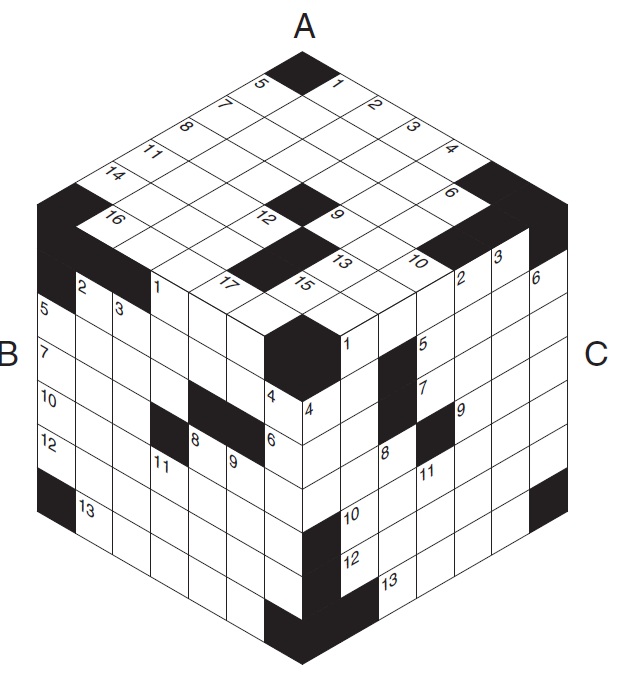
For a nice change of pace visually, there’s Three-D Crossword.

This puzzle offers the same grid three times, side by side by side, like looking at one half of a cube corner first.

It’s genuinely eye-catching and leads to some interesting crossings, allowing for longer entries without all the extra grid fill of a traditional 17x puzzle or larger.

They’re a pleasure to solve and surprisingly fun to construct.


Crosswords have endured in the public eye and in the hearts of puzzlers because of the endless creativity they represent. A clever mind can take a crossword places solvers didn’t expect, challenging and delighting them in equal measure.

It’s one of the many reasons crosswords have stood the test of time, and will continue to do so for years to come.


Are you a traditional crossword solver, a mini/midi enthusiast, a cryptic crossword devotee, or a fan of variety crosswords like the ones above? Did we introduce you to any new favorites? Let us know in the comments section below. We’d love to hear from you!

Two Epic Treasure Hunts Come to an End!

Image courtesy of Go.ActiveCalendar.com

Boy, it’s been a good week to be a treasure hunter!

First, the trophy stashed away in Massachusetts by Project Skydrop was found.

This trophy, valued at $26,000, is only part of the prize, since the trophy contained a code that granted the lucky treasure hunter who found it access to a prize pool of over $87,000! This prize pool was composed of entry fees from the many treasure hunters who signed up for the hunt.

Since the prize was found faster than Project Skydrop organizers predicted, they offered $100 each to the first twenty people to guess the exact coordinates of the now-claimed treasure. The deadline for that second-place prize is today, so I’m definitely curious how many folks were able to claim that c-note.

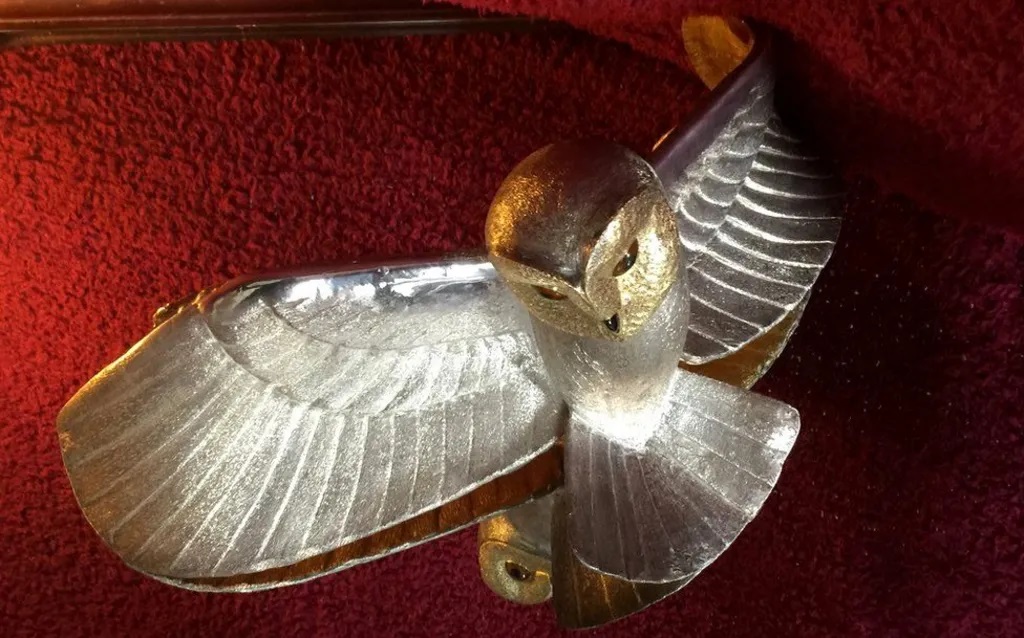
But that was only the beginning of big treasure hunt news, as the hunt for the Golden Owl has also reportedly come to an end.

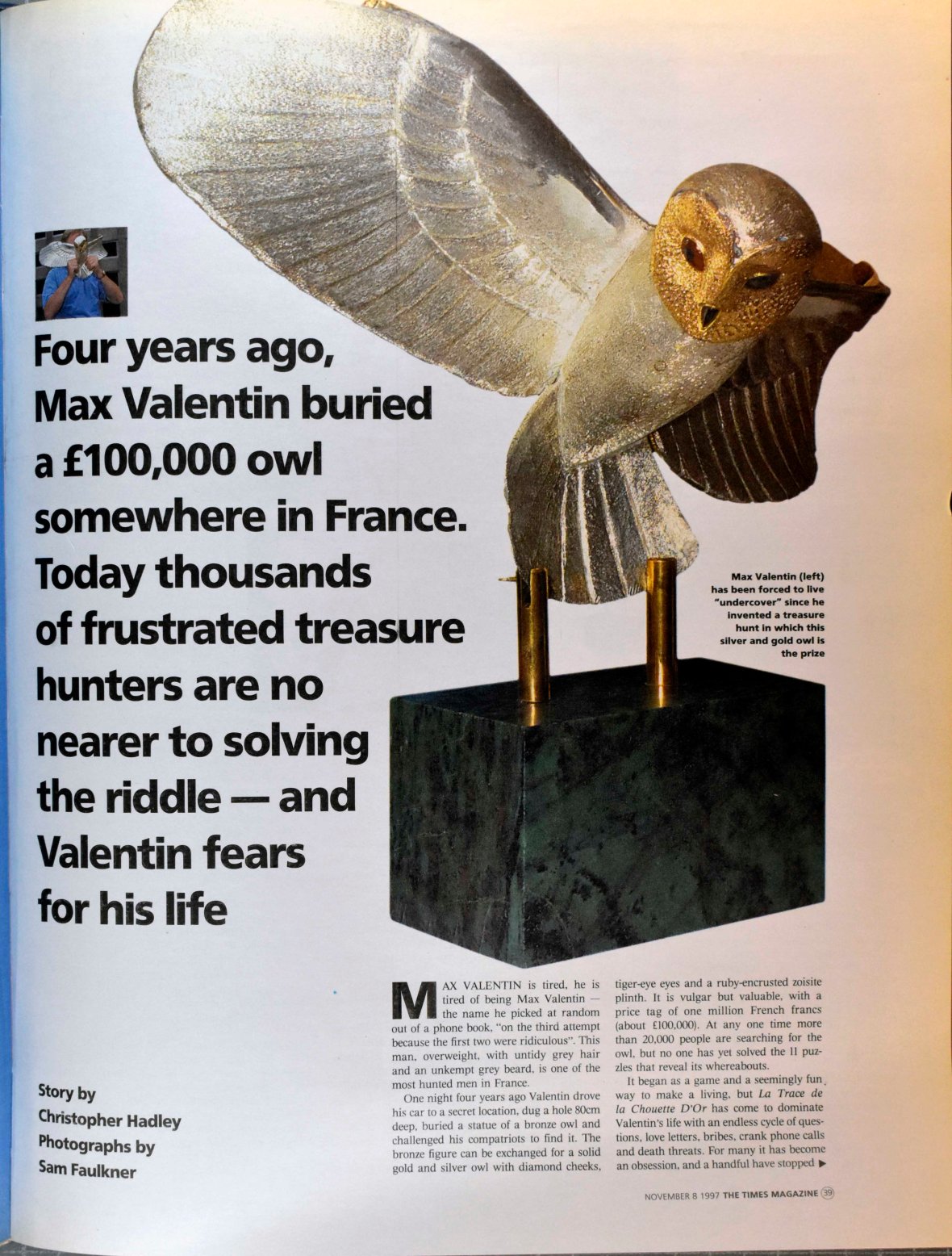
In 1993, the book On the Trail of the Golden Owl was published, igniting a thirty-year search for the titular owl. Solvers had to parse Max Valentin’s eleven riddles to locate the owl, and for decades, the prize eluded even the most ardent solvers.

Hilariously, the creator intended for the hunt to last for only a few months, open to both amateur hunters and experts. “If all the searchers put all their knowledge together, the owl would be found in… two hours”. This sounds like the folks behind Monopoly who claim the game can be played in 45 minutes.

Three years ago, the artist for the original book, Michel Becker, took over the hunt from author Regis Hauser (aka fictional treasure hunt creator Max Valentin), going so far as to dig up the owl to confirm it was still there.

There was supposed to be a bronze owl there (to be exchanged for the actual golden owl, worth over $100,000), but Becker found a rusty iron one instead. He replaced it with a bronze owl, buried it, and continued the hunt for another three years. Chouetteurs — the owl-seeking treasure hunters — got back to work.

Until last week when the owl was finally discovered.

As reported by the BBC, the hunt came to an end in France on October 3rd. Details have been scarce, and hunters around the world have been told to stop looking.

“We confirm that the replica of the golden owl was dug up last night, and that simultaneously a solution has been sent on the online verification system… It is therefore now pointless travelling to dig at any place you believe the cache might be situated.”

Some solvers are relieved that the hunt is finally over, while others are skeptical, believing that instead of hard work and puzzly grit, the prize was found by metal detector instead (which would be expressly against the rules). Still others are disappointed not to have more information, if only to see how tantalizingly close they may have gotten to the correct solution.

The trials and tribulations of the hunt over the years have only added to its legend.

The puzzle hunt lasted so long that it outlived the original publisher of the book, which caused the golden owl to be seized as a bankruptcy asset, something that required four years of legal wrangling to resolve.

The hunt also sadly outlived its creator, who passed in 2009. Some chouetteurs blame the stresses of legal proceedings surrounding the hunt for hastening the death of Hauser.

Two years later, it took the dedicated efforts of a group of treasure hunters to prevent Becker from selling the owl, forcing judicial intervention and saving the hunt from a premature end.

What a saga.

With the end of both the Golden Owl hunt and Forrest Fenn’s treasure hunt a few years ago, this leaves The Secret as the longest ongoing puzzle hunt in the world at this time.

But maybe some intrepid puzzler out there is already cooking up the next great puzzly treasure hunt. I suppose only time will tell.

The Beale Ciphers: A Puzzly Treasure Hidden Since the 1800’s?

There’s nothing quite like a treasure hunt to spark the imagination. From The Treasure of the Sierra Madre to the adventures of Indiana Jones, from tales as far back as Poe’s “The Gold-Bug” to stories as recent as an episode of NCIS: New Orleans last year, a treasure hunt can turn a crime story or an adventure tale into an irresistible narrative for the ages.

Thankfully, there are a few treasure hunts lurking out there in the real world, offering clever solvers the chance to live out their own adventure. In the past, we’ve explored the mystery of Forrest Fenn’s Rocky Mountain treasure, we’ve chronicled efforts to locate all of Byron Preiss’s The Secret treasures, and we’ve suggested tactics for cracking Jason Rohrer’s A Game for Someone hunt.

But as intriguing as those hunts are, none of them have spanned more than a century of searching. (Without resulting in unfortunate demises, that is. We’re looking at you, Oak Island.)

No, that singular honor belongs to a treasure hunt known as the Beale Ciphers.

beale_papers

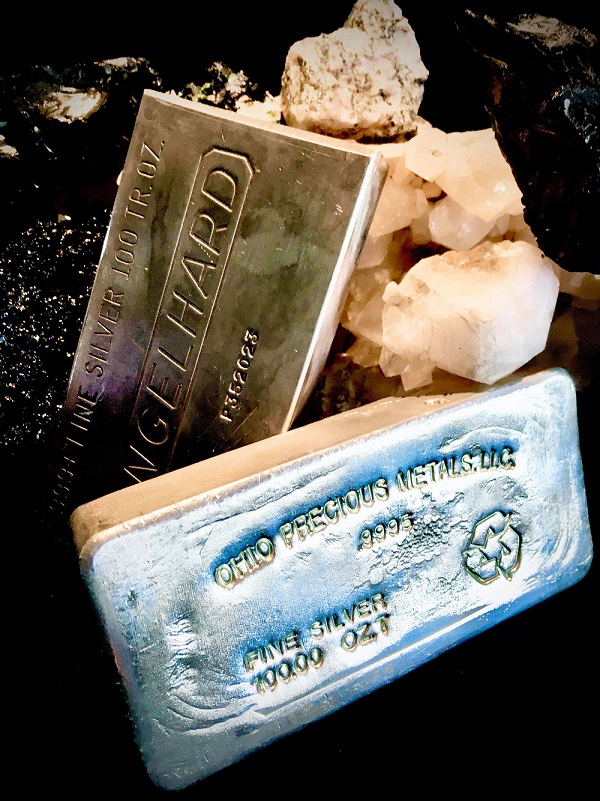
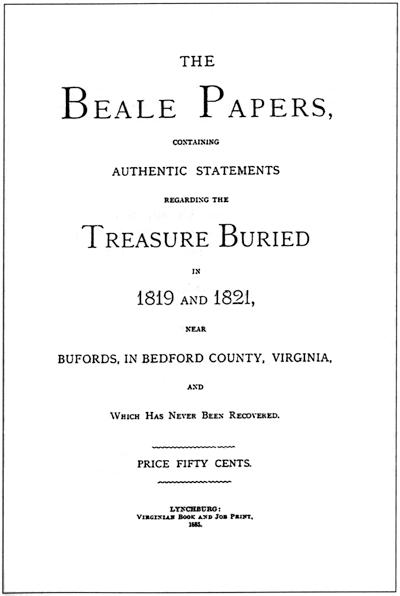
As the story goes, a man named Thomas J. Beale buried a treasure trove of gold and silver somewhere in Bedford County, Virginia, in the early 1800s. Beale then encrypted the location of the treasure, the contents of the treasure, and the names of those he wished to have the treasure. Beale handed off those encryptions to an innkeeper, then vanished, never to be seen again. (His promise of later providing the key for the ciphers was never fulfilled.)

The innkeeper failed to crack the ciphers, then held onto them for decades before passing them along to an unnamed friend before his death. The unnamed friend spent twenty more years trying to unravel the encryptions (managing to solve the second of the three encrypted messages). Eventually, the friend published the encryptions and the story of Beale’s treasure in a pamphlet he began selling in 1885.

So, how do the ciphers work?

It’s simple, really. Take a book, pick a given page, and number all of the words on the page. (Or just start at the beginning of the book.)

If you’re using A Tale of Two Cities, for instance:

1 It
2 was
3 the
4 best
5 of
6 times,
7 it
8 was
9 the
10 worst
11 of
12 times…

So, using the first letters of each word (and the corresponding number), the word BOW could be encrypted 4 11 8 or 4 11 2 or 4 11 10.

This grants people in the know two advantages. The code is incredibly difficult to break on its own, because unlike a cryptogram (or any other message encrypted with a Caesar cipher or a one-to-one relationship between coded letters), each appearance of a given letter could be a different number, not the same one over and over.

Plus, if you know the key (the book and page number), decoding it requires no puzzly skill at all.

It’s diabolical and effective, as proven by Beale’s trio of ciphers, since only one has been cracked (because the solver stumbled upon the Declaration of Independence as the key).

[The second Beale cipher.]

The decrypted text from the second cipher:

I have deposited in the county of Bedford, about four miles from Buford’s, in an excavation or vault, six feet below the surface of the ground, the following articles, belonging jointly to the parties whose names are given in number three, herewith:

The first deposit consisted of ten hundred and fourteen pounds of gold, and thirty-eight hundred and twelve pounds of silver, deposited Nov. eighteen nineteen. The second was made Dec. eighteen twenty-one, and consisted of nineteen hundred and seven pounds of gold, and twelve hundred and eighty-eight of silver; also jewels, obtained in St. Louis in exchange to save transportation, and valued at thirteen thousand dollars.

The above is securely packed in iron pots, with iron covers. The vault is roughly lined with stone, and the vessels rest on solid stone, and are covered with others. Paper number one describes the exact locality of the vault, so that no difficulty will be had in finding it.

bealemap

Of course, there are some problems there, even with the cipher that treasure hunters consider solved. You see, there are some irregularities with the solution. Not only are there four misspellings in the translation, but a variation on the original Declaration of Independence must be used or the cipher doesn’t decode correctly.

Now, mistakes happen. (As we learned with the story of Brian Patrick Regan.) But if there are mistakes in the two unsolved ciphers as well, that only makes the chances of finding the proper key even slimmer, because a mistake in the early numbers of the code might convince someone that they’ve got the wrong key, even if they have the right one!

Do you find that challenge daunting, fellow puzzlers? It’s understandable if you do. The other two ciphers have resisted the best efforts of even master cryptographers and cryptanalysts.

Given that the Declaration of Independence was the key for the second cipher, many aspiring treasure hunters have tried using other famous historical documents as possible keys for the other ciphers, including the Magna Carta, the Constitution, the Monroe Doctrine, and more, as well as the plays of Shakespeare and the Lord’s Prayer.

bealemontvale

There are also plenty of reasons to doubt that this treasure exists at all. (The same question marks hang over some of the other treasure hunts we’ve mentioned, like Forrest Fenn’s.)

There are questions regarding the language in the pamphlet, where the gold was supposedly found, why Beale would bother encrypting the names of the people he wanted to inherit the treasure, and even whether Beale himself ever existed in the first place. (Famous skeptic and investigator of the supernatural Joe Nickell believes the pamphlet is a fraud.)

But does that mean the ciphers are? Not necessarily.

An analysis in 1970 by Dr. Carl Hammer of Sperry-UNIVAC indicated that the number patterns are not random. He believed that further attempts at cracking the ciphers would be worthwhile.

Heck, even our old codebreaking friends Elizebeth Smith Friedman and her husband William tried to unravel the Beale ciphers, but without success. She called the ciphers “a diabolical ingenuity designed to lure the unwary reader.”

And, of course, not every hunter has come away empty-handed. One team of treasure hunters stumbled upon a cache of Civil War artifacts while hunting for Beale’s trove.

So what do you think, PuzzleNationers? Is the Beale treasure real? Will it ever be found? Let us know in the comments section below! We’d love to hear from you.


Thanks for visiting PuzzleNation Blog today! Be sure to sign up for our newsletter to stay up-to-date on everything PuzzleNation!

You can also share your pictures with us on Instagram, friend us on Facebook, check us out on TwitterPinterest, and Tumblr, and explore the always-expanding library of PuzzleNation apps and games on our website!