

It’s an awesome time to be a crossword fan.
You’ve got LOADS of outlets doing traditional crosswords, both themed and themeless / freestyle. There are minis and midis for quicker solving (but equally creative themes and tricks!), and cryptic / British crosswords for a different flavor of cluing.
But that’s just scraping the surface of different kinds of crosswords out there. So today, let’s explore the world of variety crosswords and see all the challenging ways constructors can add a twist to the familiar crossword formula.
(These examples are from Penny Dell Puzzles, GAMES Magazine, and Puzzlecraft by Mike Selinker and Thomas Snyder.)
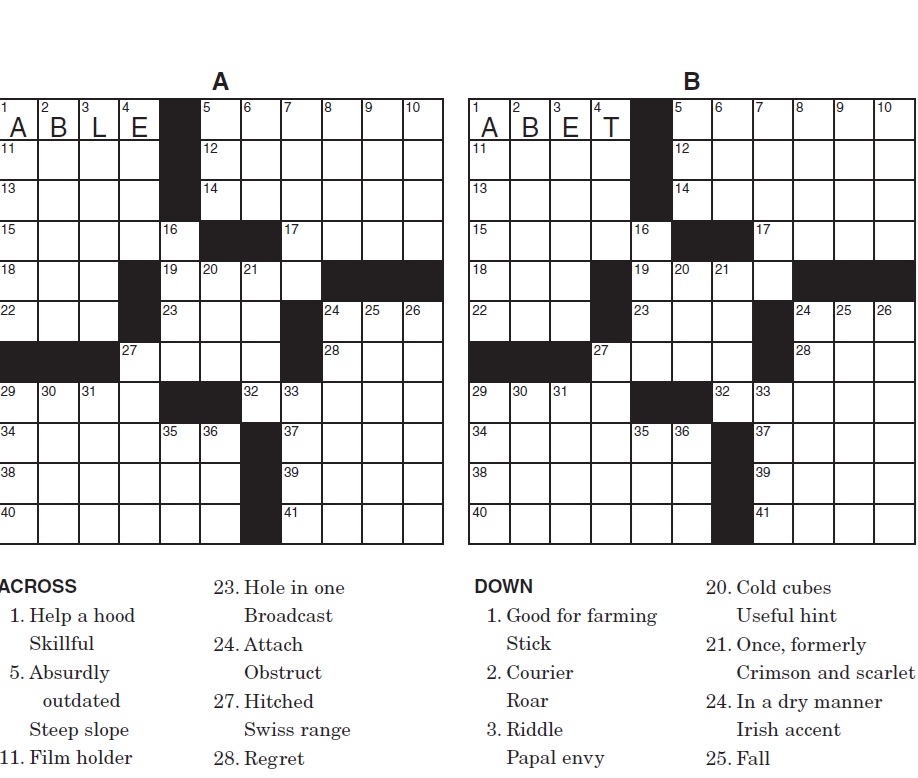
Twin Crosswords (also known as Twinlets) is a puzzle that offers two identical grids and the clues for both grids, but all mixed up. 1-Across gets two clues, one for each grid, but you don’t know which. (Unless the first word is set for you, like in the example above.) That continues for every coordinate, both across and down. Can you figure out which clue applies to which grid?
For an extra challenge, constructors sometimes use the same clue for two different words, testing the solver’s flexibility of mind as well as their vocabulary.
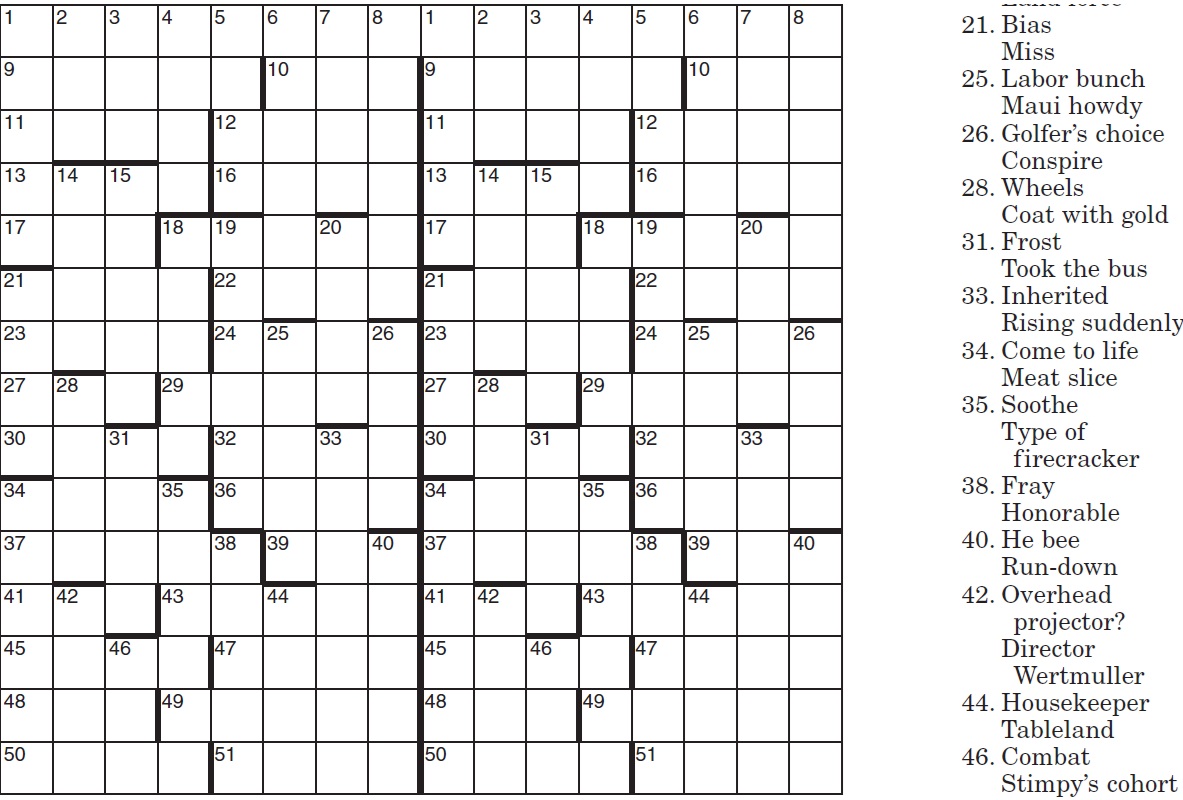
There is a variation on Twin Crosswords known as a Dilemma crossword. In this case, the mix-matched clues apply to two different sections in the same grid. A single unifying entry runs across the top of the grid, with two identical columns below.
Black lines divide answer words instead of black squares, making this a challenging puzzle to construct and to solve! (Crosswords without black squares are also called Blackout puzzles.)
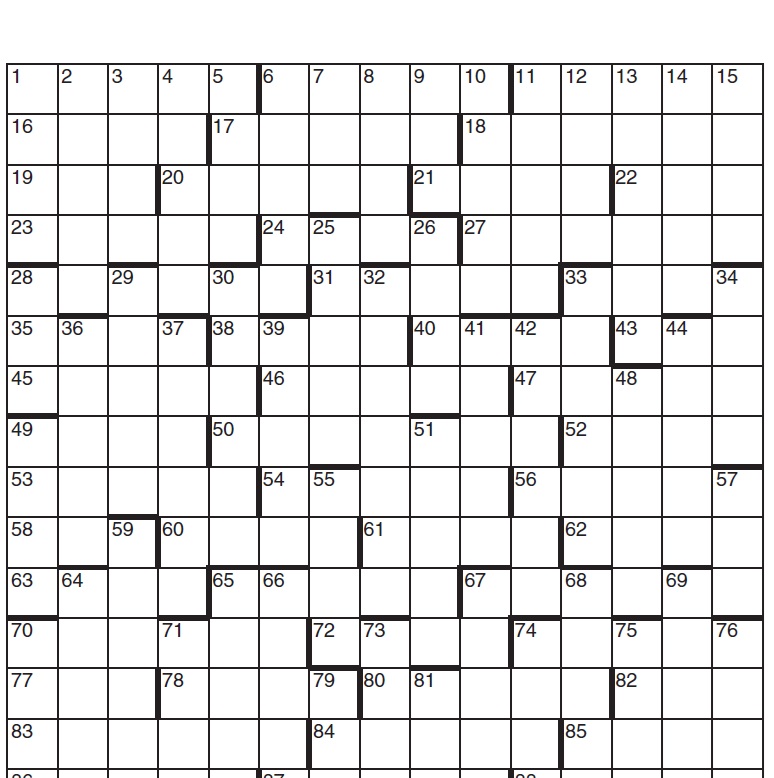
Similar to Dilemma, a Stoplines puzzle has black lines instead of black squares, leading to a dense interconnected grid with traditional rotational symmetry, but lacking that single grid-spanning entry across the top.
But at least a Stoplines puzzle gives you black lines to figure out word lengths for your answers. A Wordsworth puzzle has the same dense grid, but without any indicators of word length. An empty 15x grid space awaits a Wordsworth solver. (It’s like a Diagramless without any black squares.)
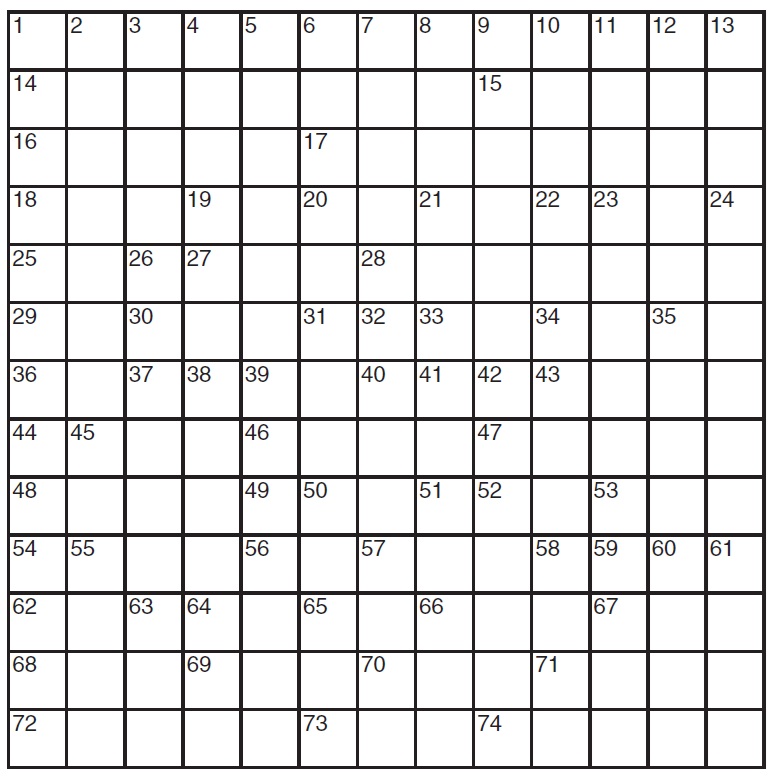
Oh, and for an extra challenge for an already difficult task, Clapboard has no black squares AND all of the entries overlap by 1 or 2 letters.
For a break from the tight grids and difficulty, let’s check out a Brick by Brick crossword.
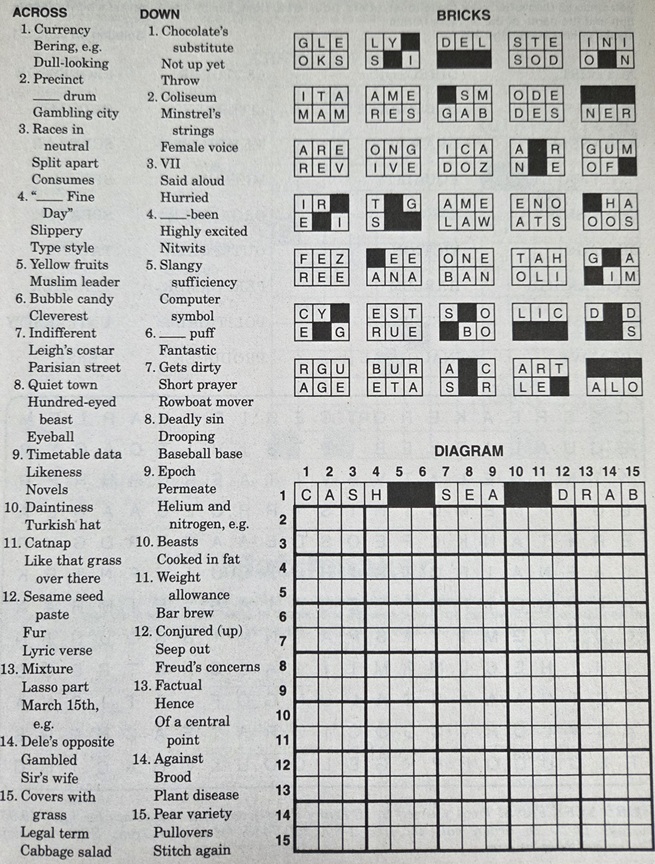
This is a traditional crossword, except you have the additional advantage of the grid being split up into 3×2 “bricks” and randomly gathered next to the clues.
So solvers can either traditionally solve this crossword or put their jigsaw skills to the test assembling the grid visually brick by brick.
I really like this puzzle as an introduction to crosswords. That extra element adds a safety net for nervous solvers who find a traditional crossword grid daunting.
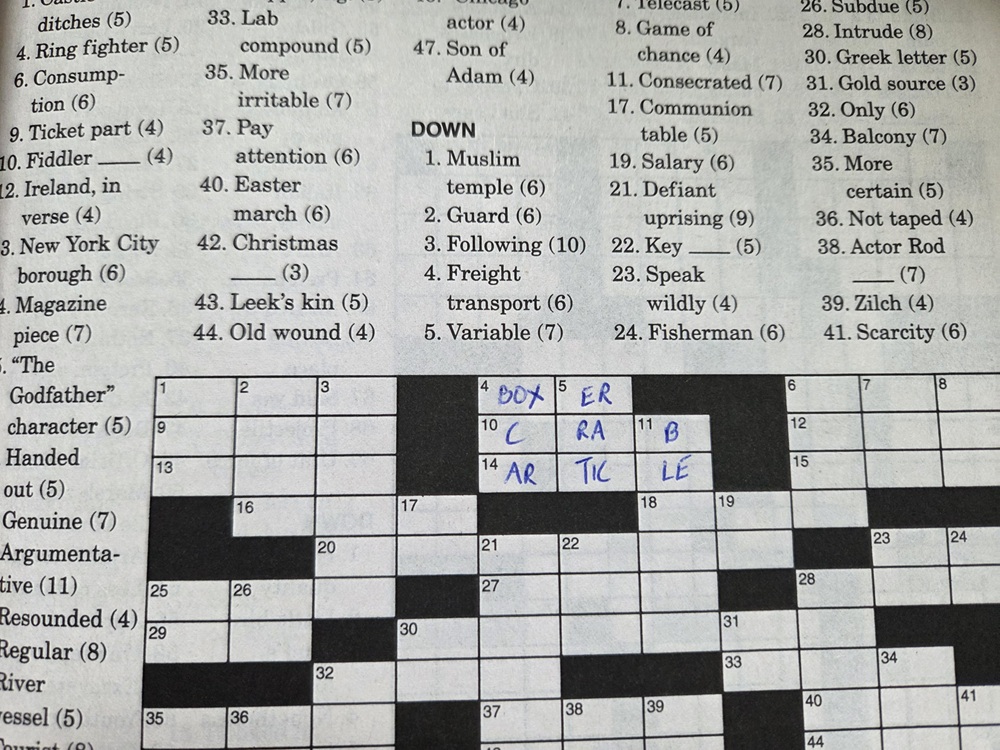
If you’re a fan of rebus-style crosswords — grids where a cell can hold more than one letter, often as part of a tricky gimmick or theme — you should check out Double Trouble crosswords (also known as Crushword puzzles).
Every box in this puzzle contains either 1, 2, or 3 letters, making the crossings extra challenging to work out so that every answer fits.
(There’s even a Diagramless Double Trouble for the truly masochistic solver.)
Sometimes, the variation isn’t in the grid design, it’s in the cluing.
For instance, instead of a traditional crossword clue, a Triple Play puzzle offers three words that form phrases with the intended answer word. For example, the clue SNAIL, BOX, ORDER points to the answer word MAIL (snail mail, mailbox, mail order).
The trios replace some (but not all) of the usual clues, offering a more associative clue to unravel.
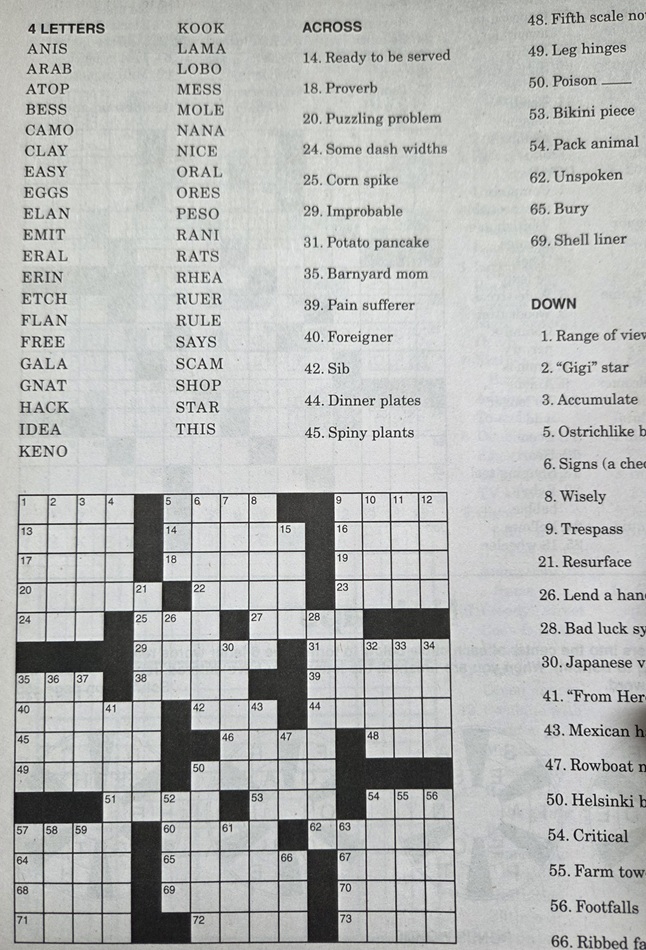
Other times, not every entry gets clued at all. In a Four-Most, every four-letter word in the grid isn’t clued, it’s listed alphabetically in a separate word list instead. So while the clues handle the 3-letter, 5-letter, and entries of other lengths, you have to fit the four-letter words into grid from their crossings.
Similarly, an At 6’s & 7’s crossword does the same, but with all of the six-letter words and all of the seven-letter words removed from the clue list. They still get clued, but alphabetically, not by grid coordinates.
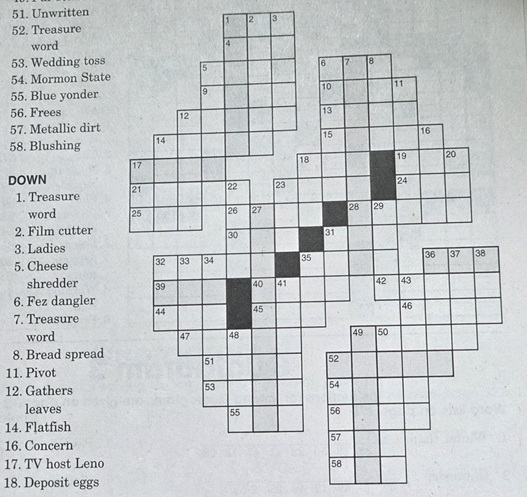
In a Buried Treasure puzzle, the shaded grid entries are related words that fit a particular theme, and they’re only clued in the grid as “Treasure Word.” So you have to fill them in from their crossings and figure out what the Treasure Words have in common.
I’m going to close out today’s post with two of my favorite crossword variants. One is a cluing variant, the other a grid variant.
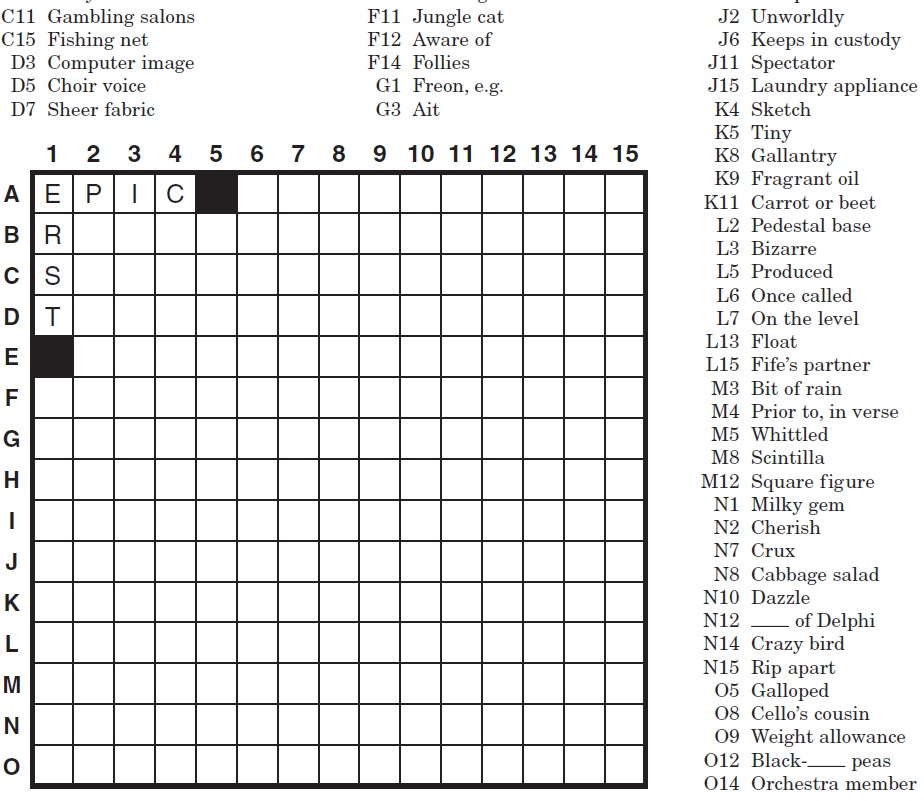
For an additional level of deduction in your crossword solve, there’s Battleships.
In this puzzle, you don’t get the across and down grid coordinates. Instead, you get one Battleship-style coordinate that the word will occupy. You don’t know if the answer word is reading across or down, only that word crosses that coordinate somewhere in the grid.
You get set words to get you started, but it’s still fun to puzzle out exactly how to fit the grid together.
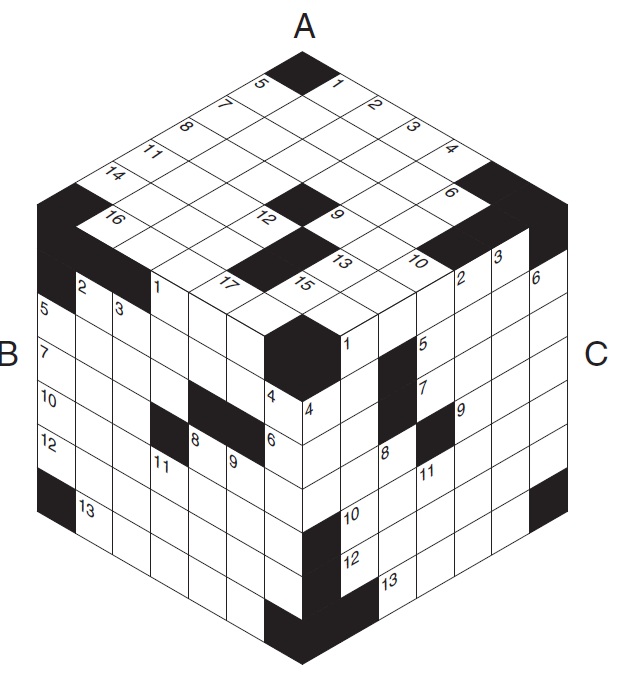
For a nice change of pace visually, there’s Three-D Crossword.
This puzzle offers the same grid three times, side by side by side, like looking at one half of a cube corner first.
It’s genuinely eye-catching and leads to some interesting crossings, allowing for longer entries without all the extra grid fill of a traditional 17x puzzle or larger.
They’re a pleasure to solve and surprisingly fun to construct.
Crosswords have endured in the public eye and in the hearts of puzzlers because of the endless creativity they represent. A clever mind can take a crossword places solvers didn’t expect, challenging and delighting them in equal measure.
It’s one of the many reasons crosswords have stood the test of time, and will continue to do so for years to come.
Are you a traditional crossword solver, a mini/midi enthusiast, a cryptic crossword devotee, or a fan of variety crosswords like the ones above? Did we introduce you to any new favorites? Let us know in the comments section below. We’d love to hear from you!

