The Curious Crossroads of Fast Food and Roleplaying Games

Thanksgiving is coming soon, and with some time off looming, I’ve got both food and gaming on my mind.

There are plenty of food-fueled board games and card games out there. Just Desserts, Sushi Go!, Devil Bunny Needs a Ham, and Bread Basket (which we just reviewed!) all come to mind, alongside the dozens of food-themed Monopoly games out there.

But I’m a roleplaying game guy at heart, which means my thoughts turn to food-fueled RPGs. Thankfully, there are some choice options there.

Two of my favorites are Ninja Burger and The Tasty Lands of Silverplate.
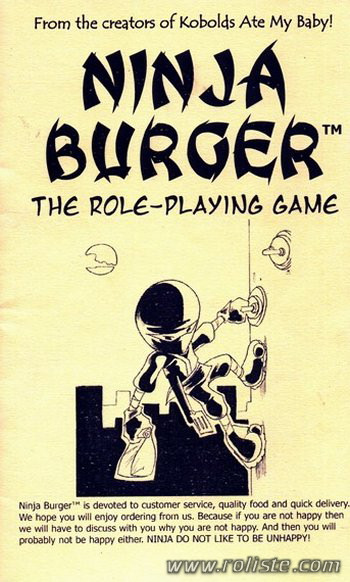
Ninja Burger casts you and your fellow players as ninja deliverypersons, with the goal of sneaking into the customer’s house, delivering their food, stealing the correct amount of money from them, and leaving, all without being seen.

It is a riotously good time and one of my all-time favorite RPGs.
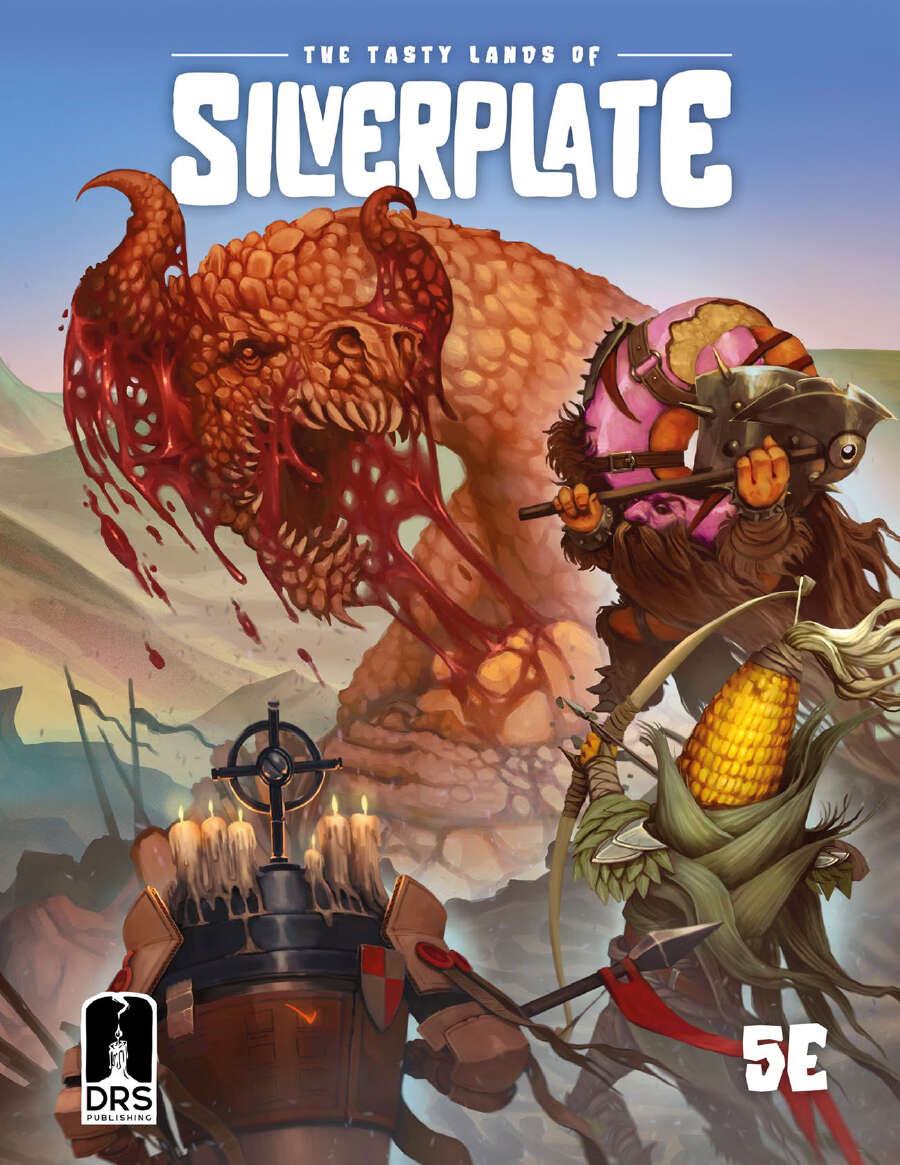
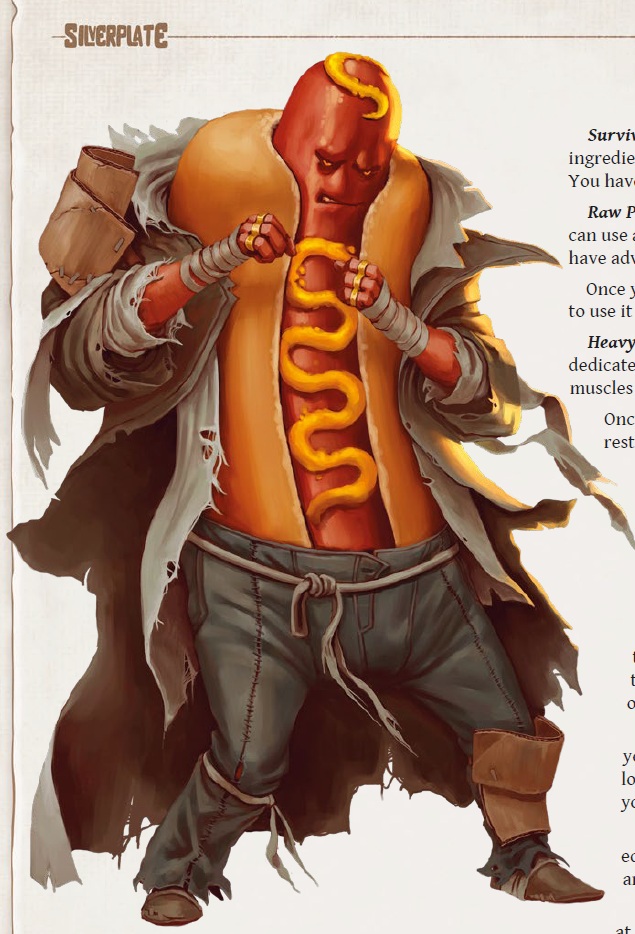
The Tasty Lands of Silverplate, on the other hand, isn’t a game on its own. It’s a setting for Dungeons & Dragons, allowing you to create characters made of food to go on adventures. Yes, as one of the foodfolk of Silverplate, you will trudge through mushroom forests and cotton candy swamps while engaging in acts of derring-do.

Silverplate is a terrific setting, welcoming lighthearted and pun-riddled gameplay to your table.
Oh, if you’re looking for food/RPG entertainment, you should definitely check out Dimension 20’s campaign A Crown of Candy on Dropout, which is Game of Thrones if it took place in the fridge. It has big Silverplate vibes and it is excellent and heartbreaking all at once.


You know, it’s funny that one of my favorite roleplaying games is fast food-related, because there is (as the title of this blog post promised) some unexpected crossover between the worlds of fast food and RPGs.

Oh, I don’t mean roleplaying games ABOUT food. I mean roleplaying games and materials manufactured BY fast food companies.

For instance, on two separate occasions, Arby’s produced a short run of Arby’s-themed roleplaying dice.
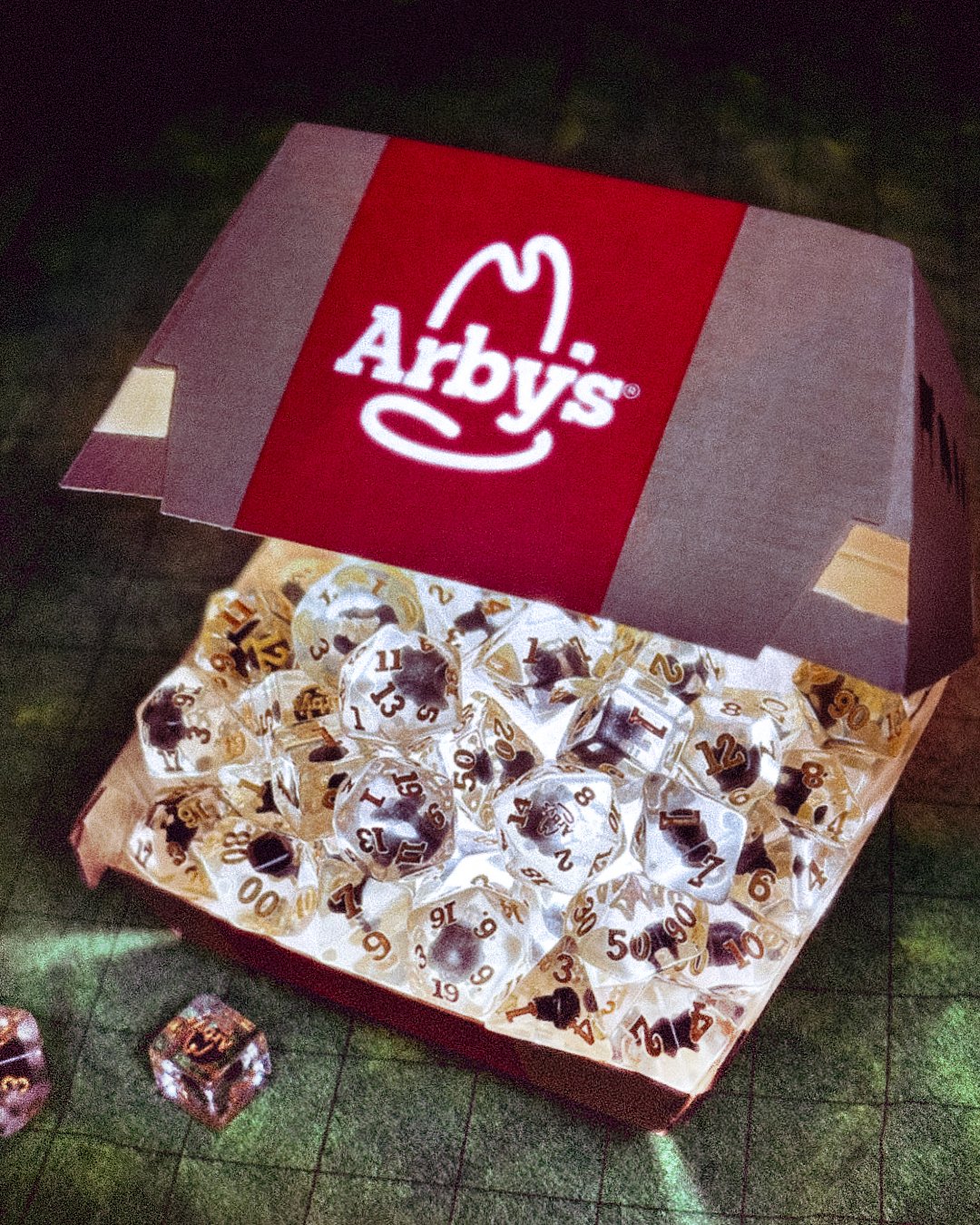
The original set was designed with an Arby’s hat at the center of each die, as well as the Arby’s logo for the number 20 spot on the D20. They sold out instantly in 2021, and a restock in 2023 was snapped up equally fast.
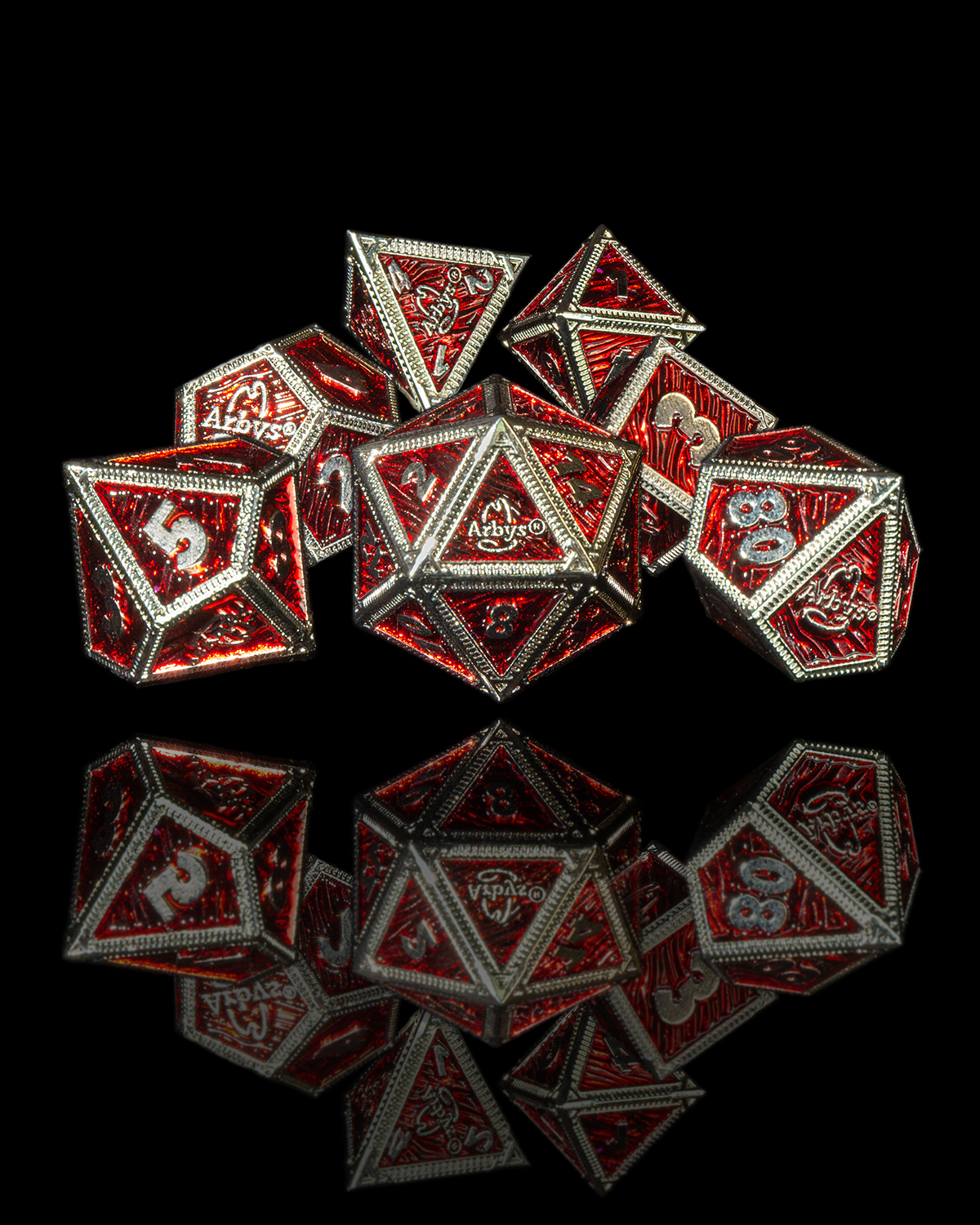
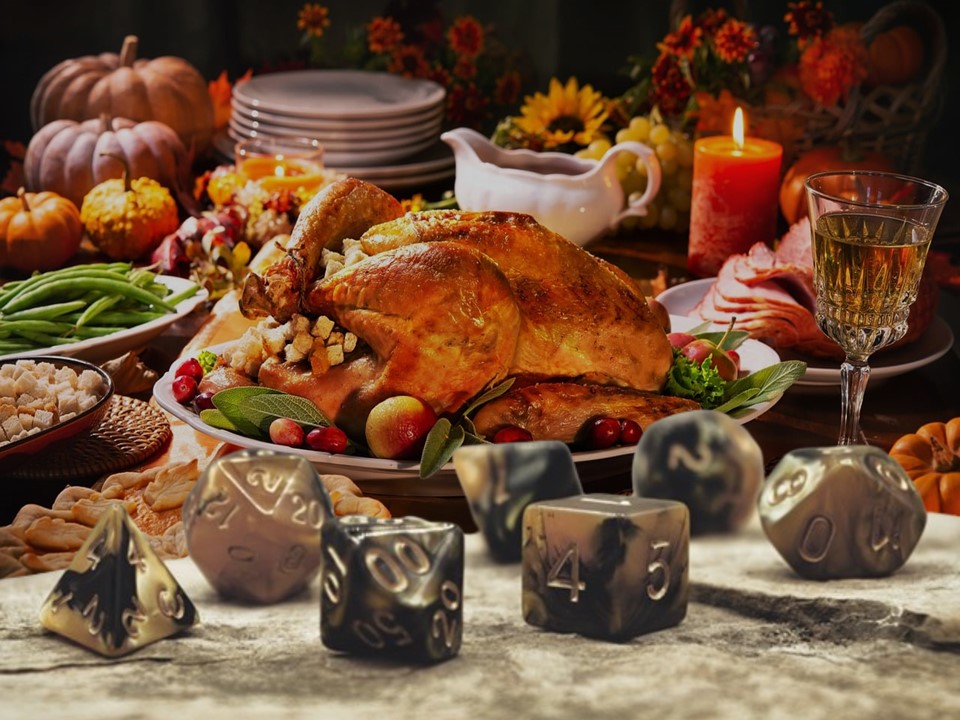
The second time around, Arby’s went to the company Norse Foundry, who are known for high-end quality dice, particularly their metal ones, and the newest iteration of Arby’s Dice were the beautiful beefy boys pictured above.

They sold out in less than a day, despite the price jumping from $12 for the 2021/2023 dice to $40 a set for the Norse Foundry dice.


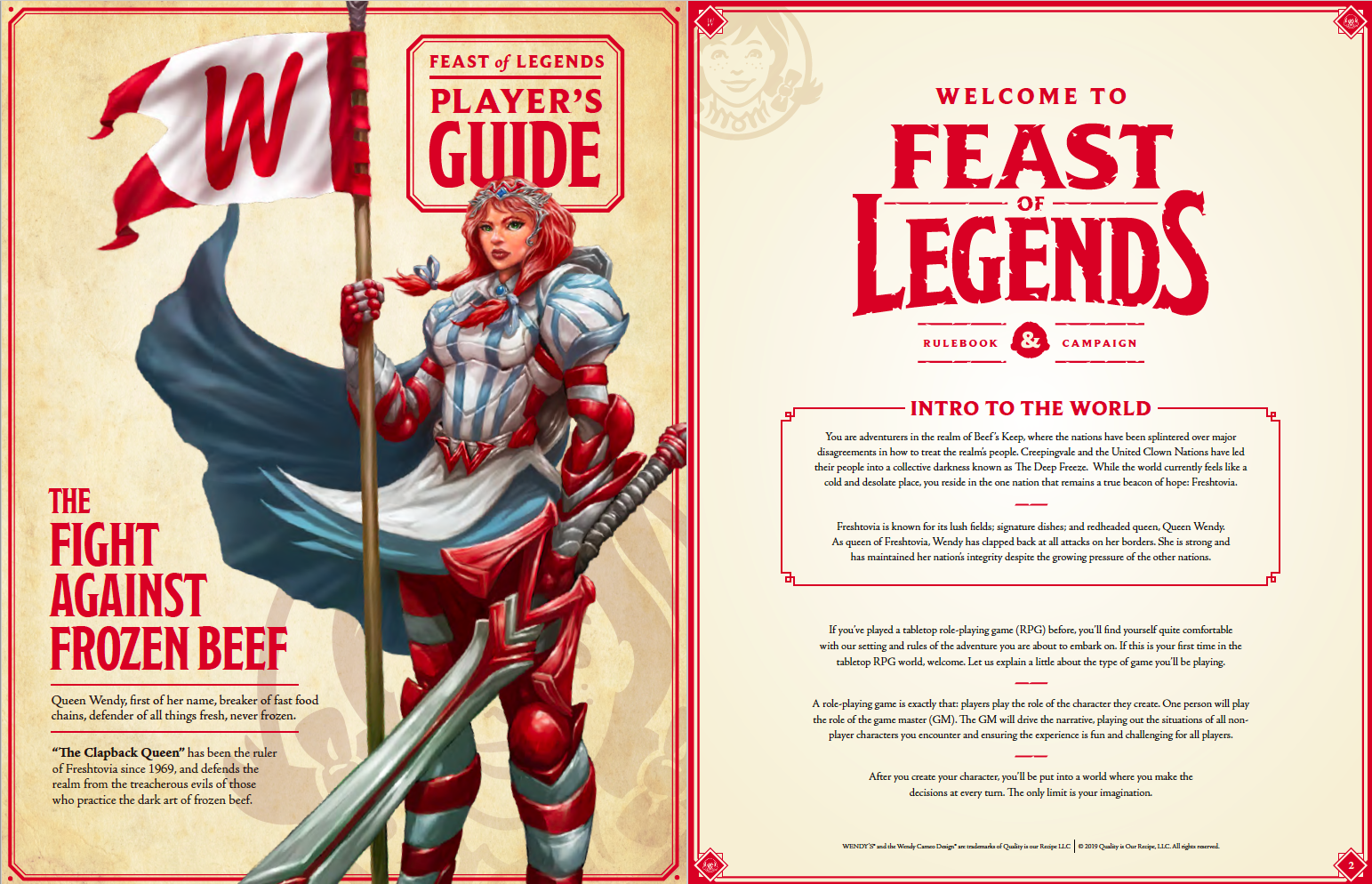
Those dice are impressive to be sure, but not nearly as impressive as the complete, standalone roleplaying game designed for Wendy’s. It was called Feast of Legends.
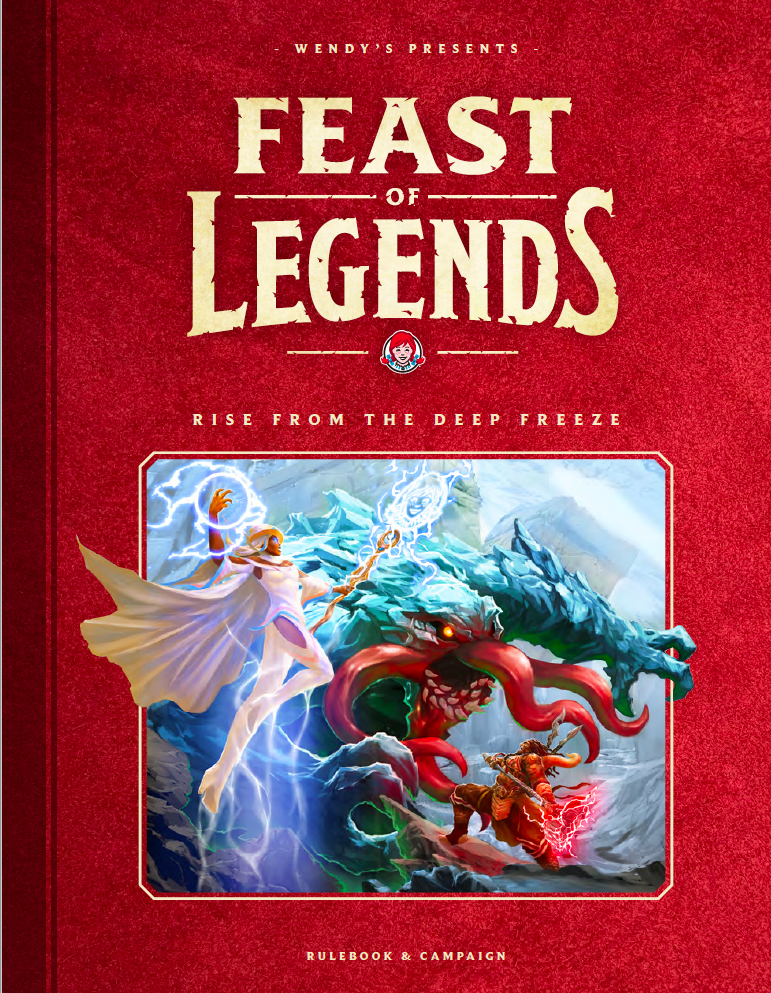
Feast of Legends sets players in Freshtovia, one of the nations of Beef’s Keep, trying to ward off the impending threat of The Deep Freeze by rival nations with more than a passing resemblance to some other fast food franchises.

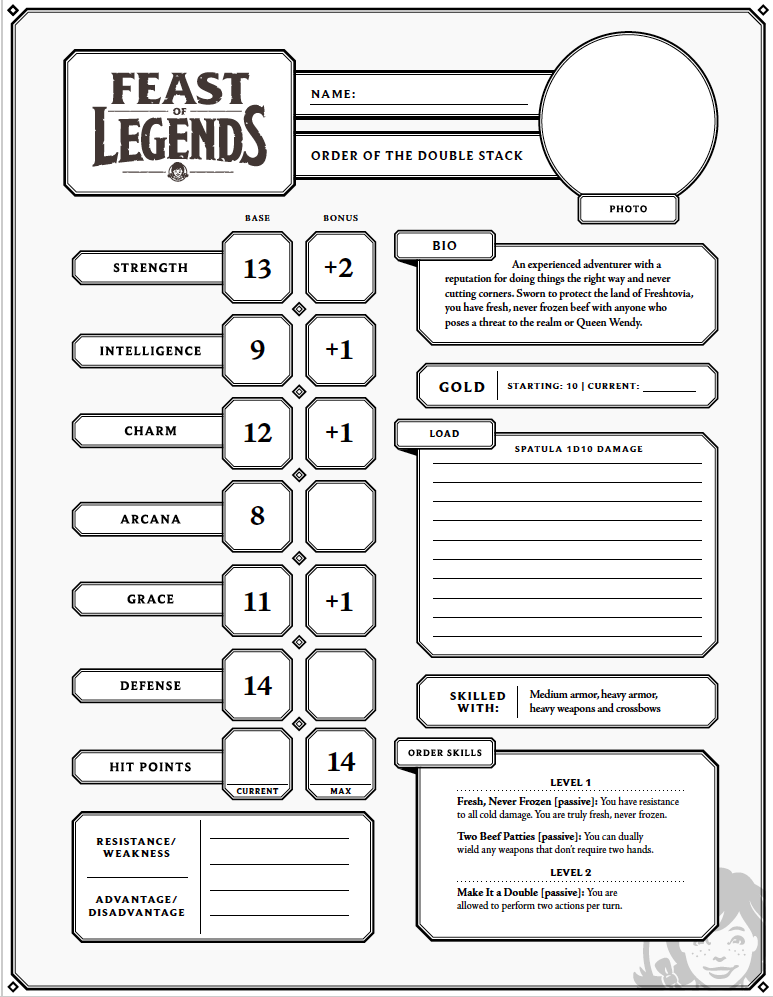
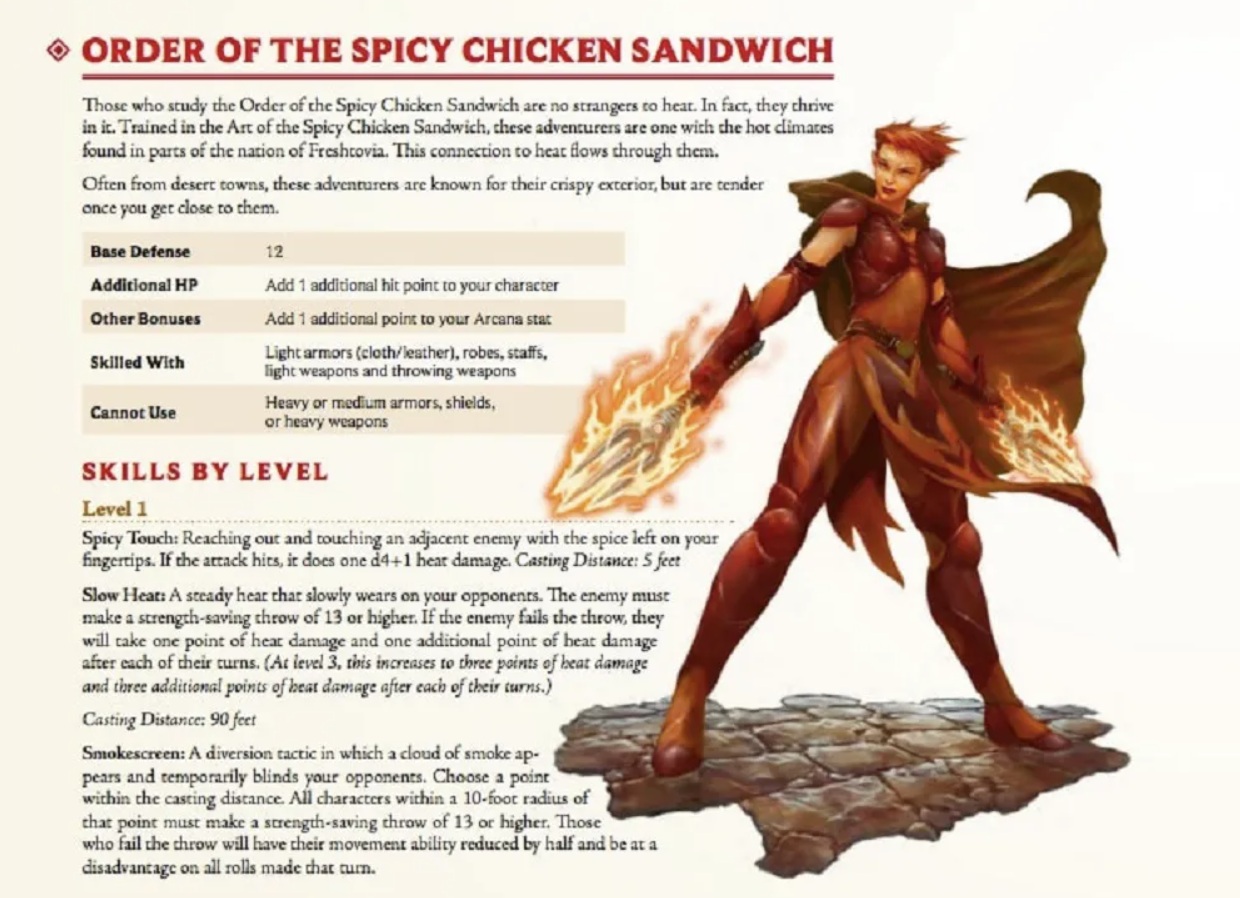
By taking up arms and representing organizations like The Order of the Spicy Chicken or The Order of the Sides, players can battle in honor of Queen Wendy and protect the realm from mediocre food and the horrors of freezer burn.

The PDF of the game was released for free, and a limited number of physical copies were produced for New York Comic Con. It was even played as a one-shot by internet actual play juggernaut Critical Role, though some negative press generated by some of the executives at Wendy’s (and through no fault of the hardworking team producing the game), caused the one-shot to be removed from YouTube, hurting the promotion of the game.
Still, Feast of Legends resonated with some RPG fans, and to this day, there’s an active subreddit dedicated to the game. Physical copies of the game are obviously quite rare, so fans were surprised to learn in an Instagram post last year that there are some physical copies in the hands of the game’s creator, Matt Keck.

I reached out to Matt (who was also the absolute wizard behind Wendy’s social media at the time, particularly their Twitter account), and he kindly took some time out to answer my questions about the creation of this unique roleplaying property.

What did the creative process look like? Who had the initial idea for the adventure?

I’m actually the reason it even got made. I worked on the Wendy’s team at the agency VML in Kansas City. My primary work was doing the Twitter jokes/roasts/etc., but I really got to work a little on everything. I love TTRPGs and I wanted to write a Wendy’s module.

When I realized they probably wouldn’t do an official partnership I took it upon myself to write it. I didn’t want too many questions about how we would get it done, so I had written the majority of the finished project before even pitching it. I still have a notebook with old sketches of maps and monsters. I really had all of the classes or Orders built out, the world drawn, and most of the story planned before showing anyone. That made it easy to get it made.
There’s a subreddit dedicated to Feast of Legends that still gets attention from the fan community. Does the game’s longevity surprise you? Were there plans for additional content? (A post from the Wendy’s reddit account suggests there might have been.)

It does and doesn’t surprise me. I had boasted it as a long-term brand play, but just because I say something that doesn’t mean it will always play out that way. I’m pumped any time someone has a good time playing it, or makes their own content for it, or even just tells me they enjoyed reading it. That was truly my passion project on that account, and I can only hope to do more in the space.

There were plans for more content, but after the pushback from the Critical Role episode, future plans got scrapped.

I had a breakfast module ready to go, along with exploring even more of the map. Plans always change, but I would’ve loved to make more in that world.
Is there a piece of lore/worldbuilding or idea of yours in the game that you’re particularly proud of? Or, conversely, one that you can’t believe actually made the cut?

I’ll tell you about one that got cut I loved, and that was the Grimagorgon. He was a two-headed grimace monster, and the first thing the lawyers said no to. My favorite piece isn’t something a lot of people would expect, but anyone who watches my videos will see my partner and friend Paul. In Feast of Legends there is a character named Old Man Paul that I wrote into the book just to roast him. As a good friend does.

As someone who really enjoyed playing Feast of Legendsand totally didn’t print out the PDF in its entirely at work so I could play it that week, no siree bob — it was a joy to talk with Matt about the game. Learning that it was something fun and important to him, and that it was a result of the famous axiom “don’t ask for permission, ask for forgiveness later” makes it an even more epic endeavor in my eyes.

These creative and unexpected crossovers between fast food and roleplaying games proves there’s an untapped market there, and I wish more companies would make the leap into the RPG realm. (Matt himself said “the card game space is still untapped and wide open. Give me a Secret Lair x Wendy’s.”)

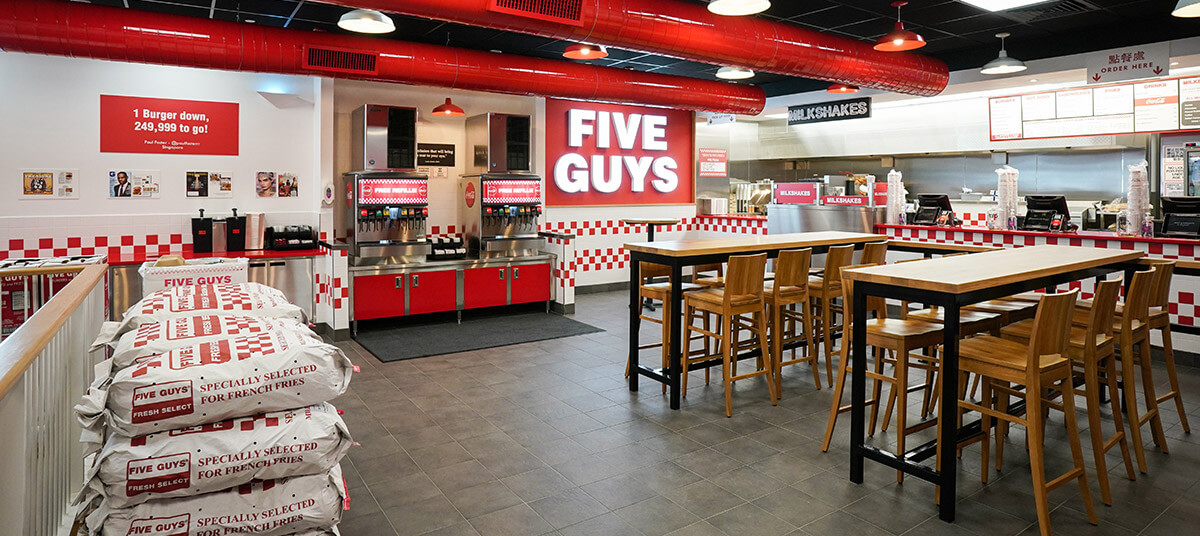
I mean, if NASA can do it, why not Five Guys?
Anyway, I’m hungry. I’m gonna go grab some fries and ponder a Feast of Legends one-shot centered around dipping French fries in Frosties. Perhaps Queen Frostina and Fryderick of House Starch have run off together, and the party must keep them safe, seeking to turn the hearts of those who disapprove of the marriage of Frosties and French Fries!

Will you be indulging in any food-fueled gaming over Thanksgiving, friends? Let us know in the comments section below. We’d love to hear from you.


Special thanks to Matt Keck for his time and insight. Check him out here, and if you’re looking for more RPG fun from the mind of Matt, please check out his Magic School Dropout videos here!
How to Define Success vs. Failure in Roleplaying Games

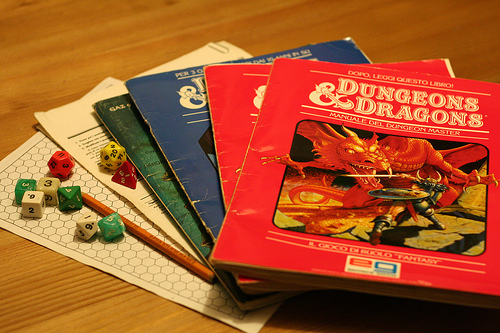
Roleplaying games are some of my absolute favorite pastimes. The simple act of telling a story with friends is rejuvenating for me. I love sitting at a table — or on a Zoom call — with friends and collectively creating an adventure in our imaginations.

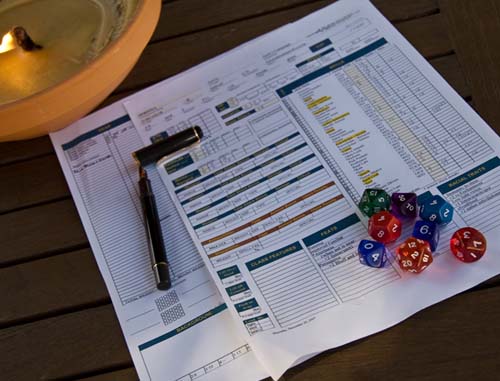
I know that the dice and the rulebooks and all the numbers can be daunting for new players, but honestly, they’re just the laws of physics, fate, and chance given form. In the simplest form, roleplaying games consist of you telling the gamemaster / dungeon master / game runner what you want to do, and the dice determining how it goes.

In many RPGs, there’s a success/failure line. If you roll above a certain number, you succeeded. If you roll below it, you failed.

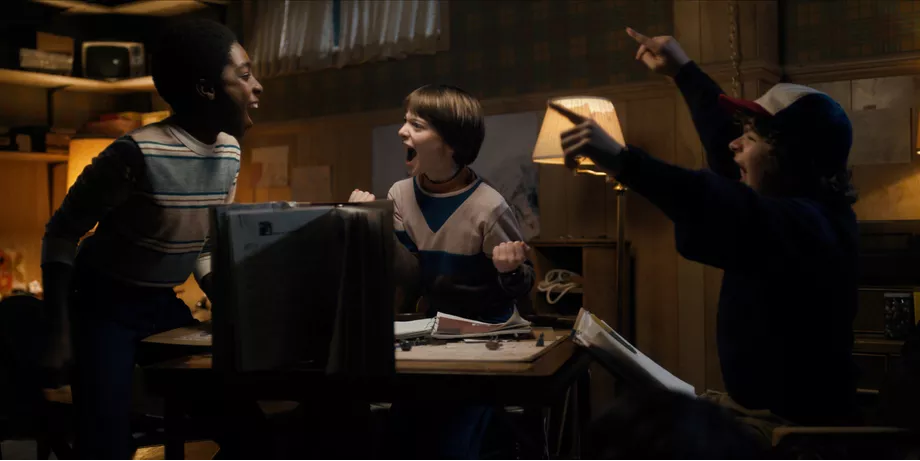
[Image from Stranger Things courtesy of The Verge.]

That’s certainly simple enough. But it can be frustrating for some players, new and old. After all, if you had to beat a 15 and you rolled a 14, why should the result be the same as if you’d rolled a 2? The 14 is much closer, after all.

Some roleplaying games stick to the strict success/failure model. But others have a different approach that players might find more rewarding.

star-wars-edge-empire-rpg-core_1_97bac45707850006a463c742ecc746af

Fantasy Flight Games offers a Star Wars-themed roleplaying game that has one of my favorite dice systems. There are different colored dice that represent different aspects of the game (your character’s ability to do something, the difficulty of the action they’re attempting, advantages and disadvantages to their action at the time, etc.), and the dice don’t have the traditional number values you’d expect.

Instead, they have symbols that represent success, failure, advantage, threat, triumph, and despair.

So, depending on the dice roll, it’s not just a success or a failure. You can have an overwhelming success, or an overwhelming failure, or many things in between. You can fail at the task, but end up with something unexpected and advantageous still happening. Or you can succeed, but with some consequence.

It opens up the narrative floodgates WAY beyond the success/failure binary option, and it has led to some of my absolute favorite moments in roleplaying.

Naturally, this requires a little more creativity from both the player and the game runner, but together, you can tell some fantastic adventures.

81YTNmLLMLL

Ninja Burger is a humorous quickplay roleplaying game that uses standard six-sided dice. In the game, you’re a ninja secretly delivering fast food. It’s very silly and great fun.

One rule in the game that can lead to enjoyable chaos AND take the sting out of the traditional success/failure mechanic of roleplaying games is that you are instructed to act as if you never fail. Even if you’re failed a roll.

So, say you’re using wujenitsu (ninja magic) to pretend to be a bag of golf clubs to sneak into a country club. But you failed your roll. The caddy who grabbed you is clearly carrying a ninja on his back, not a bag of golf clubs.

But you must proceed as if you succeeded, no matter how ridiculous things get.

Sure, failure has consequences in any game, even silly ones, but if you’re in on the joke, then failure isn’t so bad. Especially if you can find a way to make your friends laugh along the way.

dreadJenga

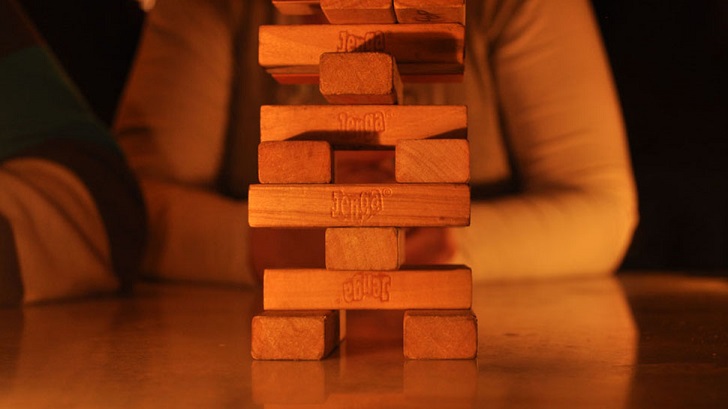
Dread is a roleplaying game that doesn’t use dice at all. Instead, you set up a Jenga-style tower of blocks, and to accomplish certain tasks, you have to pull a certain number of blocks from the tower without collapsing it.

It’s a brilliantly simple way to add tension to a game AND put your fate in your own hands. There’s no single unlucky dice roll that can condemn you to defeat. Just gravity and your own steady (or unsteady) hand.

And of course, as the game continues and the tower grows unsteadier — and your options for wood blocks to pull become fewer and fewer — the tension mounts and mounts.

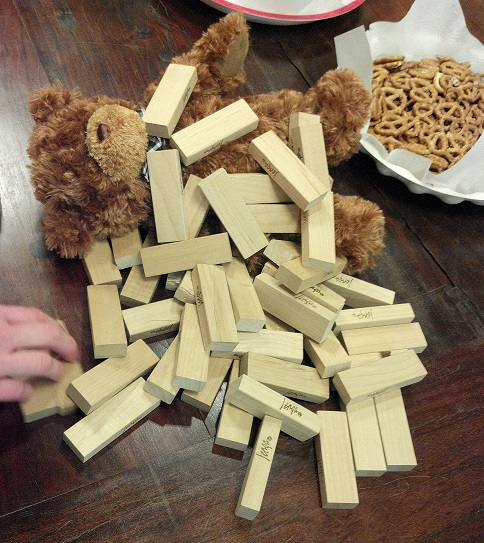
Eventually, the tower — and your character’s chances — collapse in a clatter.

[Image courtesy of Lewis Brown.]

Of course, the rules of every roleplaying game are eventually up to the people running/playing the game. If you decide that the success/failure rules of your game should be more nuanced, you can do something about it immediately.

But for new players and new game runners, sometimes it helps to remind them there are always other options available. Whether you ditch numbers entirely for narrative dice like in FFG Star Wars, pretend failure isn’t failure at all in Ninja Burger, or ignore the dice completely with something like Dread, you can still build tension and tell some wonderfully fun, exciting, and action-filled stories.

Good luck, and happy roleplaying, everyone!


dailypopwsicon

Well, summer’s over, but we still have deals galore for you to check out. You can find them on the Home Screen for Daily POP Crosswords and Daily POP Word Search! Check them out!

Thanks for visiting PuzzleNation Blog today! Be sure to sign up for our newsletter to stay up-to-date on everything PuzzleNation!

Demystifying Role-Playing Games

When you hear the words “role-playing game,” what comes to mind? A bunch of nerds in a basement, hunched around a table debating weird and esoteric rules? Practitioners of the black arts, thumbing their noses at God and all that is natural? Or nothing at all?

rpg-2009-berlin-2

Some TV shows, like Community and Freaks & Geeks, have displayed role-playing games in a positive light, but for the most part, role-playing games in general, and Dungeons & Dragons in particular, have gotten a bad rap over the last few decades, maligned as (at best) a game for lonely friendless types and (at worst) a tool to corrupt children.

(This might sound ridiculous to many of you, but folks like Pat Robertson continue to talk about role-playing games as if they’re synonymous with demon worship.)

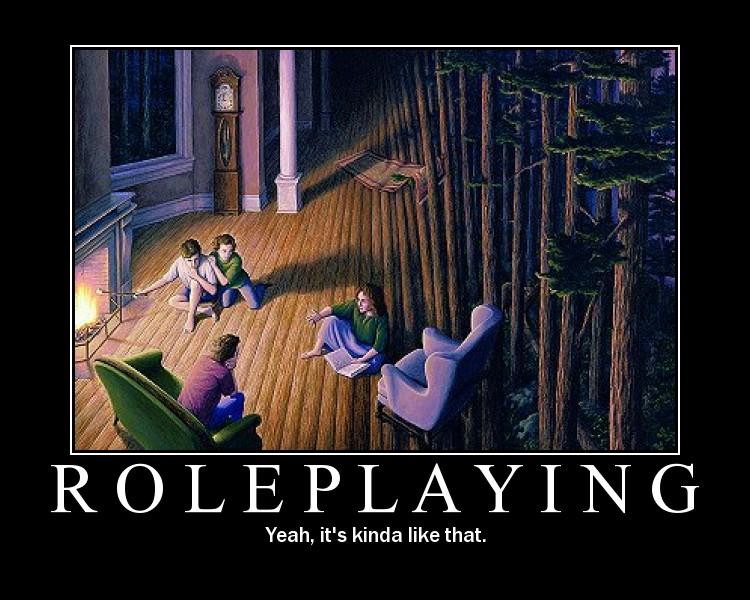
But in reality, role-playing games are simply a way for a group to tell one collaborative story.

roleplaying-kinda-like-that

There are two major elements to this storytelling. The first is managed by a single person who oversees that particular game or gaming session. In Dungeons & Dragons, this person is called the Dungeon Master, or DM; in other games, this person is the Game Master, the Storyteller, or bears some other title tied to the game or setting. For the sake of simplicity, from this point on, I’ll refer to this person as the DM.

So, the DM manages the setting and sets up the adventure. In this role, the DM will describe what the player characters (or PCs) see and explain the results of their actions. The DM also plays any characters the players interact with. (These are known as NPCs, or non-player characters.) Essentially, the DM creates the sandbox in which the other players play.

1951073350_7e357dbdec_3

Which brings us to the second element in role-playing storytelling: the players. Each player assumes a role, a character, and plays that character for the length of the session, or the game, if there are multiple sessions. (Some games last months or years, so these characters evolve and grow; players often become quite attached to their characters.)

The PCs navigate the world created by the DM, but their actions and decisions shape the narrative. No matter how prepared a DM is or how carefully he or she has plotted out a given scene or adventure, the PCs determine much of what happens. They might follow the breadcrumbs exactly as the DM laid them out, or they might head off in an unexpected direction, forcing the DM to think on the fly in order to continue the adventure.

dd2

That’s what makes role-playing games so amazing: you never quite know what you’re going to get. The PCs usually don’t know what the DM has in store, and no DM can predict with perfect clarity what the PCs will do. You’re all crafting a story together and none of you knows what exactly will happen or how it all ends.

For instance, I run a role-playing game for several friends that is set in the universe of Buffy the Vampire Slayer, and my PCs routinely come up with solutions to problems and puzzles that I didn’t expect, but that nonetheless would work. They constantly keep me on my toes as a DM, and it’s one of my favorite aspects of the game.

Oftentimes, major events and key moments are determined by dice rolls, adding an element of chance to the story. (In some games, players have replaced dice rolls with a Jenga-style block tower, and they must remove pieces from it to achieve certain goals. That adds a marvelous sense of real-world tension to the narrative tension already present!)

tabletop6

And while I’ve talked quite a bit about the game aspect, some of you might be wondering where the puzzly aspect comes in.

Some of the best, most satisfying puzzle-solving experiences of my life have come from role-playing games.

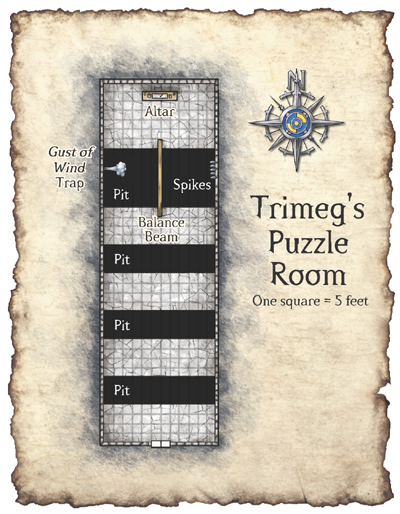
These puzzles can be as simple as figuring out how to open a locked door or as complicated as unraveling a villain’s dastardly plot for world domination. It can be a poem to be parsed and understood or a trap to be escaped.

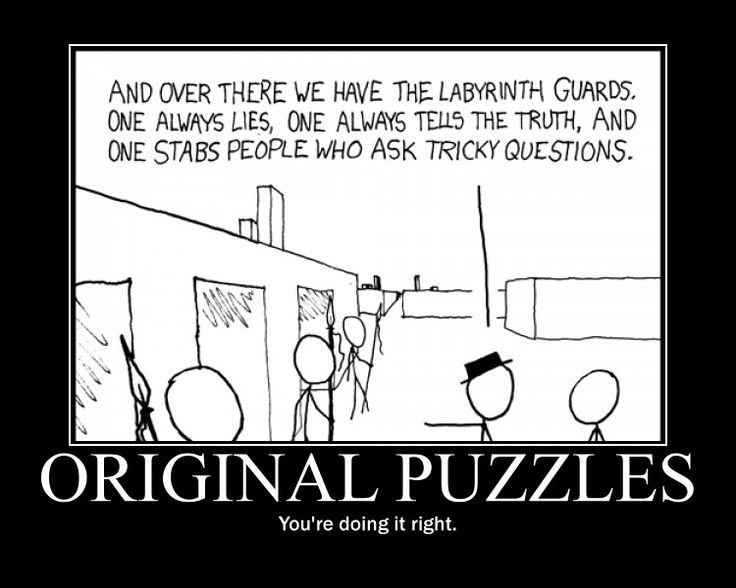
There are riddles of goblins and sphinxes, or the three questions of trolls, or even the brain teasers and logic problems concocted by devious fey hoping to snare me with clever wordplay. I’ve encountered all sorts of puzzles in role-playing games, and some of them were fiendish indeed.

trimegspuzzleroom

One time, during a LARP session (Live-Action Role-Playing, meaning you actually act out the adventure and storytelling), I thought I’d unraveled the meaning of a certain bit of scripture (regarding a key that would allow me to escape the room) and acquired a sword as my prize, only to realize much much later that the key I’d spent the entire session searching for was the sword itself, which unlocked the door and released me.

And designing puzzles for my players to unravel is often as much fun as solving the puzzles myself. Especially when they’re tailored to specific storytelling universes or particular player characters.

(Trust me, it doesn’t matter if you’re dealing with a Jedi or a paladin; riddles stop pretty much everybody in their tracks.)

b7052aee1c93bff98f4c513e4470fbb6

Whether it’s Dungeons & Dragons or Pathfinder, Legend of the Five Rings or Star Wars, GURPS or Ninja Burger, there’s a role-playing game out there for everyone, if you’re just willing to look.


This post was meant as a brief overview of role-playing games as a whole. If you’d like me to get more in depth on the subject, or if you have specific questions about role-playing games, please let me know! I’d be happy to revisit this topic in the future.

Thanks for visiting PuzzleNation Blog today! Be sure to sign up for our newsletter to stay up-to-date on everything PuzzleNation!

You can also share your pictures with us on Instagram, friend us on Facebook, check us out on TwitterPinterest, and Tumblr, and explore the always-expanding library of PuzzleNation apps and games on our website!

What’s your position on that puzzle?

The line between puzzles and games can be razor-thin, and some of the best multiple-player games have distinct puzzle aspects to them.

Today, let’s take a brief look at puzzle games I consider “position puzzles,” or puzzles where the key aspect of the solve/gameplay is a matter of tactical positioning.

The puzzle game that always comes to mind when I think of positioning is Hex.

Hex is a simple game that can get fiendishly complicated in a hurry. The goal is to create a linked chain of cells from one wall to the opposite wall, while your opponent tries to do the same. So not only is positioning a key element to building your chain of cells, but it’s crucial to depriving your opponent of similar positioning.

Best of all, the only things you need to play are a grid and a couple of pencils. My astronomy teacher in high school introduced me to Hex, and I’ve been playing it on and off for years ever since.

From Hex, let’s move on to another puzzle game that demands positioning skills and a level of strategic forethought: The Icosian Game.

The goal of the Icosian Game is familiar to anyone who’s done a Pencil Pusher or similar puzzle, requiring that you trace a path without lifting your pencil tip or revisiting any point in the diagram.

You want to visit every letter-marked spot once, and complete what is known as a Hamiltonian cycle, named for the puzzle’s creator, William Rowan Hamilton.

(Also, PuzzleNation fans will no doubt recognize some major similarities between the Icosian Game grid and the grid for our word-hunting game Starspell.)

Another classic positioning puzzle goes by many names, including Mills and Cowboy Checkers, but you probably know it best as Nine Men’s Morris.

Nine Men’s Morris is a two-player game where you try to place three tokens in a row while thwarting your opponent’s efforts to do the same. Every three-token row means your opponent loses a token, and the winner is whichever player reduces an opponent to two tokens or forces a stalemate.

Variations of this game date back to the days of the Roman Empire, but I suspect most people would recognize it in a simpler, more popular form. After all, it’s an easy leap from Nine Men’s Morris to Tic-Tac-Toe.

Today’s final positioning puzzle is a little different from the others, but it’s a personal favorite of mine. This is another game that goes by many names and appears in many forms. The version I play is called Turf Wars.

In Turf Wars, your goal is to capture as many squares as possible by drawing one line each round that connects two points. Your opponent does the same, and you slowly winnow down the board, creating opportunities to seize single squares or blocks of squares. Any time a box is enclosed on three sides, whomever draws the fourth side seizes the box.

(In this case, the puzzle game is hosted on the Ninja Burger website, so the boxes become either “Ninja” or “Samurai” depending on whether you or the computer capture the box.)

And if seizing one box encloses the third side of another box, you can seize that one as well. So there is the potential to seize multiple boxes in a single turn with some strategic line placement.

All of these games can be played with ease on paper, or with tokens scrounged up from other games, and they provide a great challenge and serious fun.

Just remember: In positioning puzzles, as in real estate, it’s all about location, location, location.

[For more ninja-centric puzzle and games fun, including the phenomenal Ninja Burger roleplaying game, click here.]