Every 85 cents donated means 1 meal given to someone in need. A $40 donation is FIFTY meals.
Tabletop game designers from all over the world are helping amplify the reach of this project, spreading the word across social media and contributing to a special gift for donors.
And there is a bonus for any RPG enthusiasts who donate:
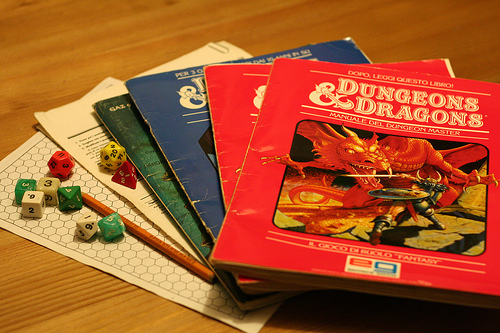
Everyone who donates to this campaign can receive a free PDF bundle including an epic one-shot adventure and a new playable species for Pathfinder and Dungeons & Dragons, letting you and those you love play the heroes in your games that you are in real life. You are saving real lives while forging bonds and memories across the game table.
Please click this link for more information, and if you’re an RPG fan, just use your email to sign up for alerts, follow the instructions, and share the PDF receipt of your donation to receive your free PDF bundle.
And for those unfamiliar with the world of tabletop RPGs, you might be wondering about the origins of the name Power Word Meal.
There are a series of spells in Dungeons & Dragons based on the idea that you’ve learned a word of power, and that by speaking that single word, you can cause a magical effect. Power Word Stun, Power Word Blind, and most famously, Power Word Kill, are terribly dangerous, terribly effective spells.
Which makes it genuinely lovely to see that idea turned on its head with Power Word Meal, spreading the idea that we DO have the power to help others. Not with a magic word of eldritch might, but with a few clicks, a few screen taps, a few dollars, a few moments of our time.
So please cast Power Word Meal with us and make the lives of some deserving strangers better.
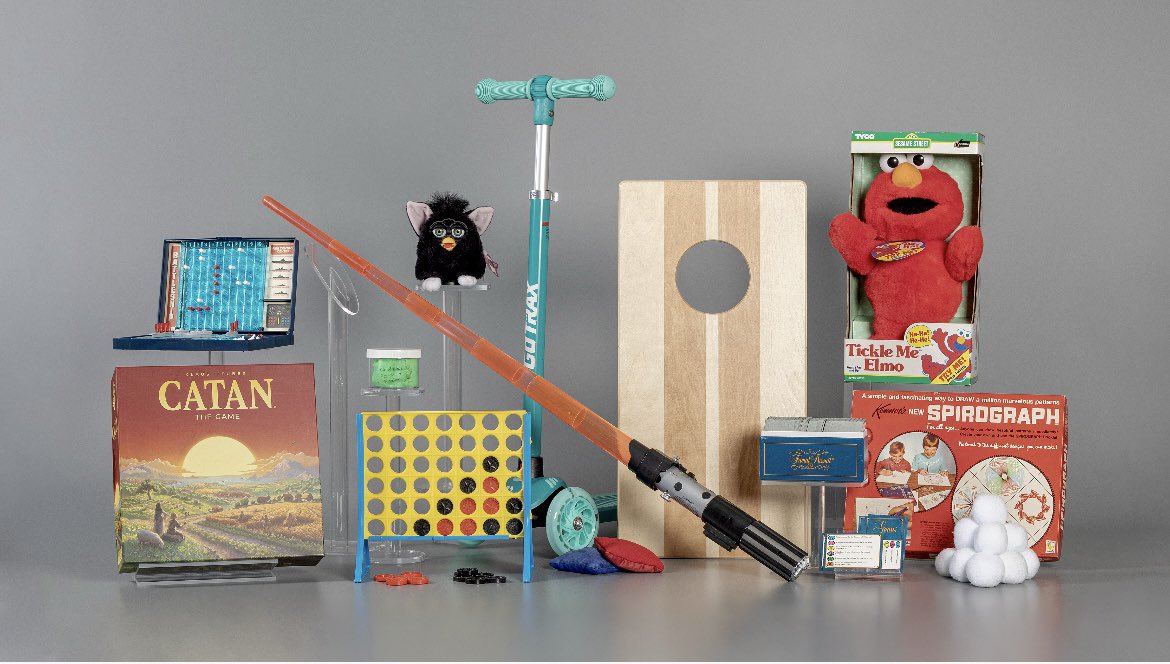
This year’s contenders for the National Toy Hall of Fame Class of 2025 have been whittled down to 12 finalists, and the competition is fierce.
You’ve got classic toys from across the decades (Furby, spirograph, Star Wars lightsaber, Tickle Me Elmo), representatives from more physical activities (scooter, cornhole), board games (Battleship, Catan, Connect Four, and Trivial Pursuit), and even materials kids play with (slime, snow).
The idea of “play” is represented in so many different ways across these 12 finalists, and it really encompasses just how vast and varied play is, how much imagination and expression and creativity are reflected in all sorts of different childhood experiences.
Personally, I’m rooting for the lightsaber, Trivial Pursuit, and snow to make the cut. I’ve been a Star Wars fan since I was 2. Trivial Pursuit was the first trivia game I can remember playing (even if it was an edition intended for players way older than I was at the time). And snow is so fundamental to winter play — sledding, snowmen, snowball fights, DAYS OFF FROM SCHOOL TO PLAY — that it’s surprising it hasn’t already been inducted.
(Though I suspect Catan, Connect Four, and Tickle Me Elmo will make the cut instead of some of my faves.)
Yes, while the final determinations are made by the National Toy Hall of Fame’s National Selection Advisory Committee — ooh, so formal! — the three toys that receive the most public votes will be submitted for consideration alongside the top three submissions from the Selection Committee.
Which of these twelve contenders would you like to see join such playtime luminaries as Lite-Brite, My Little Pony, the stick, the Atari 2600, and the Rubik’s Cube? Let me know in the comments section below! I’d love to hear from you.
And while you’re at it, tell me what toys you think should be in the National Toy Hall of Fame!
One year ago today, my first post under the PuzzCulture name went live.
It’s been both overwhelming and gratifying to return to writing about the world of puzzles and games after a few years away, and I’m so so grateful to all of you who have joined me on this journey.
And although it’s only been a year, it sure feels like a LOT has happened over the last twelve months.
More deep dives into the history of puzzles and games. More puzzles to solve. More interviews. More reviews. And other things without the word “views” in them. (But hopefully ones that still inspire your views!)
Again, I’m so chuffed with the response PuzzCulture has garnered so far, and I’m excited to continue creating content for you to enjoy.
But what are you looking for, fellow puzzler? Is there something you would like to see that we haven’t done before? Or something you’d like to see more of?
Let us know in the comments section below! We’d love to hear from you.
I’ve written a lot this year about how political decisions have impacted the games industry.
With Trump’s wildly inconsistent implementation of tariffs, we’ve already seen game companies close, cancel projects, and try to right the ship amidst uncertain costs, supply opportunities, and factory dealings.
But the United States isn’t the only place where politically motivated choices are hurting businesses focused on gaming.
It’s happening in Quebec as well:
The very livelihood of these hobby shops and game stores are threatened by Bill 96 (aka Law 14). How so?
Well, one of the rules implemented by Bill 96 involves product labeling:
Starting June 1, 2025, if a registered trademark within the meaning of the Trademarks Act appears on one of your products that includes a generic term or a description of the product in a language other than French, that information must also appear in French on the product.
This means that ALL of their game materials, models, paints, and accessories must include a French translation. They cannot stock them without fulfilling these conditions.
Unfortunately, most of these products simply aren’t available in French. They’re too niche or too focused on the English speaking market (and understandably so), so there’s no incentive for special print runs to accommodate Quebec law.
But it’s not going to punish the consumer, just the store owners. Consumers will be pushed to purchase the same products online (where Bill 96 doesn’t apply), and the hamstrung store owners will lose out on those sales entirely.
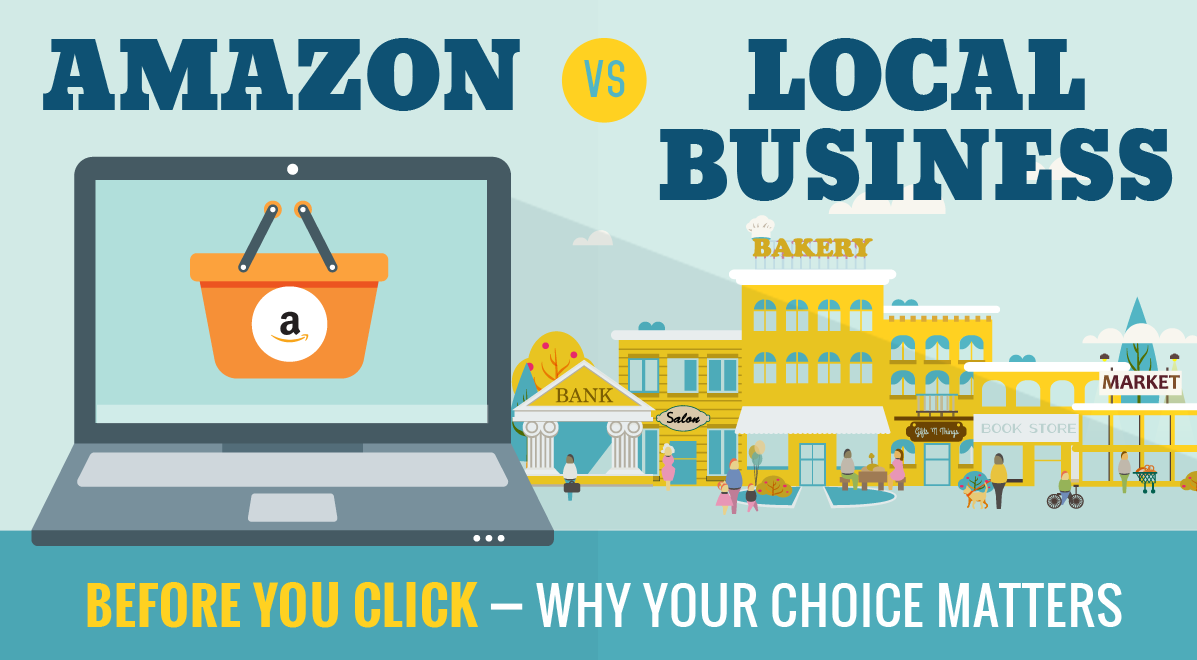
This hurts small businesses directly while pushing customers toward juggernauts like Amazon. And all for a law that’s more about political theater than actually serving the public.
It’s hard enough to run a game company or a game store these days. It would be nice if shortsighted, poorly thought-out government mandates avoided making it borderline impossible to build a brand, serve an audience, or entertain folks for a few hours with a fun distraction.
Here’s hoping all the nonsense stops soon and game companies, hobby shops, and gaming enthusiasts can enjoy their efforts in peace.
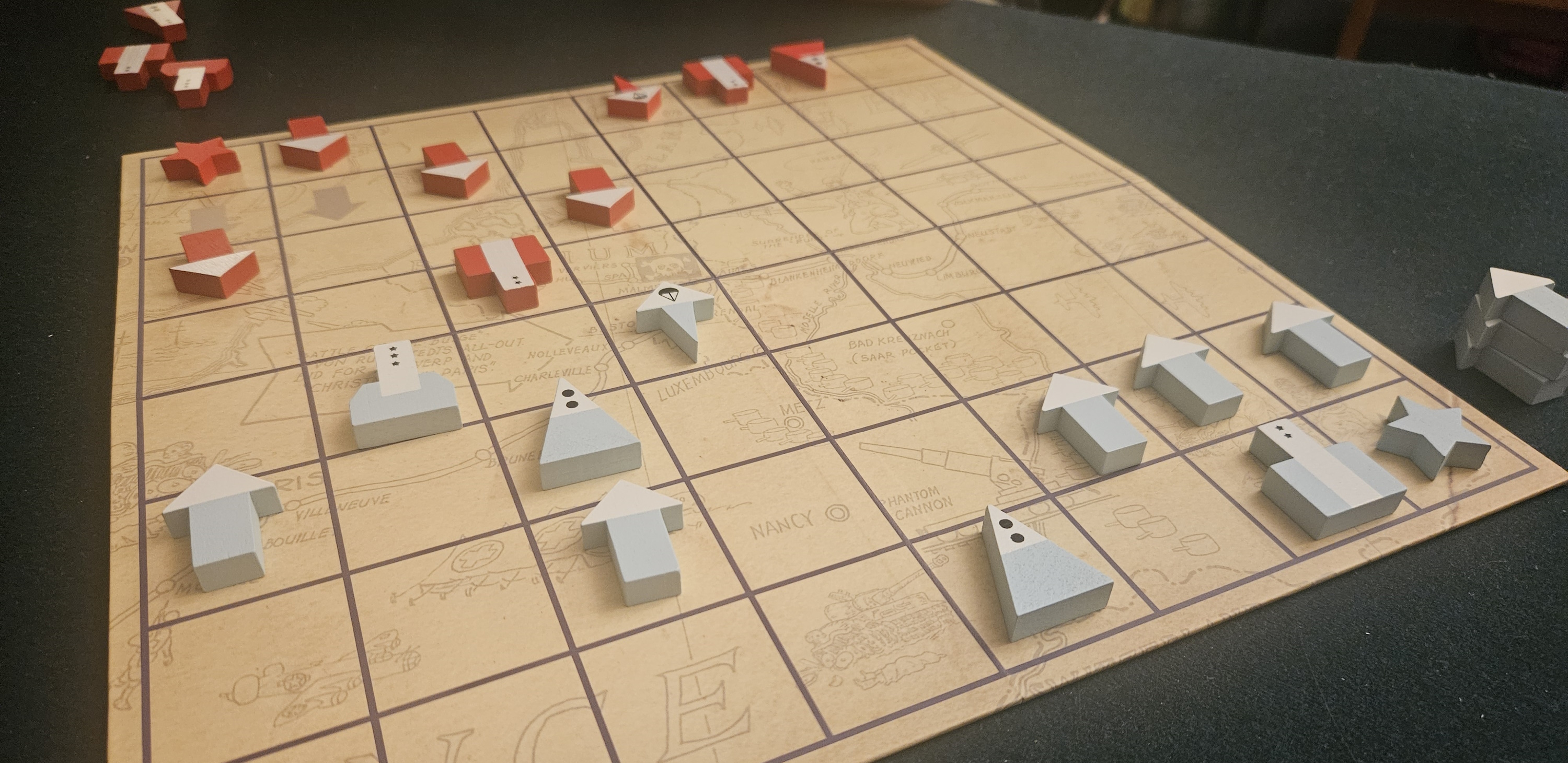
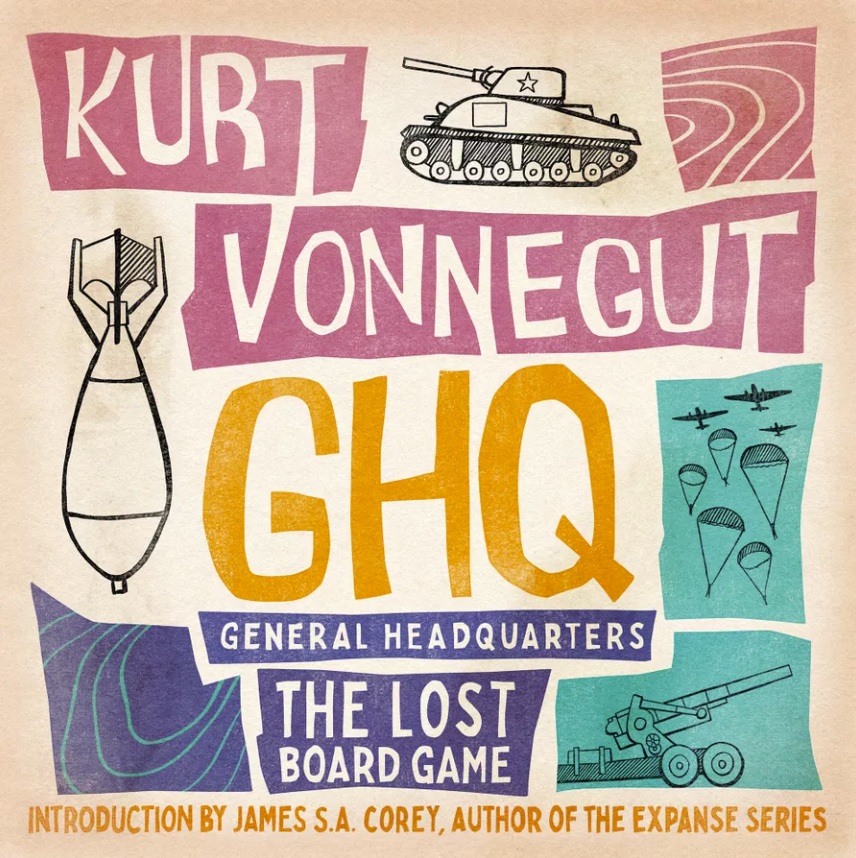
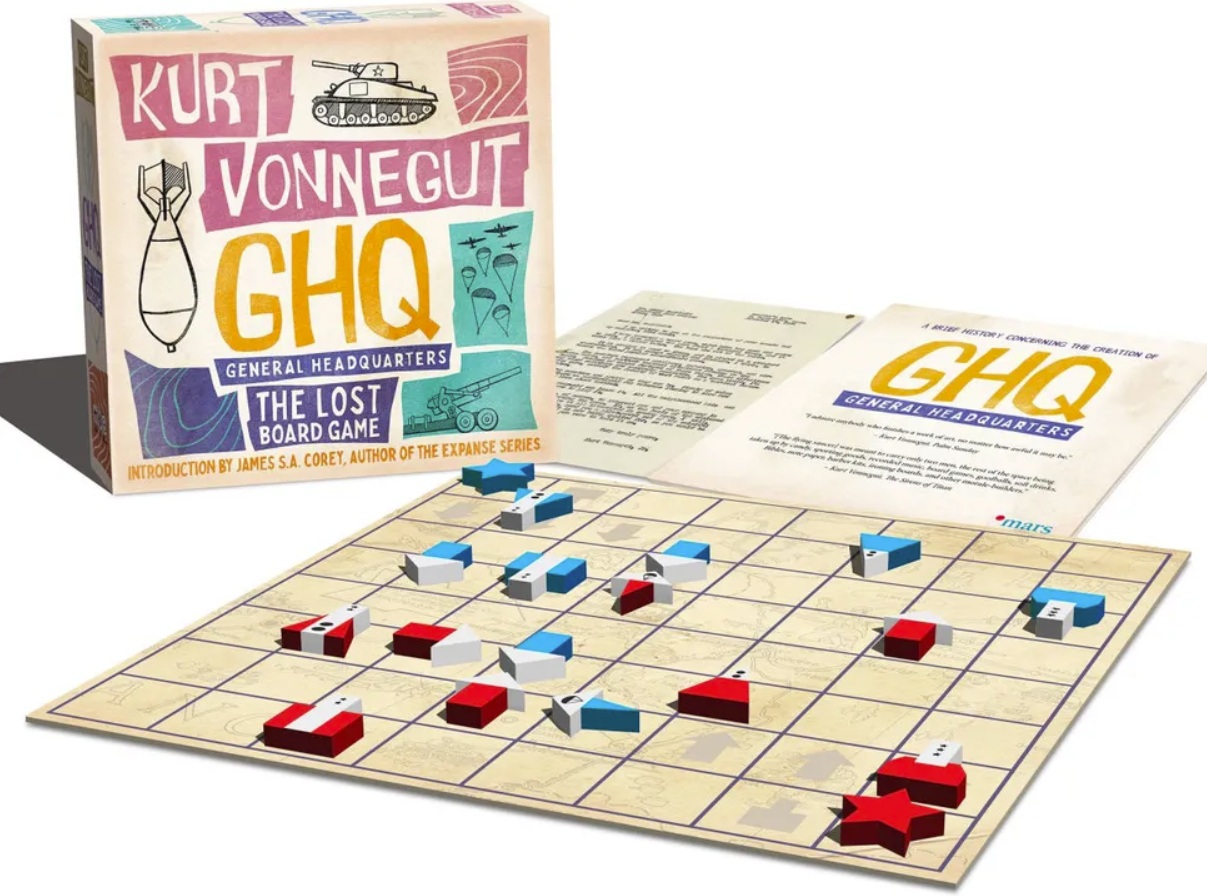
Yes, nearly seventy years ago, after the less than stellar commercial performance of his novel Player Piano, Vonnegut attempted to create a third game to utilize the 8×8 checkerboard as effectively as chess and checkers did.
It was called GHQ, short for General Headquarters, and it was a tactical strategy game involving balancing your ground infantry and artillery forces with your airborne forces to capture your enemy’s headquarters.
In 1956, it was downright innovative, mixing wargame mechanics and multiple actions in a single turn. (This is commonplace today, but was quite revolutionary in games for the 1950s.) In today’s board game market, the initial run sold out, and now the game is carried by Barnes & Noble, and I have no doubt it’s performing well.
This would come as a shock to Vonnegut, as the game was rejected by publisher Henry Saalfield of the Saalfield Game Company. Vonnegut put the game away, and as far as his family knows, he never went back to it at all.
That historical context makes the game (and its companion booklet) a wonderful glimpse into Vonnegut as a creative mind.
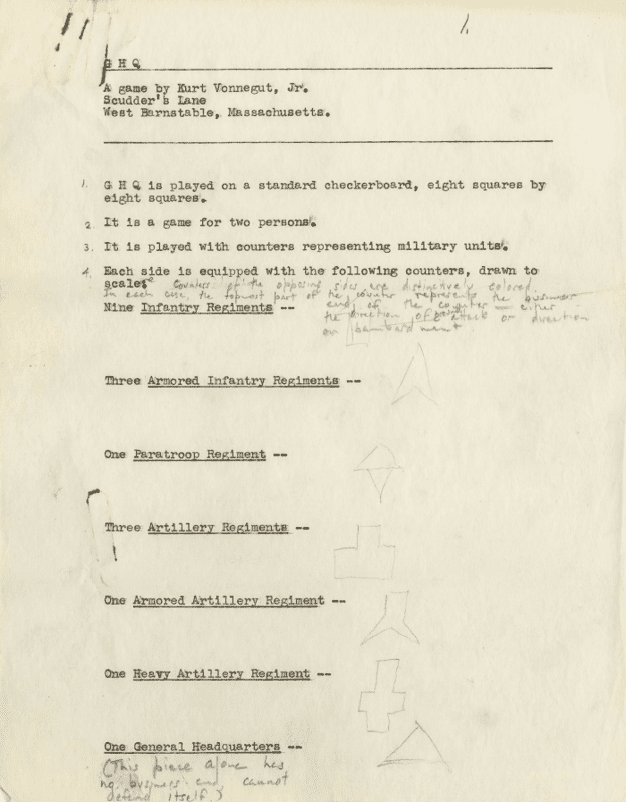
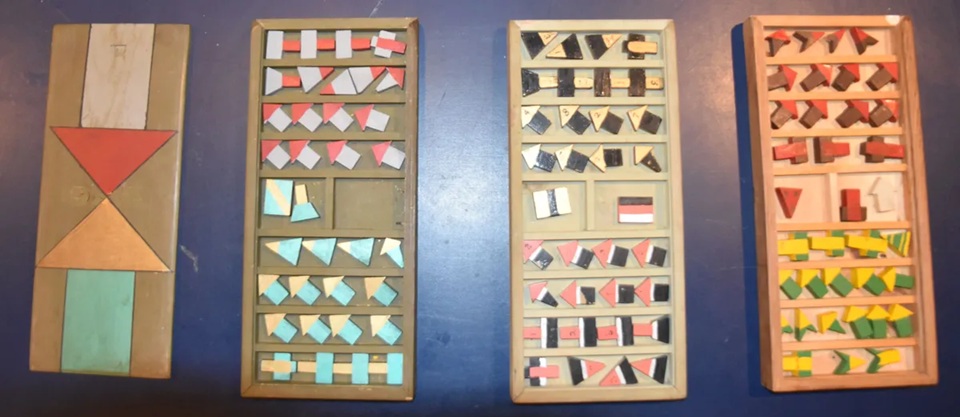
We get his original notes — including rules for the game — as well as photos of the original game pieces from his prototype.
GHQ exists as a fascinating conundrum. How do you reconcile encountering a combat-focused game designed by someone famous for his antiwar sentiments?
It’s also so very Vonnegut. Years before Billy Pilgrim manifested as his coping mechanism for the horrors he witnessed in the Ardennes and during the firebombing of Dresden, here he was designing a game that drew on his experience as a spotter for the 106th Infantry Division. It’s a game rooted in a particular military doctrine, one where most casualties were not inflicted by tanks or planes, but by distant cannons. While the game’s airborne units are flashy and threatening, it’s the roving fields of fire that shape this battlefield.
That, too, strikes me as the proper way to consider GHQ. Vonnegut’s antiwar stance crystallized as U.S. involvement deepened in Vietnam, and it’s natural to wonder if the older Vonnegut set aside GHQ not only out of disappointment with Saalfield’s lack of interest but also because its maneuvers and bombardments cut too close to the bone.
It’s impossible to separate the man from the art in this case. I can’t help but view this game as not only part of Vonnegut’s journey toward his rejection of warfare and wartime thinking, but also as a way for him to turn his knowledge and experience from wartime into something productive (and profitable) for his family.
It’s pragmatic, transformative, and a little bit sad in a way that feels so keenly Vonnegut.
I haven’t had a chance to play it yet, but I do have a Barnes & Noble gift card burning a hole in my pocket, so perhaps you’ll see a more thorough writeup on GHQ in the future.
In the meantime, what do you think of this curious discovery, fellow puzzlers? Does GHQ intrigue either the reader or the tactical gamer in you? Let us know in the comments section below. We’d love to hear from you!
The insane stupid rodeo of tariff threats, retractions, delays, and new threats continues, and the board game industry is reeling.
Some companies are pausing Kickstarter pledge managers and rollouts until they consult with lawyers and printers. Others are cancelling projects outright.
And these companies are being incredibly honest and forthright with their audiences. I’ve seen at least a half-dozen posts from across the industry, and there are probably many others I’ve missed.
Feel free to click the link to check it out, but I’m going to post much of the text here as well, because it’s straightforward and informative. It avoids hyperbole and confronts the unpleasantness awaiting board game companies going forward. Plus it gives us real numbers to crunch.
(Meredith’s comments are in quotation marks, my comments in italics.)
“On April 5th, a 54% tariff goes into effect on a wide range of goods imported from China. For those of us who create boardgames, this is not just a policy change. It’s a seismic shift.
At Steve Jackson Games, we are actively assessing what this means for our products, our pricing, and our future plans. We do know that we can’t absorb this kind of cost increase without raising prices. We’ve done our best over the past few years to shield players and retailers from the full brunt of rising freight costs and other increases, but this new tax changes the equation entirely.”
Covering the board games industry has been a rollercoaster since COVID 19 reports in China emerged and factories began shutting down. Board game companies adapted quickly, but many suffered, and more than a few closed their doors.
I was hoping that would be the worst of it for the industry, but sadly, that’s obviously no longer the case.I can only imagine what the last five years have been like for board game creators.
“Here are the numbers: A product we might have manufactured in China for $3.00 last year could now cost $4.62 before we even ship it across the ocean. Add freight, warehousing, fulfillment, and distribution margins, and that once-$25 game quickly becomes a $40 product. That’s not a luxury upcharge; it’s survival math.”
Getting real numbers has been a revelation, and I’ve been sharing this post all over in the hopes of people realizing the genuine effect these tariffs will have on businesses.
“Some people ask, “Why not manufacture in the U.S.?” I wish we could. But the infrastructure to support full-scale boardgame production – specialty dice making, die-cutting, custom plastic and wood components – doesn’t meaningfully exist here yet. I’ve gotten quotes. I’ve talked to factories. Even when the willingness is there, the equipment, labor, and timelines simply aren’t.
We aren’t the only company facing this challenge. The entire board game industry is having very difficult conversations right now. For some, this might mean simplifying products or delaying launches. For others, it might mean walking away from titles that are no longer economically viable. And, for what I fear will be too many, it means closing down entirely.
Tariffs, when part of a long-term strategy to bolster domestic manufacturing, can be an effective tool. But that only works when there’s a plan to build up the industries needed to take over production. There is no national plan in place to support manufacturing for the types of products we make. This isn’t about steel and semiconductors. This is about paper goods, chipboard, wood tokens, plastic trays, and color-matched ink. These new tariffs are imposing huge costs without providing alternatives, and it’s going to cost American consumers more at every level of the supply chain.”
This is the real lesson here for anyone supporting these tariffs. You can’t just say you’re bringing manufacturing back to America. You have to DO it. You have to have the facilities, the manpower, the training, the materials, and the wherewithal. These tariffs aren’t just putting the cart before the horse, it’s pushing the cart down the hill and blaming gravity when it crashes.
“We want to be transparent with our community. This is real: Prices are going up. We’re still determining how much and where.
If you’re frustrated, you’re not alone. We are too. And if you want to help, write to your elected officials. Ask them how these new policies help American creators and small businesses. Because right now, it feels like they don’t.
We’ll keep making games. But we’ll be honest when the road gets harder, because we know you care about where your games come from – and about the people who make them.”
Hey folks, it’s your friendly neighborhood puzzle guy back again. (Just wanted to make it clear that everything you read going forward is me, not Meredith.)
It’s a rocky road ahead for board game companies.
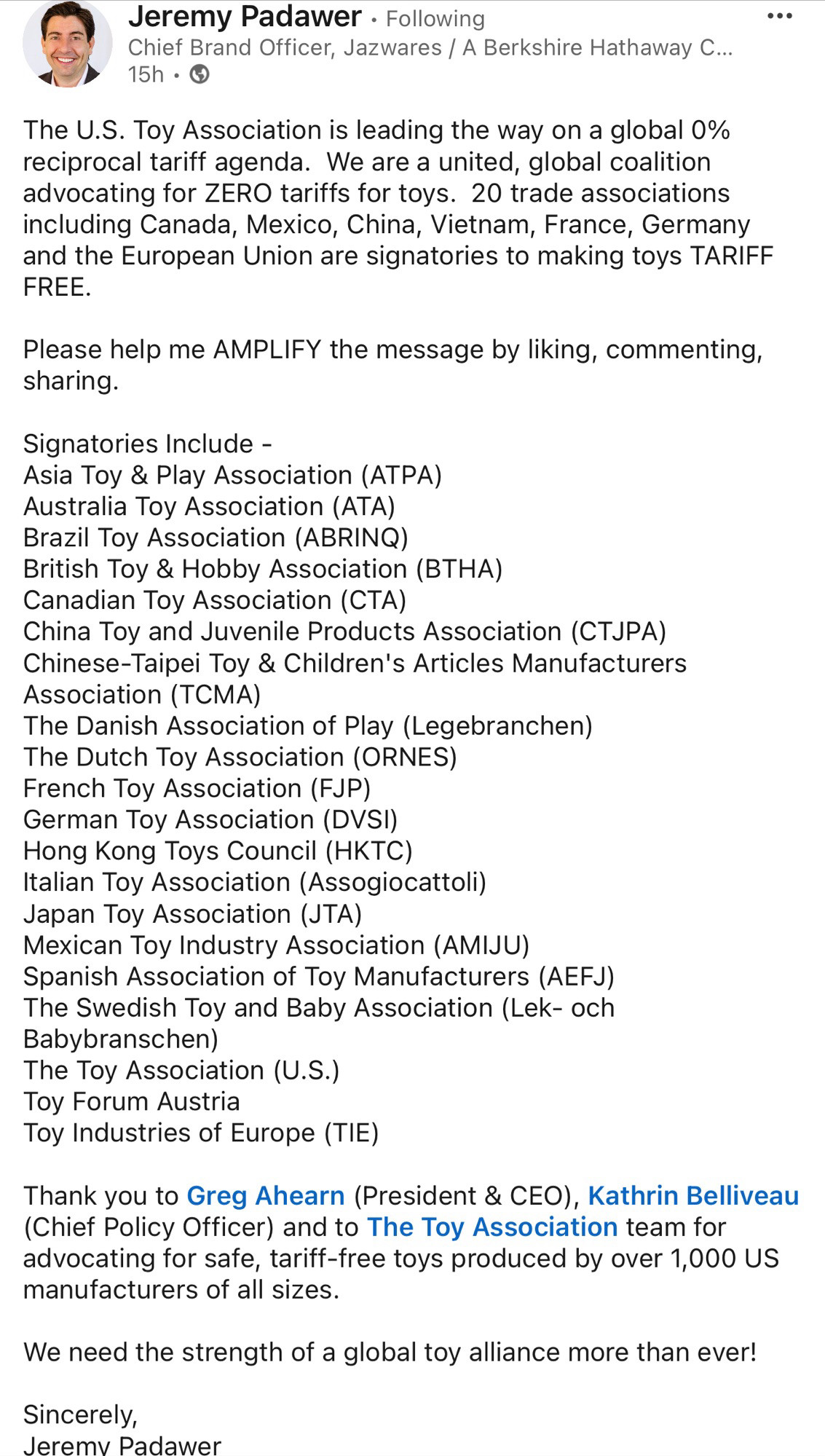
Thankfully, we are already seeing industry leaders making moves to handle Trump’s tariffs.
The list of organizations agreeing to work on this is impressive… and inspiring. Sure, it’s a business decision. My cynical little heart sees that.
But imagine if they succeeded and made toys tariff-free across the globe. What a gift to parents and children around the world that would be! What a boon that could be to game designers.
(I reached out to the U.S. Toy Association to confirm if board games and RPGs fall under the toy umbrella, but have not heard back yet.)
So, what can you do in the meantime?
Well, if you have the means to do so, reach out to your officials. Support local game companies. Speak up, loudly and often.
When you think of the board game industry, you probably think of the big companies, the big brands… but there’s only a few of them.
The VAST majority are small businesses led by passionate designers, creative minds, and hardworking people of all ethnicities, ages, backgrounds, and gender identities. They are a chorus of voices that make gaming better, that tell us stories about ourselves through gameplay, that bring history alive and challenge our minds, our reflexes, our collaboration, and our cunning.
THAT is the board game industry I want to see succeed.