A World of Puzzles and Games at Norwescon 42!

Your friendly neighborhood puzzle blogger took a trip across the country to attend Norwescon, the premiere fantasy and science fiction convention in the Pacific Northwest.

This was the 42nd edition of the convention, and if you know your sci-fi novels, then you’re not surprised that there were all sorts of references to The Hitchhiker’s Guide to the Galaxy. (The number 42 is a big part of the first novel.)

The convention’s subtitle was “Don’t Panic” (another HHGTTG reference), and lots of convention attendees were in their bathrobes or carrying towels, representing the two main characters of the series, the bathrobe-wearing Arthur Dent and the towel-toting alien tourist Ford Prefect.

As with any convention, the costuming was amazing. There were fairy godmothers, vikings, mermaids, Daleks, folks in Seahawks-colored finery (it was Seattle, after all), a Predator offering free hugs, an inflatable T-rex costume with those robotic grabber arms, and even photo ops with Krampus and Santa! (And Easter Krampus on Sunday.)

One of the oddest moments for me was seeing a group of people in uniforms I didn’t recognize, and realizing they weren’t con attendees, they were the flight crew for an international airline. (The hotel was across the street from the airport.)

Although many of the convention’s panels and events have a writerly focus, plenty of attention is also given to art, films, games, and pop culture, so there was loads for puzzle and game fans to enjoy at the event.

The dealers room — the main area to shop for costumes, books, fabric, t-shirts, memorabilia, collectibles, and more — had several game shops represented, toting loads of games at good prices. (Several of which we’ve reviewed on the Blog in the past, and some that will be reviewed in the future.)

[All hotel nooks and crannies were stuffed with thematic exhibits, including this delightful leave-a-book, take-a-book mini-library a la The Restaurant at the End of the Universe.]

Board game demos were available all day, complete with skillful players to introduce newbies to various games, as well as tabletop roleplaying adventures in all sorts of settings and systems, from Dungeons & Dragons and Vampire: The Masquerade to Pathfinder and more. In fact, one of the gaming spaces was right down the hall from my hotel room, and it was PACKED morning ’til night with enthusiastic roleplayers telling stories, rolling dice, and battling monsters.

There were open games as well as sign-ups for specific games and adventures, including a multi-table multi-hour battle for gang supremacy in the fictional city of Waterdeep.

One of the most intriguing puzzle/game experiences available to try at the convention was Artemis.

Artemis is a spaceship bridge simulator that allows a group of players to essentially play out a Star Trek-esque adventure. Each player has instructions, controls, and a laptop in front of them, as well as a big screen for everyone to view (much like the main viewer on the bridge of the Enterprise).

Two teams, each piloting their own ship (the Artemis or the Intrepid) must battle foes, trade goods, dock with space stations, and explore the galaxy, all while maintaining their weapons, shields, energy usage in the ship, and piloting control, as well as communicating with their sister ship through headset.

I moved back and forth between the two “ships,” watching as the players navigated different challenges, cooperated (and disagreed) on command decisions, managed their resources, and ventured between the stars, all while some pretty impressive graphics tied the whole play experience together.

What really struck me about the Artemis style of play was how much communication was required for success. It is a co-op game in the same vein as Castle Panic!, Forbidden Island, or Spaceteam, but with a lot more personal responsibility. Plus the laptop interfaces for each station were slick and well-designed, bringing that polished Star Trek: The Next Generation feel home.

I was also responsible for some of the puzzliest events at the convention. Although I did participate in some panels on writing, literature, roleplaying games, and movies (both good ones and the worst of b-movies), the two events that were the main focus of my time were a LARP/scavenger hunt based on The Hitchhiker’s Guide to the Galaxy and an escape room based on Star Wars.

The HHGTTG event was built as an in-universe scavenger hunt where players (who were all expected to bring their towels, of course), had to complete five tasks. The completion of each task led to a rune for the players to record on their gamesheet. and earn five runes, then spell them out in a secret location using their towels, in order to ask an important question.

Some of the tasks included:

  • finding HHGTTG character names in a word search grid, then reading the remaining uncircled letters as a secret message
  • singing karaoke to the mermaids at the hotel pool
  • assisting a Vogon poet with her terrible poetry

They had to earn all five runes, then find me in a secret location and spell out the runes with their towels. If they did so correctly, they would bring one of the missing dolphins back to Earth (and received a small stuffed one for their efforts).

[A bag full of dolphins, awaiting a possible return to Earth.]

The Star Wars event was a traditional escape room with puzzles to solve, boxes to unlock, combinations to find, keys to uncover, and a room to escape under a time limit. Designed for the teenaged attendees, the escape room was set on a bounty hunter’s ship, and all of the players were recently captured by the bounty hunter, awaiting transport to an Imperial prison.

But the bounty hunter has fallen victim to one of his own security protocols, so all of the “prisoners” have a chance to escape, if they disable the (Nerf gun-)armed droid blocking the escape pod, as well as either shut off the radiation leak near the pod OR gather enough bacta to heal themselves from radiation damage in order to actually survive the escape.

[Nerf guns and five shipped boxes. An embryonic escape room.]

[The contents of said shipped boxes. An escape room mid-construction.]

Although some of the boxes were opened out of order (by brute force, rather than proper solving) and one of the puzzles had an unfortunate printing error, the players unraveled the mysteries of the bounty hunter’s ship and escaped with only seconds to spare before the Imperials arrived. SUCCESS!

(Plus friend of the blog Jen Cunningham cooked up some lovely victory certificates for the players, which was a cool bonus. Thank you Jen!)

More importantly, despite the hiccups encountered during both events, everyone had fun while playing (either walking away with a small dolphin or a certificate).

The entire convention was a blast (an exhausting one, but a blast nonetheless), and I highly recommend attending Norwescon next year to any fans of horror, sci-fi, fantasy, writing workshops, games, roleplaying, and of course, puzzles.


Thanks for visiting PuzzleNation Blog today! Be sure to sign up for our newsletter to stay up-to-date on everything PuzzleNation!

You can also share your pictures with us on Instagram, friend us on Facebook, check us out on TwitterPinterest, and Tumblr, and explore the always-expanding library of PuzzleNation apps and games on our website!
Our Annual TableTop Tournament Starts Next Week!

With International TableTop Day fast approaching, we are once again teaming up with our pals at Penny Dell Puzzles to put together an in-house TableTop Tournament to celebrate the upcoming holiday (Saturday, April 27).

It’s a 12-person two-week tournament with different games to play every week, and round 1 kicks off next Tuesday. (This is actually the fourth year of the tournament, with all three previous champions competing again this year.)

One of the things I like about the layout of the tournament is that there are no one-on-one match-ups until the final. Instead of a single-elimination tournament, competitors are slotted into groups of three. Each group of three will play two games, and the two winners (one from each game) from each trio and move on to the next round.

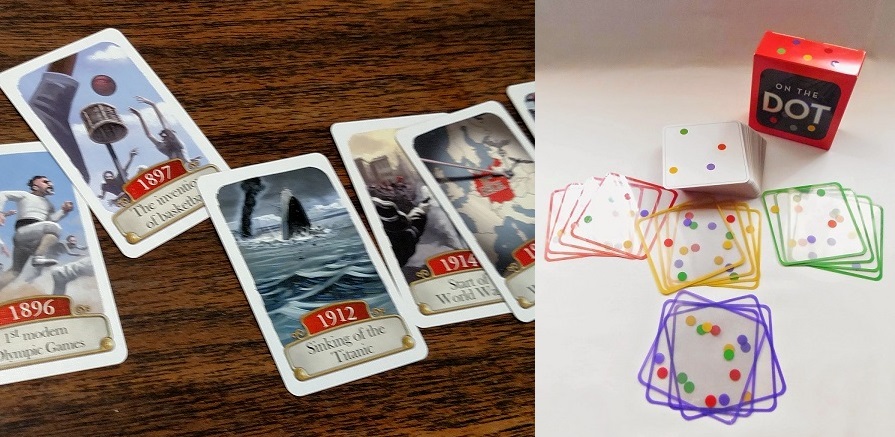
So to survive round 1, I’ll need to win either Timeline or On the Dot.

Timeline is a card game where every card depicts a different moment in history, and the players are trying to place cards from their hand into a historically correct timeline. Players take turns adding cards to the timeline, placing them before or after previously played cards. You don’t have to know the exact year the event on a given card took place; you simply have to figure out when it happened in relation to the other events that have already been played.

You play your card, and then flip it over to reveal the actual year the event occurred. If you’re correct, the card stays, and you have one fewer card in your hand. If you’re wrong, the card is removed from the timeline and you draw a new card. The first player to place every card in their hand wins.

On the Dot is a pattern-matching game. Each player has four clear cards with randomly placed colored dots on them, and it’s up to the player to arrange all four cards so that the colored dots showing match a given pattern. The first player to match three patterns moves on to the next round.

Timeline can be a bit of a crapshoot, depending on your knowledge of a given subject and whatever cards you draw. I suspect I’ll have a better chance of making the second round with On the Dot; I’m fairly quick with pattern recognition and manipulation, and actually won three games in a row last year to secure my spot in the next round. Hopefully I can repeat the same feat this year.

But you never know. With new competitors and returning champions in the tournament this year, there are sure to be some diabolical surprises.

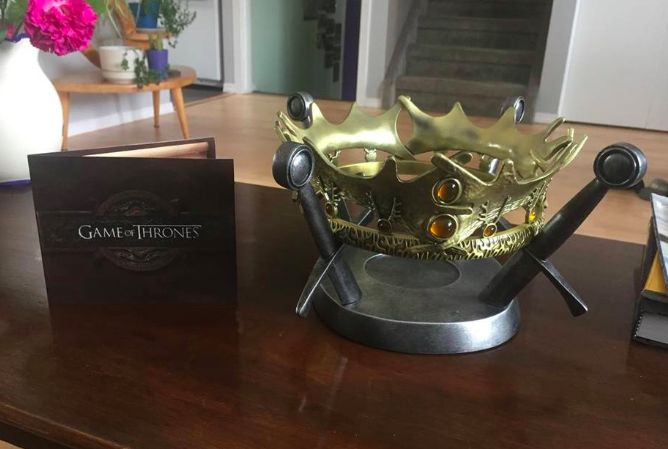
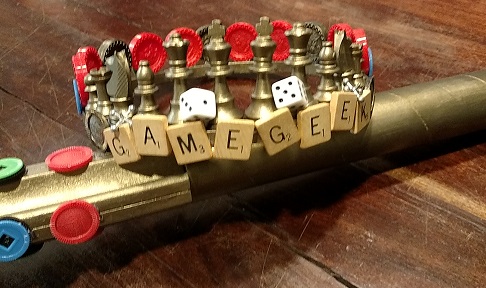
Here’s hoping when it’s all said and done, I’ll be wearing the Game Geek crown and holding the scepter high…


Thanks for visiting PuzzleNation Blog today! Be sure to sign up for our newsletter to stay up-to-date on everything PuzzleNation!

You can also share your pictures with us on Instagram, friend us on Facebook, check us out on TwitterPinterest, and Tumblr, and explore the always-expanding library of PuzzleNation apps and games on our website!

Kickstarter Roundup!

Oh yes, it’s that time again.

For years now, crowdfunding platforms like Kickstarter and Indiegogo have been hotbeds of innovative puzzle and game design, and I’m always happy to spread the word about worthy projects that I think will delight and intrigue my fellow PuzzleNationers.

So let’s take a look at some projects that are currently seeking funding and see if any pique your interest!


The first (and puzzliest!) entry in today’s list is a reinvention of something PuzzleNation Blog readers already know: Eric Berlin’s Puzzle Your Kids subscription service.

Eric realized that the clever puzzles he was creating worked for both younger AND older solvers, and has reimagined the subscription service to provide all sorts of quality variety puzzles to solvers.

Now known as Puzzlesnacks, it’s the perfect way to keep the puzzler in your life busy with fun, unique variety puzzles, no matter what their skill level.

With 23 days to go, the project is already funded, so any further funding just means more puzzles and even greater quality going forward!

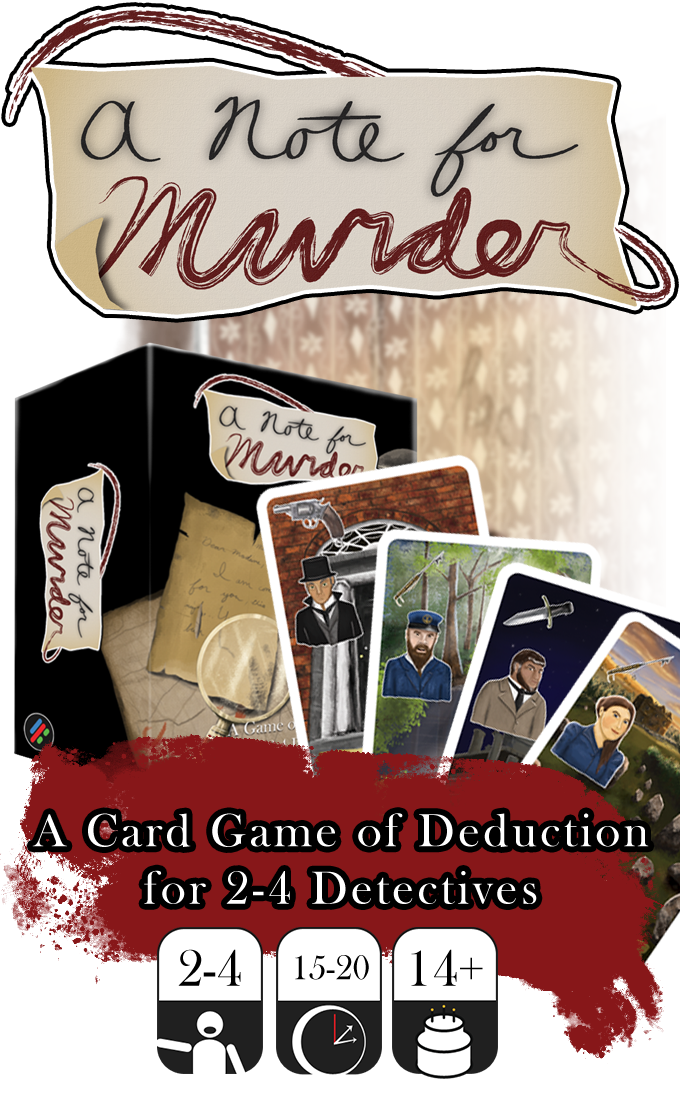
Our second project is something for the murder mystery fans in the audience: A Note for Murder.

This game plays on classic murder mystery tropes, as players piece together the crime —  identifying the suspect, the murder weapon, and the scene of the murder. The twist? The crime hasn’t happened yet!

Plus you’re competing with your fellow players. Although it takes working together to solve the crime, only one person can get the credit for preventing the crime. Will it be you?

With 23 days to go, the project is one-third funded, but I suspect this intriguing spin on traditional murder mystery board games like Clue will meet its funding goal.

Our third campaign celebrates the history of one of the most unique game companies in the market today: Cheapass Games.

The company originally marketed its games by selling only what you need to play the game, allowing you to save money by scrounging up your own dice, tokens, and more from the games you already have. It was a genius approach that led to dozens of fantastic, unusual gaming experiences.

And now, they’re bringing that history to life with Cheapass Games in Black and White, a book collecting the rules and histories of every game offered by the company during the Black and White era.

The book is already funded, but with 21 days left, this project is still worth your time.

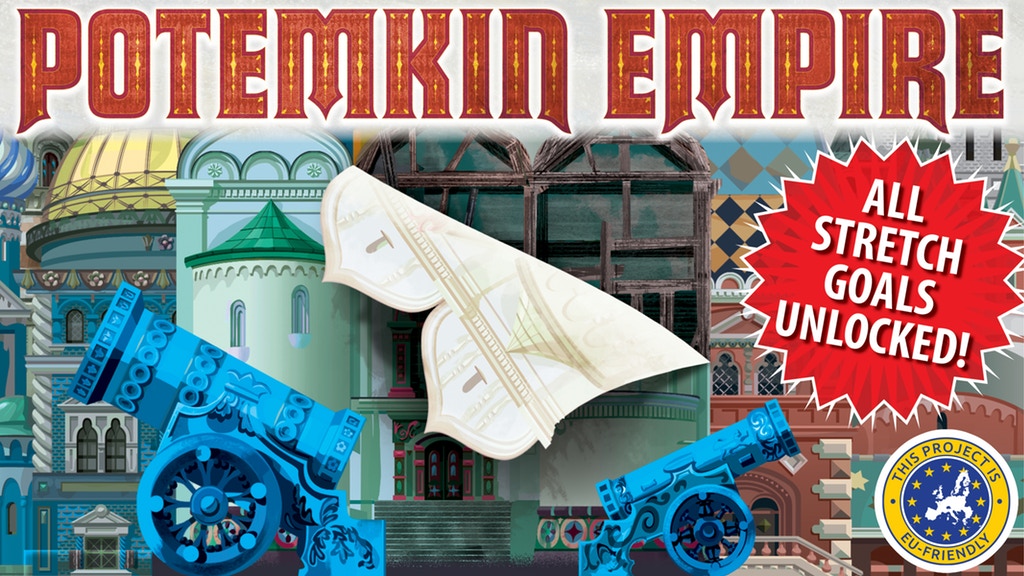
We delve into a peculiar true story from history with our fourth entry: Potemkin Empire.

As Empress Catherine tours the towns and villages in her domain, each player competes to convince her that they have the most prosperous and worthy village. And a bit of chicanery is needed, as everyone is setting up empty building facades to enhance the look of their individual towns.

The game quickly becomes a battle of cons, ruses, bluffs, and betrayal, as players try to expose the fake buildings of others while concealing their own false fronts. This looks like a terrific strategy game with some devious poker elements, built in the same vein as Sheriff of Nottingham and other social games.

There’s less than 36 hours left in the campaign, so contribute now. The game is fully funded and pushing towards some worthwhile stretch goals in the home stretch!

Our fifth and final entry today adds a macabre sense of humor to an iconic storytelling world.

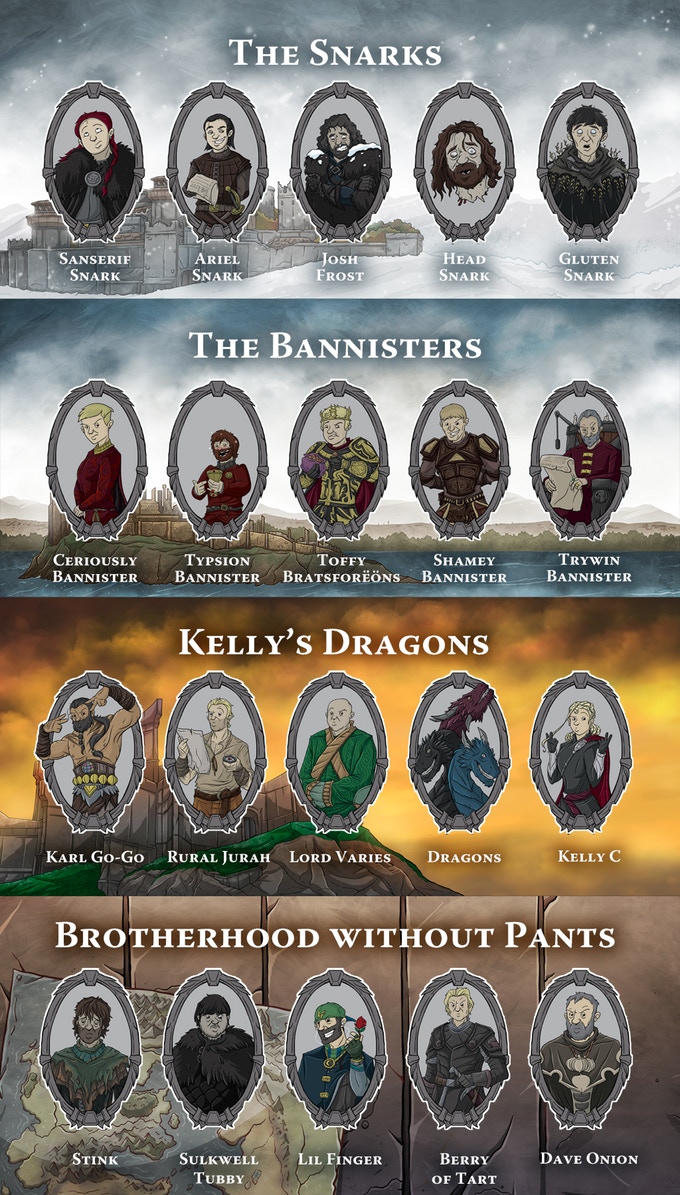
Gloom of Thrones combines the mystique and grandeur of Game of Thrones with the namesake card game’s twisted humor and clever gameplay. As each player takes control of a noble family, they endeavor to make them as miserable as possible to score points, and then kill them off when the time is right.

The transparent cards allow for all sorts of playing combinations as you torment and mistreat the parody characters. And naturally, you can derail the other players by causing nice things to happen to their characters. There’s really nothing quite like playing Gloom.

With 20 days to go, the game is fully funded and pushing onward toward stretch goals, so don’t miss out on this hilariously brutal spin-off.


Have any of these projects hooked you? Let us know which ones you’re supporting in the comments section below! And if there are any campaigns you’re supporting that we missed, let us know!

Thanks for visiting PuzzleNation Blog today! Be sure to sign up for our newsletter to stay up-to-date on everything PuzzleNation!

You can also share your pictures with us on Instagram, friend us on Facebook, check us out on TwitterPinterest, and Tumblr, and explore the always-expanding library of PuzzleNation apps and games on our website!
A Puzzle Game That Lets You Change the Rules of Puzzles!

[Image courtesy of Linux Game Consortium.]

Solving puzzles through different mediums can lead to unexpected and challenging solving experiences.

One advantage that video game puzzles have over their pencil-and-paper counterparts is that, while the paper puzzles are a one-stop shop for a puzzle experience, there’s no adaptation, no evolution, no development for the solver or chance to build upon what they’ve learned through multiple solves or repetition.

In video game puzzles, on the other hand, repetition is the name of the game. New skills and techniques are immediately tested by clever twists on established puzzles, so you’re never resting on your puzzly laurels.

For example, while discussing the classic puzzle platforming game Portal, my friend once described it as a game that reprograms your brain with each puzzle you solve, transforming alongside the player. (This is also a hallmark of many of the puzzle games offered by our friends at ThinkFun.)

[Image courtesy of Game Informer.]

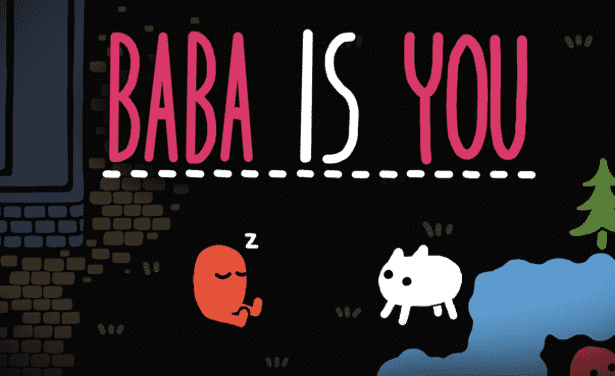
That sort of reprogramming is at the heart of the puzzle experience in a new game called Baba Is You.

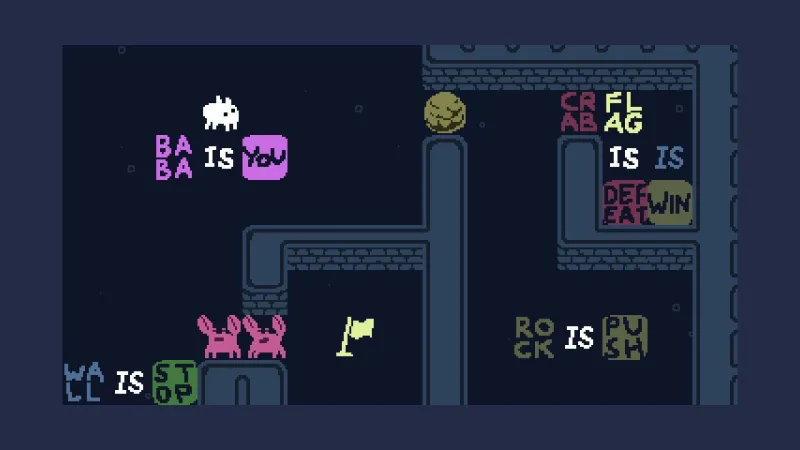
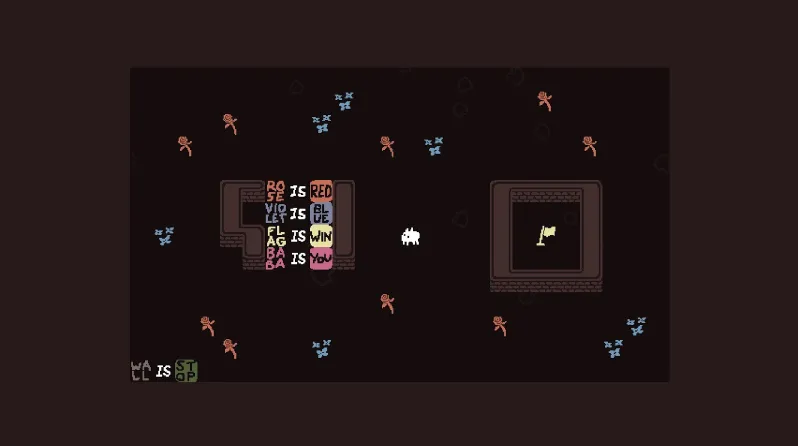
In Baba Is You, the gameplay consists of objects to move and manipulate, as well as word blocks that form rules for the game itself. You start off by being able to move Baba, a small rabbit-like creature, around obstacles, with the goal of reaching a golden flag. So, the word blocks read “Baba is you” and “flag is win,” which both tell you the starting rules and the goal.

[Image courtesy of Kotaku.]

By changing these word blocks, you change the rules, effectively reprogramming what you can do in each level.

Kotaku explains this concept well:

One clump might say “Baba is you,” which means Baba is the character you control. Another might say “Rock is push,” which means you can push rocks, or “Wall is stop,” which means you can’t walk through walls…

You rearrange individual words to solve the puzzles. There are usually multiple options, depending on where the words are placed. In the above example, you could remove “stop” from “wall” and pass through the barrier. You could attach “wall” to “is push” instead of “is stop” and push it out of the way. You could make yourself the wall by pushing the word “wall” before “is you.” Or you could make the wall the win condition and touch that instead of the flag.

[Image courtesy of Kotaku.]

So, essentially, you solve each puzzle by obeying the rules, changing the rules, and then obeying the new rules. And since puzzles are all about figuring out how to accomplish tasks by adhering to certain rules, this creates a fascinating new style of puzzle. It’s almost like improvisational comedy or Calvinball, except it’s not played for humor.

I don’t know that I’ve ever seen a puzzle game that lets you alter HOW you play as drastically and as simply as this. You literally make and break the rules here, depending on how clever you are.

Baba Is You is available for PC and Switch, and I look forward to seeing more diabolical puzzling like this in the future.


Thanks for visiting PuzzleNation Blog today! Be sure to sign up for our newsletter to stay up-to-date on everything PuzzleNation!

You can also share your pictures with us on Instagram, friend us on Facebook, check us out on TwitterPinterest, and Tumblr, and explore the always-expanding library of PuzzleNation apps and games on our website!
You Could Claim the Iron Throne in this Game of Thrones Scavenger Hunt!

The final season of HBO’s hit fantasy series Game of Thrones is fast approaching — the first episode of the 8th season airs April 14th — and HBO has gone all out to promote the end of the epic saga of the Starks, the Lannisters, Daenerys Targaryen, and the numerous other families and factions vying for the Iron Throne.

But as it turns out, they’re not the only ones hunting for the throne. Fans around the world have been puzzling out the locations of replica thrones hidden across the globe over the last week.

As news of this incredible scavenger hunt started to go viral earlier this week, four of the six thrones had already been located. Scattered across Europe were the first four thrones: Björkliden, Sweden; Puzzlewood, England; Atienza, Spain; and Beberibe, Brazil.

The Throne of Ice was yet to be discovered, and there were no hints yet as to the possible location of the sixth and final throne.

But as of yesterday, the Throne of Ice was found.

Tucked away in a small mountain town in the Canadian side of the Rocky Mountains, the Throne of Ice was discovered by Birgit Sharman and her husband Kevin in Tumbler Ridge, British Columbia — the first throne found outside Europe.

From an article on BGR:

HBO is taking the promotion pretty seriously, it seems. Two men wearing fur coats, presumably of the Stark clan, were waiting on the throne to be found and put a crown on Birgit’s head that she was allowed to keep and which she showed off via her Facebook page.

One throne remains to be found. But where? And what surprises await those who find it?

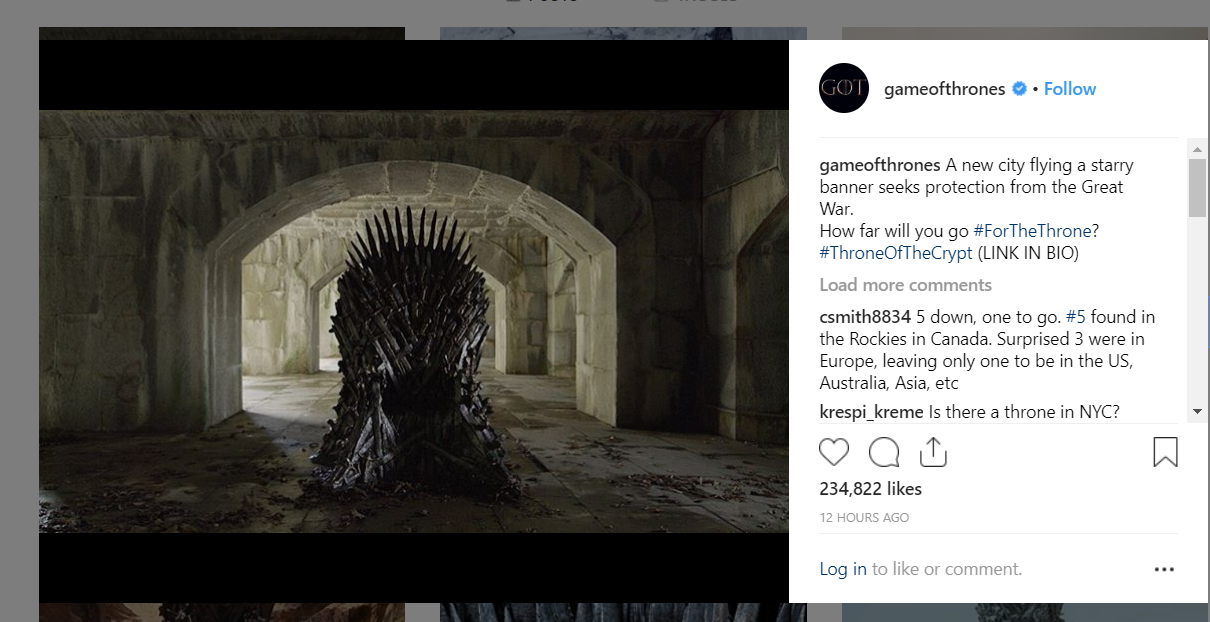
The Game of Thrones Instagram page offers this picture and hint:

Its location is unknown for now, but one thing is for certain: fans won’t soon forget this amazing moment when the show brought a little bit of Westeros to life.


Update: The sixth throne was found!

Located in Fort Totten Park, NY, the Throne of the Crypt will be left in place until April 1st, so if you’re looking for a killer photo opportunity, you’ve got it.

The Game of Thrones Twitter page posted this photo about half an hour ago to indicate the sixth and final throne had been found.


Thanks for visiting PuzzleNation Blog today! Be sure to sign up for our newsletter to stay up-to-date on everything PuzzleNation!

You can also share your pictures with us on Instagram, friend us on Facebook, check us out on TwitterPinterest, and Tumblr, and explore the always-expanding library of PuzzleNation apps and games on our website!

A New Twist on a Classic Twisty Puzzle?

The Rubik’s Cube is an instantly recognizable icon of the puzzle industry. That simple pattern of colors on a 3×3 grid, the twisty turny puzzly challenge… it’s unmistakable.

Of course, that hasn’t stopped Rubik’s Cube devotees and puzzle designers from experimenting with new variations on this iconic idea. Just in the last few years, we’ve seen everything from a solvable Google Doodle to a smartphone-enabled solving tool, from self-solving cubes to 3D-printed designs from superfans. Heck, we’ve seen cubes the size of buildings! (We’ve even seen them animated!)

But we’ve never seen a Rubik’s Cube quite like this.

[Image courtesy of Gearbrain.]

Say hello to the Rubik Tilt, a $25 handheld Rubik-style twisty puzzle that mixes button pressing with rotating, turning, and tilting the device itself in order to manipulate a virtual Rubik’s Cube on its game screen.

The buttons on the back of the controller allow you to select which row or column of the Cube is being shifted by your real world maneuvering.

Now, you may very well be saying, “So what? What does the Rubik Tilt do that you can’t get from playing with an actual Rubik’s Cube?” And that is a very fair question.

And the designers at Super Impulse did think of that; yes, the Rubik Tilt does have one trick up its sleeve that the original Cube does not.

[Image courtesy of Gizmodo.]

It’ll offer you hints if you get stuck.

Yes, when the game detects a lapse in solving — such as when you’re stumped about how to proceed next — it offers hints on which rows and columns of the puzzle to focus on. Although the puzzle won’t go as far as walking you through solving a Cube, it does provide a little pushing and prodding to keep you going.

When you factor in that the game also keeps track of your solving time, you have a Rubik’s-solving experience that not only encourages you, but actually teaches you to be better at solving this classic, diabolical brain teaser.

And, like the best puzzles, it rewards determination, rather than doubling down on frustration.

It’s certainly a different take on the Cube we all know, but it remains a worthwhile experiment, a proud new entry in the grand tradition of puzzles that teach us to be better solvers.


Thanks for visiting PuzzleNation Blog today! Be sure to sign up for our newsletter to stay up-to-date on everything PuzzleNation!

You can also share your pictures with us on Instagram, friend us on Facebook, check us out on TwitterPinterest, and Tumblr, and explore the always-expanding library of PuzzleNation apps and games on our website!