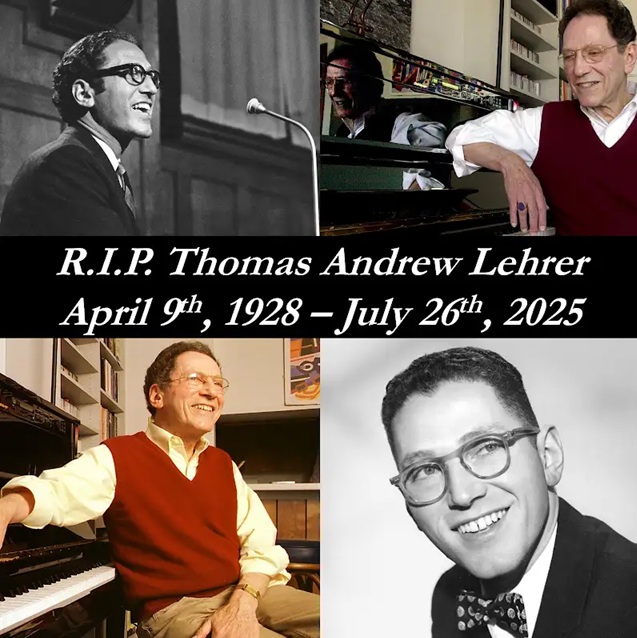
Farewell, Tom Lehrer.

The world of puzzles and games is larger than constructors and game designers. There are artists, writers, editors, wordsmiths, hosts, musicians, and influences that help shape puzzles and games in so many different ways. Their efforts enrich and popularize these beloved pastimes, contributing to the world by celebrating wordplay, creativity, and nerdy pursuits.

And sadly, the world grew a little less witty, a little less clever, and a lot less bold and outspoken about so many important topics when Tom Lehrer passed away a few days ago.

It’s hard to know where to begin.

How do you describe the cultural influence of a man whose songs still delight, inform, and push boundaries today, even though he wrote most of them over sixty years ago?

How do you describe a successful musician who walked away from public performance after three brilliant albums — thirty-seven songs, each an intricately-crafted dissection of some aspect of culture, science, or current events, often as poignant and sharp-tongued as they were hilarious — and spent the bulk of his life as a teacher and college professor instead?

How do you describe the genius of a man for whom wordplay flowed as easily as scientific lingo or political commentary, a man who could make you laugh (and think, really think) about nuclear annihilation, questionable post-war government programs, or even the Catholic Church itself?

His influence on pop culture can’t be overestimated. Across generations, his songs educated and inspired, and his legacy is bulletproof. He created songs for The Electric Company, Square One TV, and That Was The Week That Was. (Those shows were decades apart!)

He inspired performers like “Weird Al” Yankovic, and I think his fingerprints are unmistakable on other hilarious and educational projects, like the songs of Randy Rogel for Animaniacs. (Trust me, you can’t listen to “the Multiplication song” from Animaniacs and NOT think of Lehrer’s “New Math”.)

Tom retired from live performance in the late 1960s, having felt like he’d said everything he wanted to say with his music. (Plus, as he famously pointed out, “political satire became obsolete when Henry Kissinger was awarded the Nobel peace prize.”)

But his songs wouldn’t be denied.

Dr. Demento’s radio show brought Lehrer’s work to new ears in the 1970s, 80s, and 90s, and Honest2Betsy has brought him to yet another generation’s attention with her videos over the last few years.

His songs are timeless. “The Elements” alone has appeared in Better Call Saul, NCIS, Gilmore Girls, and The Big Bang Theory. (Not to mention Daniel Radcliffe’s famous rendition of the song on The Graham Norton Show, where he called Lehrer his hero. This actually led to Radcliffe starring in the film Weird: The Al Yankovic Story.)

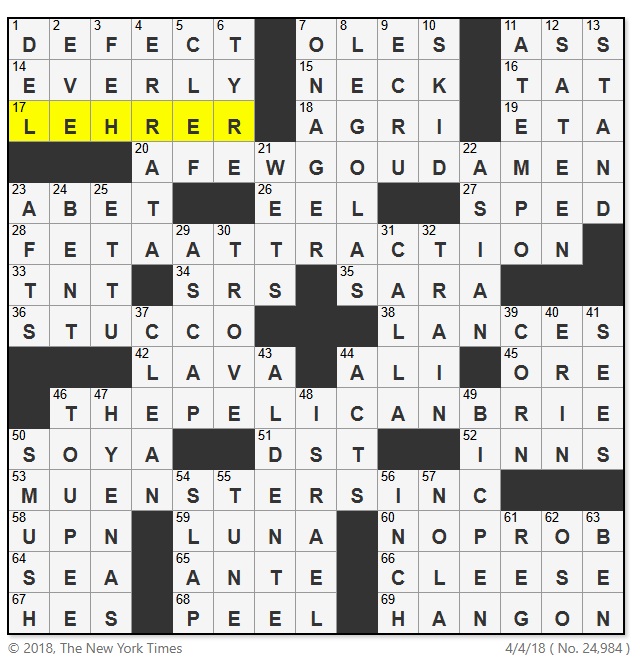
Speaking of “Weird Al,” his New York Times crossword puzzle with constructor Eric Berlin namedropped Tom as part of the grid fill in this pun-heavy collaboration:

And it is a love of wordplay that sparked this tribute today.

Lehrer’s work is absolutely riddled with clever puns, comedic craftsmanship, and playing with the listener’s expectations: all things that great crossword cluing employs.

You can’t listen to songs like “Silent E” or “Without an S” and NOT imagine clues or themes that Lehrer’s linguistic legerdemain could inspire.

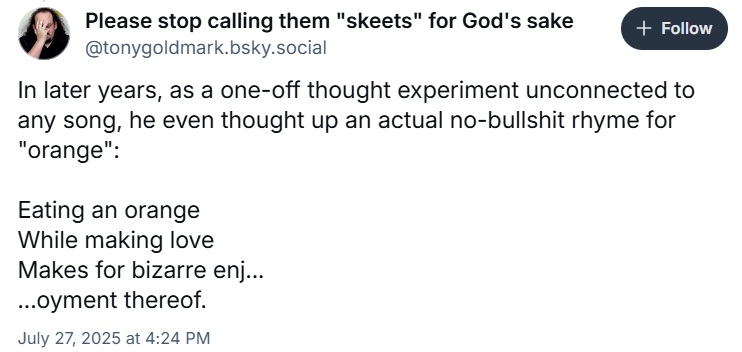
Not to mention this gem:

There’s a playfulness there, paired with technique, creativity, and an absolute willingness to bend conventions to their breaking point in order to make something new. How can you not love it?

But wordplay, commentary, and scientific and mathematical literacy weren’t Lehrer’s only gifts to the world.

He claimed to have invented the jello shot while in the military (to skirt rules about alcohol consumption). He wrote the song “Don’t Major in Physics,” which would have been good advice to me in freshman year of college, had I cared to listen.

Image courtesy of warhistoryonline.

And he also made the incredible gesture in 2022 of transferring the music and lyrics for all the songs he had ever written into the public domain. He relinquished the copyright and performing/recording rights for his songs as well, making his music and lyrics free for anyone to use. Downloadable lyric and music files are available on his website.

His statement releasing all his works into the public domain concluded with this note: “This website will be shut down at some date in the not too distant future, so if you want to download anything, don’t wait too long.”

For now, at least, the website remains online.

And it seems so apropos that the man who walked away from music decades ago to share his love of mathematics, science, and teaching with others is also the man who would happily sign away the rights to his music to enrich the lives of others once again.

The humanities and the STEM fields both owe Tom Lehrer a debt that can never be repaid.

The world was blessed with his presence for 97 years, and I have no doubt that his words, his music, and the forceful spirit that infused both will be around for many many years to come.

Farewell, Tom. Thanks for warning us about Shakespeare.

Oh, and for this lovely little ditty:

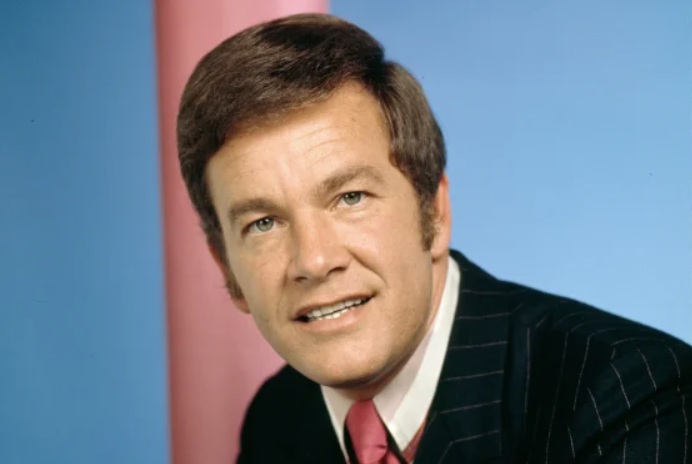
Farewell, Wink.

Image courtesy of NBC News.

In the pantheon of game show hosts, there are names, there are stars, and there are icons.

Wink Martindale deserves to be called an icon.

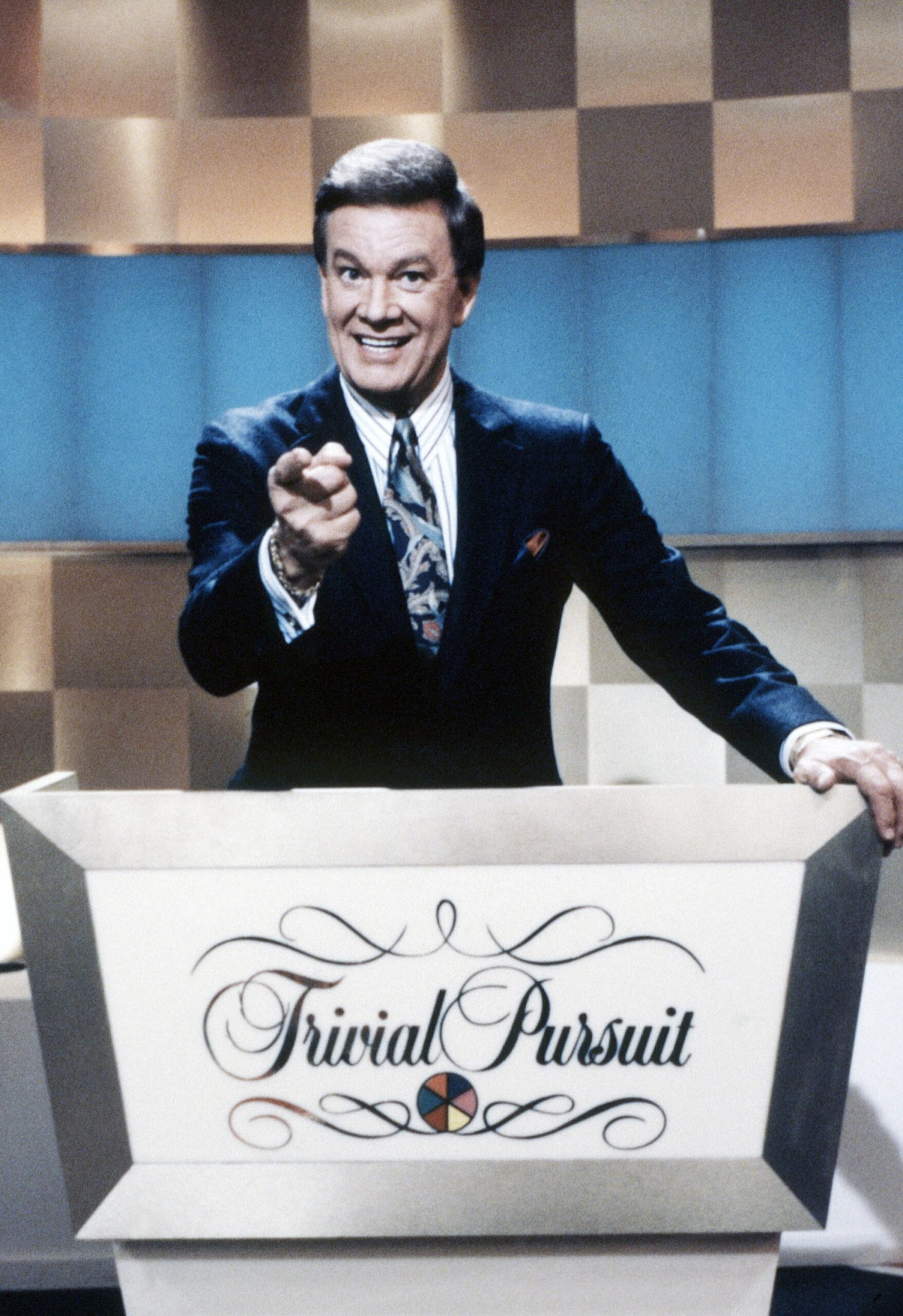
He was the host of twenty-one different game shows across a career spanning more than 60 years, including Debt, Tic-Tac-Dough/The New Tac-Tic-Dough, Gambit, High Rollers, and my personal favorite, Trivial Pursuit. (I remember watching and playing along on days I was home sick from school.)

But it may come as a surprise that he contributed far more than memorable game show moments to pop culture.

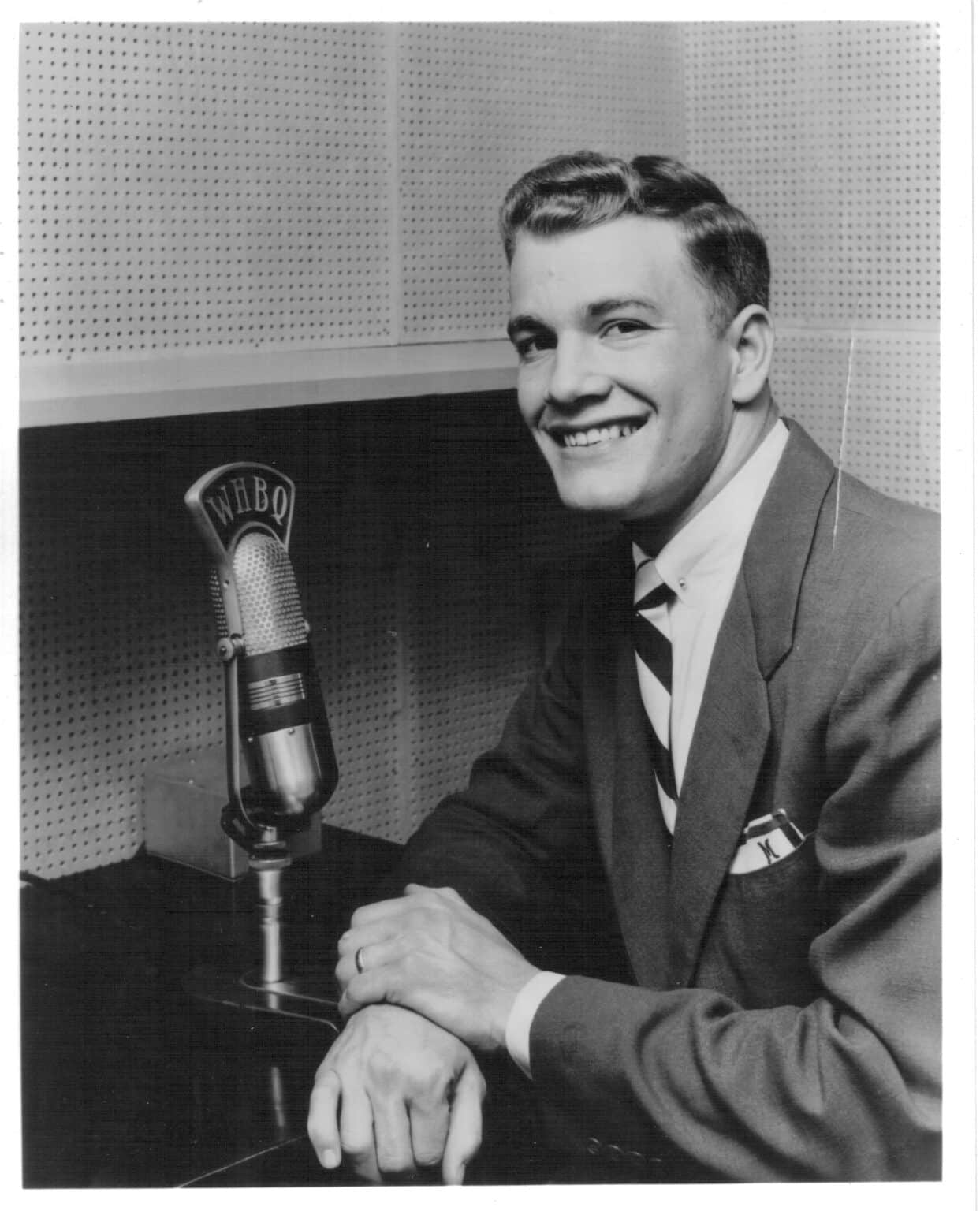
As a disc jockey in the 1950s, he gave Elvis Presley a lot of airtime, and Elvis rewarded Wink’s enthusiasm and loyalty with his first interview, which was recorded during an episode of Top Ten Dance Party. (Col. Parker was apparently fuming over it!)

His spoken-word song “Deck of Cards” sold over one million copies in 1959, and he made the top ten of the Billboard Hot 100 Chart.

He continued to work in radio all throughout his life, spanning local disc jockey work all the way to appearances on Sirius Radio in the 2010s. His television appearances were equally varied, running the gamut from Your Hit Parade to The Howard Stern Show, including commercials for Orbitz and KFC.

Wink was awarded a star on the Hollywood Walk of Fame in 2006.

He also has a YouTube channel where he chronicles the history of game shows. You should absolutely check it out. (This episode debuted a mere two hours before he passed.)

On a personal note, I found Wink to be an immensely gracious and giving individual.

Back in 2013, I was only a year into writing what was then known as PuzzleNation Blog, and still finding my feet. I had sent out dozens upon dozens of interview requests to puzzly people, celebrities, authors, and more. One of those many requests went to Wink Martindale Productions.

I received a reply the very next day. He was happy to do so.

He politely corrected me about the number of game shows he had hosted, pointing out it was “one more than the great Bill Cullen.” (Sorry, Hollywood Reporter and MSN, who claimed it was 20, not 21.)

His answers were short and to the point, but honest and charming. He shared that his favorite memory from his career was the day his agent told him he’d be hosting his first game show, What’s This Song, for NBC. “Like your first car or your first house, there is nothing that can compete with THE FIRST anything!”

He didn’t know me or anything about the blog, and yet he took time from his still-busy schedule to give us a boost. It was a kind gesture I’ve never forgotten.

It gives me comfort to know he was surrounded by family and loved ones at the end.

Farewell, Wink. Thank you for your humor and heart and all those memories.


The Strong National Museum of Play did a wonderful writeup on Wink’s life. It’s absolutely worth a read.

Farewell, Ann.

The puzzle world is a relatively small one, and sadly, it grew smaller a few weeks ago, as friend of the blog Ann Santoro passed away.

Born July 26, 1936, Ann’s love of language and learning was evident throughout her life. She earned a Bachelor’s degree from the University of Pennsylvania and a Master’s degree from Cornell. She became a teacher herself, specializing in both English and Latin.

Penny Press’s owner Peter Kanter remembers discussing Latin with Ann:

I was always fascinated and impressed by Ann’s knowledge of the classics. She translated ancient Greek to Latin, and back. For a while I was on a Latin kick based on Ann’s example. Ann recommended a Latin primer and told me I should just get at it. She had no airs or pretensions about her hobby or her erudition. She made everything very matter of fact. She also told me her favorite translator of Homer. I think it was Lattimore or Lombardo.

I made a few half-hearted gestures at finding a Latin teacher; I got the Latin primer and I got the Lattimore and Lombardo translations. But I never did much with them. In the end I concluded that that was best left to Ann!

After her teaching career, Ann went on to work for Penny Press, where she was a fixture for decades, rising to the title of Senior Editor.

In fact, she was with the company for so long that there was a bit of a debate regarding when she actually started! Her “official” hire date is marked as 11/8/1976, but it’s more likely that she was freelancing for the company before then. I firmly believe she started back in 1974, meaning she spent fifty years coordinating and correcting pretypes for the company, shaping generations of puzzle editors.

And her pretypes were the stuff of legend. When she wasn’t schooling me on the differences between transitive and intransitive verbs, she was demanding verification of any slang or phrases she couldn’t find in reputable sources.

As Annamarie Spero of Penny Press pointed out:

Ann knew the rules of grammar forward and back. As a senior editor, she didn’t just point out an error; she explained why it was wrong so that editors could learn from mistakes and hone their skills, the hallmark of a good teacher.


In one of my favorite interactions with her, where we disagreed on the spelling of DeMille (Agnes de Mille uses two words, while Cecil B. DeMille uses one), she grew so exasperated with my spelling that she provided the incredible notation “SEE HIS TOMBSTONE.”

I looked up his tombstone and, lo and behold, it backed up my spelling, not hers. (I still have the “SEE HIS TOMBSTONE” note on my bulletin board.)

Of course, being such a stickler for grammar sometimes caused problems. Punny clues that played with language (and wandered outside traditional grammar) often got corrected by her in pretypes… until they were no longer punny OR effective. But with a stet and a chuckle, you moved on with your corrections, inevitably taking a LOT of Ann’s notes to heart.

One correction (regarding actor Emil Jannings) actually lead to a long friendship, as Annamarie Spero explains:

I met the cape-wearing, five-foot-tall powerhouse senior editor during my first year at Penny Press. She reviewed my blurbs for the Word Seek line of puzzle magazines. On one particular occasion, she and a long-time crossword editor were discussing a clue/answer that involved actor Emil Jannings, who co-starred with Marlene Dietrich in 1930’s “The Blue Angel.”

The editor was trying to think of his name and I said it, pronouncing it “AY-mill YAN-ings.” The editor corrected me, pronouncing it “EE-MEAL JAN-ings.” Ann then spoke up and said to the editor, “No, she’s [meaning me] right. It’s AY-mil YAN-ings. He was German.” (And that was the German pronunciation.) Ann was impressed and at that moment, I gained her respect, and we became friends.


Ann balanced her no-nonsense approach to pretypes with a love of learning and new experiences outside of work. In addition to her Latin studies, she shared Chinese cooking classes and jewelry making courses with crossword guru Eileen Saunders, and enjoyed sharing her vast knowledge of classical music with others.

She was also an early adopter of new technology! When e-books emerged into the market, Ann switched from a wholly physical reference library to a mostly digital one, and followed that by digitizing her CDs onto a music server.

Of course, this also led to a misunderstanding in one of my pretypes, when Ann couldn’t verify one of my clues… and turned to Urban Dictionary for explanation. Through tears of laughter, I explained why Urban Dictionary might not be the best resource for verification, and from that point on, Ann stuck to the more legitimate recommendations from Onelook.com.


Ann was uncompromising, fiercely opinionated, and keenly observant of the world around her. She made every puzzle magazine she touched better, and she educated a lot of solvers and editors alike along the way.

It’s so easy to imagine that she carried all the answers you’d ever need in her ubiquitous giant purse. Or, as Peter Kanter hoped, a copy of her favorite translation of Homer’s works.

There will truly never be another Ann Santoro. Ann, we’ll miss you.


Please forgive the delay in finalizing this post.

It took longer than usual to write, not only because I wanted to make sure I captured as much of Ann’s unique spirit as possible, but also because I wanted to reach out to friends and colleagues, both past and present, to share their thoughts about Ann.

Thank you to all the kind folks at Penny Press and beyond who shared their memories and anecdotes of Ann with me, and all of you, today.

Farewell, Stephen.

StephenSondheim-2020-GettyImages-50314607

[Image courtesy of Vanity Fair.]

Most people know him as a titan of Broadway and the American stage, the composer and lyricist behind dozens of iconic works, spanning decades. West Side Story. Gypsy. Into the Woods. A Funny Thing Happened on the Way to the Forum. (My personal favorite? Assassins.)

Even as someone with a degree in theater, I don’t feel qualified to discuss or summarize his impact on the stage. It’s monumental. Incalculable. Iconic.

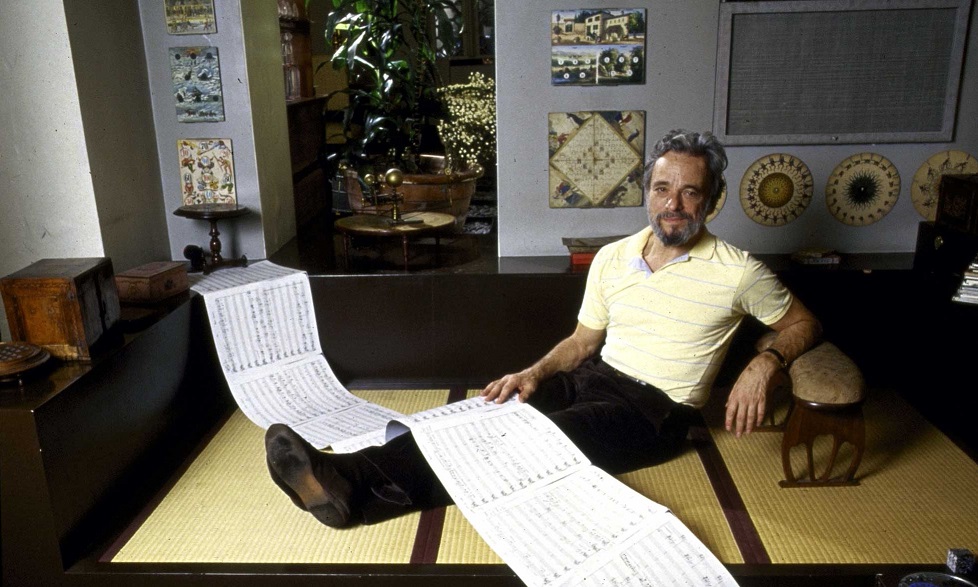
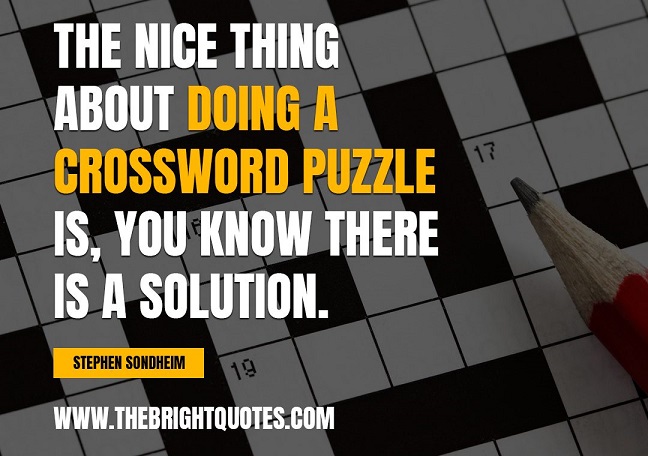
But as a puzzle enthusiast, I do feel qualified to discuss his influence in that realm. You see, Stephen Sondheim occupies a curious space in the history of puzzles.

sondheim

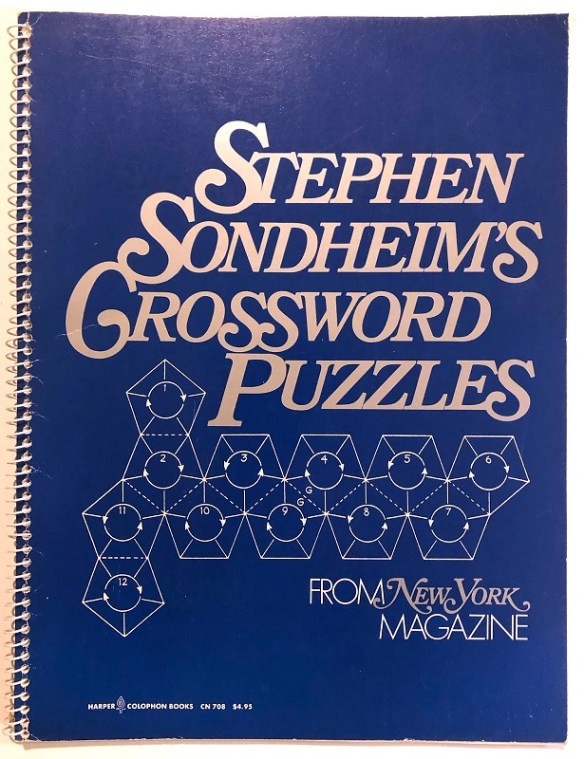
He created cryptic / British-style crosswords for New York Magazine in the late 1960s, helping to introduce American audiences to that devious and challenging variety of crosswords.

In fact, he famously wrote an article in that very same magazine decrying the state of American crosswords and extolling the virtues of cryptic crosswords. (He even explained the different cluing tricks and offering examples for readers to unravel.)

Sondheim was an absolute puzzle fiend. His home was adorned with mechanical puzzles, and he happily created elaborate puzzle games. Some of them were featured in Games Magazine! In his later years, he was also an aficionado of escape rooms. (Friend of the blog Eric Berlin shared a wonderful anecdote about Sondheim here.)

uplifting-things-crossword-the-nice-thing-about-doing-a-crossroad-puzzle-is-you-know-the-answer-1080x760

He also represents another link in the curious chain that seems to connect musicians with crosswords. Prominent constructors like Patrick Blindauer, Brian Cimmet, and Amanda Rafkin, as well as top crossword tournament competitors like Dan Feyer and Jon Delfin also have musical backgrounds.

In the crossword documentary Wordplay (and quoted from the article linked below), former New York Times Public Editor Daniel Okrent mentioned why he felt that musicians and mathematicians were good fits as crossword solvers:

Their ability to assimilate a lot of coded information instantly. In other words, a piano player like Jon Delfin, the greatest crossword player of our time, he sits down and he sees three staffs of music and he can instantly play it. He’s taken all those notes and absorbs what they mean, instantaneously. If you have that kind of mind, and you add it to it a wide range of information, and you can spell, you’d be a really great crossword puzzler.

Sondheim certainly fits the bill.

He will forever be remembered for his musical creations, and that legacy far overshadows his work in puzzles. But as someone who opened the door to a new brand of puzzle solving for many people, Sondheim will also have the undying loyalty, respect, and admiration of many puzzlers around the world.

We wholeheartedly include ourselves in that crowd of admirers.

Farewell, Stephen. Thank you.


   dailypopwsicon

Treat yourself to some delightful deals on puzzles. You can find them on the Home Screen for Daily POP Crosswords and Daily POP Word Search! Check them out!

Thanks for visiting PuzzleNation Blog today! Be sure to sign up for our newsletter to stay up-to-date on everything PuzzleNation!

Farewell, Maki Kaji.

maki kaji 1

When you get right down to it, the puzzle world isn’t all that big. There are a few names that everyone knows, and plenty of names that people should, but generally don’t. And sadly, too many of those names aren’t celebrated until after they’re gone.

Maki Kaji is one of those names you should know.

He passed away recently, and different articles and obituaries called him everything from “puzzle enthusiast” to “Sudoku creator,” but the title he most deserves is the one he put on his business cards: Godfather of Sudoku.

Honestly, he’s one of the three most important people in the history of Sudoku.

Howard Garns is credited with creating Number Place for Dell Pencil Puzzles and Word Games in May 1979 (though a French variant of the puzzle appeared in the newspaper La France in the 1890s). Wayne Gould stumbled upon Sudoku puzzles in a magazine, then designed a generation program and sold it to the Times in London, kickstarting the craze in the UK that spread elsewhere.

maki kaji 2

[Maki Kaji at Brazil’s first national Sudoku competition in São Paulo in 2012.]

But it was Maki Kaji who championed the puzzle all over, using it in his puzzle magazine Nikoli starting in the early 80s, then taking advantage of the UK boom and selling it in dozens of countries. (Gould didn’t have the resources, so many newspapers and publishers came to Maki Kaji for them.)

The name Sudoku came from him. (In American puzzle magazines, it was Number Place or To the Nines.) Originally the puzzle was called Suuji wa dokushin ni kagiru, or “numbers should be single,” before taking the suggestion to shorten it to Sudoku.

Of course, despite his close association with Sudoku, Maki championed puzzles in all forms. He founded Nikoli (also known as Puzzle Communication Nikoli) with two school friends in 1980, four years before adding Sudoku to its roster of puzzles. It was Japan’s first puzzle magazine!

maki kaji 3

One of the goals of Nikoli was to feature what they called “culture independent” puzzles, meaning puzzles that didn’t rely on a specific language or alphabet. (Talk about accessibility!)

“When we create our puzzles, we want people to enjoy them and not feel stressed by them,” he said.

Because of this culture-independent style, Nikoli was famed for its many logic puzzles, because they relied less on words and more on numbers, symbols, and elegant grid positioning. Popular puzzles included familiar ones like Sudoku and Kakuro, as well as less familiar puzzles like Nurikabe and Hashiwokakero.

nikoli puzzles

“I don’t want to just be the godfather of Sudoku,” Maki said. “I’d like to spread the fun of puzzles until I’m known as the person who established the puzzle genre in Japan.”

One of his key tools was a section in Nikoli that invited readers to submit their own ideas for puzzles. It quickly became the most popular part of the magazine. Readers submitted new puzzles, which other readers then refined and expanded on. Nikoli is credited with introducing hundreds of new logic and number puzzles to the world through this puzzle-loving fan-fueled pipeline.

Of course, even the Godfather of Sudoku ventured into crosswords from time to time. In fact, in 2017, it was reported that he published the world’s largest ever crossword, with 59,365 across clues and 59,381 down clues on a printed grid 30m long, kept in a scroll.

Go big or go home, I guess.

maki kaji 4

[Constructor Peter Gordon (and his Sudoku license plate) with Maki.

Maki stepped down as president of Nikoli just last month, and the company released this statement in response to his passing:

Kaji-san came up with the name Sudoku and was loved by puzzle fans from all over the world. We are grateful from the bottom of our hearts for the patronage you have shown throughout his life.

But, naturally, it takes a puzzler to truly honor a puzzler, and I think Thomas Snyder (aka Dr. Sudoku, no slouch himself when it comes to the famed number puzzle) offered the perfect tribute on his Art of Puzzles website:

A wordoku puzzle dedicated to Maki Kaji.

snyder wordoku

The puzzle world is a far richer and more varied place thanks to the creativity, hard work, and passion of Maki Kaji. You probably didn’t know his name before. But hopefully, you’ll remember it now.

Farewell, Maki. Thank you for bringing so many new eyes to the world of puzzles.

[Source links: Kotaku, The Guardian, Wikipedia.]


dailypopwsicon

Have you checked out our special summer deals yet? You can find them on the Home Screen for Daily POP Crosswords and Daily POP Word Search! Check them out!

Thanks for visiting PuzzleNation Blog today! Be sure to sign up for our newsletter to stay up-to-date on everything PuzzleNation!

Farewell, Alex.

For the last 18 months or so, puzzlers, trivia fans, and game show enthusiasts have followed the story of Alex Trebek, pop culture icon and long-time host of Jeopardy! after his diagnosis with Stage IV pancreatic cancer in March of last year.

Through ups and downs, updates and hopeful moments, and even a brief boom period for the show during the reign of James Holzhauer, the well-being of this beloved figure was first and foremost in the minds of many.

Sadly, Alex’s battle came to an end, as he passed away early Sunday morning.

During his treatment, Alex was honest and open with fans and well-wishers, sharing both his determination and his struggles. Heartbreakingly honest, at points. But his humor and spirit remained constant fixtures.

Back when he first announced his diagnosis, Trebek stated, “I plan to beat the low survival rate statistics for this disease,” then quipped, “I have to because under the terms of my contract, I have to host Jeopardy! for three more years.”

He leaves behind a lasting legacy of four decades of entertainment, grace, and class. His tenure on Jeopardy! began on September 10, 1984 with the debut episode, and in 2014, he was honored by the Guinness Book of World Records for hosting the most episode of a game show, at that point reaching the 6,829 episode mark. He is a 7-time Daytime Emmy Award winner, as well as a Lifetime Achievement Award recipient.

Of course, his reach extends far beyond that. He’s an instantly recognizable figure. He was parodied on Saturday Night Live, he joyfully lampooned himself after a recurring bit on Conan O’Brien’s talk show, and appeared on shows as varied as How I Met Your Mother, Ru Paul’s Drag Race, and Orange is the New Black. He even has his own collectible Funko Pop! figures.

alextrebekxfiles

[Image courtesy of IMDb.]

My personal favorite Trebek moment is when he showed up unexpectedly in an episode of The X-Files, playing one of the mysterious Men in Black. It’s unclear if he was playing himself, though. As Agent Scully states, “Mulder didn’t say it was Alex Trebek, it was just someone who looked incredibly like him.”

Of course, one cannot look back on the legacy of Alex Trebek without acknowledging his lifelong dedication to philanthropy and giving back. In addition to his work for organizations like World Vision Canada and the USO, he donated to land conservation efforts, homeless shelters, and the University of Ottawa. He also donated his time to educational efforts like the National Geographic Bee and the Great Canadian Geography Challenge.

Although we are saddened by his passing, we are grateful to have known him, to have welcomed him into our homes for decades, to have bragged to our friends about answering the Final Jeopardy! question, and, more often than not, to have dropped our jaws in bafflement at the mad trivia fiends he brought into the spotlight.

When it comes to figures in the world of puzzles and games, there are few as iconic as Alex Trebek.

Farewell, Alex. Thank you for everything.


Thanks for visiting PuzzleNation Blog today! Be sure to sign up for our newsletter to stay up-to-date on everything PuzzleNation!

You can also share your pictures with us on Instagram, friend us on Facebook, check us out on TwitterPinterest, and Tumblr, and explore the always-expanding library of PuzzleNation apps and games on our website!