PuzzleNation First Look: Everything Board Games Magazine

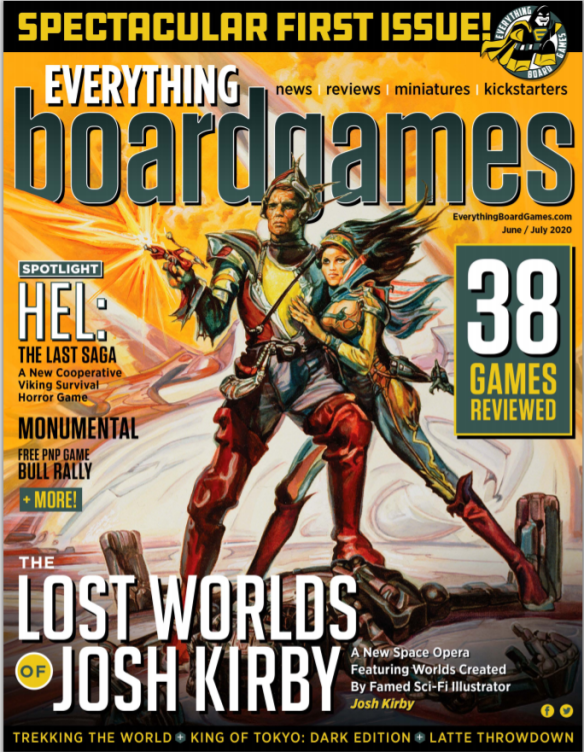
cover

The world of board games is expanding and evolving in new ways every day. Encompassing everything from traditional board and dice games to card games, roleplaying games, and more, we’re talking about an ever-expanding universe of gameplay possibilities.

So when I heard about a new publication called Everything Board Games Magazine, I simply had to investigate. Based on the ambitiousness alone, I was intrigued.

The debut issue of the magazine is now available for free on their website, and I’ve gotta say… I’m pretty impressed.

It’s 82 pages, a full-color reading experience that is vibrant, visually engaging, and absolutely jam-packed with content. I’m pretty plugged into the board game world, and I discovered half a dozen games I knew nothing about.

hot shots

After a few pages of ads, we’re greeted with a letter from the editor, and you immediately get a sense of the passion and excitement that permeates every page of the magazine:

Thank you for taking the time to read through the first ever issue of Everything Board Games Magazine! We know there are a lot of voices vying for your attention in the wonderful world of board games. We’ve strived to produce something that will bring value and joy to the gamer in every walk of life. Our team of board game fanatics have scoured the wide-world of gaming to bring you a diverse and interesting selection of articles, interviews, game reviews, previews and more! It is our hope and desire to connect with you once every two months, filling your mind with gaming pleasures.

Every piece in the magazine — whether it’s a game review, informational article, or interview — is loaded with enthusiasm. The writing crackles with excitement, and every contributor clearly loves the world of board games.

And honestly, in a world where a lot of genre-focused content seems to drip with sarcasm and know-it-all condescension, it’s refreshing to read pieces full of sincerity and affection, even when offering constructive criticism.

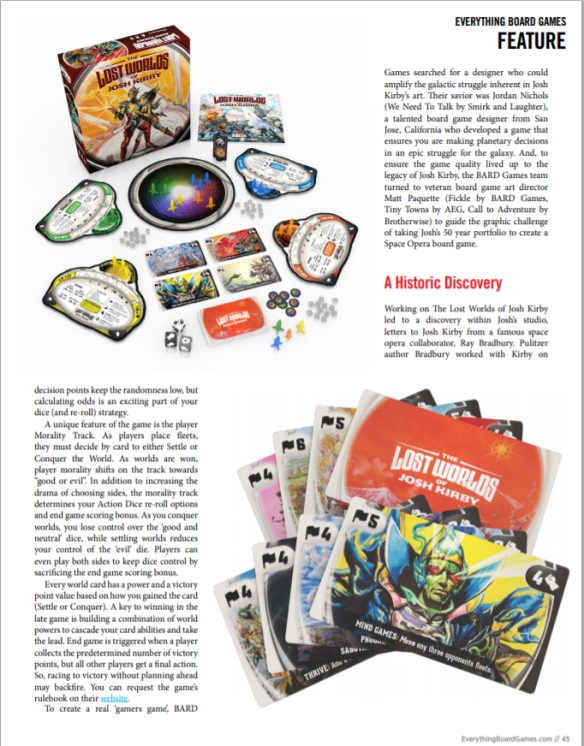
The magazine has teasers for upcoming games and Kickstarter campaigns, loads of reviews (though many reviews are just links to the full reviews on their website), as well as interviews about hobby gaming, board game design, running a board game cafe, and more.

Giveaways, polls, board game art, a bi-monthly top 5 games countdown… every page is packed with content.

preview

And every last page is interactive. Links with more information, links to websites, links for ads, links for email, links to contribute or suggest content or offer feedback. Interactive everything. (And thankfully, no auto-play ads or videos or audio clips to spoil the experience.)

In this first issue alone, they featured games based on history, monsters, latte art, the golden age of sci-fi, theme parks, mythology, war, painting, and crime-solving.

They even managed to throw in a free print-and-play stock trading game AND a free RPG adventure for Dungeons & Dragons.

Aside from a few typos here and there, the debut issue of Everything Board Games Magazine was a brisk, engaging, thoroughly enjoyable read. The only bad thing is waiting two months for the next one.

You can check it out and sign up for your free subscription here.


Thanks for visiting PuzzleNation Blog today! Be sure to sign up for our newsletter to stay up-to-date on everything PuzzleNation!

You can also share your pictures with us on Instagram, friend us on Facebook, check us out on TwitterPinterest, and Tumblr, and explore the always-expanding library of PuzzleNation apps and games on our website!
NBC: Novel Board-game Content

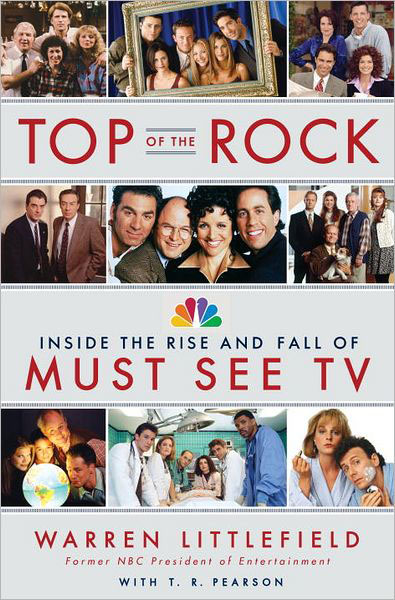
book rock

By the late 2000s and early 2010s, NBC’s Must See TV Thursday lineup was a thing of the past, but they were still putting out quality comedy content. My Name Is Earl, The Office, Community, Scrubs, Parks and Recreation, and 30 Rock all had loyal followings.

And you’d be surprised how much puzzle and game content ended up on those shows.

The Office featured in-house Olympics and betting games, as well as a Da Vinci Code-esque prank. Community had two Dungeons & Dragons-inspired episodes (which I should really cover at some point).

But those last two shows — Parks and Recreation and 30 Rock — both featured made-up games that either spoofed or were inspired by modern board games.

(Yes, we’ve previously covered the Valentine’s Day scavenger hunt from Parks and Rec, but there were two other scavenger hunt moments, as well as the many game references made by the character Ben Wyatt.)

Parks and Recreation had The Cones of Dunshire, and 30 Rock had Colonizers of Malaar. Both of these games are much more elaborate takes on Settlers of Catan, a board game about resource management that is considered one of the top titles in modern board games.

In one episode of 30 Rock, executive Jack Donaghy is struggling with his position, given that NBC is under new ownership with Kabletown, and he finds refuge in a game of Colonizers of Malaar with the writers for comedy show TGS.

Jack believes his business acumen will make the game an easy victory, only to find the play experience strangely similar to his current problems at work. He flees the game for some fresh air.

Later, Jack returns to the game, inspired. He makes a seemingly ill-advised move — playing a fire card in a desert wasteland — that turns the game on its head. The fire turns all the sand into glass, a much-needed resource, and suddenly he’s back in control.

His success in the game inspires him to do the same with his new employers, and Jack leaves, reinvigorated.

The game itself allowed for a few silly throwaway lines, but Jack’s gaming experience was a clever way to allow him to reach rock bottom and rebound. Like many newcomers to a game, he struggled, found his way, and later triumphed, his day improved by playing the game.

Plenty of board game fans have had similarly joyful experiences.

Colonizers of Malaar, as far as we can tell, is a marketed game in the 30 Rock universe. The Cones of Dunshire from Parks and Recreation, on the other hand, is created by character Ben Wyatt and initially treated as a mistake, a nonsensical result of his boredom and frustrations.

The game becomes a running gag in the show. Ben leaves it as a gift at an accounting firm that he has been hired by (and walked away from) several times.

Later, we find out the game has been produced, and Ben stumbles across it when dealing with a dotcom company. He mentions that he invented it, but is shrugged off. He then proves not only his gaming skill but his authorship of the game when he beats the dotcom bosses in a tense playthrough.

It’s mentioned once that a gaming magazine called Cones of Dunshire “punishingly intricate,” a point that makes Ben proud.

Part of the fun of Cones of Dunshire is that the viewer never really understands what’s going on, so supposedly dramatic moments can be played for laughs. (I also appreciate that the name of the game is basically a fancy way of saying “dunce hat.”)

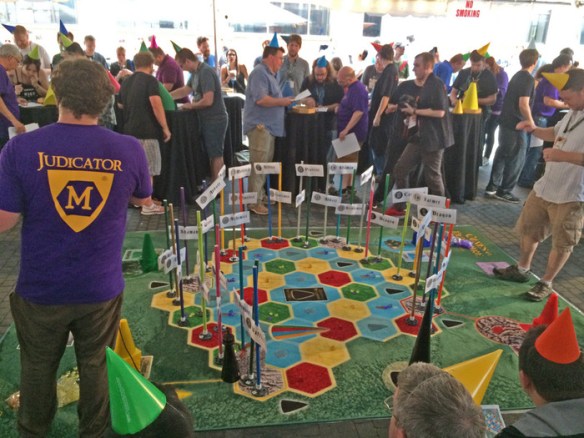
And, in the sort of cyclical storytelling that could only happen in a nerdly pursuit like board games, the company that made Settlers of Catan — Mayfair Games — produced a giant version of the game as part of a charity event at GenCon.

2783642-2767076242-563bb

A Kickstarter campaign for a limited run of the game was launched twice, with copies costing $500 due to the insane complexity and number of pieces for the game, but it ultimately failed to reach its goal.

Nonetheless, these two fictional games made an impact on both the characters of the show and the fans as well. What more could you ask for?


Thanks for visiting PuzzleNation Blog today! Be sure to sign up for our newsletter to stay up-to-date on everything PuzzleNation!

You can also share your pictures with us on Instagram, friend us on Facebook, check us out on TwitterPinterest, and Tumblr, and explore the always-expanding library of PuzzleNation apps and games on our website!

The King of the Monsters Rampages Across the World of Board Games!

monopolyvariations

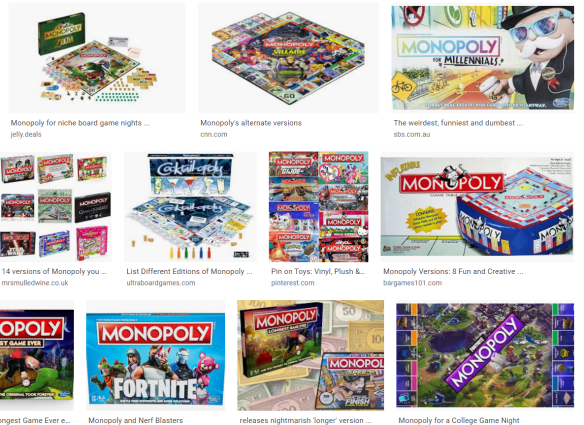
When it comes to licensing and variant titles, no board game comes close to the empire of different versions available that has been amassed by Monopoly.

Not only can you get one tailored to every one of the 50 states, but there’s a version of Monopoly for practically every pop culture phenomenon out there, covering everything from Game of Thrones and Star Wars to Spongebob Squarepants and The Office. There are versions with credit cards instead of cash, and even a cheater’s edition where players can be handcuffed to the board.

Sure, other classic board games are following suit. You can find versions of Clue centered around The Golden Girls or Dungeons & Dragons, and a Nightmare Before Christmas version of Operation out there.

But that’s a drop in the ocean compared to the myriad versions of Monopoly that are available for board game fans.

Even Godzilla is getting in on the fun.

monopolygodzilla

[Image courtesy of Mental Floss.]

Yes, there’s a Godzilla-themed Monopoly game now, complete with renamed properties, monster-influenced money, special game pieces, and rebranded Chance and Community Chest cards.

There are even factories and bases to build instead of houses and hotels.

But I must ask the obvious question. If you’re moving a monster token around the board, why aren’t you smashing houses and hotels instead of building bases and factories? I mean, the only monopoly your average kaiju is looking for is a monopoly on destruction, am I right?

Maybe a few intrepid players will cook up some fun variant rules that encounter the monsters to rampage rather than rebuild.

Of course, if you’re looking for an excuse for destruction, maybe the accompanying Godzilla-themed Jenga will be more up your alley.

godzilla-jenga

[Image courtesy of Bloody Disgusting.]

Yes, it’s just like normal Jenga, except the tower pieces are painted to look like pieces of a building, and Godzilla is slowly marching toward it, his atomic breath glowing as he anticipates the unbridled joy of knocking over yet another skyscraping edifice.

That’s certainly more in keeping with the King of the Monsters and his traditional manner for dealing with massive man-made structures. It won’t be as destructive as, say, Smash City or Terror in Meeple City, but it’s certainly a step in the right direction.

And, honestly, if there are two games that could use a little destructive sprucing up, it’s Monopoly and Jenga.


Thanks for visiting PuzzleNation Blog today! Be sure to sign up for our newsletter to stay up-to-date on everything PuzzleNation!

You can also share your pictures with us on Instagram, friend us on Facebook, check us out on TwitterPinterest, and Tumblr, and explore the always-expanding library of PuzzleNation apps and games on our website!
Intuitive vs. Non-Intuitive Puzzles

littlegirlatgrandmas

[Image courtesy of The Spruce Crafts.]

Sometimes, when you look at a puzzle, you know immediately what to do and how to solve. In my opinion, a great deal of Sudoku’s success is due to its intuitive nature. You see the grid, the numbers, and you know how to proceed.

Crosswords are similarly straightforward, with numbered clues and grid squares to guide new solvers. (The “across” and “down” directions also help immensely.)

That’s not to say that these puzzles can’t be off-putting to new solvers, despite their intuitive nature. I know plenty of people who are put off by crosswords simply by reputation, while others avoid Sudoku because they’re accustomed to avoiding ANY puzzle that involves numbers, assuming that some math is involved. (I suspect that KenKen, despite its successes, failed to replicate the wild popularity of Sudoku for similar reasons.)

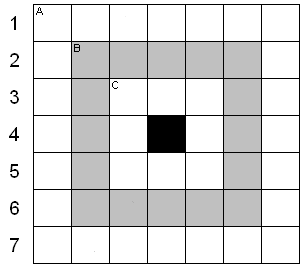
But plenty of other puzzles require some explanation before you can dive in. A Marching Bands or Rows Garden puzzle, for instance, isn’t immediately obvious, even if the puzzle makes plenty of sense once you’ve read the instructions or solved one yourself.

The lion’s share of pen-and-paper puzzles fall into this category. No matter how eye-catching the grid or familiar the solving style, a solver can’t simply leap right into solving.

Thankfully, this won’t deter most solvers, who gleefully accept new challenges as they come, so long as they are fair and make sense after a minute or so of thought. Cryptic crossword-style cluing is a terrific example of this. At first glance, the clues might appear to be gibberish. But within each clue lurks the necessary tools to unlock it and find the answer word.

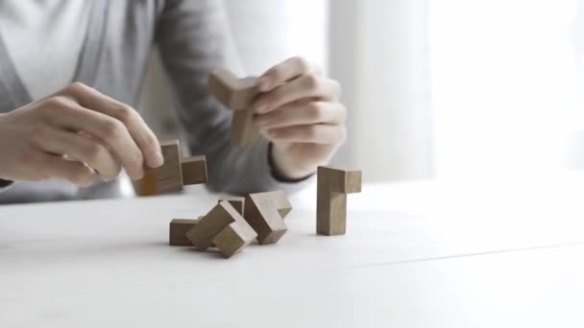
Brain teasers often function the same way. You’re presented with a problem — a light bulb you can’t see and three possible switches for it, for instance — and you need to figure out a way to solve it. It might involve deduction, wordplay, or some clever outside-the-box thinking, but once you find the answer, it rarely feels unfair or unreasonable.

solvingwoodenbrainteaser

[Image courtesy of Deposit Photos.]

But, then again, there are also puzzles that can baffle you even once you’ve read the instructions and stared at the layout for a few minutes. Either the rules are complex or the solving style so unfamiliar or alien that the solver simply can’t find a way in.

In short, puzzles as a whole operate on a spectrum that spans from intuitive to non-intuitive.

Want an example of baffling or non-intuitive? You got it.

GAMES Magazine once ran a puzzle entitled “Escape from the Dungeon,” where the solver had to locate a weapon in a D&D-style dungeon. A very small crossword puzzle was found in one room on a paper scroll.

But the solution had nothing to do with solving the crossword.

The actual solution was to take the crossword to a magician who removed letters from the fronts of words. Removing the C-R-O-S left you with a sword, completing the overall puzzle.

That sort of thinking is so outside the box that it might as well be in a different store entirely. Video games, particularly ones from the point-and-click era, have more than their fair share of non-intuitive puzzles like this. You can check out these lists for numerous examples.

3122

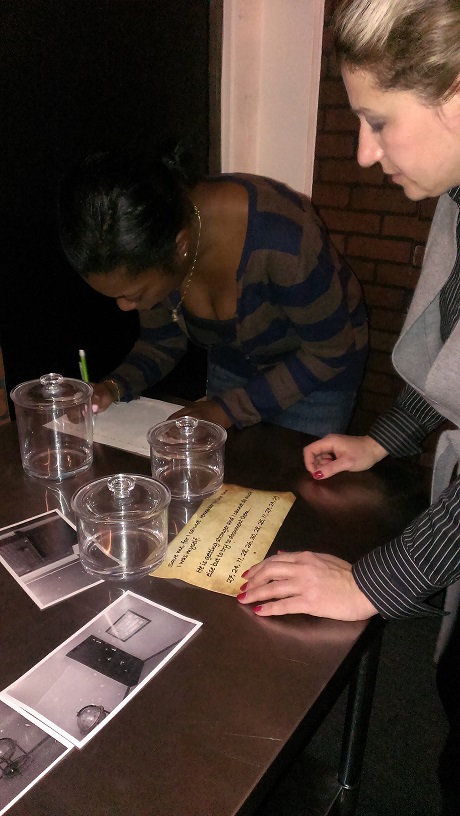
And as escape rooms grow in popularity, more of them seem to be succumbing to less intuitive puzzling as a result of trying to challenge solvers.

For example, in one escape room I tried, various fellow participants uncovered two stars, a picture of the three blind mice, and four different items that represented the seasons. Amidst all the locks to open, puzzles to unravel, and secrets to find, it never occurred to any of us that these three unconnected numbers would have to be assembled as a combination to a lock. By asking for a hint, we were able to figure out to put them together and open the lock, but it’s not a terribly intuitive puzzle.

Perhaps the greatest challenge for a puzzle constructor — be it a pen-and-paper puzzle, an escape room scenario, or a puzzle hunt dilemma — is not creating a dynamite, unique puzzle, but ensuring that finding the solution is fair, even if it’s difficult or mind-boggling.

This sort of thinking informs not only my work as a puzzlesmith, but the designs for my roleplaying games as well. If my players encounter a gap, there’s some way across. If there’s a locked door, there’s a way through it. Oftentimes, there’s more than one, because my players frequently come up with a solution that eluded me.

In the end, that’s the point. All puzzles, no matter how difficult, exist for one reason: to be solved. To provide that rush, that a-ha moment, that satisfaction that comes with overcoming the clever, devious creation of another sharp mind.

And non-intuitive puzzles are tantamount to rigging the game.


Thanks for visiting PuzzleNation Blog today! Be sure to sign up for our newsletter to stay up-to-date on everything PuzzleNation!

You can also share your pictures with us on Instagram, friend us on Facebook, check us out on TwitterPinterest, and Tumblr, and explore the always-expanding library of PuzzleNation apps and games on our website!
A College Application Includes a Puzzly Twist

college-1516569592

[Image courtesy of Rochester.edu.]

My nephew recently started his first year at college, so it wasn’t that long ago that we were discussing applications, college essays, and all that.

Applying to college is more competitive than ever, so everyone is always looking for an edge. Sports, clubs, volunteering, all manner of extracurricular activities… anything and everything that could separate you from the pack is worth pursuing.

And for some applicants, their ethnic background or upbringing can help tell the story of what makes them a desirable applicant.

Of course, sometimes that goes awry.

college-application-process

[Image courtesy of TheBestSchools.org.]

The college applicant in question was always told he was 1/8th Native American. His family had a few keepsakes from his heritage, but otherwise it wasn’t a big part of his life.

When I got old enough I asked my parents what tribe we were and I was told the Yuan-Ti. Now I didn’t know anything of it but I did tell my friends in elementary school and whatever and bragged I was close to nature (as you do).

So recently I applied to colleges and since you only have to be 1/16 native I thought I had this in the bag. Confirmed with my parents and sent in my applications as 1/8th Yuan-ti tribe.

So why am I discussing this story on a puzzles and games blog? Well, there’s one key reason, which our unfortunate friend soon discovered.

You see, the Yuan-Ti is not a Native American tribe. It’s a species of serpentfolk — human-snake hybrids — from the roleplaying game Dungeons & Dragons.

yuan-ti

[Image courtesy of Forgotten Realms Wiki.]

Apparently, his parents have happily kept up this fiction even after this application debacle. He has been reaching out to the colleges and explaining his mistake, and hopefully the schools will look past this and accept him.

Yes, the fact that he never bothered to do any research himself and figure out that he’s not a psionic snakeman from the Forgotten Realms is kinda on him. But the fact that his parents doubled down on their Yuan-Ti heritage during college applications makes them either the most diabolical pranksters on the planet or legitimately insane.

But sometimes we do accept what are parents tell us as gospel years after we should have figured out the game. I remember a time in college when an ice cream truck was going by, and several of us commented that we wanted ice cream. One guy spoke up and said, “Don’t bother; they only play the song when they’re out of ice cream.”

That’s what his father told him as a child to get out of buying ice cream, and he still believed it years later. Poor guy.

Granted, that’s a world away from telling your son to basically list “lizard person” under “ethnicity” on a college application. But still. I get it, a little.

Here’s hoping our friendly gullible college applicant gets into the college of his choice… and gets a little better at researching the topics of his future college essays.


Thanks for visiting PuzzleNation Blog today! Be sure to sign up for our newsletter to stay up-to-date on everything PuzzleNation!

You can also share your pictures with us on Instagram, friend us on Facebook, check us out on TwitterPinterest, and Tumblr, and explore the always-expanding library of PuzzleNation apps and games on our website!
Riddles, Riddles Everywhere!

I’ve had riddles on the brain recently, because I keep seeing them everywhere. Over the last few weeks, they’ve popped up in games, TV shows, books, and even emails to the blog.

It all started with our twice-monthly office D&D game. Every other Thursday, a group of us commandeers one of the conference rooms at lunchtime and enjoys an hour of dice-fueled storytelling, adventure, and fun.

As is often the case with a fantasy-inspired game, there was a river to cross and a riddle to answer in order to pass.

A murderer is condemned to death. He has to choose between three rooms. The first is full of raging fires, the second is full of assassins with loaded guns, and the third is full of lions that haven’t eaten in a year. Which room is safest for him?

This is a classic riddle, usually titled “Three Doors” or “The Murderer’s Riddle.”

lionriddle-1

And when you’ve got a team of puzzle solvers in your D&D group, this riddle is no challenge at all.

(If you’re curious about the solution, you pick door #3. After a year of not eating, the lions would be dead, so it would be safe to enter that room.)

Later on in the game, we again had to barter passage across a body of water, either answering a riddle or battling a demon to the death.

Naturally, we chose the riddle.

What is the creature that walks on four legs in the morning, two legs at noon and three in the evening?

This is another classic riddle — the Riddle of the Sphinx, most famously solved by Oedipus — and posed no challenge to our merry band of misfit adventurers.

(If you don’t know this one, the answer is “man,” since you walk on four legs as a child, aka crawling, two legs as an adult, and with a cane when you’re older. The day — morning, noon, and evening — represents a lifetime.)

We crossed the lake, and our adventure continued, and I thought I was done with riddles for a bit.

Then a few days later, I got caught up on the latest season of MTV’s The Challenge, a reality/competition game show. (I’ve written about some of their puzzly challenges in the past.)

And, wouldn’t you know it, this week’s challenge involved a riddle.

wotwriddle3

Both teams would start on this platform, sending pairs of swimmers out on a long swim to retrieve keys. Those four keys would then open both a chest full of letter tiles and a riddle to be solved. The first team to solve the riddle with the letters available would win the challenge.

Once all the drama of selecting partners — given that many of the players weren’t strong swimmers, and the slowest-swimming team would be eliminated from the game — there was plenty of tension to be had.

But finally, all four keys were retrieved by the teams, and the riddle revealed:

wotwriddle1

I am a 5 letter word.

I am normally below you.

If you remove my 1st letter, you’ll find me above you.

If you remove my 1st and 2nd letters, you can’t see me.

The teams were initially baffled, playing around with different words and various combinations of letter tiles in the hopes that it would spark something.

wotwriddle2

Eventually, competitor Ashley came up with a three-letter word that you couldn’t see — AIR — and her team quickly came up with the correct answer: CHAIR.

(A chair is normally below you, hair is above you (sorta), and air can’t be seen.)

So, three riddles in a matter of days. It’s officially a pattern. And so far, I’m three for three on solving these riddles.

A week or so later, though, yet another riddle arrived, this time by email. And I admit, I’m a little stumped.

What has a bell but isn’t a church. Is full of air but is not a balloon?

What do you think, fellow puzzlers and PuzzleNationers? Any ideas? Let me know in the comments section below. I have a few theories, but nothing that feels like a conclusive answer.


Thanks for visiting PuzzleNation Blog today! Be sure to sign up for our newsletter to stay up-to-date on everything PuzzleNation!

You can also share your pictures with us on Instagram, friend us on Facebook, check us out on TwitterPinterest, and Tumblr, and explore the always-expanding library of PuzzleNation apps and games on our website!