New Year’s Resolutions!

It’s New Year’s Eve, and around this time, people start making resolutions for the new year. Goals, plans, even the occasional scheme, all in the hopes of being a better version of themselves.

And I instantly began wondering if anyone was making puzzly resolutions. So, like all great philosophers, I asked the folks on Twitter.

Right after I posted the question, my friend Candice replied, “Spooky timing. Had just added ‘set aside a few hours every week to do puzzles’ to my list.”

As it turns out, plenty of people had puzzly resolutions for 2014, including a few familiar faces!

Puzzle poet Peter Valentine resolved to “Get up early and finish the poem before anyone else is awake — I wonder how many puzzler parents use this tactic for solving the puzzle?”

[Glenn’s note: Probably more than you suspect, Peter.]

Constructor Patrick Blindauer tweeted, “In 2014, I resolve to solve more, use fewer black squares, and never, ever use TREEN.”

[Glenn’s note: A quick dictionary search reveals that TREEN is anything made of wood, especially cookware or utensils. Diabolical crosswordese!]

Friend of the blog Krud tweeted, “I resolve to embed an anagram into every tweet. Aye, mint tea lovers drown beige meat near vote.”

Crossword blogger Kathy Matheson (a.k.a. Crossword Kathy) declared that “My resolution for the New Year is to construct and submit at least three daily-size crosswords to Will Shortz — so I better get to work!”

Constructor and Puzzle Historian David Steinberg resolved to “finish the Pre-Shortzian Puzzle Project’s litzing stage and to construct more Sunday crosswords, since I’ve been doing mostly dailies.”

[Glenn’s note: Litzing is the PSPP term for converting print puzzles into an archivable electronic format.]

Friend of the blog (and YouTuber!) BaffleDazzle had a stack of puzzly resolutions:

“1. Exercise brain as much as body (easier, no weights/special clothes required)
2. Make puzzles for friends/family birthday gifts
3. Try new puzzle/puzzly game each month (growing stack of old Springboks + new Looney Labs discoveries!)
4. Make puzzles the new black!”

Constructor Robin Stears also offered a pretty ambitious list of puzzly resolutions:

“Next year, my resolution is to interact more with puzzle fans. I hope to attend some crossword tournaments and trivia nights and spend some time getting to know the contestants and finding out what kinds of puzzles they like. There will be more digital collections this year, more contests, and more freebies for Team StearsWords.”

As for me, I have a few resolutions of the puzzlerific variety. I resolve to:

  • Anagram more. New Years resolution = Now to rerun easy lies.
  • Play more board games. Working on the blog has reignited my love of board games, and I hope to get a regular game night going.
  • Write fewer pop culture-related palindromes, particularly involving Kim Kardashian’s advice to her daughter. “Nori West nods. ‘Moms don’t sew, iron’.”
  • Fight crime, but with puzzles. Probably through the clever use of origami and paper cuts.
  • Take PuzzleNation PuzzleInternational! (Not really sure how to go about this yet. It’ll probably involve some scheming.)

Happy New Year, my fellow puzzlers! May 2014 be as delightful, surprising, and occasionally baffling as you desire!

Thanks for visiting the PuzzleNation blog today! You can like us on Facebook, follow us on Twitter, cruise our boards on Pinterest, check out our Tumblr, download our Classic Word Search iBook (recently featured by Apple in the Made for iBooks category!), play our games at PuzzleNation.com, or contact us here at the blog!
The greatest gift exchange there never was…

It’s Christmas Eve, so hopefully you’ve perused our Holiday Puzzly Gift Guide and completed all your shopping in a timely and not-at-stress-inducing, hair-tearing-out manner.

But if not, fear not! Some of the puzzliest and cleverest people in the artistic, board game, and puzzle communities may have just come up with the perfect last-minute solution for you.

You’re probably familiar with the concept of the White Elephant gift exchange, wherein everyone supplies a gift, and then a game of keeping or swapping takes over, allowing people to take turns, develop friendly little rivalries, and generally enjoy a bit of holiday frivolity.

But have you ever heard of a White Heffalump exchange?

This year, numerous game designers, artists, and puzzlers were recruited to participate in a White Elephant gift exchange. But this exchange had a marvelous twist: every gift was imaginary.

So everyone involved — including such names as James Ernest (head of Cheapass Games, publishers of Veritas), John Kovalic (artist for Munchkin and creator of ROFL!) and puzzler constructions Eric Berlin and Brendan Emmett Quigley — created an imaginary gift for the exchange.

And then they all played the game on Twitter, so fans and friends could enjoy the madcap holiday cheer.

Here are a few of the “gifts” created for the White Heffalump gift exchange:

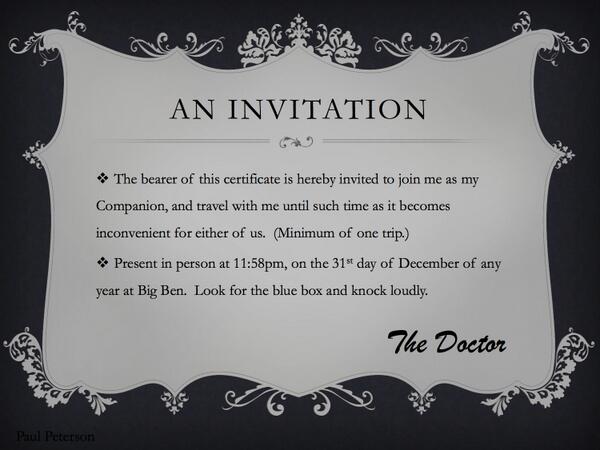
It’s easy to imagine a trip with The Doctor would be a highly sought-after prize.

What’s more heartwarming than retroactively sharing a friendship since first grade? (And possibly an iron-clad alibi, should you need one…)

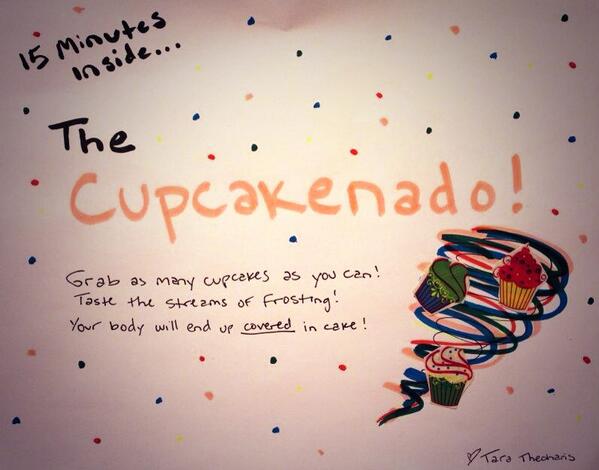
It’s like one of those grab-the-money booths from an old game show, but with SWEETS!

A formidable steed and a delicious meal all in one. You can’t lose!

And the wily Matt Forbeck offered up the ideal machine for generating presents for next year’s White Heffalump exchange.

From “time to play with toys” and a dapper platypus to a 29-word crossword and a wish-granting pocket pet, the gifts were hilarious, innovative, and absolutely ridiculous, and the gameplay back and forth as people traded and stole gifts was just as entertaining.

[For more details on the exchange, check out Matt Forbeck’s write-up here.]

So, if you’re still struggling with gift ideas, you can always go the White Heffalump route. It’s creative, low-budget, and loads of fun. Enjoy!

Thanks for visiting the PuzzleNation blog today! You can like us on Facebook, follow us on Twitter, cruise our boards on Pinterest, check out our Tumblr, download our Classic Word Search iBook (recently featured by Apple in the Made for iBooks category!), play our games at PuzzleNation.com, or contact us here at the blog!

Let’s Make Our Own Crosswords, Part Two: Advice!

On Tuesday, I posted an introductory how-to for creating your own crossword puzzles. All of the advice and guidance was based on my own constructing instincts and work I’ve done over the years.

But I’m just one puzzler, and I figured why not reach out to other constructors and editors in the puzzling community and see what helpful suggestions they had for aspiring puzzle constructors.

So today, I put you into the good hands of professionals and topnotch puzzlers, as they walk you through the do’s and do-not-do’s of crossword construction. As constructor Ian Livengood said, “it’s more art than science,” but with the advice of established constructors in your pocket, you’ll be off to a great start.

And as it turns out, they’ve got plenty of worthwhile nuggets of advice to offer! In fact, they had so much to say (and I wanted to include so much more!) that I’ve broken up the advice by topic and put each one on its own page. Just click on the links below to take you to a treasure trove of puzzly wisdom!

Good luck, my fellow puzzlers!

And thank you to David Steinberg, Robin Stears, Ian Livengood, Rich Norris, Patti Varol, Doug Peterson, and Eileen Saunders for their masterful advice!

Thanks for visiting the PuzzleNation blog today! You can like us on Facebook, follow us on Twitter, cruise our boards on Pinterest, check out our Classic Word Search iBook (recently featured by Apple in the Made for iBooks category!), play our games at PuzzleNation.com, or contact us here at the blog!
How to Make a Crossword: Choosing a Theme

“Themes are the hardest part of the construction process. Filling the grid and writing the clues takes perseverance, but coming up with a theme requires that elusive spark of inspiration.” — constructor Doug Peterson

This sentiment was echoed by other constructors I spoke with. Crossword guru Eileen Saunders said, “The hardest part of constructing a puzzle (for me) is coming with the theme. After that, everything else seems to fall into place.”

Los Angeles Times Crossword Editor Rich Norris and assistant Patti Varol: “Originality is an important element of a good theme, but sometimes originality means lively themers in a chestnut gimmick or a clever spin on familiar wordplay.

“Originality, themewise, is not always ground-breaking, or innovative, or even original. A good theme always has sparkle, with lively, idiomatic phrases that will resonate with a majority of solvers.”

New York Times Crossword constructor Ian Livengood discusses how to choose theme entries: “Once you think of a potentially good theme, it’s vital to see if something similar has been done before. What’s the point of having databases, right? If the theme looks interesting and relatively new, you must make sure the theme is consistent.

“For example, if you are doing two-word phrases that start with the letter P and you’ve got PLEDGE PIN, PARK PLACE, PLUM PUDDING, PINK PANTHER and … PARAKEET, that’s a problem. The single word breaks the pattern and confuses solvers. So consistancy and freshness is very important.”

Rich and Patti also mentioned consistency and balance as critical elements of a good theme. “One odd entry can ruin an otherwise great idea: a themer that ends with the theme’s key word when all the others begin with it, a stray plural in a set of singular phrases, a noun phrase in a group of verbs, a song title in a set of movie titles, a rhyming pun in the mix with spelling-change puns.”

I think I’ll give Doug the final word on coming up with a theme for your puzzle. “If you think a theme entry is humdrum or doesn’t quite fit with the others, it’s time to put your brainstorming cap back on. Remember, your first job is to entertain the solver, so make that theme sparkle.”

How to Make a Crossword: Grid and Fill Advice

When it comes to grid building, constructor Ian Livengood considers it “perhaps the most important aspect of construction.” And since building a grid and placing your theme entries goes hand-in-hand, I’ve opted to combine them into one section.

Ian continues, “Try to avoid a pileup of black squares and 3-letter word concentrations. Once you put the theme answers in the grid, manipulate the black squares to avoid any potential trouble spots. Trouble spots are letter patterns that are highly unusual, and therefore, difficult to fill. If, for example, you have the letter sequence ??DK? in a puzzle, the only acceptable fill is VODKA. Well, you better make sure VODKA will work in the surrounding area, otherwise you’ll have to start over. It’s always better move blocks around before trying to fill the puzzle.

“After locking in words with unusual letter patterns, place your longer non-theme entries in the puzzle. You must make these entries ‘pop.’ That is, they really should be interesting. HATCHET JOB or THE JIG IS UP, for example, would be fun entries to fill in. REPOSSESSED, on the other hand, is a total snoozer.

“Minimize crosswordese and try to make the vocabulary accessible. If your theme is a Monday-level easy theme, crazy and obscure names are unwelcome. But if it’s a razor-tough Saturday themeless, a few tough words are okay.”

Crossword constructor Robin Stears suggested an additional step when choosing your entry words and filling the grid: “I check each word against a website called Crossword Tracker, which tracks crossword puzzle words and clues.

“If a word has never been used before, I hesitate to use it. The only exception to that rule is a fairly new word that I want to be the first to use—for a while, it seemed like every other puzzle contained ZZZQUIL, including one of mine.”

How to Make a Crossword: Cluing Advice

After constructing the grid, cluing is the most daunting task facing a constructor. Constructor Robin Stears readily confessed, “Writing the clues is the most time-consuming process of puzzle construction, especially for common words that appear in many puzzles. Crossword Compiler allows me to keep a database of words and clues, but I try not to use the same clue twice.”

Constructor and puzzle archivist David Steinberg: “When writing clues, it’s important to strike a balance between original clues and clues that exist in databases. For entries that appear frequently and/or have a limited number of cluing possibilities, such as ALAI (traditionally clued as [Jai ___]), I feel it’s best to go with a database clue. In the case of ALAI, almost all clever cluing possibilities, such as [Half-court game?], have been exhausted.

“Original clues for such an entry often end up feeling strained or wordy and/or rely on a less common usage of a word, which solvers generally don’t appreciate as much.”

Constructor Ian Livengood also stressed finding a balance between creativity and accessibility: “Keep you clues relatively short, especially if you’re creating puzzles for outlets with strict line counts. But don’t just use one-line clues for everything, since that will bore solvers. Try to toss in some fun trivia, wordplay, etc. that seems interesting to solvers.

“And, like filling the grid, make sure you clues are appropriate for the intended day of the week. [High line?] for ELEVATED TRAIN works well for a tough puzzle, but would only fluster new solvers in a Monday puzzle. [Above-the-street transportation] is easier and more welcome for beginners.”

Constructor Robin Stears reminds you to utilize the many resources available: “Personally, I use a number of websites to help me write clues: Wikipedia, Wolfram Alpha, The Free Dictionary, Crossword Tracker, Internet Movie Database, Reddit, and Google. In the old days, I used to spend hours in the reference section of the library, but nowadays, it’s much easier to search the Internet. There’s a wikia for almost everything.”

When it comes to determining the difficulty of a clue, constructor Doug Peterson suggests doing a bit of research: “My best advice is to solve lots and lots of puzzles of varying levels of difficulty. It won’t take long for you to get a feel for what types of clues are found in what types of puzzles. And it’s OK to have a few hard clues on a Monday or a Tuesday. Just make sure their answers don’t cross.”

Los Angeles Times Crossword Editor Rich Norris and assistant Patti Varol touched on how cluing can set a puzzle’s difficulty: “With the right grid, a talented, creative editor can transform an expert-level puzzle into one that any newbie can solve (and that an expert would still enjoy). Every editor has his or her own ‘familiarity test,’ which is the educated guess we make to determine if a clue or an entry will resonate with or be recognized by our solvers.

“It’s subjective, sure, but there are also pretty straightforward guidelines. If an entry is not in most major dictionaries and only gets 10K or so Google hits, well, that’s pretty obscure and probably shouldn’t be used at all. The editor needs to know the solving audience and needs to know how to balance current and older pop culture references -– much of what the Millennials find easy will completely baffle the Boomer solvers, and vice versa.”

They were also kind enough to offer an example of how cluing a given word can affect clue difficulty:

“Take the entry SMITH, for example. Will SMITH and Ozzie SMITH are arguably more famous than Patti SMITH, who is arguably more famous than Matt SMITH. Plain clues — [Actor Will], [Baseballer Ozzie], [Singer Patti], [Actor Matt] – tend to be hard. Ozzie is the exception in this example, because Ozzie is such an unusual name in baseball that even nonfans are likely to word-associate their way to the correct answer.

“What information is added to those semi-naked clues is key. Thus, [“Men In Black“ actor Will] is an easy clue for SMITH because “Men In Black” is a popular movie franchise and having the first name narrows down the potential answers. Compare [“Just Kids” memoirist Patti]. Even with that first name in the clue, it’s a tough clue — more solvers know Patti Smith as a singer than as a writer, and the title of her memoir doesn’t even hint at her singing career. For a nonfan, [Hall of famer shortstop Ozzie] is about the same difficulty as [Baseballer Ozzie], but, alas, it’s likely only a Doctor Who fan will recognize any clue for Matt SMITH.

“There’s Kate SMITH, and Bessie SMITH, and Agent SMITH of the Matrix movies. Each one resonates with a different solver. The easiest kind of clue for SMITH is, of course, the generic kind: [Common alias] or [Popular surname] or [Suffix with lock or gun]. And then there’s the fun, inferable kind: [Surname that comes from an occupational suffix].”