Who Is The “Average Solver”?

In crossword forums, the comment sections of crossword blogs, and virtually any other online space where people share their thoughts on puzzles, you’re bound to see the same criticism over and over.

“The average solver wouldn’t know ____.”

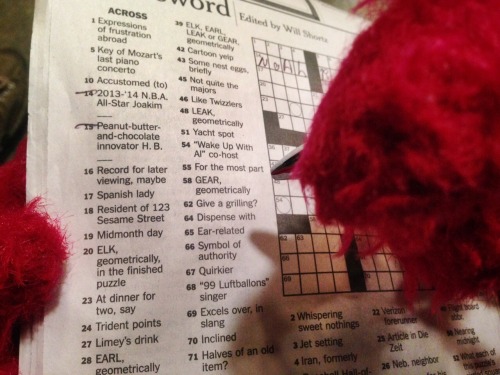
I saw a comment on a r/crossword reddit forum recently, regarding the November 11 USA Today puzzle. 10-Down was clued “Spoons,” and the answer word was ENERGY. The poster was baffled.

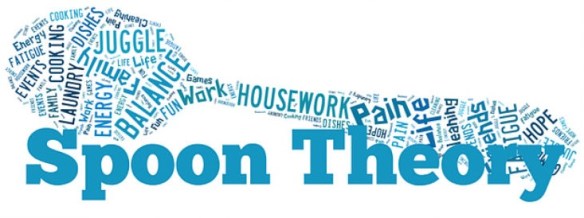
(If you’re among those who didn’t get the reference, this clue references Spoon Theory, a concept common to those who suffer from chronic pain, fatigue or other debilitating conditions, regarding how many “spoons” a certain activity costs. It’s a way of quantifying how their condition affects their daily life.)

After it was explained, the poster asserted that “nobody” would make the connection between spoons and energy.

Now, no matter what you think of that clue — I personally would have gone with something like “Spoons, to some” or “Spoons, metaphorically” — it’s plainly false that NOBODY would make that connection.

Is it commonplace? Depends on how old you are and in what circles you travel, it seems. (Based on an informal poll I conducted, people 35 and younger are far more likely to know it.)

But one must never mistake their own unfamiliarity with a term for genuine obscurity. And I don’t say this out of judgment. It’s a mistake I’ve made myself on more than occasion. Heck, earlier this year, I did so when reviewing a tournament puzzle. I felt an entry (a hybrid fruit) was too obscure, only to discover others found it fairly common. Live and learn!

Another example where someone questioned the “average solver” was recently shared on Twitter. Constructor Malaika Handa shared part of a Crossword Fiend review:

She pointed out that this assumes that the “average solver” isn’t of Latino descent.

(It’s also worth noting that AREPAS is a more interesting entry than ARENAS, but I digress.)

What do you picture when you imagine the “average solver,” I wonder?

Because I think about those two nebulous measuring sticks a lot: “nobody” and “the average solver.” While they can be valuable to consider, they’re also very misleading.

I mean, what does the “average solver” know? European rivers? Football players? Greek letters? Classical composers or K-Pop bands? How many people would know ETUI if not for crosswords? It’s hardly commonplace.

Do they know those things AND solve crosswords, or do they know those things BECAUSE they solve crosswords? If constructors start regularly cluing or referring to spoons or arepas, then they become part of crossword vernacular, and then the “average solver” might be expected to know them.

Quite a slippery slope when you really start digging, isn’t it?

Plus, there’s more than one average solver, depending on how you look at it. Every outlet has a different “average” solver, and they’ll change over time.

Take PuzzleNation for example. Our Facebook audience is different from our Twitter audience, which is different from our blog audience. But there is overlap. We know there are Daily POP Crosswords and Daily POP Word Search solvers among all of those groups. But that’s five different “average solvers” to consider at the minimum.

tumblr_nnl5c43Ov61qd4fqho1_500

That’s the challenge, isn’t it? Every crossword constructor walks a tightrope, trying to keep their puzzles fresh while still appealing to solvers.

And, as recently pointed out in a New York Times piece, the Internet has accelerated the proliferation of new slang and terminology. Words become part of the modern vernacular much faster now. (And every time The Oxford English Dictionary adds new words, we get a sense of how deeply some of these new terms have embedded themselves.)

Personally, I think crosswords are better when we’re learning from them. I’d rather have to look up a word or assemble it from familiar crossings — and broaden my own vocabulary and knowledge — than see the same old fill. Those European rivers. Those composers. Those Greek letters.

More spoons and arepas, please. If there is an ideal average solver out there, let’s teach them something new.


   dailypopwsicon

Treat yourself to some delightful deals on puzzles. You can find them on the Home Screen for Daily POP Crosswords and Daily POP Word Search! Check them out!

Thanks for visiting PuzzleNation Blog today! Be sure to sign up for our newsletter to stay up-to-date on everything PuzzleNation!

A Cracking Collection of Crossword Clues

Someone recently asked me about my favorite crossword clue, and after mentioning four or five off the top of my head, I cut myself off and tried to explain that it’s impossible for me to pick one.

So many clues are out there that surprised me, or outwitted me, or made me laugh, or made me think in an unexpected way. I could never narrow it down..

Regular readers who have seen my reviews of various crossword tournament puzzles will recall I like to highlight favorite clues.

I actually keep track of clues from constructors as I solve various crosswords. Not only are they often witty, hilarious, and/or impressive, but they inspire me as a puzzler to always try to find entertaining, engaging new angles for these crucial crossword elements.

So today, I’d like to pull some favorites from my personal clue vault and give them some time in the spotlight.

(I’m crediting the constructor listed on the byline for each clue. These clues may have been created elsewhere and reused, created by the constructor, or changed by an editor, I have no way of knowing. So I’m just doing my best to give credit where credit is due.)

Misdirection

I love a good misdirection clue, because it not only has a straightforward meaning that sends you one way, but it has a true secondary meaning that usually only emerges once you’ve considered the clue for a bit.

Constructor Amanda Rafkin has a knack for these sorts of clues, delivering terrific examples with “Decline a raise?” for FOLD and “One who’s pro con?” for NERD.

It’s particularly great when a constructor can use a misdirection clue to put a new spin on a word you’ve seen dozens of times before. Peter Gordon did just that with both TYPO (“Character flaw?”) and AHS (“Sounds made with depressed tongues”), and even manages to be topical whilst doing so, as he did with the clue “Page with lines of dialogue” for ELLIOT.

Yacob Yonas took an awkward RE- word — all too common in crossword grids — and made it shine when he clued REHEM as “Take up again, say.” Priyanka Sethy did the same with a multi-word answer when she clued IGOTIT with the delightful “Catch phrase?”

Brendan Emmett Quigley covered up an ugly abbreviation answer — ECG — with a banger of a clue: “Ticker tape?”

As you can tell, misdirection clues are absolutely a favorite of mine.

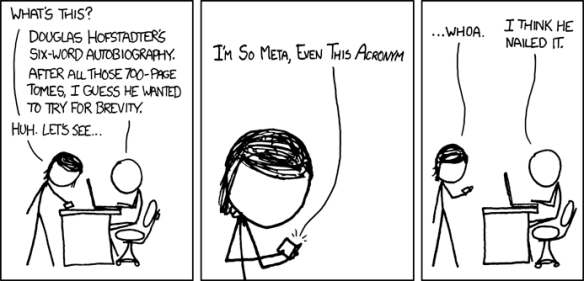
hofstadter

[Image courtesy of XKCD.]

I also can’t resist clues that get a little meta, playing with the format of cluing itself.

TYPO appears for a second time in today’s post, but the cluing is totally different, as Andrea Carla Michaels offered this meta treat: “Something annnoying about this clue but hopefully no others!”

And Francis Heaney went out of his way to word to clue the word AUTOMOBILES in a manner you’ll never forget: “‘Humorous People in ____ Acquiring Caffeinated Drinks’ (Jerry Seinfeld series whose name I might be remembering incorrectly)”

Using multiple examples in a clue not only shows off the variety of definitions some words have, but allows constructors to juxtapose these meanings in entertaining fashion.

Janie Smulyan deftly shows off this technique by cluing SPELLS “Some are dry, some are magic.” Concise and clever.

“Beehive part, or beehive parter” for COMB was Sid Sivakumar’s tricky way to use multiple meanings twice!

And although this Hannah Slovut offering isn’t as concise as the others in this clue for SEE, it’s still a terrific example of employing multiple uses of a word: “Different tense of ‘saw’ that may precede ‘saw'”

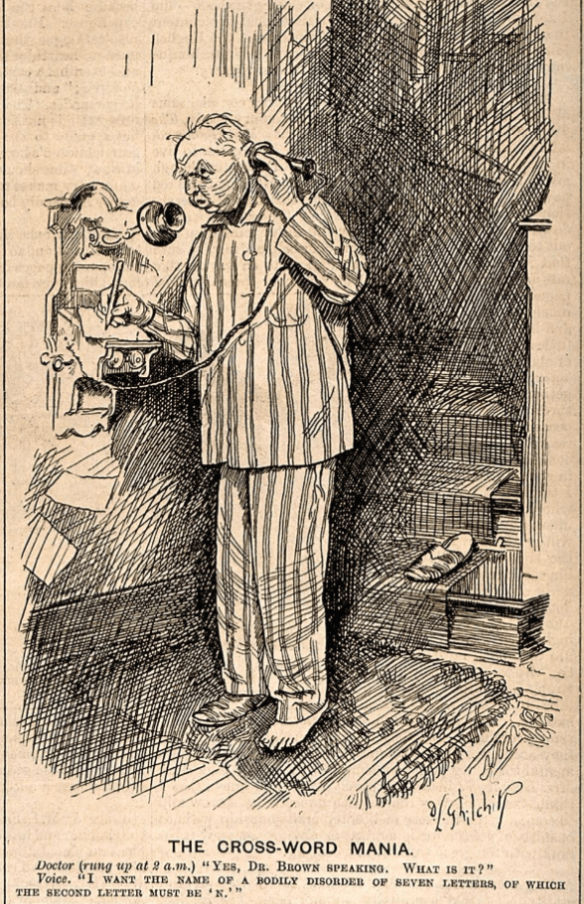
ghilchip

[Image courtesy of David Louis Ghilchip.]

I know some crossword outlets aren’t fans of using clues that specifically reference each other — “With 21-Across, name of Charlie Chaplin film,” for instance — but other publishers are completely fine with this style of cluing.

Naturally, that allows constructors to have some fun making connections and using clues to reference each other.

Hannah Slovut utilized this technique in a recent puzzle, cluing STYE as “Ailment that might be seen near 63-Across.” (63-Across was the exclamation MYEYE.)

There are all sorts of cluing styles we didn’t cover in this post — trivia clues, fill-in-the-blank, clues that use capitalization or pronunciation to mislead the solver — but hopefully we’ll get to them in a future blog post.

misdirection-image-1486812621

In the meantime, how about a few more misdirection clues for the road?

Brooke Husic made readers take a second look at a familiar word — “Surroundings?” — when she used it to clue SIEGES.

Catherine Cetta’s “Spot early on?” definitely sends you down the wrong path before you double-back and find the correct answer: PUP.

And we happily conclude with a clue from puzzle master Mike Shenk, who clearly had some fun with this one, cluing ANKLES with “They’re just over two feet.” Absolutely shameless.

Gotta love it.

What are some of your favorite crossword clues, fellow puzzlers and PuzzleNationers? Let us know in the comments section below! We’d love to hear from you.


dailypopwsicon

Halloween is almost here, and we have some spookily good deals for you to check out. You can find them on the Home Screen for Daily POP Crosswords and Daily POP Word Search! Check them out!

Thanks for visiting PuzzleNation Blog today! Be sure to sign up for our newsletter to stay up-to-date on everything PuzzleNation!

Crosswords as Pop Culture Shorthand?

In television and movies, there are a lot of different techniques for revealing character traits. While some shows spend time developing their characters and slowly revealing their traits to the audience, other shows rely on visual shorthand. You often see a letterman’s jacket for a jock, or glasses for a nerdy boy or a mousy girl.

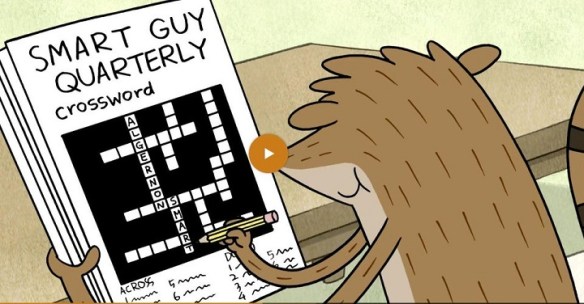
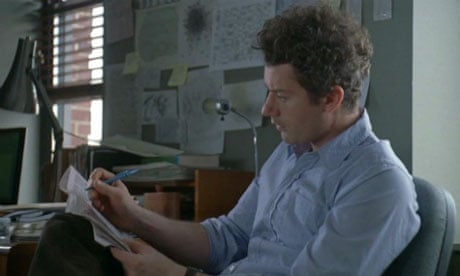
The act of solving a crossword puzzle has also become visual shorthand in pop culture. Crosswords often serve as a universal sign of intelligence.

In an episode of Jimmy Neutron, Sheen is shown solving a crossword puzzle in ink. This is an instantaneous sign that his brainpower has increased. (And when Cindy points out that her dad does the same thing, Sheen one-ups her by saying the puzzle is from The Beijing Times.)

It could have been math or organization or memorization, but instead, they went with crosswords.

In The Wire, the show uses a scene with a crossword to reveal that there’s more to street-smart Omar Little than meets the eye. Before testifying at Bird’s trial, he helps the bailiff with a crossword clue, identifying the Greek god of war as Ares. The scene immediately punches holes in several stereotypes both characters and viewers might have about the character.

This also happens on Mad Men, where one of the founders of the company is solving a crossword, only to be corrected by one of the secretaries. For that brief moment, the playing field has been levelled.

And because crosswords are seen as this visual shorthand for intelligence, they’re also used as a intellectual measuring stick, for better or for worse.

Rachel on Friends struggled with a crossword for an entire episode to prove she didn’t need anyone’s help, but still has to obliquely obtain information from others to finish the puzzle.

In an episode of House, M.D., House goes speed-dating, and is initially intrigued by a woman who brought a crossword puzzle with her. But when he notices she’s filled in random words instead of actually solving it — in order to pass herself off as someone she’s not — he quickly bursts her bubble in typically acerbic fashion.

P.G. Wodehouse loved to reveal the intelligence — or lack thereof — of characters through the use of crossword clues as fodder for banter. And that’s because it works. The audience draws conclusions based on these interactions.

In a fifth-season episode of Angel, a doctor is shown asking his receptionist for random crossword clues, only to fail at answering several. This immediately colors the audience’s opinion of him.

Crosswords can also be used as a mirror to reflect differences between characters. On The West Wing, President Bartlet couldn’t get past his own presuppositions and assumptions to properly complete the puzzle, while the First Lady had no problem navigating the same puzzle because of her own diplomatic skills.

Similarly, the parents in an episode of Phineas and Ferb show off their dynamic while solving a crossword. The father implies that every answer is obvious, and then waits for his wife to actually provide the answer. It says volumes about him, her, and the two of them as a pair.

But all of this raises the question: is this fair? Is the one-to-one association of crosswords and intelligence in pop culture valid?

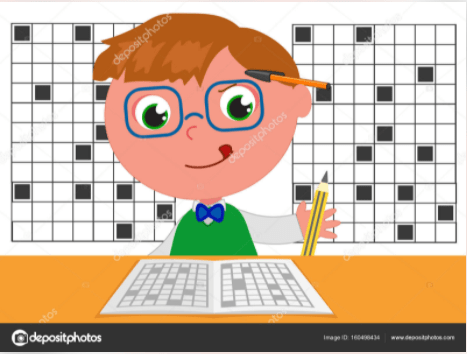
[Check out this stock image from Deposit Photo.]

Crosswords are, essentially, piles of trivia and information, crisscrossing vocabulary locked behind clever or vague cluing. But are intelligence and access to information the same thing?

I mean, we’ve discussed the issue of crossword accessibility in the past. Many female constructors, constructors of color, and LGBTQIA+ constructors are helping to change the language used in crosswords, but plenty of people still see them as the domain of older white men. Which implies it’s not actually intelligence, just what older white men deem to be reflective of intelligence.

For a long time, pop culture clues were considered unwelcome or verboten. Beneath the crossword, even. Different editors bring different definitions of what’s appropriate for the puzzle.

And if people associate crosswords with intelligence because of this visual shorthand, and they don’t see themselves reflected in the puzzle, then they suffer from that jagged flip side of the pop culture coin. They’re excluded because of the measuring stick.

I realize most of the examples I cite above are intended to be humorous. Bartlet’s wrong answers are meant to be funny, as is Rachel’s struggle or the dad’s inability to answer on Phineas and Ferb.

But it’s worth mentioning that anyone who feels like they’ve been rapped across the knuckles by the measuring stick carries that with them. I’ve seen it plenty of times when I tell somebody that I work in puzzles. If they “can’t do them,” they look down when they say it. They already carry that visual shorthand with them.

While it’s fascinating that crosswords are part of that immediately recognizable pop culture lexicon, I also kinda wish that they weren’t.


dailypopwsicon

Well, summer’s over, but we still have deals galore for you to check out. You can find them on the Home Screen for Daily POP Crosswords and Daily POP Word Search! Check them out!

Thanks for visiting PuzzleNation Blog today! Be sure to sign up for our newsletter to stay up-to-date on everything PuzzleNation!

Spies, Crosswords, and Secret Messages!

secret message

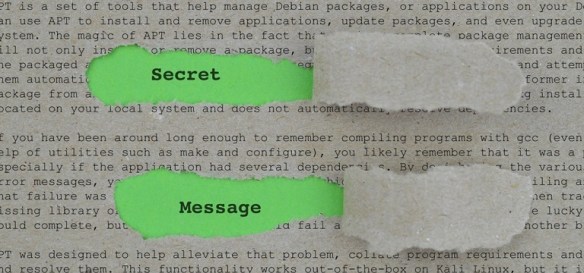
There are loads of ways to hide secret messages in puzzles. The field of cryptography is built around it. Many meta puzzles have a special secret lurking inside their clever constructions. Heck, our friends at Penny Press even have an entire word seek called Secret Message.

But have you ever noticed that there’s a strange fascination in pop culture with secret messages in crosswords?

No, I don’t mean constructors hiding quotations, poems, or word seeks in their crosswords, though those are impressive feats of cruciverbalism.

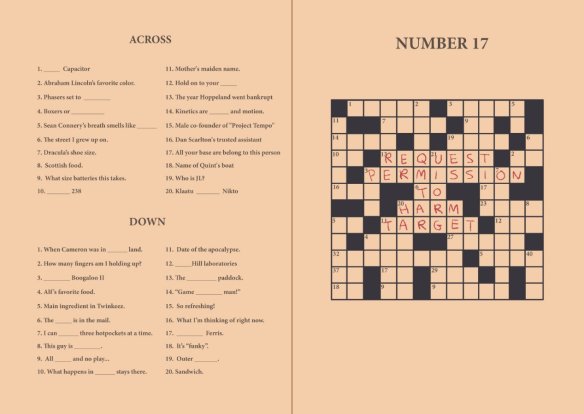
I’m talking about stories about actual secret messages concealed in crossword grids, meant to be hidden from even the most diligent solvers, only a special few possessing the keys to finding the hidden words.

Oh, believe me, it’s definitely a thing.

Look no further than the first Crossword Mysteries movie. The film opens with a murdered art gallery owner with a crossword in his pocket. And it turns out that a devilish criminal mastermind was submitting puzzles to Tess’s daily crossword that contained hidden instructions for robberies to be conducted that day. Diabolical!

You might laugh, but this is hardly the only time we’ve seen crime, secret messages, and crosswords combined. It was a plotline in the radio show The Adventures of Superman, and Lois Lane’s life once depended on Superman’s ability to solve a crossword puzzle.

There are any number of mystery novels, cozy and otherwise, that contain hidden messages in crosswords. Nero Blanc’s Anatomy of a Crossword and Corpus de Crossword come to mind, as do any number of murder mysteries where a strange message scribbled on a crossword grid turn out to be a pivotal clue to catch the killer.

And there’s an even more curious subset of this in pop culture: crosswords and spycraft.

I could give you a simple example, like Bernie Mac’s character in the Ocean’s 11 remake pretending to solve a crossword, but actually writing down key information about the casino for the upcoming heist.

But that’s not really a secret message IN a crossword. No, it’s more of a secret message ON a crossword, though it is a bit of decent spycraft.

CnwtMc9UMAAssmH

[From Spy vs. Guy.]

Let’s talk about spies and their crosswords, then.

In the TV show Burn Notice, former (and occasionally current) spy Michael Weston sometimes received hidden messages from his previous spy organization through the crossword, though we’re not given much info on how this is achieved.

In the James Bond prequel novel Double or Die, it’s actually the young Bond’s teacher who sneaks a secret message into a puzzle. He’s also a cryptic crossword editor, and he convinces his kidnappers to allow him to submit a crossword to the newspaper, because if he didn’t, it would let people know all was not well.

Naturally, the kidnappers didn’t spot the clues to his current location that the teacher had hidden in the puzzle. Bond, even in his youth, manages to do so with ease.

Rubicon-008

In the short-lived TV show Rubicon, crosswords are at the center of a fascinating unsolved mystery. An intelligence agent named Will finds out his mentor committed suicide after seeing a four-leaf clover.

He then finds a pattern across several crosswords that leads him to believe his mentor’s death is somehow connected to the pattern in the crosswords, and he tells his superior about it.

And soon after investigating it himself, Will’s superior is also found dead. Unfortunately, we never get a resolution for this story, but it certainly fits the bill.

So yes, the curious connection between secret messages and crosswords in pop culture is definitely a thing.

But did you know it also extends beyond fiction? Yup, I’ve got some real-world examples for you too.

Back in June of 1944, physics teacher and crossword constructor Leonard Dawe was questioned by authorities after several words coinciding with D-Day invasion plans appeared in London’s Daily Telegraph.

The words Omaha (codename for one of Normandy’s beaches), Utah (another Normandy beach codename), Overlord (the name for the plan to land at Normandy on June 6th), mulberry (nickname for a portable harbor built for D-Day), and Neptune (name for the naval portion of the invasion) all appeared in Daily Telegraph crosswords during the month preceding the D-Day landing.

So it was possible (though highly improbable) that Dawe was purposely trying to inform the enemy of Allied plans, and the powers that be acted accordingly. In the end, no definitive link could be found, and consensus is that Dawe either overheard these words himself or was told them by his students — possibly slipped by soldiers stationed nearby — and placed them into his grids unwittingly.

Yes, this was just a big misunderstanding. But sometimes, accusations like this have real-world consequences.

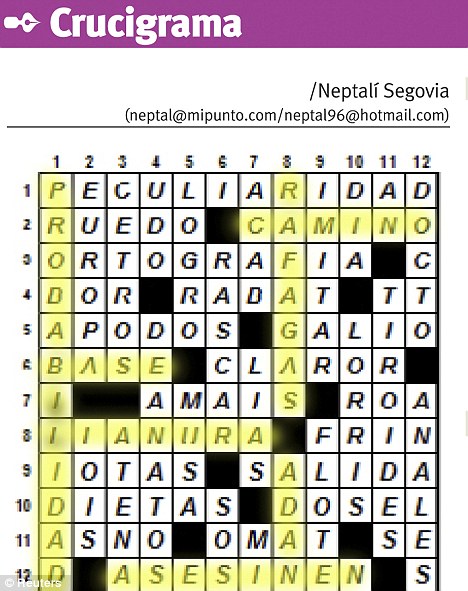
In Venezuela, a newspaper has been accused multiple times of hiding encrypted messages within their daily crossword puzzles in order to incite revolt against the government.

Another Venezuelan newspaper was accused of concealing messages ordering the assassination of a public official named Adan, the brother of President Hugo Chavez!

article-0-130C1EBE000005DC-570_468x591

Some of the answers considered suspicious in the grid included “Adan,” “asesinen” (meaning “kill”), and “rafaga” (which can mean either a burst of gunfire, or a gust of wind).

Apparently this confluence was considered enough to warrant a half-dozen members of the intelligence service visiting the newspaper’s editorial office.

Now, were these cases of genuine secret messages being passed through the crossword, or were these coincidental events that appeared credible because the crossword/secret message concept has been part of pop culture for decades?

I leave that question to you, fellow puzzlers.

Can you think of any examples of crosswords with secret messages in pop culture or intersections of crosswords and spycraft that weren’t mentioned here? Let us know in the comments section below! We’d love to hear from you.


dailypopwsicon

Well, summer’s over, but we still have deals galore for you to check out. You can find them on the Home Screen for Daily POP Crosswords and Daily POP Word Search! Check them out!

Thanks for visiting PuzzleNation Blog today! Be sure to sign up for our newsletter to stay up-to-date on everything PuzzleNation!

The Boswords Themeless League Returns Soon (Plus Some Puzzle Activism!)

boswords new

The Boswords summer crossword tournament has been a highlight of the puzzly calendar for years now, but during the pandemic, they also made a splash with their Fall and Spring Themeless Leagues.

And registration is now open for the Boswords 2021 Fall Themeless League!

If you’re unfamiliar, the Fall Themeless League is a clever weekly spin on traditional crossword tournament-style solving. Instead of cracking through a number of puzzles in a single day (or two), the Fall Themeless League consists of one themeless crossword each week, scored based on your accuracy and how fast you complete the grid.

120718_crossword_L

Each week’s puzzle only has one grid, but there are three sets of clues, each representing a different difficulty level for solvers. Smooth is the least challenging, Choppy is the middle ground, and Stormy is the most challenging. (When solvers register to participate, they’ll choose the difficulty level that suits them best.)

Sign up, and you get two months of puzzly fun running through October and November!

Plus, they’ve already announced a dynamite lineup of constructors for this season’s puzzles. Here’s the full list: Evan Birnholz, Kameron Austin Collins, Mollie Cowger, Debbie Ellerin, Leslie Rogers, Quiara Vasquez, Byron Walden, Nam Jin Yoon, and the team of Angela Olson Halsted and Doug Peterson.

There’s a terrific mix of established names and up-and-coming constructors there, and I expect the season to be a terrific exploration of the best of themeless crosswords.

tumblr_nnl5c43Ov61qd4fqho1_500

The project is once again being spearheaded by the dynamic duo of John Lieb and Andrew Kingsley, and Brad Wilber will be the puzzle editor.

It’s only $30 to enter as an individual participant ($40 for Pairs), but there’s also a student/discount level for participants who may find the $30 price tag too steep. (There are also puzzle packets from the previous Themeless Leagues available for $10 apiece.)

The Boswords Seasonal Themeless League events have not only opened my eyes to the creativity and skill required for themeless crosswords, but they’ve become some of my favorite parts of the puzzly calendar.

Be sure to click this link for more information, sample puzzles, instructional videos, and more.

And you can check out our thoughts on both the 2020 Fall Themeless League and the 2021 Spring Themeless League for more info as well!


Puzzling and charitable acts often intersect. This is true of the Boswords team with their wonderful discounted option for participants, as well as their donation to Boston-based charities from the proceeds of their summer tournament

And while we’re discussing the intersection of puzzling and doing good, it’s worth mentioning that there are numerous examples of crossword projects working hand-in-hand with social activism for the greater good.

Queer Qrosswords and Women of Letters are just a few examples. All of them provide puzzle bundles for you to enjoy if you show them that you’ve donated to worthwhile charities and other helpful groups and causes.

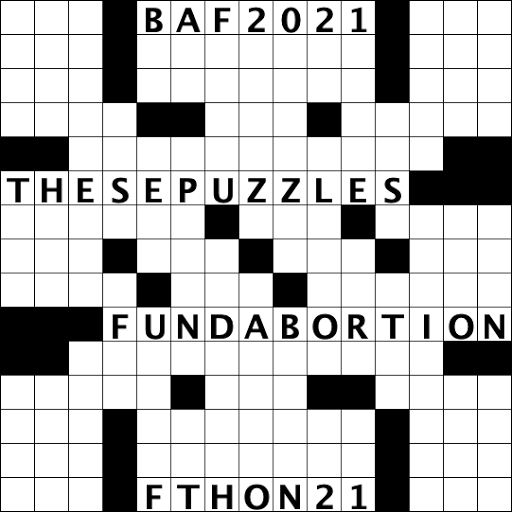
But there’s another one you might not have heard about: These Puzzles Fund Abortion.

This puzzle packet, originally created to raise funds for the Baltimore Abortion Fund, contains the work of over a dozen constructors, and serves as a marvelous incentive to donate to abortion funds all over the country.

Please click this link hosted by Just Gridding for more information. It’s a terrific way to do some good.


dailypopwsicon

Have you checked out our special summer deals yet? You can find them on the Home Screen for Daily POP Crosswords and Daily POP Word Search! Check them out!

Thanks for visiting PuzzleNation Blog today! Be sure to sign up for our newsletter to stay up-to-date on everything PuzzleNation!

5 Questions for Author and Crucinova Editor Lisa Bunker

Welcome to 5 Questions, our recurring interview series where we reach out to puzzle constructors, game designers, writers, filmmakers, musicians, artists, and puzzle enthusiasts from all walks of life!

It’s all about exploring the vast and intriguing puzzle community by talking to those who make puzzles and those who enjoy them! (Click here to check out previous editions of 5 Questions!)

And we’re excited to welcome Lisa Bunker as our latest 5 Questions interviewee!

Lisa Bunker is a lifelong puzzle fan and a constructor whose work has appeared in Games Magazine, The New York Times, and Simon & Schuster publications. Of course, this is in addition to her work as an author, an activist, and a representative for the state of New Hampshire.

But now having returned to the world of puzzles, Lisa is probably best known these days as the creator and editor of Crucinova, one of the most ambitious and innovative puzzle outlets on the rise in the puzzleworld today. (You might have seen them included in the Boswords puzzle packet, on r/crossword, or on Twitter!)

Lisa was gracious enough to take some time out to talk to us, so without further ado, let’s get to the interview!


5 Questions for Lisa Bunker

1. How did you get started with puzzles? Where did the idea for Crucinova originate?

Since infancy I’ve been fascinated by words, numbers, and the beautiful patterns that can be made with them. My childhood collection, still with me, was mechanical puzzles. My earliest memory of crosswords in particular is of becoming aware that my parents were interested in them, and then trying to make one for my father. I think this would have been when I was about eight.

It was a free-form vocabulary-style puzzle, and I recall my young brain delighting in discovering how you could cross two words at a shared letter, and then add more words and build something. By high school I had a hand-drawn grid in the back of a notebook that I would work on when I was bored in class, so by then I was figuring out how interlocking fill worked. I erased some squares so many times that I wore holes in the paper.

Crucinova arose out of several factors. One was my frustration at being unable to place unconventional puzzle ideas with any of the mainstream outlets. Also, on the solving side, my wife and I started doing the New York Times puzzle every day, and while we enjoyed it and still do, they did all seem to fall within narrow conventions with regard to themes, grid design, and cluing – the same conventions I remembered from twenty years ago.

I’ve always been interested in reinventing things, so I started thinking, surely there are other constructors with creative ideas they’re having trouble placing, and surely there are other solvers who would enjoy exciting new solving experiences. And when I found out that there was now a platform available that empowered anyone to offer online solving – PuzzleMe, from AmuseLabs – the last piece fell into place.

2. You have recently returned to constructing after a hiatus. How has the puzzle world changed over time? As you start to interact with the puzzle community at large again, what have you learned along the way?

I hesitate to set myself up as an expert on the Crossworld of yore, but obviously the Internet has changed everything. Back in 2006, the last time I was active nationally, most puzzles were still printed in daily publications rather than posted online, and submissions to the Times were still by snail mail. If there was online community around solving, I was not aware of it.

Now we have not only online solving from all the major outlets (including new ones like the Atlantic and the New Yorker), but also several indie subscription services and dozens of free personal constructor blogs, a thriving solver’s blog scene, indie tournaments, and abundant spaces on social media platforms for both constructors and fans to gather and share their enthusiasm. There are even Twitch TV channels where you can watch live solving, which I love. As an editor I find it so valuable to be able to witness someone solving a grid I edited.

What I’ve learned along the way is that the denizens of the Crossworld are truly lovely humans, generous, smart, funny, and kind. I’ve learned that there is a wonderful tribe to which I didn’t even know I belonged. What a delightful discovery!

3. Over the last few years, there has been a push for greater representation in crosswords for women, people of color, and members of the LGBTQIA+ community. And there has been some movement forward, particularly for women in constructing and in editorial positions. How do we keep this momentum going? What are some useful things that allies can do to assist?

One way, obviously, to keep the momentum going is by supporting and celebrating diverse creators. As a Rainbow Human myself (I identify as trans, non-binary, and queer), I took inspiration from The Inkubator‘s mission to feature the work of female-identified constructors and to include more diverse content in fill and clues.

I’m also impressed with Sid Sivakumar’s new Juggernaut puzzles, which specifically foreground South Asian culture and content, and by the Queer Qrosswords project, which has sought to raise money for LGBTQ+ causes. I think there’s a ton of room for more culture-specific work like this, created by people from the cultures in question.

Another thing we can all do to help is to continue to encourage more new diverse folk to get involved in constructing. I would estimate that three quarters of submissions to Crucinova still come from straight white men. All submissions are welcome…but what can we do to empower everyone else? How do we continue to deconstruct unspoken assumptions about who is and isn’t allowed to do this work? It’s an endless project in which we are all involved.
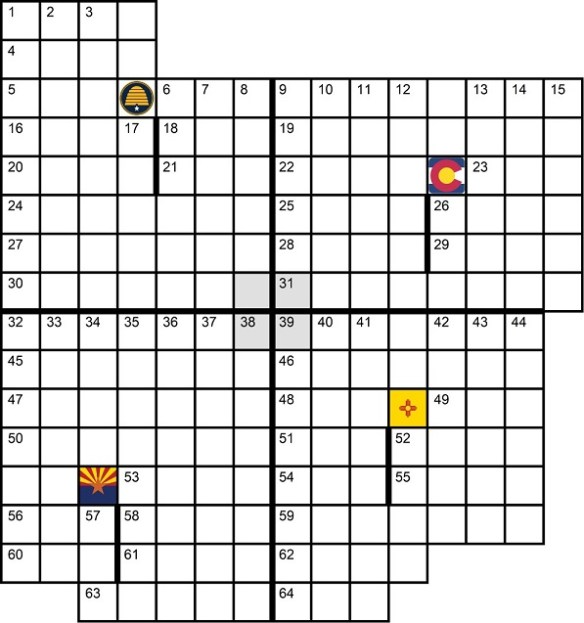
[The diabolical grid from Michael Buerke’s Quadripoint puzzle,
one of the free sample puzzles on the Crucinova website.]

4. What’s next for Lisa Bunker? What’s next for Crucinova?

Crosswords are actually not my main gig. I’m a writer first and foremost. At the moment I have two books out on submission, one a Young Adult fantasy with gender-revolutionary elements, the other a pointed political novel for adults about what we all went through together in the year 2020.

I also have an exciting new collaboration in the works about which I’m not yet at liberty to say anything specific, and I have ideas for three or four more books in the pipeline. So, my plan for the foreseeable future is to just keep writing, while also keeping Crucinova humming along, turning out an excellent puzzle each week.

As for Crucinova, it is still in its early stages, so for now the plan is to keep trying to grow the business. I’ve committed to paying my constructors, so I need a certain number of subscribers to break even, and so far we are some hundreds of memberships away from that goal.

Long term, if we manage to become self-sustaining, I can imagine putting out books of Crucinova grids, and possibly some special projects – spearheading the effort to get a crossword emoji, for example. Crucinova is a business, and I think it’s crucial for businesses to find a way to give back, so as soon as we have any profits to share, I’ll be wanting to find a way to share them.

5. What’s one piece of advice you would offer fellow solvers, aspiring constructors/setters, and puzzle enthusiasts?

To solvers I would say, please consider paying for your puzzles. I know that many excellent constructors are offering their work for free, which is their right and which benefits us all, but at the same time, constructing is an art, and I think artists should be paid for their work.

My advice to constructors comes from what I’ve learned transitioning from constructor to editor. When you’re making puzzles, you are free to imagine all kinds of wild and amazing things. Coolness of concept can become an end in itself, and I totally get that. But when you are selecting and editing puzzles, you have to think about giving solvers a satisfying puzzle experience. I get so many submissions to which my response has to be, I’m amazed by what you’ve made here, but I can’t see how to turn it into something fun and fair for my subscribers. So the advice is, think of the solver.

To puzzle enthusiasts everywhere, of whatever stripe, I would simply say, I feel you. I share your geeky joy. Let’s keep doing what we love, and keep lifting each other up.


A huge thank you to Lisa for her time. You can follow her on Twitter for updates on all of her various projects, and be sure to check out Crucinova for some very cool, experimental, and outside-the-box puzzles. Whatever she and the Crucinova constructors cook up next, you know it’s going to be great.

dailypopwsicon

Have you checked out our special summer deals yet? You can find them on the Home Screen for Daily POP Crosswords and Daily POP Word Search! Check them out!

Thanks for visiting PuzzleNation Blog today! Be sure to sign up for our newsletter to stay up-to-date on everything PuzzleNation!