The 2021 Boswords Fall Themeless League: Looking Back

boswords new

After two months of challenging, engaging, and thoroughly enjoyable weekly solving, the Boswords 2021 Fall Themeless League came to a close last week.

If you’re unfamiliar, the Boswords 2021 Fall Themeless League spreads out a tournament-style solving experience over nine weeks, one themeless crossword per week. Each puzzle is scored based on your answer accuracy (incorrect letters, empty squares, etc.) and how quickly you complete the grid.

While each week’s puzzle only had one solution, there were three sets of clues, each representing a different difficulty level for solvers. Smooth was the least challenging, Choppy was the middle ground, and Stormy was the most challenging. (When solvers registered to participate, they chose the difficulty level that suited them best.)

Hundreds of solvers signed up for the challenge of two months of themeless puzzle solving and a bit of friendly competition, and now that it’s over, I’d like to share a few thoughts about my experience in the League.
With the previous two Themeless League events under my belt, I had a good sense of what to expect both from the puzzles and from myself.

Although I rarely solve online — and I solve themed crosswords far more often than themeless crosswords — I now have a good base to build on.

Unfortunately, I accidentally signed up for the wrong difficulty level this time around. The previous two seasons, I’d opted for the middle ground, Choppy. I signed up for Stormy by mistake, and didn’t realize my error until I logged in and prepared to solve the season’s first puzzle.
120718_crossword_L

As you might expect, being freed from the shackles of themed puzzle building allows constructors to really flex their creative muscle, indulging all sorts of curious and unexpected vocabulary as they cross long entries and employ fewer black squares in these impressive grids.

And since I’d mistakenly opted for the toughest level of cluing, I also saw the decidedly clever and devious side of each constructor as I navigated tricky wordplay and more challenging clue content.

The first puzzle of the season immediately showed me what I’d gotten myself into. I didn’t know the number of operas Beethoven had written, or who spoke what ended up being a Madonna quote, or what Mohsin Hamid’s “Exit West” was about.

I hit nearly half an hour with my solving time, which I think was a ten-minute increase from my performance in the previous League’s debut puzzle.

Although I would have better performances later in the season — my time averaged out to 24:48 across eight puzzles — that was definitely a shot right across the bow of my confidence.
tumblr_nnl5c43Ov61qd4fqho1_500

I could have contacted the organizers and asked to be moved over to Choppy. I’m sure they would have accommodated me; the Boswords team is terrific.

But instead, I decided to throw myself into the deep end and stick with Stormy and see how it went.

As I expected, it was quite a challenge. But I trusted my instincts more — filling in more guesses at the start, rather than letting them sit empty until crossing words offered confirmation — and overall, I enjoyed the experience. Sure, I was a little disheartened at how my season started, but knowing that I was competing — however slowly — at the steepest level available pushed me to keep going.

I’ve never been the fastest solver to begin with — doesn’t matter if it’s pencil and paper or on a computer — and I rarely time myself when I solve in my free time. But I kept setting different goals each week. If I had half the grid filled by a certain time, I’d set a time to beat based on that. I didn’t always succeed, but more often than not, I kept my time below whatever goals I’d set.

(Still, I dare not look at the times of the top performers, lest I despair once more. Heh.)

In the end, my individual rank was 220 (out of 303 Stormy solvers), and my overall rank was 251 (out of the 871 individual solvers). Not too shabby. A staggering 1253 people participated in this season’s event,
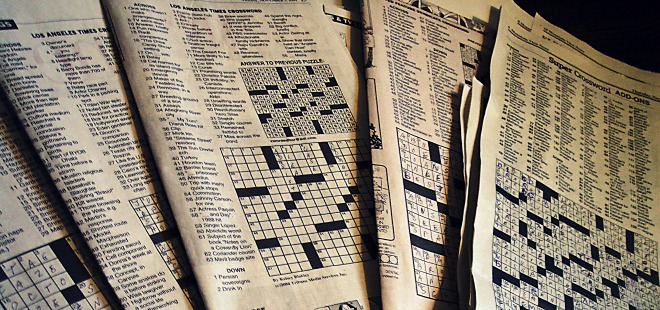
As for the puzzles themselves, they were solid. The vocabulary — particularly the longer entries — was incredibly creative and unexpected. And the constructors were fantastic.

Each brought their own style and flavor to the competition, and it was great to see well-established names like Byron Walden, Evan Birnholz, Kameron Austin Collins, and the dynamite duo of Doug Peterson and Angela Olson Halsted mixed with newer names to the field like Mollie Cowger and Quiara Vasquez.

All in all, I enjoyed the Fall Themeless League. (Although I was more comfortable with the solving interface and I had a better handle on themeless solving, given that this was my third go-around, I still felt like a rookie tackling the Stormy-level clues.)

I think when the Spring Themeless League rolls around, I’ll try Stormy again. Now that I have a baseline to compare it to, I’d like to see how I can improve.

And with the promise of future Boswords-hosted events in 2022 like the Winter Wondersolve event on February 6th and the Spring Themeless League, it’s nice to have exciting puzzle events to look forward to in the near future.

They’ve already announced the teams for each! The Winter Wondersolve will be constructed by Kate Chin Park, Christina Iverson, Adesina Koiki, and Matthew Stock.

The Spring Themeless League will be handled by Adam Aaronson, Wendy L. Brandes, Katja Brinck, Julian Lim, Frank Longo, the team of Sophia Maymudes & Kyra Wilson, Ada Nicolle, Robyn Weintraub, and one constructor to be named later.

(Yup, a mystery constructor. They’re actually selecting them based on an open submission process, the details of which will be announced tomorrow, Wednesday 12/8! How cool is that?)

Kudos to everyone who helped bring this marvelous project together, and kudos to everyone who participated. It was tough, but also a great deal of fun.


   dailypopwsicon

Treat yourself to some delightful deals on puzzles. You can find them on the Home Screen for Daily POP Crosswords and Daily POP Word Search! Check them out!

Thanks for visiting PuzzleNation Blog today! Be sure to sign up for our newsletter to stay up-to-date on everything PuzzleNation!
Sweep Your Eyes Across These Ugly Puzzly Sweaters!

proper ugly sweater

It’s December, and you’ve probably already received an invitation to some sort of holiday event. Maybe it’s a housewarming, or a holiday luncheon, or a game night. But, maybe, it’s an ugly sweater party.

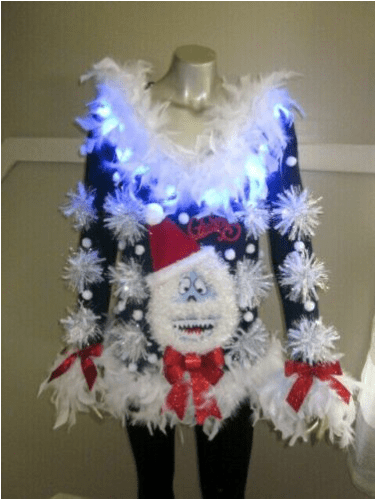
Ugly sweater parties used to be events that ironically appreciated sweaters that were made with genuine affection, but simply didn’t please the eye. But once ugly sweaters became a part of pop culture, they became, as all things do, a cottage industry, and now companies release “ugly” Christmas sweaters for every pop culture property imaginable.

Most of them are simply underwhelming — and a few are often actually quite lovely — but none of them really capture the spirit of the original ugly sweater party ideal.

abominable sweater

Of course, there are exceptions.

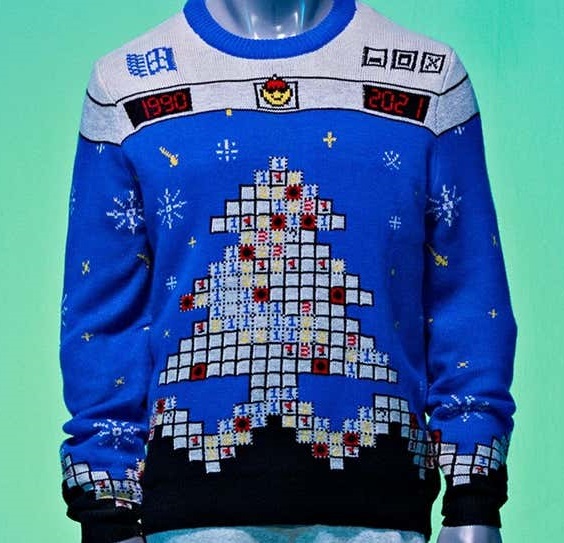
And then, there are the ones I’m on the fence about. Check out this Minesweeper-inspired ugly sweater from Microsoft:

minesweeper sweater

It’s not garish by any means. It’s cleverly designed and weirdly festive. But I also can’t imagine anyone buying it.

It’s certainly unique.

But it raised the question…

What other puzzly ugly sweaters are out there? Would they all feel too corporate like the modern ugly sweater patternings, or could I find some genuine diamonds in the rough?

Let’s find out, shall we?


Of course, when you type “puzzle ugly sweater” into Google, you find an amazing array of jigsaw puzzles featuring ugly sweater designs. And honestly, what a great idea for an image for a jigsaw. The riot of colors alone would make for a pretty fun jigsaw solving experience.

So I started pairing different puzzle brands with “ugly sweater” in my searches, and I began to yield some results, however mixed.

rubiks color sweater

There’s this Rubik’s sweater design, which I find a bit meh. It’s nice, it’s unoffensive. But it’s not the colorful visual assault I was hoping for.

I mean, look at this Rubik’s hoodie on Amazon. At least that seems to be trying to overwhelm your senses.

ugly rubik hoodie

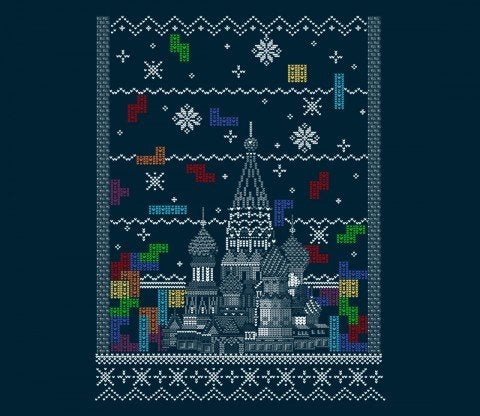
So what about Tetris? Tetris is part of the fabric of modern puzzling. Surely there must be some Tetris-fueled designs for ugly sweaters.

tetris moscow sweater orig

The first result I found was this pattern, which is actually quite lovely. It’s discontinued in its original sweater form, but lives on as a print for t-shirts.

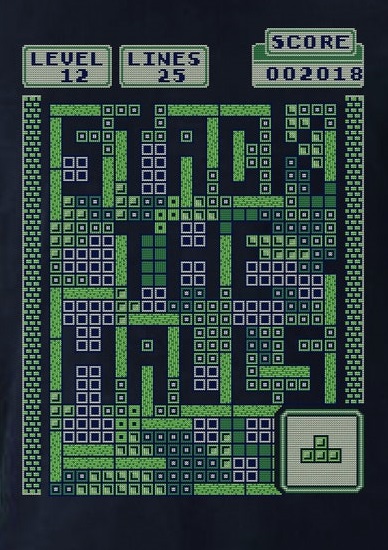
tetris stack shirt

There’s also this festive message delivered in the style of the monumentally successful Game Boy Tetris version of the puzzle classic. (I’ll probably end up ordering this shirt.)

These are festive, but hardly fit the ugly sweater criteria.

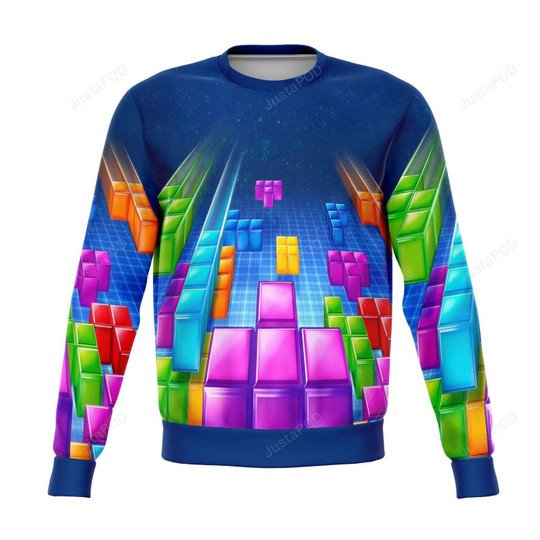
falling tetris sweater

Okay, now we’re getting somewhere. It’s not particularly Christmas-y, but it does manage to barrage the eyes with color.

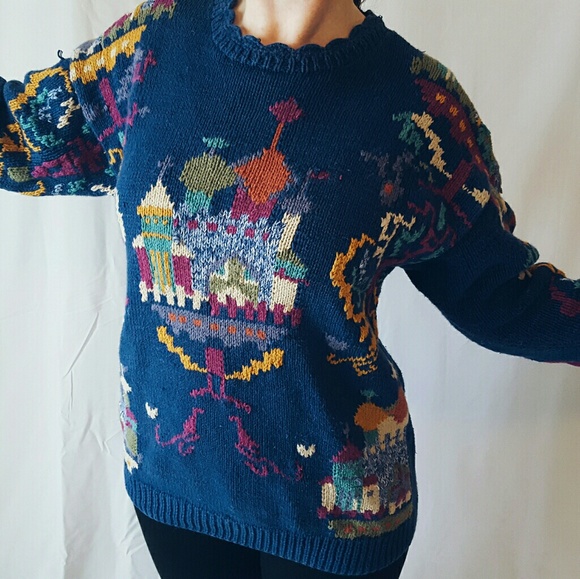
ugly tetris sweater

I found this one on Poshmark, and supposedly it won some sort of ugly sweater contest. Not sure who judged that one. This isn’t great, but it’s hardly ugly.

Alas, where else can we look?

math sweater

Well, there’s this ugly sweater-patterned take on the math puzzles that periodically circulate on social media. I couldn’t find it in actual sweater form, but it’s a start.

(It also exemplifies the unsatisfying corporate nature of the modern ugly sweater pattern. Festive borders on the top and bottom, and the hook in between. Nothing on the sleeves or back, no real effort involved.)

Finally, I turned my attention to crossword-specific sweaters, and I struck gold. None of these are particularly festive, but you could slap a bow on them and get past any discerning bouncer at the ugly sweater party of your choice in these.

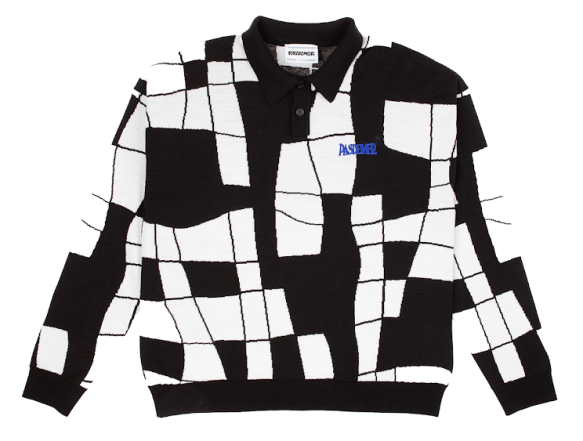
pas de mer crossword sweater

This pas de mer sweater feels like you’re looking at a cryptic crossword grid through a funhouse mirror.

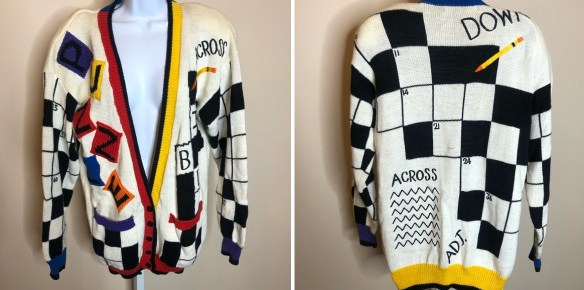
poshmark diffusion crossword sweater

I also found this sweater on Poshmark. You’ll be heartbroken to discover it’s already been sold. But man, you could easily wear this one at the crossword tournament or ugly sweater party of your choice and turn a few heads.

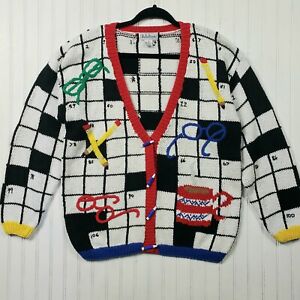
ebay ugly sweater

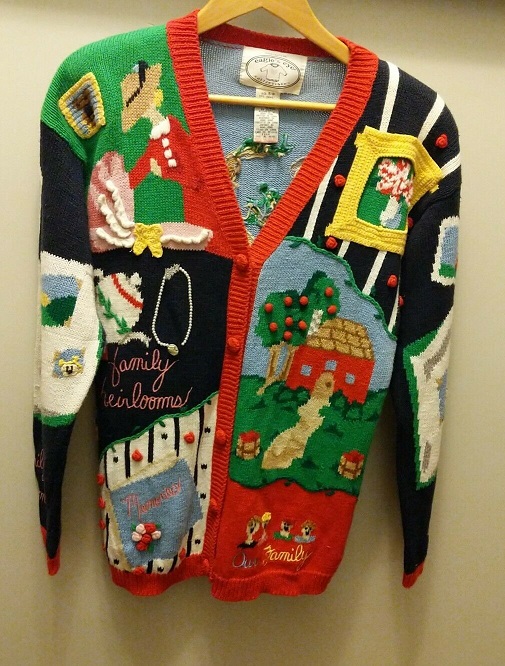
I wish I could find a bigger picture of this one somewhere. It was clearly made with love, and it’s one of the few that actually feels like a proper crossword grid.

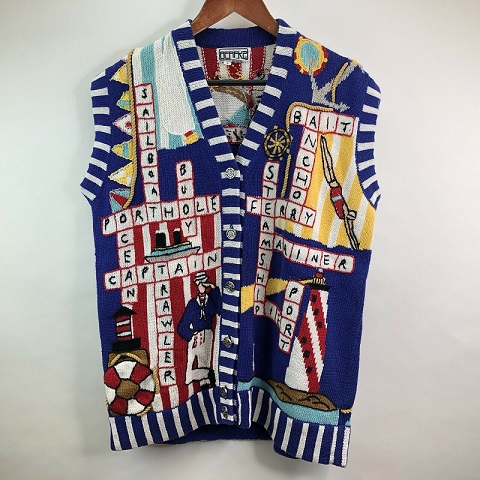
crossword sweater vest

What is it about a sweater vest that somehow makes this worse than a normal sweater? Maybe it’s how the boxes don’t quite line up, or the two-letter words trailing off near the armpits. Man, this is pretty bad.

boating crossword sweater

And this one, fellow puzzlers, was the pièce de résistance. The random crisscross placement. The color palette. The way the lighthouse beam doesn’t make it past the center buttons, condemning the proud cross-legged sailor nearby to a disastrous collision with the rocks near the shore.

This might not be a Christmas sweater, but man, does it fit the bill in every other way.

Do you have any favorite ugly sweater designs? Are any of them puzzle-fueled? Let us know in the comments section below! We’d love to hear from you.


   dailypopwsicon

Treat yourself to some delightful deals on puzzles. You can find them on the Home Screen for Daily POP Crosswords and Daily POP Word Search! Check them out!

Thanks for visiting PuzzleNation Blog today! Be sure to sign up for our newsletter to stay up-to-date on everything PuzzleNation!
Farewell, Stephen.

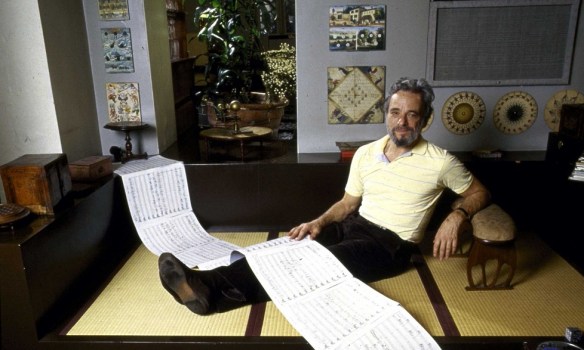
StephenSondheim-2020-GettyImages-50314607

[Image courtesy of Vanity Fair.]

Most people know him as a titan of Broadway and the American stage, the composer and lyricist behind dozens of iconic works, spanning decades. West Side Story. Gypsy. Into the Woods. A Funny Thing Happened on the Way to the Forum. (My personal favorite? Assassins.)

Even as someone with a degree in theater, I don’t feel qualified to discuss or summarize his impact on the stage. It’s monumental. Incalculable. Iconic.

But as a puzzle enthusiast, I do feel qualified to discuss his influence in that realm. You see, Stephen Sondheim occupies a curious space in the history of puzzles.

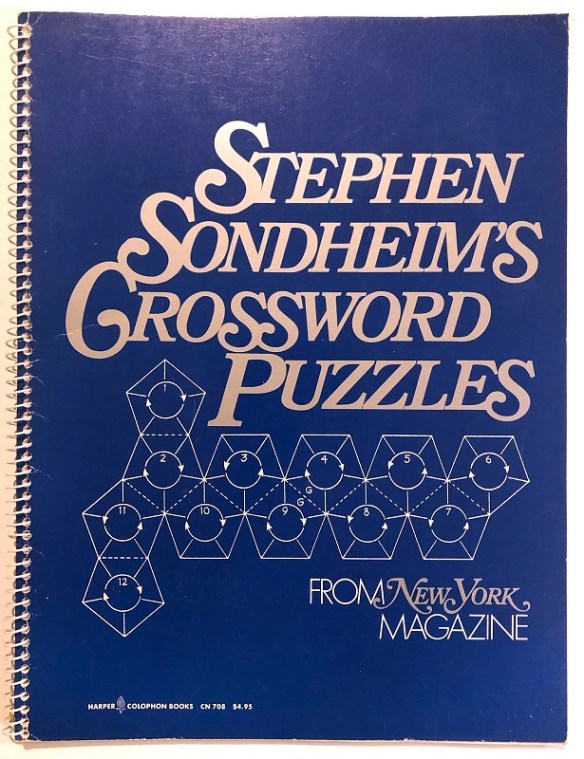
sondheim

He created cryptic / British-style crosswords for New York Magazine in the late 1960s, helping to introduce American audiences to that devious and challenging variety of crosswords.

In fact, he famously wrote an article in that very same magazine decrying the state of American crosswords and extolling the virtues of cryptic crosswords. (He even explained the different cluing tricks and offering examples for readers to unravel.)

Sondheim was an absolute puzzle fiend. His home was adorned with mechanical puzzles, and he happily created elaborate puzzle games. Some of them were featured in Games Magazine! In his later years, he was also an aficionado of escape rooms. (Friend of the blog Eric Berlin shared a wonderful anecdote about Sondheim here.)

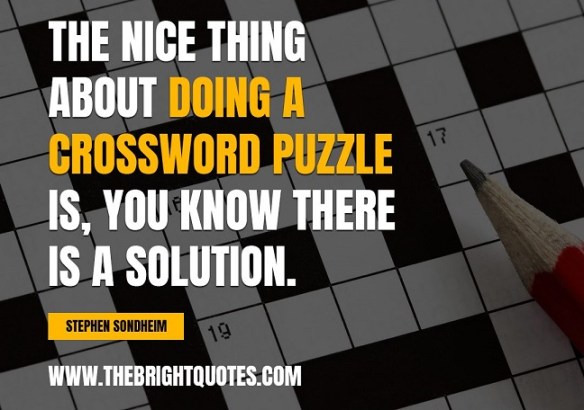
uplifting-things-crossword-the-nice-thing-about-doing-a-crossroad-puzzle-is-you-know-the-answer-1080x760

He also represents another link in the curious chain that seems to connect musicians with crosswords. Prominent constructors like Patrick Blindauer, Brian Cimmet, and Amanda Rafkin, as well as top crossword tournament competitors like Dan Feyer and Jon Delfin also have musical backgrounds.

In the crossword documentary Wordplay (and quoted from the article linked below), former New York Times Public Editor Daniel Okrent mentioned why he felt that musicians and mathematicians were good fits as crossword solvers:

Their ability to assimilate a lot of coded information instantly. In other words, a piano player like Jon Delfin, the greatest crossword player of our time, he sits down and he sees three staffs of music and he can instantly play it. He’s taken all those notes and absorbs what they mean, instantaneously. If you have that kind of mind, and you add it to it a wide range of information, and you can spell, you’d be a really great crossword puzzler.

Sondheim certainly fits the bill.

He will forever be remembered for his musical creations, and that legacy far overshadows his work in puzzles. But as someone who opened the door to a new brand of puzzle solving for many people, Sondheim will also have the undying loyalty, respect, and admiration of many puzzlers around the world.

We wholeheartedly include ourselves in that crowd of admirers.

Farewell, Stephen. Thank you.


   dailypopwsicon

Treat yourself to some delightful deals on puzzles. You can find them on the Home Screen for Daily POP Crosswords and Daily POP Word Search! Check them out!

Thanks for visiting PuzzleNation Blog today! Be sure to sign up for our newsletter to stay up-to-date on everything PuzzleNation!
Who Is The “Average Solver”?

In crossword forums, the comment sections of crossword blogs, and virtually any other online space where people share their thoughts on puzzles, you’re bound to see the same criticism over and over.

“The average solver wouldn’t know ____.”

I saw a comment on a r/crossword reddit forum recently, regarding the November 11 USA Today puzzle. 10-Down was clued “Spoons,” and the answer word was ENERGY. The poster was baffled.

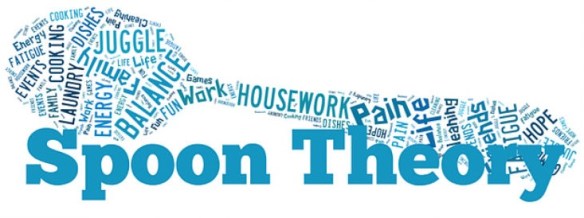
(If you’re among those who didn’t get the reference, this clue references Spoon Theory, a concept common to those who suffer from chronic pain, fatigue or other debilitating conditions, regarding how many “spoons” a certain activity costs. It’s a way of quantifying how their condition affects their daily life.)

After it was explained, the poster asserted that “nobody” would make the connection between spoons and energy.

Now, no matter what you think of that clue — I personally would have gone with something like “Spoons, to some” or “Spoons, metaphorically” — it’s plainly false that NOBODY would make that connection.

Is it commonplace? Depends on how old you are and in what circles you travel, it seems. (Based on an informal poll I conducted, people 35 and younger are far more likely to know it.)

But one must never mistake their own unfamiliarity with a term for genuine obscurity. And I don’t say this out of judgment. It’s a mistake I’ve made myself on more than occasion. Heck, earlier this year, I did so when reviewing a tournament puzzle. I felt an entry (a hybrid fruit) was too obscure, only to discover others found it fairly common. Live and learn!

Another example where someone questioned the “average solver” was recently shared on Twitter. Constructor Malaika Handa shared part of a Crossword Fiend review:

She pointed out that this assumes that the “average solver” isn’t of Latino descent.

(It’s also worth noting that AREPAS is a more interesting entry than ARENAS, but I digress.)

What do you picture when you imagine the “average solver,” I wonder?

Because I think about those two nebulous measuring sticks a lot: “nobody” and “the average solver.” While they can be valuable to consider, they’re also very misleading.

I mean, what does the “average solver” know? European rivers? Football players? Greek letters? Classical composers or K-Pop bands? How many people would know ETUI if not for crosswords? It’s hardly commonplace.

Do they know those things AND solve crosswords, or do they know those things BECAUSE they solve crosswords? If constructors start regularly cluing or referring to spoons or arepas, then they become part of crossword vernacular, and then the “average solver” might be expected to know them.

Quite a slippery slope when you really start digging, isn’t it?

Plus, there’s more than one average solver, depending on how you look at it. Every outlet has a different “average” solver, and they’ll change over time.

Take PuzzleNation for example. Our Facebook audience is different from our Twitter audience, which is different from our blog audience. But there is overlap. We know there are Daily POP Crosswords and Daily POP Word Search solvers among all of those groups. But that’s five different “average solvers” to consider at the minimum.

tumblr_nnl5c43Ov61qd4fqho1_500

That’s the challenge, isn’t it? Every crossword constructor walks a tightrope, trying to keep their puzzles fresh while still appealing to solvers.

And, as recently pointed out in a New York Times piece, the Internet has accelerated the proliferation of new slang and terminology. Words become part of the modern vernacular much faster now. (And every time The Oxford English Dictionary adds new words, we get a sense of how deeply some of these new terms have embedded themselves.)

Personally, I think crosswords are better when we’re learning from them. I’d rather have to look up a word or assemble it from familiar crossings — and broaden my own vocabulary and knowledge — than see the same old fill. Those European rivers. Those composers. Those Greek letters.

More spoons and arepas, please. If there is an ideal average solver out there, let’s teach them something new.


   dailypopwsicon

Treat yourself to some delightful deals on puzzles. You can find them on the Home Screen for Daily POP Crosswords and Daily POP Word Search! Check them out!

Thanks for visiting PuzzleNation Blog today! Be sure to sign up for our newsletter to stay up-to-date on everything PuzzleNation!

A Cracking Collection of Crossword Clues

Someone recently asked me about my favorite crossword clue, and after mentioning four or five off the top of my head, I cut myself off and tried to explain that it’s impossible for me to pick one.

So many clues are out there that surprised me, or outwitted me, or made me laugh, or made me think in an unexpected way. I could never narrow it down..

Regular readers who have seen my reviews of various crossword tournament puzzles will recall I like to highlight favorite clues.

I actually keep track of clues from constructors as I solve various crosswords. Not only are they often witty, hilarious, and/or impressive, but they inspire me as a puzzler to always try to find entertaining, engaging new angles for these crucial crossword elements.

So today, I’d like to pull some favorites from my personal clue vault and give them some time in the spotlight.

(I’m crediting the constructor listed on the byline for each clue. These clues may have been created elsewhere and reused, created by the constructor, or changed by an editor, I have no way of knowing. So I’m just doing my best to give credit where credit is due.)

Misdirection

I love a good misdirection clue, because it not only has a straightforward meaning that sends you one way, but it has a true secondary meaning that usually only emerges once you’ve considered the clue for a bit.

Constructor Amanda Rafkin has a knack for these sorts of clues, delivering terrific examples with “Decline a raise?” for FOLD and “One who’s pro con?” for NERD.

It’s particularly great when a constructor can use a misdirection clue to put a new spin on a word you’ve seen dozens of times before. Peter Gordon did just that with both TYPO (“Character flaw?”) and AHS (“Sounds made with depressed tongues”), and even manages to be topical whilst doing so, as he did with the clue “Page with lines of dialogue” for ELLIOT.

Yacob Yonas took an awkward RE- word — all too common in crossword grids — and made it shine when he clued REHEM as “Take up again, say.” Priyanka Sethy did the same with a multi-word answer when she clued IGOTIT with the delightful “Catch phrase?”

Brendan Emmett Quigley covered up an ugly abbreviation answer — ECG — with a banger of a clue: “Ticker tape?”

As you can tell, misdirection clues are absolutely a favorite of mine.

hofstadter

[Image courtesy of XKCD.]

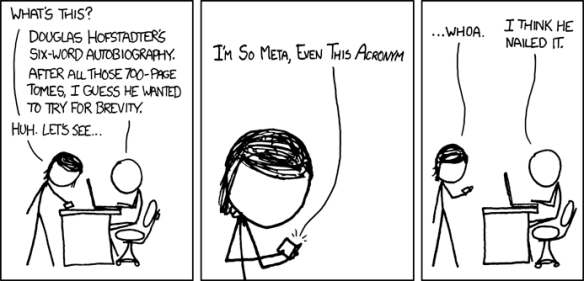
I also can’t resist clues that get a little meta, playing with the format of cluing itself.

TYPO appears for a second time in today’s post, but the cluing is totally different, as Andrea Carla Michaels offered this meta treat: “Something annnoying about this clue but hopefully no others!”

And Francis Heaney went out of his way to word to clue the word AUTOMOBILES in a manner you’ll never forget: “‘Humorous People in ____ Acquiring Caffeinated Drinks’ (Jerry Seinfeld series whose name I might be remembering incorrectly)”

Using multiple examples in a clue not only shows off the variety of definitions some words have, but allows constructors to juxtapose these meanings in entertaining fashion.

Janie Smulyan deftly shows off this technique by cluing SPELLS “Some are dry, some are magic.” Concise and clever.

“Beehive part, or beehive parter” for COMB was Sid Sivakumar’s tricky way to use multiple meanings twice!

And although this Hannah Slovut offering isn’t as concise as the others in this clue for SEE, it’s still a terrific example of employing multiple uses of a word: “Different tense of ‘saw’ that may precede ‘saw'”

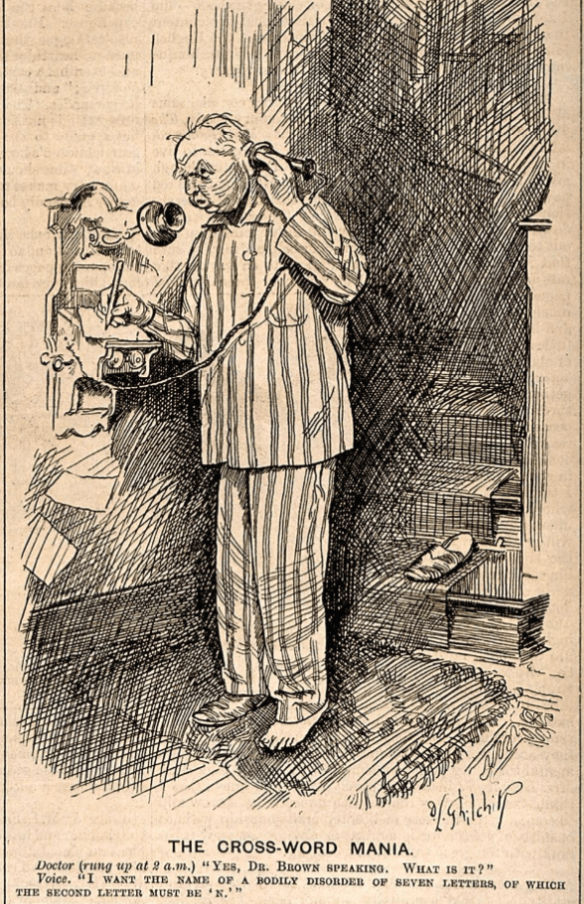
ghilchip

[Image courtesy of David Louis Ghilchip.]

I know some crossword outlets aren’t fans of using clues that specifically reference each other — “With 21-Across, name of Charlie Chaplin film,” for instance — but other publishers are completely fine with this style of cluing.

Naturally, that allows constructors to have some fun making connections and using clues to reference each other.

Hannah Slovut utilized this technique in a recent puzzle, cluing STYE as “Ailment that might be seen near 63-Across.” (63-Across was the exclamation MYEYE.)

There are all sorts of cluing styles we didn’t cover in this post — trivia clues, fill-in-the-blank, clues that use capitalization or pronunciation to mislead the solver — but hopefully we’ll get to them in a future blog post.

misdirection-image-1486812621

In the meantime, how about a few more misdirection clues for the road?

Brooke Husic made readers take a second look at a familiar word — “Surroundings?” — when she used it to clue SIEGES.

Catherine Cetta’s “Spot early on?” definitely sends you down the wrong path before you double-back and find the correct answer: PUP.

And we happily conclude with a clue from puzzle master Mike Shenk, who clearly had some fun with this one, cluing ANKLES with “They’re just over two feet.” Absolutely shameless.

Gotta love it.

What are some of your favorite crossword clues, fellow puzzlers and PuzzleNationers? Let us know in the comments section below! We’d love to hear from you.


dailypopwsicon

Halloween is almost here, and we have some spookily good deals for you to check out. You can find them on the Home Screen for Daily POP Crosswords and Daily POP Word Search! Check them out!

Thanks for visiting PuzzleNation Blog today! Be sure to sign up for our newsletter to stay up-to-date on everything PuzzleNation!

Crosswords as Pop Culture Shorthand?

In television and movies, there are a lot of different techniques for revealing character traits. While some shows spend time developing their characters and slowly revealing their traits to the audience, other shows rely on visual shorthand. You often see a letterman’s jacket for a jock, or glasses for a nerdy boy or a mousy girl.

The act of solving a crossword puzzle has also become visual shorthand in pop culture. Crosswords often serve as a universal sign of intelligence.

In an episode of Jimmy Neutron, Sheen is shown solving a crossword puzzle in ink. This is an instantaneous sign that his brainpower has increased. (And when Cindy points out that her dad does the same thing, Sheen one-ups her by saying the puzzle is from The Beijing Times.)

It could have been math or organization or memorization, but instead, they went with crosswords.

In The Wire, the show uses a scene with a crossword to reveal that there’s more to street-smart Omar Little than meets the eye. Before testifying at Bird’s trial, he helps the bailiff with a crossword clue, identifying the Greek god of war as Ares. The scene immediately punches holes in several stereotypes both characters and viewers might have about the character.

This also happens on Mad Men, where one of the founders of the company is solving a crossword, only to be corrected by one of the secretaries. For that brief moment, the playing field has been levelled.

And because crosswords are seen as this visual shorthand for intelligence, they’re also used as a intellectual measuring stick, for better or for worse.

Rachel on Friends struggled with a crossword for an entire episode to prove she didn’t need anyone’s help, but still has to obliquely obtain information from others to finish the puzzle.

In an episode of House, M.D., House goes speed-dating, and is initially intrigued by a woman who brought a crossword puzzle with her. But when he notices she’s filled in random words instead of actually solving it — in order to pass herself off as someone she’s not — he quickly bursts her bubble in typically acerbic fashion.

P.G. Wodehouse loved to reveal the intelligence — or lack thereof — of characters through the use of crossword clues as fodder for banter. And that’s because it works. The audience draws conclusions based on these interactions.

In a fifth-season episode of Angel, a doctor is shown asking his receptionist for random crossword clues, only to fail at answering several. This immediately colors the audience’s opinion of him.

Crosswords can also be used as a mirror to reflect differences between characters. On The West Wing, President Bartlet couldn’t get past his own presuppositions and assumptions to properly complete the puzzle, while the First Lady had no problem navigating the same puzzle because of her own diplomatic skills.

Similarly, the parents in an episode of Phineas and Ferb show off their dynamic while solving a crossword. The father implies that every answer is obvious, and then waits for his wife to actually provide the answer. It says volumes about him, her, and the two of them as a pair.

But all of this raises the question: is this fair? Is the one-to-one association of crosswords and intelligence in pop culture valid?

[Check out this stock image from Deposit Photo.]

Crosswords are, essentially, piles of trivia and information, crisscrossing vocabulary locked behind clever or vague cluing. But are intelligence and access to information the same thing?

I mean, we’ve discussed the issue of crossword accessibility in the past. Many female constructors, constructors of color, and LGBTQIA+ constructors are helping to change the language used in crosswords, but plenty of people still see them as the domain of older white men. Which implies it’s not actually intelligence, just what older white men deem to be reflective of intelligence.

For a long time, pop culture clues were considered unwelcome or verboten. Beneath the crossword, even. Different editors bring different definitions of what’s appropriate for the puzzle.

And if people associate crosswords with intelligence because of this visual shorthand, and they don’t see themselves reflected in the puzzle, then they suffer from that jagged flip side of the pop culture coin. They’re excluded because of the measuring stick.

I realize most of the examples I cite above are intended to be humorous. Bartlet’s wrong answers are meant to be funny, as is Rachel’s struggle or the dad’s inability to answer on Phineas and Ferb.

But it’s worth mentioning that anyone who feels like they’ve been rapped across the knuckles by the measuring stick carries that with them. I’ve seen it plenty of times when I tell somebody that I work in puzzles. If they “can’t do them,” they look down when they say it. They already carry that visual shorthand with them.

While it’s fascinating that crosswords are part of that immediately recognizable pop culture lexicon, I also kinda wish that they weren’t.


dailypopwsicon

Well, summer’s over, but we still have deals galore for you to check out. You can find them on the Home Screen for Daily POP Crosswords and Daily POP Word Search! Check them out!

Thanks for visiting PuzzleNation Blog today! Be sure to sign up for our newsletter to stay up-to-date on everything PuzzleNation!