The New York Times Crossword Now Accepts Online Submissions!

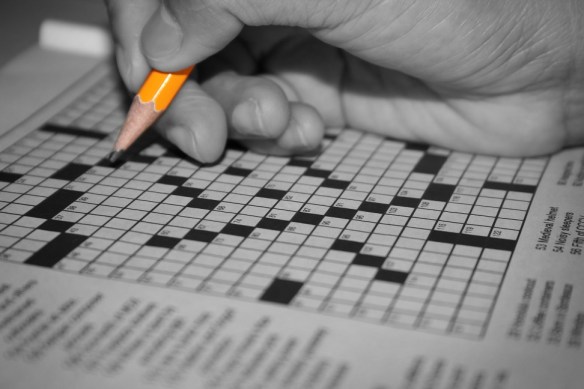
Photo by Matt MacGillivray, licensed via Creative Commons

There’s good news for aspiring and established crossword constructors out there, as The New York Times crossword is now accepting online submissions.

I could be cynical and say it’s about time for a change like this, given that The Los Angeles Times has been accepting online submissions for at least a decade now, and many of the other major outlets made the transition well before 2020.

But I won’t. This is a moment worth celebrating.

True, it was inevitable that the Times would move in this direction. I don’t know if the tipping point was the pandemic, given how many other companies and businesses have been forced to adapt to a paperless/lower-contact way of doing business, or if the department was simply following a directional shift the industry had already taken.

But I’m glad they have. This may seem like a relatively small change, but it’s significant for several reasons.

1.) It’s simply easier

People send emails, attach documents, and share files every day. How often do you hit the post office?

2.) Electronic submission encourages younger solvers to get involved

New blood is a necessity for any industry, crosswords included, and when the standard-bearer makes a shift toward inclusivity (even if it’s just a matter of technological familiarity), it’s a step in the right direction.

3.) Electronic submission helps level the playing field

Having to mail submissions has a price attached, through envelopes, paper, and postage, whereas electronic submissions don’t. Yes, the price of crossword construction programs is still a hindrance, limiting access to some, but again, this is a step in the right direction.

The submission page is loaded with information, including specs on puzzles, file formats for submission, and the submission form itself.

Plus NYT-savvy constructors and staff like Joel Fagliano have already posted answers online to Frequently Asked Questions in forums like the Crossword Puzzle Collaboration Directory, and have offered to answer any other questions constructors have.

Hopefully this change means not only an influx of new talent, but greater accessibility for underrepresented groups in crosswords.


Thanks for visiting PuzzleNation Blog today! Be sure to sign up for our newsletter to stay up-to-date on everything PuzzleNation!

You can also share your pictures with us on Instagram, friend us on Facebook, check us out on TwitterPinterest, and Tumblr, and explore the always-expanding library of PuzzleNation apps and games on our website!
A Cornucopia of Clever Clues

Problem-solving-crossword

Last month, in the afterglow of the Crossword Tournament From Your Couch event, I waxed nostalgic about some of the clever and tricky cluing that the constructors employed to keep the solvers on their toes.

I had so much fun poring over those puzzles and highlighting the clues that caught my eye that I’ve decided to do it again.

You see, I keep track of favorite clues from constructors as I solve various crosswords. Not only are they often witty, hilarious, and/or impressive, but they inspire me as a puzzler to always try to find entertaining, engaging new angles for clues.

So here are some favorites from my personal clue vault.

(And I’m crediting the constructor listed on the byline for each clue. These clues may have been created elsewhere and reused, created by the constructor, or changed by an editor, I have no way of knowing. So I’m just doing my best to give credit where credit is due.)


I’m a sucker for delicious wordplay, and thanks to a plethora of ingenious constructors, modern crosswords are rarely lacking in linguistic legerdemain.

One of my favorite cluing tropes is the old word-form switcheroo, when a constructor makes you think the clue is one word form (a verb, for instance) when it’s really a noun, or vice versa.

Erik Agard’s clue “Leaves from a club” certainly sounds like a verb, so it’s a fun surprise when you realize the answer is LETTUCE.

Similarly, the ability to utilize the multiple meanings of words can make for some seriously elusive clues. Mike Shenk’s “Volume setting?” has you thinking music or audio, but the answer SHELF also fits neatly.

Byron Walden is a master at this sort of cluing, as evidenced by his clue “Uruguayan uncle?” for the phrase NO MAS. Given how often TIO, TIA, MADRE, and other Spanish familial terms are used in crosswords, it’s a keen example of misdirection.

keep-right-misdirection

And playing with the tropes of crossword cluing creates opportunities for more wordplay.

“Trick or treat,” a clue from Aimee Lucido, masquerades as the common Halloween phrase when it’s really two examples cluing the answer VERB.

Similarly, “Jets or chargers starter” sounds like a sports reference, but the lowercase “chargers” reveals something else is afoot. The answer to this clue (which appeared in a puzzle constructed by Craig Mazan and Jeff Chen) is TURBO.

Erin Rhode’s “Drum, for some” sounds like a simple example-style clue, but the answer RHYME reveals how she hid her wordplay in plain sight.

Yes, these clues have a lot in common with wordplay clues, but they also play with the conventions of crossword cluing.

owl

Oh, and speaking of clues that hide their trickery in plain sight, I’ve got a few examples of that as well.

Kathy Weinberg once clued ROWS as “15 things in this puzzle,” which is the sort of clue that’s simultaneously so vague and so on-the-nose that it drives me insane.

Similarly, Steve Faiella uses modern slang to hide an answer in plain sight with the clue “Has beef with somebody, say.” That sure sounds like a vernacular use of “has beef with,” so you’re less likely to read the clue as a simple description of EATS, the actual answer. Very sly.

I’m going to close out today’s post with a clue that’s not only clever, it’s economical as well. Robyn Weintraub clued HOLE with two simple words — “Darn it!” — and it’s as hilarious as it is effective.

What are some of your favorite crossword clues, fellow puzzlers and PuzzleNationers? Let us know in the comments section below! We’d love to hear from you.


Thanks for visiting PuzzleNation Blog today! Be sure to sign up for our newsletter to stay up-to-date on everything PuzzleNation!

You can also share your pictures with us on Instagram, friend us on Facebook, check us out on TwitterPinterest, and Tumblr, and explore the always-expanding library of PuzzleNation apps and games on our website!
Cultural Sensitivity and Crosswords: Where Is The Line?

crossword1

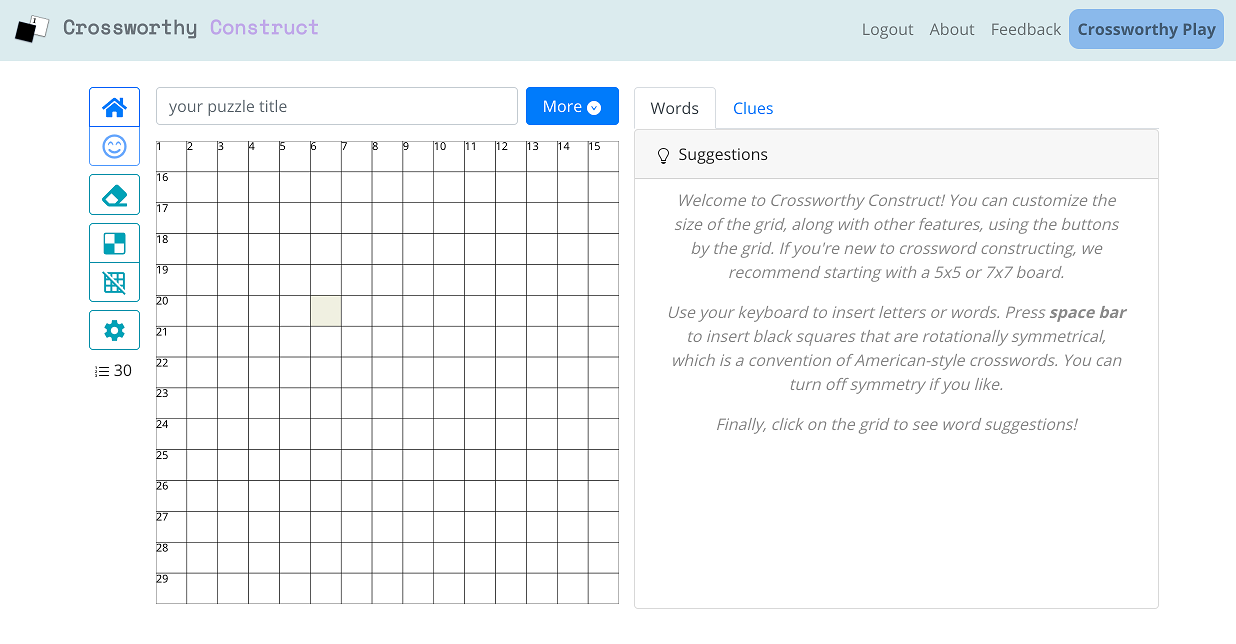
A few days ago, an entry in The New York Times Crossword caught the eye of a solver. That solver posted about it in the Facebook group “The Crossword Puzzle Collaboration Directory,” which is dedicated to encouraging new constructors to make and submit puzzles.

That post kicked off an intense debate about problematic entries and how to handle them. Not only is this topic far from settled, but it’s emblematic of a larger question: where is the line?

You see, one of the advantages of our modern Internet-savvy culture is that feedback is virtually instantaneous now. If someone is offended or troubled by an entry or clue in the Monday crossword, it doesn’t take days for a letter to the editor to arrive at the paper. It takes seconds to post online and reach a potential audience.

Of course, that rapid response is a double-edged sword, because hot takes and rush-to-judgment commentary are just as quick to spread.

Both sides of that double-edged sword were in full effect as the replies piled up on that original Facebook post. As those in agreement with the original poster offered their support, counterpoints rolled in, either in defense of the entry or the clue.

(Naturally, given that this is the Internet, some chose to expand on the topic in general disagreement with a culture they claimed was too sensitive and quick to condemn every little thing that offended them. But since those people are an incredible waste of time and energy and have little interest in genuine discussion, this will be my last mention of them.)

Other posters focused on the mechanics of the puzzle itself, pointing out easy fixes that would have prevented the potentially problematic word from appearing at all. Some of these folks sided with the original poster, pointing out that a word that is potentially problematic should be edited out, and it’s part of a constructor’s job to think of these things.

And that’s the question. How much should constructors and editors be taking the potentially problematic aspects of words into consideration when constructing?

True, it’s not always possible to anticipate every negative response to the words filling your grid or the accompanying clues. (Heck, we have numerous examples of words and clues slipping through that catch fire with part of the audience in the worst possible way.)

But is that part of a constructor’s job?

In my opinion, yes, it is.

Crosswords should be inclusive. They should be an engaging activity that evokes occasional frustration but eventual satisfaction, whether you’re completing a grid, unraveling a particularly tricky theme, or besting your previous solving time. It should be fun. It should be entertainment, a distraction.

It should NOT be a place where people feel excluded, or where personal or historical traumas surface because of cluing or grid fill.

For example, I don’t believe CHINK should appear in crosswords, even as “flaw in one’s armor,” because anyone casually glancing at the grid will only see that word, not necessarily the context.

We can do better.

[Image courtesy of Bogoreducare.org.]

Originally, I wasn’t going to mention the specific clue/entry at all, because the issue is larger than this one example. But knowing the word that offended our original poster adds context.

The entry was NOOSE, and the clue was “End of a hangman’s rope.”

For the poster, the associations surrounding both clue and entry were troubling. But, for the most part, the main reason for posting appeared to be twofold:

1. Pointing out that the word’s inclusion in the grid was easily avoidable
2. Asking if other constructors/aspiring constructors found the entry as problematic as she did

She wasn’t calling for peoples’ heads. She was opening a dialogue and inviting discussion. She made her personal feelings clear — by using the word “appalled” — but made the discussion about something larger than her individual reaction.

Problem-solving-crossword

Some replies concerned the clue more than the entry, pointing out that the noose was used for many other, non-negative uses. The general association of nooses with lynching was brought up, with some instantly making the connection while others felt it was unfair or hypersensitive to make that association. Others brought up the word LYNCH, asking if the entry was problematic even if the cluing was about director David or actress Evanna.

These aren’t easy questions to answer. This is obviously not a debate that will be concluded anytime soon. But it’s one worth having.

And when it comes to conclusions to draw from all this, I think the original poster said it best in one of her replies: “In my opinion, it’s better to err on the side of empathy.”

Amen.


Thanks for visiting PuzzleNation Blog today! Be sure to sign up for our newsletter to stay up-to-date on everything PuzzleNation!

You can also share your pictures with us on Instagram, friend us on Facebook, check us out on TwitterPinterest, and Tumblr, and explore the always-expanding library of PuzzleNation apps and games on our website!
View a Clue: Crossword Characters Answers!

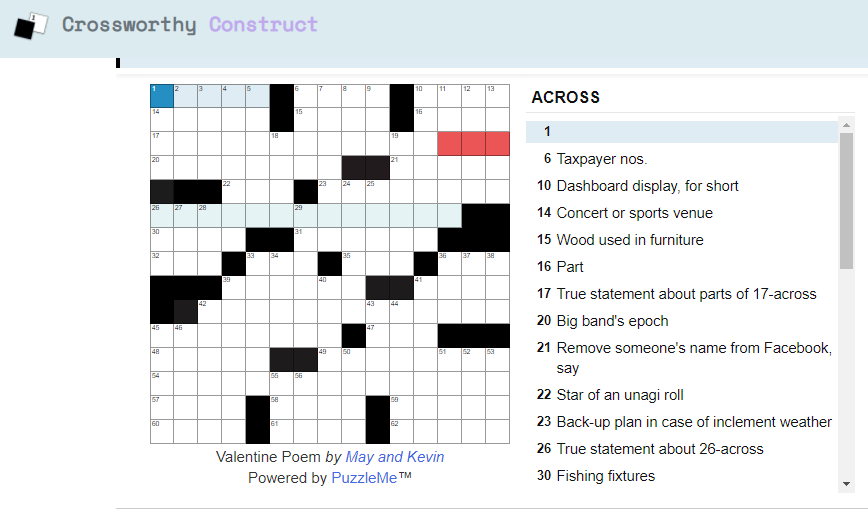
A few weeks ago, we brought back one of our trickiest recurring features: the View a Clue game!

If you recall, I selected ten fictional characters that commonly show up in crossword grids — some have become crosswordese at this point — to see if the PuzzleNation audience could identify them from pictures.

Without further ado, let’s give it a shot!


#1 (4 letters)

view fcc 1

[Image courtesy of Heroes and Villains Fandom.]

Answer: ODIE, loyal and drooly companion of Garfield and his owner Jon Arbuckle


#2 (4 letters)

view fcc 2

[Image courtesy of Pinterest.]

Answer: ASTA, beloved dog of film detectives Nick and Nora Charles in the Thin Man series


#3 (3 letters)

view fcc 3

[Image courtesy of Redbubble.]

Answer: REN, from Nickelodeon’s Ren & Stimpy


#4 (4 letters)

view fcc 4

[Image courtesy of Disney Fandom.]

Answer: SMEE, Captain Hook’s right-hand man from the Peter Pan stories


#5 (4 letters) [I’ve included two possible characters for this one.]

view fcc 5a

view fcc 5b

[Images courtesy of E! Online and Wikipedia.]

Answer: ELSA


#6 (4 letters)

view fcc 6

[Image courtesy of Hulu.]

Answer: EYRE, more specifically Jane Eyre


#7 (4 letters)

view fcc 7

[Image courtesy of Amazon.]

Answer: IGOR, the assistant of Dr. Frankenstein


#8 (5 letters)

view fcc 8

[Image courtesy of Soap Central.]

Answer: ERICA, more specifically Erica Kane of All My Children


#9 (4 letters)

view fcc 9

[Image courtesy of Getty Images.]

Answer: AHAB, Captain of the Pequod from Moby-Dick


#10 (3 letters)

view fcc 10

[Image courtesy of Warner Bros.]

Answer: RIN, as in Rin Tin Tin, the famous Hollywood dog


How many did you get? Let me know in the comments below! And if you have ideas for another View a Clue game, tell us below!

Thanks for visiting PuzzleNation Blog today! Be sure to sign up for our newsletter to stay up-to-date on everything PuzzleNation!

You can also share your pictures with us on Instagram, friend us on Facebook, check us out on TwitterPinterest, and Tumblr, and explore the always-expanding library of PuzzleNation apps and games on our website!

Puzzly Ideas to Keep You Busy!

puzzlelove

We’re all doing our best to keep ourselves and our loved ones engaged, entertained, and sane during these stressful times.

And after weeks of doing so, it’s possible you’re running out of ideas.

But worry not! Your puzzly pals at PuzzleNation are here with some suggestions.

Please feel free to sample from this list of activities, which is a mix of brain teasers to solve, puzzly projects to embark upon, treasure hunts, unsolved mysteries, ridiculous notions, creative endeavors, and a dash of shameless self-promotion.

Enjoy, won’t you?


Puzzly Ways To Get Through Self-Quarantine

In all seriousness, we hope these ideas help you and yours in some small way to make the time pass in a fun and puzzly fashion. Be well, stay safe, and happy puzzling.


Thanks for visiting PuzzleNation Blog today! Be sure to sign up for our newsletter to stay up-to-date on everything PuzzleNation!

You can also share your pictures with us on Instagram, friend us on Facebook, check us out on TwitterPinterest, and Tumblr, and explore the always-expanding library of PuzzleNation apps and games on our website!
View a Clue: Crossword Characters

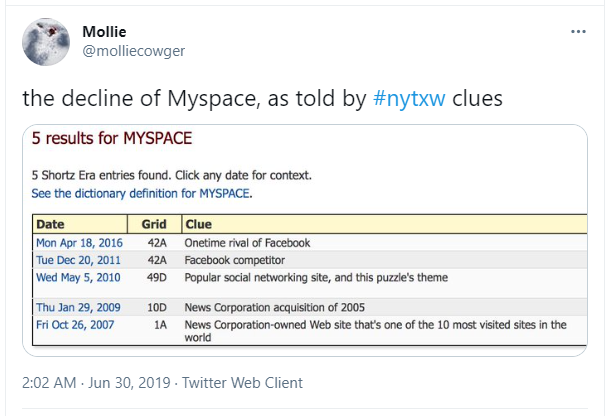
Welcome to the latest edition of PuzzleNation Blog’s most visual feature: the View a Clue game!

I’ve selected ten fictional characters that commonly show up in crossword grids — some have become crosswordese at this point — and I want to see if the PuzzleNation audience can identify them from pictures. It’s a visual puzzle I call View a Clue!

Without further ado, let’s give it a shot!


#1 (4 letters)

view fcc 1

#2 (4 letters)

view fcc 2

#3 (3 letters)

view fcc 3

#4 (4 letters)

view fcc 4

#5 (4 letters) [I’ve included two possible characters for this one.]

view fcc 5a

view fcc 5b

#6 (4 letters)

view fcc 6

#7 (4 letters)

view fcc 7

#8 (5 letters)

view fcc 8

#9 (4 letters)

view fcc 9

#10 (3 letters)

view fcc 10

[All image credits will be posted with the answers next week.]


How many did you get? Let me know in the comments below! And if you have ideas for another View a Clue game, tell us below!

Thanks for visiting PuzzleNation Blog today! Be sure to sign up for our newsletter to stay up-to-date on everything PuzzleNation!

You can also share your pictures with us on Instagram, friend us on Facebook, check us out on TwitterPinterest, and Tumblr, and explore the always-expanding library of PuzzleNation apps and games on our website!