Goodbye, Merl.

[Picture courtesy of crosswordfiend.com.]

The puzzle world was stunned this weekend by the sudden passing of a true crossword legend: Merl Reagle.

Merl has been one of the biggest names in puzzles for a long time now, one of the few crossword constructors who was successful and prolific enough to work on puzzles full-time.

Between his appearance in the Wordplay documentary and a cameo on The Simpsons alongside New York Times crossword editor Will Shortz, he proudly represented both the love of puzzles so many solvers share AND stood as a standard-bearer for crossword construction and quality puzzling.

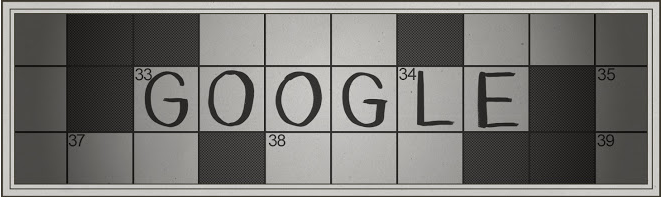
Merl sold his first crossword to the New York Times at age 16 — ten years after he started constructing puzzles, amazingly enough! In a career spanning five decades, his contributions to the world of puzzles were myriad. Nearly every year, one of his puzzles appears at the American Crossword Puzzle Tournament. The crossword he constructed for the 100th Anniversary of the Crossword was turned into a Google Doodle, and, based on my research, is the most solved crossword puzzle in history.

A craftsman with humor and heart (and no small amount of anagram skill), Merl was truly one of a kind.

[Picture courtesy of tucson.com.]

I had the privilege of meeting him at the American Crossword Puzzle Tournament this year. It was only for a few minutes while the tournament participants were tackling one of the early puzzles and the vendor’s floor was pretty empty. (Otherwise, there were always puzzlers crowded around Merl’s table between tournament puzzles. He was the center of gravity around which many fellow puzzle fans orbited, a master of ceremonies wherever he went.)

He was friendly and gracious, one of those people who can strike an instant rapport with virtually anyone. He put me at ease immediately as I checked out his latest puzzly offerings and we briefly chatted about the tournament itself. (I didn’t get the chance to challenge his legendary anagramming talents, sadly.)

Fellow puzzler and friend of the blog Keith Yarbrough was kind enough to share one of this experiences with Merl:

Merl gave me his philosophy of puzzle construction at the ACPT one year. His goal, he said, was to make the solver smile. Coming up with a funny theme was the main thing. His test when he came up with an idea was to run it past his wife, who is not a puzzler. If it made her smile, it was a keeper.

He wasn’t out to frustrate the solver with obscurities or unnecessary crosswordese, so he used common entries as much as possible. His mantra was that the fill should not be overly difficult.

[Picture courtesy of cltampa.com.]

The dozens of tributes I’ve seen online are a testament to how many friends and admirers Merl earned over the years. There are too many to link to here, but I want to highlight a few from fellow puzzlers Brendan Emmett Quigley, Deb Amlen, and David Steinberg.

Merl, you will be missed. Thank you, for the laughs, for the tough crossings, the trickiest-of-tricky clues, and the many unexpected delights you managed to spring on so many solvers.

You can check out Merl’s work on his Sunday Crosswords website as well as some of his collections on Amazon. Click the links. You won’t regret it.

Thanks for visiting PuzzleNation Blog today! You can share your pictures with us on Instagram, friend us on Facebook, check us out on TwitterPinterest, and Tumblr, and be sure to check out the growing library of PuzzleNation apps and games!

It’s Follow-Up Friday: Crosswordnado edition!

Welcome to Follow-Up Friday!

By this time, you know the drill. Follow-Up Friday is a chance for us to revisit the subjects of previous posts and bring the PuzzleNation audience up to speed on all things puzzly.

And today, I’m posting solutions to our Sharknado and Crosswordese puzzles from the last two weeks!

Two Follow-Up Fridays ago, I posted a deduction puzzle in honor of Sharknado 3 rampaging its way across TV screens all over the world, and I challenged you to complete the schedule of mayhem wrought by our five heroes with five different weapons across five different cities on five different days! (Whew!)

How did you do?

And that brings us to our second solution. Last week, we discussed crosswordese — those words that only seem to appear in crosswords, to the dismay and bafflement of casual solvers — and I created a 9×9 grid loaded with crosswordese.

Did you conquer the challenge?

ACROSS

1. Toward shelter, to salty types — ALEE
3. Arrow poison OR how a child might describe their belly button in writing — INEE
5. Flightless bird OR Zeus’s mother — RHEA
6. Hireling or slave — ESNE
8. “Kentucky Jones” actor OR response akin to “Duh” — DER
9. Compass dir. OR inhabitant’s suffix — ESE
12. Wide-shoe width OR sound of an excited squeal — EEE
15. No longer working, for short OR soak flax or hemp — RET
16. Like a feeble old woman OR anagram of a UFO pilot — ANILE
17. Actress Balin OR Pig ____ poke — INA

DOWN

1. Mean alternate spelling for an eagle’s nest — AYRIE
2. Old-timey exclamation — EGAD
3. Unnecessarily obscure French river or part of the Rhone-Alpes region — ISERE
4. Supplement OR misspelling of a popular cat from a FOX Saturday morning cartoon — EKE
7. Maui goose — NENE
10. An abbreviated adjective covering school K through 12 OR how you might greet a Chicago railway — ELHI
11. My least favorite example of crosswordese OR good and mad — IRED
12. Ornamental needlecase — ETUI
13. Movie feline OR “Frozen” character — ELSA
14. Shooting marble OR abbreviation for this missing phrase: “truth, justice, and ____” — TAW

I hope you enjoyed both of these challenging puzzles! If you haven’t had your fill of crafty puzzlers, worry not! We’ll be tackling another tough brain teaser in two weeks!

Thanks for visiting PuzzleNation Blog today! You can share your pictures with us on Instagram, friend us on Facebook, check us out on TwitterPinterest, and Tumblr, and be sure to check out the growing library of PuzzleNation apps and games!

Crossing swords with crosswordese!

In the past, I’ve written about crosswordese, nemesis and irritant to many crossword solvers and constructors. For the uninitiated, crosswordese is shorthand for any and all obscure or curious words that you only encounter in crossword grids. From EPEE and OONA to Greek letters (ETA, RHO) and French rivers (AARE), these killer crossings are the bane of any solver’s existence.

And wouldn’t you know it, I encountered some crosswordese in a most unexpected place.

I was reading Patricia Marx’s book Let’s Be Less Stupid: An Attempt to Maintain My Mental Faculties, a humorous look at the common fear that our mental acuity declines as we get older. In the book, Marx references numerous ways she’s noted her brain working less efficiently than it used to, and she hilariously chronicles her attempts to combat this and keep her wits sharp.

As part of her ongoing efforts, she even created a crossword grid utilizing only tough crossword entries.

Her puzzle featured some truly great, funny clues, like “The side of the ship you want to be on if you don’t want your hair to get messed up” for ALEE and “No matter how bad your memory is, this is something to remember” for ALAMO.

While I wouldn’t count every entry in her grid as crosswordese, there were plenty of major offenders on her list. (You can check out the full puzzle in her book!)

And this gave me an idea. I would try my hand at creating my own 9×9 grid, composed entirely of crosswordese, utilizing some of the words from her list and some from lists submitted by fellow puzzlers.

[Forgive my nonstandard grid. I tried to go for the same homemade charm as Marx’s grid. Feel free to print out this post and try it out!]

ACROSS

1. Toward shelter, to salty types
3. Arrow poison OR how a child might describe their belly button in writing
5. Flightless bird OR Zeus’s mother
6. Hireling or slave
8. “Kentucky Jones” actor OR response akin to “Duh”
9. Compass dir. OR inhabitant’s suffix
12. Wide-shoe width OR sound of an excited squeal
15. No longer working, for short OR soak flax or hemp
16. Like a feeble old woman OR anagram of a UFO pilot
17. Actress Balin OR Pig ____ poke

DOWN

1. Mean alternate spelling for an eagle’s nest
2. Old-timey exclamation
3. Unnecessarily obscure French river or part of the Rhone-Alpes region
4. Supplement OR misspelling of a popular cat from a FOX Saturday morning cartoon
7. Maui goose
10. An abbreviated adjective covering school K through 12 OR how you might greet a Chicago railway
11. My least favorite example of crosswordese OR good and mad
12. Ornamental needlecase
13. Movie feline OR “Frozen” character
14. Shooting marble OR abbreviation for this missing phrase: “truth, justice, and ____”

Did you conquer this crosswordese-riddled grid? And what’s your least favorite example of crosswordese? Let me know! I’d love to hear from you!

Thanks for visiting PuzzleNation Blog today! You can share your pictures with us on Instagram, friend us on Facebook, check us out on TwitterPinterest, and Tumblr, and be sure to check out the growing library of PuzzleNation apps and games!

The Pros and Cons of Pronunciation

Tricky clues can come in all shapes and sizes, from wordplay that sends you down the wrong path (like “Intel processor?” for SPY) to clues with some tongue-in-cheek humor (like “Car bomb?” for EDSEL). But perhaps the most diabolical are clues that rely on alternate pronunciations to deceive solvers.

These clues are especially crafty, because oftentimes, it’s only when spoken aloud that the alternate meaning reveals itself. There were two prime examples of this cluing style in the Indie 500 puzzles I’ll be reviewing later this week.

At first blush, the clue “Layers of rock?” seems to point toward STRATA or something similar, except the question mark indicates some sort of wordplay is afoot. But if you use lay-ers (as in “those who lay”) of rock, suddenly the answer is apparent: MASONS.

Similarly, the clue “Water tower?” seems straightforward until you consider the question mark. But pronounce tower tow-er (one that tows) and you’ve cracked it: TUG.

Friend of the blog and Penny Press crossword guru Eileen Saunders also contributed a terrific example, “Sewer junction?” for SEAM.

Of course, the perils of pronunciation are hardly restricted to the world of crossword cluing. One need only travel abroad and encounter some of the towns in England to discover some curious pronunciations awaiting them.

In the music video below, chap-hop artist Sir Reginald Pikedevant, Esq. offers a litany of examples of curious British pronunciations in his song “Shibboleth.”

In the video, he defines shibboleth as a word which distinguishes between group members and outsiders by the way it is pronounced. The word comes from the Hebrew Bible, where the word itself was used to distinguish between Ephraimites (who could not pronounce the word properly) and Gileadites (who could).

And while historical uses of shibboleths usually had unpleasant connotations, Sir Reginald’s video is simply a whimsical look at the weirdness of language:

And now, given the subject at hand, I have a challenge for you, my fellow puzzlers and PuzzleNationers!

Below I’ve posted a poem called “The Chaos,” designed to highlight the many irregularities in spelling and pronunciation in the English Language. Created by Dutch writer and teacher Gerard Nolst Trenite, it has appeared in various formats for nearly a century, and it’s a taxing read, to be sure.

I hereby challenge any member of the PuzzleNation readership to create a video of you reading the poem in its entirety! [Note: this is, in fact, a truncated version, but I feel it would be torturous to make you read all 274 lines of this version!]

So, if you accept the challenge, post your video on Facebook, Twitter, YouTube, or wherever, and send me a link! The most impressive performance will earn a suitably puzzly prize!

Good luck!


The Chaos

Dearest creature in creation,
Study English pronunciation.
I will teach you in my verse
Sounds like corpse, corps, horse, and worse.
I will keep you, Suzy, busy,
Make your head with heat grow dizzy.
Tear in eye, your dress will tear.
So shall I! Oh hear my prayer.

********

Just compare heart, beard, and heard,
Dies and diet, lord and word,
Sword and sward, retain and Britain.
(Mind the latter, how it’s written.)
Now I surely will not plague you
With such words as plaque and ague.
But be careful how you speak:
Say break and steak, but bleak and streak;
Cloven, oven, how and low,
Script, receipt, show, poem, and toe.

********

Hear me say, devoid of trickery,
Daughter, laughter, and Terpsichore,
Typhoid, measles, topsails, aisles,
Exiles, similes, and reviles;
Scholar, vicar, and cigar,
Solar, mica, war and far;
One, anemone, Balmoral,
Kitchen, lichen, laundry, laurel;
Gertrude, German, wind and mind,
Scene, Melpomene, mankind.

********

Billet does not rhyme with ballet,
Bouquet, wallet, mallet, chalet.
Blood and flood are not like food,
Nor is mould like should and would.
Viscous, viscount, load and broad,
Toward, to forward, to reward.
And your pronunciation’s OK
When you correctly say croquet,
Rounded, wounded, grieve and sieve,
Friend and fiend, alive and live.

********

Ivy, privy, famous; clamour
And enamour rhyme with hammer.
River, rival, tomb, bomb, comb,
Doll and roll and some and home.
Stranger does not rhyme with anger,
Neither does devour with clangour.
Souls but foul, haunt but aunt,
Font, front, wont, want, grand, and grant,
Shoes, goes, does. Now first say finger,
And then singer, ginger, linger,
Real, zeal, mauve, gauze, gouge and gauge,
Marriage, foliage, mirage, and age.

********

Query does not rhyme with very,
Nor does fury sound like bury.
Dost, lost, post and doth, cloth, loth.
Job, nob, bosom, transom, oath.
Though the differences seem little,
We say actual but victual.
Refer does not rhyme with deafer.
Foeffer does, and zephyr, heifer.
Mint, pint, senate and sedate;
Dull, bull, and George ate late.
Scenic, Arabic, Pacific,
Science, conscience, scientific.

********

Liberty, library, heave and heaven,
Rachel, ache, moustache, eleven.
We say hallowed, but allowed,
People, leopard, towed, but vowed.
Mark the differences, moreover,
Between mover, cover, clover;
Leeches, breeches, wise, precise,
Chalice, but police and lice;
Camel, constable, unstable,
Principle, disciple, label.

********

Petal, panel, and canal,
Wait, surprise, plait, promise, pal.
Worm and storm, chaise, chaos, chair,
Senator, spectator, mayor.
Tour, but our and succour, four.
Gas, alas, and Arkansas.
Sea, idea, Korea, area,
Psalm, Maria, but malaria.
Youth, south, southern, cleanse and clean.
Doctrine, turpentine, marine.

********

Compare alien with Italian,
Dandelion and battalion.
Sally with ally, yea, ye,
Eye, I, ay, aye, whey, and key.
Say aver, but ever, fever,
Neither, leisure, skein, deceiver.
Heron, granary, canary.
Crevice and device and aerie.

********

Face, but preface, not efface.
Phlegm, phlegmatic, ass, glass, bass.
Large, but target, gin, give, verging,
Ought, out, joust and scour, scourging.
Ear, but earn and wear and tear
Do not rhyme with here but ere.
Seven is right, but so is even,
Hyphen, roughen, nephew Stephen,
Monkey, donkey, Turk and jerk,
Ask, grasp, wasp, and cork and work.

********

Pronunciation — think of Psyche!
Is a paling stout and spikey?
Won’t it make you lose your wits,
Writing groats and saying grits?
It’s a dark abyss or tunnel:
Strewn with stones, stowed, solace, gunwale,
Islington and Isle of Wight,
Housewife, verdict and indict.

********

Finally, which rhymes with enough —
Though, through, plough, or dough, or cough?
Hiccough has the sound of cup.
My advice is to give up!


You can submit your videos to any of our social media platforms below! Good luck!

Thanks for visiting PuzzleNation Blog today! You can share your pictures with us on Instagram, friend us on Facebook, check us out on TwitterPinterest, and Tumblr, and be sure to check out the growing library of PuzzleNation apps and games!

5 Questions with Puzzler/Artist Hayley Gold!

Welcome to another edition of PuzzleNation Blog’s interview feature, 5 Questions!

We’re reaching out to puzzle constructors, video game writers and designers, board game creators, writers, filmmakers, musicians, and puzzle enthusiasts from all walks of life, talking to people who make puzzles and people who enjoy them in the hopes of exploring the puzzle community as a whole. (Click here to check out previous editions of 5 Questions!)

And I’m excited to have Hayley Gold as our latest 5 Questions interviewee!

An enthusiastic puzzle solver as well as an accomplished artist, Hayley combines her interests with Across and Down, a weekly webcomic devoted to The New York Times crossword.

She combines humor and the keen eye of a long-time solver to not only entertain, but offer worthwhile insight into crosswords as a whole and individual puzzles in particular. Whether she’s punning on themed entries or proving her pop culture savvy with references galore, each Across and Down comic brings something unique to the table.

Hayley was gracious enough to take some time out to talk to us, so without further ado, let’s get to the interview!


5 Questions for Hayley Gold

1. Which came first for you: puzzles or art? How did you discover puzzles?

Well, I think art is rather intuitive. As soon as a child gets hold of a crayon their artistic career begins. A lot of people are miffed when artists comment that they’ve been drawing all their life, but I actually did more drawing in my youth than in my maturity, when pressure became attached to it.

That being said, I find doing puzzles much more relaxing and more natural for me. So, though one may have preceded the other doesn’t mean that it’s the dominant hobby.

2. When did you launch Across and Down, and has it evolved from your original vision?

I started the site in January 2014 as a project for my web comics class. The whole operation was rather hasty. We were told we needed to come up with a comic that’s updated weekly, the teacher said the content was completely up to us, though her web comic followed a linear narrative, as did the comics of most of the other students.

I needed something I could do without too much time lost, as the class was only an elective and I had other comics to complete, and something that focused on writing more than visuals as that has always been my strong suit. And of course I wanted it to be fun, and something that I cared about.

I never imagined it would become what it has. Okay, let me rephrase that. I have wild fantasies about it being much MORE than it is, what I never imagined is how much I would NEED it. I experience withdrawal if I go too long without making one.

[Strategy, a wonderful crayon-and-pencil piece, as featured on her portfolio site.]

3. Your comics offer a wonderful mix of humor, tongue-in-cheek wordplay, and savvy commentary from a clearly experienced solver. How have the constructors reacted to your comics? Do you think couching your critiques in this format allows you to say more than a straightforward review or blog post?

In general, I get a good response from constructors. I certainly never got any flak from anyone. Many have reached out to thank me actually, which is a very rewarding gesture. And I’ve never attempting real blogging to compare the reactions side by side, but I would guess that giving everything a lighthearted air does assuage some of the severity of critique.

But, at the same time, I am rarely totally critical and try to be balanced. And though I often address the constructor directly, I try not to make any serious personal attacks if I thoroughly rip something apart, though, by and large, I don’t do comics on puzzles that are completely horrendous. Partly because I don’t wish to be horribly cruel to anyone, and partly because I don’t think it’s very entertaining. At least in a comic, I think nitpicking about the usual crossword faux pas gets repetitive.

[A sample of one of her most recent webcomics.]

4. What’s next for Hayley Gold?

I’m working on a graphic novel, but no ETA on that. And for anyone who’s a fan of my site, I’ll warn you that it’s totally different, both graphically and narratively, so no guarantees that you’ll like it. I also need a job. Hey, anyone out there, hire me! Would love to do some custom crossword comics!

5. If you could give the readers, writers, and puzzle fans in the audience one piece of advice, what would it be?

Er, I’m not really good with this. God knows, my life is a mess. But let’s try to narrow it down a bit. How about advice pertaining to webcomics? Make it about something you’re passionate about. Most of my peers quit their webcomic after the class finished. Now, my stick-to-it-iveness may be due to my uptight nature, but also because it really meant something to me.

Also, keep at it even if you think no one is reading. I hope to get more eyeballs as I go along, though my site still reaches relatively few readers. People may look over it once and then never come back instead of subscribing, or just never come across it even though they are ardent puzzle solvers.

When I go to comics events, so many people come up to me to tell me what a “great idea” my site is — but they personally don’t do the puzzle so it’s not for them. I’ve experienced a very small overlap in the fanbases. The way comics are promoted, as one big giant blob of content, is rather weird — as if readers would be attracted to all of it simply because of the medium, rather than it being placed into subcategories — but I digress.

Choose something you like, stick with it.


Many thanks to Hayley for her time. Check out AcrossandDown.net for her comics and links to her other works, and to keep up on all things Hayley, follow her Across and Down Facebook page, her Twitter (@HayleyRabbit), and her Etsy page! I can’t wait to see what she has in store for us next.

Thanks for visiting PuzzleNation Blog today! You can share your pictures with us on Instagram, friend us on Facebook, check us out on TwitterPinterest, and Tumblr, and be sure to check out the growing library of PuzzleNation apps and games!

Hidden in a crossword!

[A grid from BeekeeperLabs.com.]

Everyone loves a little something extra, and that goes double for puzzle fans.

Whether it’s a hidden quote or a secret theme lurking in plain sight, a bonus answer revealed after a tough solve or a final twist that wows you with a constructor’s cleverness and skill, these little surprises are gifts every solver can appreciate.

In Sunday’s New York Times Crossword, what appears at first blush to be a simple themed puzzle — with poet WILLIAM CARLOS WILLIAMS paired with his poem THE LOCUST TREE IN FLOWER — turns out to be much more, as the entire poem is concealed within the grid!

[Image sourced from Amy Reynaldo’s Diary of a Crossword Fiend.]

While this is a particularly ambitious example, this is not an uncommon challenge for a constructor to tackle.

Sometimes, the bonus is announced upfront, as it was in Merl Reagle’s puzzle for the 100th anniversary of the crossword a few years ago. His puzzle was converted into a solvable Google Doodle, and Merl added a crafty word search element by hiding the word FUN multiple times in the grid.

Why “fun,” you ask? Because that was the set word in Arthur Wynne’s original “word-cross” puzzle over one hundred years ago!

[Click here if you haven’t tackled Merl’s marvelous puzzle.]

Our friends at Penny/Dell Puzzles have a recurring crossword variant, Revelation, which conceals a quotation in a standard crossword grid, using the same letters-in-circles technique as Jacob Stulberg did in his poem puzzle.

And, of course, I would be remiss in my duties if I didn’t mention the secret message reading out in both a New York Times crossword and a puzzle featured on The Simpsons, wherein Homer conceals an apology to Lisa inside a crossword with the help of Will Shortz.

[Check out the full puzzle by clicking here.]

So, crossword fans, be vigilant! You never know what hidden treats are lurking inside seemingly innocuous puzzles.

Thanks for visiting PuzzleNation Blog today! You can share your pictures with us on Instagram, friend us on Facebook, check us out on TwitterPinterest, and Tumblr, and be sure to check out the growing library of PuzzleNation apps and games!