It’s Follow-Up Friday: Hats Off to You edition!

Welcome to Follow-Up Friday!

By this time, you know the drill. Follow-Up Friday is a chance for us to revisit the subjects of previous posts and bring the PuzzleNation audience up to speed on all things puzzly.

And today, I’d like to revisit the subject of brain teasers.

A few years ago, we posted a riddle that had been making the rounds online. It centered around four men buried up to their necks in the ground, each one trying to figure out what color hat he is wearing.

It’s a great exercise in logic and deduction, one that most solvers unraveled after a few minutes.

As it turns out, there’s a more complex version of this riddle. But this one involves 100 people!

One hundred prisoners are lined up single file, facing in the same direction. Each prisoner will be randomly assigned either a red hat or a blue hat.

No one can see the color of his own hat. However, each person is able to see the color of the hat worn by every person in front of him. So the person at the head of the line cannot see the color of anyone’s hat, the second prisoner can see only the first prisoner’s hat, the third can see the first two prisoners’ hats, and so on. The last person in line — the 100th prisoner — can see the colors of the hats on all 99 people in front of him.

Beginning with the last person in line, and then moving to the 99th person, the 98th, etc., each will be asked to name the color of his own hat. If the color is correctly named, the person lives; if incorrectly named, the person is shot dead on the spot.

Everyone in line is able to hear every response as well as hear the gunshot; also, everyone in line is able to remember all that needs to be remembered and is able to compute all that needs to be computed.

Before being lined up and given their hats, the 100 prisoners are allowed to discuss strategy, with an eye toward developing a plan that will allow as many of them as possible to name the correct color of his or her own hat (and thus survive). They know all of the preceding information in this problem. Once lined up, each person is allowed only to say “Red” or “Blue” when his turn arrives, beginning with the last person in line.

What would your plan be to save as many people as possible? How many prisoners can you definitely save?

It’s an absolutely diabolical riddle, one that definitely taxed my puzzle skills. And different plans have different chances for success! Will you save half? 75%? Can you save everyone?

[Click here and scroll down for the solution, courtesy of the folks at IO9.]

Thanks for visiting PuzzleNation Blog today! You can share your pictures with us on Instagram, friend us on Facebook, check us out on TwitterPinterest, and Tumblr, and be sure to check out the growing library of PuzzleNation apps and games!

A Quantum Leap Forward in Crosswords!

It’s fair to say that the 1996 Election Day crossword, pictured above, is one of the most famous puzzles in crossword history. The puzzle “predicted” the outcome of the election quite cleverly by allowing for either CLINTON ELECTED or BOB DOLE ELECTED to read out, depending on how the solver answered seven down clues.

(You can click the image to see a larger version of the grid and clues.)

Reportedly, Will Shortz called it the most amazing puzzle he’d ever seen.

Well, that puzzle may have been topped.

But first, a bit of backstory.

These rare crosswords are called Quantum puzzles or Schrodinger puzzles. These names reference the famous thought experiment involving a very unlucky cat in a box that could be alive or dead, and an observer wouldn’t know which until he opened the box. Meaning that both answers are correct at the same time; the cat is both alive and dead.

[This great t-shirt melds the Schrodinger’s Cat concept with a classic joke.]

Similarly, these puzzles have more than one answer, and each answer is equally correct.

And on Thursday, December 4, constructors Kacey Walker and David Quarfoot combined some considerable Scrabble skills and a dynamite crossword grid to create the most impressive Schrodinger puzzle to date.

You see, clues 26-Across, 36-Across, and 44-Across all feature seven letters, like a rack in Scrabble. And it’s up to the solver to find the anagram of each rack that fits the grid.

For example, 26-Across reads “Play in 7-Across with the rack DEIORRW”. (The answer to 7-Across is SCRABBLE, giving the solver a strong idea of where to go next.)

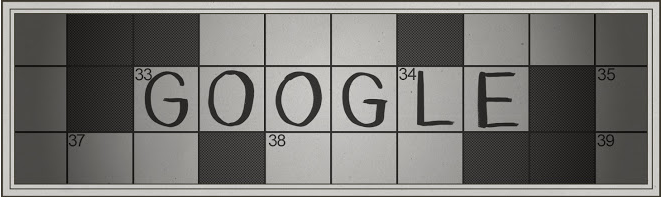
Quite amazingly, Walker and Quarfoot have designed the puzzle so that each of those clues has three possible correct answers — for 26-Across: ROWDIER, WORDIER, and WORRIED all fit the down clues — meaning there are a staggering 27 possible correct solutions!

This is just one of those 27 solutions:

[You can check out all of the possible solutions, as well as the clues, on XWordInfo here.]

This is David Quarfoot’s 41st NYT published puzzle and Kacey Walker’s first! Talk about setting the bar as high as you can.

This is also one of the flat-out coolest puzzle constructions I’ve ever seen. My thanks to Deb Amlen for doing such a great write-up on the puzzle and for pointing it my way.

Thanks for visiting PuzzleNation Blog today! You can share your pictures with us on Instagram, friend us on Facebook, check us out on TwitterPinterest, and Tumblr, and be sure to check out the growing library of PuzzleNation apps and games!

Puzzles in Pop Culture: Bones

In today’s edition of Puzzles in Pop Culture, we join the forensic team at the Jeffersonian Institute to uncover what happened to a prominent puzzler. It’s Bones, episode 8 of season 10, “The Puzzler in the Pit.”

The episode opens, appropriately enough, with Special Agent Seeley Booth solving a crossword. (Given the looser grid construction, it’s either a British-style crossword or a cryptic crossword. Either way, points to Agent Booth.)

Both he and forensic anthropologist Dr. Temperance Brennan (Bones, to some) are called into work after a body is found in a fracking pit. The harsh chemicals in the pit are causing the body to deteriorate faster than normal, but some clever chemistry saves the day. Although a blood sample the team collects is too degraded for a positive match, they manage to identify the body from a rare surgery performed a few years before.

The body belongs to Lawrence Brooks, reclusive syndicated crossword constructor, considered by some to be a master in his field. His wife quickly points the fickle finger of blame squarely at his ambitious assistant, Alexis Sherman. Apparently, Brooks promised to use Alexis’s puzzles and dangled the possibility of a promotion to co-editor, but delivered on neither.

An analysis of a cast Brooks had on when he died reveals crossword clues written on it, but in two different handwriting styles. Some of the clues are straight-forward and simple synonym-style clues, hardly the work of a master constructor like Brooks.

“Despise,” 4 letters. Hate
“Blood feud,” 8 letters. Vendetta.

Other key words on the cast include punish, attack, payback, and justice. The team suspects the other clues are a message from his killer.

When Booth and Special Agent James Aubrey interview Alexis, she plays a nasty phone message from an unidentified man, claiming that a stranger has been hanging around lately. Alexis agrees to help a forensic artist sketch the mystery man.

Sadly, this is the last appearance of a visible puzzle in the episode, leaving solvers with Brooks’s murder to solve instead of a crossword grid.

The team swiftly gathers several suspects:

  • Emory Stewart (the man who matched the forensic artist’s drawing) claims to be writing a book about Brooks, and denies having left the phone message. He suggests another suspect:
  • Donald McKeon, Brooks’s old college roommate and a fellow crossword constructor, who admits to leaving the angry phone message. When the team finds one of Brooks’s puzzles in McKeon’s possession, they accuse him of theft and murder, only for McKeon to claim Brooks had stolen the puzzle from him. (He says his copy of the puzzle is from a old publishing trick, mailing something to yourself to provide a verified date for the contents, like a poor man’s patent.)

[Not an image from the episode, just one of James Addison’s puzzly envelopes.]

Meanwhile, the team discovers that Brooks’s bones had been weakening for months before his death, implying illness or injury. As it turns out, Brooks might have been seeking treatment for early onset Alzheimer’s, triggered by a head injury in a boating accident years before.

The Alzheimer’s treatment explains the condition of his bones, and the illness itself explains both the different handwriting (a dementia symptom) and the conflict with McKeon. (Brooks may have stolen McKeon’s puzzle unknowingly.)

This points back to Mrs. Brooks. It turns out she was publishing puzzles Brooks had previously created but deemed unusable. She had accidentally published McKeon’s puzzle. She mentions being broke, and not knowing what happened to hundreds of thousands of dollars that should’ve been in their bank accounts.

[This is your brain. This is your brain on Internet gambling…]

It appears that Brooks gambled his money away in online gambling. But when Booth and Aubrey lure out the bookie who broke Brooks’s fingers, the bookie says that Brooks was bankrolling a woman: his assistant, Alexis.

The assistant confesses to stealing from Brooks, but claims she would’ve paid him back. She is booked for theft, since they can’t yet prove she committed the murder.

The team discovers Brooks’s neck was broken, and doubts that the assistant could’ve done it.

Oddly enough, the solution appears while the team rallies around a pregnant coworker, Daisy, who solves the case during her pre-delivery contractions. She supposes that the blood sample they found with Brooks wasn’t his. It has to be that of a blood relative.

Brooks had a son. Which brings us back to Emory Stewart, who turns out to be Brooks’s son from a previous relationship. Emory talked to Brooks, but when they met in person later that day, Brooks claimed to have no idea who he was. Angry, and unaware that Alzheimer’s was behind Brooks’s faulty memory, Emory shoved Brooks down a hill, unintentionally killing him.


This episode goes against the standard crossword mystery convention of having a puzzle at the center of the murder. There’s no puzzle left behind by the killer, no cryptic clue scribbled onto a grid by the victim, no need for a detective with a knack for crosswords to crack the case. There’s simply a murder mystery and a bit of fun clue-fueled wordplay.

Sadly, we never return to the curiously unpleasant list of clues and words on Brooks’s cast, which was one of the most interesting plot points to me. Oh well. (There’s also the whole “wife knows husband has Alzheimer’s, but doesn’t report him missing” plot hole. But, hey, puzzles, not plot holes, right?)

[Mr. Shortz, looking none too amused by the plot of this episode.]

This episode does raise an intriguing idea, though. Imagine a murder mystery dinner set at next year’s American Crossword Puzzle Tournament, where something dastardly had happened to Will Shortz. (Thankfully, we can lose the fracking pit and its acidic unpleasantness with this scenario.)

Who would YOU suspect had done the heinous deed? His equally ambitious and capable assistant? A wronged fellow constructor? Perhaps a jealous ping-pong rival? There’s a lot of possibility there.

Of course, considering how Puzzle #5 decimated the competition last year, perhaps Brendan Emmett Quigley would be a more likely target.

Thanks for visiting PuzzleNation Blog today! You can share your pictures with us on Instagram, friend us on Facebook, check us out on TwitterPinterest, and Tumblr, and be sure to check out the growing library of PuzzleNation apps and games!

It’s Follow-Up Friday: New Puzzles edition!

Welcome to Follow-Up Friday!

By this time, you know the drill. Follow-Up Friday is a chance for us to revisit the subjects of previous posts and bring the PuzzleNation audience up to speed on all things puzzly.

And today, I want to spread the word about our latest Penny Dell Crossword App content!

PuzzleNation Facebook followers got advance notice of this a day or two ago, and it’s time everyone heard! We have two new collections of crosswords available for purchase!

The first is Collection 3, which offers 150 new puzzles across 5 puzzle sets: three under the Penny Press brand (Easy, Medium, and Hard) and two under the Dell brand (Easy and Medium). And all of these puzzles feature our Alternate Clue feature!

And the second is our Winter 2014 Deluxe Set, which offers 30 Easy, Medium & Hard puzzles, as well as 5 unlockable bonus puzzles! The bonus puzzles are revealed after solving puzzles in the set, and to add to the challenge, there are no alternate clues!

Both of these puzzle sets are available for in-app purchase right now!

We’re thrilled to add to our library of quality downloadable content for you, and we can’t wait to show you what else is up our sleeves.

Thanks for visiting PuzzleNation Blog today! You can share your pictures with us on Instagram, friend us on Facebook, check us out on TwitterPinterest, and Tumblr, and be sure to check out the growing library of PuzzleNation apps and games!

The Wide World of Sudoku

hypersudokufromsudokusolverdotnet

[A classic Sudoku grid with a colorful twist, where the 3×3 blue squares also have all 9 numbers inside them. One of many MANY Sudoku variants. Grid from Sudoku-Solver.net]

For more than a century now, crosswords have been the premier pencil-and-paper (or pen-and-paper, if you’re confident) puzzle, but a close second would have to be Sudoku, which has exploded in popularity over the last decade or so.

The simple concept behind Sudoku — a 9×9 grid arranged so that the numbers 1 through 9 only appear once in each row, column, and 3×3 square — is easily modified for any difficulty level, from beginners to topnotch solvers.

The classic form of Sudoku, originally known as Number Place or To the Nines, is instantly recognizable.

screen480x480

[A Sudoku grid from PuzzleNation’s own free Classic Sudoku app for iPad.]

But virtually any set of nine different symbols, characters, numbers, or letters can be used as clues for a Sudoku-style solve. That gives us variations like Picture Sudoku or Color Sudoku, where the same deduction is involved, but the solution is a bit more vibrant.

colorsudokufromalphedotse

[A color Sudoku from Aleph.se.]

Word Sudoku follows the same concept, replacing the numbers 1 through 9 with letters, allowing for the added bonus of a 9-letter word reading out along one of the rows. I’ve seen Word Sudoku variations in all sorts of languages, which is neat, because you can still solve the puzzle even if you don’t know the language; you’re simply choosing different symbols.

wordsudokufrommagicwordsquareonblogspot

[A Word Sudoku from Magic Word Square on Blogspot.]

Using letters instead of numbers often factors into larger Sudoku puzzles. While Penny/Dell’s Mega Sudoku is a 16×16 grid using the numbers 1 through 16, other large-scale Sudoku puzzles use letters instead of numbers above 10, while others go so far as to remove the numbers altogether, giving you the option of puzzles that span nearly the entire alphabet!

25gridfromcolinjdotcodotuk

[A 25×25 monster Sudoku grid using letters, courtesy of colinj.co.uk]

And since we’re already discussing bigger Sudoku puzzles, it’s worth mentioning smaller Sudoku puzzles. Often called Mini-Sudoku or Sub-Doku, these puzzles start at 4×4 grids (using only the numbers 1 through 4) and increase in size all the way up to the standard 9×9 grid.

Those are just the puzzles that use standard Sudoku rules. There are numerous types of Sudoku that add new rules or curious wrinkles to the standard solve.

Perhaps the most famous variant is known as Extreme Sudoku, Diagonal Sudoku, or X-Sudoku, and there’s one crucial difference: the numbers 1 through 9 also appear only once along each diagonal. This additional rule helps with solving, but Extreme Sudoku puzzles often have fewer set numbers in order to keep the difficulty level interesting.

extremesudoku

Another popular variation is known as Jigsaw Sudoku or Geometric Sudoku. These puzzles abandon the standard 3×3 boxes, instead using various Tetris-like shapes within the 9×9 grid. Each of these pieces contains each number 1 through 9, and the standard rule of no repeats within a row or a column remains.

These puzzles can either have random shapes or shapes with the same diagonal symmetry that rules both crossword grids and the placement of set numbers in classic Sudoku grids.

jigsawsudokufromanypuzzledotcom

[A Jigsaw Sudoku grid from AnyPuzzle.com]

Some variations involve more deduction as well, like Neighbor Order Sudoku or Greater Than Sudoku. These puzzles feature small arrows that indicate whether the number in a given square is larger or smaller than its neighbor.

That’s just the start of math-based Sudoku variants that exist. Sum-Doku or Killer Sudoku uses the standard one-per-row, column, and 3×3 box Sudoku rule, but also adds numerous smaller Tetris shapes and boxes, each with a total. The numbers within that smaller box add up to that total.

Those totals are a crucial aid for solving, since Sum-doku puzzles often feature many fewer starting numbers. (The shapes of the smaller boxes often follow the diagonal symmetry of the set numbers.)

sumdokufromcrossworddotnalenchdotcom

[A Sum-Doku grid from Crossword.Nalench.com]

Another popular variant involves overlapping Sudoku grids. You could have two 9×9 grids that share one 3×3 box, or two 9×9 grids sharing four 3×3 boxes, or you could have more grids overlapping in all sorts of ways.

overlappingquadruplesudokufromformsofenjoysudokudotcom

[A quadruple overlapping Sudoku grid, courtesy of the forums of enjoysudoku.com]

The best known overlapping Sudoku puzzle is probably Samurai Sudoku, which features five 9×9 grids, one at the center and one at each corner, so the 4 corner 3×3 boxes of the center grid link the puzzle together.

Check out this masterpiece I discovered on mathpuzzle.com:

5-way-hybridsudokufrommathpuzzledotcom

Not only is it a Samurai Sudoku with diagonal symmetry for all the set numbers, but each of the four corner grids operates under a different set of variant rules.

The upper left grid uses Extreme Sudoku (or Diagonal Sudoku) rules, the upper right grid is an asymmetric Jigsaw Sudoku (or Geometric Sudoku), the lower left grid has shaded the location of every even-numbered number to aid your solving, and the bottom right has two shaded ribbons weaving throughout the grid, each of which also includes each number from 1 through 9 once.

As you might expect, there are plenty of variations of Samurai Sudoku. My personal favorite is known as Shogun Sudoku; it’s two linked Samurai Sudoku grids — meaning there are ELEVEN linked 9×9 grids — and there are even larger variations out there for the solver who simply can’t get enough of overlapping Sudoku puzzles.

2014-12-04_10-11-41_260

[Upper left: Tight Fit Sudoku, Upper Right: Thermo Sudoku,
Lower Left: Arrow Sudoku, Lower Right: Consecutive Sudoku.]

Our friends at Penny/Dell Puzzles have several titles that offer a variety of different Sudoku puzzles. The four grids above all appear in various issues of Will Shortz’s WordPlay, all courtesy of Sudoku constructor Thomas Snyder.

You should also check out the Sudoku Spectacular title (featured in our Holiday Puzzly Gift Guide!) as well as their upcoming Will Shortz’s Sudoku title.


I would also be remiss if I didn’t mention the mathier cousins of Sudoku.

2000px-kakuro_black_box-svg

Kakuro, also known as Cross Sums, follows the same no-repeats rule of classic Sudoku, but the grids are much closer to Crosswords. The numbers along the top and left-side are the total for each row or column, and they are the primary clues for solving the puzzle. Kakuro rarely features set numbers the way Sudoku does, instead opting for a single filled-in row or column to get the solver started.

kenkenfromthemathmagazineonblogspot

[A 6×6 KenKen grid, courtesy of The Math Magazine on Blogspot]

KenKen takes the addition from Sum-Doku and adds subtraction, multiplication, and division to the mix. Each box has a number and a mathematical symbol. The number is the total, and the symbol is how the missing numbers interact to reach that total. For instance, in the upper right corner of the grid, there’s 24X. That means the two missing numbers from that box, when multiplied, equal 24.

And since this is a 6×6 grid, following the same one-per-row and column rules of Sudoku, you know that 4 and 6 are the missing numbers in that box, but you don’t necessarily know where to place them yet.

When it comes to Sudoku, the variations on shapes and layouts are seemingly endless. I’ve seen diamonds and snowflakes, cubes and five-pointed stars, in all sorts of sizes. You can get Samurai Sudoku with 6×6 grids, Jigsaw Sudoku in miniature, and Word Sudoku with Egyptian hieroglyphics.

While researching this post, I encountered this marvelous Sudoku variant, which the constructor calls Star Sudoku.

starsudoku1

The numbers 1 through 9 appear once in each triangle, and there are no repeats along any row or slanted column. This puzzle is not only clever, it’s flat-out neat.

So, fellow puzzlers, what’s your favorite variation of Sudoku? Or do you prefer to stick with the classic version? Let me know! I’d love to hear from you!

Thanks for visiting PuzzleNation Blog today! You can share your pictures with us on Instagram, friend us on Facebook, check us out on TwitterPinterest, and Tumblr, and be sure to check out the growing library of PuzzleNation apps and games!

Girls Make Games (and Puzzles, too!)

[Alicia Crawford, winner of Sony Online Entertainment’s 2011 Gamers in Real Life (G.I.R.L.) Scholarship, aimed at bringing more women into the field of video game production and design. Photo courtesy of Sony Online Entertainment, by way of Wired.com.]

I am a huge proponent of seeing creative people succeed. From Kickstarters and Indiegogo campaigns to intrepid puzzlesmiths and game designers striking out on their own for the first time, I am always seeking out new stories about puzzlers enriching the world with their own creations.

So when Fred, Director of Digital Games here at PuzzleNation, passed along this link about Girls Make Games, it was right up my alley.

Girls Make Games organizes summer camp-style workshops to introduce girls to video gaming, both playing them and designing their own. It’s a very worthy cause that ties perfectly into ongoing efforts across the world to encourage more women to pursue STEM paths.

STEM education, for the uninitiated, is Science, Technology, Engineering, and Mathematics, four key components to competing effectively in today’s global marketplace. Girls Make Games is a wonderful way to introduce girls to STEM courses and to add important, fresh voices to the world of video games.

[The “Nothing to Prove” video by the band The Doubleclicks.
A musical reminder that nonsense like the “fake geek girl” myth is
just one of the reasons why we need programs like Girls Make Games.]

And while it’s not reported as often as the gender gap in video-game design or considered as controversial a topic, there’s a similar disparity in the presence of female constructors and editors of crosswords among the major outlets. Ben Tausig published an article last year on the subject, and raised some intriguing points.

I admit, I was surprised by ratio of male-to-female constructors in the New York Times, Los Angeles Times, and other big outlets, but that’s probably because I’m most familiar with the editors and puzzlers at Penny/Dell Puzzles, where the women easily outnumber the men.

Maybe this means the puzzle world could use a program along the same lines as Girls Make Games. With so many terrific puzzlers out there, from Kathy Matheson, Robin Stears, and Deb Amlen to Patti Varol, Leslie Billig, and Baffledazzle creator Rachel Happen, there are plenty of great role models out there for aspiring constructors.

I can’t wait to see what these new voices come up with.

Thanks for visiting PuzzleNation Blog today! You can share your pictures with us on Instagram, friend us on Facebook, check us out on TwitterPinterest, and Tumblr, and be sure to check out the growing library of PuzzleNation apps and games!